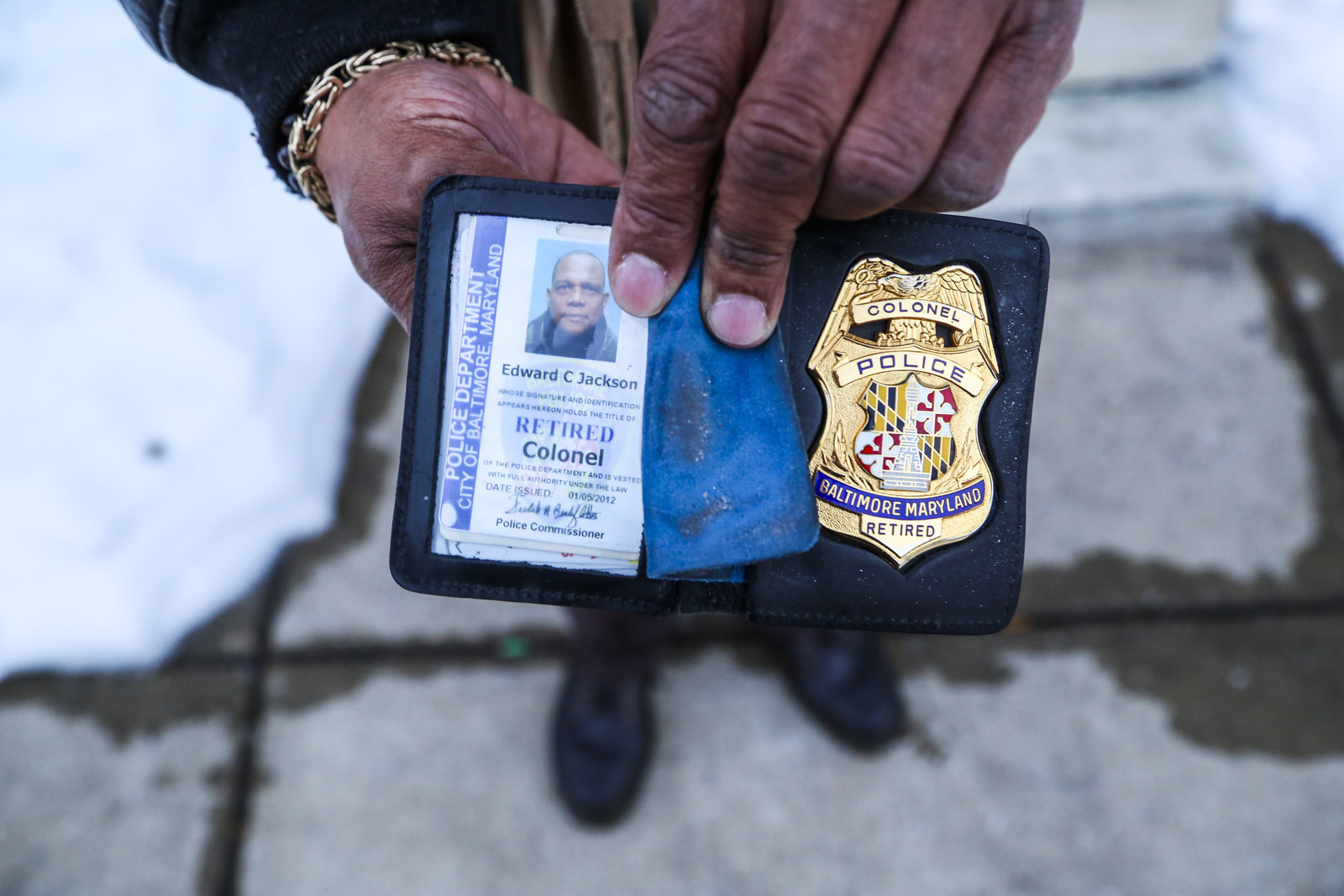
"Badges? We don't need no stinkin' badges!" is a widely quoted paraphrase of a line of dialogue from the 1948 film The Treasure of the Sierra Madre. That line was in turn derived from dialogue in the 1927 novel of the same name, which was the basis for the film.
In 2005, the full quote from the film was chosen as #36 on the American Film Institute list, AFI's 100 Years...100 Movie Quotes. The shorter, better-known version of the quote was first heard in the 1967 episode of the TV series The Monkees "It's a Nice Place to Visit". It was also included in the 1974 Mel Brooks film Blazing Saddles, and has since been included in many other films and television shows.
History
The original version of the line appeared in B. Traven's novel The Treasure of the Sierra Madre (1927):
"All right," Curtin shouted back. "If you are the police, where are your badges? Let's see them." "Badges, to god-damned hell with badges! We have no badges. In fact, we don't need badges. I don't have to show you any stinking badges, you god-damned cabrón and chinga tu madre!"
The line was popularized by John Huston's 1948 film adaptation of the novel, which was altered from its content in the novel to meet the Motion Picture Production Code regulations severely limiting profanity in film. In one scene, a Mexican bandit leader named "Gold Hat" (portrayed by Alfonso Bedoya) tries to convince Fred C. Dobbs (Humphrey Bogart) that he and his company are Federales:
Dobbs: "If you're the police, where are your badges?" Gold Hat: "Badges? We ain't got no badges. We don't need no badges. I don't have to show you any Stinkin' badges!"
Comics
In one issue of the Teenage Mutant Ninja Turtles Archie comics, the Malignoid drones Scul and Bean meet with the nihilistic industrian Null to discuss the contract between him and the Malignoid queen Maligna. When Null insists on consolidating the contract through his lawyers, either Scul or Bean yells out: "Lawyers?! We don't need no stinkin' lawyers!!"
In the Teenage Mutant Ninja Turtles series from Image Comics, Donatello paraphrases a variation of that sentence ("Plans?! I don't need no stinking plans!") whilst using his cyborg systems to restore a stripped-down aircar
Film
In Mel Brooks's Western Blazing Saddles (1974), the line was delivered as "Badges? We don't need no stinking badges."
In Charles Swenson's animated film Down and Dirty Duck (1974), a stereotypical Mexican mouse character, wearing a sombrero and a bandolier (probably in a parody of Speedy Gonzales), speaks the line as "I don't want your stinkin' badges!"
In the film The Ninth Configuration (1980), when the asylum patients are quoting lines from movies, one quotes "Badges? We don't need no stinking badges."
In the sketch-comedy film Elephant Parts (1981), one of the fake ad sequences portrays "an authentic Mexican bandito in a Mexican-American restaurant," whose sole line is "Nachos? We don't need no stinkin' nachos!"
In the movie Gotcha! (1985), the character Manolo says "Don't show me your badges; we don't know nothing about no stinking badges."
The movie Troop Beverly Hills (1989) contains the line "We don't need no stinkin' patches."
In the "Weird Al" Yankovic film UHF (1989), when animal show host Raul (Trinidad Silva) is asked to take a consignment of badgers, he says "Badgers? Badgers?! We don't need no stinking badgers!"
In the film Flashback (1990), as the hooker is undressing the FBI agent, she discards his badge saying "We don't need no stinkin' badges."
In the Ron Howard film Backdraft (1991), William Baldwin's character tries to refresh his nephew's memory by using a hand puppet to exclaim, "Spinach? We don't need no stinkin' spinach!"
In the film No Code of Conduct (1998) Paul Gleason's character says in a bad Mexican accent "Badges? We don't need no stinkin' badges!", then goes on to sheepishly mention that he was quoting from the 1974 film Blazing Saddles.
In the film Bubble Boy (2001), when Jimmy offers Danny Trejo's character Slim patches for his motorcycle's flat tire he responds, "Patches? I could use some stinking patches."
In the film Zombie Strippers (2008), when Paco (Joey Medina) is told to obtain some wild animals to dispose of the bodies, he says, "Badgers? Badgers? We don't need no stinking badgers."
In the film 6 Underground (2019), Three says the line while breaking into the enemy stronghold and going past the security desk.
In Spike Lee's American war drama film Da 5 Bloods (2020), when Desroche's gunmen first try to dispossess the Bloods of the recovered gold bars, the leader of the gunmen tells Paul, "We don't need no stinking official badges."
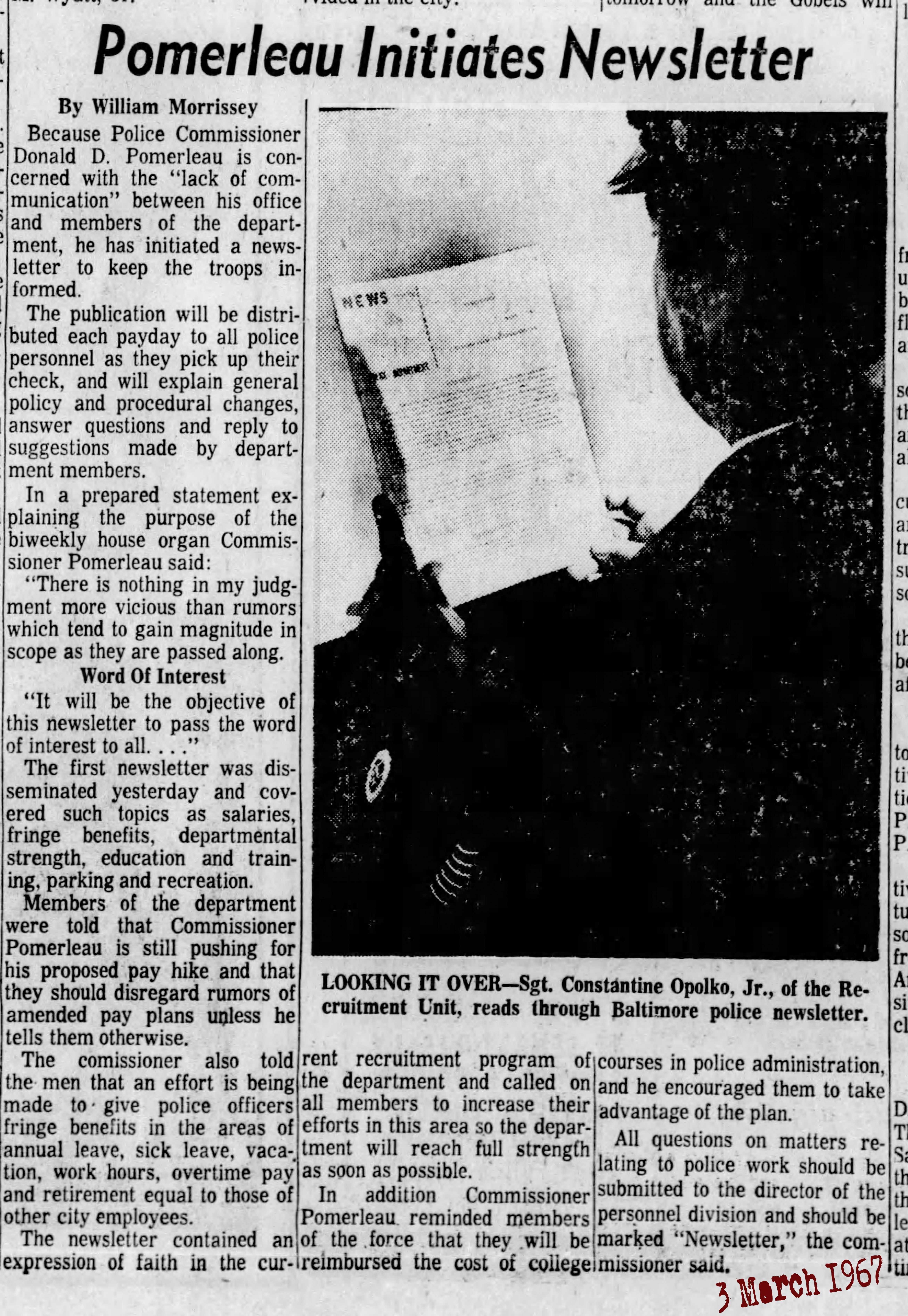
Ken's Stinkin' Badge Baltimore Police Style
Ken wanted this as a joke to carry in his wallet so none of his issued badges would be lost, stolen or damaged He had it made using his badge number 550 from when he was a Detective with the Baltimore Police Department To see more novelty badges, most with Ken's badge number clickHEREIf you order one tell them Ken sent ya. Note: He only sells to active, or retired police.
POLICE INFORMATION
If you have copies of: your Baltimore Police Department Class Photo, Pictures of our Officers, Vehicles, Equipment, Newspaper Articles relating to our department and or officers, Old Departmental Newsletters, Lookouts, Wanted Posters, and or Brochures. Information on Deceased Officers and anything that may help Preserve the History and Proud Traditions of this agency. Please contact Retired Detective Kenny Driscoll.
This email address is being protected from spambots. You need JavaScript enabled to view it.
NOTICE
How to Dispose of Old Police Items
Please contact Det. Ret. Kenny Driscoll if you have any pictures of you or your family members and wish them remembered here on this tribute site to Honor the fine men and women who have served with Honor and Distinction at the Baltimore Police Department. Anyone with information, photographs, memorabilia, or other "Baltimore City Police" items can contact Ret. Det. Kenny Driscoll at This email address is being protected from spambots. You need JavaScript enabled to view it. follow us on Twitter @BaltoPoliceHist or like us on Facebook or mail pics to 8138 Dundalk Ave. Baltimore Md. 21222
“Like A Gang Or Something” Dispatches from week two of the Gun Trace Task Force trial
The second week in the trial of Daniel Hersl and Marcus Taylor brought to light a series of shocking revelations as a growing list of witnesses testified to the depravity and devastation shown by the elite Gun Trace Task Force (GTTF), which moved with reckless impunity throughout the city dealing drugs and committing robbery, extortion, theft, and over-time fraud. Six other members of the operational unit that was charged with getting guns off the street have pleaded guilty. Hersl and Taylor, who are charged with robbery, extortion, using a firearm to commit a violent crime, and fraud charges relating to overtime theft have pleaded not guilty.
Callous cops and structural inequity: On Aug. 31, 2016, two cars full of Gun Trace Task Force officers watched in the distance as two cars that had just collided sat on the sidewalk badly damaged, with the state of the passengers unknown.
Det. Jemell Rayam suggested they get out and help, but aiding the injured drivers was not an option because Sgt. Wayne Jenkins—who was described by those he commanded in the GTTF as both a “prince” in the Baltimore Police Department and as “crazy”—told them not to do anything.
He had also told them to initiate the chase that led to this moment.
So they listened to the radio, waiting for a concerned citizen to call in the crash or for other cops to come to the scene.
This is all according to Rayam, who pleaded guilty along with all of the officers except for Daniel Hersl and Marcus Taylor, and seemed visibly shaken and sometimes confused on Jan. 30, his second day testifying in the ongoing federal corruption trial of the GTTF.
And though Taylor’s defense relied solely on presenting the witnesses as liars, what Rayam said was corroborated by audio from a bug the FBI had planted in the car of GTTF Detective Momodu Gondo.
Rayam explained it all began that day when Jenkins saw a car he wanted to stop at a gas station. The car fled and both Jenkins and Gondo, each driving an unmarked car, drove after it in pursuit. The car they were pursuing ran a red light and, in Rayam’s words, was “pretty much T-boned,” by another car.
“It was bad, real bad,” Rayam said. “Both of the cars collided with each other.”
Briefly, he couldn’t answer follow up questions—a crying Rayam wasn’t sure which crash they were asking about.
“There were so many car accidents,” he said.
Intead of checking on the victims of the accident, the members of the GTTF sat tight and waited, worrying that their role in the event may have been discovered.
“None of us stopped to render aid or to see if anyone was hurt,” Rayam said.
On the tape, Hersl suggested covering it up: “We could go stop the slips at 10:30 before that happened. ‘Hey I was in this car just driving home,’” he said, and laughed.
The trial, now in its second week, has presented a tremendous amount of evidence showing that the officers claimed overtime for hours they did not work.
Hersl laughed again on the tape and wondered what was in the car.
Jenkins and others worried that Citiwatch may have it all recorded—they hoped the rain that night would make them hard to see—and worried the pursued may be able to mention he was chased.
“That dude is unconscious. He ain’t saying shit,” Taylor said.
“These car chases. That’s what happens. It’s a crapshoot, you know?” Hersl said.
This was an extraordinary statement to hear coming from Hersl as his family sat in the courtroom. In 2013, a driver—who was being followed, but not chased, by a state trooper—killed Hersl’s brother Matthew in front of City Hall in downtown Baltimore. WBAL said that Stephen, Herl’s other brother, told them Matthew “didn’t drive because he didn’t like traffic and thought drivers were dangerous.”
This incident wherein a chase led to a car crash echoes other events in this case. In 2010, Jenkins, Officer Ryan Guinn, and Det. Sean Suiter initiated a chase that also ended in a crash—one that was fatal. According to the federal indictment, the officers had a sergeant come and bring an ounce of heroin to plant in the back of the car they were pursuing, before giving first aid to the man, who ultimately died. Umar Burley, who was driving the car they chased, was recently freed from federal prison. Det. Suiter was murdered a day before testifying in the case—and the police car bringing him to Shock Trauma crashed on the way there. Guinn was reinstated to BPD after a two-week suspension and, last week in court, another GTTF member Maurice Ward testified that Jenkins told him that Guinn had informed the squad that they were under investigation.
Hersl has admitted to stealing money, but his lawyers argue that because he had probable cause he did not rob his targets—and did not use violence to take the money. He glared at Rayam as he testified about the wreck and various thefts. Rayam has confessed to dealing drugs, stealing drugs, and strong-arm robbery. In court, he suggested that Gondo, with whom he worked closely, had discussed other serious crimes, including a possible murder. Rayam alluded on several occasions to the numerous internal affairs complaints against Hersl, but the judge shut him down—that information was not admissible in court. On another occasion, federal prosecutors asked Rayam if Hersl gave him money for selling cocaine. Hersl’s lawyer objected and the judge sustained the objection.
But the overall sense is that, for the GTTF—and especially Jenkins, who has pleaded guilty but is not expected to testify—Baltimore City was at once a killing field and playground.
It is too easy to see Jenkins and Gondo and Rayam as sociopathic exceptions who are especially depraved. More testimony later the same day showed how this behavior stems from creating a city which criminalizes—or at best contains—a large part of its population. This structural disdain for life became clear in testimony from Herbert Tate, one of the witnesses against Hersl, who was treated like a criminal by defense attorneys.
Tate said he was on Robb Street in the Midway neighborhood on Nov. 27, 2015 to see old friends. A few days earlier, he said, Hersl had stopped him on Robb Street, searched him, and given him a slip of paper—not a proper citation, just a piece of paper—called it a warning, and said, “Next time I see you, you’re going to jail.”
It was about 5 p.m., Tate said, when he was walking up the street with an alcoholic beverage—he couldn’t remember if it was beer or wine—when Hersl, Officer Kevin Fassl, and Sgt. John Burns pulled up on him. Tate says that Hersl told Fassl to grab him. Fassl searched him, including searching his waistband and putting their fingers in his mouth, and then sat him down in handcuffs. In his pockets, they found $530 in cash, some receipts, and pay stubs—but no drugs. Hersl, Tate testified, dug around in vacants and on stoops looking for drugs. He went around a corner for about 10 minutes, Tate said, and came back with “blue and whites.”
Tate testified that he did not know what “blue and whites” were at the time but later learned it was heroin. Hersl sat beside his lawyer, William Purpura, glowering as Tate testified that Fassl asked Hersl what to do with the money and Hersl said, “Keep it.”
When Tate asked them to count it, he says that Burns got angry and bragged about how much money he made. According to a 2016 spreadsheet of Baltimore City employee salary data, Burns brought in a little more than $86,000, but with overtime—one of the main issues at stake in the case—he made nearly double that, bringing in $164,403 in 2016. On Feb. 21, 2017—just over a week before the Gun Trace Task Force indictments came down, Burns took medical leave and began raising funds with a GoFundMe account that claimed he was diagnosed with Guillain-Barre syndrome triggered, the fundraiser says, from “inhaling fecal matter during a search warrant.”
By the time the money made its way into evidence, the $530 had become $216. When Tate was released from jail, he was given 91 cents back. He never saw the rest of the money.
Defense lawyers made a different issue out of the money. Christopher Nieto, who is representing Marcus Taylor (who was not involved in Tate’s arrest at all), made a point of mentioning that some of the money submitted as evidence was in small bills like singles, fives, and tens.
“Dollar bills suggest drug distribution,” Nieto said.
“Everybody has dollar bills,” Tate responded.
The claim was odd in the context of a trial in which it had been repeatedly stated that large sums of cash also indicated drug dealing. Whatever amount of money African-Americans have in Baltimore City can indicate criminal activity, apparently: Tate had a 2003 charge tied to possession and distribution of narcotics, for which he took probation before judgement and admitted on the stand that when he was in high school he “did some things”—meaning small-time dealing—but had never been arrested back then.
Nieto repeatedly referred to Robb Street as “an open air drug market,” “a drug neighborhood,” and a “not a great neighborhood.” A perception encouraged, in part, because these neighborhoods are criminalized.
“That’s what y’all label it as, but that’s not what it is to me,” said Tate, who testified that he had grown up in the area and had friends and family there and coached a children’s basketball team in the area. Nieto also said that Tate had a black ski mask when he was arrested, though Tate said he had it on him because it was cold and that he was wearing it as “a winter hat.”
This attitude displayed in the questioning of Tate (that certain people are inherently criminal) is the animating force behind the GTTF criminal enterprise, but it isn’t that far from the assumptions of our criminal justice system, which, in 21st century American cities, is based on an almost Calvinist view of crime: If some people are criminal, nothing you do to them can be criminal.
Because of the 2015 arrest, Tate said, he lost his job because he was in jail for four days, then he lost his car because he couldn’t pay for it and couldn’t get another job because of the narcotics charge—and to this day, he owes a friend for the bail.
“I’m still paying them back,” Tate said.
In March of 2016, the state dismissed Hersl’s charges against Tate—a common occurrence in Baltimore. After the charges were dismissed, Tate was able to get another job as an HVAC technician, which he has to this day. He also said that after the arrest, he moved away from Baltimore to Anne Arundel County.
“I got out of the city,” he said. (Baynard Woods & Brandon Soderberg)
The ruined lives and emotional wreckage caused by GTTF: It was toward the end of the day on Jan. 31 at the Gun Trace Task Force trial of Daniel Hersl and Marcus Taylor when Ronald Hamilton, whose home was raided without a warrant by the GTTF in July 2016, finally had enough.
On the stand, he received too many nagging, loaded questions about where and how he got his money and not enough about what he believed to be the real issue at hand: the full extent of the GTTF’s reign of terror. So, when Christopher Nieto, the defense attorney for Taylor, asked one more time about the $17,000 in cash he put down for his half-a-million dollar home in Westminster, Hamilton blew up.
“I put $17,000 down on the house. You wanna know it right? I put $17,000 down,” he said.
Then he got loud: “THIS RIGHT HERE DESTROYED MY WHOLE FUCKING FAMILY MAN. . . . EVERYBODY’S LIFE IS DESTROYED, MAN. . . . THEY CAME IN MY HOUSE AND DESTROYED MY FAMILY. . . . I’M GETTING DIVORCED BECAUSE OF THIS.”
He added that his kids are afraid to go in their own house now, his wife waits at the nearby Wal-Mart if she gets home from work before Hamilton because she doesn’t like to enter the house alone, and she’s taking medication for stress caused by the raid.
“You want the facts?” he asked Nieto. “Is this what you want?”
Hamilton’s invective was aimed at the pack of federally-indicted cops, along with their defense lawyers, whose entire argument, time and time again, implied drug dealers are not only entirely untrustworthy but hardly even allowed to have grievances (or carry cash).
Attorneys went over nearly every transaction Hamilton made over a period of years, pouring over his receipts, gambling records, and properties. But it was the questioning about his home—which, prosecutors allege, was invaded by the rogue cops who had followed him and his wife to a Home Depot —that set him over the edge.
Hamilton’s outburst may have been one of the pivotal moments in the case, voicing the fear and rage that all of the day’s witnesses seemed to feel.
In March 2016, Oreese Stevenson was arrested by Sgt. Wayne Jenkins’ pre-GTTF special unit (consisting that night of Taylor, Ward, and Evodio Hendrix) after a friend entered Stevenson’s car with a backpack for a cocaine deal. Jenkins and Ward told Stevenson they approached because his windows were tinted too dark—Stevenson said they weren’t tinted “at all”—and Jenkins jumped in the car, grabbed the backpack of money (which Stevenson said he expected to have contained $21,500), and later took Stevenson’s house keys.
Soon after, Keona Holloway, Stevenson’s girlfriend who also testified, got a call from her 12-year-old son that cops were at the house, so she left her nursing job early. Inside the house, Jenkins showed her a piece of paper and claimed it was a warrant. She also said he recorded video of them entering the house, recreating their entry (when GTTF’s Maurice Ward testified at trial the first week, he said that during that same incident they recreated discovery of a safe in the basement).
Stevenson later spotted discrepancies between what he had when he was arrested and what was seized. He said there would have been $21,500 in the car but police said they seized $15,000; he said he had $300,000 in a safe but police said they seized $100,000; and he said he had 10 kilograms of cocaine in a safe but police said they seized 8 kilograms.
“I’ve never seen them stop a car and run right into the house that way,” Stevenson said, reflecting on how the arrest began.
In August 2016, Dennis Armstrong was pulled over by GTTF’s Hersl, Jenkins, and Momodu Gondo but sped off, lobbing cocaine out of his van and onto the street to destroy the evidence. When cops nabbed him after he drove down a dead end street and ran off on foot, they drove his van to a storage facility where he kept his coke, they had learned. He never consented to them accessing the storage unit.
Armstrong was charged with possession, possession with intent to distribute, driving without a seatbelt, and driving with a minor in the car without a seatbelt (he did not have a minor in the car). When he got out of jail, he got his watch, belt, and a bunch of lottery tickets back. He also learned GTTF had claimed they had only seized $2,800 when he said he had $8,000 in his van. And the two kilograms of coke he said he had were not inside his storage locker, which had been wrecked.
The possession charge—for which he received two years probation—was for what amounted to a few “crumbs” of coke, Armstrong said.
In September 2016, Sergio Summerville, who was experiencing homelessness at the time, had his friend Fats drive him to his storage facility near the Horseshoe Casino where he kept his belongings and the “small amounts” of cocaine and heroin he was selling. On the way out of the facility, two unmarked police cars pulled up to Fats’ car. Jenkins claimed they were DEA and had a warrant, and Hersl said they knew Summerville was a big deal drug dealer “from the Avenue.”
Summerville said that he was offered “freedom” if he gave up information on other dealers, and that when they finally let his friend Fats go, Summerville shouted out the code so he could exit the storage facility and that Hersl saved the code in his phone. When Summerville tried to look at Hersl saving the info on his phone, Hersl elbowed him. Summerville was eventually let go too and never charged with a crime. He said GTTF stole $4800 out of a sock in his storage unit where he hid his money.
“They came at me like a gang or something,” Summerville said.
This lineup of witnesses—all of whom had immunity—showed the extent of the GTTF’s targets: big time and small time dealers, current and former, some charged with crimes and some not at all.
But this cast of characters also illustrates the specific nature of drug dealing in a deindustrialized city like Baltimore—dealing as a dependable, dangerous side hustle that is hardly glamorous even if you’re shipping out plenty of product. Stevenson is currently a truck driver and had the job on and off again while dealing. He was using money he earned to start an Assisted Living service with his girlfriend Holloway. Armstrong’s day job was a maintenance worker for public housing and Summerville sold while he was homeless—now he works as a caterer.
GTTF didn’t confine their abuse to those who dabbled in dealing though. Gregory Thompson, a maintenance man for the storage facility near the casino, is about as “square” as you can get and testified that Jenkins and Hersl intimidated him the night of the September 2016 incident with Summerville.
The commotion caused by the GTTF stopping Summerville and Fats caused Thompson to come out to see what was going on. Jenkins and Hersl—he had a hard time remembering who said what—asked to see the facility’s security cameras and he told him they would need a warrant for that. They didn’t like that answer, got “about a foot and a half” away from him, and threatened him.
“You look like someone who needs to get robbed,” Thompson said Jenkins or Hersl told him—he couldn’t remember which one had said it.
“As far as I’m concerned, they both said it to me,” Thompson added.
Thompson’s life wasn’t destroyed by the encounter that night, but he was clearly shaken and angry, more than a year later. (Brandon Soderberg)
Marques Johnson / Photo by Brandon Soderberg
One man in front of BPD headquarters demands police disband: Outside of Baltimore Police headquarters downtown about a half hour before the Gun Trace Task Force trials began a few blocks west, Wu Tang Clan-affiliated rapper and organizer Marques Johnson stood quietly, seething with an announcement to make.
“I want to speak Darryl DeSousa, the police chief, and I basically want to let him know that at this point, the police are charged with protecting the community from threats and as of right now, they are the threat,” Johnson, who raps as Andre Roxx, said.
He was there alone but he said already had his own “officers” for his new organization, Protecting Our Own Community (P.O.O.C.), established in response to the GTTF and the BPD.
“When the revelation came out that they were planting firearms I was like, ‘Somebody’s got to do something,’” Johnson said. “It’s an ongoing epidemic—police misconduct—that has resulted in the death of countless black men, women, and children.”
Stories such at those recounted during the GTTF trials are similar to what he heard from his father and grandfather, who grew up in North Philadelphia.
“P.O.O.C. will protect our own community, even against the police,” he said. “We’ll protect ourselves against the police using up to and including deadly force if necessary. Hopefully, they’ll pull out of our communities and we can accomplish this without bloodshed. But I am prepared if necessary to rally the troops and defend ourselves. I mean they’re using lethal force against us, I’m prepared to rally the troops and if necessary in order to defend ourselves, for self protection.”
Then Johnson trudged inside BPD HQ and requested a meeting with the commissioner. He was informed he’d need to make an appointment and introduced himself again.
“My name is Andre Roxx of the Wu Tang Clan, please let him know I’d like to speak to him,” he said. “It’s important.”
After about five minutes, two BPD representatives rather than the commissioner greeted Johnson.
“You have become a threat to this community,” Johnson told the two detectives. “As a representative of the black community as a whole I am requesting that the police leave our community until you get your acts together. I’m letting you know we’re putting this organization together. This organization will be armed. It will be in the streets. And we will protect ourselves.”
BPD representatives nodded, wished him luck, and Johnson left.
“I wasn’t looking for a response so it went exactly how I wanted it to go,” he said back outside in front of BPD HQ. “Now, I’m headed out and I’m starting to recruit.”
In the federal court house, as Johnson drove around the city recruiting, a coke-slinging bail bondsman named Donald Stepp testified that GTTF had a hand in spreading drugs stolen from pharmacies during the April 27, 2015 rioting. (Brandon Soderberg)
Wayne Jenkins receiving the Bronze Star for helping fellow officers during the 27 Apr 2015 rioting
GTTF sold drugs stolen from pharmacies during Baltimore Uprising: “I got an entire pharmacy,” former bail bondsman Donald Stepp said from the witness stand in federal court on Feb. 1. He was quoting former police sergeant Wayne Jenkins, the center of the ongoing corruption trial of two members of the Gun Trace Task Force.
In a trial full of dramatic revelations of corruption, Stepp’s claim was especially significant in this beleaguered city that was about to embark on a third citizen-led ceasefire campaign attempting to halt the brutal pace of near-daily murders from Feb. 2 through Feb. 4.
In June 2015, after what was then Baltimore’s deadliest month in decades, then-Commissioner Anthony Batts blamed the spike in murders on drugs looted from pharmacies during the unrest following the death of Freddie Gray in police custody in April of that year. Headlines blared: “Baltimore police commissioner: looted drugs during riots causing spike in violence.”
Others have claimed that the murders arose from the “Ferguson Effect,” which argues that police “stood down” for fear of being “the next viral video.”
But Stepp’s claims complicate both of those narratives. According to Stepp, early in the morning on April 28, 2015 as Baltimore police struggled to regain some control after weeks of protest had turned to a day of rioting, Jenkins had his own agenda.
“During the riots of Freddie Gray, he called me again, woke me up, said I needed to open the garage door,” Stepp said.
When Jenkins pulled up, Stepp said, he got out of the car, opened the trunk and took out two large trash bags.
“I got people coming out of these pharmacies,” Stepp, who estimated making a million dollars off of selling drugs Jenkins stole, recalled his old friend saying.
Deborah Katz Levi, the head of the Baltimore City Public Defender Special Litigation Section, calls it callous: “There’s some argument that these guys robbed drug dealers, some people say that, right, and that these guys, you know, committed crimes against other alleged criminals—but when you’re taking prescription medication that the citizens of Baltimore, and in impoverished neighborhoods, really needed, that shows a level of callousness that rises all the way to the top,” she said outside the courthouse Thursday.
But in addition to taking medicine away from citizens, according to then-Commissioner Batts’ logic, Jenkins and Stepp contributed to “turf wars,” which he said were “leading to violence and shootings in our city.”
Batts said 27 pharmacies were looted. And while most people think of the burning CVS at the heart of the unrest in Penn North, the DEA claimed that most of the pharmacies were targeted by organized gangs.
“You see the economic value for these gangs in targeting these pharmacies,” Special Agent Gary Tuggle told WBAL back in 2015, comparing the price of Oxycontin—which he said could go for $30 a pill—to heroin, which was selling for $10-$15 a bag.
Stepp testified that he and Jenkins regularly burgled buildings—and that he bought a wide variety of equipment used in such burglaries, including grappling hooks, crowbars, sledgehammers, and tracking devices for Jenkins and other police officers, whom he did not name.
He described Jenkins as a man in control of the city: “It was easy for him to be able to steal because he had access, incredible access because of his position,” Stepp said.
While the exact role GTTF and other rogue officers played in the looting of drugs and the rise of violence is unknown, it is clear that the task force, which was described by prosecutors as “both cops and robbers at the same time,” profited from it.
Wayne Jenkins, Daniel Herls, and Donald Stepp
Cooperating co-defendants testified that, as the murder rate rose in 2015, then-Commissioner Kevin Davis asked Jenkins how he was keeping his squad motivated. According to Evodio Hendrix, Jenkins told the commissioner he was using overtime to keep his crew happy and getting guns off the streets. Davis allegedly told Jenkins to “keep up the good work.”
Jenkins received a bronze star for his conduct in the unrest. Davis was fired two days before the beginning of the GTTF trial.
The worse the crime, the more easily the GTTF could claim fraudulent overtime. In 2015, Daniel Hersl, one of the defendants who has not pleaded guilty and standing trial, made a salary of $77,591 in 2015, and made an additional $86,880 in overtime that year. Hersl claimed that he worked 1,692.9 hours of overtime in 2015—roughly 28 hours of overtime every single week of the year. And yet, according to another GTTF member, Jemell Rayam, Hersl went as long as a month without coming to work at all as he worked on his new home. Stepp testified that Jenkins called Hersl “one of the most corrupt cops in Baltimore City.”
Hersl was working on May 2, the night after State’s Attorney Marilyn Mosby announced charges against six officers for their roles in Freddie Gray’s death. He is currently being sued for throwing down a credentialed reporter that night. Sgt. Keith Gladstone, who has been described by someone in law enforcement who knows both men as a “mentor” to Jenkins, and Lt. Christopher O’Ree, a GTTF supervisor who approved some of the fraudulent overtime, were both found guilty of using excessive force on the same night in a recent civil case, in which Larry Lomax was awarded $75,000.
Increased violence did not only offer more opportunities for overtime fraud, but it gave the officers a wider latitude in further criminal activity—creating a viciously circular logic of profit.
“This is not a normal police department,” Stepp said on the stand. He also said Jenkins described the GTTF as “a front for a criminal enterprise.”
Rayam testified, for instance, that on at least two occasions, he sold guns back onto the street and that he helped one drug crew rob another. Other testimony has alleged that Jenkins wanted to rob a drug dealer who shorted a friend of his on a cocaine deal.
Stepp said he had known the Jenkins family for 40 years and that Jenkins sent drugs to Stepp through his older brother for eight years before they began working together directly in 2012. After that, Jenkins dropped off drugs almost nightly.
“It was just over the top. Everything and anything that could be imagined,” Stepp said.
But Stepp’s testimony also showed that Jenkins used him to get around his own squad. In the case of Oreese Stevenson, which other officers had testified about at length, Jenkins called Stepp and tried to get him to break into Stevenson’s house before the squad got there.
Stepp testified that Marcus Taylor, the other officer who has pleaded not guilty and is standing trial, and Sgt. Thomas E. Wilson III accompanied him and Jenkins to Scores strip club and acted as security for a visiting drug dealer.
Wilson, who had previously been charged with perjury and was said to be Jenkins’ former partner, has been placed on administrative duty. As more officers are named in connection with the case, many in the city wonder where it will end.
“The only thought I have racing through my mind every day all day is: Where does it stop, how many officers, how many people’s convictions are called into question by these officers’ brazen and really egregious and horrible criminal conduct,” said public defender Levi, who is charged with reviewing the cases.
She said that testimony earlier in the week pushed the number of tainted cases up to somewhere around 3,000.
“We don’t know who’s involved in this kind of criminality,” Levi said. “And there’s really no increased transparency based on these trials. I don’t see anybody from the police department committing openly to get to the bottom of it; I don’t see anyone from the State’s Attorney’s Office saying ‘come look at our files and we’ll show you what we’ve got’ so we can all be in this together and try to undo it.” (Baynard Woods)
Photo by Brandon Soderberg
Lawyers claim Marilyn Mosby’s office “encouraged” GTTF crimes: The Gun Trace Task Force trial, which wrapped up its second week on Feb. 1, has already provided numerous allegations of police misconduct. But a press conference on Friday, Feb. 2 held by attorney Ivan Bates called attention to even more allegations and seemed to connect the dots between the GTTF and the State’s Attorney’s Office headed by Marilyn Mosby.
Flanked by fellow attorneys Natalie Finegar and Josh Insley and a number of clients who encountered GTTF, Bates, who is running for state’s attorney, detailed what led him on a “seven year battle with Wayne Jenkins and members of that gang called the Gun Trace Task Force.”
Jenkins, Evodio Hendrix, Momodu Gondo, Jemell Rayam, Marcus Taylor, and Maurice Ward are all involved in the incidents detailed during the press conference—although, the victims made clear, the misconduct was not limited to these officers.
“They were together. If you see one police officer breaking the law, you just as guilty as them if you allow it,” said Shawn Whiting, who was arrested by Taylor and Ward of GTTF, and another officer, Eduardo Pinto, in 2014.
“Here are just a few of the faces that have been terrorized by those criminals called the Gun Trace Task Force and we view them as a gang,” Bates said. “It’s important that we recognize that these few faces that you see are the individuals that you’ve been hearing about in the courtroom but there are so many more people that have been terrorized by these criminals.”
In November 2010, Jamal Walker was pulled over in his car by then-Detective Jenkins, who claimed Walker smelled like weed, searched him, and found no weed but did find cash ($40,000 according to Walker), and then headed to Walker’s home and tried to break in. Walker’s wife Jovonne set off their silent burglary alarm during the break-in, which brought police to the residence. Jenkins sent them away and then searched the home himself. Jenkins said he found two guns and reported $20,000 seized.
In January 2014, Whiting, who testified at the GTTF trial on Jan. 25, had money stolen from him after GTTF members pulled him over, claiming he ran five stop signs.
“This case is bigger than you’ve ever seen,” Whiting told the Beat and The Real News Network after the press conference. “I already know it—through experience.”
In September 2016, Andre Crowder was pulled over and hit with a number of gun charges, which were eventually dropped, but Crowder spent three days in jail, he said during the press conference. His experience demonstrated how devastating even a short stint can be.
“When this occurred I was took away from my family for three days and within those three days I lost my 3-year-old son,” Crowder said. “I’m not a doctor but maybe I could have saved my son or whatever—but the three days I was gone I lost him. So it’s bigger than the charge they put on me.”
The officers involved in his arrest were GTTF’s Ward, Gondo, Hendrix, and Taylor.
Finegar focused on the SAO and stated out loud what she said had been murmurs among lawyers, police, and city insiders for years: The SAO had known about GTTF for years and did nothing to stop it.
“The current State’s Attorney’s Office completely dropped the ball in this situation. They not only turned their back on the possibility that these officers were doing horrible things and violating the law themselves,” Finegar said. “They actually encouraged it by letting these officers get away with things time and time again. Between 2015 and 2017 the current state’s attorney knew these officers weren’t showing up for court. Fifty to 60 percent of the time these cases were being dismissed.”
Finegar, who was until recently a public defender, passed out a Jan. 21, 2016 memo about GTTF’s Det. Jemell Rayam. The memo was from Stacy Ann Llewellyn, chief of the SAO’s Public Trust and Police Integrity Unit, and addressed to Major Ian Dombroski in BPD’s Internal Affairs Section. It informed the police department that the SAO would be disclosing the results of a Franks hearing (a hearing held to determine if an officer lied to get a warrant) in which Judge Barry Williams—the judge in the case against the officers charged with Freddie Gray’s death—ruled that Rayam had not given credible testimony when he claimed to have seen drugs in plain view in the apartment of Gary Clayton. The charges were dropped. During Clayton’s arrest, Rayam was with Gondo and John Clewell, the only GTTF officer not to face charges though he has been suspended.
Dombrowski, who received the letter, was mentioned in the GTTF trials, when it was alleged that he came up with the overtime or slash days as rewards for getting guns off the street.
Finegar said that even though the “front office” of the SAO got the memo, “they continued to prosecute cases, they continued to fight the disclosure of records again and again and again.” She then pointed out that there is a state’s attorney who “tipped the officers off about the investigation” and that the SAO has made no comment on whether anything happened to that state’s attorney or not.
Insley detailed an arrest of one of his clients, Avon Allen, whose arrest reflected the approach heard by those who testified during the GTTF trial—“that they rolled up, they popped the doors, and when he flinched, they ran right after him.”
“The statement with the benefit of hindsight is so unbelievable,” Insley said. “It says that [Allen]’s running, they’re running after him, and they grab him by the legs and as he’s falling down, the gun goes flying and it skids right into a sewer. No fingerprints, no DNA because it went into a sewer.”
What happened to Allen illustrates the SAO’s troubling approach to prosecution and echoes the trials of Keith Davis Jr., who activists have said is being unfairly and doggedly pursued by Mosby’s office. When Allen went to trial, Insley said, the cop’s testimony didn’t convince a jury and Allen wasn’t charged. The SAO referred Allen’s case to the U.S. Attorney’s Office, who then indicted Allen. But when a U.S. Attorney looked at the file and saw the officers involved, they dismissed the indictment.
“What happens next shows how broken our system is,” Insley said, continuing to describe how the deputy state’s attorney got a warrant for Allen under a new indictment. Eventually, Judge Charles Peters released Allen. Not long after, Insley said, the federal indictments came down. Insley pointed out that as a U.S. attorney, Peters had famously prosecuted dirty cops William King and Antonio Murray in 2006, calling them “urban predators.”
According to court records, the officers involved in Allen’s case were Jenkins, Ward, Hendrix, and Taylor.
In a statement to The Baltimore Sun, Mosby downplayed the press conference: “I realize this is campaign season for those seeking elected office and over the next few months, I fully understand that my administration will be attacked; and while people are entitled to their own opinion, they are certainly not entitled to their own facts,” she said.
The press conference was, in part, a campaign event to be sure. But it also provided important context about the lives that have been disrupted or shattered by GTTF. (Brandon Soderberg & Baynard Woods)
At the end of the week, a video surfaced showing former Commissioner Kevin Davis pinning a bronze star on Wayne Jenkins, the GTTF sergeant whom even Rayam and Gondo thought was “over the top” and “too much,” for his service to other officers during the “riots” following Gray’s death. The moment captures the circularity of the GTTF. The detectives played a major role in creating the animosity toward police that exploded during the uprising. Then they exploited that chaos—resulting in both overtime, accolades, greater latitude, and illegal profit from selling the stolen drugs. If nothing else, the trial reveals that everything most people have thought about the city over the last few years may be false.
Coverage of the Gun Trace Task Force trial is a collaboration between the Baltimore Beat and the Real News Network. Visit therealnews.com for more independent local, national, and international journalism that examines the underlying causes of chronic problems and searches for effective solutions.
One Drug Dealer Two Corrupt Cops and a Risky FBI Sting
Davon Mayer was a Smalltime Dealer in West Baltimore who made an Illicit deal with Local Police. When they Turned on Him, he Decided to Get Out – But Escaping that Life Would Not Prove as Easy as Falling Into It.
Written by Yudhijit Bhattacharjee - Originally Published in The Guardian
On a humid summer day in 2004, Davon Mayer stepped out of his house on Bennett Place in the heart of Baltimore. Sixteen years old, Davon was short, plump and baby-faced, still more of a kid than an adolescent. Like many other boys in his neighborhood, he had long since stopped going to school and was dealing drugs full-time.
On any other day, Davon would have been busy by this hour, trading vials of crack for cash on the pavement, keeping an eye out for the police. But this morning, he was on his way to meet with a narcotics detective named William King. Weeks earlier, the detective had arrested Davon after catching him selling drugs. He had taken Davon to the police station and then let him go, asking that Davon call him. When Davon failed to call, King had paid him a visit to let him know he wasn’t playing around.
As Davon walked to a nearby strip mall where King had arranged to meet, his mind was weighed down by anxiety. What could a city detective possibly want from a small-time drug dealer such as himself? The only answer Davon could think of was that King wanted him to become an informant. The more Davon dwelled on that possibility, the more panicked he got. Where he came from, there was nothing worse than helping the police. To snitch on fellow drug dealers was to invite death.
He got to the mall’s parking lot and saw King’s pickup truck. King was sitting behind the wheel, dressed in sweatpants and a T-shirt. He asked Davon to get in the back seat and turned on the engine. “I have been watching you,” King said, as they drove around. “I like the way you do business.”
Growing up, Davon’s parents weren’t around much. His father, Marvin “Bunk” Nutter, spent much of his son’s childhood in jail on robbery and murder charges. Davon’s mother, Tonya, spent some of those years in jail, too, for drug possession, and the rest on the streets, sustaining her crack addiction with prostitution. Davon reserved the word “Ma” for his grandmother, Norma, who had raised him, along with his sister and a cousin.
Norma was a small woman with a big presence, a matriarch to the entire block. She had fought her own battle with drug addiction when she was younger; at one point, her kids had been taken away by social services. When she finally overcame her addiction, she committed herself to discipline and order, toiling from morning till night to take care of her husband, a factory worker, and three grandkids. The entire block could be dirty and disheveled but the front of 947 Bennett Place was always spick and span.
What Davon didn’t know at the time was that Norma couldn’t remain insulated from the world of drug dealing herself. Even though her husband earned enough for her to be able to feed and clothe the kids, she struggled to find the money to take care of their wants – toys for Christmas, gifts on birthdays, an occasional afternoon out to the movies. And so she had to make a few bucks on her own. There were drug dealers in the neighborhood who trusted Norma to keep their money safe for them, to provide a place where it wouldn’t be stolen or discovered in a police raid. Dealers usually paid her a small amount for the service.
Despite Norma’s best efforts, by the time Davon was about 11, he began to feel the pull of the drug business. He was growing more and more conscious of all the things he wanted that his grandmother couldn’t give him. All the boys he knew in the neighborhood seemed to own a pair of Nike Air Jordan sneakers, but not even in his wildest dreams could he ask Norma for the $100 it would cost to buy a pair.
Davon told a friend, AC, who worked for a dealer in west Baltimore, that he wanted to make some money. One morning, AC took Davon to see one of the dealer’s men, LJ, outside a row of apartment buildings on Pennsylvania Avenue. Davon felt himself trembling a little as LJ looked him over from head to toe. Then he handed Davon a sandwich bag with 50 vials of crack, each capped with a purple top.
Davon slid the pack of vials into his pocket as LJ and AC walked off. He stood nervously in the fenced passageway leading to the door of the apartment building, wondering what he would do if the cops came. Minutes later, a young woman with a sickly pallor came out of the apartment building; recognizing him right away as the seller, she asked him for a vial. After Davon had sold to her, he turned around to find a crowd of at least a dozen other buyers waiting on the sidewalk. The pack was gone within minutes.
LJ gave him another pack, which Davon dispensed with in short order. At the end of his first day’s work, Davon had $750 in dollar bills. It was more cash than he had seen before. He was allowed to keep $75. Walking back to Bennett Place, Davon felt a sense of exhilaration.
Over the summer, as Davon’s shoebox savings grew, he couldn’t resist the Jordans, deluding himself that they would somehow escape notice at home. But one night, when he was sitting in the living room talking on the phone, his mother Tonya overheard him bragging about the sneakers.
“Davon, where did you get these shoes from?” Tonya asked him.
“I got them from Bunk,” he answered, without skipping a beat. His father had got out of jail the previous year, and came around every few days.
Tonya didn’t believe him. She called Bunk, and he came over the next day to take the shoes away and give Davon a beating. He warned Davon to stay off the streets. But Davon was back on Pennsylvania Avenue the very next day. He was hooked on the money he was making. A few weeks later, he packed up his things and left home.
As he built up a reputation for hard work, Davon’s boss gave him more drugs to sell and his earnings went up to more than $500 a day. He had moved into the apartment building where he’d been selling drugs, living with an addict named Lisa who let him stay in a spare bedroom in exchange for her daily fix of crack. At night, he would lie on the floor of his bare room, longing for the comfort of the bed he had left behind at Norma’s house. Sometimes, staring out of the window, he would feel so overcome by loneliness that he would break down and cry.
One afternoon in August 2000, Davon was caught selling drugs by police. He felt a tingle of excitement as he was marched into a police van. He would finally be able to brag about having been to jail. The price of this glory would be minimal, too: as a minor, he expected to be let off lightly.
Davon was released later that day, returning home with his mother. Over the next few days, he mulled over whether to return to Pennsylvania Avenue. He didn’t want to go to prison and decided he was better off going to school, which was about to reopen after the summer break. He was also concerned about Norma, who had been diagnosed with breast cancer.
From the very first day of school, Davon felt a restlessness that quickly transformed into a yearning for his old life. At school, the popular kids were much better dressed than he was. The girls he liked paid him no attention. Davon felt he had taken a big step down in status.
Frustrated, he decided to dip his toe back into the drug business. After school let out in the afternoon, he would go over to a street three blocks from Bennett Place and hustle for a couple of hours before coming home. By the winter, he had saved enough money to buy his first car, an old Grand Marquis. He didn’t want Tonya or Norma to see it, so he parked it a few blocks away and walked the rest of the way home.
Throughout the summer and autumn of 2001, Norma’s health worsened. She would spend most of her time in bed. One day in November, after Davon had started in 10th grade, he went into Norma’s bedroom to check on her. She looked like she was napping, but he touched her, and she was cold.
Two years later, Davon lost another family member, when his father was shot in a revenge killing. That night, for the first time in his life, Davon got drunk. Sitting by himself, he wept uncontrollably, although he would never quite understand why he felt so much grief over the loss of a father who had barely been present in his life.
By this point, Davon had long since quit school and his drug-dealing career was taking off. He had seen smalltime dealers in his neighborhood remain stuck at the bottom of the pyramid, and he hustled day and night to move up. Once he realized there was more money to be made from selling heroin than crack, he branched out into a neighborhood west of Bennett Place. He was making more than $1,500 a day.
When Davon was arrested and let off by the narcotics detective William King in the summer of 2004, he had no idea what King wanted. Now, weeks later, sitting in the back of King’s pickup truck, he silently took in King’s compliment on how he did business, trying to divine King’s intentions. He wasn’t used to hearing praise from a cop.
Softly spoken and reserved, King did not have the kind of intimidating presence that some of his colleagues did. But after joining Baltimore’s narcotics squad in the late 1990s, he had quickly gained respect for his skill at cultivating informants and collecting intelligence. King usually worked with a partner named Antonio Murray, who was shorter and stockier in physique, and more aggressive. The duo were feared by drug dealers, who knew that King and Murray didn’t mind bending the rules if it suited them.
After driving around for a few minutes, going nowhere in particular, King finally came to the point. If Davon could tell him where other dealers in the area were hiding their stash, he would raid them. So far, it sounded exactly like what Davon had been worrying about – the detective wanted him to be an informant. But King went on. After the raids, he would turn only some of the confiscated drugs over to the authorities. The rest he would sell to Davon wholesale, at a price significantly lower than the market rate.
Davon studied King’s face in the rear view mirror. Was this a set up? He saw nothing in King’s expression to make him doubt that the proposition was serious. As the seconds passed, Davon was overcome with the giddy realization that if this arrangement actually worked out, it could catapult him into the stratosphere of Baltimore’s drug trade.
“Absolutely,” Davon said finally. “Absolutely.”
A few days later, Davon got a phone call from King telling him to come to the parking lot of a McDonald’s in east Baltimore. When Davon arrived, he recognized King’s black SUV. He had expected King to be alone but his partner, Murray, was in the car, too.
In the back of the truck were four or five boxes, filled with plastic bags of marijuana. There were four different grades, King told him, 5kg (12lb) in all. King wanted to know if Davon could take the marijuana and wholesale it.
“I’ve got to advertise it first,” Davon said. “I’ll need a sample.”
Davon left the parking lot with four Ziploc bags containing the different kinds of weed, and told King that he would call him. He met with a dealer in his neighborhood, and they settled on a price of $12,000 for all of it. A couple of days later, the dealer brought the cash over to Davon’s house, handing it to him in the presence of Tonya, who had long given up on trying to stop her son from selling drugs.
Once again, Davon met King and Murray at the McDonald’s. He had negotiated them down to a purchase price of $7,000 for the drugs. Davon transferred the boxes from the back of the SUV into his car, and drove out of the parking lot, experiencing a sense of security he had never imagined he would feel under the gaze of two police officers.
In the weeks following the marijuana deal, King began calling Davon every few days. They would meet at the Rite Aide parking lot, across from the western district police station. King would hand Davon whatever drugs he and Murray had confiscated – typically crack or heroin, occasionally marijuana. Davon would take the drugs back to Bennett Place or Pennsylvania Avenue and offload them as quickly as he could.
Davon could usually guess who King and Murray had seized particular batches from. He had been in the business long enough to know which dealers were selling what line of vials – the red tops, purple tops, green tops, blue tops. To reduce the risk of being linked to King and Murray, Davon would repackage the drugs before selling them.
Once the drugs were sold, he would text King to let him know that he was coming over to deliver the money. Within weeks, both of them had got so comfortable with the arrangement that there were times when they didn’t even meet in person. Davon would simply walk over to the parking lot, get into the unlocked SUV and drop off money for King, or collect the drugs King had left for him while King worked his shift at the police station less than 200 yards away.
King was not a man of expensive tastes, but he was bad at managing his money. By the middle of 2004, even with the cash that was rolling in from the secret venture that he and Murray were running on the side, King fell behind on the monthly payment toward his SUV. By comparison, Davon’s finances were remarkably robust. He sensed an undertone of jealousy in the comments King made when he showed up wearing a new shirt or a new pair of shoes. “Somebody’s looking good these days,” King would say.
Toward the end of the summer, King became desperate to make more money. He and Murray were not having as much luck as before in making seizures, as their raids had already put some smaller dealers, the softer targets, out of business. They began to turn up the heat on Davon, secretly keeping track of who he was meeting with. They often showed him pictures of dealers that they knew to be among his friends and associates.
“Do you know this guy?” King asked one day about a particular dealer.
“Yeah,” Davon answered uneasily.
“Well, I want him,” King said.
“I can’t help you with that,” Davon replied.
“Well, when they go down, you’ll go down with them. And we can’t do nothing to help you,” King told him.
Davon had entered into the partnership believing it was a deal between equals. The veiled threats from King broke that illusion. The difference between a drug dealer like himself and a pair of drug-dealing cops, he realized, was that they could operate with impunity where he couldn’t. When King and Murray began actively targeting Davon’s friends in the drug world, he interpreted it as a warning.
Things were about to get worse. One autumn evening, police picked Davon up as part of a street sweep operation a few blocks from Bennett Place. He was taken to the western district police station, where he found himself in an interrogation room with King. The detective looked at him with an even gaze, as if he were facing a stranger.
“You want to stop yourself from going down with the others?” King asked. “You will tell us who the bosses are. Tell us who’s who here and what’s going on.”
“I can’t help you with that,” Davon said.
Davon was released without charge, but King’s threat could not have been any clearer.
When he got home, Davon began looking for a way to overcome the sense of powerlessness he had experienced. Not long after, he looked up the website for the FBI’s Baltimore field office. Over the following days, he called the number a few times but always hung up at the last minute, worried about the possible consequences for himself if he reported the matter to the FBI. Turning it over in his mind, he finally concluded that the legal risk he faced would be minimal because he was 17 – still a minor.
He called the number again. This time, he didn’t hang up.
One day in November, Davon approached a silver Buick parked in Lexington Terrace, a neighborhood of housing projects and row houses similar to his own. A tall FBI agent named Richard Wolf was sitting inside with a colleague, the only two white faces on the street. Davon glanced at them through the window and climbed on to the back seat.
Davon told the agents how he had been recruited by King and what he had been doing for the cop since the summer. Wolf wanted to know why he had decided to turn on his former partners. “I don’t trust King,” Davon said. He was worried that the detective could put him in jail whenever he pleased, if Davon didn’t do his bidding. And there was another reason he had contacted the FBI, he explained. He wanted to get out of selling drugs for the sake of his newborn daughter. Becoming an informant, he reasoned, could give him a safe exit from the world of dealing.
Wolf was struck by how self-assured Davon was. As a special agent, he knew it often took some coaxing to help whistleblowers and informants overcome their nervousness. But Davon didn’t seem nervous at all. Wolf proceeded to lay down a condition: Davon would be paid to help the FBI develop a case against King and Murray, but he would have to stop hustling. If he got caught dealing drugs while working as an informant, he could face federal charges. Davon nodded.
Every year, the FBI investigates dozens of complaints of corruption by public employees. Since turf battles between the FBI and local law enforcement agencies around the country are not uncommon, federal agents tasked with investigating police officers have to be especially careful about pursuing charges of wrongdoing, lest they be perceived as pushing a hidden political agenda. The agents must also restrict knowledge of their investigation to an unusually small circle, since a cop, especially a guilty one, would be more likely to sniff out an ongoing probe and move to cover their tracks. Wolf, who was joined by a fellow agent named Wendy Munoz, was keenly aware of these sensitivities as he followed up on the information Davon had provided.
The first step toward building the case was to collect evidence of a drug deal between King and Davon. It was Davon who came up with the plan. He would tip King off to a stash of crack hidden in an alley off Bennett Place, enabling King to confiscate the stash and give it to Davon to sell. But this time the crack would have to be fake, since the FBI couldn’t knowingly allow real drugs to be exchanged for money.
Through a Baltimore police sergeant, Wolf got hold of a recipe for baking a fake “crack pie”, which involved mixing Anbesol, the pain-relief medication, with baking soda and water, and heating it in the microwave. The resulting product was meant to have the yellowish color and the grainy texture of crack. But when Wolf and Munoz attempted the recipe, in the FBI’s office kitchen, the results left something to be desired. What they had made looked nothing like crack.
Wolf called the sergeant again to tell him, with some embarrassment, that the recipe hadn’t worked. The sergeant gave him an easier alternative: macadamia nuts. Wolf went out and bought a bag of macadamias from the store, and Munoz spent hours splitting them into slivers with her fingernails. The agents made up 160 yellow plastic baggies and showed them to Davon, who gave his enthusiastic approval. In casual handling, he said, the bags could easily pass off as the real thing.
A week later, on 30 December 2004, the agents met Davon again. He put the bags of fake crack in a McDonald’s paper bag and stashed it in the alley. At 11.50am, King parked his car near Bennett Place, entered the alley and phoned Davon, who guided him to the stash. Davon and the agents heard rustling noises as King searched. “I got it,” he said, finally. “I got it.”
Shortly after noon, Davon walked over from Wolf’s car to meet King at the Rite Aid parking lot, across from the police station. In his trouser pocket was a digital recorder. King handed him the McDonald’s bag. He wanted the crack sold as quickly as possible. “Need some money,” King said.
A few hours later, Davon met up with the agents again and gave them the bag. Wolf gave him $750, all in crumpled singles and five- and 10-dollar bills, as would be expected if the money had come from peddling crack on the street. Near the bottom of each bill, Wolf had scribbled his initials “RJW” with an ultraviolet pen. Davon gave King another call.
“I got that dough,” he said.
“You for real?” King said, surprised that the crack had sold so quickly.
“The shit jumped off,” Davon said.
Minutes later, he met up with King and delivered the cash.
By mid-February, the FBI had received court authorization to tap King and Murray’s phones. From the calls, the FBI agents could deduce that the detectives were forcing dealers they nabbed into their vehicle and, after talking to them, letting them out. But Wolf and Munoz had no evidence of what was transpiring inside the Chevrolet Lumina. They needed a microphone in the car.
One night in late March, after King and Murray had ended their shift, leaving the Lumina in the Rite Aid parking lot by the police station, FBI agents drove up in an identical Lumina and parked it next to King and Murray’s vehicle. Next, they swiftly unlocked King and Murray’s and drove it away, leaving the decoy in place. To a casual observer inside the police station, which the agents knew was staffed 24 hours a day, nothing would have looked amiss. A couple of hours later, the agents brought King and Murray’s car back to the lot – now rigged with microphones and GPS trackers – and drove away the stand-in car.
Now the FBI began listening in on conversations King and Murray were having with dealers picked up from the street. Some of the dealers appeared to know what to expect, thanks to the reputation the cops had earned. Threatened with arrest, the dealers surrendered their cash and drugs meekly, sometimes pleading to get a few dollars back.
By early May 2005, Wolf and Munoz – along with other officials – were convinced they had enough evidence to wrap up the investigation. Later that month, the FBI invited King and Murray’s squad to their office for a meeting whose stated goal was to form a taskforce aimed at fighting drugs in Baltimore. As soon as King and Murray got there, agents put them in handcuffs and informed them that they were being arrested on federal drug charges. In separate interviews with the two men, agents played back recordings of the some of the incriminating phone calls. King listened, crestfallen. “I really think I should have my attorney,” he said, nervously. “Don’t you think I should have my attorney?”
When the case went to trial in March 2006, Davon was one of the first witnesses to take the stand. King and Murray watched from across the courtroom as Davon described how their partnership began and what he did to enable the FBI’s sting operation. Up to that moment, Davon hadn’t shared the secret of his collaboration with anybody, not even his girlfriend, Keisha.
After word got out about his appearance in court, the FBI moved Davon to a hotel in a suburb of Baltimore for his own safety. He got threatening phone calls. Keisha was stopped on the street by gang members. “Tell him we’re going to kill him,” they said. Even Tonya, who was still living at Bennett Place, was angry that her son had helped the feds. He had violated a sacrosanct rule of where he had grown up: you never work with the police, because law enforcement can never be your friend.
As the trial proceeded, the evidence against King and Murray mounted. Since the duo were carrying police-issued guns while shaking down dealers for drugs and cash, the jury found them guilty on multiple counts of armed robbery, in addition to several other counts of extortion and possession of drugs with intent to distribute. The judge sentenced the men to a combined 454 years in prison.
Throughout the investigation and the run-up to the trial, Davon had not thought much about what would happen after it was all over. He had vaguely imagined getting a lot more help from the government, taking his cue from movies in which the FBI relocated witnesses and bought them houses. The reality was somewhat different. After the trial ended, the FBI helped Davon to move into a rental apartment, giving him $1,500 to put down as a deposit. As the case was over, Wolf explained to Davon, the bureau could no longer justify paying him as an informant.
He was now on his own, without much cash to support himself. At one point, he had made a substantial amount of money dealing drugs, but he had ultimately squandered it, and now had nothing to show for the drug-dealing career he had had: no house, car or significant savings.
Davon’s girlfriend, Keisha, worked for the county government and had a daughter from a previous relationship. Davon didn’t want to be financially dependent on her, and he eventually found work at a Wal-Mart, making $9 an hour unloading trucks at the store’s warehouse. After all those years of making quick money, the backbreaking labour was an unpleasant dose of reality. The inside of the trucks felt like an oven. The Wal-Mart was more than 20 miles from where he lived, and since he no longer had a car, he had to pay an acquaintance a few dollars a day to take him to work. He had to ask Keisha to pick him up at the end of his shift. It felt humiliating. Of the $1,300 or so he made a month, more than $1,000 went toward paying rent and bills. “How do people survive off of this?” he asked Keisha.
As the months passed, he felt his patience for this new way of life depleting. The only way out, Davon decided, was to get back into hustling. But he had no capital to invest and there was no way anybody would front him drugs.
Bit by bit, he saved up a few hundred dollars. Then he called his grandfather, Ford, who reluctantly helped him re-establish contact with a couple of suppliers. Davon began selling to dealers who had bought from him before but didn’t know his real name. Within weeks, he was back to making $300-$400 for work that took no more than a few minutes. Shortly after, he quit working at Wal-Mart. “The job was slowing down the hustle,” he told me.
When the lease on his apartment ended, he moved in with Keisha, but he kept her in the dark about the extent to which he had resumed his drug dealing. The black hole had pulled him back in.
In January 2009, Keisha and Davon had a baby girl, who they named Daylyn. Up until this point, Keisha had downplayed the consequences of his drug dealing in her mind, accepting it as something he simply couldn’t get out of. But now, after having become the mother of his child, and after Davon had another close call with the police, she gave him an ultimatum. “You have to make a choice,” she said. “The streets or family. You can’t have both.”
Davon had already lost his grandmother Norma, and his mother had died earlier that year. The only family he had left was Keisha. He agreed to give up his drug dealing. Over the next year-and-a-half, Davon began making a small income by working at bars and giving haircuts on the side. He and Keisha divided the household expenses down the middle. The house was in Keisha’s name; Davon paid her a part of the mortgage in the form of rent. Then, one day in the fall of 2011, after weeks of growing increasingly distant and quiet, he told Keisha he didn’t have the money that month.
“What happened to your paycheck? You just got paid,” she asked. He admitted that he had given the money to a dealer, but the guy had been arrested. The money was gone.
Keisha was furious. She was convinced that Davon was incapable of shaking his addiction to the easy money that drug dealing brought. “I’m not going to live like this anymore,” she said. She told him he was going to have to find another place to live. Davon knew that it wasn’t an empty threat. He had to make a lasting change.
Aweek before Thanksgiving in 2011, I met up with Davon at a mall in Towson, Maryland, about 25 miles from Baltimore. I had made contact with him earlier that year after learning about the King and Murray investigation, which had left me wondering how things had turned out for him since. When I made my way through a throng of holiday shoppers into the restaurant, Davon rose from the table where he was seated with Keisha and Daylyn, and greeted me with a handshake, flashing a grin that revealed two gleaming gold teeth. Although he was nearing his 26th birthday, he still looked boyish.
He described how poor he felt now every time he walked into a mall with Keisha. “I used to spend $1,000 at a mall in the blink of an eye,” he said. He ruminated about how things might have turned out if he had chosen to continue working with King and Murray instead of going to the FBI. “I know if I had chosen to go down the path that I was on, and if I weren’t in jail right now, I would be at the top of the game,” he told me. “I would be untouchable right now.”
We stayed in touch over the following months, and in March 2012, Davon got a job with a company specializing in lead and asbestos abatement. The work was grueling but Davon seemed happy. But keeping the past at bay had not been easy, he told me one day that spring when we met up for lunch at a mall in Columbia. Some of his old friends kept asking him to join them. “I get offers all the time,” he said. “Because I still know guys who are pretty high up. They think that I know how to avoid a lot of stuff with the police. That I got some kind of deal.” His bond with both his daughters had been growing stronger each day, he told me. That’s what kept him straight.
Reporters are supposed to stay neutral about their subjects, but the more I got to know Davon, the more I slipped into the role of a supportive confidante. As we continued to meet over the next two years, I began rooting for his success, not least because I wanted to see his story end in redemption and hope rather than failure. He would call me every few weeks to share his dreams of starting his own business one day.
When I was at the beach on Memorial Day weekend in 2013, he called me to tell me that his cousin and that cousin’s one-year-old child had been murdered in downtown Baltimore. He was immensely troubled by this news. A few months later, Keisha called me to tell me that Davon had suffered a panic attack. He had called her from the highway crying hysterically and saying that he was lost. He had managed to drive to the nearest hospital, which transferred him to a psychiatric ward.
When Davon was released three days later, his mental health was still fragile. He often called me for support, and I worried that he would unravel. I urged him to look into college. He passed a test for admission into preparation classes for a high-school equivalency qualification from Baltimore City Community College. Davon was short of money, and despite knowing that I was about to breach the barrier that is supposed to always keep a reporter separate from his subject, I paid the $80 fee he needed to register in the fall.
After he began attending class, he returned to his optimistic self. In December, I lent him $150 so that he could take his exams. He scored one of the highest in his class, and sent me a joyous text in January to say that he had been accepted into the ITT Technical Institute in Baltimore county to pursue an associate degree in network systems administration. While taking courses toward that degree over the next year, he began working as a contractor specializing in hooking up internet cables and other infrastructure for computer networks at government departments and private businesses. For the first time in his life, he had what he saw as a viable career.
In our conversations over the past two years, during which Davon continued to thrive, we had occasion to reflect on his life’s arc. The endless hours he spent telling me about his childhood and teenage years appeared to have given him an understanding of his story that he had never had before – an appreciation of the complex interplay between the circumstances he found himself in at various points in his life and the choices he had made along the way. He might not have become a drug dealer if he hadn’t grown up on Bennett Place. Nor would he have considered giving up that career if circumstances hadn’t led him to become an FBI informant. Yet, without Keisha to hold him to account – and to a lesser extent, my desire to tell a story I had always imagined to be one of redemption – he could have easily slipped back into the black hole. The more perspective he gained about his own journey, the more he realized how impossible it was for many with his kind of background to climb out of their situation.
One morning not long ago, Davon took time out to give me a tour of his old neighborhood. We walked down Bennett Place, past boarded-up houses. The sidewalks were deserted, and there were no signs of drug activity anywhere. We sat on the steps of a townhouse a couple of doors down from the one he had grown up in. It saddened him to think that there were so many like him on these streets who had suffered what he had but didn’t have a way out.
“I hate it when people say you have a choice,” he said. “It angers me. What choice do you have when your mother is out prostituting herself to feed her drug habit and your father is out murdering people?”
We walked toward my car. He turned back to take another look at his grandfather’s townhouse. “That’s our house,” he said. His plan was to buy it and turn it into a safe space for teenagers, off the streets. “It would just be for the community,” he said. “You don’t have a place to stay? You can come here. That would make my grandmother proud.”
Article written By Yudhijit Bhattacharjee and published in The Guardian
Donations
Donations help with web hosting, stamps and materials and the cost of keeping the website online. Thank you so much for helping BCPH.
POLICE INFORMATION
If you have copies of: your Baltimore Police Department Class Photo, Pictures of our Officers, Vehicles, Equipment, Newspaper Articles relating to our department and or officers, Old Departmental Newsletters, Lookouts, Wanted Posters, and or Brochures. Information on Deceased Officers and anything that may help Preserve the History and Proud Traditions of this agency. Please contact Retired Detective Kenny Driscoll.
This email address is being protected from spambots. You need JavaScript enabled to view it.
NOTICE
How to Dispose of Old Police Items
Please contact Det. Ret. Kenny Driscoll if you have any pictures of you or your family members and wish them remembered here on this tribute site to Honor the fine men and women who have served with Honor and Distinction at the Baltimore Police Department. Anyone with information, photographs, memorabilia, or other "Baltimore City Police" items can contact Ret. Det. Kenny Driscoll at This email address is being protected from spambots. You need JavaScript enabled to view it. follow us on Twitter @BaltoPoliceHist or like us on Facebook or mail pics to 8138 Dundalk Ave. Baltimore Md. 21222
Rembski was born and raised in Sochaczew, Poland, during Czarist days. The son of a prominent interior decorator, Rembski began drawing animals as a child. He later earned an engineering degree from Warsaw Technological Institute and studied painting at the Ecole des Beaux Arts in Warsaw. At age twenty-three Rembski enrolled at the Royal Academy of Fine Arts in Berlin. While trying to avoid military service in Poland, he was captured by the German army and threatened with execution. Rembski quickly sketched the face of a guard, who invited him to his own house to hide.
After painting German nobility in the early 1920s, Rembski moved to New York, where he set up a studio in Brooklyn and became a U.S. citizen in 1929. A one-man show at Carnegie Hall in 1934 brought him wide acclaim; he painted portraits, murals, and landscapes. In 1938, he discovered Baltimore – allegedly the only city where it was not snowing while Rembski was on his way to Oklahoma to paint Osage Indian Chief Lookout. He settled in Baltimore in 1940, where he continued as a portrait painter, taught a charcoal sketch class, and wrote about art and religion. An exhibition of his portraits was held at the Baltimore Museum of Art in 1947.
During his career, Rembski painted some 1,500 portraits, including those of five Maryland first ladies, Hubert H. Humphrey, Babe Ruth, Brigham Young, and Johns Hopkins. His portraits are in museums and private collections throughout Europe, North America, and Australia. His posthumous portrait of Woodrow Wilson hangs in the Woodrow Wilson Museum in Washington, while his portrait of Franklin D. Roosevelt, commissioned by Eleanor Roosevelt, hangs in his presidential library in Hyde Park, New York. He summered in Deer Island, Maine, where he painted the local fishing scene.
On his 100th birthday, Rembski was the subject of a centennial exhibition of his work at New York’s Salmagundi Club.
Stanislav Rembski, 101, renowned artist Polish-born portraitist known for precision
By Fred Rasmussen Baltimore Sun
Sep 16, 1998 at 12:00 am
Stanislav Rembski, the internationally known Polish-born Baltimore portraitist, died Monday evening of cancer at Sinai Hospital. He was 101.
The prodigious Bolton Hill artist, whose work was admired for its Flemish meticulousness and vivaciousness, completed at least 1,500 oil portraits. He was the subject of a centennial exhibition -- of his work nearly two years ago on his 100th birthday at New York's prestigious Salmagundi Club.
A month before his death, he was completing commissions from his cramped second-floor studio in his rowhouse, in the 1400 block of Park Ave., where he had lived since 1948.
"He was absolutely amazing as an artist," said Ann Didusch Schuler, head of Baltimore's Schuler School of Art and also a well-known portrait artist.
Mr. Rembski's portraits are in museum and private collections throughout Europe, North America and Australia. His posthumous portrait of Woodrow Wilson hangs in the Woodrow Wilson Museum in Washington, while his Franklin D. Roosevelt portrait, commissioned by Eleanor Roosevelt, hangs in his presidential library in Hyde Park, N.Y.
"As a social portraitist, his work was exquisite. He was a very fine artist who had a wonderful style of painting," said Mrs. Schuler. "It was the fine details that he put into his paintings -- for instance, the draperies behind a subject. He was a master at this, and he realized that it was the details that counted," she said.
Sona Johnston, a Baltimore Museum of Art curator, said: "He occupies an important place in portraiture in this city."
'Important Maryland artist'
Said Dena Crosson, curator of the University of Maryland University College Arts Program, whose collection of 275 paintings are by this state's artists, "He is an important Maryland artist, and we're pleased to have him in our collection."
Portraits of five Maryland first ladies emerged from his studio -- Mrs. J. Millard Tawes, Mrs. William Preston Lane Jr., Mrs. Theodore R. McKeldin, Mrs. Herbert R. O'Conor and Mrs. Harry W. Nice. Other well-known figures include Hubert H. Humphrey, Babe Ruth, Brigham Young and Johns Hopkins, whose portrait hangs in Whites Hall, Gambrills, the birthplace of the philanthropist.
He also painted Baltimore Mayor J. Harold Grady; judges, business leaders, musicians, members of the clergy, physicians and actors.
"He certainly had a devoted following," Richard R. Harwood III, president of Purnell Galleries in Baltimore, said yesterday. "People were drawn to him because of his style and personality. He could provide a prospective client with a brilliant resume and an impressive body of work," he said.
Mr. Rembski, a dapper man standing no more than 5 feet 1 inch, with a finely trimmed mustache, goatee and hair combed straight back with a slight duck tail, was perhaps the last living embodiment in Baltimore of the artistic grandeur that vanished from Europe with the coming of World War I.
"In the neighborhood, he certainly added an exotic air and courtly manner," said Frank Shivers, a Bolton Hill neighbor, author and teacher.
Early promise
Born and raised in Sochaczew, Poland, during Czarist days, the son of a prominent interior decorator, he began drawing animals as a child. At school, his Russian drawing teacher recognized his talent and had him draw straight lines and triangles without a ruler for a year. The next year, he drew freehand circles.
He later earned an engineering degree from Warsaw Technological Institute and, at 23, enrolled at the Royal Academy of Fine Arts in Berlin, where he was exposed to the expressionist and abstract painters he had come to loathe.
Mr. Rembski, who described himself as "a painter of people," took his artistic inspiration from Leonardo da Vinci.
While trying to avoid military service in Poland, he was captured by the German army and threatened with execution. Thinking it would be his last work, he sketched a guard's face. Then, "instead of sending me out to be executed, he invited me to his own house, where he hid me in the cellar. He risked his own life. I always had the ability to draw a face in a few minutes."
After painting German nobility in the early 1920s, he left for New York, where he established a studio in Brooklyn Heights and became a U.S. citizen in 1929. A one-man show at Carnegie Hall in 1934 brought him critical acclaim.
A favorite story of his concerned how he came to discover Baltimore in 1938.
He was on his way to Oklahoma to paint Osage Indian Chief Lookout during a blizzard, and Baltimore was the only place where it wasn't snowing. So, in 1940, he settled here with his first wife, the former Isabelle Walton Everett, who died in 1980.
In an explanation of his deep affection for Baltimore, he told The Sun in an interview in the 1940s, "I would rather be Rembski of Baltimore on a visit to New York than Rembski of New York on a visit to Baltimore."
In the late 1930s, he established a summer studio at Deer Isle, Maine, and his work there showed the influence of his mentors, Leon Dabo, a disciple of James Whistler, and Edward Hopper.
Ballet before his easel
An extremely animated painter of whom it was said he moved like a ballet dancer before his easel, he was an economical artist who usually required no more than six sittings to complete a portrait. An opera fan, it wasn't uncommon for him to hum opera tunes while painting.
He also worked out compositions mentally before picking up the brush and making the first stroke.
"When I start painting, at once it is a picture -- always complete, but never finished. No matter how much work I do on it, no matter how it grows, it is unfinished. Life finishes nothing. Only death finishes," he told The Sun in an interview in the 1950s.
A deeply religious man who said the Lord's Prayer several times a day, Mr. Rembski neither drank nor smoked. Despite the passing of years, he continued to be active in the cultural and intellectual life of Baltimore.
"Art is the process of taking dust from the earth -- pigment -- and transforming it into luminous light. That is the task of the artist, of giving life and spirit to the dust of the earth," he said at the time of the Salmagundi Club exhibition.
Mr. Rembski, who was a 32nd-degree Mason, was a member of the Cosmopolitan Club, Salmagundi Club, Torch Club and Polish Heritage Association of Maryland.
A memorial service will be held at 11 a.m. Oct. 3 at St. Pius X Roman Catholic Church, 6428 York Road, Rodgers Forge.
He is survived by his wife of 17 years, the former Dorothy Marie Klein; a sister, Isabella Hamilton of California; a stepson, Dr. Norman F. Spector of Towson; a stepdaughter, Diane V. Harris of Burke, Va.; and four step-grandchildren.
Pub Date: 9/16/98
STANISLAV REMBSKI, 101, COMPLETED 1,500 OIL PORTRAITS
By The Baltimore Sun
South Florida Sun-Sentinel
Sep 17, 1998 at 12:00 am
BALTIMORE — Stanislav Rembski, the internationally known Polish-born portraitist, died Monday evening of cancer. He was 101.
The prodigious artist, whose work was admired for its Flemish meticulousness and vivaciousness, completed at least 1,500 oil portraits during his lifetime. He was the subject of a centennial exhibition of his work almost two years ago on his 100th birthday at New York's prestigious Salmagundi Club.
Mr. Rembski's portraits are found in museums and private collections throughout Europe, North America and Australia. His posthumous portrait of Woodrow Wilson hangs in the Woodrow Wilson Museum in Washington, while his Franklin D. Roosevelt portrait, commissioned by Eleanor Roosevelt, hangs in his presidential library in Hyde Park, N.Y.
Born and raised in Sochaczew, Poland, the son of a prominent interior decorator, he began drawing animals as a child. At school, his Russian drawing teacher recognized his talent and had him draw straight lines and triangles without a ruler for a year. The next year, he drew freehand circles.
He later earned an engineering degree from the Warsaw Technological Institute and, at 23, enrolled at the Royal Academy of Fine Arts in Berlin, where he was exposed to the expressionist and abstract painters he had come to loathe.
Mr. Rembski, who described himself as "a painter of people," took his artistic inspiration from Leonardo da Vinci.
While trying to avoid military service in Poland, he was captured by the German army and threatened with execution. Thinking it would be his last work, he sketched a guard's face. Then, "instead of sending me out to be executed, he invited me to his own house, where he hid me in the cellar. He risked his own life. . . . I always had the ability to draw a face in a few minutes."
After painting German nobility in the early 1920s, he left for New York, where he established a studio in Brooklyn Heights and became a U.S. citizen in 1929. A show at Carnegie Hall in 1934 brought him critical acclaim.
He is survived by his wife of 17 years, the former Dorothy Marie Klein; a sister, Isabella Hamilton of Fawnkin, Calif.; a stepson, Dr. Norman F. Spector of Towson, Md.; a stepdaughter, Diane V. Harris of Burke, Va.; and four step-grandchildren.
Donations help with web hosting, stamps and materials and the cost of keeping the website online. Thank you so much for helping BCPH.
POLICE INFORMATION
If you have copies of: your Baltimore Police Department Class Photo, Pictures of our Officers, Vehicles, Equipment, Newspaper Articles relating to our department and or officers, Old Departmental Newsletters, Lookouts, Wanted Posters, and or Brochures. Information on Deceased Officers and anything that may help Preserve the History and Proud Traditions of this agency. Please contact Retired Detective Kenny Driscoll.
This email address is being protected from spambots. You need JavaScript enabled to view it.
NOTICE
How to Dispose of Old Police Items
Please contact Det. Ret. Kenny Driscoll if you have any pictures of you or your family members and wish them remembered here on this tribute site to Honor the fine men and women who have served with Honor and Distinction at the Baltimore Police Department. Anyone with information, photographs, memorabilia, or other "Baltimore City Police" items can contact Ret. Det. Kenny Driscoll at This email address is being protected from spambots. You need JavaScript enabled to view it. follow us on Twitter @BaltoPoliceHist or like us on Facebook or mail pics to 8138 Dundalk Ave. Baltimore Md. 21222
To get a new or replacement/updated Retired Police ID, you will need to obtain a letter of good standing, which isn't a bad thing to have. But for the officer/detective making the ID card, it lets him know he is making it for a retired police officer and not someone's dog or best friend.
Here are the steps:
Contact the Human Resources Section; the info is below. They will get your good standing letter. We have done this numerous times, most recently (2021) for one of our retirees who retired in 2012 and didn't get an ID card, badge, or his retirement certificate. He went out on a serious medical and was facing surgery on top of surgery, so he slipped through the cracks (which is totally wrong, but it has been resolved). Anyway, contacting Human Resources Section—we use email, and they are quick to respond. It takes a bit for the letter to come through, but they helped us get it.
You'll need to supply them with the following:
Your Name: Sequence number: Address: Position Title/Rank: EOD - Hire Date: RFD - Retirement Date:
Contact Information
Roberta A. Yates Human Resources Generalist II Baltimore Police Department, HR Section 601 E. Fayette Street | Baltimore, MD 21202 Email: This email address is being protected from spambots. You need JavaScript enabled to view it. Office Phone: (443) 984.9535 | Fax: (410) 385.3104
Once you have that, you'll need a digital picture of yourself wearing a solid-color button-up, collared shirt against a solid-colored wall/backdrop, preferably contrasting. The letter will come to you in the form of a PDF via email. I imagine they will mail you a hard copy also, but for fastest service, get them to email you a PDF. Then attach the letter and your digital pic and email it to Detective Caesar Goodson. I have also included his information below
No Novelty or Family/Friends Cards
It should go without saying, but they don't make them for our dogs, wives, husbands, girlfriends, boyfriends, kids, parents, or friends of the family. I know it sounds obvious, but you would be surprised at the requests made. It’s a long story, but the days of getting a service dog ID card have come and gone. The department has become a little more strict as to how easy it is to get an ID card. As we know, our cards don't expire, but our faces don't stay young, so from time to time, maybe about as often as we might renew our driver's license, it might be good to update our retired police ID card. Given the current police climate and national security issues, they have to buckle down, but that doesn't mean they won't do them via the internet and US mail, by corresponding over the phone, and through emails. We have had several of these done this way over the last two or three years. We just have to be smart, not try to take any shortcuts, and keep things professional. We know we'll need a headshot, so make sure we don't have a hat on, sunglasses, or anything unprofessional. Wear a dress shirt, button-down with a collar, and a solid color, preferably something an officer would wear. Be mindful of our backdrop. I shot mine against a plain tan/off-white wall. I have heard guys using their shower to get a white wall without pictures, paintings, knickknacks, etc. If you can't get a professional, presentable photo on your cellphone taken by a friend, consider getting a passport photo professionally done; they only cost a couple bucks. If you live out of state, are disabled, suffer a serious line-of-duty injury that limits your mobility, or just because it is part of getting older. If it will be difficult to physically get in, use the following emails or phone numbers to try to set things up. Just make sure you obtain everything needed and stay on top of it. I worked with a lot of people down there over the years; we have had some good and some bad. Ms. Dana Bethea and Det. Caesar Goodson have both been a great deal of help in getting cards for our retirees. Given downtown parking and Covid. I would assume they would prefer working virtually as opposed to bringing people in that might be infected or could become infected. So, call them, or better, I like to write them via an email and work with them at their pace. You could ask them if it would be better if you contacted Human Resources to get your letter of good standing or if they can do it faster.
Good luck. If you have problems, let us know. If you are given a different name or email address, please let us know so we can update the page.
Donations
Donations help with web hosting, stamps and materials, and the cost of keeping the website online. Thank you so much for helping BCPH.
POLICE INFORMATION
If you have copies of your Baltimore Police Department class photo, pictures of our officers, vehicles, equipment, newspaper articles relating to our department and/orofficers, old departmental newsletters, lookouts, wanted posters, and/or brochures. Information on deceased officers and anything that may help preserve the history and proud traditions of this agency. Please contact retired Detective Kenny Driscoll.
This email address is being protected from spambots. You need JavaScript enabled to view it.
NOTICE
How to Dispose of Old Police Items
Please contact Det. Ret. Kenny Driscoll if you have any pictures of you or your family members and wish them remembered here on this tribute site to honor the fine men and women who have served with honor and distinction at the Baltimore Police Department. Anyone with information, photographs, memorabilia, or other "Baltimore City Police" items can contact Ret. Det. Kenny Driscoll at This email address is being protected from spambots. You need JavaScript enabled to view it. follow us on Twitter BaltoPoliceHist, like us on Facebook or mail pics to 8138 Dundalk Ave.Baltimore, MD 2 21222
Like many of the boys in his neighborhood, Leonard Hamm learned early to be wary of the police officers — many of them black like him — who patrolled the streets of South Baltimore in the 1950s and '60s. Hamm remembered the officers as bullies, philanderers, and carousers, a largely corrupt force that rarely protected or served the people of the community.
“I had no respect for police,” said Hamm, wearing a finely tailored dark-blue suit and shaking hands with nearly everyone who crossed his path on a recent afternoon at Baltimore City Hall. “I thought they used their power to the detriment of the community.”
Hamm’s suspicions were confirmed at 16, when, he said, an officer arrested him and two friends for “obstructing the path” of a sidewalk while he picked up a pair of pants from the dry cleaners. Hamm said he spent the night in jail and had to appear before a judge, whom his father successfully convinced to drop the charges. The experience only hardened his misgivings about law enforcement.
ADVERTISEMENT
“I never really got over it,” said Hamm, then a team captain and star of City College High School’s city champion basketball team.
Hamm might have held on to that grudge for much longer if he hadn’t eventually needed a job. After graduating from college in Philadelphia and working in New York as a fabric designer, Hamm returned home in 1973 looking for a job. He knew the police department had some openings.
“I knew I would be a good hire: a black boy with a college degree who had never been in trouble,” Hamm said. “I went in looking for work, a paycheck. But I found out in the police academy that law enforcement had grabbed my heart.”
Thirty years later, after steadily rising through the ranks, including a high-profile appointment as the first black commander of the Central District, Hamm was named the police commissioner of his hometown. At 6 foot 2, broad-shouldered, plain-spoken, clean-shaven, and nattily dressed, Hamm, 66, still possesses the self-confidence of the Big Man on Campus he once was and the salesmanship of someone who’s been in leadership roles for two decades now.
ADVERTISEMENT
If the purpose of community policing is to bridge divides between law enforcement and the community, in Baltimore that project has all but failed.
Today, Hamm is the police chief at Coppin State University, a historically black university of about 4,000 students in West Baltimore. Given his experience and position, Hamm is perfectly situated to take the gospel of policing to some of the city’s most disinterested parishioners.
Hamm’s career seems like an exemplar for what criminal justice experts call “community policing”: a theory of proactive, less antagonistic law enforcement that prizes officers with close ties to the neighborhoods where they work. The Baltimore Police Department has often signaled a renewed commitment to that philosophy, saying, “Community relationships are important, especially in difficult times” in a recent report.
And in a city where nearly a fifth of black residents are unemployed and more than a fourth live below the poverty line, a career in law enforcement — which can start at nearly $50,000 a year — has been a reliable path into the middle class in a city where few others exist. Nearly 40% of the 2,646 sworn police officers in Baltimore are black, according to a community policing report, a figure that dwarfs much larger cities like Los Angeles and Dallas.
If the purpose of community policing is to bridge divides between law enforcement and the community, in Baltimore that project has all but failed. Nearly half of residents polled in the 2013 Baltimore Citizen Survey rated police protection as “fair” or “poor,” and the authors of the OutcomeStat Conference report in September noted “negative perception of police has likely increased in the recent months due to the death of Freddie Gray.”
Despite the financial incentives for a career in law enforcement, and a sizable black presence on the force, tensions between the black community and law enforcement are as high as ever. And that leaves Baltimore’s black officers facing the difficult contradiction of being both cops and members of a community that distrusts law enforcement.
That burden was actually part of the appeal for William Porter, who dropped out of junior college and entered the police academy in 2012 hoping to restore trust in law enforcement in the same poverty-stricken neighborhoods where he grew up. Instead, many worry that the involvement of Porter and two other black officers in the April 2015 death of 25-year-old Freddie Gray, a black man who suffered a fatal neck injury in police custody, has only exacerbated the divide between Baltimore’s black neighborhoods and the black officers who patrol them. Which, accordingly, could make it more difficult to convince the children of those communities to someday don a badge and uniform themselves.
Gray’s death led to protests and, ultimately, riots in the same streets Porter had patrolled for the past three years. Porter's subsequent trial, the first for the officers charged in Gray’s death, ended with a hung jury in December. His second trial is scheduled to begin June 13.
Porter's plight perhaps offers more evidence that, despite boasting a police force that comes as close as any in the nation to representing the city it serves, community policing in Baltimore might always have its limits. In fact, it might be impossible, because the police cannot alleviate longstanding problems like joblessness and poverty, and because the institution itself remains marred by substantive — and repeated — accusations of carelessness and brutality, and the ethnic composition of the force has done nothing to change that.
“That’s what they wanted: a kid from the neighborhood, knows the neighborhood, knows the culture,” Lt. Kenneth Butler, a 30-year veteran of the Baltimore Police Department and president of the Vanguard Justice Society, the union for the city’s black officers, said of Porter. “That’s what Baltimore Police looks for. It’s a disappointment.”
ADVERTISEMENT
Hamm joined the force in 1972, not long after a time when black officers could not patrol white neighborhoods and weren’t even assigned squad cars. The department officially integrated in 1966, but struggled with allegations of racism, and discrimination and harassment against its black officers, for years after.
“When I first joined the police force, I realized right away that I’d have to have two souls,” said Edward C. Jackson, a black Baltimore police colonel who retired in 2004 after 22 years on the force and now teaches at Baltimore City Community College. “I had to go out and be the beacon of hope that African-Americans expect you to be and not offend the white power structure. I struggled with that my whole career, to walk that line."
This was a police force where, in the 1980s, one officer used to perform in blackface. However, the respect and support that often eluded black officers within the agency could be found in the streets and neighborhoods where they worked and lived.
“There were still not too many high-ranking African-American police officers as I grew up in the ’60s and late ’50s,” said Kurt Schmoke, Baltimore’s first elected black mayor in 1987 and now president of the University of Baltimore. “But they were well-respected … where you thought of them as a part of, not apart from, the community.”
ADVERTISEMENT
Hamm said he and several black officers would also regularly go play pickup basketball around the neighborhoods where they worked after they got off of their shifts. “We weren’t afraid to go back in the community,” Hamm said. “The community didn’t intimidate us. We never mistreated the community. They never had beef against us — their beef was against authority and the institutions.”
Hamm said he also earned a reputation in the department — and, as a result, in the streets — for pushing back against its entrenched culture of brutality. On his first day, Hamm recalled, he had to chastise officers who seemed eager to beat up one of the arrestees in the police van.
“If you get in there with my prisoner, I’m telling on you,” Hamm remembered telling the other officers. “I was looked at strange. But I wasn’t having it. There was resistance when I wanted to do things the right way, instead of participating in the police subculture.”
It was during this time when the department welcomed more black officers into its force. One in particular, Bishop Robinson, led the way for the others in the ’70s and ’80s, steadily rising through the ranks and gaining influence with each promotion. He also fortuitously made his climb during a time when Baltimore’s demographics shifted quickly and dramatically: Blacks went from 46.4% of the population in 1970 to 54.6% in 1980.
"People want to see people in charge that look like them."
By 1983, 12-year incumbent mayor William Schaefer, who was white, was facing criticism in his re-election campaign from opponent William “Billy” Murphy — then a judge on Baltimore’s Circuit Court and scion of a prominent black family that owned the local Afro-American newspaper chain — for not appointing a black police commissioner. Those swipes came not long after the city’s local NAACP branch called for a federal investigation into police brutality in the city.
''Why hire a mayor who wouldn't hire you?'' Murphy’s campaign literature asked of his black supporters.
Two months later, Schaefer nonetheless won the mayoral election in a virtual landslide — he earned 72% of the vote to Murphy’s 26% — and narrowly won a majority of black voters while rallying the support of many of the city’s black leaders. When Schaefer made Robinson the city’s top cop the next summer, he brushed off accusations that he’d been pressured into the appointment.
Robinson, too, avoided publicly musing on the racial implications of his promotion. "I don't share the characterization of black commissioner, I wish you would refrain from saying that. The job is not color,” he told the Baltimore Sun. But even if Robinson wouldn’t acknowledge the historical context, his appointment still resonated to black officers throughout the department.
“That motivated me to get promoted and it motivated me to get other young African-Americans promoted,” Butler said. “I didn’t realize it at the time because I was so young, but people want to see people in charge that look like them.”
More skeptical was Murphy, who soon returned to work as a trial attorney after his failed run for mayor. “It was an inhospitable environment for black officers,” he said, noting that he’d represented officers in discrimination cases against the city several times. “There were lawsuits because of discrimination in the department. Discrimination which still persists to this day.”
In Baltimore today, Murphy looms so large in the city that he once played himself in an episode of The Wire, the gritty HBO crime drama about the city and its institutions, from politics to the drug trade. Murphy has continued his civil rights advocacy and work in the courtroom: In September, he reached a $6.4 million settlement with the city on behalf of Gray’s family.
On the day of Porter’s mistrial, from his resplendent 23rd-floor office — boasting a panoramic view of the city’s skyline — in a skyscraper only a couple blocks away from the courthouse, Murphy applied his skepticism about the integration of the police department in much broader terms.
“It never changed the culture,” Murphy said. “If black officers are forced to conform to corrupt practices of their white colleagues, that’s not reform. That’s the antidote to reform.” He paused. Baltimore police, he said, “have never been a legitimate presence in the black community.”
ADVERTISEMENT
Bishop Robinson remained popular locally despite being the face of an institution that was largely anathema among black residents, and failing to lower a stubbornly high homicide rate in a city known derisively as "Bodymore, Murderland."
“Bishop was a true community police officer,” said U.S. Rep. Elijah Cummings, a Baltimore native who started his political career in the Maryland General Assembly in 1983. “He made it his business to get to know a vast cross-section of Baltimore.”
Robinson even managed to win over some of his critics, who once accused him of having too cozy a relationship with the city’s white power brokers. "I had to eat my own words," Bishop Douglas Miles, then a chairman of a local interfaith group, told the Sun for Robinson’s obituary in January 2014. “The things he accomplished, the stances he took, he was a man to be respected.”
When Schaefer successfully ran for governor in 1987, he took Robinson with him to Annapolis. Robinson served as Maryland’s secretary of public safety and correctional services for the next decade.
In another bit of serendipitous timing professionally, Robinson’s legacy in his hometown benefited from sweeping socioeconomic changes across the city — and eventually around the nation.
ADVERTISEMENT
“He left just before the crack epidemic hit Baltimore,” said Schmoke, who served as the city’s top prosecutor before succeeding Schaefer at City Hall. “He didn’t encounter the same kind of tensions that other commissioners had to deal with.”
Schmoke and the city’s police department were left to deal with a series of mounting challenges: widespread drug addiction, a spike in violent crime, and declining tax revenue as a result of decades-long white suburban flight — Baltimore’s total population declined nearly 30% from 1970 to 2000. That meant Baltimore had to slash a number of city services and programs just when its residents — now blacker and poorer than ever before — needed them the most.
“It was a situation that, as they used to say, ‘Sometimes in government, there’s more will than wallet,’” Schmoke said. “The things we wanted to do in a more positive way, we just didn’t have the money for.”
Those budget problems especially took a toll on Baltimore’s community policing efforts, chiefly their management of 27 recreation centers — dubbed Police Athletic League (PAL) centers when the department took them over in 1995 — around the city.
Police welcomed residents into those facilities, hosting tutoring, sports, and recreation programs for children and job fairs for adults. They even used them as “safe shelters” for crime witnesses who were afraid to go to police stations. The program earned so much acclaim that former Commissioner Thomas C. Frazier appeared at the White House in 1998 to promote the city's approach.
“They were the best thing that’s ever happened here,” said police Lt. Col. Melvin Russell, who now runs the department’s Community Collaboration Unit and has coordinated community outreach efforts around the city for a decade.
ADVERTISEMENT
“The power in them is that people get to see the police force as something other than officials who arrest you and give you a ticket,” said Jackson, who was the department’s director of community relations from 2001 to 2003.
In his trial last month, Porter testified that he was a regular at his local PAL center while growing up in West Baltimore. It was there, Porter told jurors, that he had his first contact with police officers. “Every day it was like a camp setting,” Porter said. “They’d help me with my homework and took us to the zoo and the aquarium.”
But as the money dried up and crime started to rise, city officials moved officers out of the centers and back onto the streets. And whereas Schmoke favored drug decriminalization and was outspoken in his opposition to the “war on drugs” of the ’90s, his successor, Martin O’Malley, swept into City Hall in 1999 with a pledge to take a “zero-tolerance” approach to crime. That drew little criticism at the time, given that it’s the easiest issue to address in poor black communities and that aggressive policing often enjoys support across all kinds of constituencies.
“When Mayor O’Malley first initiated that,” Hamm said, “the community won’t admit it, but they wanted it too.”
At the height of O’Malley’s zero-tolerance campaign, in 2005, Baltimore police made a record 108,447 arrests — involving roughly a sixth of the city’s population. The ensuing drop in crime — a 37% reduction in violent crime from 1999 to 2004, though critics contend O’Malley’s methodology fudged the numbers — helped launch a political career for O’Malley that included two terms as governor and a failed Democratic presidential candidacy this year. But in Baltimore, the wages of zero-tolerance policing took its toll on a generation of young black men and created more local mistrust of the police department.
“We drew a wedge between the police department and citizens,” Butler said. “You had to lock them up because you needed the numbers.”
During his presidential run, O’Malley called for an overhaul of the nation’s criminal justice system and vowed to address overcrowding in prisons. He also disputed accusations that his policies as mayor may have sown resentment toward Baltimore police.
“When I ran for mayor in 1999, it’s not because our city was doing well,” O’Malley said during a presidential debate last month. “We were able to save a lot of lives and we did a lot of things to improve the police and the community’s relationship.”
Those claims were swatted away by Jackson, who gradually watched police vans once used to take children to PAL centers become transport vehicles for thousands of black teens and young adults headed to jail.
“Every decision you make has some kind of consequence,” Jackson said. “Baltimore is paying for it now.”
In November 2004, Hamm became O’Malley’s fourth pick for police commissioner in five years.
The appointment was greeted with apprehension, given all of the previous turnover. “Chronic Police Chief Turmoil Could Tarnish O’Malley’s Rising Star,” read the headline in the Washington Post the day after Hamm was named acting commissioner.
Hamm, then 55, had only recently rejoined the department. After retiring from BPD in 1996, Hamm worked in a series of law enforcement leadership positions, including as police chief for city public schools and Morgan State University. He came back to BPD in September 2004 and two months later was promoted after O'Malley fired Commissioner Kevin P. Clark.
Backing Hamm’s move to the full-time role in March 2005 was a diverse network of supporters, including Murphy, Cummings, and Kweisi Mfume, the former president of the NAACP, among many others.
“I’d heard the rumors that he might come back,” said Russell, who considers Hamm a mentor. “And I went over there and poured out my heart to him. I told him, ‘We need you. Please come back.’”
Baltimore Police Lt. Steve Olson, a shift commander in the agency’s Central District, remembered Hamm as the rare commissioner able to stay connected to patrol officers and the streets. For example, Hamm responded to the scene of an arrest in his neighborhood only hours after being confirmed as commissioner, Olson said.
ADVERTISEMENT
“The very first person who showed up was Leonard Hamm,” said Olson, who said he was attempting — and failing — to break up a fight at a house party at the time. “I’m on the ground with this young lady and this gigantic man is standing over me. He said, ‘Officer, do you need any help?’ He’s kind of legendary. He had a huge amount of respect among the rank and file that remember him.”
However, that respect had its limits. In the communities where Hamm had once lived, patrolled, and built his career, residents — in a city where black Americans were now nearly two-thirds of the population — were growing increasingly frustrated with O’Malley’s zero-tolerance policing policies.
Hamm proposed some alternatives to those zero-tolerance policies, including an outreach program for people looking for an exit from the drug trade. But with O’Malley still primarily focused on fighting crime, few of Hamm’s initiatives got the backing needed by City Hall, his friends and colleagues say.
A year into his stint as police chief, Hamm was part of a lawsuit filed by the NAACP and the ACLU over what the civil rights organizations called BPD’s “abuse of power” stemming from tens of thousands of arrests annually. Also included in the lawsuit were O’Malley and two police commissioners who preceded Hamm.
The city settled the case in June 2010, agreeing to pay $870,000, retrain officers, and issue new policies. Hamm never got a chance to implement the reforms — he was forced to resign by then-Mayor Sheila Dixon in July 2007 after homicides nearly reached the record-high rates of the 1990s and “some in the administration felt that the public had lost confidence in him,” according to the Sun.
Dixon, who’s running for mayor again this fall, said she realized soon after becoming mayor that she would need a commissioner who “was of a like mind and paid attention to all the details.”
“Commissioner Hamm was very loyal to Mayor O’Malley,” said Dixon, whose first term as mayor ended with her resignation in February 2010 after she allegedly misappropriated gift cards meant for the poor. “And I require people to work very hard. People that work for me, they see that I’m going to put in 110%. I’m not saying he’s not a great person. I just think that my expectation exceeds what I think some people can handle.”
In a poll conducted by the Sun days before Hamm’s resignation, 40% of the 601 residents polled said they felt he was ineffective, while another 35% said they didn’t know how to judge him.
“He had the title but didn’t have the authority,” Russell said.
"The school system, housing, families, and churches? They’re all failing. There’s no businesses. So what do you expect the police department to do?"
“It was a chance for Baltimore to be transformed by his thinking, but his ideas were never put into force,” Jackson said. “He didn’t get a fair shake to run that department. He was made the scapegoat.”
Hamm, still as prideful as ever, doesn’t accept that narrative, saying, “I don’t want you to think that was I some kind of helpless pawn being used by the politicians. That wasn’t the case.”
Now, nearly a decade removed from his time as commissioner, Hamm blames his shortcomings on inexperience dealing with the politics of the position and keeping himself at a distance from local media. “The mayors thought they were smarter than us. They had their ideas of how policing should be done and I had mine.”
He still belabors the missed chance to see through some of his proposals, many of which included more community outreach. “I went to the community and I said to them, ‘For 30 years we’ve been arrogant and stupid. I need your help,’” Hamm said.
But Hamm, who writes often of the transformational power of leadership on his blog, has also been humbled by years of watching mayors and police commissioners — and their ambitious plans — come and go.
In Baltimore, those campaign pledges and press conference promises eventually meet budget challenges, political resistance, and intractable social issues.
“The school system, housing, families, and churches? They’re all failing. There’s no businesses,” Hamm said. “So what do you expect the police department to do?”
By the time activists and protesters poured into Baltimore’s streets following Gray’s funeral in late April, demonstrations against deadly police violence against young black people had already taken place in New York, Ferguson, Cleveland, and Oakland, among other cities. But few had the kind of violence or the intensity of the unrest in Baltimore, where community leaders had been warning for years of simmering resentment about racial profiling and harassment by police.
“They’ve been seen as an occupying force that looks at young black men as the enemy,” said Kim Trueheart, a local activist who regularly attends city government meetings. “People have to have some empathy to what has happened to black people in this city historically.”
Months later, a report authorized by then-Commissioner Anthony Batts titled “Lessons Learned From the 2015 Civil Unrest in Baltimore” found a litany of problems with the police response: inadequate planning, unclear arrest policies, and inadequate officer training, to name a few.
“The scale of the rioting and other unlawful action that took place during the civil unrest in Baltimore was unlike anything the city had seen since the civil unrest that occurred in 1968,” the report said, referring to the deadly riots that followed the assassination of Martin Luther King Jr. “This level of unrest and violence was not expected by city officials or the police department, but cities and police agencies should strive to be prepared for worst-case scenarios.”
ADVERTISEMENT
At the end of the 79-page report, there was a recommendation: “BPD should enhance community outreach programs to help restore the fractured relationship with various community members,” the report said. “BPD should especially work with high school age youths to establish lines of communication and create dialogue on police and community relationships.”
Again, beefing up the number of black officers, and improving relationships with the community, is seen as the way to solve problems that are not entirely created by crime. Baltimore Public Schools recently launched a program that “aims to bridge the gap between the community and police by helping students understand the different career options within the law enforcement field,” district spokesperson Arezo Rahmani wrote in an email to BuzzFeed News. About 75 students from middle and high schools around the city are currently involved with the program.
Together, the school district and the police department have cobbled together a network of programs meant to reach children at every level of school: toy giveaways in elementary schools, sports leagues for middle schoolers, and the Baltimore Police Explorer Scouts program to identify teenagers who might make good candidates for a career in law enforcement.
“We want young people involved in the conversation to see what the job entails,” Baltimore police spokesperson T.J. Smith said. “It’s an opportunity to get more kids a little more involved in the profession.”
Yet another approach emerged from a partnership with the Inner Harbor Project, a youth-led social-justice nonprofit. Police academy cadets, officers, and even security guards now undergo a course led by local teenagers, who offer suggestions for how to best deal with young people who frequent the shops and restaurants in the area. The program comprises three lessons titled “Communication,” “Jumping to Conclusions,” and “Handling Situations With Teens.”
During those sessions, Olson — the shift commander at the Central District — said he identified Adrian Hughes, a 19-year-old recent high school graduate from West Baltimore, as a good candidate for law enforcement.
“Not only does he have the street smarts, he’s lived in the neighborhood, he’s civic-minded,” Olson said. “Any community would be happy to have him. People want people from the community to be police officers in their own communities.”
Hughes does plan on pursuing a career in policing — just not in Baltimore. He will enter basic training in June for the Maryland Air National Guard, the air force militia for the state. Hughes said his goal is to someday serve in the military police, somewhere other than Baltimore.
Back in his neighborhood, Hughes said, his friends remain confused about his desire to become a cop — a response to their discomfort and negative interactions with police. But Hughes makes sure to let them know he’ll be in the military, not patrolling the streets of the city, where officers largely remain unwelcome in their neighborhood.
“Some people crack jokes,” said Hughes, who became interested in law enforcement while a member of the Junior ROTC program at his high school. “But that’s why I tell them about the military part first before I tell them what I’m doing in the military.”
That lingering disconnect has even some law enforcement experts resigned to the fact that, for now, police work isn’t an easy sell to young black Americans.
“We’re seeing a somewhat negative view and perception of the industry,” said Dwayne Crawford, executive director of the National Organization of Black Law Enforcement Executives. “If you ask young people about it now, we don’t sense a lot of interest in wanting to enter that field.”
ADVERTISEMENT
Leonard Hamm likes to think of himself as a walking advertisement for life as a police officer.
"What happens is when I teach, I dress fabulously. I talk about my wonderful life,” Hamm said. “I wear $2,400 suits and alligator shoes. They see my car, they see my position. You can live well doing this stuff."
Coppin State’s campus is about a mile from Pennsylvania and North avenues, the infamous intersection where most of the confrontations between police and protesters took place following Gray’s death in April. An anchor of West Baltimore for more than a century, Coppin State has earned a reputation for training black teachers and nurses — among the few careers open to blacks in the early part of the 20th century.
And now city leaders and police officials are looking into a proposal to make Coppin State the home for the Baltimore Police Department’s academy and training center. It was an idea birthed by city council member and mayoral candidate Nick Mosby, husband of the prosecutor who filed charges against the officers involved in Gray’s death.
“This presents a unique opportunity in a very challenging time in our city’s history,” Mosby said during a recent public safety committee hearing at City Hall. “It puts our officers directly in communities that have had community-police relationship issues over the past couple of decades.”
ADVERTISEMENT
“Right now, I’m putting together a curriculum from the book and taking it into schools,” said Hamm, whose memoir, Hamm Rules, was released in the fall. “I’m not trying to change environments anymore. I’m tired of that. I’m trying to make people strong enough to withstand any environment.”
The proposal is still in the early stages of consideration by the City Council. But the plan has the backing of a number of high-profile supporters, including Hamm and current Baltimore Police Commissioner Kevin Davis. “I look to it selfishly as a recruiting tool,” Davis said.
Still, policing experts believe it might be some time before young black Americans warm to the idea of joining their local police department. Complicating recruiting efforts, they say, is a steady drumbeat of stories about deadly police shootings of young black people around the country — stories like those of Jamar Clark in Minneapolis and Laquan McDonald in Chicago, for example. And then there’s Baltimore, where the legacy of police brutality and harassment dates back several generations, and where the specter of five more trials of Baltimore officers in the death of Freddie Gray looms large.
Jill Carter, a Democratic state delegate and attorney from Baltimore, is skeptical of the oft-repeated claim that better recruiting efforts by the police department will mean a better relationship with Baltimore’s black residents.
“We do need more homegrown black police officers,” Carter said. “But the individual is only as good as the organization and the organization needs complete reform.”
ADVERTISEMENT
Butler said he recently tried recruiting a young black woman who was working as a security officer. “I told her, ‘You know, the police department, they’re hiring,’” Butler said. “And she said, ‘Nah. What are people around my neighborhood going to say?’ That’s prevalent in Baltimore city.” ●
Donations
Donations help with web hosting, stamps and materials and the cost of keeping the website online. Thank you so much for helping BCPH.
POLICE INFORMATION
If you have copies of: your Baltimore Police Department Class Photo, Pictures of our Officers, Vehicles, Equipment, Newspaper Articles relating to our department and or officers, Old Departmental Newsletters, Lookouts, Wanted Posters, and or Brochures. Information on Deceased Officers and anything that may help Preserve the History and Proud Traditions of this agency. Please contact Retired Detective Kenny Driscoll.
This email address is being protected from spambots. You need JavaScript enabled to view it.
NOTICE
How to Dispose of Old Police Items
Please contact Det. Ret. Kenny Driscoll if you have any pictures of you or your family members and wish them remembered here on this tribute site to Honor the fine men and women who have served with Honor and Distinction at the Baltimore Police Department. Anyone with information, photographs, memorabilia, or other "Baltimore City Police" items can contact Ret. Det. Kenny Driscoll at This email address is being protected from spambots. You need JavaScript enabled to view it. follow us on Twitter @BaltoPoliceHist or like us on Facebook or mail pics to 8138 Dundalk Ave. Baltimore Md. 21222
When this site was originally started by Retired Officer William "Bill" Hackley he had 90 pages, those pages fell under the categories found in the top menu. They included - Home - Districts - Heroes - Our Police - Units - History and Insight the Insight tab included thing like Final Roll Call, Retirements, About the Author, and things he had no place else, or that he felt uncomfortable putting elsewhere, his pride wouldn't let him put his own name anywhere that seemed as if he was promoting himself, or bragging about his own career. This site held 90 pages when it was given to Ken, with the help of readers, and other historians, the site is close to 1200 pages and growing.
Insight
When this site was originally started by Retired Officer William "Bill" Hackley he had 90 pages, those pages fell under the categories found in the top menu. They included - Home - Districts - Heroes - Our Police - Units - History and Insight the Insight tab included thing like Final Roll Call, Retirements, About the Author, and things he had no place else, or that he felt uncomfortable putting elsewhere, his pride wouldn't let him put his own name anywhere that seemed as if he was promoting himself, or bragging about his own career. After all the site had a mission statement for remembering our fallen, our injured, and preserving our history. When he passed away he left his site to Retired detective Ken Driscoll, and Ken understood the difficulty in putting information about himself. He didn't want to come across as bragging so he had me, (his wife Patricia) make his page. I had my choice of what went in, and since I had been keeping a scrap book since Ken joined the department, it wasn't difficult to build a timeline and added pics. So anyone wanting to add info, please compile a timeline, and some pictures newspaper clippings, I'd cards, check stubs, anything at all BPD related, Ken redacts info from ID cards and or check stubs before posting, with Photoshop he can lock certain info in a way that it won't appear missing. To make it easier if we do make a dedication page for them. I also added Bobby Brown to the Insight page, and some of Ken's favorite and least favorite past leaders;, leaders that played major roles in developing some of the procedures we still use today. So if you think there is something missing on the Insight drop down, or anywhere on the site for that mater, please send us an email so we can do the research and add that info.
Also to family members of police and retired or active police, we are not affiliated with the department, for that reason don't be angry with them for things that are, or are not on the site. Likewise don't be angry with us, often we receive messages from angry family members chastising us for not having their family on the site. The site does not have a list of names that we go through and say we like this guy or gal so we'll include them, but we never did like that hump so they will not be on our site. Truth be told most of the names you see on this site came because former partners and family members wrote us and sent pictures, equipment, etc. showing their former partner, family member or they themselves were a member of the Baltimore Police force. I wish we had a list of all police that ever on the force, I would add every name and include any and all info I have. but we can't include it if we don't have it.
We hope you will enjoy the site and if you have info, equipment or anything that will help us preserve our Baltimore history, please feel free to contact us. we are also always looking for donations to help with costs generated by running the site. everything from stamps to have things mailed to us and to mail things out, to domain names, server space, software, etc. the list goes on and on when it comes to costs.
POLICE INFORMATION
Copies of: Your Baltimore Police Department Class Photo, Pictures of our Officers, Vehicles, Equipment, Newspaper Articles relating to our department and or officers, Old Departmental Newsletters, Lookouts, Wanted Posters, and or Brochures. Information on Deceased Officers and anything that may help Preserve the History and Proud Traditions of this agency. Please contact Retired Detective Kenny Driscoll.
This email address is being protected from spambots. You need JavaScript enabled to view it.
NOTICE
How to Dispose of Old Police Items
Please contact Det. Ret. Kenny Driscoll if you have any pictures of you or your family members and wish them remembered here on this tribute site to Honor the fine men and women who have served with Honor and Distinction at the Baltimore Police Department.
Anyone with information, photographs, memorabilia, or other "Baltimore City Police" items can contact Ret. Det. Kenny Driscoll at This email address is being protected from spambots. You need JavaScript enabled to view it. follow us on Twitter @BaltoPoliceHist or like us on Facebook or mail pics to 8138 Dundalk Ave. Baltimore Md. 21222
RETIREE BENEFIT INFORMATION - Listed below is Financial benefit information that may be available for your beneficiary. These benefits vary as it depends on the coverage of each member. It is the responsibility of each RETIREE to inform his/her BENEFICIARY what benefits they are entitled to receive.
Copies of: Your Baltimore Police Department Class Photo, Pictures of our Officers, Vehicles, Equipment, Newspaper Articles relating to our department and or officers, Old Departmental Newsletters, Lookouts, Wanted Posters, and or Brochures. Information on Deceased Officers and anything that may help Preserve the History and Proud Traditions of this agency. Please contact Retired Detective Kenny Driscoll.
This email address is being protected from spambots. You need JavaScript enabled to view it.
NOTICE
How to Dispose of Old Police Items
Please contact Det. Ret. Kenny Driscoll if you have any pictures of you or your family members and wish them remembered here on this tribute site to Honor the fine men and women who have served with Honor and Distinction at the Baltimore Police Department.
Anyone with information, photographs, memorabilia, or other "Baltimore City Police" items can contact Ret. Det. Kenny Driscoll at This email address is being protected from spambots. You need JavaScript enabled to view it. follow us on Twitter @BaltoPoliceHist or like us on Facebook or mail pics to 8138 Dundalk Ave. Baltimore Md. 21222
If you have copies of your Baltimore Police Department class photo, pictures of our officers, vehicles, equipment, newspaper articles relating to our department and/or officers, old departmental newsletters, lookouts, wanted posters, or brochures, information on deceased officers, and anything else that may help preserve the history and proud traditions of this agency, please contact retired detective Kenny Driscoll.
This email address is being protected from spambots. You need JavaScript enabled to view it.
NOTICE
How to Dispose of Old Police Items
Please contact Det. Ret. Kenny Driscoll if you have any pictures of you or your family members and wish them remembered here on this tribute site to honor the fine men and women who have served with honor and distinction at the Baltimore Police Department. Anyone with information, photographs, memorabilia, or other "Baltimore City Police" items can contact Ret. Det. Kenny Driscoll at This email address is being protected from spambots. You need JavaScript enabled to view it..Follow Follow us on Twitter @BaltoPoliceHist, like us on Facebook or mail pictures to 8138 Dundalk Ave., Baltimore, Md. 21222
We are always looking for copies of your Baltimore Police class photos, pictures of our officers, vehicles, and newspaper articles relating to our department and/or officers; old departmental newsletters, old departmental newsletters, lookouts, wanted posters, and/or brochures; information on deceased officers; and anything that may help preserve the history and proud traditions of this agency. Please contact Retired Detective Kenny Driscoll.
This email address is being protected from spambots. You need JavaScript enabled to view it.
NOTICE
How to Dispose of Old Police Items
Please contact Det. Ret. Kenny Driscoll if you have any pictures of you or your family members and wish them remembered here on this tribute site to honor the fine men and women who have served with honor and distinction at the Baltimore Police Department. Anyone with information, photographs, memorabilia, or other "Baltimore City Police" items can contact Ret. Det. Kenny Driscoll at This email address is being protected from spambots. You need JavaScript enabled to view it. follow us on Twitter @BaltoPoliceHist or like us on Facebook or mail pictures to 8138 Dundalk Ave., Baltimore, Md. 21222
Please contact Det. Ret. Kenny Driscoll if you have any pictures of you or your family members and wish them remembered here on this tribute site to Honor the fine men and women who have served with Honor and Distinction at the Baltimore Police Department. Anyone with information, photographs, memorabilia, or other "Baltimore City Police" items can contact Ret. Det. Kenny Driscoll at Kenny@BaltimoreCityPoliceHistory.com follow us on Twitter @BaltoPoliceHist or like us on Facebook or mail pics to 8138 Dundalk Ave. Baltimore Md. 21222.



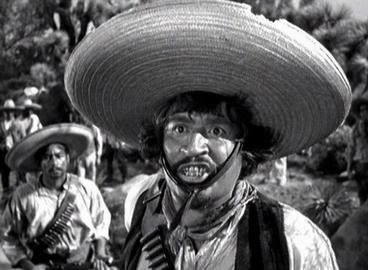


 Stepp testified that he and Jenkins regularly burgled buildings—and that he bought a wide variety of equipment used in such burglaries, including grappling hooks, crowbars, sledgehammers, and tracking devices for Jenkins and other police officers, whom he did not name.