

Fort Marshall: Baltimore's Civil War Bastion
Fort Marshall stood as a key Union defense in Baltimore, Maryland, during the American Civil War, built in 1861 to safeguard the city's eastern flank. The fort's construction came amid severe southern unrest following the April 18-19, 1861 riots—sparked by Fort Sumter's fall—where mobs attacked Union troops like the 6th Massachusetts on Pratt Street. While not directly involved (as it wasn't built until August-October 1861), it indirectly addressed the fallout: arrests of southern sympathizers Marshal George P. Kane and Mayor George W. Brown in September 1861, followed by martial law and the police shutdown, which heightened needs for federal fortifications like Fort Marshall to suppress secessionists.
Located on Snake Hill (also called Murray Hill or Potter's Hill) in what became the Highlandtown and Canton neighborhoods, this star-shaped bastion fort was constructed mainly by the 7th Maine Volunteer Infantry Regiment. Named after Colonel Thomas H. Marshall, who died in Baltimore shortly before its completion, the site included Camp Emory outside its walls.
Regiment. Named after Colonel Thomas H. Marshall, who died in Baltimore shortly before its completion, the site included Camp Emory outside its walls.
Strategic Role
Positioned about 1.5 miles from the city center on elevated ground, Fort Marshall offered better visibility than Fort McHenry across the harbor. Armed with up to 60 artillery pieces by war's end, it protected alongside Fort Worthington against Confederate threats and guarded the hospital at Patterson Park. Troops patrolled city streets, railroads, and warehouses to suppress local secessionists and saboteurs, even aiding 1864 elections on Maryland's Eastern Shore.
Daily Life and Operations
The fort housed 400 soldiers in barracks with a subterranean magazine, serving as a training ground for regiments before frontline duty. Service was described as monotonous yet privileged compared to stricter posts, with July 4 salutes reminding locals of Union control. A tragic 1863 incident killed Navy Commander Maxwell Woodhull during a cannon salute.
Legacy Today
Abandoned by 1866, the site was salvaged and redeveloped; in 1873, Baltimore German Redemptorists built Sacred Heart of Jesus Roman Catholic Church there after leveling the hill. Nearby, Fort Marshall Brewing Company operated from 1869 to 1899, boosting southeast Baltimore's brewing heritage in today's Brewer's Hill area. No physical remains survive, but it highlights Baltimore's transformation into a fortified Union stronghold.

Fort Marshall played no direct role in the immediate aftermath of Baltimore's April 18-19, 1861 riots or the arrests of Marshal George P. Kane and Mayor George W. Brown.
Timeline Mismatch
The riots erupted right after Fort Sumter's fall on April 14, 1861, with mobs attacking the 6th Massachusetts Regiment on Pratt Street. Federal authorities responded swiftly by September 1861, arresting Kane (accused of aiding secessionists) and Brown, then suspending Baltimore's police force under martial law led by General Benjamin Butler and later others. Fort Marshall's construction began later that fall (around August-September 1861 under Lt. Col. Henry Brewerton), with the 7th Maine Infantry building it on Snake Hill through October. It wasn't operational until after those April events.
Broader Context
Early riot suppression relied on immediate troop deployments like Camp Federal Hill (Fort #15), established in April 1861 with guns aimed downtown to quell pro-Southern unrest. Fort Marshall, armed later with up to 60 guns, focused on long-term eastern defense, patrols against saboteurs, and protecting Patterson Park's hospital—enforcing Union control over a restive city but not tied to the riots themselves. By 1862, its garrison (e.g., 5th New York Artillery) helped maintain martial law
Civil War Forts
Baltimore, Maryland, hosted dozens of fortifications during the Civil War, transforming from a pro-Southern hotbed into a heavily defended Union stronghold after the April 1861 riots.
Civil War Forts Overview
By 1865, the city featured 44 forts, batteries, redoubts, and armed camps—many temporary earthworks dismantled by 1869—to counter secessionist unrest and potential Confederate raids. These ringed the urban core, protecting key sites like railroads, bridges, and Patterson Park's hospital. Construction ramped up post-riots, with Fort Federal Hill (#15) as the first, its guns aimed downtown to enforce order amid arrests of Mayor Brown and Marshal Kane.
Pre-Civil War Defenses
Earlier sites like Fort Whetstone (1776 Revolution, star fort with 13 guns) and Fort Covington (1813-1832, ten-gun brick) guarded the harbor alongside Fell's Point Battery. Fort Babcock (1813, six-gun redoubt) marked Sailor's Battery west of McHenry.
Legacy
Most vanished under urban growth, but survivors like Fort McHenry (national monument) and Carroll's ruins recall Baltimore's pivotal role in keeping Maryland loyal. Explore remnants at Patterson Park or Federal Hill Park.
The Fort Federal Hill Cannons
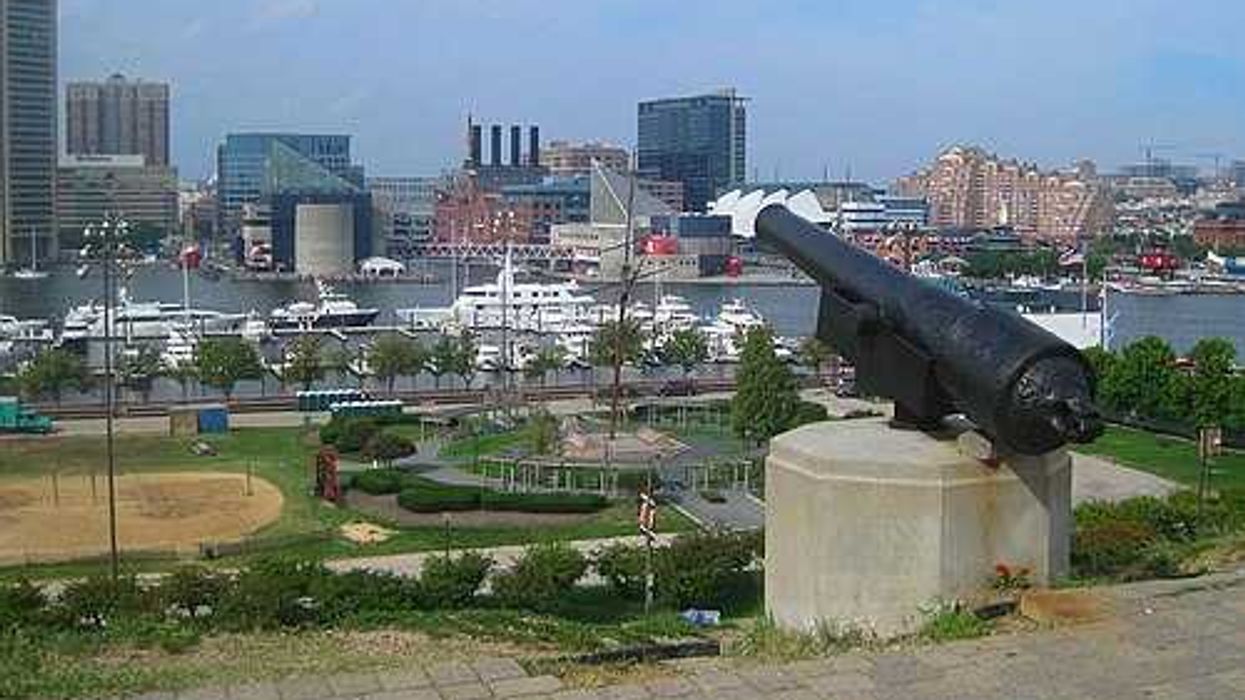
The cannons at Fort Federal Hill were deliberately positioned to point toward Baltimore's downtown core, including the Pratt Street area, as a show of force against Southern sympathizers.
Purpose and Setup
After the April 19, 1861, Pratt Street Riot—where mobs attacked the 6th Massachusetts Regiment—Union General Benjamin F. Butler occupied Federal Hill on May 13, 1861. He ordered earthworks built with numerous artillery pieces trained on the central business district across the Inner Harbor basin, aiming one large cannon at the secessionist Maryland Club on Monument Square. This deterred further uprisings in a city rife with pro-Confederate unrest, ensuring Maryland's loyalty without firing a shot.
Strategic Impact
The fort's guns overlooked key riot flashpoints like Pratt Street Station and Camden Station, backing martial law measures like the arrests of Mayor Brown and Marshal Kane. Replica cannons in today's Federal Hill Park still face that direction, symbolizing Union control.
Baltimore, Maryland, has a rich military history shaped by its strategic harbor on the Patapsco River and Chesapeake Bay. Over more than two centuries, the city built or adapted dozens of fortifications to guard against naval attacks—from the Revolutionary War era through World War II. The forts you mentioned (plus a few closely related ones) represent different periods: star-shaped bastions from the early republic, Civil War outposts, and Endicott-era concrete gun batteries from the late 19th/early 20th centuries.
Note: No record exists of a “Fort Collins” in the Baltimore area. It may be a reference to Fort Carroll (a common mix-up in local histories), which I’ve included below. Here are short narratives on each, drawn from official park records, historical documents, and military archives.
Fort McHenry (National Monument and Historic Shrine)
Built 1798–1803 on Locust Point (replacing Revolutionary-era Fort Whetstone), this pentagonal star fort was named for James McHenry, George Washington’s Secretary of War. Its defining moment came during the War of 1812: on September 13–14, 1814, Major George Armistead’s garrison endured a 25-hour British naval bombardment of rockets and shells. The fort held, preventing the capture of Baltimore. The sight of the giant 30×42-foot garrison flag still flying at dawn inspired Francis Scott Key to write “Defence of Fort M’Henry,” later set to music as “The Star-Spangled Banner.”
The fort later served as a Civil War prison, a WWI Army hospital, and a WWII Coast Guard training site. Today it is the only site in the National Park System designated both a National Monument and Historic Shrine. Visitors can walk the ramparts, see Rodman guns, and watch the flag-raising ceremony. It remains one of Baltimore’s most visited historic sites.


Fort Federal Hill (now Federal Hill Park)
In May 1861, shortly after the Pratt Street Riots, Union General Benjamin Butler occupied the prominent hill overlooking the Inner Harbor and hastily fortified it with cannons pointed at downtown Baltimore to deter secessionist activity. It was officially called Fort Federal Hill during the Civil War and garrisoned by Massachusetts troops. The city acquired the land in 1880 and turned it into a public park. Today the 10-acre hill offers panoramic skyline views; a few original cannons and a Grand Army of the Republic monument remain as reminders of its military past.
Fort Armistead
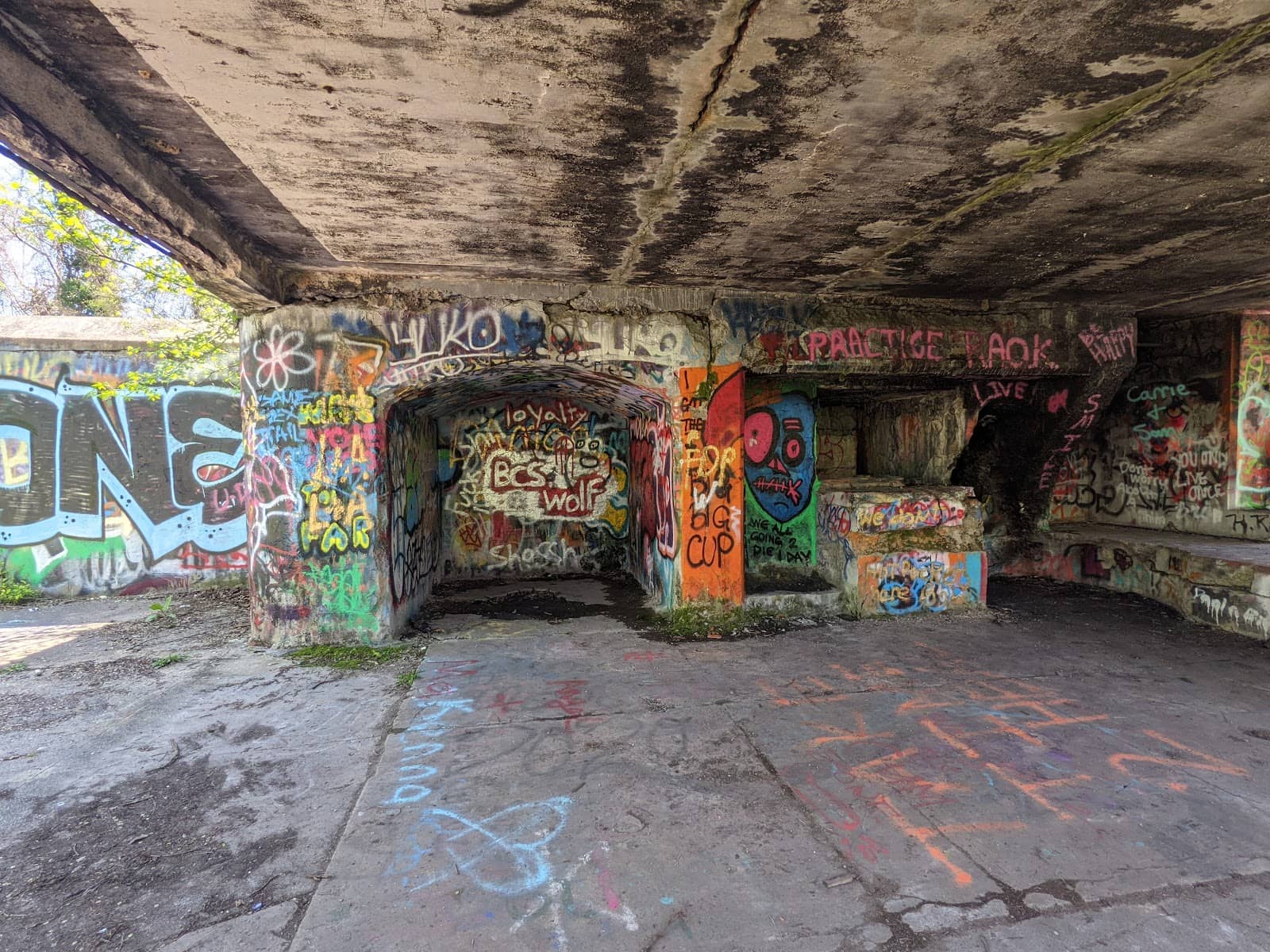
Constructed 1897–1901 at Hawkins Point as part of the Endicott Program modernizing U.S. coastal defenses, this concrete battery fort mounted disappearing guns (12-inch, 8-inch, and smaller rapid-fire pieces) and controlled a minefield across the harbor channel. It never fired in anger. After WWI the guns were removed; the site briefly stored Navy ammunition in WWII. Declared surplus in 1923, it became a city park in 1928. Today the overgrown concrete emplacements and tunnels are popular (if somewhat graffiti-covered) with urban explorers and fishermen.
Fort Howard (now Fort Howard Park)
The tip of North Point was the British landing site on September 12, 1814 (the day before the bombardment of Fort McHenry). In the early 1900s the Army built reinforced-concrete batteries here and made it the headquarters of the Coast Defenses of Baltimore—earning the nickname “Bulldog at Baltimore’s Gate.” Guns were removed after WWI; the site later served as a Veterans Administration hospital and WWII POW holding area. Baltimore County now operates the historic portion as a park with interpretive signs, gun mounts, and trails.

Fort Holabird (Camp Holabird)
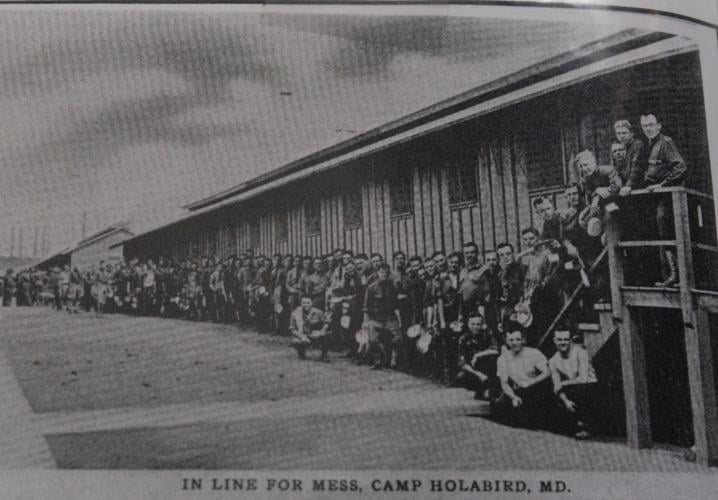
Established in 1917–1918 on marshland near Colgate Creek (Dundalk area), this was the Army’s first motor-transport training center and depot, named for Quartermaster General Samuel B. Holabird. It later became a major vehicle research facility (the Jeep was extensively tested and refined here) and, by the 1950s–60s, home to the U.S. Army Intelligence School and Counter Intelligence Records Facility. The post closed in 1973; most of the land became the Holabird Industrial Park. A sphinx statue once guarded the intelligence building (now gone).

Fort Carroll (likely intended as “Ft. Collins”)
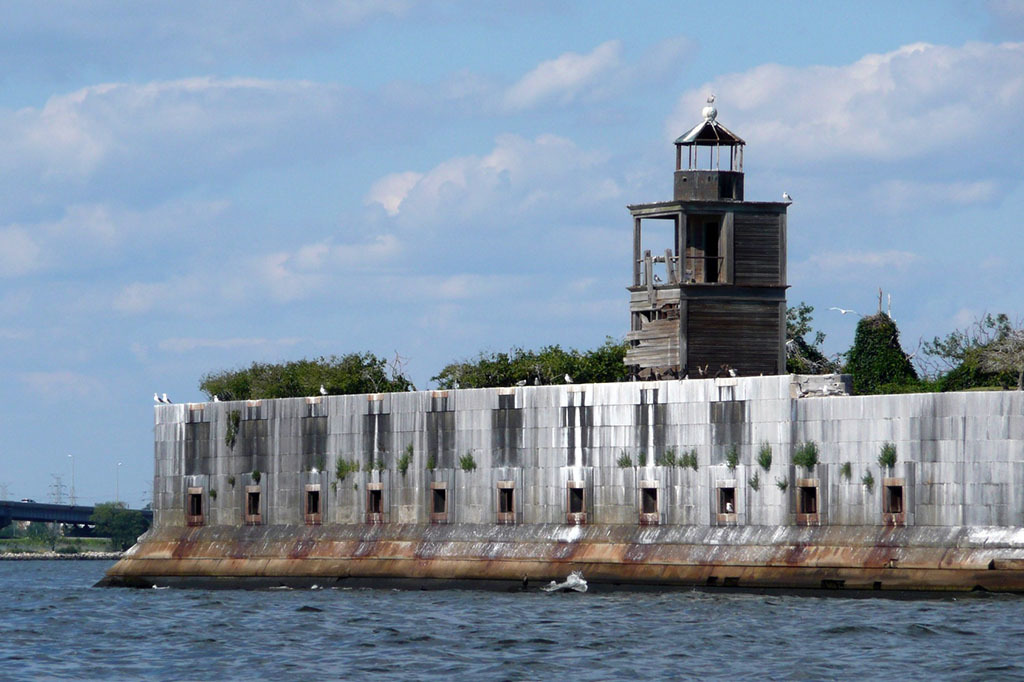
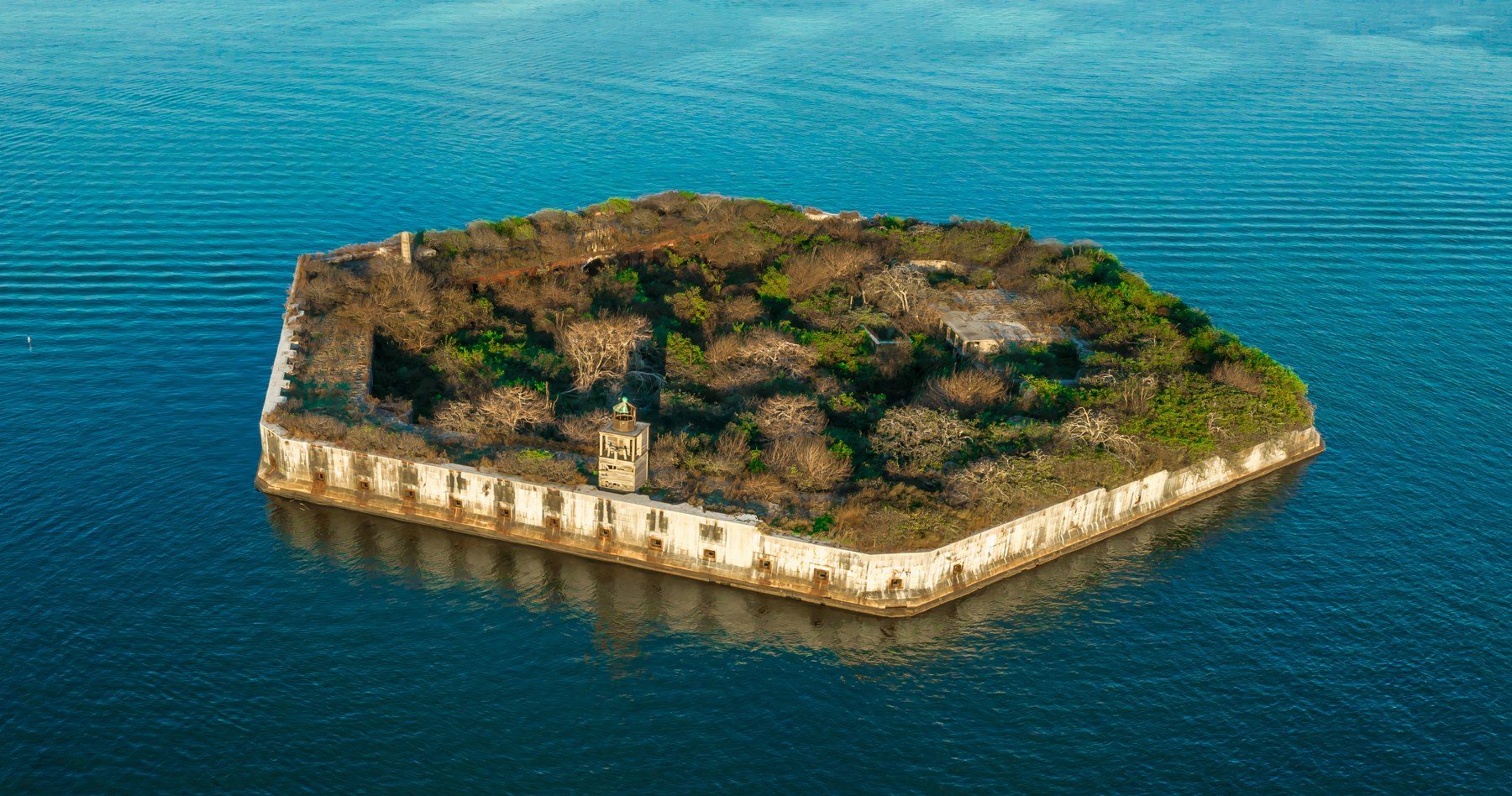
This hexagonal artificial-island sea fort sits in the Patapsco River south of the Key Bridge. Designed by then-Brevet Colonel Robert E. Lee and begun in 1848, it was never finished (walls were only partially built). Lightly armed during the Civil War, it received modern concrete batteries around 1900 but was abandoned after WWI. Today it is an abandoned, overgrown historic site listed on the National Register of Historic Places—reachable only by boat and occasionally visited by kayakers and urban explorers.
Other Notable Nearby Forts
- Fort Smallwood (another Endicott battery, now a county park with gun emplacements).
- Fort Garrison (1690s stone blockhouse in Baltimore County—one of Maryland’s oldest surviving frontier forts).
Many of these sites are open to the public today as parks or monuments, offering a tangible connection to Baltimore’s role in defending the young United States. If you’re planning a visit, Fort McHenry is the best starting point—then pair it with a drive or kayak trip to the others for a full “harbor defense tour.” Let me know if you’d like driving directions, current hours, or more photos!
Fort McHenry National Monument & Historic Shrine
Location: Locust Point, Baltimore City
Era: Built 1798–1800; used through World War II
Summary:
The most iconic fort in the Baltimore region, Fort McHenry National Monument & Historic Shrine – Wikipedia is a star-shaped coastal bastion fort whose steadfast defense during the War of 1812 became one of America’s defining moments. On September 13–14, 1814, British warships bombarded the fort for 25 hours in the Battle of Baltimore. When dawn broke and the American flag still flew over the ramparts, lawyer Francis Scott Key was inspired to pen “Defence of Fort M’Henry,” the poem that became The Star-Spangled Banner, the U.S. national anthem.
Originally replacing an earlier Revolutionary War fort (Fort Whetstone), Fort McHenry guarded the entrance to Baltimore Harbor for well over a century and saw service through World War I and World War II (as a Coast Guard training base). It became a National Monument in 1939 and remains one of the nation’s most celebrated historic sites.
Fort Armistead
Location: Hawkins Point, Baltimore City
Era: Built 1897–1901 (Coast Artillery)
Summary:
Part of the late-19th century Endicott coastal defense system, Fort Armistead stood at the outer edge of Baltimore’s harbor defenses, farther seaward than McHenry. Named for Major/Colonel George Armistead (the commander of Fort McHenry during the 1814 bombardment), it was armed with modern artillery of the era and intended to deter hostile warships from reaching Baltimore.
The fort was decommissioned after World War I and the land eventually became Fort Armistead Park, with remnants of batteries still visible (though much overgrown). The site even saw brief reuse in World War II as a naval ammunition storage area.
Fort Holabird
Location: Southeast Baltimore / Dundalk border
Era: 1918–1973
Summary:
Unlike the coastal artillery forts, Fort Holabird was a U.S. Army base and training depot, established in World War I as a motor transport training center and later home to a quartermaster and signal depot. It grew in size during World War II and continued active Army use through the early Cold War.
The post garnered some notoriety in the late 1960s and early 1970s when portions of the intelligence school and prisoner-witness programs operated there. After closure in 1973, most of the land was transferred to Baltimore City and redeveloped into an industrial park, though traces of its past persist in local memory.
Fort Howard (Maryland)
Location: North Point peninsula, Baltimore County
Era: Endicott coastal defense era (late 1890s–1920s)
Summary:
At the eastern mouth of the Patapsco River, Fort Howard formed another segment of Baltimore’s harbor coastal defenses. Originally a landing area of British troops in the War of 1812 (at North Point), the site later became a heavily armed Endicott period fort with reinforced concrete batteries and large Coast Artillery guns.
Nicknamed the “Bulldog at Baltimore’s Gate,” Fort Howard worked in tandem with Forts Armistead, Carroll, and Smallwood to protect the inner harbor against potential naval assault — though it never saw combat in those later years. The fort was turned over to the Veterans Administration in 1940 and today much of the area is public parkland within Fort Howard Park with preserved batteries and interpretive signs.
Fort Federal Hill (Federal Hill Park)
Location: Downtown Baltimore (Federal Hill neighborhood)
Era: Civil War (1861–1865)
Summary:
The rise known today as Federal Hill Park was used as a defensive position well before the Civil War, but its most militarily notable period came during the Baltimore riot of 1861 and early Civil War months, when Union troops hastily erected earthworks and cannons atop the hill to command the city and deter Confederate sympathizers.
During this period it was dubbed Fort Federal Hill. While few formal structures remain, replica cannons and interpretive plaques mark its place as a key point in Baltimore’s Civil War history — a reminder of how strategically even urban high ground was used in past conflicts.
Related Nearby or Notable Forts
While not on your original list, these help complete the picture of Baltimore’s ring of defenses:
Fort Carroll
Location: Patapsco River artificial island
Era: 1850–1921
Summary: A massive hexagonal sea fort built on an artificial island designed to protect the channel into Baltimore Harbor. Constructed under the Third System of coastal defenses and even supervised in part by Robert E. Lee (before his Civil War fame), Fort Carroll never fired in anger and was largely obsolete by World War I. Today it remains an eerie abandoned structure in the river.
Summary
Baltimore’s forts reflect a long arc of American military history — from Revolutionary defenses and the War of 1812 to 19th-century coastal artillery modernization and 20th-century Army logistics facilities. Some, like Fort McHenry, are national shrines; others, like Fort Holabird, played equally vital but lesser-known roles in wartime mobilization. Many of the coastal forts are now parks or historic sites that let visitors imagine what defending one of America’s great ports once entailed.
POLICE INFORMATION
We are always looking for copies of your Baltimore Police class photos, pictures of our officers, vehicles, and newspaper articles relating to our department and/or officers; old departmental newsletters, old departmental newsletters, lookouts, wanted posters, and/or brochures; information on deceased officers; and anything that may help preserve the history and proud traditions of this agency. Please contact Retired Detective Kenny Driscoll.

NOTICE
How to Dispose of Old Police Items
Please contact Det. Ret. Kenny Driscoll if you have any pictures of you or your family members and wish them remembered here on this tribute site to honor the fine men and women who have served with honor and distinction at the Baltimore Police Department. Anyone with information, photographs, memorabilia, or other "Baltimore City Police" items can contact Ret. Det. Kenny Driscoll at
Copyright © 2002 Baltimore City Police History: Ret Det. Kenny Driscoll
