

War Stories
Here is a story which was written in David Simon's book "Homicide A Year on the Killing Streets "In contrast, there is a rare, refreshing moment of civic responsibility displayed by one James M. Baskerville, who flees after shooting his young girlfriend in her Northwest Baltimore home, then calls the crime scene an hour later and asks to talk with the detective.
“Who am I talking to?”
“This is Detective Tomlin.”
“Detective Tomlin?”
“Yeah, who’s this?”
“This is James Baskerville. I’m calling to surrender to you for killing Lucille.”
“Goddammit Constantine, you bald-headed motherfucker, I’m up here trying to do a crime scene and all you can find to do is fuck with me. Either come up here and help or—”
Click. Mark Tomlin listens to a dead phone line for a moment, then turns to a family member. “What did you say was the name of Lucille’s boyfriend?”
“Baskerville. James Baskerville.”
When the second call comes, Tomlin catches it on the first ring. “Mr. Baskerville, listen, I’m really sorry about that. I thought you were someone else … Where are you now?”
Later that night, in the large interrogation room, James Baskerville—who would later agree to life plus twenty years at his arraignment—offers no excuses and readily initials each page of his statement of confession. “I’ve committed a serious crime and I should be punished,” he says.
Mark Lucas Tomlin tells us of the time he and "Mad Dog" were detailed to Vice and were attempting to pick up hookers at the New Motel... They were using Al’s car with the MAD DOG vanity plates. A fine young lass took the duo to her rather opulent room and promptly advised them to drop trowel, saying, “I know if you are cops you are not allowed to take down your pants” Being the dedicated Officers that they were, they immediately “let their pant's hit the floor”. Suddenly the nightingale of the evening pointed to Al as she screamed with laughter. Not wanting to look down at first, Mark's curiosity got the best of him, he had to see what she was laughing at... Looking down he saw that Al was wearing boxer shorts with a "hearts and handcuff" pattern all over them. The three of them broke out laughing until they cried… Our fine officers bid her adieu…. and left her to her business. ROFLMAO We all have our favorite vice story, and this reminds me of the time Delmar Dickson and I were working a plain clothes detail. Our sergeant at the time was Greg Thurston, he loved a good whore arrest, so we figured we'll go out get a hooker, some drugs, and maybe a handgun. We were young full of piss and vinegar and set to rid the world of crime. Within an hour of the shift, we passed this working girl on Calvert Street. She was a real she, and asked if we were dating, Sonny says he is on leave from the military, (he had a high and tight haircut - I always had long hair and a Fu Manchu mustache) so we told her he was on leave, I was a welder and I was brought into town to get him some action. Sonny then extended his hand and introduced us by saying, "I'm John, and this is my Buddy!" she looked at me and said, "What's your name?", I couldn't help but answer, "Buddy". Sonny and I laughed at this quick wit and now had two funny names. Then that hooker reached her arms around my waist and squeezed both butt cheeks as she proceeded to teach me the lessons of her world. She grabbed on, held me real tight, and said, "Have a nice night officer!" She then went on to say, "I like you two, and at first, you had me fooled, so I am going to give you a lesson; only police carry two wallets!" That was the last time I carried two wallets, to this day I still only carry one wallet. And the rest of that night, we were reeling them in like it was a pro bass fishing season. We also made a drug arrest or two.

All Police should have written a book, it would be stranger than fiction, more passionate than a love story, funnier than the best comedy act, a real tear jerker novel, the stories and the lies that were told, and yes the GOOD times we had as cops.
We are just a bunch of old police sitting around with a couple of “CHILLIES” (cold beer) talking trash, war stories, Police stories, and some true confessions. Tell it all…..Brother....... Get it off your chest, we are all waiting... The afore written was written by Bill Hackley and edited by me, I removed the word COP and replaced it with POLICE
From Robert Yamin
We received information around 1968 or 1969 that there was a guy dealing Drugs on the corner of 32nd and Greenmount across from Sweeney's Nite Club, SE corner. We parked about 100 feet south on Greenmount. We were driving a 1968 Plymouth "Diamond Cab" that was donated to us by the Cab Company. Still painted to look like a Cab it was a great Undercover car. While two of us sat in the Cab drinking Coffee. Officer Tom Gummer who was outstanding in Undercover surveillance, Was sitting on the corner leaning against a building. Tom who hadn't shaved for months, needed a haircut, was dressed like a homeless vagrant, filthy dirty holey khaki pants that he had poured water on in the crotch area and down the leg to appear he had wet himself. Dirty shirt, 40-year-old filthy khaki raincoat. Old shoes with holes in them and different colored holey socks. He had dirt on his face and looked as if he hadn't bathed in years. He had bought a pint of really cheap wine and poured some on himself and he had the rest of the bottle in a brown paper bag. He smelled really bad too. He appeared to be highly intoxicated and in a stupor. We had worked out a hand signal if he observed a Drug deal go down and we were going to make the arrest without blowing his cover. After about 5 minutes of watching him and laughing at him - Cruising Patrol 5 pulls up next to him. They hollered at him to move on but, Tom ignored them and figured they would leave. The two Officers got out stood him up and as he was unable to stand without there help, and was mumbling incoherently and drooling they helped him into the back of the Wagon. Meanwhile, we were in the Cab Laughing hysterically as Tom was not going to break his cover. We followed the CP to the ND and watched as they helped him out of the CP and into the Desk Sgt. area. They hung him on the Brass Bar as he was unable to stand. The Turnkey came out and as the Desk Sgt. asked his name all Tom did was Mumble and Drool. The Sgt. told the Turnkey to put him in a Cell and let him sleep it off. As the Turnkey and one of the Wagon Officers started to drag him back to the Cell Block, I walked over to Tom and lifted his shirt and pulled out a 38 Revolver in an inside the pants holster, and set it on the rail of the Desk Sgt. I then pulled up Toms pant leg and removed a 38 snub nose from a leg holster and set it on the rail. The Desk Sgt., Turnkey, and both wagon Officers were starting to perspire. Tom stood up and recovered his weapons and I advised them he was undercover. As we started to leave the Desk Sgt. asked if I was going to "Write It Up"? I answered with "Write What Up?, We Were Never Here!!!". I think everybody learned a good lesson that night about Searching a Person.
The Captain's Corner: Follow the Hole
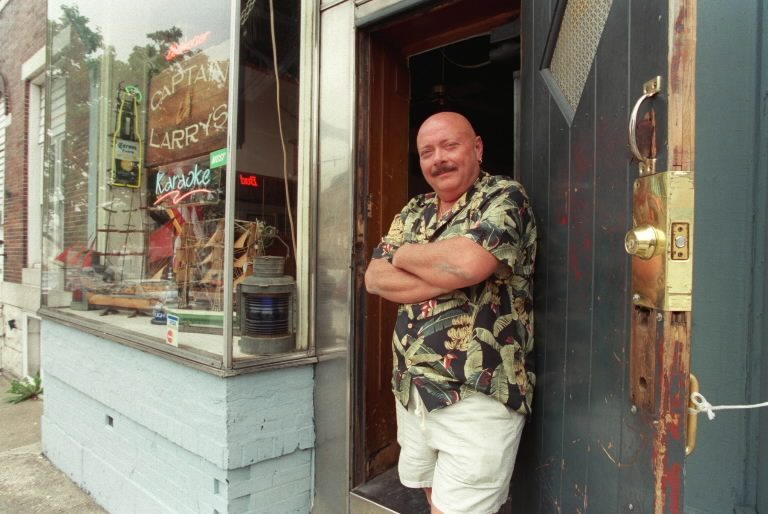
If you've ever spent much time in Captain Larry's, you've probably heard about the bullet holes in the ceiling.
They're tough to spot, but if you look hard enough, you'll see them.
In this week's column, the now-retired namesake, Capt. Larry Gross, reveals just how those bullet holes got there in the first place. The helm is yours, Captain!
I would close the bar at 2 a.m. My heart being with the cops, they needed a little release, so we would sit in there late at night and play games like Follow the Hole.
I would put a hole in the ceiling with a 40-caliber Glock, and then they would take their service revolvers -- if they wanted to bet -- and bet they could put a hole on top of the hole. This went on for quite a few years. ...
The only thing I can figure is the place had about four or five subfloors. When we fired, nothing would go completely through. Then I started seeing a few indentations in the bathtub (upstairs), and I said, 'Well, I guess we're through and we'd better stop this because it's going to start going through.'
The apartment upstairs I had just rented to a former city police officer, Ron. He looked just like Doc Holiday in the movies. Ron's a strange sort of guy.
This one particular night -- it was a February night -- and it was about 4 a.m. I had some cops in there after hours. We were half juiced and decided to play follow the hole. Poor Ron is sitting on the toilet (upstairs).
It's snowing outside. And I get this knock on the door. I'm going 'Jesus Christ, it's got to be the police.' The guys all said, 'Well, we are the police.'
I said, 'Yeah, they'll shut me down for three days, but you guys will all get fired.' I peek out the window, and it's Ron in a bathrobe, with nothing on under it.
I said, 'Jesus,' and opened the door. Ron's barefoot. It's snowing. He walks inside. I said, 'Ron, what are you doing? Are you all right? Christ, close that bathrobe. What's the matter?'
He said, 'Captain, who in the (bleep) is shootin'?'
I said, 'Well, we're playing Follow the Hole, Ron. What's the matter?'
He pulls his robe back, and he's got a bullet graze up the back of his (buttocks).
He said, 'You sons of (bleeps) almost killed me.'
That was the last time we played Follow the Hole.
(Baltimore Sun archive photo)
Joke 1
Someone took a polaroid picture of Sgt Horner's desk, then removed all the items from atop the desk and removed the file cabinets that held the desk up... they then put the desktop on the floor and used the polaroid to know where to put all the items so the desk would be as it was before they moved it. When the Sergeant came back in, he was expressionless, but being the Marine he is, that didn't hide that fact that he found little to no humor in the prank
Joke 2
Someone took all of the drawers out of Lieutenant Gonyo's desk and then turned the desk upside down and put the drawers back in. They then turned the desk right side up which meant the drawers and all of the contents was upside down. When he came in and opened his desk drawers the contents fell out to the Floor, and if you know Lieutenant Gonyo, you know he didn't care for jokes.
Joke 3 - (no desk, well unless you consider the desk that held the coffee pot, but we do have a supervisor)
Sgt. Steve Lukasik and Sgt. Craig Meier had Officer John Dodson pick-up three goldfish and the three of them were put into Lt Jimmy Henderson's coffee pot while he was on H-Days. Each shift took turns cleaning the water and feeding the fish until The Lieutenants returned. Sgt Meier was on an H-Day so missed Lieutenant's first day back, and missed the expression on his face.
Nightstick History/Info/Silliness
When I started out, the older officers often had a short, hard-rubber club they carried in the sap pocket on the leg seam of their uniform trousers. They referred to it as a "day billy", harkening back to a time when the day shift on a police department was a fairly quiet affair. When the sun went down and the crazies came out, however, they parked the day Billy and picked up a "nightstick". Most of us also carried a slap-jack, or "convoy" blackjack tucked in a pocket in case we were inadvertently caught somewhere without a stick. Like in a diner during a meal break, or at turn-key downtown. You were expected to always use an impact tool. If you hurt your hand from punching someone and had to go off on injured status, you were forcing someone else to leave their job to cover your beat. Getting injured legitimately was expected, but getting hurt foolishly was considered to be bad form.
Being an avid law enforcement history buff, I learned over my 38-year career that there often is a lot of tradition, and a lot of really fun stories, attached to the various styles and configurations of nightsticks and billies used by the different agencies across this country. I've managed to collect quite a number of 'signature' sticks from various LE departments while I was on the job. It's hard for me now to pick one of them up, and heft it in my hand, and not recall the first time I stepped out of a cruiser at a disturbance call, my new gunbelt creaking stiffly, and remember the first time anyone ever came up to me and said, "There, Officer...it's that blue house with the chain link fence". In time, I got to visit LE agencies in other parts of the country and was always fascinated by their impact weapons, and the local history attached to them.
Sometimes it involved the type of nightstick issued at an agency. Like the espantoon used by the coppers at Baltimore PD. If you aren't aware of it, the espantoon outwardly looks like a standard old-style nightstick. However, it was modified slightly in shape and the design of its leather thong and held in the opposite way a normal nightstick was held. That is, you conked miscreants with what most of us would identify as the knurled "handle" end of the stick, not the "barrel" end. I've heard a couple of different stories as to why the espantoon is employed that way, and how it came by its name. I'm not sure anyone knows for sure, but it's a neat story.
Contrast that with the lance-like 26-inch "Koga" style nightsticks that gained favor on the west coast in the 1970s, supplanting the older style nightsticks with the leather thong that beat cops had used for years. The trim, unadorned "Koga" stick represented a formalized system of close quarters hand-to-hand control over out-of-control troublemakers. The first real martial arts-based system of stick use that I recall being taught to street cops in this country. Most of us had only been taught a few chokes holds and come-along at the academy, along with hours of striking and short-sticking the heavy bag at the gym. Give a determined road-dog copper a dyna-wood Koga-style nightstick, and a modicum of training, and you couldn't find anyone in the county who could whip him in a fight.
At a lot of police departments, either the agency issued a cheap POS nightstick, or it required each officer to procure his own "knocker". If you poke around in the history of those departments, you'll generally come upon the name of one or two officers who, as a sideline back in the day, turned out high-quality nightsticks and made a few bucks selling them to everyone. The makers didn't charge much for a nightstick because their brother officers couldn't afford much on the skinny salaries they made. These were sticks that had an identifiable style of manufacture that soon became the signature tool of that agency, often nearly as identifiable as the agency's badge or shoulder emblem. The stick makers' names are all but lost in the mists of time now. Names like Tony Barsotti at San Francisco PD, Ernie Porter at Cincinnati PD, or Joe Hlafka at Baltimore. You can spot those sticks by their contours just as sure as if the maker's mark had been burned into the wood.
Frankly, I've always thought the real advantage to working in uniform was that you could nonchalantly carry a real club when you were in public and on a job, and no one gave you a second glance. The old cops told me to "take his wind, or take his wheels" when fighting a high-end resister, and I quickly learned the effectiveness of a short-stick jab to the solar plexus, a full-power smash to the short ribs, or well-centered strike at the back of the thigh or calf muscle. The idea was to debilitate and wear down a resister, bring him back under control and get him cuffed up. "Don't cripple him, if you don't have to", one old timer told me, "Just take the starch out of him and bring him in". Damned if it didn't work as well, or better, than anything invented since.
That's what the nightstick represented then. Carried idly in your hand, twirled at the end of a leather thong, or dangling from a gun belt, it was the visible symbol of the restrained presence that characterizes the American police officer. I know that when I started out some of the old sergeants actually discouraged anyone from wearing a baton ring on your gun belt. They believed that stick should always be in your hand or tucked under your arm as you scribbled in your notebook. I rebelled, being a practical sort, and started wearing a baton ring as soon as I got off probation in the spring of 1972. Then, as now, there was a lot of anarchist sentiment in the country and assaults on LEO's were high. Having my stick in a ring on my belt cut down on the chances of some CHUD getting it and getting himself shot for his efforts.
You remember what a CHUD is, right? A "citizen having urban difficulties"?
In time I tried using nightsticks made of polycarbonate plastics, even briefly tried one made out of aluminum. The only one that felt good in my hands was an 18-inch-long "billy" made by Monadnock that I bought about 30 years ago. It had a slightly oversized grip which fit nicely in my oversized hands and was marketed as the "Tuff Boy" model. It sure lived up to its name. It didn't warp out of shape if you left it locked in the car during the summer, was fast-handling and darn near stout enough to hammer fence posts into the ground. But, being a short "billy", it was never as versatile as the 24 or 26-inch hardwood nightsticks were.
Anyway, I enjoy collecting sticks and stories. If you have one, I'd sure like to hear about it. Any "El Kabong" or "Wood Shampoo" stories you have will not be reported... in fact no names will be attached, I will assume some literary freedom was taken, creative writing entered, and in the interests of keeping it fun, would never drop a dime, but I will raise a scorecard 5 thru 10 is how we'll grade them.
Cagney & Lacey
Here's a funny story. Northern District Operations Partner's Brenda May and Wanda Dobbins. We were known by the "area's usual suspects" as "Cagney & Lacey". They were on a detail for burglaries when a call came out for a 10-31 Burglary on Reservoir Lane near Cold Spring Lane. The call came complete with suspect and clothing description. Cagney and Lacey rounded the corner and sure enough, they see a gentleman running away on Cold Spring matching the broadcasted description down the shoestrings. So Lacey bails out and gives chase, she was known for her extremely fast running, and for ALWAYS catching her suspect, so she out on foot, Cagney is their wheel-man.. or wheel-woman... one on heels the other on wheels, and the chase is on... Cagney re-broadcasting description & giving a direction of travel. She sees the suspect [30-1] running toward one of the underground tunnels along the park at Underwood Rd with my Lacey close behind on his heels.
Knowing there is no room to turn around in those tunnels Cagney drives to the other side of the tunnel, to head him off at the pass... Just as she arrived at the other side of the tunnel ready to wait patiently for 30-1 to come out, she hears him crying out for her help, he comes out of the tunnel with his hands up, crying, "Take me, Cagney, I give up... Take me before Lacey puts a "Mama whippin on me"!! After he was handcuffed & in the car they all had a good laugh. And all these years later, Cagney still can't get the picture of her partner running all balled up like a duck in that small tunnel yelling at 30-1, and somehow he was convinced she would put a "Mama whippin!!" on him... Oh and just to be clear.. he was identified as the suspect wanted for the burglary that was called in. Funny thing with police and war stories. Whenever we hear one, we can instantly think of a similar story. This is no different, we were conducting a field interview, when the guy we were talking to gave a name and address, but couldn't spell his own last name, and his date of birth would have made him about 5 years younger than the age he gave... He was asked if he had anything on him and if we could check, at which time he said yes, and as he turned he broke and ran, we gave chase, and over time we turned a corner he was there not far in front of us, so when we turned a corner and he was gone we knew the chase was oven, and all it would take now, was to find his hiding spot.. which by the way was normally close to the corner where we first lost eyesight of him.. with this I knew he was behind one of two small brick walls in that area. So I went to the wall from a different angle and saw him hiding, I went back around, and announced to others that we lost him, this drew their attention to me and gave me the opportunity to point to the wall and bush he was hiding in. Then when I got closer, I gun faced him and told him to get down on the ground, while keeping his hands out in plain view... He started yelling Mom... Mommy... Mom... Mommy!: over and over... until he was in cuffed... So when all was said and done, and we were down the station, I asked him why did he call for his mommy (the guy was in his mid to late '30s) he said if you call for help, no one will listen, but if you call for mom, or mommy at least half the people will look to see what is going on.
Free Movie Tickets
I saw this Pic of the Senator Theater on a friend’s Facebook page and it reminded me of an incident, in 1968.
Commissioner Pomerleau made a point of advising the Department he would not tolerate anyone taking any gifts or favors. It would be cause for termination. One night an officer called the manager of the Senator to ask if he could "Badge" his way in with a date to watch the 10:00 PM showing of Bullitt (1968) Steve McQueen is a San Francisco cop assigned to guard a star witness. The officer temporarily working that Post in the Northern District, on a Day shift. Had been told by the manager to call anytime he wanted to get in, the two had become friends as the officer stopped by daily just to say Hi and make sure things were ok.
So that night the officer picks up his date and heads over to the theater. He arrived about 15 minutes before the 8:00 PM show ended, and we walked into the lobby. There was a line around the block of people waiting to buy tickets for the 10:00 PM show.
As the officer entered the Lobby he and his date were greeted by the Manager who advised him that not 10 minutes after the officer called, the Commissioner called and asked if he could get in to watch the 10:00 PM show with his wife. He was standing in the Lobby with his wife. He had arrived a few minutes before the officer. Seems he "BADGED" his way in same as he had ordered the rest of the Department not to do.
The Officer walked by him and said "Good Evening Commissioner". He said "Good Evening". He knew the officer had done the exact same thing he did to get into the show.
What a Lying Dishonest Piece of Shit He Was.
Robert Yamin
Around 1969 I wrote two Search and Seizure Warrants for two Fraternity Houses that sat side by side on Benninghouse Rd near York Road for Drug Parties. Expected a large number of people in the two houses. The Area Two Squad (consisted of 10 Officers from WD, ND, and NWD). We worked Plain Clothes and Undercover. We were sometimes called "The Odd Squad" (I wonder why?). I asked Major Miller for additional Officers for the "Raid". He assigned 10 Officers an a Sergeant from each of the 3 Districts in his Area. We all met at the Western. Not wanting to let the occupants of the two houses be alerted by a large number of Officers arriving in numerous cars. I borrowed a 26 Ft Cargo Truck from Eagle Truck Rental. after loading about 33 Uniforms and 9 Plain Clothes in the Back I drove to the Location. I could hear "Moo's" coming from the back of the truck. When I arrived I opened the Cargo Door and Released the "Hounds". We hit them before they realized what was going on. 48 arrests were made. When I requested 7 Cruising Patrols I had to repeat the request 3 times to the Dispatcher who apparently thought I was pulling his leg. The Turnkey and Desk Sergeant at the Northern both almost suffered Heart Attacks as the Wagons arrived realizing the work they had awaiting them.
Youth rally in '69 suddenly turned into a nightmare of violence MEMORIAL STADIUM: AN UNUSUAL DAY
It was anything but decent.They held a big rally at Memorial Stadium in the spring of 1969, a rally for local youth to come together and show that not all of America's children were drug-crazed hippies intent on dismantling the establishment of the United States. Said one participant: "It was supposed to show that everything wasn't going to hell in a hand-basket." This gig was trouble from the word go. Memorial Stadium has often been used for non-sporting events, and an assortment of oddities have taken place there since 1954 when the ballpark's current configuration was essentially completed. In 1981, Christian evangelist Billy Graham held a ballpark crusade to save souls; fireworks launched from the outfield regularly exploded across the Waverly skyline during Independence Day celebrations; the city held a pep rally for public school teachers there before the 1989-90 school year; and thousands of people show up at the ballpark every winter to buy Christmas trees from Lions' Club volunteers working for the Eye Bank of Maryland. From 1940 until 1976, George Bull and the Hamilton American Legion Post No. 20 sponsored the "March of Champions" drum '' and bugle corps competition that brought marching bands and majorettes to the stadium from up and down the East Coast. Easter Sunday sunrise services have been celebrated at the stadium and, although not in the current structure, the 33rd Street site has been host to rodeos, boxing matches, open-air town meetings, "I Am An American Day" parades and auto races. But nothing -- not even the big lightning storm that forced rock star Eric Clapton to cancel a stadium concert during the Bicentennial summer of 1976 -- rocked the big pile of bricks on 33rd Street like the decency rally. "I don't know what started the trouble," said a local reporter sent to cover it. "But it was quick and ugly." Although it was promoted in every high school throughout the metro area, very few kids knew exactly what it was they were attending. Many youngsters arrived on the rampant rumor that James Brown and his Famous Flames were going to give a free concert. Others believed it would be an arena to protest the war in Vietnam or a forum to push for the right of 18-year-olds to vote. And thousands of naive youngsters from churches and community centers in the suburbs arrived on buses for an afternoon of wholesome music and good clean fun. Altogether, more than 40,000 people showed up at the stadium on April 20 to attend the "Maryland Youth Rally for Decency." By the time police shut the rally down not long after it started, rioting and mugging left 138 people hurt, 142 arrested and seven stabbed. Seven police officers were injured, including one whose kneecap was crushed when someone threw a trash can down a ramp. One girl was nearly raped in the upper deck, 40 transit buses were damaged, seats were torn from the stands and thrown onto the field, a blind kid was punched in the face and robbed of his bus fare, and police got a call for a bomb at the stadium in the middle of everything. "This was supposed to reunite everybody, to get the teenagers together and make everybody happy," said Baltimore police officer Joseph H. Longo, assigned to a traffic detail at the ballpark that day. "It didn't work." Looking for a quick yardstick to measure the difference between Baltimore today and Baltimore 22 years ago? In all the violence and confusion at Memorial Stadium's Decency Rally, no one fired a gun. The rally was patterned after a similar festival that attracted 30,000 young people in Miami several months earlier, an event staged in response to singer Jim Morrison's arrest for exposing himself at a Doors concert in Florida. Others were expected across the nation. Said Baltimore comptroller Hyman A. Pressman, the key adult organizer of the event: "This [will] give youth an opportunity to show that the majority have a love for decency and the respect for morality which is the badge of proper upbringing in their homes." Pressman, in failing health and unavailable for comment for this article, seized on the event, icing it with the kind of buildup he lathered on the March of Dimes Walk-a-Thon for years. He predicted that Baltimore could stage a rally for decency bigger and better than any town in the nation. He was assisted by state Senator Larry Young (D-Baltimore), who was chairman of the Mayor's Youth Advisory Council in 1969. "We got together to counter all the negatives being espoused about young people back then," said Young. "Hyman Pressman was our adult liaison." With his penchant for corn pone and publicity, Pressman immersed himself in the project, calling the shots so far as to exclude the local White Panther anti-war group from a pre-rally parade by saying the decency event was "not for the likes of them." David Franks, a Baltimore writer, was a young teacher at the Maryland Institute College of Art in the spring of 1969 as well as the "Minister of Sound" for the White Panthers. Franks -- convinced that the series of decency rallies were "a vehicle of the Nixon Administration to polarize the youth of America" -- had submitted for approval the text of a hip patriotic speech he wanted to give at the rally. Young organizers of the event voted to allow Franks to address the stadium crowd, but he never made it to the microphone."I was down in the dugout runway waiting for my turn to speak, and when I walked on the field surrounded by a group of Black Panthers, there was a column of 50 police barring me," he remembered. "All I was doing was trying to exercise my right to free speech, trying to point out that there was another version of patriotism and that was to resist the war. I was carrying the flag as we entered the field. The cops broke through the Black Panthers to arrest us and I wasn't going to let Old Glory touch the ground. It was the end of my innocence." And also the end of the decency rally. While the anti-war group was being arrested on the field -- "I remember being asked by a cop: 'Do you want to go to the hospital or to jail?' " said poet Joe Cardarelli -- total hell erupted in the stands. The issue wasn't political. "The blacks were beating up the whites," said the late Major William A. "Box" Harris, a black police lieutenant and the head of the department's community relations at the time. Michael Golden, now the spokesman for the state Department of Health and Mental Hygiene, was on the wrong end of Lieutenant Harris' assessment. Golden was 14 at the time and took a bus to the stadium with a church group from Glen Burnie. From the moment he walked into the stadium, he said: "It just seemed to be mayhem. There was no sense of agenda or order, just a cacophony of people running around and screaming." Golden and his friends found some seats in the right-field bleachers and made the mistake of going inside the lower concourse to get something to eat. "We were in line at a stand when this kid about half my size came up to me and stuck his hands in the front pockets of my jeans, and instinctively I just pulled his hands out. He said he was going to fight me and the next thing I knew someone hit me behind my knees and when I dropped to the floor they kicked me in the face and the head and chest and stomach and groin and I was scared. Really scared," Golden said. "My friends were just standing there in shock, and thank God this girl came up and started telling these guys what animals they were and when they got into an argument with her I ran out of the stadium The stuff those kids witnessed, Officer Joe Longo and the police department's entire night shift -- more than 500 cops dispatched en mass to 33rd Street in riot gear with shotguns -- tried to control. "It was one hectic, terrible day like a bomb exploded and it had racial tones," he said, remembering a trio of young men inside the stadium dressed in African garb and carrying spears. "Fights broke out simultaneously all over the stadium, all at once." As the crowd dispersed through Waverly, violence and robberies continued along 33rd Street, Greenmount Avenue, and side streets in between. The next day, Mayor Thomas D'Alesandro III explained it like this: "There was a hoodlum element of 500 to 1,000 youths that don't represent any segment of the community or any cause. This is a group that is out to disrupt society as we know it." In the end, the thugs accomplished what the anti-war hippies could not. "I took some solace," said David Franks, "that it ended the decency rallies in this country."
Officer Gary Dresser worked 713 car in the Western District he was good Police. Here's a quick and funny story about him, every morning while on day shift Gary would sit in the roll call room, with a large cup of coffee and read the newspaper from cover to cover. Officer Tom Gummer, (who had false teeth) asked Gary if he could have a sip of his coffee. Dresser didn't care, so told him to go ahead, Gummer then dropped his uppers into Gary's coffee cup on purpose as he took his sip. The entire shift, who were in the room knew what Gummer had done and waited for Gary to take the last long drink of his coffee. When he did Gummer's teeth hit Gary's lips, and of course, when Garry looked to see what it was, there were Gummer's, pearly whites grinning at him from within his cup.. and as he looked up he saw Gummer's toothless smile laughing at him from across the room.
Now that is Warped Police humor.

There was a time, not too long ago that we used typewriters in the BPD, a Lieutenant working with a broken typewriter was forced to take the following actions
He wrote - I had a typewriter at ND that the letter "F" had broken off. I tried for weeks to get it repaired. I finally typed a lengthy 95, substituting "PH" for the broken "F", and ended with the sentence "Get the Phucking thing Phixed!"
(Taken from a "Thread" on the bpd message board)
When you came on, you had to buy your own shirts. No short sleeves allowed.
You had a long double breasted wool winter coat that had a little leather holster built into the pocket.
You were issued that little Colt .38 that fit in that pocket.
Your first time driving a radio car (after walking for a couple of years) was a Studebaker Lark...three on the tree, no air, no power steering.
You took a part 1 crime report and put it in your hat. If no one asked for it in a week or so, you threw it away...no report, no crime!
You could only write reports with a departmental pen with "special ink"
Your call time was 6 after the hour and on your first day walking a beat you made your call only to find a bottle of Four Roses whiskey in the call box.
You changed shifts and didn't have the same sergeant because they rotated on a different schedule than the patrolman.
Your boss was a captain, his boss was an inspector and his boss was a chief inspector.
Your badge was stamped steel and just said "POLICE"
Your siren was you holding your head out the window and yelling siren noises.
You walked up to Frederick Ave. and took the number 8 streetcar out to your foot post.
You had to tip the station house clerk $5 to get a day off.
A guy in your squad got fired on the spot for cheating on his wife or not paying his bills.
Your sergeant was a marine veteran of the Chosen Reservoir in the Korean War and you were scared to death of him.
Someone even laid a hand on a police officer, he paid the price in spades
Guys in your squad backed you up on almost every call
You were proud to be on the BPD and people respected you
You rode a police motorcycle with no electric start, spark advance and a foot clutch and side shifter that would launch you over the handlebars or break your leg, or you didn't start it correctly.
There were detectives in something called the VIP Squad
You typed all your 95's on an old manual typewriter
You actually tried up your post on the midnight by shaking each and every door and your sergeant made sure you did it
You trembled in fear before the captain when there was a commercial burglary on your post last night
You went to the range and "enhanced" your score with a number 2 pencil. You were thankful that you had a career that you could retire from at age 55 AND
25 years of service+ You were jealous of the "2 %" who had a better pension plan
You went to Virginia Donuts on Ensor St. and picked up some day-olds, met your squad in the park and drank coffee, ate donuts and read Snuffy Smith and Flash Gordon in the Baltimore New Post with everything spread out on the hood of your radio car
Your old timer side partners had been to places called Tarawa or Iwo Jima or the Buldge
You could catch forty winks on the midnight shift in "the hole" and while you were doing it your side partners snuck up on you and let the air out of your tires or stole your badge.
You had to wear your hat at all times, in or out of the car
You turned in your little Colt revolver and got a brand new Smith and Wesson but they still made you carry those little soft lead bullets
The first thing you did after graduating from the police academy, is to have gone down to American Sporting Goods on Baltimore Street and buy an off-duty snub nose for $42 including a holster.
You went to Sweeney's, Judges, Hollywood Park or the Green Dolphin to meet girls
You ate most of your meals at Nate's and Leon's
You made prisoner meal runs to the Busy Bee or the Maryland House
You went to court on your day off and didn't get paid
You went to court later in your career and got $4 for traffic court and $6 for downtown court
You went to traffic court at night at the old CD and the magistrate was drunker than the guy you locked up for drunk driving
The courtroom was in the station house and when you worked midnight, you always made an arrest so you could get paid for an "overnighter".
You locked up that guy for drunk driving and he had to blow a .15 on that old time breathalyzer
The desk sergeant was a God and had a bail sheet on the wall listing the amounts for each crime and "commissioner' was your BIG boss, not someone who worked for the court
You ever left your call box key with all your house and car keys in the call box
You went to a local bar after 4X12 shift and got home in time to take the kids to school
You were handed a pile of warrants to serve on your post...all for unpaid parking tickets
You were issued your very first walkie-talkie and accidentally dropped it in the toilet
Helicopters were something that the army had
Your radio car had a "On Foot Patrol" light on the top and a "STOP" fender light facing backward on the right fender
Your side partner came over from something called the Baltimore City Park Police
As a rookie, you heard eye-popping stories about "the Avenue" or "Brookfield and Whitelock" or "the Block".
You would hear Tac guys talk about something called "the down under" or SD guys meeting at "6 1/2" or some strange number like that.
You would fill out a car stop sheet from a motor officer's ticket book.
You were having a really good day until you were told to go to Howard Uniform to get measured.
You went over to Erdman Leather and saw Miss Mary (all 400 lbs. of her) get a new handcuff case.
You ate a "death" ball" at Cimino's on Gay St. and felt sick for three days.
You ate a "big bag" at the Little Tavern and felt great.
You ate a "floating" hamburger from Harley's Sub Shops that had been floating in grease for a day or two then stunk up your two man car
Your tie had grease on it from all the above-mentioned food joints plus the Double T diner in Baltimore County.
You were expected to solve all the problems in your neighborhood because you were "a cop".
You dreaded working a school corner because the crossing guard was sick again.
You were assigned a "snow corner" and you were supposed to keep traffic moving while you froze to death in that cloth reefer.
Your parents were very proud of you for being a cop, but your mom worried herself sick over it but never let you know it.
You cried your eyes out when a fellow officer was killed but did it in private where no one, not even your wife would see you.
You have lived long enough to remember all these things plus all the wonderful times you had with some of the most unique, strange, funny, weird and fantastic people on earth. _________________ "Life is tough....it's even tougher if you're stupid." John Wayne
I remember having a couple placing their hands on a cold badge asking to be divorced. The badge was cold as you said you walked a foot post for a couple of years. Some Sgt's would set up tell tales just to make sure you "tried" up a business location. God forbid if someone got in on you on the Midnight shift. Some were all rumored now to have carried a snub nose 5 shot off-duty revolver in the old reefer jacket pockets. Not that I or anyone else I know of ever did that. Some Sgt's would have you place your written reports in a call box. He would pick them up @ his leisure. My first Sgt said to call for unit---. Don't call me for anything unless you have a Homicide or you are involved in the Police involved shooting! And yes unlike today where standards have been lowered. You had better have A Credit rating. None of this as I have seen guys have their personal cars towed off the station house lot for being reposed. Johnny Wilbanks the walking man's friend. Located on Harford Rd & Southern Avenue. He would give cops a fair price on a nice looking used car. But God helps you if you ever missed one payment. He would repo it in a flash. Then you paid him a towing/storage fee to get it back. He had a very nice all Stone house on Old Harford Road just inside the County. I understand from a family relative he not only lost his car sales business but lost his house as well. The merry go syndrome. What goes around comes around!
I remember when the police cars were black and white and fire engines were red and open cabs - ambulances were meat wagons with the driver and "attendant" have no training other than basic first aid. I remember calls boxes and also fire alarm boxes - not only do I remember seeing foot patrol on Greenmount Avenue and the firefighters brought their wooden chairs and sat outside - got a call - they left the doors open -yeah I'm old but it's OK - Oh and I also remember when they went with the baby blue police cars and fluorescent pink/orange fire engines.
MIKE ANDREW
I don't know too much about all the young" whipper-snappers" you people are talking about except Mike Andrew. Mike has most likely forgotten more about Policing then most of the people at Headquarters will ever know! I worked for Mikes father Sgt Pop-Pop Andrew on Pennsylvania Ave (old number two bailiwick) for many years and he was one of the old hard nose cops. He later made Lt and ran the Vice Squad downtown. To be sure a lot of knowledge was passed on from father to son that helped Mike survive all the flack that was to come later. Damn I; am getting OLD
8charlie14
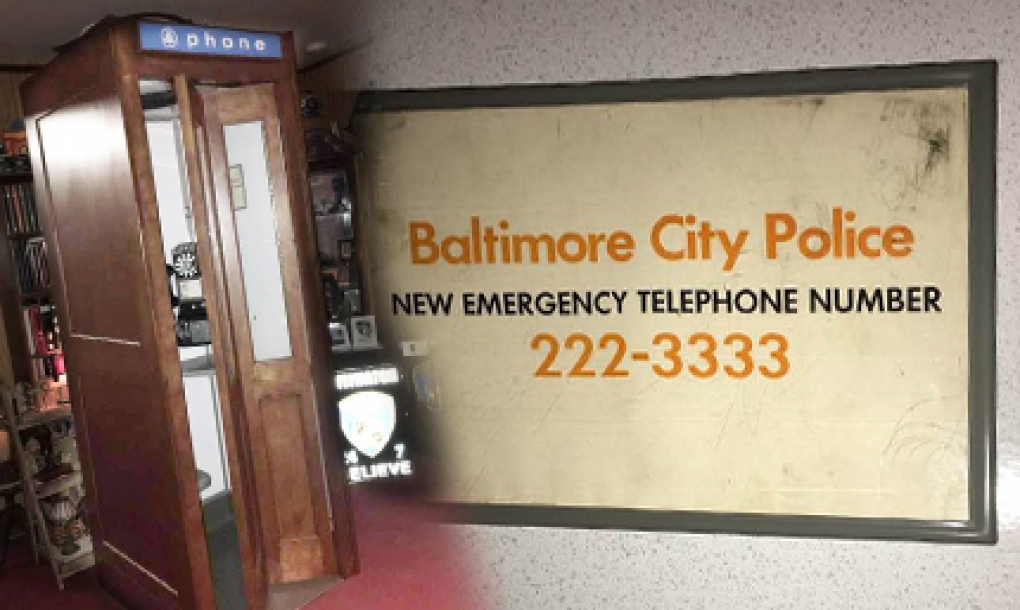
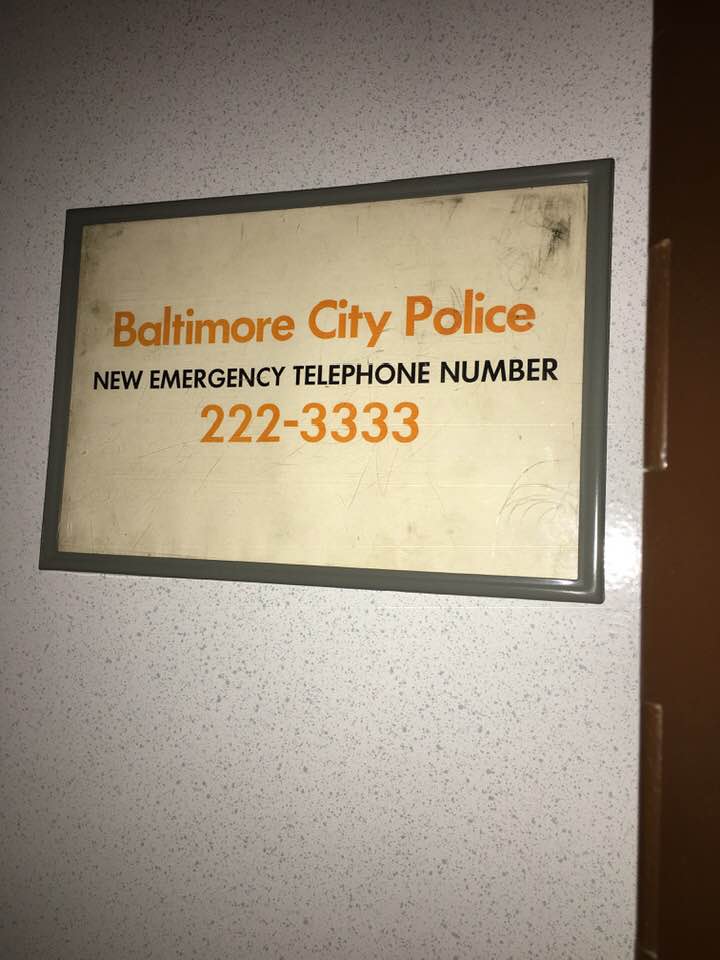
I can remember when I came on we didn't have 911 yet. If a phone call was made to the BPD it was 222-3333 if I remember correctly. We also still had call boxes which were great. You could put your raincoat in the call box if you were walking a foot post and expecting rain during your shift. We had traffic court at 211 E. Madison Street and if you were working the midnight shift it was not uncommon to get an 11 AM or 2 PM summons. All in all, it was fun times for me as a rookie, and I learned a lot from the guys who had time on, they taught you the proper way to do things. You really didn't want to bother your Sgt unless it was important. I also forgot to add we were measured for summer and winter pants by Howard Uniform and were issued the "Refer Coats" the first few years I was on. There are a number of fine folks on this board who came on the job before I did, but I was lucky enough to experience some of the old school ways of the job. It was very helpful to me during my career.
No Prisoners you mentioned the Park Police. What a gravy do-nothing gig. They drove as I recall green & white Plymouth's. Then it all ended when they were merged into the Baltimore City Police Department. Those guys were not happy campers about that. One, in particular, lived in the Belair Edison area. When it was a safe & very nice area to live in. After the merge, he was assigned to the Eastern District, and retired from there. I run into him once every once in a while. now a very old man. Who still plays golf a couple of times a week. I remember Gus @ the old dog house. A lot of Motor men would go there. Gus gave a little bit of a price break. Not the cleanest place though to eat. Vaguely recall Nate & Leons. But you certainly got backed by most Sergeants & so forth. Unlike today they see how many they can burn.
FAIRY TAIL vs. POLICE WAR STORY
The difference between a fairy tale and a Police war story: The Fairy Tail starts off: "Once upon a time" The Police War Story starts off: "You guys ain't going to believe this CRAP"
We had a homicide on Auchantroley terrace and nobody could spell that street so they took the body to Liberty Heights Ave. An old piece of BPD history.
Lt. Tim O'Connell and I had heard of a story from some of the older police who believed in tradition and the passing down of a story and ritual from the past. It concerned one of the three "police commissioners" from the late 1860s and 1870s. The department had three police commissioners commanding it at this time. One was Harry Gilmor. Harry Gilmor fought under John Singleton Mosby as an "irregular" in the Civil War.
Harry, because he knew the Maryland area, participated in numerous destructive raids for the Confederacy in and around Baltimore. After the war, Harry became a police commissioner of the Baltimore Police Department. When he died in 1872, he was buried on Confederate Hill with other confederates, in SW Baltimore. Though Harry was a confederate, he chose, in his last will and testament, to be buried in his Baltimore Police uniform. But, because of his confederate past, the state would not allow his body to be buried in Maryland soil with the Maryland seal.
It is still found on our uniform buttons to this day. His buttons were ordered to be cut off of his uniform by the state. The story and legend handed down to police through the years were that if you were on a promotional list and really wanted to be promoted, you went to Harry Gilmor's grave and placed a brass BPD uniform button on his grave. I have heard of some officers who pursued this course and were, in fact, promoted. In late 1998, Tim O'Connell and I wanted to see if the legend was still true. There was a Sergeant; we'll call Sergeant P, who was on a promotional list for Lieutenant and the list was soon to run out. The sergeant had an open IID number and he himself thought he would never make it and was very sad. So, Tim and I took Sergeant P to Confederate Hill to place the button. It was raining. I instructed Sergeant P to place the uniform button on a ledge on Harry's grave. He did. I then told him to get on his knees in the mud and "ask for Harry's help in being promoted". He did.
Within a week the IID number was cleared and he was promoted to Lieutenant. Harry still has the power.
Ret. Lt Jerry DeManss BPD

Reasons to Carry a Gun Today
My old grandpa said to me son, 'there comes a time in every mans life when he stops bustin' knuckles and starts bustin' caps and usually it's when he becomes too old to take an ass-whoopin'. I don't carry a gun to kill people. I carry a gun to keep from being killed. I don't carry a gun to scare people. I carry a gun because sometimes this world can be a scary place. I don't carry a gun because I'm paranoid. I carry a gun because there are real threats in the world. I don't carry a gun because I'm evil. I carry a gun because I have lived long enough to see the evil in the world. I don't carry a gun because I hate the government. I carry a gun because I understand the limitations of government. I don't carry a gun because I'm angry. I carry a gun so that I don't have to spend the rest of my life hating myself for failing to be prepared.
I don't carry a gun because I want to shoot someone. I carry a gun because I want to die at a ripe old age in my bed, and not on a sidewalk somewhere tomorrow afternoon. I don't carry a gun because I'm a cowboy. I carry a gun because, when I die and go to heaven, I want to be a cowboy. I don't carry a gun to make me feel like a man. I carry a gun because men know how to take care of themselves and the ones they love. I don't carry a gun because I feel inadequate. I carry a gun because unarmed and facing three armed thugs, I am inadequate. I don't carry a gun because I love it. I carry a gun because I love life and the people who make it meaningful to me. Police Protection is an oxymoron. Free citizens must protect themselves. Police do not protect you from crime, they usually just investigate the crime after it happens and then call someone in to clean up the mess. Personally, I carry a gun because I'm too young to die and too old to take an ass-whoopin'. 'Be who you are and say what you feel...Because those that matter...don't mind...And those that mind... don't matter
Actual stories furnish by some of Baltimore’s Finest.
Enjoy, I hope the statute of limitations has expired on some of these incidents.
STORY 1
While working a midnight shift an officer was caught by one of his side partners sleeping in the wee hours of the morning. Several squad members were gathered to watch as Bernie Sullivan, God rest his soul, was about to be lit up, LITERALLY.
One of the guys sneaked up on Bernie and poured lighter fluid across his windshield, torched it and then began hollering and screaming and banging on the car doors for Bernie to wake up. Imagine waking up to a wall of fire!!!!
It’s a wonder Bernie did not have a heart attack.
Bernie was fine, the car was fine, and Burnie from then on slept with one eye open.
STORY 2
Sundays were traditionally slow, especially on day shift.
After roll call, several of us would meet behind a school for coffee and donuts and to read the paper.
I was elected to get the coffee & donuts another was chosen to get the Sunday paper.
While I was getting 4 coffees and donuts, one of my good buddies was filling my car door handles with jelly. I believe it was our 1972 Fords had the door handles that you had to reach in and pull up.
Imagine juggling 4 coffees and a box of donuts, you reach for the door handle and wind up with slimy jelly on your hand. Almost lost all the goodies, but managed to preserve the POLICE FOOD, OK.
Later that day I found the car of my buddy that I suspected of sliming my door handle. His car was parked and unlocked. I took several Sunday newspapers, balled them up and filled his car from ceiling to floor, front to back.
He learned to lock his radio car, and I learned to check my door handles.
One early morning while working the wagon in the Southeast Dist, received a 10-14, don’t remember exactly where, upon my arrival observed an officer with 2 black female arrests.
They were placed in the wagon and transported to the Northeast Dist. (woman’s detention) Upon arrival, both were taken before the desk Sergeant who was apparently extremely busy working the crossword puzzle. With just barely a glance he said, Officer, they belong in your district, they are not what you think they are, they got Adam's apples. Both of the so-called females broke out laughing.
They were quickly placed back in the wagon for the ride of their lives back to the proper district. Needless to say, both lost their wigs and crushed maybe a few other things along the way. They were not laughing upon arrival at the Southeast District. BOOKED as 2 black males………
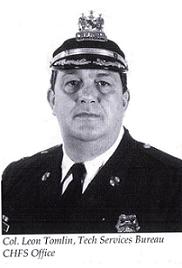
Col. Leon Tomlin
STORY 4
Leon Tomlin
One day, as I attempted to enter the old Northern District Station House, which many of you will remember had an enclosed unroofed area, whose entrance was on 34th street, I walked by Leon, who was talking with a bunch of other cops.
We were always doing odd things to each other, to get a laugh, and as I walked by him, he took my nightstick from its holder and threw it all the way down the other end of the yard. He then stood there and simply smiled.
Now Leon stood about 6/4, and at that time weight about 240lbs. Not someone a 5/10 140 lb guy argues with. So I just turned around and walked down the yard and got the stick.
When I came back, Leon had gone into the men’s room, which had an open window through which you could observe anyone inside. He was standing at the urinal, with his manhood in his hand, looking at the ceiling.
Now this being in the early part of July, and myself having some confiscated cherry bombs in my pocket, and a lit cigarette in my mouth, the temptation to retaliate was simply too great to resist. After all, one good deed deserves another, and since the same group of cops was still standing there, waiting to see if I had the balls to get back at him, I had to do it.
I lit the fuse, tossed it in the window, and watched it roll between his legs. It came to rest, very near the heal of his shoe. I never intended for it to land that close to him, and I called out, “Leon look out.” He turned his head towards my direction and thinking since I was outside, I could not be a threat, said “f*(* you splinter.”
In horror, I watched the thing explode, saw him leap in terror, and scream in surprise. I did not stay around. I ran like hell, up to the Police Academy which was on the second floor of the station-house, and let things cool down a while.
When I came back down, I found that Leon’s shoe lost a heel, and when the cherry bomb went off, he was in the process of putting his manhood back where it belonged. It, his manhood, acquired a nasty tear, and he was still white-faced from shock. Oh, and his pants were wet.
We were about to start roll call, and there were probably forty guys standing around. In those days we had five bailiwicks in the district, and we were always fully staffed. As soon as I was noticed, everyone started clapping and patting me on the back.
It was then that I saw Leon approaching me. Not knowing what to expect, the hair on the back of my head started to rise, but with all the guys I worked with watching, I had to stand my ground. Then I noticed a smile on his face and realized that he knew he had gotten what he deserved, and thought it truly was funny. I also knew that I would live in fear until he found a way to get back at me. And he surely would.
Leon later rose to the rank of Col and was one of the most respected bosses the department ever had. But most importantly he was my side partner and a good friend. He passed away a few years ago and remains a legend to this day.
Sgt. Nick Caprinolo
Lt. CHUCK MILAND
BALTIMORE CITY POLICE
Have you ever been stopped by a traffic cop, and while he was writing a ticket or giving you a warning, you got the feeling that he would just love to yank you out of the car, right through the window, and smash your face into the front fender?
Have you ever had a noisy little spat with someone, and a cop cruising by calls, "Everything all right over there?"
Did you maybe sense that he really hoped everything was not all right, that he wanted one of you to answer, "No officer, this idiot's bothering me"? That all he was looking for was an excuse to launch himself from the cruiser and play a drum solo on your skull with his nightstick?
Did you ever call the cops to report a crime - maybe someone stole something from your car or broke into your home - and the cops act as if it were your fault? That they were sorry the crook didn't rip you off for more? That instead of looking for the culprit, they'd rather give you a shot in the chops for bothering them in the first place?
If you've picked up on this attitude from your local sworn protectors, it's not just paranoia. They actually don't like you. In fact, the cops don't just dislike you, they hate your guts! Incidentally, for a number of very good reasons.
First of all, civilians are so damn stupid. They leave things laying around, just begging thieves to steal them. They park cars in high crime areas and leave portable TVs, cameras, wallets, purses, coats, luggage, grocery bags, and briefcases in plain view on the seat. Oh sure, maybe they'll remember to close all the windows and lock all the doors, but do you know how easy it is to bust a car window? How fast it can be done? A ten-year-old can do it in less than six seconds! And a poor cop has another larceny from auto on his hands. Another crime to write a report on, waste another half hour on. Another crime to make him look bad.
Meanwhile, the idiot who left the family heirlooms on the back seat in the first place is raising hell about where were the cops when the car was being looted. He's planning to write letters to the mayor and police commissioner about what a lousy police force you have here; they can't even keep my car from getting ripped off! What, were they drinking coffee somewhere?
And the cops are saying to themselves, Let me tell you, jerk-weed, we were seven blocks away, taking another stupid report from another idiot civilian about his stupid car being broken into because he left his stuff on the back seat too.
These civilians can't figure out that maybe they shouldn't leave stuff lying around unattended where anybody can just pick it up and boogie.
Maybe they should put the stuff in the trunk, where no one but Superman is gonna see it. Maybe they should do that before they get to where they're going, just in case, some riffraff is hanging around watching them while the car is being secured.
Another thing that drives cops wild is the "surely this doesn't apply to me" syndrome, which never fails to reveal itself at scenes of a sniper or barricade incidents.
There's always some idiot walking down the street (or jogging or driving) who thinks the police cars blocking off the area, the ropes marked POLICE LINE: DO NOT CROSS, the cops crouched behind cars pointing revolvers, carbines, shotguns, and bazookas at some building, all of this has nothing whatsoever to do with him - so he weasels around the barricades or slithers under the restraining ropes and blithely continues on his way, right into the line of fire.
The result is that some cop risks his ass (or hers - don't forget, the cops include women now) to go after the cretin, and drag him, usually under protest, back to safety.
All of these cops, including the one risking his ass, devoutly hope that the sniper will get off one miraculous shot and drill the idiot right between the horns, which would have two immediate effects:
The quiche for brains civilian would be dispatched to the next world, and every cop on the scene would instantaneously be licensed to kill the scumbag doing the sniping. Whereupon the cops would destroy the whole freaking building, sniper and all, in about 30 seconds, which is what they wanted to do in the first place, except the brass wouldn't let them because the idiot hadn't killed anybody yet.
An allied phenomenon is the "my... isn't this amusing" behavior exhibited, usually by Yuppies or other members of high society, at some emergency scenes. For example, a group of trendy types will be strolling down the street when a squad car with lights flashing and siren on screeches up to a building. They'll watch the cops yank out their guns and run up to the door, flatten themselves against the wall and peep into the place cautiously. Now if you think about it, something serious could be happening here. Cops usually don't pull their revolvers to go get a cup of coffee. They usually don't hug the sides of buildings just before dropping in to say hello.
Any five-year-old ghetto kid can tell you these cops are definitely ready to cap somebody. But do our society friends perceive this? Do they stay out of the cops' way? Of course not! They think it's vastly amusing. And of course, since they're not involved in the funny little game the cops are playing, they think nothing can happen to them.
While the ghetto kid is hiding behind a car waiting for the shooting to start, Muffy, Chip, and Biffy are continuing their stroll, right up to the officers, tittering among themselves about how silly the cops look, all scrunched up against the wall, trying to look in through the door without stopping bullets with their foreheads.
What the cops are hoping, at this point, is for a homicidal holdup man to come busting out the door with a sawed-off shotgun. They're hoping he has it loaded with elephant shot, and that he immediately identifies our socialites as serious threats to his personal well-being. They're hoping he has just enough ammunition to blast the hell out of the giggles, but not enough to return fire when the cops open up on him.
Of course, if that actually happens, the poor cops will be in a world of trouble for not protecting the "innocent bystanders". The brass wouldn't even want to hear that the idiots probably didn't have enough sense to come in out of an, acid rain. Somebody ought to tell the quiche eaters out there to stand back when they encounter someone with a gun in his hand, whether he happens to be wearing a badge or a ski mask.
Civilians also aggravate cops in a number of other ways. One of their favorite games is, "Officer can you tell me...?" A cop knows he's been selected to play this game whenever someone approaches and utters those magic words. Now it's okay if they continue with, "...how to get to so and so street?" or "...where such and such a place is located?" After all, cops should be familiar with the area in which they work. But it eats the lining of their stomachs when some idiot asks, "Where can I catch the fifty-four bus?" Or, "Where can I find a telephone?"
Cops look forward to their last day before retirement when they can safely give these idiots the answer they've been choking back for 20 years: "No maggot, I can't tell ya where the fifty-four bus runs! What does this look like, an MTA uniform? Go ask a bus driver! And no, dog breath, I don't know where ya can find a phone, except wherever your eyes see one! Take your head out of your ass and look for one!"
And cops just love to find a guy parking his car in a crosswalk next to a fire hydrant at a bus stop posted with a sign saying, "Don't Even Think About Stopping, Standing, or Parking Here. Cars Towed Away, Forfeited to the Government, and Sold at Public Auction," and the jerk asks, "Officer, may I park here a minute?"
"What are ya nuts? Of course, ya can park here. As long as ya like! Leave it all day! Ya don't see anything that says ya can't, do ya? You're welcome. See ya later." The cop then drives around the corner and calls for a tow truck to remove the vehicle.
Later, in traffic court, the idiot will be whining to the judge, "But your honor, I asked an officer if I could park there, and he said I could! No, I don't know which officer, but I did ask! Honest! No wait judge, I can't afford five hundred dollars! This isn't fair! I'm not creating a disturbance! I've got rights! Get your hands off me! Where are you taking me? What do you mean ten days for contempt of court? What did I do? Wait, wait..." If you should happen to see a cop humming contentedly and smiling to himself for no apparent reason, he may have won this game.
Wildly, unrealistic civilian expectations also contribute to a cop's distaste for the general citizenry. An officer can be running his ass off all day or night, handling call after call and writing volumes of police reports, but everybody thinks their problem is the only thing he has to work on.
The policeman may have a few worries too. Ever think of that? The sergeant is on him because he's been late for roll call a few days; he's been battling like a badger with his wife, who's just about to leave him because he never takes her anywhere and doesn't spend enough time at home and the kids need braces and the station wagon needs a major engine overhaul and where are we going to get the money to pay for all that and we haven't had a real vacation for years and all you do is hang around with other cops and you've been drinking too much lately and I could've married that wonderful guy I was going with when I met you and lived happily ever after and why don't you get a regular job with regular days off and no night shifts and decent pay and a chance for advancement and no one throwing bottles or taking wild potshots at you?
Meanwhile, that sweet young thing he met on a call last month says her period is late. Internal Affairs is investigating him on a disorderly arrest last week; the captain is pissed at him for tagging a councilman's car; a burglar's tearing up the businesses on his post; and he's already handled two robberies, three family fights, a stolen auto, and a half dozen juvenile complaints today.
Now here he is on another juvenile call, trying to explain to some bimbo, who's president of her neighborhood improvement association, that the security of western civilization is not really threatened all that much by the kids who hang around on the corner by her house.
"Yes officer, I know they're not there now. They always leave whenever you come by. But right after you're gone, they come right back, don't you see, and continue their disturbance. It's intolerable! I'm so upset, I can barely sleep at night!"
By now the cop's eyes have glazed over. "What we need here officer," she continues vehemently, "is greater attention to this matter by the police. You and some other officers should hide and stake out that corner so those renegades wouldn't see you. Then you could catch them in the act!"
"Yes ma'am, we'd love to stake out that corner a few hours every night, since we don't have anything else to do, but I've got a better idea," he'd like to say. "Here's a box of fragmentation grenades the Department obtained from the army just for situations like this. The next time you see those little crumb snatchers out there, just lob a couple of these into the crowd and get down!"
Or he's got an artsy-craftsy type who's just moved into a tough, rundown neighborhood and decides it's gotta be cleaned up. You know, "Urban Pioneers."
The cops see a lot of them now. The cops call them volunteer victims. Most of them are intelligent, talented, hard-working, well-paid folks with masochistic chromosomes interspersed among their otherwise normal genes. They have nice jobs, live in nice homes, and have a lot of nice material possessions, and they somehow decide that it would be just a marvelous idea to move into a slum and get yoked, roped, looted, and pillaged on a regular basis.
What else do they expect? Peace and harmony? It's like tossing a juicy little pig into a piranha tank.
Moving day: Here come the pioneers, dropping all their groovy gear from their Volvo station wagon, setting it on the sidewalk so everyone on the block can get a good look at the food processor, the microwave, the stereo system, the color TV, the tape deck, etc.
At the same time, the local burglars are appraising the goods, unofficially, and calculating how much they can get for the TV down at the corner bar, how much the stereo will bring at Joe's Garage, who might want the tape deck at the barbershop, and maybe mama can use the microwave herself.
When the pioneers get ripped off, the cops figure they asked for it, and they got it. Do you want to poke your arm in a tiger cage? Don't be amazed when he eats it for lunch. The cops regard it as naive for trendies to move into crime zones and conduct their lives the same way they did upon Society Hill.
In fact, they can't fathom why anyone who didn't have to would want to move there at all, regardless of how they want to live or how prepared they might be to adapt their behavior.
That's probably because the cops are intimately acquainted with all those petty but disturbing crimes and nasty little incidents that never make the newspapers but profoundly affect the quality of life in a particular area.
Something else that causes premature aging among cops is the "I don't know who to call, so I'll call the police" ploy.
Why the cops ask themselves, do they get so many calls for things like water leaks, sick cases, bats in houses, and the like--things that have nothing whatsoever to do with law enforcement or the maintenance of public order?
They figure it's because civilians are getting more and more accustomed to having the government solving problems for them, and the local P.D. is the only government agency that'll even answer the phone at 3:00 A.M., let alone send anybody.
So when the call comes over the radio to go to such-and-such an address for a water leak, the assigned officer rolls his eyes, acknowledges, responds, surveys the problem, and tells the complainant, "Yep, that's a water leak all right! No doubt about it. Ya oughta call a plumber! And it might not be a bad idea to turn off your main valve for a while." Or, "Yep, your Aunt Minnie's sick all right!. Ya probably oughta gett'er to a doctor tomorrow if she doesn't get any better by then." Or, "Yep, that's a bat all right! Maybe ya oughta open the windows so it can fly outside again!"
In the meantime, while our hero is wasting time on this nothing call, maybe somebody is having a real problem out there, like getting raped, robbed, or killed.
Street cops would like to work the phones just once and catch a few of these idiotic complaints: "A bat in your house? No need to send an officer when I can tell ya what to do right here on the phone, pal! Close all your doors and windows right away. Pour gasoline all over your furniture. That's it. Now set it on fire and get everybody outside! Yeah, you'll get that little critter for sure! That's okay; call us anytime."
Probably the most serious beef cops have with civilians relates to those situations in which the use of force becomes necessary to deal with some desperado who may have just robbed a bank, iced somebody, beat up his wife and kids, or wounded some cop, and now he's caught, but won't give up.
He's not going to be taken alive, he's going to take some cops with him., and you better say your prayers, you pig. Naturally, if the chump's armed with any kind of weapon, the cops are going to shoot the crap out of him so bad they'll be able to open up his body later as a lead mine.
If he's not armed, and the cops aren't creative enough to find a weapon for him, they'll just beat him into raw meat and hope he spends the next few weeks in traction.
They view it as a learning experience for the moron. You mess up somebody, you find out what it feels like to get messed up. Don't like it? Don't do it again! It's called "street justice," and civilians approve of it as much as cops do--even if they don't admit it.
Remember how the audience cheered when Charles Bronson messed up the bad guys in Death Wish?
How do they scream with joy every time Clint Eastwood's Dirty Harry makes his day by blowing up some rotten scumball with his .44 magnum?
What they applaud is the administration of street justice. The old eye-for-an-eye concept, one of mankind's most primal instincts.
All of us have it, especially cops.
It severely offends and deeply hurts cops when they administer a dose of good old-fashioned street justice only to have some bleeding-heart do-gooder happen upon the scene at the last minute when the airbag is, at last, getting his just desserts, and start hollering about police brutality.
Cops regard that as very serious business indeed. Brutality can get them fired. Get fired from one police department, and it's tough to get a job as a cop anywhere else ever again.
Brutality exposes the cop to civil liability as well, Also his superior officers, the police department as an agency, and maybe even the local government itself.
You've seen 60 Minutes, right? Some cop screws up gets sued along with everybody else in the department who ever had anything to do with him, and the city or county ends up paying the plaintiff umpty-ump million dollars, raising taxes and hocking its fire engines in the process.
What do you think happens to the cop who screwed up in the first place? He's done for.
On many occasions when the cops are accused of excessive force, the apparent brutality is a misperception by some observer who isn't acquainted with the realities of police work.
For example, do you have any idea how hard it is to handcuff someone who really doesn't want to be handcuffed? Without hurting them? It's almost impossible for one cop to accomplish by himself unless he beats the hell out of the prisoner first--which would also be viewed as brutality!
It frequently takes three or four cops to handcuff one son of a bitch who's absolutely determined to battle them.
In situations like that, it's not unusual for the cops to hear someone in the crowd of onlookers comment on how they're ganging up on the poor bastard, and beating him unnecessarily.
This makes them feel like telling the complainer, "Hey idiot, you think you can handcuff this unruly by yourself without killing him first? C'mere! You're deputized! Now, go ahead and do it!"
The problem is that, in addition to being unfamiliar with how difficult it is in the real world to physically control someone without beating his ass, last minute observers usually don't have the opportunity to see for themselves, like they do in the movies and on TV, what a monster the suspect might be.
If they did, they'd probably holler at the cops to beat his ass some more. They might even want to help!
The best thing for civilians to do if they see the cops rough up somebody too much is to keep their mouths shut at the scene, and to make inquiries of the police brass later on.
There might be ample justification for the degree of force used that just wasn't apparent at the time of the arrest. If not, the brass will be very interested in the complaint. If one of their cops went over the deep end, they'll want to know about it.
Most of this comes down to common sense, a characteristic the cops feel most civilians lack. One of the elements of common sense is thinking before opening one's yap or taking other action.
Just a brief moment of thought will often prevent the utterance of something stupid or the commission of idiotic acts that will, among other things, generate nothing but contempt from the average street cop.
Think--
and it might mean getting a warning instead of a traffic ticket. Or getting sent on your way rather than being arrested.
Or continuing on to your original destination instead of to the hospital. It might mean getting some real assistance instead of the run-around. The very least it'll get you is a measure of respect cops seldom show civilians.
Act like you've got just a little sense, and even if the cops don't like you, they at least won't hate you.
A long time ago, I was a Sergeant in the Eastern District, assigned to the operations squad. Most of the cops in those days were former Viet Nam Veterans. Andy was a former Paratrooper and was the epitome of military bearing, and a terrific cop, who could always be counted on to do the right thing. Now sometimes he would try my patience, which for some reason, I have forgotten now, he did on this day.
As I was trying to make my point with him, he started to explain his position, and since he felt that he had done nothing wrong, he refused to see my point of view.
Finally, I lost my temper and called him to attention. I knew he would immediately snap to, as I had used this trick with him before.
Now we are on the second floor of the Eastern District, inside the Operations Office, and there are about ten others officers there. I then proceed to hoop and holler at Andy, getting right up in his face, just like a Marine Drill Sergeant. Andy is getting red in the face, and I knew he was about to crack, so I decided that if I wanted to continue to breathe and walk, I had better stop. I left him standing there, and walked behind my desk, and sat down. I then told him he was dismissed, at which point he did an about face and left the room.
Right outside the office, was the locker room, and I could hear Andy screaming at the top of his lungs. This went on for a minute or so, and everyone in the office was laughing and marveling at his self-control during my ass chewing. All of a sudden, there is a loud crash, and we all knew something had been destroyed. When we rushed out to see what had happened, we found that Andy had picked the full sized professional scale, and threw it against the wall. It was destroyed. Andy had a sheepish smile on his face, and came over to me, putting his arm around my shoulder, and said, “You know I love you Sarg, but sometimes I could kill you. I feel better now.”
We all pitched in and clean up the mess, carrying out the pieces, putting them in the dumpster. Thinking the incident was over, and that no one else would find out about it, we went on about the business at hand.
The next day, when I arrived at work, Andy is waiting for me. He tells me that a certain Lt. Bill who is the Administration Lt, is making a lot of commotion about the scale, and knows that Andy destroyed it. Should have known that the story could not be kept a secret. Lt. Bill wants to charge Andy with destroying the scale. Of course, we all deny that it happened, and do not know how the scale disappeared. We even mount a search for the scale.
Now as the Eastern District Officers work at Hopkins Hospital, while off duty, and Andy is well known down there, he and the wagon man Joe, take a trip to the hospital. He knew that as in most hospitals there is a scale in every corner. They simply put a scale on a gurney, cover it with a blanket, and wheel it out of the emergency room. I think they might have some help from the hospital staff, as Andy was a lover, and the nurses there adored him.
The next day, Lt Bill is still ramping and raving about Andy and the scale. I am called to come to the Mayors office, and there is Lt. Bill telling the Major that Andy needs to be made an example of.
I ask Lt. Bill just what scale he is talking about. He tells me I know very well which one it is, it is the one that Andy destroyed. That is when I drop my bomb. I ask him if he is talking about the one in the locker room. He says yes that’s the one. I then tell the Major that I do not understand, because the scale is still there. With this, Lt. Bill tears out of the Majors office, and storms up the steps, with the rest of us following. After we catch up with him, we find that he is standing there looking at an almost duplicate of the scale that had been there previously. Lt. Bill’s mouth is wide open. He is trying to say something, but he can’t seem to form the words.
The Major asks us to return to his office, which we all do. After we get there, we all sit down, and the Major asks if anyone has any information they would like to share with him about all of this. Lt. Bill starts to talk, saying that this must be a different scale. I remember the Major to this day, looking over the top of a pair of reading glasses, at the irate and nervous Lt. Bill, telling him that he looks tired, and probably should give it a little thought before he said any more about the scale. Incident closed, and life in the Eastern went on. God ,what a great place it was to work. Every day it was a joy to report for duty.
Nick Caprinolo
I remember when I was in IID that a "good" citizen went into the CD commanders office and made a complaint about how he had been disrespected by a Chinese police sergeant. I end up with having to handle the complaint, but from everything I was getting from the "good" citizen and his "reliable" witneses, the guy they were complaiining about was Anglo.... We didn't have any oriential officers on the job at that time. Well, to make a long story short, I ascertained that the CID Narcotic unit had conducted a raid on Park Ave. The supervisor had dropped a few profanities to get the attention of the "good citizens". Our original complainant was some what "LIT" and when he asked the supervisor for his name, the cop said, 'TOM-LIN"..... of course that was Leon TOMLIN. .....and those who knew him know that he was not oriental in any form or fashion...... although he did like yockmein ......
Det. Pete Baker
While less than a newbee in the department, holding the rank of “CADET” I was working the phone switchboard at the Tactical Section, the old SWD. A call came through, a rough, gruff, throaty voice on the other end say “THIS IS THE CHIEF , GIVE ME THE CAPTAIN.” CAPTAIN Avara had just emphasized that no calls were to be put into his office unless he knew who was calling and authorized the call.
Being a CADET and a young dumb country boy straight out of high school, not knowing what a chief was other than an Indian with feathers. Again being dumber than I probably looked, politely asked “CHIEF WHAT!!!!” At which time the person on the other end stated that he was “Lt. COLONEL FRANK J. BATTAGLIA, CHIEF OF PATROL”
Captain Avara just happened to be standing in the area, so I turned to him and stated some guy is on the phone asking to speak to you, says he is the chief!!!!! Avara quickly ran into his office and took the call.
He came out afterwards and told me that the “CHIEF” was his BOSS and at first HOT over my asking “CHIEF WHAT”
But later settled down from off the ceiling and laughed, after the Captain told him I was a new cadet.
He agreed that I was doing my job and asking who was calling and also very polite.
Captain Avara, took a liking to me from my first day on the job. He often took me with him in the car when he had to go somewhere. He often let me drive the unmarked car and his marked District Commander car, me not knowing that I was not authorized to drive a departmental car.
He took me to the Civic Center one time when there was a big event going on and most of TACTICAL was detailed there.
We were walking around and spotted an officer with a lot more GOLD than my Captain had. Captain Avara talked with this “HIGH RANKING MEMBER of THE POLICE DEPARTMENT for a while, as I just stood by.
A few moments later Captain Avara said I want you to meet the KADET that called you “CHIEF WHAT.”
Now feeling lower than whale crap, a KADET face to face with a real live “CHIEF.” I was hoping that maybe he had forgot all about that, WHY did my Captain want to remind him????
The Colonel was very nice about the incident and told me I will go far in this outfit if all that Captain Avara had told him about me was true.
Not quite sure what Avara had told him, but I remained on the job for almost 30 years.
What makes this story stranger is that this was back in the late 60’s when as I found out much later, that patrolman were not really able to talk with a Sergeant on a personal level, much less a KADET with a Captain and a Lt. COLONEL.
How times have changed......
Yours truly, Bill Hackley
When I was a cadet I was picking up the mail from the "old" Central District when I heard a faint voice by the elevator. I walked down the hall to where I needed to go and was down there about 10 minutes before I left. As I went by the elevator again I heard that faint voice. It was saying ..."HELP...HELP...". I thought someone was stuck on the elevator so I put my ear up to the door and I could clearly hear moaning from inside the elevator. I summonsed help and stepped back. It took a while but at the bottom of the shaft, which was only 1 story down, was Tom Pavis, laying by the stop post. He had broken a leg.
The story started when he was awaiting the elevator and was deeply engrossed in reading something in a case folder. He heard the elevator door open and he simply stepped in.... little did he know that the elevator was stuck on an upper floor and the 1st floor elevator door opened when he pushed the button.
Just goes to show you.... pay attention!
Det. Pete Baker
Olde Thyme Balmer Po lice’n
My Uncle used to tell me about the tricks that BPD Officers used to survive.
Tell-tales:
Placing a cotton thread along the front of a row of store fronts, if your string remained taunt, no one got in on you.
Twigs up against doors or windows, again if the twig was in place your business establishment had not been broken into.
Hiding from the Sergeant:
Taking your reefer(the heavy coat) off and putting it in a refrigerator or cold storage area, or even leaving it outside to keep it cold, that way if your Sergeant met up with you after you had hidden for a while, your coat, badge and buttons would still be cold.
A Sergeants trick to see if you had been outside on patrol was to feel your badge.
Folding your rain coat, wetting it down or again leaving it out side, so it would remain wet while taking a break.
If you smoked, cupping the cigarette around your hand so no one could see it.
Having your side partner or a civilian make or answer your recall-light on the call box.
Each Officer was required to make an hourly call or answer the flashing light on the call box.
Riding around in a scout car( the old name for a police car), when they had no heaters, with a bucket of steaming hot water to keep warm.
Having your local garage put the radio car up on the lift, running the engine and transmission in gear, so to put mileage on the car, if you had not done much cruising that evening.
If you had a minor accident, using a toilet plunger to pop out the dents.
Rubbing compound to remove scratches and dings.
Self Protection:
When going into a situation, have your gun in your hand inside your coat pocket or pants pocket.
Police Work:
In the olden days most patrol was done on foot.
In domestic situations, officers used to have the bickering spouses place their hands on his badge and the officer would pronounce them divorced, and after things settled the next day, remarry them using the same technique.
Ground Rent, was the money left on the ground after you snuck up on a illegal crap game.
Taking booze away from drunks, giving it to bums or derelicts for street information.
Catching a juvenile in some sort of minor incident, the strap of the night sick across their butts, then taking them home to the parents.
Learning to twirl the night stick, to break up hours of being bored.
Tapping the night stick on the sidewalk( holding the strap and bouncing the stick on the street made a peculiar sound), to attract attention of your side partner.
Standing on or near the street steam vents to keep warm.
When going on an armed person call, if there was a hallway or an alley that made a turn, stoop down before looking around the corner, if a gunman was waiting for you, he would have his gun aimed at a normal height, not expecting you to be several feet lower than he anticipated. This would allow you to back away before the suspect could lower his weapon.
While sitting in the patrol car upon shift change, hold your hat with the hat device to see the reflection of the revolving light on the roof.
On car stops using the spotlight to light up the inside of the suspect vehicle, also blinded them, giving you an advantage.
Using the spotlight to check business establishments to see if the dead bold was between the doors and locked.
Turning the spotlight around to reflect off your headliner to be able to see to write reports
Having a drunk that maybe you had received several calls on, transport him out to the county and drop him off.
One time the Sergeant backed into another police car causing minor but noticeable damage to the struck vehicle. That vehicle was then jacked up, tire removed, brake drum removed and the wheel cylinder popped and brake fluid pumped out. Everything was then put back together and moved away from the soiled area. Upon starting the car up, the brake light on the dash board lit, indicating bad brakes. The car was then towed away and no one was ever the wiser to the accident.
STORY 11
Man arrested, cuffed after using $2 bills.....
A man trying to pay a fee using $2 bills was arrested, handcuffed and taken to jail after clerks at a Best Buy store questioned the currency's legitimacy and called police.
According to an account in the Baltimore Sun, 57-year-old Mike Bolesta was shocked to find himself taken to the Baltimore County lockup in Cockeysville, Md., where he was handcuffed to a pole for three hours while the U.S. Secret Service was called to weigh in on the case.
Bolesta told the Sun: "I am 6 feet 5 inches tall, and I felt like 8 inches high. To be handcuffed, to have all those people looking on, to be cuffed to a pole – and to know you haven't done anything wrong. And me, with a brother, Joe, who spent 33 years on the Baltimore City Police force. It was humiliating."
After Best Buy personnel reportedly told Bolesta he would not be charged for the installation of a stereo in his son's car, he received a call from the store saying it was in fact charging him the fee.
As a means of protest, Bolesta decided to pay the $114 bill using 57 crisp, new $2 bills.
As the owner of Capital City Student Tours, the Baltimore resident has a hearty supply of the uncommon currency. He often gives the bills to students who take his tours for meal money.
"The kids don't see that many $2 bills, so they think this is the greatest thing in the world," Bolesta says. "They don't want to spend 'em. They want to save 'em. I've been doing this since I started the company. So I'm thinking, 'I'll stage my little comic protest. I'll pay the $114 with $2 bills.'"
Bolesta explained what happened when he presented the bills to the cashier at Best Buy Feb. 20, 2005
"She looked at the $2 bills and told me, 'I don't have to take these if I don't want to.' I said, 'If you don't, I'm leaving. I've tried to pay my bill twice. You don't want these bills, you can sue me.' So she took the money – like she's doing me a favor."
Bolesta says the cashier marked each bill with a pen. Other store employees began to gather, a few of them asking, "Are these real?"
"Of course they are," Bolesta said. "They're legal tender."
According to the Sun report, the police arrest report noted one employee noticed some smearing of ink on the bills. That's when the cops were called.
One officer reportedly noticed the bills ran in sequential order.
Said Bolesta: "I told them, 'I'm a tour operator. I've got thousands of these bills. I get them from my bank. You got a problem, call the bank.' I'm sitting there in a chair. The store's full of people watching this. All of a sudden, he's standing me up and handcuffing me behind my back, telling me, 'We have to do this until we get it straightened out.'
"Meanwhile, everybody's looking at me. I've lived here 18 years. I'm hoping my kids don't walk in and see this. And I'm saying, 'I can't believe you're doing this. I'm paying with legal American money.'"
Bolesta was taken to the lockup, where he sat handcuffed to a pole and in leg irons while the Secret Service was called.
"At this point," he says, "I'm a mass murderer."
Secret Service agent Leigh Turner eventually arrived and declared the bills legitimate, adding, according to the police report, "Sometimes ink on money can smear."
First Aid Training
A group Baltimore Police Officers were taking a refresher course on first aid.
Following an involved lesson on making splints, dressing wounds and applying tourniquets to stop bleeding, the instructor decided to determine how well the class had grasped the information given.
"Jones," he said, pointing to one of the officers, "say your sergeant sustains a head injury during a street fight. What do you do about it?"
"That's easy, Sir," said Jones. "I wrap a tourniquet around his neck and tighten it until the bleeding stops."
It was the early seventies in February, I was working the midnight shift assigned patrol car 332 out of sector 3, filling in for Officer Bernie Hartlove who was off. It was freezing cold that night and I’m sure it was zero degrees. My sergeant was George Colvin who instructed me at roll call to try-up “Gassinger Furniture Store”, located on the NW corner at Patterson Park Ave. and Gay St. due to recent burglaries. Just after the bars closed, I decided to make my first try-up at Gassinger’s. I parked my blue and white on Patterson Park Ave, near the N.E. corner of Gay St. I walked over to Gassigner’s and completed my first try-up noting the business was secured. As I was walking across Patterson Park Ave. towards my patrol car I had an urge to urinate. Since there were many vacant row homes on Gay St., I decided to walk up the behind the odd side of the 1900 blk. N. Gay St to urinate and stay in service. As I walked up to an area I felt comfortable to urinate I heard moaning sounds of what sounded like cold dogs moaning in the night. I completed my mission and was walking back to my car again hearing this moaning sound. I retrieve my flashlight from the patrol car and went to investigate. Needless to say, my six sense kicked in and I apprehended three individuals at gunpoint who were raping a teenage girl on a piece of cardboard. The girl was later found to be retarded. These individuals were convicted and sentence to life in prison. Two individuals were later killed in prison. As for me I was awarded a bronze star for my diligent actions all because I had to pee.
Officer Bill Bertazon (Big Squirt)
In 1978, I had the fortune of working under the command of a great man, Lt. Daryle Duggins.
I was brand new to the TAC section and QRT. During the first week there, Lt. Duggins and I were walking together at the inner harbor when a little boy approached us and asked, " Mister, why do you have a white hat with gold, and he has a blue one?" Lt. Duggins looked down at the kid and replied, " Son, it just means I've been here a lot longer than he has", and immediately continued to walk down the path. R.I.P. Sir.
STORY 15
The unpleasant duty of demonstrating this to In-Service classes fell on Lt. Joe Darchicourt. The good Lt, seriously and with a straight face demonstrated by putting a condom over three of his fingers. Keeping a straight face was quite a feat with the comments and laughter from the class.
Later that day we had a class that was supposed to help us learn how to speak to a group. I dont remember the instructors name, but she assigned everyone in the class a word. You were required to give a 30 second talk on it immediately and then return the next day and give a 5 minute talk on it. Some of the works were really out there.
Ron Roof got Chia Pet. Others were more conventional. With the luck of the draw I got rubber. During my initial 30 seconds I spoke about rubber tires, floor mats and other normal stuff.
After class that day I went and prepared my speech and my props. The next day when my turn came around it went something like this:
Everyone remembers the class we had yesterday with Lt Darchicourt. Now I hate to belittle him, but after seeing him put on his rubber I can tell you he isnt a real man. At that I took out my first prop, an elephant condom bought at the gag store. I'll show you how a real man puts on a rubber I said as I rolled the condom up my arm to my shoulder!
The class went wild, the instructor turned red. But wait, Im not finished yet. For you guys on a tight budget I also have the poor mans rubber. With this I took out a rubber glove on which I had written a day of the week on each finger. The beauty of this is, if you are lucky enough to use up all five before the week is done, you can turn it inside out, rinse it off and start again!
That was all the instructor could take. She rushed up and ordered me to cease and desist and take my seat.
Poor Ron had a rough time following this with his Chia Pet talk.
Sgt Bill Gordon (Ret)
For a little bit in the Central we had some CSO's handling the lobby, some were pretty good, others were just pretty, and still others were dumb as a box of rocks. We had an officer that would call down to the lobby and tell them he was Capt. Andrew and he needed them to have Officer Jackson return to the torpedo room, and of course the CSO would do it, I was in the lobby when this one was pulled and I turned and told him he can't do it that way, In the future have the officer call the lobby and tell them over the phone to respond to the torpedo room, I explained how when we signed a Geneva Convention saying our countries Military would get rid of Nuclear weapons, the military turned them over to local police, and this was all top secret, and if he did what he just did and the wrong person was in the building we could find ourselves in a lot of trouble, FBI, CIA, NSA they would all be here in a heartbeat. Then of course I explained this is all top secret and he can't tell anyone. So I get on the elevator, take it up a floor and sneak back down the steps, sure enough he's on the phone telling someone, all about the Geneva Convention, and torpedo rooms and how Military turned Nuclear weapons over to police and central has missile silos under it ready to push the button He's talking FBI CIS and NASA. So sometimes, when one person plants an idea, another officer might carry it a little further, just to see how far it could go. All in fun
Police Run Out Of Pants For Officers
POSTED: 11:23 am EDT June 21, 2007 BALTIMORE -- City police are looking for a few good pairs of pants.
The Baltimore Police Department has run out of two popular sizes of the custom-made navy blue uniform pants it provides to every officer, a department spokesman said Wednesday.
Officers who wear size 36 or 38 will have to wait for new pants until a special order comes through.
"We are officially out," said Officer Troy Harris, a police spokesman. "We're putting in an emergency order for those two sizes."
One officer said he was recently turned away from the office of the quartermaster, who is in charge of supplies, when he requested a new pair of size-36 uniform pants. The officer spoke to The (Baltimore) Sun on condition of anonymity because he was not authorized to talk about the issue.
"When you go to get pants, they look at you as if you're asking for a newborn," he said. "Pants are a hot commodity. When I asked for pants they just laughed."
Out of desperation, the officer said he took an old pair of pants to his tailor. Harris said the supply unit will take care of adjustments, but the officer said he couldn't afford to wait weeks for his pants to be mended.
The department attributed the shortage to the recent hiring of 240 new officers. But city police union president Paul Blair blamed a new initiative that requires plainclothes detectives to walk periodic foot patrols in uniform.
Cadets receive four pairs of pants when they leave the police academy. When officers need a new pair, they get them free but are required to turn in their old ones. "If (the pants) can be saved, they'll be cleaned and put back into rotation," Harris said.
Robert Yamin
I wrote a Search Warrant one evening and called the Duty Judge (Municipal Court) about 8 pm. He was a newly appointed Judge and his wife advised I could find him at his Church at a meeting. Arrived at the Church and found the Judge and handed him the Warrant . he asked what it was. I advised him it was a Search and Seizure Warrant for Drugs. He asked me what he was supposed to do with it. I opened it to the place for him to sign and said "Just Sign it Judge". Without reading it he simply signed it, and handed it back to me. I said "Thank You" and left. (No Names were used in this Post to protect the anonymity of the Incompetent).
Kenny Driscoll
We wrote 13 warrants to do mass raids, once... a judge told me I would have to come back the next day to sign the warrants as he would only sign them 5 at a time, after reading the second warrant he asked if they were all the same, (I was known for short warrants - hard to believe, I can't write a short letter these days to save my ass) anyway, after reading and signing two the Judge realized they were short and sweet, so he signed the remaining 11 warrants without even reading them.. (the only thing that changed on any of them was the address.. they were all controlled buys) We rented a U-Haul, hit all 13 locations at once, then went from place to place with the truck loading up everything from the raids... We filled the truck and a paddy wagon... we ended up renting a storage locker, and putting everything in it for court... ECU gave us storage numbers, and we took it all off to the locker.. But we finished so late, me and one of the guys from the RIAA drove the truck to my house where we backed the truck up against the house, blocked it in with one or both of our cars, and went to sleep for a few hours until the storage place opened, then we went over and unloaded everything and locked it up. Something interesting, the RIAA paid storage fees.
Comments, Questions, Stories
POLICE INFORMATION
Copies of: Your Baltimore Police Department Class Photo, Pictures of our Officers, Vehicles, Equipment, Newspaper Articles relating to our department and or officers, Old Departmental Newsletters, Lookouts, Wanted Posters, and or Brochures. Information on Deceased Officers and anything that may help Preserve the History and Proud Traditions of this agency. Please contact Retired Detective Kenny Driscoll.

NOTICE
How to Dispose of Old Police Items
Anyone with information, photographs, memorabilia, or other "Baltimore City Police" items can contact Ret. Det. Kenny Driscoll at
Copyright © 2002 Baltimore City Police History - Ret Det Kenny Driscoll