Traffic Control Box

Traffic Control Box

Vehicle Actuated Traffic Control Box
Adler


23 March 1934

NEW LENS TO CUT TRAFFIC LIGHT BILL

The Sun (1837-1989); pg. 26

An Invention from a Baltimore Man 25% From the Cost

To use 15 W bulbs

Signal Intensifies Brilliance of Globes
Police Inspector Declares

The traffic light bill of the Police Department is going to be cut 25%, as a result of the installation of bulbs of lesser wattage and lenses of greater reflective quality in the traffic lights in Baltimore, it was learned last night from inspector Thomas J. Mooney, in charge of traffic.

The Police Department appropriation of $40,000 per year for the cost of electric light equipment, and maintenance is expected to be reduced to $35,000 for the present year, and $30,000 for the ensuing years, inspector Mooney said.

Using 15 W Light Bulbs

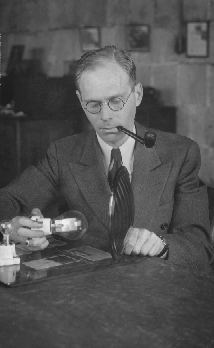
The past two weeks employees of the public department have been installing 15 W bulbs in place of the old 60 W bulbs, in addition, they have been installing the new refractory lenses, invented by Baltimore man, ( Charles Adler, Jr. born 20 June 1899 – died 23 October 1980) and constructed to project as much brilliance as did the higher wattage falls through the old lenses. It was explained by inspector Mooney that the cost of the equipment now being installed wall mount to about $5000, and since the estimated savings per year is gauged at $10,000, that will mean a savings of $5000 for the first year.

Inspector Mooney explained that 305 locations of the pedestal and overhanging lights have been equipped with the new low wattage light bulbs and super refractory lenses. He added that this accounted for 559 traffic lights. In all – he said, there are 2829 pedestals and overhanging lights in the city of Baltimore.

1 black devider 800 8 72



The First Vehicle Actuated Control was Tried out in Baltimore

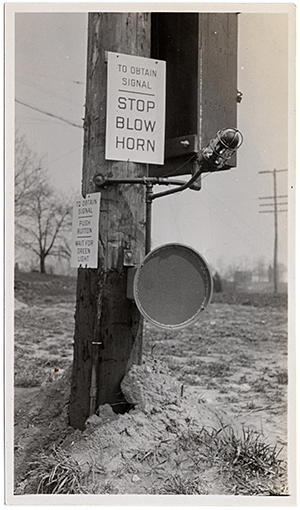
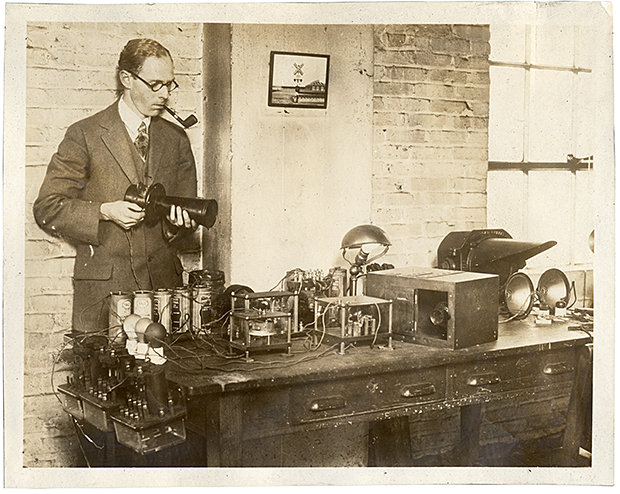
22 February 22, 1928, The first vehicle actuated control was tried out in Baltimore. (To the best of our knowledge this was the first vehicle actuated signal insulation in the world.) - This was an automatic control were a brake attachment and two funnels placed on poles on the right-hand side of the cross street, ordinary telephone transmitters being installed inside the funnels. These transmitters being connected to the sound relay, which when disturbed by noise, for example, the tooting of horns, blowing of whistles, or the sound of voices would actuate the sound relay, releasing the break on the automatic control permitting the motor to run. This would change the signal which had been green on the main street to amber, then to read, permitting the side street traffic to move out on the green. It would automatically reset to red. This device was invented here in Baltimore. - This control would always restore itself back to the main street green, then the break would set and the signal would remain green on the main street until disturbed again by sound. Several of this type were installed, one being at Charles Street and Coldspring Lane, another at Charles and Belvedere Avenue  

The Man Who Invented Intelligent Traffic Control a Century Too Early

With traffic accidents soaring, Charles Adler imagined an intelligent transportation system that was ahead of its time

By Lee Vinsel

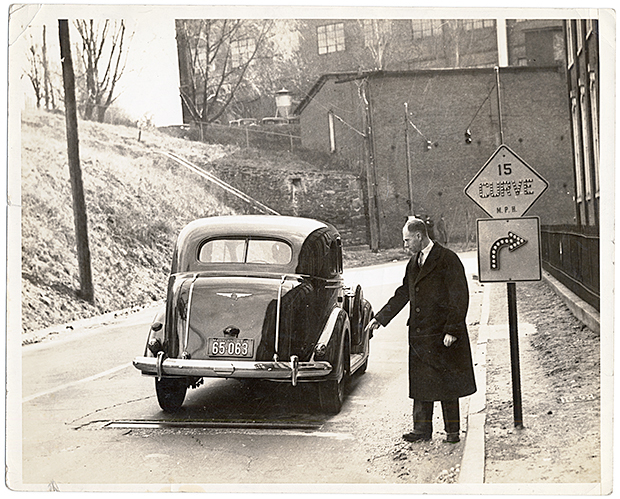
Sound Off: Adler demonstrates one of his automated safety systems, which triggered a light when a car passed over a sound detector in the road.

On a cool December day in 1925, Charles Adler Jr. stood beside Falls Road, a state highway on Baltimore’s north side. He was there to test his latest invention: an electromagnetic apparatus that would automatically slow cars traveling at unsafe speeds. Adler had embedded magnetic plates in the road where it led into a precarious curve, and he was now waiting for a specially prepared car to drive over the magnets. The magnets would activate a speed governor connected to the vehicle’s engine, slowing it to 24 kilometers per hour.

Adler had developed this automatic speed-control system for railroad crossings, the scene of many deadly accidents at the time. But he soon came to imagine all sorts of applications for it: “Dangerous road intersections, streets on which schools are located, bad curves, and even steep downgrades,” according to an article in the Baltimore News.

On that December day, the test vehicle drove down Falls Road as Adler and his supporters looked on. The magnets tripped the governor, cutting the car’s speed; the demonstration went off without a hitch. Adler spent the next year promoting his invention and attracting investors. He had good reason to be hopeful: With traffic accidents soaring throughout the United States, communities were clamoring for solutions. Several years earlier, a road signal he’d designed for train crossings had been readily adopted by 40 railroad companies nationwide.

After little more than a year, however, Adler’s efforts had led nowhere. Over the next decade he continued to refine his designs and devise new ones, but his many inventions to make roads safer never saw widespread adoption.

Today, Adler’s automatic speed-control system looks like an early version of a smart road or an intelligent transportation system. These sensing and communications systems inform drivers, or fully autonomous cars, of conditions on the road ahead, thereby boosting both safety and efficiency. Such a system might automatically drop a car’s speed as it approaches stalled traffic, an accident, or a dangerous intersection, much as Adler sought to do. Indeed, he looks like a man before his time. Understanding just why Adler failed can tell us much about the nature of innovation and the acceptance of new ideas.

In 1899, the year Adler was born, Henry H. Bliss became the first American to die in a car accident when an electric taxicab ran him over in the streets of New York City. From then on, traffic deaths quickly mounted. In 1913, when there were 1.26 million cars on U.S. roads, 4,200 people were killed in auto accidents; by 1925, when Adler ran his experiment, fatalities had more than quintupled, to 21,900. Such problems went well beyond U.S. borders, of course. Indeed, they arose wherever there were cars. Back in 1869, Irish scientist Mary Ward had been run over by an experimental steam car, becoming the first person in the world to die in an automobile accident. As the death toll rose, so did public outcry. In 1920, the Chicago Tribune began running a daily column detailing auto deaths around the city. In addition, many U.S. cities were snarled with traffic jams. The entire automotive system—roadways, intersections, bridges, and other supporting infrastructure—was a mess. Progressive legislators and activists set about to reform the automotive world. Some U.S. cities and states began requiring vehicle owners to get brake and headlight inspections and obtain auto insurance. The first electric traffic signals appeared, with early ones installed in Salt Lake City in 1912 and Cleveland in 1914.

Entrepreneurs sensed opportunity, and new companies, as well as established firms, scrambled to promote competing systems. One result was a confusing proliferation of disparate traffic control signals and signs. Many of these look completely foreign to our eyes today. The Milwaukee Mushroom, for instance, was a colander-like metal grate that was placed in the center of an intersection and guided drivers who were making left turns around the center point, rather than letting them cut tightly through the intersection. When New York City switched on its first electric traffic signals along Fifth Avenue in 1921, yellow meant traffic on Fifth Avenue could move, while cross traffic from side streets stopped; red meant all traffic stopped, on Fifth Avenue as well as the side streets; and green meant traffic from only the side streets could proceed.
1i

Photo: Charles Adler, Jr. Collection/Archives Center/National Museum of American History, Smithsonian Institution

For the Record: In his lab notebook, Adler sketched the basic elements of his automatic speed-control system, which he demonstrated on Falls Road in Baltimore in December 1925.

Adler was one of the inventors who rushed into this emerging world. Born to a wealthy family in Baltimore, he attended the prestigious Park School but struggled academically. “Because of my low grades, my father thought that I might be mentally retarded,” Adler later wrote. His father took Charles to see a psychologist, who said, “You have a remarkable son [with] a vivid imagination. He should be encouraged to invent.”

Adler demonstrated technical acumen early on. When he was just 14, he created an electric automobile brake and received a patent for it five years later. After serving in World War I, he briefly studied engineering at Johns Hopkins University, but his difficulties with school continued, and he soon dropped out.

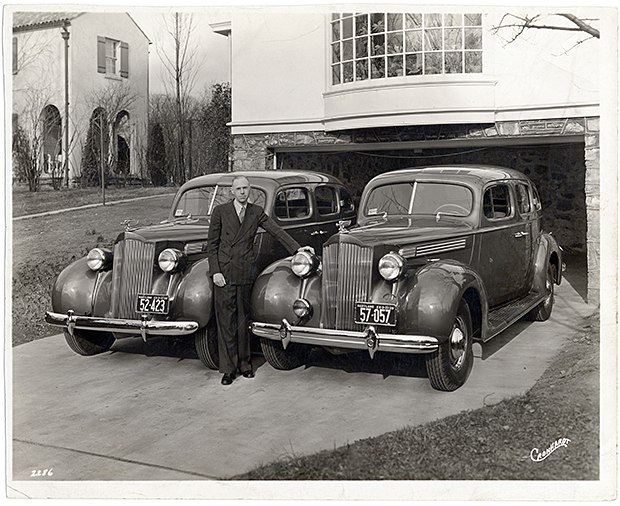
He hardly looked or acted like a college dropout. Even as a young man, Adler dressed impeccably and often smoked a pipe; a journalist would later remark that he “might actuate a few signals with his sartorial splendor.” Nor did Adler lack for confidence, proudly writing to others about his newest inventions even before he had much to show. Later in life, he had professional photos taken of himself posing with his cars—Corvettes, Maseratis, Cadillacs, MGs, even a Rolls Royce.

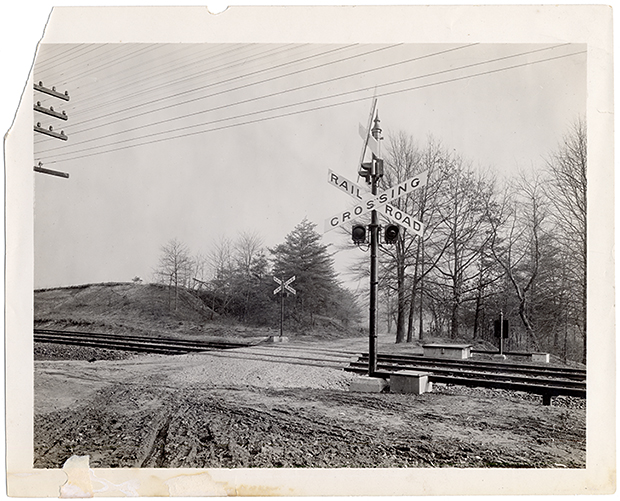
In early 1919, Adler found a job with the Maryland and Pennsylvania Railroad. The president of the railroad, O.H. Nance, learned of Adler’s teenage electric brake invention from an article Adler wrote for the Maryland Motorist.Intrigued, Nance asked Adler to look into a persistent problem: The Ma & Pa had installed electric warning signals at grade crossings, where roads met railroad lines, but the signals were failing regularly. Adler quickly worked up a solution that involved a new type of relay and a light connected in a series with a bell. Even if the bell failed, the light would still illuminate. The invention worked, and Adler was promoted to signal engineer and given an office and a laboratory for his experiments.

Adler’s first major project was a new type of flashing signal for grade crossings. At the time, many cars didn’t bother to stop at railroad crossings, with the unsurprising result that about 1,500 people were dying in car-train collisions every year. The eventual solution was to eliminate grade crossings wherever possible by placing rail lines above or below the road. In the meantime, the American Railway Association (ARA), the trade group for the U.S. railroad industry, directed its member companies to install some sort of flashing light at such intersections.

The system that Adler designed was triggered automatically by the train as it approached the intersection. Two lights would flash in an alternating pattern, known as a wigwag, which mimicked the way a man swinging a lantern might warn oncoming cars. Adler’s flashing signal received the ARA’s endorsement, and more than 40 railroad companies adopted it.

Adler’s ambitions went well beyond railroad signals, however. In 1930, with money from his family, he left the Ma & Pa to pursue invention full-time.
2

Photo: Charles Adler, Jr. Collection/Archives Center/National Museum of American History, Smithsonian Institution Innovator’s Dilemma: Adler’s early success with railroad signals didn’t carry over to his many inventions for automotive safety.

Even before he quit the railroad, he conceived the automatic speed-control system. It first occurred to him on 1 October 1924, as he recounted in his meticulously maintained lab notebook. He no doubt drew inspiration from automatic train controls, a technology for limiting a train’s speed that didn’t rely solely on the driver. The idea had been around since the mid-19th century but had not been widely adopted. (Indeed, as recent fatal derailments in Spain and Philadelphia remind us, automatic train controls are still not as common as they should be.)

Adler was also familiar with speed governors in cars and the controversy the technology had stirred up. A year earlier, 42,000 people had signed a petition in Cincinnati, calling for speed governors on all cars to limit them to 25 miles per hour or less. But after motorists from around the nation fought the proposal, it was defeated. Adler believed his system, which activated the speed governor only at particularly dangerous spots, would prove more palatable.

The system that Adler demonstrated on Falls Road worked like this: A series of bar magnets were buried beneath the road 20 meters or so from the danger point. The magnets ran parallel to each other and to the road, angled downward so that their north poles were closest to the surface of the road. The test car, meanwhile, had a small relay with a needle magnet (like the needle on a compass) affixed near its front axle. As the vehicle reached the road magnets, the needle magnet would swivel, momentarily opening the relay, which was connected to another, more substantial relay.

That second relay sat in a box beneath the hood and was connected to the car’s ignition switch and a speed governor. The relay consisted of two coils mounted on opposite sides of a pendulum, which acted as an armature between the two coils. When the pendulum rested on one coil, it closed a circuit that allowed the current operating the car’s ignition to flow normally. When the pendulum received a pulse of electricity from the needle-magnet relay, it swung to the other coil, forcing the ignition current to travel through the speed governor. At speeds of 24 km/h or less, the speed governor would allow the current to flow through the ignition system to the car’s spark plugs; at any greater speed, the current would be cut, and the car would decelerate. Finally, the car would pass over a second set of magnets buried in the road, and another pulse from the needle-magnet relay would cause the pendulum to swing back to the other coil, restoring the ignition current. (The pendulum armature was basically like an electromechanical flip-flop switch.)
3

Photo: Charles Adler, Jr. Collection/Archives Center/National Museum of American History, Smithsonian Institution

Blown Away: Adler’s horn-activated traffic signal was quickly eclipsed by a pressure sensor embedded in the road.

Adler knew he’d have to spend considerable energy promoting his idea. He belonged to what the historian Eric Hintz has called the “post-heroic” generation of inventors, who followed on the heels of Thomas Edison and Alexander Graham Bell. Though the public still revered such engineering icons, being the lone inventor in the early 20th century was hardly glamorous. By then, large corporations were internalizing the act of invention by creating R&D labs. As organized research became the order of the day, independent inventors increasingly looked to license their patented creations, rather than attempting to manufacture the technology themselves. Corporations were naturally reluctant to license outside technologies—why else have an internal R&D lab?—so inventors had to publicize their technologies to have any hope of success.

In the months following his October 1924 inspiration, Adler began designing the components of his system and also selling the idea to others. He kept scrapbooks recording his promotional efforts in as much loving detail as he did the technical aspects of his inventions. He discussed his idea with contacts in the railroad industry, including the signal engineer and the vice president in charge of maintenance and safety for the Baltimore and Ohio Railroad, as well as A.H. Rudd, the chief signal engineer for the Pennsylvania Railroad, who at the time was the most influential signal designer in the country; all reacted enthusiastically. In January 1925, Adler gave a talk at a joint meeting of the National Safety Council and the American Society of Safety Engineers, in Baltimore. And he contacted more than 600 newspapers, magazines, and engineering journals around the United States; hundreds of them ran stories on Adler’s idea, including Popular Science Monthly and the New York Evening Post. But Railway Age, the industry’s chief journal, rejected an article from Adler.

He didn’t stop there. Adler had seen how the American Railway Association’s endorsement had gotten dozens of railroad companies to adopt his wigwag signal. And so he looked for a comparable authority to back his speed control system. Secretary of Commerce Herbert Hoover, an engineer by training, had recently created the National Conference of Street and Highway Safety[pdf] to address the deadliness of U.S. roadways. It was the first federal effort to promote automotive safety. The conference brought together railroad, streetcar, and automobile company executives, education experts, statisticians, actuaries, and others, who met regularly to study ways to decrease accidents. The group put forward a number of noteworthy solutions, including a standardized set of traffic laws.

Adler contacted Ernest Greenwood, who ran the day-to-day operations of the conference; he heartily endorsed Adler’s plan. Encouraged, Adler sent reprints of an article he’d just published in the journal Safety Engineering to the conference’s 600 delegates.

But Adler had misunderstood the basic nature of the conference. Hoover eschewed federal regulation, preferring to let corporations and state and local governments take action voluntarily; he’d created the conference in this spirit. Even if he’d felt otherwise, no federal law or rule gave Hoover the power to regulate automotive design or highway construction. Adler’s invention required coordination among several levels of government and the car industry. Without an authority to mandate speed governors in automobiles and magnetic plates in roads, the system wouldn’t function. Federal regulations over automobiles and highways wouldn’t become law for another 40 years.

Adler was undeterred. By May 1925, he’d gathered a group of financial backers. On the heels of his successful December 1925 test, he continued to demonstrate the system for journalists, signal makers, police chiefs, state motor-vehicle administrators, and potential investors. He suggested that local authorities could defray the cost of installing the magnets by selling advertising space on the same signs that warned drivers of the danger points. He argued that the installation of speed governors could be made a requirement in annual vehicle inspections.
4

Photo: Charles Adler, Jr. Collection/Archives Center/National Museum of American History, Smithsonian Institution

Car and Driver: In later life, Adler often had himself photographed with his cars. Here he poses with two Packards.

Adler tried in vain to interest automakers in his idea. He thus began in mid-1926 to shift his focus from automobiles to buses and commercial vehicles. Conversations with insurance executives led him to believe that insurance premiums would create a strong incentive for commercial fleets to adopt the system. “The reduction of insurance by use of apparatus should more than compensate the bus company for use of the same,” he wrote in his notebook.

It wasn’t just wishful thinking. During this period, the U.S. Post Office Department and other organizations that owned large numbers of cars and trucks were installing speed governors on their vehicles. (A few companies, like the pest-control company Orkin, still do so.) Adler did convince two bus companies in Maryland to install his system for demonstration purposes.

The inventor also continued to revise the technology, promoting an “automatic dashboard signal unit for pleasure car use.” The magnets in the road would still trigger speed governors on commercial vehicles, but in ordinary cars, they would simply activate a light on the dashboard, warning drivers of the approaching danger point. As Adler reasoned, “The magnets, once installed, would create a market for the automatic dash signals.”

But the steam was running out of Adler’s project. On 15 December 1926, his investors met and decided to suspend work until they could verify that Hoover would promote the system through the national safety conference. He never did. The next month, one investor tried to get permission from the state of Maryland to put up advertisements to cover the costs of the magnets, but even this effort came to naught. In early 1927, Adler stopped recording events in his notebook.
5i

Photo: Charles Adler, Jr. Collection/Archives Center/National Museum of American History, Smithsonian Institution

Flashing Lights: Adler’s patented relay for a railroad crossing signal was endorsed by the American Railway Association and eventually adopted by more than 40 railroads.

He didn’t give up on trying to automate traffic safety, however. He continued to develop car safety devices, and in the late 1920s, he had minor success with a sonically actuated traffic signal. When a driver pulled up to a red light, honking the horn would make the light change. The system was intended for use at intersections where lightly traveled roads met major thoroughfares and where the traffic light needed to change only when a driver had to cross.

Adler’s sound-triggered traffic signal was picked up by General Electric, which marketed it as part of a bundle of traffic management innovations. But another invention quickly surpassed Adler’s idea; it used two metal plates embedded in the roadway to sense a vehicle’s presence and so required no action on the driver’s part.

Meanwhile, the openness around traffic control systems had closed. By the early 1930s, the traffic-safety technology that we still have today, including three-color traffic signals and standardized street signs, was mostly in place. By the end of that decade, Adler had abandoned his work on road safety and began focusing on aviation safety instead.

Why did Adler’s automatic speed-control system fail? The technology seemed to work, although we can easily imagine its imperfections. What would happen if the device on the car malfunctioned, for example? And what would prevent drivers from simply disabling it? But the barriers to Adler’s system were not primarily technical. What ultimately doomed it was the lack of laws and governmental organizations to mandate the system’s use.

On 3 February 2014, the National Highway Traffic Safety Administration, the U.S. agency created in 1966 to oversee car safety standards, announced that it was considering requiring vehicle-to-vehicle (V2V) communication technologies on all cars sold in the United States. “This technology would improve safety by allowing vehicles to ‘talk’ to each other and ultimately avoid many crashes altogether,” the press release announcing the decision stated. Since then, the agency has worked steadily to promote the technology and the regulation that would make such systems a reality. Many automotive experts believe that the logical next steps after V2V communication will be smart roads and autonomous vehicles, such as Google’s self-driving cars.

Tech companies and carmakers are working hard to bring about this automotive future. And yet, when that future arrives, it will largely be because of federal laws, first passed in the 1960s, that controlled automotive design and highway construction. While today’s carmakers introduce new safety technologies—airbags, antilock brakes, electronic stability control, rearview backup cameras—into luxury lines as sellable features, typically federal action is needed to push such technologies into all new vehicles. Such laws did not exist in Adler’s day. He was indeed ahead of his time, but as his case so poignantly shows, the success of an innovation often depends as much on the quality of our institutions as it does on the quality of the technology itself.

About the Author

Lee Vinsel is a historian of technology at Stevens Institute of Technology, in Hoboken, N.J. Research for this article was conducted at the Smithsonian’s National Museum of American History in Washington, D.C.

1 black devider 800 8 72

"Reddy the Bull" Predicted Baltimore Motorists' Disgust in Traffic Lights

By David Mantione

City Traffic, the Early 1920s

Within years of the automobile being introduced to Baltimore City streets, the issue of traffic had become a major problem where both patrolmen and/or traffic signals were used to control movement at congested intersections. Besides cars and trucks, traffic included streetcars (vehicles traveling on rails) and horse-drawn vehicles. While they all obeyed a general principle of staying to the right on two-way roads, beyond the confusion at busy intersections, it was becoming outright dangerous.
7

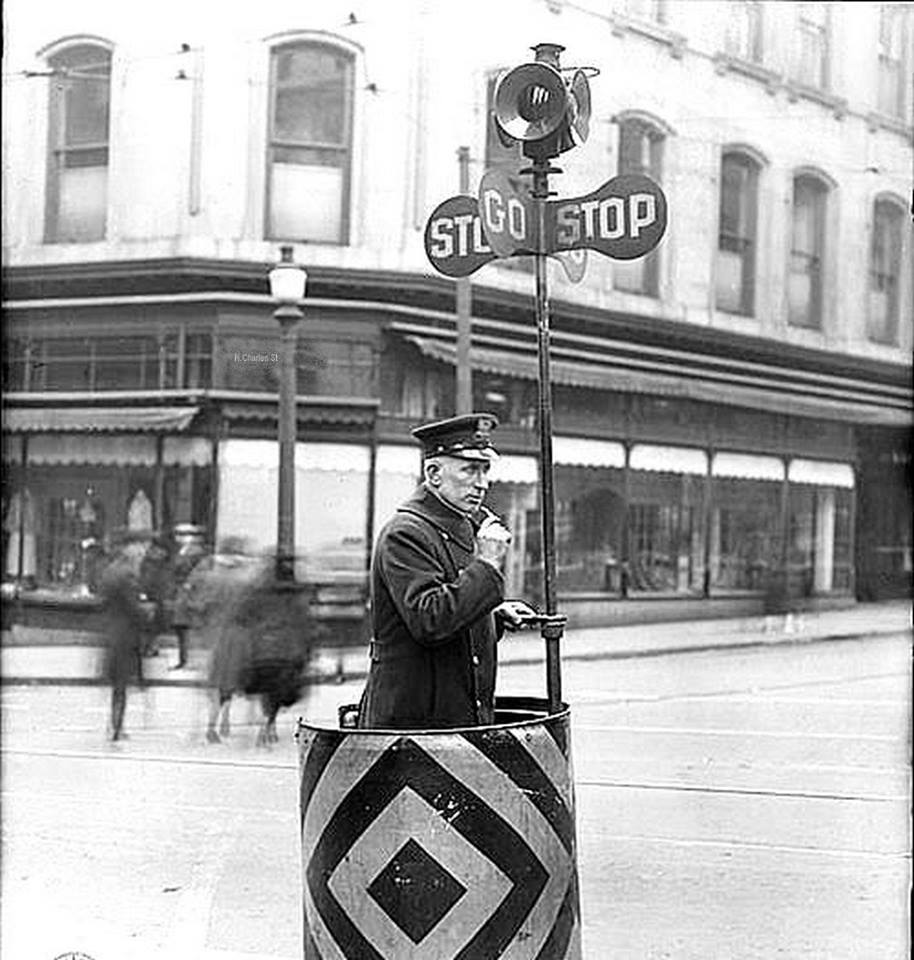
Baltimore City Policeman
with Semaphore, circa 1921

As was the case in many bustling cities of the day, at first, whistleblowing and arm waving patrolmen attempted to provide order to the chaos. As early as April 1915, the Baltimore City Police Department had traffic police officers operating 'newfangled' signals upon long poles (or semaphores) having narrow paddles which were painted red on two sides with a bold white "STOP" - they were the first trial implemented at the corner of Park Heights and West Belvedere Avenues. Traffic policemen operating semaphores were widely used for a period of five years and often removed depending on the perception of their merit as opposed to the sole whistle and wave of patrolmen.

Gaither

Gen. Charles D. Gaither
Baltimore City Police
Commissioner (1920-1937)

On June 1st, 1920, a man by the name of Brigadier General Charles D. Gaither, previously commander of the First Brigade, Maryland National Guard began his duties as the Governor-appointed first Baltimore City Police Commissioner. Called "The General," he took Baltimore City traffic seriously and would personally drive through downtown city streets observing the manner in which traffic was handled, especially during rush hour.

By July 1921, under his direction, the Police Department placed fourteen six feet high "lighthouses" on concrete bases which were intended to warn motorists of dangerous curves and bends at night. The flashing lights in the lighthouses were fueled by acetylene tanks (see photo, below and left) - red flashing indicated places where people had been killed, yellow for dangerous curves or bends where caution must be exercised, and green was for danger at intersections where slow, careful driving should be exercised to the right.

The earlier days of traffic lights and warnings resulted in disgruntlement by drivers and even beasts. Prior to placing the traffic lights on streets with protective bases, they were continually run over by motorists refusing to stop. On October 16, 1923, the Baltimore Sun reported that a certain Jersey bull by the name of Reddy had created a riot in the middle of the congested intersection of Bryant and Pennsylvania Avenues while being led to slaughter. A heard of 40 bulls were being driven down the avenue where automobiles stopped in obedience to a blinking red light, but not Reddy who saw it as a challenge and proceeded to charge it. In the charge, a truck struck and broke its leg before he could reach his "enemy." Unfortunately, agents of the SPCA needed to kill the Reddy earlier than his originally intended fate.

 Devider color with motto

Please contact Det. Ret. Kenny Driscoll if you have any pictures of you or your family members and wish them remembered here on this tribute site to Honor the fine men and women who have served with Honor and Distinction at the Baltimore Police Department.Anyone with information, photographs, memorabilia, or other "Baltimore City Police" items can contact Ret. Det. Kenny Driscoll at  This email address is being protected from spambots. You need JavaScript enabled to view it. follow us on Twitter @BaltoPoliceHist or like us on Facebook or mail pics to 8138 Dundalk Ave. Baltimore Md. 21222

 Copyright © 2002 Baltimore City Police History - Ret Det Kenny Driscoll

Traffic Division

Traffic Division

Traffic Division

traffic squad 1905

Traffic Squad 1905
27 July 1905

aka The Beauty Squad

28 Jul 1905 beauty squad on duty 27th july 05 72

The Article is darted 28 July 1905, in it, it reads, The unit started yesterday.
Meaning our Traffic Unit officially got its start on 27 July 1905

Traffic ControlTraffic Control System

1 blue devider 800 8 72

1938 buick a.i.d. crash cars

'CRASH SOUAD CARS ARRIVE FOR POLICE

The Sun (1837-1989); Feb 2, 1938; pg. 7 'CRASH SQUAD' CARS!

Arrive for Police!
New Autos, To Probe All Accidents,
To Go Into Service When Equipped

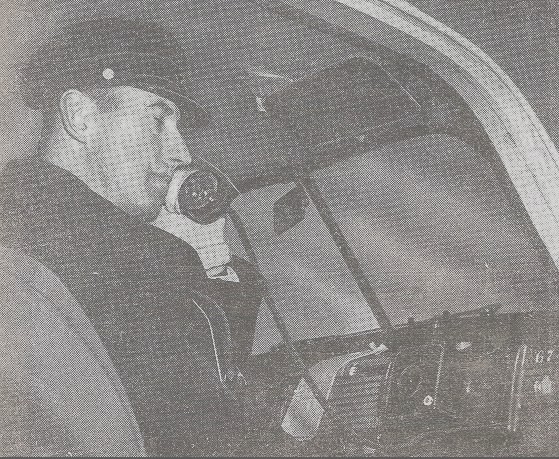
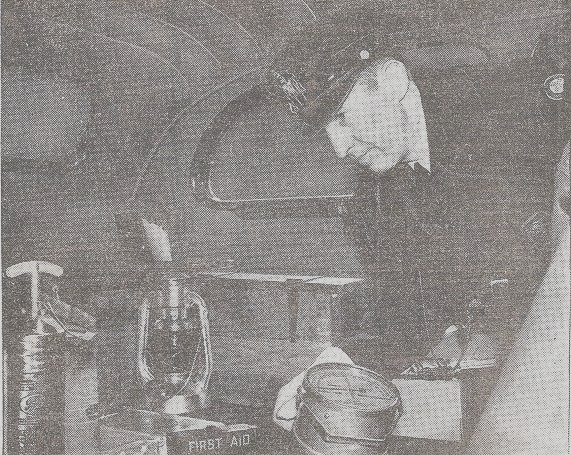
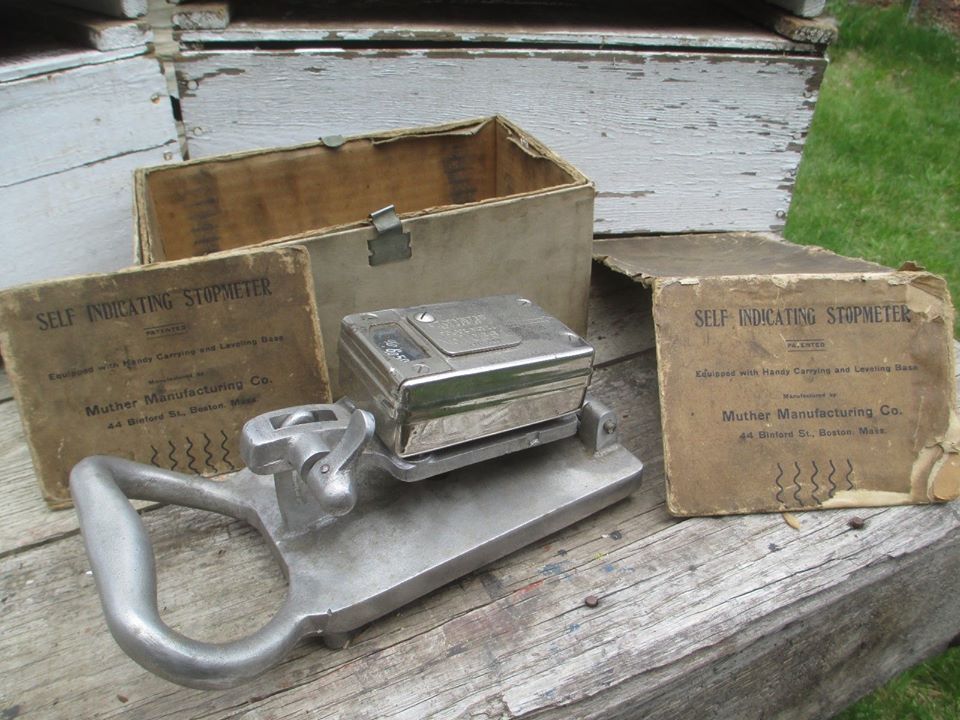
Crews Will Test Brakes of Machines Involved and Photograph Scene Three automobiles for the "crash squad" of the Police Department have arrived and will be placed in service as soon as they are equipped, Capt. Henry C. Kaste, head of the Traffic Division, announced yesterday. The machines will investigate all automobile accidents and will have deceleration meters for testing the brakes of cars involved in crashes, as well as photographic equipment for recording the actual conditions after the accident

Two-Way Radios

They will have two-way radios, sirens, and blinking red lights to enable them to get to the scene before the positions of the cars have been altered. The crews, graduates of the University of Maryland's Traffic School, will render aid to the injured and will reroute all traffic until the conditions have been photographed and measured.

Officials hope to relieve the foot patrolmen of responsibility for traffic accidents. Members of the "Crash Squad" will be given two days, A month in Traffic Court to handle their cases, and the new manner of collecting evidence is expected to result In more convictions, particularly in fatal accidents.

Squad Still Nameless

Serge. Clarence O. Forrester is head of the squad, which is still officially nameless. Other cities having similar departments have decided upon "Accident Investigation Department" for a title, and it is expected that this choice will be made here also.

The "crash squad" was organized alter a report from the Baltimore Safety Council in April 1937, which recommended it as "a vital need for the securing of evidence." Coincident with the council's report, the grand jury urged the squad's creation as a means of reducing accident fatalities and injuries.

Nice Committee Calls Three Traffic Experts

Three traffic experts will appear before Governor Nice's automobile insurance committee at a meeting to be held at 8 P. M. Tuesday at the Emerson Hotel. They are:

Dr. S. S. Stineberg, Dean of the College of Engineering of the University of Maryland, who is conducting the traffic school there. John P. Rostmeyer, director of the Baltimore Safety Council. Preston D. Callum, chairman of the Baltimore Traffic Committee. The committee was named by the Governor shortly after the first of the Year to make a study of Automobile Insurance in the State and to make Recommendations to him and the next General Assembly.

Members of the committee are:

George W. Baulk, a chairman, and W. Harry Haller, of Frederick, representing

The insurance companies. John T. Shipway, of Flintstone; Jos. Eph S. Bigelow, of Annapolis, and J. Francis Rahlke, of Westminster, representing businessmen. Max Sokol, secretary, and Robert R. Carmen, representing the legal profession. The last Legislature passed a resolution calling for the appointment of the committee.

1 blue devider 800 8 72

baseball card
Photo Courtesy Richard Wills

traffic squad 1905

Courtesy Bob Wilson1 blue devider 800 8 72


1548

 Bike Unit

Foot Traffic1

 Traffic booth and Officers directing traffic at Liberty and Lexington Streets

Photo courtesy Lt. Janet Ensor, Baltimore Co. Police

Officer Joseph Wallace badge 663 served with honor72

Courtesy Dave Eastman
Officer Joseph Wallace
Badge #663
Served with Honor

1 blue devider 800 8 72

19 February 1937

Silent Phone List Given to Gaither

Move Seen as the First Step in Police Probe of Gambling Racket
Compromise Held Possible in Case of Naming Utility as Defendant

With the threat of widespread investigations hanging over bookmakers and lottery interest in the city, Judge Eugene O’Dunne yesterday transferred to general Gaither, Commissioner of police, a list of names and addresses of persons having silent telephones. The list was furnished by the telephone company the information was given over without additional communication, but Judge O’Dunne already has assured the grand jury that further word on the gambling racket and related interest will be forthcoming from one of three sources.

Phone Company Case Pending

One of the sources named was General Gaither, and the transfer of the list was seen as the first step in a police probe. The second source is a states attorney’s office, and the third source is the court itself, it was said.

No additional data has been revealed by the state attorney’s office concerning the bookmaking case in which the telephone company has been named a defendant and held on a $1000 bail. J. Bernard Wells, states attorney, is away, and it is considered possible that the case will not be put up for trial until his return.

It also was said there was a possibility that some compromise settlement would be reached in the case, in which the telephone company has been indicted as a defendant with William S Zimmerman, a bookmaker, who already has been convicted and is awaiting sentence.

Meanwhile, Judge O’Dunne settled other lottery and bookmaking cases yesterday. James F. George, of the 800 block of E. Eager St., was sentenced to 30 days in jail and $500 fine on his plea of guilty to violations of the lottery laws.

Charles H. Knapp, Junior, assistant state’s attorney, told the court that George was arrested a week ago by Sgt. Frank Schmidt and patrolman Ralph Amrein and a florist shop in the 500 block of E. North Ave.

Jail Sentence is Suspended

Joseph V. Albright, a Roland Avenue confectioner, whose testimony began the prosecution of Zimmerman, was sentenced to a$200 fine. A jail sentence of 30 days was suspended on the conditions of good behavior.

Albright, charged with bookmaking, pled guilty when originally arraigned, but took the stand and name Zimmerman as the bookmaker to whom he returned in his bets, Zimmerman’s arrest followed, and soon afterward came the testimony that resulted in the indictment of the telephone company.

Friday - 25 February 1938

Deny “Stop – Police” Machines Intended to for Motorists

Officials Explained 10 New, Black Cars are Cruising Streets on General Patrol Duty

10 Black Police cars which can flash a “Stop – Police” sign when overtaking motorists have been operating on the streets since [Thursday] 27 January 1938 and have reported 1,460 “Moving Violations” or 40 more violations a day than average during that time.

Police officials were quick yesterday to deny a report that the new black machines were pulled out of the hat on a rainy night to fool motorists. Records produced by Capt. Henry Kaste, of the Traffic Division, so that 48 arrest Wednesday night did not constitute an unusual showing for the new cars.

They also objected to the idea that the new cars were painted black as a disguise and that they carried trunk tags for the same reason.

Inspector Hamilton R. Atkinson said yesterday [Thursday, 24 February 1938]

“Our job is to reduce the accident rate in Baltimore, and we are trying to do it in a sane way. We do not want to persecute anyone. If a citizen is doing the right thing, they do not have to fear the police.

“We know that reckless daredevil drivers represent only 15%, of the motoring public, and we are trying to get them off the city streets to protect the other 85% of Baltimore’s drivers. The new cars have done more good than anything we have ever tried in the traffic division.

“They are doing excellent work. Why we have run across any number of drivers who admit that they have been getting away with violations for years. Some say they have not been arrested in 25 years of driving. They say they have always looked for the motorcycle.

“Of course, the cars are black. We are not disguising them. We don’t want a distinctive color; the State police use of khaki. That is their designated color. Ours is black.

“The only cars in the Police Department that are any other color artist the cracks squad vehicles, which are painted white.

“These cars have been on the street since 27 January 1938. Only in inclement weather, one motorcycle men are grounded to all 10 of them work. The officers are in full uniform.”

Plates Are Explained

Inspector Atkinson explains:

“They are using license plates of a series commonly issued to trucks, and so are other privately-owned pleasure cars, because the Commissioner of The Motor Vehicles Administration ran out of regular pleasure car tags.

Signs on Hoods

“It is not a question, however, of piling up the arrests. These men are not sent out to make a certain number of arrests, but to stop reckless drivers and other violators.” The inspector said the new cars are engaged in general patrol as well as traffic work.

The records of “moving violations” produced by Captain Kaste did not include parking violations reported by the new machines. Speeding led the list of charges.


1 blue devider 800 8 72

10 September 1937

New Traffic Enforcement System Merged

Grand Jury Recommends Drastic Alterations in Present Methods

Panel Stresses Concern Over Increase in Accidents and Deaths

Stressing its concern over the increase in traffic accidents and deaths in the city, the May term Grand Jury yesterday [9 Sep 1937 Thursday], in its report, recommended drastic changes in methods of handling such cases and urged the employment of at least 70 more policemen to execute the added duties.

As possible solutions for other reoccurring problems, the jurors offered recommendations which included:

Legislation aimed at keeping “Smoke Hounds” from buying denatured alcohol.

Legislation aimed at the control of syphilis and similar diseases.

A “Strong Narcotics Squad’ to stamp out sale and use of Marijuana.

Child Guidance Clinics in public schools and a crime prevention Bureau to reduce juvenile delinquency.

Psychiatric examination of all men charged with sex crimes.

African American Policemen for African American communities as a step toward curbing the high percentage of African American delinquency.

Use of the present penitentiary building for the city jail and the erection of a new penitentiary building elsewhere.

More Police Advocated

Additions to the Police Department, as a means of better enforcing present traffic laws and providing new services, were recommended for the Traffic Division. Under the jury’s scheme 33 men, including two Lieutenants and three Sergeants, would be added to the Motorcycle Squad. 10 “fast automobiles” would also be given to the squad for use at times when motorcycles could not safely be used.

14 men, including one Sergeant, would be added to the Mounted Section of the Traffic Division. This would bring the total in this section to 25 Officers and two Sergeants. The increase recommended for the Motorcycle Division would raise the number of men in that section from 52 to 85.

Crash Squad Urged

The jury recommended that a Crash Squad be established and advocated 24 regular men, three extra men and for Crash Cars. Working in eight-hour shifts, the cars would be manned by two men each during both day and night shifts. The Crash Squad would investigate all accidents and include in their reports photographs of the scene, the cars, and the skid marks, testimony from witnesses and the drivers involved as well as any other pertinent information.

The jury recommended that a Street Traffic Commission be created, consisting of representatives of the Police Department, the Public Services Commission, the Commissioner of Motor Vehicles, the Chief Justice of The Traffic Court, the Superintendent of Schools, the Board of Awards, the Bureau of Highways, the Baltimore Safety Council and possibly others.

New Tests for Drivers Registration

The jury said it’s not accomplishing any useful purpose. New physical examinations of all drivers were recommended. The jury suggested that an Assistant State Attorney be assigned permanently to Traffic Court as a legal advisor to the police.

The Justices of the Peace of the Traffic Court, the jury said, should be empowered by law to impound driving licenses of persons convicted of serious violations. The Justices of The Peace, the report continued, should be raised to full Judgeship, give their entire time to the Traffic Court, and receive a salary of one half that giving judges in the Supreme Bench for Baltimore City.

Would Eliminate “Fixing”

Also recommended was a triplicate tag system to prevent “Fixing.”

Concerning “Smoke Hounds,” the report explained that these addicts of denatured alcohol are habitually being arrested, either for vagrancy or for more serious offenses. To ease this burden on the taxpayer, the report suggested a law which would forbid the sale of denatured alcohol for other than commercial purposes.

Among the laws recommended by the jury to curve syphilis were ones authorizing isolation of persons infected who refused to undergo treatment; requiring the medical examination of persons whom state or local health authorities have reasonable grounds to suspect; prohibiting advertisement of remedies accept to the medical profession; providing for examination of those about to become married.

African American Police Suggested

In recommending African American Police officers to work African American communities, the report said this might aid in securing the immediate cooperation of the African American community in a kind of crime prevention program. Such action, the report said, might do much to further cooperation of African Americans with the police.

Both the City Jail and the Penitentiary are overcrowded, the report said, and in need of many added facilities. As an economy measure, the report suggests that all of the old buildings in the Penitentiary plant should be demolished and that the State should sell the pen to the City for use after reconstruction as a modern jail.

1 blue devider 800 8 72
 
Eugene Crane1
Photo courtesy of Nancy Crane-Bentz
Police Officer Eugene A. Crane

seen here in a professional hand-tinted photograph in 1953 upon his completion of the police academy. He served in various assignments and is pictured on the Motor Unit and the Mounted Unit sections. He retired in 1975 with 22 years of dedicated service to the Police Department and Citizens of Baltimore City.

Ray Miles 3

Photo courtesy Raymond K. Miles Jr.

Patrolman Ray Miles badge 242 worked Foot Traffic Unit for 16 years 1935-1951 

Kiosk South Lombard 1

 Photo courtesy Raymond K. Miles Jr.

Kiosk located at South St. and Lombard St. where the old News American Co. was located.

The traffic control device was decommissioned in 1951 when Patrolman Raymond Miles retired.

Ray Miles 6

Photo courtesy Raymond K. Miles Jr.

Patrolman Raymond K. Miles worked in the Traffic Unit for 16 years
 
Lombard South Sts. 1
Photo courtesy Raymond K. Miles Jr.

 Kiosk located at South St. and Lombard St. where the old News American Co. was located. Note the old Baltimore Streetcar which was headed to City Hall in a snowstorm. This Kiosk was worked for many years by Patrolman Raymond K. Miles.

striking Ray Miles
 
Photo courtesy Raymond K. Miles Jr.
 
Ray Miles 10
 
Photo courtesy Raymond K. Miles Jr.
 
Patrolman Raymond K. Miles served in the Baltimore Police Department from April 19, 1926, to July 5, 1951

Actuated Traffic Control Box


Ray Miles plaque

Memorial plaque to Officer Raymond K. Miles, Sr. showing all of his original police equipment, which is kept by his son, Raymond Miles, Jr. as a reminder of his dad's service to the City Of Baltimore and The Baltimore Police Department.

 tf

 1942 packard clipper u b huff

1942 Packard Clipper A.I.D. Unit
Officer U.B. Huff
 1 blue devider 800 8 72
 
10 meter maids
 
Courtesy Sgt Dull Mrs. Shirly Kurtz one of the first Meter maids hired in 1961
for the Baltimore Police department's Meter Maids
 
Click on the following line to be taken to our Meter Maid History
 
traffic division motors

1949 chev

20 Sept 1938

31 START TRAFFIC COURSE FOR POLICE
A Staff Correspondent
The Sun (1837-1989); pg. 24

31 START TRAFFIC COURSE FOR POLICE

Picked men from three states enroll in classes and College Park

Test lectures fill first day’s session of two-week curriculum

College Park, Maryland, September 19 – with rain – worst roads and strikes holding down the attendance, and 31 picked policeman, including 10 from Baltimore, assembled here today for two weeks of study on traffic congestion and accidents.

Seated in the University of Maryland School of art and culture Auditorium, just off the Washington Boulevard, please from three states and the District of Columbia pencils to them papers and took notes and lectures.

They heard W. L. Drawn, traffic engineer of the Baltimore Police Department, asserting that the hope of less city congestion lies in the judicious use of one-way streets.

No parking laws scouted

No parking laws will not eliminate loading and unloading, he said, and may even tend to reduce the city’s commerce. The expense of other methods is prohibitive, he added.

Kirk A. Keegan, of the national safety Council, Chicago, told the policeman that solution of the problem of the “accident – prone driver” is an important factor in reducing accidents. The car and the highway cause only 20% of the accidents, he declared.

As members of the University’s traffic officers training school, conducted by the school of engineering, the students had been chosen by the police departments to master the three “E’s” of traffic control – education, enforcement, and engineering – with a view to reducing accidents in their communities.

Brows are wrinkled

Browse was wrinkled often during the first days' session. A police sergeant from Washington cast a perplexed I and a neighbor from Greenwich Connecticut, during the explanation of medical friction; the 100 questions adaptability test caused many puzzled expressions.

Just as often a good-natured just brought laughter to all commerce, as when notes were compared revealing opposite interpretations of the teachers remarked.

With all many problems were discussed, everyone weathered the examination and all were receptive to five hours of lectures on the functions of a good traffic officer and the value of the records that take so much time and patience to make it.

Strike Detains Students

Of the 31 in attendance, several from Washington, two from to get, one from Delaware and the remainder from various parts of Marilyn. A contingent from Wilmington Delaware was unable to come because of a truck driver strike.

Dr. S. S. Steinberg, Dean of the engineering school, welcomed the men cited that 3000 persons are injured or killed daily traffic accidents and congratulated Sgt. Clarence Forrester, head of the Baltimore accident investigation division, for the manner in which he had organized the course.

Inspector Stephen G. Nelson, the acting police Commissioner of Baltimore, was unable to appear and was represented by Capt. Henry C Kasie, head of the traffic division.

Work is reviewed

Capt. Kasie reviewed the history of his department (Baltimore City Police) from its founding in 1905, when the men carried canes to guide traffic, through the days when the traffic division was heralded as the “beauty squad” because of the requisite six-foot height of its members to the present day, when there are 239 men. Major E. F. Monday shower, superintendent of the Maryland state police, whose department has five students in the horse, spoke of the necessity for strict attention and of the responsibility placed on those attending.

School officially began one Sgt. Forrester took the chair. He cautioned the men not to oversleep in the morning, and to take notes without assistance and in their own words.

“Exams during the course,” he said, “will not be judged on your handwriting.” This brought smiles all around. “But I don’t want any of you to turn in papers with identical answers, and don’t for made by jumbling the words around a bit.”

Before lunch Sgt. Forrester passed out the adaptability test, to be finished in 50 minutes. An anxious circle of large men surrounded him, “I’m alright and remembering things, but kind of poor at putting them on paper,” said one huge fella with a bald head.

Sample of questions

“There never was an exam that could jump up and bite a man, or kill him, or even knock them down.” The Sgt. reassured the class, “I just want your reasoning.”

The men began their papers. They found questions like “What causes lower taxi fares?” – With the discontinuance of streetcars, competition among taxies, goals forbidding the operation of large buses, conventions and fares etc. were no parking laws as the five possibilities for the correct answer.

Several of the men were finished the test in the allotted time in a few obtained 100%, marks. This was reported to be an unusual figure.

A Practical Picture

The Washington Boulevard separated the men from the In where lunch was served. In crossing, everyone became conscious of the great traffic problem as vehicles have skidded by. In front of the inn, the wrecking truck itself had been wrecked.

Mr. Braun spoke after a luncheon. He said the traffic control problem had become a reality with the advent of skyscrapers, having no provision for parking for office workers, and with the large increase in the speed and number of automobiles.

Sgt. Martin D. Brubaker, head of the accident prevention Bureau of the Maryland state police, reopened the classroom sessions. He described as a good traffic officer as a man with a “please – your – employer” attitude toward the citizen and recommended Dale Carnegie to the police as a first step toward needed psychology.

Keegan Last Speaker

Mr. Keegan, the last speaker, sympathized with the pupils for the first-day ordeal of a lecture course. Many of them had been working late the night before in their own police duties.

Speaking of the three “E’s” Mr. Keegan declared that they had made possible a 60%. A decrease in industrial accidents in the last 25 years. The same decrease with savings of more than 285,000 lives, could be made in traffic accidents, he said.

“There is plenty to be done in the two weeks,” said Sgt. Forrester.

“You’ll need plenty of midnight oil.”

First-aid – and remarking that a knowledge of simple first-aid was a necessity to the traffic officer. Sgt. Brubaker told of an accident near Baltimore three weeks ago. A small girl with a harmless looking cut under arm bled to death because no one thought to use a tourniquet.

Tunnel Vision – records are important in eliminating the bad driver element. Mr. Keegan said. He cited one man in Evanston Illinois who had been in 13 accidents. Records revealed that all these accidents had involved cars coming from his right. His glasses were found to hinder his vision from that side. In 18 months the van has not had an accident with the broader vision glasses.

Psychology – hotel clerks are taught to read your name upside down as you register, said Sgt. Brubaker, likewise, a good officer should learn the name of the driver he is questioning an address them by his name. “A man’s name is the sweetest thing in the English language to him. He will cooperate with you.”

Observant Police – Sgt. Brubaker ready with anecdotes told of an accident on the Eastern Shore. A small child had been killed by a motorist while riding a bicycle. The case was so flagrant and looked deliberate. A state policeman noticed the man was blinking his eyes. He was asked to read a large sign across the street. He could

Fair Treatment – a Baltimore jurist, said Sgt. Brubaker was tagged by a policeman for going, unavoidably through an amber light. The policeman seemed to take personal pleasure in prosecuting him. Later the same policeman appeared with a case before a magistrate – the same man. The magistrate dismissed the case, saying that on that occasion and on another many years ago, the policeman was not impartial


1 blue devider 800 8 72


1950chevtrafficcontrolcar


officersworkingwithfiles

 traffic seminar 1 

Traffic Seminar with Police Commissioner Robert Stanton
 
traffic seminar 2
 

traffic seminar 3COATLESS  Coatless "Cops"? No! 
Click the Pic Above or HERE

front of No coat NYPD news about BPD traffic uniform order 72

Baltimore Police Officers 1st to Go Coatless in Public 
Click the Pic Above or HERE 

Off John L Weber 1954

COURTESY OF HIS SON JOHN WEBER
Officer John L. Weber

Born September 29, 1919, and died on December 16, 1999, at age 80. He was in the Baltimore City Fire Department stationed at #6 Truck in South Baltimore from 1947 until 1954. In 1954 he transferred to the police department until his retirement in 1966. He was assigned to Traffic for his entire tenure in the police department. He worked for both Capt. Klander and Lt. John Neussinger. Below, pictured is his retirement badge. His dedicated service Honored both the Baltimore Fire Department and the Baltimore Police Department. John Weber, the Son of John L. Weber and Nephew of Elmer Weber provided this information about his family of dedicated Police Officers. John Weber is a retired Baltimore County Police Officer with 22 years of service, he was shot on a traffic stop. Now he is an investigator with the Baltimore City States Attorney's Office.


Off John Weber retired badge
1928 - February 22, 1928, The first vehicle actuated control was tried out in Baltimore. (To the best of our knowledge this was the first vehicle actuated signal insulation in the world.) - This was an automatic control were a brake attachment and two funnels placed on poles on the right-hand side of the cross street, ordinary telephone transmitters being installed inside the funnels. These transmitters being connected to the sound relay, which when disturbed by noise, for example, the tooting of horns, blowing of whistles, or the sound of voices would actuate the sound relay, releasing the break on the automatic control permitting the motor to run. This would change the signal which had been green on the main street to amber, then to read, permitting the side street traffic to move out on the green. It would automatically reset to red. This device was invented here in Baltimore. - This control would always restore itself back to the main street green, then the break would set and the signal would remain green on the main street until disturbed again by sound. Several of this type were installed, one being at Charles Street and Cold Spring Lane, another at Charles and Belvedere Avenue


Elmer Weber

COURTESY OF HIS NEPHEW JOHN WEBER

Medal Of Honor Medal Recipient”

Patrolman Elmer Weber

4 Charges Lodged, Abated by Death

1 blue devider 800 8 72

 Rocker Patch End of Brass Mounted Patch Wed Oct 1 1952 72

1 October 1952
Article Describing the Date the Metal Horse-Head Traffic Insignia was Changed for a Cloth Patch

mounted unit insignia1

This insignia was worn from 1905 until 1952

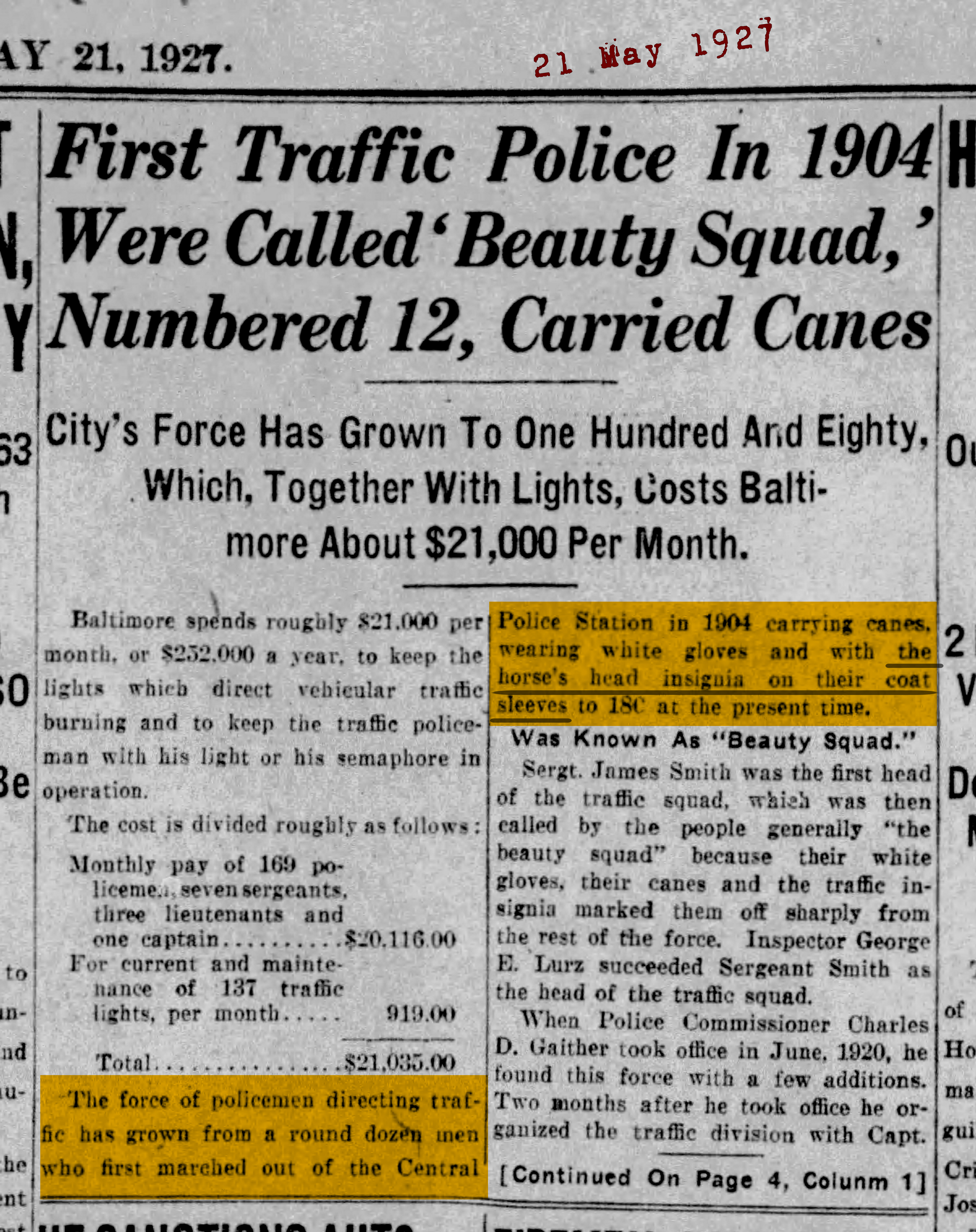
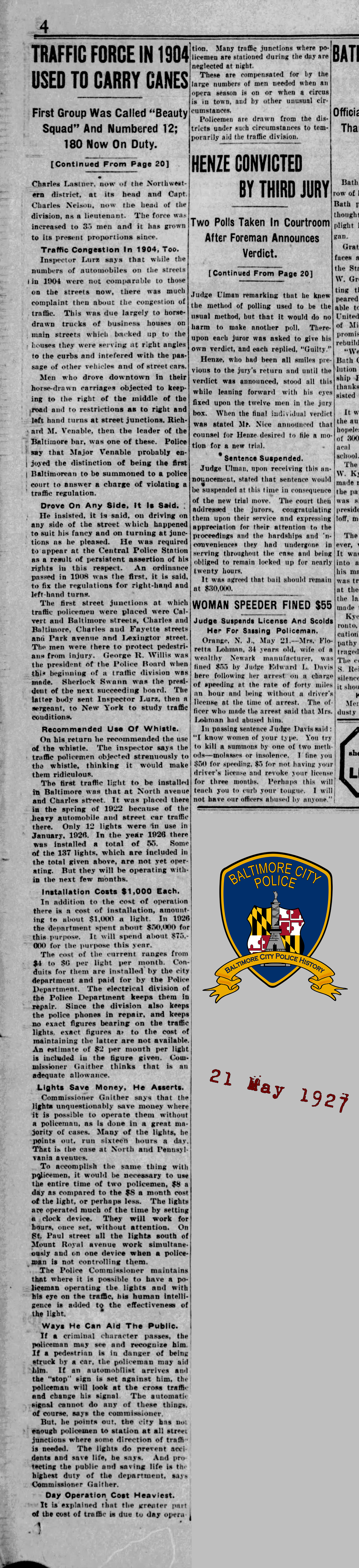
The Evening Sun Sat May 21 1927 pg 1 72

Click HERE To See Full Size Article

The Evening Sun Sat May 21 1927 pg 1 72

Click HERE To See Full Size Article

1 blue devider 800 8 72

3 Earlier Offenses Laid to Youth Shot by Police

October 15, 1951, Copied from the original newspaper article

Four burglaries, robbery, and theft charges had been placed last night against a 17-year old East Baltimore youth who was killed by a policeman early yesterday during an attempted holdup.

All the charges were marked on the docket at the Eastern Police station as “Abated by Death.”

Herbert Finnerty, a former inmate of the Maryland Training School for Boys was shot to death by Patrolman Elmer Weber of the Eastern District, who interrupted a holdup at a fruit stand at Eastern Avenue and Clinton Street.

Reported Beating Watchman

Patrolman Weber reported Finnerty was beating the 77-year-old night watchman, Joseph Thanner, 3100 block of Foster Avenue, on the head with a pistol. Mr. Thanner who was struck about fifteen times and received multiple head lacerations remains in the City Hospital yesterday. Patrolman Weber reported Finnerty wheeled, a pistol in hand and said “Your next, you flatfoot.” The policeman drew his service pistol and fired one shot. The youth fell mortally wounded.

Burglary And Theft

The following three charges were placed against Finnerty last night.

1. Burglary at a grill in the 6500 block of Riverview Avenue on October 6, with the theft of $200.00.

2. Theft of $88.00 from his mother, Mrs. Margaret Finnerty at their home in the 1900 block of Fleet Street.

3. Theft of $34.00 September 29 from Mrs. Carrie Cooper of the 900 block South Streeper Street at her home.

Charged with Holdup

Earlier Finnerty had been charged with the holdup, beating and attempted robbery of Mr. Thanner.


Medal of Homor Off Elmer W Weber

 COURTESY OF HIS NEPHEW JOHN WEBER

Patrolman Weber was charged with causing Finnerty’s death and released in the custody of Captain August A. Gribbon, Eastern District Commander, pending a hearing.

COURTESY OF HIS NEPHEW JOHN WEBER

The “Medal Of Honor” awarded to Patrolman Elmer Weber for his Heroism in the face of grave danger for the above incident.

reverse medal of honor

 COURTESY OF HIS NEPHEW JOHN WEBER

commendation record

 COURTESY OF HIS NEPHEW JOHN WEBER
 
Above and below are the Official Commendation records of Police Officer Elmer Weber indication the award "MEDAL OF HONOR" and a "BRONZE STAR" A true decorated Hero of the Baltimore Police Department, his Service Honored the Department and the City of Baltimore
 
Off Elmer Weber bronze star
 
COURTESY OF HIS NEPHEW JOHN WEBER
 

1940s traffic officers investigating accident 1940s

 DWI

Driving While Intoxicated

 CLICK HERE or the PHOTO ABOVE

1955 ford a.i.d1


tj


Car accident


tg

trafficofficers


traffic officers 2


th

 BALTIMORE POLICE PHOTO COURTESY SGT. ROBERT FISCHER

1959fordaid1959 Ford A.I.D. T/C 5

1959 Fords AID Cars 1

1959 Ford A.I.D. cars

ti

1960s BPD OFFICERS JFKOfficer Eugene Crane shaking hands with President John F. Kennedy

Old TD bumper sticker

tl

AGENT ROBERT DOUGLAS, BALTIMORE POLICE & FOP3 CHAPLAIN (LEFT)

OFFICER CHARLES FEASTER (RIGHT)

Both serving in the Community Services Section

1973ply1 Police Officer Pat Kirby 

1973 Plymouth
1973ply2

Police Officer Bob Crall

1973 Plymouth

1974plymouth

 1974 Plymouth

radar gun 1977

Officer Richard Freeman holding a radar gun working a traffic detail 

Sgt George T Owens
Sergeant George T. Owens working "RADAR" on Wabash Ave. at Northern Pkwy.

20be 1

safety

Larry Yinger

Photo courtesy Officer John Emrick

Officer Larry Yinger served TIS for many years and finally left after 24 1/2 years.

He was the Chief of Woodland Beach PD for about 5 years and now he is an Anne Arundel County Deputy Sheriff

Blair Emrick 1989

Photo courtesy Officer John Emrick

Sergeant Paul Blair and Officer John Emrick investigating an accident

officerswithpresidentclinton

Left to right  Officer Brian Curran, President William Clinton, Officer Bravett Bull and Eric Dawson. 

Officer Norman Stamp Traffic Roll Call

COURTESY OFFICER TONY PETRALIA

Officer Norm Stamp addressing traffic roll call. Norman started sometime in 1965 or sooner.


1 blue devider 800 8 72

Baltimore once ran its own police tow trucks out of the Traffic Division, but over time that role migrated first toward a centralized city towing operation and then to today’s DOT/medallion system.

Origins in the Traffic Division

From the early to mid‑20th century, towing was treated as a practical extension of traffic enforcement and accident response rather than a separate civilian function.

  • A documented 1940s BPD tow truck appears in the Baltimore Police history vehicle archives, grouped with Traffic Division and Accident Investigation Division (A.I.D.) cars, which shows that by the 1940s the department owned and operated its own wrecker.

  • Photographic collections from that era place this tow truck alongside marked traffic cars and A.I.D. units, indicating it was part of the Traffic Division fleet, used to clear crashes, disabled vehicles, and other roadway hazards under direct police control.

Formal “Towing Unit, Traffic Section”

As the department professionalized, towing appears in internal directories as a recognized unit rather than just a single piece of equipment.

  • A historic BPD telephone directory reproduced by the Baltimore Police Museum lists a “Towing Unit, Traffic Section,” confirming that towing operations were structurally housed under the Traffic Section (Traffic Division).

  • This placement meant towing worked closely with motorcycle, accident investigation, and traffic car units, handling removal of vehicles involved in collisions, arrests, and parking or roadway violations before any citywide civilian towing authority existed.

Shift away from police‑run towing

Over the late 20th century, Baltimore – like many cities – began centralizing and civilianizing towing functions for cost, liability, and administrative reasons.

  • By the time modern policies were written, the Baltimore City Department of Transportation had created a dedicated Towing Division responsible for managing the towing of vehicles on city property, including roads, alleys, and public lots.

  • City towing began to act on behalf of multiple agencies, including the Baltimore Police Department, for abandoned vehicles, nuisance parking, scofflaw cases, and impound operations, which reduced the need for a separately staffed police towing fleet.

Emergence of medallion tow companies

The present system blends city crews with private firms under strict contracts, replacing the old in‑house police towing model.

  • Baltimore now licenses “medallion towing companies” that function as third‑party vendors of city towing services; these firms must follow the same rules and protocols as city tow crews and respond to dispatches, including those originating with the police.

  • Current BPD towing policy (Policy 902) requires officers to use authorized medallion towers for most police‑ordered tows, effectively formalizing a public‑private towing framework instead of direct operation by a Traffic Division towing unit.

What remains undocumented

Publicly accessible sources do not yet provide a precise, year‑by‑year history of when the Traffic Division’s Towing Unit was created, how many trucks and personnel it had, or the exact date its responsibilities were transferred to city DOT and then to the medallion system.

  • The Baltimore Police Museum explicitly invites contributions of photographs, directories, and internal documents, which suggests that the most detailed history of the Traffic Division towing unit may exist in private collections and retired members’ archives rather than in official online records.


1 blue devider 800 8 72


POLICE INFORMATION

Copies of: Your Baltimore Police Department Class Photo, Pictures of our Officers, Vehicles, Equipment, Newspaper Articles relating to our department and or officers, Old Departmental Newsletters, Lookouts, Wanted Posters, and or Brochures. Information on Deceased Officers and anything that may help Preserve the History and Proud Traditions of this agency. Please contact Retired Detective Kenny Driscoll. This email address is being protected from spambots. You need JavaScript enabled to view it. email address is being protected from spambots. You need JavaScript enabled to view it.

Devider color with motto

NOTICE

How to Dispose of Old Police Items

  If you come into possession of Police items from an Estate or Death of a Police Officer Family Member and do not know how to properly dispose of these items please contact: Retired Detective Ken Driscoll - Please dispose of POLICE Items: Badges, Guns, Uniforms, Documents, PROPERLY so they won’t be used IMPROPERLY.

Copyright © 2002 Baltimore City Police History - Ret Det Kenny Driscoll

Traffic Investigation

Traffic Investigation

BPD Traffic Investigation Services

KSCN0022 SM

POLICE12

1 black devider 800 8 72

27 Feb 1938

crash a i t

Crash Car - Accident Investigation Team

Page 1  -  Page 2

1 black devider 800 8 72

ACCIDENT DETECTIVES

April 4, 1938

Finding the "why" of automobile accidents before the inauguration of the Accident Investigation Bureau of the Baltimore Police Department was a guesswork proposition. But, in the two months that the three "crash cars", of that division still white and shiny have been on the streets, finding the mathematics, chemistry, and biochemistry, taken on the dignity of science. Like as not, any member of the department in the course of his daily duties will make use of physics, mathematics, chemistry and biochemistry, psychology, medicine and human anatomy. For good measure, he'll throw in a smattering of law, engineering, and art.

Men Trained

In two Schools The men got their intensive and varied schooling at two schools at the University of Maryland and at police headquarters here under Sergeant Clarence O. Forrester, who now commands the bureau. It is that training which resulted in the squad's being commended for the thoroughness of their evidence by all three Traffic Court magistrates. For the men have more than merely a passing acquaintance with the science they use in their investigations. Under the subject of biochemistry, for instance, they have learned how to identify the types of human blood and saliva, and they know how to preserve specimens for further experiments. The officer in the crash car knows his mathematics-especially his trigonometry-and he uses it in determining the relative positions and paths of the vehicles involved in an accident after he has made his steel tape-measure readings. He uses a decelerometer to test the brakes of cars in a crash, and with its readings along with his mathematical, calculations, his knowledge of the laws of moving bodies, of negative acceleration, of force and of gravity, the officer can often reconstruct the accident without even asking any information of the drivers of the vehicles. Psychology helps the men to more easily approach drivers and witnesses-etiquette enters, too-and the officers know the rudiments of human anatomy, as taught to them by a doctor and the different types of bone breaks and of injuries in order that they may better administer first aid. Art and engineering enter with the diagramming of the accident. Moulage work-the making of impressions-is sometimes necessary to preserve tire tread marks in hit-run cases.

Knows Chemistry And Law

The investigating officer understands the physics that governs the working, of his camera and the chemistry used to develop pictures of accidents taken by himself. He knows a good deal of law in order to properly present his case in court, and he has been taught what is legal and what is illegal evidence. Besides this training, two members of the squad have bachelor's degrees, says Sergeant Forrester. And he concludes, "I could talk about the things my men studied all afternoon. It was an intensive training course-I didn't let up on them for even one minute. The sergeant himself expects to get a degree within a year. He attended Northwestern University traffic school in 1935 and again in 1937. This training resulted in a commendation on the thoroughness of the squad's evidence by the Traffic Court Magistrates William F. Laukaitis, William J. Stocksdale, and George Eckhard. With three cars at his command now, Sergeant Forrester hopes eventually to have ten. As it is, one car covers a beat extending from Pratt Street to North Avenue between Charles Street and Patterson Park Avenue, the second covers an equal area west of Charles Street and the third takes the territory north of North Avenue between the Belair road and Charles Street. The cars are sent off their beats when necessary and the police say they can be at the scene of an accident within three minutes. There are sixteen men in the division. they work eight-hour shifts day and night.

KSCN0010 SM

Baltimore Sun Collection

KSCN0013 SM

Baltimore Sun Collection

KSCN0018 SM

 Baltimore Sun Collection

20 Sep 1938

31 START TRAFFIC COURSE FOR POLICE
A Staff Correspondent
The Sun (1837-1989); Sep 20, 1938; pg. 24

Picked men from three states enroll in classes and College Park

Test lectures fill first day’s session of two-week curriculum

College Park, Maryland, September 19 – with rain – worst roads and strikes holding down the attendance, and 31 picked policeman, including ten from Baltimore, assembled here today for two weeks of study on traffic congestion and accidents.

Seated at the University of Maryland School of art and culture Auditorium, just off the Washington Boulevard, please from three states and the District of Columbia pencils to them papers and took notes and lectures.

They heard W. L. Drawn, traffic engineer of the Baltimore Police Department, asserting that the hope of less city congestion lies in the judicious use of one-way streets.

No parking laws scouted

No parking laws will not eliminate loading and unloading, he said, and may even tend to reduce the city’s commerce. The expense of other methods is prohibitive, he added.

Kirk A. Keegan, of the National Safety Council, Chicago, told the policeman that solution of the problem of the “accident – prone driver” is a major factor in reducing accidents. The car and the highway cause only 20% of the accidents, he declared.

As members of the University’s traffic officers training school, conducted by the school of engineering, the students had been chosen by the police departments to master the three “E’s” of traffic control – education, enforcement, and engineering – with a view to reducing accidents in their communities.

Browse are wrinkled

Browse was often wrinkled during the first days' session. A police sergeant from Washington cast a perplexed I and a neighbor from Greenwich Connecticut, during the explanation of medical friction; the 100 questions adaptability test caused many puzzled expressions.

Just as often a good-natured just brought laughter to all commerce, as when notes were compared revealing opposite interpretations of the teachers remarked.

With all many problems were discussed, everyone weathered the examination, and all were receptive to five hours of lectures on the functions of a good traffic officer and the value of the records that take so much time and patience to make it.

Strike Detains Students

Of the 31 in attendance, several from Washington, two from to get, one from Delaware and the remainder from various parts of Marilyn. A contingent from Wilmington Delaware was unable to come because of a truck driver strike.

Dr. S. S. Steinberg, Dean of the engineering school, welcomed the men cited that 3000 persons are injured or killed daily traffic accidents and congratulated Sgt. Clarence Forrester, head of the Baltimore accident investigation division, for the manner in which he had organized the course.

Inspector Stephen G. Nelson, the acting Police Commissioner of Baltimore, was unable to appear and was represented by Capt. Henry C Kasie, head of the traffic division.

Work is reviewed

Capt. Kasie studied the history of his unit (Traffic) from its founding in 1905. When the men carried canes to guide traffic, the days when the traffic division was heralded as the “Beauty Squad” because of the requisite six-foot height of its members to the present day [1938], when there are 239 men. Major E. F. Munshower, the superintendent of the Maryland State Police, whose department has five students in the course, spoke of the necessity for strict attention and, of the responsibility placed on those attending.

School officially began when Sgt. Forrester took the chair. He cautioned the men not to oversleep in the morning, and to take notes without assistance and, on their own, words.

“Exams during the course,” he said, “will not be judged on your handwriting.” This brought smiles all around. “But I don’t want any of you to turn in papers with identical answers, and don’t fool me by jumbling the words around a bit.”

Before lunch Sgt. Forrester passed out the adaptability test, to be finished in 50 minutes. An anxious circle of large men surrounded him, “I’m alright and remembering things, but, kind of, poor at putting them on paper,” said one huge fella with a bald head.

Sample of questions

“There never was an exam that could jump up and bite a man, or kill him, or even knock them down.” The Sgt. reassured the class, “I just want your reasoning.”

The men began their papers. They found questions like “What causes lower taxi fares?” – With the discontinuance of streetcars, competition among taxies, goals forbidding the operation of large buses, conventions, and fares, etc. were no parking laws as the five possibilities for the correct answer.

Several of the men were finished the test in the allotted time in a few obtained 100%, marks. This was reported to be an unusual figure.

A Practical Picture

The Washington Boulevard separated the men from the In where lunch was served. In crossing, everyone became conscious of the great traffic problem as vehicles have skidded by. In front of the inn, the wrecking truck itself had been wrecked.

Mr. Braun spoke after a luncheon. He said the traffic control problem had become a reality with the advent of skyscrapers, having no provision for parking for office workers, and with a significant increase in the speed and number of automobiles.

Sgt. Martin D. Brubaker, head of the accident prevention Bureau of the Maryland state police, reopened the classroom sessions. He described as a good traffic officer as a man with a “please – your – employer” attitude toward the citizen and recommended Dale Carnegie to the police as a first step toward needed psychology.

Keegan Last Speaker

Mr. Keegan, the last speaker, sympathized with the pupils for the first-day ordeal of a lecture course. Many of them had been working late the night before in their police duties.

Speaking of the three “E’s” Mr. Keegan declared that they had made possible a 60% decrease in industrial accidents in the last 25 years. The same decrease with savings of more than 285,000 lives, could be made in traffic accidents, he said.

“There is plenty to be done in the two weeks,” said Sgt. Forrester.

“You’ll need plenty of midnight oil.”

First-aid – and remarking that a knowledge of simple first-aid was a necessity to the traffic officer. Sgt. Brubaker told of an accident near Baltimore three weeks ago. A small girl with a harmless looking cut under arm bled to death because no one thought to use a tourniquet.

Tunnel Vision – records are important in eliminating the bad driver element. Mr. Keegan said. He cited one man in Evanston Illinois who had been in 13 accidents. Records revealed that all these accidents had involved cars coming from his right. His glasses were found to hinder his vision from that side. In 18 months the van has not had an accident with the broader vision glasses.

Psychology – hotel clerks are taught to read your name upside down as you register, said Sgt. Brubaker, likewise, a good officer should learn the name of the driver he is questioning an address them by his name. “A man’s name is the sweetest thing in the English language to him. He will cooperate with you.”

Observant Police – Sgt. Brubaker ready with anecdotes told of an accident on the Eastern Shore. A small child had been killed by a motorist while riding a bicycle. The case was so flagrant and looked deliberate. A state police officer noticed the man was blinking his eyes. He was asked to read a large sign across the street. He could

Fair Treatment – a Baltimore jurist, said Sgt. Brubaker was tagged by a policeman for going, unavoidably through an amber light. The policeman seemed to take personal pleasure in prosecuting him. Later the same policeman appeared with a case before a magistrate – the same man. The magistrate dismissed the case, saying that on that occasion and on another some years ago, the policeman was not impartial


KSCN0022 SM

Baltimore Sun Collection

KSCN0025 SM

Baltimore Sun Collection

Accident Detectives01

 
THE PATROL STARTS - The three crash cars leave the Police Building, two of them begin a day of duty The third cruises at night. The department wants seven more

Deny "Stop--Police" Machines Intended To Fool Motorists

First Mention of Emergency lights on vehicles

The Sun (1837-1989); Feb 25, 1938; pg. 22

Ten black police cars which can flash a “stop – police” sign when overtaking motorist have been operating on the streets of Baltimore since 27 January 1938 and have reported 1460 “moving violations” or an average of more than 54 tickets a day during that time.

Police officials were quick yesterday to deny a report that the new “black” machines or pulled out of a hat on a rainy night to the full motorist. Records produced by Capt. Henry Kaste, of the traffic division, showed that 48 arrests Wednesday night did not constitute an outstanding showing for the new cars.

They also objected to the idea that the new cars are black in color, as a disguise and that they carry truck tags for the same reason.

Inspector Hamilton R Atkinson said yesterday:

“Our job is to reduce the accident Rate in Baltimore, and we are trying to do it in a sane way. We do not want to persecute. If a citizen is doing the right thing, he does not have to fear the police.

“We know that reckless daredevils represent only 15%, of the motoring public, and we are trying to get them off of our city’s streets. The new cars have done more good than anything we’ve ever tried in the traffic division.

“They are doing excellent work. Why we have run across any number of drivers who admit that they have been getting away with violations for years, some say they have not been arrested in 25 years of driving. They say they have always looked for a motorcycle.

“Of course, the cars are black. We’re not disguising them. We don’t want a distinct color. The State Police use a khaki. That is their designated color. Ours is black.

“The only cars in the police department there any other color other crash squad vehicles, which are painted white.

“These cars have been on the street since 27th of January. Only in inclement weather, one motorcycle men are grounded to all 10 of them work. The officers are in full uniform.”

Plates are explained

Inspector Atkinson added:

“There using license plates of a series issued to trucks, and so are other privately owned pleasure cars because the Commissioner of Motor Vehicles Administration went out of regular pleasure car plates.

Signs on the hoods

“It is not a question, however, of piling up the arrests. These men are not sent out to make a certain number of arrest, but to stop reckless drivers and other violators.” The inspector said the new cars are engaged in general patrol as well as traffic work. The record of “moving violations” produced by Capt. Kaste did not include parking violations reported by the new machines. Speeding leads the list of charges.
 
 
Accident Detectives02
COURTESY OFFICER JAMES McCARTIN
 
ALARM
 
A crash, a radio call and Baltimore's new machinery for investigating traffic accidents goes into motion.
Officer Charles P. Trainor, of the Crash Squad, took this one.
 
Accident Detectives03
 
COURTESY OFFICER JAMES McCARTIN
 
Brake Test 2
 
LABORATORY
 

They can Fingerprint a Wreck

Seven Sciences Help Police Learn Who Hit What and Why

Crash Squad Officers Know Law, Bio-Chemistry, And Mathematics


J bell

Accident Detectives04

COURTESY OFFICER JAMES McCARTIN

Proof, Inch by Inch-- Officers Manson and Trainor measure the distance from the spot where a car jumped the curb to a window it smashed at Lafayette and Payson.

Accident Detectives05

Wreck

Tracing responsibility for such wrecks as this was haphazard work a year ago. Today it is a science.

Accident Detectives06

DRAWING

The officers learn something of an art as well as chemistry, mathematics, psychology, and medicine. Officer James H. Manson charts this diagram of an accident here.

Accident Detectives07

THE FINISHING TOUCH-- Completing his investigation, Manson photographs the scene of the accident.

BPD LINE

T.I.S. Investigations
Officer Tony Petralia
Tony Petralia TIS
 

Tony Petralia started as a cadet on the Hot Desk in 1972. Within a month, he along with Jim Shelly, Retired Sergeant (now an R.N.) were sent to the FBI Training Academy for basic and Advanced latent fingerprinting. Upon their return to Baltimore, they were tasked with fingerprinting dead bodies at the morgue. When he turned 21 in 1974, he began Entrance Level Training then assigned to the Eastern District until he was transferred to CID in 1978. From there he went to T.I.S. in 1980. While in T.I.S., he attended many specialized schools. He was also in the first class of DRE's for the department in 1990. He retired in 1994. He then went to work for law firms reconstructing accidents. This became much more demanding than what he first thought. He didn't retire to work harder. In 2004 he enrolled in college full-time while working as a Court Security Officer at the Federal Court in Baltimore. As of this writing, he is one class, 3 credits from graduating with a B.S. degree in Administration of Criminal Justice.

His desire is to teach criminal justice at the Community College level.

LAW ENFORCEMENT EXPERIENCE UPDATE: 2010, Tony has received his BS degree. Good job Tony, we are all proud of you.

1972 - 1973 - Identification Section Police Cadet

1974 - 1978 - Eastern District Uniformed Patrol Officer

1978 - 1980 - Criminal Investigation Division Detective

Investigated Narcotics and Child Pornography matters. Performed Court-ordered electronic wiretaps.

1980 - 1994 - Special Operations Division Traffic Section, - Investigation Unit Investigate and reconstruct fatal and serious vehicular collisions. Provide causation analysis and place criminal charges. - Provide expert court testimony in both criminal and civil prosecutions.

1990 - 2000 - Accident Investigator-Re-constructionist - Investigate all matters pertaining to automobile accidents, workers compensation claims, medical malpractice claims and other miscellaneous matters. Interviewing and obtaining witness statements. On-site documenting of physical evidence and photography.

2000
- 2001 - Investigator Maryland Insurance Administration - Investigate all Property and Casualty matters pertaining to Insurance Agents licensed in the State of Maryland.


2002
- Present Court Security Officer Garmatz Federal Courthouse - Protect the general population, property, and family of the courthouse.

LAW ENFORCEMENT EDUCATION

1990 - U.S. Department of Transportation, Washington, DC - Drug Evaluation and Classification - National Certification as a Drug Recognition Expert

1990 - U.S. Department of Transportation, Washington, DC  - Preliminary training in drug evaluation and classifications

1989 - 1990 - University of North Florida, Jacksonville, Florida - Commercial Vehicle Accident Investigations - 40-hour technical course in the investigation and reconstruction of commercial vehicle and articulated collisions

1990 - University of North Florida, Jacksonville, Florida - Motorcycle Accident Investigations - 40 technical courses in the investigation and reconstruction of motorcycle collisions

1988 - University of North Florida, Jacksonville, Florida - DWI Enforcement, NHTSA Approved - 40-hour course in advanced DWI enforcement techniques

1987 - University of North Florida, Jacksonville, Florida - Traffic Accident Reconstruction - 80-hour technical accident course. Required the reconstruction and preparation of detailed causation reports.

1985 - University of North Florida, Jacksonville, Florida - Advanced Accident Investigations - 80-hour course in all phases of advanced accident investigations.

1985 - University of North Florida, Jacksonville, Florida - DWI Instructors Course - Horizontal Gaze Nystagmus Certified
The 40-hour course in the identification of intoxicated drivers and the effects of alcohol impairment in the body. National certification as an Instructor in Horizontal Gaze Nystagmus

1984 - University of Maryland, College Park, Maryland - Vehicular Homicide/ DWI Conference

1973 - Federal Bureau of Investigation - Advanced Latent Fingerprint Techniques - 40-hour course

1973 - Federal Bureau of Investigation - Fingerprint Classification - College Education 2004-present Mountain State University, Beckley, West Virginia - Enrolled full-time in their B.S. Program for a degree in Administration of Criminal Justice - 2010 Tony has received his BS degree. Congratulations Tony on a job well done.


Sig31 Nurse

BALTIMORE POLICE PHOTO COURTESY OFFICER TONY PETRALIA 

Signal 31

This photo depicts the bond between public safety and nurses. This nurse was on her way home from Hopkins and stopped to help the boy who had been struck. Tony Petralia says "This is my favorite picture."

departmental7a

BALTIMORE POLICE PHOTO COURTESY OFFICER TONY PETRALIA

departmental1

BALTIMORE POLICE PHOTO COURTESY OFFICER TONY PETRALIA

DEPARTMENTAL2

BALTIMORE POLICE PHOTO COURTESY OFFICER TONY PETRALIA

DEPARTMENTAL6

BALTIMORE POLICE PHOTO COURTESY OFFICER TONY PETRALIA

DEPARTMENTAL5

departmental3

BALTIMORE POLICE PHOTO COURTESY OFFICER TONY PETRALIA

departmental

BALTIMORE POLICE PHOTO COURTESY OFFICER TONY PETRALIA

Signal 31 
Departmental accident at the intersection of Monument Street and Kresson.  Officer Lauren Wilson (now Sgt.) was seriously hurt.  It occurred in Aug 1981

1940s traffic officers investigating accident 1940s

Car accident

Baltimore Sun Collection

DEPARTMENTAL4

BALTIMORE POLICE PHOTO COURTESY OFFICER TONY PETRALIA

accident1

BALTIMORE POLICE PHOTO COURTESY OFFICER TONY PETRALIA

Sig32 I 95 SB

BALTIMORE POLICE PHOTO COURTESY OFFICER TONY PETRALIA

Signal 32

I-95 SB All that kept the car on the bridge was the bumper. The driver was ejected from the vehicle and DOA below the bridge

accident2

 BALTIMORE POLICE PHOTO COURTESY OFFICER TONY PETRALIA

 
 <<<< WARNING >>>>

The following photographs are very graphic and may be disturbing to some. The photographs displayed, go to show the high demands and stress put on Police Officers who must work these accident scenes every day as a matter of duty.

The photos are of FATAL AND SERIOUS PERSONAL INJURY ACCIDENTS

WARNINGWARNINGWARNINGWARNING

Sig 32 I 95


BALTIMORE POLICE PHOTO COURTESY TONY PETRALIA

Signal 32

1983 accident on I-95. The drunk driver still wearing his security guard uniform was N/B on the S/B side of I-95. This occurred on the I-95 portion between Caton Ave. and I-395

Sig31 GOD

BALTIMORE POLICE PHOTO COURTESY TONY PETRALIA

Signal 31
Vehicles pinned under "GOD" truck

ACCIDENT LINE1

Sig32 Suicide Train

BALTIMORE POLICE PHOTO COURTESY OFFICER TONY PETRALIA

Signal 32 Suicide with a train

Under the bridge at Edison Hwy at Sinclair Lane. The deceased escaped from hospital custody that morning.  The officer walking towards the camera is Sergeant Michael Harding, the one with gray hair in the background is Officer Charles Klein. The officer looking towards the camera with the glasses is Officer Neil Sewell, next to him is Officer Timothy Murray. The Officer taking pictures is Officer Tony Petralia. (Information from Officer Charles Klein)


Sig32 Suicide Train2

BALTIMORE POLICE PHOTO COURTESY OFFICER TONY PETRALIA

Sig32 Rogers Ave

BALTIMORE POLICE PHOTO COURTESY OFFICER TONY PETRALIA

Signal 32

This accident on Rogers Ave in a 25 MPH zone.

Sig. 32 Rogers Ave

BALTIMORE POLICE PHOTO COURTESY OFFICER TONY PETRALIA

Homicide Gambling Debt

BALTIMORE POLICE PHOTO COURTESY OFFICER TONY PETRALIA

Homicide

Call received on Reisterstown Road, NWD to investigate a signal 32. I believe it is obvious this is not an accident. We later learned that this was the result of a gambling debt. They held him under the tire and released the jack on his head when he couldn't pay his debt

accident3

BALTIMORE POLICE PHOTO COURTESY OFFICER TONY PETRALIA

Signal 32

Fatal that occurred on Erdman Avenue. Since this occurred in a 35 MPH zone speed might have been


MSP

MSP HELICOPTER FATAL

BALTIMORE POLICE PHOTO COURTESY OFFICER TONY PETRALIA

  Signal 32 AIRCRAFT ACCIDENT

Maryland State Police Helicopter Fatal Crash Jan.19, 1986 Leakin Park, Cpl. May and TFC Poetzman were returning to Frederick when they encountered heavy fog and attempted to return to Shock Trauma. Two troopers who lost their lives for doing what they did best…Saving the lives of others. Very traumatic scene involving fellow Law Enforcement Officers

MSP Aviation
 
 
MSP Fatal 3
 
BALTIMORE POLICE PHOTO COURTESY OFFICER TONY PETRALIA
 
Alexander Sig32

Signal 32 Departmental Tragically involving one of our own

Officer Robert Alexander was killed Sep.20,1986 while in the process of pushing several citizens out of the way of the Nissan truck at North Bend at Frederick Rd. Extremely trying time when it involves one of your own. Officer Alexander died a true Professional Hero, placing his own life above those of innocent citizens. He never knew that this day, he would be called to make the “Ultimate Sacrifice” Be reminded that traffic accidents are causing the most extreme dangers to our officers today. Let this tragedy serve as an inspiration to us all of just how dangerous Police work can be.

nick 3

COURTESY RETIRED SERGEANT NICK CAPRINO

Tony Petralia

POLICE INFORMATION

Devider

1994 We Started Training District Officers to use Radar.

It used to be that the Districts would call their traffic complaints into TES and we would go out and do enforcement. We also started training the District "Traffic Officers" to do their own investigations for Departmental accidents as TIS was also getting thin.

Before the District "Traffic Officers" it fell on the Sector Sgt. to do the Departmental accident investigations when TIS was unavailable.

At the time (mid to late 90’s) radar guns cost about $1,000 each. They had to be checked and calibrated (with the appropriate certificate issued) this was done by the radio shop in the basement of HQ - 601 E Fayette St.

The Laser cost about $4,000 and had to be sent back to the manufacturer to be re-calibrated once a year. Because they were so expensive the department could only buy one at the time. The Sergeant that made the purchases at the time Sgt. Bob Frisch also brought us the department’s first computer-generated accident reconstruction equipment for TIS. This was a complete system where a device like a surveyor’s tripod that downloaded “on scene” measurements (including slope and grade deviations of the roadway) was recorded and later loaded into a computer. That data was loaded into a very wide printer/plotter which produced very accurate and detailed plats of accident scenes. The entire system cost around $15,000 and was state of the art for it’s' time.

 Devider


Devider color with motto

NOTICE

How to Dispose of Old Police Items

If you come into possession of Police items from an Estate or Death of a Police Officer Family Member and do not know how to properly dispose of these items please contact: Retired Detective Ken Driscoll - Please dispose of POLICE Items: Badges, Guns, Uniforms, Documents, PROPERLY so they won’t be used IMPROPERLY. 

Please contact Det. Ret. Kenny Driscoll if you have any pictures of you or your family members and wish them remembered here on this tribute site to Honor the fine men and women who have served with Honor and Distinction at the Baltimore Police Department.

Anyone with information, photographs, memorabilia, or other "Baltimore City Police" items can contact Ret. Det. Kenny Driscoll at  This email address is being protected from spambots. You need JavaScript enabled to view it. follow us on Twitter @BaltoPoliceHist or like us on Facebook or mail pics to 8138 Dundalk Ave. Baltimore Md. 21222

 Copyright © 2002 Baltimore City Police History - Ret Det Kenny Driscoll

Central Records

Central Records


7 April 1951 - Central Records Bureau was Established

7 April 1951

Forrester Heads Police Bureau

Captain Clarence O.  Forrester, head of the Motorcycle Squad an Accident Investigation crews of the Police Department, has been put in charge of the department’s new Central Records Bureau, police Commissioner Beverly Ober announced today.

Captain Forrester, with the department since 1931, will assume his new post, Monday (9 April 1951).  He will take charge of the bureau is being set up on the fifth floor of the police building.

Under the new system, all records of the department will be centralized at police headquarters were automatic business machines will do the work formerly done by clerks in each police district.  The department will enter directly to the commissioner.

Joint Command Set

Colonel Ober also announced that that Captain Thomas J.  Keys, present commander of the footmen in the Traffic Division, will also take charge of Captain Forrester’s of former groups.

Captain Forrester was promoted to that rank three years ago when Hamilton R. Atkinson, commissioner at the time, split the traffic division into two parts and a pointed him and Captain keys to the command of the motorized and foot units respectively.


1 black devider 800 8 72

12 April 1951

Ober Of Ask Support for Police Plans

Police Commissioner Beverly Ober today reviewed his $1.5 million plan for improving the police department and asked for increased support of the public.

Speaking before the Kiwanis club, Colonel Ober said he wants to awaken civic interest and foster understanding in the department. He cited the “trend” toward local control of the department as one development which he hopes will stimulate this interest.

Points to Two New Units

The commissioner commented on the establishment of Central Records and Communications Bureaus in the department and the new Police Academy now located in the Northern Police Station.

In discussing future aims, the commissioner spoke about the need for almost 400 additional men, including patrolman and supervisory officers, and a reduced workweek for police personnel, which he said would amount to about $1.5 million over a period of years.


1 black devider 800 8 72

12 April 1951

Police Records Bureau Takes 12 Clerks

The appointment of 12 clerks for the police department’s new central records bureau was announced today by Thomas L Miller, personnel director.

The following reported for duty today (Thursday, 12 April 1951)

Joseph L. DiSaia, 1921 Grinnalds Ave. 
Joseph D. Fitez, 1403 Weldon Place
Milton L.  Grief, 1206 battery Ave.
Paul G.  Griffin, 3616 West Lexington St.
Sherri R.Hoffman, 1327 Weldon Ave
John M.  Mengle, 126 South Broadway, and
James I.  Murphy, Jr.  1906 Oak Hill Ave.

Others appointed who will begin their duties April 26 were
Ervin S. Aaronson, 2516 Oswego Ave.
Selena R. .Johnson, 3611 Liberty Heights Ave.
William Jay.  Urban 2914 Erdman Ave.
Bernard E.  Smith 1238 East La Sierra Ave. and
Frances Rita Gulledge, 1911 Rodman Way

Mr. Miller also announced the selection of two persons to serve as chauffeurs in the department. 
They were:
Edward J. Dunn Sr., Of 427 N Kenwood Ave. and
Douglas R. Fulton, 1804 Hillenwood Rd.

The new records bureau, situated on the fifth floor of the police department building, will begin operations and about three months, according to police Commissioner Beverly Ober


1 black devider 800 8 72

The Evening Sun Wed Sep 5 1951 docket72

Click HERE or on the pic above to see full size article

5 September 1951

Police Department Ends 110-Year-Old Docket Book System
Turns to a Loose-Leaf System

The Police Department’s 110-year-old simplified system of docketing prisoners at station houses is on the way out.

Bound books, which have been used since before the Civil War to record the vital statistics of lawbreakers, are being replaced with loose-leaf dockets.

The change, ordered by Commissioner Beverly Ober, began today [5 September 1951] in the Central District.

Under the new setup, as many as 24 additional clerks may be needed to type information now entered in longhand on the docket books.

Numerous Copies

The new form sheets, measuring 10 by 14 inches, are to be made out by the clerks in quintuplicate – one copy for the station, one for the magistrate, one for the city auditor, one for the Department’s Central Records Bureau and one for the Arresting Officer.

Under the book system, one public docket was kept by the police and a second was used by the Magistrate.  The desk Sergeant would record in the public docket the prisoner’s name, address, age, sex, race, marital status, whether he or she could read and write, the charge and its disposition.  Only the name, address, and charge were placed on the Magistrate’s docket.

It was the Desk Sergeants’ job to keep the dockets and, after each court session, note the disposition of the case.

  1 black devider 800 8 72

1 October 1951

Built 25 Years Ago to Serve Century, Police Building is Already Crowded

25 years ago, today [1 October 1951] the police department moved from its offices in the courthouse to the building a rented by the city for exclusive use of the department at Fallsway and Fayette streets.

General Charles D. Gaither, then police commissioner, in discussing the move, said:

“The department has now assembled in one building all of its activities that heretofore were scattered in various buildings, and increased capacity and efficiency must result from this concentration.”

In Courthouse Before

Previously the executive offices of the Police Commissioner, Chief Inspector, Detective Bureau, Bureau of Identifications, Policewomen’s quarters and women’s recreation rooms and offices of the Captain Lieutenants and Sergeants of The Traffic Division, where located in the Courthouse.

In the Central Police Station, [a building that was formerly a public school] on Saratoga Street between Charles and St. Paul Streets, were housed the Police Court, Traffic Court, assembly room of the Traffic Division, Missing Persons Bureau, Bureau of Printing and a Shooting Gallery. At the Northern Police Station on Keswick Road, was the newly established Police School and the Bureau of Purchasing and Supplies.

Called Sufficient For Century

Commissioner Gaither and his staff, which then consisted of Chief Inspector George G. Henry and Inspectors George E. Lurz and at John J. Sentry publicly predicted: “The new building would be sufficient to take care of all Police Department offices for the next hundred years.”

But in a quarter of a century that trend of time changes. All available space in the police building is now occupied.

Under the present police commissioner, Colonel Beverly Ober, the police school again has been transferred to the Northern Police Station to provide space for the radio and a Central Communications Department.

The gymnasium on the fifth floor has disappeared. In its place are the offices of the newly established Central Records Bureau.

Within the next several weeks the missing person's bureau, juvenile protective bureau, policewomen and offices of the director of the police department’s boy scout clubs are scheduled to be moved to the old western police station building located on pine street near Saratoga.

On that cool, crisp moving day, in the first week of October 1926, the department was functioning smoothly. So enthusiastic was the late Commissioner Gaither over this fact that he wrote to the late Governor Albert C. Ritchie:

1886 Employees

“The results archived, and the work performed by the department this year could not have been attained had it not been for the splendid devotion to duty and the unselfish manner in which that duty has been performed by all members of this department.”

In 1926, the police department personnel consisted of 1886 employees. Of this number, 1350 were patrolmen. The pay of the patrolman was $40.00 a week. The salary account for that year was $3,407,738.17. The expense account of the department was $284,062.19, used mainly for purchasing automotive equipment, office supplies, a few automatic traffic lights, fuel for patrol cars and the police boat patrolling the harbor.

25 years makes a difference. Today the police department has 2300 employees of which 1620 are patrolmen. The play of a policeman these days is $65.50 a week.

Asking $1.87 million more now

In the recent budget submit it to the city authorities for 1952. Police Commissioner Ober is asking for $11.2 million, an increase of $1.87 million over the 1951 budget.

In that year of 1926, Commissioner Gaither in a report to Governor Ritchie wrote:

“An important step, may I say toward accident prevention and the better facilitation of vehicular and pedestrian traffic lies in the installation of automatic signals at intersections, 12 of which we have had prior to 1 January 1926.

Outside Same, Inside Different

“Last year 55 additional ones were established and the department’s program for 1927 contemplates the erection of 100 more, the system to be further extended as means, therefore, are available. I might add that the automatic signals enabled the department to widen its scope of intersectional traffic control with the number of men available for this specific duty.”

Today the police department services 600 traffic lights. Outwardly the police building looks the same as it did in October 1926, but the inside there had been many changes dashed in large quarters for the traffic division, a newly established taxicab bureau, bureau of records on the second floor, in large radio broadcasting studios, neat and orderly offices of the central records bureau on the fifth floor, and last, but not least, the portly figure of Captain Alexander Emerson, commander of the vice squad, seeded and a glass-enclosed office of the old band room in a penthouse atop the roof.

Few of the department personnel who moved into the building a quarter of a century ago still are on the job. In the police commissioner’s office were George jay. Brennan, secretary; Raymond Fink, assistant secretary; chief inspector Joseph eighths. Itzel, Miss Dorothy Krausz, secretary to the chief inspector; Ms. Alice Dunnigan, assistant to the secretary; Mrs. Margaret Maxwell and Miss Alice McShane.

At the Central Police Station, are seven more veterans: Lieutenants Albert J. Hanssen and Frederick Johnson: Sergeant Jerome Klingenberg and Patrolman William P. Hawkins, Henry Wrenger. Norman Bradburn, Edward O’Keefe and August Traupe.


1 black devider 800 8 72

12 June 1952

Made to Avoid “Droop”

The uniform that was modeled yesterday for the coordinating committee by Mrs. Dorothy Nippard, a police clerk in the Central Records Bureau, consisted also of the following:

A single-breasted, four-button jacket over a six-gore skirt, not cut, according to Mrs. Bang, on the bias so that it won’t “droop in odd places.” Both the skirt and the jacket are of French fashion serge, of a color slightly lighter than navy blue.

The hemline is 12 inches from the floor. The nylon stockings we’ll be of a regulation shade, with gauge and denier left up to the individual.

The cap has a cloth visor instead of the plastic type, thus allowing the wearer to dispense with the heavy leather band used by the hardier sex. Another reason for the visor, explained Mrs. Bang, was that it had proved more becoming two women.

12 September 1952

Police Information Desk Switched to Fifth Floor

The police department’s complaint and information desk, located for 26 years on the fourth floor of the headquarters building at Fayette Street and Fallsway, today was moved to the fifth floor of the same building.

Commissioner Beverly Ober said the move was designed to speed service in handling inquiries and complaints by putting the office near the Central Records and Communication Bureau, also on the fifth floor.


1 black devider 800 8 72

26 August 1952

The New Police Records System

New Yorkers, disturbed by a sharp jump in reported crimes for the first six months of this year, have learned that the increase is, in part, a paper increase. Crime is on the upgrade, to be sure, but equally pertinent is the fact that the purged and revitalized New York police force is now recording and reporting more of the crimes which are taking place. Before the shakeup, complaints were thrown away or buried to make the policing look better than it was.

Crime is also on the increase in Baltimore. The police records show it. And, like New York, part of the increase is a paper increase. But unlike New York, the paper increase is not a mark of past corruption. The Baltimore police have thoroughly modernized their methods of recording burglaries, assaults, car thefts and other crimes, which result in more complete reporting on the number of the crimes here.

No longer are the complaints of Baltimoreans handled in haphazard fashion by district stations and relayed to other departments and headquarters through uncertain channels. No longer are complaints open to the risk of becoming lost, blown out the window, rendered inaccurate in transit or borrowed from files and not returned.

No longer, for one pertinent example, does a car owner stand to be picked up and taken to the station in one district for driving a car, his own car, which was reported stolen but subsequently recovered in another district. The reorganized Baltimore police force is letting its east hand know what its west hand is doing.

Until recently Baltimore police records (complaints, criminal data, and the like) were kept in seventeen, and in some cases, nineteen places about the city. A given set of facts had to be tracked down among district headquarters, departments, bureaus, and agencies wasting precious time in law enforcement and made it easy for officers to overlook or never hear of facts which might have aided them. As an added handicap, district men and special enforcement officers had to devote precious time to record keeping, and secretarial work instead of fighting crime.

Police Commissioner Beverly Ober explains now that when he took office, a little more than three years ago, he soon found that only parcel alliance could be placed on the accuracy of the available records. He persuaded the Federal Bureau of Investigations (FBI) to send experts to Baltimore and prepare a report on what we were doing wrong with our local filing system. The result was the determination to have a Central Records Bureau. Which was started in January 1951, and at the time of this writing was already in use? Although it was short of any id of official completion.

Hand-in-hand with the Central Records System is the Central Complaint set up which made police headquarters the actual working center of all Baltimore City Police activity. The decentralization which used to place an administrative office in the district stations is gone, along with the district police blotters. Headquarters hears all and orders all, and the effect is to make Baltimore seem truly big time in police matters.

The fifth floor of headquarters was the latest word in police command posts. Activity centers were all within two glass-enclosed switchboard rooms, one handling the hourly reports of patrolman from police boxes and other handle emergency calls (S.A. 1200] and communications to and from the radio police. A third switchboard was devoted to administrative calls (M.U. 1600), and a fourth, now in the making, will filter incoming calls, separating administrative matters from emergencies and channeling matters of command decisions to officers in the higher echelons.

The visitor’s impression is one of quiet, controlled urgency as scorers of lights flick on and off along switchboards and the voices of uniformed men talking into headphones drowned out individual words and leave only a staccato series of unintelligible sounds. Behind each switchboard operator, there is a bank of slowly turning Dictaphone roles, their bright yellow Kahler A constant reminder that everything is being recorded. No longer can it be said that a certain complaint was not received or that a patrolman did not get a certain order dashed it is all there on wax: who said what and what time he said it.

Baltimore and Baltimore alone also had a wire recording device for broadcasting reports of stolen cars. The description of the cars and other pertinent information goes on to a tape, much as the time the weather is recorded on a tape by the telephone company. Every patrolman who calls in then here’s the stolen car report automatically, ending the possibility of human forgetfulness in spreading the word on car thefts.

The keys to centralization uniformity and the elimination of the many chances for human error, duplication, and oversight. All complaints must be cleared through headquarters, where each is given a permanent number.

Each policeman on the street and each desk man has a uniform set of questions which he must ask, and A uniform complaints sheet on which to report the answers. The original report eased in the handwriting of the responsible officer because it is good police administration to keep it that way, but once it is typed up, all subsequent copies are made either mechanically or photographically, and the many of the inevitable errors of human transcription.

The first copies of reports coming from one police district are immediately put through duplicating machine, and 10 copies are distributed to other districts and heads of bureaus. The reports are then photographed, reduced to file card size, for the prominent records. There are still chances for mistakes, of course. But with the headquarters receiving all complaints, numbering all complaints and filing all complaints, Commissioner Ober believes that he is on top of past trouble.

The central records bureau, under Capt. and Clarence O. Forster an inspector Fred Al Ford, has become a model for other cities. Only St. Louis, Washington and possibly Los Angeles are in the same class as Baltimore. The names and police records of some two million persons are on file and in an easily accessible form [available to a limited number of persons only, since police records are no longer open to the public]. Police records for the past 50 years had been microfilmed and indexed. A file of 40,000 aliases have been accumulated dashed something Baltimore has never had before.

Perhaps most impressive, human memory is being replaced but IBM Machines. Every day the lightning-fast fingers of parole operators are punching cards with the holes which for ever-recorded names, crimes, descriptions, places last seen, except from. The date is going to come when the homicide squad, for example, will no longer have to wonder where they may have heard or read about a sex criminal of such and such a general description who works as a labor and uses a knife. If the name and pertinent data have it any time been punched on a card that’s on any one of thousands upon thousands of cards dashed them the scene can pick out the pollard in last time it takes an old-time desk sergeant to Iraq is brains.

In fact, the latest developments in business machines hold a much more impressive promise, when applied to police work. Eventually, a missing scene can be asked for a list of safe-breakers, white, slim build, about 50, known to be in the Middle Atlantic area, with A penchant for nitroglycerin, and the machine will come back with the names and all pertinent data on likely prospects, including their photographs and fingerprints!

Baltimore is new police centralization is too new to show positive results which can be proved statistically. It should save Manpower and provide more policing for the tax dollar. It should give Baltimoreans faster and more reliable police protection. It should and Abel investigating officers to get the police tattered and need, when they needed, in more accurate and complete form. And it should and Abel Commissioner Ober to get a clearer picture of where law enforcement is weak and what it will take to eliminate the deficiencies.

Philadelphia, at least, thinks the Baltimore System looks so good that it wants to duplicate for itself, including the actual floor plans of the Baltimore setup. But the efficiency of the system in actual practice is dependent in part on the public, which can foul up the best of police plans by calling the wrong numbers and saying, “I want a policeman a mealy,” with no further details.

The number to call in emergencies is SAratoga 1200, with some indication of the nature of the emergency. If the complaint is less than urgent dashed a parking dull, for example, dashed the number to call is MUlberry 1600, which doesn’t tie up the emergency switchboard and the police radio system.


1 black devider 800 8 72

15 September 1952

Police Launch New Filing Method

The Baltimore Police Department today began a new method of reporting crime statistics with the issuance of a seven-page report- the first one prepared by the Central Records Bureau. The document compares the incidence of nine types of crime between January 1 and July 31 of this year with a like period last year.

Police Commissioner Beverly Ober said the department is now able to send “intelligent" information to the Federal Bureau of Investigation which. under an act of Congress in 1930 was established as a clearinghouse for crime data from all over the nation.

Old Method Misleading

Under the old method, the commissioner said, some crime fell into categories which were misleading. both from the standpoint of efficiency and administration. Commissioner Ober said the new type of report has met with the approval of the Criminal Justice Commission and other interested parties. The document also contains a plea for citizens to immediately and accurately report offenses to police. Policemen, the report states, are often hampered by complaints which are incomplete, and the arrest of an offender is sometimes delayed by the failure of the citizen to report a crime because they thought they were in insignificant.

The report on crimes committed

During the first even month of this year, as compared with a similar period last year follows:

Murder-during the first seven months of 1951. 45 murders were reported, 41 of them closed and four unsolved. This year there were 53 reported, 46 closed and seven unsolved.

Rape-Last year 93 cases were reported. 88 closed and 7 unsolved. 1 This year 109 reported, 89 closed 1 and 20 unsolved.

Robbery-Last ear 304 reported, 153 closed, 151 unsolved. This year 450 reported, 193 closed and 257 unsolved.

Larceny-Last year 2,937 reported, 1.287 closed. ,1 ,650 unsolved. This year 3 ,821 reported, 1,299 closed and 2,522 unsolved.

Purse snatching Last year 116 1 reported. 29 closed. 87 unsolved. This year 143 reported, 23 closed, 120 unsolved.

Pickpocket - Last year 25 reported. 8 closed 17 unsolved This year 21 reported, 4 closed, 17 unsolved.


1 black devider 800 8 72

3 September 1953

Police Planned New Divisions of Districts

Crime sorting system to be employed in redrawing lines

The Baltimore police department’s new system of charting crime - and where it hits - will be used as a basis for an eventual redrawing of the department’s posts, bailiwicks and district lines, Colonel Beverly Ober, the police commissioner, disclosed yesterday.

For little more than a year, every crime, from murder for a street brawling, has been reported to an indexed in the department’s Central Records Bureau.

It has given the department a concise Baedecker on which neighborhoods have heavy crime rates and which are relatively free from lawlessness.

The Police Force Is Scientifically

And it has helped the department to deploy its forces scientifically so that the policemen are stationed where they are most likely to be needed.

In time, Colonel Ober explained, new district lines will be drawn and the district will be subdivided into the alley wicks and posts on the bases of actual needs of the districts.  This, in turn, he added, will require a recalculation of the department’s Manpower needs.

The uniform crime reporting system has been in effect since 1 July 1952.

Therefore, that just compiled reports of crime incidents door in July 1953, gave the department its first accurate comparison with the crime rate of the corresponding month of the previous year under the uniform system.

Shows Decline in Crime

It showed a decline in the crime rates in seven of the ten major classifications listed by the department.

What it did not show was that between July 1952 and July 1953, the department’s Manpower was strengthened considerably.  And most of the new strength went into the manning of Foot Post.

By using its modern system of charting crime incidence, the commissioner was able to concentrate his reinforcements where they would be most effective.

The FBI made a survey of Baltimore’s crime bookkeeping in 1949 -and found a hodgepodge of records that were to interpret intelligently.

The subsequent FBI report was highly critical.

Policemen, it said, “do not consistently obtain detailed and accurate information concerning each arrest.”

Six Different Addresses

It found, for example, one group of arrest records “tide together at headquarters as representing one individual.” One William Smith.  There were six different arrest cards in that “one individual’s” portfolio.  He had six different addresses.  His age ranged from 52 to 63.  He was married twice and single four times.

The revision of the department system was based on recommendations in that report.

It has taken about 2 ½ years in developing the new reporting procedure.

During that period, Colonel Ober said, “there has been a gradual but consistent increase in reported crime in the city, which was to have been expected, and it is absolutely and possible to determine exactly what percentage of the increase was due to fact and what percentage was due to accurate records.”

Every Incident Reported

Before the development of the new system, the district captains would send in reports to headquarters only on crimes they thought worth reporting.  Now every incident is reported and tabulated.

The following table gives a comparison of the cases reported last July with those of July 1952, the first month of the “new order”:

Crime                                                    1952                                       1953
Murder                                                        2                                             5
Manslaughter                                             2                                             1
Rape                                                          25                                           22
Aggravated assault                                180                                         169
Burglary                                                   507                                         397
Larceny                                                    866                                         801
Purse snatching                                        17                                             8
False pretense                                           91                                         136
Auto theft                                                 463                                         340

Those figured cannot be interpreted to mean that the crime rate is dropping or rising or static, Colonel Ober explained.  Crime, like the tide, ebbs, and flows.  It is seasonal.  So, he added, many more statistics must be collected door in many months to compile overall figure’s which will the end themselves to intelligent interpretation      


1 black devider 800 8 72

8 April 1955

Beverly Ober

Colonel Beverly Ober was a man of military bearing.  Before he began his long career as a police administrator, he had served a protracted period in the National Guard and had achieved the rank of Colonel.  Even after he was well out of military life the title stuck, and he reflected deeply ingrained habits of thought and action.

As superintendent of the State Police, he had an essentially military organization to and direct.  The Baltimore Police Department, of which he had been the head of for six years, was far less military in character, but Colonel Ober managed to impart to the men in the service a certain soldierly bearing, and his discipline was of a semi-military quality.

In both posts, Colonel Ober’s administration was marked by reorganization and expansion.  The city police department, especially, has been greatly changed since he took over.  A Central Records Bureau, a Crime Laboratory, a new Communication System and a substantial enlargement of the force altered working conditions for the better.  The hiring of the additional patrolmen, as of additional clerks and women Crossing Guards, has provided a needed enlargement of manpower.  Colonel Ober’s last project – one for the construction of new station houses – was approved by the voters at the election in November but has not actually taken physical form.

Display all improvements in police work, the amount of crime in the city seems to have increased.  This does not necessarily mean that the police were ineffective, for no one could say what would be the crime rate if the police had gone on in the old paths.  What can be said is that Colonel Ober left a department much more efficiently organized then he found it and that his successor will be able to start at a higher level.

A man who approached his tasks with military directness, Colonel Ober was blunt of speech.  These qualities sometimes upset those who dealt with him, but they were often admirable – as when he broke up the disturbances at the public schools last fall.

Had he lived, Colonel Ober would have been reappointed – Governor McKeldin confirmed this yesterday.  His sudden death deprives the community of a trusted public servant and creates a vacancy that will not be easily filled.

1 black devider 800 8 72

13 June 1955

 Mr. Hepbron’s Job

Under the leadership of the late Colonel Beverly Ober, the Baltimore police department moved rapidly ahead, from an organizational standpoint.  A Central Communications and records system was set up, District Stations were reorganized, workweeks were reduced and pay increased, new patrolmen were added to the force and plans for new station houses developed.  Colonel Ober also broke through the cliques which are likely to form in any police force and fashioned a chain of command more responsive to him as the Police Commissioner.  He, in turn, stood behind his men whenever they were criticized.

The new Police Commissioner, Mr. James M.  Hepbron will take over a force which is more efficiently organized and better disciplined than when Colonel Ober came in.  He will have a Chief Inspector Fred Ford an able-bodied first assistant.  Also, thanks to the Central Records Bureau, he will have a much better idea where policing problems are most critical, and he can deploy his men accordingly adding the needed improvements.

With crime steadily increasing, the operations of a police force must always be fluid and subject to constant re-examination.  The whole question of Radio Cars vs. Foot Patrolman is a continued one.  The problem of Traffic Control and the use of able-bodied men to blow whistles when traffic lights change and placing tickets on illegally parked cars must be studied and studied again, as well as the distribution of men in accordance with potential trouble spots and the strengthening of both the Crime Prevention and Crime Detection Sections of the department.

The job cut out for Mr. Hepbron is in no way an easy one, however much Colonel Ober improved the police department.  He has to win the loyalty of his men and at the same time be firm against infringements of the rights of the citizens and instances of brutality.  He will also, almost certainly, have to fight against moves to organize the force along labor-union lines and to monkey with pay and pension systems.  The city has few jobs as demanding as the one that Mr. Hepbron will soon take on.  We wish him all possible success and plenty of public support when he assumes the reins.

  1 black devider 800 8 72

Baltimore Police records all started with these Docket/Log Books. We have the following and are always looking for more. This type of record keeping ended in 1951 when we went to more of loose leaf system and started a Central Records Bureau. 


1869 - Middle District Log

1876 - Rounds book Eastern, Middle, Western, Southern

1876 - Eastern, Southern, Northeast, Middle, Western, Northwestern

1878 - Marshal's Log

1878 - Northwestern District Log

1880 - Northeastern District Log

1892 - Marshal report Log Book

1896 - Central Log Book

1902 - Central District Log

1907 - Southern District Log

1908 - Northern District Log

1908 - Board of Police Commissioner Log Book

1909 - Northern District Log

1911 - Northern District Log

1915 - Northern District Log

1917 - Northern District Log

1918 - Board of Police Commissioner Log Book

1919 - Commissioners Log book

1924 - Southwestern District Log

1924 - Northern District Log

1926 - Southeastern District Log

1940 - Southwestern District Log

1946 - Northern District Magistrate Docket

1947 - Northern District Arrest Docket

1948 - Wagon book


If you have a book contact us and let us know by writing us at This email address is being protected from spambots. You need JavaScript enabled to view it.

Devider color with motto

Please contact Det. Ret. Kenny Driscoll if you have any pictures of you or your family members and wish them remembered here on this tribute site to Honor the fine men and women who have served with Honor and Distinction at the Baltimore Police Department.

Anyone with information, photographs, memorabilia, or other "Baltimore City Police" items can contact Ret. Det. Kenny Driscoll at  This email address is being protected from spambots. You need JavaScript enabled to view it. follow us on Twitter @BaltoPoliceHist or like us on Facebook or mail pics to 8138 Dundalk Ave. Baltimore Md. 21222

Copyright © 2002 Baltimore City Police History - Ret Det Kenny Driscoll  

James M. Hepbron

James M. Hepbron

HEPBRON 72Police Commissioner James M. Hepbron 
1955 until 1961
Painting by Stanislav Rembski

1 black devider 800 8 72

HepbronJames M. Hepbron

dogs forwebOne of The American City’s first reports on police dogs appeared in an October 1957 article by James Hepbron, Baltimore’s police commissioner. According to the article, the idea for adding the dogs to the police force came from residents who read a 1956 newspaper series about Scotland Yard’s police dogs in London. A veteran of the U.S. Marine’s K-9 Corps volunteered to start the city’s training program, and one man offered the use of his German shepherd. Soon, a patrolman donated a second dog and asked to be assigned to the corps. The department expanded the K-9 unit with six more donated dogs in January 1957. In their first year, Baltimore’s police dogs participated in 175 arrests, and “almost daily, police officers report that fugitives immediately give up any idea of fleeing at the sight of a dog.”


Two years later, Baltimore’s K-9 Corps included 21 trained dogs, according to a November 1959 American City report. The officers that worked with the dogs had to volunteer for the job and were charged with caring for the dogs at all times. The department required that its dogs were male German shepherds with an even temperament. They were trained first in obedience, then in attack work, and then to locate lost persons, criminals, and evidence.


dogtraining forweb

Word of Baltimore’s successful experiences with police dogs soon spread, and the department trained other departments to establish their own K-9 units. The May 1962 edition carried a report on Lancaster, Pa.’s decision to start a K-9 Corps after officers visited Baltimore in 1959. Lancaster modeled its unit after Baltimore, asking residents to donate dogs to the corps and selecting six handlers from among police volunteers. The Baltimore Police Department trained one of Lancaster’s officers, who then trained the five additional handlers. They built obstacles and trained the dogs to climb ramps, crawl through pipes and jump barriers. Lancaster officers soon discovered that not every donated dog would be suited for police work. One of its early lessons: “A dog, to be effective in police work, must be a ‘people-biter.’”


  1 black devider 800 8 72

On February 19, 1959, Commissioner James M. Hepbron was the subject of a hearing under the direction of Jerome Robinson, the Democratic State Delegate for the fourth district. Delegate Robinson had a long history of challenging wiretapping and search warrants, as he believed the practice was unconstitutional, against federal law, and a violation of the natural rights of the citizen. In the 90-day public hearing and investigation, Robinson stated that the commissioner "demonstrated a lack of a sense of propriety and, in several respects, a lack of comprehension on the part of the commissioner of the nature of his duties, the functions of the department, and the obligations to the citizenry." During the public hearing, Hepbron incessantly left the hearing and/or refused to answer specifications against him.

During the hearing, Robinson urged the commissioner to resign in the public interest. Robinson wrote, "It is obvious that he has outlived his position. His administration has produced continuing deterioration and the demoralization of the  department.

The charges against Hepbron included:

  • Flouting of the civil and constitutional rights of the citizens of Baltimore City. Illegal taps of private and public telephone lines
  • Errors in judgment and administration
  • Concepts of policing, because of their brutality and insentivity, are shocking to decent-minded people.

Despite considerable evidence, Hebron denied that he was acting illegally. Delegate Robinson cited 36 cases where the cases were dropped or defendants released because of planted evidence and other means of framing suspects. He called these offenses "a creature of Commissioner Hepbron." Robinson also cited the Green Spring Avenue assault by a police officer of a 15-year-old boy, countless shootings of unarmed auto-thieves, and illegal raids on properly licensed establishments. At one point, Robinson stated the head of the city police was "an SS officer in a Chesterfield coat who is impatient with the Bill of Rights and intolerant of the constitutional liberties and prerogatives of the people."

Alvin J. T. Zumbrun, former managing director of the Criminal Justice Commission, issued a statement against Robinson in the commissioner's defense. He described the charges brought against Hepbron "the utterances of an angry madman possessed with the mania to have the police commissioner removed at all costs." Zumbrun cited details of multiple instances where he believed Robinson had lied, citing instances as small as a phone call, an office visit, or an informal greeting by Robinson to Zumbrun. While Zumbrun's evidence never addressed actual police violations of state law, Zumbrun continued to press for the expulsion of Robinson of the General Assembly of Maryland to Governor J. Millard Tawes


James Hepbron's Book on the Penal System is HERE  

1 black devider 800 8 72

Hepbron.brush bible club

A friend of Commissioner James Hepbron's family gave these items to us.

Take note of the brass plate with the number 413 that is fastened to the former commissioner's Billy Club. Knowing Hepbron to be somewhat of a maticulouse thinker, we speculated about the meaning of 413 based on the way he thought. We immediately looked up Philippians 4:13 in the New King James Version of the Bible to see what it might mean because he was also carrying thewell-used New Testament with his name inscribed on it, as seen in the photo above. We discovered that it says,                                                                                                           
 
"I can do all things through Christ, who strengthens me."
 
 
Although we cannot be certain, if not, it was a happy coincidence that complemented his Christian beliefs.
1 black devider 800 8 72
Sun Mar 15 1959 Hepbron headlineSun Mar 15 1959 Hepbron pg1
Click HERE or Article above for full size story
Sun Mar 15 1959 Hepbron pg2
Click HERE or Article above for full size story
Sun Mar 15 1959 Hepbron pic
 
1 black devider 800 8 72

Donations

Donations help with web hosting, stamps and materials, and the cost of keeping the website online. Thank you so much for helping BCPH. 

Paypal History Donations

1 black devider 800 8 72

POLICE INFORMATION

If you have copies of: your Baltimore Police Department class photo, pictures of our officers, vehicles, equipment, newspaper articles relating to our department and/or officers, old departmental newsletters, lookouts, wanted posters, or brochures Information on deceased officers and anything that may help preserve the history and proud traditions of this agency Please contact retired detective Kenny Driscoll.

This email address is being protected from spambots. You need JavaScript enabled to view it.

Devider color with motto

NOTICE

How to Dispose of Old Police Items

Please contact Det. Ret. Kenny Driscoll if you have any pictures of you or your family members and wish them remembered here on this tribute site to Honor the fine men and women who have served with Honor and Distinction at the Baltimore Police Department. Anyone with information, photographs, memorabilia, or other "Baltimore City Police" items can contact Ret. Det. Kenny Driscoll at This email address is being protected from spambots. You need JavaScript enabled to view it. follow us on Twitter @BaltoPoliceHist or like us on Facebook or mail pics to 8138 Dundalk Ave. Baltimore Md. 21222


Copyright © 2002 Baltimore City Police History: Ret Det. Kenny Driscoll 


Dedications

Dedications

Dedications
In Memory Of


The Baltimore City Police History site was contacted by someone asking if they could make a Donation Dedicated to the Memory of a family member of theirs that had recently passed and had a deep respect and love of their time with the Baltimore Police Department. I was told, this retired officer enjoyed his time with the BPD, the friends, and memories he made and shared for years after his retirement. They went on to say how much he loved this site. They wanted to help preserve the history of the department, for us, and for their loved one. So instead of sending cards or flowers, they donated to the “Baltimore City Police History website”. I explained we have a, “Hall of Fame” page and will gladly put their family member on the page if they are not already there. They were thankful for that option but really wanted us to consider making a page, (this page) So that others would be able to make similar contributions or donations in the name of their loved ones, our brothers. We used to include a dollar amount but some felt they couldn't give the same kind of funds or items so they didn't. We run this from Ken's pension and ever so often a small fundraiser. Ken doesn't like asking for donations, so he will sometimes sell patches, coins or t-shirts. Understanding how difficult it is with the pension system and money is tight, ken stopped fundraisers. I think the last thing he did was a blue shoulder patch, that was more to make one for the museum, webpage and visitors than stop by the house. The site costs us $75 a month to host and secure, and another $450 $500 a year for domain names and modules to help the site run we have had members offer to pay one of the bills... that has helped but again it is rare so we will list names, without donation values.   

Ken made the first donation of his time, and a little over $1000 cash to the memory of this site's founder Ret. Officer Bill Hackley. May he, and all others that have worn our badge, never be forgotten. When Bill made the original; Baltimore Police History Site, he had a simple mission statement, it was as follows: 

To Preserve and Honor this Fine Police Department and all those that have Served with Dignity and Honor.

I hope with our rebuild of his site dreams; we can do just that, preserve and honor, our fine police department, and all of our brothers and sisters who have served with honor and dignity.  


Ret. Police Officer William "Bill" Hackley
Lt. William B. Miller
Ret. John Ellis "Bo" Blackwell
Ret. Detective Sergeant Jon Joseph Grow
In memory of Off Jimmy D Halcomb
In memory of Det Thomas G Newman
In memory of Officer Vincent J Adolfo
In memory of Off William J Martin 
In memory of Ret. Police Officer William R. Furlong Sr.
In memory of Officer Edgar J Rumpf  

In memory of Det Marcellus Ward
In memory of Off Richard J Lear
In memory of Lt. Owen E Sweeney Jr
In memory of Officer Nelson F Bell Jr
In memory of Sgt Frank W Grunder Jr
In memory of Off Walter P Matthys
In memory of Officer John A. Stapf
In memory of Ret. Policeman Thomas McGuire
In memory of Police Sgt. Edward T Weitzel
In memory of Ret. Police Officer Jim Mitchell

In memory of Ret. Police Officer William R. Furlong Sr.
In memory of Ret. Police Officer William "Bill" Hackley 
In memory of Ret. Police Officer Jim Mitchell  
Ret. Deputy Colonel Steve McMahon
Officer Mark Frank
Officer Kathy Irwin Conrad
P/O John Heiderman
Sgt Randy Dull
Lieutenant Bob Wilson - Special thanks to Lt Wilson, from Crime Resistance Unit for his help in not just donating upwards of 1000 slides/negatives, newspaper clippings, brochures, handouts, etc. and as if that wasn't enough he also scanned and indexed the departmental newsletters of the Baltimore Police Department. They will be added to this site as soon as possible where they will be indexed and searchable. Like many of the names above, Lt. Wilson has been added to our Baltimore Police Historical Society Officer of the Year program

Everything Ken and I contribute goes in under Bill Hackley's name - If your name or the name of a loved one belongs on this list, please drop us a line This email address is being protected from spambots. You need JavaScript enabled to view it. we would love to add you or your loved one to the list and apologize for any oversight on our part, we are staffed by Ken and I as full time volunteers, alongside two paid guys that are used on a as needed basis.  We no longer list dollar amounts for time or items donated, nor will we list actual dollars because it left some uncomfortable. Now we include just the names of those that donated items, money time to help us keep the site up and running strong.

 
1 black devider 800 8 72

Donations

Donations help with web hosting, stamps and materials and the cost of keeping the website online. Thank you so much for helping BCPH. 

Paypal History Donations

1 black devider 800 8 72

POLICE INFORMATION

Copies of: Your Baltimore Police Department Class Photo, Pictures of our Officers, Vehicles, Equipment, Newspaper Articles relating to our department and or officers, Old Departmental Newsletters, Lookouts, Wanted Posters, and or Brochures. Information on Deceased Officers and anything that may help Preserve the History and Proud Traditions of this agency. Please contact Retired Detective Kenny Driscoll.

This email address is being protected from spambots. You need JavaScript enabled to view it.

Devider color with motto

NOTICE

How to Dispose of Old Police Items

Please contact Det. Ret. Kenny Driscoll if you have any pictures of you or your family members and wish them remembered here on this tribute site to Honor the fine men and women who have served with Honor and Distinction at the Baltimore Police Department.

Anyone with information, photographs, memorabilia, or other "Baltimore City Police" items can contact Ret. Det. Kenny Driscoll at This email address is being protected from spambots. You need JavaScript enabled to view it. follow us on Twitter @BaltoPoliceHist or like us on Facebook or mail pics to 8138 Dundalk Ave. Baltimore Md. 21222


Copyright © 2002 Baltimore City Police History - Ret Det Kenny Driscoll 

1861 Article 2

The Civil War’s First Bloodshed

19 April 1861

 The Baltimore Sun Sat Apr 20 1861 72

The Baltimore Sun Sat Apr 20 1861

The Baltimore Sun Sat Apr 20 1861

The Baltimore Sun Sat Apr 20 1861

The Baltimore Sun Sat Apr 20 1861

The Baltimore Sun Sat Apr 20 1861 372

The Baltimore Sun Sat Apr 20 1861

The Baltimore Sun Sat Apr 20 1861 472The Baltimore Sun Sat Apr 20 1861

The Baltimore Sun Sat Apr 20 1861 572The Baltimore Sun Sat Apr 20 1861

The Baltimore Sun Sat Apr 20 1861 672The Baltimore Sun Sat Apr 20 1861

The Baltimore Sun Sat Apr 20 1861 772iThe Baltimore Sun Sat Apr 20 1861

 1 black devider 800 8 72

Click on either of the pages below to be taken to a large full size version of that page

Mounted Sun Apr 16 1961 Pg1 72

http://baltimorepolicemuseum.org/images/Mounted_Sun__Apr_16__1961_Pg1.jpg

Mounted Sun Apr 16 1961 Pg2 72

http://baltimorepolicemuseum.org/images/Mounted_Sun__Apr_16__1961_Pg2.jpg


1 black devider 800 8 72


Devider color with motto

Please contact Det. Ret. Kenny Driscoll if you have any pictures of you or your family members and wish them remembered here on this tribute site to Honor the fine men and women who have served with Honor and Distinction at the Baltimore Police Department. Anyone with information, photographs, memorabilia, or other "Baltimore City Police" items can contact Ret. Det. Kenny Driscoll at  This email address is being protected from spambots. You need JavaScript enabled to view it. follow us on Twitter @BaltoPoliceHist or like us on Facebook or mail pics to 8138 Dundalk Ave. Baltimore Md. 21222

Copyright © 2002 Baltimore City Police History - Ret Det Kenny Driscoll

1861 Article 1

1861 Article 1

The Civil War’s First Bloodshed

18 April 1861

 Passage of Norther Federal Troops

The Baltimore Sun Fri Apr 19 1861 72From the Article Above
Regarding the First Bloodshed of the Civil War Read the Following and Note where the Article Left-out
the Name of the Injured Soldier. We Added His Name in Brackets
[Nicholas Biddle] also We Including a Full Size Article with Color Codes
Just Click the Article Above

1 black devider 800 8 72

biddlecarte

Pottsville, Schuylkill County, resident Nicholas Biddle (circa 1796-1876) was immortalized by a carte de visite for being "The first man wounded in the Great American Rebellion, Baltimore, April 18,1861." This type of "visiting card"--mounted with a small photographic portrait--was popular from the 1860s through the 1880s. The Pennsylvania Historical and Museum Commission purchased the rare carte de visite in 2008 for the collections of the State Museum of Pennsylvania in Harrisburg. Museum curators believe this card was produced upon a suggestion by Pottsville newspaper publisher Benjamin Bannan (1807-1875), who proposed that copies be sold during Biddle's appearance at the Great Central Fair in Philadelphia in 1864. The fair raised money to purchase necessities and medical supplies for Union soldiers. [The State Museum of Pennsylvania]

1 black devider 800 8 72

19 April 1861

The march from Depot to Depot was a rapid one, and the column moved, flanked on either side by files of Baltimore’s Police Officers. About ten paces apart, and extending several squares, the mass of spectators following indulging in all sorts of pastimes, such as singing “Away Down in the land of Dixie,” cheering for “Jeff Davis” and the Southern Confederacy,” the “Union,” &C.-

While the Troops were occupying the cars at Mount Clare, a complete pandemonium existed, and such a screeching, yelling, hooting and cheering was probably never heard before, or since.

Demonstrations of a riot were renewed, and several bricks were hurled at the cars. One party was arrested by the police but afterward was released.

A colored man [Nicholas Biddle] received a severe cut to the head (Some reports say the gash in Mr. Biddle's head was so deep that it left his skull exposed requiring stitches to close the wound and stop the bleeding) Reports also listed him as one of the soldiers that were injured. Which was something that made Mr. Biddle proud, as he was in the US Army at a time when, African American's were not allowed to wear a military unitform. Mr Biddle hower was an ecaped slave, that took the name of a banker he had read about in the papers. He was a hard worker and had the kind of personality that had those round him enjoying the time they spent together, to a point where those leading the group Biddle was in gave him a uniform of his own to wear and excepted him as they would any soldier. The Train departed for Washington DC at Approximately 4 o’clock.

This the First bloodshed of the civil war, and it took place while marching from Bolton Depot to the Camden Depot by way of Howard Street. During this march, like the march that would take place the following day in the better known Pratt & President Street Riots of 19 April 1861, these riots to place a day earlier on 18 April 1861 between 2 o'clock and 4 o'clock. These riots were briefly mentioned in a book by Curtis Clay Pollock titled Dear Ma - The Civil War Letters of Curtice Clay Pollock. Mr. Pollock was one of the First Defender; he was a First Lieutenant in the 48th Pennsylvania Infantry. Lt. Pollock wrote of himself in his letters as follows,

Pollock served as a member of the Washington Artillery, a Pottsville PA Militia Company that marched off to war in response to President Lincoln's First Call-to-Arms in April 1861. Joining a company that would go on to have the distinction of being among the very first Northern volunteer units to have arrived in Washington following the outbreak of war, reaching the Capital on the evening of 18 April 1861, after coming under attack in the streets of Baltimore.

This was a riot that does not garner the kind of attention received in Fort Sumter, or the Pratt Street Riots. The Pratt Street Riots took place in Baltimore on Pratt and President Streets the day after the Howard Street Riots. The Howard Street Riots and the Pratt Street Riots took place in Baltimore on the 18th and 19th of April 1861.

1 black devider 800 8 72

Dear Ma - The Civil War Letters of Curtis Clay Pollock: First Defender and First Lieutenant, 48th Pennsylvania Infantry - By Curtis Clay Pollock

Curtis Clay Pollock served bravely with the 48th Pennsylvania, one of the Civil War s most famous fighting regiments, from the regiment s organization in September 1861 until his mortal wounding at the Battle of Petersburg in June 1864, participating in the regiment s many campaigns in North Carolina, Virginia, Maryland, Kentucky, and Tennessee and seeing action at some of the war s most sanguinary battles, including 2nd Bull Run, Antietam, Fredericksburg, and Knoxville. Prior to his service in the 48th, Pollock also served as a member of the Washington Artillery, a Pottsville-based militia company that marched off to war in response to President Lincoln s first call-to-arms in April 1861 and a company that would have the distinction of being among the very first Northern volunteer units to arrive in Washington following the outbreak of war, reaching the capital on the evening of April 18, 1861, after coming under attack in the streets of Baltimore. In recognition of their timely response and prompt arrival in the capital, Pollock and the other members of the Washington Artillery, would be among those who earned the proud title of First Defender. All throughout his time in uniform--from the day after he first arrived in Washington with the First Defenders until a few days before receiving his fatal wound at Petersburg--Curtis Pollock wrote letters home. Many of these letters were written to his younger siblings, some were addressed to his father. Most, however, were written to his mother, Emily, whom he affectionately referred to as his Dear Ma. Fortunately, many of these letters survive and are held today in the archives of the Historical Society of Schuylkill County in Pottsville. The letters of Curtis Pollock provide us with a window to view the history and experiences of one of the war s most famous and most well-traveled regiments--the 48thPennsylvania--a regiment that served in many theaters of the war, under many different commanders, and in many of the war s largest and bloodiest battles; a regiment that endured many battlefield defeats as well as many battlefield triumphs. More than this, though, Pollock s letters home enable us to gain a further glimpse of the war from the inside. They chronicle and document the actions, the experiences, and the thoughts of a brave young man, who like so many others, volunteered his services and ultimately gave his life fighting in defense of his nation.

1 black devider 800 8 72

The Baltimore Riots 1861
Nick Biddle and the First Defenders

Biddle Nicholas Nicholas Biddle

Where Did Nicholas Biddle get his name?  (January 8, 1786 – February 27, 1844) was an American financier who served as the third and last president of the Second Bank of the United States (chartered 1816–1836). He also served in the Pennsylvania General Assembly. He is best known for his role in the Bank War.

A member of the prominent Biddle family of Philadelphia, Nicholas Biddle worked for prominent officials such as John Armstrong Jr. and James Monroe in his youth. After returning to Philadelphia, he won election to the state legislature. While serving in the legislature, he successfully lobbied Congress and President Monroe for the creation of a new central bank, which became known as the Second Bank of the United States. In 1822, Monroe appointed Biddle as the third president of the bank. Biddle would continue to serve as the bank's president for several years, during which time he exercised power over the nation's money supply and interest rates, seeking to prevent economic crises.

At the request of Henry Clay and other Whigs, Biddle asked Democratic President Andrew Jackson to renew the bank's federal charter in 1832. Jackson, who held a deep hostility to many banks, declined to renew the charter, beginning a political debate known as the Bank War. When Jackson transferred the federal government's deposits to several state banks, Biddle raised interest rates, causing a mild economic recession. The federal charter expired in 1836, but the bank was re-chartered by Pennsylvania. Biddle continued to serve as president of the bank until 1839.

1 black devider 800 8 72

History

After the Confederate States opened fire on Fort Sumter on April 12, 1861, President Abraham Lincoln proclaimed on April 15, calling 75,000 militia to suppress the rebellion. The first volunteer troops reached Washington, D.C. on April 18, 1861, at 6:00 pm. These first troops were the Pennsylvania First Defenders and consisted of 476 officers and men. The troops were quartered in hallways and committee rooms of the United States Senate and House of Representatives. At 9:00 pm that evening, the troops were brought into the basement of the Capitol where they were distributed government arms and ammunition. President Abraham Lincoln, Secretary of State, William H. Seward, and the Secretary of War, Simon Cameron, were present as the arms were being distributed. During this time, President Lincoln proceeded down the line to shake hands with every member of the companies.

Casualties

En route to Washington, D.C, the troops boarded a train at Camden Station in Baltimore, Maryland – the largest city of that Slave state. What lead to be known as the Baltimore Riot of 1861, they were met with an angry mob of pro-South sympathizers who threw bricks and pieces of the cobble stone streets at them. Many of the men received serious wounds as a result of the confrontation. Among them was sixty-five-year-old Nicholas Biddle of the Washington Artillerists who is believed to be the first to have shed blood in the American Civil War. As an African American in a union uniform, Nick Biddle likely stood out as an easy target to a group of simple southern sympathizers and Biddle suffered a head wound which was serious enough to expose the bone in his skull.

Recognition

In December 1864, members of the Washington Artillerists Frances P. Dewees and Samuel R. Russel wrote a letter to Congressman A. G. Curtin of Pennsylvania to outline the importance of the First Defenders' actions at the early stages of the war. They requested that the men of the First Defenders receive recognition in the form of an awarded medal. On May 26, 1891, the General Assembly of the Commonwealth of Pennsylvania made an appropriation of $1,500 for such medals of honor. On the front of each bronze medal is the image of the Capitol and the words "First in Defense of the Capitol: April 18, 1861." On the back, each of the five First Defender companies are listed, followed by the inscription "Medal of Honor Presented by the Commonwealth of Pennsylvania," and the name of the respective soldier.

1 black devider 800 8 72

Here are some interesting articles from the Baltimore Sun Paper that delve into the actions of Mayor Brown during a critical time for our city. Mayor Brown made a public appeal for citizens to donate their firearms as a measure to safeguard the city. In an unprecedented move, he also penned a letter, which he had delivered to the White House, cautioning President Abraham Lincoln against sending troops through Baltimore due to potential attacks.

In his call for firearm donations, Mayor Brown directed citizens to deposit their guns with the Marshal's office, ensuring a centralized and controlled collection. The circumstances leading to these drastic measures raise questions about the subsequent arrests and the declaration of martial law. Join us as we delve deeper into this intriguing chapter of our city’s history.


22 April 1861, Entire front page, click HERE  
22 April 1861, Cropped to story: Click HERE   
22 April 1861, Cropped & highlighted portion of the story, Click HERE 

Devider color with motto

Please contact Det. Ret. Kenny Driscoll if you have any pictures of you or your family members and wish them remembered here on this tribute site to Honor the fine men and women who have served with Honor and Distinction at the Baltimore Police Department.

Anyone with information, photographs, memorabilia, or other "Baltimore City Police" items can contact Ret. Det. Kenny Driscoll at  This email address is being protected from spambots. You need JavaScript enabled to view it. follow us on Twitter @BaltoPoliceHist or like us on Facebook or mail pics to 8138 Dundalk Ave. Baltimore Md. 21222

Copyright © 2002 Baltimore City Police History - Ret Det Kenny Driscoll

Nicholas Biddle

Nicholas Biddle

The Baltimore Riots 1861
Nick Biddle and the First Defenders

Biddle Nicholas Nicholas Biddle

18 April 1861 after a day of screaming, hollering, yelling, cursing, throwing bricks, or portions of cobblestones that put men in the hospital, fighting for their lives. But, it wasn't enough, and it certainly wasn't the end of it, in fact, they were just warming up, for worse things to come the following day.

Click Here to View 18 April 1861 Newspaper Article

19 April 1861, Southern sympathizers attacked the Massachusetts 6th Regiment Infantry, screaming, hollering, yelling, cursing, throwing bricks, or pieces of cobblestone, and that was the least of their troubles. Not long after bricks were hurled in the direction of the soldiers, the report of a handgun was heard to have rung out in the area. Before long, shots were heard coming from both sides. Later the military denied having fired on the crowd, but these shootings were witnessed by Marshal Frey, Mayor Brown and many others. Four soldiers were killed in what has since become known as the Pratt Street Riots, or the Baltimore Riot of 1861 or the Pratt Street Massacre. [New York Public Library]

Click Here to View 19 April 1861 Newspaper Article


Click HERE to Hear Audio

The first man to shed blood during the Civil war was an escaped slave by the name of Nicholas Biddle from Pottsville, PA. Due to his having escaped a life of slavery very little is known of Mr. Biddle's life.  From what we have learned he was born to slave parents in Delaware circa 1796. At some point, he escaped slavery and settled in Pennsylvania. It was common practice for escaped slaves to change their names to avoid capture, two stories told of Nicholas Biddle.

According to one historian's findings; Biddle escaped to Philadelphia and got a job as a servant for Nicholas Biddle, the wealthy financier, and president of the Second Bank of the United States. In this story, the former slave and the financier traveled to Pottsville for a dinner meeting of entrepreneurs and industrialists at nearby Mount Carbon to celebrate the first successful operation of an anthracite-fueled blast furnace in America. The servant remained in Pottsville to live. Another account is that Biddle relocated from Delaware directly to Pottsville and became a servant at the hotel where the aforementioned celebratory dinner was held, at which he met the famous Biddle. 

In any event, we know that he adopted the name of the prominent Philadelphian, and by 1840 Nicholas Biddle was residing in Pottsville. He worked odd jobs to earn a living, including street vending, selling oysters in the winter and ice cream in the summer. The 1860 U.S. census lists his occupation as "porter." 

Biddle befriended members of a local militia company, the Washington Artillerists, and attended their drills and excursions for the next 20 years. The company members were fond of Biddle and treated him as one of their own, and although African Americans were not permitted to serve in the militia, they gave him a uniform to wear.

At the outbreak of the Civil War and the fall of Fort Sumter on April 15, 1861, President Lincoln issued a call for 75,000 volunteers to serve for three months to suppress the insurrection in the South.  Unlike other antebellum militia units, the Washington Artillery had maintained a state of readiness and was among the first companies to respond to Lincoln's call to arms.

Two days later, the Washington Artillerists departed Pottsville by train to enter the war, along with 65-year-old Nicholas Biddle, who served as an aide to the company's commanding officer, Captain James Wren.

On April 18, five companies, numbering some 475 men, were sworn in at Harrisburg and mustered into the service of the United States. That is, all except for Nicholas Biddle, who as an African American was prohibited from serving in the U.S. Army.

The soldiers left on an emergency order to defend Washington, DC against a rumored Confederate attack. But in 1861, there was no continuous passenger rail service through Baltimore, and when the soldiers detained in the largest city in the slave state of Maryland, they encountered a hostile mob of pro-Southern sympathizers.

As the companies marched to meet their trains, members of the mob taunted the soldiers and hurled bricks and stones. Biddle, a black man in uniform, was an easy target. Someone threw a brick, striking Biddle in his head and knocking him to the ground. This made Nicholas Biddle the first casualty caused by hostile action in the Civil War.

The wound was grave enough that it exposed his bone. It was reportedly the first and most serious injury suffered that day, and he bore the scar the rest of his life.

An anxious President Lincoln learned of the arrival of the five Pennsylvania companies and of their treacherous passage through the mob at Baltimore. The morning after they arrived in Washington, Lincoln personally thanked each member of the five companies and singled out the wounded for special recognition.

After his military service, Biddle returned to relative obscurity in Pottsville, where he eked out a living performing odd jobs.  In the summer of 1864, he appeared at the Great Central Fair in Philadelphia, where photographs of him in a Washington Artillerists uniform, captioned "the first man wounded in the Great American Rebellion," were sold to raise funds for the relief of Union soldiers. In the end, however, Biddle was forced to solicit alms to make ends meet. He died destitute in 1876 without even enough money to cover his burial expenses. Surviving members of the Washington Artillerists and the National Light Infantry each donated a dollar to purchase a simple headstone for him, and they had it inscribed: "In Memory of Nicholas Biddle, Died Aug.2, 1876, Aged 80 years.  His was the Proud Distinction of Shedding the First Blood in the Late War for the Union, Being Wounded while marching through Baltimore with the First Volunteers from Schuylkill County, 18 April 1861. Erected by his Friends in Pottsville."

Throughout the remainder of his life, Biddle retained unpleasant memories of his perilous journey with the Washington Artillerists through Baltimore. Although it garnered him the "proud distinction of shedding the first blood," he was often heard to remark "that he would go through the infernal regions with the artillery, but would never again go through Baltimore."

1 black devider 800 8 72

 Nick Biddle

This card/photo served as a remarkable testament to the bravery and sacrifice of Nick Biddle, who was recognized as the first man wounded during the significant event that came to  be known as the Great American Rebellion. By proudly wearing his uniform and attending various fairs and events, Biddle aimed to commemorate his role in history and inspire others with his story. The fact that this card/photo was printed by W.R. Mortimer of Pottsville, Schuylkill Co., Pa., adds an intriguing detail about the local history.1 black devider 800 8 72

Nick BiddleClick the above article, or HERE to see full article

The violence erupted when a mob of southern sympathizers attacked a group of Union soldiers passing through the city on their way to Washington, DC. The tragic events that took place on Howard Street on the 18th and Pratt Street on the 19th, leading to death and serious injury, marked a turning point in the nation's history, highlighting the deep divisions in our country, and serving as a grim precursor to the widespread violence and bloodshed that would soon engulf the entire country into a Civil War. 

1 black devider 800 8 72

Nicholas Biddle and the First Defenders
By Ronald S. Coddington

18 April, 2011


On the afternoon of April 18, 1861, Nick Biddle was quietly helping his unit, the Washington Artillery from Pottsville, Pa., set up camp inside the north wing of the Capitol building. The day before, he was almost killed.

Biddle was a black servant to Capt. James Wren, who oversaw the company of about 100 men. On April 18 the Washington Artillery had been one of several Army outfits, totaling about 475 men, heading through Baltimore en route to Washington, D.C., in response to President Lincoln’s call for 75,000 troops to put down the Southern rebellion.

Collection of Thomas Harris Nicholas “Nick” Biddle by William R. Mortimer of Pottsville, Pa., circa 1861 - Thousands of pro-Confederate Baltimoreans turned out to meet them at the city’s northern train station. (Another group, 45 regular Army soldiers from the Fourth Artillery en route from St. Paul, Minn., to Fort McHenry, also disembarked.) The crowd expressed disappointment in the non-military look of some of the volunteers, who hailed from eastern Pennsylvania coal-mining country. They “were not more than half uniformed and armed, and presented some as hard-looking specimens of humanity as could be found anywhere,” reported the Baltimore Sun. Most of the men carried their own revolvers, while a few toted antiquated flintlocks. A select group carried state-issued modern muskets but had no gunpowder for them.

Captain Wren, Biddle and the others were aware of Baltimore’s pro-secession sentiment and expected trouble. One volunteer reportedly asked Biddle if he was afraid to face rowdy “plug-uglies” and jokingly warned, “They may catch you and sell you down in Georgia.” Biddle replied in dead earnest that he was going to Washington trusting in the Lord and that he wouldn’t be scared away by the devil himself — or a bunch of thugs.

The Pennsylvanians formed a line and prepared to march through Baltimore to another station, where they could catch a Washington-bound train. The regulars would lead the way. The line started and moved rapidly, shielded from the abusive mobs by policemen stretched 10 paces apart. A private recalled the “Roughs and toughs, ‘longshoremen, gamblers, floaters, idlers, red-hot secessionists, as well as men ordinarily sober and steady, crowded upon, pushed and hustled the little band and made every effort to break the thin line.”

The mob derided the volunteers and cheered for Jefferson Davis and the Confederacy. Some aimed their abuse at Biddle. Capt. Wren remembered, “The crowd raised the cry, ‘Nigger in uniform!’ and poor old Nick had to take it.”

Around the halfway point of the journey, the regular troops split off and marched to Fort McHenry, leaving the Pennsylvanians alone. “At this juncture the mob was excited to a perfect frenzy, breaking the line of the police and pushing through the files of men, in an attempt to break the column,” wrote one historian. The boldest in the crowd spit, kicked, punched and grabbed at the coattails of the volunteers.

As the Pennsylvanians neared the station, rioters chucked cobblestones and jagged pieces of broken brick. The bombardment intensified as the volunteers arrived at the station and began to board the cars. Suddenly a chunk of brick struck Biddle in the head and left a deep, profusely bleeding cut. He managed to get on the train as the mob climbed on top of the cars and jumped up and down on the roofs. Biddle found a comfortable spot, wrapped his head in a handkerchief, and then pulled his fatigue cap close over the wound.

When the Pennsylvanians finally arrived in Washington that evening, they received a very different reception, as enthusiastic crowds welcomed them as saviors. They occupied temporary barracks in the north wing of the Capitol. One officer remembered that, when Biddle entered the rotunda of the building, “He looked up and around as if he felt that he had reached a place of safety, and then took his cap and the bloody handkerchief from his head and carried them in his hand. The blood dropped as he passed through the rotunda on the stone pavement.”

From Heber S. Thompson’s The First Defenders, scanned by openlibrary.org Front and back of a commemorative medal approved by an act of the Pennsylvania legislature in 1891 and issued to surviving members of the First Defenders.

A grateful President Lincoln later greeted the Pennsylvanians. He reportedly shook hands with Biddle and encouraged him to seek medical attention. But Biddle refused. He preferred to remain with the company. At the time some considered Biddle’s blood the first shed in hostility during the Civil War.

The House of Representatives later passed a resolution thanking the Pennsylvanians for their role in defense of the capital. The volunteers came to be known as the “First Defenders” in honor of their early response to Lincoln’s call to arms.


Sources: The Baltimore Sun, April 19, 1861; James M. Guthrie, “Camp-Fires of the Afro-American”; Samuel P. Bates, “History of Pennsylvania Volunteers, 1861-5,” Vol. 1; Heber S. Thompson, “The First Defenders”; Weekly Press (Philadelphia, Pa.), March 24 and July 21, 1886; John D. Hoptak, “A Forgotten Hero of the Civil War,” Pennsylvania Heritage, Spring 2010; W.W. Munsell & Co., “History of Schuylkill County, Pa.”; Lowell (Massachusetts) Daily Citizen and News, April 20, 1870; U.S. House of Representatives, Journal of the House of Representatives of the United States; Weekly Miners’ Journal (Pottsville, Pa.), Aug. 11, 1876; Herrwood E. Hobbs, “Nicholas Biddle,” Historical Society of Schuykill County, 1961.


Ronald S. Coddington is the author of “Faces of the Civil War” and “Faces of the Confederacy.” His forthcoming book profiles the lives of men of color who participated in the Civil War. He writes “Faces of War,” a column in the Civil War News.

1 black devider 800 8 72

Nicholas Biddle: The Civil War’s First Blood

Just days after Fort Sumter, a pro-Confederate mob in Maryland turned ex-slave Nicholas Biddle into the war's first casualty.

By JOHN D. HOPTAK
 

“N—— in Uniform! N—— in Uniform!” screamed the agitated Baltimore crowd of Southern sympathizers. They had been angry enough when Pennsylvania militiamen had detrained at Bolton Street station and began marching down Eutaw Street toward Camden Station on April 18, 1861, but when they saw Nicholas Biddle, an African American in uniform who was treated as an equal by his white comrades, their blood lust only increased and their calls grew louder. “Poor Nick had to take it” as the mob closed in like “wild wolves,” Captain James Wren, Biddle’s commander, later recorded.

Biddle soon became the target of more than just oaths, as salvos of bricks pried loose from the streets began to fly through the air. One struck Biddle in the head, knocking him to the ground and leaving a wound that reportedly exposed bone.

Many Pennsylvanians present that day believed Biddle was the first person to die in the Civil War at the hands of an enemy combatant. Regardless of who shed first blood in what would be the bloodiest of all America’s wars, it seems strange that Biddle remains an overlooked and almost entirely forgotten figure in the Civil War’s rich history.

At the time, however, Biddle received the attention of Abraham Lincoln as the president visited the militiamen being billeted at the U.S. Capitol on April 19. Lincoln wanted to thank the men who had arrived to defend Washington only four days after he called for 75,000 volunteers to quell the rebellion that began with the attack on Fort Sumter on April 12.

The president learned the Pennsylvanians had been attacked while traveling through Baltimore en route to the capital. Private Ignatz Gresser, a native of Germany, suffered from a painful ankle wound, and Private David Jacobs had a fractured left wrist and a few broken teeth. But it was the frail 65-year-old Biddle, wearing the uniform of the Washington Artillery, his head wrapped in blood-soaked bandages, who especially caught Lincoln’s attention. Biddle refused the president’s advice to seek medical attention, insisting that he preferred to remain with his company.

The Pennsylvanians were the first of the volunteers to arrive in the District of Columbia and would thus go down in history as the “First Defenders.” Their Baltimore injuries occurred as the men arrived for the final leg of their journey from Pennsylvania to Washington. The entire Baltimore police force had been summoned to escort the volunteers through the streets, but even the police had a difficult time controlling the raucous crowd of 2,000, which jeered the anxious militiamen while hurrahing for Jefferson Davis and the Southern Confederacy.

As the volunteers arrived at Camden Station, they were pelted with stones, bricks, bottles, and whatever else the local mob could reach; some were even clubbed or knocked down by a few well-landed punches. A few bolder Confederate sympathizers lunged at the unarmed Pennsylvanians with knives and drawn pistols. First Defender Heber Thompson wrote that one man was caught dumping gunpowder on the floor of one of the train cars “in the hope that a soldier carelessly striking a match in the darkened interior... might blow himself and his comrades to perdition.” For the idealistic volunteers from Pottsville, Allentown, Reading, and Lewistown, the ordeal quickly erased any romanticized notions of soldiering they might have had.

BIDDLE’S INJURIES WERE THE MOST SERIOUS, an irony considering he wasn’t technically a soldier since the federal government would not muster him in because of his race. Biddle, however, had willingly marched off to war as the orderly of Captain Wren, the Washington Artillery’s commanding officer. He had been a part of the company since its founding in 1840, and because the other members of the unit regarded him so highly, they gave him a uniform.

Little is known about Biddle’s life, except that he was born a slave in Delaware about 1796 and later escaped. But exactly when he slipped the chains of human bondage is not known. Nor is it known where Biddle first settled in Pennsylvania. One account has him settling in Philadelphia, where he was possibly taken in by abolitionists. He reportedly soon found work as a servant in the lavish home of Nicholas Biddle, the wealthy financier and longtime president of the Second Bank of the United States, whose name the escaped slave adopted as his own.

According to this account, Biddle, along with his servant, traveled to the Schuylkill County seat of Pottsville in January 1840 for a celebratory dinner at the Mountain House hotel in the nearby village of Mount Carbon. Along with 80 industrialists and capitalists, they celebrated the success of William Lyman’s Pottsville Furnace, the first in the United States to smelt iron by an anthracite-fired blast furnace continuously for 100 days. For whatever reason, the servant Biddle remained behind in Pottsville when his employer returned to Philadelphia.

Another story, perhaps more plausible, has the escaped slave settling in Pottsville itself and becoming a servant at the Mountain House hotel, where he was employed during the January 1840 dinner. If this is true, then, as Schuylkill County historian Herrwood Hobbs wrote, “something of financier Biddle rubbed off on him,” and he adopted the capitalist’s name.

Whatever the truth, by 1840, Biddle had made Pottsville his home, taking up residence in a modest dwelling on Minersville Street. He took an active interest in the city’s two militia companies, the National Light Infantry and the Washington Artillery, whose members he quickly befriended. When news of President Lincoln’s call to arms spread throughout the North in April 1861, both the National Light Infantry and the Washington Artillery were quick to tender their services. Departing Pottsville on April 17, 1861, they reached Harrisburg late that evening. The following morning, the two companies, along with the Ringgold Light Artillery from Reading, the Logan Guards from Lewistown, and the Allen Infantry of Allentown, boarded the North Central Railroad and began their journey to Washington via Baltimore. Before setting out from the Pennsylvania capital, the soldiers of the five companies took the oath of allegiance and were all sworn in as soldiers of the United States. All of them except Nicholas Biddle, of course.

The term of service for the initial 75,000 Northern volunteers—including those in the ranks of the First Defender companies—was for three months, and in late July 1861, the soldiers were mustered out. But most of the First Defenders were quick to reenlist, this time “for three years, or the course of the war.” Almost to a man, the National Light Infantry became Company A of the 96th Pennsylvania Infantry, while most members of the Washington Artillery reenlisted into the ranks of Company B, 48th Pennsylvania Infantry, with James Wren remaining as captain. Nick Biddle, however, did not accompany Wren when the 48th left Schuylkill County in September 1861. He remained in Pottsville, still nursing the painful head wound he had suffered in Baltimore.

Biddle spent the rest of his life in Pottsville, performing odd jobs, until he began to suffer from rheumatism. As he grew older and more infirm, he couldn’t perform any labor. Despite being a wounded veteran, he could not draw a Federal pension because he had never mustered in. Impoverished in his final years, he walked the streets of Pottsville seeking charity.

Pottsville’s leading newspaper, The Miners’ Journal, appealed to the community for help.

“If poor old Nick Biddle calls on you with a document, as he calls it, don’t say you are in a hurry and turn him off, but ornament the paper with your signature and plant a good round sum opposite your name,” the paper implored. “Nick has been a good soldier and now that he is getting old and feeble, he deserves the support of our citizens.”

Nicholas Biddle died in his home on August 2, 1876, at the age of 80. Before he died, the proud figure claimed he had enough money saved up in the bank for a proper funeral and burial, but upon his death, it was discovered that there was not a penny to his name.

The surviving veterans of the Washington Artillery and the National Light Infantry once again answered the call. Agreeing to pay for the costs, they arranged Biddle’s funeral, which took place just two days after his death. A large crowd gathered in front of Biddle’s home and then, as a drum corps played, began the solemn procession up Minersville Street to the “colored burying ground” adjacent to the Bethel A.M.E. Church.

AFTER THE SERMON AT THE CEMETERY, a number of uniformed First Defenders carried the simple coffin to the burial site and laid Nicholas Biddle to rest. The surviving First Defenders contributed $1 each to pay for a tombstone, upon which was inscribed:

In Memory of Nicholas Biddle, who died on August 2, 1876, Aged 80 Years. His Was the Proud Distinction of Shedding the First Blood In the Late War For the Union, Being Wounded While Marching Through Baltimore With the First Volunteers From Schuylkill County 18 April 18, 1861. Erected By His Friends In Pottsville.

On April 18, 1951, the 90th anniversary of the First Defenders’ famed march through Baltimore, the people of Pottsville dedicated a bronze plaque for the Civil War Soldiers’ Monument in Garfield Square. “In Memory of the First Defenders And Nicholas Biddle, of Pottsville, First Man To Shed Blood In The Civil War. April 18, 1861,” it reads.

Since then, awareness of Biddle's contribution to the Civil War has almost completely vanished, and shamefully, vandals have destroyed his tombstone.

John D. Hoptak works as a ranger at Antietam National Battlefield. He is the author of First in Defense of the Union: The Civil War History of the First Defenders, and maintains a Web site on the 48th Pennsylvania at 48thpennsylvania.blogspot.com.

Click HERE for the original page

1 black devider 800 8 72

The Grave of Nick Biddle:
By Chaplain James M. Guthrie

The grave of Nick Biddle a Mecca should be 
To Pilgrims, who seek in this land of the free
The tombs of the lowly as well as the great
Who struggled for freedom in war of debate;
For there lies a brave man distinguished from all
In that his veins furnished the first blood to fall
In War for the Union, when traitors assailed
Its brave “First Defenders,” whose hearts never quailed.

The eighteenth of April, eighteen-sixty-one,
Was the day Nick Biddle his great honor won
In Baltimore City, where riot ran high,
He stood by our banner to do or to die;
And onward, responsive to liberty’s call
The capital city to reach ere its fall,
Brave Biddle, with others as true and as brave,
Marched through with wildest tempest, the Nation to save.

Their pathway is fearful, surrounded by foes,
Who strive in fierce Madness their course to oppose;
Who hurl threats and curses, defiant of law,
And think by such methods they might overawe
The gallant defenders, who, nevertheless,
Hold back their resentment as forward they press,
And conscious of noble endeavor, despise
The flashing of weapons and traitorous eyes

Behold now the crisis—the mob thirsts for blood:-
It strikes down Nick Biddle and opens the flood—
The torrents of crimson from hearts that are true—
That shall deepen and widen, shall cleanse and renew
The land of our fathers by slavery cursed;
The blood of Nick Biddle, yes, it is the first,
The spatter of blood-drops presaging the storm
That will rage and destroy till Nation reform.

How strange, too, it seems, that the Capitol floor,
Where slaveholders sat in the Congress of yore,
And forged for his kindred chains heavy to bear
To bind down the black man in endless despair,
Should be stained with his blood and thus sanctified;
Made sacred to freedom; through time to abide
A temple of justice, with every right
For all the nation, black, redman, and white

The grave of Nick Biddle, though humble it be,
Is nobler by far in the sight of the free
Than tombs of those chieftains, whose sinful crusade
Brought long years of mourning and countless graves made
In striving to fetter their black fellowmen,
And make of the Southland a vast prison pen;
Their cause was unholy but Biddle’s was just,
And hosts of pure spirits watch over his dust.

Click HERE for the original page


Devider color with motto

Please contact Det. Ret. Kenny Driscoll if you have any pictures of you or your family members and wish them remembered here on this tribute site to Honor the fine men and women who have served with Honor and Distinction at the Baltimore Police Department.

Anyone with information, photographs, memorabilia, or other "Baltimore City Police" items can contact Ret. Det. Kenny Driscoll at  This email address is being protected from spambots. You need JavaScript enabled to view it. follow us on Twitter @BaltoPoliceHist or like us on Facebook or mail pics to 8138 Dundalk Ave. Baltimore Md. 21222


Copyright © 2002 Baltimore City Police History - Ret Det Kenny Driscoll

Al Capone

Al Capone

Baltimore City Police Vice Squad

Baltimore Finest CartoonCourtesy Officer Mel Howell

LAWSON PLANS SPECIAL SQUAD TO BATTLE VICE
Newspaper reports of the Times; 5 July, 1938

Lawson will name his new group this week to attack prostitution and gambling

20 members of the force face medical tests on fitness for duty

A special cleanup squad of police whose sole duty will be to ferret out vice and gambling in all forms will be appointed this week by police Commissioner William P. Lawson.

The Commissioner announced this yesterday [4 July, 1938] and at the same time disclosed that about 20 members of the department will appear shortly before medical examiners to determine their fitness to continue on duty.

The Commissioner statement came 24 hours after Jay. Bernard Wells, the state attorney, made public a report showing that vice is widespread in this city and which indicated a close association between vice activities and some members of the Police Department.

There was no definite evidence of police protection of vice obtained, however, by the investigators who compiled the report for the American social hygiene Association. Copies of the report, which was made for a citizen committee headed by Dr. J. M. T. Finney, Senior, were given to Commissioner Lawson and Mr. Wells on Friday.

Dr. Finney last night said he was delighted to hear that Commissioner Lawson had decided to set up a cleanup squad

“But the citizens committees are not reformers.” Dr. Finney said

“They are an interested group of citizens trying to cooperate with the police to make Baltimore a better place to live. We are not after anybody’s scalp. A report was made, and that report was submitted to the proper authorities.”

Commissioner Lawson declined to say how large the new cleanup squad would be or how it would be recruited. He explained that it would be under his direct supervision and that the personnel would include some of the most efficient men in the department. The squad, he added, would be on duty 24 hours a day.

Moreover, Commissioner Lawson insisted that the medical examinations should not be interrupted as part of a general shakeup in the department. Such examinations, he said, are held periodically. Any vacancies caused by those examinations must be filled, he added, and this may cause some changes in assignments.

Commissioner Lawson disclosed that he is carefully studying the report submitted by the Finney committee. Although the copy of the report released by Mr. Wells abbreviated names and locations, the copies given to Mr. Wells and Commissioner Lawson were accompanied by a key.

This key gave the full names of nightclub, tavern, grill and saloon proprietors investigated; the names of their employees; what the employees earn in salaries and commissions; what many waitresses earn by “sitting” and soliciting; the names of prostitutes, their ages, addresses, and other details about them, including places a visit; taxicab drivers names, numbers, and their interests in certain parts of the vice racket; perverts and where they practice; the names and addresses of hotels and apartments where prostitutes and perverts live or went for temporary quarters; and many other details.

Commissioner Lawson’s announcement was a surprise to the executive officers of the police department. It was said that no mention of the creation of such a squad was made by the commissioner when he held a conference yesterday morning with the inspectors and captains at police headquarters.

The move has been urged lately on several occasions by representatives of the criminal justice commission and others.

Devider

How to Dispose of Old Police Items

logo

Please contact Det. Ret. Kenny Driscoll if you have any pictures of you or your family members and wish them remembered here on this tribute site to Honor the fine men and women who have served with Honor and Distinction at the Baltimore Police Department. Anyone with information, photographs, memorabilia, or other "Baltimore City Police" items can contact Ret. Det. Kenny Driscoll at   Kenny@BaltimoreCityPoliceHistory.com follow us on Twitter @BaltoPoliceHist or like us on Facebook or mail pics to 8138 Dundalk Ave. Baltimore Md. 21222.

NEWSLETTER

Subscribe now to get 100 exclusive photo & two newsletters per month