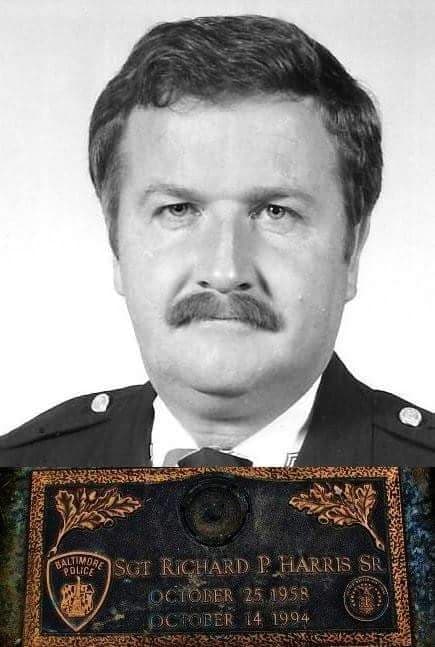
P/O Martin J Greiner

P/O Martin J Greiner

Fallen HeroMartin Greiner

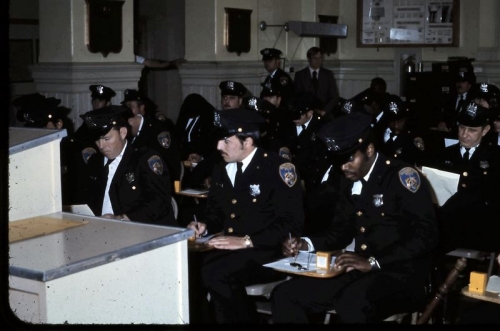
GrainerOfficer Greiner can be seen here, front row 2nd from the right

 CLICK HERE FOR AUDIO

Upon seeing Officer Greiner in the hospital bed, two things happened: first, Officer Greiner did positively identified Teves as the person who had shot him while he lay injured in the street. Then, realizing he was caught, Teves lunged at and began to attack Officer Greiner. There are few things that affect police more than seeing a brother officer injured; one of those is to see someone trying to injure someone that an officer feels a personal obligation to protect, i.e. an officer, as he lay helpless in his hospital bed. With this, Teves was either thumped with an Espantoon or Buffaloed by a nearby officer with the butt/grip end of a Smith and Wesson.38 caliber pistol. We may never know which, because to Buffalo, someone in Baltimore was rare and not part of our training, and to carry a nightstick into a hospital detail was 50/50; some officers did, others left it in their car. In either case, Teves himself quickly became in need of medical attention and was taken from University Hospital to Mercy Hospital, where he was admitted for a serious head injury and, of course, that original little boo-boo to his hand.

Two officers, Officer John Provenza and Officer John Burns, were watching over Teves while he was in the hospital. Officer Provenza stepped in the hall for a minute; some reports say to take a smoke, while others say he was guarding the prisoner from a chair in the hallway. (It was 1974; times were different; smokers could take smoke breaks inside buildings until the early 90's.) While alone with that single officer, the suspect seized the opportunity and lunged from his bed, attacking Officer Burns. A struggle ensued, and Teves managed to get Officer Burns’ gun. Officer John Provenza heard the commotion and quickly came back into the room. Just as Provenza entered the room, Teves managed to fire off several rounds, two of which struck Officer Burns. As Officer Provenza re-entered the room, he drew his service revolver and squeezed off a round or two at Teves, thereby ending the threat and saving Burns' life.

Officer Burns would go on to survive his injuries. Officer Greiner wouldn’t be as lucky; 11 days after being shot, on December 10, 1974, he would die due to complications that had set in from one of the rounds perforating his colon and ending up lodged against his spine.

The suspect, in this case, William E. Teves the 3rd, was an orphan and was no stranger to police; even less, a stranger to police involved shootings, as a little more than a year earlier he was arrested for shooting Central District Officer, James H. Harris, on Tuesday, April 18, 1972, just outside the White Coffee Pot Jr. when the two attempted to rob a vagrant in the restaurant restroom; the vagrant had no money, so he was pistol whipped. As Officer Harris entered the restaurant Teves and Jenkins (the suspects were exiting the restaurant) and walked past the young officer, a few seconds later, an unknown customer shouted that there had been a man beaten up in the men's room. Patrolman Harris rushed to the street to grab the two men he had just seen leaving the restroom as he entered the establishment. Witnesses said just that fast they heard a volley or shots and saw Patrolman Harris stagger back and fall to the pavement on his back. Harris was forced to undergo a four-hour surgery, as the shooting had caused damage to his left lung and liver, and doctors had to remove his spleen. They said Patrolman Harris was unmarried but had recently become engaged; he was a probationary officer. The victim of the beating at the restaurant was identified as John Grimes, 47; he was staying at the Armistead Hotel (Fayette and Holliday Streets.) Grimes was treated for cuts and bruises at Mercy Hospital and was later released. Grimes told police the suspects accosted him in the men's restroom and began beating him on the head with a pistol. He said they attempted to take money from him, but he had none. When it came down to it, the young officer never got a good look at Teves, nor did Grimes, so charges on Teves were dropped, in this case…

But that didn’t mean the judge forgot about them. Likewise, while in the hospital, when Teves attacked Officer Burns, taking his gun and then shooting him, making Burns the 3rd known officer Teves shot, though Teves wouldn’t be charged with the first two shootings or the beating of grimes in the men’s room of the white coffee pot Jr. Judge Basil A. Thomas didn’t just forget about those incidents. It may not have been entered in as evidence and wasn’t marked as a conviction so to speak. Judge Basil A. Thomas still remembered it; his memory was obvious when he imposed a sentence on Teves, who had just been convicted of first-degree murder in the shooting death of 25-year-old  Northern District Officer Martin J Greiner . Teves was so lackadaisical that he would yawn when the jury foreman announced the verdicts convicting Teves of murder, use of handgun, commission of a violent crime, and unlawful possession of a concealed weapon. Teves was quick to demand his right to file a motion for a new trial, telling the judge and courts, “This was a mock trial, and anything I would say would not make a difference.” Judge Thomas, after a brief recess, granted the defendant's request for immediate sentencing. “This was an unexplained, unprovoked and coldblooded shooting of Officer Greiner, which ultimately resulted in his demise.” The judge said, “It is a crime that has shocked and is shocking to the entire community, and it deserves the harshest penalty that this court can impose.” The Judge was told Teves was the product of a broken home and that he had begun living in and out of orphanages since the age of 10, never felt loved, and turned to alcohol for comfort. The Defense went on to ask that Teves be sent to Patuxent Institution for Psychiatric Treatment. Judge Thomas refused that request… giving Teves, “Life plus 18 years” and saying, “I couldn’t take the shooting of Officer in Harris a little over a year ago, April of 72, into consideration; nor could I take the more recent shooting of Officer Burns into consideration!”, He went on to say, “Just as I couldn’t take those into consideration, nor can I take being an orphan as a mitigating factor, or any drinking problems to be blamed for a shooting rampage!” The judge basically sent Teves to a place where they don’t serve alcohol!”

Commissioner Donald Pomerleau saw 1974 as a particularly bad year for Baltimore Police, Greiner was the fourth officer killed in the line of duty that year, and the Commissioner had finally had enough, He determined that based on Greiner’s death, it was time to issue bullet proof vests for all of patrol. A step in the right direction, it wouldn’t be until 1985, with the loss of Vincent J. Adolfo, that we would get better vests, and over the years, the vest would get better and better. During Teves’ trial, his defense tried every trick in the book, from saying he was crazy to saying he was an orphan to saying he was drunk. None of it worked. while it wasn’t admissible, it was unforgettable what Teves did in 1972 to Officer Harris and then, after shooting and attacking Officer Greiner, to attack and shoot Officer Burns. unforgettable; Teves needed to be sent to jail and he was.

As his brothers and sisters of the Baltimore Police Department, we will not let him be forgotten, His service Honored the City of Baltimore and the Baltimore Police Department may he rest in peace, and may God bless him.

1 black devider 800 8 72

More details
 
 
NameDescription
End of Watch 10 December 1974
City, St.          2700 Huntingdon Ave., Baltimore, & W 27th St., MD 21211
Panel Number 20-W: 2
Cause of Death                     Gunfire
Weapon - Handgun
District Worked Northern


1 black devider 800 8 72

POLICE INFORMATION

If you have copies of: your Baltimore Police Department class photo; pictures of our officers, vehicles, and equipment; newspaper articles relating to our department and/or officers; old departmental newsletters; lookouts; wanted posters; or brochures. Information on Deceased Officers and anything that may help Preserve the History and Proud Traditions of this agency. Please contact Retired Detective Kenny Driscoll.

This email address is being protected from spambots. You need JavaScript enabled to view it.

Devider color with motto

NOTICE

How to Dispose of Old Police Items

Please contact Det. Ret. Kenny Driscoll if you have any pictures of you or your family members and wish them remembered here on this tribute site to Honor the fine men and women who have served with Honor and Distinction at the Baltimore Police Department. Anyone with information, photographs, memorabilia, or other "Baltimore City Police" items can contact Ret. Det. Kenny Driscoll at This email address is being protected from spambots. You need JavaScript enabled to view it. follow us on Twitter @BaltoPoliceHist, like us on Facebook or mail pics to 8138 Dundalk Ave., Baltimore, Md. 21222


Copyright © 2002 Baltimore City Police History: Ret Det. Kenny Driscoll 

P/O Kevon M. Gavin Sr.

P/O Kevon M. Gavin Sr.

Fallen HeroOfficer Kevon M. Gavin, Sr.

CLICK HERE FOR AUDIO

CLICK HERE FOR AUDIO

On the night of April 21, 2000, Officer Kevon M. Gavin Sr. answered the call to assist an undercover unit that was pursuing a wanted felon who had just opened fire on a crowd of citizens on a corner, then sped off. Undercover units were doing narcotics surveillance when Eric Stennett drove up in his Ford Bronco and unleashed a hail of bullets on the citizens at that location. Mr. Stennet’s primary motivation was to take over a drug corner that he believed to be his. The undercover officers began to pursue the Ford Bronco as Mr. Stennet sped off. Officer Kevon Gavin Sr. parked his car on the street to safeguard citizens that were in the path of the ongoing pursuit. Officer Gavin left plenty of room for the speeding Bronco to drive around. Mr. Stennet steered his large truck directly into the front end of Officer Gavin’s patrol car, coming to rest on top of Officer Gavin’s car. Officer Gavin was transported to the Shock Trauma Unit at the University of Maryland Hospital, where he succumbed to his wounds. Officer Gavin was married with three children, ages 1, 5, and 8.

Devider. black

At approximately 8:00 pm, a tan 1985 Ford Bronco with limo tint pulled up in front of an abandoned row home in the 2000 block of Wilkens Ave. near Carroll Park in Baltimore’s Southwest District. Seated on some steps nearby were two men; they were talking smack and drinking beer, their backs resting on the boarded-up door front. The driver of the Bronco, a scrawny little 17-year-old black male trying to make a name for himself, got out and took a few steps toward the curb. Wrapping a bandana around his shooting hand, he drew a heavy, chrome-plated handgun and opened fire on the corner.

His intended targets ran for cover as the gun made reports loud enough to alert a nearby team of plain-close police; the muzzle flash and smoke barely evaporating from the air as the ground was being littered with his empty brass (shell casings). It’s easy to shoot at the unarmed, weak, unprepared, or unsuspecting, but when four trained, armed, and ready Baltimore Police Officers, all members of a crime-suppression team out on detail that night who just happened to have been nearby in an unmarked car, followed the sound of the gunfire, arriving on scene in time to see the shooter, they quickly pulled in behind his Bronco as he fired his last few rounds of ammunition while making his way back to the driver side of his Bronco.

The officers had already whipped in behind that truck. But as they bailed out of their car to arrest the gunman, the Bronco pulled off. Within parts of a second, police had already radioed every car in the area a description of that 1985, Tan Ford Bronco and its heavily armed driver. Squad cars began converging on the area known to officers of the Southwest as Sector 2. Within minutes of the first radio transmission, a procession of cruisers followed the Bronco in the direction of Officer Kevon Gavin. Little did anyone know this wouldn’t be the last time we would have a procession or police headed in the direction of or behind young Officer Kevon Gavin, but in this first procession and along in its wake, the Bronco tore through red light after red light, narrowly missing passing cars as he barreled across grass medians on Martin Luther King Boulevard and veered westbound onto Lombard Street.

Officers say they glanced at their speedometers, only briefly seeing speeds of 80, 90, and 100, and some say as much as 105 miles per hour. Yet they still heard officers calling out on their radios, “He's pulling away from us like we're standing still." Seconds later, two senior officers—a sergeant and a lieutenant—rolled into position on a cross street a few blocks away, timing their next move to the location reports pouring in over their radio. When the Bronco was a block away, Sgt. David Wimmer gunned his patrol car left onto Lombard to take up a position in front of the approaching truck. No sooner had Sgt. Wimmer made his turn, then the Bronco shot past, still building speed. In a split second, it pulled away from 100 miles an hour... to 105 on city streets. Everyone is running on pure adrenaline. They are thinking faster, seeing faster, and acting faster. you have to, or you’ll lose total control, the police are drawing on experience, streets they have patrolled for years, turns they have made 100’s if not 1000’s of times before, they know where pot holes are, bumps in the road that could throw their car from side to side or even airborne, and while this is never safe, it isn’t as dangerous for a trained police officer as it is for a 16/17-year-old kid, which became terrible obvious in the next few blocks, and was witnessed and seen coming by Lieutenant Mary Eilerman who was seated next to Sergeant Wimmer and described the events that will follow as suddenly getting a sick feeling in her stomach. Two blocks ahead, she saw a disaster in the making. At that moment, Officer Kevon Gavin, 27—and a six-year veteran of the Baltimore Police Department, husband, and father of three small children—was pulling his 1995 Chevy Caprice cruiser into the intersection at Gilmor Street as if to block the road from the Ford in hopes of ending the chase while protecting the people in the neighborhood.

"He came around that corner in what seemed to be an almost slow motion," Eilerman would later testify, then turned left onto Lombard, directly into the path of the truck. In his car trailing the Bronco, Sgt. Wimmer had time to see the emergency lights swirling on the roof of Gavin's car up ahead. He heard Gavin's siren and thought he saw the Bronco sideswipe a parked car as it raced toward Gilmor Street. Then, in the blink of an eye, the Bronco rocketed into the left-front side of Gavin's patrol car and burst into flames. As it forced the police cruiser along Lombard in a vortex of shattered glass, sheered chrome, and twisting steel, there was a strong scent of burning rubber more than 100 feet before it all came to rest. The ball of smoke and metal, with the burning Bronco piled up on the hood of Gavin's cruiser and the officer trapped in the wreckage, will be forever in the minds of not only those that were there—those that saw it, felt it, and smelled the smoke, rubber, blood, and tears—but also those that knew everyone involved or experienced similar accidents where the loss of a brother or sister officer was the final outcome. Here we had a sergeant, a lieutenant in Wimmer, and Eilerman, along with a dozen or more officers, rush to their injured brother. Trapped inside the squad car, they found Officer Kevon Malik Gavin pinned under the dashboard, unconscious, bloody, and barely breathing. The officers threw their shoulders into the demolished Bronco in a hopeless attempt to lift it off their friend.

Suddenly someone yelled, "Signal 13! Signal 13! Officer down!" into their radio as officers reached inside the demolished patrol car, desperately ripping at Gavin's clothing and bulletproof vest, trying to administer first aid, CPR, and other first responder needs, including someone having to kick in a rear window and Officer Frank Jarrell squirming inside, clawing his way over the cruiser's torn upholstery, before realizing that the situation was hopeless. Lieutenant Eilerman would eventually testify that "It was the most desperate, frustrating situation I have ever witnessed." The street would eventually become clogged with patrol cars, lights whirling, sirens screaming, and more police in the area than was actually needed, but knowing the public and how quickly things could get out of hand, we bring in every available unit in situations like this. Lieutenant Eilerman went from officer to officer, grabbing them by the shoulders and asking them to make sure they moved their cruisers and cleared the way for incoming fire emergency units and equipment. Within minutes, paramedics and firefighters were climbing all over the wreckage, clamping air on the injured officer’s face, and maneuvering heavy rescue gear into place to make it safe for the jaws of life to come in and tear the roof off that patrol car. It would take an hour to safely extract Officer Gavin from his car, and then another 20 hours of our brother fighting for his life, before the actions of a selfish little boy would take the life of that officer. As all this was going on and police and medics were working feverously to save the life of Officer Gavin, there were other officers approaching the Bronco, inside of which they found a box of ammunition, a Smith & Wesson 10 mm semiautomatic pistol, a blue baseball cap bearing the logo of the Indianapolis Pacers basketball team, and that scrawny little 17-year-old punk named Eric D. Stennett. Stennett’s record of drug arrests and gun violence would trace back to his 13th birthday, a record that, when printed out, would reach further than Stennett could toward the ceiling. There was no one else in the Bronco, no chance of mistaken identity, and not a shadow of doubt that it was him, and he was only that night seen shooting his pistol into a crowd, driving recklessly throughout the city, reaching speeds in excess of 100 miles per hour, and causing the loss of life in that of Baltimore Police Officer Kevon Malik Gavin, yet when it came time for a Baltimore Jury to punish someone for killing one of their own, they dropped the ball. But like Robert F. Kennedy said, “Every society gets the kind of criminal it deserves. What is equally true is that every community gets the kind of law enforcement it insists on." Look at Baltimore now. This doesn’t happen in our neighborhoods because we demand better; we demand more… When someone breaks into the house of our neighbors, we stop them, have them arrested, or chase them off, because when we don’t, we end up with this kind of crime in our neighborhood. Dwight Pettit was able to blind a jury.

Devider. black

Thousands mourn loss of police officer
Kevon Gavin recalled as a man devoted to family, friends, and the city

April 28, 2000 | By Peter Hermann

Yesterday's tearful funeral was not enough to understand how Kevon Malik Gavin policed the dangerous streets of Baltimore. It was at the viewings this week that the residents Gavin so often helped completed his profile.

A man named Gavin had been twice rescued after falling from his wheelchair. A drug addict he counseled into treatment. A woman Gavin visited three days after her house was vandalized, just to check on her. 

They were among more than 1,000 mourners who came to Loudon Park Funeral Home on Tuesday and Wednesday to pay tribute to the 27-year-old officer. He was killed last week when a teen-ager fleeing police crashed into his cruiser in West Baltimore.

"He chose to live a life of honor," said his cousin, Shaun Gavin, during yesterday's two-hour service in a small chapel of the funeral home on Wilkens Avenue in Southwest Baltimore.

Mayor Martin O'Malley said he talked to dozens of residents Gavin had helped during his six-year career. The mother of the man who kicked his drug habit, the mayor, said, "She smiled like only a mom can smile and told me, `My son has been returned to me. Officer Gavin talked to him.'"

The city's chief executive told mourners that Gavin knew "justice is more important than any fear he may have felt" on the street. "He was called to protect his fellow citizens, and he served with dignity, with honor, and with distinction."

More than 3,000 coworkers from almost every jurisdiction in Maryland and from cities all over the region attended Gavin's funeral service.

The chapel had seats for only 250 people; most had to stand outside and listen on speakers as a cold drizzle turned to a steady rain by noon.

A procession of more than 600 police cars wound its way around the Baltimore Beltway to Dulaney Valley Memorial Gardens in Timonium, where Gavin's wife, Lisa, was presented with the flag that had been draped across the casket, along with her husband's cap and badge.

He was remembered as a loving and devoted family man who grew up in a tough neighborhood in Brooklyn, N.Y., and escaped the scourge of drugs that claimed many of his friends. He joined the Navy and moved to Baltimore six years ago when the city department offered him a job.

Gavin left the city force to take a better-paid police job in Prince George's County, but he returned to Baltimore after three months because he felt he could make more of a difference in the city.

He died trying to stop a 17-year-old who police say was wearing body armor when he opened fire on a Southwest Baltimore street corner with a 10 mm handgun, wounding a man in the leg, and fled in a Ford Bronco.

Police said the Bronco was going 95 mph when it slammed into Gavin's cruiser, which he was using to block West Lombard Street, on April 20. He died a day later, on Good Friday. The teen-age driver has been charged with first-degree murder.

Relatives and friends preferred to remember the good times they had with Gavin, who had a son, Kevon Gavin Jr., 15 months old, and two stepchildren, Shawn, 5, and Amber, 8.

They told of how the former military man disciplined his children by making them stand at attention or do push-ups. His partner, Norris Wells, said they were so close they shared a locker. His cousin, Shaun Gavin, said the officer was never happy unless he was eating and that "he always managed to show up at your door just in time for dinner."

The circumstances surrounding Gavin's death could not be ignored. "How could someone so young suddenly be taken from us without hesitation and concern?" Shaun Gavin said. He added that his cousin "would be the first to forgive."

That was not so easy for O'Malley. "When I was 17, I was just glad to have the keys to the car," he told reporters before the funeral. "I didn't put on a bulletproof vest when I went out for the night."

Inside the chapel, O'Malley told mourners that "we cannot accept what has happened."

Acting police commissioner Edward T. Norris, a former New York police officer who once worked with Gavin's uncle Dennis Gavin and who was present at yesterday's services, echoed those sentiments.

"I still can't make any sense of this," Norris said. "Trying to make sense of madness is never going to happen."

Norris said Gavin was one of the first officers he met when he was named Baltimore's police leader last month.

Thursday night at Maryland Shock Trauma Center, as Gavin stayed alive only with the help of life support, Norris said he turned to O'Malley and shook his head in disbelief: "Why do we always lose the good ones?"

Devider. black

City court woes grow After two big setbacks for prosecutors, trial in mass killing put off
`A kick in the gut' Previous losses show that jurors distrust police, Jessamy says

January 25, 2001|By Caitlin Francke | Caitlin Francke,SUN STAFF

Having just lost two highly publicized murder cases in the past week, Baltimore prosecutors risk losing another after a judge ordered a long delay yesterday in the trial of suspects in one of the city's worst mass killings.

The case against four men charged with the killing of five women in Northeast Baltimore in December 1999 will be postponed for eight months, which could result in its dismissal, the judge said. He acted after prosecutors failed to promptly disclose evidence to defense attorneys.

State's Attorney Patricia C. Jessamy said during a news conference yesterday that she will take steps to bring the case to trial sooner.

She called the conference to address issues raised by the two recent acquittals of men charged in the killing: Officer Kevon M. Gavin and dental student Christian W. Ludwig. She said those cases highlight deep community mistrust of police and a problem of unsophisticated juries.

Jessamy said prosecutors presented "overwhelming" evidence for convictions in both cases, which ended in acquittals. Gavin died after a shooting suspect, Eric D. Stennett, crashed into him while fleeing police at a high speed.

Ludwig was stabbed as he tried to retrieve a purse stolen from his friend. The suspect, David Terry, was acquitted of all charges but one Tuesday. Yesterday, prosecutors dropped the final charge after jurors voted 11 to 1 to acquit.

Because most of the witnesses in the cases were police officers, the verdicts highlighted a serious distrust of law enforcement, she said.

The verdicts showed "a palpable bias against police officers in the community," Jessamy said. "It reveals to us a belief that police lie, manufacture evidence, and are not to be trusted.

"We need to look at the biases that exist and how we can better recognize them so that we can assure that our community, which needs justice, gets justice," she added.

She said she wants to lengthen jury selection so that prosecutors have more time to ask in-depth questions to determine whether jurors have prejudice and bring in consultants to train prosecutors on how to detect problem jurors. She has also offered to help teach police officers how to build strong cases for juries.

In addition, she wants to educate jurors about the justice system.

"It is crucial that our community be educated and trained and that people who are called to participate in the jury process understand the role that they are being asked to play," Jessamy said. "These verdicts were a kick in the gut, but we see them as an opportunity to make our system better."

Jurors and police officers, however, may have nothing to do with the fate of the case against four men accused in the Northeast Baltimore mass slaying.

Judge David B. Mitchell, chief of the city's criminal docket, postponed the case for eight months—until Sept. 4—after it came to light that prosecutors had not disclosed witness statements to defense attorneys in the case.

Mitchell refused to grant what is known as "good cause" for the postponement—essentially his stamp of approval—because he felt that prosecutors could have avoided the delay by disclosing the evidence earlier.

That means the case could be at risk for dismissal on the grounds that it violates the defendants' rights to a speedy trial when it comes up again in September. By that point, the defendants will have been waiting nearly two years for a trial. Long trial delays can be excused if a judge approves them, but a large portion of the delay in this case will not have been.

"Unfortunately, the ultimate sanction [may be] dismissal of this case," Mitchell said at the hearing yesterday. "This is ridiculous. This is not a possession-of-marijuana case, so why didn't we take an ounce of precaution to prevent this horrible result?"

The men on trial are Robert Bryant, Travon McCoy, Tariq A. Malik, and Ismail Malik Wilson. Police said the killings were meant to send a message to the women's relatives who were involved in a drug dispute.

The statements at issue were given to police months ago and suggest men other than the defendants as the killers of the women in the Elmley Avenue rowhouse. The judge scheduled to hear the trial ruled yesterday morning that the prosecutors' last-minute disclosure of the statements did not amount to prosecutorial misconduct.

But he referred the case to Mitchell, who oversees all postponement requests, so that defense attorneys could have more time to investigate the information raised.

At the postponement hearing, Mitchell said the trial judge thought the statements were "marginally exculpatory" but should have been turned over to the defense.

When Assistant State's Attorney Lawrence Doan suggested to Mitchell that the trial be scheduled for next week to give the defense some time to investigate, the judge criticized him.
1 black devider 800 8 72

More details

NameDescription
End of Watch April 21, 2000
City, St. Baltimore City, Maryland, P.D.
Panel Number 14-W: 22
Cause of Death Vehicular Homicide
Weapon - Vehicle
District Worked Southwestern

1 black devider 800 8 72

POLICE INFORMATION

Copies of: Your Baltimore Police Department Class Photo, Pictures of our Officers, Vehicles, Equipment, Newspaper Articles relating to our department and/or officers, Old Departmental Newsletters, Lookouts, Wanted Posters, and/or Brochures. Information on deceased officers and anything that may help preserve the history and proud traditions of this agency. Please contact retired detective Kenny Driscoll.

This email address is being protected from spambots. You need JavaScript enabled to view it. 

Devider color with motto

NOTICE

How to Dispose of Old Police Items

Please contact Det. Ret. Kenny Driscoll if you have any pictures of you or your family members and wish them remembered here on this tribute site to honor the fine men and women who have served with honor and distinction at the Baltimore Police Department.

Anyone with information, photographs, memorabilia, or other "Baltimore City Police" items can contact Ret. Det. Kenny Driscoll at This email address is being protected from spambots. You need JavaScript enabled to view it. follow us on Twitter @BaltoPoliceHist or like us on Facebook or mail pictures to 8138 Dundalk Ave. Baltimore Md. 21222


Copyright © 2002 Baltimore City Police History: Ret Det. Kenny Driscoll 

Officer James E. Fowler III

Officer James E. Fowler III

Fallen HeroOfficer James E. Fowler III

CLICK HERE FOR AUDIO

CLICK HERE FOR AUDIO


A 33-year Baltimore police veteran was killed Monday evening in a single-vehicle accident in Pennsylvania while traveling to a training program, police said. Officer James E. Fowler III, of Catonsville, was driving through Lewiston Lewistown, Pa., at about 5:25 p.m. when his 2002 Chevrolet truck hit a berm on U.S. 22/322 west and came to rest along a concrete barrier on the left side of the roadway. Fowler joined the Baltimore Police Department in 1976 after he was honorably discharged from the U.S. Navy. The bulk of his career was spent in the patrol division and traffic investigations, Guglielmi said. According to a 1993 Sun Article, he was dispatched to respond to a citizen's call of a frantic woman screaming and helped deliver a baby in the back of a police wagon. Fowler had received medical training in the Navy and served as a volunteer medic with a Carroll County fire department. 

Devider

Baltimore police officer dies in a Pennsylvania crash on way to training - Weather may have played a role in the death of the 33 year police veteran

September 28, 2010 | By Justin Fenton, The Baltimore Sun

A 33-year Baltimore police veteran who was nearing retirement was killed Monday evening in a single-vehicle accident in Pennsylvania while traveling to a training program, police said.

Officer James E. Fowler III, 61, of Catonsville, was driving through Lewistown, Pa., at about 5:25 p.m. when his 2002 Cheverlet truck hit a berm on U.S. 22 and came to rest along a concrete barrier on the left side of the roadway.

Inclement weather played a factor in the crash, police said, but the cause of death has not been determined.

Fowler joined the Baltimore Police Department in 1976 after he was honorably discharged from the U.S. Navy, and the bulk of his career was spent in the patrol division and traffic investigations, according to police spokesman Anthony Guglielmi.

"Officer James Fowler served the people of Baltimore as a police officer for nearly 34 years with honor and distinction, including earning a bronze star commendation," Mayor Stephanie Rawlings-Blake said in a statement. "My thoughts and prayers are with his family during this painful and difficult time, and I join the citizens of Baltimore to express my heartfelt appreciation for his decades of proud public service."

Sgt. George Hauf, Fowler's supervisor in the accident investigation unit, said Fowler was a hard-working officer whose upbeat personality rubbed off on others. He volunteered for extra shifts and helped with menial tasks like making sure the station house was stocked with coffee and soft drinks.

"Probably his best quality at these [crash] scenes was that he was very good with the families," Hauf said. "Jim had a way with families. He could put them at ease."

Hauf said Fowler, who enjoyed hunting and fishing, was planning to retire in January. On Monday, he was driving to Penn State University to participate in accident investigation training workshops.

Police Commissioner Frederick H. Bealefeld III called the crash a "horrible irony," given Fowler's expertise at investigating crash scenes.

"The guy's got over 30 years of service to the city of Baltimore and died trying to go get skills to help make himself an even better cop," said Bealefeld, who recalled driving with Fowler through the streets of Northwest Baltimore as a trainee.

Guglielmi said Fowler won department commendations, including a Bronze Star for catching gun suspects and a citation for handling traffic during special events in 2000.

According to a 1993 Sun article, he was dispatched to respond to a citizen's call of a frantic woman screaming and helped deliver a baby in the back of a police wagon. Fowler had received medical training in the Navy and served as a volunteer medic with a Carroll County fire department.

"I had the baby's head in my hands," Fowler told the Sun at the time. "When the baby came out, it wasn't breathing, so I placed her on her side and let the material drain to clear her airway. … She started to breathe on her own."

Fowler wrapped the newborn in the mother's coat, laid her on her mother's stomach, and waited for an ambulance that took the mother and daughter to Sinai Hospital.

"It was kind of amazing," Fowler said. "I've seen a lot of things as a police officer, but this really gave me a great feeling."

Fowler was a graduate of Catonsville High School and Catonsville Community College, Guglielmi said.

He is survived by his wife and two children.

This email address is being protected from spambots. You need JavaScript enabled to view it.

More details

NameDescription
End of Watch 27 September 2010
City, St. Accident in Pennsylvania
Panel Number 16-E: 27
Cause of Death Auto Accident
District Worked Traffic Division

1 black devider 800 8 72

POLICE INFORMATION

Copies of: Your Baltimore Police Department Class Photo, Pictures of our Officers, Vehicles, Equipment, Newspaper Articles relating to our department and or officers, Old Departmental Newsletters, Lookouts, Wanted Posters, and or Brochures. Information on Deceased Officers and anything that may help Preserve the History and Proud Traditions of this agency. Please contact Retired Detective Kenny Driscoll.

This email address is being protected from spambots. You need JavaScript enabled to view it. 

Devider color with motto

NOTICE

How to Dispose of Old Police Items

Please contact Det. Ret. Kenny Driscoll if you have any pictures of you or your family members and wish them remembered here on this tribute site to Honor the fine men and women who have served with Honor and Distinction at the Baltimore Police Department.

Anyone with information, photographs, memorabilia, or other "Baltimore City Police" items can contact Ret. Det. Kenny Driscoll at This email address is being protected from spambots. You need JavaScript enabled to view it. follow us on Twitter @BaltoPoliceHist, like us on Facebook or mail pictures to 8138 Dundalk Ave., Baltimore, Md. 21222


Copyright © 2002 Baltimore City Police History: Ret Det. Kenny Driscoll 

Officer Charles R. Ernest

Officer Charles R. Ernest

EVER EVER EVER Motto DivderOfficer Charles R. Ernest

CLICK HERE FOR AUDIO


On this day in Baltimore Police History, January 20, 1965, we lost our Brother Police officer, Charles R. Ernest, to a pedestrian-related auto accident based on the following:

At the intersection of Pearl and Saratoga St., Mr. Ferman Simmon and Mr. Louis Owen’s were involved in a minor traffic accident. Mr. Simmon was sitting in traffic when he was struck from behind. Mr. Owens had failed to stop for a stop sign (he was driving a 1959 Chevy) when he slammed into the rear of Mr. Simmon’s 1953 Ford. Even though their cars were operable, the two drivers failed to remove their cars from the street, causing a traffic backup.

It was approx. 11:15 a.m. on the morning of June 13, 1964. Patrolman Ernest and his partner, Officer Joseph Keirle, arrived to handle what, in terms of the Baltimore City Police Department’s calls, would be considered "routine.”. In more modern times, it would be a Sig 30. Patrolman Ernest examined the licenses and other paperwork that Mr. Simmons and Mr. Owens had provided while he and Mr. Simmons stood at the rear of the heavily damaged 53 Ford owned by Mr. Simmons, and the incident was being investigated. Mr. Owens was told to back his car away so Officer Keirle could better direct traffic around the scene and free up some of the traffic from the intersection. Mr. Owens jumped in behind the steering wheel, started the engine, and nervously put the car in gear. As most people are around Police, Owens was nervous, his anxiety as it was, He did not get the car into reverse but instead found drive, As he let up off the clutch while peering through the back window, his car lunged forward, He quickly went to push the brake, but again, his nerves got the best of him, and he pushed the pedal to the floor. Had it been the brake, he may have saved a life, but it was the gas, and instead of saving a life, he crushed the hips of two men between the cars.

Mr. Fermon Simmons and Officer Charles Ernest were powerless to stop the two vehicles from crushing them between the two, and in an instant, the pair were pinned between the cars. Mr. Owens immediately switched the car from 1st gear to reverse and backed his car away, but it was too late; the damage had already been done. When released from the massive trap of mangled steel and chrome, Patrolman Charles R. Ernest could do nothing but fall to the ground in horrific and unbearable pain.

The collision had shattered the hips, pelvis, and entire lower spine of both men. Patrolman Keirle immediately called for an ambulance and did his best to comfort his partner. The crew of Medic #1 (Ambulance #1) rushed to the scene and took the two men to University Hospital.

The hospital summoned Dr. John A. O’Conner, the official departmental doctor, to care for Officer Ernest. After a week in the hospital and several surgeries, Doctor O’Connor determined Officer Ernest would need long-term care and assigned Dr. Edward Wenzlaff as his primary doctor. When the immediate danger to his health had passed, Officer Ernest was taken from the hospital to his home with hopes of a full recovery.

At home, his wife, Dorothy, and daughter, Mary, were caring for him constantly; he seemed to be doing better. There was never a shortage of visitors. Unfortunately, things took a turn for the worse, and hopes would soon wane as there was a steady decline in his condition.

Though he had the benefits of the assigned physician caring for him, he did not progress the way Dr. O'Conner had originally hoped he would. On January 20, 1965, after multiple surgeries, numerous therapies, and 221 days of bed rest at his home, Officer Charles R. Ernest would suffer a severe heart attack and die, all as a result of the initial injuries.

Officer Charles R. Ernest served the department for 18 years and one month; he was a well-respected police officer. During World War II, he was a sergeant in the armory and faced the dangers of combat for little more than two years. In Baltimore, he spent almost half his life in the Western District, facing its dangers every day. In 1960, he was awarded the Silver Star after confronting an armed suspect and trading shots with him. A brave officer, he was never cavalier about dangerous situations; ironically, it was his keen sense of area awareness that kept him safe, a sense of awareness that was caught off guard by the usual routineness of a call like this. He could have never suspected that a call for a simple traffic accident would take his life. Which went on to teach future generations of police that there is no such thing as a routine call.

As his brothers and sisters of the Baltimore Police Department, we will not let him be forgotten, and we will take this time to remember him, think of him, and thank him for his service and sacrifice.

More details

NameDescription
End of Watch 20 JANUARY, 1965
City, St.      Pearl and Saratoga St
Panel Number N/A
Cause of Death        Auto Accident
District Worked Western

1 black devider 800 8 72

POLICE INFORMATION

Copies of: Your Baltimore Police Department Class Photo, Pictures of our Officers, Vehicles, Equipment, Newspaper Articles relating to our department and/or officers, Old Departmental Newsletters, Lookouts, Wanted Posters, and/or Brochures. Information on deceased officers and anything that may help preserve the history and proud traditions of this agency. Please contact retired detective Kenny Driscoll.

This email address is being protected from spambots. You need JavaScript enabled to view it.

Devider color with motto

NOTICE

How to Dispose of Old Police Items

Please contact Det. Ret. Kenny Driscoll if you have any pictures of you or your family members and wish them remembered here on this tribute site to honor the fine men and women who have served with honor and distinction at the Baltimore Police Department.  Anyone with information, photographs, memorabilia, or other "Baltimore City Police" items can contact Ret. Det. Kenny Driscoll at This email address is being protected from spambots. You need JavaScript enabled to view it. follow us on Twitter @BaltoPoliceHist, like us on Facebook or mail pics to 8138 Dundalk Ave., Baltimore, Md. 21222
 

Copyright © 2002 Baltimore City Police History: Ret Det. Kenny Driscoll 

Police Matron Cecelia A. Foll

Police Matron Cecelia A. Foll

Fallen HeroPolice Matron Cecelia A. Foll

On this day in Baltimore Police History, 19, 1918, Police Matron Cecelia A. Foll dies in her chair in her office while working.  Miss Cecelia Foll served two years at Southern District Station House, Officers and employees of the Southern Police Station were shocked that evening by the sudden death of Ms. Foll. Ms. Foll had been the substitute matron there for more than two years.

The Sun Paper reports that Patrolman Harvey Romner (Roemner) was passing her office on the second floor of the station house at about 5:30 o'clock PM when he noticed her sitting kind of limp, like in her chair. Thinking she had either fallen asleep or may have been ill, he stepped into her office and, in a playful tone, told her to wake up. Receiving no response, he touched her on the side of her face. With no response, he realized she was dead.

Coroner Reinhardt was summoned and pronounced dead due to heart disease. Miss Regina Foll, her daughter, survived her.

On this day, we'll take a moment to remember her service to the city of Baltimore and our police department, and we pray she rests in peace.


More Details

NameDescription
End of Watch 19, March 1918
City, St. Ostend Street and Patapsco Street
Panel Number N/A
Cause of Death Heart Attack
District Worked Southern


1 black devider 800 8 72

POLICE INFORMATION

Copies of: Your Baltimore Police Department Class Photo, Pictures of our Officers, Vehicles, Equipment, Newspaper Articles relating to our department and/or officers, Old Departmental Newsletters, Lookouts, Wanted Posters, and/or Brochures. Information on deceased officers and anything that may help preserve the history and proud traditions of this agency. Please contact retired detective Kenny Driscoll.

This email address is being protected from spambots. You need JavaScript enabled to view it.

Devider color with motto

NOTICE

How to Dispose of Old Police Items

Please contact Det. Ret. Kenny Driscoll if you have any pictures of you or your family members and wish them remembered here on this tribute site to Honor the fine men and women who have served with honor and distinction at the Baltimore Police Department.

Anyone with information, photographs, memorabilia, or other "Baltimore City Police" items can contact Ret. Det. Kenny Driscoll at This email address is being protected from spambots. You need JavaScript enabled to view it. follow us on Twitter @BaltoPoliceHist, like us on Facebook or mail pictures to 8138 Dundalk Ave., Baltimore, Md. 21222


Copyright © 2002 Baltimore City Police History: Ret Det. Kenny Driscoll 

BPD Hall of Fame

BPD Hall of Fame

fdde1da287ef645878d672d35edb2d9e L

Welcome to the Hall of Fame, where we honor the outstanding men and women who have served the Baltimore Police Department with distinction, courage, and excellence. These are the officers and leaders who have made a lasting impact on the department, the city, and the profession of policing. They are the ones who have upheld the highest standards of integrity, professionalism, and service. They are the ones who have embodied the old-school Baltimore Police tradition and pride.

The Hall of Fame showcases the stories of some of the most remarkable and inspiring individuals who have worn the badge of the Baltimore Police Department. You will learn about their achievements, challenges, and contributions to the history and development of the department and the community. You will also discover how they have influenced and inspired generations of officers and citizens alike.

The Hall of Fame is not just a collection of names and faces. It is a tribute to the spirit and values of the Baltimore Police Department. It is a celebration of the dedication and sacrifice of the officers who have sworn to protect and serve. It is a reminder of the honor and responsibility of being a police officer.

We invite you to explore the Hall of Fame and get to know the heroes of the Baltimore Police Department. We hope you enjoy their stories and appreciate their legacy.

Officer Warren V Eckert

Officer Warren V Eckert

Fallen HeroOfficer Warren Eckert
 
CLICK HERE FOR AUDIO


Rank: Police Officer
Panel: 63-E: 17
Department: Baltimore City, Maryland, P.D.
End of Watch: November 16, 1960
Cause: Motorcycle Accident
Age: 27
Years of Service: 5

Description: Patrol motorcycle accident.

6 November 1960: Police Officer Warren V Eckert

On this day in Baltimore Police History, November 16, 1960, we lost our brother, Police Officer Warren Eckert
On November 16, 1960, at approximately 12:35 P.m., Officer Warren Eckert was responding to a call for service using his lights and sirens. At the intersection of Pratt and Carey Streets, Officer Eckert was struck by another motorist, throwing him from his motorcycle. He struck his head against the street, causing fatal injuries. Officer Eckert served with the Baltimore Police department for 5 years. Before being appointed to the Baltimore Police Department in 1955, Officer Eckert was a member of the United States Navy, where he served from April 19, 1951, until March 22, 1955.


Motorist Faces Jury Action in Fatal Acciden, December 21, 1960, page 36
A motorist who was involved in an accident in which a traffic policeman was killed last month was held for grand jury action yesterday after a hearing in Central District Police Court - Police said the defendant, Thomas A Goins, Jr., 42, Negro, was driver of a pickup truck which collided with a motorcycle operated by patrolman Warren V. Eckert November 16. The Officer was dead on arrival at Franklin Square Hospital after the Accident. 
Police testified that Patrolman Eckert was westbound on Pratt Street with his siren operating and red light flashing when his vehicle hit the truck, which was Northbound on Carey. And had run the red light entering the intersection in the path of Patrolman Eckert Goins, of 600 Block of Baker Street, was charged with manslaughter. He was held on $1000 Bail
As his brothers and sisters of the Baltimore Police Department, we will not let him be forgotten for his service It honored the City of Baltimore and the Baltimore Police Department; it honored us all may he rest in peace, and may God bless him.


$70,000 Granted Kin Of Policeman
Dec 12, 1962, p. 17
Damages totaling $70,000 were awarded in superior court yesterday to the widow and three minor children of Officer Warren V. Eckert, a motorcycle patrolman, who was killed in a traffic accident while escorting an emergency ambulance to a hospital in November 1960
The jury under Judge Anselm Sodaro returned a consent judgment of $27,750 for Mrs. Katheryn A. L. Eckert: $19000 for Maureen S Eckert 6, $11500 for Beverly C Eckert 10, and $2250 for Mrs. Eckert as administratrix. Testimony produced by James R White A. Davis Gomborov and Matthew Swerdloff. The plaintiff's council disclosed that Patrolman Eckert was leading an Ambulance with his siren on and lights blinking when he was struck by a truck at Carey and Pratt Streets. Thomas A. Groins Jr., driver of the truck of the 600 block Baker Street and Baltimore Beverage Distribution Company of Maryland, Inc., of the 2600 Block Pennsylvania Ave., ran the light into the intersection, causing the collision
As his brothers and sisters of the Baltimore Police Department, we will not let him be forgotten for his service It honored the City of Baltimore and the Baltimore Police Department; it honored us all may he rest in peace, and may God bless him.

More details

NameDescription
End of Watch 16 November, 1960
City, St. Pratt and Carey Streets, Baltimore, Md
Panel Number 63-E: 17
Cause of Death Auto Accident
District Worked Traffic Division

1 black devider 800 8 72

POLICE INFORMATION

Copies of: Your Baltimore Police Department Class Photo, Pictures of our Officers, Vehicles, Equipment, Newspaper Articles relating to our department and or officers, Old Departmental Newsletters, Lookouts, Wanted Posters, and or Brochures. Information on Deceased Officers and anything that may help Preserve the History and Proud Traditions of this agency. Please contact Retired Detective Kenny Driscoll.

This email address is being protected from spambots. You need JavaScript enabled to view it. 

Devider color with motto

NOTICE

How to Dispose of Old Police Items

Please contact Det. Ret. Kenny Driscoll if you have any pictures of you or your family members and wish them remembered here on this tribute site to Honor the fine men and women who have served with Honor and Distinction at the Baltimore Police Department.

Anyone with information, photographs, memorabilia, or other "Baltimore City Police" items can contact Ret. Det. Kenny Driscoll at This email address is being protected from spambots. You need JavaScript enabled to view it. follow us on Twitter @BaltoPoliceHist, like us on Facebook or mail pictures to 8138 Dundalk Ave., Baltimore, Md. 21222


Copyright © 2002 Baltimore City Police History: Ret Det. Kenny Driscoll 

Policeman James T. Dunn

Policeman James T. Dunn

Fallen HeroPoliceman James T. Dunn 
CLICK HERE FOR AUDIO


On this day, June 20, 1894, we lost our brother's Policeman Michael Neary and policeman, James T. Dunn, of the Central District, as they were both instantly killed at 8:25 p.m. They were struck by a locomotive of the Northern Central Railway at the bridge between Chase and Eager Streets. Policeman Neary’s head was severed from his body and the two parts were picked up separately. Policeman Dunn was hit on the right side of the head. His skull was fractured in several places and his body was knocked from the railroad bridge into Jones’s Falls. The two bodies were recovered immediately after the accident by Captain Frank Toner of the Central District and were carried into Calvert Station on a private car furnished by the railway company and from here were taken to the City Hospital. The accident occurred while the policemen were attempting to arrest a number of boys who were bathing in Jones’s Falls. Boys have been accustomed to taking off their clothes and getting into the waters of the Falls at this point almost daily. Their antics in the water caused many of the people who live in the neighborhood to become indignant. complaint was made to the police and an effort was being made to break up the practice. About an hour and a half before the accident happened

4 Officers Today

Police  Officer James T. Dunn

Policeman Dunn had arrested one boy and sent him to the station house. Returning to his beat, he saw other boys in the water and set about capturing them. Policeman Neary was off duty at the time and at his home on Guilford Avenue in citizen’s dress. Appreciating the difficulty that Dunn would have in arresting the boys or restraining them if caught, he put on his coat and went to Dunn’s assistance. The two officers crossed to the east side of Chase Street bridge and descended the high bank to the railroad tracks. They walked over the railroad and as they got close, the boys called to them to come out of the water. Captain Toner was an interested spectator of the scene and remained to see how the officers would capture the boys. A large crowd had also collected on the street above. Two of the boys voluntarily came out of the water toward the officers, and Captain Toner says that when he saw one boy in Dunn’s charge, he left the bridge and went up Guilford Avenue toward Biddle Street. At that time, Neary and Dunn were going up the bank on the west side of the railroad bridge. This was the last the captain saw of his men alive. Soon afterward, a large crowd of people gathering on the Chase Street bridge hastened back to find out what the trouble was. Then he learned of the fatal accident. After getting up the bank, the policemen got on the bridge to walk over to the point where they could get out of the railroad yard onto Chase Street.  The train that struck them was the Parkton accommodation, which had left Union Station on its way into Calvert Station.  It is supposed that the policemen did not see or hear the train until it was too late for them to get out of the way.  When the men saw the locomotive upon them, they made a desperate run for life. But it was too late. The fatal blow was struck at the north end of the railroad bridge. Policeman Neary was born in Ireland. He came to Baltimore when he was sixteen years old. On October 15, 1877, he was appointed a policeman and patrolled the section between Exeter and Forrest Streets and from Gay to Monument Street. He was a member of A Division and was assigned to day duty. Officer Neary leaves a widow and nine children—six boys and three girls ranging from several months old to nineteen years old. Policeman Dunn was six feet tall and weighed 220 pounds. He was thirty-four years old and was born at Long Green, Baltimore County. He was appointed a probationary patrolman December 18, 1890 and was promoted to the regular force May 5, 1891. He was married nearly three years ago and had a baby boy who was six months old. They are gone but will never be forgotten by us, his brothers and sisters of the Baltimore Police Department. RIP brothers, and God Bless

More Details

NameDescription
End of Watch 20 June 1894
City, St. Between Chase and Eager Streets
Panel Number 25-E: 17
Cause of Death Auto Accident
District Worked Central

1 black devider 800 8 72

POLICE INFORMATION

Copies of: Your Baltimore Police Department Class Photo, Pictures of our Officers, Vehicles, Equipment, Newspaper Articles relating to our department and or officers, Old Departmental Newsletters, Lookouts, Wanted Posters, and or Brochures. Information on Deceased Officers and anything that may help Preserve the History and Proud Traditions of this agency. Please contact Retired Detective Kenny Driscoll.

This email address is being protected from spambots. You need JavaScript enabled to view it. 

Devider color with motto

NOTICE

How to Dispose of Old Police Items

Please contact Det. Ret. Kenny Driscoll if you have any pictures of you or your family members and wish them remembered here on this tribute site to Honor the fine men and women who have served with Honor and Distinction at the Baltimore Police Department.

Anyone with information, photographs, memorabilia, or other "Baltimore City Police" items can contact Ret. Det. Kenny Driscoll at This email address is being protected from spambots. You need JavaScript enabled to view it. follow us on Twitter @BaltoPoliceHist, like us on Facebook or mail pictures to 8138 Dundalk Ave., Baltimore, Md. 21222


Copyright © 2002 Baltimore City Police History: Ret Det. Kenny Driscoll 

Officer William F. Doehler

Officer William F. Doehler

Fallen HeroOfficer William F. Doehler

CLICK HERE FOR AUDIO

On this day in Baltimore City Police History 1927 (5 Aug 27), we lost our brother, Police Officer William F. Doehler. Officer Doehler was shot and killed by David Berry on August 5, 1927, after the officer had arrested him at a pawnshop for possession of stolen goods. Officer Doehler took him to a call box at Pennsylvania and Biddle to call for the wagon. While at the box, the assailant pulled a gun and shot the officer through the chest.

Officer Doehler was married and the father of two children. he entered the department on September 3, 1919.

We, his brothers and sisters of the Baltimore Police Department, won’t let him be forgotten, RIP Officer William F. Doehler: "Your service "Honored" the City of Baltimore and the Baltimore Police Department."


Search in Capital for Negro Fruitless
17 August 1927
pg 22
SEARCH AND CAPITAL FOR NEGRO FRUITLESS

Detectives Make Two Trips Seeking To Let Slayer Of Patrolman

Capt. Charles H. Burns, of the detective bureau, and four other members of the Police Department made fruitless trips to Washington yesterday in an attempt to capture David L. Perry, Negro wanted for the murder of patrolman William F. Doehler August 5, 1927. The detectives made their first trip on information furnished by George Diggs, Negro, who said he had spent Sunday night with Perry in Washington and believe the alleged slayer was still in the capital. After a vain search, the police returned to Baltimore and escorted Diggs to Washington to point out the house. According to Detectives, Diggs Merely was Lying.

Shout Once the Policeman as Negro Shoots
22 Aug 1927
page 22
SHOUT WARNS POLICEMAN AS NEGRO SHOOTS

Lawyer Cries “lookout” as Prisoner Draws Pistol and Fires
Patrolman’s Quick action Saves Him
Forces Man to Knees, Bullet Going Wild; was Calling Wagon when Attacked

A spectators warning shout yesterday probably saved the life of patrolman John coffey, 62-year-old policeman of the northeastern district, One of the Negroes he had arrested suddenly drew a pistol with his left hand and fired. The patrolman, however, was able to force his prisoners partially to the ground and escape the bullet.

The bullet passed through the transom over the door of a nearby store, penetrated the metal ceiling and lodged in the ceiling of the room above where Mrs. Fanny Barnack, wife of the owner of the store, was dressing.

CITED FOR BRAVERY SEVEN TIMES
Patrolman Coffey has been cited for bravery seven times during the 23 years he has been a member of the police force.
It was the third time this month that patrolmen in Baltimore have been attacked by prisoners as they were taking them to the station house. On August 6, patrolman William F Doehler of the Northwestern district was shot fatally by a prisoner after he had taken the man to a call box. On August 13, patrolman Harry P Levinson, also the Northwestern district, was forced to shoot a prisoner who had wrestled away his Espantoon and was attempting to beat him.

LAWYER GIVES A WARNING
patrolman Coffey had arrested the Negro, who later identified himself as “Bud” Young, 39 years old, 500 block S. Spring St., and was summoning the patrol when Samuel Greenfield, 1715 East Baltimore St., an attorney shouted “lookout Coffey,” just before the Negro fired. The policeman and prisoner were standing before the barn asked store at 1404 East Baltimore St. at the time the arrest had been made in the block where young lives. Patrolman Coffey walked his prisoner to Baltimore Street and then to Elm Street, where he asked to someone in the store to telephone for the patrol. When the person telephoning asks for his name at the request of the operator at the police station,. Patrolman Coffey called out, “what’s that?” At the time, stepping slightly forward. He held the Negro securely by the right arm, however, as they previously had a tussle in Spring Street.

DRAWLS PISTOL, HE SAYS 
As a patrolman stepped forward, young drew the pistol with his left hand, Mr. Greenfield asserted.

“I was sitting in a parked car at the corner of Baltimore and Eldon streets and was the only one nearby who could see what was happening, as Coffey and the Negro were partly hidden from view by a number of packing cases,” the attorney said, “something told me that things were going to happen. A few minutes before, I had seen Coffey and a young man struggling in Spring Street as I was passing in an automobile and so I pulled up and parked.” “One Coffey stepped forward to give his name to the man at the phone I saw the Negro draw his pistol, “Lookout, Coffey,” I yelled. Coffey turned and twisted the man’s right arm, pushing him down on one knee just as the pistol went off.”

BULLET ENTERED THE STORE
“The twisting motion forced young to fire upward and the bullet missed Coffey.” “Then I ran forward and put my foot on Young’s left arm so that he couldn’t fire again and Coffey took the pistol away from him.” Mr. Greenfield explained that he had known patrolman Coffey for a number of years. At the northeastern police station, a young man was charged with assaulting and shooting with intent to kill. Caring deadly weapons and disorderly conduct. He will be given a hearing today before magistrate Thomas F. O’Neill


NEGRO, DOEHLER CASE SUSPECT, CAUGHT, FLEES

The Sun (1837–1987); Sep 6, 1927;

pg. 24

Negro-Doehler case suspect, caught, flees
Automobile: what’s on way to capital, Report
man answered description of Patrolmam’s Aledged Slayer, Assertion
A Negro believed to be David Perry, sought since August 5 as the slayer of patrolman William F. Doehler, escaped in an automobile with two companions last night after a park motorcycle patrolman had arrested the trio.
The three Negroes, one of whom answers closely to the description of Perry, were placed under arrest by patrolman Robert Brady, on duty on Gwynns Falls Parkway, shortly before 9 o’clock

ORDERED TO STATION
Brady had stopped the car on suspicion. He saw that one of the Negroes resembled Perry, even to the patch which the alleged slayer wears on his left cheek to cover an abscess. Brady ordered the Negroes to turn the car and drive to the police station while he followed on his machine. As the car and motorcycle traveled on Windsor Mill Road, between Clifton Avenue and Wetheredville Road, Brady’s headlight went out, and a moment later his machine slid into a ditch. The Negro drive an automobile that sped away suicide Street. Brady fired his revolver several times to attract attention and residents of the section notified the Northwest police station, to which patrolman Doehler attached.

SEARCH OF DISTRICT MADE
Patrolmen Ernest temple, Henry Alexander and Lawrence E. Peters, each driving a light car, were sent to the district and cruised for several hours without finding the fugitive’s. Brady reported that the Negroes had several suitcases in the trunk of the car and told him they were going to Washington. Neither members of the state police at the Laurel substation nor Washington police had been notified late last night to watch for the car. Perry, alias Barry, Perran and Kanard, had been sought by the police of Baltimore and other cities since the day patrolman Doehler was shot and killed at a police call box on Pennsylvania Avenue. The policeman had arrested a Negro on a petty larceny charge and was calling the patrol when his prisoner suddenly drew a pistol, shot his capture and escaped. More than two days in intensive hunting, in which citizens joined with the police, was carried out in the Negroes districts. The search was extended to Washington, where Perry was reported to have been seen, but the detectives failed in their efforts to find him.

DESCRIPTION OF NEGRO Perry is described as a light-skinned Negro, 22 years old, 5 feet seven or 8 inches tall and weighing between 140 and 150 pounds. He has a 3-inch scar on the back of his right arm. On his left cheek is an abscess, over which he usually wears an absorbing patch, held in place by strips of adhesive plaster. It is believed that he will seek medical treatment, as the abscess has been malingering for two years. The Police Department has offered a reward of $250 for the capture of the slayer

SUSPECT IN DOEHLER SLAYING ELUDES POLICE
7 September 1927
page 3
suspect in Doehler slaying escapes police

All available clue run down without finding Negro fugitive The police last night said they had run down all the clues available without finding David Perry, Negro, as well as the murder of patrolman William F. Doehler. A man believed to be Perry, accompanying two other Negroes, escaped from Robert Brady, a Park policeman, after he had arrested them Monday night. The Negroes escaped when Brady’s motorcycle went into a ditch.

NEGRO HELD IN OKLAHOMA MAY BE PERRY
The Sun (1837–1987); Sep 9, 1927;
pg. 26
Negro held in Oklahoma may be Perry The description is said to correspond with alleged slayer of patrolman. Detective to leave for West at once accused friend to go along—indictment to be asked today with the arrest in Oklahoma City, Oklahoma, of a Negro named Perry, whose photographs were partially identified yesterday by the wife and several friends of David L Perry, alleged slayer of patrolman William F. Doehler, The police here believed that they were closer to the capture of murder than at any other time since the crime was committed August 5. Lieutenant . Martin J. Manion of the detective bureau, accompanied by Negro who knows Perry well, will leave for the West today in an effort to complete the identification, Capt. Charles H. Burns of the detective bureau said last night.

To Ask for Indictment Today
Robert R. O’Connor, states attorney, said last night that he would go before the grand jury today and asked that Perry be indicted on the charge of first-degree murder. The present term of the grand jury began today. Mr. Gerald O’Connor said that an indictment would be necessary in case the Negro held in Oklahoma City proved to be Perry; an indictment or a governors warrant would be necessary for the extradition.

Photographs Arrive Here
Photograph of Negro under arrest in Oklahoma City Oklahoma, together with a description of him, arrived at the detective bureau yesterday. The description corresponds in every respect to that furnished the police by the wife and friends of Perry. In weight, height and complexion, they are about the same, The man held has a sore on the left cheek, similar to the one from which Perry is said to have suffered for several years. “Looks like him,” wife says One of the photographs of their captive sent here by Oklahoma City authorities was shown to Perry’s wife, Lottie; she said, “it looks like him,” the police reported. William Butler, Negro, a friend and former neighbor of the alleged slayer, and several intimate acquaintances of Perry are said to have made the same statement. Either Butler or one of the other Negroes will compel the detective. The condition of Perry’s wife will not permit her to be taken. Prior to the communication from the Western city, the only picture of Perry in the hands of the police was an enlargement from a snapshot, in which the Negro was depicted wearing a cap with only part of his face showing.

$250 Reward Offered
This picture has been reproduced on handbills offering a reward of $250 for the capture of the Negro. These handbills had been distributed to all the police departments in the country and it was from the one in their possession that the suspicions of the Oklahoma City authorities were aroused.

They checked the descriptions of Perry with the man they had arrested and wrote to the chief inspector, George G. Henry.

The Negro was arrested several days ago on the charge of burglary. He gave his name as Henry James. He refused to talk to the Oklahoma City police, a dispatch from their last night said, detective pointed out yesterday that it was for attempting to pawn a watch believed to have been obtained in a burglary in the northeastern district of Baltimore that patrolman Doehler had placed the Negro believed to be Perry under arrest.

Tried to Pawn Watch

Patrolman Doehler had gone to a pawn shop on Pennsylvania Avenue in response to a call from the proprietor, who said that a Negro was attempting to pawn a watch, the number of which had been reported on the lookout sheet. The patrolman led the Negro to a call box at Biddle Street and Pennsylvania Avenue and called the patrol wagon. Before it arrived, it was said, the prisoner drew a pistol, shot the policeman through the heart, and fled. Patrolman Doehler fired once as he sank to the ground and as he was the best marksmen in the Northwestern district, the police for some time worked on the theory that the policeman’s slayer had been wounded. On the night following the shooting, there were numerous reports that the Negro had been seen around the city. In the Western district, a crowd of 4000 people join the police in a chase which began at Perry’s house in the 600 block of Sarah Ann Street and spread over that section of the city, lasting several hours. On the same night, a room which had been occupied by Perry was searched and a quantity of jewelry, some of which was said to have been stolen in the same robbery as the watch which patrolman Doehler’s slayer tried to pawn, was found. Since that time,. It has been reported in Washington, Woodwardville, Maryland, Alexandria, Virginia, and in nearly every part of Baltimore.

Negro Suspect Escapes

Monday night, a Negro answering the description of Perry was placed under arrest on Gwinn’s falls Parkway by officer Robert Brady, a Park policeman. The Negro into companions, also colored, were in an automobile when Brady’s suspicions were aroused. He ordered the driver to go to the police station, planning to follow the car on his motorcycle. His motorcycle overturned, however, and the Negroes escaped.

SUSPECT DENIES DOEHLER SLAYING
The Sun (1837–1987); Sep 10, 1927; p. . 9

SUSPECT DENIES DOEHLER SLAYING

Negro held in Oklahoma City says he has never been east of Kansas

LEAVES HERE FOR WEST

detective seeks to identify man who thought murder of Baltimore patrolman - Oklahoma City, September 9 the Negro named Perry, held here for Baltimore police and believed to be David L. Perry, who is accused of shooting a Baltimore patrolman to death August 5, today denied all knowledge of the Baltimore crime and said that he has never been east or north of Kansas. He also said that he is 17 years old and that his mother, two brothers and wife lived in Oklahoma City.

Baltimore Negro was 22

The man wanted by Baltimore authorities is said to be 22 years old and have a wife in the city of Maryland. The Perry arrested here has a sore on the right side of his face. The Negro one in Baltimore has an abscess on the left cheek, but in other respects, the descriptions tally. Perry admitted serving jail term in Kansas for minor offenses last year. Leaves for Oklahoma City Lieutenant . Martin J. Mannion of the detective bureau, accompanied by William Butler, a Negro who knows David L. Perry, left Baltimore late yesterday afternoon for Oklahoma City in an effort to identify the man held there as the Negro salt in the murder of patrolman William F. Doehler. If Butler identifies the Perry held in the West, another detective will be sent to Oklahoma with extradition papers to bring the accused back to Baltimore. Lieut. Mannion is expected to arrive in Oklahoma City tomorrow morning.

David L. Perry was indicted yesterday after several detectives and Butler had testified before the grand jury.


Finds Doehler Met Death at Hands of Negro Berry
The Sun (1837–1987); Sep 14, 1927;
pg. 5

Finds Doehler met death at hands of Negro Barry

The coroner gives a verdict in Killing of Patrolman by Prisoner

Dr. George C. At-Large last night gave a verdict in the fatal shooting of patrolman William F. Doehler. He found that the patrolman met his death at the hands of David L. Barry, a Negro, also known as Perry. The investigation was held at the Western police station. Hillary W. Gans, assistant state’s attorney, questioned a number of witnesses to the murder. The pistol with which Barry is alleged to have shot Doehler was produced. Two taxi drivers who were present at the shooting gave conflicting accounts of the pistol; one claimed that Berry had used the state-produced weapon, while the other denied this. Doehler was killed on August 6 following his arrest of a Negro in a pawn shop on Pennsylvania Avenue. The patrolman took the negro to the box when the prisoner shot him. The Negro is still at large.

More details

NameDescription
End of Watch 5 August, 1927
City, St. Baltimore, Md
Panel Number 49-E: 8
Cause of Death Gunfire
Weapon - Handgun
District Worked Northwestern

1 black devider 800 8 72

POLICE INFORMATION

Copies of: Your Baltimore Police Department Class Photo, Pictures of our Officers, Vehicles, Equipment, Newspaper Articles relating to our department and or officers, Old Departmental Newsletters, Lookouts, Wanted Posters, and or Brochures. Information on Deceased Officers and anything that may help Preserve the History and Proud Traditions of this agency. Please contact Retired Detective Kenny Driscoll.

This email address is being protected from spambots. You need JavaScript enabled to view it. 

Devider color with motto

NOTICE

How to Dispose of Old Police Items

Please contact Det. Ret. Kenny Driscoll if you have any pictures of you or your family members and wish them remembered here on this tribute site to Honor the fine men and women who have served with Honor and Distinction at the Baltimore Police Department.

Anyone with information, photographs, memorabilia, or other "Baltimore City Police" items can contact Ret. Det. Kenny Driscoll at This email address is being protected from spambots. You need JavaScript enabled to view it. follow us on Twitter @BaltoPoliceHist or like us on Facebook or mail pics to 8138 Dundalk Ave. Baltimore Md. 21222


Copyright © 2002 Baltimore City Police History - Ret Det Kenny Driscoll 

Police Clerk Thomas J. Dillon

Police Clerk Thomas J. Dillon

Fallen HeroPolice Clerk Thomas J. Dillon


On this day in Baltimore Police History, July 12 July, 1926, we lost our brother Police Clerk Thomas J. Dillon to gunfire based on the following:

Pistol Battle Due To Lack of Facilities For Insane, Longan’s View.

Vanie Lee, Discharged from Bay View, was killed by police.

Failure of the State of Maryland to provide adequate quarters and facilities for the care of mentally deficient persons in Baltimore was responsible for the pistol battle in the Northwestern District yesterday, in which nine persons, including a police clerk and four patrolman, were shot, Col. Rufus E. Longan, superintendent of the Baltimore City Hospitals, said yesterday… 

In a running pistol fight, Mr. Lee, who once was an inmate of an insane ward in Baltimore City Hospitals, was shot to death by police after he had been driven from behind parked automobiles. Thomas Dillon, a Police Clerk at the Northwestern Police Station who, although unarmed, was one of the first to close in on Mr. Lee, is in critical condition at the Colonial Hospital. Physicians, who performed an operation, said the bullet entered his chest and lodged in the spinal column. Paralyzed from the waist down, he had little chance of recovery.

It was said... Charles D. Gaither, Police Commissioner, commended highly the courage and activity of the police at the scene and particularly praised the efforts of those who were shot. “The patrolmen did everything possible under the circumstances,” Gaither said. "It is especially unfortunate that Mr. Dillon was shot, since he was unprepared for such action. Mr. Dillon volunteered when the call for reserves went out, even though the work called for was not in direct line of duty.” 

Others shot are: 

Patrolman Webster Schuman, Northwestern District. Shot in the mouth; condition serious; at the University Hospital.

Patrolman Ignatius Benesch, Northwestern District. Shot in the right hip; skull probably fractured by blow struck by Lee with empty pistol during hand-to-hand combat; at Colonial Hospital.

Police Chauffeur Leroy E. Lentz, Western District. Shot in the ankle at University Hospital.

Patrolman Howard L. Collins, Northwestern District. Shot in the right hand at Colonial Hospital.

William H. Kammerer, a druggist on Lafayette and Fremont Avenues, shot in the right leg.

Arthur Redding, 34 years old, was shot in the neck; the condition serious; at Colonial Hospital.

Calvin Howard, 16 years old, was shot in the hand and treated at the University Hospital.

Mildred Duncan is 11 years old. Shot in the abdomen; condition serious; at the Colonial Hospital. 

Lee, according to witnesses, first ran amuck in a lunchroom not far from Argyle and Lafayette Avenues, where most of the shooting occurred. After quarreling with Arthur Redding, the proprietor, he ran out on the sidewalk. Redding followed and struck Lee, witnesses said. Lee then drew a pistol and shot his assailant in the neck. After this, he went home to 635 West Lafayette Avenue and soon reappeared armed with a rifle and another pistol. Sitting on the steps in front of his home, with the rifle across his knees and his pistols nearby, Lee calmly smoked a cigar, witnesses declared. Meanwhile, residents had notified Rex Moore, the telephone operator at the Northwestern Police Station, that a crazy man had shot another and was terrorizing the neighborhood. The police of the Western District were asked to send the patrol, while Police Clerk Dillon, Patrolman Schuman, and Patrolman Collins set out for the scene of the shooting in a Police Department automobile. First on the scene, Patrolman Schuman jumped from the automobile and found cover in the doorway of a grocery store, as bullets from Lee’s weapons struck the glass front of the store. A bullet from Lee’s rifle penetrated two large plate glass windows and wounded Patrolman Schuman in the mouth. The policeman was later rescued by other patrolmen and sent to the hospital. As Police Clerk Dillon ran to Patrolman Schuman’s side, he was shot in the chest. Lee was eventually shot and killed by responding patrolmen. Both Police Clerk Dillon and Patrolman Schuman succumbed to their injuries.

We, his brothers and sisters of the Baltimore Police Department, will not let him be forgotten. God bless, and rest in peace. His service "honored" the City of Baltimore and the Police Department. RIP Officer Murphy.


More details

NameDescription
End of Watch 12 July, 1926
City, St.    635 West Lafayette Avenue
Panel Number N/A
Cause of Death     Gunfire
Weapon - Handgun
District Worked Northwestern

1 black devider 800 8 72

POLICE INFORMATION

Copies of: Your Baltimore Police Department Class Photo, Pictures of our Officers, Vehicles, Equipment, Newspaper Articles relating to our department and or officers, Old Departmental Newsletters, Lookouts, Wanted Posters, and or Brochures. Information on Deceased Officers and anything that may help Preserve the History and Proud Traditions of this agency. Please contact Retired Detective Kenny Driscoll.

This email address is being protected from spambots. You need JavaScript enabled to view it.

Devider color with motto

NOTICE

How to Dispose of Old Police Items

Please contact Det. Ret. Kenny Driscoll if you have any pictures of you or your family members and wish them remembered here on this tribute site to Honor the fine men and women who have served with Honor and Distinction at the Baltimore Police Department.  Anyone with information, photographs, memorabilia, or other "Baltimore City Police" items can contact Ret. Det. Kenny Driscoll at This email address is being protected from spambots. You need JavaScript enabled to view it. follow us on Twitter @BaltoPoliceHist, like us on Facebook or mail pics to 8138 Dundalk Ave., Baltimore, Md. 21222


Copyright © 2002 Baltimore City Police History: Ret Det. Kenny Driscoll 

How to Dispose of Old Police Items

logo

Please contact Det. Ret. Kenny Driscoll if you have any pictures of you or your family members and wish them remembered here on this tribute site to Honor the fine men and women who have served with Honor and Distinction at the Baltimore Police Department. Anyone with information, photographs, memorabilia, or other "Baltimore City Police" items can contact Ret. Det. Kenny Driscoll at   Kenny@BaltimoreCityPoliceHistory.com follow us on Twitter @BaltoPoliceHist or like us on Facebook or mail pics to 8138 Dundalk Ave. Baltimore Md. 21222.

NEWSLETTER

Subscribe now to get 100 exclusive photo & two newsletters per month