Baltimore Police Historical Society Calendar
Jan - Feb - Mar - Apr - May - Jun - Jul - Aug - Sep - Oct - Nov - Dec
January
01 Jan - 1857 Start of New Police Provisions
Today in Baltimore Police History 1 Jan 1857, came an important change under the provisions of this act; the ordinance introduced an entirely new order of things and placed Baltimore's Department of Police on practically the same footing as those of the other large cities of this country. It declared that after; 1 March 1857, the existing watch and police systems of the time would be ABOLISHED, and all ordinances for the establishment and regulation of the same be repealed. The new force consisted of one marshal, one deputy marshal, eight captains, eight lieutenants, twenty-four sergeants, three hundred and fifty police officers, five detective police officers and eight turkeys. The men were required to do duty day and night and were given all the powers then vested by law in the city bailiffs, police officers, constables, and watchmen. The city was divided into four police districts, whose stations were at the watch-house. The Marshal, with the concurrence of the mayor, was given authority to establish the limits of the stations, divide them into beats, making allowance for a proper force to retain at the station houses. He had power also to alter at will the limits of the districts and beats. At this time, the Detective Bureau was established. The city was divided into four police districts. Eastern, Middle/Central, Western and Southern.
01 Jan - Park Police officially merged
Today in Baltimore Police History 1 January 1961, the Baltimore Park Police officially merged with the Baltimore City Police Department.
https://baltimorepolicemuseum.com/index.php/component/content/article/94-baltimore-city-park-police #BPD_History
01 Jan - Final Roll Call Marshal Frey passed away
Today in Baltimore Police History 1 January 1911 Former Police Marshal Jacob Frey passed away. https://baltimorepolicemuseum.com/en/component/content/article/465-final-roll-call
02 Jan - Fallen George D. Hart
On this day in BPD History 2 Jan 1925, we lost our Brother Police Officer George D. Hart #BPDNeverForget https://baltimorepolicemuseum.com/index.php/component/content/article/294-police-officer-george-d-hart
02 Jan - Fallen William A. Bell
On this day in Baltimore Police History 2 Jan 1932, we lost our brother, Officer William A. Bell - Officer Bell was shot and killed instantly on 2 January 1932, while in the process of arresting a burglary suspect, Based on the following: #BPDNeverForget https://baltimorepolicemuseum.com/component/content/article/56-officer-william-a-bell
02 Jan - Baltimore Regional Auto Theft Team was Initiated
The Baltimore Regional Auto Theft Team (RATT) launched as a six-month Task Force on January 2, 1995, RATT has consistently demonstrated its commitment to combating vehicle theft in the region.
Over the years, RATT members, past and present, have achieved remarkable results, including a substantial reduction in vehicle theft rates (reaching a low of 70% during certain periods). Their dedication has been recognized with numerous awards, and they have forged lasting friendships within the team.
As RATT enters its fourth decade, it stands as a testament to the impact of collaborative efforts in law enforcement.
"Job well done," to all who have contributed to the success of the Baltimore Regional Auto Theft Team.

05 Jan - 1919 Annexation Act / Parts of Baltimore County Now Baltimore City
1919 Annexation Act / Parts of Baltimore County Now Baltimore City
Today in Baltimore Police History, 5 January 1919 - Thirty-Three Former members of Baltimore County Police Dept were accepted into the Baltimore City Police Depart as part of the Annexation Act. This allowed 60 men to patrol the 50 square miles of the Annex. Area's such as 'Canton' - 'Highland town' etc. were all formerly Baltimore County but are now Baltimore City. #BPD_History
06 Jan - Fallen Charles W. Fisher
On this day in Baltimore Police History 6 Jan 1884, we lost our Brother Police Officer Charles W. Fisher - Officer Fisher drowned to death while investigating suspicious activity and fell from the pier and through the ice of the basin. #BPDNeverForget https://baltimorepolicemuseum.com/index.php/component/content/article/536-officer-charles-w-fisher
06 Jan - Fallen Ronald W. Morgan
On this day in Baltimore Police History 6, January 1951 we lost our Brother Officer Ronald W. Morgan - Officer Morgan was struck and killed while getting out of his patrol car to use a call box https://baltimorepolicemuseum.com/component/content/article/331-officer-roland-w-morgan #BPDNeverForget
06 Jan - Final Roll Call Commissioner Bishop Robinson
Today in Baltimore Police History 6 January 2014 we lost our brother former police Commissioner Bishop Robinson.
BALTIMORE - (4:30 p.m.) -- The first African American Police Commissioner in the history of the Baltimore Police Department died Monday, 6 January 2014, a department spokesman said.
'I'm so sorry that he died,' Baltimore City Councilwoman Mary Pat Clarke said in a statement. 'He broke the racial barriers in the police department, and he did it with strength and great dignity. He was a very strong leader in that department and very highly respected. He went on to be involved in many other areas of civic life as well. He will be truly missed.'
Bishop L. Robinson died at the age of 86. He served as commissioner from 1984 to 1987 and later served A Secretary of the Maryland Department of Public Safety, and Correctional Services from 1987 to 1997.
'When Commissioner Robinson joined the police department in 1952 the role and scope of African American officers were severely restricted,' Baltimore police spokesman Lt. Eric Kowalczyk wrote in a release. 'African American officers were not allowed to patrol white neighborhoods or use patrol cars. During his career the United States saw the advancement of the Civil Rights movement, opening the door for Commissioner Robinson to advance in rank.
'His ascendancy to command the Baltimore Police Department is a testament to his perseverance, character, and dedication to duty,' the release continued. 'Fighting through a culture that was in the midst of changing, Commissioner Robinson gained the respect and admiration of his peers and subordinates.'
Robinson was one of the founding members of the National Organization of Black Law Enforcement Executives. The Annex Headquarters Building at Fayette and Presidents streets is named in his honor.
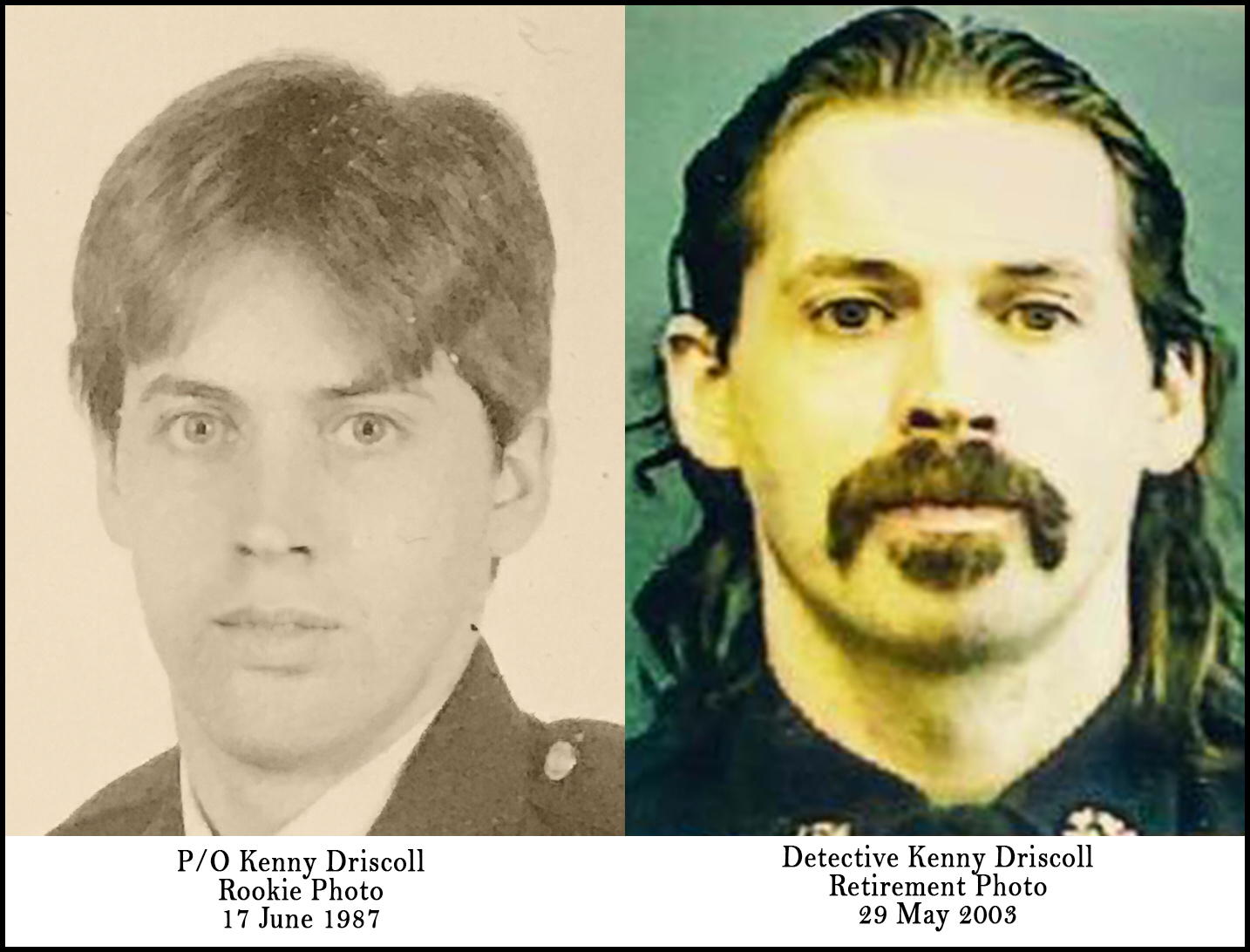
'We are saddened by the loss of Commissioner Bishop Robinson, he was our Jackie Robinson.' said retired Baltimore police Det. Kenny Driscoll.
Driscoll runs the website www.BaltimoreCityPoliceHistory.com
'He broke color barriers in one of America's toughest careers, for one of America's best police forces, the Baltimore Police Department, we were all proud to have served for him, and sorry to see him go,' Driscoll said.
Baltimore officials expressed their condolences to the Robinson family, toasting his service to the city.
'Commissioner Robinson was a pioneer in the field of public safety and Baltimoreans benefited from his tireless efforts to improve our city,' City Council President Bernard 'Jack,' Young said in a statement. 'His successes inspired countless men and women to dedicate their lives to public service.
'I enjoyed the privilege of working alongside Mr. Robinson and I was extremely proud of his career of service, which was showcased last February during a dedication ceremony for a public justice institute at Coppin State University that bears his name,' the statement continued. 'The institute stands as a tribute to his enduring legacy.'
Councilman Carl Stokes added, 'Although he led a lengthy career representing Baltimore's finest, the fact that he was an African American leader meant he faced many barriers, adapted and overcame.
'We have lost an able statesman whose wisdom, experience and proactive leadership will be dearly missed at a time when cities like ours could benefit from his wisdom and expertise,' Stokes said in a statement to the media.
https://baltimorepolicemuseum.com/en/component/content/article/465-final-roll-call
06 Jan - Sherlock Holmes' Birthday
Today in Baltimore History, 6 January 1934, a group known as, 'The 6 Napoleons' made up of Sherlock Holmes fans, celebrate Mr. Holmes' birthday.
07 Jan - Fallen Officer John P Burns
On this day in Baltimore Police History 7 Jan 1931, we lost our Brother Police Officer John P Burns to gunfire Please Visit the following Link
https://baltimorepolicemuseum.com/component/content/article/27-police-officer-john-p-burns #BPDNeverForget
08 Jan - James Birthday
James Birthday
09 Jan - Fallen Detective Troy Chesley
On this day in BPD History, 9 January 2007 we lost our Brother Det Troy Chesley to gunfire. Please Visit the following Link https://baltimorepolicemuseum.com/component/content/article/345-det-troy-lamont-chesley-sr #BPDNeverForget
09 Jan - Fallen Officer William H. Torbit
On this day in BPD History, 9 January 2011 we lost our Brother P/O William H. Torbit Junior to gunfire. Please Visit the following Link https://baltimorepolicemuseum.com/world/224-officer-william-h-torbit-jr #BPDNeverForget
09 Jan - Fallen Officer Craig Chandler
On this day in BPD History, 9 January 2015 we lost our Brother P/O Craig Chandler to injuries stemming from an auto accident. Please Visit the following Link https://baltimorepolicemuseum.com/component/content/article/346-officer-craig-chandler #BPDNeverForget
10 Jan - Fallen Officer Francis Stransky
On this day in BPD History, 10 January 1964 we lost our Brother P/O Francis Stransky to gunfire. Please Visit the following Link https://baltimorepolicemuseum.com/component/content/article/233-officer-francis-stransky #BPDNeverForget
11 Jan - Fallen Patrolman Richard H. Duvall
On this day in BPD History, 11 January 1959 we lost our Brother Patrolman Richard H. Duvall to accidental gunfire. Please Visit the following Link https://baltimorepolicemuseum.com/component/content/article/275-patrolman-richard-h-duvall #BPDNeverForget
12 Jan - Fallen Officer Charles J Walsh
On this day in BPD History, 12 January 1871, we lost our brother police officer Charles J Walsh to gunfire. Please Visit the following Link https://baltimorepolicemuseum.com/component/content/article/9-patrolman-charles-j-walsh #BPDNeverForget
12 Jan - Fallen Policeman James T. Harvey
On this day in BPD History, 12 Jan 1873, we lost our brother Policeman James T. Harvey to duty-related illness, Please Visit the following Link https://baltimorepolicemuseum.com/index.php/component/content/article/295-policeman-james-t-harvey #BPDNeverForget
12 Jan - Fallen Policeman John H. Dames
On this day in BPD History, 12 Jan 1873, we lost our brother Policeman John H. Dames to duty-related illness, Please Visit the following Link https://baltimorepolicemuseum.com/index.php/component/content/article/269-policeman-john-h-dames #BPDNeverForget
12 Jan - BPD History Motorcycle Sidecars
Today in BPD History 12 Jan 1921 - Motorcycle Sidecars were to be added as a New Crime Deterrent - Police Vehicles were to Have Hand and Foot Cuffs Attached to Secure Prisoners.
In all, 136 of these side-car motorcycles were expected in Baltimore within the following week or two. They were to be distributed among the six police districts that had only recently at the time been increased by the 1919 annexation. #BPD_History
12 Jan - Fallen Patrolman George Pumphrey
On this day in Baltimore Police History 12 Jan 1884, we lost our Brother Patrolman George Pumphrey in the line of duty based on the following https://baltimorepolicemuseum.com/index.php/world/360-patrolman-george-pumphrey #BPDNeverForget
13 Jan - Fallen Officer Fred R. Unger
On this day in BPD History, 13 January 1947, we lost our brother P/O Fred R. Unger to gunfire based on the following: Please Visit the following Link https://baltimorepolicemuseum.com/component/content/article/5-officer-fred-r-unger #BPDNeverForget
13 Jan - Final Roll Call Patrolman Diamond E. Hannigan
Today January 13 of 1929, Baltimore Police Department Patrolman Diamond E. Hannigan, a SD motorcycle patrolman, was killed when his car was struck by a train at the North Central Railroad Parkton crossing on the York Turnpike (York Rd.) after visiting relatives... Also killed in the accident was his wife, Minnie, and their two sons, Robert, age 4, and Edward, age 9. The only survivor was their daughter, Edith, who was 10 years old at the time. She was taken by train to Mercy Hospital. Edith lived a long life and died at age 75 in 1996. May Patrolman Hannigan and his family rest in eternal peace., Baltimore Police Department Patrolman Diamond E. Hannigan, a SD motorcycle patrolman, was killed when his car was struck by a train at the North Central Railroad Parkton crossing on the York Turnpike (York Rd.) after visiting relatives... Also killed in the accident was his wife, Minnie, and their two sons, Robert, age 4, and Edward, age 9. The only survivor was their daughter, Edith, who was 10 years old at the time. She was taken by train to Mercy Hospital. Edith lived a long life and died at age 75 in 1996. May Patrolman Hannigan and his family rest in eternal peace. https://baltimorepolicemuseum.com/en/component/content/article/465-final-roll-call
13 Jan - Final Roll Call - Major Richard 'Rick' Fahlteich
On this day 13 January 2023 our brother Major Richard 'Rick' Fahlteich passed away at his home surrounded by family. He was one of us, no matter how high he climbed through the ranks, he remained a brother, a leader, and a friend. He will be missed, but not forgotten, may he rest in peace. https://baltimorepolicemuseum.com/en/component/content/article/465-final-roll-call
14 Jan - Fallen Capt. Harvey Von-Harten
On this day in Baltimore Police History 14 Jan 1941, we lost our Brother Capt. Harvey Von Harten based on the following: To learn more please visit the following link https://baltimorepolicemuseum.com/component/content/article/7-capt-harvey-von-harten #BPDNeverForget
15 Jan - First Fallen Officer Plaque issued/presented
Today in BPD history 15 Jan 1954 - The Fallen Officer Memorial Plaques found in all the districts was first issued/presented - One was issued to be hung in Eastern District, and a second was presented to the officer's widowed bride. Police Commissioner Beverly Ober holding plaque which he said was to be presented to Mrs. Margret A. Scholl, widow of Sergeant James L. Scholl of the Eastern District. Sgt. Scholl died of a gunshot wound on 1 Aug 1953. The plaque carries Sergeant Scholl's Baltimore Police Sergeant Badge inscribed with his badge Number 118, and an inscription reading; 'Baltimore Police Department, Medal of Honor. Sergeant James L. Scholl. Appointed 1 June 1942, Died in the discharge of his duty 1 Aug 1953. His service honored the Baltimore Police Department.' The Commissioner said this is the first such plaque to be made in honor of a fallen officer, but that similar plaques will now be awarded in all such cases. Sergeant Scholl's was the first award of its kind within the Baltimore police Department.
16 Jan - Fallen Officer George F. Heim
On this day in Baltimore Police History 16 Jan 1970, we lost our Brother George F. Heim based on the following: To learn more please visit the following link https://baltimorepolicemuseum.com/component/content/article/298-patrolman-george-f-heim #BPDNeverForget
16 Jan - Possibly the First Recorded Attempt at Maintaining Departmental History
Today in Police History 16 Jan, 1905, we remember what might be the department's first recorded attempt at maintaining of our Department's History, when Patrolman William Burgess of the Central District began his new job in his new office as, 'Librarian and Keeper of the Archives of the Central District,' based on the following as we can see from the following Sun paper report:
Rearranging old police records
Baltimore Sun 16 January, 1905
Rearranging old police records
Patrolman William Burgess, of the Central District, is now busy with his new office of librarian and keeper of the archives of the Central Police Station. All of the musty old records of the police station, dating back to before the Civil War, are being resurrected from the dark, dusty closet in the rear of the Capt.’s office and arranged in their proper order on neat shelves in a little room on the second floor.
Patrolman Burgess, who was an expert stage carpenter before he laid aside the saw and hammer for the Espantoon and “Billy,” erected the shelves and is now busy arranging the record books in rows upon them. A single glance along the long row of frayed and weak back books is interesting, as it shows exactly when the old Middle District changed its name to the more dignified title of Central District. The record for 1884 is the first book bearing the name Central District.
Held together by their fellows supporting them on either side, the worn and dilapidated volumes present a pitiable spectacle of a departed usefulness. Could they but speak to stories of crime, and blood, and misery, and man’s inhumanity to man, that be hidden within their musty pages, they would a tale unfold that would make a weird offspring of Poe’s erratic genius seems commonplace.
19 Jan - Edgar Allen's Birthday
Edgar Allan Poe was a famous American writer, poet, critic, and editor who was born on January 19, 1809, in Boston, Massachusetts. He is widely regarded as one of the pioneers of gothic fiction, detective fiction, and science fiction in American literature. He is also known for his poems, such as “The Raven”, “Annabel Lee”, and “The Bells”, which have a musical and melancholic quality. Poe had a tragic and turbulent life, marked by poverty, addiction, and the loss of his loved ones. He died under mysterious circumstances on October 7, 1849, in Baltimore, Maryland, leaving behind a legacy of influential and innovative works.
https://baltimorepolicemuseum.com/en/component/content/article/594-edgar-allan-poe-and-the-bpd
20 Jan -Commissioner Donald Pomerleau Obit
Today in BPD History 20 Jan 1992 Retired Commissioner Donald Pomerleau served from 1966 to 1981 Passed away based on the following two links
http://www.baltimorepolicemuseum.org/images/The_Evening_Sun_Mon_Jan_20_1992_pg1.jpg
http://www.baltimorepolicemuseum.org/images/The_Evening_Sun_Mon_Jan_20_1992_pg2.jpg
20 Jan - Checker Cab Company
Today in BPD History 20 Jan 1982 the Baltimore Police Department began working side by side with the Checker Cab Company on a project called TOP - Taxis On Patrol. What began here in Baltimore went on to become a national program to report and solve crimes all over the country
20 Jan - Fallen Officer Charles R. Ernest
On this day in Baltimore Police History 20 January 1965, we lost our Brother Police Officer Charles R. Ernest based on the following: To learn more please visit the following link https://baltimorepolicemuseum.com/world/282-officer-charles-r-ernest #BPDNeverForget
20 Jan - Brittany's Birthday
Brittany's Birthday
22 Jan - Fallen Patrolman Michael J Burns
On this day in BPD History, 22 Jan 1917 we lost our Brother - Patrolman Michael J Burns of the bicycle squad as he was killed almost instantly about 7 o'clock last night (22 Jan 1917) when he attempted to re-light and electric lamp in front of 4012 Park Heights Ave.
He was pronounced dead by Dr. James S Akehurst, who lives at 4012 Parklake Ave. and who reached the side of the Patrolman's body a few minutes after he was electrocuted. Shortly after the current was turned on the lamp began to sputter, and several the residents of the neighborhood complained of the flashing light. Patrolman Burns came along on his bicycle on his way to his post a small sub-station at Parklake Avenue and Reisterstown Road. His attention was called to the lamp by a passerby, and he stated that he could try to make the light come on, to its normal power by tapping on the chain that leads from the pad, about 6 feet up the pole to the lamp itself. Leaning his bike against the police, he stood atop his bike and reached up to tap the chain, at which time he received a shock that threw him from the bike, electrocuting him and taking his life. https://baltimorepolicemuseum.com/index.php/component/content/article/26-patrolman-michael-j-burns #BPDNeverForget
22 Jan - Jamie's Birthday
Jamie's Birthday
22 Jan - Wodie's Birthday
Tom Wohkittel
25 Jan - Fallen Officer William J. Baumer
On this day in Baltimore Police History 25 January 1967, we lost our Brother Police Officer William J. Baumer to a heart attack during a struggle based on the following - Please Visit the following Link https://baltimorepolicemuseum.com/component/content/article/53-officer-william-j-baumer #BPDNeverForget
25 Jan - Department's First African American Officer to the Rank of Sergeant
Today in Baltimore Police History 25 Jan 1947, The Baltimore Police Department promotes one of the Department's First African American officers to the rank of Sergeant. Patrolman James H. Butler Jr. now Sergeant Butler - Please Visit the following Link - #BPD_History
26 Jan - Fallen Patrolman Mathew Boone
On this day in Baltimore Police History 26 Jan 1905, we lost our Brother Patrolman Mathew Boone, to a line of duty illness. To learn more, visit the following https://baltimorepolicemuseum.com/index.php/component/content/article/33-patrolman-mathew-boone #BPDNeverForget
29 Jan - Fallen Patrolman Joseph Waldsachs
On this day in Baltimore Police History 29 January 1944, we lost our Brother Patrolman Joseph Waldsachs after a serious fall in which his neck was broken, based on the following: https://baltimorepolicemuseum.com/component/content/article/8-patrolman-joseph-waldsachs #BPDNeverForget
29 Jan - Final Roll Call Retired Officer Jim Mitchell
Today in Baltimore Police History 29 January 2014, we lost our brother Jim Mitchell;
On this day 29 January 2014 at 4 PM Jim Mitchell passed away in his home in Hanover PA. He was good police, a good man, and a good friend, he will always be missed. If ever we need to remember the meaning of brother as in brotherhood, all we need to do is think of Jim, he is and always will be our brother in blue… God Bless, Rest in Peace. https://baltimorepolicemuseum.com/en/component/content/article/465-final-roll-call
29 Jan - Colton's Birthday
Colton's Birthday
Jan - Feb - Mar - Apr - May - Jun - Jul - Aug - Sep - Oct - Nov - Dec
February
01 Feb - Mom passed away
 Today 1 February in 2021, our mother, Shirley Driscoll, passed away. May she rest in peace.
02 Feb - Department Placed Under State Control
Today in Baltimore Police History 2 Feb 1860, the department was taken out of City control and placed under State control. By May 1st, 1860, we would switch our badges to the 2nd issue badge.
It was a new “Metropolitan Police' force under a Board of Police Commissioner’s (BOC), state-appointed civilians, and signaled the retirement of the 'Corporation Police force' with the authorization of the new badge. The 2nd. Issue Badge was issued May 1, 1860, the large oval badge with Roman 'fasces', and an ax bound by wooden rods, as its central symbol. Across the top and sides of the 'fasces' is a banner with the words 'Baltimore Police' in raised letters.
The Baltimore City Police Department remained under State governance until 1978, when the mayor began to appoint the Police Commissioner, subject to confirmation by the City Council (Chapter 920, Acts of 1976). -
From the MSP website Baltimore City Police Force. The first State agency to exercise police powers was the Baltimore City, Police Force. Established in 1867 under a Board of Police Commissioners, the Force was elected by the General Assembly (Chapter 367, Acts of 1867). Baltimore had been developing a police force since the formation in 1784 of a night watch 'very necessary to prevent fires, burglaries, and other outrages and disorders' (Chapter 69, Acts of 1784). Its police force, from 1867, was governed by a state board although jurisdiction was limited to the city.
From 1900 to 1920, the Board of Police Commissioners was appointed by the Governor. After 1920, a single Police Commissioner of Baltimore City was chosen and also served on the Governor's Advisory Council.
The Baltimore City Police Department remained under State governance until 1978, when the Mayor began to appoint the Police Commissioner, subject to confirmation by the City Council (Chapter 920, Acts of 1976).
In 1909, the Board of Police Commissioners of Baltimore City urged the creation of a State detective force since the Governor, the Fire Marshal, and State's Attorneys in the counties frequently sought help from Baltimore City's expert investigators.
The first tentative step towards a state-wide police force, however, was taken in 1914 as a corps of motorcycle officers under the Commissioner of Motor Vehicles began to enforce motor vehicle laws throughout Maryland (Chapter 564, Acts of 1914).
02 Feb - Groundhog Day
Groundhog Day (Pennsylvania German: Grund'sau dåk, Grundsaudaag, Grundsow Dawg, Murmeltiertag; Nova Scotia: Daks Day) is a popular North American tradition observed in the United States, Canada, and Australia on February 2. It derives from the Pennsylvania Dutch superstition that if a groundhog emerges from its burrow on this day and sees its shadow due to clear weather, it will retreat to its den and winter will go on for six more weeks; if it does not see its shadow because of cloudiness, spring will arrive early.
While the tradition remains popular in the 21st century, studies have found no consistent association between a groundhog seeing its shadow and the subsequent arrival time of spring-like weather.
The weather lore was brought from German-speaking areas where the badger (German: Dachs) is the forecasting animal. This appears to be an enhanced version of the lore that clear weather on the Christian festival of Candlemas forebodes a prolonged winter.
The Groundhog Day ceremony held at Punxsutawney in western Pennsylvania, centering on a semi-mythical groundhog named Punxsutawney Phil, has become the most frequently attended ceremony. Grundsow Lodges in Pennsylvania Dutch Country in the southeastern part of the state observe the occasion as well. Other cities in the United States and Canada also have adopted the event.
06 Feb - Fallen Officer Claude J. Profili
On this day in Baltimore Police History 6 Feb 1964, we lost our Brother Police Officer Claude J. Profili to gunfire to learn more please visit the following https://baltimorepolicemuseum.com/component/content/article/255-patrolman-claude-j-profili #BPDNeverForget
06 Feb - Fallen Patrolman John Neill
On this day in BPD History 6 Feb 1956, we lost our Brother Patrolman John Neill to a head injury caused as he fell on his way home striking his head on his front porch steps https://baltimorepolicemuseum.com/component/content/article/38-patrolman-john-neill #BPDNeverForget
07 Feb - BPD turns streetlights over to Peal Gas Light Company of Baltimore
7 February 1816, after just 34 years the Baltimore Police turned maintenance of the streetlights over to Peale's Gas Light Company of Baltimore. The first gas streetlamp in America was lit at the corner of N. Holliday St. and E. Baltimore St., where there still stands a replica of this light as a tribute to the rich history of our city, our police department, and the initiation of gas lighting in this country. As a side note the first home to have gas light was the residence of William Henry, a coppersmith located in the 200 block of Lombard Street. https://baltimorepolicemuseum.com/en/component/content/article/410-baltimore-street-lamps #BPDHistory
07 Feb - Baltimore Fire
Today in Baltimore History Baltimore 7 Feb 1904 was the start of the great Baltimore Fire - one of this country's worse fires of all time. The Great Baltimore Fire raged in Baltimore, Maryland, United States, on Sunday, Feb 7 and Monday, Feb 8, 1904. 1,231 firefighters were required to bring the blaze under control, both professional paid truck and engine companies from Baltimore City Fire Departments BCFD and volunteer fire companies from the surrounding counties, along with some out of state units that came in on local railways.
https://baltimorepolicemuseum.com/en/business-economy/our-police-3/baltimore-fire-1904 #BPD_History
09 Feb - Fallen Officer Milton Heckwolf
On this day 9 Feb 1926, we lost our Brother Police Officer Milton Heckwolf to a line of duty Illness To learn more please visit the following: https://baltimorepolicemuseum.com/index.php/component/content/article/297-police-officer-milton-heckwolf #BPDNeverForget
09 Feb - Bill Hackley's Birthday
Happy Birthday, Bill, I hope you are looking down on us, enjoying the museum, and what we are doing with your old site. You are not forgotten, Brother...
God bless and Rest in Peace
Bill was the founder of our Baltimore City Police History Site https://baltimorepolicemuseum.com/en/component/content/article/414-officer-william-m-hackley
10 Feb - Fallen Officer Frederick K. Kontner
On this day in Baltimore Police History 10 Feb 1967, we lost our brother Police Officer Frederick K. Kontner to gunfire to learn more please visit the following: https://baltimorepolicemuseum.com/component/content/article/312-officer-frederick-k-kontner #BPDNeverForget
10 Feb - Jon Pease's Birthday
Today is Jon Pease's birthday, he would have turned 69. We all knew and loved Jon - Happy birthday big guy....
10 Feb 1954
11 Feb - Fallen Hero Lt Michael F Black
On this day in Baltimore Police History 11 Feb 1898, we lost our Brother Lt Michael F Black to a line of duty Illness To learn more please visit the following: https://baltimorepolicemuseum.com/index.php/world/367-lieutenant-michael-f-black #BPDNeverForget
12 Feb - Final Roll Call Bud Carder
Today in Baltimore Police History 12 Feb 2019 our brother retired Lieutenant Bud Carder passed away. Let us take a minute to remember our old friend. May he rest in peace, and may God continue to bless him. https://baltimorepolicemuseum.com/en/component/content/article/465-final-roll-call
12 Feb - Fallen Officer John Blank
On this day in Baltimore Police History 12 Feb 1934, we lost our Brother Police Officer John Blank - To learn more please visit the following: https://baltimorepolicemuseum.com/component/content/article/50-officer-john-blank #BPDNeverForget
12 Feb - Fallen Sergeant George M. J. May
On this day in Baltimore Police History 12 February 1928, we lost our Brother Police Sergeant George M. J. May to an auto accident. To learn more please visit the following: https://baltimorepolicemuseum.com/index.php/component/content/article/322-sergeant-george-m-j-may #BPDNeverForget
13 Feb - Fallen Joseph D. Benedict
On this day in Baltimore Police History 13 Feb 1918 we lost, our Brother Patrolman Joseph D. Benedict to gunfire to learn more please visit the following https://baltimorepolicemuseum.com/component/content/article/57-patrolman-joseph-d-benedict #BPDNeverForget
14 Feb - Fallen Officer Max Hirsch
On this day in Baltimore Police History 14 Feb 1935, we lost our Brother Police Officer Max Hirsch to an on-the-job injury To learn more please visit the following https://baltimorepolicemuseum.com/component/content/article/302-police-officer-max-hirsch #BPDNeverForget
14 Feb - Fallen Officer Alfred Bobelis
On this day in Baltimore Police History 14 Feb 1954, we lost our Brother Police Officer Alfred Bobelis to an auto accident to learn more please visit the following https://baltimorepolicemuseum.com/component/content/article/34-officer-alfred-bobelis #BPDNeverForget
14 Feb - Fallen Honorary Police Officer Simon Fried
On this day in Baltimore Police History 14 Feb 1966, we lost an Honorary Police Brother A man by the name of Simon Fried. - A true hero. To learn more please visit the following https://baltimorepolicemuseum.com/component/content/article/262-honorary-policeman-simon-fried #BPDNeverForget
14 Feb - Kenny's Birthday
Kenny's Birthday
15 Feb - Bike Unit Started
1915 - 15 Feb 1915 - Baltimore begins its first ever Bike Squads, from four booths throughout the city, they worked two shifts, 4x12 12x8, they rode in 2-hour rotations, splitting time with officers in the booth. Dispatch phoned the booth, and calls were sent forward from there to the units on their bikes. The concept was to provide better police service to the rural homes in the city.
16 Feb - Fallen Officer Officer Edgar Rumpf
On this day in Baltimore Police History 16 Feb 1978, we lost our Brother Police Officer Edgar Rumpf in the line of duty. To learn more please visit the following https://baltimorepolicemuseum.com/en/component/content/article/246-officer-edgar-rumpf #BPDNeverForget
16 Feb - Fallen Officer Arthur R. Cornthwaite
On this day in BPD History, 16 Feb 1936 we lost our Brother Patrolman Arthur R. Cornthwaite to a line of duty injury https://baltimorepolicemuseum.com/component/content/article/266-patrolman-arthur-r-cornthwaite #BPDNeverForget
16 Feb - Fallen Officer Albert L. Borrell
On this day 16 Feb 1919, we lost our Brother Patrolman Albert L. Borrell, to a line of duty Illness To learn more please visit the following https://baltimorepolicemuseum.com/index.php/component/content/article/32-patrolman-albert-l-borrell #BPDNeverForget
16 Feb - Final Roll Call Jon Pease
Today, we remember our brother, police officer Jon Peace, who passed away on February 16, 2021. Officer Peace was a dedicated member of the Baltimore Police Department, known for his unwavering commitment to serving and protecting our community.
Jon was not only a respected officer but also a beloved colleague and friend. His dedication to duty and his compassionate nature left a lasting impact on everyone who had the privilege of working with him. He was always ready to go above and beyond to ensure the safety and well-being of others.
As we reflect on Jon’s life and service, let us take a moment to honor his memory and the sacrifices he made. May we keep his family and loved ones in our thoughts and prayers during this difficult time.
May Officer Jon Peace rest in peace, and may his legacy of service and dedication continue to inspire us all.
https://baltimorepolicemuseum.com/component/content/article/465-final-roll-call #BPDNeverForget
18 Feb - Southern District Established
Today in BPD History 18 February 1845 - The Southern District was established under a city ordinance. Two captains and four lieutenants were appointed for it, and the boundaries of the other districts were rearranged. #BPD_History
18 Feb - Fallen Sergeant William Wright
On this day in Baltimore Police History 18 Feb 1863, we lost our Brother Sergeant William Wright in the line of duty based on the following https://baltimorepolicemuseum.com/component/content/article/364-sergeant-william-wright #BPDNeverForget
19 Feb - John Heiderman's Birthday
John Heiderman 19 Feb 1953
21 Feb - Radio System Established for Our Marine Unit
Today in Baltimore Police History 21 Feb 1921, a two-way radio system was first introduced within the Baltimore Police Department. Installed on this day for testing, with an official inauguration day of 4 March 1921. It was called the Radio Phone system and installed in both vessels of the Marine Unit, as well as all waterfront districts with plans to eventually be established in all districts. This would later help add these radios to radio cars, and then all patrol vehicles. Before going to the handheld systems, we have today we started here. In fact, when we initially started outfitting patrol vehicles, they used the same by the Navy. US NAVY Handset ship phone radio.
#BPD_History
21 Feb - Accident Investigation Unit was Established
Today in Baltimore Police History, 21 February 1938, the Accident Investigation Unit was Est. The new unit was established on 21 February 1938. Crews were to investigate all automobile accidents and will have decelerometers for testing the brakes of cars involved in crashes, as well as photographic equipment for recording the actual conditions after the accident. At the time the unit was un-named, but the media was calling it the 'Crash Squad' #BPD_History
22 Feb - First Traffic Light Invented & Used in Baltimore
The first vehicle with actuated control was tried out in Baltimore. (To the best of our knowledge, based on several reports and claims, this was the first vehicle-actuated signal insulation in the world.) - This was an automatic control with a brake attachment and two funnels placed on poles on the right-hand side of the cross street, with ordinary telephone transmitters installed inside the funnels. These transmitters are connected to the sound relay, which, when disturbed by noise, for example, the tooting of horns, blowing of whistles, or the sound of voices, would actuate the sound relay, releasing the break on the automatic control and permitting the motor to run. This would change the signal, which had been green on the main street, to amber, then to red, permitting the side street traffic to move out on the green. It would automatically reset to red. This device was invented here in Baltimore. This control would always restore itself to the main street green, then the break would set, and the signal would remain green on the main street until disturbed again by sound. Several of this type were installed, one at Charles Street and Cold Spring Lane, another at Charles and Belvedere Avenue. https://baltimorepolicemuseum.com/en/component/content/article/65-traffic-lights #BPD_History
.jpg)
24 Feb - Need for More Detectives
Need For More Detectives
Marshall Carter and the Police Board Are Planning to Reorganize the Bureau
The need for men is inescapable.
The growth of the city necessitates a larger force of plainclothes officers to deal with the increase in crime.
24 Feb 1919 - Marshall Carter and members of the police board are working on plans for the reorganization of the detective bureau, which will include an additional 25 men and new quarters, and it will be included in a police bill to be presented to the next legislature. Marshall Carter and the police commissioners have been aware of a lack of men in the detective branch of the police department for several years, and now that the city is twice its former size, the need for efficient plainclothes men is critical.
25 Feb - Stephanie Justine's Birthday
Stephanie Justine's Birthday
26 Feb - City Council Authorized the Appointment of a Constable in each Ward
26 February 1799 - Authorized the appointment of a city constable in each ward. This ward constable was thus a policeman, and the term of city constable was not properly his, although his duties were defined by the ordinance to be the same as those of the city or high constable
26 Feb - Julia's Birthday
Julia's Birthday... my mother-in-law
27 Feb - Fallen Sergeant James Robert Moog
On this day in Baltimore Police History 27 February 1931, we lost our Brother Sergeant James Robert Moog in the line of duty https://baltimorepolicemuseum.com/en/sergeant-james-robert-moog #BPDNeverForget
28 Feb - Officer Alvin Martin - Injured
Officer Wounded 28 February 1976, Officer Alvin Martin The activity on the streets of Southeast Baltimore when suddenly a shot rang out. Officer Martin's windshield shattered' and he felt a sharp pain in his chest and shoulder.
28 Feb - The Loitering Bill in the City of Baltimore Submitted 28 Feb 1967
Introduction of HB715
Loitering in the City of Baltimore
Submitted 28 Feb 1967
14 March 1967
On 13 March 1967 Delegate Calvin A. Douglass, a representative from Baltimore's 4th district, advocated for the passage of HB715, a bill introduced by Delegate Douglass on 28 Feb 1967 a day in which 200 other bills flooded the house. The Bill, would apply only to Baltimore City, a bill that defines “Loitering” as a crime and provided a penalty of not less than $10 or more than $50, along with imprisonment of up to 30 day or both a fine a prison sentence.
Term defined - The definition of “Loiter” in the bill is:
“To stand or move purposely slowly around an area in front of or near a commercial establishment or public building, or near a well-traveled public way, in the company of one or more other persons for an unreasonable length of time under the circumstances with no valid reason for being in that place.”
Defending his bill before the House Judiciary Committee, Mr. Douglass said it was aimed at young men who stand around in front of drugstores, laundromats, and restaurants, etc, disturbing women who walk by.
However, Delegate Thomas Lowe asked what about civil rights demonstrations. Mr. Douglass answered it would not affect such demonstrations because the police would not abuse the law with “unnecessary arrests” Adding the bill is meant to prevent anyone from loitering on corners, “preventing the free flow of pedestrian or vehicular traffic.”
Mr. Lowe referred the bill to the Baltimore City Delegation, after asking Mr. Douglass if that would be acceptable to him
Both Delegate Lowe, and Douglass were members of the democratic party
POLICE ORDINANCES ART. 19, § 25-1
SUBTITLE 25
LOITERING - GENERAL
25-1. Public places.
(a) Definitions.
(1) Loiter.
“Loiter” means:
(i) to stand around or remain or to park or remain parked in a motor vehicle at a public place or place open to the public and to engage in any conduct prohibited under this law; or
(ii) to collect, gather, congregate, or to be a member of a group or a crowd of people who are gathered together in any public place or place open to the public and to engage in any conduct prohibited under this law.
(2) Place open to the public.
(i) “Place open to the public” means any place open to the public or any place to which the public is invited and in, on, or around any privately owned place of business, private parking lot, or private institution, including places of worship, cemetery, or any place of amusement and entertainment, whether or not a charge of admission or entry thereto is made.
(ii) It includes the elevator, lobby, halls, corridors, and areas open to the public of any store, office, or apartment building.
(3) Public place.
“Public place” means any public street, road, or highway, alley, lane, sidewalk, crosswalk, or other public way, or any public resort, place of amusement, park, playground, public building or grounds appurtenant thereto, public parking lot, or any vacant lot.
(b) Prohibited loitering.
(1) It shall be unlawful for any person to loiter at, on, or in a public place or place open to the public in such manner:
(i) to interfere with, impede, or hinder the free passage of pedestrian or vehicular traffic;
(ii) to interfere with, obstruct, harass, curse, or threaten or to do physical harm to another member or members of the public; or
(iii) that by words, acts, or other conduct, it is clear that there is a reasonable likelihood a breach of the peace or disorderly conduct shall result
(2) It shall be unlawful for any person to loiter at a public place or place open to the public and to fail to obey the direction of a uniformed police officer or the direction of a properly identified police officer not in uniform to move on, when not to obey such direction shall endanger the public peace.
(c) Scope.
(1) No person shall be charged with a violation of this section unless and until the arresting officer has first warned the person of the violation and the person has failed or refused to stop the violation.
(2) Nothing herein shall be construed to prohibit orderly picketing or other lawful assembly.
(d) Penalties.
Any person violating the provisions of this section shall be deemed guilty of a misdemeanor and, upon conviction thereof, shall be subject to a fine of not more than $500 or imprisonment for not more than 10 days, or both fine and imprisonment in the discretion of the court.
(City Code, 1976/83, art. 19, §58B.) (Ord. 79-1195.)
Jan - Feb - Mar - Apr - May - Jun - Jul - Aug - Sep - Oct - Nov - Dec
March
01 Mar -1857 Existing Watch Would Be ABOLISHED
Today in Baltimore Police History 1 Jan 1857, came an important change under the provisions of this act; the ordinance introduced an entirely new order of things and placed Baltimore's Department of Police on practically the same footing as those of the other large cities of this country. It declared that after; 1 March 1857, the existing watch and police systems of the time would be ABOLISHED, and all ordinances for the establishment and regulation of the same be repealed.
01 Mar - First Detective Squad
1 March 1857 - First Detective Squad - The first squad of detectives was appointed by the mayor, under the New Police Bill in Dec of 1856
02 Mar - Fallen Officer John H Spencer
On this day in Baltimore Police History, 2 March 1979, we lost our brother, Police Officer John H. Spencer to gunfire based on the following: https://baltimorepolicemuseum.com/component/content/article/238-officer-john-h-spencer #BPDNeverForget
02 Mar - Fallen Officer Frank L. Latham
On this day in Baltimore Police History, 2 March 1924, we lost our brother Police Officer Frank L. Latham to gunfire based on the following: https://baltimorepolicemuseum.com/index.php/component/content/article/342-patrolman-frank-l-latham #BPDNeverForget
03 Mar - Baltimore Police Newsletter
Today in Baltimore Police History, 3 March 1967, Commissioner Pomerleau officially started the Baltimore Police Newsletter, it was distributed every payday to officers of our agency. Here's a link to an article on the newsletter as well as links to as many of the newsletters as we could find. https://baltimorepolicemuseum.com/baltimore-police-newsletters
04 Mar - Radio Communication was established
Today in Baltimore City Police History 4 March 1933 - Our Radio Communication was established. The First radio communications system between Patrol Vehicles and a Central Dispatcher went into service on this day 1933. https://baltimorepolicemuseum.com/index.php/politics-diplomacy/511-communications-division #BPDNeverForget
04 Mar - Fallen Patrolman Thomas H. Worthington
On this day in Baltimore Police History 4 March 1909 - We lost our Brother Patrolman Thomas H. Worthington in the line of duty to Electrocution based on the following: https://baltimorepolicemuseum.com/index.php/component/content/article/22-patrolman-thomas-h-worthington #BPDNeverForget
04 Mar - National Sons Day
National Sons Day is celebrated on March 4. It is a day to show appreciation for the boys in our lives, and for the parents of boys to reflect on how we are raising our sons.
The official National Sons Day is on March 4, but it is also celebrated on September 28
Happy Sons Day
Kennith James
James Patrick
Kyle
Josh
05 Mar - Fallen Officer Patrolman Charles R. Bozman
Patrolman Charles R. Bozman Today in Baltimore Police History 5 March 1932 we lost our brother Patrolman Charles R. Bozman to an accidental discharge as he was making a joke and wrongfully playing around with his service weapon. In doing so, he attempted to make a joke and his firearm went off instantly taking his life https://baltimorepolicemuseum.com/world/356-patrolman-charles-r-bozman #BPDNeverForget
05 Mar - Fallen Officer Retired Officer Calvin McCleese
On this day in Baltimore Police History 5 March 1989 – Retired Officer Calvin McCleese in the line of duty based on the following - https://baltimorepolicemuseum.com/en/world/371-retired-officer-calvin-mccleese #BPDNeverForget
05 Mar - Final Roll Call - Joseph 'Joe' Barnes
Today in Baltimore Police History, 5 March 2020 our brother Joseph 'Joe' Barnes passed away. he was retired at the time. Joe was a former Central District officer. he will be missed.
05 Mar - Detective Badge #12 Retired from Service
06 Mar - Remember the Alamo
Today, 6 March 1836 was last day of the Battle of the Alamo. Remember the Alamo, it went from the 23rd of February until the 6th of March 1836.
The Battle of the Alamo (February 23 – March 6, 1836) was a pivotal event in the Texas Revolution. Following a 13-day siege, Mexican troops under President General Antonio López de Santa Anna reclaimed the Alamo Mission near San Antonio de Béxar (modern-day San Antonio, Texas, United States), killing most of the Texians and Tejanos inside.
Santa Anna's cruelty during the battle inspired many Texians and Tejanos to join the Texian Army. Buoyed by a desire for revenge, the Texians defeated the Mexican Army at the Battle of San Jacinto, on April 21, 1836, ending the rebellion in favor of the newly formed Republic of Texas.
Several months previously, Texians had driven all Mexican troops out of Mexican Texas. About 100 Texians were then garrisoned at the Alamo. The Texian force grew slightly with the arrival of reinforcements led by eventual Alamo co-commanders James Bowie and William B. Travis. On February 23, approximately 1,500 Mexicans marched into San Antonio de Béxar as the first step in a campaign to retake Texas. For the next 10 days, the two armies engaged in several skirmishes with minimal casualties. Aware that his garrison could not withstand an attack by such a large force, Travis wrote multiple letters pleading for more men and supplies from Texas and from the United States, but the Texians were reinforced by fewer than 100 men because the United States had a treaty with Mexico, and supplying men and weapons would have been an overt act of war.
In the early morning hours of March 6, the Mexican Army advanced on the Alamo. After repelling two attacks, the Texians were unable to fend off a third attack. As Mexican soldiers scaled the walls, most of the Texian fighters withdrew into interior buildings. Occupiers unable to reach these points were slain by the Mexican cavalry as they attempted to escape. Between five and seven Texians may have surrendered; if so, they were quickly executed. Several noncombatants were sent to Gonzales to spread word of the Texian defeat. The news sparked both a strong rush to join the Texian army and a panic, known as 'The Runaway Scrape', in which the Texian army, most settlers, and the new, self-proclaimed but officially unrecognized, Republic of Texas government fled eastward toward the United States ahead of the advancing Mexican Army.
Within Mexico, the battle has often been overshadowed by events from the Mexican–American War of 1846–48. In 19th-century Texas, the Alamo complex gradually became known as a battle site rather than a former mission. The Texas Legislature purchased the land and buildings in the early part of the 20th century and designated the Alamo chapel as an official Texas State Shrine. The Alamo has been the subject of numerous non-fictions works beginning in 1843. Most Americans, however, are more familiar with the myths and legends spread by many of the movie and television adaptations, including the 1950s Disney mini-series Davy Crockett and John Wayne's 1960 film The Alamo.
06 Mar - Officer Donald Fisher
P/O Fisher was shot 6 March 1956, the round entered his mouth split his tongue and penetrated the roof of his mouth lodging by his ear.
07 Mar - Fallen Lt. Cornelius J. Roche
On this day in BPD history 7 Mar 1933, we lost our Brother Lt. Cornelius J. Roche to a heart attack and paralytic stroke while working the Presidential Inauguration of Franklin Delano Roosevelt in Washington DC. https://baltimorepolicemuseum.com/component/content/article/250-lt-cornelius-j-roche #BPDNeverForget
07 Mar - Epic Disaster Shook Curtis Bay with the Impact of a Tactical nuclear weapon
Epic Disaster Shook Curtis Bay with the Impact of a Tactical nuclear weapon
The explosion of the Alum Chine from roughly two miles away in the Patapsco River.
One of the worst maritime disasters in Baltimore history occurred when a stevedore aboard the British cargo steamer Alum Chine accidentally set off a blasting cap in the ship’s hold that ignited 350 tons of dynamite on Friday, March 7, 1913. The resulting fire set off a series of earthshaking explosions in the Patapsco River that killed 33 men, injured another 60, and shook buildings as far north as Philadelphia.
The tragedy was borne out of impatience, clumsiness, and quarreling among the ship’s crew and stevedores (longshoremen) who were loading the cargo. Everyone was behind schedule on that bitterly cold morning. The ship, which was scheduled to depart for Panama later that day with explosives that would be used to help carve the Panama Canal, was still 150 tons short of its contracted load. U.S. Revenue Service and Customs inspectors had been aboard to approve the cargo and had already left. The remaining dynamite crates were being brought by railroad to Curtis Bay and ferried out to the freighter via small barges to its anchorage off Leading Point, just 2,000 feet from the Quarantine Station at Hawkins Point.
There was bickering among the crew that morning, witnesses said, and the pace was lagging when the stevedore assistant foreman, William J. Bomhardt, in trying to speed up the work, carelessly jammed a bale hook into a crate storing dynamite caps. The steel hook pierced the crate, punctured one of the caps, and made a sound like a pistol shot. The noise reverberated through the hold and seconds later the crate was on fire. The adjacent dynamite crates — sitting atop mounds of coal — started to burn too. Well aware of the unstable nature of their cargo, the stevedores abandoned the ship; others aboard weren’t warned and never knew. Plumes of thick, black smoke began billowing from the hold, and within minutes, a series of three titanic explosions decimated the ship. The last explosion disintegrated the Alum Chine, and the sheer force of the blast leveled the tugboat Atlantic; the naval collier vessel Jason was also anchored close by and sustained serious damage. The explosion was the equivalent of 0.02 megaton blast, roughly the same explosive power of a tactical nuclear weapon.
Map illustration of the Patapsco River, Curtis Bay and the placement of ships and landmarks of the Alum Chine disaster. (Baltimore Sun illustration) The thunderous eruption shook Curtis Bay, Brooklyn, and Baltimore. Every window in every building was shattered at Flood’s Park, the popular beach resort at the head of Curtis Creek, which was roughly a mile and a half away. The blast sent shock waves up and down the Eastern Seaboard. The governor’s office in Annapolis thought it was an earthquake, and officials at the Naval Academy thought a munitions ship had exploded. When a tremor shook Dover, Delaware, the speaker of the house for Delaware’s House of Representatives paused a speech and asked if there had been an earthquake. The switchboards to the local weather bureaus lit up in Philadelphia, Harrisburg, the Susquehanna Valley, Salisbury, Easton, and St. Michaels where people pilloried staffers with questions about the phantom earthquake. Windows were shattered as far north as Havre De Grace and Aberdeen.
The Alum Chine was reduced to a burning, floating mass of timbers and steel that quickly slipped beneath the surface of the Patapsco River. Its explosion created four- and five-foot-long shards of steel and wood that became projectiles as if shot out by a cannon. Nearby ships and buildings were thrashed with debris. The Quarantine Hospital at Hawkins Point took the full brunt of the explosion. Patients and staff there had been watching the burning ship with curiosity as the billowing smoke emitting from the ship in long black coils. The sudden blast shattered all the hospital’s windows and shards of glass and debris sprayed people inside, lacerating their hands, arms, and faces. Heavy oak doors, which had been closed and locked, were blown off their hinges. The frames of some of the outbuildings were shaken off their foundations. The only room untouched by the explosions was the kitchen, so the hospital staff moved the patients there to warm them since none of the wards had windows any longer. The clock in the hospital’s main doctor’s office stopped at 10:39 a.m., which became the official time of the explosion. “It was an awful sight,” resident physician Dr. Thomas L. Richardson told the Baltimore Sun. “It looked like a cyclone had struck the grounds. The employees were running about with their heads, faces and hands bleeding. The whole place was in confusion.”
Anchored 300 feet away, the brand-new U.S. Navy collier vessel Jason, which was built by the Maryland Steel Company in Fairfield, sustained more than $100,000 in damages. The Jason’s crew sent out the first distress call for the Alum Chine, then raised anchor and tried to get as far away from the burning vessel as possible. It wasn’t fast enough. The Jason’s captain ordered the crew’s firemen to start shoveling coal for its steam engines, but it became clear quickly that it would not be able to escape. Some crew members were thrown against the ship’s walls with enough force to render them unconscious. One crew member was decapitated, and others were killed by projectiles. Despite the heavy damage it sustained, the Jason remained afloat and would go on to a long naval career. Six boats would respond to the Jason’s call. It would take two days to fully account for all the victims. Some who had been reported missing were never found and assumed killed in the blast or drowned.
James and Jerome Goodhues were shipping agents who worked the docks in Baltimore’s Inner Harbor, Sparrows Point, and Curtis Bay. The brothers had a gasoline launch, the Jerome, named in honor of their father, and they had dropped off two engineers to the Alum Chine earlier that morning. While preparing for their next job, they saw the smoke billowing from the ship and headed out to assist. They steered up alongside it and panicked crew members, including several shirtless, smoke-grimed firemen, jumped onto the launch. Now nearly full, the Jerome began pulling away when Howard South, a clerk with the Joseph R. Foard Company who accounted for the dynamite, screamed for the launch to come back. The Jerome backed up and South leaped 10 feet down, bellyflopping roughly onto the rail as the launch pulled away. At the helm, “Jimmie” Goodhues considered returning to the burning boat to get others, but south alerted him to the ship’s cargo and frantically urged him to speed away. The Jerome had made it 200 feet away when the first explosion occurred. Goodhues and South watched with amazement as a hoisting winch was catapulted 1,000 feet in the air alongside a severed leg. Somehow, the launch managed to avoid the spray of debris. Alongside them was Philip Berlin, the ship’s outfitter, who said that the last thing he saw before the explosion was the captain’s black retriever, who stood motionless at the bow of the ship as if carved in stone.
“I well remember that terrible day,” John W. Forrest, a steward who escaped from the Alum Chine, recounted in an essay he wrote for the Baltimore Sun in 1960. “I had just finished a cigarette in my cabin when, in mid-morning of that cold March 7, I felt a slight shudder run through the ship, and then I heard shouting out on deck. I thought the lighter [a small barge] had bumped the ship and the stevedores were quarreling, but when I went out, I saw, to my horror, a lot of black smoke blowing aft.” Forrest said he raced to the engine room and shouted to the crew, “Down below there, the ships on fire!” After alerting what crew could hear him, Forrest jumped off the portside bridge dock into the water and started swimming frantically toward a boat he saw some distance away. Weighed down by his waterlogged clothes, he began to tire, but was unexpectedly pulled from the water by the Jerome. The Goodhues brothers then quickly turned their now-full launch around and headed toward the safety of Sparrows Point across the river.
As they sped away, thick clouds of black smoke continued belching from the ship, Forrest said. When he turned to look back, there was a terrific flash that seemed to reach the sky and a deafening explosion rung out. “It seemed to go dark as night and debris began falling all around us,” he said. “When that rain stopped there was simply nothing where the ship had been, but from her position a white-crested wave as big as a mountain was coming at us, and when it struck it lifted our little boat in the air and tumbled us all over each other, leaving us bruised, wet and numb with cold.” Forrest and the rest of the rescued men were taken ashore to a cabin and given hot coffee and dry clothes. At a hastily organized disaster recovery center called “Anchorage,” they were all reported as survivors of the explosion. The Goodhues brothers officially rescued the chief engineer, one officer and eight crew members, including Forrest, along with four stevedores.
Along with the Jerome, five other vessels responded to help those fleeing from the Alum Chine, but none more tragically than the tugboat Atlantic. As the flagship tugboat for the Atlantic Transport Company, the Atlantic and its skipper, William E. Van Dyke, were well known and respected around Baltimore’s waterways; he was born in Baltimore, spent a decade working in Curtis Bay, and lived with his wife and 11-year-old son in Locust Point. That morning, the Atlantic was anchored next to Fort Carroll near the center of the Patapsco River. Van Dyke and his first mate, Robert W. Diggs, saw the smoke engulfing the Alum Chine and opened up the Atlantic’s engines to get there quickly.
As they pulled up to the bow, a dozen men jumped aboard, stevedore foreman Bomhardt among them. Van Dyke turned the tug about and started heading away, but just as it completed its turn, two Alum Chine crewmen appeared at the bow and waved frantically. Van Dyke turned the boat around and steamed back to get them. The men climbed aboard, and the Atlantic began backing away. But moments later, a solitary flare soared into the air from the burning ship and then the epic explosion rocked Curtis Bay. The Atlantic took the full force of the explosion at point-blank range. Witnesses said when the dust cleared, it was flayed down to the waterline. Crew members who had been rescued by the Atlantic jumped off the tug at the point of explosion and, being under water, some were saved from the concussive blast. Witnesses said that Van Dyke and Diggs might have survived the blast too but were killed by the scalding water from the boat’s steam engine. Some survivors were also severely burned by the scalding water.
The aftermath was gruesome. The Baltimore Port patrol boat Lannan had the sad duty of gathering bodies from the water. Police combed the shores of Curtis Bay and Hawkins Point looking for survivors and bodies. The four remaining tugboats in the area gathered more wounded from the cold river, including survivors of both the Alum Chine and the Atlantic, and brought them ashore. The dead were taken to a makeshift morgue in a small house on the riverfront before being moved to the city morgue; the wounded were transported to St. Joseph’s and Johns Hopkins Hospitals in the city. The real tragedy of the grim day came when police were dispatched to family homes to bring the tragic news to wives and children. Most of the dead were poor stevedores of Polish descent and African Americans. Baltimore Sun reporters followed police to the Locust Point home of Captain Van Dyke, who broke the heartbreaking news to his disbelieving wife of his valor and sacrifice.
In the days that followed the disaster, those around Curtis Bay assessed the damages. The fortified structures that supported the big guns at Fort Armistead showed visible cracks from top to bottom and even extended underground; the guns were rendered useless until repairs were made several weeks later. The mine-planting building at the fort was completely destroyed and every pane of glass in the facility’s barracks was broken. Doors were ripped off their hinges with such force that many of them splintered on impact with the ground. Two boilers at the Davison Chemical Company in Curtis Bay “went off like cannons,” and the company’s towering brick smokestack was toppled; no one was injured in either incident. The lighthouse at Leading Point had its windows shattered and doors blown open, but the beacon was not damaged and kept shining.
The shoreline at Hawkins Point was freckled with fragments of steel, rivets, and human remains. Local fishermen plucked floating fish killed by the concussive blast out of the water up and down the Patapsco River that day. Debris from the explosion was strewn across Anne Arundel and Baltimore Counties. The lighthouse inspector for Maryland’s Fifth District said the Alum Chine was found on the westerly side of the main ship channel, at the anchorage of the Quarantine Station of Leading Point on the line at Fort McHenry. It had settled at the bottom of the Patapsco River with 13 feet of water between it and the surface. Because it was in a shipping lane, it was deemed a hazard and plans were made for its removal. A gas buoy was placed over the wreck with a light that flashed red every seven seconds.
The Baltimore Harbor Board initially started an investigation but lost a jurisdictional fight with the U.S. Army Ordinance Department, which claimed investigative powers over the transport of explosives. In press reports immediately after the tragedy, William Bomhardt, the stevedore foreman who negligently ignited the blasting cap that started the fire, attributed the fire to the spontaneous combustion of gas that had built up in the mounds of coal. In another report, he said the friction of two sticks of dynamite rubbing against each other set off the explosion. Witnesses agreed that there were mounds of soft coal throughout the hold, and that dynamite cases were stored atop piles of coal. Some thought it possible that a burning ember might have found its way into those coal piles. But the grand jury decided there was enough evidence to charge Bomhardt and he was arrested; he was released on $1,000 bail. Even as the trial began, he denied culpability, insisting he was being treated unfairly. “It isn’t just,” he told reporters after he was indicted. “I was the unfortunate devil who happened to handle the box that exploded. The men who testified before the grand jury have bail hook on the brain.”
Indeed, there were sixteen stevedore witnesses who testified that Bomhardt was upset with the pace of work that morning and started the fire when he carelessly struck the crate of blasting caps with a boat hook. But the grand jury spread blame further than with just the foreman. It said there were “manifest evidence of carelessness” among all the stevedores, including the wearing of steel-spiked shoes rather than rubber shoes as required when working with dynamite. The principal officers of the stevedore company also showed an “utter ignorance” of the Inter-State Commerce Commission’s recommendations on handling explosives.
Bomhardt and the stevedores worked for the Joseph R. Foard Company and its subsidiary, the General Stevedoring Company, which operated as independent contractors. The company was sued by the owner of the Alum Chine, the Munson Line, the Maryland Steel Company, and an array of different victims for more than $500,000, but Judge John C. Rose awarded just $220,000 (roughly $5.8 million in 2020 dollars) to the various petitioners. The owners of the Alum Chine received the biggest award at $75,000 ($1.9 million in 2020), and the courts ordered “allowances” (annuity payments) to the families of victims for a period of years. Foard filed for bankruptcy immediately afterwards, so it was unclear whether anyone ever received the awards grant by the court. As for Bomhardt, there was no published evidence of a conviction or civil charges.
John Forrest, the Alum Chine steward rescued by the Goodhues brothers, was cared for in Baltimore and weeks later returned with his surviving crewmates to Liverpool, England. The voyage home was a challenge for him as he grew ill. Newspapers far and wide covered the tragedy and when the crew arrived at Newport, Monmouth shire, England, they were welcomed as heroes by a large crowd and were given a police escort to their homes. Forrest ended up in the hospital and neurological damages confined him to a wheelchair. It would take him two-and-a-half months to be able to walk with two canes, and another fourteen months to walk with just one. Two years later in 1915 he was finally able to walk unassisted.
The Goodhues brothers officially rescued between twelve and fifteen people that cold March morning. Other published reports suggested they rescued far more than they were credited with. They received medals of valor for their heroism from the British government later in 1913. Ninety-four years later in 2007 James’ granddaughter, Patricia Lee Goodhues, would appear with her grandfather’s memorabilia from the disaster on the PBS show Antique Roadshow, where she told the story of his heroism. The Carnegie Heroes Fund, a charity established by Pittsburgh steel magnate Andrew Carnegie, granted lifelong annuity payments to the Atlantic Captain Van Dykes’ wife and mother, and a smaller annuity for his son until he became of age. Diggs’ wife was presented with a silver medal honoring his bravery; four other crew members of the Atlantic were also recognized.
The Alum Chine disaster remains one of the worst disasters in Baltimore history. In the years prior to the Curtis Bay disaster the city’s dynamite shipments were managed in the heavily populated Canton district. But residents expressed concern that a disaster was looming; the city acceded to their removal requests in 1912 — just one the year before the Alum Chine explosion — and moved dynamite shipments offshore from Quarantine and Hawkins Point. Weeks after the blast the city codified that decision by formally requiring that all high explosive shipments be moved even further away from the city, requiring loading, and unloading further south that the Quarantine Station. A blast of its kind would not happen again for another 25 years when an explosion in the Montebello Loch Raven tunnel killed ten and injured seven in July 1938.
https://baltimorepolicemuseum.com/en/350-tons-of-dynamite-explode-in-curtis-bay
08 Mar - Fallen Officer Jamie Allen Roussey
On this day in Baltimore Police History, 8 March 2000, we lost our brother Police Officer Jamie Allen Roussey - Based on the following - https://baltimorepolicemuseum.com/component/content/article/248-officer-jamie-a-roussey #BPDNeverForget
08 Mar - Women's Day
This Women's Day was first observed on March 19, 1911, in Austria, Denmark, Germany and Switzerland. Campaigns across Europe against WWI inspired women in other countries to adopt International Women's Day. The date of observance moved to March 8 in 1913.
https://baltimorepolicemuseum.com/index.php/component/content/article/488-women-and-the-baltimore-police-department
09 Mar - Fallen Hero - Capt. Charles H Burns
On this day in BPD history 9 Mar 1933, we lost our Brother Capt. Charles H. Burns to a LODD due to a work-related illness see the following link - https://baltimorepolicemuseum.com/world/369-captain-charles-h-burns #BPDNeverForget
09 Mar - Duties of the BOC established
9 March 1807 - A general ordinance was passed defining the duties of the city commissioners. They were given large powers. Among other things, with the mayor they were authorized to employ as many captains, officers, and watchmen as they might, from time to time, find necessary, but the expense should not exceed the annual appropriation for the service. The board was also required to make regulations and define the hours of duty of the watch; see that they attended to their duties with punctuality, receive their reports and cause them to be returned to the mayor’s office.
09 Mar - Eastern, Western, Central Districts all open on this day 1826
1826 - 9 March, 1826 - The Mayor was given control of the police of the city by an ordinance which provided that there should be appointed, annually, two captains and two lieutenants of the watch for the Eastern District: two captains and four lieutenants of the watch for the Middle District and two captains and two lieutenants of the watch for the Western District. They were expected to perform such duties as the mayor might, from time to time, direct. The latter was also given the power to appoint as he chose any number of watchmen and to dismiss them at his pleasure. He was also to prescribe their duties.
1826 - Central/Middle District History - 9 March 1826 - Holiday and Saratoga Streets, established 03-09-1826, the building that housed it was built in 1802 and was in use until 1870. 202 N. Guilford Avenue, (North Street) built in 1870 used until 1908. Saratoga and St. Paul Streets, renovated school, March 4, 1908, until 1926. Fallsway and Fayette St. built in 1926 and used until 09-12-1977 when they moved to 500 E Baltimore St. from 12 Sept 1977 until present.
1826 - Eastern District History - 9 March 1826 - 1621 Bank Street built around 1822, still stands. Used until 31 Aug 1959 at 12:01 am when they opened their new station house at the old Northeastern station at Ashland and Rutland Avenue until a new building was erected at Edison highway and federal streets, in Dec of 1960 and is the current site of the Eastern District. When it opened (in 1959) it was run by Capt. Millard B Horton.
1826 - Western District History - Green St between Baltimore St, and Belvidere St. Used from 1826 until 1876 when they moved to their new location, Pine Street, (still stands today and is used by the Maryland University Police) Baltimore Police used it from 1876 until 31 Aug 1959 at 12:01 am when they opened their new station house at Riggs Ave and Mount St. (1034 N Mount St), which is the current site of the Western District. When it opened it was run by Capt. Wade H. Poole.
09 Mar - A 'Supplement” to this Ordinance
1835 - 9 March, 1835 - A 'Supplement” to this ordinance, which was passed on this day, provided for the appointment of twelve lieutenants of the watch, constituted policemen ' to preserve the peace, maintain the laws and advance the good government of the city.' These lieutenants were required to reside in certain districts by the mayor and have conspicuous signs on their houses bearing their names and office. In addition to their police duties, they were required to act as city bailiffs about the markets, their compensation was fixed at $20 a month for their night work as lieutenants of the watch and they received an additional sum of $220 a year for the services mentioned in the ordinance.
09 Mar - Dennis' Birthday
Dennis' Birthday
12 Mar - Fallen Agent Michael Joseph Cowdery, Jr.
On this day in Baltimore Police History 12 March 2001, we lost our Brother Police Agent Michael Joseph Cowdery, Jr. to gunfire based on the following - https://baltimorepolicemuseum.com/component/content/article/267-agent-michael-joseph-cowdery-jr #BPDNeverForget
13 Mar - Its 10 pm Do you know where your children are
It's 10 p.m., Do you know where your children are?
Today In American History 13 March 1967, America's longest-running prime-time newscasts: WNYW ( aka WNEW-TV) first premiered its 10 p.m. newscast – Each night, the newscast originally known as The 10 O'clock News was famously preceded by the simple, announcement: 'It's 10 p.m., Do you know where your children are?' The announcement was coined by Mel Epstein. And was first uttered by Tom Gregory. Soon stations across the country began using the tagline for their own 10 p.m. or 11 p.m. news slots depended on the start of the local markets. The entire PSA was initiated as a reminder to parents of the youth curfews. In Baltimore, it was 11 PM and came with a brief introduction of the announcer. With that
Its 10 pm Do you know where your children are
15 Mar - Final Roll Call - Major Joe Chianca
Today in BPD History 15 March 2018 we lost our brother Retired Major Joe Chianca - He is gone but will never be forgotten https://baltimorepolicemuseum.com/component/content/article/465-final-roll-call
15 Mar - Fallen Night Watchman George Workner
On this day in Baltimore Police History 15 Mar 1808, we lost our Brother Night Watchman George Workner – Based on the following https://baltimorepolicemuseum.com/component/content/article/338-watchman-george-workner #BPDNeverForget
15 Mar - Final Roll Call - Officer Bill Hackley Passed
Today in Baltimore Police History we lost our brother Retired Police Officer William 'Bill' Hackley, Bill Passed away on 15 March 2012 - A historian, Bill started the BaltimoreCityPoliceHistory website. https://baltimorepolicemuseum.com/index.php/component/content/article/414-officer-william-m-hackley #BPD_History
16 Mar - FOP formally recognized by Donald D. Pomerleau
16 March 1967 – A bill to direct Donald D. Pomerleau, Baltimore Police Commissioner, to recognize the Fraternal Order of Police as the “Official Representative” of members of the force was introduced in General Assembly Today (16 March 1967). Already pending is a rival measure designed to force recognition of a non-striking AFL-CIO union local of Baltimore police patrolman and sergeants. https://baltimorepolicemuseum.com/en/component/content/article/500-history-of-fop-lodge-3 #BPD_History
16 Mar - Today, March 16, 1966, is Gemini's first docking of two spacecraft in Earth orbit
Today, March 16, 1966, is Gemini's first docking of two spacecraft in Earth orbit. On March 16, 1966, command pilot Neil Armstrong and pilot David Scott successfully docked their Gemini VIII spacecraft with the Agena target vehicle, the first-ever linking of two spacecraft together in Earth orbit. https://www.nasa.gov/mission/gemini-viii/
17 Mar - Dad passed away
Today 17 March 2021 our father, Charles Driscoll passed away
19 Mar - An Officer Became Known as a “High Constable,” by City Ordinance
19 March 1798 - An officer then known as “The City” or “High Constable”, was created by the ordinance on 19 March 1798. His duty was 'to walk through the streets, lanes, and alleys of the city daily, with mace in hand, (a mace was a Billy club) He was to make rounds, so that within a reasonable time he could visit all parts of the city, and give information to the Mayor, or other Magistrate, of all nuisances within the city, and all obstructions, and impediments in the streets, lanes, and alleys, as well as all offenses committed against the laws, and ordinances.' He was also required to report the names of the offenders against any ordinance, and the names of the witnesses who could sustain the prosecutions against them and regard the mayor as his chief. The yearly salary of the city constable was fixed at $350, and he was required to give a bond for the performance of his duty.
19 Mar - Fallen Police Matron Cecelia A. Foll
On this day in Baltimore Police History 19 March 1918, Police Matron Cecelia A. Foll, dies in her chair in her office while working. https://baltimorepolicemuseum.com/index.php/world/280-police-matron-cecelia-a-foll #BPDNeverForget
20 Mar - Baltimore City's 1st Seal
Today in Baltimore City History 20 March 1797, Baltimore's first Seal was put into use. It was a figure of Liberty overcoming tyranny. This seal remained in use until 1827 when the current seal was introduced. The first seal is only a few very old documents. As we were looking for Baltimore Police history and memorabilia for exhibit, we came across a copper electrotypes plate made in 1880 by John Ryan as a representation of 'The First Seal of the City of Baltimore' it measures 4.75' tall and was made to resemble a printer’s type plate (except not reversed) but made to celebrate the Baltimore City Seal for an 1880 Sesqui-Centennial presentation. This is the center plate from the set of three. It is believed the set was broken up because the other two seals were so far off, collectors didn't want them together. https://baltimorepolicemuseum.com/en/component/content/article/63-the-1st-seal-of-baltimore #Baltimore_History
20 Mar - Fallen - Patrolman August Harting
On this day in BPD History 20 March 1885, we lost our Brother Patrolman August Harting after he died while on duty from Bright's Disease https://baltimorepolicemuseum.com/index.php/world/357-patrolman-august-harting #BPDNeverForget
20 Mar - Anniversary of the Birth of the Republican Party
Today 20 March 1854 is the anniversary of the birth of the Republican party on in Ripon, Wisconsin.
21 Mar - Final Roll Call - Officer Richard Mioduszewski Sr.
Today in Baltimore Police History, 21 Mar 2002, we lost our Brother Retired Officer Richard Mioduszewski Sr., 56, The city officer who helped end the 1971 shooting spree. #BPDNeverForget https://baltimorepolicemuseum.com/en/component/content/article/598-richard-b-mioduszewski-sr
22 Mar - Cameron's Birthday
Cameron's Birthday
24 Mar - Final Roll Call - Lieutenant Lorenzo 'Renny' Miles
Years ago, I started working as part of a task force with Baltimore County Police, a few PI firms, and the Secret Service when the guy I worked with the closest, Agent Greg Tate, was transferred to the White House on a presidential detail/assignment. As a going-away gift, he gave me a brand-new friend; I believe he was initially a Deputy, eventually promoted to Sergeant, and then Lieutenant. Lt. Lorenzo 'Renny' Miles called me for the first time all those years ago and said, 'Agent Greg Tate gave me your number; he said you were an expert at Statement Analysis, and you could help me.' this was more than 20 years ago; closer to 25 years ago, Renny and I talked at least once a week, sometimes more, and at least once a month we talked for hours. Greg was right; Renny knew his stuff and was ready to work with me on statements to become better at what we did (that is to say, I helped make him better; as much as he was working to make me better, we complimented each other and had fun knowing just how powerful this statement analysis technique could be). I let him know from the start; he knew it, he understood it, and he had the same knowledge as I did. The only difference between us was that I trusted the technique and I trusted myself to use it. He just needed to believe in himself, so we worked on his confidence to show him he understood the technique and was as proficient as he needed to be to start using it in the interrogation room. Before long, those around him knew he was one of, if not the best, and it would be better to confess and tell him what they wanted him to know rather than try and hold back and have him tell them everything about themselves and the crime(s) they committed. Once he got the confidence he initially lacked, and BTW, he didn't lack confidence long; once he passed that block in his training, he was a machine. It would take a lot to get one past him. But more than that, he was my friend. And on this day, March 24, 2019, my best friend Renny Miles passed away. The world lost what we in Baltimore would identify as 'Good Police...' I hope we can all take a minute and remember my friend, or a similar friend you may have had or still have. Let them know how important they are while you still have a chance. I am glad I told Renny before it was too late. I know it made him proud that I knew how hard he worked to become as good as he was at the skill we shared—not just knowing when people were lying but also knowing other information about them. We also learned there was a time for pointing out deception and a time to ignore it and just keep them talking.
I helped Renny initially because, when I wanted to know how this technique worked, Mike Ryan did the same for me, and it saved my career. So, not only did this linguistic polygraph help me keep a job I loved, but it gave me two lifelong friends.
https://baltimorepolicemuseum.com/component/content/article/465-final-roll-call
24 Mar - Fallen Patrolman Henry Mickey
On this day in Baltimore Police History, 24 March 1970, we lost our brother Patrolman Henry Mickey of the Central District, his cause of death was Gunfire based on the following: https://baltimorepolicemuseum.com/component/content/article/327-officers-henry-m-mickey #BPDNeverForget
25 Mar - Fallen Patrolman Henry E. Auld
On this day in Baltimore Police History 25 Mar 1938, we lost our brother, Patrolman Henry E. Auld to heart failure. To learn more please visit the following - https://baltimorepolicemuseum.com/component/content/article/47-patrolman-henry-e-auld #BPDNeverForget
25 Mar - Maryland Day
Maryland Day commemorates March 25, 1634. On that day, people disembarked from the Ark and the Dove, two tiny sailing ships, onto Maryland soil. They arrived at what is now St. Mary's County, Maryland, at St. Clement's Island.
Charles I of England granted Cecilius Calvert, Baron of Baltimore, a charter on June 20, 1632, allowing the Maryland colony to exist. Leonard Calvert, Lord Baltimore's brother, led the Maryland immigrants aboard the Ark to the new settlement. Their mission was not to find new regions, but to colonize them. And, as it turned out, they traveled from island to island in search of their new world.1
These pilgrims (about 140 in number) set sail from Cowes on the English Island of Wight on November 22, 1633. A powerful storm threw them out to sea three days later. The Dove (the smaller ship) was not to be seen the next morning. The Ark continued its trip south along Europe's coast to the Fortunate (now Canary) Islands. From the Canaries, the Ark sailed straight west across the Atlantic, coming down on the West Indian island of Barbados on January 3, 1633/34. The ship's tired passengers stayed on for three weeks to get more supplies, and the Dove came back to the surface on its own after making it across the Atlantic. They also landed on other Caribbean islands before sailing north. They arrived in Virginia on February 27th, grabbed additional provisions, and maneuvered the Chesapeake Bay north to the Potomac River mouth by March 3rd.
In March 1634, as these voyagers reached the southern Maryland shoreline, their ships disturbed Native Americans, who issued signals with massive signal fires. Leonard Calvert traveled to Piscataway on the Dove to visit the Conoy Indian chief and assuage Tribal anxieties. They reached a peaceful agreement there, and Calvert sailed back down the Potomac near present-day St. Mary's County. The English immigrants descended from the Ark and the Dove on March 25th and rowed to the island they christened St. Clement's. They celebrated a day of appreciation for their safe arrival, which we now remember as Maryland Day.
Maryland Day was first observed formally in 1903, when the State Board of Education designated one day in the school year to be devoted to Maryland history. The Board of Education designated March 25th as Maryland Day. Maryland Day was declared an official holiday by the General Assembly in 1916. (Chapter 633, Acts of 1916).
25 Mar - Officer Charles H. Benjamin - Injury
Eastern District Officer Wounded During Ambush March 25, 1980, Police Officer Charles H. Benjamin, Eastern District, was wounded on Friday, March 25, 1980, during an apparent ambush.
25 Mar - Lisa's Birthday
Lisa Mitchel Driscoll's Birthday
26 Mar - Fox Trot Two New Unit Obtained
Today in Baltimore Police History 26 March 1971 Our Fox unit the made two new acquisitions, during the next several days our flight officers received transitional flight instructions from the Hughes Company as they provided test pilots to familiarize our pilots with the new crafts.
At the termination of the three-day orientation period, our officers were certified to fly the model 300-C. On the 1st of April, the crews were ready to begin the return transcontinental trip. However due to a heavy fog that blanketed the area, the departure was delayed almost three hours.
Further, because of extremely turbulent winds over the mountains, the route for the first leg was modified. The planned route for the return trip was through the southern section of the country to avoid adverse weather and high mountainous terrain farther to the north.
This route would cover approximately three thousand miles and necessitate a projected figure of forty-two hours of flying time. - Two Hughes 300-C helicopters were formally accepted and registered to the department. The two new helicopters raised to three the total number of such craft available for tactical deployment in the department's continuing efforts to combat crime.
Purchased under a Federal grant of $100,000, the Hughes model 300-C represented a maximum combination of utility and modernization within the department's crime-fighting efforts at that time.
CLICK TO HEAR AUDIO
http://www.baltimorepolicemuseum.org/audio/Fox-1971.mp3
https://baltimorepolicemuseum.com/index.php/politics-diplomacy/412-the-aviation-unit #BPD_History
28 Mar 1925 - Female officers are given their first lessons in firearms training
On this day in Baltimore Police History, March 28, 1925, two female officers, Miss Margaret B. Eagleston and Mrs. Mary J. Bruff, became the first women within the agency to receive firearms training. A few days later, Mrs. Mary Harvey, Miss Eva Aldridge, and Ms. Mildred Campbell also underwent training in firearms use and safety.
There are two noteworthy points that highlight the dedication of women in law enforcement. Firstly, Policewoman Mary S. Harvey, who started her duty on June 19, 1912, and Policewoman Margaret B. Eagleston, who began her duty on July 22, 1912, were the first women to be hired by the Baltimore Police Department, a full 13 years before they received firearms training.
Secondly, the first female officer to have been shot in the line of duty was Policewoman Elizabeth Faber. She and her partner, Patrolman George W. Popp, were attempting to arrest a pickpocket on the Edmondson Avenue Bridge when they were both shot. This incident occurred two years after the first female officers were hired and eleven years before the day in 1925 when the women of the Baltimore Police Department received firearms training and became armed.
http://www.baltimorepolicemuseum.org/audio/firearms-training-1925.mp3
https://baltimorepolicemuseum.com/index.php/component/content/article/488-women-and-the-baltimore-police-department
28 Mar - The Baltimore Colts Leave Baltimore
On this day in 1984 The Baltimore Colts leave Baltimore... Bob Irsay moved the team in the dead of night on March 28 – 29, 1984. After the city of Baltimore proved we were willing to replace Memorial Stadium and Bobby Boy promised he would stay, he went home packed his office and fled this once great city. Unlike Baltimore that had class and left Cleveland their name and records, Fat Bob was at it again, not only wouldn't he leave the name or the records, but he sued our Canadian team when they tried to use the Colt Name forcing them to use The Baltimore Stallions.
29 Mar - 5th Issue badge Introduced
Today in Baltimore police history 29 March 1976 - the 5th. Issue badge came along and is the Badge currently worn by Baltimore Police Officers to this day. With exception to the 2nd Issue badge the word, Baltimore did not appear on any other official Police badge. The 5th Issue badge is similar to the 4th Issue 'Supervisor's' badge with a new center seal that is the same as worn on the large shoulder patch. https://baltimorepolicemuseum.com/en/politics-diplomacy/425-badges
Jan - Feb - Mar - Apr - May - Jun - Jul - Aug - Sep - Oct - Nov - Dec
April
01 Apr - Bobby Lee's Birthday
Bobby Lee's birthday
02 Apr - Today is Autism awareness day
Today is Autism Awareness Day.
Autism, can be thought of as a unique operating system that processes information differently. Just like different operating systems on computers, each with their own strengths and ways of doing things, individuals with autism have their own unique strengths and perspectives. They may have heightened abilities in certain areas, such as attention to detail or memory, and they often have a unique way of experiencing the world around them. This diversity enriches our society and brings a valuable perspective to our understanding of the human mind. It’s important to appreciate and respect these differences, just as we do with different computer operating systems.
World Autism Awareness Day is an internationally recognized day that takes place annually on April 2. This day encourages Member States of the United Nations to take measures to raise awareness about autistic individuals throughout the world.
The goal of this day is to help create a world in which autistic individuals are fully supported. It’s a day to celebrate the immense contributions of all neurodiverse people, whose perspectives and experiences make our societies richer.
This year’s observance focuses on the contribution of autistic people at home, at work, in the arts, and in policymaking. The event was organized in close collaboration with autistic people and featured autistic people from around the world discussing how the transformation in the narrative around neurodiversity can continue to be furthered in order to overcome barriers and improve the lives of autistic people.
It’s a day to move away from the narrative of curing or converting autistic people and instead focus on accepting, supporting, and including autistic people, and advocating for their rights. This transformation enables autistic people to claim their dignity and self-esteem, and to become fully integrated as valued members of their families and societies.
So, let’s celebrate World Autism Awareness Day and embrace our differences!
03 Apr - City Council Passed 1st Ordinance Affecting the Police
3 April 1797 - the City Council passed the first ordinance affecting the police. It directed that three persons were to be appointed Commissioners of the watch. They could employ for one year as many Captains and watchmen as had been employed in the night watch the year past for the same remuneration. The Commissioners prescribed regulations and hours of duty for the police.
04 Apr - Inauguration of the Accident Investigation Bureau
Today in Baltimore Police History 4 April 1938 - was the inauguration of the Accident Investigation Bureau. https://baltimorepolicemuseum.com/en/pages/units-2/traffic-investigation-services #BPD_History
04 Apr - Fallen Officer James Joyce
On this day in Baltimore Police History, 4 April 1949, we lost our brother Police Officer James Joyce to an auto accident based on the following: https://baltimorepolicemuseum.com/component/content/article/306-officer-james-joyce #BPDNeverForget
04 Apr - 5th. ISSUE Badge
5th. ISSUE
4 April 1976: Badge currently worn by Baltimore Police Officers With exception to the Series 2 badge, the word Baltimore did not appear on any official Police badges. The Series 5 badge is similar to the Series 4 supervisor badge with a new center seal that is the same as worn on the patch. Police officers and supervisors wear the same badge, with the ribbon in the eagle's beak denoting the rank. Lieutenants and above wear the same badge, which is gold in color.
The 5th issue badge that is currently worn by BCPD was designed by Robert DiStefano, now a retired BPD Major. He made the drawings that were submitted to the committee for approval and subsequently to the manufacturer.
Police Commissioner Donald D. Pomerleau was given two designs that he had drawn, one of which was more of an oval badge and the other of which he personally liked. He designed the current badge to be somewhat 'different' than the classic 'Eagle on Shield' design.
He says he purposely made the eagle's wings too high in proportion and squared them off, sort of boxy. He wanted the committee to pick the oval; he lost!
Police Commissioner Pomerleau likes the 'traditional' 'Eagle on the Shield.' That's how we lost a really nice-looking, more modern badge. He says that the chosen design grew on him!
He also worked on the design team that did the departmental sword. Along with Sergeant Bill Stone, he worked on the etchings for the blade. He was in Colonel Karner's office when he met with representatives of Wilkinson Sword. He has sword No. 4 (April 1976). Issue badge came along and is the badge currently worn by Baltimore Police Officers to this day. With exception to the 2nd Issue badge, the word Baltimore did not appear on any other official Police badge. The 5th Issue badge is similar to the 4th Issue 'Supervisor's' badge with a new center seal that is the same as worn on the large shoulder patch and considered our official department emblem.
05 Apr - Retroactive Citation of Valor Program
Today in Baltimore Police History 2013 - 5 April 2013 'Retroactive Citation of Valor' program is started and approved; Commissioner Batts listened to the concept submitted by Mrs. Patricia Driscoll, MD Adopt-a-Cop DBA Disabled American Law Enforcement (D.A.L.E.) to allow disabled officers that were permanently disabled in the line of duty, to apply for the 'Citation of Valor'. This is done through Mrs. Driscoll’s Adopt a Cop (D.A.L.E.) program and can be submitted to her either by the officer, another officer with information on the case, or the officer’s family. Mrs. Driscoll began working on this program back in 2004/05 and after many attempts, and a lot of hard work; she finally got her program through. To date three officers’ names have been submitted. and approved they are… 1st Ret. Det. Kenneth Driscoll awarded 5 April 2013 for injuries sustained 10 Aug 2001, 2nd to receive the award is Ret. Officer Gary Lapchak awarded on 3 Feb 2014 for injuries sustained 28 Oct 1997 and 3rd awarded this award is Ret Officer Daryl Buhrman he also received his on 3 Feb 2014 for injuries sustained 8 Feb 1981 - Mrs. Driscoll is thankful to Commissioner Batts, Sgt. Stephanie Lansey, Officer Robert Brown and several others. Anyone wishing to submit an officer for this award we are requesting you write me at This email address is being protected from spambots. You need JavaScript enabled to view it. or Patty at This email address is being protected from spambots. You need JavaScript enabled to view it.
05 Apr - Mom's Birthday
Mom's Birthday
06 Apr - 1968 Baltimore Riots
Today in Baltimore Police History 6 April 1968, was the start of the Baltimore Riot https://baltimorepolicemuseum.com/en/business-economy/our-police-3/1968-riots #BPD_History
06 Apr - Fallen Patrolman Norman Buchman
On this day in Baltimore Police History 6 April 1973, we lost our brother Patrolman Norman Buchman of the Northwest District to gunfire based on the following: https://baltimorepolicemuseum.com/component/content/article/30-officer-norman-f-buchman #BPDNeverForget
07 Apr - My Birthday
My Birthday
07 Apr - Ret Lieutenant Joe Peters
Today in Baltimore Police History 2017 we lost our brother, Ret Lieutenant Joe Peters - He will be missed but never forgotten. as we take a minute to think of and remember our friend and brother, we ask that God continue to bless him and allow him to rest in peace. https://baltimorepolicemuseum.com/component/content/article/465-final-roll-call
07 Apr - Fallen Officer Henry Smith Jr.
On this day in Baltimore Police History 7 April 1962, we lost our brother Police Officer Henry Smith Jr. to gunfire based on the following: https://baltimorepolicemuseum.com/component/content/article/241-officer-henry-smith-jr #BPDNeverForget
07 Apr - Central Records Bureau was Established
Today in BPD history 7 April 1951 - Central Records Bureau was Established, for more information click this link https://baltimorepolicemuseum.com/index.php/politics-diplomacy/434-central-records-bureau #BPD_History
07 Apr - John Prine Passed away
Today, April 7, 2020, we lost one of our greatest folk singers when John Prine died from COVID-19. He will be missed, but never forgotten. This picture was when John played Baltimore. We had written him a few times before the show, and during the show, it seemed he was talking to us from stage; we figured it was just the way things go; good performers make it seem like they are talking to everyone. Then, after the show, two of the employees from the Meyerhoff came to us and said, 'Mr. Prine wanted us to come get you and take you back stage, and we hung backstage for about 45 minutes to an hour talking with him. He seemed interested in my police career and how I was injured; most of it seemed as if he already knew what happened but was clearing up a couple things about the falls. He signed our ticket stubs, but that was all we had to sign. He took a picture with us, and a few days later we received a signed picture of him in the mail. He was telling stories about a brother of his who was a sergeant for the police department in his hometown. It was Patty's birthday, one she will never forget. Talking to him was like talking to an old friend. BTW, it was easy for him to recognize us from stage because the Meyerhoff only had a few wheelchair sections at the time (2007), and a long-haired guy in a wheelchair sitting next to a pretty girl must have stood out even from that distance. Anyway, it was a great night; John was awesome and will be missed by so many...
08 Apr - Police Suicide - Agent Peter J. Vasiliou
Agent Peter J. Vasiliou - Southeast police officer is an apparent suicide
Agent Peter J. Vasiliou Southeast police officer is an apparent suicide on 8 April 1987 - A Baltimore police officer from the Southeastern District, described as a man who had 'everything going for him,' was found dead in his bed yesterday, the victim of an apparent suicide. City Police Agent Peter J. Vasiliou had seven years on the force, and during those years was commended for his police work as well as his fundraising for the Ronald McDonald House. 'He was a helluva cop. Right here on my desk in front of me is his record. An award from the American Legion Post 95 in East Baltimore runner-up for the Policeman of the Year award by the Highlandtown Exchange Club, and a nomination for 1987 [Evening Sun] Policeman of the Year,' Lt: Col. Joseph R. Bolesta said yesterday. The police agent – a special designation for college-educated officers was found dead in his apartment In the 1700 block of Elrino Street yesterday morning by his roommate, Officer Jonathan Sheehan, 44, of the Eastern District. Agent Vaslliou was lying on the bed with his .38 caliber service revolver lying nearby. He had been shot once in the right side of the head, according to Agent Arlene Jenkins, a police spokeswoman. The police officer would have been 31 the following week. No note was found and everyone who knew him seemed stunned 'This is a real shock. It doesn't make sense.... He seemed to like his job. He talked a lot about the street. We have other police offices here and they all talk about everything they have to deal with on the street,' said Keith Gugliotta owner of the Total You Fitness Center in Dundalk, where Agent Vasiliou lifted weights. He was last seen alive at the club about 9:15 p.m. Tuesday. Ann Elkenberg, a spokeswoman for the Ronald McDonald House in East Baltimore, praised him for being 'truly Interested In the house, a very friendly man. The McDonald House provides out-of-town parents of seriously ill children with a place to stay while their children are hospitalized here. Agent Vasiliou had been on medical leave for a back Injury he suffered in an off-duty car accident' March 27, 1987, according to Lt. Michael, Bass, another police spokesman.
08 Apr - Re-appointment of Sgt. Philip Flood
On 8 April 1898 the Baltimore Sun reported the re-appointment Sgt. Henry Shoemack and Patrolman S. J. D. Wilson, Andrew Jemison and James McGeeney, of the Central District, Sgt. Philip Flood and Patrolman Lewis of the Southern District; Patrolman John Nix and George and Kissner, of the Eastern District; Patrolman Matthews, and Edwin M. Taylor of the Northeast District, and Patrolman Joseph Brummer, of the Western District.
https://baltimorepolicemuseum.com/en/component/content/article/417-ptlm-thomas-norton-sgt-philip-j-flood
09 Apr - Serious Injury / Shooting
Today in BPD History 9 April 1887, while on duty Patrolman James M. Moore was shot several times by a crazed drunken man. He was blinded in one eye from one shot and received a second round which lodged near his heart; that second round was left resting in such a position that doctors couldn't safely attempt to remove it.
The Patrolman was injured to a degree that he would be placed on a medical retirement. He would continue living his life for 43 years until one Friday night in July of 1929 when his life was cut short due to complication caused by that bullet. In 1887 the newspapers had sensationalized the shooting as they hailed the Patrolman a hero. They said this because after being shot in such a way as to take away his vision from one eye, and leave a bullet near his heart, the Patrolman continued to fight until he was able to take the suspect into custody, arrest him, and then attend court to prosecute and convict the offender.
This post is not as much about the death of Patrolman Moore as it is about his survival, we would like to remind readers that 1887 was only a few years after Baltimore Police began using the patrol wagons, and call boxes. He had no radio to call for help, yet we can be sure that when other officers heard the shots being fired, they were headed in his direction. We cannot ignore the strength, and courage of the officers of those times, the times before, and the times since. Not just Patrolman Moore, but of every officer before, during and since that has faced similar circumstances while serving the city as a police officer with intent on keeping the peace.
God bless our Police, and may Patrolman Moore continue to rest in peace
https://baltimorepolicemuseum.com/index.php/component/content/article/330-patrolman-james-m-moore
10 Apr - Sgt Moog, Sun Paper Article 10 April 1925
Today in BPD history 10 April 1925, Sgt James Moog does in interview with the Baltimore Sun in which he said the following.
“Motorcycles are faster than horses,” said Sgt. Moog, continuing, “They have a few other advantages too… but horses are bound to remain in use by the Police Department for many years to come.” This prediction was the opinion of Sgt James Moog, who at the time of this statement, 10 April 1925, was 80 years of age, and had already served 45 years with the Baltimore Police Department. Sgt Moog helped to build the mounted unit in 1888.
See the article here, then following the second link to learn more about Sgt Moog
http://www.baltimorepolicemuseum.org/images/The_Evening_Sun_Fri__Apr_10__1925_.jpg
https://baltimorepolicemuseum.com/en/sergeant-james-robert-moog
14 Apr - Service Stripes Permitted
Service Stripes Permitted - A measure that the present board has recently decided upon is one that permits the members of the BPD to use service stripes on their uniforms might seem like something new, and most of us like the wreath better, I know I do. But the Service Stripes that started under Batts, are not new to BPD, and in fact, date back to 1887.
On April 14, 1887, Marshal Frey called the Board of Commissioner's attention to the regulation of the New York Board of Police ordering the use of these stripes on the policeman's sleeves. He consulted with the Commissioners and the latter ordered that a stripe of blue cloth with black edges be placed upon each policeman's sleeves, one for every five years he had served the city. The commissioned officers of the force were empowered to wear gold lace stripes. This regulation has, like the introduction of the uniform helmet, added to the appearance of the men, and goes a great way towards making them anxious to obtain the honorable distinction of long service.
15 Apr - Commissioner says no more one-man cars
Today in Baltimore Police History 15 April 1946 Commissioner Atkinson says no more one-man cars
1-MAN PATROL CAR OPPOSED
The Sun (1837-1989); Apr 15, 1946; pg.7
1- PATROL - CAR OPPOSED MAN
Atkinson Says Two Are Needed / For Each Machine Police patrol cars in Baltimore, could not adequately serve I the public interest if operated by one man instead of two, Hamilton R. Atkinson, Commissioner of Police, declared yesterday.
Mr. Atkinson, who is asking for 212 additional patrolmen, had been questioned about relieving the need
for extra police personnel by taking a man from each of the radio cars and using him elsewhere. Two men in each car usually are necessary to handle such emergencies as a fight, house-breaking or disturbance involving several persons, the commissioner explained.
Major Problem Cited Moreover, if only one man were in the car, the machine often would have to be left unprotected, and a less continuous check could be kept on reports coming over the radio, he added. He said, also, that two-man operation facilitated the handling of school traffic, a major problem of the day shift or the department. Foot patrolmen are far from adequate to cover the school traffic, Mr. Atkinson declared, and patrol cars are called into use, as well as traffic officers on motorcycles. One patrolman in the car will take charge at one school, and the second man will move on to other traffic-congested areas nearby.
Child Fatality Low
'The child fatality record has been very low, and I intend to keep it that way.' he asserted. The day shift has to devote approximately five and a half hours to taking care of school traffic, he added. 'We have never used one man in radio cars. I have gone into the matter thoroughly with the inspector of the department and the captains or the district,” Mr. Atkinson said. 'None of my predecessors thought it feasible, and neither do I. 'Mr. Atkinson insisted on the need for more men to protect the city, particularly in outlying districts. He said there were about 231 men on each shift serving the entire city-wide area, 91 square miles.
This would increase Officer Safety while decreasing the expenses of fuel and the hours put on patrol cars.
https://baltimorepolicemuseum.com/index.php/politics-diplomacy/523-police-patrol
#BPD_History
16 Apr - Officer Calvin R. Mencken - Injured
Officer Calvin R. Mencken - Four Officers injured 16 April 1976 - James Brennan, Arthur Kennell Jr., Neal C. Splain, and Calvin R. Mencken.
16 Apr - Officer Neal C. Splain - Injured
Officer Neal C. Splain - Four Officers injured 16 April 1976 - James Brennan, Arthur Kennell Jr., Neal C. Splain, and Calvin R. Mencken.
16 Apr - Officer Arthur Kennell Jr. - Injured
Officer Arthur Kennell Jr. - Four Officers injured 16 April 1976 - James Brennan, Arthur Kennell Jr., Neal C. Splain, and Calvin R. Mencken.
16 Apr - Officer James Brennan - Injured
Officer James Brennan - Four Officers injured 16 April 1976 - James Brennan, Arthur Kennell Jr., Neal C. Splain, and Calvin R. Mencken.
16 Apr - Fallen Officer Jimmy Dale Halcomb
Officer Jimmy Dale Holcomb - On this day in Baltimore Police History 16 April 1976 we lost our Brother Police Officer Jimmy Dale Halcomb to gunfire based on the following https://baltimorepolicemuseum.com/index.php/component/content/article/115-officer-jimmy-d-halcomb #BPDNeverForget May he Always Rest in Peace
16 Apr - Birthday Ernie Hubley
Ernie Hubley's Birthday
17 Apr - K9 Unit Considered Success
Today in Baltimore Police History 17 April 1957 - Baltimore’s K9 Unit was considered a success and made official.
On Tuesday, December 11, 1956, an article was published in one of our local newspapers which were one in a series of articles written by Martin Millspaugh pertaining to Scotland Yard. This article the last of a series was devoted to the use of police dogs in London. As a result of the letters and inquiries received by Commissioner James M. Hepbron, an article appeared in the Morning Sun on December 17, 1956, which briefly stated that Commissioner Hepbron was interested and saw the possibilities of using dogs in the Baltimore City Police Department.
On December 18, 1956, the two dogs (Turk & Major Gruntz) that had had previously been training were offered to the Baltimore Police Department and, with two officers (Patrolman Thomas McGinn and Irvan Marders) both with previous dog experience, the program was put into effect on an “experimental basis”. By the middle of January 1957, fourteen dogs had been acquired as potential candidates and fourteen men were selected and assigned to the K9 Corps. These men were chosen as a result of a questionnaire that was sent to all members of the department asking for volunteers.
These men and dogs were trained daily until March 1, 1957. At that time, they were put on the street on Friday and Saturday nights, working the areas where the crime was most prevalent. Shortly after this, on 17 April 1957 - Commissioner Hepbron, considering the experiment a success, made it official, he went before the Mayor and City Council and appropriations were made through the Board of Estimates which resulted in the K-9 Corps becoming a permanent part of the Baltimore City Police.
For more info on Baltimore’s K9 check out our website on Baltimore Police History
https://baltimorepolicemuseum.com/index.php/politics-diplomacy/75-K-9-UNIT
#BPD_History
18 Apr - Fallen Patrolman George Sauer
Patrolman George Sauer - On this day in Baltimore Police History 18 April 1915, we lost our Brother Patrolman George Sauer to gunfire based on the following: https://baltimorepolicemuseum.com/index.php/component/content/article/537-patrolman-george-c-sauer #BPDNeverForget
18 Apr - Fallen Detective Richard F. Bosak
Detective Richard F. Bosak - On this day in Baltimore Police History 18 April 1968 we lost out Brother Detective Richard F. Bosak to gunfire based on the following: https://baltimorepolicemuseum.com/component/content/article/31-patrolman-richard-f-bosak #BPDNeverForget
18 Apr - 18 April 1861 Riots
18 April 1861 day 1 of the Baltimore Riots - Today in Baltimore Police History 18 April 1861... The Riots before the Riots that kicked off the Civil War... This marked the first day of two days of rioting that kicked off the civil war. While some blamed marshal Kane for the results of day two, had it not been for the Baltimore Police things would have been much worse. We remember Nicholas Biddle as 'The first man wounded in the Great American Rebellion' https://baltimorepolicemuseum.com/en/business-economy/our-police-3/1861-riots #BPD_History
18 Apr - Abraham Lincoln addressed Baltimore Sanitary Fair
18 April 1864, President Abraham Lincoln addressed Baltimore Sanitary Fair, organized by Maryland women for U.S. Sanitary Commission.
19 Apr - Fallen Patrolman Aubrey L. Lowman
On this day in Baltimore City Police History 19 April 1954, we lost our Brother Patrolman Aubrey L. Lowman, to Gunfire based on the following: https://baltimorepolicemuseum.com/component/content/article/320-patrolman-aubrey-l-lowman #BPDNeverForget
19 Apr - Pratt St Riots 1861
Pratt St Riots 1861 - Today in BPD History 19 April 1861 at President and Pratt Baltimore Police helped end the second day of rioting that led to the first death of America's Civil War.
Police arrested “great numbers” afterward. But only seven were ever named – Mark Hagan and Andrew Eisenbreeht, charged with “assaulting an officer with a brick” Richard Brown and Patrick Collins “throwing bricks creating a riot” William Reid “severely injuring a man with a brick” J Friedenwald, “assaulting an unknown man” and Lawrence T Erwin, “throwing a brick on Pratt Street.” The first injured in the riots was Nicholas Biddle
https://baltimorepolicemuseum.com/en/component/content/article/429-nicholas-biddle
https://baltimorepolicemuseum.com/en/component/content/article/430-riots-1861-newspaper-article
https://baltimorepolicemuseum.com/en/component/content/article/431-riots-1861-newspaper-article-ii
https://baltimorepolicemuseum.com/en/business-economy/our-police-3/1861-riots
#BPD_History
Today in BPD History 19 April 1861 at President and Pratt Baltimore Police helped end the second day of rioting which led to the first death of America's Civil War. The first injured in the riots was Nicholas Biddle
https://baltimorepolicemuseum.com/en/component/content/article/429-nicholas-biddle #BPD_History
19 Apr - Katelynn's Birthday
Katelynn's Birthday
21 Apr - Fallen Officer John R. J. Block
On this day in Baltimore Police History 21 April 1933, we lost our brother, Police Officer John R. J. Block due to gunfire based on the following: https://baltimorepolicemuseum.com/component/content/article/40-officer-john-r-j-block #BPDNeverForget
21 Apr - Fallen Officer Kevon Malik Gavin
On this day in Baltimore City Police History 2000, we lost our Brother Police Officer Kevon Malik Gavin, to vehicular homicide based on the following: https://baltimorepolicemuseum.com/component/content/article/287-officer-kevon-m-gavin-sr #BPDNeverForget
22 Apr - Maryland Auto Tag Plate History
Today in Maryland History 22 April 1934 the State ended its war with Delaware in regard to making our own license plates. They were made in our state penitentiaries. The first history of makers of any kind of automobiles in Maryland dated back to approx. 1904, when one dollar was required to be paid by the owner of the motor car to the secretary of state, 644 applications were issued that year in Annapolis, the first being 128, done in May 1904. For more information click the following link - https://baltimorepolicemuseum.com/en/maryland-tag-plate-history #BPD_History
23 Apr - Fallen Sergeant Robert John Barlow
On this date 23 April 1978 in Baltimore Police History, we lost our Brother Sergeant Robert John Barlow to a Heart Attack based on the following: https://baltimorepolicemuseum.com/component/content/article/51-sgt-robert-j-barlow #BPDNeverForget
24 Apr - Fallen Officer Donald W. Sager
On this Day 24 April 1970, in Baltimore Police History, we lost our Brother Officer Donald W. Sager to gunfire - https://baltimorepolicemuseum.com/component/content/article/542-officer-donald-w-sager #BPDNeverForget
25 Apr - Final Roll Call - Police Officer Norman Stamp Friendly Fire
Today in Baltimore Police History 25 April 2008 we lost our brother Police Officer Norman Stamp to an off-duty case of friendly fire based on the following: https://baltimorepolicemuseum.com/component/content/article/465-final-roll-call #BPDNeverForget
28 Apr - Maryland Became the 7th State
Today in Maryland history 28 April 1788 – Maryland Became the Seventh State in the Union. Maryland was the seventh state to ratify the United States Constitution and has two nicknames, the Old-Line State, and the Free State
Old Line State. According to some historians, General George Washington bestowed the name 'Old Line State' and thereby associated Maryland with its regular line troops, the Maryland Line, who served courageously in many Revolutionary War battles.
Free State. Maryland was first recognized as a 'Free State' on November 1, 1864. On that date, the Maryland Constitution of 1864 took effect. By its provisions, slavery within the State's borders was abolished, and Maryland, indeed, became a free state. To celebrate the emancipation, under direction of the Baltimore City Council, five hundred guns were fired, bells were rung, and flags displayed 'to attest the joy of the people at their great deliverance.'
Much later, the nickname 'Free State' was used in a different context by Hamilton Owens, editor of the Baltimore Sun. In 1923, Georgia Congressman William D. Upshaw, a firm supporter of Prohibition, denounced Maryland as a traitor to the Union for refusing to pass a state enforcement act. Mr. Owens thereupon wrote a mock-serious editorial entitled 'The Maryland Free State,' arguing that Maryland should secede from the Union rather than prohibit the sale of liquor. The irony in the editorial was subtle, and Mr. Owens decided not to print it. He popularized the nickname, however, in later editorials.
29 Apr - The nameplate was first worn
Today in BPD history 29 April 1966 at 9 am- The Nameplate was first worn by City Police Officers. In a program called 'Know Your Police,'
As a side note, Patrolman Edward Campbell would be the first City Officer to wear such nameplate as he posed for the Baltimore Sun a day earlier on 28 April 1966. We should add Officer Tom Wade posed for a similar picture in which Commissioner Gelston was seen pinning his nameplate on him.
Something I found interesting was that we and the state police added nameplates to our uniforms on the same date, it was different years but the same date 7 years earlier on the same day (29 April 1959)
Name plate 1966 Ed Campbell 73
30 Apr - Reorganization of Baltimore's “Night-Watch
Today in BPD history 30 April 1800 - A committee of three persons from each of Baltimore's wards was appointed to plan a reorganization of the city's “Night-Watch”. At the assembly, the committee voted on a plan that suggested patrols be increased. The recommendation was approved, and by the vigilance of the city's watchmen, the disorder in Baltimore was suppressed for a time.
https://baltimorepolicemuseum.com/en/component/content/article/95-baltimore-has-a-roistering-past #BPD_History
01 May - 2nd Issue Badge Introduced
Today in Baltimore Police History 1 May 1860, we switched our badges from the Issue 1 Badge to the 2nd Issue Badge. It was a new “Metropolitan Police' force under a Board of Police Commissioner’s (BOC), state-appointed civilians, signaled the retirement of the 'Corporation Police force' and the new badge was authorized
https://baltimorepolicemuseum.com/index.php/politics-diplomacy/425-badges
#BPD_History
Jan - Feb - Mar - Apr - May - Jun - Jul - Aug - Sep - Oct - Nov - Dec
May
01 May - Fallen Patrolman Edgar Shellito
On this day in Baltimore Police History 1 May 1921, we lost our Brother Patrolman Edgar Shellito in the line of duty. To learn more please visit the following https://baltimorepolicemuseum.com/index.php/component/content/article/243-patrolman-edgar-shellito #BPDNeverForget
01 May - BOC Dropped for Single Commissioner
Today in BPD History 1 May 1920 the Baltimore Police Depart dropped the Board of Commissioners for a single Commissioner system The 1st Commissioner of the time was Charles Gaither, not the best choice perhaps, but we have come a long way and hope the best for our current and future Commissioner(s) https://baltimorepolicemuseum.com/index.php/component/content/article/498-commissioner-charles-d-gaither #BPD_History
01 May - Fallen - Night Watchman Turner
On this day In BPD History 1 May 1787, we lost our Brother Night Watchmen Turner based on the following:
https://baltimorepolicemuseum.com/component/content/article/375-watchman-turner #BPDNeverForget
02 May - Happy Birthday to our Granddaughter Gabriella Jackson
Happy birthday to our granddaughter Gabriella Jackson
02 May - Elijah J. McCoy - invented a lubrication system for steam engines.
Elijah J. McCoy (May 2, 1844 – October 10, 1929) invented a lubrication system for steam engines. His inventions and accomplishments were honored in 2012 when the United States Patent and Trademark Office named its first regional office, in Detroit, Michigan, the 'Elijah J. McCoy Midwest Regional Patent Office' When Elijah McCoy arrived in Michigan, he could find work only as a fireman and oiler at the Michigan Central Railroad. In a home-based machine shop in Ypsilanti, McCoy also did more highly skilled work, such as developing improvements and inventions. He invented an automatic lubricator for oiling the steam engines of locomotives and ships, patenting it in 1872 as 'Improvement in Lubricators for Steam-Engines'
Similar automatic oilers had been patented by him previously; one is the displacement lubricator, which had already attained widespread use and whose technological descendants continued to be widely used into the 20th century. Lubricators were a boon for railroads, as they enabled trains to run faster and more profitably with less need to stop for lubrication and maintenance. By 1899, the Michigan Bureau of Labor and Industrial Statistics reported that the McCoy lubricator was in use on almost all North American railroads.
McCoy continued to refine his devices and design new ones, and was noted in periodicals of the time, including the Railroad Gazette. Most of his patents dealt with lubricating systems, including a further patent in 1898 which added a glass 'sight-feed' tube to monitor the rate of lubricant delivery (U.S. Patent 614,307).
After the turn of the century, he attracted notice among his Black contemporaries. Booker T. Washington, in Story of the Negro (1909), recognized him as having produced more patents than any other Black inventor up to that time. This creativity gave McCoy an honored status in his community that has persisted to this day. He continued to invent until late in life, obtaining as many as 57 patents; most related to lubrication, but others also included a folding ironing board, and a lawn sprinkler.
Lacking the capital with which to manufacture his lubricators in large numbers, he usually assigned his patent rights to his employers, or sold them to investors.
In 1920, near the end of his career, he formed the Elijah McCoy Manufacturing Company.
04 May - Col. Sherlock Swann Sworn to BOC
Today in BPD History 4 May 1908 the president of the BOC was sworn. Col Sherlock Swann brought a lot of the modern police rules and procedures to Baltimore during his one term with BPD Read more about him and what he gave us at the following link. https://baltimorepolicemuseum.com/component/content/article/453-col-sherlock-swann #BPD_History
04 May - Inspectional Services Division (IID) was initiated
Today in BPD History 4 May 1966 - Along with Commissioner Pomerleau came the idea of 'Police, Policing... Police', Internal Affairs, Internal Investigations, IID... IAD... call it what you like, but DP said, 'Things will change, you may have been on the take yesterday, but you will not be on the take tomorrow, and if you are, you will be arrested just like any other criminal in Baltimore!' Some officers were smart and yielded to his advice, others were not so smart and ended up someplace alright, 'That place was their place in a perp walk 1966 style.' 4 May 1966 - Inspectional Services Division was initiated https://baltimorepolicemuseum.com/index.php/politics-diplomacy/62-internal-investigation-division #BPD_HISTORY
05 May - Adelynn's Birthday
Adelynn's Birthday
05 May - Fallen Patrolman Charles W. Frizzell
On this day in Baltimore Police History 5 May 1939, we lost our Brother Patrolman Charles W. Frizzell due to injuries from a line of duty assault: https://baltimorepolicemuseum.com/world/285-patrolman-charles-w-frizzell #BPDNeverForget
05 May - Fallen Officer Frank Warren Whitby, Jr.
On this day in Baltimore Police History 5 May 1974, we lost our Brother Police Officer Frank Warren Whitby, Jr. to Gunfire based on the following: https://baltimorepolicemuseum.com/component/content/article/16-officers-frank-w-whitby #BPDNeverForget
06 May - First Electric Traffic Signal
On this day in Baltimore Police History 6 May 1921 - First Electric Traffic Signal installed in the city at the Mall Crossing in Druid Hill Park. It was installed in place of the old manually operated Go-Go signals, and was first operated by Baltimore Park Police Officer R. W. Wilson on 6 May 1921
https://baltimorepolicemuseum.com/index.php/component/content/article/65-traffic-lights
06 May - Tricia's Birthday
Tricia's Birthday
06 May - Detective Badge # 550 Retired from Service
By an announcement of Baltimore Police Commissioner, Darryl DeSousa on 6 May 2018 it was said, 'Now and forever Ken's badge and number have been retired! and Detective Badge #550 will never be issued or worn again!'
07 May - Fallen Lieutenant Owen Eugene Sweeney, Jr.
On this day in Baltimore Police History 7 May 1997, we lost our brother Lieutenant Owen Eugene Sweeney, Jr. to gunfire based on the following
https://baltimorepolicemuseum.com/world/229-lt-owen-e-sweeney-jr #BPDNeverForget http://baltimorepolicemuseum.org/images/audio/O_Sweeney.mp4
07 May - Fallen Patrolman Robert L. Osborne
On this day in Baltimore Police History 7 May 1930, we lost our Brother Patrolman Robert L. Osborne in the line of duty based on the following https://baltimorepolicemuseum.com/index.php/component/content/article/348-patrolman-robert-l-osborne #BPDNeverForget
08 May - Historical - Meter Maid Program Began
Today in BPD history 8 May 1961 the Baltimore Police department started it's Meter Maid Unit, they worked out of the Traffic Division with 10 Meter Maids, ALL under the direction of one Sergeant and one Lieutenant.
https://baltimorepolicemuseum.com/index.php/component/content/article/447-bpd-meter-maid-history
09 May - Final Roll Call Officer Gary Dresser
Today in Baltimore Police History 9 May 2013 - We lost our Brother Retired Police Officer Gary Dresser. While on the force Officer Dresser was one of our Medal of Honor Recipients. Please take a minute to check the following link - https://baltimorepolicemuseum.com/en/component/content/article/107-officer-gary-dresser #BPD_History
11 May - Kyle's Birthday
Kyle's Birthday
12 May - Robot Traffic Cop comes to Town
Today in Baltimore Police History 12 May 1929 Baltimore is about to install several units of a new traffic dispatching system which, to those who have seen it in operation it seems almost human: more than human and some of its aspects of controlling the ebb and flow of vehicles. https://baltimorepolicemuseum.com/index.php/component/content/article/65-traffic-lights #BPD_History
13 May - Union Forces Occupied Baltimore
13 May 1861, Brig. Gen. Benjamin F. Butler's Union forces occupied Baltimore. https://baltimorepolicemuseum.com/component/content/article/87-marshal-george-proctor-kane
15 May - Peace Officers Memorial Day
Each year, the president of the United States proclaims May 15 as Peace Officers Memorial Day and the calendar week of each year during which such May 15 occurs as Police Week.
HISTORY
In 1962, President John F. Kennedy signed a proclamation which designated May 15 as Peace Officers Memorial Day and the week in which that date falls as Police Week. Currently, tens of thousands of law enforcement officers from around the world converge on Washington, DC to participate in a number of planned events which honor those that have paid the ultimate sacrifice.
The Memorial Service began in 1982 as a gathering in Senate Park of approximately 120 survivors and supporters of law enforcement. Decades later, the event, more commonly known as National Police Week, has grown to a series of events which attracts thousands of survivors and law enforcement officers to our Nation's Capital each year.
The National Peace Officers Memorial Service, which is sponsored by the Grand Lodge of the Fraternal Order of Police, is one in a series of events which includes the Candlelight Vigil, which is sponsored by the National Law Enforcement Officers Memorial Fund (NLEOMF) and seminars sponsored by Concerns of Police Survivors (C.O.P.S.)
National Police Week draws in between 25,000 to 40,000 attendees. The attendees come from departments throughout the United States as well as from agencies throughout the world. This provides a unique opportunity to meet others who work in law enforcement. In that spirit, the Fraternal Order of Police DC Lodge #1 sponsors receptions each afternoon and evening during Police Week. These events are open to all law enforcement personnel and are an experience unlike any other.
15 May - Peace Officers Memorial Day
In honor of this year's National Police Week , we are asking that all our brothers and sisters, active and retired to post a picture or pictures of yourself in uniform ON YOUR WALL.
This is OUR week.
God bless all the men and women in Law Enforcement.
Never forget YOU are OUR heroes.
“In Valor there is Hope".
BLESSED ARE THE PEACEMAKERS FOR THEY WILL BE CALLED CHILDREN OF GOD. MATTHEW 5:9
16 May - Chris' Birthday
Chris' Birthday my father-in-law
17 May - National Crime Information Center (NCIC)
Today in Baltimore Police History 16 May 1968, the department installed a National Crime Information Center (NCIC) terminal permitting direct access to a storehouse of information on wanted persons, stolen vehicles, stolen weapons, and identifiable stolen property at the Federal Bureau of Investigation headquarters in Washington, D. C. This system enables inquiries from officers on patrol to be answered within seconds. https://baltimorepolicemuseum.com/en/national-crime-information-center-ncic #BPD_History
17 May - Sun Paper Starts in Baltimore on 17 May 1837
Sun Paper starts in Baltimore on 17 May 1837 - The History of The Sun and we all know how much they have always loved and supported our Baltimore Police Department. Actually, they have been good to good police, if they could only hold off judgement on those in trouble until we know for sure, and them hammer them. Seriously though, their history is quite interesting and early favorable toward Baltimore's police. https://baltimorepolicemuseum.com/en/component/content/article/408-the-history-of-the-sun #BPD_History
17 May - Tink's Anniversary
I married my daughter Tricia on this day 17 May 2017. Happy anniversary to her and her husband, Kyle. I was ordained to marry my oldest daughter to her husband Josh in 2016, one year later I married my youngest daughter to her husband Kyle.
The reason we did this was because I broke my back in the line of duty and was paralyzed in my left leg, with left arm and hand weakness. We knew it would be tough on me going to a wedding and not being able to walk my daughters down the aisle or to do a traditional father daughter dance. So, my daughters instead allowed me the honor of becoming ordained and marrying them to their husbands. With this their weddings would still be special, even without me walking them down the aisle, or having a special dance. After all, not many dads can say they married both of their daughters.
18 May - Rory's Birthday
Rory's Birthday
18 May - Fallen Patrolman Patrick J Coniffee
On this day in Baltimore Police History 18 May 1925, we lost our brother, Patrolman Patrick J Coniffee in the line of duty based on the following. https://baltimorepolicemuseum.com/index.php/component/content/article/343-patrolman-patrick-j-coniffee #BPDNeverForget
19 May - Fallen Sergeant Anthony A. Byrd
On this day in Baltimore Police History 19 May 2006, we lost our Brother Police Sergeant Anthony A. Byrd based on the Following: https://baltimorepolicemuseum.com/component/content/article/25-sergeant-anthony-a-byrd #BPDNeverForget
19 May - Detective Aaron J. Stewart - Injured
Today in Baltimore Police History 19 May 1995 Our Brother Detective Aaron J. Stewart was injured in the Line of duty based on the following:
Officer dragged and then shot while trying to stop car thief
May 20, 1995,|By Peter Hermann | Peter Hermann, Sun Staff Writer
A police officer was shot near his Southwest Baltimore house yesterday after he tried to stop a man from stealing a car and was dragged as he hung onto the driver's side window.
The incident left several parked cars damaged. The officer's weapon also discharged, apparently striking the driver in the abdomen.
'There was a lot of commotion, a lot of cars banging, a lot of shots fired and a good person got hurt,' said one witness, who wouldn't give her name for fear of reprisal.
The injured officer, Detective Aaron J. Stewart, 34, a nine-year veteran who is well known and liked in the Norwood Heights neighborhood, was in good condition yesterday at the Maryland Shock Trauma Center. He was being treated for a gunshot wound to the left ankle, a bite on the left arm and burns on his feet.
Police was guarding the apparent suspect, who has not been charged, at Shock Trauma yesterday. His condition was not available, but police said his injuries were not life-threatening.
The incident began about 6 a.m. when Detective Stewart -- who lives in the 400 block of S. Wickham Road and is assigned to the sex offense unit -- ran out of his house when he heard a noise, possibly breaking glass.
Thinking a man was trying to steal a cream-colored Nissan 300 ZX parked on the side of the road, the officer took out his 9 mm semiautomatic handgun and ran to the driver's side window. 'He said, 'Stop, I'm a police officer,' ' said Agent Robert W. Weinhold Jr., a police spokesman.
Police said the driver tried to put the car in gear, and Detective Stewart dived through the side window to pull up the emergency brake. The car began to move as the two struggled. Agent Weinhold said the officer's gun discharged, apparently striking the driver, who bit Detective Stewart on the left arm.
Meanwhile, the car careened up an embankment, struck the large rock, then accelerated back onto the street, dragging Detective Stewart, who became dislodged and landed in the middle of Wickham Road as the Nissan plowed into four parked cars. The driver ran away.
At the same time, a dark-colored car that had sped off when the detective ran from his house returned, and at least one of the occupants opened fire on the officer, striking him once in the ankle. The officer could not return fire because his gun was several feet away.
About 30 minutes later, Agent Weinhold said, a woman called police from a house in the 3100 block of Westmont Ave. in West Baltimore and reported that her son had been shot in the abdomen. Police said that shooting victim is a suspect in the dragging incident.
Police officers later recovered a stolen dark blue 1992 Acura Vigor in the first block of E. 22nd St. Agent Weinhold said $H investigators believe it is the car from which shots were fired at Detective Stewart.
Twenty shootings in Baltimore this year have involved the police. Six of them have been fatal.
#BPD_Line_of_Duty_Injured
20 May - Fallen Officer Charles J. Donohue
On this day in Baltimore Police History 20 May 1902, we lost our brother Patrolman Charles J. Donohue, of the Northwestern police district to Gun fire based on the following: https://baltimorepolicemuseum.com/index.php/component/content/article/273-patrolman-charles-j-donohue #BPDNeverForget
22 May - Fallen Patrolman Joseph Clark
On this day in Baltimore Police History 1871 (22 May 1871) We lost our brother Patrolman Joseph Clark to gunfire based on the following: https://baltimorepolicemuseum.com/component/content/article/339-patrolman-joseph-c-clarke #BPDNeverForget
25 May - Birthday Richard McNey
Happy Birthday to my nephew-in-law, Richard 'Ricky' McNey... Have a great day...
Shannon Driscoll's husband
26 May - Fallen Officer Herman A. Jones, Sr,
On this day in Baltimore City Police History 26 May 1993, we lost our Brother Police Officer Herman A. Jones, Sr, Officer Jones to gunfire based on the following https://baltimorepolicemuseum.com/component/content/article/304-officer-herman-a-jones-sr #BPDNeverForget
26 May - Fallen Officer Richard D. Seebo
On this day in Baltimore Police History 26 May 1962, we lost our Brother Police Officer Richard D. Seebo to gunfire based on the following new reports: https://baltimorepolicemuseum.com/component/content/article/247-officer-richard-d-seebo #BPDNeverForget
27 May - 4th Issue Badge Introduced
Today in Police History 27 May 1890 the 4th issue badge was worn with an entirely new uniform by all members of the force. Follow this link - https://baltimorepolicemuseum.com/index.php/politics-diplomacy/425-badges #BPD_History
27 May - Fallen Officer W. P. Thompson
On this day in Baltimore Police history 27 May 1956, we lost our Brother Officer W. P. Thompson based on the following: https://baltimorepolicemuseum.com/world/225-lieutenant-william-p-thompson #BPD_History
28 May - First Women Promoted to Sergeant
Today in Baltimore Police History 28 May 1937 women were promoted to the rank of sergeant for the first time in our agency. Four policewomen [at the time there was a distinction between male and female officers] those promoted were Miss Mae E. Little, Mrs. Bessie K. Cronin, Miss Clara Lynch, and Miss Margaret Ryan.
https://baltimorepolicemuseum.com/index.php/component/content/article/488-women-and-the-baltimore-police-department #BPD_History
29 May - Motor's Unit was Initiated
Today in Baltimore City Police History 29 May 1914 - The Motor Unit was organized and initiated - It began with just five Officers, Patrolman Schleigh, Bateman, Pepersack, Vocke, and Louis. - They had 5 Indian twin cylinder motorcycles. https://baltimorepolicemuseum.com/index.php/politics-diplomacy/385-motors #BPD_History
Jan - Feb - Mar - Apr - May - Jun - Jul - Aug - Sep - Oct - Nov - Dec
June
01 Jun - Police Suicide - P/O Charles E. Robinson
Today in BPD History 1 June 1942, Our Brother Patrolman Charles E. Robinson was found slumped over the wheel of his car. He was pronounced dead at West Baltimore General Hospital. Dr. Henry L. Wollenweber, Medical Examiner’s Office, said Robinson had committed suicide. Robinson is survived by a wife and a 12-year-old son.
01 Jun - The Ordinance Providing for a Police Boat
SECOND BRANCH. -- Tuesday, June 1st. -- The ordinance providing for a police boat, to be selected from the present police force of the city, was adopted... Source: Baltimore Sun, June 3rd. 1852, pg. 4.
https://baltimorepolicemuseum.com/index.php/politics-diplomacy/76-MARINE-UNIT
02 Jun - Josh's Birthday
Josh's Birthday
02 Jun - Fallen Turnkey Carroll E. Bond
On 2 June, 1914, we lost our brother, Carroll E. Bond, to an on-duty suicide. Turnkey Bond joined the Baltimore Police Department in 1900 as a patrolman. In 1911, while on a hunting trip with a fellow officer, he was shot in the face with a shotgun blast of birdshot. This accident took his eye, and it took him off the streets. No longer a patrolman, now a turnkey Turnkey Bond became meloncoly, and eventually, on 2 June 1914, he went to the assembly area of the booking area, called out to his sergeant, then put the muzzle of his revolver to his head and pulled the trigger. He was taken to a local hospital, where, a little over three hours later, he passed away from his injuries. https://baltimorepolicemuseum.com/en/turnkey-carroll-e-bond #BPDNeverForget
06 Jun - Anniversary of D-Day
On June 6, 1944, thousands of American and Allied troops stormed the beaches of Normandy to begin the liberation of Europe. On this the anniversary of D-Day, we honor the valor of the Greatest Generation and the sacrifices made by countless heroes for the freedoms we hold dear.
As a side note, the question often asked has been, 'What does the D in D-Day stand for?' The military gives the explanation as follows. The D in D-Day merely stands for Day. It was used like a count down, or to count passed a target day. This coded designation was used for the day of any important invasion or military operation. For military planners (and later historians), the days before and after a D-Day were indicated using plus and minus signs: D-4 meant four days before a D-Day, while D+4 meant four days after a D-Day.
07 Jun - Christine's Birthday
Christine's Birthday
08 Jun - First Woman Officer to Enter the Academy
Today in BPD History 8 June 1973 - Gladys Aye became the first woman officer to enter the academy after the designation Policewoman was dropped and both men and women officers went by the single title of 'Police Officer' making her the first female police officer hired by the Baltimore Police department. This also gave female officers the opportunity to be promoted above the rank of Lieutenant. The change from Policeman and Policewoman was in the works for nearly two weeks before it was officially announced on 11 June 1973 https://baltimorepolicemuseum.com/index.php/component/content/article/488-women-and-the-baltimore-police-department
https://www.youtube.com/watch?v=dFRTMzyABVA
10 Jun - Terry Vs Ohio
On this day in police history 10 June 1968, the Supreme Court issued an 8–1 decision against Terry that upheld the constitutionality of the 'Stop-and-Frisk' procedure as long as the police officer performing it has a 'Reasonable Suspicion' that the targeted person is about to commit a crime, has committed a crime, or is committing a crime, and may be 'Armed and Presently Dangerous.'
https://baltimorepolicemuseum.com/en/terry-v-ohio
11 Jun - Police Officer' Replaces 'Policeman' and 'Policewoman'
Today in BPD History 11 June 1973 - The Civil Service Commission authorized the single classification of 'Police Officer' to replace the dual designation 'Policeman/Patrolman' and 'Policewoman.' https://baltimorepolicemuseum.com/index.php/component/content/article/488-women-and-the-baltimore-police-department #BPD_History
11 Jun - Fallen Patrolman Michael W. Ryan
On this day in BPD History 11 June 1900, we lost our Brother Patrolman Michael W. Ryan to a line of duty related injury. https://baltimorepolicemuseum.com/index.php/world/358-patrolman-michael-w-ryan #BPDNeverForget
12 Jun - Fallen Officer Carl Peterson, Jr.
On this day in Baltimore City Police History 12 June 1971, we lost our brother Police Officer Carl Peterson, Jr. to Gunfire based on the following. https://baltimorepolicemuseum.com/component/content/article/261-officer-carl-peterson-jr #BPDNeverForget
12 Jun - Fallen Officer William Woodcock
On this day in BPD History 12 June 1943, we lost our Brother Police Officer William Woodcock as he was beaten with his Espantoon, punched, stomped and kicked by a coward while he lay unconscious on the ground, https://baltimorepolicemuseum.com/component/content/article/21-officer-william-woodcock #BPDNeverForget
13 Jun - Fallen Patrolman William L. Ryan
On this day in Baltimore Police History 13 June 1940, we lost our brother Patrolman William L. Ryan to knife wounds based on the following: https://baltimorepolicemuseum.com/component/content/article/539-patrolman-william-l-ryan #BPDNeverForget
13 Jun - Miranda
On this day 13 June 1966, the Supreme Court hands down its decision in Miranda v. Arizona, establishing the principle that all criminal suspects must be advised of their rights before interrogation. Now considered standard police procedure, “You have the right to remain silent. Anything you say can, and will, be used against you in a court of law. You have the right to an attorney. If you cannot afford one, one will be appointed to you,” has been heard so many times in television and film dramas that it has become almost cliché.
14 Jun - Stars & Stripes
During the American Revolution, the Continental Congress adopts a resolution stating that “the flag of the United States be thirteen alternate stripes red and white” and that “the Union is thirteen stars, white on a field of blue, representing a new Constellation.” The national flag, which became known as the “Stars and Stripes,” was based on the “Grand Union” flag, a banner carried by the Continental Army in 1776 that also consisted of 13 red and white stripes. According to legend, Philadelphia seamstress Betsy Ross designed the new canton for the Stars and Stripes, which consisted of a circle of 13 stars and a blue background, at the request of General George Washington. Historians have been unable to conclusively prove or disprove this legend.
With the entrance of new states into the United States after independence, new stripes and stars were added to represent new additions to the Union. In 1818, however, Congress enacted a law stipulating that the 13 original stripes be restored and that only stars be added to represent new states.
On June 14, 1877, the first Flag Day observance was held on the 100th anniversary of the adoption of the Stars and Stripes. As instructed by Congress, the U.S. flag was flown from all public buildings across the country. In the years after the first Flag Day, several states continued to observe the anniversary, and in 1949 Congress officially designated June 14 as Flag Day, a National Day of Observance.
14 Jun - Army Birthday
The U.S. Army was founded on 14 June 1775, when the Continental Congress authorized enlistment of expert riflemen to serve the United Colonies for one year.
15 Jun - Before the Paddy Wagon
Today in Baltimore Police History 15 June 1840, 45 years before Baltimore Police would receive their first Police Wagon aka Paddy Wagon when police made an arrest, the arrestee had several options about their pending excursion to the station. Keeping in mind we received the wagon and the call box the same year, and this 1840 was not that year. So, the arrestee could cooperate and walk adjacent to the officer to the lock-up, or they could resist. resisting came in two forms, one they fight the officer into the booking station, or second, they drop anchor, just plop straight to the ground and refuse to cooperate. The following is an article from this day in 1840 that describes one such case, and what the officers did to oppose the situation.
https://baltimorepolicemuseum.com/index.php/component/content/article/421-patrol-wagon-history #BPDHistory
16 Jun - Fallen Officer - Sgt. Benjamin Graham
On this day in Baltimore City Police History, 16 June 1895, we lost our Brother Sergeant Benjamin Graham due to complications caused by a line of duty injury in which he was struck by a sleigh during the course of his duty 11 years earlier in the year 1884 based on the following.
https://baltimorepolicemuseum.com/index.php/component/content/article/351-sgt-benjamin-graham
#BPDNeverForget
17 Jun - History - Cadet Program is Started
Today in BPD History 17 June 1965 - Baltimore Police began its Cadet Program, the first Cadet was Edmund Bossle. Edmund Bossle retired at the rank of Lieutenant.
https://baltimorepolicemuseum.com/index.php/politics-diplomacy/400- #BPD_History
17 Jun - I was sworn into the Baltimore Police Department on this day in 1987
Typically, we refer to this as “On this day in BPD history.” However, for this one, we’ll call it “On this day in KJD history.” On this day, 17 June 1987, I was sworn in as a member of the Baltimore Police Department. It was a wild ride, doing a job I loved.
17 Jun - Statue of Liberty a Gift of Friendship
On this day 17 June 1885, the dismantled Statue of Liberty, a gift of friendship from the people of France to the people of America, arrives in New York Harbor after being shipped across the Atlantic Ocean in 350 individual pieces packed in more than 200 cases. The copper and iron statue, which was reassembled and dedicated the following year in a ceremony presided over by U.S. President Grover Cleveland, became known around the world as an enduring symbol of freedom and democracy.
Intended to commemorate the American Revolution and a century of friendship between the U.S. and France, the statue was designed by French sculptor Frederic-Auguste Bartholdi (who modeled it after his own mother), with assistance from engineer Gustave Eiffel, who later developed the iconic tower in Paris bearing his name. The statue was initially scheduled to be finished by 1876, the 100th anniversary of America’s Declaration of Independence; however, fundraising efforts, which included auctions, a lottery and boxing matches, took longer than anticipated, both in Europe and the U.S., where the statue’s pedestal was to be financed and constructed. The statue alone cost the French an estimated $250,000 (more than $5.5 million in today’s money).
Finally completed in Paris in the summer of 1884, the statue, a robed female figure with an uplifted arm holding a torch, reached its new home on Bedloe’s Island in New York Harbor (between New York City and Hudson County, New Jersey) on June 17, 1885. After being reassembled, the 450,000-pound statue was officially dedicated on October 28, 1886, by President Cleveland, who said, “We will not forget that Liberty has here made her home; nor shall her chosen altar be neglected.” Standing more than 305 feet from the foundation of its pedestal to the top of its torch, the statue, dubbed “Liberty Enlightening the World” by Bartholdi, was taller than any structure in New York City at the time. The statue was originally copper-colored, but over the years it underwent a natural color-change process called patination that produced its current greenish-blue hue.
In 1892, Ellis Island, located near Bedloe’s Island (which is 1956 was renamed Liberty Island), opened as America’s chief immigration station, and for the next 62 years Lady Liberty, as the statue is nicknamed, stood to watch over the more than 12 million immigrants who sailed into New York Harbor. In 1903, a plaque inscribed with a sonnet titled “The New Colossus” by American poet Emma Lazarus, written 20 years earlier for a pedestal fundraiser, was placed on an interior wall of the pedestal. Lazarus’ now-famous words, which include “Give me your tired, your poor/Your huddled masses yearning to breathe free,” became symbolic of America’s vision of itself as a land of opportunity for immigrants.
Some 60 years after President Calvin Coolidge designated the statue a national monument in 1924, it underwent a multi-million-dollar restoration (which included a new torch and gold leaf-covered flame) and was rededicated by President Ronald Reagan on July 4, 1986, in a lavish celebration. Following the terrorist attacks of September 11, 2001, the statue was closed; its base, pedestal and observation deck re-opened in 2004, while its crown re-opened to the public on July 4, 2009. (For safety reasons, the torch has been closed to visitors since 1916, after an incident called the Black Tom explosions in which munitions-laden barges and railroad cars on the Jersey City, New Jersey, waterfront was blown up by German agents, causing damage to the nearby statue.)
Today, the Statue of Liberty is one of America’s most famous landmarks. Over the years, it has been the site of political rallies and protests (from suffragettes to anti-war activists), has been featured in numerous movies and countless photographs and has received millions of visitors from around the globe.
18 Jun - The War of 1812 Begins
On this day 18 June 1812, the day after the Senate followed the House of Representatives in voting to declare war against Great Britain, President James Madison signs the declaration into law–and the War of 1812 begins. The American war declaration, opposed by a sizable minority in Congress, had been called in response to the British economic blockade of France, the induction of American seaman into the British Royal Navy against their will, and the British support of hostile Indian tribes along the Great Lakes frontier. A faction of Congress known as the “War Hawks” had been advocating war with Britain for several years and had not hidden their hopes that a U.S. invasion of Canada might result in significant territorial land gains for the United States.
In the months after President Madison proclaimed the state of war to be in effect, American forces launched a three-point invasion of Canada, all of which were decisively unsuccessful. In 1814, with Napoleon Bonaparte’s French Empire collapsing, the British were able to allocate more military resources to the American war, and Washington, D.C., fell to the British in August. In Washington, British troops burned the White House, the Capitol, and other buildings in retaliation for the earlier burning of government buildings in Canada by U.S. soldiers.
In September, the tide of the war turned when Thomas Macdonough’s American naval force won a decisive victory at the Battle of Plattsburg Bay on Lake Champlain. The invading British army was forced to retreat back into Canada. The American victory on Lake Champlain led to the conclusion of U.S.-British peace negotiations in Belgium, and on December 24, 1814, the Treaty of Ghent was signed, formally ending the War of 1812. By the terms of the agreement, all conquered territory was to be returned, and a commission would be established to settle the boundary of the United States and Canada.
British forces assailing the Gulf Coast were not informed of the treaty in time, and on January 8, 1815, the U.S. forces under Andrew Jackson achieved the greatest American victory of the war at the Battle of New Orleans. The American public heard of Jackson’s victory and the Treaty of Ghent at approximately the same time, fostering a greater sentiment of self-confidence and shared identity throughout the young republic.
19 Jun - First Female Officers Hired
Today in Baltimore Police History 19 June 1912, the first Female officer hired under the title of policewoman was Mary S. Harvey, EOD of June 19, 1912 Her hiring was followed by that of Margaret B. Eagleston July 22, 1912 (interesting side note: on March 28, 1925, the Baltimore Sun reports that Two female members of department given first lesson in pistol shooting. They were Miss Margaret B. Eagleston and Mrs. Mary J. Bruff. A few days later, Mrs. Mary Harvey, Miss Eva Aldridge, and Ms. Mildred Campbell were also trained. So basically, the first two-woman officers hired by the BPD weren't trained in firearms until they had been on the force for 13 years! https://baltimorepolicemuseum.com/index.php/component/content/article/488-women-and-the-baltimore-police-department #BPD_History
19 Jun - Fallen - Alexander McIntosh
20 Jun - The Sack of Baltimore
The Sack of Baltimore - 1631
On this day in our Driscoll family history, 20 June 1631, Baltimore [Ireland] fell victim to a what has become remembered as, a horrendous attack by pirates on the sleeping village of Baltimore, known as 'The Sack of Baltimore'. At that time among the O'Driscoll family that lived in the village where a population of settlers from England who had arrived some years earlier to work the lucrative pilchard fishery under lease from the O'Driscoll chieftain, Sir Fineen O'Driscoll. Piracy was rife along the shores of West Cork, much of it of a home-grown variety; indeed, the settlement's founder, Thomas Crooke, stood accused of involvement himself. However, the danger, in this case, was from much farther afield.
Follow this link to learn more about how many of our family's ancestors were sold into slavery on this day in 1631
https://baltimorepolicemuseum.com/en/the-sack-of-baltimore
20 Jun - Fallen Officer Michael Neary
Fallen Officer Michael Neary - On this day in Baltimore Police History 20 June 1894 we lost our brother's Policeman Michael Neary and Policeman James T. Dunn of the Central District. based on the following:
https://baltimorepolicemuseum.com/index.php/component/content/article/333-policeman-michael-neary #BPDNeverForget
20 Jun - Fallen Officer James T. Dunn
On this day in Baltimore Police History 20 June 1894, we lost our brother's Policeman James T. Dunn and Policeman Michael Neary of the Central District. based on the following: https://baltimorepolicemuseum.com/index.php/component/content/article/274-policeman-james-t-dunn #BPDNeverForget
20 Jun - Fallen Officer William Wilder
Fallen Officer William Wilder - On this day in Baltimore Police History 20 June 1969, we lost our brother, Police Officer William Wilder in the line of duty. https://baltimorepolicemuseum.com/component/content/article/17-officer-william-joseph-wilder #BPDNeverForget
20 Jun - Fallen Officer Charles S. Frank
Fallen Officer Charles S. Frank - On this day in Baltimore Police History 20 June 1924 we lost our Brother Police Officer Charles S. Frank to gunfire based on the following: https://baltimorepolicemuseum.com/index.php/world/284-patrolman-charles-l-frank #BPDNeverForget
22 Jun - Military Takeover of Department
Today in Baltimore Police History 22 June 1861 - was the start of a military takeover that went from 22 June 1861, to 29 March 1862, (Under control if the United States Military authorities) Police Commissioners Appointed by the Military authorities - Columbus O'Donnell, Archibald Sterling Jr., Thomas Kelso, John R Kelso, John W Randolph, Peter Sauerwein, John B Seidenstricker, Joseph Roberts, and Michael Warner
https://baltimorepolicemuseum.com/en/when-baltimores-police-board-was-sent-to-prison
22 Jun - 3rd Issue Badge Introduced
Today in Baltimore Police History 22 June 1862, a newly formed Police force appeared in a completely new uniform with a new series of badges. Known as 3rd Issue it had the same center section of the first badge and returning the designation of 'City Police' surrounded by twenty small points encircled by a narrow rim. Note: The 20 pointer was replaced by an order from the Commissioner. He said, 'too many were in the hands of the citizens.' (This was found in an article in the newspaper circa1890.) https://baltimorepolicemuseum.com/en/politics-diplomacy/425-badges
23 Jun - Fallen Patrolman Arthur Weiss
Fallen Patrolman Arthur Weiss - On this day in Baltimore Police History 23 June 1951 we lost our Brother Patrolman Arthur Weiss, in the line of duty based on the following https://baltimorepolicemuseum.com/component/content/article/15-patrolman-arthur-weiss #BPDNeverForget
26 Jun - Fallen Officer James Shamer
On this date in Baltimore Police History 26 June 1946, we lost our Brother Patrolman James Shamer based on the following https://baltimorepolicemuseum.com/component/content/article/245-patrolman-james-m-shamer #BPDNeverForget
27 Jun - Fallen Patrolman Henry Wilcox
On this day in Baltimore Police History 27 June 1858, we lost our Brother Patrolman Henry Wilcox in the line of duty based on the following https://baltimorepolicemuseum.com/component/content/article/362-patrolman-henry-wilcox #BPDNeverForget
28 Jun Fallen Hero - Sergeant William Nicholson
28 June 1928 We lost our Brother, Sergeant William Nicholson, to a line of duty infection caused by irritation from a colored sweatband inside his issued service hat. The material used in the makeup of the sweatband caused an infection that led to his loss of life. It took his widow nearly ten years to prove her case. I am not sure of how things were handled, but it should seem obvious that if something from the equipment caused this sergeant's loss of life, it should have been called a line of duty or work-related death a lot sooner. May he continue to rest in peace, and we will keep him and his wife in our thoughts on this day in Baltimore Police history. https://baltimorepolicemuseum.com/en/component/content/article/561-sergeant-william-nicholson
28 Jun - Baltimore's 1st Uniform Shoulder Patch
Today in BPD History 28 June 1952, the department started using a single rocker type shoulder patch, it was black with yellow/orange trim, and lettering that read, 'Baltimore City Police.' This was to be worn on the left shoulder of the officer's coat, or blouse. The original concept was to also have a second patch similar to the coat patch but for the shirt. The shirt patch was being studied and would have had a white background with blue lettering/outline.
On the 28th of June 1952 these patches were issued to officers in training, Officers on the street would get them not long after at a cost of 30 cents each.
https://baltimorepolicemuseum.com/index.php/component/content/article/485-baltimore-city-police-patches
#BPD_History
28 Jun - Injured - Thomas Dillion
Today in Baltimore Police History 28 June 1926 Clerk Thomas Dillion was shot and paralyzed in the line of duty based on the following - #BPD_History
29 Jun - Fallen Officer Webster E. Schumann
On this day in Baltimore Police History 29 June 1926, we lost our brother Police Officer Webster E. Schumann to Gunfire https://baltimorepolicemuseum.com/index.php/component/content/article/538-patrolman-webster-schuman #BPDNeverForget
Jan - Feb - Mar - Apr - May - Jun - Jul - Aug - Sep - Oct - Nov - Dec
July
01 Jul - Fallen Edward Henry Hanus
Today in Baltimore Police History 1 July 2014, we lost our Brother Edward Henry Hanus; On 1 July 2014 Edward Henry Hanus passed away. He was good police, a good man, and a good friend, he will always be missed. If ever we need to remember the meaning of brother as in brotherhood, all we need to do is think of Ed, he is and always will be our brother in blue… God Bless, Rest in Peace.
01 Jul - Fallen Officer Walter Davis
Fallen Officer Walter Davis - On this day in Baltimore Police History 1 July 1954 we lost our brother Police Officer Walter Davis to a Line of Duty Auto Accident based on the following: https://baltimorepolicemuseum.com/en/component/content/article/270-officer-walter-davis
01 Jul - Radar Unit Began
1 July 1954 - Radar Unit Began it consisted of 2 cars 3 officers. Warnings were given for the first several weeks after that summons were issued.
01 Jul - Blue Light Emergency System
1 July 1970 Baltimore Police went to an all-blue light emergency signaling system on their patrol cars and emergency vehicles. Twenty-four years later on 28 May 1994, with a new car design, the department did away with the solo blue lights and went back to the traditional red and blue lights.
01 Jul - Baltimore's Police Commissioners and Imprisoned
02 Jul - Sgt. Thomas P. Joyce
Today in BPD History 2 July, 1949 we lost our brother, Sgt Thomas P. Joyce, to a heart attack.
On July 2nd, we remember Sgt. Thomas P. Joyce, a dedicated member of the Baltimore Police Department who tragically lost his life to a heart attack in 1949. Sgt. Joyce’s brother, Patrolman William P. Joyce, also of the Northern District, had been killed in the line of duty earlier that year, on April 4th.
Sgt. Thomas P. Joyce, aged 44, had been serving the Baltimore Police Department since October 29, 1931. He collapsed from a heart attack in front of a barbershop on the 800 block of popular Grove St. Just three days prior to his sudden demise, Sgt. Joyce, a member of Captain Alexander Emerson’s vice squad, had requested a transfer to the northwest district due to health issues.
Earlier that day, he had suffered a minor attack at his home at 3705 Givens Ave. but had recovered enough to visit the barbershop. While there, he felt faint and subsequently collapsed on the pavement outside. He was pronounced dead upon arrival at West Baltimore General Hospital.
During his nearly 18 years of service, Sgt. Joyce had received eight commendations for his exceptional work in the police force. He initially served in the Northern District and was promoted to Sergeant in 1939. Following his promotion, he was transferred to the northwestern district and in 1944, he joined the vice squad.
His brother, Patrolman William P. Joyce, was also a dedicated officer who was tragically killed in the line of duty earlier in the year. Their commitment and service to the community will always be remembered.
02 Jul - Fallen Officer Edward J. Kowalewski
On this day in Baltimore Police History 2 July 1962, we lost our brother Police Officer Edward J. Kowalewski to Gunfire based on the following: https://baltimorepolicemuseum.com/component/content/article/313-officer-edward-j-kowalewski #BPDNeverForget
03 Jul - Fallen Officer Brian Donte Winder
On this day in Baltimore Police History 3 July 2004, we lost our brother - Police Officer Brian Donte Winder to gunfire based on the following: https://baltimorepolicemuseum.com/component/content/article/19-officer-brian-winder #BPDNeverForget
03 Jul - Fallen Patrolman John E Harris
Fallen Patrolman John E Harris - On this day in Baltimore Police History 3 July 1925 we lost our Brother Park Police - Patrolman John E Harris https://baltimorepolicemuseum.com/index.php/component/content/article/292-patrolman-john-harris #BPDNeverForget
03 Jul - Fallen Turnkey John J. Lanahan
Fallen Turnkey John J. Lanahan - On this day in Baltimore Police History 3 July 1919 we lost our Brother Baltimore Police Turnkey John J. Lanahan based on the following: https://baltimorepolicemuseum.com/index.php/component/content/article/316-turnkey-john-j-lanahan #BPDNeverForget
03 Jul - Fallen Detective John S. Pontier
Fallen Detective John S. Pontier - On this day in Baltimore Police History 3 July 1899 we lost our Brother Detective John S. Pontier, one of the best-known members of the police force, died at 11:25 o’clock last night at his home, 1426 North Bond St. Death was attributed to blood poisoning, caused by injudicious cutting of a corn in early May 1899. His system at the time had been weakened by overexertion during the three weeks previous to the election in which his work schedule left him little time to recuperate from the surgery. For several days before his death, it was challenging for him to take on necessary nourishment. He was attended to by Dr. Martin F. J. Cameron, 425 N. Broadway.
https://baltimorepolicemuseum.com/index.php/component/content/article/257-detective-john-s-pontier #BPDNeverForget
03 Jul - Aviation Unit is Back up in the Airs of Baltimore City
3 July 2001 - Baltimore's Aviation Unit aka Fox lifts off from Martin State Airport at 4 PM for the first time since 4 Nov 1998 when we lost Officer Barry Wood in a tragic accident outside B&O railroad museum when Fox came down. https://baltimorepolicemuseum.com/index.php/politics-diplomacy/412-the-aviation-unit
04 Jul - Hammerless Guns 1st issued in the BPD
Hammerless Guns 1st issued in the BPD - 4 July 1895 - Hammerless Pistols for the Police - Baltimore Sun, 4 July 1895 - Page 21
3 July 1895 - Twelve 38-caliber hammerless pistols were received yesterday by the police commissioner's office as the first part of a purchase of this variety of firearm for the Baltimore Police Department. The old-style pistols with hammers had to be cocked before they could be fired. The new ones are fired by a combination of pressure on the trigger and on a spring in the back of the weapon's handle, which is pressed by a firm grasp of the hand on the weapon. Each of the Commissioners will have one of the new pistols. Marshal Frey, Deputy Marshal Farnan and each of the Department's Captains from each of the Department's Districts will also receive one of these new pistols.
https://baltimorepolicemuseum.com/index.php/component/content/article/482-bpd-weapons
04 Jul - Fallen Officer John T. Lloyd
Fallen Officer John T. Lloyd - On this day in Baltimore City Police History 4 July 1889 we lost our brother, Police Officer John T. Lloyd to gunfire.
https://baltimorepolicemuseum.com/index.php/component/content/article/319-patrolman-john-t-lloyd #BPDNeverForget
04 Jul - Cornerstone of Washington Monument First Lid
Cornerstone of Washington Monument First Laid - 4 July 1815 - On this day in Baltimore City History 4 July 1815 the cornerstone of Washington Monument was first laid - it would be completed 25 Nov 1824 and was the first monument erected for George Washington in our country. The glorification of George Washington began long before his death in December 1799, and the dedication of a memorial in his honor seemed certain. A monument honoring Washington in Baltimore was first proposed in 1809, and a committee was formed to commission, and fund said monument. In 1811, Baltimore held the first of six lotteries, authorized by the Maryland General Assembly, eventually raising enough funds to construct a Washington Monument in Baltimore. Robert Mill's design was chosen in an architectural competition in 1815, and the cornerstone laid on July 4 of that year, as a side note Robert Mills also designed the more famous Washington Monument in the District of Columbia, but it was not completed until 1885. A brief history on that is as follows Construction of the monument began in 1848, was halted from 1854 to 1877, and finally completed in 1884. The hiatus in construction happened because of co-option by the 'Know Nothing party', a 'lack of funds', and the intervention of the 'American Civil War'. Two of which make interesting reading, the, Know Nothing Party, and of course the American Civil War. A difference in shading of the marble is visible approximately 150 feet or 27% up, shows where construction was halted. During the stop and start of construction, Robert Mills' design was modified significantly.
05 Jul - Fallen Officer James Murphy
Fallen Officer James Murphy - On this day in Baltimore City Police History 5 July 1870 we lost our Brother Police Officer James Murphy to an assault based on the following:
https://baltimorepolicemuseum.com/component/content/article/332-officer-james-murphy #BPDNeverForget
05 Jul - The Vice Squad was initiate
5 July 1938 - Baltimore Police initiate the “Vice Squad” a name for the unit was going to be, the “Clean-up Squad” set up under the concept of preventing or reducing STDs – The unit was begun within hours of a report made to the Grand Jury. Newspapers of the times speculated that there was an underlying reason for this squad, and that it had more to do with combating organized crime, and that it resulted from two tavern bombings, on Druid Hill Ave and Whitelock St. The other on Woodyear St. https://baltimorepolicemuseum.com/en/component/content/article/439-vice-squad
06 Jul - Zachariah's Birthday
Zachariah's Birthday
06 Jul - Final Roll Call Detective Edward Chaney
06 Jul - Final Roll Call Detective Edward Chaney Today in BPD history, July 6, 2019, we lost our brother, Retired Detective Edward Chaney. We who knew him loved him or at least tolerated him. He worked as hard to fight crime and suppress evil as he did to try to make us laugh.
He battled crime as valiantly as anyone, and when he twice battled cancer, the biggest serial killer in the nation took him from us. He beat it the first time, but the second time it came back even harder, and it was a fight that no one could have won.
07 Jul - Sgt. William F. Higgins helped adopt the fingerprint system
Today in BPD History 7 July 1915 we lost our Brother Sgt William Higgins of the Bertillon Bureau of Identification he and Sgt John Casey helped adopt the fingerprint system of identification first used in Baltimore 26 Nov 1904 - https://baltimorepolicemuseum.com/en/component/content/article/300-sgt-william-f-higgins #BPDNeverForget
07 Jul - Fallen Officer - Patrolman George Kessler
On this day in Baltimore Police History 7 July 1918, we lost our brother, Patrolman George Kessler to a heart attack based on the following: https://baltimorepolicemuseum.com/index.php/world/353-patrolman-george-kessler #BPDNeverForget
08 Jul - Final Roll Call Detective Ralph Oakes
Today in BPD history, on July 8, 2018, we lost our brother, retired Detective Ralph Oakes. Ralph was a dedicated officer who served the Baltimore Police Department with honor and distinction. His commitment to justice and tireless efforts to protect the community made him a respected figure, both within the department and among those he served.
Ralph was not just a detective; he was a friend, a mentor, and a source of inspiration for many. He was well-known for his sharp investigative skills, unwavering integrity, and ability to bring a sense of humor as well as a sense of calm and order, even in the most challenging of situations.
Off duty, Ralph was a loving fiancé to Michelle and a devoted father. His children, family, and friends will dearly miss him. His brothers and sisters of the Baltimore Police Department also deeply feel his loss.
As we bid farewell to Detective Ralph Oakes, we remember him not just for his service but for the man he was. His legacy will live on in the hearts of those who knew him, as well as in the safer community he helped to build.
Rest in peace, brother. You will not be forgotten.
09 Jul - Police Suicide - Lt Charles H McClean
On this day in BPD history, 9 July 1918, our brother, Lieutenant Charles H. McClean, took his own life. I would like for us all to take a moment to remember Lt. McClean and to think of our police. While we pray, they find peace in their lives while trying to keep the peace in our communities. This is happening way too often, and as we can see here, it has been happening for far too long. We need to keep a close eye on our police family. We have to prioritize the mental health and well-being of our police, providing them with the necessary support and resources to cope with the challenges they face daily. Additionally, encouraging a culture that promotes open dialogue and eliminates the stigma of seeking help for mental health issues. This is crucial in the prevention of such tragic incidents from occurring in the future.
This is happening way too often, and as we can see here, it has been happening for far too long. We need to keep a close eye on or police family.
https://baltimorepolicemuseum.com/index.php/component/content/article/352-lieutenant-charles-h-mcclean #BPDNeverForget
09 Jul - Dog-Pole first introduced
On this date 9 July 1943 - Baltimore Police Department put a 'Dog-Pole' in the trunks of patrol cars to help secure dangerous dogs while waiting for SPCA to take the animal off their hands. http://www.baltimorepolicemuseum.org/images/The_Evening_Sun_Fri_Jul_9_1943_dog-pole.png #BPD_History
10 Jul - Final Roll Call Det. Shane Volk
Today 10 July 2013 Baltimore Police History we lost our Brother Det. Shane Volk to an off-duty vehicular accident based on the following https://baltimorepolicemuseum.com/component/content/article/6-det-shane-volk #BPD_History
11 Jul - BPD - Strike
Today in Baltimore Police History 11 July 1974 - The Baltimore Police went on Strike - the unionized officers of the Baltimore Police Department were striking for better wages, joining many other municipal workers of the city the time. State troopers were brought in the next day to help keep the peace along with non-striking officers. By the 16th, the strike was over. Many other municipal workers were given an increase in their wages, but the police were only given a planned increase to begin the next year. The Commissioner at the time. Donald D. Pomerleau fired any of the striking officers and revoked most of the union's right. https://baltimorepolicemuseum.com/en/business-economy/our-police-3/1974-police-strike
11 Jul - Fallen Hero Patrolman MICHAEL W. RYAN
12 Jul - Fallen Hero - Detective Sergeant Raymond Golderman
On July 12, 1934, we lost our brother, Detective Sergeant Raymond Golderman, who passed away from a cerebral hemorrhage while working in the Police Headquarters' Building out of the Bertillon Bureau (predecessor to the identification and fingerprint section). May he continue to rest in peace, and we will keep him in our thoughts on this day in Baltimore Police history. https://baltimorepolicemuseum.com/en/component/content/article/561-sergeant-william-nicholson
12 Jul - Marshal Jacob Frey Retired
Jacob Frey Retired - 12 July 1897 in Baltimore Police History my hero Marshal Jacob Frey (Retired) - As reported by the Baltimore Sun - On 12 July 1897, the active connection of Marshal Jacob Frey, with the Police Department ceased. On 7 October 1897, Capt. Samuel T. Hamilton was elected Marshal of Police to succeed Marshal Frey. Marshal Hamilton was a veteran officer of the Civil War and a man of indisputable courage and integrity. For many years following the great civil conflict he had served on the Western frontier and took part in the unremitting campaigns against the Sioux and other Indian tribes, who were constantly waging war upon the settlers and pioneers as they pushed their way toward the setting sun, building towns and railroads and trying to conquer the wilderness and its natural dwellers.
In the Sioux campaign of 1876, when Gen. George A. Custer and his gallant command, outnumbered ten to one by the Indians in the valley of the Little Big Horn, were annihilated, Captain Hamilton and his troop rode day, and night in a vain effort to re-enforce Custer and his sorely pressed men. It was on 26 June 1876, the Seventh United States Cavalry rode and fought to their deaths, and on 27 June 1876 the day following, the reinforcements arrived, exhausted from their terrific ride across the country. Captain Hamilton and his troop fought through the rest of the campaign, which resulted in Sitting Bull, the great Indian war chief, being driven across the US Borders into the Canadian frontier. It would be more than 20 years after fighting Sitting Bull that Hamilton would come to Baltimore and become the successor to Marshal Jacob Frey, Frey himself was no slouch, having led Baltimore Police into riots the same he himself went into battle against Indians while helping to lead America to the Western Frontier. https://baltimorepolicemuseum.com/index.php/marshal-jacob-frey
12 Jul - Fallen - Police Clerk Thomas J. Dillon
On this day 12 July 1926 in Baltimore Police History, we lost our brother Police Clerk Thomas J. Dillon to gunfire based on the following: https://baltimorepolicemuseum.com/index.php/component/content/article/271-police-clerk-thomas-j-dillon #BPDNeverForget
12 Jul - Unlimited Medical
12 July 1973 - Unlimited Medical - It provided that all employees, both civilian and sworn, who entered on duty prior to 16 July 1973, were entitled to sick leave benefits in keeping with the existing Baltimore Police Department’s policy of unlimited sick leave. All civilian employees hired after this· date was entitled to one day of sick leave for each month of completed service. A maximum of 150 days could be accumulated. If the employee so desired, one of each four unused sick leave days (maximum 3 days) accumulated during each year could be converted to cash.
15 Jul - Fallen Officer - Martin 'Marty' Domzalski
Today 15 July 1999 in BPD history we lost our Brother P/O Martin 'Marty' Domzalski after he took his own life, on 20 July 1981, we lost our Brother Police Officer Ronald L. Tracey to gun fire Marty was Officer Tracey's partner, but was on an H-Day when his partner was killed officer's take the responsibility of protecting their partners very personal, and in this case, Officer Domzalski never got over not being there. It haunted him for years until he couldn't take it anymore and on this day in 1999, he took his own life.
15 Jul - Fallen Officer - Officer Jacob Zapp
Police Officer Jacob Zapp Baltimore City Police Department EOW: Wednesday, July 15, 1891, Cause: Struck by train
On this day in Baltimore City Police History 1891, we lost our brother Police Officer Jacob Zapp of the Southern District when he was struck a Baltimore and Ohio locomotive on Ostend Street near China Street in South Baltimore killing him instantly. The officer was walking near the track during a thunderstorm and stepped across the rails to avoid a puddle of water. Locomotive 634 was backing down the track. The rush of rain and the thunder prevented the patrolman from hearing the locomotive, and as his head was bowed to avoid the downpour, he did not see it approaching until the locomotive was close to him. Then he raised his hand instinctively as if to stop the locomotive. That was the last of him. Witnesses of the accident ran to the spot where it had occurred and were horrified at what they saw. The body had been so mangled that the remains were gathered together, could all be put in a two-foot soapbox and a cigar box. Patrolman Zapp was fifty-seven years of age and had been on the force since August 27, 1872. https://baltimorepolicemuseum.com/index.php/component/content/article/23-police-officer-jacob-zapp
15 Jul - First Recorded Academy Class Layoffs
15 July 1976 - Baltimore has some of its first recorded academy class layoffs - effected were classes 76-2 and 76-3 both of which were eventually rehired by the department on 14 January 1977 and 31 January 1977. Class 76-2 had 29 of the 34 come back and 76-3 had 27 of the original 31 trainees come back
16 Jul - The World's First Parking Meter
Today - July 16 - in 1935 the world's first parking meter was installed in Oklahoma City We go back to the early 1920s mid 30s in Oklahoma City. There was no regulated parking anywhere yet. People would just park their cars in the streets and leave them there until they needed them again. There was no room for potential customers to park in shopping areas because employees who worked downtown occupied the majority of the spaces. Traffic congestion problems were common in big cities. It was hurting business, and soon people started to think about a way to regulate the parking time. Baltimore wouldn't see its first parking meters until 1 November, 1955, when 803 machines were installed in the area of North Ave and Charles Street. The meters were part of a pilot program to see if they would generate positive revenue. The first week, they pulled in near $2000.00 By the end of the second week, they had raised $6,589.00 and at the end of the 48-day trial, these 803 parking meters made the city nearly $29K and this was before fines for parking violations, expired meters, towed vehicles, etc. Baltimore planned on adding a total of nearly or just over 10,000 meters throughout the city, and if the North Ave pilot was any indication as to the revenue each machine would raise, the city would see just in parking meters without violation approx. $2,153,500.00 a year before expenses. Half went to the parking meter company, and around $100,000.00 would go to hiring employees to empty the machines, maintain the machines, repair them, etc. leaving the city with around $976,750.00 in extra revenue. and this was in 1956; those numbers today must be staggering.
17 Jul - Southwestern District was first opened
17 July 1884 The Southwestern District was first opened at Calhoun and Pratt Streets (200 S Calhoun St) where it remained until 11 July 1958 when they moved to their present location at 424 Font Hill Ave. https://baltimorepolicemuseum.com/en/politics-diplomacy/southwestern
18 Jul - Change of Uniform for Traffic Police Officers
18 July 1922 - Baltimore City Traffic Police Officers will no longer have to wear their Coats while directing traffic. All other officers would have to continue wearing their coats year-round. Gen. Gaither said, 'Other officers can dip into the shade, but our traffic regulators [officers] do not have that luxury.' It wouldn't be until 6 June 1925 before all police would have the choice. It should also be pointed out that in both cases, it was only day-work police 8 AM to 4 PM shift that could shed their coats, in the high heat days of summer.
https://baltimorepolicemuseum.com/en/pages/units-2/traffic-investigation-services-2
https://baltimorepolicemuseum.com/en/component/content/article/468-baltimore-police-officers-1st-to-go-coatless-in-public
https://baltimorepolicemuseum.com/en/component/content/article/469-coatless-cops-no
19 Jul - Radio Cars are Marked for the 1st Time
19 July 1944 - Radio cars are marked for the first-time departmental history. The Commissioner at the time Hamilton Atkinson said the cars could not be missed as they will have 12' letters running down both sides of the cars that simply reads 'POLICE' NOTE - Accident investigation vehicles were marked prior to the 1944 radio cars. http://www.baltimorepolicemuseum.org/images/Sun_Wed__Jul_19__1944_72.jpg
20 Jul - Fallen Sgt. James L. Scholl
On this day in Baltimore Police History 20 July 1953, we lost our Brother Sgt. James L. Scholl to gunfire based on the following.
https://baltimorepolicemuseum.com/component/content/article/541-sgt-james-l-scholl #BPDNeverForget
20 Jul - Fallen Officer - Officer Ronald L. Tracey
On this day in Baltimore Police History 20 July 1981, we lost our Brother Police Officer Ronald L. Tracey to gun fire based on the following: https://baltimorepolicemuseum.com/component/content/article/3-officer-ronald-l-tracey #BPDNeverForget
21 Jul - Fallen Officer - Officer Richard Thomas Miller
On this day 21 July 1986 we lost our Police Officer Richard Thomas Miller to a vehicular assault as he was run down while on duty based on the following: https://baltimorepolicemuseum.com/component/content/article/328-officer-richard-miller #BPDNeverForget
22 Jul - Fallen Officer - Officer Robert Kuhn
On this day 22 July 1965 we lost our brother, Officer Robert Kuhn to gunfire based on the following:
https://baltimorepolicemuseum.com/component/content/article/314-officer-robert-kuhn #BPDNeverForget
22 Jul - Baltimore & Ohio Railroad Strike
22 July 1877, Baltimore, and Ohio Railroad strike; workers went on strike along line, demonstrated in Cumberland, struck, and rioted at Baltimore. Marshal Jacob Frey held crowds off for hours waiting for backup, then as the fighting began, he told his men not to shoot until they see the whites of their eyes.
https://baltimorepolicemuseum.com/en/business-economy/our-police-3/1877-b-o-railroad-riots
https://baltimorepolicemuseum.com/index.php/marshal-jacob-frey
23 Jul - Charles D. Gaither Launched
Today in BPD History 23 July 1940 is anniversary of the launch of all the steel police boat Charles D. Gaither! Built by Spedden Shipbuilding Canton Yard she served as Baltimore City’s first all steel patrol boat for 31 years before she became the Baltimore City Fire Department Battalion Chief’s vessel. She is currently owned by the Baltimore & Chesapeake Steamboat Company. Fundraising efforts are currently underway to restore this boat. Follow this Facebook page for more info. Donations for the effort can be made here. https://baltimorepolicemuseum.com/index.php/politics-diplomacy/76-MARINE-UNIT
24 Jul - The Baltimore Flood
24 July 1868, (Friday) - The Baltimore Flood overtook the city. In a crisis the bravery of Commissioner Carr in rescuing the victims of the catastrophe, became a matter of national fame. Harper's Weekly, at the time, in a long article on the floods, quoted the following editorial notice from the Baltimore Sunday Telegram, of July 26, 1868: 'It is a true saying, that in times of great public calamities, some men rise to the position of a greatness, and such was the case with Police Commissioner James E. Carr. https://baltimorepolicemuseum.com/en/business-economy/our-police-3/1868-baltimore-flood
26 Jul - Fallen Patrolman James M. Moore
On this day in Baltimore Police History 26, July 1929 we lost our Brother Patrolman James M. Moore to a line of duty shooting that took place some 43 years earlier in 1887 when a bullet that was left lodged in his chest caused his death; based on the following https://baltimorepolicemuseum.com/index.php/component/content/article/330-patrolman-james-m-moore #BPDNeverForget
26 Jul - Fallen Officer Lorenzo Arnest Gray
On this day in BPD History 26 July 1972 - We lost our Brother Police Officer Lorenzo Arnest Gray
https://baltimorepolicemuseum.com/component/content/article/288-patrolman-lorenzo-gray #BPDNeverForget
27 Jul - Traffic Division Created
27 July 1905, the 'Beauty Squad' otherwise known as the 'Traffic Squad' went on duty. Some wore a patch on their left sleeve of the Maryland Coat of Arms surmounted by an Eagle with outstretched wings. This was done to set them apart from other police in the area, an interesting note in the colors of the Calvert family Quarters, instead of Or and Sable (Gold and Black) they were given Orange and Black in error as the patch maker mistook or for an abbreviation of Orange. Initially, our men didn't wear the patch, before long they all wore the patch and a distinct orange and Black cord on their helmets. To this day we still use Orange and Black for our ribbons and in other city logos and mottoes.
https://baltimorepolicemuseum.com/en/pages/units-2/traffic-investigation-services-2
27 Jul - Community Services Division Created
27 July 1971 - the Community Relations and Youth Divisions were combined into a new division known as the Community Services Division. The creation of this division and the resulting centralization of administrative functions provides an effective channel of communication between the Police Officer and the community he serves. The major thrust of our expanded Community Services function is aimed at our young people. It is the Division's job to keep clear the channel of communication between officers and the community. The accomplishment of this mission is aided by the division's two Summer Camp operations located at Camp Perkins and Camp Ritchie. Also, our Officer Friendly Program geared for its first full year of operation.
28 Jul - Renny Miles' Birthday
Happy heavenly birthday to my best friend Renny Miles. You are gone but your legend and your friendship will never be forgotten.
28 Jul - The First African American Male Officers were Hired
Today in BPD History 28 July1938 The first African American male officers were hired. Their names were Walter T. Eubanks Jr., Harry S. Scott, Milton Gardner, and J. Hiram Butler Jr. were hired in all of whom were assigned to plainclothes
https://baltimorepolicemuseum.com/index.php/politics-diplomacy/518-afr-amer-police #BPD_History
30 Jul - First Female K9 Officer
Today in Baltimore Police History 30 July 1982 - The first female K9 officer is assigned. Officer Charlene M. Jenkins was handler to Max https://baltimorepolicemuseum.com/en/component/content/article/488-women-and-the-baltimore-police-department
Jan - Feb - Mar - Apr - May - Jun - Jul - Aug - Sep - Oct - Nov - Dec
August
01 Aug - Fallen Lieutenant Martin Webb
On this day In BPD History 1 Aug 1971, we lost our Brother Lieutenant Martin Webb to a drowning, based on the following: https://baltimorepolicemuseum.com/component/content/article/12-lieutenant-martin-e-webb #BPDNeverForget
01 Aug - Fallen Detective Sergeant Frank W. Grunder, Jr.
On this day in BPD History 1 Aug 1974, we lost our Brother Detective Sergeant Frank W. Grunder, Jr. to gunfire based on the following. https://baltimorepolicemuseum.com/component/content/article/290-detective-sergeant-frank-w-grunder-jr #BPDNeverForget
01 Aug - Mounted Unit Horse Dies in the Line of Duty
Today in the Baltimore Police History 1 Aug 1990 we lost one of our horses in the line of duty based on the following - https://baltimorepolicemuseum.com/index.php/politics-diplomacy/77-the-mounted-unit #BPD_History
01 Aug - Fallen Officer - Officer James L. Scholl
On this day in Baltimore City Police History 1 August 1953 - We lost our Brother Police Sgt. James L. Scholl to gunfire based on the following.
https://baltimorepolicemuseum.com/component/content/article/541-sgt-james-l-scholl #BPDNeverForget
02 Aug - Fallen Patrolman Irvin E Martz
On this day in Baltimore Police History 2 Aug 1925, we lost our Brother Patrolman Irvin E Martz to an on-the-job illness To learn more please visit the following https://baltimorepolicemuseum.com/en/world/355-patrolman-irvin-e-martz #BPDNeverForget
04 Aug - Fallen Officer Charles M. Hilbert
On this day in Baltimore Police History 4 August 1950, we lost our Brother Police Officer Charles M. Hilbert. in the line of duty based on the following https://baltimorepolicemuseum.com/component/content/article/301-police-officer-charles-m-hilbert #BPDNeverForget
04 Aug - Mounted Unit Horse Dies in the Line of Duty
Today in Baltimore Police History 4 Aug 1994, one of our horses from the mounted unit was killed in the line of duty based on the following-
A horse being ridden by a police officer was killed when the animal struck a car parked on an East Baltimore Street as the officer tried to join a nearby foot chase.
The officer, who was riding the 14·year-old American quarter horse called Bozman. was thrown from his mount and tumbled over the four-door Toyota Lexus, but he was not seriously injured. The accident scene in the 1000 block of N. Patterson Park Ave. near East Chase Street. drew dozens of officers and commanders, including at least five other others in the mounted unit. 'It is an excellent unit said Lt. John D. Smith, who oversees the 21 officers and 22 horses, which are concentrating on high-crime areas because of their Increased visibility. 'A lot of them are a little shaken up.' Police said the accident occurred about 11:40 a.m. when three mounted officers riding north on North Patterson Park Avenue were trying to join other officers chasing two men who had just broken into a house a block away. As they approached the Toyota, two officers went around to the left, and Officer Lloyd Caster. 43. a 22-year veteran tried to ride to the right by having his horse step up on the curb and onto a strip of grass. 'For whatever reason, the horse lost its balance and struck the rear of the vehicle,' said Officer Robert W. Weinhold Jr., a police spokesman. The spokesman said the horse, which had been with the police department for a year, died at the scene. Officers arrested the fleeing men. The horse's body was taken to a company called Valley Protein in Curtis Bay, which will ship the carcass out of state and process it into poultry feed. Said Neil Gagnon, the general manager 'It's not a real rosy ending for an animal such as this.' Mr. Gagnon said. 'I don't know why the city didn't buy It.' Officer Caster was treated for a shoulder injury at Johns Hopkins Hospital and released 'The horse is your partner,' said Officer Therman Reed, who had a horse die in the line of duty 1990. 'it's like you just lost your best friend.' 'It's kind of hard to explain.' #BPD_History
04 Aug - Fallen Patrolman Henry Schaper
On this day in Baltimore Police History 4 Aug 1877, we lost our Brother Patrolman Henry Schaper in the line of duty based on the following https://baltimorepolicemuseum.com/index.php/world/361-patrolman-henry-schaper #BPDNeverForget
04 Aug - Coast Guard Birthday
The United States Coast Guard celebrates its birthday today. The Coast Guard was created on August 4, 1790, when the first Congress authorized Secretary of Treasury Alexander Hamilton to construct ten vessels, known as “revenue cutters,” to combat smuggling and enforce tariff laws.
05 Aug - Fallen Officer William F. Doehler
On this day in Baltimore City Police History 5 Aug 1927, we lost our Brother Police Officer William F. Doehler in the line of duty based on the following https://baltimorepolicemuseum.com/index.php/component/content/article/272-officer-william-f-doehler #BPDNeverForget
06 Aug - First Unit Citation
A new meritorious service award, conceived and authorized by Commissioner Frank J. Battaglia, was issued for the first time by the Commissioner during ceremonies following graduation exercises last week (6 August 1982.) The Narcotics Task Force of the Criminal Investigation Division’s Vice Section was singled out to receive the Department's first 'Unit Citation'. The Unit Citation is intended to commend extraordinary law enforcement performance, attention to duty, or contributions to this agency or to the general welfare of the citizens of Baltimore. Any bureau, division, district, section, subdivision, unit, or squad of members of the Department is eligible for the Unit Citation. The criteria for this award is the same as the 'Regular Commendation' but issued when a group, or “unit” effort is recognized. The Narcotics Task Force was singled out for its remarkable performance during the past several months. Moments after taking his Oath of Office on September 1, 1981, Commissioner Battaglia pledged to intensify the Department's effort to combat illegal narcotics activity. As a result, The Narcotics Task Force was created on September 14, 1981. Officers from the Criminal Investigation Division, the nine Police Districts and the Tactical Section, came together in a coordinated effort to impact upon illicit drug trafficking in Baltimore. The Task Force has attacked the narcotics problem on three levels. First, the Task Force has increased efforts to seek out and arrest street level dealers. Secondly, detectives have successfully conducted investigations to reach into the centers of the organizations which bring narcotics into the area. Just one of these investigations recently resulted in the elimination of the largest heroin organization in the history of the city. Finally, the Task Force has reached into the community to offer information and assistance to parents who believe that narcotics have invaded their households. During the past 10 months the Narcotics Task Force has accounted for more than 1900 drug related arrests resulting in more than 4100 narcotics charges. In addition, they have seized more than 450 firearms and nearly 200 other deadly weapons that could have been turned-on law-abiding citizens. Aggressive enforcement, combined with treatment and prevention pro• grams, has had a positive impact on the drug problem. Commissioner Battaglia has credited the work of the Task Force with helping in the reduction of serious crimes in 1982. The work of the Task Force has also received consider+ able media attention reflecting positively on the Department. Lieutenant Joseph P. Newman, Officer-in-Charge of the Criminal investigation Division Vice Section received the Unit Citation from Commissioner Battaglia. In addition, each member of the Task Force will receive a ribbon from the Police Commissioner to commemorate the event.
The members of the Narcotics Task Force are:
Lieutenant Joseph P. Newman
Sergeant Michael J. Andrew
Sergeant Hezekiah Bunch
Sergeant Gary T, Childs
Sergeant Ralph G. Clements
Sergeant James, H. Comega
Sergeant Gary E. Martin
Sergeant Robert Rabold
Sergeant Joseph Schanken
Sergeant Robert Schmelz
Sergeant Robert P. Sharp
Agent Robert D. DeAngelia
Agent Johnny W. Fisher
Agent Robert K. Jud
Agent Edward C. Koluch
Agent Albert M. Marcus, Sr.
Agent Romon C. Stelmach
Officer Gerald Armiger
Officer Carolyn 5. Butler
Officer Anthony G. Cannavale
Officer Lloyd G. Caster
Officer Michael G. Crutchfield
Officer Christine M. Davis
Officer Harry E. DeLair, Jr.
Officer John D. Evans
Officer Gary J. Fischer
Officer Fred R. Fitch
Officer Mark F. German
Officer Joseph T. Goldberg
Officer David H. Hollingsworth
Officer Arlene K. Jenkins
Officer William Lansey, Jr.
Officer Donald F. Licato
Officer Darryl Massey
Officer Brian May
Officer Rodell W. Meachem
Officer Paul S. Miller
Officer Tony C. Restivo
Officer Walter R. Roberts
Officer Russell N. Shea, Jr.
Officer Charles E. Smith
Officer Robert Smith, Jr.
Officer Daniel G. Steen
Officer Marvin E. Syndor
Officer Ronald J. Townsend
Officer Mark L. Tomlin
Officer Melvin L. Utz
Officer Marcellus Ward
Officer David E. Webb
Officer James J. Welsh
Officer John M. Wheeler
Officer David L. Williams
https://baltimorepolicemuseum.com/en/component/content/article/112-unit-citation
06 Aug - Baltimore Bank Riots
6 thru 9 Aug 1835, Baltimore mobs rioted following months of inaction in wake of Bank of Maryland's closure and damaged houses of bank directors and Mayor Jesse Hunt, among others. The Baltimore bank riot of 1835 in the major port city of Maryland was a violent reaction to the failure of the Bank of Maryland in 1834. Thousands of citizens had lost millions of dollars in savings. The riot, which lasted from 6 to 9 August, attacked the homes and property of a number of former directors of the bank, who had been accused of financial misconduct and fraud, as well as the federal district courthouse located on Battle Monument Square. The Baltimore bank riot was one of the most violent and destructive events of civic unrest in any American city prior to the Civil War. Rioters destroyed many of the homes of the city's wealthiest and most prominent citizens, and much valuable property was smashed or burned, but was later restored. The authorities were unable to control the violence and effectively surrendered the city to the mob, which was actively or passively supported by numerous bystanders. The state of Maryland later paid $100,000 in compensation to persons who had lost property in the rioting.
The bank failure that caused this public outburst occurred 17 months prior to the riots. People had lost a lot of money and had been patient. The vandals vandalized the home of US Senator Reverdy Johnson, who had also been a bank director. They came back the next day and really busted up his house. They took books from his law library and made a big bonfire in the middle of Calvert Street. It was not long before rioters had full control of the city (the city was very small then). The politicians had a big meeting. Mayor Jesse Hunt, resigned on the spot. Order was only restored after General Sam Smith, a hero of the War of 1812, took control of the city government and gathered up volunteers who outnumbered the rioters. These riots caused significant damage to the city, leaving many buildings in ruins and instilling fear among its residents. General Sam Smith's swift action and leadership brought a sense of stability back to the city as he implemented strict security measures and ensured that law and order were upheld. The successful capture, prosecution, and imprisonment of the rioters served as a strong deterrent, preventing any further outbreaks of violence for more than 20 years.
07 Aug - Central Records was Initiated
Today in Baltimore Police History 7 Aug 1951 - Central Records was Established. https://baltimorepolicemuseum.com/index.php/politics-diplomacy/434-central-records-bureau #BPDhistory
07 Aug - Purple Heart Day

Today, August 7th, we remember the military’s Purple Heart and honor all those who have received this medal for the sacrifices they made for our country. While we are at it, we should also recognize the men and women in our fire and police departments. These brave individuals put their lives on the line every day to ensure our safety. It is crucial to acknowledge and support the sacrifices made by firefighters, police officers, and other first responders, as they play a vital role in maintaining law, order, and public safety within our communities. While their agencies might not call it a Purple Heart, such as the Baltimore Police Department’s Citation of Valor, all agencies have an award similar to the military’s Purple Heart for injuries incurred in the line of duty.
08 Aug - Baltimore's Birthday 8 August 1729
Today in Baltimore City History 8 Aug 1729, Legislature created Baltimore Town, (Happy Birthday Baltimore) It was the start of a system of preservation for peace of what would later become the start of our police as with the intent to protect people and property, there was a power of arrest for any of the town's offenders. Keeping the peace, with law an order had been a goal of Baltimore residents since the town was formed. To put things into perspective, The Declaration of Independence was adopted by the Continental Congress of the United States of America, on 4 July, 1776, (that was 47, nearly 50 years, after Baltimore Town and its system of policing was established) in 1776 it was announced that the thirteen American colonies, then at war with Great Britain, regarding ourselves as thirteen newly independent sovereign states, and no longer a part of the British Empire.
 An undated facsimile of an original drawing by John Moale.
The above image depicts a very early Baltimore, Maryland, in the year 1752. Baltimore was founded on 8 August, 1729 There are a small number of houses and buildings atop a slight slope, with a larger square building in the background. The large building in the back could have been a representation of St. Paul’s Protestant Episcopal Church. St. Paul’s P.E.C. was Baltimore’s first church of any denomination and was completed in 1739. It was built atop Saratoga Street Hill, which was the highest point in Baltimore Town at that time.
1775 the year before the Declaration of Independence was signed, Baltimore would start what would become 9 years of haphazard policing in this new 'Baltimore Town'. Mistakes were made, but from those mistakes we learned, and in 1784 'Baltimore Town', also known as 'Mob Town,' decided to form the first of its paid 'Watch' (that's right prior to this time, police were not paid, in fact, some were forced to take their turn). Anyway, it was the year 1784, in which the Watchmen could be fired, or otherwise penalized, for any neglect they may have had in their duty.
The first attempts to form a Night watch had male inhabitant capable of duty sign an agreement, in which they swore to conform to police regulations adopted by the citizens and sanctioned by the Board of Commissioners. In short, the agreed to show up when summoned and to serve as night watchmen for the city. This committee had some of the functions of the 1888 Board of Police Commissioners. (The town was divided into Districts, and in each of these was stationed a company commanded by a Captain of the night watch.
In 1776 the first Captains of Baltimore's police were Captain James Calhoun, he was in charge of the First district; then called the Middle District or what we know of today as the Central District. Captain George Woolsey headed the Second District. Captain Benjamin Griffith, Third District. Captain Barnard Eichelberger, the Fourth District; Captain George Lindenberger, the Fifth District; and Captain William Goodwin, of the Sixth District. At Fell's Point, Captain Isaac Yanbidder, with two assistants, (Lieutenants). Each Captain had under his command a squad of sixteen men, every inhabitant being enrolled, and taking his turn.
The streets were patrolled by Watchmen from 10 pm. until daybreak. As a side note: Baltimore Town and its police department no matter how crudely formed at the time, came 100 years before the 'London Metropolitan Police Department' was founded by Sir Robert Peel in 1829. As a side note, to this side note: Sir Robert Peel aka Bobby Peel is widely believed to be where the nickname of the police helmet 'Bobby Cap' came from, upon founding the London Metropolitan Police Department, officers were quickly called Bobby Cops, or Bobbies, likewise their hats, 'Bobby Caps'
https://baltimorepolicemuseum.com/en/component/content/article/396-history-of-baltimore-city #BPDhistory
10 Aug - Marine Unit is Officially Formed
Today in Baltimore Police History 10 Aug 1891 the Marine unit is officially formed. While the department protected the waters from 1860, until the present, it was protected by the Southern, Central and Eastern Districts, using rented rowboats. Southern rented one, Central a second, and Eastern a third and fourth. It wasn't until today 1891 that the department shut down the district's patrols of the harbor and formed our Marine unit. Oddly enough when we were told by State legislation that we had to protect these waters, in 1860, they didn't give us the funds needed for a boat, it would take 31 years when in 1891 we built and launched the Lannan, our first steel boat. This system went on for more than 30 years before we would start our Marine unit which had been running for more than 125 years. Visit this page to learn more https://baltimorepolicemuseum.com/index.php/politics-diplomacy/76-MARINE-UNIT
10 Aug - Ret. Det Kenny Driscoll was Paralyzed on this day 2001
On this date, 10 August 2001, while working as a detective with the Baltimore Police Department, I fell 40 feet head-first into a ravine. As a result, I was paralyzed. Initially, I was diagnosed with monoplegia, but this was later modified to hemiplegia due to left arm/hand weakness.
In simpler terms, I falled down went boom… ended up with a boo-boo; a fairly significant boo-boo at that. But, if you are going to be hurt, getting hurt while doing something you love might not make it better, but it certainly doesn’t make it worse! https://baltimorepolicemuseum.com/en/component/content/article/550-driscoll #BPD_History
12 Aug - Retired Officer Mike Cichowicz
Today, we remember our brother, retired police officer Mike Cichowicz, who passed away peacefully in his sleep on August 12, 2020, at the age of 57. Mike was a dedicated officer who served with distinction in the Central and Southern districts of the Baltimore Police Department. Many of us had the pleasure of working alongside him and witnessing his commitment to public safety firsthand.
Mike also served with the Maryland Capitol Police, where he continued to exemplify the values of honor and duty. Known for his larger-than-life personality and sense of humor, Mike was always ready to lend a helping hand. His colleagues knew they could count on him for genuine support in any situation.
In addition to his professional achievements, Mike was a devoted family man and an active community member. He was passionate about sports and dedicated much of his time to volunteering at the Solo Gibbs Recreation Center in Baltimore, working closely with children alongside his wife. His bravery was evident in 1992 when he and another undercover officer ran into a burning home to save a mother and her four children.
Mike’s legacy is one of loyalty, honor, and unwavering dedication to his family, friends, and community. As we reflect on his life and service, let us remember him fondly and honor his memory.
May Mike Cichowicz rest in peace, and may his contributions to our community never be forgotten.
14 Aug - Injured - Detective Thomas F. Hogan
Today in Baltimore City Police History 14 Aug 1890 our Brother Detective Thomas F. Hogan was injured in the line of duty. https://baltimorepolicemuseum.com/en/joomla/fallen-hero/our-wounded #BPD_History
14 Aug - Marshal Carter Appointed on this day in 1914
Today in Baltimore Police History 14 Aug 1914 we got a new Marshal - Robert D Carter was appointed Marshal he would remain the department's Marshal until 1917 when Baltimore Police stopped using Marshals, making Marshal Carter Baltimore's last https://baltimorepolicemuseum.com/component/content/article/543-marshal-robert-d-carter-2 #BPD_History
15 Aug - Fallen Officer Milton I. Spell
On this day in Baltimore Police History 15 August 1974, we lost our Brother Police Officer Milton I. Spell in the line of duty based on the following https://baltimorepolicemuseum.com/world/239-officer-milton-spell #BPDNeverForget
William Bertazon said he was working ED 333 post and Milton was working 332 on the 4x12 shift. He and Officer Spell were talking while working and Federal St. when He [P/O Bertazon] received a 'Holding a shoplifter call at the A&P' on Edison Hwy. he responded to the call and left Milton there. The rest is History, but P/O Bertazon was left to wonder if I had waited just 5 minutes might Milton be alive today. This is something Officer Bertazon should not have to carry; the past is the past no matter how much we sometimes wish we could change it.
17 Aug - Fallen Officer John J. Burns
On this day in Baltimore City Police History, 17 August 1945 - We lost our Brother Police Officer John J. Burns suddenly at the rifle range of the Baltimore Police Department based on the following. https://baltimorepolicemuseum.com/component/content/article/28-detective-john-j-burns #BPDNeverForget
17 Aug - Fallen Lieutenant Richard Chanowith
On this day in Baltimore Police History 17 Aug 1870, we lost our Brother Lieutenant Richard Chanowith in the line of duty based on the following https://baltimorepolicemuseum.com/component/content/article/359-lieutenant-richard-chanowith #BPDNeverForget
18 Aug - Fallen Patrolman John Christopher
On this day in Baltimore Police History 18 August 1872, we lost our brother, Patrolman John Christopher. To gunfire based on the following: https://baltimorepolicemuseum.com/index.php/component/content/article/341-patrolman-john-christopher #BPDNeverForget
19 Aug - Fallen Officer William D. Albers
On this day in Baltimore Police History 19 Aug 1979, we lost our Brother Police Officer William D. Albers to gunfire based on the following: https://baltimorepolicemuseum.com/component/content/article/42-officer-william-d-albers #BPDNeverForget
21 Aug - Shotguns Put in Patrol Cars for First Time on This Day in 1937
1937- 21 Aug 1937 - Shotguns were first put in radio patrol cars in 1937 the shotgun used at the time was the Winchester 1897. They only had 47 radio cars city wide at the time, training for the shotgun was done at Saunders Range in Glen Burnie. If officers couldn't qualify, they would be sent back to foot patrol and someone else would be given a chance. Training for this began on 21 Aug 1937
http://www.baltimorepolicemuseum.org/images/The_Evening_Sun_Sat__Aug_14__1937_Mod-97_pg-1.jpg
http://www.baltimorepolicemuseum.org/images/The_Evening_Sun_Sat__Aug_14__1937_Mod-97_pg-2.jpg
http://www.baltimorepolicemuseum.org/images/The_Evening_Sun_Fri__Sep_10__1937_range.jpg
21 Aug - Entire Department Forced to Re-Take Oath
Today Baltimore Police History 21 Aug 1902, the entire department was forced to re-take their oath of office, as prior to this day, they had improperly and illegally been sworn, and had been improperly sworn for 35 years http://www.baltimorepolicemuseum.org/images/The_Baltimore_Sun_Thu_Aug_21_1902.jpg #BPD_History
21 Aug - Fallen Officer John C Williams
On this day in Baltimore police history 21 Aug 1967, we lost our brother police Officer John C Williams in the line of duty. https://baltimorepolicemuseum.com/component/content/article/18-officer-john-c-williams #BPDNeverForget
22 Aug - Fallen Officer Crystal Deneen Sheffield
On this day in Baltimore police history 22 Aug 2002, we lost our Sister Police Officer Crystal Deneen Sheffield in the line of duty. https://baltimorepolicemuseum.com/component/content/article/244-crystal-d-sheffield #BPDNeverForget
23 Aug - BPD - Gun Buyback
1974 - Baltimore ran this country's first Gun Buyback program (then called a “Gun Bounty”) was held on this day 23 August 1974. The idea came to Police Commissioner Pomerleau as he stood graveside to Officer Milton Spell who was shot and killed in the line of duty on 15 August 1974. PC Pomerleau offered $30 for surrendered guns. The surprisingly huge response, more like a metallic flood, to the Commissioner's offer for guns was an indication of how many weapons were and still are at large in the community, each with its crime and possible death potential. Budget considerations rather quickly have required the Police Department to eliminate rifles and shotguns from its bounty program and to limit its offer to city residents. The program would last nearly a month - The city Gun Bounty program (as it was known) was being declared a success by police spokesmen, but criminologists challenge that appraisal because the program has not been in effect long enough to produce solid evidence, and they insisted that only strong federal gun control measures can significantly limit the availability of firearms. There have been a number of gun bounty, buyback programs since, some sponsored by the Baltimore Housing Authority, The Police Department, Area Churches, and the Occasionally Private Individual/Politician. A buyback in West Baltimore once recovered 750 guns in one day, and another in June of 2005 recovered hundreds more along with several high-powered assault weapons.' If only the city would have been more proactive instead of reactive, we might not have had as many police funerals to attend.
https://baltimorepolicemuseum.com/en/ #BPD_History
For two months in 1974, the Baltimore City Police Department ran what is believed to have been the first gun buyback program in the U.S. Police commissioner Donald Pomerleau, not known as an advocate for strict gun control, reportedly came up with the idea while at a funeral for an officer who was shot in the line of duty. Operation PASS (People Against Senseless Shootings) paid a $50 'bounty' for surrendered guns and $100 for tips leading to the confiscation of illegal guns. Some bounty seekers attempted to game the system by buying cheap, new guns that retailed for $21.95 and then trying to turn them in. In all, the police collected 13,500 firearms - mostly handguns - at a cost of over $660,000. However, the city's already high gun homicide and assault rates actually increased during the program, for which police officials offered no explanation.
24 Aug - Fallen - Honorary Police Officer Simon Fried
On this day in BPD History 24 Aug 1946 our Brother Honorary Police Officer Simon Fried, a tailor from the 100 block Aisquith street, would be shot and seriously wounded by an assailant that resisted the arrest of Patrolman Edwin J. Humphries shooting officer Humphries in the process. In the incident Fried was shot and paralyzed while saving the life of Officer Humphries. It would take 20 years but on 14 February 1966 Mr Fried would succumb to those injuries. https://baltimorepolicemuseum.com/component/content/article/262-honorary-policeman-simon-fried #BPD_History
25 Aug - Jesse James Once Lived in Baltimore
25 Aug 1929 The Baltimore Sun ran an article about Jesse James Once Living in Baltimore. He stayed here more than once as did other well-known western characters from American history. Doc Holiday for one was trained as a dentist here in Baltimore at the University of Maryland Dental School. Getting back to the James Boys, it seemed when things got hot, they found their way to Baltimore where Jesse stayed under his alias Thomas Howard. Neighbors said he was a calm easy-going man. Approx. 1879 at the end of what was known as the “Serious Seventies” Baltimore was a quiet town. It had cobbled stone streets for which barouches and other such vehicles of the time bumped and clattered their way over. The population at the time was only made up of 330.000 and city government only collected about $4 million a year in taxes. The mayor at the time was Ferdinand Latrobe who began his career as mayor and continued the position for seven terms. The Northern boundary of the city was North Ave. and its intersection with Madison Ave.
https://baltimorepolicemuseum.com/en/component/content/article/462-jesse-james #BPD_History
26 Aug - Arrest Made in Weitzel Ice Pick Stabbing - Shot with His Own Pistol
On this day 26 Aug 1932 Baltimore Police make an arrest for the ice pick stabbing, and then shooting of Patrolman Edward Weitzel - After a search of more than nine months the arrest of Hubert Austin, 20, in a house in the 900 block of Brevard Street was made. Austin was booked at Central District Police Station on charges of stabbing then shooting Patrolman Edward Weitzel in a backyard in the 1700 block of Charles St., November 20th, 1931.
Patrolman Weitzel and two plainclothes patrolmen went to the house Austin was staying at yesterday afternoon armed with information that the suspect was there after having been away from the city for some time.
On the day of the attack, Weitzel was patrolling and his post when he noticed that the suspect was in the vicinity of Hargrove Alley and Lanvale Street with a large bundle of clothes under his arm. Austin admitted the clothes had been stolen and offered to take the officer to the place from which he obtained them. When they reached the yard the suspect threw the clothes in the officer’s face and attacked him with an ice pick, stabbing him in the side but the ice pick was prevented from going in too deep by a web of ammo on the officers belt. The suspect gained possession of Weitzel’s pistol and fired a shot through the officer’s hand. He backed out of the gate, firing several more shots one of which stuck the officer in his side. https://baltimorepolicemuseum.com/en/component/content/article/79-sgt-edward-thomas-weitzel #BPD_History
29 Aug - Fallen Officer Alonzo B. Bishop
On this day in Baltimore City Police History 29 Aug 1899, we lost our brother Police Officer Alonzo B. Bishop to the departments first ever traffic-related death https://baltimorepolicemuseum.com/index.php/component/content/article/60-officer-alonzo-b-bishop #BPDNeverForget
29 Aug - Fallen Officer Forrest 'Dino' Taylor
On this day in Baltimore City Police History 29 Aug 2012, we lost our brother Officer Forrest 'Dino' Taylor due to a traffic accident. Oddly enough also on this day 1899, we lost a brother; Officer Alonzo Bishop, Officer Bishop was our department’s first traffic-related LOD death; https://baltimorepolicemuseum.com/world/226-officer-forrest-dino-taylor #BPDNeverForget
30 Aug - Injured Officer David S. Garayoa
Officer David S. Garayoa - P/O Garayoa of the Southern District, was shot on August 30, 1979 https://baltimorepolicemuseum.com/en/joomla/fallen-hero/our-wounded
30 Aug - Shannon Driscoll-McNey's Birthday
Shannon Driscoll-McNey's Birthday
30 Aug - Our Anniversary
Patty and my anniversary since 1984
Jan - Feb - Mar - Apr - May - Jun - Jul - Aug - Sep - Oct - Nov - Dec
September
05 Sep - Police Docket Books
Today in Baltimore Police History 5 Sept 1951 the department ended its 110-Year-Old practice of using police docket books. This system had been in place since well before the Civil War where vital statistics of Baltimore's lawbreakers were recorded using longhand within the pages of these old books https://baltimorepolicemuseum.com/en/component/content/article/434-central-records-bureau #BPD_History
05 Sep - Fallen - Serge Michael McSweeny
On this day in Baltimore Police History 5 Sept 1934 we lost our Brother Police Serge Michael McSweeny to an on the job illness To learn more please visit the following https://baltimorepolicemuseum.com/world/368-serge-michael-mcsweeny #BPDNeverForget
07 Sep - Sean Mayo, passed away
Sean Mayo, that he passed away on 7 Sept 2022
08 Sep - BPD Announced its plans to Organize an Internal Investigative Squad
On this day in BPD history 8 September 1965 Baltimore Police department announced its plans to Organize an Internal Investigative Squad; Recommendations of Police Chief Unanimously Adopted A comprehensive new system to ensure full and accurate reports on crime will be instituted in the Baltimore Police Department. Furthermore, the department will soon have an Internal Investigative Squad whose full-time duties will be to look into charges of misconduct or dereliction of duty on the part of the Police Department Personnel. These two changes in the department were recommended yesterday by the survey team from the International Association of Chiefs of Police which has been studying the local department since the spring. For more information click here - https://baltimorepolicemuseum.com/index.php/politics-diplomacy/62-internal-investigation-division #BPD-History
09 Sep - Officer James Tolson
On this day, 9 September 2019, in Baltimore history, we take a moment to remember and to pray for our fallen brother, Officer James Tolson, who tragically took his own life on this day in 2019.
Let us take a moment to honor Officer Tolson's memory and reflect on the challenges our officers face daily. It's imperative that we continue to support and care for our police family. The alarming frequency of these tragic events underscores the urgent need for greater mental health resources and support systems within our law enforcement community.
09 Sep - Officer Alphonso Wright - Injured
Officer Alphonso Wright - Traffic Officer Hurt September 9th, 1970, Officer Alphonso Wright on September 9th, 1970, Officer Alphonso Wright, assigned to the Traffic Enforcement Section, suffered extensive injuries while assisting a stalled motorist. https://baltimorepolicemuseum.com/en/joomla/fallen-hero/our-wounded
10 Sep - Fallen Police Officer John B. Bealefeld
On this day in Baltimore City Police History 10 Sep 1945 we lost our Brother Police Officer John B. Bealefeld based on the following. https://baltimorepolicemuseum.com/component/content/article/54-officer-john-b-bealefeld #BPDNeverForget
11 Sep - Fallen Police Officer Walter Patrick Matthys
On this day in Baltimore City Police History 11 Sep 1964, we lost our Brother Police Officer Walter Patrick Matthys based on the following. https://baltimorepolicemuseum.com/component/content/article/39-officer-walter-p-matthys #BPDNeverForget
11 Sep - Capt. Charles Gittings took his life
Today in Baltimore Police history 11 Sept 1916 Ret. Capt. Charles W. Gittings took his life after a long illness. Capt. Gittings retired in December of 1911 - See the following for article https://baltimorepolicemuseum.com/en/captain-charles-w-gittings #BPDNeverForget
11 Sep - The Attacks on the Twin Towers in New York City
On this day in Baltimore Police History, 11 September 2001, like all of America we were in shock of the brutal attacks, on the twin Towers in New York, The Pentagon in Washington DC, and the Pennsylvania field where the Passengers stood up to the hi-jackers, giving their lives to prevent and attack, manny believe would have been into the White House. Members of the baltimore Police department traveld to New York City to take part in the rescue and recovery efforts https://baltimorepolicemuseum.com/en/september-11-2001 #BPDNeverForget #September11

12 Sep - National Policewoman Day
National Policewoman Day is celebrated each year on 12 September every year. The day acknowledges and celebrates the contribution of female police officers who enforce law and order around the country. Today only roughly 10% of the police force in the United States is made up of women. National Policewoman Day hopes to rectify that by encouraging more women to join the service. Campaigns and events are organized to urge more women to take up law enforcement roles. Along with expressing gratitude to these officers, the day also hopes for a future where law enforcement bodies will have stronger female representation.
HISTORY OF NATIONAL POLICE WOMAN DAY
1912 - The first Women Officers hired under the title of Policewomen were Mary S. Harvey, E.O.D. of 19 June, 1912, her hiring was followed by that of Margaret B. Eagleston 22 July, 1912.
1914 - The first female officer shot in the line of duty was Policewoman Elizabeth Faber. She was shot during an undercover purse snatch decoy case on 17 Oct 1914. As she and her partner, Patrolman George W. Popp were attempting to arrest a pickpocket on the Edmondson Avenue Bridge.
1925 - Oddly enough it would still take until 28 March 1925 before the first two of our female members were given lessons in pistol shooting. 11 years after Policewoman Faber was shot and nearly killed, still it took more than a decade to start training our women. Lieut. James O. Downes, explained the use of pistols to the two policewomen. Mrs. Mary J. Bruff and Miss Margaret B. Eagleston both students appeared at the Central police station for the start of their training.
1973 - 8 June 1973 - Gladys Aye became the first woman officer to enter the academy after the designation Policewoman was dropped and both men and women officers went by the single title of 'Police Officer' this also gave female officers the opportunity to be promoted above the rank of Lieutenant. The change from Policeman and Policewoman was in the works for nearly two weeks before it was officially announced on 11 June 1973
1973 - 12 June 1973 - The Civil Service Commission authorized the single classification of 'Police Officer' to replace the dual designation 'Policeman / Patrolman' and 'Policewoman / Patrolwoman'. This reclassification was a continuation of the department's efforts in the area of equal employment opportunity. (Female 'Police Officers' now had the same prerogatives and responsibilities as their male counterparts. Now only one competitive test for promotions is necessary. Thus, a single career ladder was established for all sworn members.) For more information visit our Baltimore Police history site, Women, and the Baltimore Police Department page at the following Link: https://baltimorepolicemuseum.com/index.php/component/content/article/488-women-and-the-baltimore-police-department
12 Sep - General Assembly Arrested by Union Soldiers
12 Sept. 1861, Severn Teackle Wallis of Baltimore, and other members of General Assembly arrested by Union soldiers at Frederick.
12 Sep - The Battle of Baltimore 1814
Today 12 Sept 1814 kicked off The Battle of Baltimore (September 12–15, 1814) was a sea/land battle fought between British invaders and American defenders in the War of 1812. American forces repulsed sea and land invasions off the busy port city of Baltimore, Maryland, and killed the commander of the invading British forces. The British and Americans first met at the Battle of North Point. Though the Americans retreated, the battle was a successful delaying action that inflicted heavy casualties on the British, halted their advance, and consequently allowed the defenders at Baltimore to prepare for an attack properly.
The resistance of Baltimore's Fort McHenry during bombardment by the Royal Navy inspired Francis Scott Key to compose the poem 'Defense of Fort McHenry,' which later became the lyrics for 'The Star-Spangled Banner,' the national anthem of the United States.
Future US President James Buchanan served as a private in the defense of Baltimore.
Until April 1814, Britain was at war against Napoleonic France, which limited British war aims in America. Meanwhile, the British primarily used a defensive strategy and repelled American invasions of the Provinces of Upper and Lower Canada. However, the Americans gained naval control over Lake Erie in 1813 and seized parts of western Ontario. In the Mississippi Territory, in an area in modern central Alabama General Andrew Jackson destroyed the military strength of the Creek nation at the Battle of Horseshoe Bend in 1814.
Although Great Britain was unwilling to draw military forces from the war with France, it still enjoyed a naval superiority on the ocean, and vessels of North America and West Indies Squadron, based at Bermuda, blockaded American ports on the Atlantic throughout the war, strangling the American economy (initially, the north-eastern ports were spared this blockade as public sentiments in New York and New England were against the war). The Royal Navy and Royal Marines also occupied American coastal islands and landed military forces for raids along the coast, especially around the Chesapeake Bay, encouraging enslaved blacks to defect to the Crown and recruiting them into the Corps of Colonial Marines.
Following the defeat of Napoleon in the spring of 1814, the British adopted a more aggressive strategy, intended to compel the United States to negotiate a peace that restored the pre-war status quo. Thousands of seasoned British soldiers were deployed to British North America. Most went to the Canadas to re-enforce the defenders (the British Army, Canadian militias, and their First Nations allies drove the American invaders back into the United States, but without naval control of the Great Lakes they were unable to receive supplies, resulting in the failure to capture Plattsburgh in the Second Battle of Lake Champlain and the withdrawal from US territory), but a brigade under the command of Major General Robert Ross was sent in early July with several naval vessels to join the forces already operating from Bermuda. The combined forces were to be used for diversionary raids along the Atlantic coast, intended to force the Americans to withdraw forces from Canada. Some historians claim that they were under orders not to carry out any extended operations and were restricted to targets on the coast. However, the British had in fact launched three major operations targeting the three largest ports of America at Baltimore, New York City (via Lake Champlain and the Hudson River), and New Orleans from August 1814 to February 1815 despite the Treaty of Ghent negotiations that started in August 1814. Each of these three expeditions had over 10,000 British Army troops, many of them the best soldiers and officers from the Peninsular War, so they were not just minor diversionary raids. Britain had already captured most of modern-day Maine and re-established the Crown colony of New Ireland in September 1814 and this could have been a blueprint of what they had in mind for New York City, Baltimore, Washington, D.C., New Orleans, West Florida, and the whole Louisiana Territory. Britain and their ally Spain voided all treaties and land deals made by Napoleon after his defeat in 1814, especially the Louisiana Purchase. The original British goal was to annex New Ireland permanently as well as other possible territories from the United States, but they failed to take New York City, Baltimore, and New Orleans. As a result they had to return New Ireland/Maine back to the United States after the ratification of the Treaty of Ghent in February 1815.
An ambitious raid was planned as the result of a letter sent to Bermuda on 2 June by Sir George Prévost, Governor General of The Canadas, who called for retaliation in response to the 'wanton destruction of private property along the north shores of Lake Erie' by American forces under Colonel John Campbell in May, the most notable being the Raid on Port Dover. Prévost argued that,
... in consequence of the late disgraceful conduct of the American troops in the wanton destruction of private property on the north shores of Lake Erie, in order that if the war with the United States continues you may, should you judge it advisable, assist in inflicting that measure of retaliation which shall deter the enemy from a repetition of similar outrages.
The letter was considered by Ross and Vice-Admiral Sir Alexander Cochrane (who had replaced Sir John Borlase Warren earlier that year as the Commander-in-Chief of the North America and West Indies Station of the Royal Navy, headquartered at Admiralty House in Bermuda) in planning how to use their forces. Cochrane's junior, Rear Admiral George Cockburn, had been commanding ships of the squadron in the operations on the Chesapeake Bay since the previous year. On 25 June he wrote to Cochrane stressing that the defenses there were weak, and he felt that several major cities were vulnerable to attack. Cochrane suggested attacking Baltimore, Washington, and Philadelphia. On 17 July, Cockburn recommended Washington as the target, because of the comparative ease of attacking the national capital and 'the greater political effect likely to result'.
On 18 July, Cochrane ordered Cockburn that to 'deter the enemy from a repetition of similar outrages ...' You are hereby required and directed to 'destroy and lay waste such towns and districts as you may find assailable'. Cochrane instructed, 'You will spare merely the lives of the unarmed inhabitants of the United States'.
In August, the vessels in Bermuda sailed from the Royal Naval Dockyard and St. George's to join those already operating along the American Atlantic coast. After defeating a US Navy gunboat flotilla, a military force totaling 4,370 (composed of British Army, Royal Marines, and Royal Navy detachments for shore service) under Ross was landed in Virginia. After beating off an American force of 1,200 on the 23rd, on the 24th they attacked the prepared defenses of the main American force of roughly 6,400 (US Army soldiers, militiamen, US Marines, and US Navy sailors) in the Battle of Bladensburg. Despite the considerable disadvantage in numbers (standard military logic dictates that a three-to-one advantage is needed in carrying out an attack on prepared defenses) and sustaining heavy casualties, the British force routed the American defenders and cleared the path into the capital (President James Madison and the entire government fled the city, and went North, to the town of Brookeville, Maryland).
On 24 August 1814, British troops led by Rear Admiral George Cockburn and Major General Robert Ross entered Washington and captured the city with a force of 4,500 'battle-hardened' men, during the burning of Washington. British troops, commanded by Ross, set fire to a number of public buildings, including the White House and the United States Capitol. Extensive damage to the interiors and the contents of both were subsequently reported. The British forces subsequently returned to the ships.
The British also sent a fleet up the Potomac to cut off Washington's water access and threaten the prosperous ports of Alexandria, just downstream of Washington, and Georgetown, just upstream. The mere appearance of the fleet cowed American defenders into fleeing from Fort Warburton without firing a shot, and undefended Alexandria surrendered. The British spent several days looting hundreds of tons of merchandise from city merchants and then turned their attention north to Baltimore, where they hoped to strike a powerful blow against the demoralized Americans. Baltimore was a busy port and was thought by the British to harbor many of the privateers who were raiding British shipping. The British planned a combined operation, with Ross launching a land attack at North Point, and Vice-Admiral Sir Alexander Cochrane laying siege to Fort McHenry, which was the point defensive installation in Baltimore Harbor. Baltimore's defenses had been planned in advance and overseen by the state militia commander, Major General Samuel Smith.
13 Sep - Fallen Police Officer Edward Sherman
On this day in Baltimore City Police History 13 Sept 1975, we lost our Brother Police Officer Edward Sherman based on the following: https://baltimorepolicemuseum.com/component/content/article/242-officer-edward-s-sherman #BPDNeverForget
14 Sep - Fallen Detective John H. Richards
On this day in Baltimore City Police History 14 Sept 1871, we lost our Brother Detective John H. Richards based on the following: https://baltimorepolicemuseum.com/index.php/component/content/article/253-detective-john-h-richards #BPDNeverForget
14 Sep - 'The Gaither' placed in Commission
Today in Baltimore Police History 14 Sept 1940 - 'The CHARLES D. GAITHER' was placed in commission with the Baltimore City Police Department's Marine Unit. Named Commissioner Charles D. Gaither – Known as the General was born in 1860, he was 60 years old when he became the first commissioner of the modern system. Prior to Commissioner Gaither, we had a panel of commissioners, where 3 commissioners would be appointed to the seat. In 1920 Gov Richie appointed the general to the position, a position he would hold for 17 years from 1920 until 1937 https://baltimorepolicemuseum.com/index.php/politics-diplomacy/76-MARINE-UNIT #BPD_History
14 Sep - The Narcotics Task Force was created
1981 - 14 September 1981 - The Narcotics Task Force was created on September 14, 1981. Officers from the Criminal Investigation Division, the nine Police Districts and the Tactical Section, came together in a coordinated effort to impact upon illicit drug trafficking in Baltimore. The Task Force has attacked the narcotics problem on three levels. First, the Task Force has increased efforts to seek out and arrest street level dealers. Secondly, detectives have successfully conducted investigations to reach into the centers of the organizations which bring narcotics into the area. Just one of these investigations recently resulted in the elimination of the largest heroin organization in the history of the city. Finally, the Task Force has reached into the community to offer information and assistance to parents who believe that narcotics have invaded their households.
One Year and a Month Later
One year and a month later on 14 Oct 1982 President Ronald Reagan declared illicit drugs to be a threat to U.S. national security. Richard M. Nixon, the president who popularized the term “war on drugs,” first used the words in 1971. However, the policies that his administration implemented as part of the Comprehensive Drug Abuse Prevention and Control Act of 1970 dated to Woodrow Wilson’s presidency and the Harrison Narcotics Tax Act of 1914. This was followed by the creation of the Federal Bureau of Narcotics in 1930.
Speaking at the Justice Department, Reagan likened his administration’s determination to discourage the flow and use of banned substances to the obstinacy of the French army at the Battle of Verdun in World War I — with a literal spin on the “war on drugs.” The president quoted a French soldier who said, “There are no impossible situations. There are only people who think they’re impossible.”
Spreading the anti-drug message, first lady Nancy Reagan toured elementary schools, warning students about the danger of illicit drugs. When a fourth grader at Longfellow Elementary School in Oakland, Calif., asked her what to do if approached by someone offering drugs, the first lady responded: “Just say no.”
In 1988, Reagan created the Office of National Drug Control Policy to coordinate drug-related legislative, security, diplomatic, research and health policy throughout the government. Successive agency directors were dubbed “drug czars” by the media.
In 1993, President Bill Clinton raised the post to Cabinet-level status.
On May 13, 2009, R. Gil Kerlikowske, the current director of the Office of National Drug Control Policy, signaled that though the Obama administration did not plan to significantly alter drug enforcement policies, it would not use the term “war on drugs,” saying it was “counterproductive.”
The War on Drugs was an effort in the United States since the 1970s to combat illegal drug use by greatly increasing penalties, enforcement, and incarceration for drug offenders.
The War on Drugs began in June 1971 when U.S. Pres. Richard Nixon declared drug abuse to be “public enemy number one” and increased federal funding for drug-control agencies and drug-treatment efforts. In 1973 the Drug Enforcement Administration was created out of the merger of the Office for Drug Abuse Law Enforcement, the Bureau of Narcotics and Dangerous Drugs, and the Office of Narcotics Intelligence to consolidate federal efforts to control drug abuse.
The War on Drugs was a relatively small component of federal law-enforcement efforts until the presidency of Ronald Reagan, which began in 1981. Reagan greatly expanded the reach of the drug war and his focus on criminal punishment over treatment led to a massive increase in incarcerations for nonviolent drug offenses, from 50,000 in 1980 to 400,000 in 1997. In 1984 his wife, Nancy, spearheaded another facet of the War on Drugs with her “Just Say No” campaign, which was a privately funded effort to educate school children on the dangers of drug use. The expansion of the War on Drugs was in many ways driven by increased media coverage of—and resulting public nervousness over—the crack epidemic that arose in the early 1980s. This heightened concern over illicit drug use helped drive political support for Reagan’s hard-line stance on drugs. The U.S. Congress passed the Anti-Drug Abuse Act of 1986, which allocated $1.7 billion to the War on Drugs and established a series of “mandatory minimum” prison sentences for various drug offenses. A notable feature of mandatory minimums was the massive gap between the amounts of crack and of powder cocaine that resulted in the same minimum sentence: possession of five grams of crack led to an automatic five-year sentence while it took the possession of 500 grams of powder cocaine to trigger that sentence.
Personally, I think calling it a war on drugs was a dumb idea. We never declared war on burglary or robbery; there were no wars on rape or murder. They are crimes, and we'll fight those crimes as long as they remain crimes. With today's political agendas, who knows how long that will be? Anyway, calling it a war on drugs created an unrealistic expectation of complete eradication, leading to a perpetual cycle of failed policies and escalating wasted tax dollars. It would have been more effective to have approached drug abuse as a public health issue, forcing jail time that came with treatment and preventative education. The sooner one cleaned up their act, the sooner their sentence would be reduced. This approach, rather than solely relying on punitive measures, may have worked. Prioritizing the well-being and rehabilitation of individuals struggling with addiction would still maintain the goal of reducing drug-related harm in our society. Of course, people in possession with intent to distribute would still face stiff prison sentences, as they not only bring violence into the community but also counteract the work that should have been done to combat addiction in this country.
15 Sep - Fallen - Patrolman John T. Tuohy
On this day in BPD History 15 Sept 1910, we lost our Brother Patrolman John T. Tuohy to a Heart Attack. https://baltimorepolicemuseum.com/index.php/component/content/article/4-patrolman-john-t-tuohy #BPDNeverForget
16 Sep - Fallen Sergeant Joseph F Smyth
On this day in Baltimore Police History 16 September 1911, we lost our Brother Sergeant Joseph F Smyth in the line of duty to heart failure based on the following https://baltimorepolicemuseum.com/index.php/world/240-sergeant-joseph-f-smyth #BPDNeverForget
16 Sep - National Thank the Police Day
National Thank the Police Day
17 Sep - Baltimore's First Recall Light
Today in BPD History 17 Sept 1922, a program that was initiated in 1921 gets off the ground, going from a trial or introductory program to a full-fledged operational program. - A signal light on top of or nearby call boxes were installed, the location was on the southeast corner of Baltimore and Charles Streets. The signal was made up of an electric light bulb, with a washbasin added to shade the lamp and a Marine lens to protect it. The mechanism to operate the light was located in the old Central District Station House on Saratoga near Charles Street. The device consisted of an alarm clock to make the lamp flash. This method of notifying an officer that he was wanted, proved to be very successful. By 1945 there were 269 recall lights in operation throughout the city, of course, they were much more refined by that time compared to the more primitive design of the makeshift lamps in 1921 by 1945 they had gone to a full-fledged market lamp. The 1945 recall system consisted of one commercial sign flasher in each of the then 8 district station houses, which carried 110V to each of the recall light locations on or near the area Call Boxes, and were operated with a steady, or flashing light by the telephone operator in each district.
Note: These 'Recall Lights' were initially handmade by our maintenance crew. Police of the Central District began operating the new police Recall System. At the time, every uniformed man from the inspector to the patrolman was enthusiastic over the results. The first week of the 'Magic Blinkers' had created a demand from other districts to other jurisdictions and then around the country to other departments... the system would eventually be installed in nearly all police department in the United States at a reasonably fast rate. https://baltimorepolicemuseum.com/en/component/content/article/506-recall-light-system #BPDHistory
18 Sep - Air Force Birthday
The Air force was officially founded on September 18, 1947, when President Harry S. Truman signed the National Security Act.
The U.S. Air Force originate from the U.S. Army.
Here's a brief overview of its evolution:
Early Beginnings: The Air Force's roots can be traced back to the early 1900s when the Army Signal Corps began experimenting with military aviation.
World War I: The significance of air power became evident during World War I, leading to the formation of the Army Air Service in 1918.
Interwar Period: Between the two World Wars, the Army Air Service continued to grow and develop, gaining more autonomy and specialized roles.
World War II: The pivotal role of air power in World War II solidified the need for a separate, independent air force.
The Birth of the U.S. Air Force: The National Security Act of 1947 established the Department of the Air Force, making it a separate branch of the U.S. Armed Forces.
19 Sep - Fallen Officer Robert K Nelson
On this day in Baltimore Police History 19 Sept 1958, we lost our Brother Police Officer Robert K Nelson based on the following: https://baltimorepolicemuseum.com/component/content/article/334-officer-robert-nelson #BPDNeverForget
19 Sep - Kimmy's Birthday
Kimmy's Birthday
20 Sep - Fallen Officer Robert Alexander
On this day in Baltimore Police History 20 Sept 1986, we lost our Brother Police Officer Robert Alexander based on the following: https://baltimorepolicemuseum.com/component/content/article/24-officer-robert-alexander #BPDNeverForget
21 Sep - Fallen Patrolman Herbert Bitzel
On this day Baltimore City Police History 21 Sept 1915, we lost our Brother Patrolman Herbert Bitzel in the Line of Duty based on the following: https://baltimorepolicemuseum.com/index.php/component/content/article/61-patrolman-herbert-bitzel #BPDNeverForget
21 Sep - Fallen Officer Ira Neil Weiner
On this day Baltimore City Police History 21 Sept 1992, we lost our Brother Police Officer Ira Neil Weiner to gunfire based on the following: https://baltimorepolicemuseum.com/component/content/article/14-officer-ira-neil-weiner #BPDNeverForget
21 Sep - Detective Ernell C. Thornton - Injured
Detective Ernell C. Thornton - Off Duty Detective Shot September 1976, Detective Ernell C. Thornton, Property Crimes Section, was shot four times on September 22, 1976, while off-duty in the 1700 block Pressman Street. https://baltimorepolicemuseum.com/en/joomla/fallen-hero/our-wounded
25 Sep - National Daughters Day
National Daughters Day falls on September 25. There are many similar holidays that fall around the same time, with World Daughters Day on September 28 and some other countries choosing to celebrate National Daughters Day on October 1.
Daughters' Day 2022: Daughters' Day, as the name suggests, is dedicated to the daughters in the family. While different countries celebrate it on different days, it is usually observed on the fourth Sunday of the month of September.
Happy Daughter Day to my girls,
Jamie Lynn
Patricia Lynn
Brittany
Lisa
27 Sep - Fallen Officer James Earl Fowler III
On this day in Baltimore police history 27 Sept 2010, we lost our Brother Police Officer James Earl Fowler III to an auto accident based on the following: https://baltimorepolicemuseum.com/world/283-officer-james-e-fowler-iii #BPDNeverForget
27 Sep - Final Roll Call - P/O Donald R. Chase
Today in Baltimore Police History 27 Sep 2019 our Brother Retired Police Officer Donald R. Chase passed away. Don had a line of duty injury that was serious enough for him to have been awarded PSOB Benefits. These injuries came as he was nearly choked to death by a prisoner during transport. The suspect came up from behind him after having slipped his legs through, with his hands now in front of his body and still cuffed, he reached over the back seat, and began choking Officer Chase as he drove. Officer Chase passed out, thinking he had killed him, the suspect let go of the hold he had, giving Don a chance to fight. But before long Don had found his injuries were too serious and in fact caused Don to have a stroke on scene. With this the suspect fled. The stroke was not the least Don's problems, he would also end up with severe brain damage to a point that he often didn't have control of his own thoughts, or words.
This cost him friends and family over the years. But the majority of his brothers and sisters in blue, were by his side, and while it was a tough road for Don, his wife, and sons they understood Don's sacrifices, so while it wasn't always easy, they too stood by his side with their heads held high. Because they knew what we all know. Retired Officer Don Chase is another of today's Police Officers, that made a sacrifice for our city; and while the city won't recognize his sacrifice, We his brothers and sisters of the Baltimore Police department will. As our brother, he will not be forgotten, his sacrifice nor he will ever be forgotten. https://baltimorepolicemuseum.com/component/content/article/465-final-roll-call
27 Sep - Patty's Birthday
Patty's Birthday
27 Sep - Fallen Patrolman William R Myers
On this day in Baltimore Police history 27 Sept 1933, we lost our Brother Patrolman William R Myers to a heart attack. Based on the following https://baltimorepolicemuseum.com/en/world/374-patrolman-william-r-myers #BPDNeverForget
27 Sep - Fallen Sergeant Charles E. Gross
On this day in Baltimore Police history 27 Sept 1957, we lost our Brother Sergeant Charles E. Gross who took his life due to fear and intimidation. Based on the following https://baltimorepolicemuseum.com/en/component/content/article/562-sergeant-charles-e-gross #BPDNeverForget
28 Sep - National Sons Day
National Sons Day is celebrated on September 28. It is a day to show appreciation for the boys in our lives, and for the parents of boys to reflect on how we are raising our sons.
The official National Sons Day is on March 4, but it is also celebrated on September 28
Happy Sons Day
Kennith James
James Patrick
Kyle
Josh
29 Sep - Fallen - Officer John R. Phelan
On this day in Baltimore police history 29 Sept 1956, we lost our Police Officer John R. Phelan based on the following: https://baltimorepolicemuseum.com/component/content/article/260-officer-john-r-phelan #BPDNeverForget
29 Sep - Fallen Capt. Benjamin Franklin Kenney
On this day in Baltimore Police History 29 Sept 1883 we lost our Brother Capt. Benjamin Franklin Kenney to heart failure. https://baltimorepolicemuseum.com/index.php/component/content/article/309-capt-benjamin-franklin-kenney #BPDNeverForget
29 Sep - Feast Day for St Michael the Archangel
Today 29 September The Baltimore Police Historical Society would like us to pause in honor of the Feast Day for St Michael the Archangel, Patron Saint of Police Officers. Regardless of our beliefs, we ask that he protect all police, and help the world see them as true warriors that are fighting the evils in this country. “Blessed are the Peacemakers, for they shall be called the children of God”
 Saint Michael the Archangel, defend us in battle. Be our protection against the wickedness and snares of the devil; May God rebuke him, we humbly pray; And do thou, O Prince of the Heavenly Host, by the power of God, thrust into hell Satan and all evil spirits who wander through the world for the ruin of souls.
Jan - Feb - Mar - Apr - May - Jun - Jul - Aug - Sep - Oct - Nov - Dec
October
01 Oct - Brass Buttons Seized by War efforts
Brass Buttons Seized by War Efforts
1 Oct 1942 - Brass Buttons Taboo, Policemen's Future Dark - The Evening Sun 1 Oct 1942 page 27 and page 44
Officers Face World Grimly as WPB [War Production Board] Order takes Twinkling Coat easterners From New uniform Coats.
The Baltimore Police Department found itself in a hole today - a BUTTONHOLE… The fortunes of war 'shot' the tradition brass buttons right off the uniform of the Bluecoats. Boy are the police glad their pants buttons are black! A button manufacturer in Waterbury, Connecticut, informed uniform makers here that no more brass buttons will be available for police uniforms, and the uniform manufactures notified Commissioner Robert F. Stanton, who in turn notified Senator George R. Radcliffe. Could Wear Overalls Senator Radcliffe tendered his deepest buttons - beg pardon, sympathies - but said there was nothing he could do to help the police department out of its hole. The restriction on the manufacture of brass buttons is a War Production Board order which became effective 4 Sept 1942, he said. The order prohibits the use of brass buttons for anything except overalls or dungarees, which, if you ask the bluecoat on the beat, sounds a little bit like rubbing it in. What! No Pants? The next class of probationary policemen to be graduated from the police school will be the first members of the department to feel the pinch of the button crisis. But the last class, numbering 30, which was graduated yesterday, had a hint of the hard times ahead. They had to graduate without their pants, that is. The graduation took place in the Police Building on the Fallsway. The graduates had coats, caps, white shirts, and black ties, but no pants - uniform pants. Furthermore, they can't go on the street duty until they get pants - uniform pants. Stanton is Perplexed
http://www.baltimorepolicemuseum.org/images/The_Evening_Sun_Thu_Oct_1_1942.jpg
02 Oct - Non-emergency 311 introduced
Today in BPD History 2 Oct 1996 We became the first city in the country to introduce and use the non-emergency 311 -. On 1 March 1985, we put 911 into use http://www.baltimorepolicemuseum.org/images/Sun_Fri_Aug_30_1996_pg_1-2.jpg #BPD_History
02 Oct - Fallen Patrolman Michael J Egan
On this day in Baltimore Police History 2 Oct 1920, we lost our brother Patrolman Michael J Egan, Southwest District to a heart attack brought back-to-back aggressive calls; based on the following. https://baltimorepolicemuseum.com/index.php/world/281-patrolman-michael-j-egan #BPDNeverForget
02 Oct - Henry's Birthday
My grandson Henry's Birthday
03 Oct - Patrolman Joseph B. Hoffman - Injured
Today in Baltimore Police History 3 Oct 1967, our Brother Ret. Patrolman Joseph B. Hoffman would become blind in both eyes due to gunfire based on the following:
Blinded Patrolman Wins Full Pension The Sun (1837-1987); Dec 18, 1970; pg. C22
BLINDED PATROLMAN WINS FULL PENSION
A Central District patrolman who was blinded in a 1967 gun battle has won his flight for a 100% disability pension.
The Board of Trustees of the fire and police pension system awarded Ret Officer Joseph B. Hoffman, 43, a $10,044 a year pension for life Wednesday. It was the first full pay disability award made by the trustees under the new ordinance that was passed primarily because of efforts of patrolman Hoffman.
In November, he picketed City Hall, arousing the sympathy of nearly every politician inside. The pension ordinance, which had been languishing for two years, was quickly resurrected, and passed. It went into effect early this month. Patrolman Hoffman – on full paid medical leave since he was blinded – was scheduled to be pensioned off under the old system that would have given him only about $6000 a year the new pension system will allow him to retire at full pay. “My family is really happy. My family is really happy,” patrolman Hoffman repeated over and over again at his Glen Burnie home yesterday. “That’s why I got out and walked and did what I did to have it the old pension system changed.”
Patrolman Hoffman, the father of three children, said he plans to get trained and find a job. He has yet to decide what job to take. He was wounded in the head October 3, 1967, while trying to capture a burglary suspect. The wound forces the removal of both eyes. His plight prompted a visit and a pair of cufflinks from then Gov. Agnew, and a fund drive by the police wife’s association that collected $21,000. The patrolman’s case gained further prominence in February a year ago when the police wives association charged at six Baltimore restaurant refused to serve him because he was accompanied by his seeing-eye dog Ritchie. The restaurants later apologized when informed of the state law permitting service to blind persons with Seeing Eye dogs. Firefighter Edward had tried, a pension fund board member, set a fireman and a policeman Lieut. also, are being considered for a full disability pension. Full disability under the ordinance is described as brain damage or the loss of two arms hands eyes feet legs or any combination of the two.
Blinded in one eye by a police bullet during an early morning fracas which resulted in the death of a burglary suspect, a Central district patrolman was in danger yesterday of losing all of his eyesight. A spokesman for University Hospital said there were no complications in surgery on Patrolman Joseph B. Huffman, 40, but added that 'prospects for his left eye are poor.' He was listed in 'satisfactory condition.' The policeman lost his right eye, which was hit accidentally by either another policemen's I bullet or a ricocheting bullet or from his own pistol. During the fray at Pratt and Paca Street. Charles E. Dorsey, 20 if the 2900 block West North Avenue, the burglary suspect, was shot and killed by police. https://baltimorepolicemuseum.com/en/joomla/fallen-hero/our-wounded
04 Oct - Maddie's birthday
My cousin's granddaughter Maddie's birthday (Bobby's granddaughter)
04 Oct - Fallen Officer Thomas F Steinacker
On this day in Baltimore Police History 4 Oct 1932, we lost our Brother Officer Thomas F. Steinacker to an auto accident based on the following: https://baltimorepolicemuseum.com/world/235-officer-thomas-f-stienacker #BPDNeverForget
05 Oct - History of the Baltimore Police Espantoon
Beating a Watchman: On this day 5 Oct 1837 The Baltimore Sun reported, two men, named Samuel Farr and George Crist, were brought up a day earlier at the Central Watchhouse before Wm. A Schaffer, Esq. They were arrested by Lieutenant Delcher and watchman Speaks, charged with taking from the latter his Espantoon and rattle, beating him severely, and setting a bulldog on him. They were both fully committed for trial. This was the first time we could find "Espantoon" used in the Sun
History of Espantoon
Theories are as plentiful in the word Espantoon as they are in just about anything police-related, and there are a lot of theories!
Therefore, we won't present anything in this section as fact, just something to think about. Ideas, suggestions, and theories that have come about from newspaper articles and conversations with guys that have used, collected, and studied them for years Some of this will be covered throughout this page, but we will try to mention it and other ideas about the name(s) for Baltimore's baton in this section.
For many years, there have been suggestions that Espantoon was a spelling error for Espontoon. A 'Spontoon,' also known by the variant in the spelling of 'Espontoon', is a half-pike, a type of European polearm that came into being alongside the pike. The spontoon was in wide use by the mid-17th century, and it continued to be used until the mid- to late-19th century. Others say Espantoon could have derived from the Spanish verb 'espan·tar' which is said to mean, 'Frighten, Terrify, or to chase one off?' This theory has often been used; in fact, many Spanish-speaking researchers have suggested that it could be intentional due to ESPANTO's meaning. So, putting the two together, we would have Espanto and spontoon, which equals Espantoon, a pike weapon made to scare or chase off a potential threat. We will find elsewhere on this page how the Espantoon can end a threat just as the racking of a shotgun or the growl of a K9. I am sure anyone that has ever drawn an Espantoon or Baton from a nightstick ring will tell you that the act of taking out the weapon will often stop a threat or potential threat before ever having to be used.
Mispronunciations in looking at the parts of the Espantoon starting with the striking end: for years, everyone who knew the parts called this the 'Barrel-head.' Old-timers not only said it was the barrel head but pointed out how it is convex and looks like a barrel as a reason for it receiving its name. We are including a photo below of our 'Nomenclature Stick.' In the photo, the barrel head is painted 'Blue.' This looks like and is often mistaken for the handle of our baton; however, for us [Baltimore Police], it is the 'Striking' or 'Jabbing' end. We hold it by the shaft [The section painted 'Black' and labeled 'Grip'], which in other agencies would be the striking end. If we were using the baton to jab, we would put our stronghand on the lower end of the shaft and our weak hand just under the 'Ring-Stop.' With this, we could easily thrust the barrel head forward [generally into the stomach] in a jabbing motion, hopefully ending their attack or threat quickly and with little to no injury to ourselves or the adversary.' ]
Oddly enough, other blunt-end weapons, such as the 'Irish Shillelagh' or the 'African Knobkierrie', both have either a naturally formed or man-made blunt-striking end. The defense end on these weapons is called the 'Burl-head.' Which raises the question: could it be that someone years ago heard, or perhaps even said, 'Burl-head' but was misunderstood and believed to have said, 'Barrel-head?' After all, Baltimore has a mix of Southern and Northern accents that can often be misunderstood.
This mispronunciation brings us to another theory, in that perhaps Espantoon isn't a misspelling of Espontoon but a mispronunciation or misunderstanding of 'A spontoon.' Said fast enough, and with the same Baltimore accent that turned Burl-Head into Barrel-Head, could give us Espantoon out of 'A spontoon'.

https://baltimorepolicemuseum.com/en/what-makes-an-espantoon-an-espantoon
06 Oct - Fallen - Patrolman Thomas Baldwin
1873 - 6 October 1873 - We lost our Brother Patrolman Thomas Baldwin * https://baltimorepolicemuseum.com/index.php/component/content/article/37-thomas-marshal-baldwin #BPDNeverForget
07 Oct - Eight Point Hat Introduced
1886 - In 1886 Under the direction of Jacob Frey and Commissioner Carr, The Police Helmet, (AKA the Bobby Cap) worn in other cities, was made part of the uniform of the Baltimore Police Officer. It was introduced by Commissioner Alford J. Carr. Taking the place of the derby (Bell Cap) formerly worn by Baltimore police. Commissioner Carr specified that the black helmet was to be worn in the winter, and the pearl gray helmet would be worn during summer months. It was also limited to use by Patrolman and Sergeants
1908 - 7 Nov 1908 the Baltimore Police Hat - After 22 years, The Baltimore Police Department stops using the Police Helmet, (Bobby Cap) and goes to a more modern round, or oval top, police hat. From the Baltimore Sun paper - The Baltimore Police Department will go from the police helmet to the more modern cap and officers donned new uniforms, veteran Captains returned to old Districts, caps will supplant helmets, and Espantoons are in use once again.
The helmet at that time was significant in rank, only patrolman and sergeants wore it. The Marshal and his Deputy Marshal, as well as all Captains and Lieutenants, would continue to wear the regular cap of the period. Similar to that worn by the Fire Department, known today as a Bell cap or hat and on this day Nov 7, 1908, after 22 years of the Bobby cap (Helmet), The Baltimore Police Department stops using said Helmet and goes to a more modern round, or oval top, police hat. (The type is still worn in Chicago and other Cities)
1944 - Then on 7 Oct 1944 The Baltimore police switches from the round, or oval top police caps that were worn for nearly 30 years after the 'Bobby Cap' type police helmet, to the current 'Octagonal' or 'Eight point' hat we seen worn today.
1935 and 1941 Two other historic BPD hat changes were made, 1935 Officers in the traffic section were issued a Pith Hat, and in 1941 officers wearing the round hat took to a style called a crushed hat, after McArthur officers removed the steel reinforcement ring from their hats to create a similar look to that of General McArthur https://baltimorepolicemuseum.com/en/component/content/article/404-hat-and-helmet-history
08 Oct - Fallen Officer Richard J. Lear
On this day in Baltimore Police History 8 Oct 1985, we lost our Brother, Officer Richard J. Lear to an auto accident based on the following: https://baltimorepolicemuseum.com/component/content/article/317-officer-richard-j-lear #BPDNeverForget
08 Oct - Fallen Patrolman John R Falconer
On this day in Baltimore Police History 8 Oct 1961 we lost our Brother, Patrolman John R Falconer to an auto accident based on the following:
https://baltimorepolicemuseum.com/component/content/article/365-patrolman-john-r-falconer #BPDNeverForget
08 Oct - Know-Nothing Riots
Election day 8 October 1856 was marked with violence in twenty city wards in Baltimore. Democrats incited a riot in the eighth ward, nicknamed 'The Irish Eighth,' when Democrats tried to drive Know-Nothings out of the eighth ward's polls, and a shootout occurred on Monument Street. 3 Democrats were killed.
08 Oct - Officer Charles Mitchell - Injured
Today in BPD history 8 October 1976, our Brother Officer Charles Mitchell was injured in the line of duty based on the following: https://baltimorepolicemuseum.com/en/joomla/fallen-hero/our-wounded #BPD_History
09 Oct - Fallen Officer Leo Bacon
On this day in Baltimore Police History 9 Oct 1936, we lost our brother Police Officer Leo Bacon to a surgery that came about due to a Line of Duty Injury that had occurred sometime earlier based on the following: https://baltimorepolicemuseum.com/component/content/article/48-officer-leo-bacon #BPDNeverForget
09 Oct - Fallen Officer John F. Andrews
On this day in Baltimore Police History 9 Oct 1957 we lost our Brother Police Officer John F. Andrews to an auto accident based on the following: https://baltimorepolicemuseum.com/component/content/article/45-officer-john-f-andrews #BPDNeverForget
10 Oct - Fallen Officer William Martin
On this day in Baltimore Police History 10 October 1989, we lost our Brother Police Officer William Martin to gunfire based on the following: https://baltimorepolicemuseum.com/component/content/article/35-officer-william-martin #BPDNeverForget
10 Oct - Officer James L. McFillin - Injured
Officer James L. McFillin along with officer Daniel J. Calhoun were shot within 13 hours of each other in separate incidents https://baltimorepolicemuseum.com/en/joomla/fallen-hero/our-wounded
10 Oct - John Prine's Birthday
Happy Heavenly Birthday, John Prine. We all miss you but will never forget you. Continued Rest in Peace. Your music touched the hearts of millions, and your lyrics will forever resonate with us. Your legacy as a legendary singer-songwriter will live on, inspiring generations to come.
11 Oct - Maryland State Flag was First Flown
On 11 Oct 1880 during a parade in Baltimore to mark the 150th anniversary of the founding of the city the Maryland State flag was first flown. It was also flown on 25 Oct, 1888, at the Gettysburg Battlefield for ceremonies dedicating monuments to Maryland regiments of the Army of the Potomac. Of all the State Flags, Maryland's is the only state flag to be directly based on English heraldry
12 Oct - Dennis Driscoll Jr Birthday
Dennis Driscoll Jr Birthday
13 Oct - Navy's Birthday
In 1972, the Chief of Naval Operations, Admiral Elmo Zumwalt, designated October 13, 1775, as the Navy's official birthday, and directed that it be commemorated so as to “enhance [the] appreciation of our Navy heritage” and reinforce “pride and professionalism in the Naval Service.”
14 Oct - Fallen Sergeant Richard P. Harris
Today in Baltimore Police History 14 Oct 1994 we lost our Brother Sergeant Richard P. Harris to an auto accident on his way home from work and involved in an auto accident while making a U-turn on Pulaski Highway based on the following sun paper report https://baltimorepolicemuseum.com/component/content/article/293-sgt-richard-p-harris #BPDNeverForget
14 Oct - Fallen Officer Kevin McCarthy
On this day in Baltimore Police History 14 October 2000, we lost our brothers, Sergeant John Platt and Officer Kevin McCarthy who were killed when their patrol car as it was broadsided in that Hamilton intersection by a drunk driver. https://baltimorepolicemuseum.com/component/content/article/323-officer-kevin-mccarthy #BPDNeverForget
14 Oct - Fallen Sergeant John Platt
On this day in Baltimore Police History 14 October 2000, we lost our brothers, Sergeant John Platt and Officer Kevin McCarthy who were killed when their patrol car as it was broadsided in that Hamilton intersection by a drunk driver. https://baltimorepolicemuseum.com/component/content/article/258-sergeant-john-platt #BPDNeverForget
14 Oct - Fallen Sergeant William Jourdan
On this day in Baltimore Police History 14 October 1857, we lost our brother Sergeant William Jourdan to gunfire based on the following: https://baltimorepolicemuseum.com/component/content/article/305-sergeant-william-jourdan #BPDNeverForget
15 Oct - Marshal Jacob Frey was appointed
Today in Baltimore Police History 15 Oct 1885 Marshal Jacob Frey was appointed Marshal he remained Baltimore’s Marshal until 12 July 1897 - https://baltimorepolicemuseum.com/index.php/marshal-jacob-frey
15 Oct - Crash Unit is initiated on this day in 1937
1937 - 15 Oct 1937 - The Baltimore Police Crash Unit begins training was done at Northwestern University. https://baltimorepolicemuseum.com/en/pages/units-2/traffic-investigation-services
16 Oct - Fallen Officer Thomas J. O'Neill
On this day in Baltimore Police History 16 Oct 1949, we lost our Brother Police Officer Thomas J. O'Neill based on the following: https://baltimorepolicemuseum.com/component/content/article/337-officer-thomas-j-oneill #BPDNeverForget
16 Oct - Fallen - Detective Brian Stevenson
On 16 Oct 2010 we lost brother police Detective Brian Stevenson, off duty, and not a line of duty, but he was our brother, and he was murdered https://baltimorepolicemuseum.com/component/content/article/234-detective-brian-stevenson #BPDNeverForget
16 Oct - Madison's Birthday
My granddaughter Madison's Birthday
16 Oct - Douglas Lee Patterson
Douglas Lee Patterson would be in his late 60's if he was still with us, Doug was living in Rapid City, S.D., previously of Livingston, Texas, when he passed away on October 16, 2010. He was born July 8, 1955, in Greenfield, Iowa, the son of Robert B. Patterson and Eleanor D. Hill Patterson. He graduated from the University of Maryland with a Bachelor's in economics and retired from the Baltimore City Police Department after 20 years of service. Surviving is one sister, Dianne Kwiatkowski, of Warrenton, Va.; and one brother, David Patterson, of Eldersburg, Md.; two nephews and three nieces; and three aunts. Private service and internment to be held at a later date. Memorial contributions may be made to the Autism Society, P.O. Box 29364, Richmond, Va. 23242-0364. Arrangements by Oakey's Roanoke Chapel and Crematory, 982-2100. God bless you Brother, I wish you knew while you were alive how much you meant to all of us.
16 Oct - Police Call Box
October 16th – Police Call Box Today in Baltimore Police History, October 16, 1885, marks the date the first Police Call Box went into service. It was established by Marshal Jacob Frey.
Police Call Box On Saturday, October 16, 1885, Box 63 was the first one used. It was located at the corner of Franklin and Charles Streets.
History Based on records, Baltimore got its first Call Box in 1885.
Baltimore's first patrol wagon went into service on October 25, 1885, making Baltimore only the second city in the country to use patrol wagons, after Chicago. While in the gymnasium of Central Station reading an illustrated magazine, Marshal Jacob Frey saw facts about police patrol wagons being used in Chicago. He brought the idea before the Board of Commissioners (BOC), who were mildly interested. Frey didn't give up on ideas he believed in; some weeks later, he called the board’s attention to the matter again. They had forgotten about it but promised to look into it. Wagons and the Police Telegraph Box Systems were, in Frey's eyes, the future of policing. After the BOC failed to act, Marshal Frey took matters into his own hands. He sent one of the department members to Chicago to see how the 'New Fanged' patrol wagons worked. An old record states, 'they were charmed.' While there, they also saw Chicago’s new 'Police Telegraph Box' system (now known as the Call Box). The result of Baltimore's trip was that both of these tools were in Baltimore by the fall of 1885. According to Baltimore Sun reports, Chicago was the first to use the Police Telegraph System, and Baltimore became the second department in the country to use the system. Baltimore continued using these boxes from 1885 until 1985, when they established a 1-800 number for police to use to call back into the station when radio use was inappropriate. All boxes were finally removed from service by 1987.
An 1894 advertisement was for the 'Glasgow Style Police Signal Box System,' sold by the National Telephone Company. The first police telephone was installed in Albany, New York, in 1877, one year after Alexander Graham Bell invented the device. Call boxes for use by both police and members of the public were first installed in Washington, D.C., in 1883; Chicago and Detroit installed police call boxes in 1884, and Boston followed suit in 1885. These were direct line telephones placed on a post, which could often be accessed by a key or by breaking a glass panel. In Chicago, the telephones were restricted to police use, but the boxes also contained a dial mechanism that members of the public could use to signal different types of alarms: there were eleven signals, including 'Police Wagon Required,' 'Thieves,' 'Forgers,' 'Murder,' 'Accident,' 'Fire,' and 'Drunkard.'
The first public police telephones in Britain were introduced in Glasgow in 1891. These tall, hexagonal, cast-iron boxes were painted red and had large gas lanterns fixed to the roof, as well as a mechanism that enabled the central police station to light the lanterns as signals for police officers in the vicinity to call the station for instructions.
Rectangular, wooden police boxes were introduced in Sunderland in 1923 and Newcastle in 1925. The Metropolitan Police (Met) introduced police boxes throughout London between 1928 and 1937, and the design that later became the most well-known was created for the Met by Gilbert MacKenzie Trench in 1929. Although some sources assert that the earliest boxes were made of wood, the original MacKenzie Trench blueprints indicate that the material for the shell of the box was 'concrete' with only the door being made of wood (specifically, 'teak'). Officers complained that the concrete boxes were extremely cold. For use by the officers, the interiors of the boxes normally contained a stool, a table, brushes and dusters, a fire extinguisher, and a small electric heater. Like the 19th-century Glaswegian boxes, the London police boxes contained a light at the top of each box, which would flash as a signal to police officers indicating that they should contact the station; the lights were, by this time, electrically powered.
By 1953, there were 685 police boxes on the streets of London. Police boxes played an important role in police work until 1969-1970, when they were phased out following the introduction of personal radios. As the main function of the boxes was superseded by the rise of portable telecommunications devices like the walkie-talkie, very few police boxes remain in Britain today. Some have been converted into High Street coffee bars. These are common in Edinburgh, though the city also has dozens that remain untouched — most in various states of disrepair.
Edinburgh's boxes are relatively large and are of a rectangular plan, with a design by Ebenezer James MacRae, who was inspired by the city's abundance of neoclassical architecture. At their peak, there were 86 scattered around the city. In 2012, Lothian and Borders Police sold a further 22, leaving them owning 20. One police box situated in the Leicestershire village of Newtown Linford is still used by local police today.
The red police box, as seen at the Glasgow Museum of Transport, was slated for scrapping in 1994 when Strathclyde Police decided to remove the remaining Glasgow police boxes. However, owing to the intervention of the Civil Defense & Emergency Service Preservation Trust and the Glasgow Building Preservation Trust, some police boxes were retained and remain today as part of Glasgow's architectural heritage. At least four remain—on Great Western Road (at the corner of Byres Road); Buchanan Street (at the corner of Royal Bank Place); Wilson Street (at the intersection of Glassford Street, recently completely restored); and one near the corner of Cathedral Square (at the corner of Castle Street, also recently restored). There was also a red police box preserved in the Glasgow Museum of Transport, but this was returned to the Civil Defense Trust after Glasgow City Council decided it did not fit in with the new Transport Museum. The police boxes in Glasgow on Great Western Road are leased as a coffee and donut kiosk, Cathedral Square is leased as the 'Tartan Tardis,' selling Scottish memorabilia, and Buchanan Street is currently under license to a Glasgow-based ice cream outlet. As of November 2011, restrictions are enforced by the Civil Defense & Emergency Service Preservation Trust to prevent the exterior of the boxes from being modified beyond the trademarked design.
The Civil Defense & Emergency Service Preservation Trust now manages eleven of the UK's last 'Gilbert Mackenzie Trench' Police Signal Boxes on behalf of a private collector. Another blue police box of this style is preserved at the National Tramway Museum, Crich, Derbyshire. One of the Trust's boxes stands outside the Kent Police Museum in Chatham, Kent, and another at Grampian Transport Museum. An original MacKenzie Trench box exists on the grounds of the Metropolitan Police College (Peel Centre) at Hendon. There is no public access, but it can easily be seen from a Northern Line tube train traveling from Colindale to Hendon Central (on the left-hand side).
In the City of London, there are eight non-functioning police 'call posts' still in place, which are Grade II listed buildings. The City of London Police versions were cast iron rectangular posts, as the streets are too narrow for full-sized boxes. One compartment contained the telephone, and another locked compartment held a first aid kit.
Fifty posts were installed in the 'Square Mile' from 1907; they were in use until 1988.
On Thursday, April 18, 1996, a new police box based on the Mackenzie Trench design was unveiled outside the Earl's Court tube station in London, equipped with CCTV cameras and a telephone to contact police. The telephone ceased to function in April 2000 when London's telephone numbers were changed, but the box remained, despite the fact that funding for its upkeep and maintenance had long since been exhausted. In March 2005, the Metropolitan Police resumed funding the refurbishment and maintenance of the box (which is something of a tourist attraction, thanks to the Doctor Who association — see below). Glasgow introduced a new design of police boxes in 2005. The new boxes are not booths but rather computerized kiosks that connect the caller to a police CCTV control room operator. They stand ten feet in height with a chrome finish and act as 24-hour information points, with three screens providing information on crime prevention, police force recruitment, and even tourist information. Manchester also has 'Help Points' similar to those in Glasgow, which contain a siren that is activated by the emergency button being pressed; this also causes CCTV cameras nearby to focus on the Help Point. Liverpool has structures similar to police boxes, known as police 'Help Points', which are essentially an intercom box with a push button mounted below a CCTV camera on a post with a direct line to the police.
https://baltimorepolicemuseum.com/index.php/component/content/article/123-call-box
17 Oct - Fallen Officer John J. Dailey
On this day in Baltimore Police History 17 Oct 1895, we lost our Brother Police Officer John J. Dailey to gunfire based on the following: https://baltimorepolicemuseum.com/index.php/component/content/article/268-officer-john-j-dailey #BPDNeverForget
17 Oct - First Female Officer Shot in the Line of Duty
Today in Baltimore Police History 17 October 1914, Policewoman Elizabeth Faber was shot down on the west end of the Edmondson Avenue bridge. She nearly died as a result but survived her injuries. After a year of trying to come back she was forced to leave the agency by the BOC. It was an odd time, as we only started hiring women two years earlier in June of 1912, and even after this, we wouldn't train, and issue firearms to our ladies in blue until 28 March 1925.
https://baltimorepolicemuseum.com/en/component/content/article/423-policewoman-elizabeth-faber #BaltimorePoliceHistory
17 Oct - Evel Knievel's Birthday
Evel Knievel, original name Robert Craig Knievel, (born October 17, 1938, Butte, Montana, U.S.—died November 30, 2007, Clearwater, Florida), American motorcycle daredevil who captivated audiences with his death-defying stunts.
18 Oct - Officer Earl Carter - Injured
Officer Earl Carter was injured during a presidential visit when he had a motorcycle accident during the procession on 18 Oct 1978. https://baltimorepolicemuseum.com/en/joomla/fallen-hero/our-wounded
20 Oct - 1st Issue Badge Introduced
Today in Baltimore Police History 20 Oct 1851, the first known metallic badge worn by Baltimore Police Officers is issued https://baltimorepolicemuseum.com/index.php/politics-diplomacy/425-badges #BPD_History
20 Oct - Fallen Officer Thomas Portz Jr
On this day in Baltimore Police History 20 Oct 2010, we lost our Brother Police Officer Thomas Portz Jr to an auto accident based on the following: https://baltimorepolicemuseum.com/component/content/article/256-officer-thomas-portz-jr #BPDNeverForget
22 Oct - Agent Eugene J. Cassidy - Injured
Today in Baltimore Police History 22 Oct 1987, our Brother Eugene Cassidy was shot point-blank in the head. He would go on to survive his injuries, but they left him blind in the process. Thank God Gene is still with us, and for the inspiration, he has become to so many.
On a day like today, we can take a minute to thank God for giving Gene more time with us, while we are reminded of the sacrifices that are made every day by our police in this city and around the country.
https://baltimorepolicemuseum.com/en/component/content/article/420-agent-gene-cassidy #BPD_Injuried
https://baltimorepolicemuseum.com/en/joomla/fallen-hero/our-wounded
24 Oct - Fallen - Sergeant James J. Purcell
On this day in Baltimore Police History 24 Oct 1955, we lost our brother Sergeant James Purcell to gunfire based on the following; https://baltimorepolicemuseum.com/component/content/article/36-sergeant-james-purcell #BPDNeverForget
25 Oct - First Paddy Wagon
Today in Baltimore Police History 25 Oct 1885 the first patrol wagon went into service (it was established by Marshal Jacob Frey).
1885 - The first Patrol Wagon went into service on October 25, 1885 - and is believed to make Baltimore the second to use patrol wagons in the country, behind Chicago. The story goes; Deputy-Marshal Jacob Frey was reading an illustrated magazine, while in the gymnasium of Central's Station when he saw facts on Patrol Wagons being used in Chicago. He brought the idea before the board of police commissioners; they were mildly interested. Frey didn't give up on ideas that he believed in, so he called the board’s attention to the matter again some weeks later. They had forgotten about it but promised to look into it.
Wagon's and Police Telegraph Box Systems were the future in Frey's eyes, so after the legislation failed to act, the board 'Marshal Frey' took matters into its own hands. He sent one of the members of the 'Board' and 'Marshal Gray' to Chicago to see how the 'New Fangled' patrols wagons worked. They 'Were Charmed' old record states. And while there they saw Chicago’s new police telegraph box system. (Known as the call-box) the result was both facilities were in Baltimore by the fall of 1885. According to Gamewell’s records, Chicago was the first to use the Police Telegraph System, and Baltimore was the second in this country to use this system.
Info on Baltimore's Wagon to include a detailed description of our first wagons, the officers and the horses that operated them
PADDY WAGON https://baltimorepolicemuseum.com/index.php/component/content/article/421-patrol-wagon-history
Info on Baltimore's Call-box to include the color of the boxes and where the boxes were first located.
CALL-BOX https://baltimorepolicemuseum.com/index.php/component/content/article/123-call-box #BaltimorePoliceHistory
25 Oct - Thomas J. Niemiera attack
Today in Baltimore police history 25 Oct 2015 our Brother Retired Thomas J. Niemiera was violently attacked while leaving a get together in the 4500 Blk of Pennington Ave. where he and some friends watched a football game on closed-circuit TV - Retired Officer Niemiera, continued to represent our agency when after being assaulted to a point where he was nearly killed, needed months of in-hospital treatment, therapy, and at home treatment, he got himself ready for a second battle, one in which he would have to go to trial against his attackers, and tell, then retell his story, under both States Attorney questioning and cross-examination. The defense attorneys tried to make Officer Niemiera out to be the bad guy, a tactic that went on just long enough to show the judge what kind of defendants, and defense attorneys she was dealing with. The assault took place on this day 25 Oct 2015, at which time a signal 13 was called, but was then called off by 09 Lt Brian Hance, when he learned it was a retired officer.
We reported Lt Hance to then Commissioner Kevin Davis who not only made several visits to the shock trauma to see Officer Niemiera but assured us that he had a talk with Lieutenant Hance about calling off the signal 13 on Officer Niemiera. Davis said, once a Baltimore Police Officer, always a Baltimore Police Officer, and when a signal 13 is called on one of us, it will always be answered.
With nearly 150 metal braces, screws, pins, and rods, Officer Niemiera's face was reconstructed, as we started to say earlier, he went to several trials a faced his attackers, both sister and brother were convicted. For Officer Niemiera's fight both physically and mentally, to get better from this attack, and then standing up to his attackers and seeing to it that they would not be on the streets of Baltimore anytime soon to treat anyone else like this. Officer Niemiera was named one of 2018’s Baltimore Police Historical Society's Officers of the Year.
27 Oct - Mug shots on our Drivers licenses
On this day 27 Oct 1976 Maryland changed the game when it comes to Driver's licenses/Identification cards, or shall we say MVA mug shots for our law-abiding citizens... by putting our pictures on our Drivers licenses.
The Baltimore Sun Wed 27 Oct 1976 - Just think of all that could have been done before we had pictures on our licenses. My dad used to take people's driving tests for them. He said he was young and made a quick buck doing it, also he said most of the people he tested for could drive, they either had little time, or were just bad testers, the only one he really felt bad about was a guy that might have been legally blind. I am not sure how he would have handled Jane's brother John, but to help Jane get her license he most likely would have slapped on a wig and stood his ground till he got her a license. He made a dollar every time he took the test and in the early 50s that was not bad money.
The Baltimore Sun Wed 27 Oct 1976 photo added to license 72
27 Oct - Fallen Officer Timothy Ridenour
On this day in Baltimore Police History 27 Oct 1975, we lost our Brother Police Officer Timothy Ridenour to gunfire based on the following: https://baltimorepolicemuseum.com/component/content/article/252-officer-timothy-ridenour #BPDNeverForget
27 Oct - Fallen Officer Nelson F. Bell
On this day in Baltimore Police History 27 October 1978, we lost our Brother K9 Officer Nelson F. Bell to gunfire based on the following: https://baltimorepolicemuseum.com/component/content/article/55-officer-nelson-f-bell #BPDNeverForget
28 Oct - Officer Gary Lapchak - Injured
Officer Gary Lapchak - Today in Baltimore Police History 28 Oct 1997 Officer Lapchak was responding to a Sig 13 when he slipped on one of Baltimore's infamous marble steps blowing out his knee. But having heard the call for assistance, and knowing an officer was just inside the house and in need of assistance, Officer Lapchak made his way into the house anyway, providing the much-needed assistance. He was already injured, he wanted to make sure someone else would not be! Gary is a big guy 6'3'- 6'4' so sometimes his presence is enough to calm a room, other times, with his size, comes strength, and he has been forced to use it, in either case, Gary's appearance and strength helped prevent further injuries to a brother officer in need. I wish we had more information on this, but we don't all we have 1st hand knowledge as Ken and Gary have been friends since Gary joined the force and Ken was working when this occurred. Further, in 2008/09 Ken nominated Gary for the Purple Heart from the Police Officers Hall of Fame in Florida, it was an older case, and they were reluctant to hear it, but after reading the events, and hearing Ken's strong feelings on the case, they agreed to take it to the board for a vote; Ken said he believes strongly in the value of awards, and that if given where they were not earned it diminishes the value of that award, in the case of Gary Lapchak, if he were awarded this award, it would not diminish the award at all; in fact it would do quite the opposite, an injured officer continuing on, so that he might help a brother officer in his time of need is about as heroic as one can get. After careful consideration, Officer Lapchak was awarded the Police Officer Hall of Fame's Purple Heart, and a lifetime membership to the Hall of Fame, and we felt it would also be fitting for him to have been awarded the department's equivalent of that Purple Heart and award him the Citation of Valor. The Commissioner agreed and on 3 Feb 2014 Approved the Citation of Valor for injuries sustained on 28 Oct 1997.
https://baltimorepolicemuseum.com/en/joomla/fallen-hero/our-wounded #BPD_LineOfDutyInjuresd
28 Oct - First Responder Appreciation Day
Today in Police, Fire EMT - First responder history, 2017 Congress named the 28th of October First Responder's Appreciation day. SO thanks to all of our first responders... Fire, Police EMT
29 Oct - Fallen Officer Carroll Hanley
On this day in Baltimore Police History 29 Oct 1936, we lost our Brother, Police Officer Carroll Hanley in an auto accident based on the following: https://baltimorepolicemuseum.com/component/content/article/291-officer-carroll-hanley #BPDNeverForget
29 Oct -
Heavenly Birthday to Jim Mitchell
Happy heavenly birthday to Jim Mitchell. Though we didn't know each other for long, we developed a deep bond and became fast friends over the last six to eight months of your life. You always shared invaluable historical insights with us when we visited your home to exchange stories and spend time together. We wish you a peaceful rest and God's blessings.
https://baltimorepolicemuseum.com/en/component/content/article/390-retired-officer-jim-mitchell
30 Oct - Fallen Officer Harold Jerome Carey
On this day in Baltimore Police History 30 Oct 1998 we lost our Brother Police Officer Harold Jerome Carey to an auto accident based on the following: https://baltimorepolicemuseum.com/component/content/article/347-officer-harold-j-carey #BPDNeverForget
31 Oct - Fallen Patrolman Charles W. Robb
On this day in Baltimore Police History, 31 Oct 1926, we lost our brother, Patrolman Charles W Robb after taking his own life, based on the following: https://baltimorepolicemuseum.com/index.php/world/354-patrolman-charles-w-robb #BPDNeverForget
31 Oct - Officers Alric Moore, Garry Dresser, Glenn D. Hauze, and Joseph E. Hlafka, were all Injured
Four Officers Wounded in Gun Fight October 31, 1974, the streets of West Baltimore were almost deserted as Officer Alric K. Moore, of the Western District began trying-up doors on his post in the early morning hours of Thursday, October 31, 1974. While approaching a bar in the 1600 block of West Baltimore Street he noticed that the side door was ajar. Closer examination revealed fresh pry marks and he immediately called for back-up units. When other officers arrived, they discovered that the juke box and other items had been removed. Further investigation revealed a trail of scuff marks, left by the heavy record player, leading down the alley to the rear porch of a house on Fayette Street. With the front of the building covered Officer Gary W. Dresser and Officer Moore approached the closed door that partly blocked by the stolen juke box. As they got onto the porch of the darkened house rapid-fire gun shots rang out from inside striking Officer Moore in the right shoulder and wounding Officer Dresser in the hand as he dove for cover. Back up officer had arrived just as the shots began to ring out, Officer Glenn D. Hauze was hit in the right shoulder by a burst of gunfire as he rushed to their aid. One of the bursts also struck Officer Joseph E. Hlafka wounding him in the jaw, back, shoulder, and both arms. https://baltimorepolicemuseum.com/en/joomla/fallen-hero/our-wounded
31 Oct - Fallen Officer Arthur H. Malinofski
On this day in Baltimore Police History 31 Oct 1935, we lost our brother Police Officer Arthur H. Malinofski to gunfire based on the following: https://baltimorepolicemuseum.com/component/content/article/321-officer-arthur-h-malinofski #BPDNeverForget
Jan - Feb - Mar - Apr - May - Jun - Jul - Aug - Sep - Oct - Nov - Dec
November
01 Nov - Fallen Officer - Chief Engineer Joseph Edward Keene
On this day in Baltimore Police History 1 November 1938, we lost our Brother Chief Engineer Joseph Edward Keene to a work-related illness based on the following: https://baltimorepolicemuseum.com/component/content/article/308-chief-engineer-joseph-edward-keene #BPDNeverForget
01 Nov - Fallen P/O Leroy Mitchell
On this day in Baltimore Police History 1 Nov 1925, we lost our Brother Motorcycle Patrolman Leroy Mitchell to an auto accident based on the following: https://baltimorepolicemuseum.com/index.php/component/content/article/329-patrolman-leroy-mitchell #BPDNeverForget
02 Nov - Fallen P/O John A. Stapf
On this day in Baltimore Police History 2 November 1934, we lost our Brother Police Officer John A. Stapf to a trolley accident based on the following: https://baltimorepolicemuseum.com/component/content/article/236-police-officer-john-a-stapf #BPDNeverForget
03 Nov - Sergeant John F. Baker, Officer Donna Cooper, and Agent John J. McNamera, - Injured Line of Duty
03 Nov 1984 Sergeant John F. Baker, Officer Donna Cooper, and Agent John J. McNamera all injured in the line of duty please look at the wounded officers drop down tag to find their story. https://baltimorepolicemuseum.com/en/joomla/fallen-hero/our-wounded
04 Nov - Fallen Flight Officer Barry W Wood
On this day in Baltimore Police History 4 Nov 1998, we lost our Brother Flight Officer Barry Winston Wood to a flight accident based on the following: https://baltimorepolicemuseum.com/component/content/article/20-flight-officer-barry-winston-wood #BPDNeverForget
04 Nov - Slavery ended in Baltimore
Slavery ended in Baltimore, and the rest of the state when Maryland adopted the New State Constitution on this day 4 November in 1864. https://baltimorepolicemuseum.com/en/the-secret-history-of-city-slave-trade
05 Nov - Fallen P/O Robert M. Rigdon
On this day in Baltimore Police History 5 Nov 1858, we lost our Brother Police Officer Robert M. Rigdon in an Assassination by Gunfire based on the following https://baltimorepolicemuseum.com/component/content/article/251-officer-robert-m-rigdon #BPDNeverForget
06 Nov - History Changing our Hat Type
1908 - 6 Nov 1908, The Baltimore Police Hat - After 22 years, The Baltimore Police Department stops using the Police Helmet, (Bobby Cap) and goes to a more modern round, or oval top, police hat. From the Baltimore Sun paper - The Baltimore Police Department will go from the police helmet to the more modern cap and officers donned new uniforms, veteran Captains returned to old Districts, caps will supplant helmets, and Espantoons are in use once again.
The helmet at that time was significant in rank, only patrolman and sergeants wore it. The Marshal and his Deputy Marshal, as well as all Captains and Lieutenants, would continue to wear the regular cap of the period. Similar to that worn by the Fire Department, known today as a Bell cap or hat and on this day Nov 6, 1908, after 22 years of the Bobby cap (Helmet), The Baltimore Police Department stops using said Helmet and goes to a more modern round, or oval top, police hat. (The type is still worn in Chicago and other Cities) https://baltimorepolicemuseum.com/en/component/content/article/404-hat-and-helmet-history
07 Nov - Fallen P/O William S. Knight
On this day in Baltimore City Police History 7 Nov 1943, we lost our Brother Police Officer William S. Knight to gunfire based on the following: - https://baltimorepolicemuseum.com/component/content/article/311-officer-william-s-knight #BPDNeverForget
07 Nov - LOD Injured - Officer John Miller
Today in BPD History 7 Nov 1979, our Brother John Miller suffered two gunshot wounds during a confrontation with a mentally disturbed man on the old Central District parking lot across Fayette St from the main post office entrance. After being shot P/O Miller was able to get into his truck and drive towards Headquarters to seek help. At Fayette and Fallsway he spotted a patrol car - it was officers Carl Broeseker and Billy Anderson also of the Central District's Operations unit who were headed towards the station near the end of their 1700-0100 shift.
When Officer Miller stopped next to them and told them what had happened they quickly transferred him from his vehicle to theirs and rushed him to Mercy Hospital.
These officers saved their Brothers life that night, and while they were never formally recognized for what they did! We will always be grateful to them and to all who participated in the man hunt that led to the arrest of the man who shot our Brother Police Officer John Miller and the recovery of Officer Miller 's weapon.
Tough lessons learned by a very young officer! Thanks Again Billy and Carl!! https://baltimorepolicemuseum.com/en/joomla/fallen-hero/our-wounded
10 Nov - Fallen - Captain Edward J Carey
On this day in Baltimore Police History 10 Nov 1931, we lost our Brother Police Captain Edward J Carey to a line of duty injury based on the following: https://baltimorepolicemuseum.com/world/366-captain-edward-j-carey #BPDNeverForget
10 Nov - Marine Corps Birthday
The United States Marine Corps was established on November 10, 1775, to augment naval forces in the Revolutionary War. Happy Birthday to the U.S. Marine Corps from The Baltimore Police Historic Society.

11 Nov - Fallen - Patrolman William H Healy
1873 - 11 November 1873 - We lost our Brother Patrolman William H Healy *
Death of Policeman Healy - Policeman William H Healy, who was injured, receiving some blows of the fist, it is alleged, by Thomas Dillen, at the time of the arrest of the latter on the 27th of October 1873, on Hampstead Street, for being drunk and disorderly, died yesterday [11 Nov 1873] https://baltimorepolicemuseum.com/index.php/component/content/article/296-policeman-william-h-healy #BPDNeverForget
11 Nov - Veterans Day
Veterans Day is a federal holiday in the United States observed annually on November 11, for honoring military veterans, who are people who have served in the United States Armed Forces
11 Nov - The Armistice Day Poppy Flower
The Armistice Day Poppy Flower should be worn on the left, symbolizing that you keep those who died close to your heart. It’s also where military medals are worn. Some follow the rule of the buttonhole, men should wear the poppy on the left and women on the right. Also, the leaf should point towards 11 o'clock.
11/11/11 = The 11th day of the 11th month at the 11th hour

In 1938, Congress established Armistice Day as a legal holiday to honor those who fought in the “war to end all wars.” However, in the wake of World War II and the Korean War, Armistice Day became Veterans Day in 1954 – a holiday to honor veterans of all wars from the past, present, and future.
12 Nov - Final Roll Call - P/O John I. McAndrew
Today in Baltimore Police History 12 November 2014 we lost our brother John I. McAndrew, Sr. 75, of Eldersburg, died Wednesday, November 12, 2014, at Lorien Nursing Center in Columbia of heart failure. Born April 2, 1939, in Spangler, Pennsylvania, he was the son of the late Wilfred and Viola McAndrew. He was the husband of Rebecca McAndrew, his wife of 50 years. He was a decorated police officer with Baltimore City Police Department, Western District, for 50 years, where he worked for his entire career. He began his career in 1961 when officers worked foot posts and used call boxes to communicate with the district station. He finished his career in 2011 with computers in police vehicles and hand-held smart radios, thus witnessed and participated in the evolution of modern policing history. He was a member of Baltimore City Fraternal Order of Police, Lodge #3, Baltimore Retired Police Benevolent Association and The Maryland Police Emerald Society. https://baltimorepolicemuseum.com/component/content/article/465-final-roll-call
13 Nov - Fallen P/O John O’Mayer
On this day in Baltimore Police History 13 Nov 1856, we lost our brother, Patrolman John O’Mayer to gunfire based on the following: https://baltimorepolicemuseum.com/component/content/article/336-nightwatchman-john-omayer #BPDNeverForget
14 Nov - LOD Injured - Agent Andrew Leso
Eastern District Agent Shot November 14, 1977, Agent Andrew Leso Shortly before 9:00 p.m., on November 14, 1977, Police Agent Andrew Leso of the Eastern District was patrolling in the 2000 block of Harford Road. https://baltimorepolicemuseum.com/en/joomla/fallen-hero/our-wounded
15 Nov - LOD Injured - Officer Francis Miller
On November 15, 1975, while off-duty Officer Francis Miller when he heard a shot ring out. Without warning one of the two armed assailants shot Officer Miller in the chest. https://baltimorepolicemuseum.com/en/joomla/fallen-hero/our-wounded
15 Nov - Historical Event - Crosswalks
Today in Baltimore Police History 15 Nov 1914 the Baltimore Sun ran a story about what they called, 'the strange new white lines painted in the streets' it went on to say they continued 'at the corners of nearly every intersection.' Until this point, we didn't cross in crosswalks, borrowing from other big cities like Cleveland and Detroit, Baltimore would hopefully have a safer city where people would learn to 'Walk the Straight and Narrow Path' of these fine white lines, and at the direction of one of City Police Department's Traffic Squad. https://baltimorepolicemuseum.com/en/component/content/article/83-walk-the-straight-and-narrow-path
16 Nov - Fallen Det Sean Suiter
Fallen Det. Sean Suiter - 16 November 2017 - We lost our Brother Police Detective Sean M. Suiter - https://baltimorepolicemuseum.com/world/231-detective-sean-suiter #BPDNeverForget
16 Nov - Fallen P/O Warren Eckert
On this day in Baltimore Police History 16 Nov 1960, we lost our Brother Police Officer Warren Eckert based on the following: https://baltimorepolicemuseum.com/component/content/article/276-officer-warren-v-eckert #BPDNeverForget
16 Nov - Fallen Patrolman - Charles H. Reid
Patrolman Killed Instantly in Crash on this day 16 November 1943
Detective Patrolman Charles H. Read, 30 years old, of the 3800 block of Yolanda Road, was killed instantly early last night [16 Nov 1943] when his automobile left the East Lane on E. 33rd St., near Ednor Road, ran up onto the parkway and into a tree.
Patrolman Charles M. Michael, 28, of the 2700 block of Maryland Avenue, who was the passenger in the car, received a laceration to the scalp and chin as well as a contusion of he left leg. He was admitted to Union Memorial Hospital.
Both patrolmen were off duty and, on their way, home from working their shifts at the department at the time of their accident. Read, who had been a member of the police department for over three years was married but had no children.
https://baltimorepolicemuseum.com/component/content/article/254-detective-charles-h-reid #BPDNeverForget
16 Nov - History - Al Scarface Capone
Today in Baltimore Police History 16 November 1939 Al Scarface Capone moves to Baltimore from 16 November 1939 until his escort out of Baltimore on the night of 20 March 1940 Al Scarface Capone was living in a house at 5708 Pamlico Rd,
Capone's ties to Baltimore could have something to do with Baltimore's need to form a Vice squad in 1938. Baltimore formed the unit saying it was to stop prostitution and oddly enough the spread of STD's more specifically Syphilis. The interesting part of the story here is that while in Baltimore Capone was being treated at Union Memorial Hospital by Dr. Joseph E. Moore for Syphilis.
At the start of our Vice unit it was said to have been formed to stop prostitution, but at the time we had had two nightclub/bar bombings in two different parts of town, both believed to have been mob related. In the end, the fight against Organized crime in Baltimore was successful as is evident from Baltimore's absence from the list of 24 American Cities known for Mafia or organized crime during that time period. The page is just being started and will have updates and corrections coming.
For More Information Click https://baltimorepolicemuseum.com/en/component/content/article/428-vice-squad-and-al-scarface-capone #BPD_History
17 Nov - Fallen - Capt. Charles A. Kahler.
17 November 1937: Capt. CHARLES A. Kahler, Commander of the Western District, died suddenly of a heart ailment in a red brick station house on pine Street last night, November 16, 1937 The Capt. was 61 years old and was working half an hour before the end of a task He always approached with zest the questioning of a suspect in an effort to gain a confession The Capt. complained of dizziness shortly before 8 oclock, and the prisoner suspected of robbery was taken into the Capt.’s office and questioned by Capt. Kahler. A few minutes after 8 oclock, the Capt. came out into the main room of the station house, complained of feeling dizzy, and walked several times around the room. Then he went to the back of the station house, evidently for a drink of water, but slumped into a chair before he reached the water cooler. The doctor, Lieut. Joseph Nelligan and Sgt. Charles Ruffling, who were on duty in the station house at the time, carried the Capt., who was semiconscious, to a bench in the courtroom and a call was put into Dr. William Gilroy, 622 West North Ave., the captain's personal doctor. Doctor Gilroy Dr. Gilroy was not reached immediately at the request of Capt. Kahler Dr. Helm, a city quarter, summoned Dr. Howells and Capt. Kahler when he died at 8:30 o’clock. Dr. Gilroy said the captain suffered from a chronic heart condition, but he had not complained of difficulty since three months ago. Capt. Kahler’s health had not been the best in recent years. He talks enthusiastically about how the Capt. made his home at 906 Patterson Park Ave. Mr. Kahler said her husband had dinner at home last night, and we talked over his impending questioning of the suspect. He told her he feared he would not be able to break the man’s alibi. Besides his wife, Capt. Kahler is survived by his sister, two brothers, John Kahler and patrolman Frederick Kahler of the Eastern District. https://baltimorepolicemuseum.com/en/component/content/article/307-captain-charles-a-kahle
18 Nov - Fallen - P/O Vincent Adolfo
On this day in Baltimore Police History 18 Nov 1985; we lost our brother, Police Officer Vincent J. Adolfo to Gunfire based on the following: https://baltimorepolicemuseum.com/component/content/article/41-officer-vincent-j-adolfo #BPDNeverForget
19 Nov - Fallen - Det. Sgt. Joseph F Carroll
On this day in Baltimore Police History 19 Nov 1928, we lost our Brother Detective Sergeant Jose F. Carroll to gunfire based on the following: https://baltimorepolicemuseum.com/index.php/component/content/article/344-detective-sergeant-joseph-f-carroll #BPDNeverForget
19 Nov - Fallen - P/O Samuel S. Hicks
FBI Special Agent Samuel S. Hicks a former BPD Officer was killed on this day 19 November 2008, while executing a federal arrest warrant. https://baltimorepolicemuseum.com/component/content/article/299-special-agent-samuel-hicks BPDNeverForget
20 Nov - Fallen - Elmer A. Noon
On this day in Baltimore Police History 20 Nov 1946, we lost our brother Police Officer Elmer A. Noon, to a heart attack based on the following: https://baltimorepolicemuseum.com/component/content/article/263-police-officer-elmer-a-noon #BPDNeverForget
20 Nov - Sgt Edward T. Weitzel - Injured
Today in Baltimore Police History 20 Nov 1931, our Brother Sgt Edward T. Weitzel was stabbed with an icepick while effecting an arrest in Central District's Hargrove Alley. The Sergeant would be saved from a more serious injury by his bullet strap and a single, which stopped the icepick from going further into Weitzel's hip. Once he felt it was safe to do so, he drew is service revolver on the suspect. The suspect grabbed his pistol, wrestled it away from him and turned the weapon on Sgt, Weitzel, at which time he fired two rounds both striking the Sergeant. Sgt Weitzel managed to chase the suspect from the running board of a nearby taxicab until he felt as if he was going to pass out, at which time he had the taxi take him to a hospital for treatment. While he healed the suspect hid out. After 9 months passed, Sgt Weitzel was back on the streets, fighting crime and fully ready, for the capture of suspect Hubert Austin who was sure to have come out of hiding by that time. Working on a tip, Sergeant Weitzel and two plainclothes Detectives went to Austin's home where he was arrested based on the following 21 November 1931 Sun paper reports https://baltimorepolicemuseum.com/en/joomla/fallen-hero/our-wounded
Patrolman Recovering from Negroes Attack Edward Weitzel Stabbed with Ice Pick and Shot Twice with Own Pistol 20 November 1931 - Patrolman Edward Weitzel of the Central District was stabbed and shot twice by Negro early yesterday morning was reported in good condition last night at Mercy Hospital. Patrolman Weitzel was attacked by a Negro in Hargrove alley after he was taken into custody for stealing garments from a clothesline. The man stabbed him in the hip with an ice pick, took his pistol and fired at him six times, hitting him in the left hand with one bullet and in the back with the other. The patrolman commandeered a taxicab and gave chase, but the Negro disappeared on Greenmount Avenue and the wounded officer went to the hospital, the negro was Arrested After Nine Months. 27 August 1932 - A search of more than nine months was ended yesterday with the arrest of Hubert Austin, 20, Negro, in a house in the 900 block of Brevard Street. Austin was booked at Central Police Station on charges of stabbing and shooting Patrolman Edward Weitzel in a backyard in the 1700 block of Charles St., November 20th, 1931. Weitzel Goes to House Weitzel and two plainclothes patrolmen went to the house yesterday afternoon after information had been received that the Negro was there after having been out the city for some time. On the day of the attack, Weitzel was patrol and his post when he noticed that the Negro in the vicinity of Hargrove alley and Lanvale Street with large bundle clothes under his arm. Austin admitted the clothes had been stolen and offered to take the officer to the place from which he obtained them. When they reached the yard the Negro through the clothes in the officer’s face and attacked him with an ice pick, stabbing him in the side. The Negro got possession of Weitzel’s pistol and fired a shot through the officer’s hand. He backed out of the gate, firing several more shots also striking the officer in his back. Today in Baltimore Police History 20 Nov 1931, our brother Sgt Edward T. Weitzel was stabbed with an icepick while effecting an arrest in Central's Hargrove Alley. He would be saved from a more serious injury by his bullet strap, still, he was shot twice with his own gun, but managed to chase off the suspect before taking himself to the Hospital for treatment. While he healed the suspect hid, when 9 months passed, Officer Weitzel was back on the streets, fighting crime and fully ready, for the suspect Hubert Austin to come out of hiding. Weitzel and two plainclothes detectives went to Austin's home and arrested him based on the following Sun paper reports.
NOTE: We could have removed the use of the word negro throughout the article, but aside from telling the story about Patrolman Edward Weitzel, we want to point out something we found during our research of the Sun paper’s articles. It seemed that from their start up into the 1990s, when a black man or woman was arrested, they wrote, Negro, Negress, Black Male, Black Female, etc., then described the crime in question; however, when a white man or woman was arrested, very seldom did they include their race; in fact, the only way we knew they were white was because the paper didn’t call them black. This went on for more than 150 years. And what it did was have readers only read of crimes committed by black men and women; when the race was left out, it wasn’t thought of, so it would appear to the community that all crime was being done by blacks. We could have cleaned this up and edited it the way it was written back in the 1930s, but here we have two stories: one of the officers being saved from a vicious icepick attack because the suspect stabbing him had the icepick enter the webbing of his ammo holder on his leather belt and striking a round. We still have the round to this day. But it also shows how the media can be a dangerous medium when weaponized. The incident with the icepick serves as a reminder of the unpredictable nature of crime and the potential dangers that law enforcement officers face. The story also highlights the importance of accurate reporting and responsible journalism to prevent the manipulation of information for harmful purposes to cause bias and stereotype people.

22 Nov - Fallen - P/O Franklin Fullum
On this day in Baltimore Police History 1872 - 22 November 1872 We lost our Brother Patrolman Franklin Fullum of the Southern District to a Line of Duty Illness based on the following: https://baltimorepolicemuseum.com/index.php/component/content/article/286-patrolman-franklin-fullum #BPDNeverForget
22 Nov - Fallen - Patrolman James P Lennon
On this day in Baltimore Police History 22 Nov 1935, we lost our Brother Patrolman James Lennon to a Heart Attack Illness based on the following: https://baltimorepolicemuseum.com/component/content/article/318-patrolman-james-lennon #BPDNeverForget
23 Nov - Fallen Det Thomas Newman
On this day in BPD History, 23 Nov 2002 we lost our Brother Detective Thomas G. Newman to gunfire. Please Visit the following Link https://baltimorepolicemuseum.com/component/content/article/335-detective-thomas-g-newman #BPDNeverForget
25 Nov - Fallen P/O John McGrain
On this day in Baltimore Police History 25 Nov 1912, we lost our Brother Police Officer John McGrain based on the following: To learn more please visit the following link https://baltimorepolicemuseum.com/index.php/component/content/article/324-patrolman-john-mcgrain #BPDNeverForget
25 Nov - The Maryland Flag was Formally Adopted on November 25, 1904
The Maryland flag was formally adopted on November 25, 1904. Since, Maryland has maintained the same flag. https://baltimorepolicemuseum.com/en/marylands-flag-may-be-more-symbolic-than-you-realize
26 Nov - History Fingerprint
Today in Baltimore Police History 26 Nov 1904, Sgt. John A. Casey becomes the first Police Officer in this country to fingerprint a suspect when he fingerprinted man by the name of John Randles, who was being held on the charge of larceny and by the way he became the first US citizen to be fingerprinted under this system. https://baltimorepolicemuseum.com/index.php/component/content/article/121-fingerprint-identification #BPD_History
26 Nov - Jamie's Anniversary
I married my daughter Jamie on this day in November of 2016. Happy anniversary to her and her husband, Josh Jackson. I was ordained to marry Jamie to Josh, and then nearly two years later, I also married my youngest daughter Tricia to her husband Kyle.
The reason we did this was because I broke my back in the line of duty and was paralyzed in my left leg, with left arm and hand weakness. We knew it would be tough on me going to a wedding and not being able to walk my daughters down the aisle or do a traditional father-daughter dance. So, my daughters instead allowed me the honor of becoming ordained and marrying them to their husbands. With this, their weddings would still be special, even without me walking them down the aisle or having a special dance. After all, not many dads can say they married both of their daughters.
27 Nov - Ken Cappelli
Kenny Cappelli's Birthday
27 Nov - Fallen - Patrolman Robert Wright
On this day in Baltimore Police History 27 Nov 1875, we lost our Brother Patrolman Robert Wright in the line of duty based on the following https://baltimorepolicemuseum.com/index.php/world/363-patrolman-robert-wright #BPDNeverForget
28 Nov - History Polygraph
Today in Baltimore Police History 28 Nov 1955 - Baltimore begins use of the State's first polygraph, It was approved by Commissioner Hepbron, and first used by Lieutenant Frank W Grunder, based on the following;
From the Baltimore Sun 29 Nov 1955 - Lie Detector Is Unveiled. Installation Of Cities First Such Device Begins Today.
November 29, 1955
On 28 November 1955, Commissioner James Hepbron unveils the city’s first Lie-Detector (Polygraph Machine). His idea was to use it in the department’s increased program of scientific crime detection. Installation of the instrument went into effect today (29 Nov 1955) under the direct supervision of Lieutenant Frank W Grunder, Grunder returned to the department yesterday (28 Nov 1955) with the machine after a six-week training course in Chicago. A special examination room is under preparation by the Rackets Division to house the “lie box” in the enforcement section’s sixth-floor offices of the police headquarters building.
To Train Assistants Lieutenant Grunder, a former instructor at the police academy is now assigned to the Rackets Division and will train five or six assistants to operate the polygraph. Results of the lie-detector examination, voluntarily given, cannot be admitted in court, but police claim they are a useful adjunct in the interrogation process.
Commissioner Hepbron, who approved the purchase of the machine, and the training of Lieutenant Grunder is familiar with the development of the lie detector technique and strongly supported its use by the department. “Aids The Innocent” In the past, out-of-state experts have been called in by Maryland police authorities to conduct polygraph tests in such major criminal investigations as the Carolyn Wasilewski and John Adams murder cases. “The Only thing we want to establish with the machine is the truth,” Lieutenant Grunder said, “and this machine aids the innocent as well as weeding out the guilty.” “A polygraph operates on the theory that when you tell a lie you think the truth,” the lieutenant explained. “The subconscious knowledge of this fact causes physiological changes in the body which can be measured and interpreted by the operator.” he continued. Three measuring devises are attached to the subject to record reactions. One about the chest for breathing; another around the upper arm for blood pressure, and a third around the palm of the hand to note changes in perspiration.
“Subdued Colors” Needed
In conducting the examination, Lt Grunder said, the examiner must gain the subject’s confidence and impart an “impartial” attitude in his role. The person to be examined is also explained the operation of the machine. Questions requiring only yes or no answers are posed by the interrogator. A complete examination includes an unspecified number of tests each containing eight or twelve questions.
A series of questions, in which the answers are known, such as name, age, address, sex, etc. are asked to establish a truth pattern. Pertinent questions relative to the investigation at hand are interjected to ascertain any change in the recorded patterns. The examining room should be free of distracting influence, the lieutenant recommended. He said, “The colors of the room should be subdued. The furnishing plain and everyday noises evident to a slight degree.” Only the subject and the examiner are together in the room. But most police agencies construct a one-way mirror and connect a microphone to allow other interested parties to view and hear the proceedings. “Key to the effectiveness of the test is an interpretation of the results.” The lieutenant declared. “There can be only three results,” he said, “Indications of Deception, of the truth, or that it is inconclusive.” During the demonstration yesterday (28 Nov 1955) in the commissioner’s office for high-ranking police officials. Police Commissioner Hepbron remarked that many subjects confess to crimes before an actual test is begun.
Only one in the State
“This reflects on the fine reputation accorded the machine by the public.” He commented. He said one police agency reported that ten percent of the total volunteers for examination confessed before the test could be completed. Lieutenant Grunder, who is also a lawyer, and a graduate of the National Police Academy is enthusiastic about the possibilities of the polygraph. “It’s practically foolproof: he exclaimed. “Even if someone attempts to alter the results by moving yawning, we can detect it”, he said. The Lie Detector, the only one in the state, will be made available to other police departments, Lieutenant Grunder said, it is portable, he concluded and weighs approximately 46 pounds. Lieutenant Grunder would be the first police officer to operate a Polygraph in the state of Maryland. Sadly Lieutenant Frank W. Grunder's Son, Sgt Frank W. Grunder Jr was killed in the line of duty on 1 August 1974 while in the process of apprehending a bank robbery suspect It was approved by Commissioner Hepbron, and first used by Lieutenant Frank W Grunder - https://baltimorepolicemuseum.com/index.php/component/content/article/472-polygraph
29 Nov - Retired Officer Oliver T. Murdock Killed
Police Seeking two Men in Retired Officer's Killing
Victim was Among 3 people Fatally Shot in City Friday
November 29, 1998 By Dan Thanh Dang
Baltimore police were searching yesterday for two unknown men in the fatal shooting of a retired city officer, who was killed in an apparent robbery outside his longtime West Baltimore home.
The victim, Oliver T. Murdock, 73, was pronounced dead just before midnight Friday at Maryland Shock Trauma Center, about two hours after he was shot in the 2500 block of Riggs Ave., city homicide detectives said. Apparently unrelated shootings in the city earlier Friday left two men dead and one wounded, police said. Murdock was returning home with his wife, Katherine, 73, about 9: 50 p.m. when they were confronted by two men demanding money. In a brief scuffle, one of the robbers shot Murdock, who managed to fire one round from the .38-caliber handgun he carried, police said. Katherine Murdock was not injured, and the assailants fled in a dark-colored pickup truck, police said.
The gunfire shattered the quiet of the holiday weekend and left neighbors mourning
'I was watching 'A Miracle on 34th Street' on TV and they had just decided Kriss Kringle was real when I heard the shot,' said Erika McAfee, 16, a close friend and neighbor of the Murdocks. 'I ran outside, and he was lying there on the ground. He was still talking so I thought he was going to be OK. 'He was very well-loved and will be missed,' McAfee said. Murdock was born and raised in Baltimore. He moved to Riggs Avenue 46 years ago and quickly made a name for himself. He was described by longtime friends and family as a gregarious and helpful man who volunteered in the community and played the role of grandfather for many neighborhood children. Assigned to the Southern District, Murdock retired after nearly three decades in the Police Department, then worked as a security officer for the National Security Agency for more than 18 years and, later, as a master plumber. He helped neighbors with plumbing problems, drove senior citizens on daily errands, and also had volunteered at the Central Rosemont Recreation Center to create the 'Sugar and Spice Beauty Pageant' for local children in recent years. 'They weren't just your neighbors,' said McAfee's mother, Vada McAfee, 42. 'They became our family members. Pop was always helping people. It's really, really just a great loss.'
Murdock's death left many concerned for their safety in the normally quiet neighborhood, which has many elderly residents.
'This entire block is mostly people who moved here when my father did,' said Dorolie Murdock Sewell, 52, the retired officer's daughter. 'They're left unprotected. My father would be very worried about that. He tried to look after everybody.' The Fraternal Order of Police and Metro Crime Stoppers offered a combined $4,000 reward for anyone with information leading to the arrest and conviction of the assailants. 'This is a man who put in 27 years in the Police Department and survived the streets,' said homicide Detective Homer Pennington, who is leading the investigation. 'And then he becomes a victim of a robbery. It's a shame.'
In two other shootings Friday
Two men were wounded, one fatally, in the 100 block of N. Poppleton St. about 5: 30 p.m. by a man who walked up to them and opened fire. One victim, Franswan Opi, 27, was released after hospital treatment. Police said they did not know the name of the other man, who was pronounced dead at Shock Trauma. Police found Curtis Lamont Haynes, 38, of the 4200 block of Massachusetts Ave. lying wounded about 10: 15 p.m. in the 200 block of McCurley St. in Southwest Baltimore. He had been shot several times and was pronounced dead at Shock Trauma.
http://baltimorepolicemuseum.org/images/The_Baltimore_Sun_Sun__Nov_29__1998_.jpg
http://baltimorepolicemuseum.org/images/The_Baltimore_Sun_Fri__Jun_20__2003_.jpg
Jan - Feb - Mar - Apr - May - Jun - Jul - Aug - Sep - Oct - Nov - Dec
December
01 Dec - Fallen Det. Wiley M. Owens, Jr
On this day in Baltimore Police History 1 Dec 1973, we lost our Brother Detective Wiley M. Owens, Jr in the line of duty to poisoning based on the following https://baltimorepolicemuseum.com/component/content/article/264-detective-wiley-m-owens-jr #BPDNeverForget
03 Dec - History First African American Police Officer
Today in BPD History 3 Dec 1937 Retired Lt. Violet Hill Whyte became the first African American Officer Hired They said 'She worked in an all-white mostly male institution earning the respect of her peers through hard work and compassion https://baltimorepolicemuseum.com/index.php/politics-diplomacy/518-afr-amer-police #BPD_History
03 Dec - Fallen Det. Marcellus Ward
On this day in Baltimore Police history 3 Dec 1984, we lost our Brother Police Detective Marcellus Ward to gunfire based on the following; https://baltimorepolicemuseum.com/component/content/article/10-detective-marcellus-ward #BPDNeverForget
07 Dec - Fallen - Patrolman Harry Sullivan
On this day in BPD History 7 Dec 1927, we lost our Brother Patrolman Harry Sullivan, to a work-related illness. For more information click the following link: https://baltimorepolicemuseum.com/index.php/world/230-patrolman-harry-sullivan #BPDNeverForget
07 Dec - History - Fingerprint Identification Section was initiated
Fingerprint Identification Section was initiated
Today in Baltimore Police History 7 Dec 1904 - Fingerprint Identification Section was initiated - Baltimore Police Department becomes the first police agency in the country to use the new Fingerprint System of Identification when on 26 November 1904 they Finger-printed, John Randles to be held over on a charge of theft. Fingerprint Identification was brought to Baltimore by Marshal Farnan, who sent Sgt. John Casey to St. Louis to learn the system, and immediately put the technique into place with hopes that it would complement the Bertillon System, however after a short time, it was found to be a faster, more reliable, and economical system to use, that has not only taken the place of the Bertillon System but after more than 100 years has proven to withstand the test of time. The department would go on to use 7 Dec 1904 as their inauguration date for the Finger Print Identification unit
https://baltimorepolicemuseum.com/index.php/component/content/article/121-fingerprint-identification #BPD_History
07 Dec - National Pearl Harbor Remembrance Day
On National Pearl Harbor Remembrance Day, we honor the memories of the 2,403 service members and civilians whose lives were cut short on that tragic December morning. We reflect on the resilience of America’s Armed Forces, who withstood the attack and built the most capable fighting force the world has ever known. In the wake of tragedy, these brave women, and men — the Greatest Generation — answered the call to defend freedom, justice, and democracy across the Pacific, throughout Europe, and around the globe. Today, we carry forward their spirit of unity and their enduring resolve to protect the United States against those who seek to do us harm.
This commemoration is also a solemn reminder that our country is capable of achieving great triumphs coming out of dark moments. From the death and destruction at Pearl Harbor came victory over the forces of fascism. Fierce battles with the Axis powers gave way to diplomatic partnerships with strong allies. And from the darkness of World War II came the light of liberty and the establishment of a rules-based international order. Today and every day, we remember that the great and defining truth about our Nation and our people is that there is nothing beyond our capacity — we do not break, we never give in, and we will never back down.
The Congress, by Public Law 103-308, as amended, has designated December 7 of each year as “National Pearl Harbor Remembrance Day.” Today, let us commemorate the patriots who were wounded and who perished on December 7, 1941, and continue to fulfill our sacred obligation to care for our service members and veterans and their families, caregivers, and survivors.
10 Dec - Fallen Officer Martin J Greiner
On this day in Baltimore Police History 10 Dec 1974, we lost our Brother Police Officer Martin J Greiner to gunfire based on the following: https://baltimorepolicemuseum.com/component/content/article/289-officer-martin-j-greiner #BPDNeverForget
10 Dec - Injured - Lieutenant Joseph Heming
10 Dec 1955 Lieutenant Joseph Heming was shot - When shot he held the rank of sergeant but was prompted while in his hospital bed. https://baltimorepolicemuseum.com/en/joomla/fallen-hero/our-wounded
11 Dec - History - K9 Unit Initiated
Today in Baltimore Police History 11 Dec 1956, the Baltimore Police K9 Unit was initiated - Two dogs, Major Von-Gruntz (BKA Major) and Turk were the first to hit the streets and prove their worth
https://baltimorepolicemuseum.com/index.php/politics-diplomacy/75-K-9-UNIT #BPD_History
11 Dec - Fallen - Sgt. Edward M. Sawyer
On this day in Baltimore Police History, 11 December 1956, we lost our Brother, Police Sgt. Edward M. Sawyer to a heart attack based on the following: https://baltimorepolicemuseum.com/en/world/372-sgt-edward-m-sawyer #BPDNeverForget
13 Dec - National Guard Birthday
We recognize December 13th as the birthday of the National Guard. On this date in 1636, the first militia regiments in North America were organized in Massachusetts.
Happy Birthday to our National Guard
13 Dec - Fallen Motors Officer Daoud Mingo
On this day in BPD history, December 13, 2023, we lost our brother, Motors Officer Daoud Mingo, who passed as a result of complications due to an accident on October 27, 2015, while participating in a funeral escort for a recently deceased Baltimore City Police Officer. The Baltimore Police Historical Society will always remember Officer Mingo's dedication and sacrifice. His commitment to serving and protecting the community was evident in his willingness to put himself in harm's way to serve our public and our department. The loss of Officer Mingo serves as a solemn reminder of the risks that law enforcement officers face daily in the line of duty.
On October 27, 2015; Baltimore City Police Motor Officer Daoud Mingo was involved in a departmental accident while participating in a funeral escort for a recently deceased Baltimore City Police Officer. Officer Mingo suffered serious injuries from this accident and remained hospitalized for a long time while healing and going through rehab.
https://baltimorepolicemuseum.com/en/officer-daoud-mingo
13 Dec - Historical Events - Agent Eugene Cassidy Awarded MOH and COV
Today in Baltimore Police History 13 December 1988, our Brother Gene Cassidy was awarded the Medal Of Honor and Citation of Valor for the shooting that occurred on 22 Oct 1987 a shooting which took his eyesight, which injured him to a point in which he could have easily just up and quit, retired and done nothing for the rest of his life, instead he stayed on the job, worked the Academy as an instructor, teaching recruits how to become better police.
The Sun Paper published the following article
Citations for a Hero
The Sun (1837-1989); Dec 13, 1988; pg. 1F
Citations for a Hero
Agent Eugene Cassidy. 28, a Baltimore police officer blinded by a bullet fired by a drug suspect on Oct. 22. 1987, was awarded the Police Department’s Medal of Honor and Citation of Merit during a ceremony yesterday (12 Dec 1988) at the Western District Police Station. He was accompanied by his guide dog. Izzy; his wife. Patty; their 6-month-old daughter, Lauren; and his mother, Mary Cassidy.
https://baltimorepolicemuseum.com/en/component/content/article/420-agent-gene-cassidy https://baltimorepolicemuseum.com/en/joomla/fallen-hero/our-wounded #BPD_History
14 Dec - Fallen Officer Robert W. Peregoy
On this day in Baltimore Police History 14 December 2009, we lost our Brother Officer Robert W. Peregoy in the line of duty based on the following
https://baltimorepolicemuseum.com/en/world/373-officer-robert-wayne-peregoy #BPDNeverForget
16 Dec - Dad's Birthday
Dad's Birthday
18 Dec - Historical Event - Start of BPD K9 Unit
Today in Baltimore Police History: The Birth of the K9 Unit
On December 18, 1956, a significant milestone was reached in the history of the Baltimore Police Department: the establishment of the K9 Unit. This groundbreaking initiative, sparked by an article in a local newspaper about the use of police dogs in London, marked the beginning of a legacy that would evolve into one of the world's finest K9 training programs.
The seeds of the K9 Unit were sown when two dogs, Turk and Major Gruntz, along with two experienced handlers, were offered to the department. This experimental program, initiated on December 18, 1956, quickly gained momentum. By mid-January 1957, fourteen dogs and fourteen officers had been selected to form the K9 Corps. These dedicated individuals underwent rigorous daily training until March 1, 1957, when they were deployed to patrol high-crime areas on Friday and Saturday nights.
Recognizing the success of this pilot program, Commissioner Hepbron secured funding from the Mayor and City Council, making the K9 Corps a permanent part of the Baltimore City Police Department on April 17, 1957.
A Rich History of Canine Companionship
While the official establishment of the K9 Unit in 1956 is a pivotal moment, the department's history with canine officers extends further back. In 1914, two Airedale Terriers, Luxe and Morpheus, were privately owned but occasionally assisted the police force. These early canine companions paved the way for future generations of K9 officers.
In 1948, the department experienced a tragic loss when a K9 officer named McGee was struck and killed by a car while on duty. This incident underscores the risks and sacrifices made by these brave animals and their handlers.
A Legacy of Excellence
The Baltimore Police Department's K9 Unit has a well-deserved reputation for excellence. The "Baltimore System" of K9 training, which emphasizes a strong bond between handler and dog, has been adopted by law enforcement agencies worldwide.
As we celebrate the 60th anniversary of the K9 Unit, we honor the countless dogs and handlers who have served the city with unwavering loyalty and courage. Their dedication has made Baltimore a safer place for all.
https://baltimorepolicemuseum.com/en/politics-diplomacy/75-K-9-UNIT
19 Dec - Dog Policeman Killed on Duty - Four Footed Volunteer Struck by Car While on His Beat.
Some may be confused, K9 Dog Policeman Killed in the line of Duty, 19 Dec 1948, as we have all been told of our department not having a K9 unit until 11 Dec 1956. Kind of interesting as I have spoken to several old timers, Jim Mitchell one of my favorite, we became close friends pretty fast, and he once said, I know they say the K9 unit started at 1956, and I remember it being a big deal, I even remember one of the first times I heard a dog chasing a guy down and holding him on a wall until his handler caught up to him, the sound of his paws on the street running is a sound I won't forget, but I seem to remember police dogs before that too, I just don't know too much more about them.' Well, through some research the earliest I found our department associated with K9 dogs, was 1914 where we had use of two dogs, the report named one dog, as 'Luxe' short for Luxenberg… and the second dog as 'Morpheus' the two dogs were privately trained and handled. What follows is some of that information
1914 - 'Luxe' and 'Morpheus' Baltimore’s first recorded K9 dogs -
A little-known fact, while not an official unit, Baltimore had two Police Dogs at their call when two Airedale Terriers from London came to enroll as members of the Police Force. Their owners learned two dogs were already here, privately owned, one belonging to Mr. Jere Wheelright, and the other to Dr. Henry Barton Jacobs. “Luxe”, Mr. Wheelright's dog was a superb example of a highly trained equine aristocrat, big, powerful and intelligent to a degree that was truly remarkable. Morpheus, Dr. Henry Barton Jacobs' dog also a superb example of a highly trained K9. It would be 42 years before we would have an official K9 Unit, but off and on from 1914, until 1956 we had, had Police Dogs used in both a private and official capacity. But not until 1956 did we establish an official unit, with an official methodology that would go on to become world known as the best K9 unit in the country, and then in the world.
By December Marshals Carter and House decided they should have their own K9 unit with-in the Baltimore Police Department, as is found in the following news article dated 18 Sep 1914
TO TRY POLICE DOGS
The Sun (1837-1987); Sep 18, 1914; pg. 12
TO TRY POLICE DOGS
Department Here Will Use Belgian Hounds In Suburbs.
THEIR JOB TO CHASE CROOKS
Success In Other Cities Prompts Experiment Here For Detection and Protection, Four Belgian hounds, trained to attack a burglar or murderer or to assist anyone who needs protection, will soon be doing police duty for the Baltimore Police Department in the suburban districts. At a meeting of the Police Board Wednesday, it was decided to give the police dog a tryout in Baltimore and Marshal Carter and Deputy Marshal House were instructed to create a dog squad as an aid to policemen who work extensive posts. As soon as the dogs are bought, they will be placed in the custody of four-night policemen, who will care for them, being amply repaid for the care by the department.
While the board's action is one of an experiment, it is believed that the dog squad will meet with favor and be an important adjunct of the police force.
The policemen who will have the dogs as aids will take them from their homes directly to their posts. Journeying with the policemen the dogs will work until 5 o'clock in the morning. The dogs will be taught to make detours around houses to detect possible marauders.
The record of police dogs in New York, Brooklyn and cities of the West is said to be a surprising one, many notable captures having been made by the animals. According to Marshal Carter and Deputy Marshal House, the Belgian hounds can be trained in criminal detection as well as in protective work. As a constant colleague of the patrolman and as a detective he is considered by police as invaluable.
'When the dogs are in regular police service,' declared Deputy Marshal House,
“They can be put on guard at the door of a house, and no one will be permitted to pass in or out. If one is rash enough to try it, the dog will knock him down and sit on him. He does this by getting between the legs of the would-be fugitive and causing him to lose his balance and fall.'
Marshal Carter said last night that he would arrange immediately to get at least four dogs in the department within the next two weeks. It is expected that a Belgian hound will cost about $100. Marshal Carter was in Milwaukee several years ago and in looking over the police situation he learned of the work that the Belgian police dogs do there.
This is only one of the many new ideas that the Police Board has to better the police system. It is probable that within the next six months the department will Increase the dog squad.
1914-1916 - 'Luxe' and 'Morpheus' Baltimore’s first K9 dogs - A little-known fact, while not an official unit, Baltimore had two Police Dogs at their call when two Airedale Terriers from London came to enroll as members of the Police Force. Their owners learned two dogs were already here, privately owned, one belonging to Mr. Jere Wheelright, and the other to Dr. Henry Barton Jacobs. “Luxe”, Mr. Wheelright's dog was a superb example of a highly trained equine aristocrat, big, powerful and intelligent to a degree that was truly remarkable. It would be 42 years before we would have an 'Official' K9 Unit, but, off and on, since 1914, we had, had Police Dogs used in both a private and official capacity. Still, it wasn't until 1956 that we establish an official unit, with an official methodology that would go on to become world known as the best K9 unit in the country using a system known as the 'Baltimore System'.
Add to this information a dog we used in 1948 - Socolow McGee - 18 Dec 1948, 'McGee' as this dog was better known, was killed in the line of duty, while patrolling the Central District, he was struck by a car, that car rushed him to an emergency Veterinarian Hospital where he was pronounced dead. This based on a Sun Paper Article dated 19 Dec 1948 - But this my friends, is not to say anything less of our current K9 unit, as with most units, in the department there were some start-up attempts, The Marine unit started in 1861 using rowboats out of the three districts that were on the waterfronts, Southern, Central, and Eastern. The Bicycle Unit had first started in 1917, and then again 1972, and finally 1992. Each of these had prior attempts, one two maybe three tries before they got it right, the odd thing, with the K9 Unit, in the 1917 article, they mentioned the dogs going home with their handlers. Something Baltimore became known for, rather than creating the dogs between shifts… a big part of the Baltimore system was in taking the dogs home to make them people friendly.
https://baltimorepolicemuseum.com/index.php/politics-diplomacy/75-K-9-UNIT #BPD_History
18 Dec - Historical Events - Policeman's Dog Killed in Duty
On this Day in Baltimore Police History 18 Dec 1948 - we lost our four-legged brother, K9 dog 'Socolow McGee' who died in the line of duty to a traffic accident; based on Sun Paper reports
1948 - Dog Policeman Killed in Duty - Four Footed Volunteer Struck by Car While on His Beat.
Some may be confused, a K9 dog killed in the line of Duty, 1948, as we have all been told of our department not having a K9 until 11 Dec 1956. Kind of interesting as I have spoken to several old-timers, Jim Mitchell one of my favorite, as we had become close friends pretty fast, and he once said, I know they say the K9 unit started in 1956, and I remember it being a big deal, I even remember one of the first times I heard a dog chasing a guy down and holding him on a wall until his handler caught up to him, the sound of his paws on the street running is a sound I won't forget, but I seem to remember police dogs before that too, I just don't know too much more about them.'
Well, through some research the earliest we found our department associated with K9 dogs, was 1914 where we had the use of two dogs, the report named one dog, as 'Luxe' short for 'Luxenberg…' and the second dog as 'Morpheus' the two dogs were privately trained, owned, and handled.
What follows is some of that information -1914 - 'Luxe' and 'Morpheus' Baltimore’s first recorded K9 dogs -
A little-known fact, while not an official K9 unit, Baltimore had two Police Dogs at their call when two Airedale Terriers from London came to enroll as members of the Police Force. Their owners learned two dogs were already here, privately owned, one belonging to Mr. Jere Wheelwright, and the other to Dr. Henry Barton Jacobs. “Luxe”, Mr. Wheelwright's dog was a superb example of a highly trained equine aristocrat, big, powerful, and intelligent to a degree that was truly remarkable. Morpheus, Dr. Henry Barton Jacobs' dog also a superb example of a highly trained K9. It would be 42 years before we would have an official K9 Unit, but off and on from 1914, until 1956 we had, had Police Dogs used in both a private and official capacity. But not until 1956 did we establish an official unit, with an official methodology that would go on to become world known as the best K9 unit in the country, and then in the world.
By December Marshals Carter and House decided they should have their own K9 unit with-in the Baltimore Police department, as is found in the following news article dated 18 Sep 1914
TO TRY POLICE DOGS
18 Sep, 1914
Department Here Will Use Belgian Hounds In Suburbs.
THEIR JOB TO CHASE CROOKS
Success In Other Cities Prompts Experiment Here For Detection and Protection,
Four Belgian hounds, trained to attack a burglar or murderer or to assist anyone who needs protection, will soon be doing police duty for the Baltimore Police Department in the suburban districts. At a meeting of the Police Board Wednesday it was decided to give the police dog a tryout in Baltimore and Marshal Carter and Deputy Marshal House were instructed to create a dog squad as an aid to policemen who work extensive posts.
As soon as the dogs are bought they will be placed in the custody of four-night policemen, who will care for them, being amply repaid for the care by the department.
While the board's action is one of an experiment it is believed that the dog squad will meet with favor and be an important adjunct of the police force.
The policemen who will have the dogs as aids will take them from their homes directly to their posts. Journeying with the policemen the dogs will work until 5 o'clock in the morning. The dogs will be taught to make detours around houses to detect possible marauders.
The record of police dogs in New York, Brooklyn and cities of the West is said to be a surprising one, many notable captures having been made by the animals. According to Marshal Carter and Deputy Marshal House, the Belgian hounds can be trained in criminal detection as well as in protective work. As a constant colleague of the patrolman and as a detective he is considered by police as invaluable.
'When the dogs are in regular police service,' declared Deputy Marshal House,
“They can be put on guard at the door of a house, and no one would be permitted to pass in or out. If one is rash enough to try it, the dog will knock him down and sit on him. He does this by getting between the legs of the would-be fugitive and causing him to lose his balance and fall.'
Marshal Carter said last night that he would arrange immediately to get at least four dogs in the department within the next two weeks. It is expected that a Belgian bound will cost about $100. Marshal Carter was in Milwaukee several years ago and in looking over the police situation he learned of the work that the Belgian police dogs do there.
This is only one of the many new ideas that the Police Board has to better the police system. It is probable that within the next six months the department will Increase the dog squad.
Over the years the Police department has had many start-up units fail, due to plan or lack of interest, only to come back later and become some of the strongest, longest-lasting most reliable and productive of such units in the country.
https://baltimorepolicemuseum.com/index.php/politics-diplomacy/75-K-9-UNIT #BPD_History
20 Dec - Fallen P/O Henry W Sudmeier
On this day in Baltimore Police History 20 Dec 1934, we lost our Brother Patrolman Henry W Sudmeier to accidental gunfire based on the following: https://baltimorepolicemuseum.com/component/content/article/232-patrolman-henry-w-sudmeier #BPDNeverForget
20 Dec - Murdered Officer Monica Holliday - NW - killed in Adam's home in Pikesville during a domestic.
20 Dec - Murdered Officer Adam Vasquez - NW - killed in Adam's home in Pikesville during a domestic.
Tragic Incident in Pikesville: Two Officers Killed in Domestic Violence
On December 20th 2005, a tragic incident unfolded in Pikesville, Maryland, resulting in the deaths of two Baltimore City police officers, Adam Vasquez and Leslie A. Holliday. The officers were found shot to death in a townhouse shortly after noon. The suspect, Eugene Victor Perry Jr., an officer with the Department of General Services, surrendered to Baltimore County police and was charged with two counts of first-degree murder.
The incident stemmed from a domestic dispute. Holliday, who had recently ended her engagement with Perry, had begun dating Vasquez. Perry, unable to accept the end of his relationship with Holliday, allegedly carried out the fatal shootings. The tragic event has left the community in shock and mourning.
Holliday, a mother of three, and Vasquez, a dedicated officer, were both well-respected in their community. Their untimely deaths serve as a stark reminder of the devastating impact of domestic violence.
20 Dec - Baltimore Capital 'Continental Congress'
Today in Baltimore history 20 December 1776 - As British troops closed in on Philadelphia at the end of 1776, the Continental Congress decided to abandon the city and flee south to the safer haven of Baltimore. Bypassing the city’s old courthouse, delegates instead convened on December 20, 1776, inside the spacious house and tavern of Henry Fite. The three-story brick building redubbed “Congress Hall,” was among the largest in Baltimore and outside the possible artillery range of the British navy. Warmed by the two fireplaces inside the house’s long chamber, delegates learned of Washington’s crossing of the Delaware River and his surprise victories at Trenton and Princeton. With the British threat to Philadelphia blunted, the Continental Congress reconvened inside Independence Hall on March 4, 1777. Fire destroyed the Henry Fite House in 1904.
https://baltimorepolicemuseum.com/en/baltimore-the-second-capital-of-the-united-states
20 Dec - Space Force Birthday
“On December 20, 2019, the United States Space Force (USSF) became the sixth branch of the Armed Forces. The Space Force was established within the Department of the Air Force (DAF) with the enactment of the FY2020 National Defense Authorization Act (NDAA).”
21 Dec - The Passing of Turk
On this day 21 Dec in 2022 at 3:30 pm we lost our best friend Turk. he was a wonderful dog.
22 Dec - Jonathan Betz Birthday
Today is my godson, Jonathan Betz's 100th Birthday Happy birthday Jonathan has a great day, I love ya,
23 Dec - Injured - Officer Durwood Hood
Officer Hood Wounded December 23, 1980, check out his page in the 'Our Wounded' drop down in the top menu. https://baltimorepolicemuseum.com/en/joomla/fallen-hero/our-wounded
23 Dec - Fallen - Officer Keona Holley
On this day in Baltimore Police History 23 Dec 2021, we lost our Sister Police Officer Keona Holley in the line of duty, based on the following https://baltimorepolicemuseum.com/en/world/370-officer-keona-holley #BPDNeverForget
23 Dec - Retired Officer James “Sam” Walters
Today in BPD history 23 December 2018, Retired Officer James “Sam” Walters passed away. Sam did a lot for officers through donations, and his help with injured and disabled officers. He will be missed, and always remembered as the owner of The Cop Shop. https://baltimorepolicemuseum.com/component/content/article/465-final-roll-call
24 Dec - Lisa's Birthday
James' Lisa's Birthday
25 Dec - Fallen - Sergeant Paul Meeks
On this day in Baltimore City Police History 25 Dec 1915, we lost our Brother Sergeant Paul Meeks based on the following:
https://baltimorepolicemuseum.com/index.php/component/content/article/349-sergeant-paul-e-meeks #BPDNeverForget
25 Dec – Fallen Hero - Sgt Jack L Cooper
On this day in Baltimore Police History, 25 Dec 1964, we lost our Brother Sgt Jack L Cooper to gunfire based on the following https://baltimorepolicemuseum.com/component/content/article/265-sgt-jack-l-cooper #BPDNeverForget
26 Dec - Injured - Officers Thomas R. Cave
Officers Thomas R. Cave and Charles A. Walker were injured in the line of duty visit the injured. Both officers heard the radio dispatcher announce that a man with a gun had been sighted at Gay and Baltimore Streets. https://baltimorepolicemuseum.com/en/joomla/fallen-hero/our-wounded
26 Dec - Injured - Officers Charles A. Walker
Officers Thomas R. Cave and Charles A. Walker were injured in the line of duty visit the injured. Both officers heard the radio dispatcher announce that a man with a gun had been sighted at Gay and Baltimore Streets. https://baltimorepolicemuseum.com/en/joomla/fallen-hero/our-wounded
27 Dec - Injured - Det Marty Disney
Today in Baltimore Police History 27 Dec 1992, one of our brothers was seriously injured in the line of duty. https://baltimorepolicemuseum.com/en/joomla/fallen-hero/our-wounded
While assigned to the Homicide unit Detective Marty Disney was working a shift for another Detective who needed off for the holiday, since Det. Disney didn't celebrate... he was more than willing to help a fellow officer by switching days. In 1992/93 we were getting our heads handed to us in Baltimore with the high number of homicides being committed... Det. Disney had handled a Christmas Eve Homicide and was working the case; he was out dropping an informant off and returning to HQ when a drug dealer traveling more than 80 mph up Eutaw St broadsided the car Det. Disney was operating. He was taken to Shock Trauma where against Doctor's advice he checked himself out and returned to work the next day. He wired a pencil to his broken hand in order to type.
They were handling a lot of murders in those years, many of them solo. That lasted for a couple of weeks until he had the first of three shoulder surgeries. His method of operation was to have surgery, come back in 4 - 6 months, work on old cases and new cases for 6 months and have more surgeries. The surgeries did repair the damage, but because they were so pervasive, shoulder, neck, back and hands, they prohibited him from working the street; and Commissioner at the time “Fraizer” had a rotation policy; even though Det. Disney’s 'date' wasn't for 4 years, he wouldn't let him stay in Homicide and told him he had to retire in 1996.
We hope people will realize the sacrifices made by our brothers and sisters realizing our police are injured every day often disabled, and we need to take the time to thank Retired Detective Disney for his service and sacrifice.
28 Dec - Fallen - P/O John T. King, Jr.
On this day 28 Dec 1936, in Baltimore Police History we lost our brother, Officer John T. King, Jr. to an auto accident https://baltimorepolicemuseum.com/component/content/article/310-officer-john-t-king-jr #BPDNeverForget
30 Dec - Fallen - P/O John W. Arnold
On this day 30 Dec 1948 in Baltimore Police History, we lost our Brother Patrolman John W. Arnold to gunfire based on the following: https://baltimorepolicemuseum.com/component/content/article/44-patrolman-john-w-arnold #BPDNeverForget
30 Dec - Kim's Birthday
Kim's Birthday
31 Dec - Fallen - P/O Thomas J. Barlow
On this date 31 Dec 1937 in Baltimore Police History, we lost our Brother Patrolman Thomas J. Barlow to an automobile accident based on the following: https://baltimorepolicemuseum.com/component/content/article/52-patrolman-thomas-j-barlow #BPDNeverForget
BLACK - FALLEN
RED - INJURED
BLUE - POLICE INFO
GREEN - FINAL ROLL CALL
PINK - BIRTHDAY
ROSE - INFORMATION
ORANGE - PERSONAL INTEREST
TEAL - HOLIDAYS
BROWN - SUICIDE

POLICE INFORMATION
If you have copies of: your Baltimore Police Department Class Photo, Pictures of our Officers, Vehicles, Equipment, Newspaper Articles relating to our department and or officers, Old Departmental Newsletters, Lookouts, Wanted Posters, and or Brochures. Information on Deceased Officers and anything that may help Preserve the History and Proud Traditions of this agency. Please contact Retired Detective Kenny Driscoll.
This email address is being protected from spambots. You need JavaScript enabled to view it.

NOTICE
How to Dispose of Old Police Items
Please contact Det. Ret. Kenny Driscoll if you have any pictures of you or your family members and wish them remembered here on this tribute site to Honor the fine men and women who have served with Honor and Distinction at the Baltimore Police Department. Anyone with information, photographs, memorabilia, or other "Baltimore City Police" items can contact Ret. Det. Kenny Driscoll at This email address is being protected from spambots. You need JavaScript enabled to view it. follow us on Twitter @BaltoPoliceHist or like us on Facebook or mail pics to 8138 Dundalk Ave. Baltimore Md. 21222
Copyright © 2002 Baltimore City Police History - Ret Det Kenny Driscoll






 P/O Kenny Driscoll