

 John Calpin: A Baltimore Detective’s Quiet Legacy
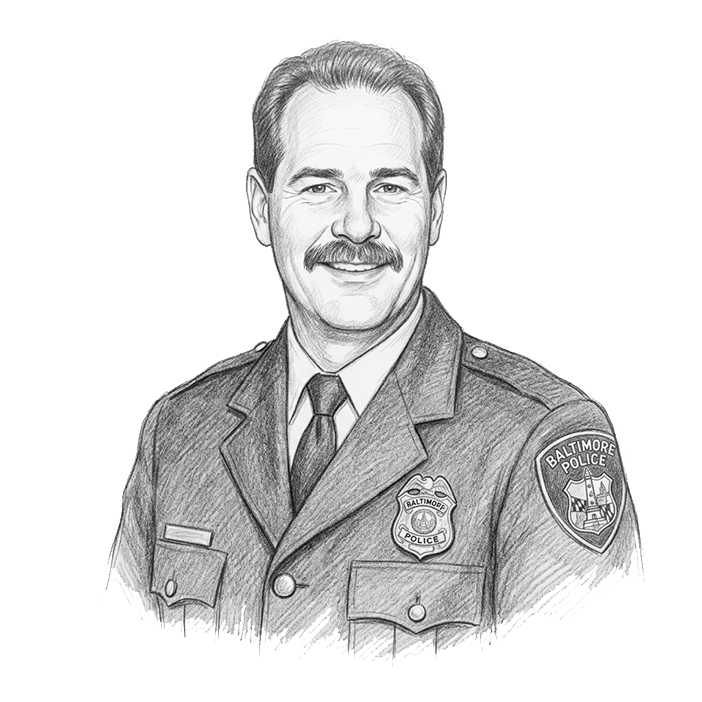
In the long and complicated history of the Baltimore Police Department, some names are remembered because they became legends in the public eye, while others endure because of the steadiness of their service. John Calpin belongs to the latter category. He was the kind of police officer and detective whose reputation was built not on flash, but on consistency, loyalty, and the respect of the people who worked beside him.
Calpin served in Baltimore during an era when the job demanded toughness, patience, and a willingness to face the city’s hardest problems head-on. According to the Baltimore Police History Museum's officer profile, he served in the Central District’s Patrol and Drug Enforcement Unit, which placed him in the center of some of the city’s most demanding police work. That combination alone suggests a career shaped by street-level experience, investigative instincts, and the kind of daily contact with the realities of urban policing that only a few officers fully understand.
What makes Calpin especially interesting is that his name appears not as a distant historical figure but as someone remembered by fellow officers and preserved in the living memory of Baltimore police history. He is listed among the alumni of the department, and he also appears in historical photo collections alongside fellow Baltimore officers, including retired Detective Kenny Driscoll. That kind of record tells its own story: he was not merely employed by the department; he was part of its professional family.
A Career in the City’s Hardest Streets
Baltimore policing has always been a demanding craft, and the Central District has long been one of the city’s most intense assignments. An officer working there needed more than physical courage; he needed judgment, street sense, and the ability to read people quickly. Calpin’s service in both patrol and drug enforcement suggests a career that moved between the visible front line of policing and the more focused, investigative work of trying to reduce narcotics activity and the violence that often came with it.
That sort of work rarely produces tidy narratives. It is built from long shifts, small victories, and the constant pressure of trying to keep order in neighborhoods where disorder could erupt fast. Officers in those assignments often become the backbone of a department’s street intelligence, and detectives in those units tend to develop a practical knowledge of the city that cannot be learned from books. Calpin’s reputation as a “distinguished member” of the department reflects exactly that sort of service.
In police culture, especially in departments with deep traditions like Baltimore’s, the best officers are often those who can do the job without needing attention for doing it. They know the streets, know the players, know the risks, and know that a case or an arrest is only one part of the broader work. A detective like Calpin would have been valued for reliability, for the way he handled difficult situations, and for the trust that develops when a partner knows you will not panic, exaggerate, or quit. The fact that his name remains visible in departmental historical materials suggests he earned that respect.
Baltimore Police Tradition
To understand John Calpin’s place in Baltimore history, it helps to understand the department’s broader culture. Baltimore police history is full of officers whose reputations were built on persistence and a hard-earned sense of legitimacy in difficult conditions. The Baltimore Police Museum’s history pages preserve names, photos, and alumni listings that help keep those careers from disappearing into obscurity.
That preservation matters because departments are not just institutions; they are communities with memory. Officers like Calpin represent the ordinary heroism of professional police work — the kind that is easy to overlook when people talk only about scandals, politics, or major crime trends. A full accounting of police history has to include the men who showed up day after day, did the work, and left behind a reputation for competence and decency.
In that sense, Calpin’s story is not only about one man. It is about a generation of Baltimore officers who worked in an unforgiving city and tried, in their own way, to make it steadier and safer. His name endures because his service mattered to the people who shared it and because Baltimore’s police history still makes room for officers remembered with affection and respect.
A Partnership Forged on Midnights
Perhaps the most defining chapter of Calpin’s career was his five-year midnight partnership with officer and later detective Kenny Driscoll. They worked a brutal schedule of midnights when the streets were at their rawest, averaging “two arrests a night” by their own reckoning at a time when the department judged arrests by quality rather than sheer numbers.
Those shifts honed their rhythm; Calpin’s steadiness and Driscoll’s quickness became a complementary system: one man read a situation, the other moved to close it down. Together they pulled both guns and drugs off the streets, building a reputation among patrol crews as reliable, unshowy problem-solvers.
The O’Dells Shootout
One night in early May of 1992, while working what colleagues called the O’Dells "car show" detail, the partnership was tested in a confrontation later whispered about on the street as “The shootout in the O’Dells Crowd.” According to accounts from those who were there, Calpin found himself exposed—standing eight to ten feet from a suspect who was using a hostage as a human shield and beginning to raise a firearm toward Calpin.
Driscoll, positioned roughly thirty feet east with cover, had a split second to decide. He took a single shot that passed the hostage and struck the suspect, immediately ending the threat. The two men then closed on the wounded suspect, recovered his weapon, and—notably—rendered the first aid that likely saved the suspect’s life. That night encapsulated everything that defined them: decisive action under fire, surgical teamwork, and the grim reality that sometimes saving life and enforcing the law arrive in the same instant. Calpin, in the face of life-or-death danger, stood his ground, relying on his partner the way he knew his partner could rely on him.
The Kitchen Window Rescue
Not all of their toughest calls were gunfights. In another tense incident, a father was holding his wife and infant son at knifepoint inside a rowhome. Many officers tried to talk the man down through a rear kitchen window; they were having little success. Calpin and Driscoll refused to be sideline observers and instead moved themselves around to the front of the house; they found the door locked.
Driscoll—resourceful and practical—slipped a credit card and worked the lock with Calpin watching his back. With the door now opened, the partners made entry. The suspect briefly used his wife as a pawn, sending her to check on that front door, but when she rounded the corner, she was grabbed by the partners and escorted to safety. Driscoll’s rapport de-escalated the situation, persuading the father to hand over his infant son. When the immediate danger ended, the partners turned the incident over to the post car without fanfare—they didn’t need arrest stats, publicity, or pats on the back. They had ended an imminent threat and protected a family within their sector.
A Motto and Diverging Paths
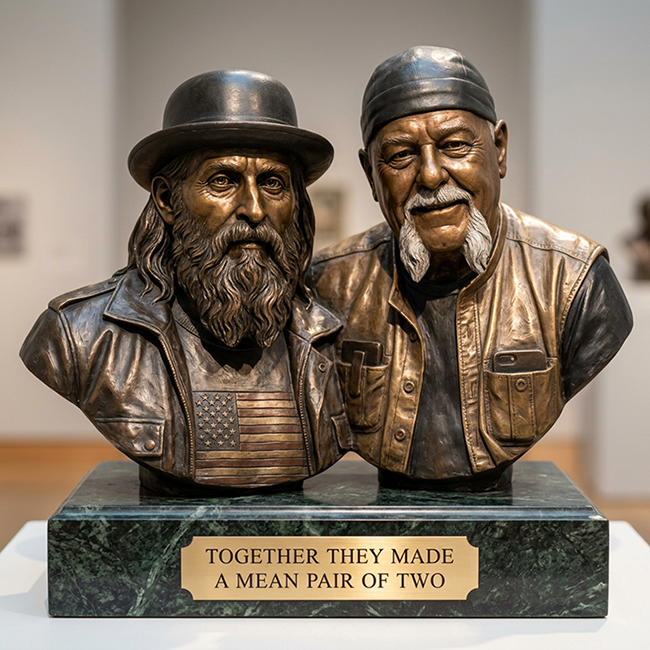
Their five-year run earned them a street motto: “Together we made a mean pair of two.” The line came from a movie, Next of Kin. John told Ken the movie line, which was, "Together we made a mean pair too." Ken misheard it as "Together we made a mean pair of two," which was comical to Ken because it was repetitive and comical to John because Ken had gotten it so wrong. But after 5 years of felony arrests, handguns, drugs, and exciting call after exciting call, it became true. Together they made a mean pair of two.
Eventually their paths diverged. Driscoll was injured and required shoulder surgery; while recovering, he committed himself to studying interview and interrogation techniques as well as a new method of witness, victim, and suspect handling that would later serve him and the department well. After a brief return to street duty, he was transferred to the Major Crimes Unit (MCU). Calpin accepted an assignment to the Drug Enforcement Unit (DEU). Over time both units were reorganized into what would later be called District Detective Units (DDUs), but the effect was the same: both men moved into specialized investigative roles where their respective talents could be applied on a different scale.
Enduring Friendship
Although their careers took them in different directions, Calpin and Driscoll remained close friends. The bond formed during 5 years of working a graveyard shift, in the tight quarters of rowhomes and on the high-adrenaline streets, lasted decades. They visited reunions, appeared together in department photo collections, and often spoke about the nights they’d worked together with a mix of laconic humor and professional pride.
That friendship endured until Detective John Calpin’s passing on June 20, 2026; for Driscoll and the many others who knew them as a mean pair of two, their partnership remained one of the clearer examples of how two officers could shape each other’s careers and the communities they served.
The Man Behind the Badge
The surviving public record on John Calpin is not built around dramatic headlines or notorious cases. Instead, it paints the picture of a working Baltimore officer/detective whose importance lies in service and continuity. That kind of legacy is often more meaningful than a sensational one, because it reflects the everyday reality of policing — the calls answered, the hours worked, the suspects confronted, the victims helped, and the neighborhoods watched over.
There is also something telling in the way his name appears alongside other officers in historical image archives. Police departments are bound as much by relationships as by rank, and those photographs suggest a man known not only for his work but also for his presence within the department’s social and professional life. In an era before digital recordkeeping and social media, those images mattered. They captured the human side of the badge: the friendships, the shared shifts, and the sense of belonging to something larger than oneself.
For many officers, especially detectives, the job becomes inseparable from identity. The city gets under your skin. The cases stay with you. The men and women you work with become more than just a work family; they become as close as any actual kin. The photographs and alumni listings that preserve his name suggest a man who earned the respect of his peers and the quiet affection common among officers who survive the hardest nights together. Calpin’s name survives in that tradition, which is one of the best signs that he was remembered deeply by the people who truly knew him.
Why He Still Matters
John Calpin matters because he represents the kind of officer whose career defines a department more than a headline ever could. He was part of the daily machinery of Baltimore policing, serving in places and assignments where the stakes were real and the expectations were high. His career was defined by the long hours, the steady decisions, the risky entries, and the split-second uses of force when necessary.
He also matters because his name survives in memory, photographs, and alumni records—the quiet but powerful evidence of a career that left an indelible impression. In a profession where so much is forgotten, that is no small thing. He and his partner, retired detective Kenny Driscoll, are remembered for a practical ethic: do the work, protect the public, trust your partner has your back, and leave the department a little stronger than it was when you joined it. Their story is not about individual glory; it’s about reliability, courage under pressure, and a kind of professional brotherhood that lasts a lifetime.
 Detective John Calpin, a distinguished member of the Baltimore Police Department, served with unwavering dedication in the Central District’s Patrol and Drug Enforcement Unit (DEU). His steadfast commitment to upholding law and order was highly esteemed within the community. From the start of his 30-year career in 1986 until his retirement in 2016, Detective Calpin consistently received praise from both his coworkers and the community he so tirelessly served. His significant contributions to the department and to the city of Baltimore have left a lasting legacy that continues to be greatly valued to this day.
John Calpin, and Ken
Here, John was a patrolman, badge number 606
with his partner, Ken Driscoll, badge number 3232
"Together, they made a mean pair of two."

Here they are again: The Good, The Bad, and The Ugly
According to George Trainor, George was The Good, John was The Bad, and Kenny Driscoll was The Ugly
All three were fine with their titles, as they made a great team of police that did the job and did the job well.
 John Calpin - Kenny Driscoll
Shortly after a departmental shooting at 600 E. North Ave.

This has George Trainer, John Calpin and Kenny
George called them The Good The Bad and The Ugly

Kenny, Karin Sullivan Lipski, and John Calpin

These three never worked together, but Ken was partnered up with both of them.
Left to Right, this is John Calpin, Ed Chaney and Ken

This is Kenny looking under the car to make sure no one or nothing is under the car before it is towed.
Ken was told it looked like he was falling out of the car, so they took the picture for the joke. BTW It is
John Calpin is toward the front of the car; he is acting as if he is directing Ken into the parking place.
John Calpin, Ken and Officer Scott Bradshaw

This picture was taken the day Ken and John seized a safe containing 2 keys of cocaine. They tripped over it while chasing a suspect who bailed out of a stolen car and ran into an apartment. Since he was running from the police, when they knocked on the door, a lady answered, telling the officers she was alone and no one should be in the apartment with her. They went in and found him hiding in a closet in a near-empty room. The lady obviously living there said she wanted the suspect removed, and she told them to take the safe out too. Long story short, her boyfriend rented the apartment but only furnished one room for her. The other rooms were for his stash house. So, the suspect that was running in and out ended up getting a ten-year sentence for the drugs.
 Ken Driscoll is in the wheelchair, with John kneeling beside him.
These two were partners on a midnight shift for four or five years
back in the early 1990s and made some great cases. They took a
lot of guns and drugs off the street and made a lot of arrests doing it.
Ken misremembered a line from an old movie, Next of Kin. The
line was, "Yeah, we made a mean pair too." The brothers were
talking about the fights they had been in, and one said, "We had
some doozies," to which the other brother replied, "Yeah, we
made a mean pair too." However, Ken always thought he said,
"Together, we made a mean pair of two," and Calpin and Ken did.
The names Calpin and Driscoll were legendary from those days.


Driscoll and Caplin
One Mean Pair of Two
POLICE INFORMATION
Copies of your Baltimore Police Department class photo, pictures of our officers, vehicles, equipment, newspaper articles relating to our department and/or officers, old departmental newsletters, lookouts, wanted posters, and/or brochures. Information on deceased officers and anything that may help preserve the history and proud traditions of this agency. Please contact retired Detective Kenny Driscoll.

NOTICE
How to Dispose of Old Police Items
Please contact Det. Ret. Kenny Driscoll if you have any pictures of you or your family members and wish them remembered here on this tribute site to honor the fine men and women who have served with honor and distinction at the Baltimore Police Department. Anyone with information, photographs, memorabilia, or other "Baltimore City Police" items can contact Ret. Det. Kenny Driscoll at
Copyright © 2002 Baltimore City Police History, Ret. Det. Kenny Driscoll
