Arson Unit

Arson Unit

Where There's Fire - There's Investigation - If the cause of a fire is suspicious in nature there is much more to its end than the cooling of the embers. When the task of the fire-fighter has ended, that of the arson investigator begins. Technically, arson has several meanings in both common law and statutory language, but to the arson investigator it means the deliberate setting fire to one's own property or the property of another, for an unlawful purpose. There is no other crime for which such diversity of motives is found; fraud, vengeance, murder, robbery, spite, evidence destruction, and the excitement found in fire by the pyromaniac. It is also one of the least expensive crimes to commit. Spending twenty-six cents for a book of matches and a gallon of kerosene, the arsonist can start a fire destroying thousands of dollars worth of property, or even more tragic, taking a human life.

Eastern Initiative

Eastern Initiative

Eastern District Initiative The Special Commendation of Eastern District Initiative

Badges

Badges

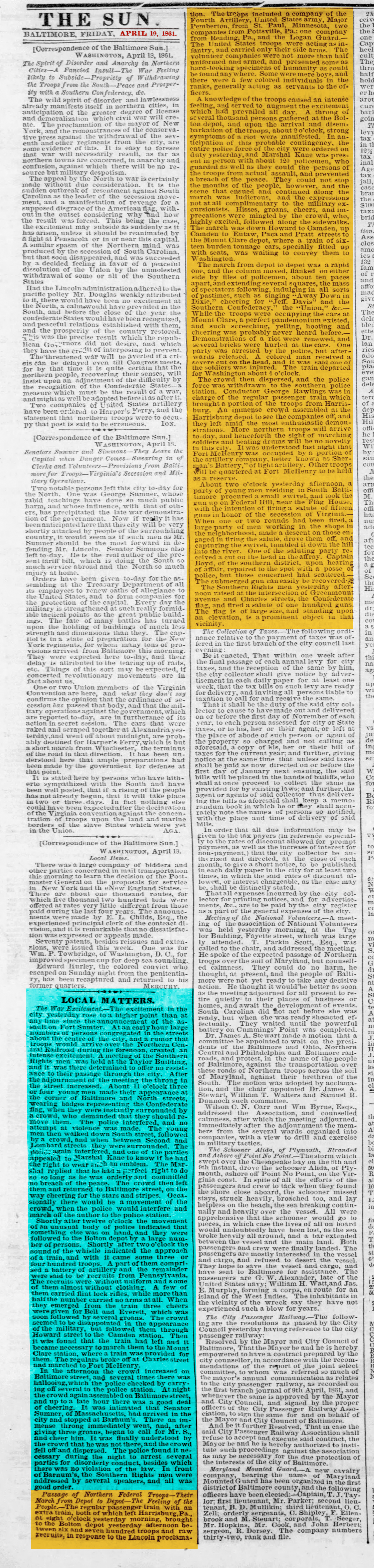
Pink Ribbon – 1861 During a transition in the rebuilding of our police department, new uniforms and badges weren't yet designed. While waiting for said designations, the Baltimore Police dressed in plain clothes and were distinguished as police by a simple pink ribbon on their left lapel and an espantoon in their hands.

Officer of the Year

Officer of the Year

For the last three or four years, (written in 2016) Patty and I have been wanting to do an Officer of the Year program from the History site. Ideally, we would have liked to have at least one officer from each of the nine districts, but we could end up with nine or more officers all from the same district, nine or more officers from every district, or just one officer from the entire department. What we are saying is that there will not be a limitation on the number of officers that could be selected, and if we end up with what may seem like too many nominations and they all seem to be worthy, then we'll have multiple, "Officer of the Year" awards, and maybe one, "Outstanding Officer for that Year." if it seems one stands out. We would also like to include retired officers too, because we know there are plenty of retired officers that are still dedicated and still making a difference in our police family. If you want to nominate an officer, feel free to send us an email at the following address:  This email address is being protected from spambots. You need JavaScript enabled to view it.

Elizabeth Faber

Elizabeth Faber


Policewoman Elizabeth Faber

First Female Officer Shot in the Line of Duty

Today in Baltimore Police History 17 October 1914 Policewoman Elizabeth Faber was shot down on the west end of the Edmondson Avenue bridge by a black male on the bridge as she and her partner (Patrolman George W. Popp) attempted to effect his arrest. The suspect quickly turned and opened fire on the pair, little hope was entertained by doctors at Franklin Square Hospital for Officer Faber’s survival. At 4 A. M. her recovery chances seemed even less possible. She was shot by a pickpocket along with her partner Patrolman George W. Popp, of the Northwest police district. Officer Pop was also severely wounded he is at the hospital but his chances for recovery were listed as good. Mrs. Faber was shot through one of her lungs and Patrolman Popp has a wound in the side and another in the thigh. At midnight the deposition of the policewoman was taken by Justice Schirm and will be used in case of her death.- making her the first Woman Officer to be shot in the line of duty... She would nearly die as a result of her injuries, and by this time a year later in 1915, she would resign her post as a Baltimore Policewoman.

It should be noted, she was bad ass, one of the smallest of the women officers of her time, she was also one of the most active, often fighting men nearly twice her size. An interesting fact about policewomen of the time, while the first female officer hired was Mary S. Harvey, EOD of June 19, 1912, followed by Margaret B. Eagleston July 22, 1912, they were hired two years before this shooting, at a time when female officers were not trained and did not carry firearms. It would be more than 10 years later in 1925 that female officers would finally be trained and provided with a firearm - 28 March 1925 to be exact. Two female members of the department were given their first lesson in pistol shooting. The newspaper wrote, "Baltimore policewomen yesterday received their first lesson in the use of firearms. Lieut. James O. Downes, expert marksman and instructor of the Baltimore Police Department's Pistol Team, explained the use of pistols to the two policewomen. Mrs. Mary J. Bruff and Miss Margaret B. Eagleston as they were the students who appeared at the Central police station yesterday for this training. Several minutes later the basement of the building resounded with sharp reports (sounds of gunfire) as efforts were made to pierce the "Bulls-eye". The target was 6 feet in distance from the policewomen. Other policewomen would receive their first lessons next week. The distance of the target will be increased as Lieut. Downes plans to make each of five into "Expert Shots". With the exception of Mrs. Mary Harvey, none of the policewomen were familiar with firearms. The others were Miss Eva Aldridge and Ms. Mildred Campbell. But this was not so strange, when Mrs. Whyte came on in 1937, making her the first ever black officer to be hired by the Baltimore Police Department, not only didn’t Mrs. Whyte never wear a uniform but she also never carried a gun.


1 black devider 800 8 72

POLICE INFORMATION

Copies of: Your Baltimore Police Department Class Photo, Pictures of our Officers, Vehicles, Equipment, Newspaper Articles relating to our department and or officers, Old Departmental Newsletters, Lookouts, Wanted Posters, and or Brochures. Information on Deceased Officers and anything that may help Preserve the History and Proud Traditions of this agency. Please contact Retired Detective Kenny Driscoll.

This email address is being protected from spambots. You need JavaScript enabled to view it.

Devider color with motto

NOTICE

How to Dispose of Old Police Items

Please contact Det. Ret. Kenny Driscoll if you have any pictures of you or your family members and wish them remembered here on this tribute site to Honor the fine men and women who have served with Honor and Distinction at the Baltimore Police Department.

Anyone with information, photographs, memorabilia, or other "Baltimore City Police" items can contact Ret. Det. Kenny Driscoll at This email address is being protected from spambots. You need JavaScript enabled to view it. follow us on Twitter @BaltoPoliceHist or like us on Facebook or mail pics to 8138 Dundalk Ave. Baltimore Md. 21222


Copyright © 2002 Baltimore City Police History - Ret Det Kenny Driscoll 
Parking Meters

Parking Meters

A Meter Maid unit began on 8 May of 1961 with 10 Meter Maids and a Sergeant. Prior to that on 1 November 1955, The Baltimore Police department Traffic Enforcement unit enforced parking meter violations. The first Meters went up on North Ave. after 48 days the meters had made a profit of a little more than $29K. $29K in 1955 would be around $275,000.00 in 2019

Patrol Wagons

Patrol Wagons

Patrol Wagon History

The Patrol Wagon first came to Baltimore in 1885 as part of a package deal put together by then Deputy Marshal Jacob Frey after the Deputy Marshal first saw a Patrol Wagon in use by the Chicago Police Department in a copy of an illustrated newspaper most likely Harper’s Weekly. The other item found in this package deal was the Call Box. For more information please take a look at the Call Box page and the Recall Light page, both on this website. at the following links. Click on either Call Box or Recall Light to visit either of these pages, and look for other links found within these two pages. We also found the history of the term Black Maria and several therories on the term Paddy Wagon they can be found Here

wagons 1

Wagons in a Pinch

29  June 1949

BY THE FIRST-HAND TESTIMONIAL, Baltimore’s new police wagons are vehicles in which their passengers are proud to ride. They are roomier, more fordable, faster, of smarter design and, in dozens of other ways, a world of improvement over the department's former free transportation fleet. The enthusiasm of the passengers is appreciated, but not unexpected Lieut. Leroy Kues, director of the department garage, had the patrons' comfort high in mind when he designed the new model. The new wagons are in service now at most of the department's eight district station houses. By October they will have replaced all of the old vehicles, most of which have been in continuous service since the 1930's.

wagons 4

MECHANICALLY speaking the new wagon Is a streamlined, all-steel detention compartment of "teardrop" design mounted on the light. low chassis of a six-cylinder truck. The new chassis provides a "floating ride," police say, in welcome contrast to the old wagon, "which rides like a stone truck." The new compartment. constructed and mounted by the same Baltimore carriage firm that made the old wagons, is sold as I did that it can be lifted from a worn out chassis and mounted on the new one. Its service expectancy is roughly that of four or five chassis or about 20 years. The most apparent improvement or those that have been made out of consideration for the passengers. The facing bench seats or panel made out of oak that goes between the detention compartment and are considerably larger than the old vehicle. There’s more room for them. They could seat up to a dozen passengers comfortably.

IN A PINCH the old wagons accommodated a dozen passengers. But they had to sit six to a side with their knees interlocking in the narrow aisle between them.

This made for an uncomfortable ride at best. That is even if the passengers were no more than casual acquaintances. When the passenger list included participants from both sides of the street brawl, the cramped quarters presented a situation that age two men before their time. The late models for a mere interior also provide a new convenience for the in disposable Saturday night passenger traffic. It accommodates for persons at full length. Lights in a detention compartment of the new wagon are sunken into the marine plywood paneling. In the old model, they were protruded from the ceiling and many a customer has complained about bumping his head against them. Other popular innovations of the new model or its loading platform and entrance. These are wider, lower an illuminated by the tail light. It was impossible for the passengers to enter the old wagon with any degree of grace and dignity. Particularly if the passenger was a lady. Negotiation of the 228 in steps could be affected and only by the use of both hands, considerable exertion and the help of a policeman. On some of the tavern rates, it took two policemen. But the new wagon has in 18 ends. Then a 14 and step which can be mounted easily and casually without assistance. The riding qualities of the whole vehicle had been improved by double action shock absorbers

STRUCTURAL changes have also been made for a more contented police force. The new wagon Carries this or and under the hood. Away from the weather, the old wheezers were mounted on the outside and would not sound off at full power after a hard rain. The wagon had to pull up to emergency trailing a thin pitiful wail that added an error of frustration to the whole arrest.

FURTHERMORE the siren tone that emanates from the hood of the new wagon is a sharp, shrill cry of authority that doesn’t whimper for, but demands, the right of way. An improvement in the design of the foot men’s handrail at the rear of the new vehicle had safety and convenience to the man on duty there. On a cold type wagon, the handrails rammed the full perpendicular height of the rear. Protesting, passengers sometimes grasped the rail, lifted themselves up and lashed out with their heels at the policeman behind them. A man once Lawson high that way. Several others lost teeth, a nephew suffered broken noses. On the new wagon, the rails are shorter to prevent this sort of thing. 

THE NEW MODEL has a built-in buzzer system from the foot men’s position to the chauffeur. For nearly an hour these men shouted instruction to each other. The signal system is expected to result in more efficient starts and stops and add to the general comfort of the passenger by eliminating a lot of police department shoptalk and from them. Improvements to the chauffeurs can give the new model about 25% more flour and seat space and then the old. In the crowd model that is being retired, even policemen of average build had to squeeze themselves and carefully to get behind in the steering wheel. But sergeants can drive the new vehicle.

THE SQUARE SET WINDSHIELD and clapping side curtain of the old model wagon held the chauffeur’s visibility to a minimum, even in clear weather. The new vehicle has conventional wide truck windows in the cab and a clean windshield with about 20° pitch. The spare tire that once rode the front left fender and prevented the show for prince wing and his door wide open is now carried in a compartment beneath the rear quarter the driver’s door is also wider so that he no longer has to back out of his cab to help with an arrest. Construction of the new type wagon is the fourth major improvement made in the Police Department's free-transportation system. During the first years of the department,  patrolmen would have their "customers" walk in to see the desk lieutenant. Indisposed ones were trundled by wheelbarrow.

wagons 2

LATER HORSE·DRAWN WAGONS (18 October 1885) were put into service. That was a high-wheeled, open-air delivery-type wagon equipped with a driver, a span of good horses and two nimble footmen to bring back those customers who vaulted over the side and made a break for freedom. Shackles final1y were added to the wagon, for the more difficult passengers. At the turn of the century, when Central district headquarters was on North Street (now Guilford Avenue), an electric runabout supplemented the horse-drawn vehicles and a few wheelbarrows. The horses and barrows made runs while the electric runabout was out of service-it had to plug in at the Station-house and recharge for an hour after each trip. The first motorized vehicles used on a large scale by the department- they were introduced a few years before the First World War - were of about the same design as those now being retired.

THERE ARE POLICE IN BALTIMORE who claim that the retiring wagons operated on ten percent gasoline, 30 percent memory and 60 percent sense of duty. That isn't entirely true but the claim is understandable. All of the old wagons had exhausted their sets of valves and cylinders until the police mechanics lost count.    

The wagon in the Southwestern district, the one some of the policemen called Eleanor, had 293.900 miles to her credit. Her crankshaft became grooved so deeply that the department mechanics had to turn the whole shaft down to 90/l000ths of an inch undersize. That cut down her limping to a great extent, but she continued to suffer from an asthmatic condition until she died at the scrap-yard. The demise of Bronchial Bill and Old Hopeful at other stations followed similar illnesses.

ALREADY THE WAGON set is referring to the new vehicle as Black Maria. That is a title all police vehicles fall heir to, but now the title has a note of respect. One of the first passengers asked the footman if the ride in the new machine would cost him extra when he faced the magistrate. When Southwestern’s new wagon made its first run to the House of Correction. Several inmates who had been taken there just a week earlier were resentful because they had been hauled in "the old stone-wagon." But there's little call for quibbling now. The new wagon will be here for the next twenty years, and the police say there will be a chance for everybody.


1 black devider 800 8 72

Paddy Wagons

First Horse sold to the department for use on our first Patrol Wagon/Ambulance
Article Printed on 25 January 1918

Paddy Wagons

To See the Full Size Article Click HERE
Paddy Wagons

Photo Courtesy Det Kenny Driscoll
Shot on Broadway, obviously, two pictures put together for a unique look

Brian Kuebler wrote BALTIMORE - Citing efficiency and safety, the Baltimore Police Department is making yet another visible change in its division by eventually decreasing the use of prisoner transport vans. This information comes as a surprise to many of the members of Baltimore’s division, as they fear the safety issues are not at the root of this change. Having worked myself, I happen to know if ever there was a concern for officer safety it is not while the prisoner is in a wagon behind, or in front of an officer's vehicle, so much as it is with the prisoner in the vehicle a little less than 2-ft behind the officer. There are instances of prisoners vomiting, urinating, and or defecating on themselves in the vehicle, or having concealed weapons that could be used to stab, or shoot the officer from behind. So this could be, and most likely is more than an officer safety issue, and is most likely an issue of budget. Either way, safety or budget, it is not about, nor will it affect (in a positive light) officer morale. He went to say The cage equipped vans, or wagons as they are commonly referred, are used to transport suspects from the scene of a crime or an arrest. Often Baltimore Police would process and handcuff suspects before calling and waiting for a transport vehicle. They are more commonly known as “Paddy Wagons” by the public, a derogatory term aimed at the Irish dating back to the 1800s in New York. While there is some truth to this, in that is was aimed at the police most of whom were Irish, and from the time period of the 1800's, but the location is off, it was Boston, not New York, and at the time we pretty much all used "Horse Drawn Wagons", hence the term "Wagon" of course the police at the times were mostly Irish, so yes, it was a "Paddy Wagon". When I was on in the late 80's to early 2000, we still called it a "Wagon", we used a box truck type wagon, much like an ambo, and we called it Wagon, short for "Paddy Wagon" also as an Irishman, I don't think it is derogatory, in fact as a retired Officer, of Irish descent, I am proud to have come from a background of Strong Irish Law enforcement officers, known for fighting crime. The article continued with - But that is not why modern-day Baltimore Police are doing away with their frequent use. In Brian's investigation into this story he learned from Lt. Eric Kowalczyk the cars, will all become PTV's (Prisoner Transport Vehicles) something we used to call "Cage Cars" talk about derogatory, it was called this because the first cage cars, were made up simply by putting a thin cage between the officer's and their prisoners. Often spit would fly between the cage, and toward the officers, so the cage was replaced with Plexiglas to prevent anything, spit, blood or other bodily fluids from being thrown at, or on the police. So when Lt. Kowalczyk said, “In our new vehicles we have made a number of changes and upgrades regarding equipment and tools that will assist our officers in the crime fight. One of those changes will be partitions in the vehicles.  These partitions will assist in ensuring the safety of those involved in the arrest, as well in expediting the event itself. They will still allow for complete mobility within the vehicle,”  We learn this is more about economics than safety, this is nothing new, it is more of the same old "Cage Car" prisoner transport of the late 80's early 90's - Which is confirmed with the final line - Prisoner transport instead will be done more with individual cars.

New car Black

From here they went on to say the following which talks about the vehicle's paint scheme - and for this, they, write - ABC 2-News was the first to reveal the new design Baltimore Police squad cars. Starting with about 30 vehicles in the most recent procurement process, Baltimore will be switching to black colored Chevrolet Caprices with a blue logo. Baltimore is not new to the black car, it hasn't been black for a while, but black is not new to BPD; in the 20's we had black cars, in the 30's, the 40's the 50's, 60's and then sometime in the mid 60's we moved away from black cars, along came the some blue and whites; that carried into the 70's before we went to the white car, the white car swapped stripe patterns a few times. In the early 90's we used a powder blue ford, it didn't last long before we would go back to the white, with a much nicer decal design, and the modern badge on the door in place of the shoulder patch, or police logo. The Commissioner (Anthony Batts) said the officers themselves chose the design, and it was done to boost morale, in the quote he said, "When they are in those cars, that is their office for eight to ten hours a day, that is their office so what I did is I allowed them to design what they wanted out of their police cars" The article went on as follows pointing out things that most followers of the department have said, and BTW liked about the new design, The logo is modeled after the one seen on the department’s choppers and mobile command units. But the change isn’t in just the look of the vehicles. The cages will be installed in the squad cars so that the driver’s seat may be maneuvered for comfort, a simple feature some officers said was not available in all previous iterations of Baltimore Police cars. "We had already prepared to bring in about 165 cars. Some of those will be white because we didn't have time to change up the colors but we are looking to start to have all the cars go to the shape and style that the officers had asked for," the commissioner said. As the new squad cars take to the streets, the more prisoner transport vehicles will come off. It is unclear if there is any timeline for the complete switchover, but the police department says ultimately the move will make policing more efficient and eliminate wait times when a wagon is called. “While wagons remain a vital part of our deployment these newer vehicles, and the resources they provide, are adding to the efficiency and safety of both officers and citizens,” Kowalczyk said. Copyright 2014 Scripps Media, Inc. All rights reserved. This material may not be published, broadcast, rewritten, or redistributed.

 wagon 2

Screen Shot 2013 09 15 at 8 25 54 PM

1st patrol wagon

Wagon CD

Wagon ED

1880wd

COURTESY SGT. ROBERT FISCHER 
1880'S HORSE DRAWN WAGON

1900s BPD wagon movie prop

Pictured above late 1800's-early 1900's Baltimore Police horse-drawn carriage 

sd 1910 wagon

COURTESY BALTIMORE POLICE DEPARTMENT

wagon

1890's Wagon Purchased for BPD Museum 

1920sPatrol Wagon2

Photo courtesy Sergeant Robert Fisher

1920s Wagon

 Photo Courtesy Sergeant Robert Fisher

1928 Studebaker Patrol Wagon 314 CD

Photo Courtesy Sergeant Robert Fisher 
 
1928 Studebaker Wagon #314 D
1920whitewagon
COURTESY SGT. ROBERT FISCHER 
1920'S WHITE WAGON
SIDE VIEW MIRROR AND AN AWNING GRACE THIS VINTAGE WAGON.
NOTE THE BATTLE MONUMENT INSIGNIA ON THE SIDE.
The Evening Sun Thu Oct 24 1912 72
Where the name "Black Maria" came from
Click HERE to see full size article
 
1920ndwagon
1920's POLICE WAGON
"Black Maria" 
Front
1920s ND Patrol Wagon3
 
1920's POLICE WAGON
"Black Maria" 
Back

Black Maria 1st school bus 72

Black Maria Served as First School Bus
[Late teens 1900’s]

Black Maria - A Black Maria of the Police Department used to transport crippled children to school in Baltimore in the late teens years of this century. And the children loved it, despite the ominous name given the transportation. For most of them, it represented the only way they could get to school, hampered as they were with braces and crutches. Besides, most of them had never ridden in a motor driven vehicle before. The fact that there was any transportation at all for handicapped children at that period was largely the result of the stubborn determination of a young girl a Baltimore who has been described as “the spark and the flame,” of what is now the Baltimore league for crippled children and adults: Isabel Kann Frank.

Best Narrator - She, perhaps, better than anyone else can describe the slow evolution which went from provisions for handicapped children to the league’s 36th anniversary this year in the field. Mrs. Henry L Frank was the founder of the league and still spends every day at the league’s headquarters on Greenmount Avenue. The league, coincidentally, is conducting its Easter Seal drive for funds for its activities through April 14. Baltimore 50 years ago had no provisions for formal schooling for the more severely handicapped children who were destined to watch, from their windows, at the other children swinging their book straps on their way to school. “When I was a little girl on my way to Girls' Latin School, I used to pass the crippled children’s hospital at Charles and 20th streets. I would see the children at the windows, day after day. I used to wonder if anyone was teaching them to read and write. Dr. R. Turnstall Taylor directed the hospital, and one day after building up my courage, I walked into his office and asked him if there wasn’t something I could do to help the children. Dr. Taylor was amused, but he said I could come in after school and teach the children. “In those days the attitude of a great many people was, “Nobody can do anything for these children – it’s just an act of God.” Once they had bought braces and shoes, they had done their job. “I was only 13 then, but my interest in these children never flagged. When I was a little older I joined the guild for crippled children which was formed in 1889. Theirs was a pioneering effort in the face of public apathy. In 1913 there was still no convenience to carry the children to public schools and no special facilities or classes. But in that same year, when Mrs. Robert Laucheimer was chairman of the committee, we were told two classrooms were being made available for the children if we had a way to get them there! “Undaunted, the committee went straight to the Della Transfer Company on Race Street and hired a horse-drawn omnibus. What a day that was when the “Elsie” clattered over the cobblestones and the "clop-clop" of the white horses alerted the children on their first day at school!

Help Children - “The driver would stop each morning to help the children into the bus – some of them had to be carried, but all of them had to be helped with their crutches and their braces. After school, the bus would call for the children and deliver them happily and safely to their doors. “The first two schools to experiment with this program for the handicapped were General Henry Lee Elementary School at Hanover and Lee Streets and Sir Robert Eaton Elementary School at Preston and Eden Streets. The children not only had their lessons in the schoolroom, but they also had their soup and cocoa warmed on a hot plate. I remember replacing the odd, crippled assortment of cups, plates, and cutlery with shiny new equipment. “As thrilling is the omnibus arrangement was, the guild found its meager funds would not stretch to continue hiring transportation.

Cooperative Police - “And so, a cooperative Police Department came to the rescue with the Black Maria and the Motorcycles with Sidecars. That was another first to remember when the police officers, of Baltimore City with tenderness and devotion, carried the little ones back and forth. Of course, the children were wild with the delight at motor transportation and would triumphantly waive their crutches as they went by. “In 1921 I became chairman of the guild and proposed to the parent Council of Jewish Women that it merge with the guild’s efforts into a new professional organization to serve the crippled children throughout Maryland. From this proposal, the Maryland League for Crippled Children was organized in 1927. In 1952 it affiliated with the Easter Seals and became the Baltimore League for Crippled Children and Adults, Inc. “The project of organization became more and more exciting as we chalked up progress, slowly but surely. There were many fine professional people who worked untiringly, but I expected that I was the chief “pesterer” spending hours in the offices of prominent doctors and businessmen until I could tell them my story. I took about a year to finally complete the distinguished board of directors for the League. The honorary vice presidents were Judge William C. Coleman, Jacob Epstein, Frank A. Furst and Dr. William Welch. Dr. George E. Bennett organized the corps of young orthopedic doctors to volunteer time and provide their own travel expenses to man crippled children clinics throughout the State of Maryland. “After the League’s organization, the big goal was modern, specialized school buildings and staffs devoted to the instruction of the children.

Demand Action - “Dr. William S. Baer, Dr. Bennett, and other eminent medical authorities and civic groups demanded action. At long last in 1931, the Maryland Legislature passed an act enabling the creation of two modern schools for handicapped children in Baltimore. By 1933 the William S. Baer School was erected at Warwick Avenue, and the Francis Wood School for Negro children was completed at Franklin and Schroeder streets. “Among the names to be remembered for outstanding service through the organizational and build-up years of the League are those of Ellen Krause, first employee; Mary E. Church, first director of the League; and Miss Margaret Huffington, assistant director of the League, who came on duty the first day the league opened its doors in 1927. When the Doctor William S. Bear School opened its doors, a beautiful shiny motor bus delivered the children in style. My husband who stood there with me said, “you’re very excited, aren’t you?" and I said, “I’ve never been so excited in my life!” “How about the day you were married?”. He teased. “Oh well,” I said, “I expected to get married, but I never expected this dream to come true!” “Memories of those early days are a real pleasure, but the present has its satisfaction, too. When I see men and women who once rode to school in the wagon, the Black Maria, and other school buses, now educated and trained occupying useful positions in the community, the efforts of all those who helped seemed very worthwhile.” NOTE - Use of the word Crippled from the first line, "A Black Maria of the Police Department used to transport crippled children to school in Baltimore in the late teens years of this century" This was the way it was written in the 1919 newspaper article, and while some may be offended, let me explain and I should point out by definition I myself am a cripple, and, I take no shame in the word or its meaning which is as follows - crippled ˈkrip(ə)ld/ an adjective meaning (of a person) unable to walk or move properly; disabled. 

The Baltimore Sun Thu Jan 5 1956 72

More on the "Black Maria" paddy wagon
Click HERE to see full size article
 
1947 international wagon
COURTESY SGT. ROBERT FISCHER
1947 International Wagon
Officer Oliver R.Ellis, Traffic Division
April 26, 1947
1947international gaither place
COURTESY SGT. ROBERT FISCHER
1970s Blue White Wagon
Photo courtesy Officer Mike Caplan
1970's blue and white cruising
Patrol-Wagon / Police-Wagon / Paddy wagon
 
In this 1885 Sun Paper article, we see two stories. The first makes mention of our Police Wagon; it seems they are mentioning its successful use, the district for which it was to be first used and that as we know from this article and others, it was the Central or as it was known back then “The Middle District.” So while this article is interesting, what drew our attention and made this what we thought would be of interest to others was the article in the next column. It is entitled, “RACING IN VIRGINIA” it was dispatched to the Baltimore Sun from Gainsville, Virginia about five lines down near the end of the line it starts and ends the next line and it says, J.K Maddux’s “Black Maria"; - running race, the half-mile dash. This is interesting because this article was well before the nickname that would soon come. But because these horse-drawn wagons were so slow, that our police in typical police sarcasm started calling them “Black Maria” after the racehorse, a silly nickname started in America and quickly spread to London and remained in use even into the 1920’s and 30’s when we used a motorized police wagon. Some say it endured being called the Black Maria until a new nickname came about, a nickname that came from the Fighting, or maybe the drunken Irish. Other's say it was not those that OCCUPIED the wagon, but those that OPERATED it. It started out calling it a Police Wagon they called police Paddy's and so it became known as a Paddy wagon. In this 1885 Sun Paper article, we see two stories. The first makes mention of our Police Wagon; it seems they are mentioning its successful use, the district for which it was to be first used and that as we know from this article and others, it was the Central or as it was known back then “The Middle District.” So while this article is interesting, what drew our attention and made this what we thought would be of interest to others was the article in the next column. It is entitled, “RACING IN VIRGINIA” it was dispatched to the Baltimore Sun from Gainsville, Virginia about five lines down near the end of the line it starts and ends the next line and it says, J.K Maddux’s “Black Maria"; - running race, the half-mile dash. This is interesting because this article was well before the nickname that would soon come. But because these horse-drawn wagons were so slow, that our police in typical police sarcasm started calling them “Black Maria” after the racehorse, a silly nickname started in America and quickly spread to London and remained in use even into the 1920’s and 30’s when we used a motorized police wagon. Some say it endured being called the Black Maria until a new nickname came about, a nickname that came from the Fighting, or maybe the drunken Irish. Other's say it was not those that OCCUPIED the wagon, but those that 
The Irish beat cops, that helped change the name of the Black Maria into the name that is more commonly known to this day.   Paddy wagon correctly spelled as one word or two Paddy wagon. But like we started out calling it a "Police Wagon" we had so many Irish police that they started calling the police "Paddy's" and then they called their wagon a Paddy wagon instead of a Police wagon.
 
1968international
1968 International Paddy Wagon 
1968 International 1
 COURTESY SGT. ROBERT FISCHER 
1968 International 2
COURTESY SGT. ROBERT FISCHER
1968 International 3
COURTESY SGT. ROBERT FISCHER
1968international1
COURTESY SGT. ROBERT FISCHER
1968 International wagon
Photo courtesy Officer Mike Caplan
1968 INTERNATIONAL
1968 Picture
COURTESY SGT. ROBERT FISCHER
1968int
1968 INTERNATIONAL
EARLY MODEL OF THE BLUE & WHITE COLOR SCHEME
SHOP# 8988
1970s Pontiac
Ambo, Paddy Wagon, 1970's Pontiac BPD unit
 
BPD utility vans 1975E
PHOTO COURTESY OFFICER MICHAEL CAPLAN
 
cruising patrol
  
NWD Cruising Patrol1
Jon Foote 1
Photo Courtesy Officer J.P. Foote
Officer Jon Foote Seq.# D080 in 1983 with the District Cruising Wagon
 
BPD Cruising Patrol shop9929 E
 
PHOTO COURTESY OFFICER MICHAEL CAPLAN
Baltimore Police Cruising, Paddy Wagon, Prisoner Transport Vehicle. By any name, it was often a great sight to behold, to see its flashing lights and hear the siren coming while hanging onto a prisoner and trying at the same time to keep the crowd back.

There were two assigned to each of the nine police districts.

Officer White SWD

1 black devider 800 8 72

The Following Pics came to us Courtesy of retired Lieutenant Robert Wilson

img162img163img170img181< class="mce-object mce-object-undefined">img297img299img301img309img463

1 black devider 800 8 72

 baltimoredoor

 BALTIMORE POLICE DOOR SHIELDS

Cage Cars aka Prisoner Transport Vehicles (PTV)

John Szuba Told us Facebook BPD friends that when he was the vehicle coordinator for the division. He said they conducted tests to see if anyone could get their hand around the "Cage" and attack the Driver. They tried over a half a dozen styles of cages and on everyone. The test was to see if someone in the backseat could reach around and grab at the driver's neck, or could kick out the partition separating back from the front. (These were with the Chevy Impalas). The cage in the Ford Crown Vic was solid but Ford phased out these models and Ford would not loan the new Interceptor to the Department to conduct a test to see if it met Departmental needs. They could only test the Dodge Charger and the Chevy Impala than the Caprice. Officer Szuba said at the time he couldn't sign off on new cage car because he didn't think it was safe for the Officer who would drive it. He went on to say, he, "believe the Prisoner Transport Vans (Wagons) were safer for all concerned". and he personally liked the Old Box style Wagons ....(I agree with his, I also liked the old box wagons better) John went on to say, they were self-contained heat and air for the prisoners and the Drivers air wasn't recycled from the back of the wagon like the Van style.... (This was nice, because it reduced airborne paths that could lead to illness) but it was deemed too expensive. We all I hope the Department conducted a test on the "New" cages...Officer Safety should always be first.

Devider

Black Maria/Paddy-Wagon

Pronounced Mah-Rye-Ah
You have the right to remain confounded.

Detectives, come in all shapes, and all sizes, Criminal Detective, History Detective, Medical, and now Word Detectives: All looking for answers, all listening to the clues. Paying attention not to what they want a word to mean, but what it means, do the clues match up with the era, the location, and most importantly the language. So let’s look at a few terms, a few rules, a few rumors, and most importantly a new fact. In the early 1900’s a Prisoner Transport Vehicle, most commonly known today as a “Paddy Wagon”, were often called a “Black Maria” in this country and even in London England… In this article, we will investigate the term “Black Maria” as referred to in relation to the “Paddy Wagon” here in the states. However, it has been said that there have been stories written in Alexander Solzhenitsyn’s books referring to a black car used by the KGB (Russia) for police to secretly take away prisoners in the middle of the night. It has often been wondered where the term came from, rumors have been started; we should note, normally when a rumor comes up that is was a person, and that person exists in similar life form, both in Boston and in Liverpool! Most often, that person is fiction. But for now we will hold judgment until further investigation, as with any investigation, the clues, the evidence, or the facts, might not always go where we want to go, so let’s sit back and let them take us, where they might.

A “Black Maria” is, as they used to say, a police van, truck, or similar conveyance used to transport prisoners most often to jail, holding, prison, or to a court appearance, and it is worth noting at the outset that “Maria” in this case is pronounced “mah-RYE-ah,” as in Mariah Carey (as this was most common in the 19th century, not “Mah-REE-ah.” Then again, “usually” it is a bit of a stretch because few have heard the term spoken aloud in decades. “Paddy Wagon” is far more common.

As is common when phrases involving personal names, a number of theories have been devised, proposed at tracing “Black Maria,” a term which first appeared in print around 1835, to actual people named Maria. A fella by the name of Michael Quinion, has it on his website (www.worldwidewords.org), that two such theories suggested by his readers. One, centering on an upper-class woman of 19th century London, known for wearing splendid black dresses. That version fails due to the simple fact that “Black Maria” is indisputable of American origin. The other, of a large African-American woman named Maria who ran a Boston boarding house and assisted the police in apprehending fugitives, this is too cute for most reads taste and, more importantly, doesn’t explain why a Boston woman would have appeared in New York City.

The most credible theory yet advanced of the origin of “Black Maria” does tie the phrase to an actual “Maria,” but not a human. “Black Maria” was a famous racehorse of the day, born in Harlem in 1826, whose exploits were widely celebrated in the newspapers. It seems entirely plausible that the name of the horse thereafter would be sarcastically applied to the police carriages, which were not long before pulled by horses, and now are often made by the same wagon/carriage makers, and usually colored black, which swiftly transported miscreants to jail.

Note: found elsewhere on the internet - Black Maria, a slang term for a police van used to transport prisoners, originally these were horse-drawn and so could take some time to arrive at a crime scene. “Black Maria” was a famous racehorse of the day, born in Harlem USA in 1826. The name was sardonically applied to the police carriages (which were also usually colored black).

Incidentally, “Paddy Wagon” takes its name from “Paddy,” a familiar form of the name Patrick (from the Irish form, Padraic or Padraig), which was used in early 20th century America as a derogatory term for Irish immigrants. One might assume that this use is similarly derogatory, referring to a supposed propensity of Irish-Americans being arrested, but big city police forces of the period were themselves composed largely of Irish-Americans, so the term may well have simply referred to a wagon driven by “the paddies,” i.e., the police.


1 black devider 800 8 72

Donations

Donations help with web hosting, stamps and materials and the cost of keeping the website online. Thank you so much for helping BCPH. 

Paypal History Donations

1 black devider 800 8 72

POLICE INFORMATION

Copies of: Your Baltimore Police Department Class Photo, Pictures of our Officers, Vehicles, Equipment, Newspaper Articles relating to our department and or officers, Old Departmental Newsletters, Lookouts, Wanted Posters, and or Brochures. Information on Deceased Officers and anything that may help Preserve the History and Proud Traditions of this agency. Please contact Retired Detective Kenny Driscoll.

This email address is being protected from spambots. You need JavaScript enabled to view it.

Devider color with motto

NOTICE

How to Dispose of Old Police Items

Please contact Det. Ret. Kenny Driscoll if you have any pictures of you or your family members and wish them remembered here on this tribute site to Honor the fine men and women who have served with Honor and Distinction at the Baltimore Police Department.

Anyone with information, photographs, memorabilia, or other "Baltimore City Police" items can contact Ret. Det. Kenny Driscoll at This email address is being protected from spambots. You need JavaScript enabled to view it. follow us on Twitter @BaltoPoliceHist or like us on Facebook or mail pics to 8138 Dundalk Ave. Baltimore Md. 21222


Copyright © 2002 Baltimore City Police History - Ret Det Kenny Driscoll 


Thomas Farnan

Thomas Farnan

There were chiefs, and there were chiefs. Some chiefs had become chief, chiefly by virtue of enormous and helpful political pull. Some have become chiefs merely because fortune happened to be in a sunny humor one day and blew a feather of leadership on their caps.

1000's Take Oath

EVER EVER EVER Motto Divder

Baltimore Police Department
1000's Take Oath

Baltimore Police History 21 Aug 1902, the entire department was forced to re-take their oath of office, as prior to this day, they had improperly and illegally been sworn, and had been improperly sworn for 35 years, based on the following:

Sun paper article dated 21 August 1902 titled, "1000 to take Oath" 
the entire police force, including Matrons, Must be Re-Sworn

1000 to take Oath

Entire Police Force, Including Matrons, Must Be Re-Sworn

Old Form Declared Illegal

Mr. Alonso Miles, Counsel For The Board, Makes The Discovery And Change Is Ordered.

Is possible that for 30 years, or ever since the recognition of the Police Department in 1867, the members of the department have been sworn in illegally?

Is it possible that each and every member of the department, from the Veteran Marshall to the most Verdant Probationary Patrolman, carrying his Espantoon like a stick of dynamite, must file up to the courthouse, pay $.10 and be properly sworn in by the clerk of the Superior Court?

These questions are not vaguely speculative but have assumed distinct form, and already preparations have been made for the swearing-in once more of the entire department. The walls of the police board sanctum will echo more oaths within the next few days then Dorn any other. Since the board was created.

News of this remarkable prospect only leaked out yesterday (Wednesday, 20 Aug 1902), and behind it is an interesting story. Hitherto it has always been the custom for the secretary of the board of police commissioners to swear in the newly appointed or promoted policeman. The system has been in vogue since the recognition of the department and its legal status has never heretofore been questioned. It is probably a relic of the old regime when the department was a municipal organization. The discovery that the old way of administering the oath is illegal was due to the desire of the present board to conform with the letter of the law in all matters.

Mr. Upshur Investigates

When Marshal Farnan was appointed to his present rank on August 8 it happened that Mr. Joshua H Kinsley, the secretary of the board, was spending his vacation at the seashore. After the appointment had been made the question arose who should administer the oath of his new office to Marshall Farnan. Present ups are for the time being by concluding that as the secretary had administered the oath in the past, the president of the board had an equal right to do so, especially as the president is empowered to administer the oath to witnesses at trials. He accordingly swore in Marshal Farnan.

Afterward, in thinking over the matter, it occurred to Mr. Upshur that, while he had as much right to swear in an officer as a secretary, the authority of the latter official to do so was not entirely clear.

Mr. of sire being a lawyer, the subject naturally interested him and he made a diligent search of the state and police loss but failed to find any statue which would enlighten him. Realizing then that the matter was an important one and required immediate attention, he determined to call the attention to Mr. Alonso W. Miles, the Council to the board, to the subject. This was accordingly done.

Counsel Miles Opinion

Mr. Miles devoted much time to the subject and after a painstaking investigation came to the conclusion that since its organization in 1867 no member of the Police Department has been sworn in legally. This option he based upon a section of the Maryland Constitution and a statue of the public general laws of Marilyn. Section 6 of article 1 of the Constitution is as follows:

every person elected or appointed to any office of profit or trust, under this Constitution, or under the laws made pursuant thereto, shall, before he enters upon the duties of such office, take “and subscribe to the following oath or affirmation:

“I, _______, do swear (or affirm, as the case may be) that I will support the Constitution of United States; and that I will be faithful and bear true allegiance to the state of Maryland, and support the Constitution and laws thereof; and that I will, to the best of my skill and judgment, diligently and faithfully, without partiality or prejudice, execute the office of ________ according to the Constitution and laws of the state, and (if the governor, senator, member of the house of delegates or judge) that I will not directly, or indirectly receive the profits of, or any part of the profits, or any other office during the term of my acting as _______.”

Article 7 of the public general laws deal with official oaths, by whom, when and where they must be taken. After describing the oath for the governor, secretary of state, judges, comptroller incorporation officers, the article section 6 says:

all other officers elected or appointed to any office of trust or profit under the Constitution or laws of the state, including the mayor or other chief magistrates of municipal corporations, shall take and subscribe the said oaths, in the city of Baltimore before the clerk of the Superior Court, and in several counties before the clerk of the circuit court or before one of the sworn deputies of such clerk’s.

Section 7 says:

The said clerk shall each procure and keep in his office a well-bound book, to be called a test book, in which shall be printed or conspicuously written the oaths aforesaid, and every person taking or subscribing the same shell Annex to his signature the title of the office to which he shall have been elected or appointed, and the date of his signature.

Section 2 of the same article 6 is the fee of the clerk for ministering the oaths at $.10 each.

1000 Will Swear Anew

At yesterday’s meeting of the board, Mr. Miles submitted to the board the result of his investigation. Immediate action was then taken. Deputy clerk Peter Stevens, of the Superior Court, was summoned to the boardroom and consulted about the best possible means of administering that oath to the 1009 members of the Police Department. He was also ordered to procure a book to be used as a “test book” in which will be preserved to signatures of each officer. This announcement will probably cause an immense expenditure of ink on the part of those who signatures resembled Chinese laundry tickets and who will naturally desire to improve their penmanship.

The work of Reese wearing in the membership of the department will begin at once and will be carried on as rapidly as is consistent with the workings of the department. Exactly how it will be done has as yet not been definitely settled. There are 1000 members of the Police Department, including matrons and employees, and it $.10 each these Wilmette the clerk of the Superior Court about $100.

A Great Surprise to the Board

President Upshur was seen last night at the Maryland club. In answer to questions about the change in the manner of swearing in the members of the department he said:

“Yes, it has been found necessary to re-administer the oath of office to every member of the department. Mr. Miles announced to the board today that this was necessary, and the work of Reese wearing in the officers will begin at once. Mr. Stevens has been ordered to procure a test book, and the swearing-in of the men will probably take place in the boardroom.

“The discovery that the oaths as administered to the officers by the secretary of the board is illegal was a great surprise to the board. Ever since the recognition of the department in 1867, it has been the custom of the secretary to swear in the officers, and his right to do so has never, I believe, been questioned. As soon as Mr. Miles gave his opinion on the subject the board ordered that all of the men must take another oath, as prescribed by the law.”

Doesn’t Affect Departmental Acts

Mr. Alonso W Miles counsel to the board, at first declined to discuss the matters, but when pressed to talk, said:

“There is no doubt that the manner in which the oath of office has been administered in the past is illegal. The law is very plain and definite as to the manner in which the oath must be administered, and the wonder is that the fact should not have been discovered years ago. The question involved, however, is one of a minor detail and does not affect anything that the department has done or any arrest that has been made. The law says that a fee of $0.10 is required for each oath and the men themselves will probably have to pay this fee.”

Mr. Peter Stevens, deputy Kirk of Superior Court, was seen but declined to say anything about the matter. He admitted, however, that he had been called to the board on business.

See article HERE

1 black devider 800 8 72

Donations

Donations help with web hosting, stamps and materials and the cost of keeping the website online. Thank you so much for helping BCPH. 

Paypal History Donations

1 black devider 800 8 72

POLICE INFORMATION

Copies of: Your Baltimore Police Department Class Photo, Pictures of our Officers, Vehicles, Equipment, Newspaper Articles relating to our department and or officers, Old Departmental Newsletters, Lookouts, Wanted Posters, and or Brochures. Information on Deceased Officers and anything that may help Preserve the History and Proud Traditions of this agency. Please contact Retired Detective Kenny Driscoll.

This email address is being protected from spambots. You need JavaScript enabled to view it.

Devider color with motto

NOTICE

How to Dispose of Old Police Items

Please contact Det. Ret. Kenny Driscoll if you have any pictures of you or your family members and wish them remembered here on this tribute site to Honor the fine men and women who have served with Honor and Distinction at the Baltimore Police Department.

Anyone with information, photographs, memorabilia, or other "Baltimore City Police" items can contact Ret. Det. Kenny Driscoll at This email address is being protected from spambots. You need JavaScript enabled to view it. follow us on Twitter @BaltoPoliceHist or like us on Facebook or mail pics to 8138 Dundalk Ave. Baltimore Md. 21222


Copyright © 2002 Baltimore City Police History - Ret Det Kenny Driscoll 


Ptlm Thomas Norton - Sgt Philip J. Flood.

Ptlm Thomas Norton - Sgt Philip J. Flood.


Patrolman Thomas Norton

Sergeant Philip J. Flood.

70a.jpg.w300h449
Patrolman Thomas Norton
NortonPatrolman Thomas Norton

Devider   

Policeman Re-appointed

8 April 1898

8 April 1898 – page 10

Policeman Re-appointed

The police board yesterday reappointed Sgt. Henry Shoemack and patrolman S. J. D. Wilson, Andrew Jemison and James and. McGeeney, of the central district, Sgt. Philip flood and patrolman Lewis the bus of the southern district; patrolman John Nix and George and. Kissner, of the Eastern district; patrolman Matthews for an Edwin M. Taylor of the Northeast district, and patrolman Joseph Brummer, of the Western district.

 Devider  
Saved Boy from Drowning

31 August 1901

31 August 1901 – page 12

Saved Boy from Drowning

Patrolman Norton Dives Overboard in Full Uniform

Patrolman Thomas Norton, of the southern district, played the role of a hero yesterday at ferry bar by diving into the water in full uniform and saving a life of Adolph Pfeffer, 16 years old, of 14 the PepsiCo Street

Young Pfeiffer, who had been crabbing was seized with a fit and fell into the water. Sgt. Flood and patrolman Norton were nearby, and the patrolman jumped into the water and with the assistance of Sgt. flood got the boy out. He was sent to his home in the southern patrol wagon, and patrolman Norton went home and changed his clothing.

 Devider  
Boy Tells of Holdup

27 October 1902

27 October 1902 – page 12

Boy Tells of Holdup

11 – Year – Old William Snyder Says He Was Robbed

Saved Watch by Screaming

but is $.25 is gone – John, 17 years old, and Henry Stockman, 14 years, arrested.

A community visitor from Masonville, Anne Arundel County, will return to his home today after an experience with the boys of South Baltimore which will doubtless cause him to look upon them with suspicion and fear for some time to come. In a full light of day and just off a busy thoroughfare he says he was held up and robbed of $.25, saving the watching war only by desperate resistance and lusty cries for help. The visitor is William Snyder – 11 years old, and locked up at the southern police station are: John – 17 years old, living on Williams Street. And Henry Stockman – 14 years old, 1614 Elizabeth Ln.

Snyder came to Baltimore to visit and aunt who lives on Denver Street, and about 2P. M. Was walking along that highway, which leads from light Street to the good ship Dale, in company with Williams Slert, 1211 Peach Alley, when, so he claims, three boys, all considerably larger than he, rust from the bushes on the side of the road and in dramatic tones commanded the two to “stand and deliver.” Sitting in the attack the realization of stories they had heard of how boys of that location “hung out” adventures who dared to trespass on their grounds, and afraid of the consequences of an attempt to escape, the two “stood.”

The “delivering” part, however, appears to have been less easy. To slurred the alleged highway men paid little attention. As there were no signs of wealth about him, they contended themselves with the posting one of their number over him was orders to cover his eyes. But the generally prosperous look of Snyder and a gold watch and chain which dangled from his pocket concentrated interest upon him. While one held his hands over Snyder’s eyes, the other is alleged to have searched his pocket. The victim sobbed when he left quarter department, but when strange hands grasped his watch and chain he arose in his wrath and get, screamed and fought so energetically and lustily that, though the chain was broken as the robbers fled, the timepiece remained.

Then with tears streaming down his cheeks and a sharp contrast to his manly stride, Snyder called his companion and the two sought out patrolman Thomas Norton between sobs the choked is utterance he told his story, and a few minutes later the patrolman picked up And Stockman. They were deeply engaged in watching the stringing of wires on light Street, and Snyder hid behind the big policeman’s farm as he walked up to them.

The to use under arrest are charged with simple assault.

“You be here tomorrow morning at 8 o’clock” said round Sgt. refer to Snyder at the police station, after the two accused had been locked up.

“If mom will let me come,” answered the boy

“Tell Mama that you must come,” said round Sgt. “all right, sir” said Snyder as he and his friend departed together.

 Devider  
Egypt’s Wonders Pictured

19 March 1909

19 March 1909 – page 9

Policeman Saves Two Lives

Mrs. Praeger and Mr. Alt. Carried from Burning Home.

Patrolman Thomas Norton, the champion wrestler of the southern district, distinguished himself early yesterday morning by saving the lives of Mrs. Catherine Praeger, 76 years old, and her son-in-law, Mr. Frantz Alt, from their burning home, 1500 Hanover St.

Mr. Norton was returning home with his wife and daughter when he saw smoke coming from the windows of the house. He threw himself against the door and burst it open. He was met by Mrs. Lena all, who shouted to him to save her mother, who was on the second floor. Norton put a handkerchief over his face and made his way to the second floor, where his foot struck the body of Mrs. Praegner. He picked her up and carried her to the home of Mr. Andrew Wilber, who lives across the street. When he went back he was told by Mrs. Alt that her husband had gone upstairs to fight the fire and see was afraid he would be overcome. Again Mr. Norton entered the house and carried Mr. Alt down the stairs.

The damage will not amount to more than a few hundred dollars (this was in 1909)


 Devider  
Marriage
Arraignments 3 – No Title

20 October 1909

20 October 1909 – page 3

Married a Half Century

Mr. and Mrs. Henry Mack, parents of patrolman David Mack of the southern district celebrated their golden wedding anniversary at their home 120 W. Fort Ave., Monday night. The celebration was arranged by their children and the old folks were greatly surprised when their friends called.

Mr. Mac was born in Ireland, and as a boy he came to this country with his parents among those at the reception were Mr. and Mrs. Thomas Egan, Charles Begnelle, Lloyd Clayton, Raymond Feidt, Thomas Norton, Thomas Williams, Henry Kirby, Ms. Rosa McMahon, master Edward Larkins, Henry Mack, Dominic Larkins, Johnny Mac, William Mack, John Damon, William Delman, Charles Wilkes and William Patrick.


Devider 

Iris Goat Likes Beer

19 July 1912

19 July 1912 – page 12

Iris Goat likes Beer

also Nibbles of the Luscious Limburger with his Beverage.

Patrolman Thomas Norton, of the southern district, as an Iris goat the drinks beer and each Limburger cheese, spars like a prize fighter and earns his living in prosperous times by being the business and of a goat express service – at least that’s what patrolman Norton says.

Billy bouncer, as is versatile goat is named, comes from Belfast about eight years ago on the Ulstermore. His home from that day on this has been 136 Westport Ave., where patrolman Norton, his wife and nine children live. Billy was given a good but practical education by his adopted master.

Bill’s business is hauling a green express wagon, usually full of children around the block. He is extremely popular in his neighborhood and is met Capt. cold and other big men of the South Baltimore police district. There was once circulated a Libby Lewis report the patrolman Norton said his goat on police lookout sheets, but this was denied.

Yet Billy is not a prohibitionist and is never requested the honor of becoming acquainted with Mr. William H Anderson.

 Devider  
Sgt. Flood Dies Suddenly

7 January 1913

7 January 1913 – page 5

Veteran Policeman who Died Suddenly

Sgt. Philip A. Flood

Sgt. Flood Dies Suddenly

Expires in Wife’s Arms – Had Excellent Police Record

Stricken with apoplexy in the dining room of his home, 1423 Light St., Sergeant Philip A. Flood, of the southern district, who had one of the best records in the police department, died in the arms of his wife at 1130 o’clock yesterday morning.

Sgt. Flood, who was on night duty, return to his home shortly after 4 o’clock yesterday morning, he rose shortly after 9 o’clock and complained of feeling ill. Mrs. Flood advised him to walk in the yard, thinking the air would relieve him. He went to the kitchen door, but did not go out, saying it was too cold. Mrs. Flood prepared a cup of coffee, which he drank, and he then went to the dining room and laid on the couch. His wife suggested that a physician be called, but he said he was not so ill that he needed a doctor.

Going to the kitchen to finish household duties, Mrs. Flood heard a sound as though her husband was choking. She went to his side and raise him in her arms. A physician was called, but the Sgt. died before his arrival.

Sgt. flood was born November 7, 1855. He was appointed a patrolman November 11, 1882, and was made Sgt. April 10, 1886. From the time of his appointment he served in the southern district. Three times he was commended by the board of police commissioners.

In 1890 he was commended for the arrest of George Mason, who was convicted of stealing a yacht. Five years later he arrested William Metz Dorf, who was convicted of smashing a number of store windows and stealing valuable articles. This arrest bar brought another commendation, as did the arrest of Charles Boyd alias Henry coaster, who was convicted in 1898 on the charge of using United States males to defraud.

Sgt. Flood was a member of the ancient order of him brands and of St. Mary’s Star of the Sea Catholic Church. He is survived by his widow miss Molly a flood: four daughters, Ms. Rose LeCompte, and Mrs. Anna, Margaret and Betsy flustered, one brother, John T Flood; one sister, miss Elizabeth Flood, and one grandson, Philip LeCompte.

 Devider  
60 Patrolman to March

10 January 1913

10 January 1913 – page 3

60 Patrolman to March

Capt. Cole will be in Command at Sgt. Flood’s Funeral.

The funeral of Sgt. Philip J. Flood, of the southern district, who died suddenly last Monday, will take place at 9 o’clock this morning 10 January 1913 from the Catholic Church of St. Mary’s Star of the Sea, Riverside Avenue and Clement Street. The procession will leave his home, 1423 Light St., at 830 o’clock Rev. J. T. Whalen, Francis Flanagan and Albert Smith will celebrate requiems mass.

Under the personal command of Capt. Cole, 60 patrolman of the southern district, in full dress uniform, will attend the service. Eight sergeants will be honorary pallbearers and six patrolman acted upon their. A large delegation from the ancient order of hibernians will also attend.

The honorary pallbearers will be round Sgt. on and Sgt. guess one, Owens, Ramsey, Shultz, white, Pfister, and the abuse. The active pallbearers will be patrolman William McCue, Thomas Norton, Robert Sullivan, George Lamarr, Matthew Cavanaugh, William Blank, Benjamin Vickers and Lawrence Talbot. Burial will be in Bonnie Bray Cemetery.

 Devider  
Police as Guard of Honor

11 January 1913

11 January 1913 – page 3

Police as Guard of Honor

Sgt. Flood Born to Grave by Former Conrad’s

60 patrolman of the southern district, under the command of Capt.: Lieut. Glenn, acted as guard of honor at the funeral of Sgt. Philip J. Flood yesterday morning. Sgt. Flood died suddenly at his home, 1423 Light St., Monday morning.

Short services were held at the house at 830 o’clock and at 9 o’clock a high mass of Requiem was celebrated at St. Mary’s Star of the Sea Catholic Church. Rev. John T. Well in, pastor of St. Mary’s, was the celebrant. He was assisted by Rev. Francis Flanagan as deacon and Rev. Albert E. Smith as sub deacon

The honorary pallbearers were round Sgt. on and sergeants Gesswein, Owens, Ramsey, Schiltz, white, Pfister and DeBuse, of the southern district; Sgt. Griffith, of the Western district, and Sgt. Rowell of the Northwestern district

The active pallbearers were patrolman McCue, Norton, Sullivan, Lamarr, Cavanaugh, link, Talbot and Vickers. A large delegation from the ancient order of Hibernians was present. A number of beautiful floral designs, including one from the police of the southern district, were received.

 Devider  
Sgt. Gave Password

7 April 1913

7 April 1913 – page 12

Negroes Fight Policeman

Clothes torn, but he landed them in the station.

John Williams and Joseph Turner, Negroes, who gave their respective residences as 1218 North Calhoun St. and 118 West Hill St., tried to take possession of a light streetcar yesterday afternoon while imbued with a spirit of conquest and Sunday whiskey.

Patrolman Thomas Norton, of the southern district, boarded the car and in some way got them off at West and light streets. He was proceeding toward the southern police station by way of Marshall Street when both the Negroes turned on him and tried to beat him and get away. Though taken off his guard, Norton defended himself until Sgt. Owens and patrolman Nelligan came to his rescue.

 Devider  
Brennan to be Retired

16 February, 1914

16 February, 1914 – Page 12

Brennan to be Retired

Veteran detective ordered before police surgeons first survey – has been 34 years on the force rumor has it that others of the older men of the department will be retired.

After 34 years of service in the police department Peter J. Brennan, for 16 years a headquarters Detective, has been directed to appear before the board of police surgeons for a physical examination and it is likely that in less then a week he will be retired from active service.

Detective Brennan was not surprised when he received the order from secretary Kinsley Saturday afternoon, for these have been rumored for some time that some of the older man in the department would be retired.

Pres. McEvoy of the police board said last night that the decision of retirements came up at the board meeting last Friday after testimony had been heard in a trial of patrolman Thomas Norton, of the southern district. Norton was accused of drinking intoxicating liquor while on duty. He pleaded that he had been suffering from grip and was taking medicine. Norton is 60 years old. The Commissioner reserved their decision

Pres. McEvoy’s Polley

Pres. McAvoy declared during the trial that the board did not expect a policeman to remain on duty if he was ill. “It is an injustice to the men to permit them to remain on duty if they are ill.” he said.

It is said that a number of retirements are considered and it is understood that a physical survey of the personnel of the entire department will be made in the near future.

Detective Brennan is one of the most widely known of headquarters men. He was appointed a patrolman December 2, 1880, made Sgt. June 1, 1884 and appointed detective in 1886. He had served under Detective Capt. Freeburger, Pumphrey and McGovern and has been rated a first-class detective.

To his many friends he is known as “Pete” Brennan. In the old days when Baltimore was a stopping off place for high-class crooks and was there most dangerous foe in the banking districts. He has been commended many times by his superiors

Capture of Mooney in Denver
One of Brennan’s notable feats was the arrest of Lee Mooney, the leader of rigor and Mooney streetcar holdup in June 1904. The car, on the lake side line of the United railways, was held up, the conductor shot in the head and several pastors robbed of their money and jewelry. Brennan new Moody. Rigor was arrested in Ohio and a month later Capt. Pumphrey received word that Mooney was in Colorado. Brennan and Ackerman went to Denver and while walking near the Denver post office, Brennan saw Mooney leave the post office. Brennan leveled his pistol at Mooney.

“It’s all up, Pete, you’ve got me.” Said Mooney, who was armed with a brace of pistols. He was shackled where he stood and brought to this city.
Brennan was ordered before the police surgeons for survey 10 April, 1912. The report was submitted to president Soper, and the commissioners decided that he was not ready for retirement


Brian Schwaab
Sergeant Philip J. Flood

floodSergeant Philip J. Flood
sgtflood

Sergeant Philip Flood was born in this city on November 7, 1855. He was appointed to the police force on November 11, 1882, and on April 9, 1886, was commissioned as sergeant.

Our Police 1888
Pg 372

Patrolman Thomas Norton had a colorful career, he was a champion wrestler for the department, and was often headline news for saving lives, and selfless acts of heroism. Often times Sergeant Flood was by his side, or not long after on scene as will be found in the following aricles;
 
     
Devider color with motto

Anyone with information, photographs, memorabilia, or other "Baltimore City Police" items can contact Ret. Det. Kenny Driscoll at  This email address is being protected from spambots. You need JavaScript enabled to view it. follow us on Twitter @BaltoPoliceHist or like us on Facebook or mail pics to 8138 Dundalk Ave. Baltimore Md. 21222


Copyright © 2002 Baltimore City Police History - Ret Det Kenny Driscoll


How to Dispose of Old Police Items

logo

Please contact Det. Ret. Kenny Driscoll if you have any pictures of you or your family members and wish them remembered here on this tribute site to Honor the fine men and women who have served with Honor and Distinction at the Baltimore Police Department. Anyone with information, photographs, memorabilia, or other "Baltimore City Police" items can contact Ret. Det. Kenny Driscoll at   Kenny@BaltimoreCityPoliceHistory.com follow us on Twitter @BaltoPoliceHist or like us on Facebook or mail pics to 8138 Dundalk Ave. Baltimore Md. 21222.

NEWSLETTER

Subscribe now to get 100 exclusive photo & two newsletters per month