Cadet Program

The Cadet program was something that other agencies had done for years, and Baltimore had been trying to establish to help free up patrolman from desk jobs and put them back or the streets. While cadets handled these tasks formerly handled by police, such as answering phones, filing reports, pulling reports, warrants, etc. they were also being groomed to become police, a sort of test drive, for the department to see if the cadet had what it took, and to see if the police work was what the cadet wanted out of life. Likewise, this got the youth a job within the department while they were young and before they were hired by someone else or found a different field to work in.

Child Abuse Unit

Child Abuse Unit

The Child Abuse Unit in the Baltimore City Police Department was formed in June 1987. Colonel Pat Mullins oversaw the Community Services Division. Major Ron Collins ran the unit. Lt. George Kibler was the unit supervisor. For the initial makeup of the squads, 2 were assigned to physical complaints, while the other 2 squads did sexual complaints.  That concept only lasted a few weeks because the cases poured in once Child Protective Services started a new reporting system that included police. A daily "Up" routine was developed. Each day, a different squad was "UP.". Within the squad of 4, the calls would be assigned to the last squad member who had taken a case.  Besides Sgt. Jay Baker and John Greybill, Sgt. Celio Oliveras was the other sergeant. Det. Pete Baker was in his squad with Lynette Nevis, Gloria Melvin, and Shawn DeShields. Greybill had Larry Merifield, Jim Wiley, and Chris Steeg. Stein's squad was Cindy Woolford, Gene Fritzel, Harry Richmond, and one more that we can't put a name to. The final squad had Sgt. Jay Baker, Donna Cooper Askew, and others. As time went by, the squads were changed around, and people were retiring. New members arrived with Fred Roussey, Tyrone Francis, George Jones, Jennifer Boyle, Scott Jones, Joe Kleinota, and others.  Those that worked in the unit found it to be the most rewarding position within the department for them, as they were actually able to see the results of their work. By putting a strong case together, they could honestly tell a child that they would be safe.  The unit received unprecedented training at the time in methods of interviewing and interrogations, body language, child interviewing, crime scene processing, law, retrieving DNA, statement analysis, understanding the medical part of cases such as reading x-rays, SIDS, and understanding medial charts.

CID

CID

Baltimore Police CID - Criminal Investigation Division - There was a time when before arriving to the scene of the crime a detective knew what happened, and who did it. Then we started getting better detectives, guys and gals that worked a scene, talked to witnesses, neighbors, those arrested in the area, and anyone they could get information. Like anything, we had good and we had bad, Thank God, we had many many more good, than we had bad.

Homicide

Homicide

The Homicide Unit in our department is one of the most prestigious and well-known of the units, right up there with K-9 and the Aviation Unit. You will see our BPD Homicide personnel in action from the past up to the present and see how they have solved some of the worst crimes men can commit. Our own guys who have been able to bring closure to grieving families that have lost a family member

Baltimore History

Baltimore History

Monday, 12 January 1880 was the 150th anniversary of the actual founding of Baltimore- the following pages are from a newspaper article about those 150, now more than 285 years. On January 12, 1730, the first stake was driven into the ground for the survey of the original plats of this great city, which, unlike some of the mushroom cities of the West that presume to be its rivals, has a history as well as a future, a pedigree as well as great expectations. There can be no better guarantee of a glorious future than an honorable and reputable past, and this The Angels of Baltimore present unchallenged to the inspection of the world.

Police History Flag

Police History Flag

Baltimore City Police
Historical Society Flag


Before 1970, the Baltimore Police Department didn’t have a police flag. It was rumored that then-Police Commissioner Donald D. Pomerleau wanted an honor guard, having seen other departments with honor guard units carrying American flags, state flags, city or county flags, and their departmental police flags. The commissioner knew that to look our best, we would have to have a police flag of our own. So he had someone work on a Baltimore Police flag, and by the end of 1970, the 3rd of December, to be exact, we had our flag. A little more than a year later. Pomerleau would also have his honor guard. It should be noted that prior to the 1972 Honor Guard, we had a kind of Honor Guard within our Mounted Unit, but the official Departmental Honor Guard wasn't founded until 1972. Mounted has always added a certain touch of class to our department, and their Honor Guard was not lacking. However, this is more about the Baltimore Police Flag, a flag that didn’t have the kind of thought or time put into it that it deserved. The 1970s, much like today in Baltimore, were busy and violent; we had large numbers of losses within our department, and Commissioner Pomerleau felt our fallen should be sent off in honor; he wanted the best Honor Guard he could form; had he put the time into seeking a flag that would represent more than just getting our police? After all, our police represent our city and the people that live, work, and spend their recreational time in it, as well as the tourists that come to visit. Baltimore is a beautiful city with outstandingly dedicated police, and as such, it deserves a well-designed flag.

bpd flagProposed BPD Flag

On December 3, 1970, Commissioner Pomerleau unveiled his flag, a simple light blue field with BALTIMORE in an arched ribbon above our insignia and POLICE in an arched ribbon below our insignia. That's it: light blue, Baltimore Police, and the Maryland Flag embossed in our 4th issue badge. (For FOR MORE INFORMATION - SEE OUR PATCH HISTORY ). The flag had the department’s name embroidered in a ribbon on a light blue hunk of flag-shaped fabric. What our. What the 1970 police flag failed to offer was something other agencies seemed to have overflowing in their departmental flags; cities like New York, Boston, and Chicago, just to name a few, had meaning in their flags. Flags that connect with the police and the community they serve. Our flag was lacking significance, with no ties to the police, the communities, or the people we serve.

We are hoping to correct that with this proposed Baltimore Police Flag, a flag that serves to remember our past, our present, and our future. It will represent our fallen, our injured, our retired, our active, and our future police officers. But not just police officers; this flag represents those we serve, those we protect, and the neighborhoods and communities of Baltimore. It is important that Baltimore's history be represented in our police flag.

First, let's take a look; this is our current flag. As mentioned above, it has a light blue field with no stripes and holds our police emblem, an emblem that has meaning but shouldn't stand alone. Having the shape of our 4th issue Baltimore Police Badge, embossed with our state flag, the state flag holds meaning, as it is a quartered flag that represents the Calvert and Crossland families' coats of arms. Over the badge-flag combo is the Battle Monument, again full of Baltimore City's rich history. Above and beneath this are two simple banners, telling those viewing them that it is our Baltimore Police flag. It could and should say more.

14 star slide 7

Looking at the Baltimore Police Flag compared to the NYPD Flag, it is obvious our flag was just slapped together.

bpd nypd

The New York Police Flag and ours—as we already discussed, there is no significance to our flag. But take a look at the New York Police flag. The official flag of the New York City Police Department was created in 1919. It is flown outside precincts and other NYPD buildings. It bears five alternating green and white bars, representing the five boroughs of New York City: Manhattan, Brooklyn, Queens, Staten Island, and the Bronx. There are 24 stars on a field of blue in the left upper corner of the flag. The blue field represents the police department. Twenty-three of the twenty-four stars represent the separate towns and villages that became part of New York City under the Consolidation that took place in 1899. The 24th star represents New York City itself. Of those towns and villages that became part of New York City in 1899, eighteen of them had separate police departments that joined together to become part of the NYPD.

1 black devider 800 8 72
Let’s take the Baltimore Police flag, strip it down to a blank, and build a flag that has meaning.

14 star slide 1
To start, we took a simple white flag, which, by the way, even a simple white flag has meaning, but we are not ready to wave that flag just yet. First, we'll need to include what is called the "HOIST." Normally, the hoist is made of canvas or nylon material doubled or even tripled over and sewn onto itself, with two or more grommets added for strength and as a way to attach it to a flagpole. After the hoist, we’ll add a vertical stripe about the same thickness, maybe a little wider than that of the hoist but not as wide as any of the nine horizontal stripes we'll be adding in a moment. Next to the vertical stripe, we'll add nine horizontal stripes, one for each of our nine districts. Last but not least, we'll add a field in the upper left-hand corner of the flag. We'll also make a vertical flag version for special events and displays.

14 star slide 2

Next to the Hoist, we added a Vertical Stripe 

14 star slide 3

From there, we included nine Horizontal Stripes 

14 star slide 4

Then we added a Field to the upper left corner 14 star slide 5

Then we started adding color and explaining what these colors meant. Let's first talk about something this flag should represent. Since a flag should have meaning, it should tell about our past, our present, and our future. To represent our past, we took the color from the 1970 flag and used it in four of the stripes on our proposed flag.

14 star slide 6

The Past: As mentioned, the light blue comes from our old flag and will be used on four of the nine stripes, not just to represent our history, those who have served, those who have retired, and our old flag, but because our department initially had just four districts.

14 star slide 9

The Present: The next four stripes alternate between light blue and dark blue, two down from the top and two up from the bottom. The dark blue stripes about the shade of our uniformed pants will represent our active police and the future, or those who will someday wear that Baltimore Police Blue on their trousers.14 star slide 10

After this, we filled in that 9th horizontal stripe with black to
represent, and never let us forget our fallen.

14 star slide 11

Now for the vertical stripe that we put next to the hoist,
we colored that one red to represent our injured

14 star slide 12

To start work on designing the "Field" in the upper left corner of the horizontal flag, or the top center of our vertical flag, we used the same dark blue that was used for the active officer's in the horizontal stripes. The "Field" will blanket the city with our motto. A motto that we have had since 1880 and whether you knew the words or just what they stood for, our officers since the day they were sworn in have always lived by a code that has had us Ever ReadyEver Faithful and Ever on the Watch

14 star slide 13

As important to a flag as the colors and the stripes are the stars. We initially added 14 large stars representing our 14 seats of city council— good or bad, it represents those who took an oath to serve and protect those council districts—past, present, and future.

14 star slide 14

Then we added our Baltimore Police patch, a patch that has built-in meaning, with a banner filled in with our 1880 motto, Ever on the Watch. This is so people will recognize right off the bat that this flag is the flag of their Baltimore Police Department Historical Society.

14 star slide 15

Now going back to the stars and our Baltimore Police History, the 20-point badge, aka the 3rd ISSUE, was first worn in 1862 and had 20 points to represent the 20 wards our police served and protected. Here we added 14 large stars for the 14 council seats. We want to add smaller stars to represent the people that live in our city, those that lived in the city, or those that someday will. Again, we wanted to focus on the pastpresent, and future. It is not just the past, present, and future of our police; it should also include the past, present, and future of our city's residents, some of whom we had great relations with and others who were not so good. That is not to say that law-abiding people were always good, and criminals were always bad. There were many times when the roles of those who were law-abiding and the roles of those with criminal records were not what one might suspect they would be with their police. 

14 star slide 16

Our intent was to offer this to the police department so our police flag might have meaning. But after all the work we put in, we felt it might be better to keep it as our historical society police flag. This will be the perfect flag to represent all that we represent—our past, our present, and our future.

NOTE: When Ken had a meeting with the last commissioner (Michael Harrison), he presented several of his ideas, and the commissioner said, while he liked the ideas, he doesn't make any decisions on his own; instead, he forms a committee, and after some consideration, they take a vote and either vote an idea in or pass on the idea. Needless to say, Ken was not thrilled. Here, the leader of a police department sends his men and women out on the streets to make split-second decisions that could cost them their lives. Men and women who don't have the benefit of a committee to help with lifesaving or life-threatening decisions. So, Ken put all his ideas in a folder and never met with PC Harrison again. He then took his flag design and the service ribbon idea to our committee, a committee of four, and asked what we thought about taking these two ideas and using them for our own. Adopting the flag as our own historical society's BPD flag and using the ribbon to make hat patches for our retired and active members to show their pride in their service to the city. Ken's committee worked differently than the former commissioners; in our case, Ken presented his two ideas and said, "I am going to initate this flag as the Baltimore Police Historical Society official police flag and this ribbon as our served with honor ribbon." Explaining what the stripes, stars, and colors in each meant, he asked if there were any objections. Well, considering that while the patch was being designed, it was discussed, changes were made, and the design was agreed upon, there were no objections there. Seeing as how the flag has so much meaning and is for a historical society, he again received no objections, and both the flag and service ribbon were adopted for our use on that day in 2019.


1 black devider 800 8 72

Further Flag Research

During our research, we also learned that when hanging a horizontal flag vertically, someone will almost always hang that flag backward, or it will just naturally become backward through a window or door opening. So we made a vertical version of our proposed flag that can be used if needed. We just figured for the sake of completeness that it might be worth presenting, with this design giving us a version of our flag that cannot be hung wrong and would also serve our Honor Guard in a way that other flags have failed.25 star flag v

 1 black devider 800 8 72
Baltimore Police Service Ribbon
BPD Service ribbonBPD Service Ribbon
1 black devider 800 8 72

Donations

Donations help with web hosting, stamps and materials, and the cost of keeping the website online. Thank you so much for helping BCPH.

Paypal History Donations

1 black devider 800 8 72

POLICE INFORMATION

Copies of: Your Baltimore Police Department Class Photo, Pictures of our Officers, Vehicles, Equipment, Newspaper Articles relating to our department and/or officers, Old Departmental Newsletters, Lookouts, Wanted Posters, and/or Brochures Information on deceased officers and anything that may help preserve the history and proud traditions of this agency Please contact retired detective Kenny Driscoll.

This email address is being protected from spambots. You need JavaScript enabled to view it.

Devider color with motto

NOTICE

How to Dispose of Old Police Items

Please contact Det. Ret. Kenny Driscoll if you have any pictures of you or your family members and wish them remembered here on this tribute site to honor the fine men and women who have served with honor and distinction at the Baltimore Police Department.

Anyone with information, photographs, memorabilia, or other "Baltimore City Police" items can contact Ret. Det. Kenny Driscoll at This email address is being protected from spambots. You need JavaScript enabled to view it. follow us on Twitter @BaltoPoliceHist or like us on Facebook or mail pictures to 8138 Dundalk Ave., Baltimore, Md. 21222


Copyright © 2002 Baltimore City Police History: Ret Det. Kenny Driscoll 

B&O Riots 1877

B&O Riots 1877

An incident that brought out the abilities of the Baltimore police force was received during the railroad riots of July 1877. Abilities making Baltimore’s police shine. Monday, July 16, 1877, the Firemen of B&O Railroad’s freight engine team left their jobs. It was a time when the people of this city had lost their heads when the policemen in Baltimore, under the leadership of Deputy Marshal Jacob Frey, remained cool, they were brave, and they were strong-minded. A strike was brought about by the Firemen of the Baltimore & Ohio Railroad’s freight engine team. A strike that was brought about after a 10% reduction was taken from their wage. These men demanded that well before the cuts, they were working at a pauper’s wage, but that with the cuts, they could not afford to live the life of a vagrant. The Railroad, however, declared that a downward spiral in the overall business interests of the country had compelled the pay cuts and made them unable to pay a higher wage. It was the beginning of strong unions. 

Fun Facts

Fun Facts

A list of known firsts that occurred right here in Baltimore. 

Departmental

Departmental

EVER EVER EVER Motto Divder

Baltimore City Police
Departmentals


'CRASH SQUAD' CARS ARRIVE FOR POLICE

2 February 1938

The Sun (1837–1989); Feb 2, 1938; p. 7

'CRASH SQUAD' CARS!

Arrive for the police!

New Autos, To Probe All Accidents,

To Go Into Service When Equipped

Crews Will Test Brakes of the machines involved and Photograph Scene Three automobiles for the "crash squad" of the Police Deportment have arrived and will be placed in service as soon as they are equipped, Capt. Henry C. Kaste, head of the Traffic Division, announced yesterday. The machines will investigate all automobile accidents and will have decelerometers for testing the brakes of cars involved in crashes, as well as photographic equipment for recording the actual conditions after the accident

Two-Way Radios

They will have two-way radios, sirens, and blinking red lights to enable them to get to the scene before the positions of the cars have been altered. The crews, graduates of the University of Maryland's Traffic School, will render aid to the injured and will reroute all traffic until the conditions have been photographed and measured.

Officials hope to relieve the foot patrolmen of responsibility for traffic accidents. Members of the "Crash Squad" will be given two days and a month in traffic court to handle their cases, and the new manner of collecting evidence is expected to result in more convictions, particularly in fatal accidents.

Squad Still Nameless

Serge. Clarence O. Forrester is head of the squad, which is still officially nameless. Other cities with similar departments have decided upon "Accident Investigation Department" for a title, and it is expected that this choice will be made here also.

The "crash squad" was organized according to a report from the Baltimore Safety Council in April 1937, which recommended it as "a vital need for the securing of evidence." In conjunction with the council's report, the grand jury urged the squad's creation as a means of reducing accident fatalities and injuries.

Nice Committee Calls Three Traffic Experts

Three traffic experts will appear before Governor Nice's automobile insurance committee at a meeting to be held at 8 p.m. Tuesday at the Emerson Hotel. They are: Dr. S. S. Stineberg, Dean of the College of Engineering at the University of Maryland, is conducting the traffic school there. John P. Rostmeyer, director of the Baltimore Safety Council. Preston D. Callum, chairman of the Baltimore Traffic Committee. The committee was named by the governor shortly after the first of the year to make a study of automobile insurance in the state and to make recommendations to him and the next general assembly.

Members of the committee are:

George W. Baulk, chairman, and W. Harry Haller, of Frederick, representing the insurance companies. John T. Shipway, of Flintstone; Jos. Eph S. Bigelow, of Annapolis; and J. Francis Rahlke, of Westminster, representing businessmen. Max Sokol, secretary, and Robert R. Carmen, representing the legal profession. The last Legislature passed a resolution calling for the appointment of the committee.

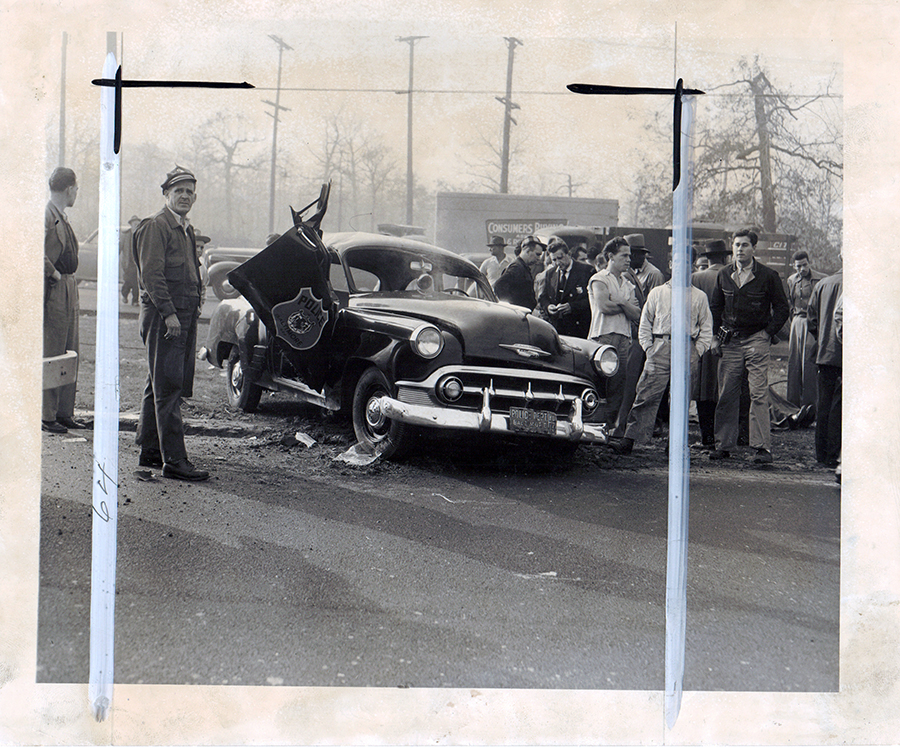
Devider


KSCN0010-SMSun Paper PicKSCN0013-SMSun Paper PicKSCN0018-SMSun Paper PicKSCN0022-SMSun Paper Pic
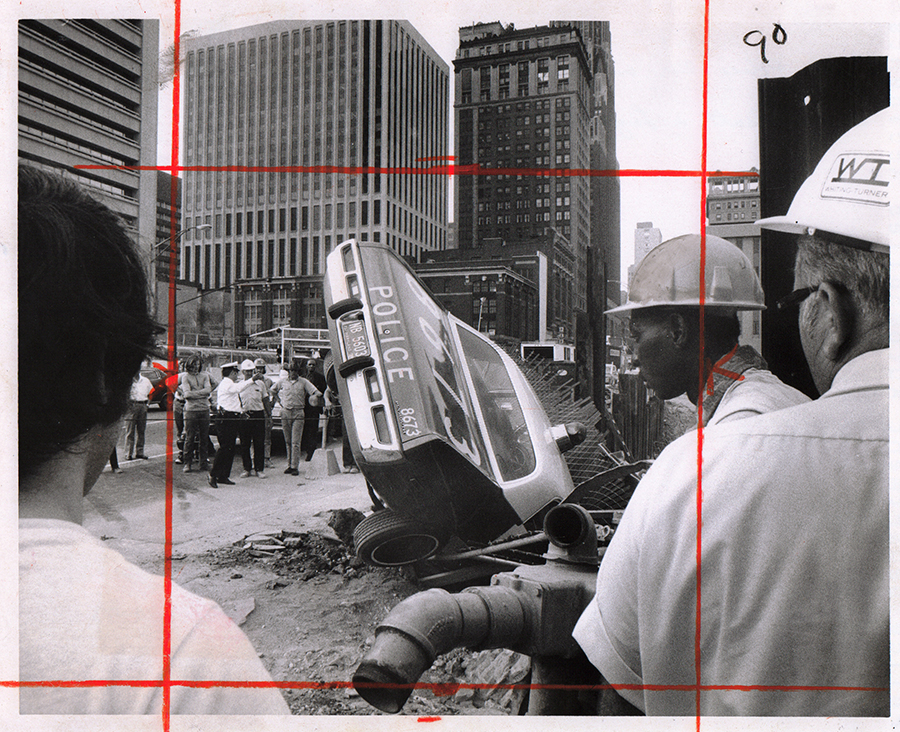
Rice Joseph Robert newpaper article 1938 72Radio Policeman Hurts In 70-Mile-an-Hour chase Car Skids Crashes 

Into Speeder On Hanover Street A radio car patrolman is recovering today from serious injuries received when his scout car crashed into a machine on the Hanover Street bridge during a seventy-mile chase after a speeding driver. The policeman, Robert Rice Thirty-eight, and Gardner Sparhawk, first block of Wheeler Street, driver of the other machine, are under treatment in the South Baltimore General Hospital.

CAR SKIDDED

Patrolman Rice said that he was alone in the radio car when he saw a car speeding past the intersection of Hanover Street and Reedbird Avenue. He gave chase and had nearly caught up with the car when his car skidded on the bridge and crashed into Sparhawk's machine.

HEAD INJURIES

Patrolman Edward L. Sewyer had left the scout car a moment before the chase started. Had he been in the car, he probably would have been killed, for the right side of the car was demolished. Rice and Sparhawk received head wounds, and the patrolman is also suffering from internal injuries. This is what happened to the scout car driven by Patrolman Robert Rice when it skidded into another machine on Hanover Street Bridge last night. Patrolman Rice was pursuing a speeding· motorist at 70 miles an hour. The patrolman was seriously injured. Photograph copyright, 1938, by The Baltimore New-Post. All rights reserved.
 

KSCN0025-SM

Sunpaper pic

Baltimore police
sig 31 23 nov 201423 November 2014
12 O'Clock Boys
Three officers seriously wounded
Officer 'fighting for his life' after pursuit police said should have stopped

Baltimore police crash
Highway and Road Disasters
 
Police investigation called off a pursuit that resulted in a crash that left an officer in grave condition
A patrol car chasing a moped Sunday resulted in a crash that seriously injured officers and the rider

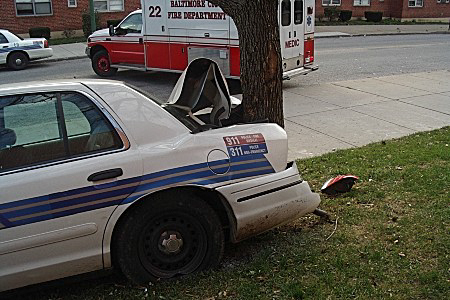
One Baltimore police officer remained in grave condition Monday after the patrol car he was in slammed into a telephone pole Sunday afternoon after continuing a pursuit his commanding officer had called off.

A female officer, who was also in the car, remained in critical but stable condition with broken bones. The crash also involved the driver of a moped police said the officers had pursued, who was also injured and is hospitalized.

"One officer at this moment is fighting for his life at the Maryland Shock Trauma Center," Baltimore Police Deputy Commissioner Jerry Rodriguez said.

The crash occurred about 1 p.m. Sunday in Northwest Baltimore. The incident began after an officer saw a group of dirt bikers assembling in an alley, police said. Upon being spotted by police, the riders fled on their bikes, except for one man, who ran. The officer followed in his marked patrol car and saw the man hop on the back of a moped that stopped to pick him up.

Patrol officers in the area caught and lost sight of the pair on the scooter at various times, Rodriguez said. Spotting it, three officers in a patrol car gave chase, Rodriguez said. The scooter at that time was only carrying a driver.

Baltimore police have a strict policy that allows officers to pursue if the vehicles they are chasing carry suspects who pose immediate and serious threats to the public. Officers must get permission from a shift commander to pursue.

In this case, a sergeant told the three officers to discontinue the chase, Rodriguez said. Fifteen minutes later, officers called for paramedics, he said.

The patrol car had continued the pursuit and crashed into a telephone pole in the 2200 block of Kirk Ave. after the scooter made a hard turn into an alley, police said.

Rodriguez said police don't know why the officers disobeyed an order to stop.

"We want to know why," Rodriguez said. "We have more questions than answers, but we are attempting to get those answers."

Rodriguez said forensics investigators and members of the police's CRASH team were called to retrace the moments preceding the crash. A police helicopter was also used to survey the crash site and map the route the pursuit had taken.

The third officer in the patrol car, a man, was not hurt. Rodriguez said investigators want to know why three police officers were in the patrol car. Marked cars are meant to carry no more than two officers.

While dirt bikes are illegal in the city, the moped was a licensed city vehicle, Rodriguez said. Fleeing police was the only violation the driver could be cited for, he added. No charges have been filed against the rider.

Baltimore Police's Force Investigation Team, which reviews shootings and other serious incidents in which police force is used, is investigating.

Police did not release the names of the moped driver or the three officers, who, Rodriguez said, ranged in experience from a few years to about a decade on the job.

Police said the dirt bikers had assembled in the alley to attend a large motorcycle rally that was held a few hours later.

Scores of dirt bikers and spectators took to the streets around Druid Hill Park on Sunday afternoon for a memorial ride in honor of Devin Rankin, known among riders as "Lor Dev." Rankin was shot to death Thursday in the 4600 block of Mannasota Ave. in a killing that remains unsolved.

Some on social media referred to him as the "no-hands king" because of his ability to ride on one wheel without steering. Copyright © 2014,

2964039573 28a6d8e0e8 o-EditCourtesy Officer Howard Smith
2964040131 956035dded o-EditCourtesy Officer Howard Smith
2964041283 77b777623e o-EditCourtesy Officer Howard Smith
2964881832 dae8ed282a o-EditCourtesy Officer Howard Smith

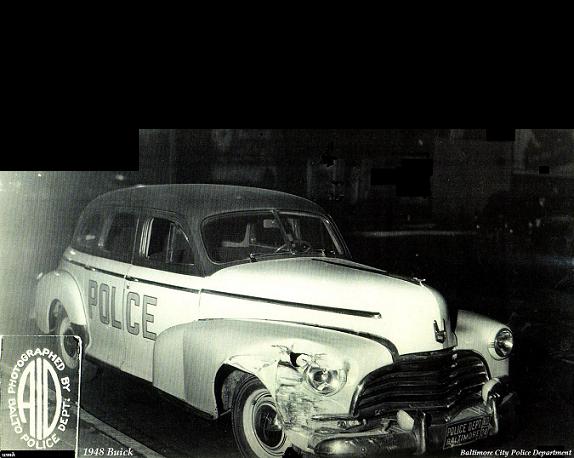
1948buick1

COURTESY SGT. ROBERT FISCHER

1948buick2
COURTESY SGT. ROBERT FISCHER
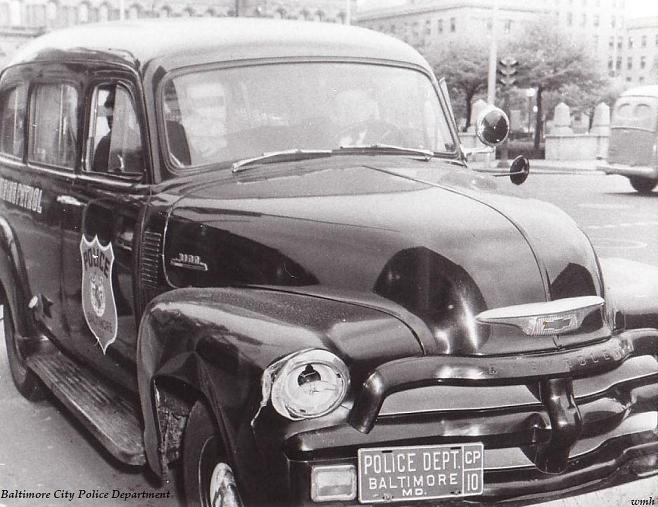
1950chev cp10
COURTESY SGT. ROBERT FISCHER
1955 ford a.i.d
COURTESY SGT. ROBERT FISCHER
1960 steudbaker
COURTESY SGT. ROBERT FISCHER
1960 studebaker
COURTESY SGT. ROBERT FISCHER
 Devider

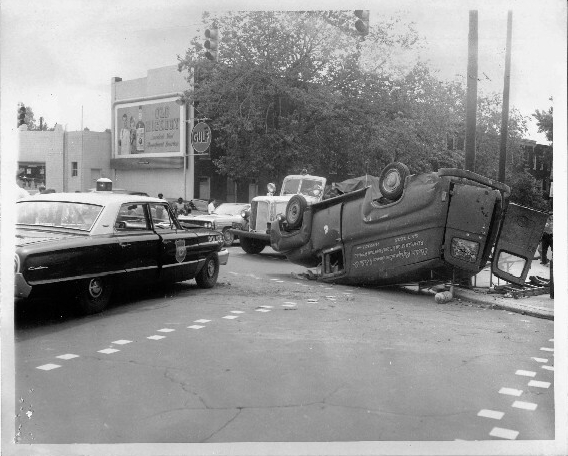
On May 26, 1965, at 10:30 AM, Northern District Radio Car #502, manned by Officer Robert DiStefano driving and Officer Robert Michael, were responding to a Signal 13 (Assist an Officer) call when, at the intersection of 29th and Remington, they were cut off by a truck that had gone through a red light. RC 502 was being operated with “lights and sirens," which struck the truck and turned it over on its roof. The truck then hit a utility pole, which prevented it from breaking through the show window of Jarman Pontiac. Notice the indentation on the side of the truck. Joe deCarlo was the sergeant and responded to the accident scene.

DISTEFANO ACCIDENT1

PHOTO COURTESY MAJOR ROBERT DiSTEFANO
DISTEFANO ACCIDENT2

PHOTO COURTESY MAJOR ROBERT DiSTEFANO

DIsTEFANO ACCIDENT3

PHOTO COURTESY MAJOR ROBERT DiSTEFANO

In the photo showing the front of the totaled (the engine was partially in the front seat) police car, Officer Bob Michael was talking to the T.I.S. Investigator. Please note the price of regular gas in the photo: 28.9 cents per gallon! Miraculously, no one was hurt in this accident!

DIsTEFANO ACCIDENT4PHOTO COURTESY MAJOR ROBERT DiSTEFANO

Leon Tomlin, a patrolman at the time, was assigned to the RC 502 car on the relieving shift and thanked Officer DiStefano and Officer Michael for "expediting" the replacement process of the old unit. Ironically, the driver of the truck, named John Brennan, later joined the Baltimore Police Department. While in the academy, he avoided his firearm and defense tactic instructors, who were none the less, Officer Robert DiStefano and Officer Bob Michael. John Brennan later attained the rank of sergeant. Sergeant Pattinson of "I can teach a monkey how to drive, fame", informed Officer DiStefano that it was the worst accident that he had seen for a long time!
accident report1

PHOTO COURTESY MAJOR ROBERT DiSTEFANO
 A.I.D. accident report detailing the accident investigation

accident report2PHOTO COURTESY MAJOR ROBERT DiSTEFANO

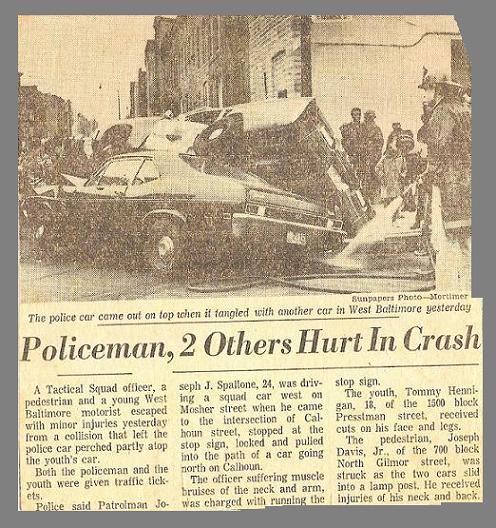
1967chev accident with house
1967chev accident1

1968-Chev-wrecked-March-1971

BPD NEWSLETTER

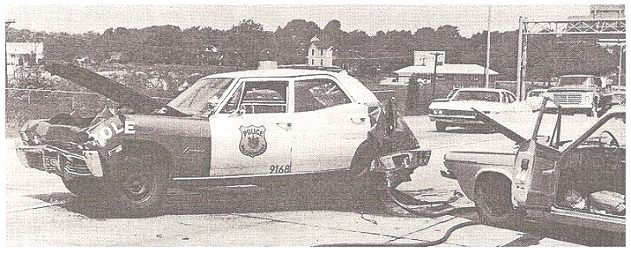
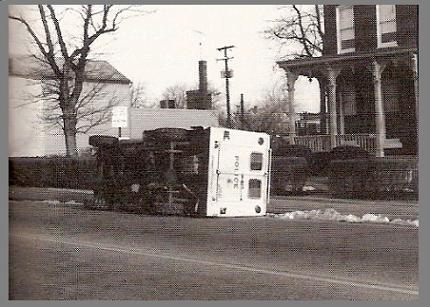
The departmental vehicle pictured above was the victim of a frequently occurring set of circumstances. The driver of this vehicle stopped behind the departmental vehicle and the civilian auto it was assisting. Three warning devices should be employed by members of the department while rendering this type of assistance: the emergency dome light should be operating, the four-way emergency flashers should be employed, and flares should be set out between 100 and 200 feet to the rear of the stopped vehicles. When stopped by a disabled motorist, the police officer should take care to stay outside of his vehicle where practical and take a position of safety with the motorist. Officers should stop far enough behind the disabled vehicle so that the vehicle will not cause damage to the departmental vehicle when it is being moved.disabled civilian vehicle in order to render assistance. While stopped, serving as protection for one civilian vehicle, another struck the police vehicle from the rear. Accidents of the type just described need not happen with such alarming frequency. Some initial precautions will serve to protect both the departmental vehicle and the civilian auto it is assisting. Three warning devices should be employed by members of the department while rendering this type of assistance: the emergency dome light should be operating, the four-way emergency flashers should be employed, and flares should be set out between 100 and 200 feet to the rear of the stopped vehicles. When stopped by a disabled motorist, the police officer should take care to stay outside of his vehicle where practical and take a position of safety with the motorist. Officers should stop far enough behind the disabled vehicle so that the vehicle will not cause damage to the departmental vehicle when it is being moved.
 
last-run-for-the-wagon

 CRUISING PATROL 10-7
PADDY WAGON MAKES IT'S LAST 10–14 RUN

388403 10200840145308262 1647814182 n2013 Officers Hit by Another Car

departmental-accident-12-19-2005

wrecked Baltimore Police Car

Photo courtesy Officer Bill Edgar

wrecked Baltimore Police Car2
Photo courtesy Officer Bill Edgar

Several wrecked Baltimore Police vehicles sit on a storage lot at the Dickman Street garage

Devider

NOTICE

POLICE INFORMATION

Copies of: Your Baltimore Police Department Class Photo, Pictures of our Officers, Vehicles, Equipment, Newspaper Articles relating to our department and/or officers, Old Departmental Newsletters, Lookouts, Wanted Posters, and/or Brochures. Information on deceased officers and anything that may help preserve the history and proud traditions of this agency. Please contact retired detective Kenny Driscoll. How to Dispose of Old Police Items  If you come into possession of Police items from the Estate or Death of a Police Officer Family Member and do not know how to properly dispose of these items, please contact: Retired Detective Ken Driscoll - Please dispose of police items (badges, guns, uniforms, documents) properly so they won’t be used improperly.

  This email address is being protected from spambots. You need JavaScript enabled to view it.his email address is being protected from spambots. You need JavaScript enabled to view it. This email address is being protected from spambots. You need JavaScript enabled to view it. This email address is being protected from spambots. You need JavaScript enabled to view it.

DeviderAnyone with information, photographs, memorabilia, or other "Baltimore City Police" items can contact Ret. Det. Kenny Driscoll at This email address is being protected from spambots. You need JavaScript enabled to view it. follow us on Twitter @BaltoPoliceHist or like us on Facebook by clicking HERE Pictures can be mailed to Baltimore City Police History, 8138 Dundalk Ave., Baltimore, Md. 21222


Copyright © 2002 Baltimore City Police History: Ret Det. Kenny Driscoll


Robert A Miller Jr

Robert A Miller Jr

EVER EVER EVER Motto DivderRobert A Miller Jr

Robert A Miller Jr 2

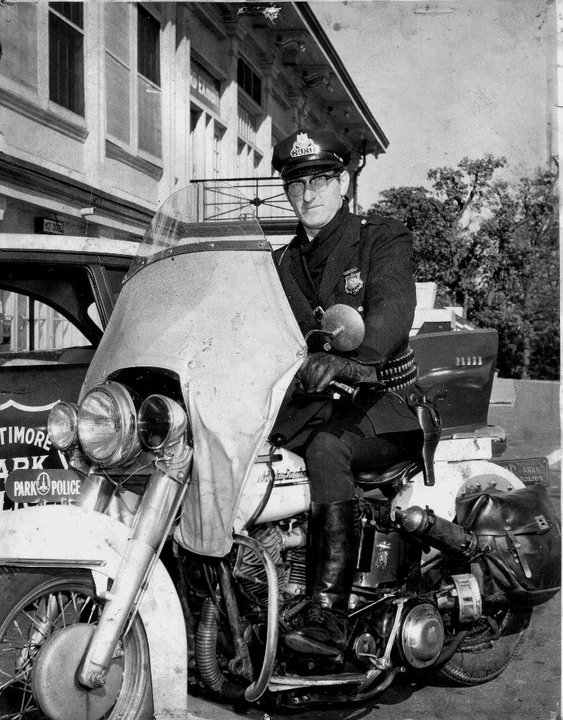
Park Police 1959

Courtesy Robert Miller

Robert A Miller Jr

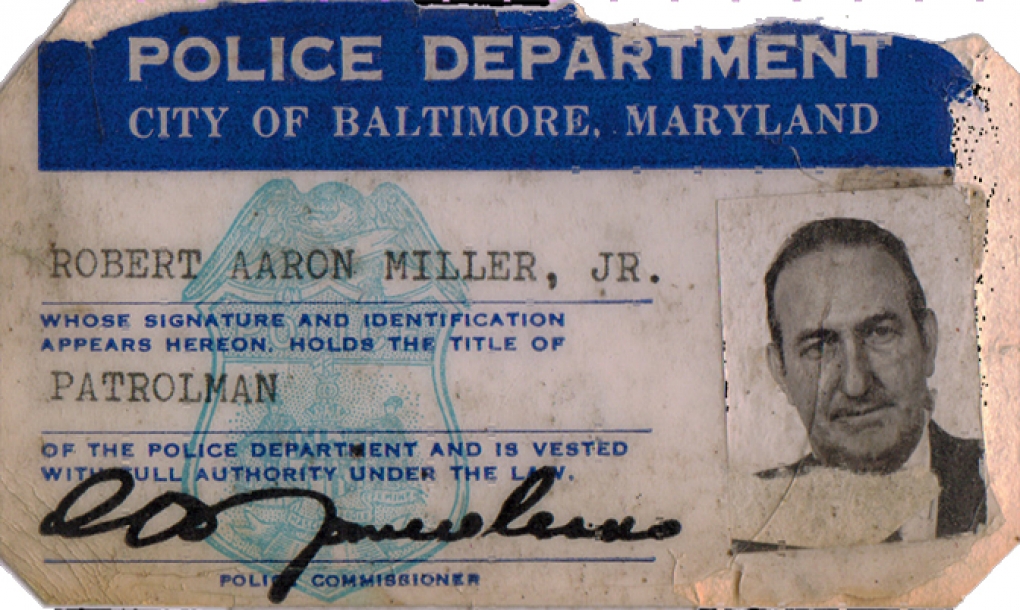
ID card back

Courtesy Robert Miller

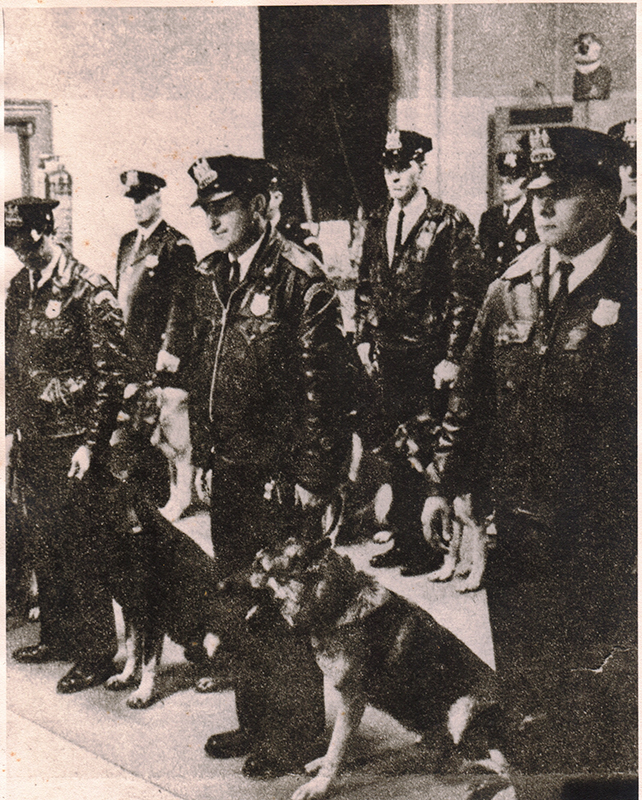
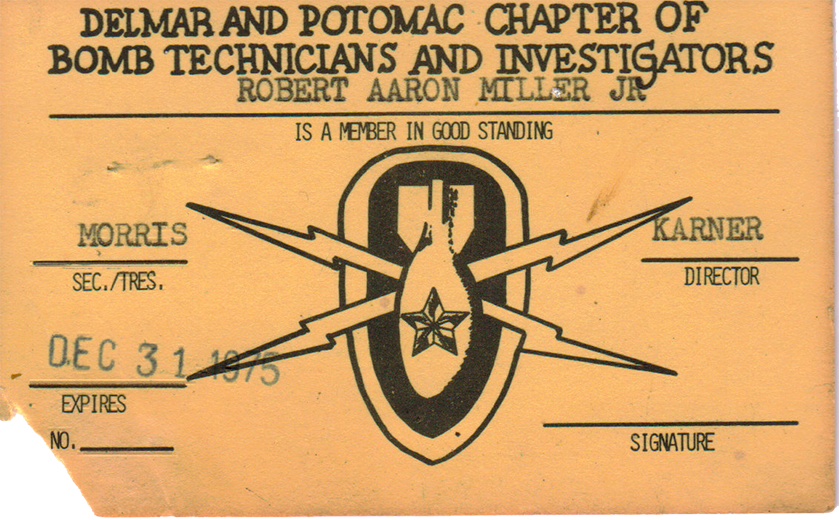
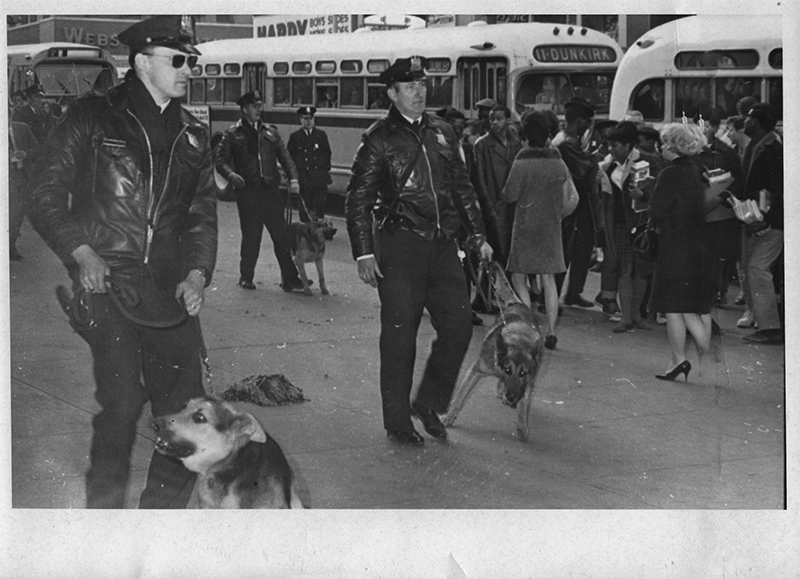
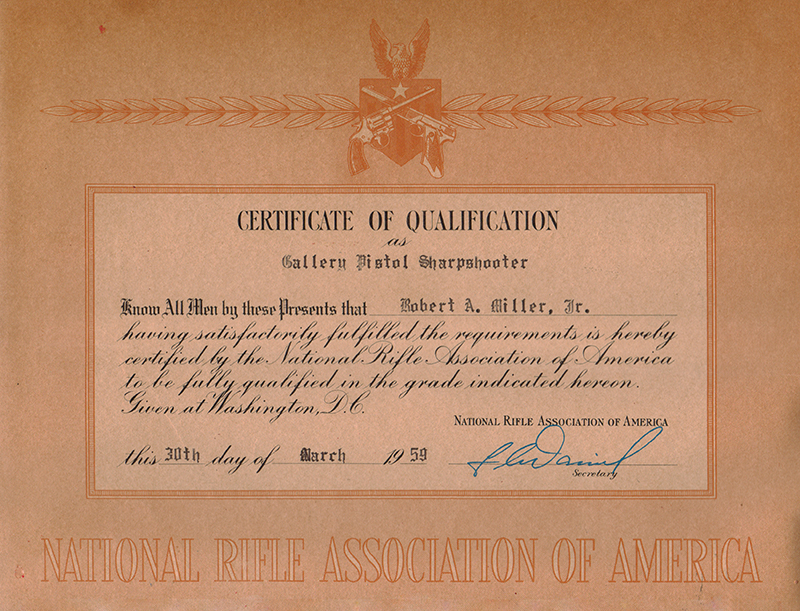
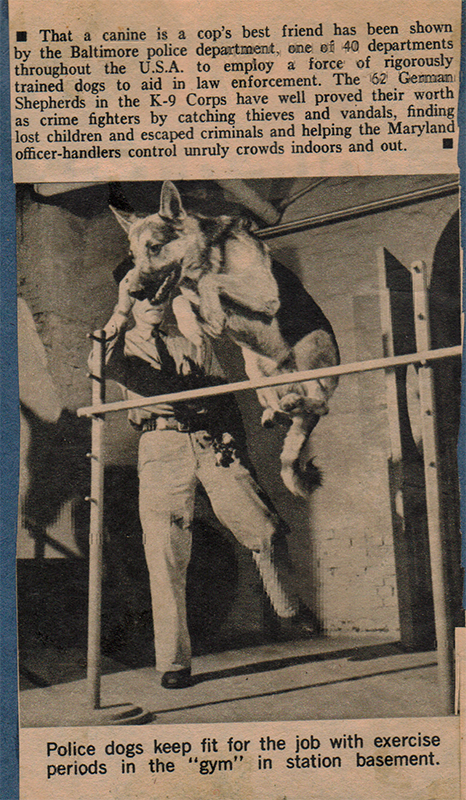
Police Officer Robert Aaron Miller, known as "RAM" Robert Aaron Miller or the "The Dog Man"  began his career with the Baltimore City Park Police where he would work Motors among other duties before the Park Police would Merger with the City Police. As a member of the City Police he took part in helping to build the K9 unit. Under Police Commissioner James M. Hepbron, Officer Miller would volunteer for and be found qualified to work as part of Baltimore's experimental K9 unit.


THE METHOD OF SELECTING OFFICERS:

It must be kept in mind that an officer to work with a dog must want to do so-he cannot be forced into the job as his reactions to his work reflects in the animal. All officers, therefore, must volunteer. From this list they are carefully screened and selected. First, they must meet certain requirements:

(a)
They must live in their own home. This home must have adequate ground or a yard to house and care for a dog.

(b) The officer's wife and family must be investigated from the stand point of willingness and approval.

(c) They must have available an automobile to use at all times.

(d) Their personnel record with the department must be good.

(e) Sufficient practical police experience or knowledge before being assigned to unit.


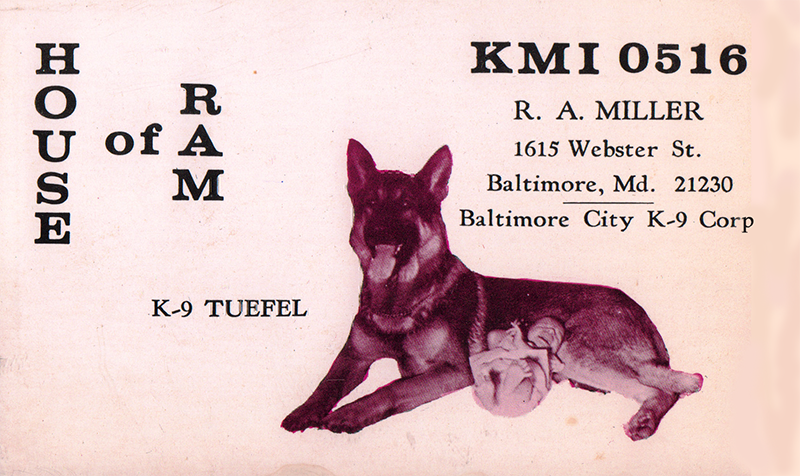
The cost of the K-9 Corps consists of the salary of the personnel assigned to the unit plus an estimated" figure of $200 per year per dog. (This latter figure is based on the cost of food, equipment and veterinary charges.) All dogs have been donated outright to the department for use in police work. They must be German Shepherd dogs (male) sound of body, physically fit and of good even temperament-neither vicious nor shy, and preferably under 3 years of age. No kennel facilities are provided. Each dog is assigned to an officer and from that point on lives with him at his home. The fact that the dog is with the officer constantly not only provides a closer bond of relationship between man and dog, but it also eliminates the necessity of the erection of expensive kennels and the personnel to staff same. Food is purchased by the department and distributed to the individual officer as required. This food consists of a kennel biscuit and canned horse meat or beef. Each officer is taught to train his own dog. The dog is first trained, in basic obedience, and tested for gun shyness. Next, attack work and then trailing (location of lost persons or criminals). Finally, the dog is trained to locate articles or materials that could be used as evidence. (It is extremely important in the attack training that the dog attacks only on command of his handler and releases immediately when told.) Officer Miller met or exceeded every requirement becoming one of Baltimore's first K-9 officer/handlers. Officer Miller was the handler to a dog named Tuefel #46 of Baltimore first 62 dogs. Often the way it was done, would be to obtain as many dogs as they could, all dogs were donated to the Department and were usually between 9 months and 1 1/2 years old when accepted. The training director then was, Sergeant Thomas A. Knott, he would inspect all dogs offered to insure that they are in sound physical condition and of good disposition. Once found qualified the dog is turned over to a veterinarian for an extensive check-up to discover any possible physical or medical defects. The dogs and handlers are then paired and begin schooling. The team of instructors was comprised of two experienced trainers Officers William A. Lejewski and John F. Barnard. This Education and Training Unit is supervised by Sergeant Knott a twenty-three year veteran of the Department. Sergeant Knott has been training dogs for more than forty years.

The teams become well versed in building and field searches for both subjects and objects. This training also includes the recovery of weapons. Among the thirty-nine dogs and handlers deployed by the Department many were also proficient in specialized areas. Five were effective in bomb detection and over one half of the dogs have proved to be reliable in drug detection. Officer Miller took part in a new training program was introduced to enable K-9 teams to detect the presence of deceased persons. The Officers, in their continuing effort to improve and refine the skills of their dogs, also spend many off-duty hours in training. Numerous teams hold American Kennel Club Degrees. The Companion Dog Degree can be obtained only after a dog receives a minimum score of 170 out of a possible 200 points by three different AKC judges in obedience. The Tracking Degree is awarded to a dog who follows a 500 yard track left by a stranger within 40 feet, under the watchful eyes of two AKC judges. The track must be from fifteen minutes to two hours old. This must be accomplished while on his handler's lead and at the end, locate an object left by the stranger. The special skills developed by the teams are applied almost daily. A systematic search of a large building for a suspect by a group of eight to ten officers would take three to four hours. The same search by a Canine team requires only one-fifth the time.

German Shepherds could be handled, trained to see which were trainable and which were not, pretty fast. Baltimore required a different kind of dog, so while nearly all dogs can be trained to be a good guard/security dog, only a few could be Baltimore dogs. Our dogs had to be ale to be around kids, and adults, even disobedient criminals without biting, or attacking unless given a command. It took a special kind of person to be a handler, further it took a special family, because the handlers of the Baltimore K9 took their work home with them, Officer Miller and his family helped form what has become one of America's best K9 units, they helped set up a program where when dogs didn't make the cut here, they sent on to the military where some went on to be quite heroic. As one of the first members of what became one the finest K9 units in the country, Officer Miller and his family along with only a select few other officers with their families in the unit developed a training method that would go on to be copied by nearly every K9 unit in the country. Our hats off to Officer Miller and the other members of his unit. See our K9 page HERE

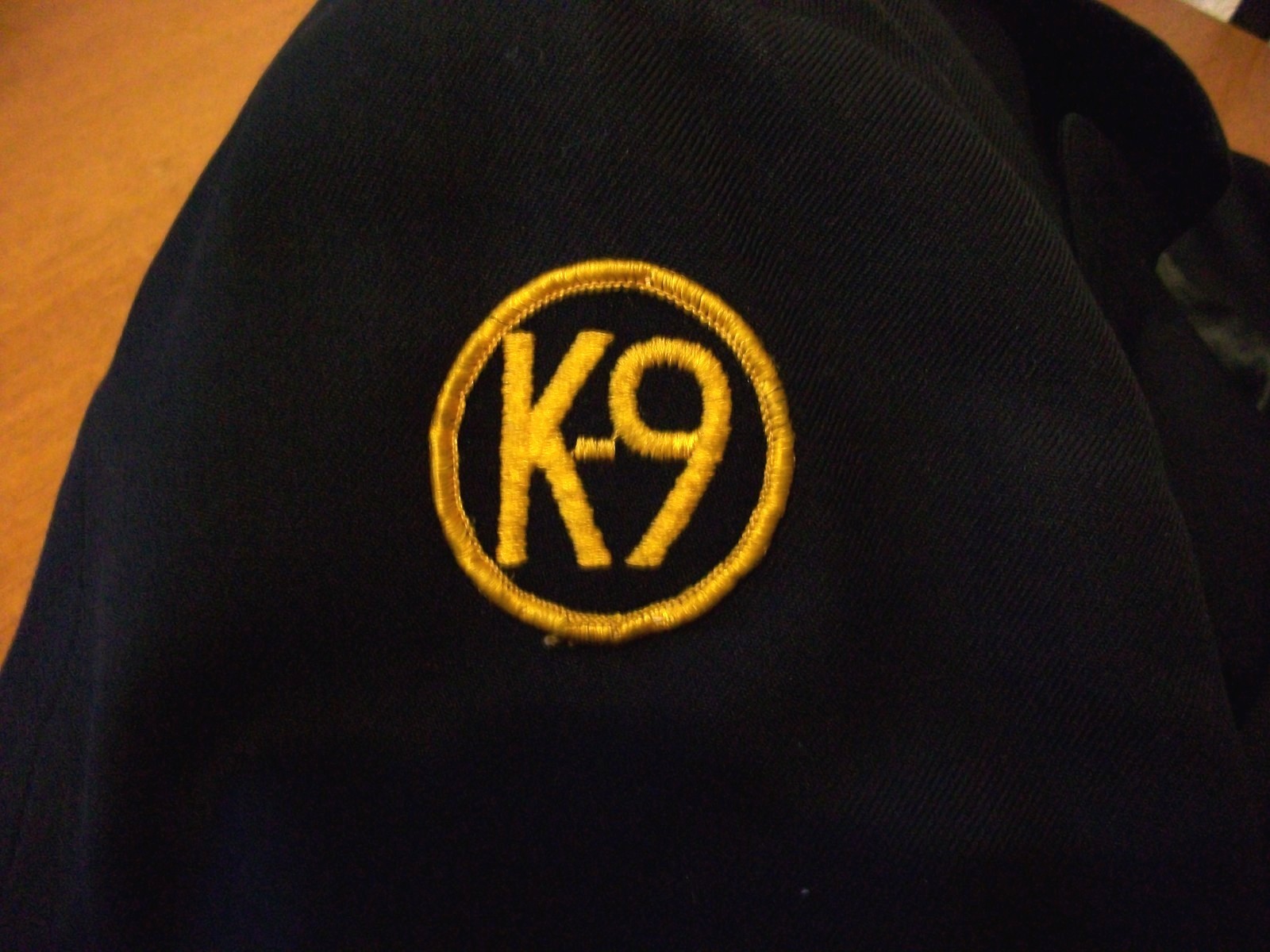
60 k9 coatP/O Robert A Millers Jr's 1960 - Baltimore Police Winter Coat
with Emergency Services Arm Band
rocker patch
Shoulder Patch

k9 reefer

P/O Robert A Miller Jr's 1960 - Rocker Shoulder, and K9 patch

1960 K9 jacket

P/O Robert A Miller Jr's Leather K9 Handlers Jacket

Robert A Miller Jr with DP

Officer William Mille

Miller K9 ad Off Miller with Tuefel

Miller tank 72

Baltimore Bomb Squad R Miller in State Police Vehicle

Miller Bomb squad

RAM's Bomb Tech ID Card

miller dunkirk

RAM w/ Tuefel

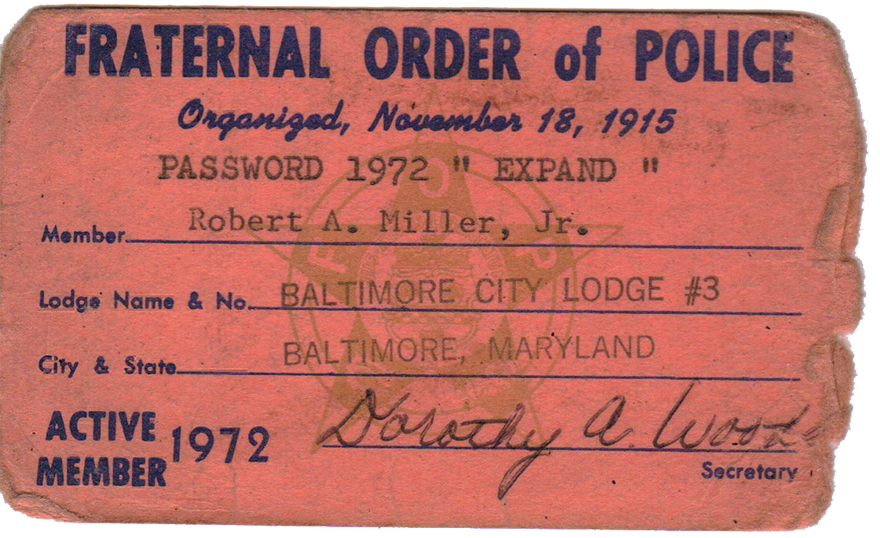
Miller FOP member

R Miller's FOP Membership Card signed by D Woods 1972

RAM FOP 72   73 1st vice prez
Robert Miller Served a term as 1st Vice President of FOP Lodge #3

Miller 2

RAM 19 pistol sharpshooter

Courtesy Robert Miller

RAM 1959Courtesy Robert Milller

K9 hard at work

K9 hard at work 2

K9 hard at work 3

RAM's family showing how their K9 became part of the family

K9 hard at work 4

K9 hard at work 5

K9 hard at work 6

K9 hard at work 7

K9 MD Seal

K9 wallet pics

Wallet Photo

K9 work dog family

A Family Dog

Miller retired

Robert A Miller's Retirement

RAM 1 2

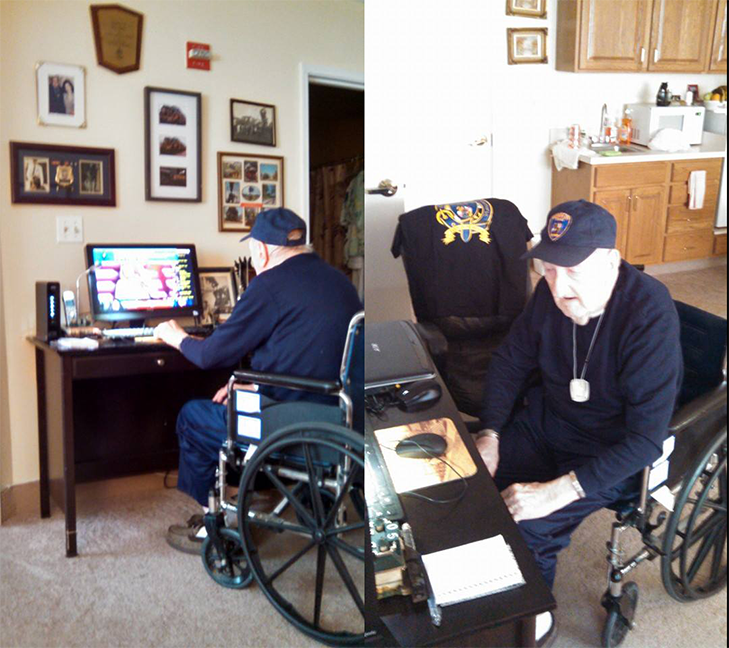
Current Pics of the RAM 2014

RAM Card featurig Tuefel 72


1 black devider 800 8 72

POLICE INFORMATION

If you have copies of: your Baltimore Police Department class photo; pictures of our officers, vehicles, and equipment; newspaper articles relating to our department and/or officers; old departmental newsletters; lookouts; wanted posters; or brochures. Information on deceased officers and anything that may help preserve the history and proud traditions of this agency. Please contact retired detective Kenny Driscoll.


Devider color with motto

NOTICE

How to Dispose of Old Police Items

Please contact Det. Ret. Kenny Driscoll if you have any pictures of you or your family members and wish them remembered here on this tribute site to honor the fine men and women who have served with honor and distinction at the Baltimore Police Department. Anyone with information, photographs, memorabilia, or other "Baltimore City Police" items can contact Ret. Det. Kenny Driscoll at This email address is being protected from spambots. You need JavaScript enabled to view it. follow us on Twitter @BaltoPoliceHist, like us on Facebook or mail pics to 8138 Dundalk Ave., Baltimore, Md. 21222


Copyright © 2002 Baltimore City Police History: Ret Det. Kenny Driscoll 

How to Dispose of Old Police Items

logo

Please contact Det. Ret. Kenny Driscoll if you have any pictures of you or your family members and wish them remembered here on this tribute site to Honor the fine men and women who have served with Honor and Distinction at the Baltimore Police Department. Anyone with information, photographs, memorabilia, or other "Baltimore City Police" items can contact Ret. Det. Kenny Driscoll at   Kenny@BaltimoreCityPoliceHistory.com follow us on Twitter @BaltoPoliceHist or like us on Facebook or mail pics to 8138 Dundalk Ave. Baltimore Md. 21222.

NEWSLETTER

Subscribe now to get 100 exclusive photo & two newsletters per month