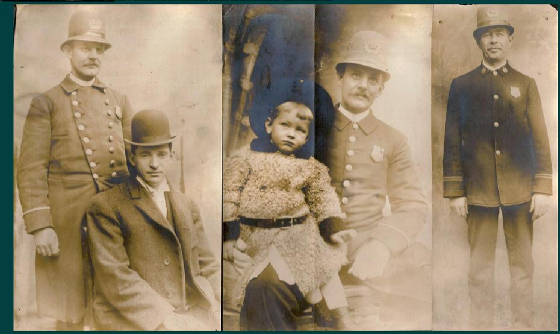
Personnel 1907

Personnel 1907

BPD 1907 Personnel

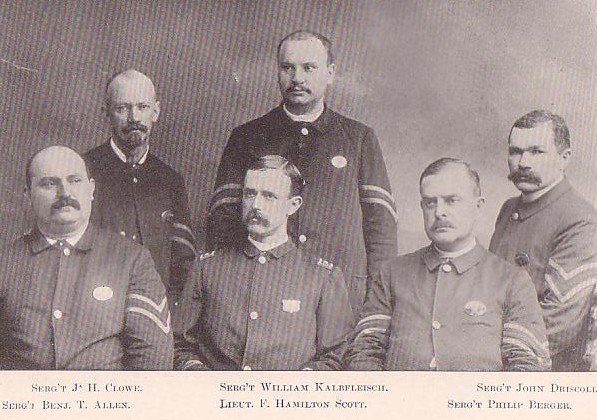
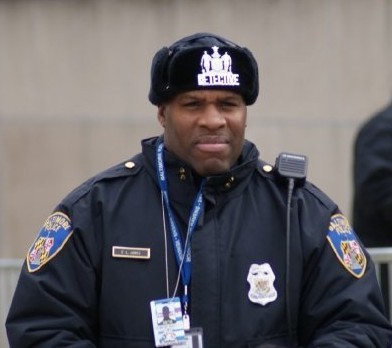
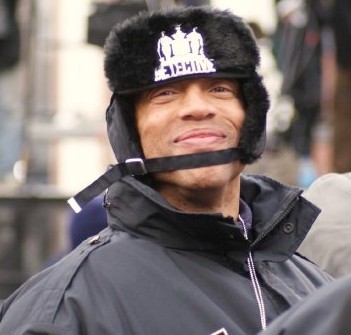
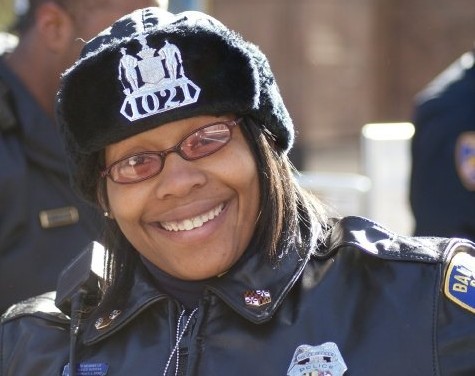
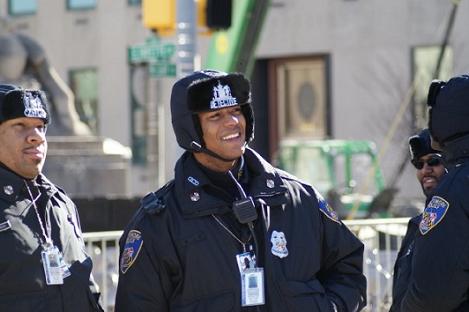
The History of The Baltimore Police Department, which was published in 1907 and has a blue jacket, The original first printing of the book all of the Detectives faces were covered with gold ovals to protect their identity.


Name Rank Badge # Assignment

1 Aburn, Charles Officer Harbor Patrol

2 Acker, J.J. Officer 279

3 Alrich, C.P. Driver

4 Andrews, J.O. Officer 203

5 Andrews, R. Officer 364

6 Arata, S. Driver

7 Arbin, William G. R-Sergeant N.E.D

8 Ardisson, H.V. Officer 430

9 Armiger, Jesse Sergeant

10 Armstrong, George Detective Hq.

11 Arnold, Henry F. Sergeant

12 Atkinson, William M. Detective Hq.

13 Austin, W.H. Officer 142

14 Bachman, J. Officer 89

15 Baker, C.H. Officer 123

16 Baker, James Officer 160

17 Bandel, G.W. Officer

18 Barclay, J.L. Officer 738

19 Barranger, C.J. Officer 751

20 Barranger, John L. R-Sergeant N.D.

21 Barry, Thomas J. Sergeant

22 Bateman, W.J. Officer 4

23 Batzer, J.A. Officer 372

24 Baugh, A.A. Officer 87

25 Begnelle, C.R. Officer 632

26 Behringer, P. Officer 64?

27 Bell, T.L. Officer 228

28 Birmingham, H.C. Officer 459

29 Bishop, C.A. Officer 212

30 Bishop, E.B. Officer 10

31 Black, G.R. Officer 880?

32 Blake, James Officer 306

33 Bliler, R. Officer 452?

34 Blume, C.F. Officer 62

35 Bohn, W.B. Officer 201?

36 Bohn, W.B. Officer 207?

37 Bollinger, S. Officer

38 Bond, C.E. Officer 99

39 Booker, Philip Officer 723

40 Boone, J.B. Officer Mounted

41 Boone, James B. Sergeant

42 Boone, Samuel R. Lieutenant Hq.

43 Borden, W.J. Officer 211

44 Bosch, Phillip F.J. Sergeant

45 Bowers, G.W. Officer 490

46 Bowersox, C.F. Officer 247

47 Bowling, W.E. Officer 39

48 Bozeman, G.J. Officer 53

49 Bracken, J. Officer

50 Bradley, Peter B. Detective Hq.

51 Brandley, William F. Sergeant

52 Brandt, J.C. Officer 125

53 Brennan, Peter J. Detective Hq.

54 Broadfoot, W.J. Officer 23

55 Bruff, John A. Sergeant

56 Bruner, Jr. Joseph Officer 485

57 Buckley, Daniel B. Sergeant

58 Buckley, W.J. Officer 311

59 Bullock, Edwin B. Sergeant

60 Burgess, W.H. Officer 309

61 Burkhardt, J.B. Officer 172

62 Burkhardt, J.G.E. Officer

63 Burman, B. Officer 367

64 Burns, C.H. Officer

65 Burns, C.H. Clerk N.E.D.

66 Burns, Herman Sergeant

67 Burns, J.J. Officer 423

68 Burns, Thomas J. Detective Hq.

69 Burns, W.P. Officer 382

70 Burton, J.W. Officer

71 Busch, William Officer 751

72 Busick, Harry C. Detective Hq.

73 Busick, J.E. Officer 122?

74 Busky, B.T. Officer 102

75 Buswanger, G.B. Officer 411

76 Butler, John Officer

77 Byrne, H.J. Officer 412

78 Byrne, M. Driver

79 Byrnes, B.D. Messenger H.Q.

80 Cadwallader,Lewis Captain Retired

81 Cain, E.J. Officer 26

82 Callahan, W.H. Officer

83 Carberry, R.H. Sergeant

84 Carey, C.J. Sergeant

85 Carey, Edward J. Lieutenant Hq.

86 Carlos, J. Officer 255

87 Carlos, W.L. Officer

88 Carney, O.P. Officer 482?

89 Carr, A.R. Officer 791 Hq

90 Carroll, A.C. Officer 201 Mounted

91 Carroll, F.R. Officer 81?

92 Carroll, J.L. Officer

93 Carroll, John T. Sergeant

94 Carter, Robert D. Lieutenant E.D.

95 Casey, James T. Lieutenant N.W.D.

96 Casey, John A. Lieutenant Hq. Bertillon Div.

97 Cash, P. Officer 395

98 Cassidy, T.R. Officer 748

99 Caughlin, P.J. Officer 427

100 Cavanaugh, M.J. Officer 852

101 Chaffinch, T. Officer 105

102 Chaillon, Louis Sergeant

103 Chaney, V.L. Officer 248

104 Chopper, J. Officer

105 Clampitt, W.K. Officer 75?

106 Clancy, J. Officer 202 Mounted

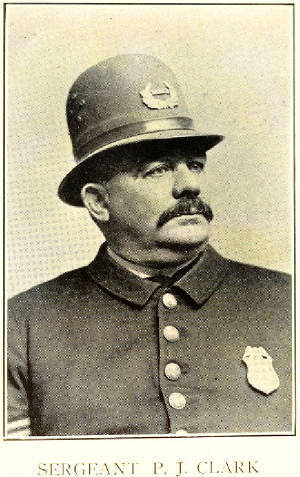
107 Clark, P.J. Sergeant

108 Clautice, F.P. Officer

109 Clayland, D.L. Officer

110 Claypoole, R.G. Asst.Secrt. H.Q.

111 Close, Martha Matron H.Q.

112 Coale, J.M. Officer 546

113 Cole, C.W. Officer 77

114 Cole, Charles M. Lieutenant C.D.

115 Collins, G.W. Officer 47

116 Collins, Joseph D. Lieutenant S.D.

117 Collins, T.J. Officer 725

118 Command, M.B. Officer

119 Concannon, J.P. Officer 257?

120 Connolly, Thomas T. Sergeant

121 Connor, C.O. Officer 362

122 Cook, William Officer 80

123 Cooney, J.A. Officer 645

124 Coughlan, Joseph E. Detective Hq.

125 Coulbourne, John W. R-Sergeant N.E.D.

126 Coulter, J.F. Officer 304

127 Craig, J.W. Officer

128 Crate, Frederick T. Lieutenant N.E.D.

129 Crawford, J.A. Officer 49

130 Croghan, P.V. Officer 22

131 Crowe, W.J. Officer 234

132 Cullison, W.T. Officer 495

133 Cusack, T.E. Officer 209

134 Daley, J.P. Officer 603

135 Damitz, J. Officer 57

136 Daniels, W.J. Officer 106

137 Dash, A. Officer 398?

138 Davis, G.W. Officer 669?

139 Davis, R.S. Officer 735

140 Davis, W.G. Clerk

141 Day, John C. Sergeant

142 Deer, J.H. Officer 717

143 Deinlein, G. Officer 24

144 Deiter, N.W. Officer 64

145 Deitrich, A.C. Officer 83

146 Deitz, C.L. Officer 606

147 Delaney, J.R. Officer 487

148 Dempsey, J.E. Officer 189

149 Dempsey, J.M. Officer 312

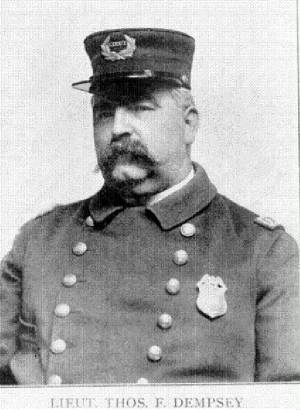
150 Dempsey, Thomas F. Lieutenant N.D.

151 Dengler, George Officer 61

152 Devan, J.T. Officer 222?

153 Devon, F.P. Sergeant

154 Dick, G.B. Officer 346

155 Dick, James K. Detective Hq.

156 Dillon, Edward J. R-Sergeant W.D.

157 Ditzel, Charles Officer 421

158 Dixon, W.Y. Officer 704

159 Dodson, L.E. Officer 25

160 Doherty, E.E. Officer 720

161 Donhauser, Jr. H.A. Officer 40

162 Donoghue, J.J. Officer 712

163 Donohue, Daniel Officer 15

164 Donohue, J.B. Driver

165 Donohue, T.F. Officer 188

166 Dorsey, C.F. Officer 402

167 Dorsey, J.B. Officer 762 Harbor Patrol

168 Dougherty, Joseph E. Detective Hq.

169 Downs, J.C. Officer 324

170 Duerr, V.H. Officer 498

171 Dugan, J.F. Officer 419

172 Dull, J.A. Officer

173 Dunn, D.E. Officer 342

174 Dunn, James Officer 117

175 Dunn, John J. Officer

176 Dunn, John J. Sergeant

177 Dunn, W.F. Officer 183

178 Durfee, A.M. Officer 642

179 Duvall, E. Wirt Dr. Physician H.Q.

180 Dyser, L.J. Officer

181 Eagan, T. Officer

182 Eberling, Jr. J.G. Officer 708

183 Egan, M.J. Officer 777

184 Egan, Thomas Sergeant

185 Ehlers, F. Officer 335

186 Eilbacher, L.H. Sergeant

187 Eisenhut, W. Officer

188 Ellis, A. Officer 35

189 Emerine, G. Officer 153

190 Ennis, J.R. Officer 14

191 Eser, C.N. Officer 11

192 Evans, George N. Lieutenant S.W.D.

193 Fanning, F.N. Officer 177

194 Farley, C.T. Officer 356

195 Farnan, John Clerk S.W.D.

196 Farnan, Thomas Marshal

197 Farrell, G.R. Officer 482

198 Farrell, J. Officer

199 Feidt, R.J. Officer 680

200.00 Feinour, B.W. Officer 417

201 Feldpusch, H. Officer 637

202 Ferguson, W.C. Officer 414

203 Ferris, Thomas Officer 103

204 Fetsch, J.M. Clerk

205 Fields, C.L. Officer 358

206 Finch, C.H.D. Officer 504

207 Fink, J. Officer

208 Fishbach, G.A. Officer 626

209 Fitzmaurice, M. Officer 742

210 Flood, Philip Sergeant

211 Fluskey, D.B. Officer 235

212 Foreman, Harry J. Sergeant

213 Forrest, W.J. Sergeant

214 Fousek, J.J. Officer 320

215 Frank, P.A. Officer 394

216 Frank, R.W. Officer 250?

217 Frawley, M.J. Officer 33

218 Frazier, W.B. Officer 275

219 Frederick, G.A. Officer 752

220 Freeburger, A.B. Officer 149

221 Freedenburg, Alfred Sergeant

222 Freedy, J.F. Officer Mounted

223 Freeman, E.B. Officer 69

224 Freeman, R. Officer 289

225 French, S.J. Officer 283

226 Frisbie, C.H. Officer 458

227 Fritsch, G.J. Officer 68

228 Frock, G.F. Officer 218?

229 Fullem, John J. Lieutenant S.W.D.

230 Furlong, J. Officer 374

231 Gaffey, W.J. Officer

232 Ganley, Philip Officer 424

233 Garner, J.W. Officer

234 Garrett, J.W. Officer 634

235 Garrigan, J.F. Officer 472

236 Garrity, T. Officer 300

237 Gatch, Frank R. Sergeant

238 Gatch, Nicholas B. Sergeant

239 Gaule, M. Officer 350

240 Geiger, J. Officer 80

241 Geisel, F. Officer 152

242 Geraghty, J.T. Officer 282

243 Gerlach, William Officer 470

244 German, F.J. Officer 41

245 Gill, C.N. Officer 617

246 Gittings, Charles W. Captain N.E.D

247 Givvins, J.H. Officer 171

248 Gladden, C.W. Officer 140

249 Glenn, E.H. Sergeant

250 Glenn, J.P. Officer 365

251 Glynn, John J. R-Sergeant E.D.

252 Goodwin, J. Officer 714

253 Goonan, T. Officer 705

254 Gordon, A.S. Officer 20

255 Gordon, J.T. Officer 138

256 Graf, B. Officer

257 Graham, J.T. Officer 15?

258 Gramham, J.A. Officer 604

259 Grauling, G. Officer 32

260 Green, Lewis Messenger H.Q.

261 Green, S.G. Officer 173

262 Green, Thomas T. Lieutenant E.D.

263 Greene, Samuel Officer 173

264 Griffis, Joseph W. Sergeant

265 Grogan, M.J. Driver

266 Gude, G.E. Officer 228 Mounted

267 Guertler, O.E. Officer 154

268 Guian, J.P. Officer 347

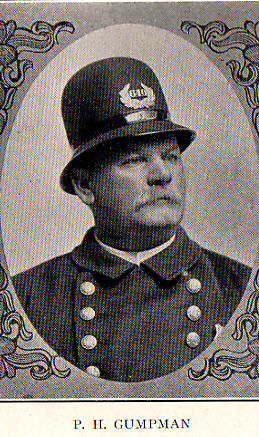
269 Gumpman, P.H. Officer 640

270 Hahn, Lewis R-Sergeant N.D.

271 Haigley, W.H. Officer 700

272 Haile, F.D. Officer 192

273 Haley, M. Officer 694

274 Haley, W.T. Officer 478

275 Hall, Theoderick B. Detective Hq.

276 Hamilton, A.J. Officer 46

277 Hamilton, J.W. Officer 43

278 Hammersla, Harry M. Detective Hq.

279 Hancock, C.W. Officer 100

280 Hanrahan, T.S. Officer 361

281 Harden, U.S.G. Officer 696

282 Hardesty, J.A. Officer 639

283 Hare, John Driver

284 Harrigan, M.J. Officer 466

285 Harrington, M.C. Officer 785 Harbor Patrol

286 Harrison, C.E. Officer 28

287 Harrison, P.H. Officer 429

288 Hartman, John Officer 733

289 Harvey, H.C. Officer 332

290 Hauf, A.J. Officer 614

291 Hauf, A.J. Officer 614

292 Hauf, G.A. Officer 430

293 Hawkins, T.E. Officer 727

294 Hayes, N. Officer 681

295 Heath, G.W. Officer

296 Heiderman, C.E. Officer 672

297 Heineman, H.J. Officer

298 Heinsler, S.H. Officer 96

299 Heinz, William M. Sergeant

300 Hennick, G.W. Officer 502

301 Henry, E.A. Officer

302 Henry, George G. Captain W.D

303 Hepburn, A.M. Officer 70

304 Herman, J. Officer 12

305 Herold, J.L. Officer 170

306 Herrick, William S. Sergeant

307 Higgins, J.T. Officer 218

308 Higgins, William F. Sergeant

309 Hildebrand, W.P. Officer 363

310 Hill, Henry R. Sergeant

311 Himmelman, S. Officer 38

312 Hirshauer, V.E. Officer 194

313 Hobbs, G.J. Officer 439

314 Hobbs, S.A. Officer 811

315 Hobbs, S.S. Officer 584

316 Hoey, C.S. Officer 123

317 Hoffman, W.H. Officer 139

318 Hogan, Thomas F. Detective Hq.

319 Holden, J.S. Officer 174

320 Holthaus, A.A. Officer 385

321 Holzer, J.H. Officer 144

322 Homer, Lloyd Officer 321

323 Hood, Thomas J. R-Sergeant S.W.D

324 Hopwood, Harry E. Sergeant

325 Horstman, H. Officer 242

326 Hoskins, T.E. Officer 678

327 House, Samuel W. R-Sergeant S.D.

328 Howe, E. Officer 384

329 Hoyle, George J. Sergeant

330 Hughes, M.C. Officer

331 Hughes, Michael J. Sergeant

332 Hughes, T. Officer

333 Hughes, Terrence Sergeant

334 Hunt, M.J. Officer 740

335 Hurley, A.F. Officer 466

336 Hurley, Charles E. Sergeant

337 Hutcherson, J.W. Officer 415

338 James, Gilbert C. Sergeant

339 James, W.M. Officer 308?

340 Jamieson, A. Officer 290

341 Jeffres, J.F. Officer 470

342 Jenkins, William M. Sergeant

343 Joeckel, C.C. Officer 58

344 Johnson, E.C. Sergeant

345 Johnson, J.T. Officer 2

346 Johnson, J.W. Officer 484

347 Jones, C.W. Officer 412

348 Jones, G.E. Officer 420

349 Jones, L.K. Officer 146

350 Kahler, G.A. Officer 180

351 Kaiss, G.F. Officer 78

352 Kalbfleisch,William Lieutenant C.D.

353 Kane, C.J. Officer 405

354 Kaney, F.J. Officer 648

355 Kaufman, C.W. Officer 262 Mounted

356 Kaufman, William Officer 709

357 Kearney, A.J. Officer 344?

358 Kearney, Patrick Officer 873

359 Kearns, J.A. Officer 371

360 Keck, J.H.W. Officer 114

361 Keelty, O.E. Officer

362 Keggins, J.T. Officer 73

363 Kelly, C.E. Officer

364 Kelly, J.E. Officer 352

365 Kelly, P.J. Sergeant

366 Kelly, Thomas Officer 27

367 Kelly, W.H. Officer 588

368 Keneally, P.J. Officer

369 Kenealy, M.F. Officer

370 Kenealy, William J. Sergeant

371 Kessler, G.F. Officer

372 Kidd, F. Officer 196?

373 Kimball, A.L. Officer 225

374 King, John R. Officer 747

375 King, L. Officer 17

376 King, W.S. Officer 215

377 Kinsey, Josiah Secretary Bopc

378 Kirby, H.C. Officer 682

379 Kirby, Thomas P. Sergeant

380 Kirby, W.C. Officer

381 Kissner, G.N. Officer 76

382 Klein, John Sergeant

383 Klinefelter, William J. Sergeant

384 Klingenberg, A. Officer 136

385 Kneavel, C.J. Officer 151

386 Knight, Harry Officer

387 Koehler, F.J.H. Officer 21

388 Kohler, George Officer 406

389 Kohlhepp, J. Driver

390 Koller, G.S. Officer 451

391 Kratz, John H. Detective Hq.

392 Krause, Henry Officer 1

393 Kreisel, W.G. Officer 165

394 Krotee, W.C. Officer 176

395 Lafferty, R.H. Officer

396 Lamar, G.W. Officer 605

397 Lamb, Richard Officer 780 Harbor Patrol

398 Lancaster, William Sergeant

399 Lang, A. Officer 475

400 Lang, J.W. Officer

401 Lankford, J.B. Officer 410

402 Lastner, Charles Sergeant

403 Lauinger, George Officer 448

404 Lawler, J.J. Officer 774

405 Lawless, T.P. Officer 434

406 Lawrence, W.E. Officer 716?

407 Leach, C.A. Officer 498

408 League, Albert L. Lieutenant H.Q.

409 League, George Captain E.D

410 Lebrun, George Driver

411 Lefevre, Walter H. Detective Hq.

412 Lehman, J. Officer

413 Leilich, L.E. Officer

414 Leitsch, J.V. Officer 373

415 Leland, Patrick Officer 387?

416 Lennon, J.P. Officer

417 Lentz, Albert F. Sergeant

418 Lentz, C.E. Officer

419 Leonard, J.C. Officer 431

420 Leverton, James M. Sergeant

421 Levie, S.C. Sergeant

422 Link, W.F. Officer 651

423 Linn, J.F. Officer 237 Mounted

424 Lisiecki, K.C. Officer 85?

425 Little, R.T. Officer 755

426 Loane, Charles M. Sergeant

427 Lockwood, A.W. Officer

428 Lookingbill, H.H. Officer 236

429 Lookingland, G.R. Officer 625

430 Lubinski, M. Officer

431 Lucey, J. Officer 55

432 Lucke, E.N. Officer

433 Lurz, George Sergeant

434 Lutts, William J. Sergeant

435 Lynch, J. Driver

436 Lynch, T.O. Officer 381

437 Lyons, J.H. Officer 455

438 Lyons, M. Driver

439 Lyons, R.B. Officer 340

440 Mack, D.C. Officer 654

441 Magee, E.V. Officer 297

442 Maguire, E. Officer 264

443 Malone, D. Officer 404

444 Maloney, M.A. Officer 223

445 Manning, J.A. Officer 400

446 Manning, James Dep.Marshal

447 Mannion, M.J. Officer 116

448 Maselkowski, G.A. Officer 334

449 Mason, William A. Detective Hq.

450 May, A.H. Officer 72

451 Mayer, John H. Detective Hq.

452 Mayer, William Officer 690 ?

453 Mccabe, J.T. Officer 112

454 Mcclean, Charles R-Sergeant S.W.D.

455 Mcclean, F.J. Officer 471

456 Mcclelland, D.P. Lieutenant H.Q. ( Died In 1907)

457 Mcclelland, R.P. Sergeant

458 Mccloskey, J.J. Officer 722

459 Mccloskey, O.W. Officer 775

460 Mccotter, H.H. Officer 458

461 Mccourt, C.J. Officer 224

462 Mcdonell, Harry Officer 328

463 Mcgann, M.V. Officer

464 Mcgee, R. Officer

465 Mcgee, Thomas B. Captain S.D.

466 Mcgeeney, James Officer 284

467 Mcgovern, Joseph R-Sergeant S.D.

468 Mcgrain, J. Officer 303

469 Mcgrain, T. Officer 260 Mounted

470 Mcgrath, J.P. Officer

471 Mcgraw, Thomas R-Sergeant C.D.

472 Mcintire, A. Officer 147 ?

473 Mcintire, J. Officer 222

474 Mcintire, J.H. Officer 463

475 Mckenna, D.J. Officer

476 Mckenna, M. Officer

477 Mckew, M. Officer 657

478 Mclain, A.L. Officer 230

479 Mclain, P. Officer 339

480 Mclaughlin, J.P. Officer 113

481 Mclynn, James J. Sergeant

482 Mcmanus, T.H. Officer 480

483 Mcmullen, W.H. Officer

484 Mcnamara, P.J. Officer 175

485 Mcnamee, J.W. Officer 650

486 Mcneal, M. Officer 802

487 Mcshane, C.J. Officer

488 Mewshaw, J.W. Officer 647

489 Meyer, George P. Sergeant

490 Middleton, C.S. Officer 415

491 Miller M. Officer 37

492 Miller, Jacob E. R-Sergeant H.Q.

493 Miller, R.H. Officer 330

494 Miller, William L. Detective Hq.

495 Mills, W.A. Officer 184

496 Milske, G.L. Officer 392

497 Minch, F. Officer 93

498 Minderlein, C. Officer 422

499 Mintiens, John H. Sergeant

500 Mister, J.S. Officer 377

501 Mitchell, Alex. Officer

502 Mitchell, J.H. Officer 486

503 Mitzel, Jr., J.G. Officer 74

504 Monks, J.A. Officer 296

505 Monohan J.J. Officer 551

506 Mooney, Thomas J. Sergeant

507 Moore, Alfred Sergeant

508 Moore, E.M. Officer 248

509 Moore, R.J. Officer 155

510 Moore, W.H. Officer 86 ?

511 Moran, L. L. Officer 360

512 Moran, Thomas Officer 633

513 Morgan, R.L. Officer 440

514 Morgereth, H.J. Officer 8

515 Morheiser, Harvey P. Lieutenant S.D.

516 Moxley, Jonathan E. Captain S.W.D.

517 Moyan, P. Officer 713

518 Mumford, S.J. Officer 443

519 Murphy, J.T. Driver

520 Murphy, Jeremiah J. Sergeant

521 Murphy, John Officer 835

522 Murphy, Michael Officer

523 Murphy, Richard Officer Harbor Patrol

524 Murphy, T. Officer 204

525 Murphy, W.T. Officer 438

526 Myers, G.E. Officer 124

527 Myers, W.R. Officer 344

528 Nelson, Stephen G. Sergeant

529 Nevins, Joseph Sergeant

530 Newell, R. Officer

531 Newman, W.T. Officer

532 Nicholson, William A. Sergeant

533 Noel, R.T. Officer 248

534 Noonan, M.J. Officer 454

535 Norton, Joseph W. Sergeant

536 Norton, Thomas Officer 883

537 O'connell, J.F. Officer 288

538 O'connor, J.T. Foreman Mounted Stables

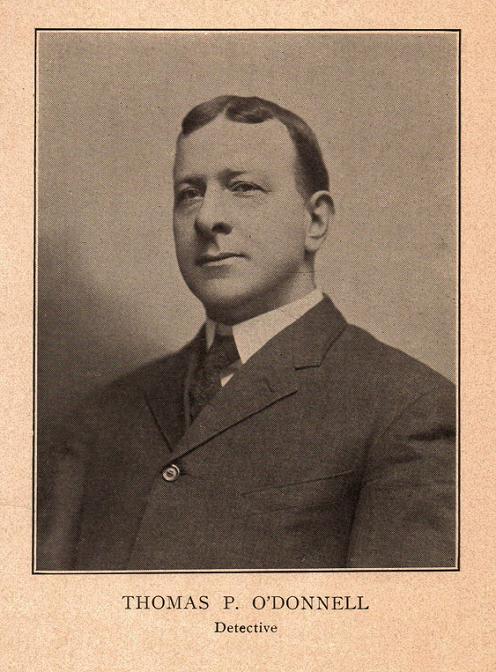
539 O'donnell, Thomas P. Detective Hq.

540 Oelman, G.E. Officer 609

541 Ohle, J.H. Officer

542 O'keefe, W.T. Officer 135

543 Oliphant, J.M. Officer 331

544 O'neill, F. Officer 218

545 O'neill, James Officer

546 O'neill, Thomas J. Sergeant

547 O'rourke, J.H. Officer 189

548 O'toole, Joseph Sergeant

549 Ott, G.A. Officer 104

550 Ousler, T.F. Officer 418

551 Owings, Theodore Sergeant

552 Parlett, D.C. Officer

553 Parr, Frank Sergeant

554 Patterson, J. Officer 94

555 Patterson, P.J. Sergeant

556 Patton, W.R. Officer 308

557 Payne, Jacob Messenger H.Q.

558 Pazourek, C.W. Officer 181

559 Pearce, T.F.G. Officer 316

560 Pease, M.E. Officer

561 Pendergast, T.J. Officer 386

562 Perkins, J.H. Officer 671

563 Permar, W.R. Officer 244

564 Perry, T.E. Officer Harbor Patrol

565 Perry, W.H. Officer 663

566 Petticord, W.D. Officer 207

567 Pfaff, W.H. Officer 699

568 Pfeifer, H. Officer 197

569 Pfeifer, P. Officer

570 Pfister, Nicholas Sergeant

571 Pick, W.A. Officer 388

572 Plantholt, A.J. Officer 183

573 Plum, Frank J. Sergeant

574 Pohler, Herman Detective Hq.

575 Pollock, G. Officer 164

576 Pollock, George Sergeant

577 Polton, Charles A. Lieutenant N.W.D.

578 Porter, R.T. Officer

579 Potter, Charles B. Sergeant

580 Powell, W.S. Officer

581 Preston, James H. Commission Bopc

582 Pumphrey, A.J. Captain Hq. Detectives

583 Putz, Edward L. Clerk S.D.

584 Quandt, R.O. Officer 678 ?

585 Quinn, W.E. Officer 745

586 Quirk, Thomas W. Sergeant

587 Rahn, J.F. Officer 474

588 Ramsey, E.M. Sergeant

589 Ramsey, T.L. Officer 113

590 Ramsey, W.H. Officer 31

591 Ray, C.M. Officer 310

592 Reese, George W. Sergeant

593 Reifner, William H. R-Sergeant E.D.

594 Reth, John Sergeant

595 Rever, G.I. Officer 187

596 Reynolds, M.J. Sergeant

597 Richmond, S.W. Officer

598 Robertson, J.C. Dr. Surgeon H.Q.

599 Robinson, H.E. Officer 26 ?

600 Robinson, J.W. Officer 764

601 Robinson, L.E. Officer 687

602 Roche, C. Officer 380

603 Roche, E.J. Officer 38

604 Roche, J.L. Officer 190

605 Rodgers, J.W. Officer 435

606 Roemer, H.J. Officer 677

607 Roessler, F. Officer 51 ?

608 Rogers, Coke Officer 768

609 Rohleder, Charles Officer 503 ?

610 Ross, J.T. Steno

611 Ross, P.S. Officer 612

612 Roth, G.M. Officer 699

613 Roth, G.M. Officer 693 ?

614 Rowe, J.H. Officer 622

615 Rudel, J.C. Officer 477

616 Rudel, W.W. Officer 450

617 Ruhl, D.B. Officer 5

618 Ruhl, George M. Sergeant

619 Rupprecht, J.J. Officer 217 ?

620 Russell, F.G. Officer 682

621 Russell, William T. Sergeant

622 Ryan, J.J. Officer 786 Harbor Patrol

623 Ryan, J.T. Officer 261

624 Ryan, James Officer 278 ?

625 Ryan, Timothy Officer

626 Saffell, A.C. Driver

627 Sanders, Frank Officer

628 Santry, John J. Lieutenant W.D.

629 Sauer, G.C. Officer 6

630 Schaefer, F.B. Officer 728

631 Schaefer, F.R. Officer

632 Schaefer, George W. Sergeant

633 Schaefer,N.J. Officer 461

634 Schanberger, Harry P. Sergeant Hq. Detective

635 Schaub, William C. Sergeant

636 Scheflein, A. Officer 80

637 Schelle, A.W. Officer 258

638 Schleigh, Edward Captain N.W.D.

639 Schleigh, R.P. Officer 280

640 Schley,Allen Officer 482

641 Schlingman, F. Officer 7

642 Schmidt, G.C. Officer 481

643 Schmidt, J.C. Officer 413

644 Schminke, H.P. Officer 433

645 Schneider, F.E. Officer 18

646 Schone, W.H. Officer 132

647 Schott, E.J. Driver

648 Schrieber, J. Officer 162

649 Schulte, E.W. Sergeant

650 Schultz, Edward Sergeant

651 Schulze, W.F. Officer

652 Schuster, J.R. Officer 664

653 Schuster, J.S. Officer 676

654 Schwarzkopf, H.A. Officer 95

655 Schwarzman, H.J. Officer 163

656 Scott, F.C. Officer 154

657 Scott, William G. Lieutenant H.Q.

658 Scrivner, W.F. Officer 518

659 Scrivner, W.L. Officer

660 Sedicum, A.T. Officer 726

661 Sedicum, G.T. Officer 701

662 Seiber, F.L. Officer 409

663 Seibold, Frederick Sergeant

664 Seibold, George W. Detective Hq.

665 Seibold, H.C. Officer 428

666 Seidl, F.N. Officer 13

667 Seiler, J. Officer 736

668 Seipp, F. Officer 624 ?

669 Shanahan, E.A. Officer 767

670 Shanahan, J.J. Officer

671 Shank, Henry W. Detective Hq.

672 Sheehey, M.J. Officer 305 ?

673 Sheffer, W.P. Officer

674 Shilling, T.B. Officer 233

675 Shipferling,F.H. Officer 698 ?

676 Shockley, J.W. Lieutenant W.D.

677 Shryock, General T. Commission Bopc

678 Shultz, John A.G. Captain N.D.

679 Simpson, N.B. Officer

680 Sinclair, Charles Officer 491

681 Singer, John F. Sergeant

682 Slaine, J.F. Officer 232

683 Slitzer, W. Officer

684 Smeak, William Officer

685 Smith, G.T. Officer 351

686 Smith, James E. Sergeant

687 Smith, Joseph Sergeant

688 Smith, S.J. Officer 743

689 Smith, W.M.D. Sergeant

690 Smyth, J.J. Officer 336

691 Smyth, W.R. Officer 29 ?

692 Snyder, C.L. Driver

693 Sommers, A. Officer

694 Spangenberger,C.F. Officer

695 Sparklin, J.A. Sergeant

696 Sparks, J.B. Officer 98

697 Spicer, C.W. Officer 319 ?

698 Spillner, W.F. Officer

699 Spittel, L. Officer

700 Spittel, W.R. Officer

701 Sporrer, M. Officer

702 Squires, W.L. Officer 432

703 Stadter, Officer

704 Stafford, J.P. Officer 437

705 Stallings, C.F. Officer 723

706 Stanton, Richard Officer Harbor Patrol

707 Starkey, R.L. Officer 130

708 Starlings, F. Officer 729

709 Stein, J.R. Officer 121

710 Steinacher, T.F. Officer 744

711 Steineman, L.J. Officer 732

712 Stevens, E.B. Officer 591

713 Stevens, J.H. Officer 706

714 Stevens, William H. Sergeant

715 Stinchcomb Officer 213

716 Stitchberry, J.L. Officer 268

717 Stocket, R.W. Officer 416

718 Storey, A.P. Officer 667

719 Streb, G.P. Officer 388

720 Street, K. Officer 737

721 Streib, Henry Sergeant

722 Stretch, A.J. Officer 688

723 Strott, John J. R-Sergeant C.D.

724 Strout,G.T. Officer 790

725 Struck, F.A. Officer 447

726 Stump, J.C. Officer 607

727 Sullivan, Robert Officer 618

728 Sutton, B.A. Officer 426

729 Sweeney, J.E. Sergeant

730 Sweeney, J.J. Officer 337

731 Swift, J.E. Officer

732 Swikert, John Clerk H.Q.

733 Swope, J.L. Officer 628

734 Sylvester, D. Officer

735 Talbott, E.J. Officer Mounted

736 Talbott, L. Officer 706

737 Tarr, R.S. Officer 711

738 Taylor, A.J. Officer 254

739 Taylor, O.M. Officer 145

740 Teinken, G.H. Officer 127

741 Tennyson, J.F. Officer 689

742 Teves, J.T. Officer 478

743 Thawley, S.T. Officer 178

744 Thies, J.C. Officer

745 Thomas, W.L. Officer 318

746 Thompson, W.A. Officer 198

747 Thornton, J.P. Officer 724

748 Tighe, J.B. Officer 428

749 Tighe, P.J. Officer

750 Timmerman, A.J. Officer 421

751 Todd, E.D. Officer

752 Todd, J.D. Officer 220

753 Trott, J.W. Officer 353

754 Trott, Joseph E. Sergeant

755 Trott, T.H. Officer 200

756 Tudor, W.T. Officer 120

757 Tull, J.C. Officer 241

758 Tuohy, John Officer 322

759 Tyson, G.B. Officer 345

760 Uhing, C.H. Clerk

761 Urspruch, L. Officer

762 Vahle, Charles Detective Hq.

763 Vane, F.B. Officer 228 ?

764 Vavra, F.J. Officer

765 Vavrina, J.F. Officer 184

766 Vavrina,J.F. Officer 493

767 Veitsch, G.C. Officer 256 ?

768 Velker, G.C. Officer 287

769 Vickers, B.F. Officer 669

770 Vincent, W.P. Officer 189

771 Vinyard, J.L. Officer

772 Vocke, L.B. Officer 243

773 Voegelein, Charles Officer 292

774 Vogleman, W.H. Officer 621

775 Walsh, John J. Sergeant

776 Walsh, M. Officer 757

777 Walsh, W.J. Officer

778 Walters,H.R. Officer 282

779 Wankmiller, J.F. Officer 52

780 Ward, Bernard J. Captain C.D.

781 Ward, Michael E. Sergeant

782 Warfield, W.L. Sergeant

783 Warmsman, W.F.H. Officer 299

784 Warner, J.A. Officer 261 Mounted

785 Watchman, W.W. Officer 131

786 Watson, Walter Clerk N.W.D.

787 Way, J.A. Officer 239

788 Weaver, Charles H. Detective Hq

789 Weber, C.E. Officer

790 Weber, John Officer 156

791 Wedi, W.L. Officer

792 Wellener, Basil S. Lieutenant N.E.D.

793 Weller, H.A. Officer

794 Welsh, Luther Officer 731

795 Werner,W.F. Officer 627

796 West, W.C. Officer

797 Wheatley, J.W. Officer

798 White, J. Officer 716

799 White, J.J. Officer

800 White, William M. Sergeant

801 Whittle, William H. R-Sergeant W.D.

802 Wildberger, F.W. Officer 210

803 Wilkens, J.C. Officer 658

804 Wilkerson, J Officer 82

805 Will, G.J. Officer 469

806 Williams, J.E. Officer 619

807 Williams, T.A. Officer 681

808 Willis, George Commission Bopc

809 Wilson, J.F. Officer 334

810 Wingate, H.C. Officer 214

811 Winters, George Officer 128

812 Wisner, J.T. Officer 467

813 Woelper, George Officer 150

814 Wonderley, W.R. Clerk N.D.

815 Woods, J.J. Officer 379

816 Worden, E.G. Sergeant

817 Wortman, Charles Sergeant

818 Wulfert, J. Officer 349

819 Yeagle, C.L.D. Officer 535

820 Yost, Henry Officer 641

821 Youngheim, F.F. Officer 118

822 Zehner, Louis Sergeant

823 Zehner, W.O. Officer 629

824 Zeiler, A. Officer 34

825 Zellers, F.J. Sergeant Traffic Squad

826 Zimerman, Charles Officer 425

827 Zizwarek, J.F. Officer 185


1 black devider 800 8 72

POLICE INFORMATION

Copies of: Your Baltimore Police Department Class Photo, Pictures of our Officers, Vehicles, Equipment, Newspaper Articles relating to our department and or officers, Old Departmental Newsletters, Lookouts, Wanted Posters, and or Brochures. Information on Deceased Officers and anything that may help Preserve the History and Proud Traditions of this agency. Please contact Retired Detective Kenny Driscoll.

This email address is being protected from spambots. You need JavaScript enabled to view it.

Devider color with motto

NOTICE

How to Dispose of Old Police Items

Please contact Det. Ret. Kenny Driscoll if you have any pictures of you or your family members and wish them remembered here on this tribute site to Honor the fine men and women who have served with Honor and Distinction at the Baltimore Police Department.  Anyone with information, photographs, memorabilia, or other "Baltimore City Police" items can contact Ret. Det. Kenny Driscoll at This email address is being protected from spambots. You need JavaScript enabled to view it. follow us on Twitter @BaltoPoliceHist or like us on Facebook or mail pics to 8138 Dundalk Ave. Baltimore Md. 21222


Copyright © 2002 Baltimore City Police History - Ret Det Kenny Driscoll 

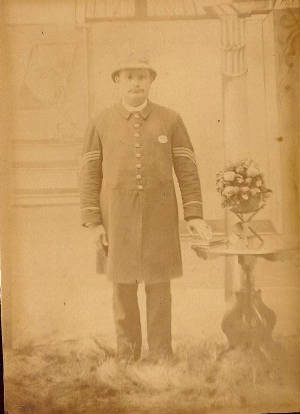
Personnel 1888

Personnel 1888

BPD Personnel 1888

1888 2
 
 The Book Our Police 1888 Click HERE

Harry Gilmor served in the Confederate cavalry and was captured twice. He was captured first in September 1862 and then exchanged as a prisoner of war in February 1863. He was captured again in February 1865 and remained captive for the duration of the war. During that time he compiled a series of historical sketches about his career which were later developed into Four Years in the Saddle.

He was Baltimore's Police Commissioner from 1874-1879.

 
BALTIMORE CITY POLICE DEPARTMENT

ROSTER OF THE FORCE

January 1, 1888

Board of Police Commissioners

EDSON MARION SCHRYVER, President

ALFRED J. CARR, Treasurer

J. Q. A. ROBSON

JACOB FREY, Marshal.

JOHN LANNAN, Deputy-Marshal.

   Name                           Date of Appointment      District

A.

Abell, R. A………………………………....April 10, 1886.………...W.

Ackerman, J. J. …………………………...October 5, 1885.......N.W.

Ackler, W. F. ……………………………. November 28, 1876...…C.

Adkinson, B. B...........................................June 12,1886............N. W.

Ahern, James............................................June 17, 1878..................E.

Allen, Benjamin T., Sergeant....................June 17,1884...............W.

Allen, Wm. C. ..............................................July 21,1886............…..C.

Anderson, James D. ...............................February 10, 1876……..S.

Andrews, Ringgold ...................................June 19, 1876........……C.

Arbin, William........……………………….July 9, 1885.............…N.E.

Arminger, Jesse…………........................June 6, 1885.…......……S.

Armstrong, Thomas………………........August 1,1878….........N.E.

Arnold, H. T.................................................April 13, 1886.............S.W.

Arnold, T. E................................................July 17, 1884............. S. W.

Arthur, Thomas.........................................June 14, 1876.................C.

Atkinson, William M................................November 26, 1886...S. W.

Auld, Benjamin F., Captain....................April 23, 1867...................E.

Austen, William H....................................April 12, 1886..............N. E.B.

Bachman, John........................................December 27,1882..........E.

Bafford, E. T..............................................April 22, 1881...................C.

Bailey, George...........................................May 27, 1885.............N. W.

Baker, James C.........................................January 25, 1884...........E.

Baker, John Captain…..............................May 22, 1867...........S. W.

Ballard, L. J..................................................October 11, 1886..........C.

Bannahan, P. F..................... ...... ...............July 27, 1887................W.

Barber, Alexander Clerk............................April 13, 1886................E.

Barber, Henry L...........................................January 29, 1886....N. E.

Barber, Philip J., Captain..........................April 10, 1869............N. E.

Barker, William, Sergeant.........................April 29, 1867................C.

Barnes, John A..........................................February 9, 1885...........C.

Barranger, Thomas, Detective................July 20, 1867..............HQ.

Barrett, Michael..........................................July 15, 1884..................S.

Bayne, William C. Sergeant.....................March 18.1875...............S.

Beckmyer, W. L. .........................................May 14, 1885.................C.

Behrens, Manno A. ...................................August 21, 1879...........E.

Behringer, Phillip.........................................April 22, 1886...............C.

Bell, Thomas L. ...........................................February 3, 1877.........C.

Berger, Philip R., Sergeant........................September 3, 1867.....W.

Berney, J. J. ..................................................April 21, 1881..............W.

Biddison, W. G...............................................August 19, 1886.........C.

Billmire, George ,W. .....................................April 6, 1886................E.

Bishop, Alonzo R..........................................August 19, 1886........W.

Black, Michael F., Sergeant.........................April 15, 1882.............E.

Blackiston, Albert C.. Sergeant..................April 25.1867..............S.

Blair, Jeremiah………………………………May 1, 1885.………...S.

Blake, James………………………………..January 21, 1871.…..C.

Blaney, Samuel……………………………..April 13, 1885.…...N.W.

Boone, Mathew.......................................October 14,1870.........N. W.

Boose, William H. .....................................September 21,1886..N.W.

Bortle, Caleb …………………………….April 23, 1886.………....W.

Bosch, P. F. J., Sergeant.........................September 15, 1879..N.E.

Boston, James H.......................................August 8, 1883...........N.E.

Bouchett, Joseph A.................................April 25, 1867..................C.

Bouckelle, P. S...........................................April 10, 1886.................C.

Bowen, William H., Sergeant..................April 25, 1867..................S.

Bowers, G. W..............................................June 21, 1886...........S.W.

Bowling, William E.....................................December 8, 1877 ........E.

Bradley, William T.......................................December 3, 1884...S.W.

Brandt, J. H...................................................February 21,1876....N.E.

Brayden, S. W.... .........................................October 15, 1885.....N.W.

Brennan, P. J. .............................................December 2, 1880........C.

Broderick, T. A., Sergeant.........................February 4, 1875.....S.W.

Brooks, M. S., Turnkey.............................July 27, 1875.............S.W.

Brooks, William...........................................April 4, 1873..............N.W.

Brown, James F..........................................May 31, 1881............N.W.

Brown, John C............................................November 4, 1881........E.

Brown, Richard P ......... ............................February 27, 1872........C.

Brown, Thomas..........................................October 14, 1867..........S.

Brown, Wilson W........................................May 2, 1884.…….....N.W.

Browning, George D..................................November 24, 1886......S.

Bruchey, David H., Lieutenant................November 5, 1869........S.

Brunner, J., Jr.............................................April 9, 1886..................W.

Bryan, James J..........................................May 17, 1883 ...........N.W.

Brydon, E. R...............................................January 7, 1879.........S.W.

Buckless, Thomas E., Sergeant.............August 20, 1872............E.

Buckley, D. E...............................................June 15,1886.…………C.

Buenger, John H........................................April 13, 1881.…………E.

Buppert, Joh11...........................................April 23, 1885............S.W.

Burnes, James M.......................................January 3, 1884....……S.

Busch, William H.........................................August 24,1880.……...S.

Busick, Harry G...........................................July 22, 1885.………....C.

Busick, Jamcs H., Lieutenant...................May 1, 1867.……….....C.

Butler, John, Sergeant...............................Apri121, 1879...........S.W.

Byrnes, B. D..................................................June 28,1873...........…C.C.

Cadden, Thomas..........................................October 15,1881........E.

Cadwallader, Lewis W., Captain...............June 27,1861.........…W.

Cain, James T. …………………………….December 3, 1874.…C.

Caldwell, Andrea P. Clerk………………..April 29, 1875.…….N.E.

Callen, Thomas J………………………....June 29, 1885.……….E.

Campbell, G.L. ...…………………………..May 7, 1867.……….N.E.

Canby, W. S. ………………………………April 22, 1886.…….N.W.

Cannoles, Francis ………………………..March 9, 1877.……N.W.

Carberry, R. H. ……………………………August 5, 1886 ………C.

Carey, C. J. ………………………………...March 21, 1884 …...N.E.

Carey, John ………………………………..April 15, 1868 ……N.W.

Carey, Thomas …………………………….May 23, 1872 ……N.W.

Carey, Timothy W. ………………………September 12, 1871.....S.

Carlos, John, Sergeant ………………… October 25, 1872 ...N.W.

Carney, M. T. ………………………………March 14, 1887 …….W.

Carney, O. B. ………………………………February 2, 1886 …..W.

Carr, A. R. ……………………………….....October 3, 1877 ……..C.

Carr, Nicholas J............................................March 31, 1880 ….N.W.

Carrick, Lackey M. .......................................June 13, 1887 ...........W.

Carrick, William J., Sergeant ......................July 26. 1876 ........N. E.

Carroll, J. H., Lieutenant ........................March 25, 1869.…….N. E.

Carson, T. W. D. …………………………September 5, 1885 ..S.W.

Carter, I. T. ………………………………..October 16, 1876 …..N.E.

Carter, Robert D. ………………………May 12, 1884 ………..N.W.

Casey, John A………………………….April 9, 1886.……………C.

Casey, Samuel B. …………………….January 24, 1881 ……..N.E.

Cash, Patrick ………………………….December 7, 1885 ………C.

Cassidy, Thomas R...............................April 30, 1885.………........C.

Cavanaugh, Matthew ...........................November 27,1875.……..S.

Chaillou, Aug., Sergeant ......................November 14,1867.....N. E.

Chaillou, Lewis  Sergeant ...................April 10,1882........………..S.

Chaney, Charles P ................................April 29,1867.………........C.

Cbesgreen, William J.............................October 8,1868.................C.

Claiborne, Charles H., Captain ...........December 21, 1868...…..S.

Clark, Charles..........................................June 4, 1870.…………....S.

Clark, J. A...................... ...........................February 27,1882.….N. E.

Clark, Patrick J.........................................April 27, 1887...................S.

Clause, Frederick.....................................May 6, 1880.………….....C.

Clautice, George, Sergeant ...................September 23,1873........C.

Clautice, George B...................................November 3, 1884.…….C.

Clemson, Richard H................................October 25, 1883 ..……..E.

Cline, Daniel H. Sergeant .......................October 2,1875.……N. W.

Clipper, Lewis............................................June 7,1875....................S.

Close. R. J...................................................May 7, 1885...................W.

Clowe, John H., Sergeant ......................November 16, 1877.….W.

Cole, C. Wallace.......................................July 27,1886.…………....E.

Cole, Lewis D.......….................................December 16, 1886.…...C.

Coleman, Charles L. ................................August 31, 1868.……...E.

Collins, Joseph D. Sergeant ..................July 30. 1868.………….S.

Comman, John..........................................April 3. 1870.......……….E.

Connery, John...........................................January 26, 1874.....N. W.

Connolly, James F.....................................February 3, 1887.…….C.

Connolly, William........................................December 28, 1867.…E.

Connor, Patrick F........................................January 6, 1887.……..S.

Considine, Patrick.......................................December 2, 1872......W.

Conway, J. H ...............................................April 30, 1885...........S.W.

Conway, Patrick...........................................December 28, 1872....S.

Conway, Richard..........................................May 2, 1887.................C.

Conway, Thomas.........................................November 7, 1883......S.

Cook, C. E.......................................................October 14, 1886......W.

Cook, G. L.......................................................August 26,1874.....S.W.

Cook, John.....................................................March 1, 1857.…...S.W.

Cook, William ............... ................................April 8, 1871.………...E.

Costello, John W...........................................March 3, 1883.............E.

Costello, P. S..................................................April 30.1867.........N.W.

Cox, John B. .............................. ...................August 15, 1878........E.

Cox, John T.....................................................May 1,1871................C.

Crate, F. S., Sergeant .................................February 27, 1877..N. E.

Crawford, James A. ...................................April 9,1886...................E.

Crawford, John O.......................................October 20, 1881....N. W.

Creamer, Anthony.....................................August 14, 1868.......S.W.

Crispens, William H...................................October 15, 1886.……..S.

Crooks, T. B. …………………………….February 10, 1871 ……W.

Cross, B. O. L. …………………………..April 21, 1881 ………..N.E.

Cross, Franklin T......................................May 13,1885...............N. E.

Cullem, J.W. ..............................................October 7, 1871..............C.D.

Dahle, George............................................August 21, 1884.............C.

Davis, John ...............................................September 10, 1873......C.

Davis, John W. ………………………….April 4, 1881 ……………E.

Deaver, George B. ………………………May 7, 1867 …………...C.

Debring, A. B, Turnkey ...........................January 11,1883......N. W.

Debus, Lewis ……………………………April 10, 1886 ………….S.

Deems, John …………………………….September 11, 1882 ….S.

Dempsey, William B..................................February 18, 1885.........C.

Devan, J. T. ................................................October 11, 1872..........W.

Devon, Francis P. ………………………April 10, 1882 ………….C.

Dietz, John ................................................December 20, 1871........C.

Diggs, Daniel E., Sergeant .....................April 25, 1867.……….....E.

Dingle, Henry.............................................July 31, 1878...................S.

Dolan, Michael...........................................February 1, 1871...........C.

Donahue, P. J.............................................August 20, 1886 ...........C.

Donnelly, Bernard .....................................March 2, 1870...........N.W.

Dorn, Charles P., Sergeant ..................September 18, 1878..N. W.

Dorsey, John B. .........................................September 1, 1885.......C.

Douglass, George E...................................July 7, 1885...................S.

Doyle, Bernard..........................................September 7, 1887....N.W.

Doyle, James...........................................September 12, 1884..N. W.

Doyle, William F. ......................................August 2, 1869................S.

Doyle, William H .......................................December 17, 1881.......C.

Driscoll, John, Sergeant .........................August 14, 1873............W.

Drohan, David ...........................................May 7, 1867...............N. W.

Droste, William H., Detective ..................June 5, 1868...............HQ.

DuBois, Edward S., Clerk .........................April 9, 1886..................C.

Dudrow, T. C..................................................May 8.1871.............N. E.

Dull, George, Sergeant ...............................April 25, 1867..............S.

Dull, George F...............................................February 11, 1882......S.

Dunn, Edward .............................................November 24, 1874.....C.

Durkee, Henry.............................................June 27, 1861 ...........N.E.E.

Eagan, Michael ...........................................April 12,1886 ................C.

Earhart, George T., Captain ...................September 8, 1868...N.W.

Edwards, David .........................................October 6, 1879.............E.

Egan, John ………………………………December 24, 1885 ..S.W.

Elbacher, L. H. …………………………..April 12, 1886 ………….C.

Emerine, George………………………..August 12, 1876.………C.

Emery, W. H……………………………..December 6, 1884.…..N.E.

Ennis, James R. ……………………….February 25, 1886.……...E.

Enrich, Henry…………………………..October 29, 1886.………..E.

Eppley, John A. ………………………November 15, 1871.…..N.E.

Escavaille, George S. ………………..April 13, 1886.…………N.W.

Eustace, Levi………………………….April 25, 1881.…………….E.

Evans, George N. …………………….May 11, 1874.……………..S.F.

Fairbanks, William J...................................May 1, 1867...................S.

Fallon, Peter ………………………………April 10, 1886 ………...C.

Farley, George …………………………November 14, 1883... S.W.

Farnan, Thomas P., Captain ....................April 30, 1867...............C.

Farrell, Thomas J.......................................June 16, 1886..........N. W.

Faulkner, Thomas E....................................April 22, 1886...............S.

Feeney, Charles M. ……………………….April 10, 1886 ……….C.

Fetch, John ………………………………...August 21, 1884 ……S.

Fink, Jacob ………………………………....April 30, 1887 ……S.W.

Finnerty, Bernard ………………………….June 17, 1879 ………C.

Fitzgerald, Thomas A., Lieutenant ......November 20, 1867. .S.W.

Fitzmorice, M ................................................April 10, 1886 .........S.W.

Fitzpatrick, A. H..............................................May 15, 1885..............C.

Fitzpatrick, H. F............................................Feburary 25, 1884.. N. E.

Fitzpatrick, T. J............................................April 13, 1886............N.W.

Flannery, Frank .J., Lieutenant ..........September 2, 1885.....N. W.

Flannery, Patrick........................................March 31, 1880..............S.

Fleckenstien, Jacob..................................August 31, 1876............E.

Flood, Philip, Sergeant ............................November 11, 1882......S.

Floyd, Wllliam.............................................April 30, 1867..................S.

Fluskev, D. B..............................................September 21, 1881 .....C.

Foll, Charles F...........................................August 15, 1884 ............E.

Ford, John N. ...........................................July 27,1883................N. E.

Foster, Theodore J., Sergeant ..........December 29, 1883 ....N. W.

Frazier, George........................................December 11,1875..........C.

Frazier, William H., Lieutenant ..............April 25, 1867..................C.

Freburger, S. H., Captain of Detectives ..May 1, 1875..............HQ.

Frederick, H.W..........................................April13, 1886..............N. W.

Frey, Jacob Marshal of Police ……....April 23, 1867 …………HQ.

Friedel, John M. ………………………..April 11, 1884 …………..E.

Fritz, Andrew …………………………...April 9, 1886 …………….S.

Fullem, J. J., Lieutenant .........................August 22, 1878 ...........W.G.

Gaffney, John.............................................March 25, 1868 ……….C.

Gallagher, Martin B.……………………...May 3, 1887...………….S.

Garrett, John W. ………………………....April 22, 1886 …………S.

Gartside, Jacob W.......................................April 10, 1886..........N. W.

Garvey, Thomas …….................................May 12, 1879................C.

Gauley, Philip...............................................May 16, 1885 ...............W.

Gault, Albert, Detective .………………December 8, 1866 …...HQ.

Gaunt, William T. ………………………December 1, 1887 …...N.E.

Getz, John..................................................September 8, 1877 ...N. E.

Gilbert, Joseph J., Sergeant ................January 27, 1881.............C.

Gillespie, James T. …………………….September 19, 1884 …...E.

Gillespie, W. T. …………………………March 1, 1883 ………….W.

Gittings, Charles W..................................July 17, 1886...................C.

Glynn, John J. …………………………..October 4, 1883 ……N.W.

Goldsborough, G. W. ……………………May 3, 1884 …………..E.

Goldsmith. J. B............................................May 30, 1871 ...........N.W.

Goodwin, Joseph........................................April 13,1886............S.W.

Goonan, Timothy........................................April 9, 1886............S. W.

Gordon, George H. ………………………May 25, 1872 …………E.

Graff, Raymond …………………………..April 8, 1873 ………….E.

Graham, James A. ………………………December 13, 1878 ….S.

Graves, Walter ............................................July 21, 1886 ...............W.

Grau, Adam ……………………………….October 30, 1883…….E.

Grebe, Frederick ..........................................January 3, 1885 …….E.

Green, Lewis ................................................April 21, 1881..........N.W.

Green, Samuel G. …………………………April 22, 1886 ……..N.E.

Green, Thomas T. Sergeant …………….June 5, 1875 …………E.

Griffin, M.........................................................April 9.1886.............S.W.

Griffriss, Joseph W.......................................November 4, 1886 ....S.

Grill, Philip ……………………………….....July 14, 1874 ………..S.

Grimes, George A. ........................................April 14, 1884 ........S.W.

Grossman, Leopold .......................................October 3, 1876 .......S.

Gruber, William G......................................November 1, 1884....N.W.

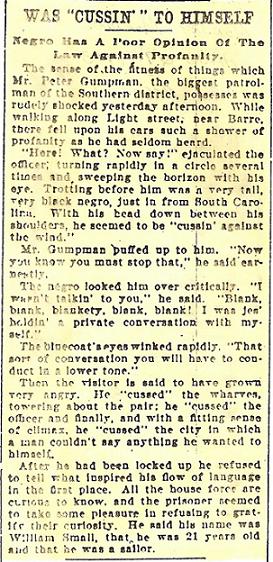
Gumpman, Peter H. .....................................August 26, 1886 ........S.H.

Hahn, Lewis....................................................April 15, 1876........S.W.

Hagan, Mark .................................................September 29, 1887...C.

Hall, T. B. Detective ..................................April 21, 1875 .............HQ.

Halstead, E. G. …………………………..June 7, 1880 …………..E.

Hamilton, A. J. ………………………….December 1, 1880 ……..E.

Hammack, Wm. E. ……………………..July 5, 1887 …………..N.E.

Hammond, J. M. .......................................February 26, 1880.....N.W.

Hanson, E. H.............................................April 10, 1886..............N.W.

Hardesty, James A. .................................April 25, 1881..................S.

Hardesty, Thomas J. ................................October 10,1887...........W.

Harman, L. W. ….........................................May 12, 1875............N.W.

Harvey, James Sergeant ..........................May 1, 1867..................C.

Hays, George W....................................September 15, 1865......N.W.

Headdington, I. B. ......................................December 9, 1886...N.W.

Healey, John J. ………………………......May 14, 1873 …………C.

Heath, George W. ………………………..July 19, 1878 ……….N.E.

Heiderman, Charles E...............................September 10, 1886.....S.

Heimiller, Herman .......................................September 25, 1877 ..S.

Henisler Samuel H. ….................................April 23, 1875..........N. E.

Henkel, Frederick..........................................October 27, 1884........E.

Henneman, J. H., Sergeant ........................June 8, 1876..............W.

Herfel, George W. ..........................................March 9, 1886.……...E.

Higgins, William F. ........................................March 19,1885 ..........C.

Higinbothm, J. B. .........................................January 20, 1887...N.W.

Hilderbrand, Henry Turnkey. ....................August 17, 1870.........E.

Hoffman. E. J., Sergeant ............................August 25, 1881........W.

Hogan, Michael ............................................April12, 1882...........N.W.

Hogan, Thomas F. Sergeant ....................April 7, 1874.............N. E

Hood, T. J. .................................................September 26, 1887.S. W.

Hook, Charles...........................................January 3, 1888..............C.

Hook, George ,W. .....................................April 12, 1886..................E.

Hooper, James A. .....................................April 10, 1886................W.

Horstman, Henry. ......................................November 2, 1884.......W.

Hosefrons, Lewis.......................................April 11, 1874...............W.

Houck, Samuel N ........................................May 15, 1885 .........N. W.

Howe, John...................................................October 4, 1871.....N. W.

Hoyle, George .............................................December 10, 1881.....C.

Hughes, Michael..........................................July 17,1884 ................S.

Hughes, M. J................................................December 26, 1884.....C.

Hughes, Terrence ......................................April 9, 1886.............N. E.

Hughes, Thomas J. ...................................January 10, 1887...N. W.

Hughes, Timothy.........................................April 21, 1881 .............W.

Hussey, Michael .........................................April 1, 1885 ................W.

Hutson, George W.......................................July 20, 1882................E.

Hyland. Francis ...........................................June 21, 1875 ........S. W.

Hymes, A. H. ...............................................April 30, 1867................C.J.

Jacobs, John................................................August 23, 1873 .........S.

Jaecksch, John H. ......................................January 3, 1885 ..........E.

James, Gilbert C. .........................................June 29, 1887 .......N. W.

Jamison, Andrew ........................................April 13, 1886 .............C.

Jarbo, C. W. ...................................................May 14, 1885..............W.

Jennings, Michael ........................................August 16, 1870 ........S.

Johnson, Charles E. ....................................Apri1 22, 1886.......N. E.

Johnson, John T. .........................................September 5, 1885....E.

Johnson, William R. Lieutenant ...............April 25, 1867..............E.

Jones, Francis W., Sergeant ......................May 7, 1867................E.

Jones, Henry C. ............................................July 12,1877...........N.E.

Jones, Joseph ..............................................February 2, 1869 ......W.

Jones, Leven ................................................April 10, 1886 .........N.E.

Junker, Adam ...............................................April 30, 1867..............S.

Junker, John ................................................July 30, 1873...............S.K.

Kabernagle, George W. ..............................June 10, 1886.............C.

Kalbfleisch, William Sergeant ...................December 6, 1882.....W.

Kane, C. J. ......................................................July 21, 1876..............C.

Kaufman, Andrew........…………..............November 12, 1879.....C.

Kayer, Philip................................................November 21, I878.......E.

Kehoe, Nicholas.........................................May 12,1881..................C.

Keller, George H..........................................April 30, 1868................C.

Kelly, Edward J...........................................December 26, 1884......E.

Kelly, James II.............................................December 8, 1884.......C.

Kelly, John...................................................June 8, 1876..................C.

Kelly, John T................................................March 3, 1882...............S.

Kelly, Patrick J. ..........................................December 5, 1883........C.

Kelly, Thomas ............................................October 24, 1887..........E.

Kelly, Thomas P..........................................May 15,1883.................C.

Kelly, William A. .........................................August 4, 1885..............C.

Keen, Samuel M. ........................................April 17, 1874...............W.

Kennedy, A. J. ............................................June 21, 1886...............W.

Kerr, John.....................................................May 7, 1867...................E.

Kessler, George ..........................................June 5, 1886.................S.

Kiessling, John.............................................April 21, 1881..............E.

Kiggins, James T. ........................................June 28, 1884..............E.

Kimmitt, Thomas ..........................................March 11, 1882 ..........S.

King, John R. .............................................December 1, 1885....S.W.

King, Samuel Turnkey .............................December 1, 1874....N. E.

Kirsch, Lewis Sergeant ............................April 15, 1870................C.

Kissner, George N.......................................April 10, 1886...............E.

Knight, Thomas Turnkev............................May 6, 1867.................S.

Knott, Corneliue L. Sergeant.....................May 1, 1867............N.W.

Kratz, John H. ..............................................May 15, 1885................E.

Krause, Henry .............................................December 9, 1881.......E.

L.

Langley, J. K. P., Sergeant .........................September 8, 1876....E.

Lannahan, Michael Sergeant ..................February 24,1879 ...S.W.

Lannan, John Deputy Marshal................October 20,1869.......HQ.

Latham, Charles L.......................................April 22, 1886...............C.

Lattier, Louis ………………………………May 8, 1885 ………N.W.

Lauer, Henry ………………………………August 8, 1878 …….E.

League, A. L. ………………………………April 22, 1886 ………C.

League, George Lieutenant ......................March 23, 1870............E.

Ledley, Jacob C. ...........................................May 7, 1884.................S.

Lehman, John................................................August 9, 1883......N. E.

Leilich, L. E. ....................................................June 3, 1879..........S.W.

Leitch, John V. …………………………….April 22, 1881 ……….C.

Leitz, J. A. ……………………………….......May 14, 1885 ……S.W.

Lemmon, William ………………………….March 31, 1870 ……S.

Leonard, Patrick ……………………………July 17, 1884 ………W.

Lerp, Theodore, ……………………………April 30, 1867 ………S.

Lewis, James T. .............................................May 6, 1881 ….…….C.

Little, R. T. ………………………………......April 30, 1885 ……S.W.

Loker, Alfred ………………………………..March 16, 1885 ……C.

Long, George ……………………………….June 16, 1876 ……..S.

Loudenslager, Thomas …………………...July 7, 1876 ……….S.

Loudenslager, William ………………….....May 29, 1872 ………S.

Lutts, William J. ..............................................April 2, 1883.……….C.

Lynch, John ………………………………....March 2, 1885 …….W.

McBride, Frank T. ..........................................January 24, 1884 .....C.

McCart, George O. ………………………….February 9, 1885 ….C.

McCauley, John S. ………………………....May 6, 1862 ………..C.

McClelland, David P. ……………………….May 1, 1871 ………..C.

McClelland, Isaac A. .................................September 2, 1887...N.E.

McClelland, J. A. .........................................September 3, l887.......S.

McCourt, Charles J. .....................................January 1,1886..........C.

McCroey, Thomas E. ....................................May, 1871..................C.

McDonald, James Turnkey ........................July 14, 1873.........N. E.

McDowell, William.........................................July 13, 1867............W.

McElroy, M. E. .......................... .....................October 4, 1884.....N.E.

McFaddon, John F. .......................................August 19, 1886.......C.

McFarland, J. W., Clerk..................................July 21,1886.........N.W.

McGee, Thomas D. Sergeant .......................February 18, 1878...S.

McGeeney, John M.........................................April 13, 1886 ..........C.

McGinn, Patrick ...............................................October 14, 1867.…E.

McGough, Patrick..........................................October 21, 1880..N.W.

McGovern, Joseph........................................May 15, 1885..............S.

McGraw, Thomas ..........................................February 28, 1883....C.

McGuire, Thomas........................................November 28, 1868....C.

McIntire, John A.........................................April 4, 1887..............N.W.

McIntyre, James........................................December 2, 1815........ C.

McKenna, Michael....................................June 27, 1881................ C.

McKew, Michael........................................December 9, 1874 .........S.

McKew, William H. ....................................July 23,1877...................S.

McLane, Charles M. ............................December 21, 1880..... N. W.

McMahon, P. J. .......................................April 11 1882.............. N. W.

McNally, John ...........................................August 6, 1884 ............. C.

McNeal, Michael ......................................June 15, 1868................. C.

NcNulty, James P ................................November 17, 1885..... N. E.

McPherson, John V...................................April 12, 1882...............W.

McShane, Charles.....................................August 25, 1887..…......C.

Magee, Edward V.....................................September 24, 1884.......C.

Magness, C. R.............................................April 9, 1886................. C.

Maguire, Edmund O. .................................June 26, 1886............... C.

Mainster, Jacob........................................June 19, 1863..................E.

Mainz, John................................................October 7, 1881............. S.

Malone, Daniel..........................................October 7, 1869............. C.

Manning, B Turnkey ...............................June 9, 1868................... C.

Manning, James.. ......................................April 11, 1882................W.

Marsden, James H................................December 30, 1874..... N.W.

Martenet, Charles F..............................August 4, 1883............. N. E.

Mason, W. A.............................................April 10, 1886.............. S.W.

Mauer, Max ……………………...............April 12, 1886.……….N.E.

Mayers, John H. …………………..….....June 13, 1884 …………S.

Medders, C. W. S..................................December 5, 1878........ N. W.

Meehan, Edward F., Sergeant .............August 25, 1881............. C.

Meehan, Edward L..................................August 19,1886.............. C.

Meekins, John D......................................June 16,1876...................S.

Melville, William ...................................May 5, 1879................... S. W.

Mersman, Charles F ...............................April 23, 1875..................C.

Mettee, Joseph.........................................March 15, 1880................C.

Middendorf, John....................................July 10,1872.....................E.

Miener, Alexander..................................September 8, 1881...........E.

Miles. George W. ………………………..April 25, 1879 ………….C.

Miller, E. H……………………………….April 9, 1886.…………N.W.

Mills, John C. …………………………March 26, 1881.………N.W.

Mills, Thomas W……………………….....May 27, 1870.…………C.

Mills, William H ........................................November 29, 1872........S.

Milroy, William A.....................................January 25, 1877.............C.

Minor, William B., Lieutenant..............August 22, 1874.......... S.W.

Miskelly, James F....................................March 3, 1869..................C.

Miskill, Michael ....................................….April 12, 1886.......….......C.

Misklmmon, Philip ........……................November 4, 1882............E.

Mitchell, H. H...............................................May 7,1867.....................C.

Mitchell, J...............................................September 7, 1871............W.

Mitchell, Joseph C. Detective ......Apri1 21, 1867.......................HQ.

Mittendorf, Henry Sergeant…......May 6, 1867...........................N.E.

Montague, Peter Sergeant …....January 12, 1872...................S.W.

Moog, James R. ………………….April 11, 1882 ……………..N.W.

Moore, Henry C. ………………….August 9, 1886 ……………N.E.

Moore, James M. …………………..July 17, 1884 ………………W.

Moore, John Moore. ………………January 6, 1887 ……………C.

Moore, Randolph I.. ...........................May 1, 1867...........................C.

Moran, Thomas...............................November 1, 1877...................S.

Morhiser, H. P., Sergeant .........September 7, 188l..................S. W.

Moylan, Patrick................................November 7, I878....................S.

Mullen, Peter B. ...............................October 19, 1886.................... C.

Murphy, Michael.............................March 3, 1879.......................S.W.

Murray, James C..........................December 22, 1884............... N.E.

Murray, John …………………….January 7, 1879 ………………S.

Myers, Charles H. ………………....April 11, 1882 ……………….C.

Myers, Samuel D. …………………June 12, 1885 ……………….C.N.

Nagle, Charles F. ………………….July 21, 1886 ………………..S.

Napler, Arthur …………………….January 15, 1885 ……………C.

Neary, Michael J. …………………October 15, 1877.……………C.

Neubeck, Frank ……………………June 3, 1881.………………..E.

Nevins, Joseph ……………………April 12, 1886.……………N.W.

Nicholson, Charles ……………….April 7, 1873.………………..W.

Nippard, James Sergeant ………..January 11, 1873.…………..C.

Nix, John …………………………....April 10, 1886.……………….E.

Nolan, Thomas Turnkey ………….May 27, 1869.………………W.

Norris, Charles Clerk ………………April 9, 1886.……………….S.

Norton, Patrick Turnkey …………..June 1, 1874.……………….S.O.

O’Brien, Giles J. …………………….March 25, 1875.…………….S.

O’Brien, Thomas…………………....May 28, 1871.……………….C.

O'Ferrall, Hugh.....................................June 2, 1879....................S.W.

O'Grady, John.......................................October 10, 1878.................S.

O'Keefe, Daniel.....................................October 2, 1871...................C.

O'Keefe, William ...................................March 12, 1885..............N. E.

O'Meara William ....................................March 1, 1873................N.W.

O'Neill, Frank..........................................April 7,1878........................W.

O’Neill, James…………………………November 24, 1874.…….C.

O’Neill, John F. ……………………….October 25, 1886.………..W.

O’Neill S. J. Detective ………………..June 22, 1875.…………H.Q.

Orr, Patrick F. ………………………….April 24, 1880 …………N.E.

Owens, Gwinn F. Clerk .........................April 9, 1886................S. W.

Owens, Henry F. ……………………….May 7, 1867.…………N.W.

Owings, Theodore …………………….January 17, 1884 ………S.P.

Paff, John J. ............................................May 7, 1867.......................E.

Parks, John A., Sergeant ....................May 1, 1867........................S.

Pasterfield Charles................................November 4, 1874.......N. E.

Pearson, William H.................................May 7, 1867.......................S.

Pennington, Augustine H.....................July 7, 1887.......................S.

Peregoy, George K.................................June 11, 1875.............N. W.

Perry, William H. .....................................November 18, 1875 ........S.

Pfister, Nicholas ……………………....October 20, 1880.……….S.

Pick, William A. ……………………….November 12, 1878.……..C.

Pierce, John ………………………......June 10, 1868.…………N.E.

Pierey, Jacob …………………...........August 20, 1881.……….N.E.

Pohler, Herman ………………….......June 11, 1883.…………….E.

Polton, Charles A.................................July 27, 1883......................W.

Pontier, John S., Detective ................April 2 , 1866....................HQ.

Poole, Henry, Sergeant ......................May 7, 1867.……................E.

Posey, John V. ......................................March 23, 1870..................C.

Potter, Charles B....................................September 19, 1881.…....E.

Powers, John ............... .........................May 15, 1872.…................C.

Price, J. E. ……………………...............June 21, 1886.…...........S.W.

Pumphrey, A. J. Detective …………..February 12, 1875.……H.Q.

Putsche, Frederick.................................October 18, 1875........N. W.

Pyles, Francis ……………………….....April 22, 1886.………..S.W.Q.

Quill, John H. ………………………….August 19, 1886.……...N.E.

Quinn, M. E. Sergeant ………………..April 30, 1867.………...N.W.R.

Rafferty, John...........................................April 10, 1886 ………….C.

Rauh, Adam G...........................................May 14, 1885...................E.

Reilly, John E. Detective ..…………….May 6, 1867 …………..HQ.

Reinhardt, Augustus …………….……May 31, 1876.…………...C.

Reinhardt, Charles. Sergeant...............December 2, 1871...........C.

Reth, John …………………………......September 29, 1884.……E.

Rever, Lewis G. ………………………February 7, 1887.……...N.E.

Reynolds, George W. ………………..April 14, 1885 …………….E.

Reynolds, Martin J................................December 27, 1886.……..S.

Reynolds, Michael J...... ..............….....December 20, 1887.....….C.

Reynolds, Thomas F.............................May 15, 1885................N.W.

Rider, William N., Turnkey…................April 9,1878.………..........W.

Riefner, William H ...................................July 3,1879.......................E.

Riley, John A.............................................September 20, 1878..…C.

Riley, Michael............................................September 1, 1870.……C.

Riley, Peter. Sergeant...............................April18,1873.…………..S.

Riorden, Michael........................................May 6, 1867...............S.W.

Roben, William ...........................................February 15, 1883....N.E.

Robey, W. W................................................April 4, 1884..............S.W.

Rochfort, Robert J. ...................................May 14, 1885 ……….....E.

Rochfort, Thomas C..................................August 11, 1875............E.

Roder, John E.............................................June 1, 1882..............N.E.

Rodgers, George........................................July 26, 1876.......…...N.E.

Rodgers, John ...........................................April 30, 1867............N. E.

Rose, Charles....... .....................................April 16, 1885.................E.

Roth, John...................................................October 27, 1879.…….E.

Rourke, James .......................................September 15, 1870...N.W.

Rowe, William B. Sergeant …………..April 29, 1867 …………...C.

Roycroft, J. Andrew Sergeant ………October 27, 1871.……….E.

Ruckle, James S. ……………………..September 2, 1884.……...C.

Russell, W. T., Sergeant .......................September 29, 1884....S.W.

Ruth, P. W. ………..................................December 15, 1882 ….S.W.

Ryan, A. A. Turnkey ……………….....April 22, 1881 ……………C.

Ryan, Ambrose A. Sergeant ………..December 21, 1875 …….C.

Ryan, James F. ……………………….October 14, 1884 …….N.W.

Ryan, Martin J. ……………………….April 22, 1886 …………….S.

Ryan Peter …………………………....April 22, 1886 …………….S.

Ryan, Timothy ………………….........August 16, 1880 ………….S.S.

Sauer, Andrew ……………………….May 1, 1867 ……………….S.

Santry, John J. ….................................April 12, 1886................N. W.

Saunders, J. R. Sergeant ...................July 30, 1868..................N.W.

Scarborough, William T.......................June 23,1886.…………….S.

Schafer, George W. Sergeant ………March 16,1870…………N.E.

Schaffer, William B. …………………..December 16, 1884 …..N.E.

Scherer, F. H. ………………………….November 10, 1871 ….N.E.

Schieve, William J. ……………………May 6, 1887 ………….......C.

Schimp, Martin P. Sergeant …………September 12, 1868 .…...C.

Schleigh, John …………………….......April 10, 1882 …………...C.

Schleigh, Edward Sergeant …………February 10, 1881 ………E.

Schmidt, G. C. .........................................April 22, 1886...................W.

Schneider, John E..................................March 11, 1882.................S.

Shoemack, Henry Sergeant …………November 29, 1876 ……C.

Schulte, Ernest ………………………...April 12, 1886 …………...C.

Schulte, Frederick ……………………..March 5, 1885 …………..C.

Schultz, Edward, Sergeant ...................August 17, 1880...............S.

Schuster. John S.....................................April 12, 1886...................C.

Scott,F. H., Lieutenant ............................July 6, 1877....................W.

Scott, William G., Sergeant .....................December 2,1876..........C.

Scully, Michael J. ……………………….April 13, 1885 ………N.E.

Seibold, Frederick ………………………August 11, 1886 ………C.

Seibold, George W., Detective ...............July 28, 1863..............H.Q.

Scipp, Frederick ………………………….July 11, 1879 …………S.

Seltzer, George W. …………………….November 6, 1886...... N.W.

Selvage, Charles N................................December 5, 1878........N. E.

Shannahan, J. E.....................................May 1, 1883...................N.W.

Sheppard, E. T........................................January 8, 1883.......….S.W.

Shettle, Daniel, Lieutenant...................August 3, 1867.….......N. E.

Shoemaker, Charles A. Sergeant ......January 17, 1880.........S.W.

Short, Robert F. ......................................March 1, 1884...................S.

Shultz, J. A. G., Sergeant .......................October 4, 1870..........N.W.

Sinclair, Charles H. ..................................June 13, 1887................W.

Sindall, George W. …................................June 16, 1876.................S.

Singer, J. F...................................................May 14, 1884...……….W.

Slaysman, Alexander................................May 1, 1867....………...C.

Slinkman, John H. ....................................June 1, 1874.……….....W.

Slunt, Charles ……………………………August 6, 1873.……N.W.

Smeak, William …………………………..April 2, 1887 ………….W.

Smith, C. F. ………………………………January 15, 1886 …….W.

Smith, George A........................................February 3, 1879.……..C.

Smith, Henry C. Sergeant ……………...July 16, 1874 ………S.W.

Smith, Jacob ……………………………..April 15, 1868.……...S.W.

Smith, James E. ……………………….....April 10, 1885 ………...C.

Smith, Joseph.........…….............................October 6, 1883............E.

Smith, Peter..................................................July 6, 1867...................E.

Smith, William H. ………………………....April 12, 1886 ………...C.

Smith, W. M. D. ……………………………May 10, 1885 ………...C.

Snyder, John.............................................November 10, 1885...N.E.

Sommers, August....................................August 5, 1884................E.

Spellman, John J. ………………………April 21, 1881 ……….N.E.

Spittel, Lewis …………………………....April 26, 1886 ……….....W.

Sporrier, Matthew ………………………April 10, 1886.……….N.E.

Stack, Garrett Turnkey ………………...March 18, 1869 …….N.W.

Stack, Joseph A........................................September 6, 1883....N.W.

Stallings, John ……………………….....September 17, 1874 …..S.

Starling, Frank ………………………….June 7, 1884 ………...S.W.

Steindle, John ………………………….May 27, 1887 …………...E.

Stevenson, John ………………………April 30, 1867 ………..N.E.

Stiner, B. F. ……………………………..August 27, 1886 …….S.W.

Street, David F. ………………………..September 29, 1885 ....N.E.

Street, Shadrach ………………….......April 10, 1882 …………N.E.

Streib, Henry Sergeant ………………June 7, 1876 …………….S.

Strodman, Charles …………………...October 30, 1885 ………..S.

Strout, George T. ……………………..April 10, 1882 ……………C.

Sullivan, P. …………………………….April 14, 1881 …………N.W.

Sunstrom, Calvin  Lieutenant ……...May 2, 1870 ………………S.

Swartz, Frederick ……………………..December 24, 1868 ……..S.

Sweitzer, John ………………………..April 24, 1875 …………….S.

Sylvester, Daniel ……………………..October 15, 1878 ………...E.T.

Tarr, R. S...................................................May 2, 1885..................S.W.

Taylor, James W. W. ..............................February 7, 1876.............E.

Taylor, Owen M. ......................................April 10, 1886........…...N.E.

Thompson, E. A. ……………………….February 3, 1887 ……N.E.

Thompson, J. J. ………………………..May 7, 1867 …………..N.E.

Thornton, Joseph ……………………..February 26, 1883.….N.W.

Tienken, George H. …………………...October 16, 1879.…….N.E.

Tierney, P. E. Sergeant ………………February 26, 1880.……..W.

Tighe, .John.............................................May 13, 1872.…….......N.W.

Tinsley, Charles E. ……………….......September 23, 1875.....N.W.

Tipton, Alfred…………………………..May 7, 1867.…………..N.W.

Todd, Edward D. ………........................June 21, 1886..………….W.

Toner, Francis J., Sergeant .................May 12, 1871.………........C.

Toner, Hugh.............................................July 6, 1881.......................C.

Townsend, Harry G. ..............................July 6,1887...................N.W.

Townsend, Joseph.................................February 2, 1875.............S.

Tracey, James S......................................March 1, 1867...................C.

Tracey, Thomas .....................................September 25, 1882.……E.

Travers, H. Clay …….............................July 17, 1884.....................S.

Tress, Washington ……………………April 30, 1867.…………...C.

Tritel, Jeremiah W. ……………………September 14, 1868.……C.

Trott, Joseph E. ……………….............April 22, 1886.……………S.

Tuohy, John............................................December 21, 1887.…….C.V.

Vansant, A. W.........................................June 24, 1884.…….......S.W.

Vaughan, Benjamin J. ….....................July 26, 1879.…….....S.W

Wagner, George L. …………………...May 6, 1867.……………...W.

Wagner, Henry………………………..October 20, 1877.……...S.W.

Wallace, William E................................April 25, 1867.......................S.

Wallas, John..........................................February 26, 1880..............S.

Walsh, James J. ……….......................April 12, 1886.................N.W.

Walsh, Maurice D. …………………....May 14, 1885.…………….E.

Walsh, Michael Turnkey…………….July 27, 1868.…………..S.W.

Walsh, W. J. ...........................................August 8, 1881..................W.

Walter, John A. .....................................July 17, 1876.…..................S.

Ward, Bernard J. Sergeant ………....June 20, 1883.…………….S.

Ward, John……………………………November 6, 1874.……….E.

Ward, William H. ...................................April 27, 1867......................S.

Warfield, William L. ..............................Deccmber 14, 1887........N.E.

Warnsman, William F. H. ……………August 23, 1887.…………C.

Watkins, M. F. ………………...............July 15, 1881.………….N.W.

Watkins, William McK., Lieutenant....September 12, 1872....N.W.

Watson, Charles F. ..............................December 16, 1887..........W.

Weaver, J. H. ……………….................November 27, 1875.…….W.

Webster, A. J. ……………..................May 15, 1885 ………...…N.E.

Welch Edward R. Clerk ...………….April 9, 1886.……………….W.

Welch, John..........................................April 9, 1886.........................C.

Wellener, B. S., Jr., Sergeant ...........April 21, 1881....................N.E.

Wenzel, H. V. ………………………...January 21, 1887.………N.W.

Wessels, L. B., Sergeant …………..April 8, 1874.…………….N.W.

Whalen, P. Sergeant ………………..October 15, 1877.………...W.

Whitley, Joseph……………...............May 12, 1868.……………...C.

Whittle, William H. …..…………........July 20, 1883.………………C.

Weist, Jacob………………………….June 17, 1885.……………..E.

Wilderson, R. R. ……………………..July 16, 1887.…………...N.E.

Wigley Edward O. ……………...........January 16, 1886.………....C.

Williams, George T. …………………October 20, 1884.…………S.

Williamson, C. H., Sergeant...............April 8, 1874....................S.W.

Wilson, John F .....................................July 22, 1885.……..............C.

Wilson, S. J. D........................................April 10, 1882.……............C.

Wiseman, James H..............................April12, 1886.…...............N.E.

Witters, Thomas D. .............................April 28, 1867......................C.

Wolf, August ........................................Deccmber 15, 1881....……S.

Wolf, Henry, Turnkey .........................May 7, 1867...........…...........E.

Worley, Charles R. .............................June 17, 1886.. ...............N.W.

Wortman, Charles...............................December 9,1884............S.W.

Wright, George H. ...............................May 6, 1874..........................C.

Wright, John W. .................................January 2, 1872....................C.

Wright, John W. .................................April12,1886.…................N. W.Y.

York, Benjamin W., Sergeant.........May 13, 1884............……...N.E.Z.

Zapp, Jacob .......................................August 27, 1872.....................S.

Zehner, Lewis...................................April 19, 1881.......................N.E.

Zerwick, J. Frederick .......................January 2, 1875......................S.

Zulauf, L. B.........................................April 22, 1886......................N.E.

                                     RETIRED LIST

Date of Appointment     Date of Retirement        District

Burkins, William...........May 1,1867 ...........April 22,1886.............W.

Byrne, Michael.............May 6,1867 ...........April 22,1886..............C.

Crosby, Thomas H. ...July 14,1869.........August 19,1886..........C.

French, C. Dorsey......January 1,1879.....April 22,1886................S.

Graham, Benj. F., Sgt. ....April 30,1868....April 21,1886...............E.

Helm, Joseph H. .........June 27,1861........May 6,1867..................C.

Hickley, Robert P. ......May 6,1867 ...........April 22,1886............…S.

Lepson, Daniel, Captain...April 23,1867....October 14,1886...S.W.

McGee, J. William .......December 6,1866...April 22,1886............W.

Mantle, William.................April 30,1867......April 22,1886.........N.W.

Reed, Joseph H. ..............May 24,1869......April 22,1886.............W.

Roberts, Washington......May 2,1868........April 22,1886..............C.

Russel, William H. ...........Apri1 27,1867....April 25,1887..........S.W.

Sindall, William M. ...........October 15,1870 ..October 14,1886...W.

Sinskey, John...................September 30,1873...April 22,1886.....E.

Swearer, George..............May 6,1867...........August 19, 1886..N.E.

Williams, William......….....September 24,1869...April 22,1886....S.

Wright, William O., Lieut.....May 7,1867.....November 24,1886...S.

Zimmermann, F. ....January 13,1868.........April 22,1886.........S.W.

SUMMARY

Marshal…….....…….....1

Deputy-Marshal……...1

Lieutenants...........….14

Sergeants ..................72

Detectives..................10

Patrolmen ............... 575

Turnkeys...................14

Total.........................695

Devider
BPD Southern Dist. Events

Entries made in a SD ledger book of 1848

Feb. 9, 1848 Officer Dreck lost espantoon, rattle and badge

Sept.20, 1848

Night watchman was found drunk lost hat & badge.

Dec.24, 1848

Watchman John Rose was shot.

March 6, 1848

1st. Mention of watchmen returning badges to watch

house after their watch was over. Prior entries only

mention return of tikes & rattles.

July 5, 1848

Threat to shoot a Night Watchman was made.

Aug. 26,1848

Watchman saves 2 horses

Entry at the bottom of   each day

The watch went their established rounds at the hours appointed. The Officers patrolled the principle streets between the hours of Nine and Five O’clock and found all well. The tikes, rattles and badges were returned safe to the watch house. The watch word for the night was ________ Night

(the day of the week)

Stephen H. Manly

Captain


1 black devider 800 8 72

POLICE INFORMATION

If you have copies of: your Baltimore Police Department Class Photo, Pictures of our Officers, Vehicles, Equipment, Newspaper Articles relating to our department and or officers, Old Departmental Newsletters, Lookouts, Wanted Posters, and or Brochures. Information on Deceased Officers and anything that may help Preserve the History and Proud Traditions of this agency. Please contact Retired Detective Kenny Driscoll.

This email address is being protected from spambots. You need JavaScript enabled to view it.

Devider color with motto

NOTICE

How to Dispose of Old Police Items

Please contact Det. Ret. Kenny Driscoll if you have any pictures of you or your family members and wish them remembered here on this tribute site to Honor the fine men and women who have served with Honor and Distinction at the Baltimore Police Department. Anyone with information, photographs, memorabilia, or other "Baltimore City Police" items can contact Ret. Det. Kenny Driscoll at This email address is being protected from spambots. You need JavaScript enabled to view it. follow us on Twitter @BaltoPoliceHist or like us on Facebook or mail pics to 8138 Dundalk Ave. Baltimore Md. 21222


Copyright © 2002 Baltimore City Police History - Ret Det Kenny Driscoll 

Restraints

Restraints

Baltimore Police Handcuffs Restraints

Darley cuffs marked
W.S. Darley Receipt courtesy Ray Wheatley
1944 Receipt for a set of Peerless Handcuffs

Catching criminals is only half the battle, restraining them can be several more battles throughout the course of effectively prosecuting them. Police have the odd job of fighting a man but only to a point which is necessary, the man he fights is trying to kill him, but the officer is only allowed to fight to a point which necessary to effect the arrest, after which he must, switch roles, offer first aid for injuries, then restrain and protect. Often a suspect is wanted by the public, so officers have to get the suspect safely before the courts. Many don’t realize jails and prisons are made as much to protect the prisoner from society and them to protect society from that prisoner. It used to be that jails were for punishment, a sort of adult timeout… then they became all about educating a man, teaching him the wrongs of his former self. They hope he will come out a better man. To get to that place and along the way we had restraints. This is a brief history of those restraints. 

SW Cuffs

Baltimore Smith and Wesson Model 90 Handcuffs
SW Cuffs 2

Here's a close-up of the marking 

Why Do we Cuff all Prisoners Today
In Part Because of Cases Like this

On 19 Nov 1928 Captain John Carey night commander of police, received word that a man answering the description of a man wanted in New York for armed Robberies and the shooting of a New York City Police officer was in a Baltimore Street hotel. Three detectives were detailed to go to the location and bring the suspect in; Captain Carey told them to bring the suspect to police headquarters for questioning. The detectives tried up the location and found the person that was being reported but felt he was not the suspect wanted, by NYPD. Captain Carey said he told the three officers sent earlier of the dangers of this suspect, and let them know he was a dangerous and desperate character. While the Detectives didn’t think the guy they received a tip on was their suspect they still brought him in for questioning where they cleared him and released him shortly after.

Later the same morning Detective Sergeant Frederick W. Carroll received a phoned in a tip of a suspect at a downtown hotel, he didn’t have any info on the suspect, what he was wanted for, or even that three Detectives had already gone out on this call. All he had was that police were there earlier looking for a suspect, and that the suspect was there now. Detective Sergeant Carroll then left the station to investigate this complaint; he didn’t know it was guys out of his own unit/division that went. We don’t know who phoned in the tip, it may have been the person police brought in, and then released, or a hotel employee; we’ll never know. Likewise, we’ll never know why, Detective Sergeant Carroll didn’t look into it any further, or take back-up. He just took the name the caller gave him, grabbed a set of keys, and went alone… While at the hotel he located the suspect and arrested him. The two proceeded from the hotel to as far as Fayette Street, and Fallsway when the suspect pulled a pistol and demanded that Detective Sergeant Carroll put his hands up. Detective Sergeant Elmer O’Grady and Detective Joseph Carroll, who was looking out a window of the police building, ran out to assist Detective Sergeant Carroll, only to be met by the gunman’s fire. Detective Sergeant Carroll died a few minutes after being taken to the hospital. Oh, Grady and Joseph Carroll were reported as doing well. 

Several things that should be known about the Baltimore Police 1928
1st - We didn’t cuff people in public
2nd - We didn’t search people in public, nor did we stand by and watch as other searched people in public. To that Commissioner Charles D. Gaither read the following from the rule book to the media:

Members of the force shall not search, or act as a witness to the searching of any person in any place other than the station house, or headquarters unless such search is made for dangerous or deadly weapons suspected to be upon the person of the prisoner.”

In this case Det. Sgt. F Carroll had no info on the suspect and was within the rules of the Baltimore Police Department. It is because of cases like this, that we have the rules we have today, cases like this that let us handcuff people that are only suspected of a crime. And cases like this that let us search incident to arrest. This happened in 1928, things were so different, without radios on every shoulder, or hip like today, information wasn’t as freely distributed as it is today.

As his brothers and sisters of the Baltimore Police Department we will not let him be forgotten, His service Honored the City of Baltimore, and the Baltimore Police Department may he rest in peace, and may God bless him. 

The suspect in this case also died of his injuries, but not before admitting to police that he was the suspect wanted in New York for robberies and Shootings, of two police officers in the NYPD


A Brief History of Handcuffs

since being used, in one form or another for centuries, they have had a variety of names. Manacles, Nippers, Thumb-cuffs, Grips, Hooks, Claws, Dowlers, Shackles, Handcuffs, often shortened to “Cuffs” are just a few of the names used. As for styles… we have the Iron claw originally put out by Argus, later sold under the name Pee Jay, then there is the Pistol Grip, A Policeman’s Hook, Harvey Chain Grip, a simple leather strap with a wooden turned handled used like a leash, to hogtie, the suspect twisting his/her arm behind their back and transport (normally walk them to a call box to wait for a wagon, or before that to walk them to the station. Over the years, there have been many styles of these mechanisms used primarily as restraints. What other uses than restraints, you wonder. Well, entertainment Houdini? His use of handcuffs was to escape from – not be restrained by - handcuffs, while he mesmerized crowds of spectators. And, in France in the 1950’s, the single locking La Pegy handcuff was thought to be a fashion statement. France fashion, Go figure! And let’s not forget those that used them as a sexual implement, (Ok let’s forget them… ) so much for fashion and style and such; let’s get down to the real deal/appeal about handcuffs.

From convicts to captives, to conjurers, to perverts, handcuffs have been used to detain, constrain, and entertain since they have been recorded in history.

The poet Publius Vergilius Maro, known in English as Virgil, recounts the legend of the

fitting of the first handcuffs on the mythical god Proteus. Possessing the gift of prophecy

but not the gift of giving, Proteus selfishly kept his knowledge to himself. Aristaeus knew

that the only thing that would compel Proteus to share his knowledge was to bind him

and not let go. This binding or cuffing is the first recorded (though mythical) use of what

we now call handcuffs.

But, there is more to the story of handcuffs. In the 4th century B.C., Carthaginians lugged

chariots full of handcuffs with them in their anticipation of conquering the Greeks.

During the 15th and 16th centuries, the words swivel manacle, and shackbold were used to

describe handcuffs. The word eventually evolved from the Anglo-Saxon “hand cop”,

meaning that which “cops” or “catches”, to the version of the word we use today –

handcuff.

Because the use of and need for restraining people developed before working metals were discovered, the first handcuffs were actually made from strips of animal hide, rope

made from reeds and vines was the updated method and material employed to confine

other human beings and prevent escape. As time progressed, so did human beings’ ability to make stronger, reusable hand cops/cuffs. This ability to make stronger handcuffs was introduced, along with the invention of locks, in the Bronze Age. During the Iron Age, a more sophisticated workmanship was forged. However, most handcuffs were ‘one size fits all’ and caused more pain for the bigger boned detainee and potential freedom for the small-wristed prisoner. They were simple metal rings that locked in place with no room for adjustment to the size of the captive’s wrists. That is until 1862 when there were major changes to handcuffs when inventor W.V. Adams patented a design for handcuffs that had adjustable ratchets. In 1865, John Tower, who

started one of the most successful American handcuff companies, used Adams’ design to

manufacturer handcuffs up until WWII. Now, there are literally hundreds of types of handcuffs. Some bought for collecting only, and some made to accommodate law enforcers in their need for swift and secure handling of disorderly crowds and individuals. For the swift securing of the unruly, Plasti-Cuffs are often used; they are flexible restraints that resemble the plastic ties used to secure cable lines in the field these are known as “Flex-cuffs”. With Universal Precautions the outlook of the day, Plasti-Cuffs help prevent the spread of disease, as they are disposable. They are also cheaper than the traditional metal restraints used by law enforcement, as well as easier to carry. (I should say they are said to be easier to carry, these used to be quite cumbersome, on raids guys would put a rack of these on their belt keeper and go in looking like a lineman.

So, the handcuff has evolved from myth to leather, to twine, to metal mechanism most popular throughout recent history back to a disposable one time use flexible, “Flex-cuffs”. All the while preserving the original uses – to constrain, detain and even entertain.

References –

Handcuffs.org

Yahoo.com

The rest is history.com -Article by J. Parker Adair

Handcuffs by Inspector Maurice Moser.


250px Hinged Handcuffs Rear Back To BackStyles

Handcuffs which were worn during trials by the accused in the assassination of President Lincoln.
170px Handcuffs Lincoln assassination

There are three main types of contemporary metal handcuffs: chain (cuffs are held together by a short chain), hinged (since hinged handcuffs permit less movement than a chain-cuff, they are generally considered to be more secure), and rigid solid bar handcuffs. While bulkier to carry, rigid handcuffs permit several variations in cuffing. Hiatts Speed-cuffs are rigid handcuffs used by most police forces in the United Kingdom. Both rigid and hinged cuffs can be used one-handed to apply pain-compliance/control techniques that are not workable with the chain type of cuff. Various accessories are available to improve the security or increase the rigidity of handcuffs, including boxes that fit over the chain or hinge and can themselves be locked with a padlock.

In 1933 the Royal Canadian Mounted Police used a type called "Mitten Handcuffs" to prevent criminals from being able to grab an object like the officer's gun. While used by some in law enforcement it was never popular.

Handcuffs may be manufactured from various metals, including carbon steel, stainless steel, and aluminum, or from synthetic polymers.

Sometimes two pairs of handcuffs are needed to restrain a person with an exceptionally large waistline because the hands cannot be brought close enough together; in this case, one cuff on one pair of handcuffs is handcuffed to one of the cuffs on the other pair, and then the remaining open handcuff on each pair is applied to the person's wrists. Oversized handcuffs are available from a number of manufacturers.

The National Museum of Australia has a number of handcuffs in its collection dating from the late 19th and early 20th centuries. These include 'T'-type 'Come Along', 'D'-type and 'Figure-8' handcuffs.

220px Handcuffs01 2003 06 02220px Lips handboeien220px Hiatt104Darby

Double Locks

Handcuffs with double locks have a detente which when engaged stops the cuff from ratcheting tighter to prevent the wearer from tightening them. Tightening could be intentional or by struggling; if tightened, the handcuffs may cause nerve damage or loss of circulation. Also, some wearers could tighten the cuffs to attempt an escape by having the officer loosen the cuffs and attempting to escape while the cuffs are loose. Double locks also make picking the locks more difficult.

There exist three kinds of double locks as described in a Smith & Wesson brochure:

Lever lock: Movement of a lever on the cuff causes the detente to move into a position that locks the bolt. No tool is required to double lock this type of cuff.

Push pin lock: A small peg on the key is inserted end-wise into a hole to engage the detente.

Slot lock: These also are actuated with a peg, but in this case, it is inserted into a slot and moved sideways to engage the detente.

Double locks are generally disengaged by inserting the key and rotating it in the opposite direction from that used to unlock the cuff.

RNC 109

Plastic handcuffs

Plastic restraints, known as wrist ties, riot cuffs, plasti-cuffs, flex-cuffs, flex-cuffs, tri-fold cuffs, zap straps, zip-cuffs, or zip-strips, are lightweight, disposable plastic strips resembling electrical cable ties. They can be carried in large quantities by soldiers and police and are therefore well-suited for situations where many may be needed, such as during large-scale protests and riots. In recent years, airlines have begun to carry plastic handcuffs as a way to restrain disruptive passengers. Disposable restraints could be considered to be cost-inefficient; they cannot be loosened and must be cut off to permit a restrained subject to be fingerprinted, or to attend to bodily functions. It is not unheard of for a single subject to receiving five or more sets of disposable restraints in his or her first few hours in custody. However, aforementioned usage means that cheap handcuffs are available in situations where steel ones would normally lay unused for long times. Recent products have been introduced that serve to address this concern, including disposable plastic restraints that can be opened or loosened with a key; more expensive than conventional plastic restraints, they can only be used a very limited number of times, and are not as strong as conventional disposable restraints, let alone modern metal handcuffs. In addition, plastic restraints are believed by many to be more likely to inflict nerve or soft-tissue damage to the wearer than metal handcuffs.

220px Standard legirons taiwan01

Leg-cuffs (leg-irons)

Standard type leg-cuffs (leg-irons) made in Taiwan

On occasions when a suspect exhibits extremely aggressive behavior, leg irons may be used as well; sometimes the chain connecting the leg irons to one another is looped around the chain of the handcuffs, and then the leg irons are applied, resulting in the person being "hog-tied". In a few rare cases, hog-tied persons lying on their stomachs have died from positional asphyxia, making the practice highly controversial, and leading to its being severely restricted, or even completely banned, in many localities.

Universal handcuff key

220px CuffKey

Keys

Most modern handcuffs in Canada, the United States, the United Kingdom and Latin America can be opened with the same standard universal handcuff key. This allows for easier transport of prisoners and keeps one out of trouble if one loses one's keys. However, there are handcuff makers who use keys based on different standards. Maximum security handcuffs require special keys. Handcuff keys usually do not work with thumb cuffs. The Cuff Lock handcuff key padlock uses this same standard key.

In addition to the Universal handcuff key, a few modified designs exist, including a key that has been molded to fit behind an officer's badge (colloquially known as "The New York Tuning Fork" (U.S Patent 607,305).

Hand Positioning

220px 450px Thumbcuffs Bondage Model Ina

Old Handcuffs

In the past, police officers typically handcuffed an arrested person with his or her hands in front, but since approximately the mid-1960s behind-the-back handcuffing has been the standard. The vast majority of police academies in the United States today also teach their recruits to apply handcuffs so that the palms of the suspect's hands face outward after the handcuffs are applied. The Jacksonville, Florida Police Department, the Los Angeles County Sheriff's Department, and others are notable exceptions, as they favor palms-together handcuffing. This helps prevent radial neuropathy or handcuff neuropathy during extended periods of restraint. Suspects are handcuffed with the keyholes facing up (away from the hands) to make it difficult to open them even with a key or improvised lock-pick.

Hinged handcuffs applied behind the back, with palms facing outwards.

Because a person's hands are used in breaking falls, being handcuffed introduces a significant risk of injury if the prisoner trips or stumbles, in addition to injuries sustained from overly tight handcuffs causing Handcuff Neuropathy. Police officers having custody of the person need to be ready to catch a stumbling prisoner.

As soon as restraints go on, the officer has full liability. The risk of the prisoner losing balance is higher if the hands are handcuffed behind the back than if they are handcuffed in front; however, the risk of using fisted hands together as a weapon increases with hands in front.

Some prisoners being transported from custody to outside locations, for appearances at court, to medical facilities, etc., will wear handcuffs augmented with a belly chain. In this type of arrangement a metal, leather, or canvas belt is attached to the waist, sometimes with a locking mechanism. The handcuffs are secured to the belly chain and the prisoner's hands are kept at waist level. This allows a relative degree of comfort for the prisoner during prolonged internment in the securing device while providing a greater degree of restriction to movement than simply placing the handcuffs on the wrists in the front.

Miscellaneous

220px Aa tattonpark2010 handcuffs

Display of old handcuffs, Tatton Park Flower Show, 2010

In Japan, if someone is photographed or filmed while handcuffed, their hands have to be pixelated if it is used on TV or in the newspapers. This is because Kazuyoshi Miura who had been arrested brought a successful case to court arguing that being pictured in handcuffs implied guilt, and had prejudiced the trial. Similarly, in Hong Kong, people being arrested and led away in handcuffs are usually given the chance by the policemen to have their heads covered by a black cloth bag.

Police handcuffs are sometimes used in sexual bondage and BDSM activities. This is potentially unsafe, because they were not designed for this purpose, and their use can result in nerve injury (Handcuff Neuropathy) or other tissue damage. Bondage cuffs were designed specifically for this application. They were designed using the same model of soft restraints used on psychiatric patients because they can be worn for long periods of time. Many such models can be fastened shut with padlocks.

Legcuffs
340px Fetters leg irons photomodel InaLeg cuffs in use
Leg cuffsshacklesfootcuffsfetters or leg irons are a kind of physical restraint used on the feet or ankles to allow walking but prevent running and kicking. They made the leg irons restrict running and kicking so that the prisoners could not fight back. The term "fetter" shares a root with the word "foot".

With respect to humans, typically only prisoners, bondage fetishists, and African American slaves while enslaved wore shackles. Leg shackles are used for chain gangs to keep them together. 

220px Chain Gang Street Sweepers 1909

Chain Gang Street Sweepers, 1909

A shackled animal is typically either a dangerous animal or one prone to escape. Metaphorically, a fetter may be anything that restricts or restrains in any way, hence the word "unfettered".

History

240px Cup lock shackle01 1999 august

Cup lock shackle with no built-in lock

The earliest fetters found in archaeological excavations date from the prehistoric age and are mostly of the puzzle lock type. Fetters are also referenced in ancient times in the Bible.

In the Scriptures the Hebrew word necho′sheth, usually meaning “copper,” is frequently translated “fetters of copper” or “copper fetters,” because fetters were often made of copper or bronze, although wood and iron were also employed. (2Sa 3:34; 2Ki 25:7) In the British Museum, there is a pair of bronze fetters from Nineveh (the capital city of ancient Assyria) in the form of a bar with a ring at each end.

Roman times already see a variety of restraint types. Some early versions of cup lock shackles can already be found. These were widely used in medieval times but their use declined when mass production made the manufacture of locks built into restraints affordable.

Simple fetter types continue to be used like puzzle lock shackles as the typical slave iron or irons riveted shut for prisoners being transported to overseas prison camps.

220px Standard legirons taiwan01

Standard type leg irons made in Taiwan

The first built-in locks often were of a simple screw-type but soon developed into the "Darby" type. In Europe, these continued to be used into the middle of the 20th century, whereas in the US from the late 19th century onward many new designs were invented and produced before handcuffs and leg irons of the Peerless type became the standard several decades ago.

Controversial use

Heavy leg irons from China, including a metal plate to protect the keyhole from collecting dust or being tampered with

In comparison to handcuffs, the wearing of leg irons may be found less restrictive. Thus the prison authorities in several countries deem their long-term use acceptable. In order to avoid condoning this disputed practice the countries of the European Union have banned exporting leg irons into non-EU countries. The countries that continue to make prisoners wear fetters long term now tend to resort to manufacturing their own restraints.
Plastic handcuffs
250px Policeman carrying plasticuffs

Policeman Carrying Plastic Handcuffs


Plastic handcuffs (also called PlastiCuffs or Flexi Cuffs or Double Cuffs) are a form of physical restraint for the hands, using plastic straps. They function as handcuffs but are cheaper and easier to carry than metal handcuffs; they cannot be reused.

The traditional form of plastic handcuffs are cable ties, either two interlocking straps, or a single cable tie around both wrists. More recently, plastics-manufacturing companies have started to produce special devices comprising two interconnected straps as one item. These are generally injection molded nylon items, selling for tens of cents each. The low cost and light weight of plastic handcuffs have made them popular with police and military forces when they anticipate a large number of arrests, as in riot control or demonstrations. An advantage of disposable restraints is avoidance of transmission of communicable disease; metal handcuffs can spread disease through reuse (from blood or other bodily fluids that may not have been cleaned off the cuffs), disposable restraints are not used on multiple subjects.

If not applied correctly, plastic handcuffs are more uncomfortable than conventional handcuffs for the person being restrained. More care and training are required for the person applying them in order to avoid making them too tight. Some models cannot be double-locked, making it possible for the cuffs to be further tightened after initial application, restricting blood flow to the hands and causing injury to the subject. Another risk of disposable restraints is that a subject of great physical strength and/or under the influence of drugs may be able to break free from them with enough effort. They are also vulnerable to being cut with wire cutters or melted with a cigarette lighter.

Various innovations on the plastic handcuff theme have been developed, including models which can be released using a regular handcuff key, and extremely lightweight restraints made from nylon cord, using a plastic device to hold the cord tight.


ironclawiron claw1

 reatraints.jpg.w300h223

1146943 10201116011525888 1906970349 oLeather Nipper/Come Along

1 black devider 800 8 72


POLICE INFORMATION

If you have copies of: your Baltimore Police Department class photo; pictures of our officers, vehicles, and equipment; newspaper articles relating to our department and/or officers; old departmental newsletters; lookouts; wanted posters; or brochures. Information on deceased officers and anything that may help preserve the history and proud traditions of this agency. Please contact retired detective Kenny Driscoll.

This email address is being protected from spambots. You need JavaScript enabled to view it.

Devider color with motto

NOTICE

How to Dispose of Old Police Items

Please contact Det. Ret. Kenny Driscoll if you have any pictures of you or your family members and wish them remembered here on this tribute site to honor the fine men and women who have served with honor and distinction at the Baltimore Police Department. Anyone with information, photographs, memorabilia, or other "Baltimore City Police" items can contact Ret. Det. Kenny Driscoll at This email address is being protected from spambots. You need JavaScript enabled to view it. follow us on Twitter @BaltoPoliceHist or like us on Facebook or mail pics to 8138 Dundalk Ave., Baltimore, Md. 21222


Copyright © 2002 Baltimore City Police History - Ret Det Kenny Driscoll 

Motors

Motors

The Baltimore Police Department's Motor's Unit was formed on 29 May 1914 with 5 Indian twin cylinder motorcycles. Their main duty was to chase down speeding horse-drawn vehicles but that quickly changed with the growing number of automobiles.  The unit has been in continuous operation since 1914.  In the beginning, they worked out of the Districts but in the 1930's they were reassigned to the newly formed Traffic Division, and were designated as the Traffic Enforcement Section, Motorcycle Unit (the division also had a parking control unit, a foot traffic unit that directed traffic downtown, and an accident investigation unit).  The number of officers has risen and fallen several times due to finances, or safety issues but is alive and well today.  The recently appointed commissioner [2013] is from California and he is a supporter of the Motors Unit.  Harley Davidson is the only brand used today and has been since 1920 when a Harley shop opened in Baltimore.  The department used Cushmans, and small Hondas but these were used for foot beat officers to get to their posts.

2000 - 2020

2000 - 2020

1 black devider 800 8 72

2000 - 2020

Baltimore Police parade w jacob frey 72

Our Police 

 "EVER ON THE WATCH"

City police planning new suspect identification process As police propose changes, prosecutors say they are working to build careful cases

By Ian Duncan, The Baltimore Sun

7:21 PM EDT, March 28, 2013

Baltimore Police Commissioner Anthony Batts said Thursday that he is planning to change the way police get eyewitnesses to pick out suspects, citing research that shows current techniques can lead to cases of mistaken identity.

Batts said he wants officers to show witnesses one picture of a possible suspect at a time, instead of in groups. He said the change, along with a few others. could significantly improve the reliability of the identifications that police use to make their cases.

"What I'm going to introduce to the Baltimore Police  Department … is to continue to bring cameras into interview rooms and make sure that we document and we record those interviews so there are no mistakes there," Batts said.

Batts made the comments while participating in a panel discussion at the University of Baltimore Law  School with his predecessor Frederick H. Bealefeld III and State's  Attorney Gregg L. Bernstein.

Bernstein said eyewitness testimony is a powerful element at trial, which is why it is so important that investigators get the initial identification right.

Identification policies have changed over the years. Bealefeld said in the 1980s  officers were drafted to participate in live lineups — practice police here have abandoned.

Witnesses in Baltimore are shown a group of pictures, known as a "six-pack", containing the suspect and five other people, and asked to pick out the person they believe committed the crime.

But Rebecca Brown, a policy advocate at the Innocence  Project, said police practices have not kept up with research that shows witnesses make more reliable picks if they are shown the pictures one after another, rather than all at once.

Police and prosecutors have not always seen eye-to-eye on how identifications will stand up in court. Col. Dean Palmere, Baltimore's chief of detectives, said at a  recent City Hall hearing that he had met with prosecutors to get authorization on four cases that police wanted to move on.

Bernstein said in an interview that his office recently indicted a homicide case involving a single witness. He declined to name the defendant, and his spokesman Mark Cheshire said that's because he is personally involved in the case and does not want to prejudice it.

During the panel, Bernstein said prosecutors have to be careful about how they approach cases with just a single eyewitness.

"If you have a case in which your only evidence … is one witness identifying a stranger … I think you have to be very very careful about that kind of case," he said. "When you have that kind of situation … you need to really look hard and make sure you have corroborating  evidence."

Baltimore Sun reporter Justin Fenton contributed to this article.

commissioner norris 20012015 riots

bronze star2

Baltimore City Police Department Bronze Star for Valor
Given by Police Commissioner Edward T. Norris
to Officer Omar T. Wright
April 12, 2001
 
 
imf 2002 1
 
Photo courtesy of Officer William Painter
I.M.F. Protest in Washington, DC.
(International Monetary Fund)
September 2002
Baltimore City Police Officers spent 2 days in DC and were assigned the post of 1600 Pennsylvania Ave.
"The WHITE HOUSE"
(Photos are courtesy of Officer William Painter)

imf 2002 2
 
Photo courtesy of Officer William Painter
 
imf 2002 3
 
Photo courtesy of Officer William Painter
 
snow blizzard 
2003 snow blizzard brings the Maryland National Guard help with Humvees

stickles

COURTESY DETECTIVE LES STICKLES
Baltimore Police Family Tradition
Father, Son, Grandson
Retired Lieutenant Leslie J. Stickles Sr., Officer Brandon Stickles
Retired Detective Leslie J. Stickles, Jr.
2006
OFFICER OWEN O NEILL

OFFICER OWEN O NEILL
 
EMERALD SOCIETY PHOTO
Officer Owen O’Neill

Entrance On Duty: June 27, 1935

Retired from Duty: June 27, 1956

21 Years of Honorable Service


OFFICER OWEN O NEILL CERTIFICATE

EMERALD SOCIETY PHOTO

Certificate of Accomplishment

50th Anniversary of Officer Owen O’Neill’s

Retirement from the

Baltimore City Police Department

Awarded by the

Police Emerald Society of Baltimore, Maryland

 ~In Memory~

A Baltimore Police Department Tragedy
Agent Edward William Eldridge, Jr. passes from this earth alone
 
Officer E W Eldridge 1
Courtesy Lt. Tom Douglas
Agent Edward William Eldridge, Jr

To the men and women in blue. Thursday last, at 0914hrs. retired Baltimore City Police Officer Edward William Eldridge Jr. passed from this earth. Edward was 62 yrs. old and had been retired 10 years. The very tragic sad part of this is that Edward took his own life. It seems that following his retirement in 1998, Edward lost touch with his brothers and sisters in blue. To the point, that it appears that he did not have anyone to call for life’s emergencies. On the day of his death, he was to undergo arthroscopy surgery on his knee. At the Hospitals request, Edward needed to be accompanied to the Hospital by someone who would stay until his release. Edward apparently did not have anyone to call. Edward did make arrangements with the NE District where he lived for a ride to and from the Hospital. However, he was concerned that the Hospital might not be satisfied with that arrangement. Unfortunately, he opted to take his life instead. Edward never married, had no children, no siblings and his parents were deceased. Edward lived alone and died alone. Edward was brought up Catholic. A neighbor of his for the last 20yrs. expressed her dismay and recounted the following: When her children were youngsters, Mr. Ed would fix all the kids bikes in the neighborhood and would give them money to buy candy. Records were located that showed that each Halloween, Edward would spend as much as $ 153.00 in his purchase of candy and would keep track each year how many children came to trick or treat. At the height of his records, 61 children would knock at Mr. Ed’s door. Your thoughts and prayers for the departed would be much appreciated. Edward Eldrige will be buried next week at Rucks Funeral Home in Towson Md. The only family Edward has to attend his interment and memorial service are his brothers and sisters in blue. I know we all have hectic lives these days. However, if you knew Edward or not, he served 26 years in our uniform and deserves an abundant showing from the Baltimore City Police Department.
To those who read this, I personally thank you for your time. Edward was a Central District wagon man for a number of years.
Entered BPD 1972.---------- Retired 1998. Date of death 29 January 2009, 0914hrs. - Det. Randy Wynn Homicide

Let his death be a reminder that we are family, renew a friendship of a past side partner

 Officer E W Eldridge 2

 Courtesy Lt. Tom Douglas
 Agent Edward William Eldridge, Jr.

SUN PAPER ARTICLE:

By Peter Hermann

February 9, 2009

Edward William Eldridge Jr. took his own life at the age of 62. He lived alone in a small semidetached, red-brick house on Daywalt Avenue in Northeast Baltimore. He had no wife, no known children, no brothers, no sisters, and his parents died years ago. He listed his only aunt as a beneficiary, but she, too, had passed away. He had no friends, at least none close enough or willing enough to stay with him at the hospital for a few hours so he could undergo the arthroscopic knee surgery he was scheduled to have on the day he died. He had nobody he could talk to or who could help him when he lost $100,000 of his retirement savings to the faltering stock market. Now Eldridge's body lies at Ruck Funeral Home in Towson - a viewing is scheduled for 6 p.m. to 8 p.m. tomorrow, memorial service at 11 a.m. Wednesday - his earthly remains saved from becoming a ward of the state and from a pauper's grave by the Baltimore homicide detective who got the case, went to the house and recognized the dead man as a colleague and an old acquaintance. He had "shot the breeze" with Eldridge years ago when the detective walked a foot post and the now-dead officer was the Police Department's Central District wagon man. His name, with rank attached, was Agent Edward William Eldridge Jr. He joined the Baltimore Police Department on Aug. 4, 1972, and retired Aug. 6, 1998. He had earned a degree in business and public administration from the University of Maryland, was drafted into the Army and sent to Okinawa to guard underground missile silos. "He served his country for two years and he served this city for 26 years," Detective Randy Wynn said after he claimed the body at the morgue. "At the very least he deserves a proper send-off." The detective is trying to get current and retired police officers to come to services for Eldridge, and he plans to display nearly two dozen certificates and commendations he found after spending days digging through boxes and bags at the house where Eldridge grew up and died. Wynn found a neighbor who told him Eldridge fixed bicycles for the kids - there were parts scattered in his basement - and gave them money for candy. There were 40 names in Eldridge's address book, and Wynn called them all. Every single number went to a business where people had dealt with Eldridge but didn't really know him. Only his retired accountant thought Eldridge's demeanor had soured - "that he didn't seem the way he used to be," Wynn said. He had lost contact with the cops he had worked with, most recently in the Northeast District. He was so alone that he worried nobody would find his body after he died - maybe they wouldn't care enough to even look. It was Jan. 29, a Thursday, at 9:09 in the morning, the day his surgery was scheduled, that he called 911 and told an operator, "Ma'am, I'm planning to shoot myself." His voice was as steady and cavalier as someone ordering a pizza. He was polite, not a trace of urgency or hesitation. "I don't want the body to stink up the neighbor's house," he said into the phone. The operator asked whether he had any weapons, and he said he had two. She asked where he was, and he told her he was in his upstairs back bedroom, and that he had left the front door unlocked so officers could get inside. He had a .40-caliber Glock and a .38 Smith & Wesson revolver. Eldridge chose the Glock - the kind of gun carried by city police - to end his life. The operator was still on the line when he pulled the trigger. It's hard to imagine being so alone, and the extent and reason for whatever emotions caused him to take his life may never be fully known or understood. For Detective Wynn, who gets paid to immerse himself in this city's overabundance of death and despair, this case is a stark reminder that people need to help each other and ask for help for themselves. Wynn could have shoved this file aside, written a perfunctory report and moved on. But he is driven to get others to care about a man who should not have been allowed to die as he lived - without family, without friends, without someone knowing even a little about him. For the detective, who has spent 40 years on the city force, it's a lesson to get friends outside the job. "When you're in uniform, everybody knows who you are," he said. "Then all of a sudden you retire, and nobody knows who you are. After being in his house and reading his stuff for 12 hours, I realized he didn't have a friend in the world." Eldridge was born June 27, 1946, at Union Memorial Hospital and grew up on Daywalt Avenue. His parents were both from Philadelphia; his father worked as a clerk at Sparrows Point. He graduated from Polytechnic Institute in 1964 and headed off to the University of Maryland. Wynn made a list of Eldridge's varied and prodigious studies: introduction to business; introduction to philosophy; public speaking; introduction to world literature; general chemistry; Western civilization; social psychology; principles of government and politics; accounting; marketing principles and organization; auditing theory; income tax accounting; business statistics; and civil rights law. The Army drafted him the year he graduated, 1968, but he was spared Vietnam and sent to train for a year at Fort Bragg in North Carolina and the Redstone Arsenal in Alabama, where he earned a marksman's badge for the M-16 before heading off to Japan. While on duty there, he had a security clearance, studied the Japanese language, attended a law enforcement program and rose to the rank of sergeant. Wynn found Eldridge's honorable discharge papers, dated June 14, 1971, along with two letters of appreciation signed by President Richard M. Nixon and Army Gen. William C. Westmoreland.

He returned to Baltimore, bought a house on Homestead Street in Better Waverly and joined the police force. Eight years ago, he moved back to Daywalt Avenue to take care of his sick mother. Neighbors said they rarely saw him and that he kept his windows covered. Wynn found piles of books, Western movies and boxes filled with documents that shed some light on Eldridge's personality, and how he kept meticulous records of the most mundane chores. There was a log of "every gallon of gas he ever bought," Wynn said. Curiously, it appears that Eldridge kept the records for records' sake and not to track mileage. He kept a similar list of visits for Halloween and how much money he spent on the small candy bars he handed out. In 2000, 52 kids came to his door; in 2001 it was 18, a year later 31 and a year after that 52. It topped 61 in 2005 and dropped to "only eight children" last year. He spent between $94 and $159 on candy each year. Why he compiled these lists might remain as mysterious as to why he took his life. In a suicide note found at the foot of his bed, neatly written in cursive and taking up a full page of notebook paper, Eldridge went on at length about his surgery, scheduled for that day at 2 p.m. at Franklin Square Hospital Center. He had saved the doctor's instructions reminding him not to eat that day and had written notes to himself about what time to call a taxi to take him to the hospital. He had later made arrangements with officers at the Northeastern District to give him a ride to and from Franklin Square, but he had nobody to stay with him during the procedure, a requirement. He wrote that he was afraid he would be sent home and that doctors might learn his backup plan was suicide. He was afraid of being committed. Eldridge, fully clothed, lay on his back on his bed and called 911. The final sound on the tape is a gunshot followed by the operator's scream. Wynn said Eldridge actually shot himself twice, the first time through his right jaw, then in a split second he turned his head and shot himself above the left ear. His Glock was still in his right hand when police arrived. The detective has played the tape for his colleagues. "Everyone up here who has heard it has never heard anything like that," he said. "Ever." Regarding the viewing Lt. Tom Douglas arrived at 6:00 PM and there were uniformed police leaving. As he entered the second floor, the room was large and occupied by uninformed, plain clothed, young and retired officers. He said he would venture to say at one point there were over 200 police on that floor and in the room. Retired Police Commissioners Bishop Robinson and Ed Woods and current police commissioner Fred Bealefeld also came. The Northeastern District Commander came as did other Officers, Agents, Detectives, Sergeants, and Lieutenants. Several motor officers were out front and also saw retired Deputy Commissioner John Gaverelis was there as well. It was the general consensus Detective Wynn did an outstanding job on making the arrangements and getting the word out. There were photos of Ed and his family around the room, his Army duffel bag, and uniform, his badge was in the coffin with a lone bouquet of flowers. There were a couple flower arrangements besides the unpretentious casket which was closed. Many officers would approach, kneel by its side and either say a prayer or their goodbyes. Detective Wynn did an outstanding service for this officer, our department and for the men and women that were now afforded a chance to say their goodbye to this kind, yet lonely, an officer that was too lonely to call for help.

GOODBYE EDDIE, if you had only known.

KGA 161........ KGA to 161..........161 is 10-7

An outstanding piece of Police work by Detective Randy Wynn. His dedication to duty is only outweighed by his compassion. Detective Wynn’s handling of this incident exemplifies what it means to be a COP and especially a BALTIMORE COP. We are family and he took his “Brother” to his maker in the manor any family member would do. Thanks, Detective Randy Wynn for bringing this tragedy to light and may this never ever happen to another one of our own. MESSAGE FROM BRPBA CHAPLAIN TIM RABBIT:

Greetings B.R.P.B.A. Members,
 
I write to you with a concerned heart about the recent death of Retired Officer Edward William Eldridge. Many of you know
that Edward took his own life on 1/29/09. This is a tragedy that touched many lives. Not just the lives of those who knew him, but the lives of every man and woman that wear a badge.
 
Edward lived by himself, had no known living family members, and didn't leave the house much. We can all speculate why he took his own life, but we don't really know. The tragedy is that he did. I want every member to know that somebody cares about you. First and foremost God cares about you and He Knows what you're going through. You're are important to each one of us. The bottom line is you're a somebody and not a nobody. We all get physically sick, lonely, and depressed at times. You're not out there by yourself. If you need a friend or just someone to talk to, please call me or one of the other members. Remember were family and family sticks together and takes care of each other. The problems of life can be huge when you take them on by yourself. Please let someone else walk with you in your time of difficulty. Life is given by God and is Sacred.
 
Below is my contact information call me, I care !!!
 
Rev. Tim Rabbitt
Chaplain- B.R.P.B.A
Member- B.R.P.B.A
 
email- This email address is being protected from spambots. You need JavaScript enabled to view it.
Cell Phone- 410-952-5167
Jimbo 1
COURTESY AUX. LIEUT. JAMES DERRETH
 
 Baltimore Police Auxiliary Lieutenant James J. Derreth, one the many who volunteer their time and services to assist Baltimore Police Officers with traffic and crowd control details. “Jimbo” has worked 21 years giving his time and energy to the City of Baltimore and the Baltimore Police Department.

Jim was recently promoted to the rank of Major

deputy commissioner kenny blackwell

 
.
x
 
 
7619
 
Ricks Graduation
 
Photo courtesy Officer Rick Krause
 Another in a law enforcement family tradition Officer Rick Krause (R) stands with his son, Rick, who is an officer with the Harford County Police Department.

les stickles sr.

Courtesy Det. Leslie Stickles, Jr.

Lieutenant Leslie Stickles (2006) was the K-9 Commander in 1967 when I first joined the department.

He was one of the first who helped guide my career in Law Enforcement.

Mikey Rodriguez
 
 Officer Mickey Rodriquez
 
group
 
 
Mike Parrish-1
 

Officer Mike Parrish standing with command staff waiting on the current academy classes to form up for a ceremony

Mike Parrish's PT shirt was framed and now hangs over the entrance to the fitness and combat training facility


Mike Parrish-2


John Robinson Brian Weber
 
Photo courtesy Officer Brian S. Weber

Officer John Robinson and Officer Brian S. Weber stand in front of the US Capitol in Washington DC during Police Week

BPD Police Week

100
 
 
Louis Ely1
 
Photo courtesy Sergeant Louis Ely
 
Louis Ely3
 
Photo courtesy Sergeant Louis Ely
 
Louis Ely2
 
Photo courtesy Sergeant Louis Ely
 
Louis Ely4
 
Photo courtesy Sergeant Louis Ely
 
101
 
 
102
 
103
 
 
105
 
 
131
 
 
112
 
 
115
 
 
116
 
 
122
 
 
Chris Ahearn

P/O Chris Ahearn & P/O Scott Davis

Officer Bob Brown
 
Officer Robert Brown formerly of the Western District showing off his shirt received as a gift.
 
Pat Huter Alan Keitz David Ciotti
 
 
Dep Com Debbie Owens

Deputy Commissioner Debbie Owens seen with some of the participants of the MSP Polar Bear Plunge

Detail team Pres Inauguration

Photo courtesy P/O Thomas A. Linton

BLIZZARD 2010 4

THE BLIZZARD OF 2010Photo courtesy Officer Bill Edgar

Baltimore City Police Marine Unit during the blizzard of 2010

 BLIZZARD 2010 1

 Photo courtesy Officer Bill Edgar

 Baltimore City Police car in snowstorm 2010

BLIZZARD 2010 2

 Photo by Sgt. Jennifer Sardam, 29th Mobile Public Affairs Detachment - Sgt. Troy K. Mitchell of Joint Force Headquarters, Maryland Army National Guard, works to free a Baltimore City Police vehicle from where it was stuck in the snow

BLIZZARD 2010 3

 Photo by Sgt. Jennifer Sardam, 29th Mobile Public Affairs Detachment)  Left to right: Baltimore City Police officers, Justin Howard and Joe Crystal, and Sgt. Troy K. Mitchell of Joint Force Headquarters, Maryland Army National Guard, work together Sunday (February 7) to free a Baltimore City Police vehicle from where it was stuck in the snow.

SNOW 2010
 
Photo courtesy Major John Hess
Major John Hess, Deputy Major Dan Lioi, Colonel Dean Palmere and Lt Tracy Geho (Left to Right).
Standing at Federal and Broadway in the great Eastern District.
The date is February 10. 2010 @ 2100 hours.
 
 
Leadership Course October 2010 1
 
Photo courtesy: Sgt. Carlos Vila
Supervisor's Leadership Course
2010-02
 
Leadership Course October 2010 2
 
Photo courtesy: Sgt. Carlos Vila
 
 
Leadership Course October 2010 3
 
Photo courtesy: Sgt. Carlos Vila
 Commissioner Bealefeld III addresses the class
 
Sgt. Brickus
 
Photo courtesy: Sgt. Carlos Vila
Sergeant Brickus
 
Sgt Terry Bell
 
Photo courtesy: Sgt. Carlos Vila Sergeant Terry Bell

 Sgt Tommy Bracken

Photo courtesy: Sgt. Carlos Vila
Sergeant Tommy Bracken

 
Sgt Ted Friel
 
Photo courtesy: Sgt. Carlos Vila
Sergeant Ted Friel
 
Five Alarm fire on the BLOCK
 
5 alarm fire on the "Block"
December 06, 2010
 
Bill Edgar blocking BaltimoreSt fire scene
 
PHOTO COURTESY OFFICER BILL EDGAR
Officer Bill Edgar blocks off Baltimore St. at Commerce St., for ATF investigators after the 5 alarm fire on "The Block"
December 16, 2010
 

1 black devider 800 8 72

POLICE INFORMATION

Copies of: Your Baltimore Police Department Class Photo, Pictures of our Officers, Vehicles, Equipment, Newspaper Articles relating to our department and or officers, Old Departmental Newsletters, Lookouts, Wanted Posters, and or Brochures. Information on Deceased Officers and anything that may help Preserve the History and Proud Traditions of this agency. Please contact Retired Detective Kenny Driscoll.

This email address is being protected from spambots. You need JavaScript enabled to view it.

Devider color with motto

NOTICE

How to Dispose of Old Police Items

Please contact Det. Ret. Kenny Driscoll if you have any pictures of you or your family members and wish them remembered here on this tribute site to Honor the fine men and women who have served with Honor and Distinction at the Baltimore Police Department.

Anyone with information, photographs, memorabilia, or other "Baltimore City Police" items can contact Ret. Det. Kenny Driscoll at This email address is being protected from spambots. You need JavaScript enabled to view it. follow us on Twitter @BaltoPoliceHist or like us on Facebook or mail pics to 8138 Dundalk Ave. Baltimore Md. 21222

Copyright © 2002 Baltimore City Police History - Ret Det Kenny Driscoll  

1960 - 1980

1960 - 1980


1 black devider 800 8 72

1960 - 1980

 Bowen_William_Officer_1960.jpg

Photo Courtesy Lt. William Bowen

Officer William Bowen

1960

1967 1973 BPD Door Badge72

1967-1973

Officers 1960-1

OFFICERS CONDUCTING AN INVESTIGATION 1960s

Officers 1960-1

1962

Lawrence_Barry_3.jpg
Photo courtesy Det. Charlie Smoot

Officer Lawrence Barry seen here in a departmental ID card shot was in the Baltimore Park Police and when that agency merged with the Baltimore City Police around 1961 he joined the Baltimore Police Department and retired in the 1970's. Officer Lawrence Barry was an uncle of Detective Charlie Smoot Below Officer Lawrence Barry is seen wearing a vintage uniform complete with the old "bobby" type hats, 3 rd. issued badge.

THEGRUNT-E
COURTESY MAJOR ROBERT DiSTEFANO

Officer Robert DiStefano as the young grunt in 1962

BILL_HOUGHAssault0001.jpg
Photo courtesy Officer William Hough
Officer William Hough is seen here with cut on his face and a bloody uniform shirt after being the victim of an assult on a police officer. 

Sgt Charlie Barclay
circa 1960 

 Robert NuedeckerRobert Nuedecker
1975
Devider

AS 600-PAGE SURVEY RAPS CITY POLICE

RICHARD H LEVINE
The Sun (1837-1987); Jan 10, 1966;
pg. A1

Organized crime, place our terms of widespread
Police recruit standards down low…… page A9
By Richard Levine

The Baltimore Police Department has been closely examined and found to be seriously inadequate by the nation’s leading consulting firm specializing in police administration.

The 600 page report issued last night focuses severe criticism at the quality of leadership and management in the police department.

It points up many areas of critical deficiencies and levels both broad and detailed attacks on almost all aspects of police service, all phases of police administration and all divisions, bureaus, squads and specialized functions.

Reorganization Asked
It recommends an immediate, total reorganization of the department and immediate attention to some essential policing responsibilities that are most severely crippled by bad management practices.

It asserts that despite contrary opinion of the public, Baltimore is saddled with place and organization crimes of major proportions.

The report is the result of a $52,000 March to October study conducted by the field service division of the international Association of Chiefs of police.

Besides the dissection of the department problems, the report contains detailed recommendations for improvements.

Two Principal Concerns
The report bears down particularly hard on the top principal concerns of the Police Department – crime control and traffic control.

It engages in widespread faultfinding in both areas. The consultants recommend that the police department remain a state agency and that the governor retain its statutory power to appoint the Commissioner and his power to remove him from office misconduct for incompetency. Other major recommendations are these:

  1. The organization of the department according to functions with clear lines of authority and responsibility. Include is the elimination of the rank of inspector and chief inspector.
  2. The inauguration of an accurate, complete crime records system revision of beat patterns
  3. A total revision of the beat pattern to equal the workloads of men in patrol.
  4. The proper development of the planning and research division with a crime analyst unit and expanded use of data processing.
  5. The creation of a criminal investigation division for expert handling of all felonies and major vice cases from evidence gathering to preparation for trial.
  6. The implementation of the internal investigation unit – now only on paper – as the commissioners watchdog on the department, responsible for intelligent information on misconduct, corruption, abuse of authority and the activities of organized crime figures.

Urges Formal Procedures
7. The establishment of formal disciplinary procedures and a disciplinary board for the prompt proper handling of charges brought against officers from within the department or civilians.

  1. A formal system for airing grievances of uniformed and civilian employees of the department with the right to make formal grievances guaranteed by state law.
  2. Higher education, physical mental and medical standards for applicants to the force.
  3. A revision of the standard for rating candidates for promotion.
  4. The restriction of promotion to the top five candidates on a merit rating list.
  5. A serious police community effort to reduce the high automobile accident injury and fatality rate in the city with a special pedestrian safety program.
  6. Elimination of the present law which restricts candidates for the position of Commissioner to residents or businessmen in the city.
  7. A general increase in salaries and benefits including any bays, holidays, overtime pay, insurance benefits and uniform supplies.
  8. The construction of a new department headquarters building: the immediate elimination of northern district with its patrolling divided between Northwest and Northeastern: the abandonment of the northern district headquarters building as soon as the police Academy can be moved to a newly constructed department headquarters building: the eventual abolishment of the southern district and a abandonment of its headquarters building.

It also calls for a realistic attitude toward problem of vice and crime and a harder attack on these conditions and on the block as a source of “moral blight.”

Two subjects that have drawn much public interest recently are handled by recommendations that the Police Department relieve itself of responsibility for them.

The consultants believe that all towing matters, removal of illegally parked vehicles as well as vehicles and accidents, should be turned over to private contractors.

Sanitary Inspection
And it recommends that the city assume the task of sanitary inspections.

The consultants call for the abolishment of the auto theft squad, the pickpocket, hotel and V. I. P. Squad, the riot squad, the mounted sections horses, and the transfer of their functions elsewhere.

There are thousands of specific suggestions directed toward every subject from the meter maid’s manner to the length of the Espantoon.

Even as it urges an immediate program of reform, the report points out that the consultants while engaged in the study, were met with the kind of obstinate resistance that prevented improvements and progress in the department in the past.

“These recommendations will be of little value unless the administrative climate of the Police Department is changed,” the reporter says.

“Superior officers must accept the fact that the department needs improvement and must recognize their responsibilities and lifting the department from its content with the status quo and traditional concepts, to those of the modern, progressive and efficient department the community deserves.”

First Study in 25 Years
the report points out that this is the first comprehensive survey of the department in 25 years, that the reorganization plan suggest that in the previous report was never adopted and that they did department’s structure is virtually unchanged from that which existed in 1940. The report warns:

“It is to be hoped to that history does not repeat itself: restructuring the Baltimore Police Department is sound in importance only to improving the competence of its management.”

The consultants ordered the following guide to their own approach to the survey: “of this report is critical in nature, because in an effort of this type, the most intensive examinations are naturally made into existing weaknesses.

“Intentions of this criticism is that it be constructive: that it assists in improving the organization, personnel and practices of the Baltimore Police Department so that the people will receive effective police services consistent with democratic ideas.

“It should be remembered that the survey is directed toward all police activity and is not just a narrow search for faults. Thus it is consistent with the standards of objectivity.”

The criticism is of two types: that directed toward practices and policies that are not as effective as they should be, and exposure of major flaws that are so basic as to cripple the department. As late as this fall, the department walked on the implementation of two aspects of report that were considered to be important enough for immediate action.

The police Association consultant said that the recommendations on record management were presented in preliminary form to Commissioner Bernard J Schmidt and his inspector on September 21, 1965.

Final Report Presented
Several meetings were held to discuss the recommendations, the consultant said, and a final report was presented to the department on 20 October to enable the Department to inaugurate new reporting procedures by the start of the calendar year.

“Despite this, to date the department has taken no action whatsoever in preparation for a change in the present reporting procedures.”

“A second matter indicated similar dilatory handling.” Says the report.

On September 29, the report says, the police Commissioner was given to plans prepared by the I. A. C. P. For the establishment of an internal complaint investigation procedure.

These plans were made after conference had taken place with major McKeldin and Gov. Tawes. There were later conferences.

A Capt. was promoted to inspector, the report says, “reportedly to command the proposed new unit. The plans, however, has still not been implemented.”

What is required in Baltimore the report states, is “inspired, imaginative and indefatigable leadership in the police department and cooperation and support from the community and the state.

However, the consultant was described present leadership in a department in the following statements:

“Management competency is questionable.”

“Management sidesteps responsibilities.”

“Management fails to take strong stands, fails to plan for the future needs and fails to recognize the reality of poor procedures.”

“Supervision Misdirected”
“There is misdirection of the first line supervision – the practices of advancing or promoting personnel are antiquated and restrictive.”

“The system of evaluating personnel performance has been perverted.

“But management, even though cognizant of and dissatisfied with the use of the system, has failed to take meaningful corrective action.”

The report makes clear that under the present organizational structure the department’s chief inspector, George J. Murphy, is a “strong assistant Commissioner” who assumes and in ordinate share of the actual command and, therefore of the responsibility of the department.

Source of Difficulties
The report, where ever its intention turns, looks back at “management” and “the supervisors” to find the source of the difficulties. For instance: “demands for a civilian review board to oversee the conduct of force are not usually heard in those communities where the police agency operates an effective disciplinary program of its own.”

This statement is in a discussion of the internal investigation division IID. The unit that Commissioner Smit found an inspector for but, according to the report, has failed to organize.

The I. A. C. P. Went against its own previous position and recommending that the police department remain under state control.

Transfer Idea Discussed

In lengthy discussion of this topic of the consultants conclude that “competent police management can do an outstanding job under the present set-up.”

Primary reason for making a change, the report says, would be to avoid political control and interference, to satisfy desire for home rule or to escape financial burden imposed by the state.

The consultants found none of these factors present in Baltimore.

There is no popular moved to transfer control, they said, and in referendum the citizens of Baltimore have previously rejected taking control.

Legislation last year gave the city control of the police budget. Purchasing and disbursements. Moves that gave the city virtual financial control of the department, they continued.

As for Political Interference:

“External control of the department does not appear to be a major problem… Indeed, the present political climate in the city might prove such a move(transfer to city control) to be harmful.”

Further on:

“we have seen little evidence of machine politics in the operation of the Baltimore Police Department, although there are rather well – circulated rumors concerning the influence of certain promotions. Many of the derogatory facts of unwholesome political control are conspicuously absent in the city of Baltimore.

The I. A. C. P. Experts, probably too many people surprise, did not recommend any increase in the number of patrolman needed for crime patrol.

Repeatedly, however, the consultants complained that that the departments in accurate crime stats hamper attempts to determine such things as actual workloads, the level of crime or whether crime is increasing or decreasing.

However, by utilizing a short time, temporary, control system enough information was gathered to allow a new mapping of the beats to equalize the workload for patrolman.

The suggested shifts actually resulted in a surplus of 136 positions over actual minimum needs. At the same time, the report said, the police coverage and quality of protection would be improved.

Other Cities Compared

In terms of money and men, the report says the Baltimore compares favorably with other major cities in the nation.

The Police Department gets $27 million annually which represents 14% of the receipts from general property taxation – a per capita cost of $24.30.

Comparative cost figure for other cities are: Chicago $25.69: Washington $32.49: Los Angeles $22.41: Detroit $21.82: St. Louis $21.81: Philadelphia $21.25: Milwaukee $19.59: Cleveland $18.62 and Houston $11.74.

In terms of police and please per inhabitant, Baltimore ranks higher than any city in that group with an exception of Washington in terms of police employees per square mile Baltimore ranks fourth.

The consultant said that a further significant comparison was with the city’s Los Angeles and Milwaukee “regarded by some as among the best police departments in the country.”

The I. A. C. P. Found the Baltimore spends more and has a higher proportion of police employees than either of those cities.

The picture of what the city gives the department is far brighter, however, then what is returned.

Because of the garbled records the department’s performance in criminal convictions could not be computed. The report said, it did conclude, however, that only a relatively small percentage of persons who committed major crimes in the city are ever found guilty of the original charge.

On Traffic Control

As for traffic control, this second major area of responsibility “provides some insight on the departments of efficiency.”

The report contains this summary statement” “the traffic performance record of Baltimore Police Department is below recommended national standards in the categories of training, hit and run convictions, overall enforcement, selective enforcement, enforcement by nine full-time traffic officers, pedestrian enforcement and enforcement of drinking driving laws. The overall 1964 traffic performance of the department was evaluated at 32% of the recommended performance 100% level”

The I. A. C. P. Recommend restructuring the department into three functional bureaus – administrative, operations and services – each headed by a deputy Commissioner.

Under them would be other functionally organize units headed by men with new ranks – three chiefs, 12 directors and three deputy chiefs – all above the rank of Capt.

That use would head the division’s largest in personnel and authority – patrol, traffic and the new criminal investigation division.

All the way down to the organizational chart, services would be combined with like services.

Because of the intense difficulties in traffic control the I. A. C. P. Recommends the formation of a special community committee to strike at this problem with the new traffic division.

Equally disturbed to the consultants was the departments approach to criminal investigations.

The report speaks of lack of understanding of the investigation process in modern policing and the confusion among units as to the responsibility for investigations.

Furthermore, follow-up investigations, the consultants found were draining a great amount of time from preventative crime patrolling and taking sergeants away from their primary responsibilities of supervision.

The separate investigation unit would take over follow-up work in felonies and vice, thus adding professionalism to the task of freeing the patrol for its specialty.

“Not Satisfactory”
As for the present patrol assignments, the report turned them “Not satisfactory.”

It points, for example to the workload of the radio car 504 which was found to be the only 38% of that of a radio car 102.

The department was found to be guilty of other had patrol practices. Men are divided nearly equally among the three shifts each 24 hours even though the work load and crying frequently is not equally distributed.

A study showed that the greatest amount of work occurred during the 4 PM to midnight shift but that the largest proportion of patrolman were assigned to day shift.

In figures the 4 PM to midnight shift had 40% more work than a day shift and 17% fewer men.

Different Workloads
Similar inadequacies were found from district to district.

The one man patrol cars, the two men radio cars and foot patrolmen were found to be carrying workloads which were disproportionate to their total manpower strength.

Foot beats were found to be unrealistically large in many cases. Despite these illogical assignments the drain effectiveness the consultants found further that “a high proportion” of available manpower was assigned to a host of miscellaneous duties, and this “in the face of claimed that shortages of manpower to fill foot post.”

The discontinuance of the northern and southern police district, the consultant said, would further increase patrol efficiencies and free extra men for the streets by eliminating duplication of non-patrol assignments.

“The presence of the district station is in itself no deterrent to crime” a very small percentage of all police services originate with a complaints appearance at a station,” the report says.

Not only did the consultants find men enough to patrol Baltimore’s streets, they also found there were enough patrol sergeants to do adequate supervision. Outside of the patrol, supervisory ratios provided another kind of problem.

For instance it was found that there were twice as many detective Sgt. is needed The supervision of the 154 detective patrolman. The report recommends cutting the complement of 49 sergeants in half.

Beside the detectives, the homicide Bureau, Hotel squad, narcotics squad and states attorney unit was found to be “top-heavy with supervisors.”

And yet with all these supervisors, lack of supervision was an important complaint of the report.

The problem, “questionable selection process; failure to use a supervisory probationary period; failure to provide adequate supervisory training: excessive familiarity with subordinates and lack of bearing” and several other reasons.

Along with the lack of supervision, the consultants found a lack of effective control from the Commissioner which they particularly blame on the organizational structure and partially one lack of staff supervision.

The consultant said the apparent intent of the organization scheme is to give the Commissioner administrative functions and the chief inspection operational functions.

The report says this system makes the chief inspector “a strong assistant Commissioner” and quotes a textbook on this situation: “at best a single assistant chief accomplices tasks that are properly the duties of an executive officer or adjutant: the worst he isolates the chief of the department and takes over policy decisions without which the department head cannot be chief in fact and becomes sort of a “grandvizer” to which all ranks must bow in order to have their request granted.”

Responsibilities Shared
The survey team labeled the Baltimore system as “defective” because responsibilities from management are not clearly fixed but are shared.

“The final result is that the Commissioner is held responsible in practice by the governor and by the public for all the activities of the department, but is insulated and prevented from being an executive in fact.”

Because of the lack of staff inspections, the report said, Commissioner Smit must accept reports on performance of duty from those who are personally charged with the responsibility for the duty.

There is no way for the Commissioner to ensure that the line commanders are properly performing their duties.

The report says that the most singular recent example of what this lack of real information can lead to was the commissioners lack of knowledge of the faulty crime reporting procedures until outside sources disclose them publicly with the resultant wave of unfavorable publicity.

“Even an outsider unschooled in police work could detect something was wrong with the crime reporting and were courting as practiced by the Baltimore Police Department.”

The imperfect recording of crime incidents, the report says, was not the fault of the investigating officers and sergeants, lieutenants, captains and top administrators were aware of the practices and permitted them.

On December, 1964 after the police crime records were publicly questioned, a thick report was transmitted to governor Tawes by the Police Department in which nearly every officer above the rank of Lieut. claim that there was no evidence to indicate that they complete recording was not being practiced.


Very Little Praise
In a mass of criticism, very little praise comes forth.

The consultants do command the public relations efforts of Capt. Norman J. Schleigh, head of the police training academy, any attempts made by Thomas J. Miller, former personnel director, in areas of improving the process of selecting officer candidates and in trying to activate formal grievance procedures.

Among the miscellaneous services that receive strong criticism is the medical division and the police positions.

The consultants claim that physicians exercise more control over a high sickness rate in the department, an average of more than 12 days a man every year for the past two decades.

The consultant said that a combined sickness and injury rate of eight days or more a year as an average for the department should prompt the administration of the department to either improve control over misuse of sick leave or else and prove a genuinely poor health record.

In Baltimore’s case both approaches must be used, said the report.

Reducing the sick leave to a tolerable average of eight days a year would be the equivalent of a gain of 90 men on the force, the consultants figured.

Would Replace Doctors
“If physicians on the staff are not sympathetic to more stringent control procedures, they should be replaced with doctors who are willing to assert their responsibility and authority, “said the report. The positions were also said to have no well-developed medical standards for recruits and for accepting candidates of questionable physical fitness.

There are a number of miscellaneous criticisms of major importance in many areas.

The consultant thought the K-9 Corps was poorly assigned and wasting time patrolling hospitals.

A spot check revealed that citizens call for help were more probably answered on the regular administration telephone lines than through the emergency numbers.

Sgt Charlie Barclay circa 1960


Devider


WHAT ARE POLICEMAN MADE OF?

Don’t credit me with the mongrel prose: it has many parents-at least 420,000 of them: Policemen.

A Policeman is a composite of what all men are, mingling of a saint and sinner, dust and deity.
Gulled statistics wave the fan over the stinkers, underscore instances of dishonesty and brutality because they are “new”. What they really mean is that they are exceptional, unusual, not commonplace.
Buried under the frost is the fact: Less than one-half of one percent of policemen misfit the uniform. That’s a better average than you’d find among clergy!
What is a policeman made of? He, of all men, is once the most needed and the most unwanted. He’s a strangely nameless creature who is “sir” to his face and “fuzz” to his back
He must be such a diplomat that he can settle differences between individuals so that each will think he won.
But…If the policeman is neat, he’s conceited; if he’s careless, he’s a bum. If he’s pleasant, he’s flirting;if not, he’s a grouch.
He must make an instant decision which would require months for a lawyer to make.
But…If he hurries, he’s careless; if he’s deliberate, he’s lazy. He must be first to an accident and infallible with his diagnosis. He must be able to start breathing, stop bleeding, tie splints and, above all, be sure the victim goes home without a limp. Or expect to be sued.
The police officer must know every gun, draw on the run, and hit where it doesn’t hurt.He must be able to whip two men twice his size and half his age without damaging his uniform and without being “brutal”. If you hit him, he’s a coward. If he hits you, he’s a bully.
A policeman must know everything-and not tell. He must know where all the sin is and not partake.
A policeman must, from a single strand of hair, be able to describe the crime, the weapon and the criminal- and tell you where the criminal is hiding.
But…If he catches the criminal, he’s lucky; if he doesn’t, he’s a dunce. If he gets promoted, he has political pull; if he doesn’t, he’s a dullard. The policeman must chase a bum lead to a dead-end, stake out ten nights to tag one witness who saw it happen-but refused to remember.
The policeman must be a minister, a social worker, a diplomat, a tough guy and a gentleman.
And, of course, he’d have to be genius….For he will have to feed a family on a policeman’s salary.

By:  Paul Harvey


Bill_Hough_1.jpgPhoto courtesy Officer William Hough
GRADUATION CERTIFICATE WILLIAM J. HOUGH

         January 14, 1964
Officer William Hough seen below on foot patrol
Bill_Hough2.jpg
Photo courtesy Officer William Hough
Geo_Owens02.jpg
Photo courtesy Sgt. George T. Owens

Officer George T. Owens's seen here at the Civic Center (the patrolman on the right hand side in the jacket) working crowd control when the Beatles came to Baltimore.  September 13, 1964
Geo_Owens01.jpg

 
Photo courtesy Sgt. George T. Owens

Officer George T. Owens seen here patrolling his post. 1964

Geo_Owens03.jpg
Photo courtesy Sgt. George T. Owens

Officer_Joseph_B_Huffman_1965.jpg

Officer Joseph B. Huffman 1965

Clyde_Redding_Officer_of_the_Year_1966.jpg
Photo Courtesy James Redding

Lieutenant Clyde Redding (far right) BCPD Officer of the Year 1966

along with the BCFD officer of the year 1966

Off_Alan_Brenton.jpg
Courtesy Wally Brenton
He served in the Southeast District 1967-1973
MEETING_WITH_GOVERNOR_1967.jpg
Photo courtesy Officer Bill Hough
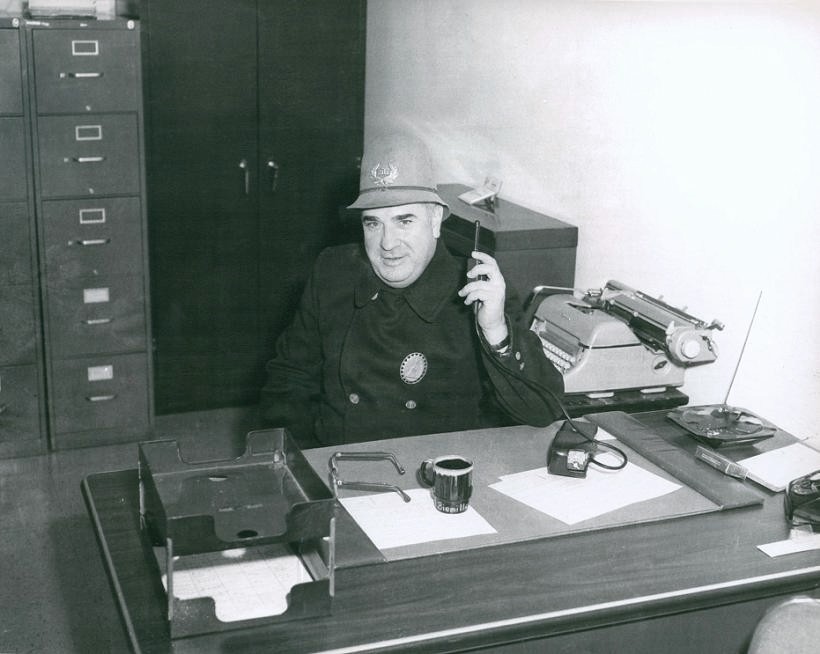
 Baltimore Police Officers and their wives listen to Govenor Marvin Mandel who promised raises and told them to just have patience

 honor_guard_1968.jpg

 Honor Guard 1968

Wiley_Melvin_Owens_Jr..jpg

Photo courtesy Rhonda Owens

Officer Wiley Melvin Owens Jr.

Badge #2928

Later promoted to Detective and assigned ISD

Passed away December 1, 1973

He was an honest, dedicated, faithful member of the force who served the community valiantly.
Det_Wiley_Owens_A.jpg
< class="mce-object mce-object-undefined">

 Officer Wiley Owens Jr. was offered a $100.00 bribe to change his testimony in a drunk driver case by defense attorney Jackson Dulaney Pennington ,but Officer Owens maintained his integrity and promptly reported the incident. November 13, 1969

Det_Wiley_Owens_C.jpg

 Photo courtesy Rhonda Owens

Det_Kearney4.jpg

sgtgutierrezsr.jpg.w300h375

 Sergeant Francis Max Gutierrez

 sgtgutierrezsr1.jpg

COURTESY JOSEPH GUITERREZ

SGTDAY-E

COURTESY MAJOR ROBERT DiSTEFANO

sgtgutierrezsr6.jpg

COURTESY JOSEPH GUITERREZ

Sergeant Gutierrez receiving his certificate of promotion to Sergeant from Police Commissioner Donald D. Pomerleau 12/26/1968
10513417 10202365114954665 785017450245461913 n
Courtesy Det. Mark Lindsay
Blast from the past: Officer Howard "Bud" Lindsay Officer John Scales and Bob Fisher

10485532 10202366491469077 1027292214712839110 n
Courtesy Det. Mark Lindsay
Ellis "Ditty" Baldwin

Notice the word "City" isn't on the truck! City, wasn't removed from "Baltimore City Police" until the mid, to late 70's as the Mayor at the time was transitioning Baltimore into a Tourist town, Building the Inner Harbor, and wanted to remove the tough sound of City from Baltimore, but that all came much later than this truck. This was a sign of thngs to come.

10473165 10202365139675283 5434298801693784554 n
Courtesy Det. Mark Lindsay

The "Command Chair" at 1050 S. Broadway. Notice the mirror and fish eye mounted on the window frame. Very useful to detect sneaking bad guys, and duty officers.- When the uniform cap was worn on the truck, it was wise to remove the inside wire in the top portion, (Known by some as the stylish "50 Mission Crush" of the hat) Otherwise, the wind would blow it off and out of the truck), Mine (Michael Roselle) was run over by some wise guy in a Buick. The guy was last seen driving east on Fayette from Central laughing.


10469413 10202365206996966 6141648745852910082 n
Courtesy Det. Mark Lindsay
John Scales and Bud Lindsay with a recovered possible 81mm mortar round or a 122mm rd.

10458106 10202365096194196 1596021204672406147 n
Courtesy Det.Mark Lindsay

10378934 10202365104714409 4022182014300342139 n
Courtesy Det. Mark Lindsay

1969_phone_book.jpg

Photo courtesy Officer William hough

Front cover of the 1969 departmental phone book

John_McCormick_Retirement_Certificate.jpg

Original Certificate of Retirement

John N. McCormick

25 years of dedicated service

1943-1969

Flag_draped_casket_Donald_Serer_4-24-1970.jpg

Flag draped casket of Officer Donald Sager

April 24, 1970

shrinerscircusdetail1970.jpg

Shriner's circus detail 1970's

with one of the circus performers

city_fair1.jpg

The following several pictures are at the Baltimore City Fair in the late 1970's

city_fair2.jpg

city_fair3.jpg

city_fair4.jpg

inner_harbor.jpg

MORE POLICE TRAINING SET

KIRK SCHARFENBERG

The Sun (1837-1989); Jun 25, 1968; pg. C8

MORE POLICE TRAINING SET

Schooling of All Recruits

In State to Rise 50%

Ocean City, June 24-The executive secretary of the Maryland Police Training Commission said today that by this fall the length of the mandatory training period for recruits on police forces around the State will be increased by 50 per cent.

Robert L. Van Wagoner told members of the Maryland Municipal League, meeting at the Commander Hotel here that the planned increase in, hours of training from 160 to 240 will make the Maryland program among the most thorough in the country.

He also told the group that, within a year, officers entering training schools run by his commission will have to pass intelligence and stability tests.

Determining Tests

Mr. Van Wagoner said the commission is now working with the University of Maryland to determine what specific tests will be used.

State law, he said, requires all men recruited by police forces throughout the State since June 1, 1967, to pass a training course approved by the commission.

The course must be completed within a year of the officer's appointment to the police force.

Mr. Van Wagoner said he is "reasonably certain" that there have been violations of the law "though ignorance." But, he added, a new State program, providing $21,000,0110 to local police departments and requiring compliance with the commission's standards, should aid in enforcement of the requirements.

Has Not Used Power

He noted that the commission, composed of leading law enforcement officials in the' State, the attorney general and the president of the University of Maryland, has not yet exercised its authority to set standards for veteran police officers.

He termed this the most difficult aspect of the commission's 1 work, but said that the standards will be set.

Mr. Van Wagoner added, "the large portion of police officers 1 in the Slate have never had an ounce of training and have never shot a gun, except on July 4th.

"Ninety-five percent of the police officers want this training,” he said, estimating that the initial course for veteran officers would probably last a week.

Small Communities

Ile noted that the increased standards for admission to the training schools, which already require a high school education and good character references, may work a hardship on small communities which have difficulty paying their police forces even now.

He suggested, therefore, that these communities use the State money they receive to improve their police salaries to hire qualified men

"It's no good to have equipment if you don't have the qualified men to operate it," he said.

city_fair5.jpg

city_fair6.jpg
Lawrence_Barry_2.jpg
Photo courtesy Det. Charlie Smoot

Lawrence_Barry_1.jpg
Photo courtesy Det. Charlie Smoot

 Officer Lawrence Barry ( white shirt) is seen here attending a retirement party.

Officer_Vernon_G_Barclay.jpg

Officer Vernon G. Barclay

charles_thompson_clyde_redding_cd.jpg

Officer Charles Thompson (left)

Officer Clyde Redding (right)

SGT_JOSEPH_JACKSON.jpg

 
Photo courtesy Officer Bill Hough

Sergeant John Jackman escorts a prisoner from a disturbance at western High School

RESTAURANT_BOMBER.jpg
Photo courtesy Officer Bill Hough
JOHN_GROSSKOPF.jpg
Photo courtesy Officer Bill Hough

Officer John Grosskopf "Hero" saved several children from drowning 

BURGLARY_SUSPECT_CHARGED.jpg
Photo courtesy Officer Bill Hough

1970_BLACK_PANTHER_Raid_1.jpg

Black Panther raid 1700 blk. N. Aisquith St.
April 30, 1970

1970_BLACK_PANTHER_Raid_2.jpg

Bowen_William_Lieut_1972.jpg
Photo Courtesy Lieut. William Bowen

Lieutenant William Bowen

1972

5a.jpg
Courtesy of Officer Dick Busch
6a1.jpg
Courtesy of Officer Dick Busch
7a.jpg
Courtesy of Officer Dick Busch

8a.jpg

9a.jpg

10a.jpg
Sgt_Wilson_Druid_Hill_Park.jpg

Sergeant Robert Wilson working Druid Hill Park 1970's in a Dodge Aspen

Swearing_In_Santa.jpg

Photo courtesy Lieut. Robert Wilson
Santa_in_Car.jpg

Photo courtesy Lieut. Robert Wilson

LAWS & LIBERTY

The Sun (1837-1989); Sep 8, 1974; pg. AA29

LAWS & LIBERTY

The increasing pressure of traffic particularly in the downtown sections of our great Babylon’s and Gomorrah, has at least one laudable effect: it makes the police happy. Naturally pedantic, and trained, the pedagogues, in the doctrine that all human beings are precisely alike and maybe handle stalks of weed, BB shot Hall at the stockyard, they delight in the opportunity to make and enforce ever more complex and nonconsensual regulations.

The other day I read in the Sunpaper that so many motorists were herded for trial in a traffic court that it took three judges to dispose of them... Obviously, the police, like Judge Elbert H. Gary, have no need to wait for heaven; they enjoyed here and now. What could be more charmingly to their taste than a body of laws which fills two courtrooms suffocation every day, and keeps three judges leaping and tugging back fire engine hoses the situation is made the more intoxicating by the Attacked that 9/10 of the criminals or persons who would not otherwise fall into the toils – the traffic regulation tap whole new categories of victims...

The United railways [which ran the public transportation system] has ably seconded the police in this gradual disciplining and regimentation of the people of Baltimore... Today riding on the cars of uniting railways is indistinguishable from running a gantlet. The passenger is no longer a customer, nor even an individual; he is simply an anonymous unit in an endless chain – a sort of sausage fed into an insatiable and impersonal maw. His desires are no more regarded than if he were a corpse. The instant he steps of a board a car the cogs and levers of the machine grip him, and thereafter until he escapes, he is a sleeve. He must deposit his fair at a certain time and place; he must move as ordered; if he happens to be smoking he is in for a sharp reprimand. All his old rights now reduce themselves to one: he may get off if he doesn’t like it, and be damned... Meanwhile, the company hires in psychology at $50,000 a year and expense to improve its public relations – that is, to diminish the climber that goes on against it all the time. No wonder there is a climber. Don’t the halls in the slaughterhouse wheel?

The Evening Sun March 23, 1925

it takes a very powerful effort of the will and imagination for any reflective man, in these last days of the Republic, to be proud that he is an American; those who seem to be the proudest of it, indeed are precisely the worst cads and ignoramuses on view. But all the while it remains relatively easy to be proud of being a Marylander, for here in this little state, stuck forlornly between the serfs of the North and the slaves of the South, there remains in active being a great deal of the genuine liberty of the braver and more expansive day, and what is better still, there is not slightest sign that in so far as the people of this state can control the matter, it is distinguishing. Period.

Maryland is one of the few free states left in the American Commonwealth – almost, indeed, the only state remaining in which the guarantees of the Bill of Rights has served the roguery of legislators and imbecility of judges...

This respect for human rights – this quick resentment of every appearance of official bullying – remains alive in Maryland because of the survival of an older tradition of freedom. But perhaps that tradition itself survives because of something that is too often forgotten, to wit, that in Maryland the jury in a criminal case is a judge of the law as well as the facts. It would be difficult to overestimate the importance of this constitutional safeguard. On the one hand, it instantly draws teeth of the foolish and oppressive laws… And all the other hand, it makes it almost impossible for the police to make law on their own book, and railroad innocent men to prison, as has happened so often in California and other Western states, and of late even in New England…

Liberty is a great deal less esteemed in America that used to be; the other day the American ambassador to Rome was deriding it as archaic. But here in Maryland it is still respected, and that single fact is worth more than all the sugar refineries, Tanneries, guano factories and other such great dunes that go-getters will bring to the state between this day in the day of judgment.

The Evening Sun, July 31, 1923

This is one of the few American states which, in the state courts, constitutional guarantees of the citizen are jealously guarded. Unlike New York, Pennsylvania, and most of the Western states, we have no laws limiting the free play of opinion; and Marylander is at liberty to set forth his honest sentiments, in private or in public, without interference by the police no so-called soapbox or, however extravagant and idiotic, has ever been sent to prison in Maryland.

The Evening Sun, September 22, 1924

Eugene Grannan, who died a week ago, was one of the town characters of Baltimore at the end of the last century, antique His peculiar color and charm to the end… He was… A man almost ideally fitted for his job [of police magistrate]. For years a professional detective, working for the Baltimore and Ohio Railroad, he knew familiarly most of the petticoats working in these parts. More common a new policeman, and could read their peculiarity innocent minds. Yet more, he was a man combined great shrewdness and an expansive sentimentality in a way that is very rare to this world. Finally, he had a vast untapped for lawyers, and scarcely less for the law…

Grannan first came into public notice by a devastating attack upon the old system of intrigue which for years had made criminal justice a mockery in Baltimore. He was then sitting at the Western police station on Pine Street, and his bailiwick included the nearby red light district. The girls in that district were frequently in conflict with the police, and so most of them got themselves protectors of political influence – naturally enough, a worthless and the last class of men. Sometimes these protectors will get drunk and beat the girls. The police would then lock them up to prevent murders, but in the morning they were commonly turned loose without punishment.

But soon after Grannan went up on the bench such as scoundrel appeared before him, and, in violation of the immemorial practice, he called for the witnesses and proceeded to trial. The evidence was plain enough. The fellow had got drunk and given his girl a beat. He now stood before the bar with Democratic ward leader of that vicinity on one side of him, and the group of gaudy brethren of his craft on the other. He plainly expected the usual humane treatment. Disdaining a jury trial, he elected to be tried by Grannan. Grannan found him guilty and sentenced him to two years in the house of corrections…

This episode made Grannan a town celebrity, and the notion got around that he was a crusader against politicians, and eager to get all of them into prison. He was, of course, nothing of the sort. On the contrary, he knew very well that politicians serve a very useful purpose, especially of the more petty varieties, and he made constant use of them in his work...

His attitude toward policeman was much the same. He knew that 9/10 of them was simpleminded honest men, but he also knew how much professional prejudice: their thoughts… He was thus very suspicious of constabulary testimony, and seldom accepted it unless it was supported by disinterested witnesses…

The life of such a man, it seems to me, is immensely valuable to the community he lives in, and he ought to be remembered. There was nothing brilliant about Grannan… But he had qualities that were of high social work and excellence, and chance threw him into a position where they could be utilized effectively and made to yield permanent benefits. He founded a whole school of police magistrates, obviously better than the old school… And his influence, I believe, as it towered to this day.

What made him attractive personally was his pawky and sardonic humor. He greatly enjoyed his work, despite the foul smells of his court and the daily contact with wretchedness in all its form, and always kept it on a level of amiable tolerance. Time and time again I have seen him dissipate misery with a jocosity. He loved to scare minor offenders horribly, and then turn them loose. Once an old German was before him, Charles was quarreling with his wife of 40 years. Both parties will repentant and ashamed. Grannan solemnly tried the old man, sentenced and 25 years in the penitentiary, and then, after the cops had revived him since him is way, his wife on his arm. He ordered the case to them from the books and asked the reporters not to mention it…

The only time I ever saw him show anger on the bench was one in E. Baltimore St. missionary came before him, charging an ancient Russian Jew with assault. The missionary, it appeared, had dragged the Jews grandson into his gospel all, and tried to convert him to Methodism. Grannan, usually very dignified on the fence, lost his temper and gave the missionary a dreadful cursing. Then he turned to the Jew. “I am glad you feed him,” he said, “but don’t do it again. The law is an ass, but it has two years. The next time he tackles your grandson, bring him here.”

The Evening Sun, September 6, 1926

1974_gun_buy_program.jpg

Baltimore City initiates a Gun Buy Program August 1974

Major John Kollmann stands amid some of the 1,000 guns that the City bought at $50.00 each from City residents, no questions asked, as an incentive to rid the City of guns. 

OFF WARREN TODD CD
COURTESY SERGEANT BERNIE WEHAGE

Officer Warren Todd Central District R/C 102 on a business check at Harley's,
Liberty & Fayette Sts.

1974_Police_Strike.jpg

BALTIMORE POLICE STRIKE 1974

A dark time in the history of the Baltimore Police Department.

The first police strike in a major City since 1912.

A Civil War, BPD Officers vs. BPD Officers.

The strike became a part of our history and for all law enforcement.
It was not a proud moment for the Baltimore Police Department.

Many BPD officers were in a state of conflict, do the Right thing or fight
for a cause they truly believed in. No one won in this conflict.

Scars were left and will be a long time healing.

They will, indeed, heal. May this never happen again in our history.
May our ranks stay united as a brotherhood.
Officers working together for the benefit of all.


Off_Lenny_Podgorski.jpg

Officer Paul Bach standing next to a 1974 Plymouth in the SED parking lot

Hackley_Snyder_Afram_1977.jpg

Officer William Hackley(L) and Officer Joe Snyder NWD detailed to the Afram Festival

1977

bpdbaseballteam.jpg

Officers in UNITY  1978
1985_Appointment_Police_Agent_Off_Tom_Douglas.jpg
Courtesy Lt.Tom Douglas
Commissioner Donald D. Pomerleau appoints Officer Tom Douglas to Police Agent June 15, 1977

(Below) Commissioner Pomerleau with Newly appointed Agent Tom Douglas with his parents Sue and Doug proudly looking on.

Comm_Pomerleau_Tom_Douglas_Parents.jpg
Courtesy Lt.Tom Douglas

Col_Dick_Francis_JOE_WICZULIS.jpg
COURTESY OFFICER JOE WICZULIS

Photograph of Colonel “Dick” Francis that was given to Officer Marion Wiczulis for Good Luck (above)
JOE_WICZULIS.jpg
COURTESY OFFICER JOE WICZULIS

During the Custom Motorcycle Show held March 1977, at the Timonium Fair Grounds, Officer Marion S. Wiczulis of the Enforcement Section of the Traffic Division and his fiancée,Paula, devoted his spare time to display one of the Department's motorcycles and also helped promote motorcycle safety in conjunction with members of the Baltimore County Police Department.

carol_channing_major_mullen_sgt_rankin.jpg

Major Patricia Mullen, Sergeant Mercedes Rankin, Carol Channing 1978

THE BALTIMORE POLICE DEPARTMENT'S GANGBUSTERS

June 1975

Front Row: Robert Ackerman, SWD; Raymond Gillespie, WD; Richard Boronyak, NWD; Thomas Heathcoate, IID; William Hausner, NED; Michael Andrew, SWD; Martin Hanna, SWD; Leonard Willis, CID; Second Row: Robert Dapp, NED; Anthony Collini, ND; Lawrence Banks, Youth; Gary Childs, CID; Anthony Rinaldi, CD; Clayton Wright, SED; James Griffin, WD; Charles Cichon, NED; Back Row: Colonel Wilbur C. Miller; George Seltzer, WD; William Arnett, Youth; Daniel Markowski, CD; Donald Farley, Youth; Joseph Powell, CID; Robert Thomas, Tac.; Fred Oster, Youth; James Gilbert, CID; Police Commissioner Donald D. Pomerleau.

officers1978.jpg

Detective_Julius_NevekerE.jpg

BALTIMORE POLICE NEWSLETTER

Detective Julius Neveker

December 1978

president_carter.jpg

President Jimmy Carter, Major Regis Rafensberger,
Major Ron Mullen, Commissioner Bishop Robinson 1979

sgt_jerry_landsman.jpg

sgt_robert_michaels.jpg


Officers helping victim

motor pool

MOTOR POOL OFFICE

35204_1338263021297_1372786638_30793958_3883163_n.jpg

Photo courtesy Lieut. Robert Oros

37862_1338264781341_1372786638_30793974_5944080_n.jpg

Brian_Beauchamp01.jpg

Photo courtesy Officer Brian Beauchamp

 Brian W. Beauchamp graduated academy class 70-2 on July 2, 1970, and was assigned to the Northern District, where he remained until he left the department July 11, 1973, and moved to Michigan for family reasons. He started with the Shiawassee County Sheriff's Department in Corunna, MI and retired as a DET/SGT in December 1997

Brian_Beauchamp02.jpg

Photo courtesy Officer Brian Beauchamp

Brian_Beauchamp3.jpg

Photo courtesy Brian Beauchamp

Life after the BPD

cadet1.jpg

Courtesy Officer John Brazil

 cadet2.jpg

Courtesy Officer John Brazil

Departmental_AccidentShop_9031.jpg

Photo courtesy Gary Provenzano

Departmental Accident Shop# 9031

Bill_Staley_Al_Bowling.jpg

Photo Courtesy Sgt. William Gordon

Sergeant William Staley & Al Bowling celebrating the Sergeant's Birthday (Below) Sergeant Staley enjoys a piece of Birthday Cake 1976

Bill_Staley_Birthday_1976.jpg

Photo Courtesy Sgt. William Gordon

Lt_Peach1.jpg

Photo courtesy: Mary Beth (Peach) Wasmer

 Officer Kenneth S. Peach receiving his Sergeant promotion certificate from Police Commissioner Pomerleau

 Lt_Peach3.jpg

 Photo courtesy: Mary Beth (Peach) Wasmer

Sergeant Kenneth Peach hard at work

Lt_Peach4.jpg

Photo courtesy: Mary Beth (Peach) Wasmer

Sergeant Peach stops a moment for this photograph

Lt_Peach5.jpg

Photo courtesy: Mary Beth (Peach) Wasmer

Sergeant Peach diligently working on a report for the Police Commissioner


Lt_Peach2.jpg

Photo courtesy: Mary Beth (Peach) Wasmer

Sergeant Peach and his wife after receiving his promotion to Lieutenant

Lt_Peach6.jpg

Photo courtesy: Mary Beth (Peach) Wasmer

Lt_Peach7.jpg

Photo courtesy: Mary Beth (Peach) Wasmer
Lieutenant Kenneth Peach in the Armory Unit

This shot of Lieutenant Peach is probably the most memorable photograph of him etched into everyone's mind. Every visit to the Armory Unit you would find him at his desk thinking and working on some project or working on a gun.  He put dedication and pride into his job.

He retired from the department and then passed away very suddenly on February 11, 2007 suffering from cancer. His service to the department is immeasurable and it Honored the Department.

Bill Gordon 1977

Photo Courtesy Sgt. William Gordon
Officer William Gordon 1977

Wilson_promoted_Lt_12-21-78.jpg

Photo courtesy Lt. Robert Wilson

Commissioner Donald D. Pomerleau promoting Sergeant Robert Wilson to
the rank of Lieutenant on December 21, 1978. Lt. Wilson with
his wife Lynn and daughters Jessica and Betty Lynn are proud of their dad.

37862_1338264621337_1372786638_30793971_7525253_n.jpg

Bobby Ackison
Photo courtesy Lieut. Robert Oros

38883_1341542823290_1372786638_30800379_4988352_n.jpg

Photo courtesy Lieut. Robert Oros

1BPD_Officer1.jpg

Photo courtesy Lieut. Robert Oros

BPD_Officer2.jpg

Photo courtesy Lieut. Robert Oros

Al_Diggs_Don_Hoppe_Bob_Gaines.jpg

Officer Al Diggs, Don Hoppe, Bob Gains

promotion_to_lieutenant.jpg

Courtesy Lt. Tom Douglas

Lt Drexel Harwood Burrett 1975
Photo courtesy Christina Bohli, John Drexel's daughter

Deputy Commissioner Harwood Burritt presents Lt. John Drexel a retirement plaque for his 23 years of service.
(Below) Retiring Lieutenant John Drexel stands at the podium with his wife Faye at his retirement party June 1975

Lt Drexel wife 1975
Photo courtesy Christina Bohli, John Drexel's daughter

John Drexel01
Photo courtesy Christina Bohli, John Drexel's daughter

Captain R. L.Connely giving Lt. John Drexel his retirement certificate

John Drexel02
Photo courtesy Christina Bohli, John Drexel's daughter

Lt. John Drexel being congratulated on his retirement while his daughter Christina looks on

command_staff1.jpg

The first row, left to right: Inspector Clarence Kelly, General George Gelston, Inspector George Deuchler. Deputy Commissioner Ralph Murdy.

Second row, left to right: Colonel Richard "Dickie" Taylor, Colonel "Box" Harris. Deputy Commissioner Wade Poole. Inspector Frank J. Battaglia, Inspector Thomas "Tom" Keyes, Captain G. Gordon Gang. Third row left to right: First position unknown to me. Inspector

Frank Deems. Third position unknown to me. Last rows sort of combine. The man with the glasses, peeking out above Box Harris, is Inspector Clarence German. The gentleman in the suit, directly behind Wade Poole I believe is Captain Anthony Nelligan of the Crime Lab. The man directly behind Frank Battaglia is Inspector August Gribbin.

picture1532.jpg

Officer Zawadski, Officer Pat Kirby, Officer K. Council

38302_1338265461358_1372786638_30793980_1111320_n.jpg

Photo courtesy Lieut. Robert Oros

38302_1338265421357_1372786638_30793979_5036163_n.jpg

Photo courtesy Lieut. Robert Oros

Sgt_George_Wesley_Freeman.jpg

Sergeant George Freeman
gutierrezsrcover.jpg

 COURTESY JOSEPH GUITERREZ

sgtgutierrezsr4.jpg

COURTESY JOSEPH GUITERREZ

Sergeant Gutierrez receiving his certificate of promotion to Lieutenant from Police Commissioner Frank J. Battaglia 12/18/1974


sgtgutierrezsr5.jpg

COURTESY JOSEPH GUITERREZ

DDP1-E

COURTESY MAJOR ROBERT DiSTEFANO

Donald Skippy Shanahan
COURTESY MAJOR ROBERT DiSTEFANO

 Colonel Donald "Skippy" Shanahan
retirement_party.jpg
COURTESY MAJOR ROBERT DiSTEFANO

Pension party for Officer McKenzie and Lt. Lorenz.  

Captain George Klanders, Deputy Commissioner Battaglia, and Captain John Barnold


Major DiStefano

 COURTESY MAJOR ROBERT DiSTEFANO


1 black devider 800 8 72

Donations

Donations help with web hosting, stamps and materials and the cost of keeping the website online. Thank you so much for helping BCPH. 

Paypal History Donations

1 black devider 800 8 72

POLICE INFORMATION

Copies of: Your Baltimore Police Department Class Photo, Pictures of our Officers, Vehicles, Equipment, Newspaper Articles relating to our department and or officers, Old Departmental Newsletters, Lookouts, Wanted Posters, and or Brochures. Information on Deceased Officers and anything that may help Preserve the History and Proud Traditions of this agency. Please contact Retired Detective Kenny Driscoll.

This email address is being protected from spambots. You need JavaScript enabled to view it.

Devider color with motto

NOTICE

How to Dispose of Old Police Items

Please contact Det. Ret. Kenny Driscoll if you have any pictures of you or your family members and wish them remembered here on this tribute site to Honor the fine men and women who have served with Honor and Distinction at the Baltimore Police Department. Anyone with information, photographs, memorabilia, or other "Baltimore City Police" items can contact Ret. Det. Kenny Driscoll at This email address is being protected from spambots. You need JavaScript enabled to view it. follow us on Twitter @BaltoPoliceHist or like us on Facebook or mail pics to 8138 Dundalk Ave. Baltimore Md. 21222


Copyright © 2002 Baltimore City Police History - Ret Det Kenny Driscoll 

2020 - Present

1 black devider 800 8 72

2000 - Present 


1 black devider 800 8 72

Donations

Donations help with web hosting, stamps and materials and the cost of keeping the website online. Thank you so much for helping BCPH. 

Paypal History Donations

1 black devider 800 8 72

POLICE INFORMATION

Copies of: Your Baltimore Police Department Class Photo, Pictures of our Officers, Vehicles, Equipment, Newspaper Articles relating to our department and or officers, Old Departmental Newsletters, Lookouts, Wanted Posters, and or Brochures. Information on Deceased Officers and anything that may help Preserve the History and Proud Traditions of this agency. Please contact Retired Detective Kenny Driscoll.

This email address is being protected from spambots. You need JavaScript enabled to view it.

Devider color with motto

NOTICE

How to Dispose of Old Police Items

Please contact Det. Ret. Kenny Driscoll if you have any pictures of you or your family members and wish them remembered here on this tribute site to Honor the fine men and women who have served with Honor and Distinction at the Baltimore Police Department.  Anyone with information, photographs, memorabilia, or other "Baltimore City Police" items can contact Ret. Det. Kenny Driscoll at This email address is being protected from spambots. You need JavaScript enabled to view it. follow us on Twitter @BaltoPoliceHist or like us on Facebook or mail pics to 8138 Dundalk Ave. Baltimore Md. 21222


Copyright © 2002 Baltimore City Police History - Ret Det Kenny Driscoll 

1980 - 2000

1980 - 2000

1 black devider 800 8 72

  1980 - 2000

1981_Police_Officer_of_Year.jpg

 Photo courtesy Lieut. Robert Wilson

Kenneth_Schiminger.jpg
Photo courtesy Officer Kenneth M. Schiminger

Officer Frederick I. Schiminger 

Officer Robert Ross (AKA Barney)

Officer Robert Ross ( Barney Fife) 
 Cross Street footman

arminger_battaglia_jud_1982.jpg
Photo courtesy Agent Robert Jud

Police Commissioner Frank J. Bataglia (center) Officer Mike Arminger (left) who passed away LOD and Detective Robert Jud (right)

Steve_Histon_1980s.jpg

Officer Steve Histon 1980's

Steve_Histon_1980s2.jpg

Nick_Nixon_robot.jpg
Photo courtesy Sgt. Nick Nixon
college_recognition_ceremony_1981.jpg
Photo courtesy Agent Robert Jud

College recognition ceremony August 14, 1981

From left to right Sergeant Alan Woods ( Legal Advisor's Office), Agent John Betso (Western District), Lieutenant Joseph Chrisiansen (Northwest District), Agent Tom Douglas (Traffic), Agent Robert Jud (IID),Agent Larry Hornstein (Tactical), Criminalist Bob Sroka 

 (Laboratory Division)

DickFrancis1
COURTESY MAJOR ROBERT DiSTEFANO

Colonel Dick Francis

March 3, 1982

Marion Wiczulis 1982 1
Courtesy Joe Wiczulis

In 1982 Officer Marion Wiczulis, Traffic Enforcement, works an unmarked cruiser. The Traffic car was the only one to have white wall tires and red lights, which were approved by Colonel Dick Francis at the time.

Marion Wiczulis 1982 2
Courtesy Joe Wiczulis
Police_union_meeting_1983.jpg
Photo courtesy Deputy Commissioner William Rochford

Police Union Meeting 1983

Deputy Commissioner William Rochford, seated at the first chair left side.

Don_DeWar.jpg
Photo courtesy Officer Don DeWar

Officer Don DeWar after graduation with his Mom & Dad

Don joined the department after 4 years in the Military but left the department after one year to continue his college education which he had begun while serving in the department and graduated with a degree in Criminal Justice. He reentered the US Army Reserve and retired after almost 37 years. He ran in 2006 for Baltimore City Council 1st District and lost by a very slim margin and hopes to run again. A real success story for one of our very own.

Rodriquez 03

Officer Juan Rodriguez early 1980's Dogde Aspen 

1983_LT_Wilson_Snow_Storm.jpg
Photo courtesy Lt. Robert Wilson

1983 - Lt. Wilson  Snow Storm in Baltimore followed by looting and activation of National Guard

Lou_Trimper_Gov_Schaefer.jpg
Photo courtesy Det. Lou Trimper

Det. Lou Trimper with Govenor William Donald Schaefer July 11, 1993

ron_starr_6-2004_1.jpg
Officer W.Hackley photo
Kevin_Lenahan_Bill_Gordon_Tim_Longo.jpg
Photo Courtesy Sgt. William Gordon

Kevin Lenahan, Bill Gordon, Tim Longo

(Below) Jeff Rosen, Tim Longo, Bill Gordon

Jeff_Rosen_Tim_Longo_Bill_Gordon.jpg
Photo Courtesy Sgt. William Gordon
Marty_Beauchamp_Bill_Barb_Gordon.jpg
Photo Courtesy Sgt. William Gordon

Marty Beauchamp, Bill & Barb Gordon

1995

Bill_Gordon_HQ_1998.jpg
Photo Courtesy Sgt. William Gordon

Sergeant William Gordon in the lobby museum of the Headquarters Building

(Below) Sergeant William Gordon in Washington DC durring Police Week 1998

Bill_Gordon_DC.jpg
Photo Courtesy Sgt. William Gordon
Mike_Zotos.jpg
Photo Courtesy Sgt. William Gordon

Baltimore Police Deputy Commissioner

Mike Zotos is pictured in the center 

paul_williams.jpg
Courtesy Officer Paul Williams

Officer Paul Williams receiving his Certificate of

Retirement, along with his beautiful wife Mary,

Colonel Leon Tomlin and Lt. Tim Longo. October 21,1996

WEDDING-E4
COURTESY MAJOR ROBERT DiSTEFANO

Civil War Wedding

This maybe an 1860’s wedding party but look closely at the girl in the white dress and the guy standing next to her with the white beard.. The Bride is Teddi Bittenger, supervisor of the B of I unit and the Groom is Major Robert DiStefano.

The wedding party:

Seated in front row, L to R: #1 Blue Dress - Sharon Woolridge, wife

of Al; #2 Red Dress - Sheila Crochetti, wife of Rus; #3 Teal Dress -

Pat Ortega, wife of Julio; # 4 Floral Skirt, white blouse, Imogene

Yaste, wife of Pastor Yaste.

Standing, L to R: # 1 Al Woolridge, retired as a Sergeant to supervise the

Printrak System; #2 Freda Waters Birchett, supervisor of the mainframe

computer for the BPD, wife of Officer Tom Birchett and dear friend of Teddi and Maid of Honor. #3 Officer Tom Birchett, a dear friend and Best Man

#4 Rus Crochetti, a civilian BCPD supervisor; #5 Teddi; #6 Major Robert DiStefano; #7 BPD Detective Julio Ortega; # 8 Major DiStefano’s son's and then girlfriend, "Star", Pastor Dixon Yaste, he and his dear wife are both departed.

WEDDING-E5
COURTESY MAJOR ROBERT DiSTEFANO

Mr. & Mrs. Robert DiStefano

April 20. 1996

WEDDING-E6
COURTESY MAJOR ROBERT DiSTEFANO

Major DiStefano was married in the Old South Mountain Inn in

Boonsboro, it served as a field hospital during the battle of South Mountain, just before the Battle of Sharpsburg, or Antietam.  Major DiStefano is the gentleman with the white beard, and his best man Officer Tom Birchett is second from the left, all except the man in red are BCPD cops.  The minister is wearing the red of a Confederate Lieutenant of Artillery, he is also wearing the collar insignia of a chaplain, they served double duty in the Confederate Army.  Behind them, across the road, is the Dahlgren Chapel, Dahlgren was an admiral in the Union Navy during the Civil War, and he invented the Dahlgren Gun, and was named: "The Father of Naval Ordnance."   Major DiStefano is dressed in an authentic reproduction uniform of Confederate General James "Old Pete" Longstreet.

Left to Right : Sergeant Al Woolridge, Officer Tom Birchett, Russ Crochetti, Major Robert DiStefano, Officer Julio Ortega, Pastor Yaste

WEDDING-E2
COURTESY MAJOR ROBERT DiSTEFANO

Major Robert and Teddi DiStefano, Lieutenant William and Betty Stone.

Lt. Stone was dressed as Matthew Brady for the occasion!

Officer John DiStefano.JPG.w300h323
COURTESY MAJOR ROBERT DiSTEFANO

Officer John DiStefano

honor_guard_a.jpg
Officer W.Hackley photo

Honor Guard in Washington D.C. for POLICE WEEK1998

Police Officer Ron Starr, member of the Baltimore Police Honor Guard,
Posing with the restored 1968 Chevrolet Police Car
During a ceremony at the Baltimore Police Memorial June 2004

ron_starr_6-2004_3.jpg

ron_starr_6-2004_2.jpg

det_jeff_hidy.jpg

Detective Jeff Hidy: ‘God’s in the miracle business’

Jeff Hidy, a detective with the Baltimore City Police Department headquarters security, has battled three different cancers in the last year and a half. “I’m here because I’ve laid things in the Lord’s hands,” Hidy said .

BALTIMORE - Detective Jeff Hidy breathes deeply from the one and one-third lungs he has remaining and declares this “a blessed day.” He utters the phrase at every opportunity from a mouth that never loses its delighted grin. Blessed day, indeed. For Hidy, every day on earth feels like a bonus.

The lung cancer? “It’s like I had a cold,” he says.

The brain tumor they found 30 days later? “Big as a fist,” he says. “Want to see the scar?”

The pain in his leg that turned out, six months ago, to be bone cancer?

“I wouldn’t worry about it,” the first doctor told him.

By this time, owing to history, Hidy had learned a certain cautionary skepticism. He’d worry, all right. Two years ago, when he had a soft, annoying cough that wouldn’t go away, the doctor told him, “Jeff, I guarantee you don’t have lung cancer.”

“Just the same,” said Hidy, “I’d like to get a chest X-ray.”

The X-rays said the doctor was wrong.

“It doesn’t look good,” the doctor said.

“Trust in God; he’ll take care of it,” Hidy said.

A month later, when he was getting chemotherapy for the lung, he told a doctor, “I feel a little spacey. Something’s not right. The cancer couldn’t be in my brain, too, could it?”

“No,” said this doctor. “But why don’t we get an MRI, just to make sure?”

They operated on Hidy’s brain the next day and removed a tumor the size of a small fist.

“See the scar?” says Hidy. He takes off his uniform cap and displays an 18-inch scar quite visible amid a recovering sprinkle of hair.

“Spot balding,” Hidy says. “My wife calls me Spalding. Like the tennis ball, yeah.”

A 15-year veteran of the Baltimore City Police Department who lives with his wife, Karen, in Middle River, Hidy utters every syllable with sheer joy. He beat the lung cancer, and he beat the brain tumor, and he’ll beat the bone cancer, too, he says.

“A blessed day,” he declares again. “All credit to the Lord. He just keeps carrying me. Satan gave me the tumors, but the Lord carries me through. Plus, I give some credit to the doctors, too.”

He is an upbeat man in a profession that can play decidedly downbeat. The cops see the worst of human nature, and deal with it. Sometimes, it’s all about approach.

“I’ve always been blessed,” Hidy, 50, was saying the other day. He sat in the lobby of police headquarters, near the base of the Jones Falls Expressway, and greeted almost all police employees walking past by their first names.

“In 10 years on the street,” he said, “I never had to shoot at anyone, never had to use my nightstick, never even used Mace. My partner used to say, ‘If Jeff locks somebody up, there shouldn’t even be a trial.’ I treated people the way I’d want them to treat my mother. And I got respect 95 percent of the time.”

Then there was that other 5 percent.

“Well, one time a woman came at me with a knife,” Hidy remembers. “I was responding to a domestic call. She came down the stairs at me with a steak knife. She could have hurt me. I didn’t want to shoot her. She just needed to be calmed down, and I just talked calmly and said I’d try to help her. I was really happy that I could.

“See, every threat level’s different. Anyone’s a liar who says they’re not scared out there. But, as a police [officer], you work your way through your fears. One time this girl hit me with a flashlight. It was Christmas. She was scared, and she went right into a corner and huddled in fear.

“I told her, ‘Listen, my Christmas present to you is, I’m not going to arrest you. But I want you to go to a hospital for help.’ And we got her treatment. That was a blessed day, a very blessed day.”

The phrase tumbles out of him reflexively. He is a deeply religious man at a highly vulnerable time of his life, and this is his comfort.

“I tell people,” he says, “ ‘If the Lord could look out for a bonehead like me, imagine what he’ll do for you.’ I tell this to people all the time. Don’t be scared.”

It is a fact that not everyone who prays gets healed. Hidy’s a man of faith, but he’s not blind.

“But God’s in the miracle business,” he says.

Hidy feels he’s been the recipient of two miracles so far: in his lung and his brain. Now, on his off days from work, he’s getting chemotherapy for the bone cancer. The smile never leaves his face, nor the phrase from his lips: a blessed day, he says.

It’s a blessing just to be around such optimism, and such a man.

horses.jpg
COURTESY BOB SMITH BPD PHOTO SUPERVISOR

*BALTIMORE POLICE MOUNTED UNIT*

1q.jpg
Courtesy Major Robert DiStefano

Colonel Dick Francis, Major Gill Karner, Captain Robert DiStefano

Willie_Cole.jpg

Officer Vince Cole

COMM_Ed_Tilghman.jpg
COMMAND STAFF 1990's

deputycomm.melvinmcquay.jpg.w300h315

lieutenantcolonelleontomlin.jpg.w300h337

lieutenantcoloneljosephbolesta.jpg.w300h340

sgtrobertfisher1985.jpg

.

SERGEANT ROBERT "Bob" FISHER

1985 Assigned to Tactical Section 

capt_gary_daddario.jpg
CAPTAIN GARY D"ADDARIO

Captain Garry D'Addario 

36962_1338263901319_1372786638_30793969_6170212_n.jpg
Photo courtesy Lieut. Robert Oros
36962_1338263941320_1372786638_30793970_7449718_n.jpg
Photo courtesy Lieut. Robert Oros
Sonny_Dickson.jpg
Courtesy Det Ken Driscoll

Sgt. Sonny Dickson

Baumgarten_1989.jpg
Photo courtesy Lieut. Doug Baumgarten

Officer Doug Baumgarten  1989

Rodriquez 01
Photo courtesy Lt. Juan Rodriquez & Sgt. Linda Rodriquez

Juan Rodriguez and Linda Rodriquez
The first husband and wife promoted to the Rank of Sergeant on the same day
in the history of the Baltimore City Police Department. June 8, 1994.

(below) Their certificates of promotion to Sergeant

Rodriquez 02

Bill_Edgar_baltimore_ravens_cheerleaders.jpg
Photo courtesy Officer Bill Edgar

Officer Bill Edgar with the Baltimore Raven's Cheerleaders

Edgar_Super_Bowl_Trophy.jpg
Photo courtesy Officer Bill Edgar

Officer Bill Edgar with the Super Bowl Trophy

Edgar_Mick_Jagger.jpg
Photo courtesy Officer Bill Edgar

Officer Bill Edgar with Mick Jagger

edgar_hulk_hogan.jpg
Photo courtesy Officer Bill Edgar

Officer Bill Edgar with Hulk Hogan and  Randy Savage

edgar_president_bush.jpg
Photo courtesy Officer Bill Edgar

Officer Bill Edgar with President George W. Bush

edgar_jay_leno.jpg
Photo courtesy Officer Bill Edgar

Officer Bill Edgar with Jay Leno

edgar_chris_rock.jpg
Photo courtesy Officer Bill Edgar

Officer Bill Edgar & Chris Rock

123.jpg

1997_Larry_Fasano_John_Doesburgh.jpg

Officer Larry Fasano and Officer John Doesburgh

roussey_norris.jpg
Officer W.Hackley photo

 Sergeant Fred Roussey (now Lieutenant) and his wife Charlene with Police Commissioner Edward Norris, at the wreath laying National Law Enforcement Officer's Memorial, Washington, DC.
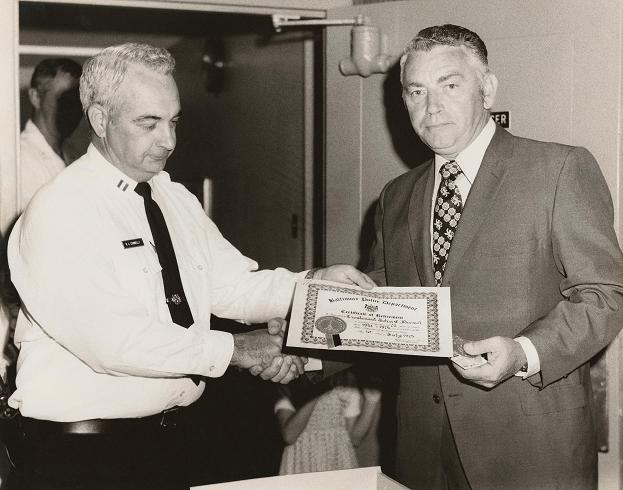
Lost their son "Jamie" LODD March 8, 2000


Adrian_Maralusha.jpg

Alan_Keitz.jpg

Officer Alan Keitz

Det_Edward_Chaney_5th_from_left.jpg

Edward_Doyle-Gillespie.jpg

Officer Edward Doyle-Gillespie

James_McCartin_1.jpg
Courtesy Officer James McCartin

Officer James McCartin

James_McCartin_3.jpg
Courtesy Officer James McCartin

 Officer James McCartin

James_McCartin_5.jpg
Courtesy Officer James McCartin
James_McCartin_7.jpg
Courtesy Officer James McCartin

Officer James McCartin with the Emerald Society's van

Larry_Fasano2.jpg

Officer Larry Fasano

Lieut_Johnny_Paradise.jpg

Lieutenant Johnny Paradise

Lieut_Russell_Sharpe_1979-2005.jpg

Lieutenant J. Russell

Served 1979-2005

Roan_Everett.jpg
Officer Roan Everett

1 black devider 800 8 72

Donations

Donations help with web hosting, stamps and materials and the cost of keeping the website online. Thank you so much for helping BCPH. 

Paypal History Donations

1 black devider 800 8 72

POLICE INFORMATION

Copies of: Your Baltimore Police Department Class Photo, Pictures of our Officers, Vehicles, Equipment, Newspaper Articles relating to our department and or officers, Old Departmental Newsletters, Lookouts, Wanted Posters, and or Brochures. Information on Deceased Officers and anything that may help Preserve the History and Proud Traditions of this agency. Please contact Retired Detective Kenny Driscoll.

This email address is being protected from spambots. You need JavaScript enabled to view it.

Devider color with motto

NOTICE

How to Dispose of Old Police Items

Please contact Det. Ret. Kenny Driscoll if you have any pictures of you or your family members and wish them remembered here on this tribute site to Honor the fine men and women who have served with Honor and Distinction at the Baltimore Police Department. Anyone with information, photographs, memorabilia, or other "Baltimore City Police" items can contact Ret. Det. Kenny Driscoll at This email address is being protected from spambots. You need JavaScript enabled to view it. follow us on Twitter @BaltoPoliceHist or like us on Facebook or mail pics to 8138 Dundalk Ave. Baltimore Md. 21222


Copyright © 2002 Baltimore City Police History - Ret Det Kenny Driscoll 

1940 - 1960

1940 - 1960

1 black devider 800 8 72

1940 - 1960

 1st._shoulder_patch.jpg 

foottrafficoct.1940.jpg

FOOT TRAFFIC UNIT  OCTOBER 1940
Police display 1940
Baltimore Police display 1940's
unknown_officer.jpg
Officer John F. Zaloudek 1940's
Off Charles Ernest wife dorthy
COURTESY JOSEPH PEIGHTEL
Police Officer Charles R. Ernest (Bud) and his wife Dorothy (Dots) 1940's.
He lived on a little street in South Baltimore called Ramsey Street, and both Bud and Dot’s grew up in that neighborhood.

Bud earned a Purple Heart fighting in the Philippines during WWII but managed to make his way home. He went on to become a Baltimore City Police Officer, and you can see in the picture, that he towered over his wife. Bud was over 6 feet tall. Bud was a huge tease and loved to laugh and make people laugh. He was incredibly detail oriented and organized as you might expect in a Police Officer.

Officer Ernest was struck on Saturday, June 13, 1964, and succumbed to injuries on Wednesday, January 20, 1965. He was crushed between two cars while directing traffic at the scene of an accident at the intersection of Pearl Street and Saratoga Street. Officer Ernest's partner was interviewing the drivers involved in the accident as Officer Ernest was directing traffic around the two vehicles. His partner requested that one of the drivers move his vehicle out of the travel lane. As the man attempted to do so, he inadvertently put the car in drive instead of the reverse. The car lurched forward and pinned Officer Ernest and a citizen between the two cars. Both men sustained broken hips and other injuries. Officer Ernest remained at home on sick leave as a result of his injuries for 221 days. A blood clot, which had formed as a result of the injuries, moved to his heart, causing him to go into cardiac arrest. He was transported to a local hospital where he died a short time later.

Norman_Spencer.jpg
Photo courtesy Norma Spencer Johnson
Norman T. Spencer, who was one of the first Black detectives on the Baltimore City Police force.
Sgt. Norman T. Spencer seen here as one of the Baltimore Police Special Officers commissioned by the City of Baltimore.
 
***********************
1940

 Off John Smith
COURTESY OFFICER JAMES McCARTIN
Officer John Smith Southern District

Off Barton Rictor Off Sherman Riggin

COURTESY OFFICER JAMES McCARTIN

Officer Barton Rictor and Officer Sherman Riggin

Off Edward McCarron 

COURTESY OFFICER JAMES McCARTIN 
Patrolman Edward McCarron
January 11, 1940

******************************

POLICEMAN STABBED ON STREET, DIES

William L. Ryan, Dying, Fires At Assailant But Misses

Witnesses Capture Man, Who Shouts For "Liberty and Peace”
ryan.jpg
COURTESY OFFICER JAMES McCARTIN

Patrolman William L. Ryan

STABBING-Patrolman Ryan was fatally stabbed today in the first block South Gay Street. Wilcox, an engineer, brought down his assailant with a flying tackle and helped to hold him until other police arrived. Patrolman William L. Ryan, a member of the Police Department since 1921, was fatally stabbed on Gay Street, near Baltimore, today by a man who was taken to the Central Police Station alternately fighting furiously and praying, "O Lord God, give me liberty and peace." Ryan, lying on the sidewalk, had fired two shots at his assailant, but both missed. The man was brought down with a flying tackle by Perry Wilcox, an engineer, and was held by Wilcox, other civilians and two firemen from No. 1 engine house until several policemen arrived and disarmed him. Butcher Knife Used His weapon. they said, was a butcher knife with a ten-inch blade. At Mercy Hospital, where Ryan was pronounced dead on arrival, it was stated that the blade had pierced his heart. He had suffered three puncture wounds to the chest and abdomen, the hospital report said, in the region of the heart and liver. It was Wilcox who called the officer's attention to the man and the knife. The engineer, who lives at 3303 Northern Parkway, said he had made some purchases at an electrical supply shop at 5 South Gay Street and that as he emerged and crossed the street he passed the man, lounging against the front of Grace and Hope Mission next door to the engine house. "Stabbed Without A Word,"He noticed, that the man had the knife in his hand. "Just as I got to him," said Wilcox, "he asked me, what do you want?' I told him, I didn't want anything and went on down the street. "A little farther, on I met Officer Ryan walking north, and told him about the fellow. Ryan started up to him and I followed. "As Ryan reached him he said, 'What's the matter, and without saying anything in reply the other drew back and plunged the knife into the officer's breast. Then he broke into a run. Shots Went Wide As Ryan lay on the sidewalk with a bloodstain spreading over the front of his clothes, he managed to get his gun out and fired, but the shots went wild. "I ran after the fellow and got him around the knees." Wilcox was having considerable trouble holding his captive and George W. Green, of 4917 Midwood Avenue, several other civilians, and Henry Fidler and Joseph Paulus, firemen from the engine house went to his aid. They said that although their prisoner was a man of only about 140 pounds, he "fought like a maniac and they were unable to get the knife away from him. It was not wrested from him until Detective Lieutenant Louis Kotmair, Sergeant Donald Madigan and Patrolmen Walter Geraghty and John Fox arrived. The officers handcuffed the man and he was carried through a large crowd that had been attracted by the shots and lifted yelling and screaming, into the Central district patrol. Ryan was put into a city ambulance and hurried to the hospital. At the station the prisoner first refused to answer any questions, even to state his name. The police said that in his pockets, however, they found a Social Security card bearing the name Joseph Abato and the address 1427 Gough street. Officers were sent to that address to inquire about him.

Man, Shouts, And Screams

Meanwhile, the police said, he continued to shout and scream incoherently, throwing himself on his knees to pray for "liberty, peace, and life" and begging that his handcuffs and leg irons be removed. Whenever the cuffs and irons were removed the officers said, the man renewed his fight. He is sharp-faced, with brown eyes and black hair, and was wearing a black shirt, dark trousers, and black shoes. "His forehead was cut from his fall when Wilcox tackled him. Talks For Sodaro State's Attorney J. Bernard Wells and Assistant State's Attorney Anselm Sodaro went to the station to question the man and when Sodaro addressed him in Italian, the police said his manner calmed almost instantly and he talked readily about himself. ''He said his name is Joseph Abato and that he has been living in a building in the rear of the Gough street address, working at odd jobs when he could get them and spending much of his time at the Grace and Hope Mission, especially during the evening meetings. Tells His Life Story He was born in Sicily, he said, and was brought to the United States when 2 years old. When he was 4 he went on, his parents disappeared and he was reared in a New York orphanage. During the World War he was too young to fight, he stated but served an army enlistment after the conflict. He is married and has a wife, whom he has not seen for several years, and a 4year old son, in New York. He said. his last regular job was on a tunnel project, on the new Harrisburg-Pittsburgh super-highway, near Chambersburg, Pa. It ended last September, he said and it was then that he came to Baltimore. Patrolman Ryan was 44 years old and lived at 3204 Kenyon Avenue. He was a popular officer and was known to "his acquaintances as "Larry." He was' married five years ago and his survivors, besides his widow, Margaret, are a son, "Larry" Jr. 4 years old and a daughter, Patricia Margaret, 18 months.

***********************************************************************

Robert Schueler Sr C 37

Robert Schueler Sr
Hat Device number C 37
His cap device tells us he was a chauffeur 

Based on the information provided in the picture, it is likely that it was taken sometime between 1927 and 1944, as the round hat being worn by Officer Schueler was worn during that period and the Gaither police headquarters building, where the pool table was located, opened in 1927. However, considering the switch from the helmet to the round hat in 1908, it is also possible that the picture predates 1927 if that isn't the gaither building that he is shooting pool in. We didn't have a police shoulder patch until 1952. If this were a coat and not a shirt, it could indicate the picture predates 1952. Except, as was mentioned, this is a shirt, and during the rocker patch period, we didn't have patches on the shirt. So this would before the first full-color patch with the word CITY on it. That would be prior to 1967. However, we have a little more info: his hat appears to be a round hat, not an eight-point hat; we switched from the helmet (Bobby cap) to the round hat in 1908 and wore that until 1944. That would make the picture predate 1944. Sometime between 1908 and 1944, and finally, the pool table was in the old Gaither police headquarters building. Central District was housed in the Gaither building. I think that building opened in 1927, so this is between 1927 and 1944. I am leaning toward a time closer to 1944 perhaps between 1940 and 1944. By analyzing the visual elements in the picture, such as clothing styles, hairstyles, and technological devices present, we can gain insights into the era. Additionally, examining the surrounding environment or landmarks visible in the image can provide further clues about the time period.

 Off Winard Starkey

COURTESY OFFICER JAMES McCARTIN
Officer Winard Starkey
March 24, 1940
OBSERVATION TEST 2SIDE1a
Courtesy Bernie Wehage
OBSERVATION TEST 2 SIDE2
Officers Cochran and Moran at the corner of Katherine and Wilkins Ave SW Dist RC No 72 on 8 4 1949
Officers Cochran and Moran at the corner of Katherine and Wilkins Ave
Southwestern District Radio Car Number 72 on 8 April 1949
The Evening Sun Tue Aug 31 1954 72
31 Aug 1954
 
Officer William Pillsbury CD North Ave and Charles Street
Officer William Pillsbury
Central District
North Ave and Charles Street
1940_Off_Arthur_Boston.jpg
COURTESY OFFICER JAMES McCARTIN
Officer Garry Keil Western District April 24, 1940

Police Give “Royal Suite“

To Frolicsome Great Danes

And Now They Seek Owner Of Pair Of Pair of Dogs That Played Havoc With Traffic If you are looking for two female Great Danes they are being held in protective custody in a cell at the Western Police Station The dogs Were picked up yesterday by Patrolman Arthur C. Boston, of the traffic division, while they were romping in the middle of the intersection of Eutaw and Lexington streets between automobiles moving in all directions. when Boston saw the dogs, he scratches his head and murmured something about “Well. I’ll be… He stopped traffic that was moving all around the dogs and led them to the sidewalk where he looked for the owner. When the owner could not be found, Boston took the dogs to the Western po1ice station and presented them to the desk Lieutenant. The desk lieutenant also scratched his head, murmured something about “Well, I’ll be…… and ordered the dogs to the largest and nicest cell. The dogs were not docketed or searched. Last night Western police attempted to locate the owner of the dogs but were unsuccessful. The po1ice believe the dogs jumped out a parked car. Whenever a person entered the station house last night they were quickly led to the cell block and shown “our very fine guest.” Members of the station house contributed dimes, nickels and quarters To buy bones and raw meat for the dogs’ supper. After the Great Danes had eaten they crawled up on the bench in the cell and went to sleep.
 

1 black devider 800 8 72

1947

1945
The above suspect James Smiley (15 Years Old) was arrested and held in Baltimore
He is wanted in Michigan for the Murder of his Foster-Mother Mrs. Edna Smiley
She adopted him as a child, they recently argued and he killed her with a .22 Cal. Rifle

1 black devider 800 8 72

Baltimore Police

Don New Chapeau

It may not have been designed by Schiaparelli, but Patrolman Paul E. Harman of the Central District Police Station likes his new chapeau. The dark blue octagonal cap which Patrolman Harman and all-district men on the Baltimore Police force donned at 4 pm on 7 Oct 1944, that replaces the oval-topped cap which has been the style here for a little more than 30 years. “all the men like’em” Patrolman Harman, a native Baltimorean who lives at 3212 Matson street, said, “They’re neater, lighter and they won’t blow off as easily as the old ones.” “Besides, my wife likes mine. She says it’s more becoming, and brother, that’s good enough for me. That a woman ought to know about hat’s she buys enough!” NOTE: In 1886 they went from the "Derby type hat" to the Bobby/Helmet cap, wearing a black bobby/helmet in the winter, and a grey/silver bobby/helmet in the summer. The Bobby/Helmet was worn for approx 28 years from 1886 until 1914, when they switched to the cap just before the above (current cap) it looked similar to today's cap; but was round/oval, that cap was worn from 1914 until 1944 (7 Oct 44) when they switched to the 8 point cap... the current cap of today has been worn since 1944.

1940 Safety Education
COURTESY OFFICER JAMES McCARTIN
Baltimore City Police Safety Education Car
Belvedere and Roland Ave.
April 13, 1940

 4 19 1950 Dukeland Wilkins Ave

19 April 1950 Dukeland Wilkins Ave

Off_Richard_Kilma.jpg

Officer Richard Klima, Northwest District, July 4, 1940

1940Policedrill-E.jpg

1940_Sergeant_Examination.jpg

 Sergeant Examination September 28, 1940

 Officer George Waldhauser, Officer R.J. Matter, Officer H.C. Beyer, Officer A.J. Schoenhoff, Officer Walter Kuzmaul, Officer Joseph Rehak, Officer John Thierauf

1940 Off McGee Off Manning
October 21, 1940, Western District Officer Edward Manning, Officer Frank McGee, and Lieutenant John Schmidt take care of little Miss Charlene Whitehead, from Long Beach, California, a 6-month-old child left in an automobile while parents went to a movie
 COURTESY OFFICER JAMES McCARTIN
**********************
1941
 
Officer Howard Collins
 
 
COURTESY OFFICER JAMES McCARTIN
Patrolman Howard Collins
January 2, 1941
 
1941_Garbage_Strike.jpg
COURTESY OFFICER JAMES McCARTIN 
 Garbage Strike
January 4, 1941
 
Lt Edward Burns
 
COURTESY OFFICER JAMES McCARTIN
Lieutenant Edward Burns, Southwest District
February 6, 1941
***********************************
1942
 
Edward_Poist.jpg
Photo courtesy Bob Poist
Officer Edward Poist
DOB: 9/6/1905
DOD: 9/16/1956
Graduated from Baltimore Police Academy 1942
Officer of the year 1955
**********************
1943
COURTESY OFFICER JAMES McCARTIN
Officer Milton Gardner, Officer Harry Scott, Officer James Butler
June 12, 1943
inspector_joseph_itzel1944.jpg

An Instructive Address to the Assistant Buyers Club

By Inspector Joseph H. Itzel

December 1944

A particularly instructive and factual address carrying many little-known facts having to do with the activities of the Baltimore Police Department was delivered on November 30 by Inspector Joseph H. Itzel before the Assistant Buyers Club. A digest of his remarks is given herewith It is a privilege and pleasure indeed to address the members and friends of the Assistant Buyers Club of Baltimore's Retail Stores, in representing your law enforcement agency. In these critical days when the question of law enforcement on the home front is of such major importance, may I take this opportunity to thank you and express my appreciation for the spirit of friendship, cooperation and your interest in your Police Force? We hope you will know us better and become more intimately acquainted with our problems and activities. While it has not been my good fortune to meet you all personally, nevertheless I do feel intimately associated with you through my acquaintance and friendship with my good friend Mr. James P. Burnside, your president. The Police Force is maintained by municipal funds and under the control of the State. This system is in force in only three of the ten largest cities in the country-Boston, St. Louis and Baltimore. The first (non-paid) "VOLUNTEER CONSTABULARY" of Baltimore was created in 1729, the citizens having been driven to this exigency by the alarming depredations of a swelling lawless element. The first "SALARIED WATCH AND PATROL" was created by the Maryland Legislature in 1784. From 1784 to 1860 the Force had been under the control of local officials. In 1860 the Legislature enacted a law placing the department under State control. Today, for the first time, we have a man from the ranks-Honorable Hamilton R. Atkinson, a former Police Inspector. You must remember that police work today covers a broad field of highly specialized pursuits, and to direct as a Police Commissioner must, he must understand them. He must have special qualifications. He must have developed a broad concept of police work, must have an administrative ability, foresight, integrity and physical vigor, professional training and show leadership over a large group of subordinates. The Commissioner has demonstrated successfully this responsibility. It is impossible to encompass within the scope of this summary all of his achievements since taking over command of the Police Department fifteen months ago. Reference, however, is made to several outstanding improvements which are characteristic of Commissioner Atkinson's administration.

JUVENILE PROTECTIVE BUREAU

On January 17, 1944, the Commissioner established the Juvenile Protective Bureau for the purpose of attempting to curb juvenile delinquency and to exert a measure of protective influence in preventing delinquents acquiring court records. Through its instrumentality, the juvenile case is placed in the proper channel for adjustment when necessary and both child and parent are counseled along corrective lines to prevent a repetition of the complaint.

The following is a breakdown of cases showing the activities of the Juvenile Protective Bureau from the Bureau's inception to September 30, 1944:

Involving adults ………………….....14

White Males ..………………….. ..428

White Females…………………….80

Colored Males………………….. .301

Colored Females...........................166

Total….............................................989

Under 10 years…………………...256

10 to 15 yrs. Inclusive……………686

16 to 20 yrs. Inclusive……………..33

Adults……………………………....14

Total……………………………….989

During 1943 throughout this nation 3,785 serious crimes were committed each day-this meant that one out of every twenty-one American homes was a victim of the crime toll. But tragic as that is, it is not our greatest tragedy. The real tragedy in these figures is found in the rising number of youthful offenders. Arrests of boys under seventeen years of age have increased thirty percent since the outbreak of the war. All of our war casualties are plainly not battle casualties. The most positive view is, that we should quit trying to cure juvenile, delinquency by correction and begin curing it by prevention. Prevention means giving juvenile wholesome things with which to occupy his or her time. The seriousness of the problem of juvenile delinquency is more clearly seen when it is noted that compared with arrests in 1941, the figures for 1943 throughout the United States show that arrests of girls under 21 years of age increased 130.4 percent. Juvenile delinquents have created the greatest problem. In 1943 over two thousand persons. under seventeen years of age were sentenced in this nation and the greatest part of these were boys. These figures indicate that the factors contributing to delinquency are still very powerful and point to the need for each community to intensify its efforts to stop the rising tide of delinquency and juvenile crime. All of the constructive influence which an aroused community can provide are urgently needed to combat this menace to our internal strength. Youth today is seeking sympathetic response, recognition, security and new experiences. Any worthwhile youth program cannot overlook the fundamental human desires, for our failure to satisfy all or any of them is a barrier to the development of good citizens. Young people know what they like and the great majority of them adhere to decent things. We must strengthen the "HOME" in every way possible for the primary responsibility for the care and protection of our boys and girls and this must rest within its four walls. Youth is our greatest national asset. We dare not waste it. The watchword should be that of ALERTNESS AND CONTINUOUS UNITY OF ACTION

Too many American communities and fathers and mothers are trying to blame the war for the prevailing, growing and menacing wave of juvenile delinquency. Parents concentrate altogether too much energy and thought on making money. They have no time for their children and little influence over them. It is adults who raise or lower moral standards-children merely reflect the change. After the war, all that can be shown for the big paychecks will be a wrecked home. A sympathetic understanding of the problems confronting these children is necessary. This protective element is paramount in our Juvenile Protective Bureau. Our mission will be fulfilled. No father or, a mother has a right to evade their responsibilities.

This department is keenly aware of the great responsibility which, by law, rests upon it to protect from harm the lives, liberty and property, day and night, of more than one million persons in their homes and their livelihood. We are severely taxed with many burdens, and one of the principal problems is a crime. In the face of a considerable influx of people and an acute housing shortage, it would seem to be especially gratifying, and indeed, incredible that decrease of 8.09% (796 cases) serious crimes was reported in 1943 as compared with 1942. Arrests in 1943 show a percentage of 50.8%.

I respectfully submit statistics of serious offenses reported in 1943 as compared with the number in 1942.

Offense                           1942         1943

Aggravated assault…… 165              179

Manslaughter………… ...   8                   6

Murder………………… 108                  96

Rape…………………… 79                   95

Carnal knowledge……...13                   14

Larceny……………...6,505              5,314

False pretense……..... 339                 325

Embezzlement…………72                    46

Robbery………………588                   682

Burglary……………..1,898               2,225

Forgery………………....62                    59

RADIO CARS IN 1943

The radio cars (patrol service) covered 2,479,106 miles during the year and responded to 112,558 calls, as compared with 118,454 in 1942. Members of this division made 10,356 arrests for various offenses including 19 murder; 1,308 for common assault; 153 for assault and cutting; 84 for assault and shooting; 18 for assaulting officers in the performance of duty; 155 burglars; 5,468 cases involving breach of peace; 130 for carrying deadly weapons; 440 for larceny; 106 drunken drivers and 25 for purse snatching. The cars responded to 4,415 accident calls, 3,230 alarms of fire, recovered 386 stolen automobiles and 62 bicycles; removed 454 persons to hospitals and rendered first aid to 25 victims of gas and other poisons.

BOY’S CLUBS

On June 22d, 1944, one of the achievements of our Police Commissioner Hamilton R. Atkinson, as the dedication of the first Police Boys' Club at the Southwestern Police Station. Some 425 youngsters ranging from 8 to 18 years of age had signed up for membership when the new clubrooms were opened by the Police Commissioner, State and City officials. The club is open five days a week from 4 to 9 p.m. The membership is divided into groups competing against one another in athletic contests. They have a program of self-government and select their own representatives to enforce the club rules. There is a library, a completely equipped machine shop for woodwork with metal work equipment to follow. Another club is now being established in the Eastern Police Station.

AUXILIARY POLICE

In December 1941, our Police Commissioner organized an "Auxiliary Police Force," a unit of Civilian Defense Organization, to help make up for the number of active police that would be drawn off to assist in the war effort. More can be found HERE

1944_newspaper.jpg
Newspaper article dated Feb.21, 1944 indicating that 22 Baltimore Police Officers have given their lives in the line of duty

Eugene M
Courtesy Mike O'Hara (Grandson)
P/O Eugene "Mike" O'Hara
Served with Baltimore Police Department for 30 years
Maryland Penitentiary
1948_sgt_henry_sinski_property_man.jpg
Above Sergeant Henry M. Sinski supervisor of the evidence collection unit in 1948
Thomas Keys named Captain in Traffic 1948
Photo courtesy Tom Bolvari
Original newspaper article reporting the promotion of Lieutenant Thomas J. Keyes to the rank of Captain and being assigned to the Traffic Division in 1948
 
Below pictured Thomas J. Keyes as Deputy Commissioner sitting at his desk.
Deputy_Commissioner_Thomas_J_Keys.jpg
Photo courtesy Tom Bolvari
Deputy Commissioner Thomas J. Keys sitting at his desk.
President LBJ to Deputy Commissioner Thomas Keys
Photo courtesy Tom Bolvari

Photograph of President LBJ that was personally autographed to Thomas Keyes with best wishes and signed by the President of the United States.

july8_1949raywoods_was_hung.jpg
ABOVE,  July 8, 1949, following the hanging of
Ray Arnold Woods for the murder of
Baltimore Police Officer Joseph Benedict,
Alfred H.Fischer (officer with the badge)
witnessed the hanging and helped transport
the body to the morgue
1942_Lt_John_Rollman.jpg
Lieutenant John Rollman
julius_richburg.jpg
Officer Julius Richburg 1950's

Meter Maids

BPD METER MAIDS 1950'S
Bowen_Elmer_Z_Captain_1954.jpg
Photo courtesy Lt. William Bowen
Captain Elmer Z. Bowen (1954)

 Mell_Howell.jpg
 Photo courtesy Officer Melvin Howell

OBSERVATION TEST1OBSERVATION TEST PG 2OBSERVATION TEST PG3

Courtesy Bernie Wehage

Axe in Park Incident

Officer Melvin Howell

Off Mel Howell train wreck
Photo courtesy Office Melvin Howell

Above Officer Melvin Howell is seen investigating a motor vehicle accident involving a train and below he is assisting with the roundup of some cattle that had escaped from a slaughterhouse.

Off Howell cattle
Photo courtesy of Officer Melvin Howell

CALLED RUN-OF-THE-MINE

Strip-Tease Act Lands Dancer In Police Court

December 1952 It was just a "run-of-the-mine strip-tease act," according to Defense Attorney Joseph F. DiDomenico.But to a policewoman and four policemen it was something more than that--enough, in fact, to justify a charge of presenting an indecent show against Mrs. Carmen Benton, thirty-three, Mrs. Benton, who lives in the 700 block Reservoir street, was arraigned Wednesday before Magistrate William F. Laukaitis in Central Police Court. She let Attorney DiDomenico do the talking for her.THE VARIOUS policemen did some talking too. Patrolman George Fink of the police vice squad testified that Policewoman Miss Betty Riha and Patrolman Kenneth Runge dropped in at a cabaret In the 600 block East Baltimore street Tuesday night and were much intrigued by a dance presented by Mrs. Benton. They were so interested, in fact, that after seeing only part of the show they phoned for Patrolmen Fink, John Livesey, and Melvin Howell to join them. The three vice squad men lost no time in hurrying over from headquarters.AFTER THE dance, Mrs. Benton was arrested, and Mrs. Catherine Darrell, forty-six, one of the proprietors of the club, also was charged with permitting an indecent show to be presented. There was some testimony about a brassiere Mrs. Benton wore or didn't wear, but Defense Attorney DiDomenico denied it had been removed. Magistrate Laukaitis postponed the case until Saturday morning to permit the defendants to produce witnesses who would say Mrs. Benton's dance wasn't indecent----that it was just of run-of- the mine strip act, as Mr. DiDomenico.


Off_Melvin_Howell3.jpg
 
 Weigh Charges Attempt Escape Attempt In Courthouse

September 29, 1964

Authorities are considering escape charges against a Patuxent Institute inmate who broke from custody and threw the courthouse into an uproar yesterday. Bullets ricocheted in the marble halls as a guard fired three warning shots into the ceiling when the prisoner broke away from him on the fourth floor and ran down the stairs toward the building's exit. Osborne Eberhart Hedges, 22, of Glen Burnie, was captured by guards and city police after he tripped and fell at the northwest corner of St. Paul and Fayette Sts.HEDGES had just heard himself pronounced a defective delinquent by Judge Michael J. Manley and was committed to Patuxent, where he had previously been for examination. As the gunfire reverberated through the building, judges locked themselves in their chambers; an assistant state's attorney grabbed a gun exhibit and ducked under a trial table; a stenographer fell down a flight of wooden stairs; people in corridors ran for the nearest cover, and women screamed. Hedges was taken to Mercy Hospital for treatment of injuries received when he was overpowered by his guard, Thomas S. Henderson, and Patrolman Melvin Howell.

************************************************************** 

Departmental_Drivers_Licenset.jpg
Officer Melvin Howell
Departmental drivers license issued to Officer Melvin Howell on May 12, 1955.
Officer Howell received the highest score among the others in his class.
1040162
Courtesy Officer John Brazil
Off_John_Brazil_1783_B.jpg
Courtesy Officer John Brazil
Officer John Brazil poses for a picture, May 1954
 
(below) Portrait of Officer John Bazil
bpd_class_1955.jpg

officerraymondstaniewski7-6-1955.jpg 

OFFICER RAYMOND STANIEWSKI

 JULY 6, 1955 

Off_John_Brazil_1783_A.jpg
Courtesy Officer John Brazil

 Officer John Bazil

Officer John Brazil's display of his dad's police equipment. 

Archie_Rogers.jpg
Photo courtesy James Robertson
Officer Archie Rogers badge # 445
1957
Archie_Rogers_Certificate.jpg
Photo courtesy James Robertson

Officer Archie Roger's certificate of completion of the police academy        March 15, 1957

sgt_kniese.jpg
COURTESY OFFICER WILBUR BARTELS

Sergeant Milton Kniese making a phone call to his station from the call box located at Morton and Oliver Sts., around 1957 

academy-class-1958_tom_black_nick_caprinolo.jpg
COURTESY RET. SERGEANT NICK CAPRINOLO

 OBSERVATION TEST 3 SIDE1

OBSERVATION TEST 3 SIDE2

Courtesy Bernie Wehage

off sinnott.jpg.w300h422
Officer John Sinnott, Traffic Motor Division 1958
 
District_reorganization_1959_A.jpg
Photo courtesy Officer Jim Mitchell


District_reorganization_1959_C.jpg
Photo courtesy Officer Jim Mitchell

Clyde_Redding_circa_1960.jpg 

Clyde_Redding_BCPD.jpg

 Photo Courtesy James Redding

Officer Clyde Redding escorting a prisoner


46.jpg


traffic_officers.jpg
Officer John W. Franks, Northern District

Officer Harold G. Sommer, Southwest District
Officer James O. Miller, Jr. Southern District
Officer Raymond Sadler
Officer John J. Carroll, Northwest District
Officer John H. Sauer, Traffic Division
Officer Edward Porst, Northeast District
Officer Edward P. Dunkin, Central District
 
1_st_black_officer.jpg
 
1ST.Black Baltimore Police Officer is marked on the back of this original photograph. We only include it here, because he was an officer, and deserves to have his photo displayed, and displayed here. That said, the hat device is a Baltimore hat device/badge, with a slight difference. His badge is also very similar to the Baltimore badge but also has some differences. His uniform is one of a Baltimore City Officer, having Northwestern collar pins, but the buttons do not appear to be Baltimore Police Buttons. The Hat he is wearing is an 8 point hat, Baltimore Police started wearing Bobby cap/helmets in 1886 then switched to a round/oval hat in 1908, they wore the round/oval hats until 1944 (8 Oct 44), so this photograph was taken after 1944. There is another photo of an officer from behind, dated 1926, it could be this officer, he appears a little younger, and is wearing the round/oval hat. It is possible therefore that he was an auxiliary or special appointed officer of the Baltimore Police Department. No date was indicated in the photograph. All that said, we know he was not the first Black Police Officer as that distinction was held by Violate Hill Whyte, Lt. Whyte joined the department at the age of 40 in 1937, and retired in 1967. She worked Northwestern, and Pine Street's Western District from 6 A.M. until 6 P.M. every night, never missing a single day work, in 30 years, in fact, after retiring in 1967 she continued working for approximately a month and a half to two months while she finished some projects she was working on. Sadly Lt. Whyte passed away in 1980 in a Nursing home on Keswick Ave. God Bless her, she was an amazing lady, and outstanding police, she said two things that I thought were the reason she was who she was, first she said, "I am not afraid of work!" and another things she said, "Being first means nothing, unless you are also your best!" Now this to me was interesting, as the first Police Department in the United States was, Boston; followed by Baltimore, (Some argue New York was second/they're wrong LOL). In Boston the first Irish Police Officer was, Bernard "Barney" McGinniskin, he went on to be one of the best Irish Police in a heavily populated Irish city, had he been the first and been terrible at his job, it would have only brought more negative thoughts for future Irish Police Officers, and those that had negative feeling toward Irish Police in the first place. So what Lt. Whyte was saying,”Being the first means nothing unless you are also one of the best?"   I studied statement analysis, and pay close attention to one's words, and in this Lt Whyte, wasn't taking full credit for "HER" ability, she wasn't saying, "Unless I am the best!" which would have been taking full credit, (credit she deserved), this told me, she would have been modest, soft-spoken, maybe even a bit shy. I talked to those that knew her, and my beliefs were verified. Lt. Whyte was that of a soft-spoken, modest, hard-working police; she didn't seek attention for her actions, and in fact, her actions often spoke louder than her. She couldn’t call herself the best, but we can, and will, "she was the best", and as she said, "Being first means nothing unless you are also the best!" She was recognized for her hard work, and dedication to duty... before she was recognized for the color of her skin, or where it ranked in seniority among other officers in the Baltimore Police Department.
 OBSERVATION TEST 4 SIDE1
OBSERVATION TEST 4 SIDE 2
 Courtesy Bernie Wehage
 
traffic_officer_u.b._huff.jpg
Officer U.B. Huff Traffic Division
charles-wilbur miller-may1959.jpg.w300h402
Charles and Wilbur Miller May 1959
Wilbur Miller retired with the rank of Colonel
mothers_day_breakfast_5-10-1959.jpg
Mother's Day breakfast May 10, 1959
Amateur K-9
Patrolman_Lance_Wolfe1.jpg
Patrolman_Lance_Wolfe_call_box.jpg
PHOTO COURTESY OF HIS DAUGHTER BARB (WOLFE) BUSSELLS
Patrolman_Lance_Wolfe2.jpg
 
1 black devider 800 8 72

Donations

Donations help with web hosting, stamps and materials and the cost of keeping the website online. Thank you so much for helping BCPH. 

Paypal History Donations

1 black devider 800 8 72

POLICE INFORMATION

Copies of: Your Baltimore Police Department Class Photo, Pictures of our Officers, Vehicles, Equipment, Newspaper Articles relating to our department and or officers, Old Departmental Newsletters, Lookouts, Wanted Posters, and or Brochures. Information on Deceased Officers and anything that may help Preserve the History and Proud Traditions of this agency. Please contact Retired Detective Kenny Driscoll.

This email address is being protected from spambots. You need JavaScript enabled to view it.

Devider color with motto

NOTICE

How to Dispose of Old Police Items

Please contact Det. Ret. Kenny Driscoll if you have any pictures of you or your family members and wish them remembered here on this tribute site to Honor the fine men and women who have served with Honor and Distinction at the Baltimore Police Department. Anyone with information, photographs, memorabilia, or other "Baltimore City Police" items can contact Ret. Det. Kenny Driscoll at This email address is being protected from spambots. You need JavaScript enabled to view it. follow us on Twitter @BaltoPoliceHist or like us on Facebook or mail pics to 8138 Dundalk Ave. Baltimore Md. 21222


Copyright © 2002 Baltimore City Police History - Ret Det Kenny Driscoll 

1800 - 1900

1800 - 1900

1 black devider 800 8 72

  1800 - 1900 

BALTIMORE CITY POLICE OFFICERS

We can’t all be heroes; Somebody has to sit on the curb and clap while they go by!

early_bpd_officer.jpg

1866 721866

1800s


joseph_taylor_johnson.jpg
 
Issac, brother-in-Law of Augustus and Joseph.(below)
Information provided by Richard Johnson a family member presently living in Glen Burnie, Maryland.

bpd historic


bpd historic

Devider

Apr 25, 1937

Baltimore's Police Department--A Checkered Career

LEON JACOBSON  The Sun (1837-1987);pg. 60

Baltimore’s Police Department – A Checkered Career
Corruption of Force in the Know-Nothing. Led to Abuse, and State Intervention
Free Elections Assured After Writing and Intimidation of Voters of Earlier Day
By Leon Jacobson
The anomaly of a local police force, maintained by municipal bonds, began under the control of a state agency obtains in only three of the 10 largest cities in the country – Boston, St. Louis and Baltimore. This gives rise to an especially particular situation here, with General Charles D Gaither’s third term as police Commissioner coming to an end in May. His successor will be appointed by Gov. nice, who was rejected at the polls by the city in 1934 and who was carried into office only on the both of Baltimore County. The beginning of state authority over the city police dates back to the most disgraceful era in local history. From its origin in 1784 to 1860 – the police force had been under control of local officials. By that time, however three or four decades of ebullient politics and contaminated it and that body had become so corrupt and ineffective that the state was compelled to assume authority over it. In 1863, the legislature enacted a law created a board of four police commissioners, but subsequent legislation made the commissioners appointed of by the governor and, later, establish a single Commissioner in place of the board. Gen. Gaither, appointed by the late Gov. Ritchie in 1920, was the first single head.

MOBTOWN RIDING
Sporadic writing and mild violence especially around election time had by 1825 already one for the city the soubriquet Mobtown. But the Mobtown epoch in local history is generally considered to have lived and died contemporaneously with the know nothing party, because it was not until the introduction of this party locally that politics found the lowest depths of depravity, and democracy, here at least met its greatest challenge.
Preaching and anti-alien, at the Catholic doctrine, the know nothings known also as the American party first appeared here as a secret order in 1852, probably in the month of October. The time, however, was not yet ripe for such a movement to make an impression, the old parties being too entrenched for this newcomer to edge into the field. But the temper of Pre-Civil War politics was rapidly melting the national solidarity of the old parties and as the weekend nationally, so they did it locally. The know nothings, appealing to the considerable anti-alien sentiment latent in the city and counties, made the most of the situation.

VICTORIES IN 1854
In 1854 – their mayoralty candidates one in Cumberland and Hagerstown; in 1855 – they added Annapolis and Williamsport. In 1856, they completed their meteoric rise. The city and 13 hour of 21 counties were now arranged in their column. With his first taste of success – the party had discarded its secrecy and division into covert councils and had reorganize itself in the clubs bearing such candidly prophetic names as the plug uglies, tires, rough skins, bloody tubs and black snakes. In educating the public, these clubs recognized no law. It became their duty to stuff the ballot boxes and terrify the opposition. Their methods – or rather there implements – of persuasion – were shoemakers awls – slingshots – truncheons – mortar lives – pistols and muskets. Scores of dissidents were hustled into damp sellers until the balloting was over. They were beaten and robbed in the process. Others were forcibly intoxicated and was to the polls to vote the right way. (Note there is a rumor that Edgar Allan Poe was one of those forced to intoxication and made the boat at several voting boxes is said this is what led to his death)
Incendiarism was not infrequently practiced. The opposition’s pre-election meetings were with sleep broken up. After one election – eight were reported killed, 150 injured. Not only men but little boys were said to have gone around armed with guns during periods of political excitement. In one instance, a small cannon was brought into play. In this manner, half of the electorate was deprived of its right to vote.

WHAT WERE THE POLICE DOING ALL THIS WHILE?
Prior to 1856 – they had put forth some effort to quell disturbances and preserve order. But they had been unable to cope with the situation for two reasons. First, the other parties had been employing an election tech make just as diabolical as the know nothings, albeit with somewhat more discretion and conscience: and second – they had not been properly upheld by the magistrates in the discharge of their duty.

FREQUENT ARRESTS
In one year – the police commanded by one Capt. Brown of the Western district – arrested one man more than 100 times – only to have him released in each instant by the magistrate. Police officers at the time claimed that they would arrest from 25 to 50 miscreants in one night – but their prosecution would go to naught and their prisoners of their homes. Perhaps no single event or person was more characteristic of the debasement of the day than one judge stump of the criminal court. He was notorious for his loose habits and disregard of the conventions of civilized society and the dignity of a court. He was frequently picked up by the Nightwatch for his convivial habits. His judicial career and it ultimately with impeachment.

END OF POLICE
After 1856 police intervention became an impossibility and order of far-off abstraction. In that year a know nothing mayor was elected and the force soon became permeated with partisan politics. The police, who previously had been making an attempt, how-ever futile, to enforce the law, now became tools in subverting it. The first hint of form occurred just before the state elections in 1857. The near – anarchy attempted every election had been adversely affecting local business. The riding and disorder had secured hundreds of County merchants away from the city and the local tradesmen were determined not to lose out again. Consequently, they combined with those of the electorate who did not participate in party politics and presented being deprived of their vote and argued Governor Ligon, a Democrat, to take measures toward ensuring a peaceful election.

MAYOR REFUSES
Moved by his sense of duty and, undoubtedly, also by his animosity toward know nothing mayor salon – the governor acquiesced. He came to Baltimore and, by letter, invited the Mayor to cooperate with him in the enforcement of all during the approach and election period. The mayor refused blatantly, informing the governor that local law enforcement was his business and not the concerns of the state. The governor, disregarding the mayor’s reply, proceeded at once to make military arrangements for the maintenance of peace. He ordered Maj. Gen. John H. Stuart, of the first light division, to hold his command ready for service: Maj. Gen. John Spears Smith was ordered to enroll six regimens of not less than 600 men each. To arm the equipment this forest – 2000 muskets were barred from the governor of Virginia. At the same time governor Ligon issued the following proclamation; “Having been credibly informed by a large and respectable number of citizens of Baltimore that serious apprehensions are and entertained that the approaching general election is threatened with extreme violence and disorder in this city, sufficient to terrify and keep away from the polls many peaceable voters, unless the civil arm is vigorously interposed for their protection… And having solicited his (Mayor’s) cooperation… And having received from him no favorable response… I hereby proclaim that I have directed the proper military officers to enroll and hold and readiness their respective corpse for active service at once, and especially on the approaching day of election…”

SPECIAL POLICE
But the military range the governor did not prosper, for in his own words, “that class of citizens who military service is mainly to be expected exhibited first, indecision, and, at last, unwillingness to respond to the call which had been made upon the community.” As a result, the mayor agreed to appoint 800 special policeman among the members of the two major parties (he refused, nevertheless, to choose half the number from the ranks of the Democrats). But nothing came of it. The special police were powerless without the support of the regular force. Those who were to conscientious were told to leave the polls – as they had no business there. Many of them tendered their resignations to the mayor before the day was over.

ROUGHING VOTERS
What is the election was with neither riot nor bloodshed, but fraud and intimidation rendered it anything but democratic. The roughs at the polls employed a regular system of signals to indicate the reception to be accorded the voter. For example, as the gator approach, he was solicited by a party heeler and, if he were voting the Know Nothing ticket, the healer would try out: “clear the way: let the voters come up.” But, if he were to decline the Know Nothing ticket, the healer would shout: “meet him on the ice” and the voter would some really be pushed away from the window and into the street. When men were assaulted, the police either arrested them or tried to persuade them to leave the polls. The assailants met with almost no opposition. But deliverance from these chicaneries was not far off. The state election of 1859 signal the decay of the know nothing party. The know nothings carried the city by large majority. But the counties discussed it with the state of affairs in the city, revolted and went into the Democratic column, the result being the legislator for the first time in several years was decisively not Know-Nothing.

BALTIMORE POLICE
One of the first matters to engage in the legislation attention was the question of a proper police force for Baltimore: in one of the first acts passed was one taking control of the police away from the mayor and placing it in the hands of the board of four commissioners elected by the legislature. By 1860, the know nothings had outlived any definite principles accept an attempt to obtain public office. In the local election of that year, they made their last stand. But, we can by internal wrangling’s and missing the aid and comfort of a friendly police force, they were forced to retreat never to reappear on the local political front. The Civil War came the following year and claimed the energy of those turbulent spirits who had been keeping the city continually in a state of warfare.

NOT ALONE
Baltimore was not alone in surrendering control of its police to a state agency. Many another city was also afflicted by the seething politics of the middle decades of the 19th century: and many another police force was given to corruption. As a consequence, it became the fashion of the day to relinquish authority in favor of the state.
State control had been justified mainly on the grounds of police were primarily occupied with the enforcement of laws passed by the legislator and intended to operate uniformly throughout the state. Therefore, it has been argued, they are not agents of the municipality, but rather of the state whose laws they are under oath to execute.
On the other hand, the argument is advanced that since the municipality pays for the maintenance of the police force, it should retain supervisory power over it. In most instances, nevertheless, with the restoration of water, authority has been returned to local hands. But not so here. Probably, because the behavior of our police during the last 77 years has not been so bad as to warrant a change, and probably also because a change is not in itself a guarantee of improvement.

  Devider

 Baltimore Flood

1868 - Friday, July 24, 1868 - The Baltimore Flood overtook the city. In a crisis the bravery of Commissioner Carr in rescuing the victims of the catastrophe, became a matter of national fame. Harper's Weekly, at the time, in a long article on the floods, quoted the following editorial notice from the Baltimore Sunday Telegram, of July 26, 1868: "It is a true saying, that in times of great public calamities, some men rise to the position of a greatness, and such was the case with Police Commissioner James E. Carr. He at first sight apprehended the character of the calamity, and he immediately sent for boats and organized a sufficient force of policemen to manage them. He soon had work enough to do. He led the van in his boat in places of great peril, and rescued women and children preventing them from drowning in a flood the likes of which Baltimore has never seen. The part most difficult to explain, is the rapidity with which the streams rose. The Patapsco River at Ellicott City and Jones Falls, rose at the rate of five feet in ten minutes; the water came down those streams like a great wave on the sea-short. The river at Ellicott City rose ten feet before a drop of rain had fallen there, and was at one time forty feet high. In this city the rise was so rapid that a gentleman entering a cigar store from a dry street returned with a lighted cigar to find himself knee deep in a rapidly rushing stream. A passenger car, while crossing a street, was caught by the flood, and with its passengers was swept several blocks toward the river. The market men were caught at ' their work, and only had time to get on their benches and stalls for safety, and these were washed away with their occupants. Terrible as was the catastrophe in Baltimore, it was much worse in Ellicott City. Had it occurred at night the loss of life that it must have caused is fearful to contemplate! It was about ten o'clock in the morning when the water first rose above the banks of Jones Falls, and began to flood the low streets of this city. Slowly, at their beginning, the floods covered Harrison street, but in a moment they rushed down Harrison street, increasing in volume at each minute, until the bed of the street was filled with a swollen and powerful stream, whirling on in its surface the shattered remains of ruined homesteads, wrecks of furniture, and, in fact, almost everything in ordinary and common use. When it reached Baltimore Street the stream divided into three currents. One rushed like a torrent to the right, the other to the left, and the third ran with more slowness down the center of the market. Above the roar of the vortex could be heard the shrieks of women and children, and the cries of men for help, as they were whirled along with the furious current. Even carriages, with their occupants, were caught up and carried along. For some hours after the awful scenes of destruction had begun in the center of the city, the greater part of the population of the upper portions, kept indoors by the pouring rain, had no idea of the dreadful occurrences below. An extra edition of the Evening Commercial, published at about two o'clock, gave them their first intimation of the disaster. When the flood first appeared on Harrison Street the police busied themselves aiding the residents of the street to carry their household goods to places of safety. In a few moments, however, they were obliged to turn their attention towards rescuing the people themselves. Alarms were rang, and men called in from all the stations, to the scene. Numerous boats were promptly ordered from the wharves by the Police Commissioners, and were hurried to the inundated district. They were manned by experienced boatmen and police men. Most of the boats were launched from the Holiday Street Theater, and were sent thence, under the direction of Commissioner James E. Carr, through Calvert, North Holiday, and other streets, for the purpose of removing families and furniture to places of safety!!!

marshal_kane_1860.jpg
Marshal Kane 1860
  Devider

  Apr 29, 1861

PROHIBITING THE DISPLAY OF FLAGS The Sun (1837-1989); pg. 2 Prohibiting the display of flags. At this very critical juncture of opinions on Bunting, the pulling down of an American flag by order of the board of police is an act which a little preserve ingenuity may distort into an atrocious, not to say flag-itious, offense. But the times require good men to be true and reasonable. We are very sorry to find some disposition prevalent to deal unjustly and mischievously with this matter. We can say, with the knowledge of the fact, that our excellent board of police have done several things which none could regret the obvious propriety of doing more than they. Yet in all they have done. Where is the man among us who will say he has suffered the privation of any civil right at their hands? Just think for a moment of the wonderful preservation of the general peace and order of the city seem to tearfully exciting times of the last few weeks. Think how the turbulent elements of the city have been subdued. Think how few Outrages have disturbed our sense of right and justice, when the inflamed populous were bent on securing arms by any means. Think of the mild but effective restraint exercise over the whole community one passion and resentment stirred the whole city to go forth and make war upon the Pennsylvania volunteers at Cockeysville, and happy termination of that affair and sending out to them an abundance of food to relieve their family shooting condition. And think about this is the worst that can be said of that good old Baltimore, which they so lustily abuse in the North, which, as it comes to its senses, will be induced to do us justice, while the South can really have no good cause of complaint against us.But to the flag affair. Our citizens know very well that those whose taste for the display of flags is so exceedingly susceptible. Enjoyed the opportunity of giving the nation Bunting to the breeze on the fall of Sumpter. For several days sympathy with the administration and hostility to the south was expressive in this way at several places in the city and did some newspaper offices. Then came the sad affair of Friday, the 19th, after which, and suddenly, the Confederate flag was in the ascendant, and the emblem of the Southern Confederacy was everywhere, while the national flag was voluntarily retired. But our readers are not all where that one a rush was made upon the corners of the Minutemen to pull down the American flag, the first man who appeared to stop the lawless movement was Mr. Davis, one of the board of police, and to at once resisted their purpose. The flag remained, and was removed voluntarily and that leisure by the Minutemen themselves, under the unpleasant feeling that seemed to associate their sympathies with those who had shed the blood of our own citizens.And a word here upon the Confederate flag demonstration. That was by no means what it has been supposed to be – a secession demonstration. It was an exhibition of that feeling which still pervades pretty nearly this whole community – an unwavering devotion to southern rights. And the mistake still prevails the north that the union men of Baltimore are in different to southern rights: if this is not an egregious mistake, we have misunderstood at her own citizens.The southern rights demonstration, through the exhibition of respect for the southern flag, was apparently all but universal until a few days ago when it was ascertained that a union flag was to be hoisted at two or three places in the city. The fact was one to be seriously considered apart from any disposition to oppose the hoisting the United States flag. It was a question of the same importance, had it been a white sheet, with the same probable result the belief was consistently entertained by the commissioners of police that if they did not prevent the movement or take down the flag, a mob would have attempted it, a desperate riot would have ensued, and the peace of the city have been murderously and possibly overwhelmingly destroyed. Accordingly, true to their office, and the impartial execution of their duty, they issued an order that flags of every description should be withdrawn during the session of the legislature. When that order was issued, there were nothing to be seen but the Confederate flag and the arms of Maryland. Instantly all these flags were withdrawn: but the flag of the union was run up on Fells point and on federal Hill, and the collection of men had rallied to defend them and defy the police. Then it was that the police authorities insisted upon compliance with their orders. The union flags were taken down, and the peace maintained and that good peaceful citizen will not admit that it is far better for the display of flags should be temporarily suspended, rather than the piece of the city be so needlessly disturbed?Amputations against the police are easily made, and sensor is a flippant thing when reason is an abeyance. But peace and good order we enjoy is worth 10,000 times over the display of a flag. Men can cherish their peculiar views, and maintain their associations without Bunting, at least during a period of great domestic excitement. 
 
Devider
 
31 CAL COLT REVOLVER .2
Photo courtesy of Gualtiero Fabbri
A Colt 1849 Pocket Model
baltimore_police_officer_1850s_1.jpg

Issac Henry Jackson

Born: Dec.5, 1820

Died: Aug. 21, 1867

1855-1856: Baltimore (Watchman) Police

1857-1860: Baltimore Police Officer

Samuel Johnson, (no photo available) father of Augustus, Joseph and Caroline Johnson (wife of Issac Henry Jackson )

Born: Feb.22, 1798

Died: Jan: 21, 1871

1855-1857- Baltimore Watchman (Police)

1858-1862- Turn-Key Southern District

1862-1868- Keeper of Battery Square (Riverside Park)

1869-1871- Watchman

Williams_William_Hamilton_1859.jpg
officers_polling_place_1860.jpg
Voters and police assemble outside a barbershop turned polling place. Before the Civil War, election violence was so prevalent that wags often referred to Baltimore as "Mob Town." This early twentieth-century image suggests that elections still attracted a police presence.
 
BPD_Lt_1860.jpg
 
Baltimore Police Lieutenant circa 1860's
j.thomas_arthur-1840-1909.jpg


J. Thomas Arthur was born on 4 April 1840 in County Clare, Ireland. He was in Baltimore by 1864 (above)
Officer Arthur served in Baltimore City's Police Department at the Central Station.
In the photo, Officer Arthur is the older gent seated on the right side of the picture. (below)
The photo of the Central Police Department was taken about 1890. Notice the details, brass lamps and sconces, polished furniture with turned legs ... there's even a telephone on the desktop at the left.

j.thomas-arthur_cd_1890.jpg
 
OFFICER JOHN WEITZEL DISPLAYING SECOND ISSUED BADGE 1860
Devider

17 September 1910

Why The Control Of The Police Board Was Given To The State

Inasmuch as there has recently been some talk of restoring the complete control of the Police Department of Baltimore back to the state. It might be an opportune time to recall the reason the appointment of police Commissioner was committed to the state the first time. In 1860 the police commissioners were appointed by the Mayor and City Council under a law authorizing them “To Establish Night Watch or Patrols and to erect Street Lamps.” Soon after the enactment of this old law the police force became a political machine in the hands of the Mayor. In the 1850s, when the “Know Nothings” were in control of the city and the various societies known as “Blood Tubs,” “Plug Uglies,” “Rednecks,” “Pioneers,” “Spartans,” “Regulators,” “Black Snakes,” “Tigers,” “Eubolts,” “Rip Raps,” “Ranters,” “Little Fellas,” etc., ran riots on election days, the police became an element of the mob. In 1837 a city reform association was organized and issued an address to the people, in which it was declared that there was no reasonable and sufficient security in Baltimore for persons, property or franchise.

The Central Reform Committee in 1859 declared that the police, with a very few honorable exceptions, openly sympathized with the rioters at the November election and in almost every case arrested those who were assaulted by ruffians. The Reform Convention of 1859 appointed a committee to draft loss to reform the city government. The committee was composed of William H. Norris, Philip Francis Thomas, I. Nevitt Steele,, S. Teakle Wallis, and Nielsen Poe. The election of 1860 was carried by violence, but the legislature unseated the whole city delegation, and, at the request of the city for the preservation of peace and good order, enacted the  Jury Law and the Police Law – the latter drafted by Mr. S. Teakle Wallis. That law, passed at the urgent request of the city, took the appointment of Police Commissioner from the city and confided it to the state, where it remained until 1978.

The act of 1860, chapter 7 – which reorganized the police force, retained a singular provision, which it is believed was not in the original draft as written by Mr. Wallis. It is as follows: “provide, also, that no black Republicans or endorser or approver of the Helper Book shell be appointed to any office under said board.” This law created four Commissioners, to be elected by the Legislature, the first board being named in the bill – namely, Charles Howard, William H. Gatchell, Charles D. Hinks and John W. Davis. The board appointed Col. George P. Kane Marshall of the police

The Board of Commissioners continued with four members until 1874, when it was reduced to three. The board was Democratic until 1897. In 1896 the first Republican Legislature was elected, and two Republican Commissioners, Mr. Johnson and Mr. Heddinger, were appointed. From 1897 to 1900 the board was Republican. In 1900, at the request of the city, the appointment of the commissioners was committed to the Governor, where it would remain until 1978. The reason for the change was to put the responsibility for the character of the board upon the Governor. The responsibility of the Legislature was not personal and constituted no restraint. A strong effort had been made in the Republican Legislature of 1898 to give the appointing power to the Governor. A Republican caucus nominated Mr. Frank C. Wachter for Commissioner, but because of divisions in the party the election did not take place, and Mr. Schryver, the only Democrat on the board, held over.

At this session a number of different bills to give the appointing power to the Governor were introduced. Senator S. A. Williams, of Harford County, introduced one of them, and this, we believe, was supported by Senator Putzle, then representing one of the city districts. An amendment was offered by Senator Wescott, of Kent County, giving the appointment to the Mayor of Baltimore. This was rejected all three of the city senators – Putzle – Dobler and Strobridge – voting against it, although all were Republican, and there was at the time a Republican Mayor. Governor Crother, then Senator from Cecil County, introduced two bills for the appointment of the Commissioner by the Governor. One of them provided for a bi-partisan board, two Commissioners from each party. But all the bills failed.

The Reorganization bill of 1900, which was passed by the Legislature, was introduced by a city Senator and was voted for on its final passage by the two city Senators who were present – to wit, Senators Brian and Moses.

The record here presented is given to show that the appointment of Police Commissioners was first taken from the Mayor and City Council and put with the Legislature at the request of the city. It was then taken from the Legislature and given to the Governor upon the initiative of the city and by the action of the representatives of the city in that Legislature. There was never in this connection any assault by the counties upon the home rule of the city. As it is, while the appointing power is at Annapolis, the Police Commissioners must under the law be “three sober and discreet persons, who shall have been registered voters in the city of Baltimore for three consecutive years next preceding the day of their appointment.” 

Devider
 
Gault_Albert-Police_Badge.jpg
Photo courtesy Mrs. Karen Kidd
Detective Albert Gault
 
Actual Baltimore Police badge worn by Detective Albert Gault,, who was a Baltimore City Policeman and Detective from 1866, when he joined the force, until his death in 1900. Detective Gault was a celebrated Detective who was involved in numerous cases during his tenure. The book, entitled "Our police: a history of the Baltimore force from the first watchman to the latest appointee", by De Francias Folsom. Chapter X has about twenty pages detailing some of Detective Gault’s cases. (Note that this badge is the center piece of the first issued star badge in 1851. Only the center piece was worn by detectives to make easier to conceal on the detective's belt or inside his jacket) This badge was found by Detective Gault's relatives among his personal effects.

Obituary for Albert Gault,

Detective Baltimore City Police Department

Detective Gault is Dead

His skill and daring in the pursuit of criminals

July 27, 1900

Detective Albert Gault 63 years old, died at 10 minutes past 4 o'clock yesterday afternoon at his house at 1538 W. Lanvale Street where he had been suffering with stomach trouble for the past 6 months. He had been sinking but Wednesday evening there was a decided change for the worse. He had wasted away to a skeleton having taken no nourishment for weeks, but was conscience until the last. Mrs. Gault and all her children except one, Mr. James W. Gault were present. He arrived last night from Connecticut. The children present were Mr. Robert H. Gault, Miss Kate Gault and Mrs. Edwin Kapp. Mrs. Gault was Miss Sarah Ellen Harrison. She and Detective Gault were married in 1860. Detective Gault leaves one sister--Miss Sallie Gault and two brothers, Messrs. Richard and William Gault. The funeral will probably take place Sunday afternoon. Rev. J.P. Campbell, of the Faith Presbyterian Church, Middle Street and Broadway will conduct the services. The interment will be in Greenmount cemetery. The undertakers are Evans & Spence. Detective Gault was a native of Baltimore and a son of Mr. Robert Gault a well known typefounder. When 14 years old, after spending several in the public schools. Detective Gault served an apprenticeship with the gas-fitting firm of Blair & Co. He followed the trade for 13 years. In 1864 he was appointed on the police force and assigned to work in the Central District under Captain John Mitchell. Very soon afterwards attention was attracted to his "detective" qualities by his prompt discovery of over $7,000 worth of goods from Thompson's tailoring establishment on Fayette Street.

During the flood which occurred July 24, 1868 Patrolman Gault attracted attention by saving with great risk to himself two persons from drowning. He was an excellent swimmer. In 1873 while serving under Captain Lannan he was promoted to Sergeant and in the same year was assigned duty as a detective. Among the noted instances of his work as a Detective was the discovery and arrest of the negro, Harris, who was charged with having assaulted a young woman of Saulda, Va. The negro was tried and sentenced to death, but the sentence was commuted to 25 years imprisonment. Detective Gault made several daring arrest of fugitives from justice charged with assault but one of his best pieces of work was the arrest of Marshal Price of Caroline County who was charged with the murder on March 26, 1895 of Sallie E. Dean, a 14 year old girl. Price afterwards was lynched. Detective Gault was also largely instrumental in solving the mystery connected with the murders four years ago in Charles County of the wife and niece of Joseph Cocklag. An instance of his pluck and daring was the bringing to Baltimore from Detroit, Mich., in 1876 Joseph Lewordrell who had robbed Mrs. Lenka, a polish woman, living on Broadway near Thames Street of about $1,000. While the train was passing through the mountains of West Virginia the prisoner whose handcuffs had been removed for a moment, suddenly dashed out of the car door and jumped off the train which was running at full speed, the train was stopped and the detective, unarmed, pursed the fugitive 12 miles through the mountains, recaptured and tied him and flagged the first train. The conductor allowed the two men to get on, but concluded that they were tramps, was about to put them off when a passenger on the train recognized Detective Gault and he was allowed to continue with his prisoner to Baltimore. In September 1895 at Orlando, Fla., he arrested Robert Beason, alias Frank Smith, alias Frank Lefton, alias Clark who defrauded the commission firm Biedler and Jackson, 113 south Charles Street out of over $500. Beason had been a motorman, a check forger and fugitive from justice for many years. Detective Gault had traced him to Florida and returned with the prisoner to Baltimore, he learned on the train that friends of the prisoner had arranged to affect his release. Before arriving at the place where the rescue was to have been attempted Detective Gault got off the train and taking Beason into a swamp, hid there until the next day, when he continued his trip to Baltimore uninterrupted. In the Perot abduction case Detective Gault was commissioned a United States Marshal and sent to England with extradition papers to bring Mrs. Perot back to this country for trial. He was detained in London for over a month, while there a great reception was given him by the London Detective force of Scotland Yard. His death occurred on the anniversary of the day he sailed on the Majestic for London July 26, 1899. Information provided by Mrs. Karen Kidd, who provided a copy of the original newspaper article. (This site and family members are in search of a photo of Detective Albert Gault.)


3officerwentizebadge.jpg

Portrait of a Baltimore Police Officer 1879 wearing 2nd. issue badge

Officers 1800s-1
Baltimore_Police_1865.jpg
Baltimore Policemen
1865
captain1861.jpg
Captain William Delanty
Appointed: 1861
           Died: 1887
1879-bpd_portrait.jpg
Baldwin_Thomas_Marshall2.jpg

Photo courtesy Sue Whittington

Patrolman Thomas Marshall Baldwin

Baltimore City Policeman

Baldwin_Thomas_Marshall2.jpg

Photo courtesy Sue Whittington

Patrolman Thomas Marshall Baldwin

Baltimore City Policeman

October 6, 1873

Obit: Death of a Police Officer.-- Policeman Thomas Baldwin died yesterday morning, at five o'clock at his residence, No. 289 North Dallas Street. He was a native of Prince George County, Md., and had been on the police force of Baltimore for the past three years, where he was regarded as one of the best officers on the force. He had been severely injured on the night of the 27th. of July last, while conveying Patrick Shane, charged with stoning a house at the corner of Front and Hillen Streets, to the Middle Police Station. Shane was afterwards committed to jail for court by Justice McCaffery, but was subsequently released on bail. Patrolman Baldwin was confined to his house for some weeks after receiving his injuries. For the past month he has been on duty, although complaining at times until a week ago when he was attacked with a severe cold and had been confined to his house up to the time of his death. His funeral will take place this morning at half past eight o'clock. The body accompanied by a detachment of the police force, will be conveyed to Collington Station on the Baltimore and Potomac railroad near where the family reside. He leaves a wife and two children in the city.

Baldwin_Thomas_Marshall1.jpg

 Photo courtesy Sue Whittington

Patrolman Thomas Marshall Baldwin

jacob_frey.jpg
Marshal Jacob Frey
Was Awarded the Departments 1st Medal of Honor
BALTIMORE POLICE DEPARTMENT TO MOVE PRISONERS ON THE B  O RAILROAD 6-7-1880Courtesy Ret Det Kenny Driscoll
Signed 1880 by "Deputy" Marshal Jacob Frey
BALTIMORE POLICE DEPARTMENT TO MOVE PRISONERS ON THE B  O RAILROAD 2-8-1886Courtesy Ret Det Kenny Driscoll
Signed 1886 by "Marshal" Jacob Frey
marshal_farnan.jpg
capt1.jpg
capt2.jpg
patrolman_1870s_3rd_issue_badge.jpg

Devider

 February 19, 1878

The Police force of Baltimore,
Baltimore Sun, 

There is scarcely a citizen in the city of Baltimore having the best interest of said community at heart, who shall become familiar with the provisions of the bill now before the House of Delegates to modify the hours of service of a police force, and to authorize them to appear in citizen dress when off duty, that will not be surprised that such a measure is proposed over the heads of the commissioners. The first duty of the Gen. assembly is to preserve all parts of our judiciary system from the devices of demagogues and an efficient police force lies at the very root of that system. What is known as the Matthews bill directly interferes with the whole present discipline of the force, upsets, indeed, the labor of years and the advantages derived from it. The bill undertakes to regulate the hours of service, instead of leaving that and all such details to those who have the responsibility of administration. It describes an eight hour system to the force as a permanent thing: that is to say, eight hours of duty in uniform as a policeman, and 16 hours off-duty, during which, as if more effectually to remove the wholesome influence of discipline, the men may throw off their uniforms and appear without the least insignia of their honorable calling in the citizens dress. There could scarcely have been a better plan devised for demoralizing the force.

As for the hours of duty they are already regulated with due regard to the comfort of the men and the welfare of the service. None of the officers of the force, many of whom have worked themselves up through the ranks, ask for the changes that are contemplated by the bill: nor do the best man in the force indicate a desire for them, for they foresee as any one may that 16 hours of leisure every day in the citizens dress might lead to nonsense on the part of some of the men and so bring the entire force into disrepute.

Police duty. It is true is more or less hazardous and is some respect onerous, but it is one that has always been sought, and is not shunned.  

"I Doubt less than the largest majority of men now on the force have proper ideas as to what they are paid for. The pay is not simply for the service performed within certain hours, but having been chosen from the mass of their fellow citizens as conservatories of the peace, they feel and recognize the duty of setting an example of discipline and good conduct at all times, and would not wish to see any system introduced that would lessen respect for, or impair the efficiency of the body they belong to, either on or off duty."  

It is difficult to divine the object of this proposed change in the police law unless it is a political one, the seeking of personal advantage at the expense of the community. If there be at least ground for this suspicious. It is quite enough to condemn the bill, apart from the direct injury, it would afflict on the force. The rules regulating hours of police duty at present, as prescribed by the board, are the result of experience and work very sufficiently for all concerned, serving at the same time the proper interest of the public.

The force is ordinary, divided into Sections A, and Section B, the time of duty of Section A numbering 160 men is from 6 AM to 7 PM and of Section B numbering 340 men is from 7 PM to 6 AM, but the force from about 6 January until the severe weather is over is divided into three unequal sections as follows.

Section A 121 men from 7 AM to 6 PM
Section B 223 men from 6 PM to 2 AM and
Section C 156 men from 1 1/2 a.m. to 7 AM

During the winter when the Christmas holidays are over, there is less disorder then at other seasons of the year and the short system is consequently adopted at that time because it can be without danger to the community, and with benefit to the men who shorter hours shield them from to prolonged exposure to the inclement weather. If the short system called for by the Matthews Bill were permanently introduced an increase of police force would be called for to meet it. Consequently, an additional expenditure of money for police purposes. Again, if the force or worked on this shorter system, the result would be that the pay would have to be put on the short system also, as to make up the numerical strength called for without increasing the aggregate the great expense of the force. It stands to reason that if the work of the police force is to be reduced by at least one third The corresponding reduction of pay must follow for the commonality while willing to bear the present aggregate cost of policing the city, have no idea of augmenting that burden, and it is not at all necessary to do so, as every man of honesty and common sense will be aware

officer04.jpg
Baltimore patrolman wearing 3rd. issue badge
james_william_conner.jpg

James William Conner was born 7 September 1839. He was a Baltimore City police officer from 1868 until 1870. This photo was taken about 1868 and shows his police uniform. The child is possibly his son William Conner. James W. Conner served in the 3rd Artillery CSA from January through November 1862 when he was wounded and mustered out. In 1870, he and other Confederate veterans were dismissed from the police force without cause. James W. Conner died 2 January 1906.

calvin sunstrom may 3 1870.jpg.w300h442
Police Officer Calvin Sunstrom (standing)
May 3, 1870
9b.jpg.w300h413
Bell hat MD hat device front
OFFICERS-1862-1890.jpg
Bell hat Md Buttons side view
The MD emblem 1st appeared  on the Captains badge in 1886 after Marshal Frey re-designed the badge for our Captains and made the Ever on the Watch - or - All Seeing - "Eye" Badge. So it would only make sense that this hat and device came along sometime after then. If we look at the above pic 2nd row 3rd in we'll see a hat similar to this being worn by what appears to be a Lieutenant

BaltimoreCaptainBADGE 450

The Below article appeared in the Adams Sentinel Newspaper in Gettysburg Pennsylvania.

Sgt. William Jourden Shot

October 19, 1857

Election in Baltimore,

On Wednesday last, an election took Place in Baltimore for members of the City Council, and it appears to have been a scene of lawlessness, riots and bloodshed,On the matter a. mere mockery of the elective franchise. The democrats, it would appear, wore excluded from the polls In two or three wards, and the democratic candidates retired. There were several bloody conflicts; but in the 5th and 8th wards, the riot was the greatest. A Sergeant of the Police, Wm Jourdan, was shot dead, and several others seriously wounded. A number of arrests were made; but riot, outrage, bloodshed and marked the whole day and night—the details of which are painful to read. The vote, of course, was small, only amounting to 14,667, while at the last election 26,771 were polled—being a falling off of 12,104. The American candidates received 11,878, and the democratic only 2,789. All the Americans were elected but one, so that the Council stands 19 to 1.

1 black devider 800 8 72

Posted in the THE COMPILER, another newspaper in Gettysburg, Pennsylvania

29 November 1858

Two hung for murder of a Police Officer in Baltimore, Gambrill and Ford have both been sentenced to-be hung in "Baltimore; for the murder of police officers.

bpdofficer3rdbadge.jpg
Baltimore Patrolman wearing the 3rd. issued badge
swift father.jpg.w300h445
Pictured above is Michael Brooks wearing a 3rd. issue badge
Pictured below is John Edward Swift Sr. wearing the 4th. issue badge
Michael and John are Father-in-law and Son-in-law
(This information comes to us from Michael Brooks' Great-Granddaughter Rose Ireland)
swift-son.jpg.w300h385
lt thomas dempsey.jpg.w300h410

Devider

POLICE DEPARTMENT

BALTIMORE, MARYLAND

November 17, 1876

Sergeant Seibold, in company with Officer John Connery, of the Northwestern district, on November 17, 1876, arrested William Jennis, colored, alias Brooks, alias Joe Russell, a notorious burglar and sneak, who was charged with burglariously entering the dwellings of Mr. P. E. Kent, No. 85 North Carey Street; Mr. Moses Kahn, No. 266 West Fayette Street; H. R. Williar North Carey Street and others, and stealing money, silverware, jewelry, clothing, etc. He was tried and convicted in Criminal Court of Baltimore and sentenced to the penitentiary for six years, from January 27, 1877. Jennis was arrested also February 20, 1874, for robbing the dwelling of Mr. George W. Flack, No. 142 Mulberry Street. He then gave the name Joseph Russel. He was sent to the penitentiary for one year. This man worked alone, and invariably entered a dwelling house from the rear by climbing sheds, porches or lattice work to second story window, while the family was below at supper. He always used the old fashioned blue head sulphur matches, which were found plentifully strewn about the floors, in the bureau drawers, etc. His work was frequently identified by the matches. About six months after his last release from prison, he went to Philadelphia, Pennsylvania, and robbed several houses there. He was caught, tried, and sent to Cherry Hill prison twelve years.


Devider


james_holden_bpd_officer_1890s.jpg
Police Officer James Holden 1890's
DET_THOMAS_O'DONNELL.jpg

Photo from Clinton McCabe's" History of the Baltimore Police Department, 1774-1907"

Thomas P. O’Donnell, born June 1, 1866 in Birmingham, England.

He was appointed a Baltimore policeman January 24, 1890, and made detective four years later.

One of his most famous cases was the capture of a murderer and Post office robber. The post office at White Plains, N.Y., had been held up and Postmaster Walter B. Adams, a personal friend of then Governor Theodore Roosevelt, had been killed. Police were seeking Eddie Jacks, alias Peter James, for the crime. Thomas O’Donnell, then a rookie detective, got a tip that the fugitive had just slipped into Baltimore and was staying at a boarding house on St. Paul St. Anxious not to let his man get away, the young officer dressed in overalls borrowed a bicycle from Detective Captain Solomon Freeburger and hot-pedaled to the boarding house. He said he had heard the new boarder was a bicycle repairman, so he asked for the fugitive under the pretext of wanting a bicycle lantern repaired. Det. O’Donnell had put two pistols in his coat pockets before calling on the fugitive. As he sat down beside the suspect in a drawing-room, Detective O’Donnell edged up beside him and felt a pistol in his pocket. When the bandit saw one of the gun barrels protruding from the Detective's pocket, James leaped up with not one but two pistols in his hands. At the same moment, Captain Freeburger and a Philadelphia detective burst in and overpowered him. It was believed that the desperado was also planning to rob Mr. Poultney, in the building next door. For the capture of the post office robber he was commended by the late Mayor Malster, and then Governor Roosevelt in person presented a $1000 reward to him for the capture.

In addition to receiving the reward and congratulations from Governor Roosevelt, Detective O’Donnell was given a “Roll-Of-Honor Medal,” the department’s highest award, for the action. At that time–when he had been on the force twelve years–Detective O’Donnell had an imposing record. In his career, he was shot at only once and that was in a gun battle with two burglars in the basement of a cigar factory on Paca street near Cider alley. He trailed two Negroes into the basement and in the darkness, a pistol battle ensued, reinforcement officers arrived in time and the burglars were arrested. Lieutenant O’Donnell was unharmed.

Seventy years old, he retired after forty-eight years of continuous service, 1890-1938, during which he was commended a total of thirty-five times. On his last day he left the Detective Bureau early for his home located 2003 Boone street, where he lives with his wife and daughter. “I’m still active,” he said, as he departed. “I can’t loaf and I’ve got to do something. Guess I’ll try to get me a job as a private detective now.” St. Ignatius Church, on Calvert street has an annual novena and “Tom” O’Donnell is on the job today, every day, just as he has been for 35 years or more, or ever since the novenas were inaugurated by the late Rev. F. X. Brady.

Det. Lieutenant O’Donnell, for half a century a member of the Police Department, and for much of that time one of its best detectives, is retired from active service, so far as his police duties are concerned. But, he is still on duty, night and day, at the church while the novena is being held.

The story is that when the late Father Brady inaugurated the novena, he applied at the Police Department and asked that a tall, slender young man, Thomas P. O’Donnell, whom he knew, be assigned to duty during the special services. The request was granted and so “Tom” has been going back year after year. His colorful career in the Police Department extended over a period of 48 years, in which time he arrested murderers, kidnappers and – in the earlier years – horse thieves. He retired as a detective lieutenant in 1938, the possessor of 35 commendations Lieutenant O’Donnell has been ill approximately a week prior to his death on March 21, 1947

Data compiled by great-niece Sister Anne M. O'Donnell. from Baltimore Evening Sun, April 14, 1938; Baltimore News-Post, Evening, March 9, 1939; Baltimore Sun, March 22, 1947. Photo from Clinton McCabe. History of the Baltimore Police Department, 1774-1907. 2nd ed. Baltimore, MD: Board of Police Commissioners, 1909. Enoch Pratt Central Library.

Sgt_Frank_Gatch.jpg

 Photo courtesy Pat Pilling
Sergeant Frank Gatch
1890-1915
bpd_officer01.jpg
75.jpg
BPD-Officer-11
BPD-Officer-22
BPD-Officer-55
BPD Officer 66
67.jpg
gumpman p.h.

Born:July 5, 1849  Died:January 7, 1917

Peter H. Gumpman appointed to Police Force 1886 and assigned to the Southern District for 30 years.
 
gumpman2
Baltimore SUN paper Monday Morning,
April 27, 1903 page 12.
p.hgumpman1
Baltimore SUN paper Monday morning
January 8, 1917 page 3
gumpman3.jpg.w300h99
Baltimore SUN paper Tuesday morning
January 9, 1917 page 6
john_william_garmer_1899-1925.jpg
Officer John William Garmer
Served with the Baltimore City Police
1899-1925
Great-Grandfather of Retired Officer William John Garmer Southern District
68.jpg.w300h437
howard_swope_swd.jpg
Police Officer Howard Swope
Southwest District
sgtp.j.clark.jpg.w300h477
78.jpg.w560h334
unknownoff7.jpg.w300h414
off.colburn 1893.jpg.w300h296
Police Officer Colburn
unknownoff3.jpg.w300h454
 
sgtalfredmoore1896-1930.jpg
6a.jpg
norton_thomas.jpg
officer_in_the_park.jpg
 
121.jpg
 
BPD-Officer
BPD OFFICER Badge 60

  Devider

Another Reorganization of the Department
History Baltimore Police Department
1774 – 1907

This measure was made an act on February 2, 1860 provided that while the city Council of Baltimore might pass ordinances for preserving order, securing property and persons from violence, danger and destruction, and for promoting the great interest and insuring the good government of the city, it could pass no ordinances which would in any manner obstruct hinder or interfere with the board of police commissioners or any officer under them. All of the Mayor’s powers, conferred by preceding legislation, were repealed. Four members of the board of police commissioners were authorized to be appointed, and the mayor was to be ex officio member of the board.

The first Commissioners appointed under the new act were Messrs. Charles Howard, William H. Getchell, Charles D. Hinks and John W. Davis, two of whom were to serve for two years and two for four years, the duration of their office to be decided by drawing lots.

The duties of the board of commissioners were, in general, “to be at all times, day and night, within the boundaries of the city of Baltimore, as well on water as on land, to preserve the public peace, prevent crime and arrest offenders, protect the rights of persons and property, guard the public health, preserve order at elections and at all public meetings and places and on all public occasions, prevent and remove nuisances in all streets, highways, waters and other places; provide a proper police force at all fires for the protection of the firemen and property; protect strangers, emigrants and travelers at steamboat landings and railway stations; see that all laws relating to elections, the observance of Sunday, and regarding pawnbrokers, gambling, intemperance, lotteries, policy, vagrants, disorderly persons, slaves and free Negroes, and all the public health ordinances were enforced, and also all the ordinances of the Mayor and city Council, provided these be not inconsistent with the provisions of the act or any law of the state which may be made enforceable by a police force.”

The newly created board of police commissioners were authorized to “appoint, equip and arm a permanent police force, the number, exclusive of officers to be 350.” They were also empowered to reduce or increase this force, but could not increase it to more than 450.

No individual could be employed as a policeman who had been convicted of a crime or against whom any indictment was pending for an offense, the penalty for which was imprisonment in the penitentiary.

Policemen were appointed for five years and could only be removed for just cause and after a hearing before the board of commissioners.

In 1862 the military signified its willingness to turn over the Police Department to the civil authorities, from whom they had torn it. The Legislature was at that time in sympathy with the Federal Government. The former police law of 1860 was repealed, but its provisions were practically re-enacted with the difference that the number of Police Commissioners was fixed at two. John Lee Chapman, Mayor of Baltimore, was made an ex-officio member of the Board and Messrs. Samuel Hindes and Nicholas L. Wood were appointed Commissioners. This Board of Commissioners qualified on March 6, 1862, and the oath of fealty to the government was required of them and their subordinates. On March 10 the Board entered upon its duties. The force was entirely reorganized and W. A. Van Nostrand was appointed Marshal. Marshal Van Nostrand went into office when Baltimore was probably one of the most troublous cities in the North. Sectional feeling ran high and there were constant conflicts of opinions between Northern and Southern partisans. The Deputy Marshal was William H. Lyons. Marshal Van Nostrand, besides having charge of the Baltimore Police Department, was United States Provost Marshal of West Virginia, Maryland, Delaware, Pennsylvania and New Jersey. During the greater part of Marshal Van Nostrand's incumbency barricades were established throughout the city, through which no one was allowed to pass after nightfall without a pass. The military and police acted in concert, and while martial law was threatened on a number of occasions, it was never declared, and the courts and magistrates exercised their regular official functions. On March 17, 1864, Marshal Van Nostrand was succeeded in office by Thomas A. Carmichael, and John S. Manly was appointed Deputy Marshal. Marshal Carmichael served until 1867, when a new Board of Commissioners was appointed. Commissioners Nicholas L. Wood and Samuel Hindes continued in office until 1866, when they were removed and Messrs. William T. Valiant and James Young were appointed Commissioners. Messrs. Hindes and Wood refused to deliver to the new Commissioners the police establishment and continued for some time to exercise control over the Police Department. The new Commissioners established their headquarters at another point and began preparing to exercise their official functions. Measures were taken against them in the Criminal Court and they were arrested on the charge of conspiring to obtain possession of the Department. The Commissioners refused to give bail and were imprisoned in the City Jail. They were released by Judge Barton and a few days later took possession of their office and entered upon the performance of their duties. Marshal Carmichael surrendered his command and Commissioners Valiant and Young immediately appointed Col. John T. Farlow Marshal of Police. Capt. John T. Gray, of the Central District, was appointed Deputy Marshal. Marshal Farlow was appointed on April 22, 1867, and served until April 17, 1870, when he resigned. On March 15, 1867, the new Board of the Police Department was organized under the State law. Messrs. Lefevre Jarrett, James E. Carr and William H. B. Fusselbaugh were elected Commissioners by the Legislature. Commissioner Lefevre Jarrett died on February 25, 1870, and the Legislature, then in session, elected Mr. John W. Davis to fill Mr. Jarrett's unexpired first term. Mr. Thomas W. Morse was elected to fill Mr. Jarrett's unexpired second term, and on March 15, 1871, he took his seat, succeeding Mr. Davis. Mr. Morse served four years. In April, 1867, Marshal Farlow retired and Deputy Marshal John T. Gray succeeded him. Capt. Jacob Frey, of the Southern District, was promoted to the office of Deputy Marshal. In 1872 the State Legislature made several important changes in the police law, particularly in regard to the terms of service of the Commissioners. Under the new law Mr. John Milroy and Col. Harry Gilmor were appointed members of the Board. The Board at that time consisted of Colonel Gilmor and Commissioners James E. Carr and Milroy. In 1877 Mr. Milroy retired and Gen. James R. Herbert was elected to succeed him. The riots of 1877 were a setback, in a police and business way, to Baltimore, then rapidly becoming in the matter of good order and commercial prosperity the leading city of the South. The history of the trouble between the Baltimore and Ohio Railroad and its employees has been written fully by historians more competent to deal with this subject, so we will confine ourselves to trying to tell how the members of the Baltimore Police Department distinguished themselves during the stirring days of July, 1877, and will be as brief as possible, considering the importance of the subject. On July 16, 1877, the strike was declared at Cumberland. By noon it had reached Martinsburg, W. Va., and the militia were called out. The police, anticipating trouble, had prepared for it. On the day following the excitement began. A freight train of eighteen loaded cars bound for Locust Point was partially wrecked by means of a misplaced switch near the foot of Leadenhall Street, Spring Gardens. That night the Baltimore and Ohio Railroad employes held a meeting and decided to support the strikers. At 3 o'clock on the afternoon of the Friday following Governor Carroll held a consultation with the Baltimore and Ohio Railroad officials and an order was issued for the First Brigade, M. N. G., to repair to Cumberland. At 5.45 o'clock that evening the military call, "1 - 5 - 1,” was sounded by the City Hall and fire bells. The people knew what the call meant, and in a short time the streets around the armories were filled with crowds of strike sympathizers. In front of the Sixth Regiment Armory, Fayette and Front Streets, a large crowd had gathered. The officers of the regiment saw the menacing concourse and sent word to Police Headquarters asking that policemen be sent to protect them along the line of march to Camden Station. Their request was promptly responded to. At 7 o'clock P. M. a brick was thrown through one of the windows of the armory. Four policemen, Officers Whiteley, Jamison, Oliver and Roberts, were stationed at the door of the armory, and when the rioters charged the doors the faithful policemen manfully repulsed them. By 8.15 o'clock the crowd became more menacing. The militia had orders to march to Camden Station and prepared for trouble. The first attempt of the soldiery to leave the building was received with such an outburst of groans, hisses and stones that they retired. The next time they came out they had orders to fire if molested. The first company fired high, but the attack became so serious that the following companies aimed their weapons at the crowd and discharged them. From then until Camden Station was reached the firing was general; a dozen people were killed and scores wounded. Soon after the regiment reached the building the station was set on fire. Firemen appeared to extinguish it, but were set upon by the rioters and would have been not the police rushed to their rescue and beaten back the crowd. The soldiers appeared to incense the mob, while the police awed it. A scanty handful, compared to the throngs that surrounded them driven from the scene had they charged and charged again to protect the armed soldiers from injury. On Saturday crowds again collected around the station, and a fire alarm so excited the rioters that they rushed toward the lines formed by the police. Deputy Marshal Jacob Frey called to his comparatively few men to "stand steady" and gave the command "Draw your revolvers." Several shots were fired from the crowd and four policemen fell wounded. At this the Deputy Marshal gave the order, "Fire, and aim low." The command was obeyed, and as the policemen fired they rushed forward and each officer seized a prisoner. In all fifty arrests were made, eight men were killed and a number wounded. At 11 P. M. of the same date there was another outbreak and more arrests were made. The next morning (Sunday) the mob again collected around the station, but the surrounding streets were cleared by the police. When the riot had assumed such threatening proportions that the police and local militia were unable to cope with it United States troops from New York and other points were hurried to Baltimore and two war vessels, with decks cleared and ready for action, anchored in the Patapsco. The Board of Police Commissioners swore in several hundred special officers, among whom were Baltimore's most prominent citizens. Messrs. C. Morton Stewart, Alex-

The first powered boat in the Baltimore Police Harbor Patrol came in 1891 – and was The Lannan, followed in 1928 – by The George G. Henry, then in 1940 – came The Charles D. Gaither, and then in
1946 – came the The Beverly Ober.


Devider

THE HARBOR POLICE
History Baltimore Police Department
1774 – 1907
pages 144-146

Nearly everyone who patronizes the summer excursion boats and the score of passenger boats that enter and leave Baltimore harbor is familiar with the sight of a trim looking little dark-hulled steamer that makes her way in and out of the tangle of shipping, skirting around wharves, running into tortuous docks, darting around the ships and steamships that lie at anchor at the wharves or in the regular anchorages. Sometimes at night the passengers on incoming and outgoing steamers catch a glimpse of a dark hull close aboard them and then a glare from a searchlight is sent across their decks and searches the wharves that line both sides of the river front. The little steamer is the harbor police cruiser "Lannan," named in honor of former Deputy Marshal John Lannan, deceased, who had charge of her construction. The Lannan was built in 1891 by James Clark & Co., from plans kindly loaned the Department by the United States Government. The harbor patrol boat was completed on August 10, 1891, and after a very successful trial trip was accepted and immediately put into commission. The steamer is sixty feet long overall and has thirteen feet beam. She draws about six feet of water and has seventy-five indicated horse power.

Prior to the launching of the Lannan the harbor was patrolled by policemen in rowboats, but, as it can be very readily understood, this plan proved utterly inadequate to the police needs of nearly ten miles of water front. Since the time she was launched the Lannan has been continuously in service, save when she was on the ways for necessary repairs. In touring the harbor the Lannan averages nearly fifty miles per day, and as she has been almost steadily on the move since the day she was launched, she has, on a conservative estimate, traveled about 127,750 miles, a distance nearly six times the circumference of the globe. Prior to the launching of the Lannan the vessels in the harbor and the warehouses along and around the wharves were nightly attacked by thieves who operated from the river. Frequently the captains of small vessels would go ashore to return and find that their craft had been stripped of everything movable, including cordage and sails. The commissioning of the police cruiser practically put an end to this extensive thievery, and the fact that she was equipped with a powerful searchlight and could train it over and under piers and on the decks of suspicious craft acted as a check to river pirates and criminals who lurked and operated along the water-front. Shortly after she was built the Lannan was equipped with a fire-fighting plant, and the latter has been used to great effect in fighting fires in the warehouses and along the wharves where the steamer has her regular patrol.

The Lannan is also used for the recovery of the bodies of persons who are drowned in the harbor, and frequently she is called upon to go to distant points in the Chesapeake on the same mission. Her crew is trained in the expert use of the grappling irons and hooks with which the bodies of drowned men and women are fished from the river bed, and the deck of the little steamer has carried many a pitiful canvas covered burden, the earthly remains of some unfortunate who accidentally fell into the water or purposely sought death and oblivion in the murky waters of the harbor.

In the summer of 1906 the Board of Police Commissioners purchased a gasoline launch to act as an auxiliary to the Lannan. This boat was rebuilt and remodeled recently and was launched on May 4, 1907, when she was christened the Farnan, in honor of Marshal Thomas F. Farnan, who on April 30, 1907, completed forty years' continuous service as a member of the Baltimore Police Department. During the warm months the Farnan will patrol the harbor instead of the Lannan, which will be kept at the Harbor Police Headquarters, Philpot and Thames streets. Thus the Department will have two thoroughly able boats at its command should an emergency occur where the services of both the Lannan and the Farnan might be called upon. The members of the Harbor Police Force, who are commanded by Lieutenants Albert L. League and Edward J. Carey, are: Patrolmen John B. Dorsey, Milton Harrington and John J. Ryan. Thomas E. Perry is chief engineer and Charles H. Aborn, assistant engineer. Richard Murphy
is fireman and Richard Stanton, assistant fireman.

In the last report of the harbor police service made to the Maryland General Assembly of 1905 it was shown that during the year 1904 property valued at $13,257.46 was saved and recovered by the harbor police and during the year 1905 the property saved and recovered amounted to $7,616.41. From this a small idea can be gained of the work accomplished by the police who guard the harbor and the docks, warehouses and business concerns that hem it.

  1 black devider 800 8 72

Excerpts from - Proceeding of City Council 11 Dec 1856

(During this December 11th session in 1856) Mr. Boyd moved to strike out all of the section providing for arming the police with revolvers and other suitable weapons AND placing muskets at the station-houses. Mr. Boyd said the cost of arming the police with revolvers would alone amount to $516l; that there were men in the police not fitted to trust with arms, and if the amendment was not adopted he feared he should be compelled to vote it was necessary to arm the police, as long as rowdies were armed with revolvers and other weapons. In New York and Philadelphia where there is a penalty for carrying concealed weapons, the police are armed by the city authorities. The muskets at the stations houses were to be kept there under the charge of the Mayor, to be used only in case of riot, where such arms were necessary to compete with armed mobs Mr. Boyd replied that only a few weeks since one of the police had drawn his revolver at Carroll Hall on one of the night police - He reiterated that there were men not fit to be trusted with such arms. The time was when twenty-six men kept this city quiet and in good order without being armed. As to giving the police muskets, we might as well have a standing army. If muskets are necessary at any time, the military are always ready to obey any call of the Mayor. Mr. Pinkney again urged that it was necessary to arm the police - you must arm them to have any effect at all. If the military were called out at the present state of feeling in the public mind, instead of preventing, or suppressing riot, it would lead to one of the bloodiest riots on record. Mr. Howard opposed the amendment - he believed that it was necessary to arm the police in order to protect the citizens - to put down the riots that had so often of late violated the law and shot down peaceable persons. We may have seen outrages heretofore, but we have not seen orderly citizens shot down at their own doors - men driven from the polls when only seeking their right of exercising the elective franchisepolls obstructed and men leading on armed mobs with apparent impunity - Mr. Boyd was willing to judge the present by the past - If we are to have no better men on the police than for time past, he was not willing to place arms in their hands. If the police are armed, no man is safe in this community. The question being taken on Mr. Boyd's proposed amendment, it was rejected by yeas 3, (Messrs. Boyd, Tidy, and Carroll,) and nays 16. Mr. Nalls moved to strike out that portion of the ordinance placing muskets at the station houses rejected by yeas 6, (Messr Daiger, Boyd, Green, Tidy, Carroll and Nalls,) and nays 13. Section 8 was reconsidered, on motion of Mr. Handy, who moved to amend it by making the police officers to be confirmed by the City Council, as other city officers are; which was adopted with but one dissenting voice.

In short, Mr. Boyd’s amendments were struck, and the bill allowing the city to arm police was passed.

During the times the city was nearly taken over by several gangs involved in politics, they would travel the various wards making it nearly impossible for honest voters to vote. As such elections were not fair, the same people won every time. I wouldn't be surprised to hear Mr. Boyd was benefiting more by having the Know Nothings, Plug Ugglies, Bloody Tubs, Etc. ruling the city with an unarmed, or under armed police force, at the time police carried their own weapons, usually single shot pistols, or some other small pocket pistol, ill-equipped to fight these gangs. We lost several officers at the times. Still arming police, wasn't as much to help, or protect the police, so much as it was to allow politicians to receive fair votes. It may also be worth reminding readers of the Know-Nothing Riot of 1856, in which some of the worst rioting of the Know-Nothing era in the United States, occurred in Baltimore. It was the fall of 1856, street tensions had escalated sharply over the preceding six-dozen years as neighborhood gangs, most of them operating out of local firehouses, became increasingly involved in party politics. Know-Nothing candidate Thomas Swann was elected Mayor of Baltimore in 1856 amidst violence and a heavily disputed ballot. Police Commissioner Kane was also involved in this, and in fact testified in open court for the defense in a trial against a Know Nothing that was charged with killing one of Kane’s Officers, Kane was more dedicated to his party than he was his own men. Based on what these gangs were doing, it is obvious what some politicians wouldn’t want to fight it. The point being, City Council may not have as interested in protecting their police, i.e. Officer Safety, or even Public Safety, as much as they were in getting voters to the polls. This is supported by the line in the above artcle in which Mr. Howard who was opposed the amendment said, "He believed that it was necessary to arm the police in order to protect the citizens, to put down the riots that had so often of late violated the law and shot down peaceable persons". He added, "We may have seen outrages heretofore, but we have not seen orderly citizens shot down at their own doors" Finishing off with, "Men driven from the polls when only seeking their right of exercising the elective franchisepolls obstructed and men leading on armed mobs with apparent impunity." This leads me to beleive, or at least has to make me concider much of the motive arming police, was to help getting voters to the poles, I don't have proof, and in a million years could never find such evidence, but I offer the suggestion, with the information, and hope you see what I see.

  Devider

mdcolor

 3  Aug, 1875

The Use of Firearms by the Police  The shooting of a colored man Daniel Brown on Friday night by policeman McDonald, apart from the merits of the particular case, which will be the subject of judicial investigation, is calculated to direct public attention to the general question of the right of police officers to use deadly weapons in the discharge of their duty. The contingencies which require the use of such weapons are happily in this community of where an exceptional occurrence. It is only out of abundant caution that the police are required to be armed at all, or with any other weapon than the ordinary policeman’s club. The club itself all to be, and ordinarily is, but the staff and wand of office – this symbol of authority to was even the disorderly and lawless are compelled to pay obedience. It is upon this respect for law which is excited by the mere display of the external symbols of law that the preservation of society ordinarily rests. It is the badge and uniform other policeman, rather than his muscles or truncheon, which command respect and compel obedience. It is only, as we have said, in exceptional cases and in comparatively rare cases that the assertion of the authority with which he is clothed by law, and which usually makes itself felt and obeyed by moral sanction, requires for its enforcement the aid of blue force, and, above all, of deadly weapons. The law not only denies to the citizen, but punishes him in the use of concealed weapons, such as the pistol and the knife. The law arms its officers with pistols, not that they may use them rationally or indiscriminately, but in order that in extreme, but possible cases, they may not be deprived of the means of necessary self-defense, and the law may not be trampled upon or outraged in their person. In the case that happened on Friday night we, of course, desire to express no opinion as to the extent of the provocation which the officer may have had to use his club, or whether he will be justified in resorting to the pistol. These are questions for a jury here after to consider and determine. As to the rules was all to govern policeman in such cases, or finding themselves similarly situated to Officer McDonald, there can be no question. In the first place, the police force is no place for passionate or excitable men, who are able to easily lose temper, still less to the easily alarmed, and led to believe their lives in danger when no danger really exists at all. The policeman in all cases, and above all other men, all to be cool and collected, capable of the highest self-control, and not liable to lose either his temper or his head. In the next place, before using his authority, it behooves the policeman always to consider what are the limits of his authority, and what is the Association for its exercise. An attempt to commit a murder, or burglary even, presents a totally different case for violation of a city ordinance. A policeman may be justified in shooting a murderer taken red-handed in the act, or who resists and defies arrest, no policeman would be justified in killing a citizen who refused to have his sidewalk cleared of ice, or to exhibit a license for a “cakewalk” or a “pay party.” Again, all citizens of whatever color or degree, rich and poor, white and black, have the same and equal rights of personal immunity and protection before the law. Consequently the case of officer McDonald must be judged in all respects precisely as if the person whom he shot had been a white man, and with reference solely to the circumstance under which he acted, and in which, if at all, his justification must be found. At the most, it appears, a violation of the city ordinance might have been committed by the Keller people, who’s noisy and unseasonably revels officer McDonald undertook to regulate. Conceding that the case was one which not only justified, but called for the interruption of the police, the question will still remain – was McDonald justified in the use of either club or pistol? Mere impudence would not justify the use of the former, and unless his life were in danger, or he really, and with probable cause, believed it to be in danger, there was no justification for the use of the latter. These, however, are questions for the jury. What concerns the community is what the police, as well as all others, should be taught to feel that human life is a sacred thing, that the life of a citizen, be he black or white, is not to be lightly taken or sacrifice, and the circumstances are few and rare indeed in which a policeman will be tolerated in the use of a death – dealing weapon, for which circumstances, and such only, such weapon is confided to his hands. Too many cases have happened lately – fewer, perhaps, in Baltimore in proportion than elsewhere – of the brutal and lawless use by the police of the powers with which they are clothed. That, however, does not excuse the happening of a single case to the contrary. It is no comfort to the widow and children of a man killed by a police officer, if killed without justification, to be told that such cases rarely happen, and that it is only now and then that a man is shot or club to death by a policeman in mere cruelty or wantonness. We repeat, that we have no desire to prejudge the case of also McDonald, and in view of the good character which his supervisors and Associates on the force seemed to establish for him, it is but right that there should be an entire suspension of the public judgment in his behalf until a competent tribunal shall have passed upon the question of his guilt or innocence. Still, it may be permitted to observe that, if not criminal, he was undoubtedly hasty, and that the arms entrusted to the police are intended to be given to brave, cool and intelligent men only, to be used solely for the purposes of necessary self-defense, or equally necessary enforcement of the law.

Devider

 Dec 14, 1885


Police and Their Uniform 

Reported for the Baltimore Sun
The Sun (1837-1987); pg. 5

Dissatisfaction with the Objection to the 
New System of Work and Barracks Life

[Reported for the Baltimore Sun.]

The new police system is still meeting with vigorous criticism. The patrolman are, as a general thing, greatly disqualified, and some of them say that they can see no good thing in it. The men say that they cannot get their meals regularly, and that this interferes with their doing Effective duty. As regards the sleeping comforts, the men say that it is impossible to get a good sleep at the station. The beds are close together and a lot of the men are huddled in, and the idea that these apartments are as pleasant as their homes is all a mistake. The reserve men say that when at the station they cannot get a good sleep because they are all the time anxious about being called. They do not know what moment the Fire Bell might sound, and then they must be up and awake. One of the practical illustrations of the hardships entitled by the new system is afforded by the burning of a shed in the yard of the number 125 Westville St. at 830 o’clock. By which $15 damage was done. The alarm of course called out the reserve squad of the Northwestern police station: they had been indoors for about an hour and a half only.

A policeman who is served many years on the force, said that the new system was too young to be judged. So far, though, it seems to be a failure, as far as the men are concerned. The Captains and Lieutenants did not feel the change to the full extent that the patrolman do. They are the men who have to bear the brunt of the battle. For a long number of years the force of Baltimore worked under the day and night system. The men grew up with that system and naturally dislike to change it. The average policeman, after he gets through the days work, goes home, and after eating the evening meal. Chats with his family and then jumps into bed. This constitutes his happiness. The night watchman employees the time of rest in about the same manner. Now comes a system that breaks all this up. The men are deprived of the long accustomed habit of domestic pleasures. They have not so many hours now to spend at home. When they would be at home they are cooped up in the station houses. Of course men do not like this. Then under the new system the men are liable to become careless. Under the old system the same policeman worked a certain beat for years. He’d grown up to know the people who lived on that beat. A new their characteristics and habits, and could thereby more intelligently perform his duty. He also knew every nook corner of his beat, and was well acquainted with the dangerous and secluded portions of it. He knew where to look for trouble and knew how to meet it. Then he was jealous to leave his beat in good condition, because if there was any trouble on it, the officer who relieved him would report it, and if he was responsible he could not shirk the penalty. Under the new system different men patrol the same beat. Being one only six hours of the time a man has not the opportunity to judge the people on it. If when an officer is about to leave his beat and give place to his relief something should occur that needed following up, he would say, “well, I don’t care: if I’m Reported I can say it was all right when I left it: let the other fellow look after it.” Being somebody different man on the same post, the indifferent officer will find it easy to escape detection. The new system does not give the same protection to the people as did the old system. All the time one fourth of the entire force is in the station house. Under the old system a part of them at least were on the street doing duty. There will probably never occur any catastrophes so dreaded as to need the presence of at least 100 policeman at one time. The good order of Baltimore is to well assured to purpose that any crisis will arise to meet with one fourth of the police force will be needed. There is too much soldier business about the new system. It was said that the New York policeman, when they worked the old-fashioned system of day and night squads and wore the uniform on all occasions, were the best in the country. Then a change was made, and now the word “finest” when applied to them is understood as a burlesque. Baltimore has always had reason to feel proud of its police force under the old system. It remains to be seen whether or not Change will merit the same feeling. A gentleman who has long watched the progress of the Police Department of Baltimore city said yesterday that for a number of years the police force of Baltimore has enjoyed a reputation for efficiency that made it the pride of all who take an interest in the welfare of the city. No word of praise were to laudatory for the force, and it was only spoken of in words of commendation. Not only in the city of Baltimore where the praises of the department sounded, but all over the country could be heard expressions of confidence. So closely had the force been watching that it was an admitted fact that Baltimore had the best police force in the United States. There being this universal praise bestowed upon the force, and light of the present changes, it was but natural and just to take a glance backward and examine the rules and regulations that governed the department during these years in which it made the record which challenged the admiration of the whole country. For a long number of years the police force of Baltimore city worked in succession known as day and night squads. The men were required at all times and under all circumstances to wear their uniform dress. It is no matter of conjecture that for a long period of time those charged with them management and control of the police force had in contemplation the idea of changing the working hours of the force. This idea was prompted not by a desire to render the force more efficient, but simply to secure to the men some measure of relief from their ardous duties. To jealousy fostered and carefully studied, it was never found expedient to change the old system. The advocates of the new system now in operation make a double claim. First, that the men are greatly relieved and rendered more efficient: and second, that the city itself is more securely protected. That the men are relieved is an open question, and cannot be justly answered until the system has at fair and impartial trial. That the city is given a more ample protection is in absurdity. Under the old system there is no doubt but that men worked too long on a stretch. But after work they had an uninterrupted. Of at least 12 hours to which to preserve for the next. The work. Under the new system, the men, it is true, only do six hours consecutive work in patrol duty. They then either go home or do reserve duty at the station. The periods of rest under the new system are more frequent, but are not as long. True it is, too, that the periods of patrol duty world around more rapidly. The privilege granted the men to wear plain dress while not on duty is certainly a drawback to the efficiency of the force. That it should be voluntary tendered as the men by the police commissioners is a matter of surprise. If, after a request from the men, the police commissioners should have granted the wearing of plain dress when not on duty, the case would not be so surprising. But being bestowed as a gratuity, it is a little strange. No citizen who is acquainted with the history of the late flight in the General Assembly of Maryland over the bill to make it a law that the patrolman should be allowed to wear plain dress when not on duty and fail to see that there has been a radical change in less than two years. Even after the lawmakers power of Marilyn had declared that the policeman of Baltimore city should be allowed to wear plain dress when not on duty, the board of police commissioners, the Marshal of police and the Deputy Marshal all combined to secure the veto of Gov. McLane. After strenuous efforts the bill was vetoed. There is no question but that the uniform protects the police force. While it is true that there are many men on the force who would not take advantage of plain dress to violate any rule of the department, still there are great many the wood. Indeed there are some very efficient men on the force who owe their efficiency to the uniform. While having no desire to violate any rule of the department still in plain dress they would be drawn near and dear to temptation. And at last in an unguarded moment would fail or fall. The men used to argue that with the uniform one they could not walk the streets with their wives and daughters without attracting attention. But the people know the policeman were compelled to wear the uniform, and of late years policeman were not subjected to much annoyance on this account. Under the new system is he annoyance will be increased. The public, knowing that the policeman have the privilege to wear plain dress when not on duty, will share and gaze at them every time a female is seen walking with a on uniformed officer, whether it be his wife or not. There is no question that the uniform made the men more careful. They knew the people watch closely that uniform – saw where went, and made the wearer more careful about his habits. If the new system does relieve the men, then it is a great blessing. That it does cannot now be declared. That the new system will give greater protection to the people of Baltimore is scarcely tenable.

Marshall Frey in speaking of the new system last night said that under his working each man did an equal share of duty. After careful study the schedule of hours for patrol the reserve duty and hours at home have been prepared so that each man was put on equal 40. Under this system the day on which a man does the greatest amount of patrol duty is followed by a day on which he is required to do the least amount of patrol duty. The day that a man does 13 hours patrol duty is followed by one on which he does only 6 hours patrolled duty. In doing this 13 hours patrol duty a man has three turns in which to do it. 24 hours in which a man has no time at all home except in which to get his meals is followed by 24 hours in which he has 18 hours at home, in turns of six and 12 hours. The new system also does away with the short system that was worked in midwinter. Under the short system the city was policed as follows: during the day by 127 men; during the early part of the night, from 6 PM until 1:30 AM by 210 men; during the latter part of the night, from 1:30 AM until 7 AM at 149 men. Under the new system there are 244 men on the street all night. From 1:30 AM until 7 AM the city needs the greatest police protection. Generally speaking the city during those hours are sleep. The citizens are in bed, and life and property is in the hands of the police. These are the hours in which the robbers and thieves are abroad. The short system does not give ample protection with 149 men. The new system places 244 men on the streets during these hours, or an increase of 95 men. During the early part of the night under the short system there were 210 men on the streets under the new system there 244 or an increase of 34 men. Leaving out short system, however, the new system does not have as many men on the street as the old. Under the old system there were 163 day men on duty and 312 night men. This shows a decrease of 41 men in the day force and 60 men and the night force under the new system. That the new system changes the habits of the men there is no doubt and until they become acquainted with the system and a custom to its requirements they will naturally be displeased


1 black devider 800 8 72

Devider color with motto

Please contact Det. Ret. Kenny Driscoll if you have any pictures of you or your family members and wish them remembered here on this tribute site to Honor the fine men and women who have served with Honor and Distinction at the Baltimore Police Department.

Anyone with information, photographs, memorabilia, or other "Baltimore City Police" items can contact Ret. Det. Kenny Driscoll at This email address is being protected from spambots. You need JavaScript enabled to view it." follow us on Twitter @BaltoPoliceHist, like us on Facebook or mail pics to us at 8138 Dundalk Ave. Baltimore Md. 21222

Copyright © 2002 Baltimore City Police History - Ret Det Kenny Driscoll

How to Dispose of Old Police Items

logo

Please contact Det. Ret. Kenny Driscoll if you have any pictures of you or your family members and wish them remembered here on this tribute site to Honor the fine men and women who have served with Honor and Distinction at the Baltimore Police Department. Anyone with information, photographs, memorabilia, or other "Baltimore City Police" items can contact Ret. Det. Kenny Driscoll at   Kenny@BaltimoreCityPoliceHistory.com follow us on Twitter @BaltoPoliceHist or like us on Facebook or mail pics to 8138 Dundalk Ave. Baltimore Md. 21222.

NEWSLETTER

Subscribe now to get 100 exclusive photo & two newsletters per month