Officer William F. Doehler

Officer William F. Doehler

Fallen HeroOfficer William F. Doehler

CLICK HERE FOR AUDIO

On this day in Baltimore City Police History 1927 (5 Aug 27), we lost our brother, Police Officer William F. Doehler. Officer Doehler was shot and killed by David Berry on August 5, 1927, after the officer had arrested him at a pawnshop for possession of stolen goods. Officer Doehler took him to a call box at Pennsylvania and Biddle to call for the wagon. While at the box, the assailant pulled a gun and shot the officer through the chest.

Officer Doehler was married and the father of two children. he entered the department on September 3, 1919.

We, his brothers and sisters of the Baltimore Police Department, won’t let him be forgotten, RIP Officer William F. Doehler: "Your service "Honored" the City of Baltimore and the Baltimore Police Department."


Search in Capital for Negro Fruitless
17 August 1927
pg 22
SEARCH AND CAPITAL FOR NEGRO FRUITLESS

Detectives Make Two Trips Seeking To Let Slayer Of Patrolman

Capt. Charles H. Burns, of the detective bureau, and four other members of the Police Department made fruitless trips to Washington yesterday in an attempt to capture David L. Perry, Negro wanted for the murder of patrolman William F. Doehler August 5, 1927. The detectives made their first trip on information furnished by George Diggs, Negro, who said he had spent Sunday night with Perry in Washington and believe the alleged slayer was still in the capital. After a vain search, the police returned to Baltimore and escorted Diggs to Washington to point out the house. According to Detectives, Diggs Merely was Lying.

Shout Once the Policeman as Negro Shoots
22 Aug 1927
page 22
SHOUT WARNS POLICEMAN AS NEGRO SHOOTS

Lawyer Cries “lookout” as Prisoner Draws Pistol and Fires
Patrolman’s Quick action Saves Him
Forces Man to Knees, Bullet Going Wild; was Calling Wagon when Attacked

A spectators warning shout yesterday probably saved the life of patrolman John coffey, 62-year-old policeman of the northeastern district, One of the Negroes he had arrested suddenly drew a pistol with his left hand and fired. The patrolman, however, was able to force his prisoners partially to the ground and escape the bullet.

The bullet passed through the transom over the door of a nearby store, penetrated the metal ceiling and lodged in the ceiling of the room above where Mrs. Fanny Barnack, wife of the owner of the store, was dressing.

CITED FOR BRAVERY SEVEN TIMES
Patrolman Coffey has been cited for bravery seven times during the 23 years he has been a member of the police force.
It was the third time this month that patrolmen in Baltimore have been attacked by prisoners as they were taking them to the station house. On August 6, patrolman William F Doehler of the Northwestern district was shot fatally by a prisoner after he had taken the man to a call box. On August 13, patrolman Harry P Levinson, also the Northwestern district, was forced to shoot a prisoner who had wrestled away his Espantoon and was attempting to beat him.

LAWYER GIVES A WARNING
patrolman Coffey had arrested the Negro, who later identified himself as “Bud” Young, 39 years old, 500 block S. Spring St., and was summoning the patrol when Samuel Greenfield, 1715 East Baltimore St., an attorney shouted “lookout Coffey,” just before the Negro fired. The policeman and prisoner were standing before the barn asked store at 1404 East Baltimore St. at the time the arrest had been made in the block where young lives. Patrolman Coffey walked his prisoner to Baltimore Street and then to Elm Street, where he asked to someone in the store to telephone for the patrol. When the person telephoning asks for his name at the request of the operator at the police station,. Patrolman Coffey called out, “what’s that?” At the time, stepping slightly forward. He held the Negro securely by the right arm, however, as they previously had a tussle in Spring Street.

DRAWLS PISTOL, HE SAYS 
As a patrolman stepped forward, young drew the pistol with his left hand, Mr. Greenfield asserted.

“I was sitting in a parked car at the corner of Baltimore and Eldon streets and was the only one nearby who could see what was happening, as Coffey and the Negro were partly hidden from view by a number of packing cases,” the attorney said, “something told me that things were going to happen. A few minutes before, I had seen Coffey and a young man struggling in Spring Street as I was passing in an automobile and so I pulled up and parked.” “One Coffey stepped forward to give his name to the man at the phone I saw the Negro draw his pistol, “Lookout, Coffey,” I yelled. Coffey turned and twisted the man’s right arm, pushing him down on one knee just as the pistol went off.”

BULLET ENTERED THE STORE
“The twisting motion forced young to fire upward and the bullet missed Coffey.” “Then I ran forward and put my foot on Young’s left arm so that he couldn’t fire again and Coffey took the pistol away from him.” Mr. Greenfield explained that he had known patrolman Coffey for a number of years. At the northeastern police station, a young man was charged with assaulting and shooting with intent to kill. Caring deadly weapons and disorderly conduct. He will be given a hearing today before magistrate Thomas F. O’Neill


NEGRO, DOEHLER CASE SUSPECT, CAUGHT, FLEES

The Sun (1837–1987); Sep 6, 1927;

pg. 24

Negro-Doehler case suspect, caught, flees
Automobile: what’s on way to capital, Report
man answered description of Patrolmam’s Aledged Slayer, Assertion
A Negro believed to be David Perry, sought since August 5 as the slayer of patrolman William F. Doehler, escaped in an automobile with two companions last night after a park motorcycle patrolman had arrested the trio.
The three Negroes, one of whom answers closely to the description of Perry, were placed under arrest by patrolman Robert Brady, on duty on Gwynns Falls Parkway, shortly before 9 o’clock

ORDERED TO STATION
Brady had stopped the car on suspicion. He saw that one of the Negroes resembled Perry, even to the patch which the alleged slayer wears on his left cheek to cover an abscess. Brady ordered the Negroes to turn the car and drive to the police station while he followed on his machine. As the car and motorcycle traveled on Windsor Mill Road, between Clifton Avenue and Wetheredville Road, Brady’s headlight went out, and a moment later his machine slid into a ditch. The Negro drive an automobile that sped away suicide Street. Brady fired his revolver several times to attract attention and residents of the section notified the Northwest police station, to which patrolman Doehler attached.

SEARCH OF DISTRICT MADE
Patrolmen Ernest temple, Henry Alexander and Lawrence E. Peters, each driving a light car, were sent to the district and cruised for several hours without finding the fugitive’s. Brady reported that the Negroes had several suitcases in the trunk of the car and told him they were going to Washington. Neither members of the state police at the Laurel substation nor Washington police had been notified late last night to watch for the car. Perry, alias Barry, Perran and Kanard, had been sought by the police of Baltimore and other cities since the day patrolman Doehler was shot and killed at a police call box on Pennsylvania Avenue. The policeman had arrested a Negro on a petty larceny charge and was calling the patrol when his prisoner suddenly drew a pistol, shot his capture and escaped. More than two days in intensive hunting, in which citizens joined with the police, was carried out in the Negroes districts. The search was extended to Washington, where Perry was reported to have been seen, but the detectives failed in their efforts to find him.

DESCRIPTION OF NEGRO Perry is described as a light-skinned Negro, 22 years old, 5 feet seven or 8 inches tall and weighing between 140 and 150 pounds. He has a 3-inch scar on the back of his right arm. On his left cheek is an abscess, over which he usually wears an absorbing patch, held in place by strips of adhesive plaster. It is believed that he will seek medical treatment, as the abscess has been malingering for two years. The Police Department has offered a reward of $250 for the capture of the slayer

SUSPECT IN DOEHLER SLAYING ELUDES POLICE
7 September 1927
page 3
suspect in Doehler slaying escapes police

All available clue run down without finding Negro fugitive The police last night said they had run down all the clues available without finding David Perry, Negro, as well as the murder of patrolman William F. Doehler. A man believed to be Perry, accompanying two other Negroes, escaped from Robert Brady, a Park policeman, after he had arrested them Monday night. The Negroes escaped when Brady’s motorcycle went into a ditch.

NEGRO HELD IN OKLAHOMA MAY BE PERRY
The Sun (1837–1987); Sep 9, 1927;
pg. 26
Negro held in Oklahoma may be Perry The description is said to correspond with alleged slayer of patrolman. Detective to leave for West at once accused friend to go along—indictment to be asked today with the arrest in Oklahoma City, Oklahoma, of a Negro named Perry, whose photographs were partially identified yesterday by the wife and several friends of David L Perry, alleged slayer of patrolman William F. Doehler, The police here believed that they were closer to the capture of murder than at any other time since the crime was committed August 5. Lieutenant . Martin J. Manion of the detective bureau, accompanied by Negro who knows Perry well, will leave for the West today in an effort to complete the identification, Capt. Charles H. Burns of the detective bureau said last night.

To Ask for Indictment Today
Robert R. O’Connor, states attorney, said last night that he would go before the grand jury today and asked that Perry be indicted on the charge of first-degree murder. The present term of the grand jury began today. Mr. Gerald O’Connor said that an indictment would be necessary in case the Negro held in Oklahoma City proved to be Perry; an indictment or a governors warrant would be necessary for the extradition.

Photographs Arrive Here
Photograph of Negro under arrest in Oklahoma City Oklahoma, together with a description of him, arrived at the detective bureau yesterday. The description corresponds in every respect to that furnished the police by the wife and friends of Perry. In weight, height and complexion, they are about the same, The man held has a sore on the left cheek, similar to the one from which Perry is said to have suffered for several years. “Looks like him,” wife says One of the photographs of their captive sent here by Oklahoma City authorities was shown to Perry’s wife, Lottie; she said, “it looks like him,” the police reported. William Butler, Negro, a friend and former neighbor of the alleged slayer, and several intimate acquaintances of Perry are said to have made the same statement. Either Butler or one of the other Negroes will compel the detective. The condition of Perry’s wife will not permit her to be taken. Prior to the communication from the Western city, the only picture of Perry in the hands of the police was an enlargement from a snapshot, in which the Negro was depicted wearing a cap with only part of his face showing.

$250 Reward Offered
This picture has been reproduced on handbills offering a reward of $250 for the capture of the Negro. These handbills had been distributed to all the police departments in the country and it was from the one in their possession that the suspicions of the Oklahoma City authorities were aroused.

They checked the descriptions of Perry with the man they had arrested and wrote to the chief inspector, George G. Henry.

The Negro was arrested several days ago on the charge of burglary. He gave his name as Henry James. He refused to talk to the Oklahoma City police, a dispatch from their last night said, detective pointed out yesterday that it was for attempting to pawn a watch believed to have been obtained in a burglary in the northeastern district of Baltimore that patrolman Doehler had placed the Negro believed to be Perry under arrest.

Tried to Pawn Watch

Patrolman Doehler had gone to a pawn shop on Pennsylvania Avenue in response to a call from the proprietor, who said that a Negro was attempting to pawn a watch, the number of which had been reported on the lookout sheet. The patrolman led the Negro to a call box at Biddle Street and Pennsylvania Avenue and called the patrol wagon. Before it arrived, it was said, the prisoner drew a pistol, shot the policeman through the heart, and fled. Patrolman Doehler fired once as he sank to the ground and as he was the best marksmen in the Northwestern district, the police for some time worked on the theory that the policeman’s slayer had been wounded. On the night following the shooting, there were numerous reports that the Negro had been seen around the city. In the Western district, a crowd of 4000 people join the police in a chase which began at Perry’s house in the 600 block of Sarah Ann Street and spread over that section of the city, lasting several hours. On the same night, a room which had been occupied by Perry was searched and a quantity of jewelry, some of which was said to have been stolen in the same robbery as the watch which patrolman Doehler’s slayer tried to pawn, was found. Since that time,. It has been reported in Washington, Woodwardville, Maryland, Alexandria, Virginia, and in nearly every part of Baltimore.

Negro Suspect Escapes

Monday night, a Negro answering the description of Perry was placed under arrest on Gwinn’s falls Parkway by officer Robert Brady, a Park policeman. The Negro into companions, also colored, were in an automobile when Brady’s suspicions were aroused. He ordered the driver to go to the police station, planning to follow the car on his motorcycle. His motorcycle overturned, however, and the Negroes escaped.

SUSPECT DENIES DOEHLER SLAYING
The Sun (1837–1987); Sep 10, 1927; p. . 9

SUSPECT DENIES DOEHLER SLAYING

Negro held in Oklahoma City says he has never been east of Kansas

LEAVES HERE FOR WEST

detective seeks to identify man who thought murder of Baltimore patrolman - Oklahoma City, September 9 the Negro named Perry, held here for Baltimore police and believed to be David L. Perry, who is accused of shooting a Baltimore patrolman to death August 5, today denied all knowledge of the Baltimore crime and said that he has never been east or north of Kansas. He also said that he is 17 years old and that his mother, two brothers and wife lived in Oklahoma City.

Baltimore Negro was 22

The man wanted by Baltimore authorities is said to be 22 years old and have a wife in the city of Maryland. The Perry arrested here has a sore on the right side of his face. The Negro one in Baltimore has an abscess on the left cheek, but in other respects, the descriptions tally. Perry admitted serving jail term in Kansas for minor offenses last year. Leaves for Oklahoma City Lieutenant . Martin J. Mannion of the detective bureau, accompanied by William Butler, a Negro who knows David L. Perry, left Baltimore late yesterday afternoon for Oklahoma City in an effort to identify the man held there as the Negro salt in the murder of patrolman William F. Doehler. If Butler identifies the Perry held in the West, another detective will be sent to Oklahoma with extradition papers to bring the accused back to Baltimore. Lieut. Mannion is expected to arrive in Oklahoma City tomorrow morning.

David L. Perry was indicted yesterday after several detectives and Butler had testified before the grand jury.


Finds Doehler Met Death at Hands of Negro Berry
The Sun (1837–1987); Sep 14, 1927;
pg. 5

Finds Doehler met death at hands of Negro Barry

The coroner gives a verdict in Killing of Patrolman by Prisoner

Dr. George C. At-Large last night gave a verdict in the fatal shooting of patrolman William F. Doehler. He found that the patrolman met his death at the hands of David L. Barry, a Negro, also known as Perry. The investigation was held at the Western police station. Hillary W. Gans, assistant state’s attorney, questioned a number of witnesses to the murder. The pistol with which Barry is alleged to have shot Doehler was produced. Two taxi drivers who were present at the shooting gave conflicting accounts of the pistol; one claimed that Berry had used the state-produced weapon, while the other denied this. Doehler was killed on August 6 following his arrest of a Negro in a pawn shop on Pennsylvania Avenue. The patrolman took the negro to the box when the prisoner shot him. The Negro is still at large.

More details

NameDescription
End of Watch 5 August, 1927
City, St. Baltimore, Md
Panel Number 49-E: 8
Cause of Death Gunfire
Weapon - Handgun
District Worked Northwestern

1 black devider 800 8 72

POLICE INFORMATION

Copies of: Your Baltimore Police Department Class Photo, Pictures of our Officers, Vehicles, Equipment, Newspaper Articles relating to our department and or officers, Old Departmental Newsletters, Lookouts, Wanted Posters, and or Brochures. Information on Deceased Officers and anything that may help Preserve the History and Proud Traditions of this agency. Please contact Retired Detective Kenny Driscoll.

This email address is being protected from spambots. You need JavaScript enabled to view it. 

Devider color with motto

NOTICE

How to Dispose of Old Police Items

Please contact Det. Ret. Kenny Driscoll if you have any pictures of you or your family members and wish them remembered here on this tribute site to Honor the fine men and women who have served with Honor and Distinction at the Baltimore Police Department.

Anyone with information, photographs, memorabilia, or other "Baltimore City Police" items can contact Ret. Det. Kenny Driscoll at This email address is being protected from spambots. You need JavaScript enabled to view it. follow us on Twitter @BaltoPoliceHist or like us on Facebook or mail pics to 8138 Dundalk Ave. Baltimore Md. 21222


Copyright © 2002 Baltimore City Police History - Ret Det Kenny Driscoll 

Police Clerk Thomas J. Dillon

Police Clerk Thomas J. Dillon

Fallen HeroPolice Clerk Thomas J. Dillon


On this day in Baltimore Police History, July 12 July, 1926, we lost our brother Police Clerk Thomas J. Dillon to gunfire based on the following:

Pistol Battle Due To Lack of Facilities For Insane, Longan’s View.

Vanie Lee, Discharged from Bay View, was killed by police.

Failure of the State of Maryland to provide adequate quarters and facilities for the care of mentally deficient persons in Baltimore was responsible for the pistol battle in the Northwestern District yesterday, in which nine persons, including a police clerk and four patrolman, were shot, Col. Rufus E. Longan, superintendent of the Baltimore City Hospitals, said yesterday… 

In a running pistol fight, Mr. Lee, who once was an inmate of an insane ward in Baltimore City Hospitals, was shot to death by police after he had been driven from behind parked automobiles. Thomas Dillon, a Police Clerk at the Northwestern Police Station who, although unarmed, was one of the first to close in on Mr. Lee, is in critical condition at the Colonial Hospital. Physicians, who performed an operation, said the bullet entered his chest and lodged in the spinal column. Paralyzed from the waist down, he had little chance of recovery.

It was said... Charles D. Gaither, Police Commissioner, commended highly the courage and activity of the police at the scene and particularly praised the efforts of those who were shot. “The patrolmen did everything possible under the circumstances,” Gaither said. "It is especially unfortunate that Mr. Dillon was shot, since he was unprepared for such action. Mr. Dillon volunteered when the call for reserves went out, even though the work called for was not in direct line of duty.” 

Others shot are: 

Patrolman Webster Schuman, Northwestern District. Shot in the mouth; condition serious; at the University Hospital.

Patrolman Ignatius Benesch, Northwestern District. Shot in the right hip; skull probably fractured by blow struck by Lee with empty pistol during hand-to-hand combat; at Colonial Hospital.

Police Chauffeur Leroy E. Lentz, Western District. Shot in the ankle at University Hospital.

Patrolman Howard L. Collins, Northwestern District. Shot in the right hand at Colonial Hospital.

William H. Kammerer, a druggist on Lafayette and Fremont Avenues, shot in the right leg.

Arthur Redding, 34 years old, was shot in the neck; the condition serious; at Colonial Hospital.

Calvin Howard, 16 years old, was shot in the hand and treated at the University Hospital.

Mildred Duncan is 11 years old. Shot in the abdomen; condition serious; at the Colonial Hospital. 

Lee, according to witnesses, first ran amuck in a lunchroom not far from Argyle and Lafayette Avenues, where most of the shooting occurred. After quarreling with Arthur Redding, the proprietor, he ran out on the sidewalk. Redding followed and struck Lee, witnesses said. Lee then drew a pistol and shot his assailant in the neck. After this, he went home to 635 West Lafayette Avenue and soon reappeared armed with a rifle and another pistol. Sitting on the steps in front of his home, with the rifle across his knees and his pistols nearby, Lee calmly smoked a cigar, witnesses declared. Meanwhile, residents had notified Rex Moore, the telephone operator at the Northwestern Police Station, that a crazy man had shot another and was terrorizing the neighborhood. The police of the Western District were asked to send the patrol, while Police Clerk Dillon, Patrolman Schuman, and Patrolman Collins set out for the scene of the shooting in a Police Department automobile. First on the scene, Patrolman Schuman jumped from the automobile and found cover in the doorway of a grocery store, as bullets from Lee’s weapons struck the glass front of the store. A bullet from Lee’s rifle penetrated two large plate glass windows and wounded Patrolman Schuman in the mouth. The policeman was later rescued by other patrolmen and sent to the hospital. As Police Clerk Dillon ran to Patrolman Schuman’s side, he was shot in the chest. Lee was eventually shot and killed by responding patrolmen. Both Police Clerk Dillon and Patrolman Schuman succumbed to their injuries.

We, his brothers and sisters of the Baltimore Police Department, will not let him be forgotten. God bless, and rest in peace. His service "honored" the City of Baltimore and the Police Department. RIP Officer Murphy.


More details

NameDescription
End of Watch 12 July, 1926
City, St.    635 West Lafayette Avenue
Panel Number N/A
Cause of Death     Gunfire
Weapon - Handgun
District Worked Northwestern

1 black devider 800 8 72

POLICE INFORMATION

Copies of: Your Baltimore Police Department Class Photo, Pictures of our Officers, Vehicles, Equipment, Newspaper Articles relating to our department and or officers, Old Departmental Newsletters, Lookouts, Wanted Posters, and or Brochures. Information on Deceased Officers and anything that may help Preserve the History and Proud Traditions of this agency. Please contact Retired Detective Kenny Driscoll.

This email address is being protected from spambots. You need JavaScript enabled to view it.

Devider color with motto

NOTICE

How to Dispose of Old Police Items

Please contact Det. Ret. Kenny Driscoll if you have any pictures of you or your family members and wish them remembered here on this tribute site to Honor the fine men and women who have served with Honor and Distinction at the Baltimore Police Department.  Anyone with information, photographs, memorabilia, or other "Baltimore City Police" items can contact Ret. Det. Kenny Driscoll at This email address is being protected from spambots. You need JavaScript enabled to view it. follow us on Twitter @BaltoPoliceHist, like us on Facebook or mail pics to 8138 Dundalk Ave., Baltimore, Md. 21222


Copyright © 2002 Baltimore City Police History: Ret Det. Kenny Driscoll 

Officer Walter Davis

Officer Walter Davis


Fallen HeroOfficer Walter Davis

CLICK HERE FOR AUDIO


On this day in Baltimore Police History 1954, we lost our brother, Police Officer Walter Davis, to a line-of-duty auto accident based on the following:


On October 16, 1952, Walter Davis’ dream of becoming a police officer came true. He entered the academy, passed all of the required classes, and graduated. Upon graduation, he was assigned to the Northeast District. He was an aggressive officer, showed up for work on time, handled his calls, and had sector and post integrity. On July 1, 1954, one year and nine months after his hire, while working car number 431  in the 4400 block of Harford Road, it was ten minutes after a call had come out that all the lights were out on all the safety pylons between the Harford Road car barn and Cold Spring Lane. Officer Walter Davis was killed when his departmental vehicle crashed into one of those pylons.

He will forever be missed, but never will he be forgotten by us, his brothers and sisters of the Baltimore Police Department. God bless you and Rest in Peace

More Details

NameDescription
End of Watch 1 July, 1954
City, St. City, St.
Panel Number 27-E: 13
Cause of Death Auto Accident
District Worked Northeastern

1 black devider 800 8 72

POLICE INFORMATION

Copies of: Your Baltimore Police Department Class Photo, Pictures of our Officers, Vehicles, Equipment, Newspaper Articles relating to our department and or officers, Old Departmental Newsletters, Lookouts, Wanted Posters, and or Brochures. Information on Deceased Officers and anything that may help Preserve the History and Proud Traditions of this agency. Please contact Retired Detective Kenny Driscoll.

This email address is being protected from spambots. You need JavaScript enabled to view it. 

Devider color with motto

NOTICE

How to Dispose of Old Police Items

Please contact Det. Ret. Kenny Driscoll if you have any pictures of you or your family members and wish them remembered here on this tribute site to Honor the fine men and women who have served with Honor and Distinction at the Baltimore Police Department.

Anyone with information, photographs, memorabilia, or other "Baltimore City Police" items can contact Ret. Det. Kenny Driscoll at This email address is being protected from spambots. You need JavaScript enabled to view it. follow us on Twitter @BaltoPoliceHist, like us on Facebook or mail pictures to 8138 Dundalk Ave., Baltimore, Md. 21222


Copyright © 2002 Baltimore City Police History: Ret Det. Kenny Driscoll 

Policeman John H. Dames

Policeman John H. Dames

Fallen HeroPoliceman John H. Dames

On this day in Baltimore Police History, January 12, 1873, we lost our brother, Policeman John H. Dames, to duty-related illness. Along with two other officers, in a short time, Officer Dames died from smallpox. He was buried in the Western Cemetery. 

The remains of Policeman John H. Dames (who died from smallpox on Sunday morning, January 12, 1873) were interred the following day, January 13, at the same cemetery. He would be the third officer to die from the illness in a short time.

As we take this time to remember him and thank him for his service and sacrifice,. We, his brothers and sisters of the Baltimore Police Department, will not let him be forgotten. God bless you and Rest in Peace

The Baltimore Sun 1873 01 13 4

More Details

NameDescription
End of Watch 12 January 1873
City, St. Western Distirct
Panel Number 41 - E: 31
Cause of Death LOD Illness
District Worked Western

1 black devider 800 8 72

POLICE INFORMATION

Copies of: Your Baltimore Police Department Class Photo, Pictures of our Officers, Vehicles, Equipment, Newspaper Articles relating to our department and or officers, Old Departmental Newsletters, Lookouts, Wanted Posters, and or Brochures. Information on Deceased Officers and anything that may help Preserve the History and Proud Traditions of this agency. Please contact Retired Detective Kenny Driscoll.

This email address is being protected from spambots. You need JavaScript enabled to view it. 

Devider color with motto

NOTICE

How to Dispose of Old Police Items

Please contact Det. Ret. Kenny Driscoll if you have any pictures of you or your family members and wish them remembered here on this tribute site to honor the fine men and women who have served with honor and distinction at the Baltimore Police Department.

Anyone with information, photographs, memorabilia, or other "Baltimore City Police" items can contact Ret. Det. Kenny Driscoll at This email address is being protected from spambots. You need JavaScript enabled to view it. follow us on Twitter @BaltoPoliceHist, like us on Facebook or mail pictures to 8138 Dundalk Ave., Baltimore, Md. 21222


Copyright © 2002 Baltimore City Police History: Ret Det. Kenny Driscoll 

Officer John J. Dailey

Officer John J. Dailey

Fallen HeroOfficer John J. Dailey 
CLICK HERE FOR AUDIO

On this day in Baltimore Police History 1895, we lost our brother, Police Officer John J. Dailey, to gunfire based on the following:

As the result of arresting three men during a struggle at Charles and Conway Streets, Officer Dailey walked to a local doctor to have first aid applied to what he thought were superficial scrapes. On route, he felt blood trickling down his back and really didn’t pay any attention t it as he continued along his way. While at the doctors, it was discovered that Officer Dailey had been shot in the small of his back, He was advised to go to the hospital. AT this point, he walked back to the station house, where a horse wagon took him to University Hospital. A staff Doctor advised him that his wound was serious and could prove fatal. Officer Dailey felt it was not that serious; he just walked to a doctor, then to the station and then was driven to the Hospital, He insisted on going home. The shooting of officer Dailey occurred on August 26, 1895 and he died of blood poisoning on this day, October 17, 1895.

From the Baltimore Sun, 1895: His Dying Statement

This is a story which the patrolman’s brother and sister told on the witness stand at a Towson Courthouse. The defense tried to have the testimony excluded but failed.

The dying statement of Patrolman John J. Dailey, of Baltimore, to the effect that Roger Dougherty, Patrick Kane, and John Diviney killed him, was admitted as evidence yesterday at a Towson court house where the trial of the three men was continued.

The statement was repeated by the dead man’s brother. William Dailey, who is a member of the Baltimore Fire Department, and by his sister, Mrs. Baunah Frank

Firemen Daily visited the wounded patrolman twice a day while he was at the hospital and three times a day when he was at home. On Wednesday, October 16th, the day before the patrolman died, his brother was with him in the morning when the sick man said he was dying and requested the brother send for a doctor.

Statement to Big Brother

It was testified by firemen daily that he tried to reassure the suffering man but the latter replied, “No Bill, the death pain has struck me; I will not live to see Sunday.” Tell me all about the shooting, then! Said William Dailey. “I was on the east side of Charles street”, said the dying man, according to his brothers testimony, “When the three men came down the street, making a disturbance on the opposite side. I crossed over and warned them to stop. Dougherty called me an Irish ________ and I grabbed him to arrest him. - With that, Kane grabbed my club and struck me over the head, knocking me down. I was trying to get up from my hands and knees when Divinely kicked me. Kane then yelled to Dougherty get his pistol and give it to him. Dougherty took the pistol out of my pocket and shot me in the back”

Corroborated by Ms. Franck

Mrs. Frank was called to the stand and repeated the statement almost word for word as it was given by her brother before Justice Schenkel arrived to take a sworn statement of the dying man. These two witnesses said that the Patrolman became unconscious. The next morning, he died without regaining consciousness.

Trying to Exclude Testimony

While the brother and sister were on the stands, the crowd in the courtroom was still; the jury leaning forward in their seats to catch every word, and the three prisoners showing more interest in the proceeding than they had before expressed in their matter. The testimony on the two witnesses had not admitted until nearly an hour had been consumed in an effort by that prisoners and lawyers to have excluded. William Campbell & Duncan read authorities as to the admission in testimony of dying statements, and they asserted that the charge of Patrolman Dailey was not made when he was in fear of death. Another argument was that he was not responsible for this statement because it was made when his mind was clouded by opiates, which had been administered to relieve the excruciating pain he suffered. The brother’s interest in securing a conviction was also alluded to.

His Mind was Clear

The foundation of the statement had been carefully laid by the authorities for the eight prosecutions: the state’s attorney . Of Baltimore County John Kansan and State’s Attorney for Baltimore City, Duff. Patrolman Dailey's sister and brother were recalled by them to say that his mind was clear and that on the day the statement was made, a dose of opiate mixer had not been given to him until after he had made a declaration as to the guilt of the prisoners and when his pain became so great that he begged for relief.

The Evidence in Admitted

Judge Fowler said that in passing on the objection, we have nothing to do with the general rules but with the value of truth or falsity of this statement. The state has shown that Dailey’s mind was clear and that he believed he was about to die. We can do nothing else but admit the testimony. It is for the jury to determine its value and its truth.

The Patrolman’s widow

The patrolman’s widow, Mrs. Magee Dailey, stated that her husband said on the day before his death that he was dying. She was overcome by grief and left the room, just as she heard him say, “Dougherty did it.”

She also said her husband was a member of Saint Mary Star of the Sea Church, and on the Saturday before his death, he was visited by the pastor of the church, Rev. Weldon, who administered the last rites to him.

Mr. and Mrs. Dailey had been married for 30 years and had four children, of whom the eldest is a 10-year-old boy and the others our girls, the youngest being 18 months old.

As his brothers and sisters of the Baltimore Police Department, we will not let him be forgotten, His service Honored the City of Baltimore and the Baltimore Police Department may he rest in peace, and may God bless him.

More Details

NameDescription
End of Watch 17 October 1895
City, St. Charles and Conway Streets
Panel Number 17-E: 3
Cause of Death Gunfire
Weapon Officer's Handgun
District Worked Southern

1 black devider 800 8 72

POLICE INFORMATION

Copies of: Your Baltimore Police Department Class Photo, Pictures of our Officers, Vehicles, Equipment, Newspaper Articles relating to our department and or officers, Old Departmental Newsletters, Lookouts, Wanted Posters, and or Brochures. Information on Deceased Officers and anything that may help Preserve the History and Proud Traditions of this agency. Please contact Retired Detective Kenny Driscoll.

This email address is being protected from spambots. You need JavaScript enabled to view it. 

Devider color with motto

NOTICE

How to Dispose of Old Police Items

Please contact Det. Ret. Kenny Driscoll if you have any pictures of you or your family members and wish them remembered here on this tribute site to Honor the fine men and women who have served with Honor and Distinction at the Baltimore Police Department.

Anyone with information, photographs, memorabilia, or other "Baltimore City Police" items can contact Ret. Det. Kenny Driscoll at This email address is being protected from spambots. You need JavaScript enabled to view it. follow us on Twitter @BaltoPoliceHist, like us on Facebook or mail pictures to 8138 Dundalk Ave., Baltimore, Md. 21222


Copyright © 2002 Baltimore City Police History: Ret Det. Kenny Driscoll 

Agent Michael Joseph Cowdery, Jr.

Agent Michael Joseph Cowdery, Jr.

Fallen HeroAgent Michael Joseph Cowdery, Jr.

CLICK HERE FOR AUDIO

CLICK HERE FOR AUDIO

On this day in Baltimore Police History, March 12, 2001, we lost our Brother, Police Agent Michael Joseph Cowdery, Jr., to gunfire based on the following:

A gunman who killed Baltimore Police Agent Michael J. Cowdery Jr. last week first shot the officer in the leg and then grabbed him and shot him in the head as he lay disabled on the sidewalk, according to documents filed in Baltimore courts on March 21, 2001. The shooting that took place on March 12 of this year, in which Agent Michael J. Cowdery Jr., 31, was shot in the 2300 block of Harford Road, according to court documents, happened so quickly that by the time one of his partners shouted "Gun," it was too late to react.

Charging documents filed in District Court refer to this killing by saying that Officer Cowdery, while wearing plainclothes, had his badge around his neck and was visible. He lay wounded on the street, and the shooter stood over him, grabbed him by his collar, and shot him again. That shot was "in the head, at close range." The suspect, Howard T. Whitworth, 26, was later shot and wounded during an ensuing gun battle between him and two Baltimore police officers. He was released from Maryland Shock Trauma Medical Center to the city’s Detention Center on March 19, 2001, and yesterday, March 20, 2001, he made his first court appearance. During that appearance, he was represented by his court-appointed lawyer, Assistant Public Defender John P. Markus. Markus waived the bail hearing. Whitworth was ordered back to the Detention Center, where he awaited an indictment in Circuit Court, which is the usual procedure and would have happened within the following month. Markus could not be reached for comment yesterday (written in 2001). His client, with no permanent address, is charged with first-degree murder, attempted first-degree murder, reckless endangerment, using a handgun in the commission of a felony, and possession of a handgun within city limits. Whitworth was facing the death penalty. The Police Commissioner at the time was Edward T. Norris, and he was quoted in an in an ad saying, "He plans to discuss that issue with the state's attorney's office.". The charging documents filed on the 21st day of March 2001 provided details but did not offer a solid motive. Even the surrender of a key witness, William A. "Mookie" Houston, 20, who was sought for several days before turning himself in to be questioned, proved to be of no help. Houston was released.

On March 21, 2001, Norris said, “Interviews with witnesses “haven't” shed any light on the motive in this case." Police said they believe Officer Cowdery may have entered an open-air drug market and was mistaken for a rival dealer that had been harassing the crew. It was said that the suspect had recently purchased a.357 Magnum handgun because he had been held up in the area.

Police say when he was arrested, Whitworth had 40 vials of crack cocaine on him. While police say they are not sure if Whitworth knew Officer Cowdery was an officer, the badge around his neck was "visible and obvious.". Agent Cowdery and three of his colleagues—also in plainclothes with their badges around their necks—had stopped to question two men outside a carryout on Harford Road about 10:15 p.m. Officers Robert L. Jackson and Ronald A. Beverly chatted with the two people as Cowdery talked with a woman leaving the carryout. Police said a gunman turned the corner at Cliftview Avenue and ran up to the officers, whose back was turned to him, He pulled a gun on the officer and shot him, The gun was determined to be the .357 Magnum mentioned earlier in this report

The court documents said Officer Tiffany D. Walker saw the gunman approach and yelled, "Gun," just as the man drew and opened fire, hitting Cowdery. The second shot was fired as Whitworth grabbed officer Cowdery's shirt, pulled him from the ground and fired the second shot directly into his head, That shot was fired a split- second after the first. As Walker ducked into a carryout and hid on the floor behind a counter, Officers Jackson and Beverly “moved to other areas of cover" and exchanged fire with Whitworth. Officer Beverly was struck in the leg and ankle but still managed to return fire and hit the gunman, said a police spokesman. A viewing for Agent Michael J. Cowdery Jr. was held at Vaughn C. Greene Funeral Home, 4905 York Road, and Mass was held at Cathedral of Mary Our Queen, 5300 N. Charles St. The procession to Dulaney Valley Memorial Gardens in Timonium was traveled from the cathedral north on Charles Street, west on Northern Parkway, north on Interstate 83 and east on Padonia Road. The route closed roads from noon to 2 p.m.

The suspect was convicted of Agent Cowdery's murder and sentenced to life in prison. Agent Cowdery's parents, sister, and son are still alive. He had worked for the Baltimore City Police Department for four and a half years.

We, his brothers and sisters of the Baltimore Police Department, will not let him be forgotten. God bless you and rest in Peace.

#‎BPDNeverForget

More details

NameDescription
End of Watch 12 March 2001
City, St. 2300 Block of Harford Road
Panel Number 21-E: 22
Cause of Death Gunfire
District Worked Eastern
 

1 black devider 800 8 72

POLICE INFORMATION

Copies of: Your Baltimore Police Department Class Photo, Pictures of our Officers, Vehicles, Equipment, Newspaper Articles relating to our department and or officers, Old Departmental Newsletters, Lookouts, Wanted Posters, and or Brochures. Information on Deceased Officers and anything that may help Preserve the History and Proud Traditions of this agency. Please contact Retired Detective Kenny Driscoll.

This email address is being protected from spambots. You need JavaScript enabled to view it.

Devider color with motto

NOTICE

How to Dispose of Old Police Items

Please contact Det. Ret. Kenny Driscoll if you have any pictures of you or your family members and wish them remembered here on this tribute site to honor the fine men and women who have served with honor and distinction at the Baltimore Police Department.

Anyone with information, photographs, memorabilia, or other "Baltimore City Police" items can contact Ret. Det. Kenny Driscoll at This email address is being protected from spambots. You need JavaScript enabled to view it. follow us on Twitter @BaltoPoliceHist, like us on Facebook or mail pictures to 8138 Dundalk Ave., Baltimore, Md. 21222


Copyright © 2002 Baltimore City Police History: Ret Det. Kenny Driscoll 

Sgt Jack L Cooper

Sgt Jack L Cooper

Fallen HeroSgt Jack L Cooper

CLICK HERE FOR AUDIO

On this date, December 25, 1964, we lost our brother, Sgt Jack L Cooper, to gun fire based on the following:

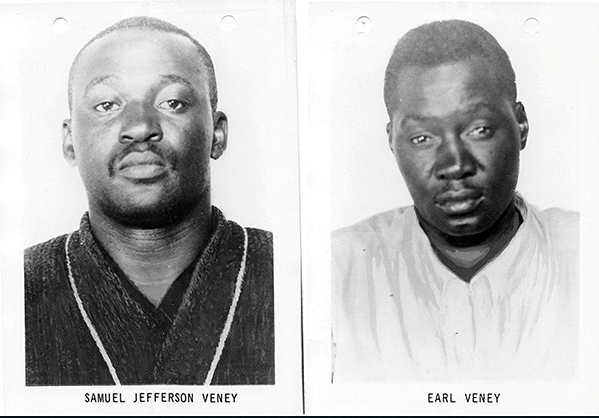
veney raid


Baltimore Sun Article Dated 12/26/1964 

A police Sergeant was shot to death early yesterday as he was searching for a bandit who had wounded a police lieutenant in a Christmas Eve liquor store hold up. Sgt. Jack L. Cooper, 43, was shot twice through the heart shortly before 5 a.m. as he was working by himself in the 2600 Block of Kennedy Avenue. Lt. Joseph T. Maskell, 40, was shot twice but was not fatally wounded as he struggled with the bandit shortly before 10 p.m. Christmas Eve outside a liquor store in the 2000 Block of Greenmount Avenue. He was in fair condition at St. Joseph’s Hospital. Police said Sergeant Cooper apparently had stopped a 25-year-old man identified by witnesses as one of four men who robbed the liquor store proprietor and several of his customers of $2,399.80. Police found a black leather card case containing the name of the 25-year-old man lying near Sergeant Cooper’s body. They also found a driver’s license issued to the same man lying on the floor of his police car near the clutch pedal. Sergeant Cooper’s pistol was still in its holster when he was found sprawled on the sidewalk, about 10 feet from the open door of his car. At about 4:45 a.m., Sergeant Cooper, Patrolman Charles Kopfelder, and Daniel Sobolewski met in the 1600 block of Carswell Street, about eight blocks northeast from the holdup scene. The two patrolmen left in their police cars to cruise along Gorsuch Avenue. They last saw the sergeant sitting alone in his car. Just before 4:50 a.m., they heard shots and hurried back to the 1600 block of Carswell Street. They found Sergeant Cooper lying on the sidewalk in the 2600 block of Kennedy Avenue. He was bleeding from three bullet wounds. The light in his police car was turned on. Both Sergeant Cooper and Lieutenant Makell worked out of the Northeastern District. Sgt. Cooper served in the U.S. Coast Guard from June 3, 1941, to November 1945. He served in the North Atlantic convoy routes and was discharged as Radio Man, First Class. One retired Sgt. wrote on the Christmas killing of our brother Sgt. Cooper that someone else was correct in their beliefs that Sgt. Cooper was shot and killed by one of the Veney Brothers (Sam and Earl). "Yes, it was the Veney brothers. I was a patrolman at the time in the Northern District, working for Joe Maskell when he was a Sergeant in the Northern. I gave a pint of blood at St. Joe's. The liquor store was Lexie's and was always being held up. After the shooting and during the months of searching for the Veney brothers, we must have raided every house in the area at one time or another. It was the first and last time I ever carried a Thompson 45-cal machine gun. The truck would pull up to a corner, and we would all line up, be issued shotguns or Thompson's, and be told what we were going to hit. We would raid a whole block, kick in all the doors, and start searching. I was with George Shriner one time and remember his placing his Thompson near a sleeping man's mouth, and when the guy woke up, he raised his head, and it was as if he could have rammed the gun into his throat. I still can't figure out how someone wasn't killed during that time. The thing about it was that it was a different time; there were so many tips coming in, and none of us knew what was being said or by whom. All we knew was that they shot two of ours, killing one, and none of us wanted to be next. One of the Veney's was arrested in New York State and lived disguised as a woman. The ACLU took the Baltimore Police Department to the Supreme Court, protesting the tactics used to find these jerks. The results changed the probable cause for searching for suspects in the future. No more anonymous tip searches. Years later, after I retired, I was the Director of Security at Lexington Market, and I happened to hear that one of the Veney's was cashing pay checks at the market. . Someone dropped a dime on the right person, and a big stink was made. His work release suddenly stopped.

From this, I learned what to look for and found the following: The Veney Brothers were Sam and Earl Veney, Sam actually pulled the trigger on that night, ruining a lot of lives. The following information might be of some interest; it was found in Baltimore Sun archives

Joseph T. Maskell, 73, Officer Shot in the Notorious 1964 Case

 April 17, 1998 | By Fred Rasmussen | Fred Rasmussen,SUN STAFF

Joseph T. Maskell, a retired Baltimore police lieutenant who was shot in a 1964 robbery that began the notorious Veney brothers case, died of lung cancer April 10, 1998, at his Mount Washington home. He was 73. Lieutenant Maskell joined the Police Department in 1946 and, after recovering from his wounds, retired in 1966. He became an adjuster for an insurance company and was appointed vice president of marketing at Freestate Adjusting Co. in 1979. He retired again in 1986 and was a rental car salesman until 1990 About 10 p.m. on Christmas Eve in 1964, Lieutenant Maskell, assigned to the Northeastern District, responded to a call about a robbery in progress at the Luxies Liquor store in the 2000 block of Greenmount Ave. "He saw something going on and walked right into a robbery. He was shot twice, and then he staggered to Worsley Street, about 25 feet from Greenmount Avenue, where he was later found," said Bill Rochford, a police lieutenant at the time. "It was a miracle he survived," said Mr. Rochford, a boyhood friend who grew up with Lieutenant Maskell in Northeast Baltimore. Samuel J. Veney and Earl Veney became the targets of the city's largest manhunt. The Veneys made the FBI's 10-most-wanted list, the first time two brothers had been on the list. "The search was intense and went on through the night and into Christmas morning, when Sgt. Jack Lee Cooper was killed by Samuel Veney," said Bill Talbott, a retired Evening Sun reporter who covered the case. During the 19-day manhunt, police searched 200 homes in black communities without obtaining search warrants. The illegal searches prompted the National Association for the Advancement of Colored People to file a federal lawsuit that resulted in a 1966 injunction against the city police. The Veney brothers, who had fled the state, were captured in March 1965 while working in a zipper factory on Long Island, N.Y. They were tried and convicted in Frederick, where the case was moved because of pretrial publicity. Earl Veney was sentenced to 30 years in prison and, in 1976, was found hanged in the House of Corrections in Jessup, where Samuel Veney is serving a life sentence. Lieutenant Maskell was awarded two official commendations and received 10 letters of commendation. "He was a very decent guy who never really held any animosity about what happened," Mr. Rochford said. "I think the only regret he had was the fact that it ended his career. In later years, he really never talked about it." Retired Sun reporter Robert A. Erlandson said, "He was the prototypical Irish cop with a big smile and was very caring, and most of all, he was well-liked." A 1942 graduate of City College, Lieutenant Maskell served in the Army Coast Artillery from 1942 to 1945 and was discharged as a staff sergeant. He earned a law enforcement certificate from the University of Maryland in 1963. Graveside services were held Monday. He is survived by his wife of 46 years, the former Gloria Bauer; three daughters, Cynthia DiLiello of Jarrettsville, Mindy Sturgis of Joppatowne, and JoAnne Bell of Fallston; and nine grandchildren.

Sam Veney's Death Sentence

Afro-American Newspaper

FREDERICK: Samuel Jefferson Veney, 27, convicted of the Christmas 1964 murder of Police Sgt. Jack Lee Cooper, must die in the gas chamber. So ruled a two-judge Frederick County Circuit Court panel here late Monday. Sam, the second half of the first brother team ever to make the FBI's "Ten Most Wanted" list,stood Impassively as Judge J. Dudley Diggs pronounced the Supreme penalty. Execution or sentence will be delayed pending outcome of an appeal to the Maryland Court of Appeals. Charges of armed robbery and shooting with intent to murder Police Lt. Joseph T. Maskell were filed by Baltimore State's Attorney Charles E. Moylan, who headed the week-long prosecution before a two-woman and ten-man jury, which returned the verdict offirst first-degree murder guilt. While imposing sentence, Judge Diggs said he and associate Judge Robert E. Clapp Jr. decreed the death penalty after "consciously and unconsciously" searching their minds and concluding there was no justification for not imposing capital punishment. Chief defense counsel John R. Hargrove, arguing against the extreme penalty, said Sam should not be made a ''scapegoat" while others involved in the crime are out walking the streets. Mr. Moylan, on the other hand, declaredthat he could not think of any case where the death penalty would be imposed if it were not imposed in the case of the convicted police killer. Mr. Hargrove noted an immediate intention to appeal.

Putting a Price Tag on that which is priceless—life itself

May 12, 1993, by Gregory P. Kane

CONVICTED cop killer Samuel Veney, who was returned to a Maryland prison Monday, walked away the same weekend two Los Angeles police officers were found guilty of violating Rodney King's civil rights. That was a coincidence, but both Sam Veney and Rodney King were involved in cases where police misconduct became at least as notorious as the misdeeds of either man. Before his brutal beating, King had led police and highway patrolmen on a high-speed car chase. He was quite drunk at the time. My guess is that he had broken at least four laws by the time of his arrest—crimes that were all but forgotten in the furor that resulted from the video of those 82 seconds it took police to subdue him. The case of Sam Veney and his brother Earl is different because their crime was more heinous. They gunned down two Baltimore Police officers, killing one and wounding another, while robbing a liquor store on Greenmount Avenue. The Veney brothers were probably the most notorious and feared criminals in Baltimore history, but police misconduct figured prominently in their crime, too. After the shootings, the Baltimore Police Department declared war on the city's black population. Police broke into scores of homes without warrants or the slightest pretext of probable cause. The search teams were called "flying squads," as delicate a euphemism for police state terror as it should ever be our disgust to encounter. Juanita Jackson Mitchell had to take city police to federal court and remind them that Baltimore was in America, not Nazi Germany or the Stalinist Soviet Union. As a young boy living in the Murphy Homes housing project at the time, I vividly remember wondering whether I had more to fear from the Veney brothers or the Baltimore Police. Years later, I remember thinking that whatever the iniquities of the Veney brothers, it was their act that exposed the Baltimore Police Department for its brutal, racist treatment of Baltimore's black citizens in 1964 and before. Should we forget how bad it was, we need only remind ourselves that Commissioner Donald Pomerleau—hardly a flaming liberal—was brought in to nudge the department into the 20th century. Now Sam Veney comes back to haunt us again. It seems that every time Veney screws up, a larger issue is brought into focus. The issue this time is the parole policy of the state of Maryland. Many were wondering—Evening Sun columnist Dan Rodricks among them—why a lifer like Veney, who was not being considered for parole, was given weekend home visiting privileges. I'm sure Sam Veney looked at the situation differently, as did his family. He figured that with a good behavior record and a 10-year history of returning from weekend visits, why shouldn't he be considered for parole? So old Sam simply initiated self-parole. And to give the devil his due, Sam Veney has a point. Yes, he killed a cop. Yes, he was given a life term. But everyone in the state knows that some murderers are given life terms and then are paroled. Others, like Sam Veney, are given life sentences and won't ever be considered for parole. The criteria for determining which murderers get paroled and which do not sound good—the prior criminal record, the impact on the victim's family, the convict's progress while in prison—but ultimately lead to charges that the race, class, and occupation of the victim come into the equation. How is it that Sam Veney can see the absurdity of such a policy and we civilized, law-abiding citizens can't? All murder victims are equally dead. There are none deader than others. If some lifers have a shot at parole, all should have a shot. Or none should have a shot. Equally absurd is the case of Terrence Johnson, sentenced to 25 years for killing two Prince George's County police officers. Johnson has been a model prisoner for years, even taking the time to further his education while in prison. But don't look for him to be paroled. Gov. William Donald Schaefer found the heart to pardon women convicted of killing husbands and boyfriends on the grounds that the women had suffered brutality at the hands of the men. Even though the prosecution in Johnson's case conceded the cops were brutalizing him at the time of the killings, the governor apparently can't see any justification for granting Johnson not a pardon but parole. We ought to be concerned that Maryland law allows for the parole of murderers given life sentences. As former city police commissioner, state public safety commissioner, and current Mercy Hospital brain surgery patient Bishop L. Robinson has pointed out, if we don't want murderers paroled after they've been handed life sentences, we need only express our wishes to our state legislators and get them to work changing the law. Let's put a no-parole-for-lifers law on the books. Paroling some murderers and denying parole to others puts a price tag on that which should be priceless: human life.

ex-officer remembers Veney raids held in 1964

June 9, 2001 | By Gregory Kane

Some curious readers have asked: What were the Veney raids?

I'm older than I'd like to think. At one time, most Baltimoreans knew what the Veney raids were. As those of us in the baby boomer generation get older, we assume those younger know what we know. We assume that events from December 1964 are common knowledge. But they aren't. Sam and Earl Veney robbed a liquor store in December 1964. The two black men also shot two police officers, killing one. They were caught and convicted. But the police manhunt in Baltimore for the Veney brothers became almost as infamous as their crimes. Without warrants, police broke into scores of homes in black neighborhoods. (Some put the number as high as 300.) Some critics protested that the raids were a widespread violation of civil liberties. Federal courts and the National Association for the Advancement of Colored People had to get involved. In a recent column, I referred to the Veney raids as "notorious." One man who remembers the raids well—much better than 13-year-old Gregory Kane could have—took umbrage with the use of the word. He's Paul Lioi, now retired and living in Florida. In December 1964, he was 25-year-old Officer Paul Lioi of the Baltimore Police Department. He sent this letter to The Sun: "That [notorious] remark hit a sensitive chord with me," Lioi wrote. "Let's go back to 1964. It was Christmas Eve, and the children of two police officers wrapped their fathers' gifts and went to bed. They could hardly wait until morning when their daddies would return home from work to open their gifts and celebrate Christmas together. This was not to be because one daddy, a police lieutenant, was shot and wounded during a hold-up at a liquor store on Greenmount Avenue. "And later that same day, the second daddy, a police sergeant, was killed. Neither family celebrated Christmas that day, and for one family, Christmas and every day thereafter, the dad would no longer be with them. The investigation at the robbery scene revealed that the suspects responsible for the robbery and shooting of a police lieutenant were the Veney brothers. As the police went looking for the brothers, one of them shot and killed a police sergeant. Two police officers shot, one seriously wounded and one killed. They happened to be my lieutenant and sergeant. "The police department went on a manhunt to try and locate and apprehend these police assassins, known as the Veney brothers. They felt compelled to follow up on any lead they received. The tips they received came from the black community. I was part of the raiding party and felt that the tips received were authentic." 37 years later, and Lioi, who won four Bronze Stars, a Distinguished Service Medal, and the Medal of Honor in his police career, knows that many of the tips were nowhere near authentic. "Most turned out to be bogus," Lioi said yesterday from his Orlando home. The reason baffles him. This was a search for cop-shooters. "Why," Lioi wondered, "were they giving us these bogus tips?" Lioi also feels empathy for those who lived in the raided homes. "Come to think of it," he said, "it was a bad thing. We had our guns pointed at the houses. We weren't going to walk up to a suspect and say, `Sir, are you Mr. Veney?'" Lioi says he arrested one of the Veney brothers—he doesn't remember which one—several months before that fateful Christmas Eve. He and his partner, whose regular beat included the liquor store that was robbed, were off the night the store was robbed. He often wonders what would have happened if they had been working instead of Lt. Joseph Maskell, who was wounded in the liquor store robbery, and Sgt. Jack Lee Cooper, whom Sam Veney fatally shot after Cooper confronted him in East Baltimore. "He was a decent guy, a real gentleman," Lioi said of Cooper. "His death just about ruined my Christmas. I went up to my room and closed my door because I didn't want my children to see a grown man cry. And I did." Other memories of his East Baltimore beat are happier. He remembers when he was "fighting some mental case" and, unable to call for assistance, finally received it when concerned residents called for him. And he became a fan of legendary black comedian Jackie "Moms" Mabley while walking his beat on the graveyard shift. "It was about two in the morning," Lioi recalled. "I was walking by this house, and the door was open. I heard a comedian doing a routine." He listened a bit and was delighted to hear one of the funniest comedians he'd ever come across in his life. A woman who lived in the house told him who it was and where to buy the album. The next day, Lioi was in a store on Greenmount Avenue, buying it. When his beat-walking days were over, he was promoted to sergeant and later became a detective with the arson squad. He retired in 1984 after 23 years on the force. Lioi offers no apologies for his role in the Veney raids. It was mischievous tipsters, he insists, who were responsible. But that may be why the 4th U.S. Circuit Court of Appeals was critical of the raids. Federal judges realize that any crackpot can give a tip and lead even good cops to do bad things.

I read both stories and on the one hand, I applaud (if you can applaud with one) the work of G Kane for telling the story, but to compare a traffic violation with a cop killer and the laws and rules of 1964 Baltimore to 1992/93 LA is wrong; in one case, no one was killed and several officers lost their jobs, as they should have. But what happened in 1964 Baltimore involved, as Officer Lioi explains, the public dropping bad tips to get police reaction. In 1964, Baltimore Police didn't have body armor, so when they had to go in after suspects who had shot one officer and killed another, ringing the doorbell was out of the question. It is so easy to sit back and watch Monday morning quarterback what people do for a living; in some cases the public forgets police get killed, they die and there is no reset button. The public demands protection from their police, and in 1964, the Veney Brothers were bad news, so to send police in after two brothers that they knew will kill them if given the chance, police did what they had to and were trained to do in order to protect the public. Keep in mind that was 1964, if that were today, then of course it would have been done differently, heck, if it were 1992/93, it would have been handled differently. But let's face it, it wasn't today; it wasn't 1992/93 and things were different back then, To compare cop killers to traffic violation is wrong. The police reaction in one case was to stop and arrest a suspect for poor driving; the other was to bring in two cop killers and go home alive. To compare the two is more than apples and oranges; it is disrespectful to the families of these officers and every officer who has had or has since put on the badge. If there were cop killers in my neighborhood hiding out, the police wouldn't have to kick my door in; they would be welcomed to come in and check anytime. So often, the public become so discontent with police that they will find fault in their every move, even things that happened before the officer they are dealing with ever set foot on the job. But what they don't realize is that every officer on the job risks his or her life every time they go to work, and they do it so we can be safe. If people would cooperate with police and call when they see something wrong, not call in for jokes or to have a neighbor they don't like raided,. All neighborhoods would be equal. But that's just my opinion.

Robert F. Kennedy said, "Every society gets the kind of criminal it deserves. What is equally true is that every community gets the kind of law enforcement it insists on." According to the false tips 1964 Baltimore put up, it's not income that has some criminals living in some areas over others, nor is it income that increases the number of police in an area. In fact, most good neighborhoods have less police than some of the worst neighborhoods. So how does this work, Why does it work like this, Because in better neighborhoods, when someone hangs on the corner, the police are called, people chased off, etc. If someone is holding a gun, police are called and before long, people stop holding guns in that area or hanging on the corner. Basically, cooperating with police and letting them know who is doing what and where will get people out of certain areas. At a meeting in Baltimore County, we were told that if we want more police, we have to call the police more often when we see crime, but if we are not seeing crime, then more police won't be needed. And in my neighborhood, if kids hang on corners, police are called. If someone steals a bike, the police are told who took it and where they put it. Police aren’t mind readers; if we want our neighborhoods safe, we need to report what we know; if we don't, we'll end up with that type of criminal living in our area (we welcome them by not letting police know they are unwelcome). The more we cooperate with police, the better quality police service we'll have too. Bobby Kennedy may have been onto something.

Veney brosPhotos Courtesy of Nick Caprinolo 

The photos came to me courtesy of Nick Caprinolo. I'm not a big fan of showing pictures of the suspects in these type cases, but in this instance, the suspects have gained a sort of finger pointing at the police, as if we did something wrong in getting them off the streets. So I think it may be appropriate to show these suspects were not mellow or meek-looking individuals that were being picked on and singled out by the Police. They were two brothers that regularly robbed individuals in the area as well as many A&R's at the neighborhood liquor store. When police went to arrest them, they shot a lieutenant first, then later in the same night, they shot and killed a police sergeant. 

As a result of their actions and the discontent of these brothers by the neighborhood, hundreds of tips came in to police hot lines giving information on the two, Sometimes the tips were false, sometimes they were real. But it was out of fear of the Veney Brothers, not the police, that the tips were brought in.

When I post these stories here, I often follow-up on Facebook, where I receive different responses, and those messages tell us a lot too. Here are some of those responses:

The first response was, Many of those bogus tips were on purpose.  The brothers were caught in New York and weren't in Baltimore for most of those tip calls! Those "tips" led to the greatest violation of the 4th Amendment ever, according to one Federal judge.

The next response was, Thanks for posting these.

My response to the first response was as follows: The thing about the "Veney raids" is the officers that were making entry and doing the raids were doing it in good faith; they didn't know the tips were bogus, nor did they know where the brothers were. Something people don't understand about police is that they don't want to do a raid just to do a raid; no one wants to go into a home, disrupting lives of good people, knowing the suspect(s) or suspected objects are not in the house. Since 1964, a lot has changed: police equipment has changed, Communications is different, and the way information is obtained has changed drastically. Back then, when I was 6 months old, I wasn't sworn in with the BPD yet, so the only thing that is the same for me from then to now is I couldn't walk back then either. If people only knew the amount of pride officers have in getting the suspect, not one officer would want to waste time chasing bad leads. So yes, I agree there were problems with the raids, and today those raids would have been done much differently. But let's not forget, every one of those raids was done in good faith by police that knew if they were the one that got the house Sam or Earl were in, they may not have made it home, but they still did their job and went in after them. 

Someone who was there at the time wrote the following about my response: As a Baltimore Police Patrol Officer at that time, I participated in many of those raids. I served in the area where the robbery occurred and worked with both the Lieutenant and Sergeant that were shot. Thank you, Kenny, for your posting and explanation of the circumstances that existed at that time. 

A good friend of mine who worked the district of this shooting wrote, I heard many tall tales about this.

another writer, Kenny, I remember the night well. The entire Western shift volunteered, as did most of the other districts, to work many "unpaid" hours. We knocked down lots of doors without warrants and dragged numerous suspects in, but were unsuccessful in locating them. The FBI detained them in New York several weeks later. Here again, the police were trying to get the Veney brothers—trying to make the area safer and, most importantly, doing what they were ordered to do. But they did volunteer (unpaid) in order to try to get these guys, to try to make the arrests that would get two murders off the streets, and to make the streets safer. They didn't want to do it—just to kick in doors, just to drag suspects into the station. If you knew the pain in the rear end it is to transport prisoners or witnesses to the station, you would know the only reason any one would do at all, much less for free, is because they were trying to help! The times were different than today, and if they had it to do all over, they would do it differently, but they would still have to remain cautious and do all they could to make sure they went home alive and no one was injured or killed. Finally, I was attending Edgewood Elementary School at the time.  I remember the fear people had and the relief they felt when they were caught. Parents were afraid to send kids to school.  Very good piece, Kenny.

1 black devider 800 8 72More details

NameDescription
End of Watch        25 December, 1964
City, St. City, St.
Panel Number 17-W: 3
Cause of Death         Gunfire
Weapon - Handgun
District Worked Northwestern


1 black devider 800 8 72

POLICE INFORMATION

If you have copies of: your Baltimore Police Department class photo; pictures of our officers, vehicles, and equipment; newspaper articles relating to our department and/or officers; old departmental newsletters; lookouts; wanted posters; or brochures. Information on deceased officers and anything that may help preserve the history and proud traditions of this agency. Please contact retired detective Kenny Driscoll.

This email address is being protected from spambots. You need JavaScript enabled to view it.

Devider color with motto

NOTICE

How to Dispose of Old Police Items

Please contact Det. Ret. Kenny Driscoll if you have any pictures of you or your family members and wish them remembered here on this tribute site to Honor the fine men and women who have served with Honor and Distinction at the Baltimore Police Department. Anyone with information, photographs, memorabilia, or other "Baltimore City Police" items can contact Ret. Det. Kenny Driscoll at This email address is being protected from spambots. You need JavaScript enabled to view it. follow us on Twitter @BaltoPoliceHist, like us on Facebook or mail pics to 8138 Dundalk Ave., Baltimore, Md. 21222


Copyright © 2002 Baltimore City Police History: Ret Det. Kenny Driscoll 

Detective Wiley M. Owens, Jr

Detective Wiley M. Owens, Jr

 Fallen Hero

Detective Wiley M. Owens, Jr

On this day in Baltimore Police History, 1 December 1973, we lost our brother Detective Wiley M. Owens, Jr., to poisoning, based on the following news articles:

Tests being made to determine if police officer in secret unit died of poisoning

13 December 1973

Medical authorities are conducting extensive test to determine whether a city police officer assigned to investigate organized crime and radical organizations died of poisoning one December 1, 1973, according to the state medical examiner’s office, These chemical tests are being made in the wake of the death of police officer Wiley M Owens Junior, 31, of the 1900 block of E. 30th St.

This doctor thought that the officer might have died of arsenic poisoning, which is what prompted the tests. Arsenic has since been ruled out. However, police officials have been reluctant to discuss the case until they have full test results, which are expected early next week. However, Dennis S. Hill, the city police information chief, confirmed an “investigation has been underway since he [Detective Mr. Owens] was admitted to the hospital.”

A detective, who had been in the super secret Inspectional Services division for the past year but whose specific assignment has not been revealed, was admitted to Union Memorial Hospital on 25 November, 1973.

According to an assistant medical examiner, the detective went into a coma the day after his admission. An extensive test failed to diagnose his illness, and he died the following Saturday without recovering consciousness.

The detective’s wife, Thelma Owens, to whom he was married for 13 years, was reluctant to discuss her husband’s death: “We don’t know anything; I can’t tell you anything until they tell us something.” She said, “He really didn’t like to talk about his work, not with anybody.”

An assistant medical examiner said yesterday that, while testing conducted so far has ruled out arsenic poisoning, other tests are being made to detect the possibility of some other chemical poisonings.

The medical examiner cautioned, however, that it might be impossible to ever detect the cause of the detective’s death. He pointed out that if the officer indeed died of poisoning or a drug overdose, Chemical changes in his body might have destroyed any evidence of the foreign substance in his blood. Tissue or liver.

Before joining the Baltimore police, Detective Ellen’s spent several years with the Special Forces in the Army. He was married and the father of three children

DeviderCrime Prober Poisoned

27 February 1974

Anti-freeze Ingredient
Tied to December I Death


A city police officer assigned to investigate organized crime who died on December 1 was poisoned, an assistant state medical examiner confirmed yesterday.

Dr. William S. Medart said that Officer Wiley M. Owens, Jr., 31, died after consuming ethylene glycol, an active ingredient in antifreeze.

The police department is conducting an investigation into the death to determine if the poisoning was accidental, suicide, or homicide. Dennis S. Hill, a police spokesman, said homicide detectives have not "ruled out any of the three possibilities." Odorless and colorless.

Officer Owens, who had been assigned to the super-secret Inspectional Services Division for the past year but whose specific assignment has not been revealed, was admitted to Union Memorial Hospital on November 25. The policeman went into a coma the next day. He died the following Saturday without gaining consciousness after extensive tests failed to reveal the nature of his illness, according to another assistant medical examiner.

The poison, which is odorless and colorless, could be given to a victim in a glass of water or mixed drink without his knowledge, Dr. Medart said. He added that the poison enters the bloodstream and causes kidney failure.

12 hours, the victim will go into a coma. After the original · autopsy, medical examiners "99 percent sure that he had been poisoned," samples of the officer's kidneys were sent to the Armed Forces Pathological Laboratory in Washington. The findings were returned this week, he said.

"Our investigation is continuing,"

Mr. Hill said "We've talked to all types of people. We're conducting a thorough investigation. "There have been some rumors that his death may have had something · to do with his work," Mr. Hill added, but police have been unable to substantiate that.

He predicted that the investigation would take at least "several more weeks." In 1972, Officer Owens was the main witness against Jackson Pennington, a lawyer who was convicted of offering the policeman a $100 bribe to give false testimony in a drunken driving case.

Before joining the department, Officer Owens spent several years with the Special Forces. He was the father of three children.

Devider

A suit by police widow remanded to city court

13 November 1976

Remanded to City Court

Annapolis-The Court of Special Appeals yesterday sent back to the Baltimore Superior Court a suit by the widow of a Baltimore city police officer who has been trying to get records on her husband's death from the department.

Wiley M. Owens, Jr., a detective with the department's secret Inspectional Services Division, died in December 1973 after consuming ethylene glycol, an active ingredient in antifreeze.

Although medical examiners at first said the death was most probably a homicide, an investigation by the Police Department ruled that the death was not murder and was not in the line of duty.

But Thelma J. Owens, his widow, demanded records from the department on the investigation, claiming that her husband had feared there was a "contract" in his life.

Mrs. Owens has been trying to claim special death benefits from the board of trustees of the Fire and Police Employee Retirement System, and the board, at her lawyer's request, also went after the police records.

But the department has steadfastly refused to release the information, claiming there was no "imperative duty" to disclose the records and that such action was not in the public interest.

Millard S. Rubenstein, the assistant attorney general representing the police commissioner, said that the city state's attorney had been involved in the investigation and had found nothing that would lead to an indictment.

Mrs. Owens took her efforts to the city Superior Court, but Judge Shirley B. Jones technically upheld the Police Department's position with a ruling on a preliminary motion.

In remanding the case, the appeals court held that a decision on the matter should be based on Maryland's 1970 Public Information Act, which calls for general disclosure of public records with exceptions only when disclosure would be against the public interest.

The initial petition by Mrs. Owens did not seek the information under that law, though the matter was raised on appeal.

In most cases, arguments on appeal can only be those made on the lower court level, but a Maryland rule permits a remand on other issues when the "purposes of justice will be advanced by permitting further proceedings."

The court's ruling allows Mrs. Owens to amend her petition to allege an action under the public information law.

1 black devider 800 8 72

More details

NameDescription
End of Watch 1 December 1973
City, St. City, St.
Panel Number N/A
Cause of Death Poison
Weapon Ethylene Glycol
District Worked Criminal Investigation Division
 
1 black devider 800 8 72

POLICE INFORMATION

Copies of: Your Baltimore Police Department Class Photo, Pictures of our Officers, Vehicles, Equipment, Newspaper Articles relating to our department and/or officers, Old Departmental Newsletters, Lookouts, Wanted Posters, and/or Brochures Information on deceased officers and anything that may help preserve the history and proud traditions of this agency Please contact retired detective Kenny Driscoll.

This email address is being protected from spambots. You need JavaScript enabled to view it.

Devider color with motto

NOTICE

How to Dispose of Old Police Items

Please contact Det. Ret. Kenny Driscoll if you have any pictures of you or your family members and wish them remembered here on this tribute site to honor the fine men and women who have served with honor and distinction at the Baltimore Police Department. Anyone with information, photographs, memorabilia, or other "Baltimore City Police" items can contact Ret. Det. Kenny Driscoll at This email address is being protected from spambots. You need JavaScript enabled to view it. follow us on Twitter @BaltoPoliceHist Or like us on Facebook or mail pictures to 8138 Dundalk Ave., Baltimore, Md. 21222


Copyright © 2002 Baltimore City Police History: Ret Det. Kenny Driscoll 

Police Officer Elmer A. Noon

Police Officer Elmer A. Noon

Fallen HeroPolice Officer Elmer A. Noon

CLICK HERE FOR AUDIO

On this day in Baltimore Police History 1946, we lost our Brother Police officer, Elmer A. Noon, to a heart attack based on the following: Officer Noon was 41 years old and died of a heart attack shortly after returning home from work. Elizabeth-Ann used to wait for her dad to get home to tell her how his day went; this was normally achieved by his telling her a police war story, that he would always tone down for her four-year-old ears. On this day, however, as he came into the house, he was visibly ill, not wanting their daughter to see him this way patrolman Noon’s wife Elizabeth bypassed the evening ritual with Elizabeth-Ann and took her husband straight in to bed, then went and called immediately for medical attention By the time The Doctor arrived, Officer Noon had died. The Doctor had determined that the cause of death was a massive heart attack.

His commanders and wife were confused by the cause of death because he had always appeared to be in such good shape and had not exhibited any of the warning signs or physical symptoms related to heart attack. The Doctor mentioned the possibility that “great physical exertion” by even a healthy man could sometimes result in a heart attack.

Investigators would focus their attention on his last several calls for service before leaving. They quickly honed in on one call he handled at 10 minutes to four, when Officer Noon and his partner, Patrolman Otto Leyhe, 23, responded to the intersection of Gay and Forrest Streets, outside of the Belair Market, to help a Special Police Officer, Officer Fred Thomas who was attempting to subdue a Disorderly Drunk. The Drunk Albert Thomas Rogers, on top of being intoxicated, was large, and he was strong. Citizens stood by watching as the much larger Rogers tossed the Special Police Officer around like a rag doll. As Officer Noon and Leyhe pulled up on scene, Officer Noon could see the security officer in need of assistance, so before their patrol car could come to a complete stop, Officer Noon had leapt from the passenger seat to the street and joined in the fight. Patrolman Leyhe had not made it to the tussling officer’s before he saw all Rogers toss Officer Noon aside. It was like two warriors fighting a giant, and the giant was winning, but the warriors were not giving up.

Officer Noon was thrown with such force that he didn’t touch the ground until his body was slammed onto the side of their police vehicle. Stunned but not unconscious, Officer Noon got up and shook it off. Showing no fear, he went right back in after Rogers; this time he removed a device from his belt called an “Iron Call.” For those that don’t know, “The Iron Claw” was a mix of the older “Come Along” (a choke chain device used to latch onto a suspect's wrist) and the more modern “Police handcuff.”. When Officer Noon latched this device onto Roger’s wrist, the fight was not completely over, but it was more controlled by the police than by Rogers. Not long after this (Officer Leyhe estimated it to be 5 to 10 minutes), another officer, patrolman William Ervine, arrived and helped subdue Rogers. It took four officers to control the violent drunk and get him into the patrol wagon. The wagon driven by patrolman Hue Law, Patrolman Law, would take Rogers to the Northeastern Station House for booking. Due to his combative actions, an officer would have to ride in the wagon with him. Being the second man in a two-man car, Officer Noon was elected for the ride to keep Rogers from escaping or assaulting anyone else. The entire trip from the scene to the station house, to the cell block, and to the holding cell was one continuous battle. Still, Officer Noon declined to charge Roger’s with anything other than his initial act of being drunk and disorderly. We’ll never know if this was out of compassion for a drunk that didn’t know fully what he was doing or his being anxious to get home to Elizabeth-Ann and tell her about this, one of his more action-packed war stories.

Members of his family waited anxiously for the outcome of the investigation into his death. They are concerned for their daughter, sister, Aunt Elisabeth, granddaughter, niece and cousin Elisabeth-Ann. Because without the determination that it had occurred in the line of duty and the modest financial benefit that that decision would permit, Elizabeth faced the difficult time of raising their daughter on her own. Fortunately, on January 7, 1947, Raymond Newman was able to pen a letter to the commissioner, Hamilton R. Atkinson, praising the department’s decision to consider his brother’s death in the line of duty. In it, he wrote, “The decision rendered is a credit to the department and proves that the men in charge have the interests of those under them at heart.”

Officer Noon was 41 years old when he died of a heart attack shortly after returning home from work. Just before Officer Noon’s shift ended, he went to the assistance of a Special Police Officer in the Belair Market. A man assaulted both officers, and two more would arrive as back-up. The suspect’s violent resistance caused Officer Noon to be thrown against the side of his radio car, resulting in his eventual heart attack. Officer Noon died two hours after this altercation; he was married and had a four-year-old daughter, It was on this day 1946 (a Wednesday, November 20)


As his brothers and sisters of the Baltimore Police Department, we will not let him be forgotten, His service Honored the City of Baltimore and the Baltimore Police Department may he rest in peace, and may God bless him.

1 black devider 800 8 72

More details

NameDescription
End of Watch 20 November, 1946
City, St. Gay and Forrest Streets
Panel Number 59-E: 9
Cause of Death Heart Attack
District Worked Northeastern

1 black devider 800 8 72

POLICE INFORMATION

Copies of: Your Baltimore Police Department Class Photo, Pictures of our Officers, Vehicles, Equipment, Newspaper Articles relating to our department and or officers, Old Departmental Newsletters, Lookouts, Wanted Posters, and or Brochures. Information on Deceased Officers and anything that may help Preserve the History and Proud Traditions of this agency. Please contact Retired Detective Kenny Driscoll.

This email address is being protected from spambots. You need JavaScript enabled to view it. 

Devider color with motto

NOTICE

How to Dispose of Old Police Items

Please contact Det. Ret. Kenny Driscoll if you have any pictures of you or your family members and wish them remembered here on this tribute site to honor the fine men and women who have served with honor and distinction at the Baltimore Police Department.

Anyone with information, photographs, memorabilia, or other "Baltimore City Police" items can contact Ret. Det. Kenny Driscoll at This email address is being protected from spambots. You need JavaScript enabled to view it. follow us on Twitter @BaltoPoliceHist, like us on Facebook or mail pictures to 8138 Dundalk Ave., Baltimore, Md. 21222


Copyright © 2002 Baltimore City Police History: Ret Det. Kenny Driscoll 

Honorary Policeman Simon Fried

Honorary Policeman Simon Fried

Honorary Policeman Simon Fried  Simon Fried hs Sep 29 1946


24 Aug 1946 

Simon Fried, 38, a tailor from the 100 block of Asquith Street, was shot and seriously wounded by an assailant who resisted arrest and assaulted an officer.

Patrolman Edwin J. Humphries reported that he had attempted to arrest a young man who had been following two women and threatening them with a brick. As Officer Humphries went to arrest him, the man pulled a gun and struck the officer, knocking him to the ground. While on the ground, the young man turned the gun and aimed it at the officer’s head. The officer had drawn his weapon while falling, but the assailant immediately kicked it out of his grasp and into the middle of the street. Now unarmed and unable to defend himself, the officer was suffering the early stages of a concussion, weak and far from being a threat to anyone. Still, the young man pointed his pistol at the officer’s head, cocking the hammer back, ready to take a life.

At this time, a 38-year-old tailor named Simon Fried, who lived in the 100 block of Asquith Street, ran toward the suspect and the officer. Unable to just stand by and witness the execution of the officer, he picked up the gun that had been kicked from the officer’s hand, pointed it at the young man, and yelled, “Drop that gun!” The suspect quickly turned his gun on Mr. Fried and fired three shots. The tailor returned fire, but not being familiar with guns, he laid down what amounted to nothing more than suppression fire. This suppression fire, though missing the suspect, did several important things: it may have prevented Mr. Fried from having to deal with shooting a man, it chased the shooter away, and most importantly, it stopped the shooter from firing directly into the head of the nearly unconscious officer, saving the officer’s life.

While these actions saved the life of Patrolman Edwin J. Humphries, who would recover from a minor head injury, Mr. Fried was not so lucky. In the exchange, he took a round in his spine, which made him a hero and a paraplegic in the blink of an eye. Never to walk again, Mr. Fried, though never a police officer, knew what it meant to risk his life for another. He was made an Honorary Policeman by many police unions and organizations of the day and was presented with a Bronze Star and several other commendations from area law enforcement agencies for his bravery.

The assailant was later caught, and sentenced to 22 years for assault with intent to murder.

Devider

The Baltimore Sun Tue Dec 31 1946 7230 Dec 1946 Mr Simon Fried Became-the First Civilian to Receive a Sworn Officer's Commendation

Page 2 of Above Story

TAILOR SHOT GOING TO AID OF POLICEMAN

Patrolman Disarmed and Felled at Asquith and Lexington

23 Aug 1946

While attempting to aid a policeman who had been knocked to the ground, and disarmed late last night [22 Aug 1946] Simon Fried, 38, a tailor of the 100 block Asquith street, was shot and seriously wounded by the assailant. Patrolman Edwin J. Humphries reported that he had attempted to arrest a Negro for following two Negro women and threatening them with a brick at Lexington and Asquith Streets.

When he tried to search the prisoner, the patrolman said, the man pulled a revolver, struck the policeman on the head, knocking him to the ground. As he fell, the policeman attempted to pull his service revolver from his holster but the assailant immediately knocked it from his grasp and to the middle of the street.

"Drop That Gun," Mr. Fried orders, as the man stood pointing his revolver at the policeman's head. Fried, who had been sitting on his front steps, ran up and snatched the patrolman’s gun from the ground.

Pointing it at the armed assailant, witnesses were quoted as having heard him say; "Drop that gun. Don't bother that policeman."

Instead of dropping it, the man turned the gun toward Fried and fired three shots... one of which struck the young tailor in his right side.

Devider

As he fell, Fried fired a shot, and then two more from the street where he lay. The man fled down Asquith Street and escaped. Fried's Condition was marked as "Serious". Taken to the Johns Hopkins Hospital, Fried underwent an emergency operation early that morning -

23 Aug 1946.

His condition was described as "serious." Patrolman Humphries was treated at the Johns Hopkins Hospital for contusions of the head received, he said, when his assailant struck him with the butt of his revolver. "The last thing I remember was reaching for my gun and the man hitting me on the head. Then I must have been stunned for a moment," he said.

When the man attempted to Shoot Fried. his first shot apparently misfired according to the patrolman, who said that he heard the gun click once before the shot. He said that he was notified by the Northeastern Police Station that the two women had telephoned complaining that the husband of one of I he women, had been following them for several blocks and threatening them with the brick.

When he arrived at the corner, Patrolman Humphries said, the omen pointed out the man who was standing in a store doorway, The search for the man. following the shooting, was extended over Northeast Baltimore under the direction of Lieut. John B. Kenealy. Meanwhile six members of the Fifth Ward Democratic Club, of which Fried is vice president: appeared at the hospital and were standing by early this morning to offer their blood for transfusions They were Nathan Silverman, of the 2500 block Quantico avenue: Joseph Davidson, of the 2200 block 1 Park Hill avenue: Sidney Feldman, of the· first block West Oliver street; Earl Stelmae, of the 1200 block East Lexington street; Samuel Heilpern, of the 100 block Asquith street. and Sam Fried, of the 1700 block Delaware avenue.

Devider

The Evening Sun Fri Sep 20 1946 72
The Tailor Died from Complication that Aroused from the Injuries he Received that day 20 years ago.

14 February 1966

Today in Baltimore Police History we lost an honorary police officer, Good Samaritan and genuine police hero based on the following: While under attack out drawn on and buffaloed by a young black male, Officer Edwin J Humphries had attempted to draw his weapon to defend himself, but the blow to the head by the young man pistol was more than he could handle, and it was he could do to keep from passing out, still the young black male began to point his gun at the officers head when Mr. Fired, ran to where the officer had dropped his gun, picked it up and yelled to the suspect to leave the officer alone. Hearing Mr. Fried’s voice the suspect quickly turned and fired 3 shots in his direction, one striking him in his spinal cord paralyzing his left leg/foot and causing severe pain in that leg. Mr. Fried fired three rounds in return, missing with all three, but still chasing the suspect off, thereby saving the officer, and himself from further injury. Other than a head injury Patrolman Humphries was OK, Mr. Fried would never walk again. While Mr. Fried never applied to become a police officer, and was never sworn in, he knew what it meant to lay down his life, for another, he was made an Honorary Officer many of the Unions, and originations of the day, and was awarded Bronze Stars, and several other Commendations for his bravery.  

Devider

Policeman’s helper dies – Simon Fried succumbs as a result of 1946 actions he took to save an officer's life, and the unassuming clothes cutter who saved a policeman’s life, died last night at Sinai hospital, paying for his heroism with his life.

Mr. Fried, who was 58, was shot in 1946 while defending a Baltimore city policeman. A single bullet lodged near his spine causing paralysis of his left foot and leaving it vulnerable to infection.

Despite the pain of his injury Mr. Fried continued working at the more robust Inc. at 501 East Preston St. During the blizzard cold and wetness caused frostbite in his vulnerable foot and gangrene set in.

Infection spread

Medical authorities said the infection spread, affecting his kidneys. Uremic poisoning developed and, as a result his heart failed at 7:30 PM last night.

Mr. Fried or deal of pain began on the rainy night of August 22, 1946 when returning home from the fifth Democratic club. He stopped at the corner of Asquith in Lexington Street to watch a disbursement between policeman Edwin J Humphreys and a young man. Suddenly the man pulled a pistol and struck the patrolman. The patrolman’s pistol fell into the street and the assailant held his own gun at the semiconscious officer’s head. Picked up the policeman’s gun

Mr. Freeman ran over and picked up the policeman’s gun and said “leave that policeman alone.” The assailant world. Fired three shots at Mr. Fried hitting him once and fled as the falling Man returned three shots that missed. The policeman was uninjured and the assailant was later caught and sentenced to 22 years for assault with intent to murder.

Mr. Fried said later “I would do it again I thought the man was going to kill the policeman”.

Metals and citations for his heroism Mr. Fried received a bronze medal from the Carnegie commission, a Maryland medal of honor and other citations, honorary membership into several police associations, funds and columns of newsprint.

He also received operations and much of the medical treatment. But the pain continued. He suffered frostbite while going to work during the blizzard. Working, he said helped distract him from the pain.

Mr. Fried lived alone in his apartment at 6930 Brookmill road.

Two daughters and five grandchildren

His survivors include two daughters, Mrs. Natalie Schreiner of Baltimore, and Miss Sonia Perry of Chillicothe Ohio, and five grandchildren.

Also surviving are three brothers, Samuel, Jack and Goodman Fried. All Baltimore and two sisters, Mrs. Bertha Turk and Mrs. Dora Abrams, both the Baltimore funeral arrangements are incomplete

Devider

Pull full size scans of articles HERE

http://www.baltimorepolicemuseum.org/images/The_Evening_Sun_Sat__Sep_28__1946_.jpg

http://www.baltimorepolicemuseum.org/images/The_Evening_Sun_Wed__Aug_28__1946_.jpg

http://www.baltimorepolicemuseum.org/images/The_Baltimore_Sun_Fri__Dec_13__1946_.jpg

http://www.baltimorepolicemuseum.org/images/The_Baltimore_Sun_Fri__Dec_13__1946_%20%281%29.jpg

http://www.baltimorepolicemuseum.org/images/The_Evening_Sun_Fri__Aug_30__1946_12.jpg

http://www.baltimorepolicemuseum.org/images/The_Evening_Sun_Mon__Dec_16__1946_.jpg

http://www.baltimorepolicemuseum.org/images/The_Evening_Sun_Fri__Aug_30__1946_.jpg

http://www.baltimorepolicemuseum.org/images/The_Evening_Sun_Thu__Nov_14__1946_.jpg

http://www.baltimorepolicemuseum.org/images/The_Evening_Sun_Thu__Nov_14__1946_%20%281%29.jpg

http://www.baltimorepolicemuseum.org/images/The_Evening_Sun_Thu__Nov_14__1946_%20%282%29.jpg

http://www.baltimorepolicemuseum.org/images/The_Evening_Sun_Mon__Dec_30__1946_.jpg

http://www.baltimorepolicemuseum.org/images/The_Baltimore_Sun_Tue__Dec_31__1946_a.jpg

http://www.baltimorepolicemuseum.org/images/The_Baltimore_Sun_Tue__Dec_31__1946_.jpg

http://www.baltimorepolicemuseum.org/images/The_Evening_Sun_Fri__Oct_4__1946_.jpg

http://www.baltimorepolicemuseum.org/images/The_Baltimore_Sun_Tue__Dec_31__1946_1.jpg

http://www.baltimorepolicemuseum.org/images/The_Evening_Sun_Tue__Oct_8__1946_.jpg

http://www.baltimorepolicemuseum.org/images/The_Evening_Sun_Mon__Sep_30__1946_.jpg

http://www.baltimorepolicemuseum.org/images/The_Evening_Sun_Mon__Sep_30__1946_2.jpg

http://www.baltimorepolicemuseum.org/images/The_Baltimore_Sun_Fri__Aug_30__1946_.jpg

http://www.baltimorepolicemuseum.org/images/The_Evening_Sun_Mon__Sep_30__1946_%20%282%29.jpg

http://www.baltimorepolicemuseum.org/images/The_Evening_Sun_Mon__Sep_30__1946_4.jpg

http://www.baltimorepolicemuseum.org/images/The_Evening_Sun_Mon__Sep_30__1946_3.jpg

http://www.baltimorepolicemuseum.org/images/The_Evening_Sun_Fri__Nov_15__1946_.jpg

http://www.baltimorepolicemuseum.org/images/The_Evening_Sun_Fri__Sep_20__1946_.jpg

http://www.baltimorepolicemuseum.org/images/The_Baltimore_Sun_Sun__Sep_29__1946_.jpg

http://www.baltimorepolicemuseum.org/images/The_Evening_Sun_Fri__Sep_20__1946_%20%281%29.jpg

http://www.baltimorepolicemuseum.org/images/The_Evening_Sun_Thu__Aug_29__1946_.jpg

http://www.baltimorepolicemuseum.org/images/The_Baltimore_Sun_Mon__Sep_30__1946_.jpg

http://www.baltimorepolicemuseum.org/images/The_Evening_Sun_Tue__Sep_3__1946_ai.jpg

http://www.baltimorepolicemuseum.org/images/The_Evening_Sun_Tue__Sep_3__1946_.jpg

http://www.baltimorepolicemuseum.org/images/The_Baltimore_Sun_Sat__Nov_30__1946_.jpg

http://www.baltimorepolicemuseum.org/images/The_Baltimore_Sun_Sat__Nov_30__1946_2.jpg

http://www.baltimorepolicemuseum.org/images/The_Evening_Sun_Tue__Aug_27__1946_%20%281%29.jpg

http://www.baltimorepolicemuseum.org/images/The_Evening_Sun_Tue__Aug_27__1946_1.jpg

1966

http://www.baltimorepolicemuseum.org/images/The_Evening_Sun_Fri__Feb_25__1966_.jpg

http://www.baltimorepolicemuseum.org/images/The_Evening_Sun_Wed__Feb_16__1966_2.jpg

http://www.baltimorepolicemuseum.org/images/The_Evening_Sun_Wed__Feb_16__1966_1.jpg

http://www.baltimorepolicemuseum.org/images/The_Baltimore_Sun_Mon__Feb_14__1966_3.jpg

http://www.baltimorepolicemuseum.org/images/The_Evening_Sun_Mon__Feb_14__1966_2.jpg

http://www.baltimorepolicemuseum.org/images/The_Baltimore_Sun_Mon__Feb_14__1966_1.jpg


1 black devider 800 8 72

POLICE INFORMATION

Copies of: Your Baltimore Police Department Class Photo, Pictures of our Officers, Vehicles, Equipment, Newspaper Articles relating to our department and or officers, Old Departmental Newsletters, Lookouts, Wanted Posters, and or Brochures. Information on Deceased Officers and anything that may help Preserve the History and Proud Traditions of this agency. Please contact Retired Detective Kenny Driscoll.

This email address is being protected from spambots. You need JavaScript enabled to view it.

Devider color with motto

NOTICE

How to Dispose of Old Police Items

Please contact Det. Ret. Kenny Driscoll if you have any pictures of you or your family members and wish them remembered here on this tribute site to Honor the fine men and women who have served with Honor and Distinction at the Baltimore Police Department.

Anyone with information, photographs, memorabilia, or other "Baltimore City Police" items can contact Ret. Det. Kenny Driscoll at This email address is being protected from spambots. You need JavaScript enabled to view it. follow us on Twitter @BaltoPoliceHist or like us on Facebook or mail pics to 8138 Dundalk Ave. Baltimore Md. 21222


Copyright © 2002 Baltimore City Police History - Ret Det Kenny Driscoll 
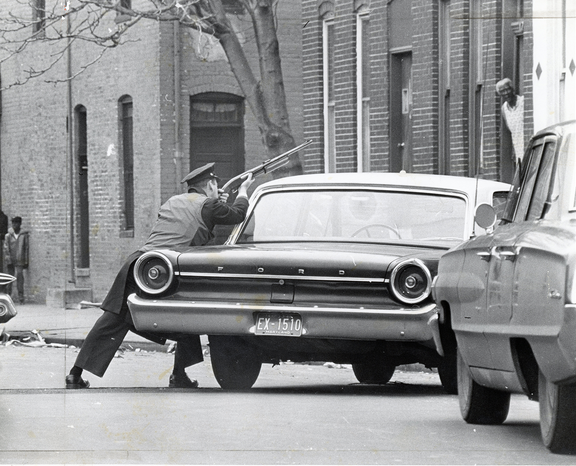
How to Dispose of Old Police Items

logo

Please contact Det. Ret. Kenny Driscoll if you have any pictures of you or your family members and wish them remembered here on this tribute site to Honor the fine men and women who have served with Honor and Distinction at the Baltimore Police Department. Anyone with information, photographs, memorabilia, or other "Baltimore City Police" items can contact Ret. Det. Kenny Driscoll at   Kenny@BaltimoreCityPoliceHistory.com follow us on Twitter @BaltoPoliceHist or like us on Facebook or mail pics to 8138 Dundalk Ave. Baltimore Md. 21222.
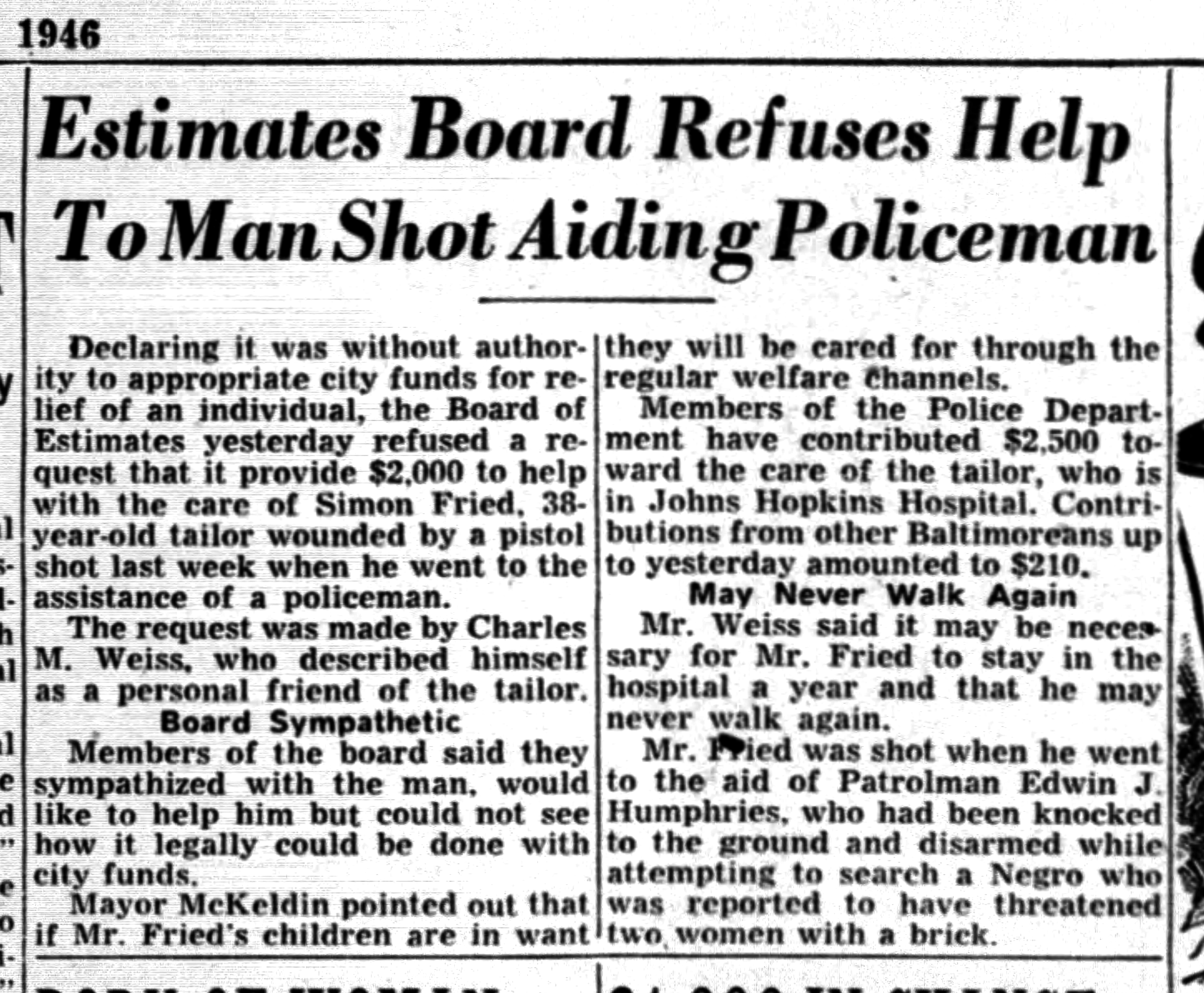
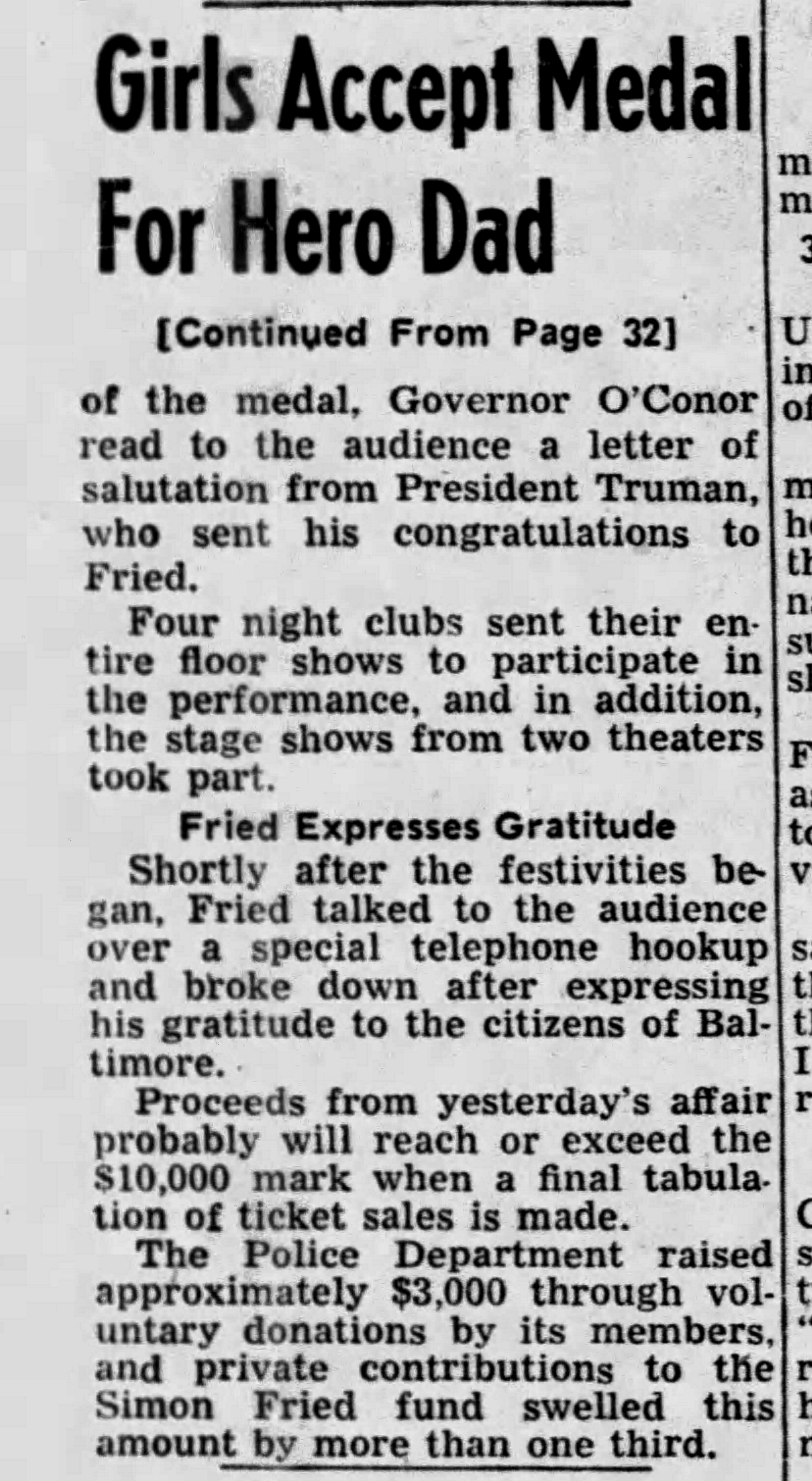
NEWSLETTER

Subscribe now to get 100 exclusive photo & two newsletters per month