1900 - 2000

1900 - 11 June 1900 - We lost our Brother Patrolman Michael W. Ryan  
1900 - The interesting thing about the Board of Police Commissioners and eventual single Commissioner is that the Commissioner(s) for the City of Baltimore were to be chosen and appointed by the Governor for the State of Maryland.

1900 - 1 Feb, 1900 - Northern District History - 1900 The Northern District was first opened at Cedar [Keswick] and 34th Street on 1 Feb 1900 at 8am ran by Capt. Gittings, Lieutenants Henry and Dempsey; Round Sergeants will be, Warden for Day Duty, and Moxley for Night Duty. At the time they began with 50 officers. It remained at the Cedar [Keswick] location until 2001 when it moved to its current location at 2201 W Coldspring Lane. 
1900 - 7 May 1900 - George M Upsher,  Edward H Fowler, and John T Morris
1900 - George M. Upsher, was one of our Baltimore City Police Commissioner from 1900-1904
1901 - 8 October 1901 - Thomas F Farnan Deputy Marshal was Acting Marshal from Oct 8, 1901 - Aug 7, 1902
1902 - 20 May 1902 - We lost our Brother Police Officer Charles J. Donohue 
1902 - 21 August 1902 - "1000 members of Police Department to re-take Oath" - The entire department was forced to re-take their oath of office, as prior to this day, they had been improperly and illegally sworn in, and this was the case for 35 years. (See - BPD News under the Insight Drop-down Tab) 
1902 - 8 October 1902 - Thomas F Farnan,  Appointed Marshal from Oct 8, 1902 - Aug 8, 1914 
1904 - 7 February 1904 - The Great Baltimore Fire raged in Baltimore, Maryland, United States, on Sun, Feb 7 and Mon, Feb 8, 1904. 1,231 firefighters were required to bring the blaze under control, both professional paid truck and engine companies from Baltimore City Fire Departments BCFD and volunteer fire companies from the surrounding counties, along with some out of state units that came in on local railways. The fire destroyed a major portion of central Baltimore City, to include over 1,500 buildings covering an area of some 140 acres. It spread from North Howard Street on the west, north to the retail shopping areas on Fayette Street and began moving eastward as it was pushed by prevailing winds. Baltimore Police not only helped to fight the fires, and evacuate buildings, but they also fault crime associated with this type chaos, in which looting almost always begins.
1904 - 23 March 1904 - George M Upsher,  John T Morris, and Thomas J Shryock   
1904 - 2 May 1904 - George R Willis,  James H Preston, and Thomas J Shryock 
1904 - James H. Preston, was one of our Baltimore City Police Commissioner from 1904-1908 (Gov. Warfield made him a member of the Board of Police Commissioners for Baltimore City, 1904-08) He went on to become Baltimore's Mayor in 1915 
1904 - George R. Willis, was one of our Baltimore City Police Commissioner from 1904-1908 
1904 - 26 November 1904 became the first time fingerprints were officially used (to catalog criminals) in the United States when John Randles was held over on a theft charge. He was printed by Sgt. John A. Casey who had recently returned from St. Louis where he had been trained in the technique, initially it was felt the system would work alongside the Bertillion system, but instead it was found to be more efficient and so it quickly replaced the Bertillon system except for two or three photos, initially they used a front on head-shot and two profile shots, now they only use two shots, the front on head-shot and a single profile. 
1904 - 7 December 1904 - Fingerprint Identification Section - After becoming the first police department in the country to use the new Fingerprint System of identification when on 26 November 1904 Baltimore Police Department would go on to use 7 December 1904 as the inauguration date of our Finger Print Identification Section.  
1905 - 27 July 1905, The "Beauty Squad" otherwise known as the "Traffic Squad" went on duty. Some wore a patch on their left sleeve of the Maryland Coat of Arms surmounted by an Eagle with outstretched wings. This was done to set them apart from other police in the area, an interesting note in the colors of the Calvert family Quarters, instead of Or and Sable (Gold and Black) they were given Orange and Black in error as the patch maker mistook Or for an abbreviation of Orange. Initially, our men didn't wear the patch, before long they all wore the patch and a distinct orange and Black cord on their helmets. To this day we still use Orange and Black for our ribbons and in other city logos and mottoes.  
1905 - 16 January 1905, Might be the department's first recorded attempt at maintaining of our Department's History, when Patrolman William Burgess of the Central District began his new job in his new office as, "Librarian and Keeper of the Archives of the Central District," based on the following as we can see from the following Sun paper report:  

1905 - 26 January 1905 - We lost our Brother Police Officer Mathew Boone * (1) 
1905 - 25 December 1905 - We lost our Brother Police Officer Charles Spitznagle * 
1907 - 1 August 1907 - The Department was to receive a Columbia Electric Automobile when complete the machine was put to use in the Central District as an Ambulance and Patrol (Paddy) Wagon. It was said to have been easy to run and easily made 16 miles an hour. Unlike the illustrated picture used to show Baltimore’s New Police vehicle, Baltimore’s Wagon would come with windows and curtains  
1908 - 4 May 1908 Sherlock Swann,  John B A Wheltle, and Peter E Tome 
1908 - Col. Sherlock Swann, was one of our Baltimore City Police Commissioner from 1908-1910 
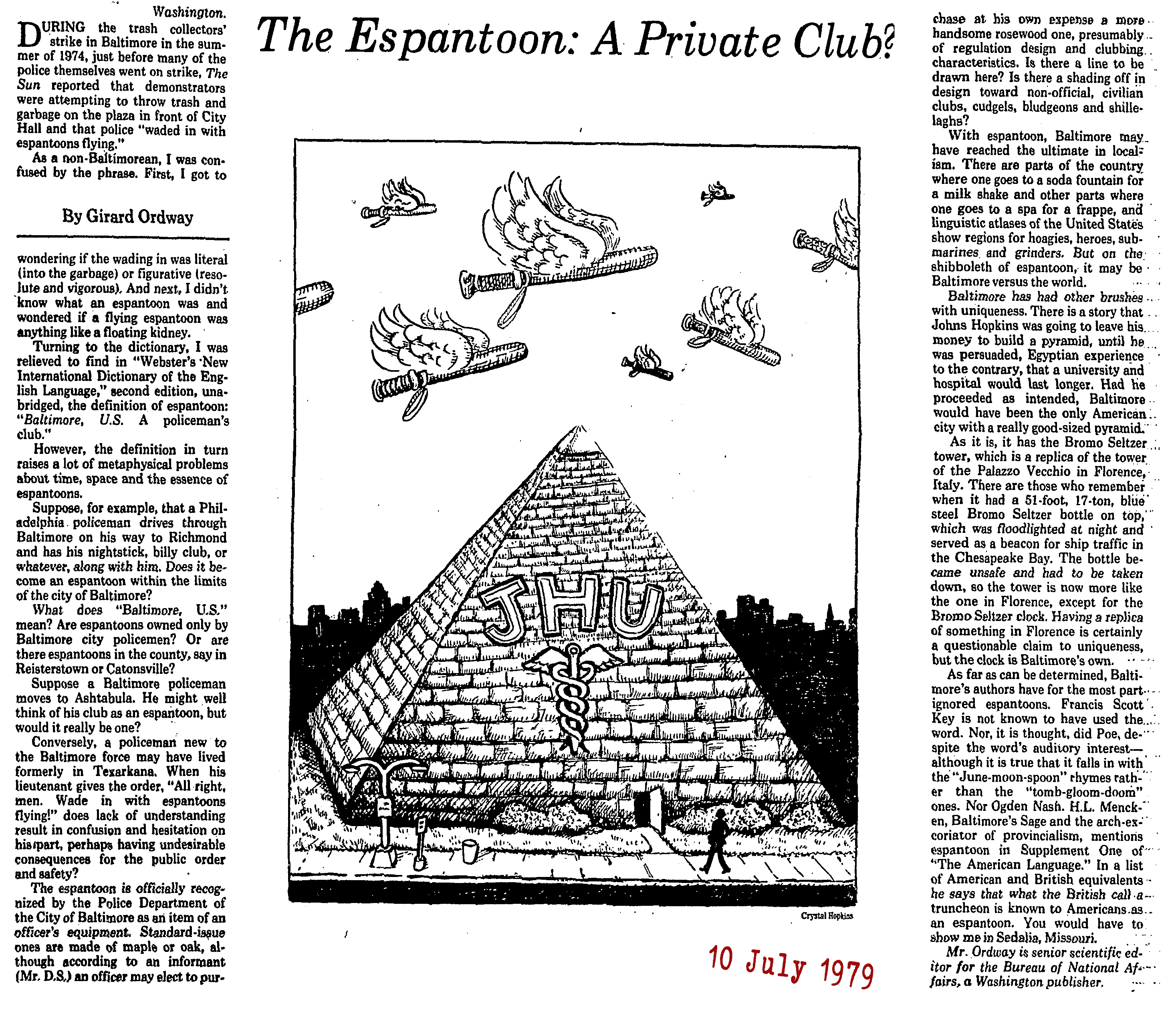
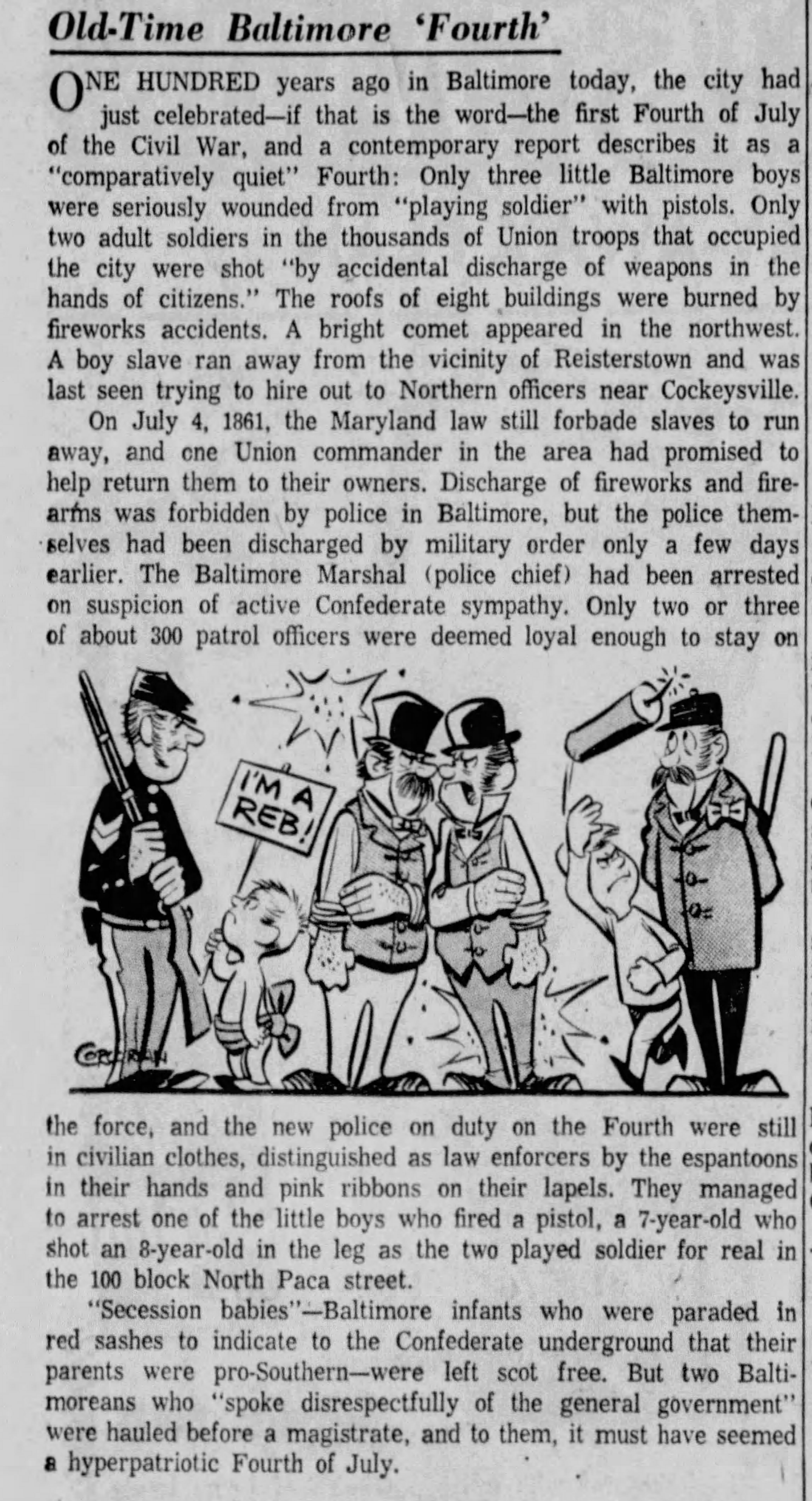
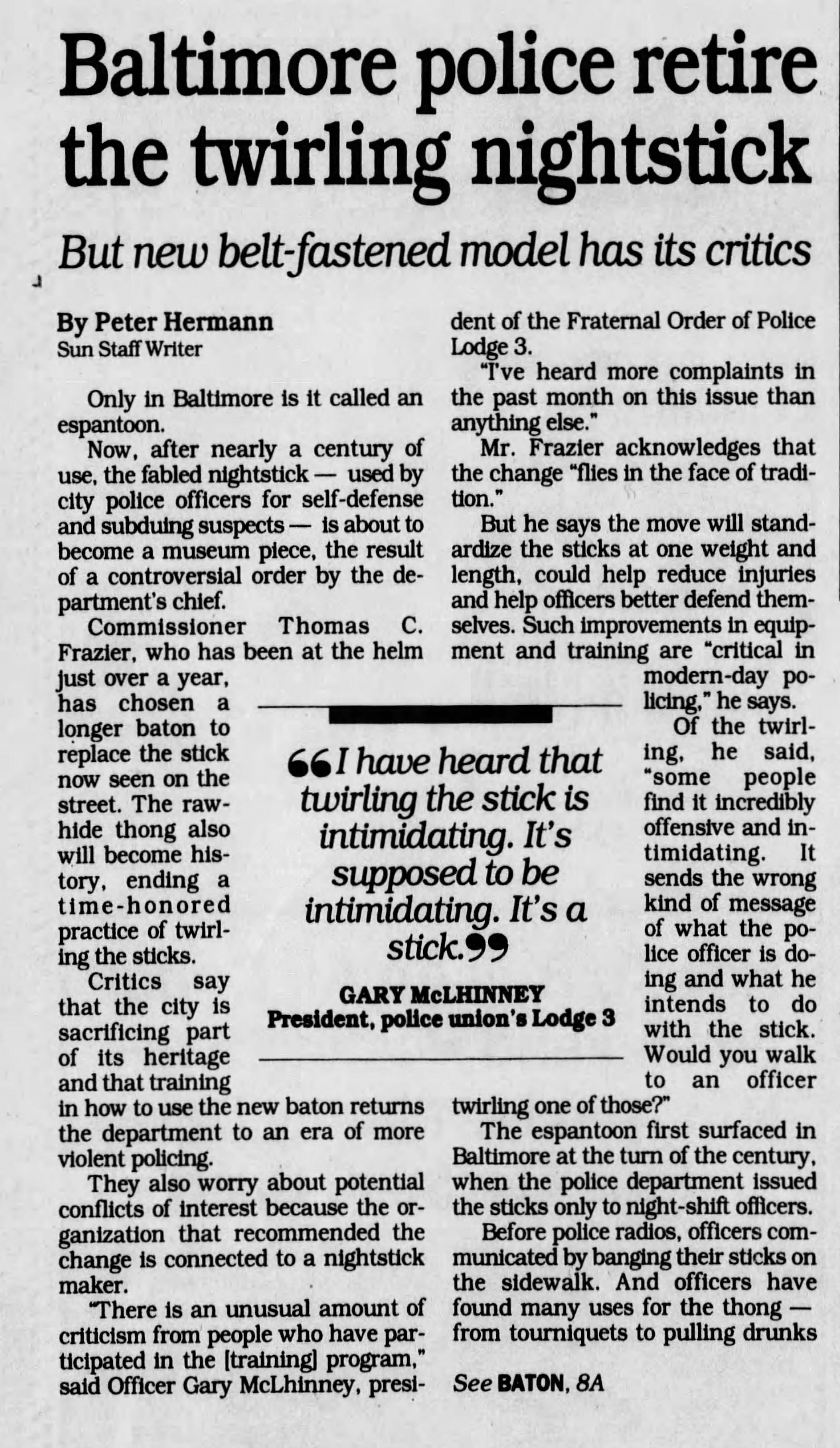
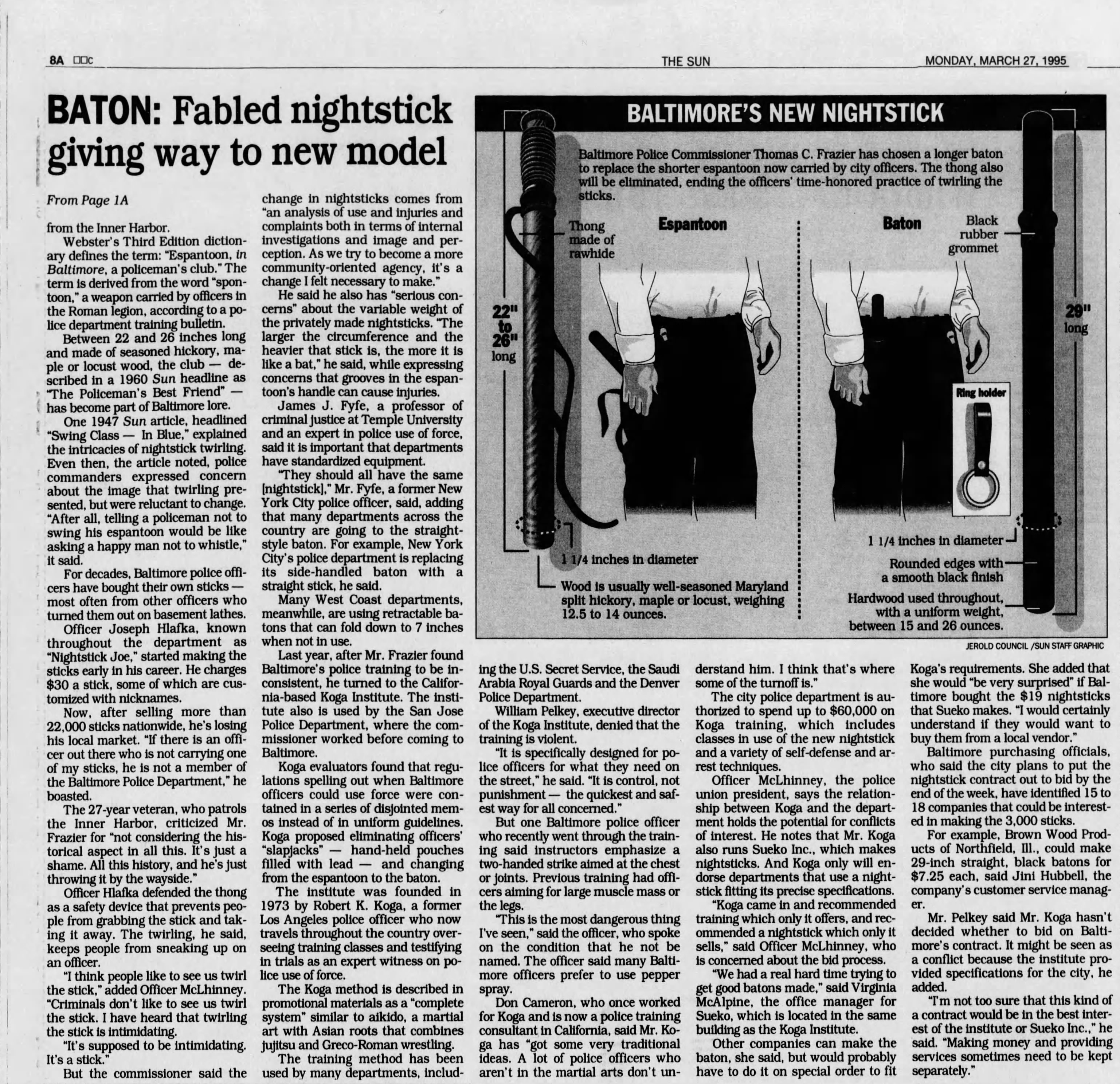
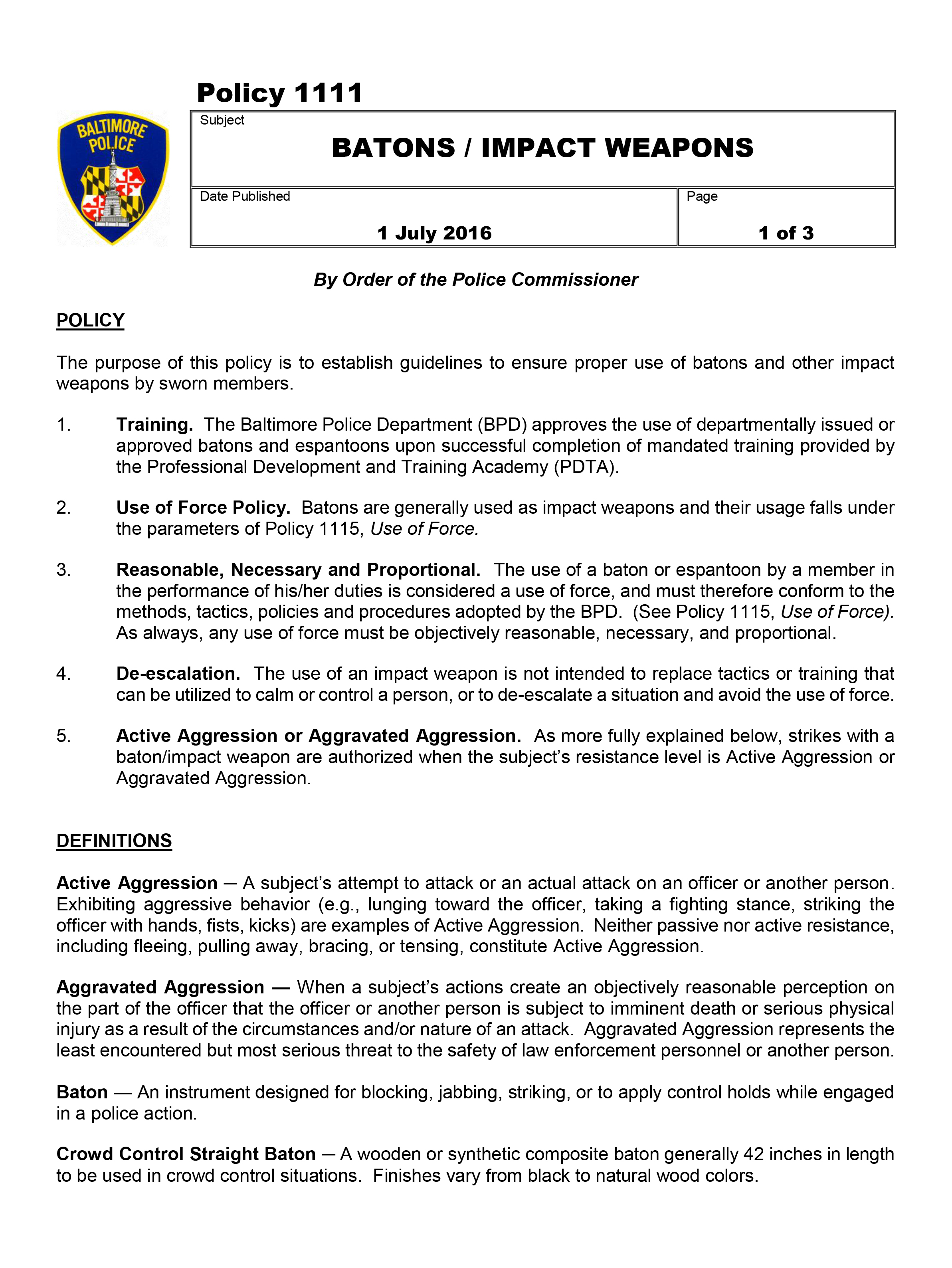
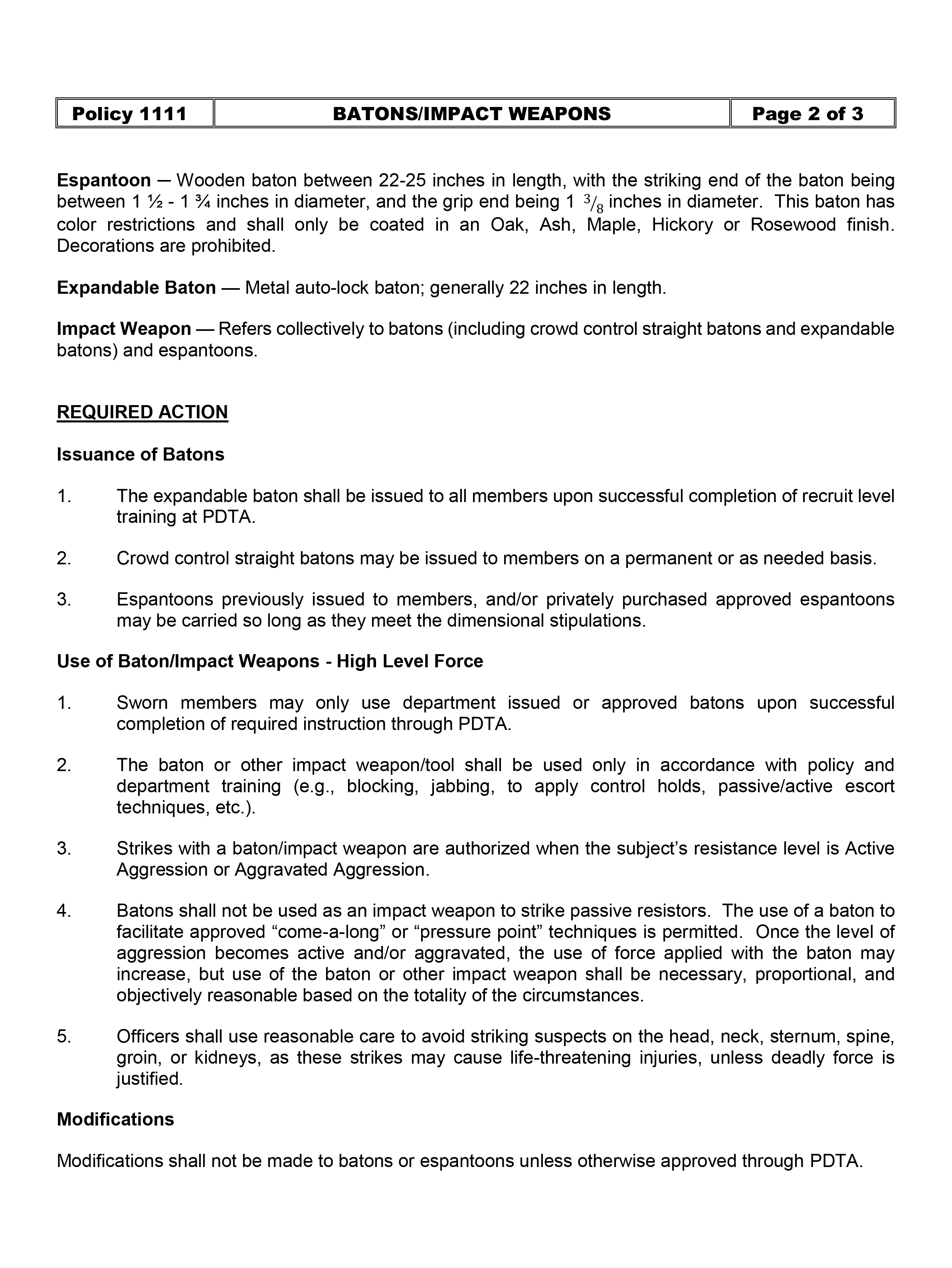
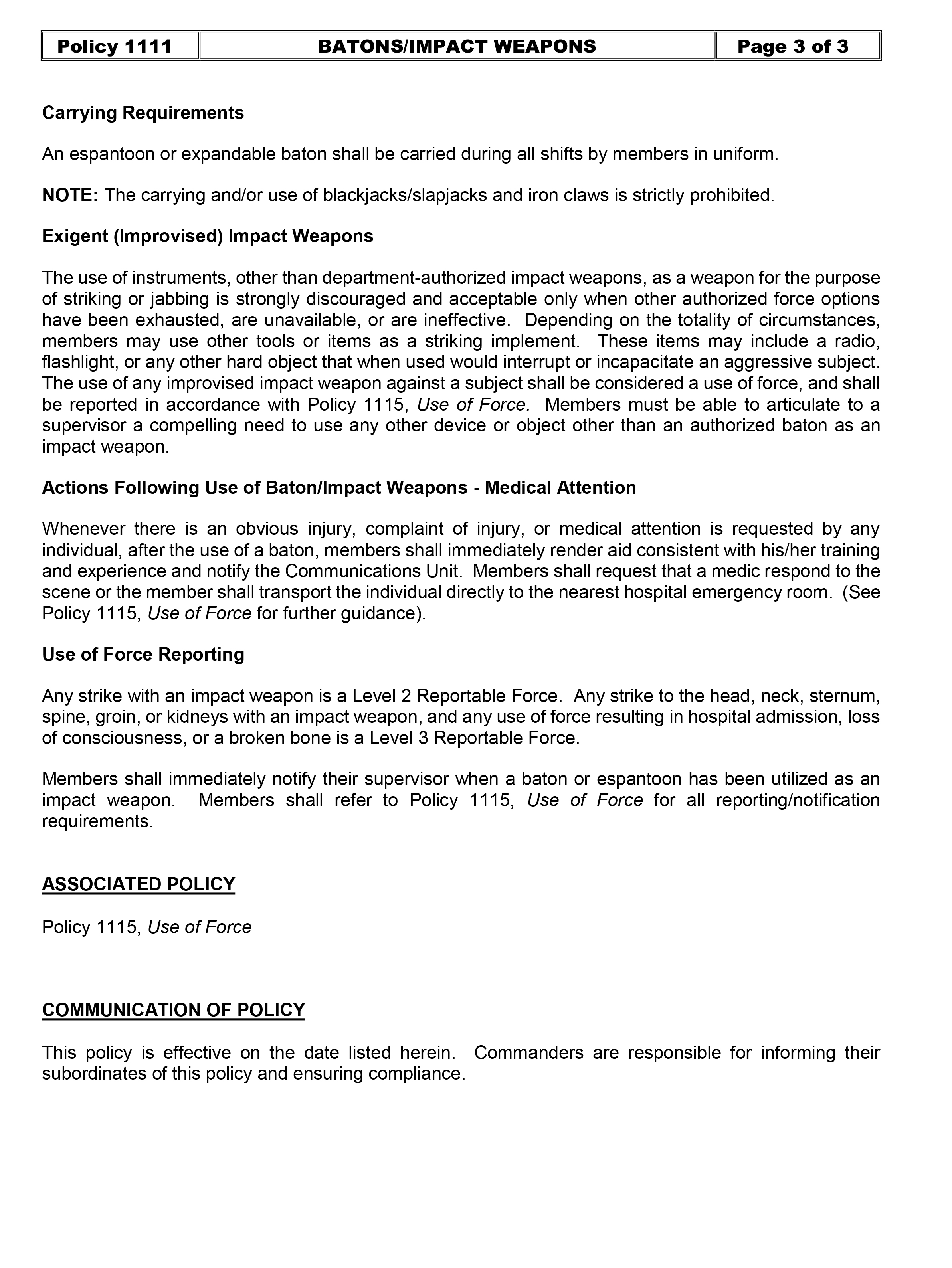
1908 - 7 November 1908 - After 22 years, The Baltimore Police Department stop using the Police Helmet, (Bobby Cap), and goes to a more modern round, or oval top, police hat. From the Baltimore Sun - The Baltimore Police go from the Bobby Type Helmet to the more modern cap and Officers donned new uniforms, veteran Captains returned to old Districts, caps supplant helmets and Espantoons are in use once again. 
1908 - 7 November 1908 - Also on this day and with the hat switch under the direction of Col. Sherlock Swann came a new hat device, it was on this day in 1908 that we dropped the Wreath style hat device moving to the hat device used today with the Coat of arms and badge number.
1908 - 28 December 1908 - Baltimore had laws passed to make consumer purchased fireworks illegal. The same year we saw immediate improvements in reduced injuries, while surrounding counties the same year with relaxed firework laws, there were deaths and dismemberment in 1904 with two young men each losing a hand in Baltimore County to fireworks. Marshal Farnan fought to introduce these laws and saved many lives and limbs as a result
1909 - 4 March 1909 - We lost our Brother Police Officer Thomas H. Worthington * (2) 
1910 - 2 May 1910 -  John B A Wheltle,  Peter E Tome, and C Baker Clotworthy 

1910 - 16 Sept1910 - We lost our Brother Police Officer John T. Tuohy
1910 - John B.A. Wheltle, was one of our Baltimore City Police Commissioner from 1910 -1912 
1911 - 16 September 1911 - We lost our Brother Sergeant Joseph Smyth 
1912 - 25 November 1912 - We lost our Brother Officer John McGrain * 
1912 - 19 June 1912 - The first Women Officer was hired under the title of Policewomen was Mary S. Harvey, EOD of June 19, 1912 her hiring was followed by that of Margaret B. Eagleston July 22, 1912 (interesting side note on March 28, 1925 the Baltimore Sun reports - Two female members of department given first lesson in pistol shooting. They were Miss Margaret B. Eagleston and Mrs. Mary J. Bruff - A few days later Mrs. Mary Harvey, Miss Eva Aldridge and Ms. Mildred Campbell were also trained. So basically the first two woman officers hired by the BPD weren't trained in firearms until they had been on the force for 13 years!)  
1912 - 4 April 1912 John B A Wheltle,  Peter E Tome,  and Morris A Soper 
1912 - 6 May 1912 Morris A Soper,  Daniel C Ammidon, and Alfred S Niles 
1912 - Morris A. Soper, was one of our Baltimore City Police Commissioner from 1912-1913 
1912/13 - The Baltimore police goes from Horse Draw "Patty" Wagons to motorized wagons. Oddly enough our first motorized wagons were manufactured by the same builder. 
1913 - December 1913 - The Police Academy was established. - What later became known as our Police Academy, was first called “The Baltimore Police Department - School or Instruction” - It was housed in the Northern District - From a 1934 newspaper article referencing this "School of Instruction", it talks about the effect on its young police, initially they wrote, "It's not long, this eight-week course that they put the newcomers through, upon the fifth floor of the Police Building at Fallsway and Fayette, but it is both thorough, and exacting. And since its founding fourteen years ago by Commissioner Gaither; the school has served as something of a guide, and model for virtually every big city in the country," Departmental officials said. 
1913 - 31 December 1913 James McEvoy, Daniel C Ammidon, and Alfred S Niles 
1913 - James McEvoy, was one of our Baltimore City Police Commissioner from 1913-1914 
1914 - 29 May 1914 - The Motor Unit was organized on May 29, 1914 - It began with just five members, Officers, Schleigh, Bateman, Pepersack, Vocke and Louis. 
1914 - 17 October 1914 - The first female officer shot in the line of duty was Policewoman Elizabeth Faber. As she and her partner, Patrolman George W. Popp were attempting to arrest a pick-pocket on the Edmondson Avenue Bridge they were both shot. (An interesting side note, the first woman police hired by the Baltimore Police department were hired two years earlier in June and July of 1912, and none of the women hired received firearms training until 1925) 
1914 - 28 December 1914 - Daniel C Ammidon,  Clarendon I T Gould, and Alfred S Niles
1914 - 14 August 1914 - Robert D Carter Appointed Marshal August 14 1914 - until after 1917 
1914 - Daniel C. Ammidon, was one of our Baltimore City Police Commissioner from 1914-1916 
1914 - "Luxe" and "Morpheus" Baltimore’s first K9 - A little known fact, while not an official unit, Baltimore had two Police Dogs at their call when two Airedale Terriers from London came to enroll as members of the Police Force. Their owners learned two dogs were already here, privately owned, one belonging to Mr. Jere Wheelwright, and the other to Dr. Henry Barton Jacobs. “Luxe”, Mr Wheelwright's dog was a superb example of a highly trained equine aristocrat, big, powerful and intelligent to a degree that was truly remarkable. Morpheus Dr. Henry Barton Jacobs dog also a superb example of a highly trained K9. It would be 42 years before we would have an official K9 Unit, but off and on since 1914, we had, had Police Dogs used in both a private, and official capacity. But not until 1956 did we establish an official unit, with an official methodology that would go on to become world known as the best K9 unit. 
1914 - November 1914 - Crosswalks were added to Baltimore's streets to enhance pedestrian safety and prevent "Jay-Walking." Due to a large number of injuries and deaths caused by people crossing streets in the center of the blocks, Baltimore followed suit with other large cities such as  Cleveland and Detroit adding white lines at intersections for pedestrians to cross safely. Street intersections on Baltimore Street from Fallsway to Howard Street and Howard from Baltimore to Franklin Street have added these heavy white lines on all four sides of the intersecting streets. The lines extend from curb to curb, on the north and south sides of the street running East and West, and on the east and west sides of the streets running north and south. These lines extend from the sidewalk to the building line on all four intersecting corners.
1915 - 15 February 1915 - Baltimore begins its first ever Bike Squads, from four booths throughout the city, they worked two shifts, 4x12 12x8, they rode in 2 hour rotations, splitting time with officers in the booth. Dispatch phoned the booth, and calls were sent forward from there to the units on their bikes. The concept was to provide better police service to the rural homes in the city 

1915 - 18 April 1915 - We lost our Brother Police Officer George C. Sauer  
1915 - 8 July 1915 We lost our Brother Police Sergeant William F. Higgins  
1915 - 21 September 1915 - We lost our Brother Police Officer Herbert Bitzel  * (3)
1915 - 25 December 1915 - We lost our Brother Sergeant Paul Meeks
1916 - 26 January 1916 - 25 Semaphores [traffic signals] was ordered by The Police Board for street crossing - Used to regulate street traffic by the police department with the device first stationed at Howard and Lexington Streets to guide vehicles.  The system was first used and tested by Patrolman Thomas Oursler of Baltimore's Traffic Division and both witnessed then ordered by Marshal Carter. This the original Semaphore was composed of two large green signs with the words "GO" and two intersecting red signs that read "STOP" it was operating via a pole inside of a pole that was stopped by a small handle, allowing the officer a way of turning that handle to change the sign providing an indication for intersecting traffic to direct their movement as the green GO signs, or the red STOP signs were brought into their view. These were topped off with a four-way railway lantern using red and green lenses. Later the Semaphore and officer were encased by a white metal drum that the patrolman could stand inside making him more visible to traffic. In the 1920's Commissioner Gaither would disband these Semaphores and go back to the whistle and point control that is used to this day. 
1916 - 22 March 1916 Lawrason Riggs,  Daniel C Ammidon, and Alfred S Niles
1916 - 1 May 1916 Lawrason Riggs,  Edward F Burke, and Daniel C Ammidon 
1916 - Lawrason Riggs, was one of our Baltimore City Police Commissioner from 1916-1920
1917 - 22 January 1917 - We lost our Brother Patrolman Michael Burns * (4) 
1917 - Circa 1917 (The title Chief was Marshal in Baltimore City) 
1918 - 13 February 1918 - We lost our Brother Police Officer Joseph Daniel Benedict

1918 - 19 March 1918 - We lost our Sister Police Matron Teresa Foll *  
1918 -  6 July 1918 - We lost our Brother Patrolman George Kessler 

1918 -  8 July 1918 - We lost our Brother Lieutenant Charles H McClean
1918 -  Another 40 square miles of Baltimore County was annexed by  Baltimore City. Baltimore County lost 34 of its 43 officers to the Baltimore City Police Department. The Canton, Arlington, Mount Winans, and Gardenville stations also became part of the city.  
1919 - 16 Feb 1919 - We lost our Brother Police Officer Albert L. Borrell  
1919 3 July 1919 - We lost our Brother Police Officer John J. Lanahan 
1919 - 5 January 1919 - 33 Former Members of Baltimore County Police Department were accepted by the Baltimore City Police Department as the Annexation Act allowed 60 men to patrol the 50 square miles of the Annex, Area's such as "Canton" and "Highlandtown" formerly Baltimore County are now Baltimore City. 
1920 - 2 October 1920 - We lost our Brother Police Officer Michael J Egan * (5) 
1920 - In 1920 the Board of Police Commissioners was abolished and General Charles D. Gaither was appointed as our first Police Commissioner. Charles D. Gaither was one of our Baltimore City Police Commissioner from 1920-1937 
1921 - 1 January 1921 - Police Commissioner Charles D. Gaither began the three-platoon system for Baltimore's police force, in less than six months time the eight-hour tour of duty for Baltimore policemen will be in force. With everything, he needed from the necessary Equipment Including at Least 30 motorcycles with sidecars (one article said several of the sidecars were equipped as prisoner transport vehicle. 
1921 - 1 May 1921 - We lost our Brother Patrolman Edgar Shellito *   
1921 – 6 May 1921 - First Electric Traffic Signal installed in the city at the Mall Crossing in Druid Hill Park. It was installed in place of the old manually operated Go-Go signals, and was first operated by Baltimore Park Police Officer R. W. Wilson on 6 May 1921   

1921 - 4 March 1921 - Marine Unit Radios Installed - Commissioner Gaither announces telephone-radio communication from his Marine Unit. He announced he would be using Navy surplus telephone-radios. The radios would be installed in Deputy Marshal George G. Henry’s office, as well as both police boats the Lannan and the Carter. These were set up as one-way radio’s in which the Marshal could pass information on the two police boats. The boats could then go to one of eight police call boxes strategically placed on shore. It would be nearly two years later in June of 1923 that they would have the system converted over to a Two-way radio system. In this instance, they used the most current military surplus radio equipment, set first in the Robert D. Carter, and most of the Fire Department’s Fire boats with more boats to follow. Note: On 4 March 1933 - Radio Communication was established for the first radio communications system between Patrol Vehicles and a Central Dispatcher went into service using the same surplus telephone-radios Commissioner Gaither picked up for the Marine unit nearly 10 years earlier all of this first suggested to the Board of Estimates in September of 1931. 
1921 - Early in the year of 1921 we tested the first signal light (aka Recall Light) on a call box that was located on the southeast corner of Baltimore and Charles Street. The signal (Recall Light) was made up of an electric light bulb, a washbasin to shade the light bulb and a Marine lens. The mechanism for the operation of this light was located in the old Central Police Station House on Saratoga Street near Charles Street, it consisted of an alarm clock for the flashing apparatus. This method of notifying the officer that he was wanted proved very successful. Every uniformed man from the inspector to the patrolman was enthusiastic over the results, by the end of first week of this "Magic Blinker" there had been a demand for more from the other seven districts. 
1922 - The Rank of Round Sergeant was Discontinued in 1922
1922 
- 18 July 1922 - Baltimore City Traffic Police Officers will no longer have to wear their Coats while directing traffic. All other officers would have to continue wearing their coats year round. Gen. Gaither said, "Other officers can dip into the shade, but our traffic regulators [officers] do not have that luxury." It wouldn't be until 6 June 1925 before all police would have the choice. It should also be pointed out that in both cases, it was only day-work police 8 AM to 4 PM shift that could shed their coats, in the high heat days of summer.
1922 - 17 September 1922 – The 1921 Recall Light experiment was so successful that we would put them in every district and on nearly every call box in the city. This would be a first time anything like this had been done anywhere in the country, and just as the experiment caused excitement in getting this program expanded to the entire city, it wouldn’t be long before other jurisdictions also had this system installed everywhere. By 1945 Baltimore had 269 recall light throughout the city on a much better model recall light than that 1st experimental model from 1921. Note: the first light was the idea of Gen Gaither, and was made by in-house maintenance, from spare parts, in fact, they used an alarm clock for the flashing apparatus. 

1923 - We lost our Brother Police Officer John Edward Swift *
1924 - 2 March 1924 - We lost our Brother Police Officer Frank L. Latham 
1924 20 June 1924 - We lost our Brother Police Officer Charles S. Frank *
1925 2 January 1925 - We lost our Brother Police Officer George D. Hart * (6)
1925 -
18 May 1925 - We lost our Brother Police Officer Patrick J Coniffee * (7)

1925 -1 November 1925 - We lost our Brother Police Officer Leroy L. Mitchell  
1925 - 3 July 1925 - We lost our Brother Patrolman John E. Harris * (8) 
1925 - 28 March 1925- Two female members of our department were given the first lesson in pistol shooting for our women officers. Baltimore policewomen received their first lesson in the use of firearms. Lieut. James O. Downes, expert marksman and instructor of the Baltimore Police Department's Pistol Team, explained the use of pistols to the two policewomen. Mrs. Mary J. Bruff and Miss Margaret B. Eagleston were the students who appeared at the Central police station yesterday. (Note:The first women hired in Baltimore to police, were hired in June and July of 1912. Two years later 17 October 1914, we had our first woman Officer shot in the line of duty, Patrol Woman Elizabeth Faber was shot on the Edmonston Ave Bridge, alongside her partner Patrolman Popp who was also shot, and still, it would take 11 years of women to be trained and armed) 
1925 - 6 June 1925 - Commissioner Gaither issued an order, effective, 6 June 1925 that all members of the Police Department while working between the hours of 8 A.M. and 4 P.M. may remove their coats and go out in their "Shirt Sleeves" provided they wear White Oxford Shirts, and Black Ties. This privilege has been granted for Baltimore’s Traffic Officers since 18 July 1922. 
1925 - 2 Aug 1925 - We lost our Brother Patrolman Irvin E Martz
1926 - 09-12-1926 Baltimore Police Headquarters and Central opened at Fallsway and Fayette St. where they remained until 09-12-1977 when Central moved to 500 E. Baltimore St. The building was demolished in 1984 
1926 - 9 February 1926 We lost our Brother Police Officer Milton Heckwolf
1926 - 29 June 1926 - We lost our Brother Police Officer Webster E. Schumann
1926 - 12 July 1926 - We lost our Brother Police Clerk Thomas J. Dillon 
1926 - 31 Oct 1926 - We lost our Brother Police Officer Charles W. Robb

1927 - 7 Dec 1927 - We lost our Brother Patrolman Harry Sullivan
1927 - 5 August 1927 - We lost our Brother Police Officer William F. Doehler
1928 - 12 February 1928 - We lost our Brother Sergeant George M. J. May  
1928 - 22 February 22, 1928, The first vehicle actuated control was tried out in Baltimore. (To the best of our knowledge this was the first vehicle actuated signal insulation in the world.) - This was an automatic control were a brake attachment and two funnels placed on poles on the right-hand side of the cross street, ordinary telephone transmitters being installed inside the funnels. These transmitters being connected to the sound relay, which when disturbed by noise, for example, the tooting of horns, blowing of whistles, or the sound of voices would actuate the sound relay, releasing the break on the automatic control permitting the motor to run. This would change the signal which had been green on the main street to amber, then to read, permitting the side street traffic to move out on the green. It would automatically reset to red. This device was invented here in Baltimore. - This control would always restore itself back to the main street green, then the break would set and the signal would remain green on the main street until disturbed again by sound. Several of this type were installed, one being at Charles Street and Coldspring Lane, another at Charles and Belvedere Avenue  
1928 - 28 June 1928 We lost our Brother Sergeant William Nicholson  
1928 19 November 1928 - We lost our Brother Sergeant Joseph F. Carroll 
1929 26 July 1929 - We lost our Brother Patrolman James M. Moore   
1930 - 7 May 1930 - We lost our Brother Patrolman Robert L. Osborne 
1931 - 7 January 1931 - We lost our Brother Police Officer John P. Burns   
1931 - 10 Nov, 1931 - We lost our Brother Captain Edward J Carey 

1931 6 Dec, 1931 - We lost our Brother Police Officer Howard Pitts
1932 - 2 January 1932 - We lost our Brother Police Officer William A. Bell 
1932 - 5 March 1932 - We lost our Brother Patrolman Charles R. Bozman 

1932 - 4 October 1932 - We lost our Brother Police Officer Thomas F. Steinacker 
1933 - 21 April 1933 - We lost our Brother Police Officer John R. J. Block  
1933 - 7 March 1933 - We lost our Brother Police Lt. Cornelius J. Roche  
1933 9 March 1933 - We lost our Brother Police Capt. Charles H. Burns

1933 - 4 March 1933 - The First Radio Communications system between Patrol Vehicles and Headquarters took place while testing between the Northern District located at Cedar Ave and 34th St [Later changed to Keswick & 34th Street] from Central Dispatch, Broadcasting from Police Headquarters. Everything went on the air for the first time at noon on 4 March 1933 - Station WPFH  (Police Broadcasting Station - Spent the morning making the tests using the 19 vehicles that had been equipped with receivers. An Acronym was made for WPFH - Wonderful Protection For Homes- Note Commissioner Gaither first suggested this system to the Board of Estimates in September of 1931
1934 - 12 February 1934 - We lost our Brother Police Officer John Blank  
1934 -  5 September 1934 - We lost our Brother Serge Michael McSweeny
1934 -  2 November 1934 - We lost our Brother Police Officer John A. Stapf
1934 - 20 December 1934 - We lost our Brother Police Officer Henry W. Sudmeier
1935 - 14 February 1935 - We lost our Brother Police Officer Max Hirsh
1935 - The Police Department's Traffic Section including the Mounted Unit were issued Pith Hats a kind of Safari Helmet which was not well liked by many as they seemed to blow off the officer's heads in even the slightest of winds, causing officers to chase more helmets than criminals while the head wear was in use.
1935 - 31 Oct 1935 - We lost our Brother Police Officer Arthur H. Malinofski
1935 22 Nov 1935 - We lost our Brother Patrolman James P. Lennon
1936 - 16 February 1936 - We lost our Brother Patrolman Arthur R. Cornthwaite  
1936 - 19 June 1936 - Seven motorcycle policemen will have inaugurated the new all-night motor-cycle patrol of the city beginning in evening 19 June 1936 at 9 o'clock, it was announced a day earlier on 18 June 1936 by Capt. Hamilton Atkinson, commander of the traffic Division at the time. He said, they would have remained on duty until 5 AM. 

1936 - 9 October 1936 - We lost our Brother Police Officer Leo Bacon
1936 - 29 October 1936 - We lost our Brother Police Officer Carroll Hanley
1936 - 28 December 1936 -  We lost our Brother Police Officer John T. King, Jr.
1937 31 December 1937 - We lost our Brother Police Officer Thomas J. Barlow
1937 - 17 November 1937 - We lost our Brother Capt. Charles A. Kahler *
1937 - First African American Officer Violet Hill Whyte, became Baltimore Police Department's first African American officer she worked out of the Western District for her 30-year career with the department.  
1937 - William Lawson, was one of our Baltimore City Police Commissioner from 1937-1938
1937 - 28 May 1937 - For the first time in the history of the Baltimore Police Department, women have been advanced to the rank of Sergeant - Mrs. Cronin and Misses Lillie, Lynch and Ryan Promoted, The women, four in number, joined the force during or immediately after the World War, when there was a shortage of men, and functioned for a time as telephone and signal operators. Under terms of a bill signed Friday (28 May 1937) by Governor Nice, they will hereafter enjoy the rank and the pay, which is $46.50 a week as against their previous $40-of sergeants. 
1937 - 21 Aug 1937 - Shotguns were first put in radio patrol cars in 1937 the shotgun used at the time was the Winchester 1897. They only had 47 radio cars city wide at the time, training for the shotgun was done at Saunders Range in Glen Burnie. If officers couldn't qualify, they would be sent back to foot patrol and someone else would be given a chance. Training for officers to qualify with the shotguns began on 21 Aug 1937.
1937 
- 15 Oct 1937 - The Baltimore Police Crash Unit begins

1938 - Robert F. Stanton, was one of our Baltimore City Police Commissioner from 1938-1943
1938 - 21 February 1938 - The Accident Investigation Unit was established on February 21, 1938. 
1938 - 25 Mar 1938 - We lost our Brother Patrolman Henry E. Auld 
1938 - 5 July 1938 - Baltimore Police initiate the “Vice Squad” a name for the unit was going to be, the “Clean-up Squad” set up under the concept of preventing or reducing STDs – The unit was began within hours of a report made to the Grand Jury. Newspapers of the times speculated that there was an underlying reason for this squad, and that it had more to do with combating organized crime, and that it resulted from two tavern bombings, on Druid Hill Ave and Whitelock St. The other on Woodyear St. 
1938 28 July1938 - The first African American male officers hired were Walter T. Eubanks Jr., Harry S. Scott, Milton Gardner, and J. Hiram Butler Jr. were hired in all of whom were assigned to plainclothes 

1938 1 Nov 1938 -  We lost our Brother Chief Engineer Joseph Edward Keene 
1939 -  5 May 1939 - We lost our Brother Patrolman Charles W. Frizzell  
1939 - 12 July 1934 We lost our Brother Detective Sergeant Raymond Golderman  

1940 - 13 June 1940 - We lost our Brother Police Officer William L. Ryan 
1941 11 January 1941 - We lost our Brother Capt. Havey Von Harten 
1940's -  In the 1940's the Police school, the predecessor to the Police Academy started using the motto "SERVICE WITH HOPE OF HONOR AS REWARD" This was seen on a banner in several class pictures, and when speaking to the son of one of the class members from those days his father told him it was the police school motto, and one that had stuck with him his entire career. In learning of the motto, one can't help but think of how impactful, the motto is and just how strong it is. After all, what more could any of us want than honor. So we adapted it along with the departmental motto, "Every Ready - Ever Faithful - Ever on the Watch" as our motto's for the Baltimore Police Historical Society. But both got their start elsewhere in the department through our past.
1941 - Auxiliary Police Force Est. In December 1941, after Pearl Harbor our Police Commissioner (Robert F. Stanton) realized he would be losing a lot of his men to the war effort, so he quickly organized an "Auxiliary Police Force" a unit of Civilian Defense Organization, which now has a membership of approximately two thousand persons, whose services are on a strictly voluntary basis without remuneration of any character. These men are selected from owners of big business, and executives-men in all walks of life including laborers and the unemployed (if you meet the requirements it doesn't matter what you do for a living, your help is welcome). In 1941 they originally provided at their own expense, uniforms and patrol box keys etc. The department furnished badges, whistles and nightsticks. They receive ten hours training in first-aid, two hours instructions in handling of bombs, and at least six hours instruction in police work, during which period they are assigned to work with the regular uniformed patrolmen. They were required to report to various districts and to perform two hours actual police duty assigned them by our District Captains. The purpose which the Auxiliary Police was serving and the manner in which its members have discharged its duties are worthy of the highest commendation, for it has been a most effective instrument in aiding in the preservation of law and order. Cooperation between this unit and the regular uniform force are. Basis for the progress made in combating crime. After the war there was a bit of dissension among the Auxiliary Police Force and the regular force  
1942 - Oct 1942 - Baltimore's Ballistic/Brass Button Ban - Needing all the "Brass" our country could get it's hands on for use in our ammunition during the War efforts the WPB [War Production Board]. Takes a certain kind of Twinkling from the coats of our handsome agencies young officers during their first few months on the streets as they will be using black buttons instead of the polished shiny look of a young officer as he first works Baltimore's st, the way one might think of a Navy Pea Coat. This says more about times in America than it does the Police Department, obviously, our police can enforce the laws regardless of what they wear, but it is nice to see them in full Class A, and other uniforms. 
1943 - 13 June 1943 - We lost our Brother Police Officer William J. Woodcock 
1943 - 9 July 1943 - Baltimore Police Department put a "Dog-Pole" in the trunks of patrol cars to help secure dangerous dogs while waiting for SPCA to take the animal off their hands
1943 
- 12 Aug 1943 - Baltimore Police Department's Taxicab Bureau began late in the week of 12 Aug 1943, with the issuance of a new type of badge and identification card. William Monaghan, became the supervisor to this newly organized branch within Baltimore City's Police Department. This unit was the brainchild of Police Commissioner Hamilton Atkinson. Of the 1450 Cab drivers in Baltimore during the year 1943, only 990 had applied for a license, due to their past criminal records 45 of the 990 were denied the right to a Baltimore Police Taxicab License.  The Identification Cards and Badges issued at the time were described as having been, "Hermetically" sealed between two transparent sheets of plastic to prevent their having being tampered with. 

1943 7 November 1943 - We lost our Brother Police Officer William S. Knight 
1943 16 November 1943 - We lost our Brother Detective Patrolman Charles H. Reid 
1943 - African American officers were finally allowed to wear police uniforms, and by 1950, there were fifty African American officers in the department. 
1943 - Hamilton R. Atkinson, was one of our Baltimore City Police Commissioner from 1943-1949
1944 - 29 January 1944 - We lost our Brother Police Officer Joseph Waldsachs * (9) 
1944 - 19 July 1944 - Radio cars are marked for the first time departmental history. The Commissioner at the time Hamilton Atkinson said the cars could not be missed as they will have 12" letters running down both sides of the cars that simply reads "POLICE"  NOTE - Accident investigation vehicles were marked prior to the 1944 radio cars
1944 - 7 October 1944 - The Baltimore police switches from the round, or oval top police caps that were worn for a little more than 30 years after the "Bobby Cap" type helmet, to the current "Octagonal" or "Eight point" hat we wear today.

1945 - 2 June 1945 – Policewoman Ada F Bresnan of the Baltimore Police Department, became the first woman elevated to the rank of Sergeant. Sgt. Bresnan was appointed to the department in November of 1929.  
1945 17 August 1945 - We lost our Brother Police Officer John J. Burns  
1945 - 10 September 1945 - We lost our Brother Police Officer John B. Bealefeld  
1946 - 1 March 1946, We lost our Brother Patrolman George H. Weichert *  
1946 27 June 1946 - We lost our Brother Patrolman James M Shamer *  
1946 20 November 1946 - We lost our Brother Police Officer Elmer A. Noon  
1946  - 30 Dec 1946 - Mr Simon Fried became the 1st civilian to receive an Official Sworn Officer's Commendation. Click HERE

1947 - 13 January 1947 - We lost our Brother Police Officer Fred R. Unger 
1947 - 13 October 1947 - We lost our Brother Police Officer Charles Hart * 
1947 - 25 January 1947, The Baltimore Police Department promotes one of the Department's First African American Officers to the Department's first African American Police Sergeant. Patrolman James H. Butler Jr. now Sergeant Butler was formerly a College Football Player until hired by Commissioner William P Lawson, on 28 July 1938, as he was among the first three African American males hired by the Department. 
1948 - 13 February 1948 - We lost our Brother Police Officer Joseph Daniel Benedict 
1948 - 1 October 1948 - We lost our Brother Police Officer Thomas J. Burns 
1948 - 30 December 1948 - We lost our Brother Police Officer John W. Arnold
1948 - Crime Lab Est. The Baltimore Police Department’s 1st Crime Lab
1949 - 4 April 1949 - We lost our Brother Police Officer James L. Joyce
1949 16 October 1949 - We lost our Brother Police Officer Thomas J. O'Neill
1949 - Beverly Ober, was one of our Baltimore City Police Commissioner from 1949-1955
1950 - 4 August 1950 - We lost our Brother Police Officer Charles M. Hilbert 
1951 - 6 January 1951 - We lost our Brother Police Officer Roland W. Morgan
1951 - 23 June 1951 - We lost our Brother Patrolman Arthur Weiss
1951 - 7 April 1951 - Central Records was established and Central Records Bureau was created 
1951 19 April 1951 - Meritorious Service Board created
1951 - 1 June 1951 - Medical [Section] Bureau Established 
1951 - 5 Sept 1951 - Marks t
he end of the Police Department’s 110-year-old system of using docket books to log prisoners at district station houses. The bound books, which have been used since before the Civil War to record the vital statistics of those arrested in Baltimore were being replaced with loose-leaf dockets. The change, ordered by Commissioner Beverly Ober, began on 5 September 1951 in the Central District. Under the new setup, as many as 24 additional clerks would be needed to type the information now entered in longhand on old style the docket books.   
1952 - 29 April 1952 - Selective Enforcement Parking Unit - Officers using 3 wheel ServiCars that specialized in parking violations. They would be replaced 9 years later on 8 May 1961 by Meter Maids.
1952
 
- June 1952 - Crossing Guards added, hired in June of 1952, trained and ready to take their posts in September at the start of the new school session. Guards made $25 a week to be paid bi-weekly during school sessions. 

1952 - Armory Est. in 1952 the Gun-shop (now called the Armory) was established
1952 - 28 June 1952 - The department started using a Single Rocker type shoulder patch, it was black with yellow/orange trim, and lettering that read, "Baltimore City Police." This was to be worn on the left shoulder of the officers coat, or blouse (jacket). The original concept was to also have a second patch similar to this but for the shirt. The shirt version was being studied and would have had a Blue background with White lettering/outline. On the 28th of June 1952 these patches were issued to Officers in training, Officers on the street would get them not long after at a cost of 30 cents each. 
1953 - Mrs. Mary E. Hoy, Baltimore City Police Crossing Guard received the department's highest award “The Medal of Honor.” During that time School, Crossing Guards were employees of the Baltimore Police Department.
1953 - 1 August 1953 - We lost our Brother Police Officer James L. Scholl 
1954 - 15 Jan 1954 - Fallen Officer Plaque First Issued/Presented - Police Commissioner Beverly R. Ober holding plaque which he will be presenting to Mrs. Margret A. Scholl, widow of the Eastern District Sergeant James L. Scholl, who died from a gunshot wound last Aug 1st [1953]. The plaque carries Sergeant Scholl's badge, Baltimore Police Sergeant's Badge Number 118, and an inscription reading; "Baltimore Police Department, Medal of Honor. Sergeant James L. Scholl. Appointed 1 June 1942, Died in the Discharge of His Duty 1 Aug 1953. His Service Honored the Department." The Commissioner said, this is the first such plaque to be made in Honor of a Fallen Officer in this agency, but that Similar Plaques will now be Awarded in all such cases. Sergeant Scholl's was the first award of its kind within the Baltimore Police Department. 
1954 - 14 February 1954 - We lost our Brother Police Officer Alfred P. Bobelis 
1954 - 19 April 1954 - We lost our Brother Police Officer Aubrey L. Lowman 
1954 - 1 July 1954 - We lost our Brother Police Officer Walter D. Davis  
1954 - Mobile Crime Lab Est. May of 1954 The Mobile Crime Lab Unit was established.
1954 - 1 July 1954 - Radar Unit Began it consisted of 2 cars 3 officers. Warnings were given for the first several weeks after that summons were issued. 
1954 July. 1954 - The practice of paying salaried in cash was stopped and paying by check began
1955 -
24 October 1955 - We lost our Brother Sergeant James J. Purcell

1955 - 1 November 1955 - After nearly 20 years and four police commissioners arguing for and against Parking meters; Parking meters are finally signed into law and on 1 Nov 1955 the first parking meter was installed and went into use on North Ave in Baltimore City. These meters were enforced by Baltimore Police department's Traffic Enforcement Section.
1955 - 28 November 1955 - Polygraph Unit Est. First in the State Commissioner Hepbron brings the machine to help build a polygraph unit within the Rackets Division of the department. (In 1966 this unit would be transferred to the Crime Lab unit - Before the move to Crime Lab this little machine will cause headaches for the commissioner that brings it to Baltimore)

1955 - James M. Hepbron, was one of our Baltimore City Police Commissioners from 1955-1961
1956 - 6 Feb 1956 - - We lost our Brother Patrolman John Neill

1956 - 27 May 1956 - We lost our Brother Police Lieutenant William P. Thompson  
1956 - 29 June 1956 - Patrolmen were able to wear open-neck, short-sleeve oxford style shirts. The department was quick to stress that only a specific model oxford shirts had been approved, thereby eliminating the danger of patrolmen selecting the more brightly colored type shirts of their liking.
1956 -
29 September 1956 - We lost our Brother Police Officer John R. Phelan 

1956 - 17 October 1956 - The word "POLICE" was added in reflected tape to the rear of 200 departmental police vehicles. The idea was to both mark the vehicles, and to make them less likely to be struck from behind. When Commissioner Hepbron noticed an unusual number of parked patrol cars being rear-ended, he asked for suggestion to stop or reduce theses numbers. Inspector Leo T. Kelly, came up with the idea of adding 5" reflective letters rubber cemented to the rear of our cars make them more visible.  
1956 - 10 to 17 October 1956 - The same week as the above POLICE letters were added, for the first time police vehicles were equipped with the same kind of flashing red roof lights as those that were in use by our Fire Department.

1956 - Baltimore’s K9 Unit was initiated - On Tuesday, December 11, 1956, an article was published in one of our local newspapers which was one of a series of articles written by one Martin Millspaugh pertaining to Scotland Yard. This article the last of a series was devoted to the use of police dogs in London. As a result of the letters and inquiries received by Commissioner James M. Hepbron, an article appeared in the Morning Sun on December 17, 1956 which briefly stated that Commissioner Hepbron was interested and saw the possibilities of using dogs in the Baltimore City Police Department. On December 18, 1956, two dogs (Turk & Major Gruntz) that had had previous training were offered to the Baltimore City Police Department and, with two officers (Patrolman Thomas McGinn and Irvan Marders) also with previous dog experience, the program was put into effect on an “experimental basis”. By the middle of January 1957, fourteen dogs had been acquired as potential candidates and fourteen men were selected and assigned to the K~9 Corps. These men were chosen as a result of a questionnaire which was sent to all members of the department asking for volunteers. These men and dogs were trained daily until March 1, 1957. At that time, they were put on the street on Friday and Saturday nights, working the areas where crime was most prevalent. Shortly after this, actually on April 17, 1957~ Commissioner Hepbron, considering the experiment a success, went before the Mayor and City Council and appropriations were made through the Board of Estimates which resulted in the K-9 Corps becoming a permanent part of the Baltimore City Police. (NOTE - 1914 - Baltimore was using private dogs, one such dog, the first ever recorded was "Luxe" privately owned but protecting Baltimore's citizens through canine power) 
1956 - 30 December 1956 - K9 makes their first arrests, James Diggs, B/M 23. Major and Turk apprehend a suspect for breaking into a motor vehicle, and stealing contents. James Diggs, thought briefly about fleeing but quickly changed his mind while in the 400 Blk. of W. Franklin St. as he saw the sharp teeth, and fast legs of Turk, and Major Von-Gruntz (aka Major) Diggs changed his mind, giving the dogs their first arrest. The handlers at the time were Officers, Irvin Marders, William Kerbe, and Robert Johnson. Diggs was sentenced to 30 days, in Central Court for theft from a parked Motor Vehicle. 
1957 - 27 Sept 1957 We lost our Brother Sergeant Charles E Gross  
1957 - 9 October 1957 - We lost our Brother Police Officer John F. Andrews 
1958 - 19 September 1958 - We lost our Brother Police Officer Robert K. Nelson
1959 - 1 Aug 1959 - Southeastern District Opens - The Southeastern District is the youngest of all of our districts, it was built in 1958/59 at its present location 5710 Eastern Ave 
1959 - 11 January 1959 - We lost our Brother Police Officer Richard H. Duvall, Jr.
1959 - Baltimore's Park Police would disband, most members go to Baltimore Police Department where they retained their rank, their time, and their pension. Originally founded in 1862 to cover parks that fell outside Baltimore Police Jurisdiction. 
1960 - January 1960 - Baltimore Police along with Maryland State Police would introduce the Breathalyzer into Maryland's fight against Drunk Driving. It would be used up until 1993 when it was replaced with the a unit called "The Intoximeter". 
1960 - 16 November 1960 - We lost our Brother Police Officer Warren V. Eckert 
1961 - In January of 1961, the Baltimore Police Department merged with The Park Police, to make one big police force that covered the city. This will happen numerous times throughout the department's history. Housing Police and now talks of taking on Baltimore School Police.  
1961 - Bernard Schmidt, was one of our Baltimore City Police Commissioner from 1961-1966 
1961 - 8 May 1961 - Baltimore police starts it's Meter Maid unit, They will work out of the traffic division of the Baltimore Police Department with 10 Meter Maids, under the direction of one Sergeant and one Lieutenant. 
1961 - 8 Oct 1961 - We lost our Brother Patrolman John R Falconer 

1961/66 - The police commissioner was in an elevator in the Headquarters building when an officer steps in, the officer turns his back on the Commissioner and faces the closing doors much the way anyone entering an elevator would. The Commissioner asked the officer if he knew who he was. The Officer apologized, saying he did not. The Commissioner introduced himself to the officer. Not long after this the tradition of a photo of the Police Commissioner hanging in the roll call room behind the Lieutenant's podium was begun. The Commissioner at the time was, Bernard Schmidt he served as Police Commissioner from 1961-1966 just before Donald Pomerleau - 1966-1981 
1962 - 7 April, 1962 - We lost our Brother Police Officer Henry Smith, Jr. 
1962 - 26 May 1962 - We lost our Brother Police Officer Richard D. Seebo 
1962 - 2 July 1962 - We lost our Brother Police Officer Edward J. Kowalewski  
1963 - June 1963 - Baltimore Police EVU (Emergency Vehicle Unit) was formed. EVU handled a ton of emergency situations, everything from providing equipment to light crime scenes, to handling deadly chemicals, and bombs, Aside from handling a bunch of dirty jobs, they were also our Bomb Squad.  

1964 - 10 January 1964 - We lost our Brother Police Officer Francis R. Stransky 
1964 - 6 February 1964 - We lost our Brother Police Officer Claude J. Profili  
1964 - Mach 1964 - 24 March 1964 the department announced the introduction of 18 Remington 12-gauge pump-action shotguns. Serge. Freeman, a firearms instructor for the department, said, "98 of the new guns have been purchased as replacements for 1897 - model Winchester Shotguns which were taken out of use in the late 1940s. Those old guns," Freeman said, "were basically hunting guns with their 20 inch barrels shortened."
1964 - 11 September 1964 - We lost our Brother Police Officer Walter Patrick Matthys  
1964 - 15 October 1964 - We lost our Brother Police Officer Teddy L. Bafford 
1964 - 25 December 1964 - We lost our Brother Sergeant Jack Lee Cooper 
1965 - 20 January 1965 - We lost our Brother Police Officer Charles R. Ernest 
1965 - 19 November 1965 - Internal Investigation Division gets it's initial start labeled as "The Police Complaint Evaluation Board" Issuing its General Order - Regulation on (19 Nov 1965) authorizing anyone with a complaint to call into any of the districts or to the State police for a “supplemental report” to initiate investigation of police misconduct charges after the city police department has completed its inquiry."
1965 - 17 June 1965 - Baltimore Police begins it Cadet Program, the first Cadet was Edmund Bossle. 
1965 - 22 July 1965 - We lost our Brother Police Officer Robert Henry Kuhn
1966 - 29 April 1966 - The Nameplate was first worn by City Police Officers on 29 April 1966 at 9 am. - In a program called"Know Your Police," which was initiated by Interim Police Commissioner George M. Gelston in which he ordered all officers to begin wearing a nameplate for identification purposes. An idea the Maryland State Police started 7 years earlier on the same day (29 April, 1959). At the time Commissioner Gelston felt it would improve the image of the police department. As a side note, Patrolman Edward Campbell would be the first City Officer to wear such nameplateas he posed for the Baltimore Sun a day earlier on 28 April 1966. I should add Officer Tom Wade posed for a similar picture in which Commissioner Gelston was seen pinning his nameplate on him.
1966 - 24 August 1946 - We lost our Brother Honorary Police Officer Simon Fried * 1*
1966 - The department itself had not fully integrated until 1966. Prior to 1966, African American officers were limited to foot patrols as they were barred from the use of squad cars. These officers were quarantined in rank, barred from patrolling in white neighborhoods, and would often only be given specialty assignments in positions in the Narcotics division or as undercover plainclothes officers.
1966 - Police Commissioner Donald D Pomerleau was appointed to the first of three six-year terms as our Commissioner, that's 18 years of the same Police Commissioner
1966 - 4 May 1966 - Along with Commissioner Pomerleau came the idea of "Police, Policing... Police", Internal Affairs, Internal Investigations, IID... IAD... call it what you like, but DP said, "Things will change, you may have been on the take yesterday, but you will not be on the take tomorrow, and if you are, you will be arrested just like any other criminal in Baltimore!"  Some officers were smart and yielded to his advice, others were not so smart and ended up someplace alright, "That place was; their place in a perp walk 1966 style." 4 May 1966 - Inspectional Services Division was initiated
1966 - The FOP Lodge #3 Baltimore City Police was founded by Sgt. Richard Simmons, Earl Kratch and several others. 
1966 -
1 July 1966 - The title/rank "Inspector" ends and the new rank Deputy Commissioner takes it place. The first three Deputy Commissioners, all former Inspectors, are George H Deuch, Leo T Kelly and Ralph G. Murdy
1966 - Donald Pomerleau, was one of our Baltimore City Police Commissioner from 1966-1981 
1966 - November 1966 - In November of 1966 under Commissioner Pomerleau, the Department increases the speed of recruit testing and hiring. Instead of once a week testing, one could test any day of the week, and one night a week. After being qualified, instead of waiting months, or weeks for a class to start, qualified applicants were hired right away, and giving assignments to non-hazardous duties within the agency. This was because in the past they had lost qualified applicants to other agencies, or other career choices. Click HERE
1967 - The “Operations Unit” was formed, some called them “Flex Squads”. These special units one in each of the nine districts would go where the action is. “Operations Units” the special groups for each be commanded by Lieutenant, who will deploy the men as they are needed throughout the district.
1967 - 23 February 1967 – A bill to direct Donald D. Pomerleau, Baltimore Police Commissioner, to recognize the Fraternal Order of Police as the “Official Representative” of members of the force was introduced in General Assembly Today. Already pending is a rival measure designed to force recognition of a non-striking AFL-CIO union local of Baltimore police patrolman and sergeants.
1967 - February 1967  The Baltimore Police Department instituted a tuition reimbursement program for personnel pursuing college degrees 
1967 - 12 March 1967 – Under Commissioner Donald D Pomerleau, Patrol and Traffic Officers were permitted to take a half hour lunch break (workload permitted) Prior to this date, Patrol and Traffic Officers were not allowed a lunch break. 
1967 -16 March 1967, Commissioner Donald D. Pomerleau, officially recognized the Fraternal Order of Police as the official organization to represent police officers within the department. - His announcement on his intent came while in Annapolis on 16 March 1967. A day when he, the Delegates, Senators, Organized Labor Officials, Fraternal Order of Police organizers, individual police officers, the Police Personnel Service Board and the United Baltimore City Police Wives; all claiming to speak in the best interest of the city, the department and its police. 
1967 - 21 May 1967 at 8 am, Baltimore Police started a new emergency police number, it started in the Central District where those with an emergency were instructed to dial 222-3333 This number would remain in use until 1 March 1985 when the Baltimore Police officially began its use of the 911 emergency call system. Switching from SA 7-1200 to contact police in the event of an emergency to dialing 222-3333, this new number would last from this date in 1967 until 1 March 1985 when our 911 system was implemented  
1967 - June 22, 1967, the Public Information Division was formed. The Division consisted of a Director, two full-time police officers and two civilian stenographers. The duties of the Director and his staff consisted of preparing and disseminating all news information and releases to the news media and the public. Preparation of the Annual Report as required by law and the bi-weekly Newsletter are part of the responsibilities of this Division
1967 - July 1967, one of the four Community Relations Store Front Operations was implemented. The purpose of these centers is to reach the community on an intimate basis. This was the first such project in the Northeastern region of the United States.
1967 -  In August of 1967 the Fleet Safety Program was initiated
1967 - 25 January 1967 - We lost our Brother Police Officer William J. Baumer 
1967 - 10 February 1967 - We lost our Brother Police Officer Frederick K. Kontner
1967 - 21 August 1967 - We lost our Brother Police Officer John C. Williams
1967 - Baltimore Police opens its first "Safety City" to teach kids how to safely cross streets 
1968 - Due to the number of auto accidents involving patrol vehicles, Police Commissioner Donald Pomerleau decided to remove Sirens from two-thirds of the department’s fleet. This action was frowned upon by City Hall, and the MVA. The MVA pointed out that it was illegal still it would take years for the commissioner to reverse his decision. 
1968 - 18 April 1968 - We lost our Brother Detective Richard F. Bosak
1968 - 12 November 1968 We lost our Brother Sergeant Frant Ankrom *
1967/68 - Was the last year for the Rocker style shoulder patch. (Baltimore wore a single shoulder patch on their left arm) Was the first year for the Blue Baltimore "City" Police style shoulder patch. (At this stage Baltimore was still wearing a single shoulder patch on their left arm.)
1968 - 20 Feb 1968 - Baltimore Police started in-service training for it's Detectives. After a report revealed officers had only a 22% clearance rate on property crimes, in comparison to persons crime which had clearance rates closer to 60% at the time. The disparity in the clearance rate between the two categories was explained by the fact that victims of violent crimes often know, or can identify their attackers. The 40 hour class was launched on 20th of Feb 1968 in the department's education and Training Division. It taught law, and investigative techniques.
1968 -
4 March 1968 -
Baltimore Police initiated a new P.O. Box information system. Anyone with information that they wanted to get to the police and keep their name out of it could simply write in a letter and send it the new P.O. Box number. To make things easier on the public, the new emergency number introduced almost a year earlier and the P.O. Box would share the same numbers; the phone number at the time was 222-3333 and the P.O. Box number was the same, P.O. Box 222-3333. Letters sent to that address would go directly to the Major in charge of the Inspectional Services Division. 
1968 
- September 1968 - The department of education and training center, itself relatively new, evolve into a modern version of the Baltimore police academy and became the first fully accredited academy of its type in the country.  The American University in Washington recognized portions of the training program and offered up to 12 credits for completion of specified courses in a program that combined 14 weeks of classroom work, and 6 weeks of Field Training. Three of the credits could be earned at Morgan State University. The course for credit function was later transferred to the University of Baltimore, where it has remained. From time to time officers are sent to the FBI National Academy at Quantico Virginia for courses.

1968 - 17 May 1968, the department installed a National Crime Information Center (NCIC) terminal permitting direct access to the storehouse of information on wanted persons, stolen vehicles, stolen weapons, and identifiable stolen property at the Federal Bureau of Investigation headquarters in Washington, D. C. This system enables inquiries from officer• on patrol to be answered within seconds. 
1968 - 12 Sep 1968 - Baltimore take the first flight in what would become our Aviation Unit, and Officers would soon look to the skies for Foxtrot's help in fighting crime.

1968 - 23 September 1968, The department officially took possession of its IBM System 360 computer
1968 - 4 November 1968, - As a Nations First – Baltimore Police Department begins In-service training - The education and training program expanded beyond the traditional entrance level training for recruits to a 37 hour annual In-Service Training course attended by all personnel from the rank of patrolman through captain - The thirty-seven hour In-Service training course, designed to indoctrinate our police officers in the latest developments and technique in professional law enforcement.. The concept of in-service training demonstrates the department’s goal in the development of an officer's capabilities to function amid the complexities of an ever-changing society. This coupled with roll-call training keeps our officers up to date, on the most current of police procedures. 
1968 - November/December 1968  Gunpowder is open to the Baltimore Police Department for firearms training.

1969 - In May of 1969, we have our first father/daughter on police department. Officer James F. Stevens and Policewoman Patricia A. Loveless
1969 - June 1969 - Baltimore Police Call Boxes went from the old, Ticker Tape manual system to the Rotary Dial up system. They took out the antiquated Candle-Phone units and put in a simple black rotary phone. The Call Box Switchboard handled all hourly control calls for the Patrol Division. Call Box Operators also distributed calls through their manual switchboards to many extensions of the departmental telephone networks. That system was replace in June of 1969 with the Dial Type Call Box network. The Dial Direct system allowed officers to go to any Call Box and dial directly to any extension of the Intra-departmental telephone system. 

1969 - 20 June 1969 - We lost our Brother William Wilder
1969 - 26 July 1969 - Baltimore Police announce their search for uniforms for their 48 sworn Baltimore Policewomen by the end of the year.

1969 - In October of 1969, we have our first female officer honored by the Criminal Justice Commission. Police Woman Mercedes Rankin
1969 - 10 October 1969 - Lt. Dennis P. Mello is promoted, making him Baltimore Police Department's first African American Captain, a new rank, and new position, which he took at Baltimore's Western Police District.
1969 - In October of 1969 the BPD started it's "Agent Program" reserved for officers that have earned a Bachelor's Degree from an accredited College. The rank was created to encourage those with college degrees to join the department and those already employed to seek a higher education.   
1970 16 January 1970 - We lost our Brother Police Officer George F. Heim
1970 24 March 1970 - We lost our Brother Police Officer Henry M. Mickey
1970 - 24 April 1970 - We lost our Brother Police Officer Donald W. Sager
1970 - The Arson Unit was initiated in February of 1970. 
1970 - The STOP Squad was initiated in mid February 1970.
1970 Today 30 April 1970 at 3:30 am, Baltimore Transit Company BTC became Metropolitan Transit Authority or what's best known as MTA 

1970 - Fox Trot Est. The Department Aviation Unit "Fox Trot" was officially formed and began flights. 
1970 - 1970 - 1 July 1970 Baltimore Police went to an all Blue light emergency signaling system on their patrol cars and emergency vehicles. Twenty-four years later on 28 May 1994, with a new car design, the department did away with the solo blue lights and went back to the traditional red and blue lights.  
1970 - Helen Mackall - becomes second Crossing Guard Medal of Honor recipient, first African American women to be awarded the medal, she lost her leg saving a child that was nearly run over. During that time School, Crossing Guards were employees of the Baltimore Police Department. 
1970 - Aug 1970 - Police Cars are De-Flagged - If you have ever wondered why Baltimore Police cars lack the American Flag, it goes back to Aug 1970 when Police Commissioner Donald D. Pomerleau ordered the removal or all American flag insignias from Baltimore city police cars. The reason was said to be due to their wearing out quickly, becoming dull and looking torn and tattered. The Commissioner, however, did rule that city officers would be able to continue wearing American flag lapel pins on their uniforms. Note this light scheme would remain unchanged until the mid 90's) 
1970 - 3 December 1970 - Police Commissioner Donald D. Pomerleau introduced the Department's first Police Flag... it has remained our flag since that time with no changes ever since... (BTW the flag cost $180 at the time, and now the same quality flag would cost more than $700
1971 - The Citation of Valor Baltimore Police Department's Purple Heart was started by Commissioner Donald Pomerleau in 1971 but awarded retroactively to 22 Sept 1966, to include those persons that could have received this award. Originally this was only awarded to those officers that have been shot in the line of duty, all other, line of duty injuries did not qualify; stabbings, razor blades, beat unconscious with a club, or run down by an automobile, was not enough. If the officer wasn't shot he was not eligible for the Citation of Valor. Also, this was the first award that in our agency that was distributed directly from the Police Commissioner without any discussion with the Meritorious Conduct Board. At some point, it was realized that the sacrifices of our seriously injured officers had to be recognized and so the criteria was expanded to include stabbings, cuttings, or any injuries that could result in death or permanent disability while acting in their official capacity are eligible for this award.
1971 - 12 June 1971 - We lost our Brother Police Officer Carl Peterson, Jr. 
1971 - 1 August 1971 - We lost our Brother Lieutenant Martin Webb
1971 - 26 March 1971 - Two Hughes 300-C helicopters were formally accepted and registered for the department. The two new helicopters raised to three the number of such craft available for tactical deployment in the department's continuing efforts to combat crime. Purchased under a Federal grant of $100, 000, the Hughes 300-C models represent a maximum combination of utility and modernization within the department's crime-fighting efforts 
1971 - In June of 1971 - We had our first K9 Dog killed in the Line of Duty. "Shane" RIP  
1971 - 27 July 1971 - the Community Relations and Youth Divisions were combined into a new division known as the Community Services Division. The creation of this division and the resulting centralization of Administrative functions provides an effective channel of communication between the Police Officer and the community he serves. The major thrust of our expanded Community Services function is aimed at our young people. It is the Division's job to keep clear the channel of communication between officers and the community. The accomplishment of this mission is aided by the division's two Summer Camp operations located at Camp Perkins and Camp Ritchie. Also, our Officer Friendly Program geared for its first full year of operation. 
1971 - The department begins its Bomb Squad Unit under the supervision of Lt. Karner - Before starting our own Bomb Squad, bomb-dismantling missions were handled by Army experts. A member of this unit invented a device used to more safely detonate bombs. It was made from a shotgun shell, a design of his own design, made right here in Baltimore, and would eventually go on to be used worldwide (Another Baltimore First). 
1971 - 30 September 1971 - The Cell Block and District Court closed after 12 years in operation. The courthouse and the 24 adjoining cell-blocks in the Northeast district building will be converted into a detention center for women and offenders under the age of 16. Replacement facility the new facility will replace the present women’s block and juvenile cells on Pine Street, which have been condemned. Note: The court closed without ceremony at the end of a typical day’s business, during which 18 Defendants faced 52 charges ranging from shoplifting to disorderly conduct, false pretense to indecent exposure and assault to violation of probation. The last case heard in the NE Court Room was against Donald F. Goetz, who was charged with burglarizing a house in the 1600 block of these Coldspring Lane. 
1971 - 22 October 1971 - The Charles D. Gaither (boat) is retired from the Police Department and starts a new career as a fire boat  
1972 - 11 January 1972 - The Cadet shoulder patch was changed from the grey rocker patch with blue letters to the more modern patch however it had the word CITY on it. They also removed a grey stripe that was on the cadets pant legs

1972 - 1 March 1972 - The department initiated the experimental and innovative program of bicycle patrol. It was learned that the bicycle patrol possesses all of the advantages of foot patrol with an added advantage of mobility. Also, the use of the bicycle provided great potential for more citizen-police contact, a new dimension in establishing good community relations.
1972 - 1 April 1972 - This may sound like a joke but it’s real, and it works – On April Fool’s day 1972 came, Operation Identification was formally initiated by the department. The Operation, encourages citizens to mark their property with an electro-engraver and record the make and serial numbers on a property sheet supplied by the department. 
1972 - 26 July 1972 - We lost our Brother Police Officer Lorenzo Arnest Gray 

1972 - 11 August 1972 - “Flex Squads”, the department began hiring sworn personnel to create 9 highly flexible Crime Control Teams. These federally funded five-man teams operated within the "total police officer" concept, performing all the activities and functions found within a law enforcement agency. The project's goal was to establish stability within the community based upon freedom from criminal activity and closer rapport between police and the citizen. 
1972 - 30 August 1972  - To convert the department's mobile communications system to more versatile portable transceivers and to incorporate 450 MHZ channels. The portable transceivers greatly increase police service to the citizenry by reducing response time for emergency calls, by providing a uniform communications system for command personnel to direct personnel in emergency situations, and by promoting a more efficient and safer foot patrol coverage. The incorporation of 450MHZ channels created an even more efficient communications ay1tem by allowing more practical frequency allocations. 
1972 - 18 Sept 1972 - The present Police Headquarters Building [601 E Fayette St] was opened. While the move took more than a few weeks to complete, it was on this day, 18 Sep 1972 that both the Commissioner and Deputy Commissioner's desks were set into place and the two, Commissioner Donald D. Pomerleau, and Deputy Commissioner Frank J. Battaglia began using their new offices. 
1972 - Baltimore Police Department's Honor Guard is formed 
1972 - 8 March 1972 - The Baltimore Police Bike Patrol is started for a second time 
1972 - In November of 1972 - The  Baltimore Police Museum is opened in the lobby of Headquarters 
1973 - 1 December 1973 - We lost our Brother Detective Wiley M. Owens  
1973 29 March 1973 - We lost our Brother Police Officer Robert M. Hurley  
1973 - 6 April 1973 - We lost our Brother Police Officer Norman Frederick Buchman  
1973 22 September 1973 - We lost our Brother Police Officer Calvin M. Rodwell  
1973 - 8 June 1973 - Gladys Aye became the first woman officer to enter the academy after the designation Policewoman was dropped and both men and women officers went by the single title of "Police Officer" this also gave female officers the opportunity to be promoted above the rank of Lieutenant. The change from Policeman and Policewoman was in the works for nearly two weeks before it was officially announced on 11 June 1973 
1973 - 12 June 1973 - The Civil Service Commission authorized the single classification of "Police Officer" to replace the dual designation "Policeman/Patrolman" and "Policewoman/Patrolwoman". This reclassification was a continuation of the department's efforts in the area of equal employment opportunity. (Female "Police Officers" now had the same prerogatives and responsibilities as their male counterparts. Now only one competitive test for promotions is necessary. Thus, a single career ladder was established for all sworn members.) 
1973 - 12 July 1973 -  Unlimited Medical - It provided that all employees, both civilian and sworn, who entered on duty prior to 16 July 1973, were entitled to sick leave benefits in keeping with the existing Baltimore Police Department’s policy of unlimited sick leave. All civilian employees hired after this· date were entitled to one day of sick leave for each month of completed 1ervice. A maximum of 150 days could be accumulated. If the employee so desired, one of each four unused sick leave days (maximum 3 day1) accumulated during each year could be converted to cash. 
1973 - 23 October 1973 - The Evidence Control Unit became the central evidence repository within the department. This unit has the sole responsibility for safeguarding, accounting for, and disposing of non-departmental property which has come into the department's custody.
1974 - 5 May 1974 - We lost our Brother Police Officer Frank Warren Whitby, Jr. 
1974 - 1 August 1974 - We lost our Brother Det Sgt Frank William Grunder, Jr. 
1974 - 15 August 1974 - We lost our Brother Police Officer Milton I. Spell  
1974 - 10 December 1974 - We lost our Brother Police Officer Martin Joseph Greiner  
1974 - 23 August 1974 - Baltimore's first Gun Buyback program (then called a Gun Bounty) was held 23 August 1974. The idea came to Police Commissioner Pomerleau as he stood graveside to Officer Milton Spell who was shot and killed in the line of duty on 15 August 1974. PC Pomerleau offered $50 for surrendered guns. The surprisingly huge response, more like a metallic flood, to the Commissioner's offer for guns was an indication of how many weapons were and still are at large in the community, each with its crime and possible death potential. Budget considerations rather quickly have required the Police Department to eliminate rifles and shotguns from its bounty program and to limit its offer to city residents.  The program would last nearly a month - The city Gun Bounty program (as it was known) was being declared a success by police spokesmen, but criminologists challenge that appraisal because the program has not been in effect long enough to produce solid evidence, and they insisted that only strong federal gun control measures can significantly limit the availability of firearms. There have been a number of gun bounty, buyback programs since, some sponsored by the Baltimore Housing Authority, The Police Department, Area Churches, and the Occasionally Private Individual/Politician. A buyback in West Baltimore once recovered 750 guns in one day, and another in June of 2005 recovered hundreds more along with several high-powered assault weapons." If only the city would have been more proactive instead of reactive, we might not have had as many police funerals to attend. 
1974 - 23 March 1974 - House panel passes, "Law Enforcement Officer Bill of Rights" In 1974, Maryland became the first state in the nation to enact a “law enforcement officers' bill of rights.” 
1974 - Baltimore's Police Strike 11 July 1974 began a formal strike, after a 7 July campaign of intentional misbehavior and silliness, the strike would last four days ending on 15 July when union officials negotiated an end to the strike when the city promised (and delivered) police officers a wage increase in 1975, but refused amnesty for the strikers. 

1974 - May 1974 – Field Training was initiated, considered an innovative change in the training format by the department. After 11 weeks of recruit training probationary officers were assigned to a Field Training Officer. The FTO's, specially selected experienced patrol officers, trained and evaluated the recruit officer. This new training format effectively blended field training with classroom instruction 
1974 - In the latter part of 1974, a study of the various types of bullet-resistant body armor began. The culmination of an exhaustive testing program and the Federal Grant process was the issuance in January, 1976 to all sworn personnel, of a vest made from Kevlar 29, a synthetic cloth-like fiber stronger and lighter than ballistic nylon and steel mesh. The vest will stop the penetration of the most common types of weapons and ammunition found on the street today. 
1974 - 14 Nov 1974 - The C.H.A.S.E. terminals were installed in the district detection areas in 1974
Southeastern Desk had theirs first installed on 14 November 1974. The District Commander at the time was Capt. Simon Avera, the desk sergeants were, Sgt. Edward Rock, Sgt. Bernard Wehage, Officer john Hill, William Rostek, and Edward Ruby 

1974/75 - The Departmental Vehicle phased out the old Blue and White with the old Gold Badge on the door to an all-white car with a Blue Shoulder Patch on the door and Red under Blue Stripes. 
1974/75 - Under Commissioner Donald D. Pomerleau the Word "City" was dropped from our large blue shoulder patch. (There are several interesting versions as to why the word "CITY" was drop. All were based on the same 

1974/75 - Ammo change, after one of our brother Officers (Lorenzo Gray) was killed in the line of duty (1972) the department was forced to changed our ammo from the round nose to the semi-wadcutter. (This change came about because Officer Gray's shot merely spun the suspect around allowing him to discharge a round from his shotgun at Officer Gray. Officers wanted something they knew would save them if they needed it, and requested the hollow point, the department rejected that idea, stating they felt it was, dare I say "Overkill") the wadcutter wasn't issued until late 1974, early 75.) We were recently told this change was a big part of negotiations that lead to the 1974 Police Strike. (BTW while the city and the Department were not happy with the strike, my family and present law enforcement is thankful. The changes made as a result of those strikes made things better for all of us today, our department fired some great men and women; men and women that made a sacrifice for us. 
1975 - January of 1975, our Quick Response Teams were formed. Quick Response Team members are specially trained to handle the most vexing and complex situations confronting law enforcement officers. Their primary objective was to complete a situation without injury to anyone. 
1975 - 1 August 1975, the department began the implementation of its online booking system. Display units, located in the various districts, were linked to the department's computerized criminal history files and provided the booking districts prior criminal histories of recidivist arrestees. 
1975 - 19 September 1975, the department in cooperation with the State's Attorney's Office and various taxicab companies became part of the "Civilian Radio Taxi Patrol" in an effort to increase police service to the citizens of Baltimore. If, while on duty, a cab driver, whose vehicle is identified by a "Civilian Radio Taxi Patrol" shield on the right and left rear-quarter panels, obaerve1 anything demanding immediate police attention, he notifies his dispatcher, who in turn calls the Communication Division via a special Hotline. This program is another example of the department's efforts to involve the citizens of Baltimore in a united fight against crime. 
1975 - 4 June 1975 - In May of 1954 city Council proposed bulletproof vests for all of its police… Finally in 1975 city Police would get that protection as on 4 June, 1975 City government authorized a $288,379 expenditure for more than 3,000 Bullet-proof vests for Baltimore's police officers. Baltimore was 2nd in the nation to receive vests for all of its officers, behind San Francisco - Vests would actually be issued 1 January 1976 three stories, all convincing, well for the most part convincing, see the Patch page under BPD History) 
1975 - 13 September 1975 - We lost our Brother Police Officer Edward S. Sherman 
1975 - 27 October 1975 - We lost our Brother Police Officer Timothy B. Ridenour 
1975 - 25 June 1975 - Police Agent Lynn A. Allison becomes the department's first female Police Agent 
1975 - September of 1975 The Gunpowder Range is re-opened to the Baltimore Police Department for training purposes. It initially opened in Nov/Dec 1968  
1976 - 4 April 1976 - the 5th. Issue badge came along and is the Badge currently worn by Baltimore Police Officers to this day. (Note: This badge was acquired a little more than a month earlier on 1 March 1976) With exception to the 2nd Issue badge, the word Baltimore did not appear on any other official Police badge. The 5th Issue badge is similar to the 4th Issue "Supervisor's" badge with a new center seal that is the same as worn on the large shoulder patch. 
1976 - 16 April 1976 - We lost our Brother Police Officer Jimmy Dale Halcomb 
1976 - In April of 1976 the Youth Division of Baltimore Police was implemented  
1976 - August 1976 Mounted Section was given a mascot named Preakness by the President of the Maryland Jockeys Club Mr. Herman Cole Rookie was the mascot for the prior 10 years 
1976 - 15 July 1976 - Baltimore has some of its first recorded academy class layoffs - effected were classes 76-2 and 76-3 both of which were eventually rehired by the department on 14 January, 1977 and 31 January, 1977. Class 76-2 had 29 of the 34 come back and 76-3 had 27 of the original 31 trainees come back 
1976 - In 1976 QRT (Quick Response Team) began training; it was formed out of members of Tactical Section including several of the EVU members as they had been trained in use of high power rifles and already departmental Marksmen. In the beginning, The "New" Tactical Section, circa 1975/76, formed a "Special Weapons and Tactics" team in the BPD. The department however wouldn't let it be called SWAT. They felt SWAT was a negative of term. So they (the team came up with the name QRT (Quick Response Team) Lt. Joe Key has been given credit for naming QRT, it is the exact same team, but with a kinder gentler name. When they finally obtained the body bunkers, and Kevlar helmets, they also purchased black ballistic face shields. However, the department didn't want members of the team wearing the masks because "it made them look evil". So the masks stayed in the box. By 1999, the department finally gave in and let the team be called SWAT. Up until this point EVU were the primary snipers for the city. The original members of that first QRT team each had to buy their own equipment; many shopped Sunny's Surplus, and or H&H Outdoor Supply. So when they see the teams of today, and how well they're equipped; being as it should have been all along, I'm sure all they can do is shake their heads? But at the same time, I know how proud each of these men are to have paved the way. Not to mention the number of lives they saved, while putting their own lives on the line. The G.O. authorizing QRT wasn’t signed until after Lt Joe Key left QRT in Oct. of 1977  
1977 - 9 March 1977 - the Auxiliary Police Unit was formed within the Community Services Division. After training and certification, members were assigned, without compensation, to support the force. . They are assigned to various events as an addition to the normal manpower deployment. 
1977 - 9 to 12 September 1977 - The new Central District/Youth Section/Women's Detention Center Complex was completed located at 500 E Baltimore St opens. Moving from the Fallsway and Fayette St. building, built in 1926, to the 500 E. Fayette St. location where it currently stands. 
1977 - 20 December 1977 - The Colonel, as Chief of Patrol, was already highest-ranking black officer in the history of the Baltimore Police Department. His new title will be Deputy Commissioner of the Services Division, one of three Deputy Commissioners. The Deputy Commissioner rank immediately under the Commissioner, the next step for this man is Commissioner and that would happen in 1984 making him not only the first Black Deputy Commissioner but also the first Black Commissioner of the Baltimore Police Department. 
1978 - 15 February 1978 - We lost our Brother Police Officer Edgar J. Rumpf 
1978 - 23 April 1978 - We lost our Brother Sergeant Robert John Barlow 
1978 - 17 June 1978 - Police department renders the "Iron Claw" obsolete. In 1972 the State disallowed the use of the Iron Claw in the prison system. At the same time, our agency refused to remove it from our officer's tools to bring unruly suspects under control.
1978 - 23 June 1978, The Shot Tower Park and Police Memorial were dedicated. In addition to the Memorial Trees surrounding the area, an appropriate plaque is prominently displayed on a granite stone with the inscription: "This living memorial is dedicated by the Department to all members, past and present, who have served with honor, dedication, and loyalty, many of whom have made the supreme sacrifice."
1978 - 24 October 1978 - Baltimore Police promoted the First Woman Police Major, Lt. Patricia Mullen, elevated two grades as she became Major Patricia Mullen. Promoted from Lieutenant of the Homicide Unit, Major Mullen was put in charge of Youth Section. 
1978 - 27 October 1978 - We lost our Brother Police Officer Nelson F. Bell, Jr.
1978 - The Baltimore City Police Department remained under State governance until 1978, when the Mayor began to appoint the Police Commissioner, subject to confirmation by the City Council (Chapter 920, Acts of 1976). - From the MSP website Baltimore City Police Force. The first State agency to exercise police powers was the Baltimore City Police Force. Established in 1867 under a Board of Police Commissioners, the Force was elected by the General Assembly (Chapter 367, Acts of 1867). Baltimore had been developing a police force since the formation in 1784 of a night watch "very necessary to prevent fires, burglaries, and other outrages and disorders" (Chapter 69, Acts of 1784). Its police force, from 1867, was governed by a State board although jurisdiction was limited to the City. From 1900 to 1920, the Board of Police Commissioners was appointed by the Governor. After 1920, a single Police Commissioner of Baltimore City was chosen and also served on the Governor's Advisory Council. The Baltimore City Police Department remained under State governance until 1978, when the Mayor began to appoint the Police Commissioner, subject to confirmation by the City Council (Chapter 920, Acts of 1976). In 1909, the Board of Police Commissioners of Baltimore City urged the creation of a State detective force since the Governor, the Fire Marshal, and State's Attorneys in the counties frequently sought help from Baltimore City's expert investigators. The first tentative step towards a state-wide police force, however, was taken in 1914 as a corps of motorcycle officers under the Commissioner of Motor Vehicles began to enforce motor vehicle laws throughout Maryland (Chapter 564, Acts of 1914). 
1978 - 2 October 1978 - A longtime goal of the Department's Education and Training Division was realized with the opening of a library specializing in law enforcement material. The facility provides entrance level sworn personnel in the E&T Center with a location to study, apply required research work and exposure to supplemental text material, and offers other personnel many unique features to meet a number of scholarship needs. 
1979 - The Video Production Unit of the Education and Training Division began producing and distributing Video Taped Roll Call Training productions designed to carry specific training messages to the Department's Officers. 
1979 - 2 March 1979 - We lost our Brother Police Officer John H. Spencer 
1979 - 7 April 1979 - Police Officer Michael P. Dunn was the first City officer to be saved by his Kevlar vest after being shot in the chest. 
1979 - 19 August 1979 - We lost our Brother Police Officer William D. Albers 
1981 - 20 July 1981 - We lost our Brother Police Officer Ronald L. Tracey 
1981 - 5 August 1981 - The original five digit sequence numbers were assigned alphabetically. The lower the number, the lower in the alphabet your last name. The numbers were often re-issued after an officer left the department. The "new" Short Number, sequence number system began late in 1981. The change came about from a district court requirement for a unique number to identify officers.  
1981 - Frank Battaglia, was one of our Baltimore City Police Commissioner from 1981-1984 Known as batman, Battaglia joined the department in 1940  
1981 - 14 September 1981 - The Narcotics Task Force was created - Officers from the Criminal Investigation Division, the nine Police Districts, and the Tactical Section, came together in a coordinated effort to im­pact upon illicit drug trafficking in Baltimore. 
1982 - 11 January 1982 - The department began it's Telephone Reporting system telephone reporting unit, police will not argue with citizens who specifically request police service. According to Dennis Hill, the Police Emergency Number, 222·3333, will remain the same. If a person calls this number and requests a patrol car, one will be sent within an average of six minutes.
1982 - 20 January 1982 - T.O.P. [Taxis On Patrol] was started in Baltimore by The Baltimore Police Department working side-by-side and hand-in-hand with the Checker Cab Company, on the T.O.P. project to form the Taxi On Patrol program. What began here in Baltimore went on to become a national program, to report and solve crimes all over the country  
1982 - 30 July 1982 - The first female K9 officer is assigned. Officer Charlene M. Jenkins was handler to Max 
1982 - 6 August 1982 - First Unit Citation Issued -The Narcotics Task Force of the Criminal Investigation Division's Vice Section became the first unit to receive the department's new "Unit Citation"  The Unit Citation was intended to commend extraordinary law enforcement performance, attention to duty, or contributions to this agency or to the general welfare of the citizens of Baltimore. Any bureau, division, dis­trict, section, subdivision, unit, or squad of members of the Department is eligible for the Unit Citation. The criteria for this award is the same as the "Regular Commendation" when a group effort is recognized.
1982 1982, Kathy Adams became the first female member of QRT (Baltimore's SWAT Team) 
1983 - 15 January 1983 - The First Woman Promoted to District Commander - Major Bessie R Norris, was promoted to Major and assumed her duties as Commander of the Southwestern District 

1983 - June of 1983 the department initiates it's Hostage Negotiation Team (HNT) 
1984 28 June 1984 - We lost our Brother Police Officer Johnny LaGrone 
1984 - 3 December 1984 - We lost our Brother Detective Marcellus Ward 
1984 - The Latent Print Unit began the use of Printrak. Printrak enabled the department to use computerized fingerprint searches to assist examiners with respondents for potential latent print identification. 
1984 - Bishop Robinson, was one of our Baltimore City Police Commissioner from 1984-1987 
1984 - 23 March 1984 - Psychological Counseling under commissioner Frank J. Battaglia a confidential voluntary program was put into place under memorandum 21-84 offering free Counseling to officers and their families. The program was new and unique to Baltimore City Police department 

1985 - 1 March 1985 - Baltimore City Police officially begins it's 911 emergency call number, a program that was in the works since the first call came in at 11:36 am from someone that had locked their keys their car. Prior to 911 emergency calls went into 222-3333 and non-emergency calls went into 396-1111 
1985 - 6 March 1985 a senior at Johns Hopkins University, by the name of Michael Patrick Sullivan, 22 years of age at the time, a resident in the 300 Blk. of East University Parkway, was arrested for making a false report to Baltimore Police Department’s newly formed 911 Emergency Call Center. This made him the first person arrested on the charge since the inception of said, Emergency Call Number. Baltimore’s 911 system went into effect just 6 days earlier, after the inception of the system on 1 March 1985. 
1985 - 8 October 1985 - We lost our Brother Police Officer Richard J. Lear 
1985 - 18 November 1985 - We lost our Brother Police Officer Vincent J. Adolfo 
1985 - Adopted a computerized booking procedures for prisoners, and 911 emergency systems 
1986 - 21 July 1986 - We lost our Brother Police Officer Richard Thomas Miller 
1986 - 20 September 1986 - We lost our Brother Police Officer Robert Alexander 
1987 - Edward J. Tilghman, was one of our Baltimore City Police Commissioner from 1987-1989 
1987 - June 1987 - The Baltimore Police Child Abuse Unit was initiated 
1987 - 24 October 1987 - Baltimore Public Housing Projects were patrolled by "Baltimore Housing Authority Police" a police agency that was State funded and took over private security in the projects of Baltimore city, it initially was patrolled by 15 officers and 6 supervisors.  Part of REACT (Responsible Enforcement and Aggressive Community Training) officers, which was designed to eliminate drug trafficking at the 53 public housing projects. These officers trained with City Police, under Maryland training Commission guidelines. 
1989 - 8 Oct 1989 - We lost our Brother Retired Police Officer Calvin McCleese

1989 - 10 October 1989 - We lost our Brother Police Officer William J. Martin 
1989 - Edward V. Woods, was one of our Baltimore City Police Commissioner from 1989-1993 
1990 - 7 Feb 1990 - Random Drug tests are began, the first 59 members of the department tested were Commissioner Edward V woods, and his 58 member command staff. A week later Officers were randomly called into the medical section for urine tests. - Woods ordered a study of the idea after he took over the top job at the Police Department last July. "We've had drug testing for cause and tested applicants in the past," said police spokesman Dennis Hill. "This represents the first [time] everybody will be randomly tested." Seven officers were charged criminally, suspended from duty or stripped of their police powers in the year prior to these tests because of allegations of drug involvement.   
1990 - In 1990 the range switched from the NRA-B27 target to the FBI-Q target. The reason stated at the time was that the NRA-B27 was a silhouette target, a black figure of a man with a white background, while the FBI-Q was a grey, and white target; some describe as a bottle, or bowling pin. There were two justifications for the switch, one was that some felt we were training to shoot black men, and that the FBI-Q target being grey, and white eliminated any misrepresentation of race. The other reason for the switch was the size of the targets, and that had a twofold justification. One the Q target was smaller which would improve our accuracy in shooting; the other was that the smaller targets cost half as much, which significantly reduced budget, and operating cost at the range. In any case it was a move that had to be made. There will be photos of the two targets elsewhere on this site.  
1990 - 1 Aug 1990 - One of our horses in the line of duty - "Sox" was a 14-year-old gelding bent down to nibble some grass on Federal Hill and got his right foot caught in the reins. This caused the horse to become excited and trip, falling down the hill to the street below, breaking the horses back in the fall. 
1990 - The Department begins phasing in the Glock model 17 - 9mm semi-auto handgun, to replace the S&W model 10 / model 64 - .38 cal. pistol. This transition took roughly 3 years to complete. (The first academy class to use the Glocks were 90-2 and 90-3)  
1991 - Gunshot Residue Analysis (GSR) using Scanning Electron Microscopy began in 1991. 
1992 - The Baltimore Police Department re-initiated their Bicycle unit, a unit that was brought back after nearly 20 years as it was formerly used in 1972 and even as many as 70 or more years earlier. 
1992 - 14 May 1992 - BPD took on a new look introducing ninety light blue Ford Taurus patrol cars, Commissioner Woods said, "The light blue color does not mean Baltimore Police will become soft on crime" adding  "We will continue to aggressively enforce the laws of this great city."  Before this we used the full size Chevy Capri since 1984

1992 - 21 September 1992 - We lost our Brother Police Officer Ira Neil Weiner
1993 - 26 May 1993 - We lost our Brother Police Officer Herman A. Jones, Sr. 
1993 - The Breathalyzer was replaced with a computerized version, a unit called "The Intoximeter." 
1993 - 7 April 1993 - In 1992 SCAN (Scientific Content ANalysis ) a Linguistic Polygraph Technique was brought to Central District. Though first introduced to the district in late 1992 it wouldn't be until April of 1993 when Officer Driscoll returned to full duty that it was officially recognized and put to use. Note - The first official case involved a suspect arrested for a carjacking, that was cleared of the crime. Central District's Major at the time was Leonard Hamm he was so impressed with the technique that within three days of clearing the case Officer Driscoll was transferred to Major Crimes where he would remain for 10 years before a LODI ended his career. Click HERE

1994 - Construction was due to begin construction on the Police Annex Building in October and complete by late 1996. In 2007 it would be renamed after former Police Commissioner Bishop L. Robinson. 
1994 - 28 May 1994, While awaiting their identifying marks Baltimore Police cruisers hit the street with no decals, and unlike the previous 24 years of Baltimore Police cars, these would feature both red and blue lights, as in July of 1970 Police vehicles started using only blue emergency lights. In 1994 however as they got rid of the Ford Taurus' and brought in 162 new Chevy Caprice Police cars all white, with light bars, but no decals we also started a new era in BPD Light-bars, now with both Red and Blue lights. 
1994 - 4 Aug 1994 - Police Horse dies in the line of duty. The 14·year-old American quarter horse named "Bozman" died in the line of duty as his rider was thrown during a chase and Bozman ran into a parked car causing injury that had him die on the scene. 
1994 - 16 November 1994 - The department ended the authorized use of the Slapjack 
1994 - The Polygraph Unit began using a computerized polygraph instrument for conducting polygraph examinations. 
1994 - Thomas C. Frazier, was one of our Baltimore City Police Commissioner from 1994-1999 
1994 - June 8, 1994 - Juan Rodriguez and Linda Rodriguez became the first husband and wife to be promoted to the rank of Sergeant on the same day in the history of the Baltimore City Police Department. 
1994 24 June 1994 - We lost our Brother Police Officer Gerald M. Arminger 
1994 - 14 October 1994 - We lost our Brother Sergeant Richard Harris  
1995- 2 January 1995 - The Regional Auto Theft Task-force was initiated as a test by April it was an official unit.
1995 - April 1995 - Regional Auto Theft Task-force becomes official - Having your car stolen off the streets of Baltimore in the 1990s was far from unusual. Baltimore City, Baltimore County and Maryland State Police knew something had to change, they joined forces and formed RATT (Regional Auto Theft Task-force) by 2005 they cut auto-thefts in Baltimore by 50%. 
1995 - 28 November 1995 CBIF Central Booking Intake Facility opens closing down cell-blocks all over the city. Moving court from the districts to East side court was the first step in taking prisoners out of the districts. 
1995 - Under Police Commissioner Thomas Frasier comes another of Baltimore's many shoulder patch changes, Up until 1995 our Officers either wore no patch, a single rocker patch, or one of the two "City" "No City" Patches on their left shoulder. Commissioner Frasier changed that when he ordered patches be worn on both shoulders. The story behind the change is almost as bizarre as the stories for the dropping of the word "City" from the patch in 1977. You can find the story) 
1995 - There was another change to the uniform, Officers started wearing dark blue shirts to match their dark blue pants. This was a welcome addition to the midnight officers as it helped them sneaking around the streets and alleys. (It helped distinguish rank and didn't get as dirty as fast, your average municipal police officer will have someone resist arrest two to three times a week, this makes for a dirty uniform shirt- Another note about the Baltimore Police Officer Uniform, it was designed to look like a businessman, a nice blouse, white shirt tie and pants, they even issued a briefcase so we looked professional.) 
1996 - The Mobile Unit began using CAD aided design programs to do computerized crime scene sketches. 
1996 - The Identikit sketches were replaced with a computerized version called E-Fit.  E-Fit was adopted by the department because it could be used on any computer by the investigating Detective, to more quickly obtain a sketch of the suspect. 
1996 - Baltimore Police Officers lose their Espantoon when it was replaced with the Koga Baton in Mid-August of 1996. According to an 11 August 1996 Sun report, Peter Herman reports this change explaining in detail, Police Commissioner Thomas C. Frazier thoughts, and reasoning for the change. That report can be found in an article entitled, "Police Get Rid of an Old Weapon - Baton Training Aims to Supplant use of Traditional Nightstick" on the Espantoon page of this website. 
1996 - August 1996 - The Baltimore Police Department became the first ever with a non-emergency 311 system. - If the pilot program worked, the number would be used in other cities to offer residents an alternative way of getting assistance from their local police without tying up lines designed to quickly handle life-threatening emergency situations. The initial news reports began in July of 1996 and the program went into testing by August of the same year. 
1996 - 2 October 1996 - After a successful pilot program was fully tested Baltimore became the first Police Department in the country to use the Non-Emergency 311 system. We had only started using the 911 emergency number 11 years earlier on 1 March 1985, prior to 911 we had 222-3333 as our emergency number, that system started on  21 May 1967 replaced calling directly to the Districts with emergency calls, or dialing 0 and having an operator connect callers to the district closest to them.

1997 - The Less Lethal Bean Bag rounds were issued. The Remington 870 Green handle shotguns were being used with a less lethal bean bag round so officers wouldn't mix lethal, with non-lethal rounds.
1997 7 May 1997 - We lost our Brother Lieutenant Owen Eugene Sweeney, Jr. 
1998 - 30 October 1998 - We lost our Brother Police Officer Harold Jerome Carey 
1998 - 4 November 1998 - We lost our Brother Flight Officer Barry Winston Wood 
1997/98 - Headquarters had major improvements and modifications with the addition of the Annex Building.

1800 - 1900

1800 - 1900

1800 - 30 April 1800 - At this meeting, a committee of three persons from each ward was appointed to plan a reorganization of the “Night-watch”. At a subsequent assembly on April 30, this committee advised that the patrol be increased. The recommendation was approved, and by the vigilance of the watchmen, disorder was suppressed for a time.
1807- 9 March 1807 - A general ordinance was passed defining the duties of the city commissioners. They were given large powers. Among other things, with the Mayor they were authorized to employ as many captains, officers, and watchmen as they might, from time to time, find necessary, but the expense should not exceed the annual appropriation for the service. The board was also required to make regulations and define the hours of duty of the watch; see that they attended to their duties with punctuality, receive their reports and cause them to be returned to the Mayor's office.
1808 - 15 March 1808 - We lost our Brother Night Watchman George Workner.
1816 - 7 February 1816, After just 34 years the Baltimore Police turned maintenance of the street lights over to Peale's Gas Light Company of Baltimore. The first gas street lamp in America was lit at the corner of N. Holiday St. and E. Baltimore St., where there still stands a replica of this light as a tribute to the rich history of our city, our police department, and the initiation of gas lighting in this country. As a side note the first home to have gas light was the residence of William Henry, a copper smith located in the 200 block of Lombard Street.
1826 - 9 March 1826 - the Mayor was given control of the police. The power given the Mayor was unlimited. The ordinance provided that the Mayor should appoint annually two Captains, two Lieutenants for the Eastern District; two Captains, four Lieutenants for the Middle District; two Captains, two Lieutenants for the Western District. He could also appoint any number of watchmen.
1826 - 9 March, 1826 - The Mayor was given control of the police of the city by an ordinance which provided that there should be appointed, annually, two captains and two lieutenants of the watch for the Eastern District; two captains and four lieutenants of the watch for the Middle District and two captains and two lieutenants of the watch for the Western District. They were expected to perform such duties as the Mayor might, from time to time, direct. The latter was also given the power to appoint as he chose any number of watchmen and to dismiss them at his pleasure. He was also to prescribe their duties.
1826 - Central/Middle District History - 9 March 1826 - Holiday and Saratoga Streets, established 03-09-1826, the building that housed it was built in 1802 and was in use until 1870. 202 N. Guilford Avenue, (North Street) built in 1870 used until 1908. Saratoga and St. Paul Streets, renovated school, March 4, 1908, until 1926. Fallsway and Fayette St. built in 1926 and used until 09-12-1977 when they moved to 500 E Baltimore St. from 12 Sept 1977 until present. 
1826 - Eastern District History - 9 March 1826 - 1621 Bank Street built around 1822, still stands. Used until 31 Aug 1959 at 12:01 am when they opened their new station house at the old Northeastern station at Ashland and Rutland Avenue until a new building was erected at Edison highway and federal streets, in Dec of 1960 and is the current site of the Eastern District. When it opened (in 1959) it was run by Capt. Millard B Horton.
1826 - Western District History - Green St between Baltimore St, and Belvidere St. Used from 1826 until 1876 when they moved to their new location, Pine Street, (still stands today and is used by the Maryland University Police) Baltimore Police used it from 1876 until 31 Aug 1959 at 12:01 am when they opened their new station house at Riggs Ave and Mount St. (1034 N Mount St), which is the current site of the Western District. When it opened it was run by Capt. Wade H. Poole.
1835 - 9 March, 1835 - A "Supplement” to this ordinance, which was passed on this day, provided for the appointment of twelve lieutenants of the watch, constituted policemen " to preserve the peace, maintain the laws and advance the good government of the city."  These lieutenants were required to reside in certain districts by the Mayor and have conspicuous signs on their houses bearing their names and office. In addition to their police duties, they were required to act as city bailiffs about the markets, their compensation was fixed at $20 a month for their night work as lieutenants of the watch and they received an additional sum of $220 a year for the services mentioned in the ordinance.
1835 - The Middle District - April 1835 - Located at Saratoga and Holiday streets; the Western District in Green Street near Baltimore and in Belvidere street. The last named 'watch-house' had a belfry, and in April 1835, an appropriation was made for a similar addition to the Green street watch-house; and in this year Mayor Jesse Hunt took occasion to call the attention of the councils to the "Lamentably defective" police arrangements of the city.
1836 - March 1836 - The compensation of the watchmen was increased to $1 for each night they served.
1837 - 17 May 1837 - the first issue of the Baltimore Sun is printed - The first article in the Baltimore Sun that references our police is titled Rioting and as we would expect it is a negative report, that even when police explain the article was incorrect, the paper still runs the story. It was a response to the police briefly being mentioned, however so brief, it was important the initial report is updated (some believe it may have been a morning issue of the same date with the response coming in the evening edition.
1838 - 22 May, 1838 - The councils substantially re-enacted the ordinance of 1835, providing, however, that if any watchman while in the performance of his duty should be wounded or maimed he should receive half-pay during the continuance of his disability, or for a period not exceeding two months. They were also paid for attendance at court. This ordinance provided as well for the annual appointment of three justices of the peace to receive the reports of the night watch. One of these justices was required to reside in each district. The yearly salary of each was $100.
1843 - In 1843 two cells were put in the Western watch-house while in the Eastern house there was hut one. In the same year the Baltimore Sun declared that the custom of the watch calling the time notified thieves of the locality of the patrol and gave the former an opportunity of safely conducting their operations. This custom was consequently abandoned.
1844 - 19 June 1844 - We lost our Brother Night Watchman Alexander McIntosh 
1845 - 18 February 1845 - The Southern District was established under an ordinance. Two captains and four lieutenants were appointed for it, and the boundaries of the other districts were rearranged.
1845 - Southern District History - The Southern District was first located at  Montgomery and Sharp Streets, where it sat from 1845 until 1896 when they moved to Ostend Street. Ostend Street and Patapsco Street, where it remained in use from 1896 until 1985/86, when it moved to 10 Cherry Hill Road where it remains in use to present. When it opened on 31 Aug 1959 it was ran by Capt. Elmer I. Bowen.
1848 - The Baltimore police, as constituted in 1848, consisted in the daytime of one high constable, one regular policeman for each ward, who was also lieutenant of the night-watch in his district, and the night watchmen. Besides these there were two extra policemen for each ward, who were called into service as occasion required. This system of day police was changed from time to time to keep pace with the increase in the number of wards in the city, until the wards numbered twenty. There was, however, no material alteration in the system until 1857, when a complete reorganization took place under the authority of an act of the Legislature passed in 1853
1850/1861 - (Mayor member Ex-officio) Charles Howard,  William H Gatchell, Charles d Hinks, and John W Davis
1850 - Charles Howard, was one of our Baltimore City Police Commissioner from 1850-1861
1851 - 20 October, 1851 - the first known metallic badge worn by Baltimore Police Officers also known as the 1st. Issue badge.  
1853 - The State Legislature on March 16, 1853, passed a bill, "To provide for the better security for the citizens and property in the City of Baltimore." This statute provided that police officers should be armed and that a badge and commission be furnished each member. The former act of 1812 was repealed with the passage and enactment of this bill. No change occurred in the police organization until 1857  
1856 - 13 November, 1856 - We lost our Brother Night Watchman John O'Mayer
1856 - By this time the city’s chief executive again controlled the force.  There were five Detectives in the first squad and they wore civilian clothes. As was mentioned above Patrolman were compelled to wear uniforms both on, and off duty.  In winter the uniform was a black cap with the policeman’s number on it, a dark blue overcoat, trousers with a patent leather belt and the word police printed on it. These first five appointed Detectives were - Detective Thomas W. German, Detective Christian Barnes, Detective William Stevens, Detective WmL. Tayman, and Detective Jerome Airey

1856 - 11 December, 1856 - City Council votes on, and passes a bill to arm Baltimore Police Officers - 1857 was a date given by History Channel's "Tales of the Gun" - the "Police Guns" Episode, with an original air date, of 2 April, 2000, in which they reported, "Baltimore as having become the first Department in the nation to issue, and provide each police officer with a firearm." The documentary went on to state The Colt, 1849, Pocket Model, was the weapon of choice, and was 1st issued, and used by the BPD and it's Officers. Sometimes information contradicts information and as such, we located two Sun Paper articles; one dated,11 December, 1856, entitled "Proceeding of City Council", in which arming the individual City Police Officer was voted in to law, then on 25 December, 1856 an article titled "The New Police Bill" the bill was released. While all of the actual revolvers may not have been provided in 1856, they were approved into law on that 11 December, 1856. ALSO NOTE: We're only providing the aforementioned information about, "Baltimore being first to arm their police" out of respect for the Discovery Channel, and their source(s), but I suggest, at least for now, that we take it with a grain of salt. Still, I will leave this until we find further info, or others that read this line from a Sun Paper article, Dated 11 December, 1856, in which a member of City Council at the time trying to pass his bill to arm Baltimore Police said, "In New York and Philadelphia where there is a penalty for carrying concealed weapons, the police are armed by the city authorities." This is being taken by us to mean, we may have been at least 3rd in the issuance of firearms, but by these reports, we were not first.
1857 - 1 January, 1857 – Came the next important change under the provisions of this act; the ordinance, introduced an entirely new order of things, and placed Baltimore's Department of Police on practically the same footing as those of the other large cities of this country. It declared that after; 1 March 1857, The existing watch and police systems should be ABOLISHED,and all ordinances for the establishment and regulation of the same be repealed. The new force consisted of one marshal, one deputy marshal, eight captains, eight lieutenants, twenty-four sergeants, three hundred and fifty police officers, five detective police officers and eight turnkeys. The men were required to do duty day and night, and were given all the powers then vested by law in the city bailiffs, police officers, constables and watchmen. The city was divided into four police districts, whose stations were at the watch-houses. The Marshal, with the concurrence of the Mayor, was given authority to establish the limits of the stations, divide them into beats, making allowance for a proper force to retain at the station houses. He had power also to alter at will the limits of the districts and beats. At this time, the Detective Bureau was established. The City was divided into four police districts. Middle/Central, Eastern, Western and Southern. 
1857 - Baltimore Police gets it first uniform police button. 
Before 1857 the police in Baltimore like most other American cities did not wear a standardized uniform or buttons.  Thus, the buttons of the Baltimore police during this time were probably the civilian examples worn by the officers. The earliest Baltimore Police buttons were a German letter "P" inside a "Laurel Wreath" They presumably come in two sizes:  23 mm large coat size and 15 mm cuff or hat size although no examples of the hat size have been observed at this moment.  Of these first-generation buttons several marks on the back (called back-marks by collectors were noted). HERE

1857 - 15 August, 1857 – 200 Revolvers are purchased for issuance to Baltimore's Police Officers.
1857 - 17 Sept, 1857 – City Council approves spending $3845.95 on 200 Revolvers
1857 - 11 Oct, 1857 – Possibly the First Police-Involved Shooting with issued firearms. The officers involved were, Deputy Marshall Manly, and Officers G.H.E., Bailey, Nicholson, Saville, Lee, George Bailey, Andrew, Presto, Chapman, and Englar. Shot was Deputy Marshall Manly, and Suspect Andrew Hesslinger was killed, and an African American named Ramsey. The shooting took place at a bar called Seager’s Lager Beer Brewery at 7 o’clock on that Sunday, the establishment situated upon the Frederick Road at its intersection with West Pratt Street.
1857 - 14 October 1857 - We lost our Brother Sergeant William Jourdan   
1857 In this year 1857 the department compelled Patrolmen to wear uniforms both on and off duty. They had several rules, 1) Winter uniforms were made up of a black cap bearing the policeman’s number, dark blue overcoat, and trousers with a patent leather belt, and the word "Police" prevalently stamped upon its buckle. 2) Summer uniforms were the same minus the overcoat. Policemen were required to wear standing collars. 3) The badge of their authority was a star 3 inches; it was worn on the left breast of their coat. The star was often sewn on to avoid all chances of an officer being without his badge. In the old days our brothers would occasionally leave their badges home; so having them sewn on alleviated that situation. Taking away an excuse used by thugs that would use a badgeless officer as an excuse to assault him and then claim he didn't know his victim was an officer. 4) The final piece to the officer’s uniform was his "Billy Club", known in Baltimore as an "Espantoon" it was recognizable as it was often carried in the officer's hand, spun on a leather strap, or tucked under the officer's arm. While in the station or when both hands were needed otherwise, the Espantoon might be seen hanging from a ring on their belts. They also carried pistols back then.
1857 - 1 March 1857 - First Detective Squad - The first squad of detectives was appointed by the mayor, under the New Police Bill in Dec of 1856
1858 - 16 March, 1858 - The Legislature of the State took memorable action in passing a bill to "provide for the better security of life and property in the City of Baltimore." This enactment empowered the Mayor and the City Councils to increase, and in every way strengthen the police, whether officers, bailiffs, night-watchmen, or in any way connected with the organization of the force. When any of these guardians of the peace were injured either in person or apparel, while in the discharge of his duties, the act required that he be fairly indemnified. This statute also provided that the police force should be armed, that a commission and badge be furnished each member, and that it should be no defense for anyone who resisted or assaulted an officer to claim that his commission or badge was not exhibited. This statute repealed the act of 1312. 
1858 - 27 Jun 1858 - We lost our Brother Patrolman Henry Wilcox 

1858 - 22 September, 1858 - We lost our Brother Police Officer Benjamin Benton
1858 - 5 November, 1858 - We lost our Brother Police Officer Robert M. Rigdon
1859 - 27 June, 1859 - Police and fire-alarm telegraph adopted June, 1858; first put into operation
1860 - 2 Feb, 1860 - Baltimore Police force placed under State control
1860 - Other innovations of the time were the inception of the Marine Unit in 1860 - The Harbor Patrol would begin patrolling the harbor based on wording in the legislature that had a large portion of the waters Baltimore City, and therefore had to be protected by City Police. Budget at the time wouldn't allow for steam, or other motor based boats. Marshal Jacob Fray was called in to figure out what could be done about the problem. An 1886 sun article said if the times, "They hadn't the funds to buy a patrol boat. What then? Well Marshal Frey conceived of the idea of placing rowboats at advantaged positions, using points where the various districts touched the harbor waters. Four boats total, two for Eastern, one for Central and one for Southern." (NOTE: There was no "Southeast" at the time, Southeast didn't come until 1958) A second article from 1958 went on to say, "It would then be a simple matter of jumping in the boats at the required time, of pushing out from land and then of rowing over the regulated beats. It was all somewhat surprising, efficient and a novelty that worked for 31 years." Click HERE
1860 1 May, 1860, we switched our badges to the 2nd issue badge. It was a new “Metropolitan Police" force under a Board of Police Commissioner’s (BOC), state-appointed civilians, signaled the retirement of the "Corporation Police force" and the new badge was authorized. 
1860 - 7 May of 1860,
 The force reorganization as mentioned above which brought about more than just the changes already mentioned, Also changed were the first uniform buttons which were introduced just three years earlier [1857]. They were changed from the German "P" in the "Laurel Wreath". The new buttons were made in 3 pieces (a front and a back held together by a rim).. On the front the new buttons were the letters "BCP" for Baltimore City Police, like the German "P" the letters "BCP" were also placed inside a "Laurel Wreath". These 3 piece buttons were referred to as a staff button style, as the 3 piece style was first used for the United State Army Staff Officers buttons. They came in 23 mm coat and 15 mm hat/ cuff sizes. Click HERE

1861 19 April, 1861 - was a fateful day for Baltimore police, who had to stop rioting citizens to protect Union Soldiers passing South through the city. 
1861 - 27 June, 1861 to 29 March, 1862 - (Under control of the United States Military authorities) Police Commissioners Appointed by the Military authorities - Columbus O'Donnell,  Archibald Sterling Jr.,  Thomas Kelso,  John R Kelso,  John W Randolph,  Peter Sauerwein,  John B Seidenstricker,  Joseph Roberts, and Michael Warner. Our newly sworn police officers at the time were recognized by a simple, "Pink Ribbon" worn on their left lapel, and the, "Espantoon" carried by Baltimore police, other than those two identifiers, a uniform had not yet been selected, and so they dressed in civilian attire. 
1861/62 - In March of 1862, the military authorities who had taken control of the Department on June 27, 1861, turned over the Police Department to the authority of the state. 
1862 - In 1862 Baltimore's Police commissioner suggested they form a Park Police; the purpose of the Park Police was to police the new Druid Hill Park, which at that time was wholly beyond the city limits and thus beyond the authority or city Police, city's Park Commission was first granted the right to preserve peace in the parklands by the City Charter of 1862 (this department disbanded in 1959 with members joining the Baltimore Police).
1862 - 3 April 1862, A newly formed Baltimore Police Department appeared in an entirely new uniform with a new series of badges. Known as the 3rd Issue badge, the new badge had the same center section as the first badge, including the return of the "City Police" designation. Surrounded by twenty small points encircled by a narrow rim, the 20 points represented the 20 wards, i.e., the people that the police protected, and the thin band symbolized the policemen that held it all together. With this, we had an entirely new Police Department, with new men, and new leadership. Even control of the department was taken from city government and turned over to the state giving us new management. The commissioners from 1861 had all been arrested, the officers all replaced, with a vetting process that only the cleanest of the clean, and the best of the best were re-hired; those in question were all released. Everything was new, unlike other agencies in this country that had run from their start date until current times; the Baltimore Police Department had many starts and restarts. Still, the rebuild of 1861/1862 was unlike anything that has ever been done anywhere before, making it an entirely new department. In 1862 when the military authorities left Baltimore turning the agency back over to the newly hired leaders of the force, police control wasn't put back into the hands of city hall. Control of the department at the time was given to the State where it would remain for more than 100 years until 1978. In 1978 control of the department went from the state back to the city. We can't make judgment's, but some have asked if it should go back to the state?
1862 - 29 March, 1862 to 15 Nov 1866 - (Mayor member Ex-officio) Samuel Hindes, and Nicholas L Wood
1862 - Nicholas L.Wood, was one of our Baltimore City Police Commissioner from 1862-1864  
1863 - 18 Feb 1863 - We lost our Brother Sergeant William Wright 

1864 - Samuel Hindes, was one of our Baltimore City Police Commissioner from 1864-1866
1866 - 15 Nov, 1866 to March 1867 - (Mayor member Ex-officio) William T Valiant, and James Young,
1866 - James Young, was one of our Baltimore City Police Commissioner from 1866-1867
1867 - 23 April 1867 The first State agency to exercise police powers was the Baltimore City Police Force. Established in 1867 under a Board of Police Commissioners, the Force was elected by the General Assembly (Chapter 367, Acts of 1867).  Baltimore's police force, from 1867, was governed by a State board although jurisdiction was limited to the City. 
1867 - March 1867  Lefevre Jarrett,  James E Carr, and William H B Fusselbaugh
1867 - LeFevre Jarrett, was one of our Baltimore City Police Commissioner from 1867-1870
1868 -  24 July, 1868 (Friday) - The Baltimore Flood overtook the city. In a crisis the bravery of Commissioner Carr in rescuing the victims of the catastrophe, became a matter of national fame. Harper's Weekly, at the time, in a long article on the floods, quoted the following editorial notice from the Baltimore Sunday Telegram, of July 26, 1868: "It is a true saying, that in times of great public calamities, some men rise to the position of a greatness, and such was the case with Police Commissioner James E. Carr.
1870 - 14 March, 1870 - John W Davis,  James E Carr, and William H B Fusselbaugh
1870
 - 5 July, 1870 - We lost our Brother Police Officer James Murphy  
1870 - 17 Aug 1870 - We lost our Brother Lieutenant Richard Chanowith
1870 - John W. Davis, was one of our Baltimore City Police Commissioner from 1870-1871

1871 - 12 January, 1871 - We lost our Brother Police Officer Charles J Walsh *
1871 - 22 May, 1871 - We lost our Brother Police Officer Joseph Clark
1871 - 14 September, 1871 - We lost our Brother Detective John H. Richards
1871 - 15 March, 1871 - William H B Fusselbaugh,  James E Carr, and Thomas W Morse
1871 - William H.B. Fusselbaugh, was one of our Baltimore City Police Commissioner from 1871-1881
1872 - 18 August 1872 - We lost our Brother Police Officer John Christopher  
1872 - 22 Nov 1872 - We lost our Brother Patrolman Francis Fullum *
1873 - 12 January 1873 - We lost our Brother Patrolman John H. Dames * 
1873 - 12 January 1873 - We lost our Brother Patrolman James T. Harvey * 
1873 -  6 October 1873 - We lost our Brother Patrolman Thomas Baldwin *
1873 - 11 November 1873 - We lost our Brother Patrolman William H Healy * 
1874 - Northwestern District History - 1874 - The Northwestern District was first opened at Pennsylvania Ave and Lambert Street where it remained until 1958/9 when they moved to their present district on Reisterstown Rd.
1874 - Northeastern District History - 1874 - The Northeastern District was first opened at Ashland and Chew Streets (Durham) where it remained until 1958/9 when they moved to their present district at 1900 Argonne Drive.
1875 - 15 March, 1875 - William H B Fusselbaugh, Harry Gilmor, and John Milroy  
1875 - 27 Nov 1875 - We lost our Brother Patrolman Robert Wright  

1876 January 1876 - Baltimore Police Headquarters was moved from the corner of Calvert and Lexington Streets to the newly furnished offices in the basement of City Hall. This was all by design of Mayor Latrobe to save as much as $2000 a year in rent. These City Hall offices were used by our police department until 1926 when the "old" Police Headquarters Building at Fallsway and Fayette Streets were opened, and where they remained until 1977 when Central moved to 500 E. Baltimore St. Headquarters had actually moved across the street to 601 E Fayette Street five years earlier in 1872, that "old" Headquarters Building was demolished in 1984.
1876 Baltimore switched from the Colt "Model 1849" Pocket Model to the Smith & Wesson "Baby Russian", nickel plated.  These remained in service until approx. 1910 when various models were purchased for field trials. Flip-flopping back and forth over the years from Colt to Smith and Wesson, Smith and Wesson to Colt and so on, up until 1990 when the Department began phasing in the Glock "Model 17" 9mm Semi-Automatic.
1877 - 15 March, 1877 - William H B Fusselbaugh,  Harry Gilmor, and James R Herbert  
1877 4 Aug 1877 - We lost our Brother Patrolman Henry Schaper   

1878 - 12 April, 1878 - William H B Fusselbaugh,  James R Herbert, and John Milroy
1880 - 9 November, 1880 - The Motto for the department began in the Central District and was displayed on a plaque on the gymnasium wall, "Ever on the Watch" written in English, under the Latin words "Semper Paratus" and "Semper Fideles" - "Semper" can either mean, "Always" or "Ever" - so it could read either "Ever Ready / Ever Faithful / Ever on the Watch" or "Always Ready / Always Faithful / Ever on the Watch". Throughout history "Semper Paratus", and "Semper Fideles"have consistently been read as "Always". However in Baltimore using "Ever on the Watch" over "Always on the Watch" leads us to believe in this case "Semper" stood for "Ever" - Giving us "Semper Paratus - Semper Fideles - Semper Alapa Buris Pervigil" or "Ever Ready - Ever Faithful - Ever on the Watch" 
1881 - 15 March, 1881 - George Colton,  James R Herbert, and John Milroy
1881 - George Colton, was one of our Baltimore City Police Commissioner from 1881-1887
1883 - Mourning for fallen officers, and the passing of officers, was ordered upon the death of Capt. Franklin Kenney of the Eastern District. The mourning time was established, and set for a period of 10 days for fallen officers and 5 days for passing officers.
1883 - 15 March, 1883 -  George Colton,  James R Herbert, and John Milroy
1883 - 27 September 1883 - We lost our Brother Captain Benjamin Franklin Kenney
1884 - 5 Aug, 1884 - George Colton,  John Milroy, and J D Ferguson
1884 - 6 January, 1884 - We lost our Brother Police Officer Charles W. Fisher   
1884 - 12 Jan 1884 - We lost our Brother Patrolman George Pumphrey  

1884 - Southwestern District History - 1884 - 17 July 1884 The Southwestern District was first opened at Calhoun and Pratt Streets (200 S Calhoun St) where it remained until 11 July 1958 when they moved to their present location at 424 Font Hill Ave.
1884 - "Central District" takes on this new title, from it's former "Middle District" as was reported in a 1905 sun paper report in which the author wrote of a library of police docket books "A single glance along the long row of frayed and weak back books is interesting, as it shows exactly when the old "Middle District" changed its name to the more dignified title of "Central District". The record for 1884 is the first book bearing the name "Central District" Maintenance 
1885 - 20 March, 1885 - We lost our Brother Police Officer August Harting

1885 - 15 Oct 1885, Jacob Frey begins his term as Marshal from Oct 15 1885 - Jul 12 1897
1885 18 October, 1885 - On the same day the wagons were brought to Baltimore The Baltimore Police Department began using the Police Telegraph Boxes (Call boxes) the pilot program started in the Central District with 58 boxes in that district alone. The system of Call Boxes would quickly spread to be used in all of Baltimore's Police Districts, and on all posts/bailiwicks. The first Call Box tested was Box #63 located on the corner of Franklin and Charles Streets in the Central/Middle District. Our Boxes were described as having been approximately 4 ft from the ground, made in two sections, the phone section in the top compartment, with the lower compartment housing a "Dial" system in which an officer could put the pin of the dial on whatever he wanted, from back-up, to a wagon, to an ambo. These first boxes were painted red in color, which may have brought about issues when compared to the very similar looking Fire Alarm Box.
1885 25 October, 1885 - The first Patrol Wagon went into service on October 25, 1885 - and is believed to make Baltimore the second to use patrol wagons in the country, behind Chicago. The story goes; Once upon a time, Deputy-Marshal Jacob Frey was reading an illustrated police magazine, while in the gymnasium of Central's Police Station, as he was turning trough the pages he saw facts on Police Patrol Wagons being used in Chicago. He brought the idea before the board of police commissioners; they were mildly interested. Frey didn't give up on ideas he felt had merit, and some weeks later he would one again call the board’s attention to the matter again. They had forgotten about it, but promised again that they would look into it. Wagon's and Police Telegraph Box Systems, were the future of Baltimore policing in Frey's eyes, so after the (BOC) Board of Police Commissioners failed to act, Marshal Frey took matters into its own hands. He sent one of the members of the "BOC" and "Marshal Gray" to Chicago to see how the "New Fanged" patrol wagons worked. The pair "Were Charmed" an old records states. And while there, they saw Chicago’s new police telegraph box system. (These days we call them Call Boxes) The end result was both facilities (the Wagon and the call Boxes) were in Baltimore by the fall of 1885. According to Gamewell's records, Chicago was the first to use the Police Telegraph System, and Baltimore was the second in the country to use this system.
1885 - The Harbor Patrol was established in 1885. (Not to be confused with the Marine Unit which was initiated in 1891 when we obtained our first Police Boat, "The Lannan") 
1886 - The Police Helmet, (Bobby Cap) worn in other cities, was made part of the uniform in Baltimore. (It was introduced by Commissioner Alford J. Carr.  Taking the place of the derby or bell cap formerly worn by Baltimore police.  Commissioner Carr specified that the black helmet was to be worn in the winter, and the pearl gray helmet worn during summer months.  The helmet at that time was significant of rank, only patrolman and sergeants wore it.  The Marshal and his Deputy Marshal as well as all Captains and Lieutenants wear the regular cap of the period.)
1886 - 25 Feb, 1886 - George Colton, John Q A Robson, and John Milroy
1886 - 25 Jun, 1886 - George Colton, John Q A Robson, and Alfred J Carr
1887 - 15 March, 1887 - Edson M Schryver, Alfred J Carr, and John Q A Robson
1887 - Edson M. Schryver, was one of our Baltimore City Police Commissioner from 1887-1897
1888 - 23 Jan, 1888 - Edson M Schryver, John Gill Jr, and John Q A Robson
1888 -  A 17 square mile portion of Baltimore County was annexed by Baltimore City. The number of officers in the Baltimore County Police Department was cut from 33 to 10 as officers and station houses were absorbed into the Baltimore City Police Department.
1888 - 1 June 1888 - The Mounted Patrol was established, by Marshal Jacob Frey and Sgt James R. Moog.
1889 28 March, 1889, Ten incandescent electric lights which will illuminate the heretofore gloomy pathway in Druid Hill Park leading from the Clipper gate to the walk from the Mansion House to the main entrance on Madison Ave, were lighted last night (28 Mar 1889) for the first time. The lamps are placed upon cedar posts about the height of a street gas lamp, and are lighted simultaneously by the turning of a lever in the gate keeper’s house at the Druid Hill's Entrance to the park. Street lamps were initially began in this country at the suggestion of the Baltimore Police Department when they used oil lamps that would be lit, extinguished and maintained by Baltimore’s Police, the year was 1784. It was not so obvious to the public as it were to the panel of commissioners, and to the council of city hall, but the lighted streets in Baltimore were a deterrent that prevented, and decreased crime, in and around "Mob Town". While at first many of the ideas, and, or theories of the Panel of Commissioners, and or, our Marshals were often shot down, or put off until they either died in committee, or were funded privately. Many of these ideas would go on to become the norm in law enforcement throughout the country, and around the world.  Furthermore these concepts would eventually become widely approved of, paid for, and authorized by our state legislatures.
1889 4 July, 1889 - We lost our Brother Police Officer John T. Lloyd
1890 27 May, 1890 - What came to be known as the 4th Issue badge was worn with a new uniform by all members of the force. This is a shield-shaped badge with the word "POLICE" across the top, Maryland seal in the center and a ribbon with the officers number across the bottom. Sergeant's and above had an eagle on top of their shield. Lieutenants and above wore a badge similar to the Sergeant but was gold in color. The eagle on the badges had a ribbon in its beak denoting the rank of the officer. These were worn from 1890 until 1976
1891 15 July, 1891 - We lost our Brother Police Officer Jacob Zapp
1891 10 August 1891 - The Formal Start of Baltimore's Marine Unit - The little steamer is the harbor police cruiser "Lannan”  named in honor of former Deputy Marshal John Lannan, deceased, who had charge of her construction. The Lannan was built in 1891 by James Clark & Co., from plans kindly loaned the Department by the United States Government. The harbor patrol boat was completed on August 10, 1891, and after a very successful trial trip was accepted and immediately put into commission. Click HERE 
1894 - 20 June, 1894 - We lost our Brother Police Officer James T. Dunn 
1894 - 20 June, 1894 - We lost our Brother Police Officer Michael Neary
1894 1 Dec, 1894 - Edson M Schryver, John Gill Jr, and John C Legg 
1895 - 16 June, 1895 - We lost our Brother Sergeant Benjamin Graham

1895 - 3 July, 1895 - Hammerless Revolvers were first obtained in Baltimore - It has been reported that on this day in 1895 one dozen 38-caliber hammerless revolvers were received through the Police Commissioner's Office as the first part of a purchase of this variation of firearm for our agency. The older style pistols with a hammer above the handle/grip [as described in an 1895 newspaper report, were characterized as follows] The older style revolvers had to be cocked before they could be fired. The newer revolvers were fired through a combination of pressure on the trigger and a proper hold on the weapon's pistol/grip. The grip/handle contained a spring in the back/handle of the weapon, which when pressed/squeezed by a firm grasp of the officer's hand on the weapon. Each of the Department's Board of Commissioners will have one of these new pistols. Marshal Jacob Frey, Deputy Marshal Thomas "Tom" Farnan, and the Captains from each of the Department's Districts will also receive one of these new revolvers.
1895 - 17 October, 1895 - We lost our Brother Police Officer John J. Dailey
1896 The Bertillon Bureau was established to take photographs and measurements of prisoners. Bertillon system n. A system formerly used for identifying persons by means of a detailed record of body measurements, physical description, and photographs. The Bertillon system was superseded by the more accurate procedure of fingerprinting.
1896 - 27 March, 1896 - Daniel C Heddinger,  John Gill Jr, and Edson M Schryver 
1897 - 15 March, 1897 - Daniel C Heddinger,  William W Johnson, and Edson M Schryver 
1897 - 13 July, 1897 - Thomas F Garnan, was Deputy Marshal / Acting Marshal from July 13 1897 - Oct 6 1897 
1897 - 7 Oct, 1897 - Samuel T Hamilton was Marshal from Oct 7 1897 - Oct 7 1901 
1897 - 12 July, 1897 - the active connection of Marshal Jacob Frey, with the Police Department ceased. On October 7, 1897, Capt. Samuel T. Hamilton was elected Marshal of Police to succeed Marshal Frey. Marshal Hamilton was a veteran officer of the Civil War and a man of indisputable courage and integrity. For many years following the great civil conflict he had served on the Western frontier and took part in the unremitting campaigns against the Sioux and other Indian tribes, who were constantly waging war upon the settlers and pioneers as they pushed their way toward the setting sun, building towns and railroads and trying to conquer the wilderness and its natural dwellers. In the Sioux campaign of 1876, when Gen. George A. Custer and his gallant command, outnumbered ten to one by the Indians in the valley of the Little Big Horn, were annihilated, Captain Hamilton and his troop rode day and night in a vain effort to re-enforce Custer and his sorely pressed men. It was on June 26, 1876, the Seventh United States Cavalry rode and fought to their deaths, and on June 27, the day following, the reinforcements arrived, exhausted from their terrific ride across the country. Captain Hamilton and his troop fought through the rest of the campaign, which resulted in Sitting Bull, the great Indian war chief, being driven across the Canadian frontier.
1897 - Daniel C. Heddinger, was one of our Baltimore City Police Commissioner from 1897-1900 
1898 - 11 February 1898 - We lost our Brother Police Lieutenant Michael F Black

1898 - Fall of 1898 ground was broke on Northern District. What was being built on a piece of land purchased by the City, at Cedar and 2nd was called Northern's annex. (a new District) to be ran by Capt. Thomas W Morris
1899 3 July 1899 - We lost our Brother Police Detective John S. Pontier  
1899 - 29 August, 1899 - We lost our Brother Police Officer Alonzo B. Bishop

1700 - 1800

1729 - 8 August, 1729 - The preservation of the peace, protection of property and the arrest of offenders has been the goal of Baltimore residents since August 8, 1729, when the Legislature created Baltimore Town, 100 years before the "London Metropolitan Police Department" was founded by Sir Robert Peel (1829) Note: Sir Robert Peel "Bobby" Peel is widely believed to be where the nickname of the police helmet "Bobby Cap" came from, upon founding the London Metropolitan Police Department, officers were quickly called Bobby Cops, or Bobbies, likewise their hats, "Bobby Caps" 
1775 - Would be the start of what would come to be 9 years of haphazard policing in "Baltimore Town" where mistakes were made, but those mistakes were learned from, and in 1784 "Baltimore Town", decided to form a paid "Watch", in which the Watchmen could be fired, or otherwise penalized, for neglect of duty. These first attempts to form the Nightwatch had male inhabitant capable of duty sign an agreement, in which they swore to conform to police regulations adopted by the citizens and sanctioned by the Board of Commissioners, to attend when summoned to serve as night watchmen. This committee had some of the functions of the 1888 Board of Police Commissioners. (The town was divided into Districts and in each of these was stationed a company commanded by a Captain of the Nightwatch.) 
1775/76 - The first Captains of the watch, or police, in Baltimore, under this primitive arrangement, were Captain James Calhoun, of the First District; Captain George Woolsey, Second District; Captain Benjamin Griffith, Third District; Captain Barnard Eichelberger, Fourth District; Captain George Lindenberger, Fifth District; and Captain William Goodwin, of the Sixth District. At Fell's Point, Captain Isaac Yanbidder, with two assistants, or Lieutenants. Each Captain had under his command a squad of sixteen men, every inhabitant being enrolled, and taking his turn. The streets were patrolled by these watchmen from 10 pm. until daybreak. 
1776 -  20 December 1776 - As British troops closed in on Philadelphia at the end of 1776, the Continental Congress decided to abandon the city and flee south to the safe haven of Baltimore. Delegates convened on December 20, 1776, inside the spacious house and tavern of Henry Fite. Click HERE 

1784 - The First Attempt to Organize a Paid Force to Guard Baltimore occurred in 1784. Constables were appointed and given police powers to keep the peace. Baltimore's Police Department had been developing their police force since the formation of our "Night Watch" in 1784. In the beginning, they were "Necessary to prevent fires, burglaries, and other outrages and disorders." This from (Chapter 69, Acts of 1784). This was 45 years before Sir Robert Peel's London Metropolitan Police was founded in 1829
1784 - Baltimore would obtain Street Lights by order of the Police Department - These lights were oil lamps and they were lit by order of the police, they were extinguished by the police, and they were maintained by order of the police. It was not so obvious to the public as it were to the panel of commissioners, and to the council of city hall, but the lighted streets in Baltimore were a deterrent that prevented, and decreased crime, in and around "Mob Town". While at first many of the ideas, and or theories of the Panel of Commissioners, and or Our Marshals were often shot down, or put off until they either died in committee or were funded privately. Still, many of these ideas went on to become the norm in law enforcement throughout the country, and around the world.  Furthermore, these concepts would eventually be paid for, and widely approved of and authorized by state legislatures. 
1787 -  May 1787 - We lost our Brother Watchman Turner 
1797 - 3 April 1797 - the City Council passed the first ordinance affecting the police. It directed that three persons were to be appointed Commissioners of the watch. They could employ for one year as many Captains and watchmen as had been employed in the night watch the year past for the same remuneration. The Commissioners prescribed regulations and hours of duty for the police. 
1798 - 19 March 1798 - An officer known as “The City” or “High Constable”, was created by the ordinance on March 19, 1798. His duty was "to walk through the streets, lanes, and alleys of the city daily, with mace in hand, taking such rounds, that within a reasonable time he shall visit all parts of the city, and give information to the Mayor or other Magistrate, of all nuisances within the city, and all obstructions and impediments in the streets, lanes, and alleys, and of all offenses committed against the laws and ordinances." He was also required to report the names of the offenders against any ordinance and the names of the witnesses who could sustain the prosecutions against them and regard the mayor as his chief. The yearly salary of the city constable was fixed at $350, and he was required to give a bond for the performance of his duty. 
1798 - Baltimore made the first of certain steps toward creating the chief of police, or marshal as he was later called. A high constable was appointed, and it was his duty to tour the city frequently, carried a mace, the badge of authority, and to report on lawbreakers.  By the turn of the century, Baltimore had again become an unmanageable, riotous city. It was now a bustling community of 31,514 in population and one historian remarks naively, "The city was a rendezvous of a number of evil characters."  
1799 - 26 February 1799 - Authorized the appointment of a city constable in each ward. This ward constable was thus a policeman, and the term of city constable was not properly his although his duties were defined by the ordinance to be the same as those of the city or high constable.

Calvin McCleese

Calvin McCleese

Fallen HeroCalvin McCleese

Calvin McCleese090 class


On 5 March 1989 – Retired Officer Calvin McCleese would die effecting an arrest in his neighborhood - For years the toll bridge at the end of Dundalk Ave in Baltimore County was closed, it sat unused and inoperable. Even longer than that it was under the watchful eye of one of our Department’s finest; Southeast District’s Officer Calvin McCleese lived on the corner of Dundalk Ave and Bullneck Rd. just across the street from the bridge and Watersedge Park, the ladies and gentlemen that collected tolls were safe from anyone trying to bring them harm. Even though its location is in the county, like his family, and his post, Officer McCleese protected his neighborhood. He had two sons Michael, and Jeff that would also grow up to be Police.

Calvin McCleese worked his entire career with the Baltimore Police Department all in the same area since his joining in 1957. He started out in Eastern District's Southeast Substation until 1958/59 when Southeast Station House on Eastern Ave. opened. The kind of police Calvin was; on 22 Jan 1970, while patrolling in Highland town, he grew suspicious of a car parked around the corner from The Chesapeake Federal Savings and Loan. Officer McCleese approached the car just as the car’s tag number was broadcast over his radio in a report about a bank robbery at The Chesapeake S&L. Officer McCleese pulled his handgun and single-handedly captured the two men in the car, one of which was armed with a sawed-off shotgun. But that was 1970, and that was the way Officer McCleese worked.

He retired from the department in 1985 and went on to be the typical retired police… He still looked out for his family and his neighborhood… until this day in 1989 when a vehicle being operated by a drunk driver either not knowing the bridge was closed, or just plain lost control, but it hit the bridge embankments, had an accident and his car burst into flames… Retired Officer McCleese ran to the driver’s aid, after breaking the windows and getting the driver out, the driver woke up. Fearing he would be arrested for DWI, and an out of state warrant he decided he would fight the man that just came to his aid and saved his life. Having just fought his way into a burning car, and getting a man out, then realizing the man was drunk, Officer McCleese wasn’t about to just let him go. So he fought back, subduing the individual until Baltimore County Police would show up on scene, laying on top of him pinning him down when police arrived and took over the arrest. Officer McCleese had had a heart attack which he would succumb to on scene. Officer McCleese had held on for as long as he could. His last action in his life was to first save a life, and then to effect an arrest of a drunk driver and wanted fugitive.

Those that knew him, knew how much he loved being a Baltimore Police Officer, the pride he had in wearing our badge, and while he had already been retired for a few years, he died on this day in 1989 doing what he loved best… serving his community. BTW, one of the ladies P/O McCleese was intent on guarding at that toll booth was his wife, Rebecca McCleese the mother of his two sons.

May he never be forgotten as "His service "Honored" the City of Baltimore and the Police Department" God bless and RIP

#‎BPDNeverForget‬

Devider

KSCN0001
Courtesy Jeff McCleese
Santa played by Officer Calvin McCleese

KSCN0002
Courtesy Jeff McCleese
Santa played by Officer Calvin McCleese

KSCN0003
Courtesy Jeff McCleese
Santa played by Officer Calvin McCleese

KSCN0004
Courtesy Jeff McCleese
Santa played by Officer Calvin McCleese

KSCN0012
Courtesy Jeff McCleese
Santa played by Officer Calvin McCleese with Joseph Avara

KSCN0014Courtesy Jeff McCleese
Santa played by Officer Calvin McCleeseKSCN0013
Courtesy Jeff McCleese
Santa played by Officer Calvin McCleese

Calvin McCleese092rookieCourtesy Jeff McCleese
His father Calvin McCleese
Calvin McCleese093 copy 2deat lisence
Calvin McCleese093 copy 3emlo id

Calvin McCleese093 olice id

Courtesy Jeff McCleese
His father Calvin McCleese
Calvin McCleese1002Calvin McCleese099re2Calvin McCleese099a3coCalvin McCleese0983Calvin McCleese0982Calvin McCleese0981Calvin McCleese098santaCalvin McCleese096wagonCalvin McCleese0953Calvin McCleese095wagonCalvin McCleese094i stub1Calvin McCleese094isrtub2Calvin McCleese094iCalvin McCleese093 copy 5 id back
Courtesy Jeff McCleese

His father Calvin McCleese

McCleeses new backgroundiJeff his brother and his father

 1 black devider 800 8 72

POLICE INFORMATION

Copies of: Your Baltimore Police Department Class Photo, Pictures of our Officers, Vehicles, Equipment, Newspaper Articles relating to our department and or officers, Old Departmental Newsletters, Lookouts, Wanted Posters, and or Brochures. Information on Deceased Officers and anything that may help Preserve the History and Proud Traditions of this agency. Please contact Retired Detective Kenny Driscoll.

This email address is being protected from spambots. You need JavaScript enabled to view it.

Devider color with motto

NOTICE

How to Dispose of Old Police Items

If you come into possession of Police items from an Estate or Death of a Police Officer Family Member and do not know how to properly dispose of these items please contact: Retired Detective Ken Driscoll - Please dispose of POLICE Items: Badges, Guns, Uniforms, Documents, PROPERLY so they won’t be used IMPROPERLY.

This email address is being protected from spambots. You need JavaScript enabled to view it.

Sector Map

1 black devider 800 8 72

Please contact Det. Ret. Kenny Driscoll if you have any pictures of you or your family members and wish them remembered here on this tribute site to Honor the fine men and women who have served with Honor and Distinction at the Baltimore Police Department.

Anyone with information, photographs, memorabilia, or other "Baltimore City Police" items can contact Ret. Det. Kenny Driscoll at  This email address is being protected from spambots. You need JavaScript enabled to view it. follow us on Twitter @BaltoPoliceHist or like us on Facebook or mail pics to 8138 Dundalk Ave. Baltimore Md. 21222

Copyright © 2002 Baltimore City Police History - Ret Det Kenny Driscoll

Misc Pics

Misc Pics

cop parazzi yCop-Paparazzi

Copparazzi

More Pictures

Sun Paper Pic Collection

Police Collections

While working on putting this page together, a page with Misc police pictures of our brothers and sisters in the field, doing what we do—pictures that will help preserve our history and provide some sort of back-up or assistance to the active officers. My thought was to call it either "Police Paparazzi" or "Paparazzi Police," each having a funny meaning, but police in front of or behind the word Paparazzi can give it a different meaning and still not change the effects of the shot. I or any one of us that stops to take a picture of our brothers in the line of duty, and if need be, the on-scene 10–16, as I am sure if the officer needed a backup, we would put down the camera and help. All that said and done, I was talking this over with one of my site developers and design techs. I was a little excited ( I know hard to believe—I get a little excited about police stuff, our history, my time with the BPD and this site.) Anyway, I was a little excited, and when I went to say one of these two police/paparazzi/police phrases, not knowing which should go first, my mouth took over and coined a new phrase, a phrase that I think will be the phrase we are going to use. I called it "Cop-parazzi." It was funny how it just popped out.

new small motto patch no ever ever 3 8 2014 2

Baltimore Police Historic Society
Logo Copyright © 2008 by Retired Detective Kenny Driscoll
Motto Patch Ever On the Watch

OFF RUSSELL FRANCEOff Russell France

dad27

Thomas Gay Sr. 

Lennell Documents

Courtesy Ret Det Lennell Robinson 

Officer Wm Woods

Officer Wm Woods

Ret Det Lennell Robinson 2

Courtesy Ret Det Lennell Robinson 

can I get a quick hot shot

Courtesy of Jobosto
How's this for someone needing a hot shot, and having things ready to go when you arrive. 

Ret Det Lennell Robinson

Courtesy Ret Det Lennell Robinson

Embedded1603999688681 72

Sgt James Dixon was a desk sergeant at the WD and a great man. He was a Montford Point Marine during WWII.  Around 2012 he along with other African American WWII Marines received the Congressional Gold Medal. Ret Sgt Al Yeater got the department to honor Sgt Dixon up in the PC boardroom.  

Sgt Dixon, center, wife Carol on his left. Over Sgt Dixon's left shoulder is Mike Baptist who passed away from Covid this year 2020.

dad27

Sam Suter

Policemens Ball 72Policemen's Balls were Great Fundraisers

IMG 4221

Courtesy Ret LT Bob Wilson

Bob Collins 1

Courtesy Bob Collins, Retired Baltimore County PD K-9 officer.
His dad was a BPD chauffeur and drove for Deputy Commissioner Tom Keys 

Bob Collins 2

Courtesy Bob Collins, Retired Baltimore County PD K-9 officer.
His dad was a BPD chauffeur and drove for Deputy Commissioner Tom Keys 

Gary

Gary Provenzano

gary2Gary Provenzanogary3Gary Provenzanogary4Gary Provenzano

1938 PC William LawsonWilliam Lawson
Target practice

Right Way - Wrong Way
Somethings Wrong with This Way

Bob Collins 3

Courtesy Bob Collins, Retired Baltimore County PD K-9 officer.
His dad was a BPD chauffeur and drove for Deputy Commissioner Tom Keys 

Bob Collins 4Courtesy Bob Collins, Retired Baltimore County PD K-9 officer.
His dad was a BPD chauffeur and drove for Deputy Commissioner Tom Keys 

IMG 4240

Courtesy Ret LT Bob Wilson

BryanCourtesy Jules Pritchard
died standing upCourtesy Jules Pritchard
SteveCourtesy Jules Pritchard
TommyCourtesy Jules Pritchard
IMG 4280Courtesy Ret LT Bob WilsonIMG 4344Courtesy Ret LT Bob WilsonIMG 5052Courtesy Ret LT Bob WilsonIMG 6509Courtesy Ret LT Bob WilsonIMG 6515Courtesy Ret LT Bob WilsonIMG 6517Courtesy Ret LT Bob WilsonIMG 7242Courtesy Ret LT Bob WilsonIMG 7262Courtesy Ret LT Bob Wilson

Sgt Norman K Jacobs

Sgt. Norman K Jacobs

1950s Pine St station

Bertillion BureauCall BoxMusuem 1

The following pics came to us courtesy of Robert Oros

Scan161Scan161Scan161Scan161Scan161Scan161Scan161Scan161Scan161Scan161Scan161Scan161Scan161Scan161Scan161Scan161Scan161Scan161Scan161Scan161Scan161Scan161Scan161Scan161Scan161Scan161Scan161Scan161Scan161Scan161Scan161Scan161Scan161Scan161Scan161Scan161Scan161Scan161Scan161Scan161Scan161Scan161Scan161Scan161Scan161Scan161Scan161Scan161Scan161Scan161

99138474 173269597445948 5180325283097477120 n100062079 3282086108479789 5746254835720650752 nKevin McCarthyLt Hugh Mills Jrmaxx andersonScan161Scan161Scan161Scan161Scan161Scan161Scan161Scan161Scan161Scan161Scan161Scan161Scan161Scan161Scan161Scan161Scan161Scan161Scan161Scan161Scan161Scan161Scan161Scan161Scan161Scan161Scan161Scan161Scan161Scan161Scan161Scan161Scan161Scan161Scan161Scan161Scan161Scan161Scan161Scan161Scan161Scan161Scan161Scan161Scan161Scan161Scan161

drew hallScan161Scan161Scan161Scan161Scan161Scan161Scan161Scan161Scan161Scan161Scan161Scan161Scan161Scan161Scan161Scan161Scan161Scan161Scan161Scan161Scan161Scan161Scan161Scan161Scan161Scan161Scan161Scan161Scan161Scan161Scan161Scan161Scan161Scan161Scan161Scan161Scan161Scan161Scan161Scan161Scan161Scan161Scan161Scan161Scan161Scan161Scan161Scan161Scan161Scan161Scan161Scan161Scan161Scan161Scan161Scan161Scan161Scan161Scan161Scan161

The above pics came to us courtesy of Robert Oros

11131E16 001L 6 72

img 04292017 152623786

Courtesy Kevin Jones

6481

Courtesy Kevin Jones

4862

Courtesy Kevin Jones

The Baltimore Sun Sat Jun 20 1908 172

Reported 20 June 1908

Jerry 72

11130091 898767063516384 8854936317010001861 n

 ADD4362 Edit 2

 ADD4577 Edit 2

 ADD4593 Edit 2

Calvin McCleese095wagon

Ever On the Watch 72
Ever on the Watch Motto Flag
Designed by Ret. Det. Kenny Driscoll

4

6

7

 ADD4621 Edit 2

Line of Duty Thin Blue Line 72

Thin Blue Line - Line of Duty Injury Flag
Designed by Ret. Det. Kenny Driscoll

1966 how times have changed 900

Sgt Lieutenant Violet Hill Whyte

Central Distict September 1988. Mt. Royal and Oliver

Central District MCU May 1997 900 blk. W. Fayette Street

Motto Flag EEE 72

Blue City Flag - Full Motto
Designed by Ret. Det. Kenny Driscoll

PO Janice Sauble Central District September 1988. Mt. Royal and Oliver

0

We didn't think this was us (BPD) and still don't, aside from the look of the badges and hat devices 
The officer with the nightstick isn't holding it like a Baltimore officer. This in our opinion is not Baltimore Police, but the pic is good to show even in the old days, Baltimore police held their Espantoon one way, and everyone else held their nightsticks another.

The Baltimore Sun Sun Nov 20 1960 4a

This is how we hold our stick, (it's not a handle, it's a burl-head/barrel-head)
It is what makes a nightstick in anyone else's hands an Espantoon in ours

6th MA Regiment fighting through Baltimore MD 1861

1982 AMC Concord DL


Our Fallen Thin Blue Line 72

Thin Blue Line - Our Heroes Flag
Designed by Ret. Det. Kenny Driscoll

the Squad 1996

2206 1043689615958 474 n

web newcent cdp gamewell call box ca1910 a

Our Injured 72

Blue City Flag - Line of Duty Injury

644 1045195173596 4837 n

ul7

Out Fallen 72

Blue City Flag - Our Fallen Heroes Flag
Designed by Ret. Det. Kenny Driscoll

1940s BPD Officers with Auxillary Officers72100 5112 copy72

100 5114 copy72

2.jpg.w560h364

ul 2

Thin Blue LIne EEE Motto 72

Designed by Ret. Det. Kenny Driscoll

10703601 792344847477067 6258859993426100829 n

647 1052404223965 3304 n

tac

1965fordDonKent

1968internationalPolWagon

Thin Blue Line Ever on the Watch 72

Thin Blue Line - Short Motto Flag
Designed by Ret. Det. Kenny Driscoll

197521 10151079357536956 1257802117 n

555 10151079357436956 1148701095 n

13637 1223040819626 1337134350 30686816 5862782 n

Police Taxi license 1950 front

2206 1043689735961 1610 n

POLICE INFORMATION

Copies of: Your Baltimore Police Department Class Photo, Pictures of our Officers, Vehicles, Equipment, Newspaper Articles relating to our department and or officers, Old Departmental Newsletters, Lookouts, Wanted Posters, and or Brochures. Information on Deceased Officers and anything that may help Preserve the History and Proud Traditions of this agency. Please contact Retired Detective Kenny Driscoll.

This email address is being protected from spambots. You need JavaScript enabled to view it.

s l1600 4

City Hall Hinge

More Misc Pics Pg 2

More Misc Pics Pg. 3

 More Misc Pics Pg 4


1 black devider 800 8 72

POLICE INFORMATION

Copies of: Your Baltimore Police Department Class Photo, Pictures of our Officers, Vehicles, Equipment, Newspaper Articles relating to our department and or officers, Old Departmental Newsletters, Lookouts, Wanted Posters, and or Brochures. Information on Deceased Officers and anything that may help Preserve the History and Proud Traditions of this agency. Please contact Retired Detective Kenny Driscoll.

This email address is being protected from spambots. You need JavaScript enabled to view it.

Devider color with motto

NOTICE

How to Dispose of Old Police Items

Please contact Det. Ret. Kenny Driscoll if you have any pictures of you or your family members and wish them remembered here on this tribute site to Honor the fine men and women who have served with Honor and Distinction at the Baltimore Police Department.  Anyone with information, photographs, memorabilia, or other "Baltimore City Police" items can contact Ret. Det. Kenny Driscoll at This email address is being protected from spambots. You need JavaScript enabled to view it. follow us on Twitter @BaltoPoliceHist or like us on Facebook or mail pics to 8138 Dundalk Ave. Baltimore Md. 21222


Copyright © 2002 Baltimore City Police History - Ret Det Kenny Driscoll 

Espantoons

Espantoons

Baltimore Protest Painting 72Courtesy Eli Alaman
22 February 1941 Strike, Baltimore Police
Digital Painting by Ken

Espantoon

Espantoon Info/History

According to Webster's Third Edition, an espantoon is defined as follows: "A spontoon A policeman's club in Baltimore" We'd like to start by saying that we collect nightsticks, Espantoons, batons, truncheons, and Billy clubs, among other things. If you have one for sale or would like to donate one, please contact us, as we are interested. We particularly enjoy the Baltimore espantoon for obvious reasons. Aside from being the stick carried by our law enforcement brothers and sisters, they also show a progression not only in what we carried or made but also in what the department made for us and issued to us. That being said, while we enjoy Baltimore sticks, we collect all sticks, from any state in the United States to any country on the planet.

We've always been serious about the Espantoon, which is why Baltimore City Police is the only police force in the world to use one. Also, if a Baltimore County Officer and a Baltimore City Officer both have sticks made by the same guy (say, Nightstick Joe), why is one guy's stick a baton or nightstick and the other an Espantoon? We asked several old-timers about the nomenclature of our Espantoon over the years. We were repeatedly told that the top part that appears to be the handle is actually the "Barrel Head," followed by the "Thong Groove," the "Ring Stop," and the "Shaft." The word "Barrel Head" could be a mispronunciation that, if pronounced correctly, would have solved the riddle much sooner, but we had to work with what we had! We knew the difference for years but couldn't put it into words. That was until Ken read the question asked by the reporter in a newspaper article one night, and it was a question that flipped the switch in Ken's mind, and once it was, it was like the old saying, "It couldn't be unseen!" We now appear to have more ways to describe or answer the question. So the 1970s newspaperman's question was, "If a Baltimore City Officer gifts his Espantoon to a Baltimore County Officer, is it still an Espantoon?" In Ken's eyes, the answer was no, and as strange as it may sound, it all comes down to training. For years, the satisfactory answer to the question of what makes an Espantoon an Espantoon was, "Webster's 3rd edition dictionary says it is!" That was unacceptable to us, so we dug deeper, reading every newspaper article, general order, and policy. This provided us with what we believe to be the most accurate answers. Everywhere else in the world, the part that looks like a handle is a handle, but in Baltimore City, we turn the stick around, and that handle-looking part is the striking end. If a city and county officer traded sticks, each would use their new stick according to their training, with one having a nightstick with a handle and the other having an espantoon with a burl head. That is what distinguishes a nightstick from an Espantoon. The following is some additional documentation on the subject.

What makes an espantoon, as the old question goes? A nightstick used exclusively by the Baltimore police. Here's the old answer, straight from the pages of Webster's Third Edition:

Webster

We couldn't explain what made an espantoon an espantoon until we read a 1970s Sun Paper newspaper article that asked, "If a Baltimore City officer gave his espantoon to a county officer, would it still be an espantoon?" This single question sparked an answer that we'd known for years but had difficulty putting into words for a reasonable explanation. By the way, the answer to the Sun's question is, of course, No! If a city officer gave his espantoon to a county officer, it would turn into a nightstick and cease to be an espantoon. This is why. The espantoon is defined in the Baltimore Police Department's General Orders, or what is now known as Baltimore Police "Policy," specifically in Policy number 1111. A wooden baton measuring 22–25 inches in length has a striking end measuring 1-1/2 to 1-3/4 inches in diameter and a grip end measuring 1-3/8 inches in diameter. For those who are not mathematicians, 1-1/2 - 1-3/4 inches is greater than 1-3/8 inches. The way we hold and use a baton or nightstick is what distinguishes it as an espantoon; other agencies do not hold or use a baton in this manner, making the espantoon unique to a Baltimore Police officer. But what if the county officer turns it around? In theory, it would, except that in Baltimore City, this can be done while remaining within the officer's training; in the county, the officer would be going against his or her training, and thus not only would it not be an espantoon, but the officer could be charged and lose his or her job. So, it's not just that we turn it around; it's also that it's within our agency's rules and training that we do so. Ed Bremer, a woodworker who turned espantoons for city police, once stated that the espantoon comes just before the handgun, so by using it, it has eliminated the need to step up to the firearm. For the record, the espantoon is also used to jab and pry, so one could pry a suspect's arms behind their back rather than strike their arms; jabbing in the stomach rather than swinging it like a baseball bat actually works better and eliminates the need to move up to the firearm; and Mr. Bremer stated, "This saves lives!"

burrell BarrellWoodworkers that Turned Baltimore Espantoons
1939 / 
2007

1939 / 1957 – Rev W. Gibbs McKenney - Made BPD Issue - Sold to Howard Uniform - 10,000 hickory 2,000 redwood over 20 yrs

1957 / 1977 – Rev. John D.  Longenecker - Made BPD Issue - Sold to Howard Uniform - 10,000 hickory 2,000 redwood over 20 yrs

1955 / 1979 – Carl Hagen - Made BPD Issue & his own Stick - Sold to Howard Uniform and Officers - 2.000 various wood types over 24 yrs

1974 / 1977 – Edward Bremer - Made his own Stick – Sold to Officers - 300 various wood types over 3 yrs

1977 / 2007 – P/O Joe Hlafka - Made his own Stick - Sold to Officers and Police Supply Shops - 10,000 various wood types over 37 yrs


1 black devider 800 8 72

Espantoon 18 Feb 1937 Taxi Strike

Baltimore Sun, August 3, 1956 - As we know, our police are not striking with the "handle end"; we strike with the "barrel head" per our training, General Orders, or Policy #1111. As you look through the photos on this page, you'll see that, as far back as we could find, officers carried their sticks in a way that would have them holding the handle end of the shaft and swinging the "barrel head," often confused as the stick's "handle end."

1 black devider 800 8 72Espantoon 18 Feb 1937 Taxi Strike

18 February 1937: Taxi Strike
Notice that in both places where we can see the espantoon, the officers are holding the Barrel Head out

IMG 6520

Courtesy Robert Oros
Nice espantoon picture showing a nice Baltimore Police Espantoon.
Also, notice it is held at the shaft with the Barrel Head or Striking end out

10 July 1979 Espantoon 72

Above is the article that best helped me put my answer into words about what makes an espantoon an espantoon. To read the full article, click on the picture above, and it will take you to the article. You can click on it after it opens if you need to zoom in.

1 black devider 800 8 72

Do our sticks measure up?

The Evening Sun Mon Jul 23 1956 espantoon72

1 black devider 800 8 72

ESPANTOON NOMENCLATURE72

The blue portion of the espantoon in the above illustration is frequently misidentified as the stick's handle, but it is actually the striking end. It's called a barrel head, which is most likely a mispronunciation, because the striking end of many blunt force weapons is called a "burl head." The blunt end, as in the Tomahawk and other similar weapons, can be added or carved into the weapon. Burl sounds more like Barrel in Baltimore, thanks to years of mispronunciation and a slight southern drawl. As a result, Burl Head was renamed Barrel Head. The shape of the Espantoon’s burl head is also kind of shaped like a wine barrel, which contributed to the error. In the same way that the JEEP, a military vehicle with ties to Baltimore, has a name derived from the letters G.P. for General Purpose G.P. said it often enough and fast enough, and it took on the sound of JEEP. Long before it was manufactured and marketed as the JEEP, it became JEEP and would have been forever called a Jeep with or without the JEEP's we know; similarly, the Burl Head on the striking end of our espantoon will now and forever be called a Barrel Head.

1 black devider 800 8 72

An illustration with a key shows the often mistaken handle, which is in fact the striking end.

Nomenclature to the Espantoon

Nomenclature of the Espantoon

We took a Joseph "Nightstick Joe" Hlafka espantoon and painted the various pieces using a color key and the nomenclature with color key in order to make the barrel-head and other sections of the espantoon clear. We can see how the barrel-head can be mistaken for a handle by using BLUE for the burl-head or barrel-head in the illustration above. We can also understand why some older people might assume it resembles a wine barrel and think that's how it got its name. The old-timer genuinely said, "This is called the barrel head, if you look you can see it seem like an old wine barrel," when he was explaining the parts to me when I was a young officer. The "thong groove," which is where a leather tong is woven to prevent it from falling off the stick, can be seen if we look at the part of the stick that is painted yellow. In addition to being a component of the "thong groove," the area under the groove that has been painted grey is the "Ring stop," which serves to keep the espantoon from slipping through the nightstick ring on an officer's belt. The shaft, which is located behind the "ring stop," is stained the same color as the stick until we reach the "grip." On certain sticks, the grip can be turned into the stick, but most of the time it is just the area of the stick where we feel most comfortable grabbing it. For each person, it might be balanced differently. The Thong or strap, which is seen in the image, is also utilized differently. For me, I like to loop it over my ring finger, but I've also seen people loop it over their middle finger or even around their entire hand. To determine what works best for us, we must all test it in different ways.

Looking at the pictures below, we can see that the Baltimore Police carry what is known to them as the espantoon. It is carried in a way that keeps the barrelhead at the ready. Tucked under the weak arm with the striking end extending out toward the officer's back, it leaves the grip end ready for the officer to grab or grip with his or her strong hand in the event that it might be needed. In photograph A) we see it in the officer's strong hand. If necessary, he could turn his hand downward with the thong over a finger of the strong hand, allowing the stick to slide out until stopped by the strap. This would put the stick in his hand by the grip end, with the striking end out, and at the officer's ready. Photograph B) is as described above, tucked under the weak arm, ready to be grabbed with the strong hand at the grip end, which would leave the striking end again at the ready. PhotographC) and D) are similar in that the officer's stick is held in the strong hand, with the thong over a finger, and the stick is held at the halfway point, or so, with the striking end pointing forward, allowing the officer to simply loosen their grip while the stick slides forward until the thong brings it to a stop, at which point the stick would be ready for use. The important thing about Photograph D) is that the stick is behind the officer's back, so while he is holding it at the ready, he is not doing anything that could be seen as a threatening move to provoke confrontation. We can now see why these 4 pictures are a nice representation of how a Baltimore officer can always be ready to protect himself or the public without walking around in a way that might be seen as or used as an excuse to claim it as having been threatening. Compare the way a Baltimore officer holds the espantoon to the way other juristictions hold their nightstick, or billy clubs.

ESP means to Carry at the ready labled 72i

NOTE: We added a few non-Baltimore Police images to show how other law enforcement agencies handle their batons, nightsticks, and other items. When you carry something the way we do, it quickly strikes us as strange when we see someone else carry it backwards or upside down. For those who could be interested, this will be a pleasant educational experience, and for those who don't grasp it or don't understand it, there may even be some lightheartedness.

ESPANTOON NOMENCLATURE72

This is the difference: These officers are not Baltimore Police
They are not wielding an Espantoon in Baltimore; this would be considered
The Wrong End of the Stick

ESPANTOON NOMENCLATURE72

This is the difference: These officers are not Baltimore Police
They are not wielding an Espantoon in Baltimore; this would be considered
The Wrong End of the Stick

1 black devider 800 8 72


esp an toon EDITED

The barrel-head, or section of the stick, is denoted by the letter "A" in the image above. Take note of how much cleaner the center of the barrelhead is than the shaft, particularly the area we have designated with the letter "B" on the shaft. Lines have been drawn at the top and bottom of the section we have labeled with the letter "C." Although this section is very dirty, it is not as filthy as the section we have labeled with the letter "B." This suggests to us that the Officer handled it frequently in the area designated "B," which may be a sign that the Officer rotated the stick as he moved about his post. When spinning a stick, that portion would most frequently be in the hand due to the frequent catches and releases. A stick with a little stain and no clear coat will pick up and keep the most filth after absorbing oil from the hands. Particularly when there is no swivel, the stick must be seized and released more frequently to keep it moving and keep it from tangling up upon itself. The stick was most likely carried in the strong hand, as can be seen if we look at it between the area marked "C." While many guys just utilize their strong hand, some guys learnt to spin or twirl with their weaker hand. Because other agencies do not permit an officer to carry an espantoon the way a Baltimore police officer would, this aids us in not only dating the stick but also demonstrating how it was handled. Every handprint also reinforces our belief that this was a Baltimore issued espantoon spun by a Baltimore officer. 

Looking at the previous image, which features the Officer in four different poses, we can see that his hand is typically resting in the middle of the shaft. Now we have to add to the gripping of the stick, at the shaft, what happens when the stick is actually used, either to strike someone, jab someone, or pry their arm, perhaps from behind their back, or from being wrapped around someone's neck or body. When someone is fighting an officer's attempts to subdue them, it also works to place them in an arm bar before either walking them to the wagon or handcuffing them. How an officer responds depends on whether the person is resisting while trying to run or resisting while attacking the officer. This implies that an officer's actions are frequently motivated by the person being detained.

oros20000260A

Courtesy Eli Alaman
22 February 1941 Strike, Baltimore Police

Looking at the back of the Officer closest to us, we can see where his Espantoon comes from under his arm confirming that even in the 1930s the "barrel head," end was the striking out. Showing that as far back as the 30's Officer held the stick by the shaft, striking with the Barrel Head.

Strike Baltimore 1930s 2

Courtesy Eli Alaman
22 February 1941 Strike, Baltimore Police

If we look at the four-picture group, in particular, the second picture, the one marked with the letter "B," we'll see how the stick was most frequently tucked up under the Officer's weak-arm. We'll take another look at these images and others to better understand what is meant by "carried at the shaft." In contrast to the image that the majority of guys, including myself, saw, in the "A, B, C" image, the strong hand extends up and over to hold the stick in the area that was previously denoted by the letter "C." My favorite image is the one below, which shows an officer getting back into his car with the barrel-head extended and his hand at the grip end of the shaft.

Striking street cleaners on West Lexington Street February 22 1941 Photo by Eli AdalmanCourtesy Eli Alaman
22 February 1941 Strike, Baltimore Police

Spinning espantoonCourtesy Eli Alaman
22 February 1941 Strike, Baltimore Police

Take a look at the officer in the bubble, he is spinning his espantoon on the end of the thong/strap, very nice picture giving the year of the pic (1941) it is nice to see it being done so long ago. This pic was taken by Eli Alaman

Strike Baltimore 1930s 3

Courtesy Eli Alaman
22 February 1941 Strike, Baltimore Police

Taking a look at the motor's officer walking toward the right side of the pic, he is holding the stick at the bottom of the shaft, with the barrel head out front and away from his hand, looking close you can see, he is one of the guys that carved the barrel head so it was no longer convex, a lot of guys would reshape their espantoon to make it unique to them.

oros20000260A

Courtesy Robert Oros
Nice espantoon picture showing a nice Baltimore Police issued espantoon.
Looking more closely we can also see he had a swivel added to the thong.

1 black devider 800 8 72

ESP held in check dropped shadow 72

This is a most commonly used "Striking-position," it is also a catch, and or release position of holding the stick when spinning/twirling the espantoon.

The Evening Sun Wed Jul 5 1961 pink ribbons and Espantoons 72

1861 Baltimore Police dressed in plain clothes and were distinguished by 
a pink ribbon on their left lapel, and an espantoon in their hands 

CLICK HERE OR ON PIC ABOVE FOR FULL SIZE ARTICLE

The Baltimore Sun Fri Jun 28 1861

This clipping was taken from a 28 June 1861 Sun paper. Notice it says
"New Police force was appointed in the several districts, under military authority..."  
"Newly appointed policemen were designated by a Pink Ribbon, and
they carried the usual Police Club" which in 
Baltimore is the Espantoon

TO SEE FULL PAGE CLICK HERE OR ON THE ABOVE ARTICLE 

1 black devider 800 8 72

 DSC5193

Reverend McKenney and Reverend Longenecker

This is a vintage espantoon from the Baltimore Police Department that was produced between 1937 and 1977 by either Rev. W. Gibbs McKenney or the Rev. John D. Longenecker. An interesting meeting took place when the elder reverend [McKenney], who had spent years turning police sticks for Howard Uniform to be given to men of the Baltimore Police, decided to retire. When the second reverend [Longenecker] saw the listing, the tools were already gone. Reverend McKenney had already decided to give his tools to a boy’s school, but he told the second reverend that if he was interested and could gather the necessary tools, he would help get him the Howard Uniform Espantoon Contract. Soon after, the two reverends were together, with the senior reverend teaching the junior reverend his tricks for turning the Baltimore Espantoon. Since he was a young child working at his family's furniture manufacturing company in Pennsylvania, the younger pastor had been turning chair parts on a lathe (it was his job to turn the rails for the chairs his father, and older brothers were making.) He quickly learned the pattern, and best of all, he could turn them from memory. According to a family relative, he simply put the one stick he received from Reverend McKenney on a wall nearby his lathe, and all of the sticks were quite similar. If I recall correctly, the second Reverend claimed that turning a stick initially took him an hour, but that once he was ready to begin, he was able to turn three or four sticks in the same hour.

1 black devider 800 8 72

27 Mar 1995 copy 72

Click HERE or the above Article 27 Mar 1995 72 pt2

Click HERE or the above Article 

Sun Mon Mar 27 1995 copy 72

1 black devider 800 8 72

ESP means to Carry at the ready labled 72i

Look at where the stick is most frequently held, and we'll see why the handprints are where they are and how this is a Baltimore thing. We have and will continue to see this photo on the site. Go get your stick, or the next time you pick one up at a flea market or antique shop, search for these telltale indicators. If we read our general instructions, we see numerous paragraphs explaining the several batons allowed in use by the department. When they describe the espantoon, they describe it as follows. After all, no other agency had their officers turn a nightstick around and use the handle as the business end. The espantoon is a wooden baton that is between 22 and 25 inches long, with a striking end that is 1 1/2 to 1 3/4 inches in diameter and a grip end that is 1-3/8 inches in diameter. Only an Oak, Ash, Maple, Hickory, or Rosewood finish may be applied to this baton due to its color restrictions. Decorations are not permitted.

NOTE: We are not claiming that we won't find marks where officers from other agencies didn't carry their batons at the shaft; rather, we are claiming that, in most cases where the stick is not straight and does have a handle, the handle will not be as clean as the Baltimore Espantoon's Barrel head or Burl-head.

To further appreciate what makes a Espantoon, a Espantoon, we must evaluate the differences between a nightstick carried in New York, Chicago, Philadelphia, or by any other police officer in any other police department anywhere in this country. In essence, a Chicago stick could be distinguished from other sticks by the distinctive turning pattern of its handle. Baltimore may not have a pattern for optional officer self-purchased sticks, but the provided sticks were the same style from 1937 until 1992. The sticks weren't all that different before 1937; nevertheless, the quality was a little more appealing. A Baltimore baton might be easily selected from a throng of sticks if either the older versions or the more contemporary variants were placed on a table with other batons from across the world.

1 black devider 800 8 72

Below are Some Baltimore Police Issued Espantoons

 DSC5218

1920's Baltimore Police Issue

21317920 10211220883901382 1881911624495296007 n

Issued Stick 1937 - 1977
Rev. W. Gibbs McKenney & Rev. John D. Longenecker

Stick 1

Issued Stick 1937 - 1977
Rev. W. Gibbs McKenney & Rev. John D. Longenecker

 DSC5193

Issued Stick 1937 - 1977
Rev. W. Gibbs McKenney & Rev. John D. Longenecker

 DSC5119

Issued Stick 1937 - 1977
Rev. W. Gibbs McKenney & Rev. John D. Longenecker 

 DSC5179

Issued Stick 1937 - 1977
Rev. W. Gibbs McKenney & Rev. John D. Longenecker 

Espantoon

Courtesy David Eastman

Look at the officer's espantoon seen on the right side of this pic, and notice how it is carried, held in his right hand with the thong ran through his fingers, and the barrel head out as he is gripping it by the shaft of the espantoon. This pic is taken in the early 1900's but we can clearly see he carries it the way it is carried today, indicating the striking end back then, was as it was in the 1960's and 1970's when Ken's uncles walked a beat in Baltimore, and the 1980/90's when Ken walked a beat in Baltimore. The striking end in Baltimore would be considered the handle to all other jurisdictions, and if other departments used it the way Baltimore did, it was only Baltimore that had it in the officer's general orders that the striking end was the wider end of the baton, the handle in Baltimore is the thinner end, the end known here as the "Shaft."

 DSC5172

Issued Stick 1937 - 1977

Rev. W. Gibbs McKenney & Rev. John D. Longenecker - This has one edge shaved flat so it would stay in place without popping out every time we turn a sharp corner or hit a pothole. The flat spot helps keep it in place when it's forced between the dashboard padding and the transmission hump.

 DSC5181

Issued Stick 1937 - 1977

Rev. W. Gibbs McKenney & Rev. John D. Longenecker - There was a time in the mid 50's that officers would shave the Barrel Head of their Espantoon Taking it from convex to flat/straight then add or re-cut grooves in the new Barrelhead 

72 DSC5243

Issued Stick 1937 - 1977

Rev. W. Gibbs McKenney & Rev. John D. Longenecker  - This is another case of someone attempting to straighten the convex, "Barrel-Head" 

 DSC6171987

Issued Stick 1987 

This was issued to me on 17 June 1987 when I was hired and sworn in

 DSC5119

 Issued Stick 1937 - 1977

Rev. W. Gibbs McKenney & Rev. John D. Longenecker 

 DSC5140

Issued Stick 1937 - 1977

Rev. W. Gibbs McKenney & Rev. John D. Longenecker 

 DSC5131

Jim Brock
Perfection Collection

Rev. W. Gibbs McKenney & Rev. John D. Longenecker Model Circa 2015 

 DSC5183 Non-Issue Stick 1937 - 1977

Rev. W. Gibbs McKenney & Rev. John D. Longenecker

Stick 2

Non-Issued Stick 1937 - 1977

Rev. W. Gibbs McKenney & Rev. John D. Longenecker

 DSC5138

Carl Hagen turned sold through Howard Uniform
circa 1965

 DSC5203

Carl Hagen

This is an early Carl Hagen Stick, it came while he was still turning them to the size of an issue stick, and isn't too far off of the standard issue stick, he just added a few things to make it stand out from the issue stick, the barrel-head is a little over sized and it is turned from an oak. 

1img169

P/O Raymond Wheatley holding a Carl Hagen stick, notice how Carl rounded the tops of his sticks, this is a nice old stick. Also, notice how Officer Wheatley picked up a small child to help him better see a parade that he had attended, but couldn't enjoy over the crowd. Officer Wheatley not only gave the kid a lift, bought him a cup of soda too. 

 DSC5137

Carl Hagen
1955 - 1979

This is one of Carl's first unique designs, it was done solely by him and became a popular design from his sticks. In the next pic, we'll see Officer Ray Wheatley holding a Carl Hagen Espantoon, it is more of an issue cut, but with a modern (at the time) cut, the cut that ended up being refined into the sticks we saw turned by Ed Bremer and Joe Hlafka.

 DSC5136

Jim Brock
Perfection Collection
Carl Hagen Model
Circa 2015

 DSC5127

Jim Brock
Perfection Collection Thin Blue Line Stick
Carl Hagen Model
Circa 2015 

 DSC5206

Prior to Issued Sticks 1954 - 1960
Rev. W. Gibbs McKenney & Carl Hagen

At some point when McKenney had retired from turning sticks, he had donated his lathe and tools to a boy's school out west, and before meeting Reverend Longenecker, McKenney he had met Carl Hagen and showed him how to turn sticks, for whatever reason, Carl turned some sticks for Howard Uniform, he just didn't get the 500+ stick a year contracts from Howard Uniform that the Reverends McKenney & Longenecker received.

 DSC5117

Carl Hagen
1955 - 1979 

 DSC5112

Jim Brock
Perfection Collection Lignum vitae #001 Stick 

Lignum vitae is on top 10 lists of hardest woods depending on the list it is either 2nd or 4th One might be how dense the wood is, while the other might be how dense the guy/gal is that is trying to spelling Lignum Vitae Joe Hlafka Model Circa 2015 

 DSC5130

Ed Bremer
1974 - 1977

 DSC5106

Jim Brock
Edward Bremer Model
Circa 2015  

 DSC5111

1977 - 2007
P/O Joe Hlafka 

 DSC5129

Joe Hlafka

1987 - I bought this from Joe Hlafka direct, apparently someone ordered it, paid half down and before it was done they found their stick and told Joe, they didn't need it anymore, could he sell it to someone for the remainder of the balance, I was the lucky guy that talked to Joe about a stick, and he gave me the stick for $12.50. I have replaced the thong twice, had it, "I say" stolen once, the guy that took it, called it, "found". How you can find an espantoon in the trunk of a patrol car, and not think it must belong to someone. Not to mention DRISCOLL is written around the stick in blue sharpie by the Ring Stop - Anyway, it is a 30 plus-year-old stick. BTW I stopped the kid as he was going out to his post, so I loan it to him for the shift, and told him to get it back to me, "in my hand," the next day. I couldn't send him on the streets without a stick.

 DSC5169

I Turned this Myself 

1990 - I put the extra groove on the shaft because after carrying it for a day or two I realized the stick felt good, weight was nice, but the shaft was too think to hold on while swinging it, So I taped the thong to the barrel-head with Duct tape, and put the stick back on the lathe and shaved a hand-grip in the shaft. After shaving the shaft to a comfortable grip, I was done, pulled the tape, and it was a spinner, or umm, I mean a winner, 

72 irish DSC5119

Irish Shillelagh

This is to point out the striking part of this weapon, that blunt looking rock, or fist shaped portion at the end of this weapon, and any blunt force weapon is called the "Burl-Head". On the Espantoon the blunt striking end resembles, and is often mistaken for the weapon's handle is called the "Barrel-Head." Most likely stemming from a misunderstanding caused by Baltimore's southern drawl, or bad "accent," causing a listener to misunderstand what a speaker may have said, Burl-head to thinking the speaker said, "Barrel-head." In 1987 when an old timer told me, he even pointed to the shape and, said, this is because this looks like an old wine barrel. Truth be told, it wasn't a barrel at all, it's a burl.

Carl Hagen 1957 77s

Barrel Head

This is the Barrel-head of one of Carl Hagen's early sticks - This Rounded off top end was exclusive to Carl Hagen, and was found more on the West side of Baltimore than the East. The East-side Espantoons saw more of a two or three tiered layers each with a hard edge that sat atop the espantoon like a crown on top the barrel head end of the stick. If we look at Carl's earlier stuff, he had a two or three-tiered top edge also, but it wasn't a hard edge. Carl had a super soft, smooth transition going tier to tier on the barrel head.

Ed Bremer 1974 77s

Barrel Head

This is the Barrel-head from one of Ed Bremer's early sticks, he put what he called a "Nib" on the top of all his Barrel head. Mr. Bremer felt he saved lives, both of Officers and Suspects because as he once said, "Nightsticks Save Lives, Preventing Officers from a need to escalate from hand-to-hand combat to the use of a firearm." The faster we can get a suspect into cuffs the safer it is for both the officer and the suspect. This stick is turned from Lignum vitae, a wood that was banned by the department as it was too heavy, hard and they felt could cause serious injury or death.

 7 grooves Espantoon

The Barrel-head of Baltimore's Issued Espantoon 

Interesting Theory – In 1957, when Reverend John D. Longenecker began producing them for Howard Uniform, the espantoon issued by Baltimore adopted its final design. If we look, we can see that the Reverend gave his version of our Espantoon’s barrel-head seven grooves. While there is no proof and it cannot be verified, some officers at the time of the change noticed and believed it was because there were only seven districts at the time. Since the Southeastern District wasn't added until 1959 and the Western District was closed in 1951, we only had seven districts in 1957. The Southeast District opened around the same time that the Western District did. As a result, we only had 7 districts for a long time. We only had 4 districts when we first started, and over the years, that number changed several times. If we go back far enough, we can see this. Therefore, during the course of our department's history, the number of districts has fluctuated. But there were just seven districts when Reverend Longenecker began rotating the Espantoon. Was it just a coincidence, or could that be the reason he made the barrel-head of his rendition of Baltimore's Espantoon out of the seven grooves? 

Our Espantoon Collection


1 black devider 800 8 72

BALTIMORE POLICE DEPARTMENT TRAINING BULLETIN

Guidelines EDWARD T. NORRIS POLICE COMMISSIONER

December 12, 1987

Vol. 12, No. 10, August 2002, Revised/Reviewed

ESPANTOON HISTORY – According to Webster's Dictionary, an espantoon is "a policeman's nightstick in Baltimore." The name "Spontoon," from which the phrase derives, refers to the weapon and badge of power that Roman Legion officers carried. In 1784, Baltimore hired paid police officers. The officer "walking the beat" was a familiar sight until the department shifted to motorized patrol units in the middle of the 1960s. The ability of a foot patrol officer in every significant East Coast American city to spin the "nightstick" until it practically danced was one of their most distinctive qualities. The espantoon is unquestionably a defensive weapon, both then and now. The goal of whirling the espantoon was multifaceted. Before the portable two-way radio, the officer was alone, and the "twirling" formed and safeguarded a "personal zone." The familiarity with the "stick" that came from spinning the espantoon helped to build confidence in carrying it. The espantoon was also utilized for communication. A quick touch on the espantoon indicated a warning or a request for assistance. A distinctive "ring" was made when the espantoon was flipped and fell away of the hand, striking the concrete. This method is still used by foot patrol officers to communicate with one another today. On calm evenings, it is very powerful. Even when "tapped" in a crowded area, another officer is typically the only one to notice. Training Guideline Vol. 12, No. 10 Page - 2 - Departmental regulations permit an officer to replace a department-supplied espantoon with one they individually purchased as long as the replacement is comparable to the issued equipment in terms of size, composition, and design. The department's provided espantoon is made of solid wood and measures 22" long by 1 1/4" in diameter. On one end, there is a handle with a groove where a leather strap or thong can be fastened. From the groove to the Espantoon’s base, the thong stretches.

COME-ALONG AND HANDCUFFING ASSIST TECHNIQUE – The espantoon can be used as a come-along or to help handcuff an arrestee. Most are too complex to briefly detail here. The officer must always maintain control of the espantoon as a crucial component of all of these strategies. The espantoon is primarily used as a lever to add power (torque) to the officer’s hand and arm movement. The speed of the Espantoon’s top is crucial. Slash forward while holding the espantoon (with one hand) in a cocked position. For greatest power, make sure the wrist is snapped forward to accelerate the top two inches of the espantoon. After impact, do not jerk back. Follow through all the way around your body. If a second strike is needed right away, use your back hand and snap your wrist again for maximum force.

JABBING AREAS AND TECHNIQUE – Another way to stop an attack and regain control is to jab the attacker with the espantoon. Jabbing is particularly effective in close quarters encounters like those in a narrow hallway or a crowded area. This would include any circumstance in which "swinging" the Espantoon would be ineffective or dangerous to others. The stomach region is the best place to use a jab. When used in a single-handed, short-reach position, the espantoon jab is particularly efficient at deterring an unexpected attack. A jab in the single hand long reach position has few uses, such as distancing a target or attacker. Using both hands to jab is the most efficient method. With the gun pointed away from the attacker and one hand near the top and the other towards the bottom of the espantoon. The process is the same as bayoneting a rifle. Approach the attacker, who is prodding the victim's stomach with the end of the espantoon while pulling it higher. Both movements are performed with force. Training Manual, Volume 12, Number 7, Page 3. Most officers have traditionally created or bought their own Espantoons. Each one is different even though they must all be built entirely of wood and be roughly the same size as the given model. They are particularly individualized due to the variances in wood sizes, shapes, and tones. Frequently, a single espantoon is worn throughout a career, independent of rank or duty assignments. The espantoon has occasionally been passed down to younger generations of officers as a family relic. The phrase "nightstick" was derived from the need that police carry the espantoon during the "night-time" hours, i.e., 4 x 12 and 12 x 8 shifts. Throughout the day, it was optional. Whilst on duty, police officers are advised to carry their Espantoons. In the escalation of force, the use of espantoon is a step below the service revolver. The espantoon gives the officer options and more security when using force. The espantoon can be used to gain control if the attacker is thwarting the officer's attempts to defend himself. The alternatives for self-defense are significantly constrained if the espantoon is left in the automobile or otherwise ignored.

DEFENSIVE USE – The right way to carry the espantoon is with the index or middle finger through the leather thong in the weak (non-gun) hand. When interviewing one or more potentially hostile suspects, the espantoon may be placed under one arm. This permits the officer to write with both hands.

STRIKING AREAS AND TECHNIQUES – Do I strike with my strong hand? is a common query. Though it is a natural tendency in high-stress situations, the majority of officers will use their strong hand, but using your weak hand is equally appropriate. Use the hand that will be used to strike when spinning or twirling your espantoon. You can determine the exact length of the espantoon by spinning it. Like an extension of your arm, this understanding will improve familiarity and confidence. When and where you should "twirl the stick" should be well thought out. To prevent the danger of harming other people or causing property damage, the espantoon should not be spun in close quarters. The espantoon might look nicer in some circumstances if it is left in the ring. The officer should get a lighter espantoon if it feels uncomfortable or is too heavy. The speed of the espantoon, not its mass, determines its power. An espantoon that is too heavy for the officer will be ineffective. When an officer is compelled to strike someone, he is only allowed to strike as hard as is required to subdue the attacker and make an arrest.

Vol. 12, No. 7, Page 4 of the Training Guideline The legs are the best target locations. Around four inches above the knee, the point of impact should be on the outside rear quadrant of the upper leg. The sciatic nerve splits off there to form the common peroneal nerve. When this area is struck, the leg will unconsciously bend in a reflexive motion. The opposite leg will "buckle" in a sympathetic nerve reflex, which will likewise cause the attacker to tumble to the ground. Upon the calf has the same breathtaking impact. Strikes to the knee joint can permanently harm muscles, tendons, and bones. The ideal target locations are the legs; however, an officer is not just confined to the legs. Any head contact must be avoided. Judges have ruled that employing an impact weapon to strike someone in the head counts as utilizing lethal force. An officer should hold the espantoon in the "long reach" stance before striking. The index finger should be inserted through the leather thong while the hand is at the base. The top two inches of the upper part should be the most noticeable. These techniques provide the espantoon rapid access while freeing up the hands. These methods aren't harmful, but they do give the officer more assurance and better situational control. Drawing the espantoon from the ring when the officer is in a scenario where the use of force is likely to escalate is usually provocative and makes things worse. Neither "slapping" the free end of the "stick" into an open hand nor pointing the espantoon in a menacing manner is advised while attempting to manage a person or a situation. These behaviors arouse suspicion and put the officer in danger.

Typically, these are referred to as "Bog Sticks." According to Gary, when the Irish began to fill many of the positions in American police service sometime between 1890 and 1910, they weren't fond of the nightsticks that were in use at the time. So, they requested bog wood be brought to them via letters sent home to Ireland, their homeland. Bog wood resembles petrified wood in many ways. After spending many years immersed in Irish bogs, the oak had turned to stone. The timber is practically unbreakable. Craftsmen in Ireland would carve pictures of things from home, such as shamrocks, dogs, cairns, etc., on the sticks if you were one of the "favored sons." These sticks, which are often from the New York City region, are quite uncommon and genuine pieces of art. Gary Provenzano has had these 2 in his collection for a long time.


1 black devider 800 8 72

1111 Batons and Impact Weapons 1 721111 Batons and Impact Weapons 2 721111 Batons and Impact Weapons 3 72


Devider

The Perfection Collection 

perfection collection 1

The Perfection Collection was a well turned set of sticks turned to replicate four of Baltimore's most well known nightstick espantoon turners. Department Issued were turned by one of two Reverends, then three well known highly collectable stick makers Carl Hagen, Ed Bremmer and, Joseph "Nightstick Joe" Hlafka
perfection collection

Top Down - Department Issued Turned by Rev McKenney or Rev. Longenecker 
Carl Hagen, Edward Bremmer, and Joseph "Nightstick Joe" Hlafka

Devider

perfection collection

Courtesy Gary Provenzano

These are generally called "Bog Sticks". The story Gary shares is that when the Irish started taking over many of the jobs in American Police work in this country sometime around the turn of the Century, (1890/1910) they didn't care for the nightsticks being used at the time. So, they wrote back home to Ireland and asked to have bog wood sent to them. Bog wood is basically a petrified wood. It's an oak that had turned to stone after many years submerged in the bogs of Ireland. The wood is almost indestructible. If you were one of the, "favored sons," craftsmen in Ireland would carve the sticks with images from home, like shamrocks, dogs, cairns, etc. These sticks, usually from the New York City area are pretty rare and true works of art. The 2 shown have been in  Gary Provenzano's collection for many years.

Devider

That's it for Now But with the number of sticks being sent in as gifts and those I buy, this will be continued for sure. Thanks for looking

Handcuffs and Restraints


1 black devider 800 8 72

POLICE INFORMATION

If you have copies of: your Baltimore Police Department Class Photo, Pictures of our Officers, Vehicles, Equipment, Newspaper Articles relating to our department and or officers, Old Departmental Newsletters, Lookouts, Wanted Posters, and or Brochures. Information on Deceased Officers and anything that may help Preserve the History and Proud Traditions of this agency. Please contact Retired Detective Kenny Driscoll.

This email address is being protected from spambots. You need JavaScript enabled to view it.

Devider color with motto

NOTICE

How to Dispose of Old Police Items

Please contact Det. Ret. Kenny Driscoll if you have any pictures of you or your family members and wish them remembered here on this tribute site to Honor the fine men and women who have served with Honor and Distinction at the Baltimore Police Department. Anyone with information, photographs, memorabilia, or other "Baltimore City Police" items can contact Ret. Det. Kenny Driscoll at This email address is being protected from spambots. You need JavaScript enabled to view it. follow us on Twitter @BaltoPoliceHist or like us on Facebook or mail pics to 8138 Dundalk Ave. Baltimore Md. 21222


Copyright © 2002 Baltimore City Police History - Ret Det Kenny Driscoll 

 
39 Minutes

39 Minutes

Baltimore City Police

 39 Minutes of Terror

LOMBARD & CAREY

Hail of sniper bullets in 1976 changed five lives forever. The incident forever changed the Baltimore Police Department One Officer dead four others shot and critically wounded A detailed account of the incident from official reports including the time line of each minute as this unfolded. Official BPD reports, photographs from public domain and news articles will give the full story as never seen or heard before. With the guidance, assistance and help of Lieutenant Joseph Key who was 1930 unit that faithful night to later assume 2501 Command Post, Incident Commander. The Command Post Unit #2501 once activated becomes the voice and authority of the Baltimore Police Commissioner. A transcript of each BPD Radio channel will be posted in its entirety. Each and every word that was spoken over BPD communications will be presented to give insight as to exactly was taking place that night.

PROLOGUE

I provided Bill Hackley with the materials regarding Lombard and Carey and the inception of the Quick Response Teams because I had them for thirty plus years and, like me, they were just getting older and not doing anybody much good. What good can these materials do? They can serve as a reminder that preserving the status quo in the dangerous business of police work can get cops killed. All of the materials concerning Lombard and Carey are a matter of public record. The documents concerning the establishing of the Quick Response Teams are not public records, but, since I wrote them and have provided them to countless other agencies, I am putting them out there. Their only relevance now is to history. The reader will note that they are signed by the, then, Acting Commanding Officer of Tactical, who believed that any correspondence from his unit should be signed by him. As long as the program was approved, it didn’t make much difference to me whose signature was on it. Regardless, they document the founding of SWAT operations in the Baltimore Police Department at a time when moving ahead with new concepts was like pulling good teeth out of a really pissed off Grizzly Bear’s mouth–a chancy business at best.

Some of the heroes in the command structure at the beginning of that process were Bishop Robinson and Joe Bolesta. Of particular note on the operational level, then and later, was Lieutenant Darryl Duggins (1901 in the City Wide Communications Tape Transcript). Duggins was a sometimes recalcitrant, always plain spoken, always forge ahead and damn the "brass," brilliant leader and implementer of the structural minutia that makes a group of diverse and resistive personalities into a cohesive unit. Darryl was a Marine at Chosin Reservoir. Nothing else needs to be said.

How do the documents concerning the founding of the QRT relate to Lombard and Carey? The one led to the other, or, rather, significantly sped up the other. In the months just prior to Lombard and Carey, Bishop Robinson, who was Chief of Patrol, convened several meetings of Tactical supervisors and the Commanding Officer of Tactical, Joe Bolesta. Bolesta was, and is, a more refined version of Duggins; i.e., a man that had the fortitude to stand up to command, but could do it without making unnecessary enemies that could hurt

his goals and those of his unit. I was a sergeant in Tactical at the time (1930 and 2501 in the City Wide Communications Tape Transcript) and was assigned the task of writing the general order for the resolution of sniper, barricade, and hostage situations. I completed that assignment by January of 1976. With Captain Bolesta’s permission, I began training my squad in SWAT procedures. We worked mostly on our time with equipment we bought and used tactical procedures I had acquired from military tactics manuals, Los Angeles SWAT (In operation, by contrast, since the late 60's), New York SWAT, and other similar programs. We did all of the physical training on our own time, although the effort was something like filling up a balloon with mud. In February of ‘76, Captain Bolesta sent my squad to the FBI SWAT school. On Good Friday, April 16, 1976, my squad was the only squad in the Baltimore Police Department with any SWAT training. On that evening John Earl Williams decided to impress his girlfriend by killing a few cops.

Shortly before 7:00 p.m. on Good Friday the temperature was above 90 degrees. TAC had been redeployed to the area around Lombard and Carey because Williams had called and told Communications that he planned to kill cops. Williams was a nothing person whose girlfriend (in his mind only) had told him to get lost. His attempt to impress her landed him in prison, where, the last I heard, he has had many relationships much more "fulfilling" than the one he used as an excuse for his madness. I’m sure his role in prison is the achievement pinnacle of his pathetic life.

Williams had briefly been in the National Guard and had received some training in weapons and tactics from them. He had also stolen some equipment from the Guard and had amassed a large quantity of ammunition and long guns. Specifically, that night he was shooting a 300 Winchester magnum, an 8mm Magnum, a 30-06, a 12 gauge shotgun, and perhaps others. After ingesting some PCP, he began his shooting spree shortly before 7:00 p.m.. His first targets were TAC officers, who, ironically, became his targets because of their redeployment to the area in response to his threats.

As for the rest of the story, the transcript of the tapes and photos will tell it. All of the officers were shot within the first nine minutes of the inception of the incident. They were removed from the line of fire within forty minutes and the

incident was over in less than an hour. There were numerous heroes on that night, starting with, of course, Jimmy Halcomb, a decorated Marine Vietnam veteran. A hero not just because he gave his life, but because he, like nearly two hundred other cops, responded to the call of cops taking fire. He and the officers who were wounded (Jimmy Brennan, Art Kennel, Neal Splain, Calvin Mencken, Roland Miller) were trying to stop Williams and did what cops do by profession and calling–they ran into the mouth of the dragon when others were running away. Also, off duty Homicide Detective, Nick Giangrazo (forgive the spelling), who ran from a position of safety across Lombard Street into the killing zone to help put Jimmy Brennan in a van and drive him from the scene. Brennan had been dragged behind the van by his friend and fellow Western District Officer, Doug Bryson, during a hail of gunfire. He had lain there bleeding from the time the incident began, but was kept alive by Bryson who had applied direct pressure to Brennan's gaping, gushing wounds in his elbow and side. Then there was Mike Hurm from TAC and Frank Stallings from the Western who pulled Halcomb out during the barrage of cover fire. It was, unfortunately, too late because Officer Halcomb had died instantly, but their effort was no less courageous. The reality was that all of the officers who responded that night did so selflessly and without concern for their personal safety and with the one overriding motivation of helping brother officers.

The entire incident lasted a little more than thirty-five minutes, but its repercussions still linger through today. I was scheduled to start training other TAC squads in SWAT tactics on Monday, April 19th. Lombard and Carey had been the first incident where members of the, then, nonexistent QRT had been deployed. Members of my squad were assigned as observers for the counter-sniper, an evacuation team, a gas deployment team, and entry team for 1303 Lombard after Williams was forced out by the cover fire fusillade. Those roles had been learned and practiced primarily on their own time. Lombard and Carey would lay the groundwork for ensuring that training and equipping the QRT became a mandated, on-duty, part of the Department’s response to sniper, barricade, and hostage situations.

There were many flaws in the Department’s response to Lombard and Carey. Communications’ discipline was practically nonexistent. Officers gave conflicting information concerning the location of Williams, which resulted in

officers firing on officers. Contradictory information concerning the removal of wounded officers resulted in Jimmy Halcomb being left where he fell for over twenty minutes. Again, Halcomb was killed immediately, but that didn’t change the fact that his location should have been identified and a rescue effort mounted much more quickly. The command post, 2501, was implemented and manned only by a rookie sergeant who gave all of the orders until 1303 Lombard had been declared secure by the entry team. Two colonels were on the scene, but neither gave orders, responded and/or stayed at the command post until after Williams came out.

Over the years there has been much criticism concerning the handling of Lombard and Carey. The main reason why it occurred the way it did, however, was the failure by the Department to recognize the need for a specialized team and disciplined response to such incidents well before the efforts of Bishop Robinson and Joe Bolesta. After all, there had been many similar incidents around the country and several such incidents in Baltimore prior to April 16th. Old line thinking, petty interdepartmental rivalries, and a drag-them-out-by-their-hair mentality dictated the entire response spectrum to situations like Lombard and Carey. I wish that I could say that Good Friday, April 16, 1976 changed all of that, but it would take many years for any true change to occur and, even then, not a whole hearted change. In addition to honoring the cops that were there that night, the posting of these materials is meant to stand as a stark reminder of what can happen when a police department loses, or, more accurately, never finds its ability to give the same weight to issues vital to officer safety as it does to its crime reduction mission. In the past crime reduction has trumped all other concerns. Today, the certain eventuality of terrorist attacks in this country should compel the Baltimore Police Department to ensure that all of its officers are well prepared to meet such challenges. It is an absolute that Baltimore Police Officers will thrust themselves into the breach, with or without proper training, with or without appropriate guidelines, and with or without necessary equipment. They will do so and some will pay the price like Jimmy Halcomb, Jimmy Brennan, Roland Miller, Art Kennel, Neal Splain, and Calvin Mencken did on that hot night in April. It is incumbent on the Baltimore Police Department to provide them the tools, guidelines, and training they will need. The tragedy of Lombard and Carey demands that.

Finally, I didn’t know what I was going to do with the documents that I had until I came across Bill Hackley’s website. I was much impressed by his sole dedication to memorializing the Baltimore Police Department’s rich history and the huge amount of work he puts into the effort. Although retired from active service, his exemplary service to the Department and its officers continues today. I can think of no better way to have the story of Lombard and Carey told than to entrust it to Bill Hackley. I know he will do it justice.

Charles J. Key
Lieutenant, Baltimore Police Department (Retired)

po Halcomb

Baltimore City Police Officer Jimmy Dale Halcomb age 31, E.O.W. April 16, 1976, an 8 year veteran of the Western District and a former Marine. He was married, the father of two children and his widow Angela was expecting their 3rd. child within the month. His badge number is 293 and he was the first BPD Officer to die in the line of duty in 1976. - Jimmy died on Good Friday and his killer was born on Christmas Day, 18 years earlier.

officers wounded

Officer James A. Brennan, 25 years old assigned Western District, wounds on the left side and right shoulder. - Officer Neil C. Splain, 28 years old assigned Southern District, shotgun wounds in the face. - Officer Roland W. Miller, 23 years old assigned Southern District, shotgun wounds left arm. - Officer Calvin L. Mencken, Jr. Assigned to the Southern District, shotgun wounds in the face. - Officer Arthur E. Kennell,Jr. shotgun wounds in the face and eyes. - Civilian: George Weaver 23 years old, bullet wound in the hand.
Scan9

This sketch is slightly off scale as you can clearly see in the aerial shots. The BCFD house should be where the two cars are sketched. As officers reported on the air that they were on the roof of the firehouse and were looking down on where the injured officers were pinned down.

Officer Jimmy Halcomb and the other officers were shot within six minutes of the start of this incident, avery warm evening with 90+ degrees at the time of this operation.

When cover fire was ordered for the attempt for officers to reach the injured officers 487 rounds were fired in sixty seconds as determined by reports written by each officer involved.

Devider

Police Department

Baltimore, Maryland
16, April 1976

TRANSCRIPT

City-Wide Dispatcher

450Mhz

Time:18:59:10

CAR: 1933. We have shots fired.

DIS: Unit in reference to the shots being fired. No. the unit with the shots fired.

CAR: 1933 in the unit block of South Carey, we got somebody shooting at us.

DIS: Unit South Carey. 10-4

SIMULCAST

DIS: Unit Block of South Carey,1933 says someone is discharging firearms at that location. Unit block of south Carey.

FT: Foxtrot responding.

DIS: Okay. 1933 are they shooting at you.

CAR: 10-4, they shot the radiator out of the car.

(ALERT TONE)

DIS: All units be advised they are shooting at 1933 car, unit block of south Carey SIGNAL 13, time 1900

CAR:__?___ responding to South Carey.

CAR: 1933- advise them not to come up Carey Street. They're gonna get shot.

DIS: all units all units 10-6 1933 only.

CAR: Tell them not to come up Carey , they're gonna get shot.

DIS: Don't come up Carey Street.

SIMULCAST

DIS: All units be advised do not go up Carey Street. Do not go on the unit block of Carey.

CAR: Keep 'em off Lombard. 1901 in reference.

19:01:00

DIS: Go ahead.

CAR: Ascertain if 1933 can operate his vehicle and if so, get it out of that area.

DIS: 1933

CAR: 1912 in reference.

DIS: Go ahead

CAR: Be advised the third floor house on the corner. The man is armed with a shotgun.
DIS: Third floor house on the corner Unit block Carey?

CAR: __?__ hundred block of South Carey.

DIS: Cruising Patrol Eleven.

CAR: C.P. 11.

DIS: Okay you respond to the unit block South Carey, don't go on Carey Street at this time.

CAR: Negative on Carey Street 10-4, sir.

DIS: OK

CAR: 1914. Advise Fox Trot it sounds like rifle fire.

DIS: All units 10-6 1914, go ahead.

CAR: Sir, advise Foxtrot it sounds like rifle fire.

FT: Fox Trot OK, we'll leave the area.

DIS: OK, I got rifle fire, is that the unit block South Carey on the corner; can you give me a house number or something better.

CAR: --?---?---- House.

DIS: The third floor the corner house. Can you give me the corner? What's it, Northwest, Southwest corner.

CAR: Southwest corner second house from the corner.

DIS: Southwest corner, second house.

SIMULCAST

DIS: Ok, in reference to this shooting, the subject is in the second house from the corner, Southwest corner. He's on the third floor. He may have a rifle. Fox Trot use caution.

19:02:30

FT: Fox Trot OK we're a good distance away, and we still have it under observation.

DIS: 10-4

CAR: Cruising Patrol Eleven --?--. CP 11.

CAR: 1924---have our units switch to City-Wide so we can control --?--.

DIS: KGA to unit 9

19:03:10

CAR: 1919- we still got gun shots. Have them get these people in the house.

CAR: Cruising Patrol 11.

CAR: Have all units clear these people off the street.

DIS: KGA to unit 9.

CAR: 1912 to Fox Trot. Leave the area.

FT: Fox Trot OK.

CAR: CP 11.

CAR: 1912

SIMULCAST

DIS: Attention all cars, information from Unit 9, stay out of the Unit Block of South Carey Street. Try to get a location.

CAR: 10-33, 10-33.

19:04:00

DIS: Go ahead.

CAR: 793- My partner's hit down here. Get me an Ambo.

DIS: What location?

CAR: Please get me the ambo down here now.

CAR: 10-33

DIS: Where's 793 at?

CAR: Unit South Carey Street; Unit South Carey.

DIS: OK.

Car: C.P. 11- Ascertain where they want us to move into for a command post?

DIS: KGA to Unit 9.

Car: Unit block of South Carey, pedestrians are still coming in this area.

DIS: All units 10-6 on this channel in reference to the 10-33. 10-6. 793 can you give us an exact location?

CAR: Yes Sir, right in front of the fire house on Carey Street. Don't let these come in here. And if you could have some of these police return fire to that guy so we can get this officer out of here.

CAR: 1912 with a 10-33. 1912.

19:05:10

DIS: 1912.

CAR: Be advised Sir the subject is on the third floor and it's the second house in from the store. There's a pocketbook on the front steps and information from the neighbors, this guy's got arsenal in there. Better get E.V.U. over there.

DIS: Ok, see if you can ascertain from a neighbor or somebody, get us an exact address.

SIMULCAST

Attention all cars in reference to Carey Street. We have second house from the store. He's in the third floor: he's heavily armed.

CAR: 1944.

DIS: 1944.

CAR: Can you have a unit respond to----ah, correction, the truck. The sniper equipment on it---ah, stand by. I'll give you a location later.

CAR: Is the E.V.U. unit responding?

DIS: Cruising Patrol 11's on the way; where do you want Cruising Patrol 11 to go?

CAR: 1930- Did anybody establish a command post?

19:06:50

DIS: KGA to Unit 9.

CAR: 1901

DIS: 1901, can you set up a Command Post?

CAR: 10-4, when I arrive on the scene. But in the meantime can you have 1910, 20 and 30 cordon off the area, don their jump suits and stand by?

CAR 1930; I have set up a Command Post at Baltimore and Carey, a block away from it; have CP 11, 10-11 me here. We're moving people back.

DIS: Cruising Patrol 11.

CAR: 10-4 Baltimore and Carey.

CAR: I'm on the eastern side of Carey Street at Baltimore and Carey, a block from the shots.

LOMBARD CAREY2a

CAR: 1919.

DIS: Go ahead.

CAR: Advise those units not to walk down Carey. Gunshot fire, is coming straight up Carey. Clear shot.

DIS: The Command Post is at Baltimore and Carey, East of Carey.

CAR: 10-4.

SIMULCAST

DIS: ALL Units be advised the Command Post is at Baltimore and Carey, east of Carey. Do not go on Carey.

CAR: 1912- have all units in the Carey and Baltimore Street area 10-26.

19:08:00

DIS: Ok, cruising patrol 11 be advised that officer is supposed to be hit in the chest. He's on Carey Street. 793 unit. Ambulance is responding.

CAR: 10-4 Do you wish us at Baltimore and Carey?

DIS: They want you at Baltimore and Carey, East of Carey; do not go on Carey at this time.

CAR: 10-4 Baltimore and Carey.

CAR: 1930-have all units stand by until CP 11 reaches the Command Post. Seal off the perimeter, we've moved the perimeter back from Baltimore Street and Carey; Have them do the same thing down on Hollins Street.

19:08:30

DIS: The Tactical supervisor is on the scene and they're keeping the people and the officers away from the unit block of Carey.

CAR: Can you get the street lights off down here? Get the street lights out.

(ALERT TONE)

DIS: All units on the scene at Baltimore and Carey or in the vicinity, switch 10-26. Stay on the City-Wide channel.

19:08:50

CAR: 1914. Can I lateral with 1930?

CAR: KGA advise all units the subject is also firing into the rear of the building.

CAR: 1930 is 10-4. 1930 to 1910.

CAR: 1910.

CAR: Do you have any units that can seal off the back of that building?

CAR: I have several units right here on Lombard Street and they can't move. They're not in a position to get out of the way of the guy's gunfire.

CAR: 10-4. I have Baltimore and Carey Streets sealed off. If you can insure the back of the house, we've established a perimeter up here. The Command Post will be on the Eastern side of Carey at Baltimore and Carey.

CAR: 10-4. I am at Stockton and Carey.

CAR: You 10-4 on the Command Post?

CAR: 10-9 the location.

CAR: The east side of Baltimore Street, At Baltimore and Carey.

CAR: 10-4

CAR: 830 in reference to this call.

CAR: 926- 10-33

DIS: Go ahead.

CAR: Give me an ambo.

DIS: Unit with the 10-33 only, please.

CAR: 926,-I'm shot Get me an ambo.

DIS: Where are you at, 926?

CAR: In the rear of Lombard Street, behind where the sniper is.

DIS: Rear of Lombard near Carey?

(ALERT TONE- SIMULCAST)

DIS: All units stay out of range of the house, this subject is armed with a high powered rifle. Stay out of range the unit block of south Carey Street. We have several officers who have been shot at this time. Do not respond to Baltimore and Carey unless you're going to the command Post or nearby.

19:10:40

CAR: 830

DIS: 830

CAR: I'm on the second floor of the fire house here. And the suspect is I believe at 1303 West Lombard Street on the third floor, the house with the third floor window open.

DIS: Ok, 830, give me that address again.

CAR: 1303 West Lombard Street. I think that's where he's firing from. I'm on the second floor of the firehouse on Carey Street.

(SIMULCAST)

DIS: Ok, all units be advised- we have information from 830 this subject may possibly be at 1303 West Lombard in the rear, third floor.

CAR: 1914.

DIS: 1914.

CAR: 1914 to 1930.

CAR: 1930 go ahead.

CAR: Sarge, we're directly across the street, there's an abandoned building; when CP 11gets here, you may send him up here. It'll be a clear shot if we have to take this guy out.

CAR: 10-4. Give me an exact location of where you are?

CAR: I have no address, I'm in the back; I'm staying out of the --ah, out of the line of fire here. I'm directly across the street.

CAR: 901, 901, 901 to the Command Post.

DIS: Ok, the unit for the Command Post.

CAR: 901 car.

DIS: You're not at the Command Post, are you?

CAR: Negative. I'm at Carey and Lombard. Have one of those men with gas, report to Carey and Lombard; we may not be able to put gas in this house.

CAR: 1930 10-4. We have the CP here, we're setting up. We'll send it down by foot. I'm gonna leave the CP, the cruising patrol here.

CAR: 10-4

DIS: Ok, 901 can you give me a safe location for an ambulance to stand by there near there?

CAR: 10-4

DIS: 901 go ahead.

CAR: Have an ambo meet me at Carey and Lombard.

DIS: Carey and Lombard, 901; 10-4.

CAR: 935.

CAR: They'll be right in the line of fire.

CAR: 1930 all units at the shooting scene 10-6. We're getting CP 11 in position, we'll have it shortly, just 10-6, seal the perimeter.

CAR: --?-- with a 10-33.

DIS: Unit with a 10-33.

CAR: On the northeast corner of Lombard and Carey I have an officer shot in the arm, needs immediate attention. They can come in behind the bar in the alley.

DIS: Is this Carey and Lombard in the alley on Lombard?

CAR: We're on the northeast corner.

CAR: Be advised if they come in from that direction, they're gonna have to have somebody with armor protection because he's got that whole side of the street covered.

CAR: 2245 in relative to the sniper.

DIS: 901 . All units 10-6. All units 10-6. 901. KGA to 901. 901. 901.

CAR: 901

DIS: They're gonna send the ambulance to Carey and Lombard. You can either intercept them or pick 'em up at that location and then dispatch 'em as you see fit in a safe manner from that location.

CAR: Carey and Lombard is good. Have 'em stand by there.

19:14:30

LOMBARD CAREY3a

Lombard Carey sniper incident

Police officers take shelter behind parked cars at Lombard & Carey streets as they exchange gunfire with the sniper

CAR: 942 for the ambo, 942 for the ambo.

19:14:40

DIS: 942.

CAR: Bring it to Pratt Street. The officers are going down to Pratt Street.

DIS: All units 10-6. 942 you're gonna have to repeat.

CAR: The two injured officers that are shot are going to Pratt Street. Have the ambo respond to Pratt street.

DIS: 901 you Ok?

CAR: 10-4

CAR: 2245 KGA

DIS: Go ahead.

CAR: In relative to the shooting, 935 and myself are on the third floor directly across from the sniper. It's 1306 Lombard. Will you get somebody up here with a rifle he could probably fire in that direction, 10-4. We have a shotgun only with the shells itself, no slugs or anything.

CAR: 1930, give me your exact location?

DIS: What is your exact location?

SIMULCAST

DIS: All units please stay off the air. All units wait until you're acknowledged. Too many units are calling 10-33 and you are over ridding each other. 901 is on the scene, we have a Command Post established; please get on City-Wide and wait until you're acknowledged before you give your message.

CAR: 1912 with a 10-33.

DIS: 1912.

CAR: Be advised he's on the second floor. He's breaking the second floor windows out now.

CAR: 1930.

DIS: he's in 1306. He's in 1306, is that correct?

CAR: 2245 - It's either four or six, there'll be an officer in the rear waiting for somebody to come with a rifle.

DIS: Also 901. Give that to Cruising Patrol 11. He's either in 1304 or 6. He has moved to the 2nd. floor at this time.

19:16:40

CAR: 2501.

DIS: 2501, go ahead.

CAR: 2501. I have Unit 9 on the scene with me. The Command Post is at Baltimore and Carey. I have CP 11 responding with one man with a rifle, one man with gas. Give me the exact location to send them.

DIS: 901.

CAR: 901- have them report to Pratt and Lombard.

DIS: Send them to Pratt and Lombard, Sir. Pratt and Lombard.

CAR: 2245 in relative to that man with the rifle and gas. 2245 in relative to the man with the rifle and gas. If he comes to where my 10-20 is, 1304 or six Lombard, he'll have a perfect shot in the direction where the sniper is. 10-4?

CAR: 2501. 10-9 that----

CAR: 2245 I'm at either 1304 or six West Lombard. I'm directly across, I'm on the third floor across from where the sniper is, if the man with the rifle and gas would come to this 10-20 he would have almost a perfect shot into the dwelling.

CAR: 10-4, I'm sending 'em down. You're at either 1304 0r 1306; the sniper man is at 1303 or 1305 is that 10-4?

CAR: That 10-20 is 1303 the sniper. I'm in, I think I'm at four. It might be six. First come to the rear. There'll be an officer to show you, I'm on the third floor.

CAR: 10-4.

CAR: 901 in reference.

DIS: 901.

CAR: Can you send another unit with gas to Pratt and Carey? Report we may pour gas in the rear besides the front.

DIS: That's Cruising Patrol 11 you want at Pratt and Carey

CAR: 1912.

DIS: Go ahead, 1912.


DIS: Sir, be advised we're in the adjoining house directly behind the suspect's house. There are two officers on the second floor, They're in plain clothes.

CAR: That's smart.

CAR: 10-9 that in reference to the police officers, 836 10-9 that message about the police officers being on the roof.

DIS: The unit calling in reference to the two plain clothes men, where are they at?


19:19:00

CAR: 1912 in reference; we're in the house directly behind the suspect house. We're on the second floor rear.

CAR: 901.

DIS: Go ahead.

CAR: 962 in reference to that sniper.

DIS: Go ahead.

CAR: 962 in reference to that sniper.

DIS: Go ahead.

CAR: Be advised, he's on the second floor. Second floor.

CAR: 814 in reference to the sniper.

DIS: 814.

CAR: The sniper..firing at the house on the even side of the 1200 block. He just fired four shots, anybody with a loudspeaker better start yelling for those people.

DIS: Unit 9 switch to channel 9.

CAR: 901 car.

DIS: 901.

CAR: Have all units hold their positions until they can move in with the gas.

DIS: Attention all cars on the scene of the shooting, hold your present position, stay in your present position until Cruising Patrol 11 has established a position.

CAR: 930 in reference, please.

DIS: Go ahead.

CAR: We have a witness that has an eyewitness view of that sniper shooting, he's in the first house next to the store in the 1300 block of Lombard and that would be on the south side.

SIMULCAST

DIS: Ok in reference to this Carey Street, please wait until you are acknowledged before you go ahead with your message, unless you have an injured officer.

19:20:40

CAR: 901.

DIS: 901 go ahead.

CAR: Ascertain if all the injured have been cared for.

CAR: 2501- 10-4.

DIS: Ok, has 973 been taken care of?

CAR: 2501 to 901.

CAR: 901.

CAR: Do you have the injured officer in sight down there?

CAR: 10-9.

CAR: Do you have the injured officers in sight down there?

CAR: I had two injured officers, they have been taken away in the ambos.

CAR: 2501, 10-4; the injured officers have been taken care of.

CAR: Is that also the one that was on the corner of Carey and Lombard?

CAR: Negative. Negative.

LOMBARD CAREY2a

CAR: 943 in reference.

DIS: All units 10-6. 901 I have information ---this is Radio---I have information that two officers, one from 793 and one from 926. Have they been cared for?

19:21:50

CAR: 926's been cared for---unknown on 793.

CAR: 1930 in reference.

DIS: Go ahead, 1930.

CAR: I escorted two officers; one in two different radio cars, to University Hospital. That's two officers went to University.

CAR: Where they plain clothes?

CAR: No one was in uniform. I couldn't tell if the other one was in plain clothes or uniform. They went in two different radio cars.

CAR: 793-A. My partner was down at Lombard and Carey behind the parked cars. He took a direct hit. Did anybody get him?

DIS: 793, was your partner in plain clothes or uniform?

CAR: Plain clothes, Sir.

CAR: 711 in reference.

DIS: Go ahead.

CAR: We're at the Northeast of Carey and Lombard. We got two officers down; one hit in the arm and one got hit in the chest. We are pinned down; we can't get out.

19:22:50

CAR: 2501 to all units---10-6. Give me your location again. 2501 to that unit, what is your location exactly?

DIS: Lombard and Carey, northeast corner. On Carey Street just north of Lombard; we can't get anybody in or out.

CAR: 10-4.... 10-6, we have help on the way.

CAR: 732 in reference to the ambo.

DIS: 732.

CAR: I got an ambo at Carrollton and Lombard. I think he's on standby.

CAR: Try and get an armored car?

CAR: 1914

CAR:1951 to 2501... 1951 to 2501.

CAR: 830 to 2501 in reference to the injured officers. 830 in reference to the injured officers.

CAR: 747.

DIS: 747

CAR: Be advised I've got four officers in a house directly across the street. We've got a clear shot right into his second floor window if you want to have that EVU wagon come up here, he can gain entrance to the vacant house by coming down Hollins Street in the back.

DIS: All units 10-6. All units. 747, give me the exact location.

CAR: Either 1304 or 1306 Lombard. It's a vacant building and we're on the second floor----no, third floor----- we got a straight shot into his second floor window.

DIS: 2501, you copy this information? They state they have three officers available at 1404 or six West Lombard. They have a direct line of fire for this suspect. They need the EVU Unit at that location.

CAR: 2501 be advised the EVU Unit is en route to that location with gas and a rifle. Have them 10-6; also have they cleared the other side of the two buildings on either side of the building where the sniper is cleared?

DIS: 901.... 901.

CAR: 795....795.....795 in reference to the injured officers.

DIS: 901, do you know if they cleared both sides of that building?

CAR: Uncertain on that Sir.

DIS: What unit has the Cruising Patrol 11?

CAR: 2501 Cruising Patrol 11 is here. We have two Cruising Patrol people on the way down with 1951.

DIS: 747, you are at 1304 or six West Lombard? Is that correct?

CAR: 10-4. We got a shotgun in the building and if they are gonna come down they can get in the back way. There's an officer gonna show 'em the way in.

DIS: 2501, they want Cruising 11 to respond to the rear of, it's either 1304 or six, there is an officer in the rear; he will show 'em where to come in. They come in the rear, they're directly opposite 1303 where that subject has now went back to the third floor.

CAR: 1914 in reference.

CAR: 830 in reference to these injured officers.

DIS: Go ahead, 830.

CAR: They're on the northeast corner of Carey Street and Lombard. They're behind the blue and white van. Now we got to get these men out of here somehow or another.

DIS: 2501.... All units 10-6. The Command Post will handle this. 10-6.....2501.

19:26:50

CAR: 2501.

DIS: The injured officers are trapped, the northeast corner of Carey and Lombard. They're behind a blue and white van; they can't get 'em out at this time. Can you handle this?

CAR: 2501... I am sending a team down. The team is en route now.

DIS: Ok, all units be advised. There is a team en route to Carey and Lombard to assist the injured officers.....10-6 unless you have emergency information.

CAR: 801.

DIS: Go ahead, 801

CAR: 801 -----10-32 this location. Information from the duty officer we have enough men present.

DIS: You want to 10-32 Carey and Lombard, you want no more units to respond?

19:27:40

DIS: Be advised we getting more injured officers

CAR: 1917 to 2501 be advised one block west the 1300 block civilians are still getting through. They're still coming down here.

Can you seal it off? we had a guy ride down the middle of the street on a bike.

DIS: All units, special attention to 2501 and 901. Any injured police you can get 'em, take 'em to Carrollton and Lombard. There's a Battalion Chief there with ambulance crews to transport same.

CAR: 830 in reference to this sniper.

DIS: Go ahead, 830.

CAR: I'm going to the firehouse and I have 1964 unit from Tactical here with me. And they have a clear fire of the window where the sniper is. And we're over-looking the two injured officers here.

CAR: 2501 to 1951....2501 to the C.P.

19:28:50

CAR: Are you with the man with the rifle?

CAR: 10-4...Permission to fire when ready.

CAR: Permission is granted. Unit 9 has granted permission, fire when you have a clear field to fire.

CAR: 1940, He's moved to the third floor again.

CAR: 2187 in reference.

CAR: 2501. All units 10-6. 2501 to 901.

CAR: 901.

CAR: The people that are sealing the perimeter on Lombard Street. as I understand there was a bicycle that came down the middle of it. Can you send a couple more people to see that that doesn't happen?

CAR: I just sent another man up there on that.

CAR: 10-4 Thank-you Would you report that to the Command Post?

CAR: 10-4

CAR: 2187.

DIS: 2187.

 LOMBARD CAREY3a

CAR: Be advised sir, I'm positioned up high and in the back alley. There is glass breaking out of the back part of one of those buildings; it may be him in one of those buildings. Glass just broke up there.

CAR: 836 in reference.

CAR: That's me. That ain't him, that's me.

DIS: That's 836 car, use caution; be aware of other officers and several plain clothes men are on the scene.

CAR: Don't go into that building unless cleared from the Command Post.

CAR: 1901, do you have a landline you can get me a number on, Joe?

CAR: 10-6 for a minute.

CAR: 1914.

DIS: 1914.

CAR: sir, we're in the building directly across the street, we have a shotgun and a clear line of fire. did you say permission to fire was granted?

19:30:50

CAR: 2501... That is 10-4. Permission to fire is granted when you have a clear field to fire. We're trying to establish land line communications with 2284.

CAR: 10-4. We're directly across the street with a shotgun, clear line of fire and when we get a target we're gonna open up.

CAR: That is 10-4.

CAR: 2501 to KGA.

CAR: 830 to 2501.

CAR: 2501.

CAR: On the roof of the firehouse with 1964 unit. When the other unit opens fire we can open fire. You can send an ambulance to get that other officer out of here. This guy is gonna die.

19:31:40

CAR: 2501. 10-4 we'll have an ambulance standing by. KGA, have an ambulance 10-11 2501 at Carrollton and Baltimore Street.

CAR: 962, get someone to fire on that dude.....he is tearing up the car with this officer hiding behind it.

CAR: 901.

DIS: 901.

CAR: Advise any units if they have a clear shot, to fire at him. He's firing at the police that are pinned down.

CAR: 2501to all units. The only unit that is to fire is the sniper.....?...10-6 all units.

DIS: 2501 advise all units do not fire. Only the sniper units.

CAR: 830 to 2501.

CAR: 2501.

CAR: I have a unit up on top of the firehouse here. 1964 has got rifle slugs. How about permission to put 'em in there?

CAR: 10-4.

DIS: All right, all units, 10-6 on the fire. Do not fire until 2501 gives the word. They want to make sure they get the injured officer. They're sending in a team at this time and when they're in position they'll give you the information.

19:33:00

CAR: 2501 to KGA......2501 to 1956.

CAR: 830 to 2501.

CAR: 830.

CAR: The officer that's hit in the chest is lying beside a yellow Pinto wagon. Negative, alongside the blue and white van.

CAR: 2501 to 1956.

CAR: 1956 standing by.

CAR: What is your 10-20?

CAR: We are at the alley, 1200 block of West Lombard, waiting for instructions.

CAR: Can you see the injured officers?

CAR: 830 in reference.

CAR: 2501--go ahead.

CAR: All right now, this officer that's shot in the chest, he's in front of a green Dodge. It's the third car up from the corner on Carey Street. There's a blue and white wagon with two officers behind it. A blue and white van and there's a yellow Pinto station wagon with one officer behind it and the next car up is a green Dodge with a black vinyl top and that officer's lying alongside it. That's the one that's hit in the chest. Also they think he is dead at this time.

19:34:40

CAR: 2245 to KGA. 2245 KGA.

DIS: 2245.

CAR: If you have a unit with a shotgun...shoot that street light out, and it'd give us some darkness maybe to get that officer out from there. The street light is too light. Have 'em shoot that light out.

CAR: 1951. Negative. 10-6,....10-6---?----He's blowing that light out.

CAR: 2501. 10-4. All units disregard the last. All units disregard the last.

CAR: 830, have 'em hold their fire.

DIS: All units, 830 advises do not fire at this time.

CAR: The lights are out now, but there's a lot of people down on the corner.

CAR: Let's get the officers out, for Christ sake.

CAR: 2501 to 1956.

CAR: 1956.

CAR: Do you know where the officers are now?

CAR: 10-4.... On Carey Street up on Carey. Three cars up.

CAR: Can you see them? Can you reach them?

CAR: We cannot see them from here. We have to change our location to an alley up the street here.

CAR: 10-4. 2401 to 1956.

CAR: 1956 standing by.

CAR: If I give you cover fire, can you reach those officers?

CAR: 10-6.... I'll go around there and determine that.

CAR: 1901 to the Command Post.

CAR: 2501 standing by.

CAR: Joe, I have the gas man with me; we went across Carey Street. Can you get a couple of those guys to give me a burst of fire so we can get across?

CAR: Lieutenant, you're giving me too much radio. I can't hear anything you said.

DIS: All units 10-6. They want you to repeat slowly, please.

CAR: 2501 to 1901, give me that again.

CAR: Just a second, Joe.

CAR: Cut one of the radios off. Lieutenant and I can't hear you.

DIS: 1901, can you repeat your information to 2501?

19:37:20

CAR: 1901. I need a base of fire for a couple guys to throw a few rounds, at the front of that place so we can get across Carey Street and have a better shot to throw some gas in there.

DIS: 2501.

CAR: to any unit across the street from 1301 Carey-----{ERROR}

CAR: 1912 and 1340.

CAR: Put down some cover fire when I give you the word.

CAR: 10-4, we're ready.

CAR: 1901.

DIS: All units 10-6 till 2501 gives them word for cover fire.

CAR: 830 in reference.

DIS: All units 10-6

CAR: 10-33 in reference to the sniper.

CAR: 2501 to 1901.

DIS: All units 10-6, until 1901 and 2501 get their cover fire.

CAR: 2501 to 1901. I will give the word for cover fire. When you hear the fire proceed.

CAR: 10-4 ready.

CAR: 2501 to 1912. 1914 throw in fire in that location.

CAR: Right now?

19:38:20

CAR: 10-4 NOW.

CAR: 2501 to 1901.....2501 to 1901....2501 to 1901.....2501 to 1956.

CAR: 1956.

CAR: 1956, what's your location now; can you get down to the officer?

CAR: 2501 to all units on the scene, 10-22 any further firing, 10-22 any further firing.

19:39:10

CAR: 1901 to Command Post.

CAR: Command Post.

CAR: Can you give us the location where those Western officers said they had a good shot at the front of it?

CAR: Talk slower, Lieutenant; I can't understand you.

DIS: 10-6 a minute. 1901, is that in reference to 1304 or six West Lombard?

CAR: 10-4.

DIS: I believe that was 747 unit. He said they have an officer in the back that will show 'em where to go.

CAR: They got all the wounded officers.

CAR: 1956 to 2501.

CAR: 2501.

CAR: Be advised, Sir, I'm with one of the injured officers now; there's another one we have to get to, it's about one car further south than I am.

CAR: 10-4, advise me when you can evacuate those officers and I'll throw in cover fire for you; can you do that?

CAR: 10-4. We can get one out right away. If you throw fire as soon as I get another officer to help me drag him out.

CAR: 2501...you can get the officer out, if you have cover fire?

CAR: 10-4.

CAR: 10-4, advise me when.

CAR: 2501 to 1912.

CAR: 1912.

CAR: 10-6 there, when I give you the word, throw in more cover fire. Do you need ammunition?

CAR: 10-4, Sir.

CAR: Is that officer right in front of the house across from that car? I'm close.

CAR: 2187, 2187; be advised I'm directly across the street right above the guy too, right across Lombard Street.

CAR: Is he behind that blue car?

CAR: He's behind the blue car across the street.

CAR: 2187....I'm above him on top of the house.

19:41:10

CAR: 830 to 2501, they got a couple of the officers out.

19:41:30

CAR: 836 in reference.

CAR: 2501. Go ahead.

CAR: All right, we got 'em in a green, a green van. And the rest of 'em are still over here.

CAR: 2501, you're gonna have to slow down and talk so that I can understand you.

CAR: 1956 to 2501. We have one officer out, still one down.

CAR: 2501, 10-4. Can you get the officer out with cover fire?

CAR: 10-4, if you got plenty of it.....10-6 a minute, we'll give you the word when we're ready.

CAR: 830 to 2501.

CAR: 2501.

CAR: 830; I have three Tactical officers up here on top the firehouse. Now let us know when you want cover fire, and I have a clear view of the other injured officer down there.

CAR: 10-4-----?--- I'm sending ammunition down to 1306.

CAR: 1107.

DIS: 1107.

CAR: 1107 to Homicide Unit. I got the man shot in the chest. I'm gonna need an ambo to take him to the hospital. We are now clear at Pratt and Carey. Now clear at Pratt and Carey.

19:42:30

DIS: 1107 has the officer clear with the shot in the chest. You're taking him away now?

CAR: ---?---, the officer's clear.

CAR: Get to Hollins and Stockton. Send him to Hollins and Stockton.

CAR: 746......(several cars talking, unable to understand anything)....An officer hit down at Stockton Street. Stockton and Lombard,

DIS: Stockton and Lombard; you have another injured officer?

19:43:00

CAR: Stockton off of Hollins, have 'em come to Hollins Street. I'll get---?---?----

DIS: All units 10-6, we have the information, Stockton and Lombard, we have another injured officer.

CAR: 795 in reference, have that ambo come to Stockton and Hollins. I'll direct him in, just get him up here.

DIS: Be advised the man now using the radio; we cannot understand you. Your gonna have to speak slower.

19:43:30

CAR: Ok....Direct that ambo to Hollins and Stockton. I'll direct him in, Hollins and Stockton.

DIS: Ok, we realize the situation at Hollins and Stockton for the ambulance for the injured officer.

(Several cars talking)

CAR: 2501 to all units, 10-6....... 2501 to the officer at Stockton and Lombard......2501 to any officer at Stockton and Lombard.

DIS: The officer on the scene is that Hollins and Stockton you want?

CAR: 10-4..... Hollins and Stockton Street, this man is hurt bad.

DIS: KGA to 2501, All units 10-6,....All units 10-6. ...2501 only.

CAR: 2501 to the unit at Stockton and Lombard Can that abbo get in there without going under fire?

CAR: We got him now, we got him now.

DIS: KGA to all units,...10-6....All units,...10-6, Stay off the radio.....2501 ONLY.

CAR: 2501.

DIS: We have a subject on the phone, states he is the suspect, his name is John Williams, he says stop firing, he wants to surrender. He's at 1303 West Lombard, His name is John Williams.

CAR: 2501 to KGA......Advise that suspect to come out of the house with his hands up in the air, absolutely no weapons in his hands. Advise any units on the scene to 10-22 any firing. Let that suspect come out of the house.

19:45:20

DIS: All units.......All units hold your fire. ...All units hold your fire.

CAR: (unknown): Shoot him.

CAR: (unknown): Waste him.

CAR: 2187 in reference to that, please.

DIS: 2187.

CAR: 10-4, I have information from a citizen, this man's name was Jimmy Burrough..... This is at 1306. All units use Caution.

SIMULCAST

19:45:40

CAR: 2501 to all units; stand by until we get in position.

DIS: KGA to all units; be advised, this subject is supposed to be a John Williams, he's at 1303 West Lombard. He states that he's now in the basement, he wants to surrender; 2501 advises all officers hold your fire.

CAR: 2501 to KGA.

DIS: 2501 Only.

CAR: You still have land line with that man?

CAR: 1901 to Command Post.

CAR: Command Post 2501 standing by.

Car: We're in a position to throw some gas in there, Joe.

If you can, give us a base of fire to give us some cover for the man to get over the edge of this roof.

CAR: 10-4....10-6 ....just one minute, Lieutenant....10-6....2501 to KGA.

CAR: Unit 9, will you tell 'em to keep the line clear.

DIS: We have an officer on the telephone that states this is the suspect and he's gonna advise him to come out of the building with with his hands raised, nothing in his hands.

CAR: 2501.....10-4, advise him to lay down on the street when he comes out of that building.......to lay down on the ground.

CAR: Cover the rear door, Joe.

19:47:00

CAR: 2501 to KGA......Have him come out of the building.

DIS: 10-4

CAR: All units...10-6 on any fire...All units

CAR: 748

DIS: 748.

CAR: Have CP 11 come down Stockton Street to Lombard. The Command Post wants him down here.

CAR: 1951 to 2501... Be advised the man's out of the house, two officers have him in custody, have all other men stay away from the house.

19:47:30

CAR: 2501 to all

SIMULCAST

DIS: Attention from the officer, there's two officers have the suspect in custody

Two officers have the suspect in custody, all officers are to stay away from the scene. All weapons are supposed to have been left on the third floor of 1303 west Lombard.

19:47:50

END

Devider

Officer Robert Brown, Western District, was off duty and sitting on his porch when the shots rang out that night. He responded to the sounds of the shots being fired to assist with the incident. The suspect Johnnie Earl Williams was taken into custody, and Motor Officer Pete Richter lead the way to the paddy wagon for transport to the Homicide Unit.

Devider 

LOMBARD CAREY4a

POLICE DEPARTMENT

BALTIMORE, MARYLAND
Communications Division

Transcript

450 Mhz

Western District Dispatcher
16 April 1976
Time: 18:59:40

DISP: {SIMULCAST by City-Wide}

CAR: ----?---- 10-23

CAR: 793.

DIS: 793.

19:00:10

CAR: We're responding to that 13 on Carey Street.

CAR: 714 get some shotgun units down here.

DIS: Any units responding stay off Carey Street.

{SIMULCAST, same, City-Wide}

19:00:40

CAR: 713

DIS: 713. Units on the scene, it's supposed to be on the southwest corner, the second house.


(SIMULCAST, SAME)

19:01:20

CAR: 746-- I'm going on City-Wide for Carey Street

CAR: 710.

DIS: 710.

CAR: Advise the units on City-Wide and direct traffic going eastbound on Baltimore. Also have one at Carrollton, direct westbound traffic. We also need another one at Carey and Fayette diverting southbound till this thing's clear. 10-4?

DIS: I don't have anything to send there now, they're down there on Carey.

CAR: 772. I'll take Calhoun and Baltimore.

19:03:20

( SIMULCAST, City-Wide, ....of Unit 9)

19:03:40

CAR: 713 with a 10-33.

DIS: Go ahead.

CAR: 713 with an officer shot; an officer has been shot at the unit block of Carey Street.

DIS: That's in front of the engine house on Carey Street?

CAR: The officer's shot bad.

DIS: Ok, an ambulance will be notified. All Units 10-6 until we get Carey Street cleared up. All Units 10-6

19: 04:10

CAR: ---?--- in reference.

DIS: Go ahead.

CAR: ---?--- the subject is supposed to be in an alley close to the firehouse.

DIS: Give that information to City-Wide, for a City-Wide broadcast, also.

CAR: 710, see if you can ascertain who it is.

DIS: We don't mention any name on the air.

CAR: 762's on the scene.

DIS: 10-9.

CAR: 762's on the scene.

DIS: Any unit on the scene at the firehouse on Carey Street.

CAR: ---?---

DIS: Let me have the ranking officer on this channel.

19:05:30

CAR: 703.

DIS: 703

CAR: I'm the ranking officer Sir, do you have any ambo on the way?

DIS: That's correct, an ambo's on the way. If you have any information in reference to the subject's.......?


DIS: (SIMULCAST "heavily armed" info)

19:05:50

DIS: 703

CAR: 703.

CAR: 713.

DIS: 713

CAR: I'd like permission to throw a large amount of fire to evacuate this wounded officer.

DIS: 713 car.

CAR: 713.

DIS: Have you got the officer out of the area?

CAR: We're pinned down; anybody can get a clear shot at the building, start taking it, so we can move that officer.

19:07:00

CAR: 713.

DIS: 713.

CAR: We're pinned down in front of....

CAR: 711.

DIS: 711.

CAR: Advise I'm pinned down in front of the fire station. I've got an officer here, he's been hit in the upper part of his chest. He's bleeding very badly. We can't get anybody in or out right now.


DIS: 711.....711 car.

CAR: 711.

DIS: Are you able to get to the officer?

CAR: 10-4.

DIS: Do you have the officer?

CAR: I'm holding his arm.

DIS: 10-9 the message.

CAR: He's holding his own, now.

CAR: 710.

DIS: 710.

CAR: Ascertain from 11 if he's got that officer.

DIS: 711 car.

CAR: 10-4, keep everybody out of the unit block of Carey.

DIS: Ok, all units.

(SIMULCAST to 10-26 City-Wide)

19:09:00

DIS: Any units on the scene in the unit block of south Carey clear the alley, clear the alley.

19:10:00

(Simulcast -- same)

19:10:30

(Simulcast-- same again)

19:11:20

DIS: 745....743....746.

19:14:50

(SIMULCAST, "stay off air")

19:15:00

CAR: 745.

DIS: 745.

19:17:30

CAR: 745....746...748...will be on City-Wide.

CAR: 732.

DIS: 732.

CAR: We're also on the scene, we'll be City-Wide.

CAR: 770.

DIS: 770.

CAR: Have 771 and 781....10-11 Baltimore and Carey to direct traffic.

DIS: DIS: 771 and 770.... They probably back to City-Wide now. We broadcast any units in the area to go City -Wide.


CAR: 10-4

CAR: 783.

DIS: 783

CAR: Hold me 10-7 Fayette and Calhoun.

DIS: 10-4

19:19:40

CAR: 761

DIS: 761

19:20:00

CAR: Sir, in reference to the shooting incident, there is two officers in uniform that are going up on the roof on the even side of South Carey Street.

DIS: Give that info to City-Wide.

CAR: 10-4

CAR: 713.

DIS: 713.

19:23:00

CAR: I cannot get through on City-Wide. Have 714 unit ---?--- at Lombard and Carey on the northwest corner. He needs an ambulance.

Northeast corner, northeast corner..He needs an ambo.

DIS: Northeast corner of Carey and Lombard, you need an ambo?

CAR: 10-4, I can't get through on City-Wide.

DIS: Ok. 19:23:20

19:23:50

DIS: 713,....713, any unit on the scene at Carey and Lombard....713....713, any unit on the scene at Carey and Lombard, is it safe for that ambulance to come through?

CAR: 761 in reference.

DIS: 761.

CAR: 10-47. (negative)

DIS: You say it's negative, you say it's not safe for him to come through.

CAR: 10-4. it is not at this time, this guy's still shooting.

CAR: 795.

DIS: 795.

CAR: See if 793-A is on this channel.

DIS: 793,...793.

CAR: We can't get in on City-Wide. We got an ambulance crew standing by at Pratt and Carey, and they are wondering how they can get up to the injured officers. Is there any way possible to get up there.

19:26:00

DIS: 10-6 a moment, we're trying to find that out now....761,...761...795.

CAR (7)95.

DIS: Where do you have the ambulance?

CAR: Carey and Pratt Street.

DIS: 10-6 on this channel a moment.

DIS: 795....795.

CAR: (7)95. I got the ambulance crew, we walking up towards Lombard; we'll be standing by Lombard and Carey with the ambulance crew.

19:27:40

DIS: Ok, use extreme caution up there.

CAR: 10-4... Can you tell me where the officer is?

DIS: The information we have, the officers are behind a blue and white van on the northeast corner of Carey and Lombard. Use extreme caution, though, that subject is still firing up there.

19:32:00

DIS: 745, 746, 743, 742 (all called , no response)

CAR: 795.

DIS: 795.

CAR: See if you can locate an ambo crew. I think we can get 'em in there if you can locate one ---?--- at Lombard and Carey.

19:33:00

DIS: 795, 795.

CAR: 795.

19:34:00


DIS: 795, 795 go ahead.

CAR: 795, 795.

19:41:00

DIS: Unit calling 10-9.

CAR: ---?--- we got the officer.

DIS: where do you want the ambo?

CAR: Have the ambo come down Lombard Street, Pratt Street. Have 'em come down Hollins Street. Hollins and Stricker.

DIS: Any unit can make the officer out, 10-9.

CAR: 795, Dispatcher, dispatch the ambo crew to Stockton and Hollins. On the double, on the double.

DIS: What's your 10-20, 795, I can't make you out.

CAR: Stockton: Stockton and Hollins. I'm gonna transport one officer myself. Have 'em get here to Stockton and Hollins......

19:42:20

DIS: 795, be advised the ambo is en-route....795 the ambo is en-route.

19:4240

(SIMULCAST, Surrender, City-Wide)

19:45:40

*END*


The foregoing five pages were reduced to typewritten form by Lieutenant Herbert F. Armstrong, after data was taken from tapes by Officer Ignace Thibodeaux.

Lombard Carey aa

POLICE DEPARTMENT

BALTIMORE, MARYLAND

Communications Division

Southern and Southwestern District Dispatcher

450 Mhz

16, April 1976

Time: 18:59:00

CAR: 1924, 1924.

DIS: 1944.

CAR: Be advised we got shooting at police cars in the area of Boyd and---?----.

DIS: Boyd and what?

CAR: 2245. It's Carey and Lombard. It appears to be on Lombard Street. I believe it may be on the 2nd. floor.

DIS: Lombard. Ok, what hundred block of Lombard?

CAR: Carey and Lombard.

CAR: It's Lombard by the confectionary store.

18:59:30

DIS: SIMULCAST 18:59:40

CAR: 962 responding. 31's on the way, 922 right around the corner.... 926 we're responding.

SIMULCAST


19:00:00

CAR: 926; 812.

DIS: All units 10-6........ anyone injured?

CAR: 2245...... I'm there too......2245. Advise those cars they are in the line of fire.

CAR: 930's on the scene. 19:00:30

DIS: 901,...901.

CAR: 901.

CAR: 922. Get 'em out Carey and Lombard.

CAR: 901's responding.

DIS: SIMULCAST 19:00:40

CAR: 922.....I'm at Carey and Lombard...That's------?------ off-duty Western Man...He's in the 3rd. floor second house from the corner.

CAR: 2246 responding.

CAR: Information coming from a citizen...it's supposed to be a broken up on top the second or third floor...----?--- they're coming from.

CAR: 922.....on the way, he's supposed to get the shotgun.

CAR: 935's got a shotgun.

CAR: 912 responding with a shotgun.

CAR: 912 responding with a shotgun.

CAR: 930 in reference.

19:01:30

DIS: Go ahead, you have the airway.

CAR: 930....Be advised we have a situation down here in the unit block of south Carey Street...We have shots being fired from ----?--- ----?---- west side of Carey Street, unknown right now.

DIS: Ok, 10-4...901's responding also, we're trying to get CP 11 also to responding. Also be advised City-Wide advises a plain clothes car radiator has been damaged to that shooting.

CAR: 830's on the scene. 19:02:00

DIS: Ok.


DIS: All units keep the air waves clear in case of an emergency, if you need assistance, use the airways...All units 10-6 till the emergency is clear.

CAR: 931....

DIS: SIMULCAST 19:02:30

CAR: 922...----?----.

DIS: 10-4.

CAR: We got an open door we can almost see into the house. Is anybody in the back?

CAR: 31 and two other units back here with a shotgun, they ain't going nowhere.

CAR: 962 with a 10-33; he's shooting out the window.

CAR: 911. We got an injured man here; he's been shot.

DIS: What's the location?

CAR: In front of the fire station.

DIS: Ok, 10-4 19:03:20

CAR: 926. Any unit on the scene, do you know where they're shooting from?

CAR: 922. It's the house right next to the grocery store. There's a pocketbook on the porch.

CAR: Is that by----?----?

DIS: SIMULCAST

19:03:40

CAR: ........ and Carey at the Gulf Station.

DIS: Ok, where's the injured officer, where's the injured officer?

CAR: Pratt and Carey. Get the ambulance down here.

DIS: Give me a location.

CAR: 962.

DIS: Go ahead 962.

CAR: There's somebody else shooting around here other than this guy.

DIS: yeah.... You got 930 set up a command post... 930 set up a command post and give me a location.

CAR: ---?--- Hollins and Carey Street, Hollins and Carey Street, in the ah-- the ah-- gas station lot.

DIS: The command post is located at Hollins and Carey You have gulf Station Lot.... Where's the injured officer?

CAR: ---?--- at Lombard and Carey, we can't get close.

19:04:40

DIS: You say the officer is pinned down?

CAR: 901 in reference.

DIS: Go ahead.

CAR: 2245, stand by, because I'm directly across from the sniper. I'm up on the north side of Carey Street, directly across from his firing. If you can have someone with a rifle come up here, they might be able to get him out.

DIS: 2245 are you injured?

CAR: 2245. Be advised I'm directly across the street from the sniper; I'm about even with his line of fire. We need somebody with a rifle. I only have a revolver.

DIS: Do you know the address, 2245, where the sniper's at?

19:05:30

CAR: 1303 Carey Street, on the 3rd. floor, there's a window open.

CAR: 901. CAR: 962.

DIS: All units 10-6. 2245, can you give us more information?

CAR: Negative. I can't look outside. I'm right in his line of fire, but the address that I can see is 1303 Lombard Street.

DIS: 10-4

CAR: 901.

DIS: 901, go ahead.

CAR: ---?--- on the scene switch to City-Wide. I'm going to City-Wide.

CAR: 962.

DIS: Go ahead.

CAR: Be advised it sounds like he possible has a rifle type weapon here. It's a possibly a Winchester he keeps reloading.

DIS: 10-4.

CAR: 831. Advise those units he's got the whole unit block of Carey covered up there from that roof top.

CAR: 901.


DIS: 901, go ahead.

CAR: Advise that we have all streets blocked off, now.

DIS: Ok, all units be advised all streets in the unit block of Carey Street vicinity are blocked off.

19:07:30

Car: 930.

DIS: 930.

CAR: Have CP11 respond to Hollins and Carey, 10-4?


DIS: 10-4.

SIMULCAST re: Command Post broadcast


19:07:50

CAR: 972,...972.

DIS: Go ahead 972.

CAR: He just fired up Carey Street toward the firehouse, the shots are going up that way.

DIS: 10-4, where's the exact location of that injured?

CAR: 972.


DIS: Go ahead 972.

CAR: He just shot a police car in the unit block of South Carey.

DIS: We're aware of that 972. Where's the injured officer? We want to know where the injured officer's located?

19:08:50

CAR: 10-33, 10-30.

DIS: Go ahead with the emergency.

(Several units talking re 10-33 in 100 block south Carey)

CAR: A Police hit over here.

CAR: 941.

CAR: There's two officers hit. 100 block South Carey, Carey in the rear of that house.

CAR: 921, 921.

DIS: 921.

CAR: The suspect across the street on top of the roof, behind squashing the firehouse. He went back behind his squashing the firehouse; the other officer's in the alley; you better have 'em clear out.

DIS: The suspect's on the roof across the street from the firehouse. All units, the suspect is on the roof across from the firehouse. Any units in the alley clear.

19:09:50

(SIMULCAST, "STAY out of range......")

19:10:40

CAR: 836.

DIS: 836.

CAR: Have all those other units switch to City-Wide. We have some still on this channel. Ok.

DIS: Ok. All units on the scene at Carey Street, 10-26, 10-26.

(SIMULCAST)


19:11:20

CAR: 847.

DIS: 847.

19:11:40

CAR: I got a shotgun. I'm at Pratt and Monroe. You want me go to the Command Truck?

DIS: Go ahead, 847. Go ahead to the Command Post. On the way, stay off of Carey Street.

CAR: 10-4, I'm going down Pratt.

DIS: Be advised that suspect is armed with a high-powered rifle...Stay out of his range.

CAR: 922.

DIS: 922

CAR: Have the Ambulance come down.

DIS: 10-9 unit reference to that ambulance.10-9 your information.

CAR: 910.

DIS: 910.

CAR: I'm responding. I have a carbine and a shotgun.

DIS: Be advised stay away from Carey Street. The command post is at Carey and Hollins.

CAR: 10-4.

CAR: Injured Officer.

CAR: 831,...831.

DIS: 831.

CAR: Be advised 830's on the scene. Could you ascertain from him if he can meet us at the command post?

DIS: 830, 830. All units are on City-Wide Channel. 831.

CAR: 10-4.

CAR: 933. I'm transporting an injured officer to University. Notify them.

19:16:00

DIS: Ok, 10-4, 933.

CAR: 962.

CAR: 962

19:19:10

CAR: Be advised that sniper's on the second floor now. Second floor.

DIS: Ok, give that 10-26, give it to City-Wide.

CAR: 943.

DIS: 943.

19:20:20

CAR: Be advised there's two officers injured from that skirmish at University.

DIS: 10-4. 943 go back to City-Wide and advise them.

CAR: 10-4

19:21:20

CAR: 933.

DIS: 933.

19:26:20

DIS: They still have two officers pinned down. Right now there's none on the way to University. They're still pinned down. They can't get to them.

19:27:30

CAR: Ok, I'll advise the hospital and have a team stand by. Ok?

DIS: 10-4.

DIS: Ok, we got a person injured in the street, 1521 W. Pratt.

DIS: 922. 923.

CAR: 923.

DIS: Ok, 1521 West Pratt advise how close that is to Carey.

CAR: About three blocks.

DIS: We have a person lying in the street at that location. See how close you can get to it. 922 advise if you can't make it.

CAR: 10-4.

19:28:20

SIMULCAST

19:45:40

DIS: .....Hold your fire.

SIMULCAST

19:47:40

DIS: SURRENDER

* END *

The foregoing seven pages were reduced to typewritten form by Lieutenant Herbert F. Armstrong after data was taken from Communications Division tapes by Officer Ignance Thibodeaux.         

POLICE DEPARTMENT

BALTIMORE, MARYLAND

COMMUNICATIONS DIVISION

Transcript

16, April 1976

Telephone Position No. 19

Centrex

"Surrender"

CENTREX: Police Department.

CALLER: Ma'am?

CENTREX : Police Department.

CALLER: Listen: they're shooting at me.

CENTREX: Who's shooting at you?

CALLER: The police.

CENTREX: Where are you?

CALLER: I'm the person at 1303, just tell 'em I'm coming out, just don't shoot me.

CENTREX: Oh, come on.

CALLER: I'm not playing, Miss.

CENTREX: You are, cause I hear people talking in the background.

CALLER: Miss.......

CNTREX: Well, let me give you the Sergeant in Radio, then.

(Telephone Position No.13. 396-2284)

OIC: Communications, Officer Arnold.

CALLER: Call 'em up, just do anything, tell 'em to quite shooting at me. I'm coming out of the house peacefully.

OIC: Who is this?

Caller: 1303West Lombard Street.

OIC: Where? You're coming out peaceful?

CALLER: YES, they were shooting at me 'cause I was firing back; but gonna surrender, I'm giving up. They won't listen to me.

OIC: Uh-huh.

CALLER: Just tell 'em to let me come out by myself, please.

OIC: All right, what's your name, Pal?

Caller: Sir?

What's your name?

CALLER: John Earl Williams.

OIC: John Earl Williams?

CALLER: Yes, Sir ALL youse gotta do is get on the phone but do something, contact 'em.

OIC: uh-huh, I'll contact 'em all right, what's your address there?

CALLER: 1303. They're all around me, I just give up. West Lombard.

OIC: All right, you just stop shooting now. I'll take care of it.

CALLER: just tell 'em, tell 'em to yell, tell me to come out. I'm coming out, please.

OIC: All right. How many shots did you fire?

Caller: Oh, my God, I don't know. I'm giving up.

OIC: uh-All right, John. I'll take care of you. Hold on the line, here.

CALLER: Ok, Ok.

19:43:20

19:45:10

OIC: You still there, John?

CALLER: Yes.

OIC: Huh?

Caller: Yes, Sir.

OIC: Ok, go out the front of the house.

CALLER: Yes, Sir.

OIC: Put your hands in the air, no weapons.

CALLER: Yes, Sir.

OIC: Dump all your weapons.

CALLER: Yes, Sir, I ain't got nuttin.

OIC: All right?

CALLER: I ain't got nothing, they're all on the third floor and I'm in the basement.

OIC: You're in the basement?

CALLER: Yes, Sir.

OIC: hold on.

19:45:30

OIC: All right, go ahead out, John; put your hands in the air.

CALLER: Please don't tell me a lie. I don't want to get shot.

OIC: They won't shoot you.. You got my word it they won't shoot you.

CALLER: They are firing at me.

OIC: What's the phone number there, John?

CALLER: Sir?

OIC: What's the phone number there?

CALLER: 752.

OIC: 752--Huh, what's the number?

CALLER 7646.

OIC: 7646.

CALLER: Yes, Sir.

OIC: All right, John, go out the front door. Go out the front door, put your hands in the air, leave all your weapons.

CALLER: Yes, Sir.

OIC: And you are in the basement?

CALLER: Yes, Sir.

OIC: All right, go ahead, John

CALLER: Officer, Officer.......

OIC: Go ahead, John, you won't be shot.

OIC: John......John.....John......(He ain't on there any more).

19:46:50

*END*

(Taken off tape by Officer Ignace M. Thibodeaux, Communications)

Reduced to typewritten form by Lt. Herbert F. Armstrong 4/17/1976

NOTE- Centrex operator was Senior Telephone Operator Betty Linn; O-I-C on position 13 was Police Officer Richard Arnold.

For a Detailed History of QRT / SWAT Click Here

Devider

Please contact Det. Ret. Kenny Driscoll if you have any pictures of you or your family members and wish them remembered here on this tribute site to Honor the fine men and women who have served with Honor and Distinction at the Baltimore Police Department.

Anyone with information, photographs, memorabilia, or other "Baltimore City Police" items can contact Ret. Det. Kenny Driscoll at  This email address is being protected from spambots. You need JavaScript enabled to view it. follow us on Twitter @BaltoPoliceHist or like us on Facebook or mail pics to 8138 Dundalk Ave. Baltimore Md. 21222

Copyright © 2002 Baltimore City Police History - Ret Det Kenny Driscoll

 QRT History

QRT History

We Were Cops Once . . . and Young
Brief History of the Baltimore Police Department Quick Response Teams

ACKNOWLEDGMENTS


The history of QRT is written large by many of its members then and now. Contributing to that
history and to the writing of this history were: (In alphabetical order) Doug Bryson, Steve
Coughlan, Paul Davis, David Datsko, Steve Kuhn, John Maguire, Mike Mulligan, Ed Schillo,
Sam Tress, and Curtis Willis. These men took time out from very busy schedules to provide
their recollection of milestones, salient events, dates, and photos of that history. Each
contributed mightily when they were in the teams and did so as well to this writing. Also, others
I couldn’t contact deserve recognition for their contribution to bringing the teams and their
equipment into the 21th century. Eventually, through the determined efforts of men like John
Christian, Jerry DeManss, Bob Edwards, Don Healy, Ray Jones, Bob Letmate, John
Lewandowski, Jan Richmond and unsung others, the Baltimore Police Department’s SWAT
teams were turned into an internationally recognized, professional unit worthy of any police
department in the world.
My own efforts in starting QRT were minimal in comparison to some, if not all, of these men. I
just happened to be in the right place and had, according to some supporters and opponents alike,
the bullish temperament and unyielding nature that was required at the beginning to keep the
sometimes square wheels from totally falling off the QRT machine long enough for the program
to endure. The aforementioned men took that humble start and turned it into what it has become
today. It was an honor to have worked with them and a privilege to write about what their efforts
have achieved.


PROLOGUE


With apologies to Lt. General Harold Moore for co-opting, in part, the title of his book about the
7th Calvary’s insertion into the la Drang Valley in Vietnam in 1965, the nearing of the 40th
anniversary of the beginning of the Baltimore Police Department’s Quick Response Teams has
caused me to reflect back on that time and the good men who went above and beyond the call of
duty to drag the department into a new and necessary element of policing in the 20th Century.
I’m certainly not comparing the sacrifices of the troops of the 7th Calvary on the battlefield to the
trials and tribulations of those first QRT officers. While those first officers did face dangerous
situations with inferior equipment and minimal training, their main battle was one of survival in
a department which was staffed by a command element, except for an important few, and rank
and file officers who became apoplectic at even the whispered thought of SWAT being amongst
them. Those men’s willingness to train in their off-duty time, spend their own money to buy
equipment, and suffer the constant derisive comments by brother officers laid a foundation for
the outstanding unit QRT/SWAT has become. The following quote from Theodore Roosevelt’s
"The Man In The Arena" speech at the Sorbonne in Paris, France on April 23, 1910 applies to
those men and to their critics as well:


It is not the critic who counts; not the man who points out how the
strong man stumbles, or where the doer of deeds could have done
them better. The credit belongs to the man who is actually in the
arena, whose face is marred by dust and sweat and blood; who strives
valiantly; who errs, who comes short again and again, because there
is no effort without error and shortcoming; but who does actually
strive to do the deeds; who knows great enthusiasms, the great
devotions; who spends himself in a worthy cause; who at the best
knows in the end the triumph of high achievement, and who at the
worst, if he fails, at least fails while daring greatly, so that his place
shall never be with those cold and timid souls who neither know
victory nor defeat.


One factor that caused a measure of resentment/jealousy by command and the rank and file was
the portrayal of SWAT cops in the 70's television program “SWAT.” Even the name connoted
violence; i.e., to crush a fly with a single swat. The program exaggerated the image of the
operators as being glory boys whose main job was to lift weights, run endless loops through
obstacle courses, jump off of buildings or out of perfectly good helicopters, suck down copious
amounts of CS gas without blinking, play with various guns, and generally look good for the
cameras when they leaped out of the back of a large, black, armored, very menacing looking,
truck with guns blazing. Admittedly, some of those activities–excluding jumping out of trucks
with guns blazing, etc.–were a necessary part of the job and attracted candidates who were drawn
to those types of endeavors. That image, however, served to heighten the intensity of the already
very intense interdepartmental power struggles, political patronage, and turf protecting in the
command ranks, which made launching the QRT program damn near impossible. Finally,
limited funds and the necessity of committing manpower to street crime reduction operations
determined the nature, quality, and quantity of equipment that could be purchased; the time and
manpower that could be committed to the training program; and the deployment operational
strategies of the teams on the street.
Although the “SWAT” television program is no longer on the air, the image it perpetrated still
survives to a limited extent and still affects the public’s image of SWAT. As proof of this,
consider that any nationally televised SWAT type incident will invariably result in outcries from
various and sundry community “leaders” regarding the militarization of police departments.
Interdepartmental power struggles, patronage assignments, and turf protecting, however, are very
much reduced, albeit not absent, in today’s department. This positive change is due in part to the
record of the QRT’s performance over the years; in part to the ascension to command ranks by
officers who came on and worked with officers who were assigned to the teams; and in part to
the increasingly violent situations occasioned by the prevalence of narcotics driven crimes, mass
murders by active shooters, and the very real specter of terrorism. Limited funds and the
requirement of committing manpower to street crime reduction operations will, by necessity,
always affect SWAT training, operations, and the purchase of equipment.


2


IN THE BEGINNING

By emphasizing the resistance of many of the command staff to the idea of having SWAT in the
department, the door is opened for the reader to wonder how I, a brand new sergeant, came to be
exposed to the inner workings of the top levels of the department. In the police totem pole, I was
down around the toe level. In the early summer of 1975, I was assigned by Colonel Bishop
Robinson, Chief of Patrol, to write the General Order authorizing SWAT and the regulations
pertaining to the resolution of sniper/barricade/hostage situations. That assignment morphed into
writing the justification for SWAT, its operational procedures, training program, and selection
protocols. I didn’t have any operational background that qualified me to undertake those tasks. I
spent countless hours studying foreign and domestic terrorist incidents, military manuals, other
agencies’ SOP’s, General Orders, and training programs to try to put it all together into a
cohesive program. Doing that research and finalizing the program meant that I was frequently
involved in strategy sessions in the Tac Commander’s office, Captain Joe Bolesta, a strong
advocate for the teams. He was a man who was not always completely circumspect in describing
the efforts to stymy the founding of the teams by a well entrenched opposition faction in the
department’s command staff. Those meetings, and having numerous training sessions cancelled,
sometimes after they had begun, because the Deputy Commissioner of Operations thought they
were a waste of money, gave me a unique perspective of the breadth of the opposition to starting
the program and the determination of its supporters to overcome that opposition.
At the very top of the totem pole of supporters was Commissioner Donald Pomerleau. Those
that worked under him or knew him by reputation would assume that if he wanted it done, it
would be done. When it came to implementing his policies, however, just below him was
Deputy Commissioner of Operations, Frank Battaglia, a man with the reputation of being a
tough, old line, street-smart cop. Battaglia was adamantly opposed to SWAT and, at the very
least, was not overly disposed to support requests for money for training, equipment, etc. DC
Battiglia was a very powerful political figure in the police department and the direct superior of
Colonel Robinson. Battiglia’s political ties stemmed from the Italian community and particularly
to the former Mayor of Baltimore, Tommy D’Alesandro, the father of current California
Congresswoman Nancy Pelosi. The “Sons of Italy” social club, of which Battiglia was the head,
contained many members who were command officers in the Baltimore Police Department and
many local politicians.
To illustrate the sometimes visceral nature of the opposition the majority of the “Sons” held for
the SWAT concept, one of those command officers, a district commander who was a large man
known for his pugilistic abilities and proclivities, called Captain Bolesta and told him that if Key
kept criticizing how his troops performed in an armed man barricade in which a cop was shot by
other cops, he was going to “punch his lights out.” While I took the threat seriously, I had no
choice but to continue talking about the incident and the cluster-foul up it was. The incident
involved a shooter armed with a Browning Automatic Rifle knock-off. It had occurred a couple
of months prior to the Lombard and Carey debacle and was a major part of the rationale I was
using to convince the upper echelon that a special unit was needed to handle those types of


3


situations. The major’s threat indicated to me that I was pushing the right buttons, so I continued
talking about the incident with renewed gusto. I also told Captain Bolesta that, in accordance
with the law, if confronted by someone who I reasonably believed posed a threat of serious injury
or death, I would use whatever weapons necessary to vigorously defend myself. Those weren’t
the exact words I used, but close enough.
Colonel Robinson, who was also a very powerful political figure within the department, was a
strong supporter of the SWAT concept and worked diligently to implement the program. The
two factions were sometimes engaged in a struggle for control of the department, and QRT was
frequently caught in the middle. QRT would never have gotten off the ground when it did
without the efforts of Captain Joe Bolesta and Colonel Bishop Robinson.
The Quick Response Team, now SWAT, began its storied journey in 1976. Prior to that,
dynamic entries and other SWAT type procedures were undertaken by members of the
Emergency Vehicle Unit, available officers assigned to the Tactical Section, and/or various
district personnel, none of whom had any meaningful training in carrying out those kinds of
functions. The primary method for going in and getting an armed bad guy was for whatever cops
that were on the scene to shoot the house full of holes and then the EVU guys would knock the
door down and drag said bad guy out. Sometimes they would be accompanied by members of
the command staff, particularly if the news media were present. The concept of QRT, modeled
after other cities’ SWAT, was conceived to institute control of those types of incidents with well
trained and disciplined officers.
The acronym QRT didn’t come about until shortly before Lombard and Carey, which occurred
April 16th, 1976. The name was chosen by Colonel Robinson after suggestions from TAC
personnel were solicited. The name was chosen partially because of the aggressive SWAT image
portrayed on the television program. The QRT opposition faction and some city government
officials thought the name SWAT conjured up all kinds of potentially evil and horrendous acts by
trigger happy warrior wannabes. On a more practical level, Colonel Robinson wanted to
distinguish the BPD from LAPD, NY, etc.; thus, QRT. In 2007 the team members voted, as was
their right, to finally be called SWAT.
There were no SWAT units, formal training by the Baltimore Police Department, or SWAT
operations until 1976. Once I had been given the job of writing the G.O., etc., in early summer
of 1975, my squad and I began physical fitness and some operational training on our own time.
Lieutenant Daryl Duggins put together a rappelling program, which he gave to various members
of his A Platoon, including my squad, A-3. That training was also conducted off-duty. Duggins
was, and still is, a much revered leader; a back to basics, no nonsense former Marine who did not
tolerate hijinks from the sometimes rowdy youths under his command. One of the first
rappelling training sessions he arranged was an approximately seventy foot drop from the Cedar
Avenue Bridge. Lieutenant Duggins had tried two methods of rappelling–the single rope favored
by the Marine Corp and the double rope favored by sane people. Several of us tried the single
rope first, including one or two former Marines. As we were blowing the fire out on our leather


4


gloves we reached the unanimous decision that the double rope was best. Of course, this was all
well before fast roping techniques were developed.
The first approved on-duty training occurred in July of 1975. Members of A and B platoons
were sent down to Fort Meade to be trained by Army Marksmanship Training Unit 1 for a two
week counter sniper course. It was the first training in which the M-16's were used. Although
some of the days were twelve hour days, the troops were delighted to have any training and
participated with gusto. The next scheduled on-duty training was in February of 1976. A-3
squad was sent to the one week FBI SWAT school. It was held at Gunpowder and had one day
of entry problems down at the Army’s Ordnance Road facility. It involved several other police
departments and was well presented by the local FBI SWAT team. The attached photo is A-3
squad during that training out at the Gunpowder Range. The two EVU men did not participate in
the training. From left to right (standing) are: EVU Officer Roland Andrews, EVU Sgt. Dave
Bryant, Officers Roger Rose, James Siebor, Gary Green, Mike Speedling, Kelly Allen, Lee
Baker, Norm Bleakly, Andy Gersey. From left to right (kneeling) are: Sgt. Joe Key, Steve
Grenfell, George Smith, Mike Hurm, Lenny Rummo, Ed Schillo, and Bob Letmate. Roger Rose
broke his arm badly doing a forward roll with his rifle trying to take a cover position during the
training and wasn’t able to continue in the teams.
I was scheduled to begin training an A Platoon squad in the first departmentally sanctioned
SWAT training on Monday, April 19, 1976. The date is etched in my memory because the worst
shootout in the Department’s history occurred on Good Friday, April 16, 1976. In that incident
one officer, James Halcomb, was killed and five others were seriously injured. It would be
repetitious to go into any detail about the incident in this writing. For further information click
on link: http://baltimorecitypolicehistory.com/citypolice/bpd-history/bcp-minutes-terror.html.
The most important result of the fiasco of the department’s response to the sniper, John Earl
Williams, was that it very much softened, at least for a period, the opposition to SWAT and the
necessity for having a SWAT unit. The incident also served to awaken in some members of
Tactical the realization that being an operator in a SWAT team required a great deal of work and
personal sacrifice. After the dust had somewhat settled, Commissioner Pomerleau made it very
clear, very clear, that he wanted the program to proceed.
Another outcome of the incident that was relevant to the history of the QRT was that it was the
first time any squad had ever functioned as a SWAT team. A-3 squad was working that night.
The training they had done on their own time and the FBI training permitted them to carry out
SWAT functions, although they had no standing as a Quick Response Team because the order
had not been signed and, as a result, they had not received QRT certification. The SWAT
functions carried out that night were: support and observers for the counter sniper, EVU Officer
Bob Powell; a gas delivery team headed by Lieutenant Duggins; an evacuation team to retrieve
Officer Halcomb (one squad member and a Western District officer, Frank Stallings, were able to
retrieve him, while the others provided cover fire); and, once Officer Halcomb was out of the line
of fire and Williams had been forced out of the house by a barrage of suppression/cover fire, the
evacuation team members entered and cleared the house. The only names of A-3 squad


5


personnel that were there that night that I’ve been able to determine to a certainty were: Gersey
and Green, CS support; Rummo, Schillo, Seibor, Hurm, evacuation and entry teams. Given the
team members minimal training and lack of SWAT operational experience, they performed well
in an extraordinarily difficult situation. Their performance demonstrated that SWAT training,
even if rudimentary by today’s standards, and SWAT teams were a necessary element in handling
this type of critical event.
The first Tactical officers to receive QRT certification did so in October 1977, the same time the
General Order was finally signed and published. The attached photo shows the members of that
group. The members shown in the photo are from left to right: Colonel Ron Mullen, Captain
John Schmitt (Colonel Mullen and Captain Schmidt did not undergo the training), Steve
Grenfell, Bob Letmate, Neal Hairston, Dave Hollingsworth, Burch Schwabline, Denis Dean, Jim
Giza, Bob Franklin, John Maguire, Bob Foltz, Doug Bryson, Matt Immler, Mike Mulligan, Al
Erhardt, Tony Garcia, Lt. Joe Key, Lt. John Wagner.
The selection process to become a functioning member of the teams included passing a minimal
physical fitness test, a forty hour training course, an interview with current team members, and a
psychological exam. The first operational members were picked from existing Tactical Section
personnel. None could be eliminated because of failing any part of the selection criteria,
including the psychological exam. This was not my decision, it came from on high against my
strenuous objection. In those first days, a number of the men assigned to Tactical were there
because some higher up put them there as a reward for extraordinary performance above and
beyond the call of duty in the fine art of ass kissing and/or being related to said higher-up. They
weren’t there to do the job, nor, in many cases, could they. Those men that were issued the first
QRT Certificates and Pins qualified in all of the categories and marked the beginning of what
could be considered, at the time, a reasonably trained and operational SWAT team. As the teams
progressed, men came to Tactical because they wanted to be members of SWAT and wanted it
badly enough to meet the standards. As the SWAT concept matured, the selection process
became more selective and the team members more capable.
The physical fitness test was loosely modeled after the Marine Corps Squad Leader training
program. The minimum number of pull-ups to qualify was five, which received twenty points.
Each additional pull-up resulted in three points up to a maximum of fifteen pull-ups, which was
awarded fifty points. The minimum number of push-ups and sit-ups (no time limit) was twenty
and the maximum was fifty. Twenty of either exercise garnered twenty points with each
additional repetition earning one point up to a total of fifty points for each exercise. The final
physical requirement was to run one mile in eight minutes or less. The maximum score of fifty
was given for running the mile in six minutes or less, with one point added for each four seconds
under the eight minute minimum. To qualify for the training program a candidate had to achieve
all of the minimums and have an overall score of one hundred points. As I said, in the beginning
no member of Tactical was excluded from operating on a team because of failing any of the
selection requirements. Some of the initial teams, prior to the certification in 1977, were staffed
by personnel who could only hang on the pull-up bar and barely eke out as few as ten push-ups or


6


sit-ups. They functioned but certainly not anywhere near the level of current operators nor the
level that should have been mandated for their safety and the requirements of the missions they
undertook.
My criticism is not of the courage and dedication of most of those officers. After all, they
undertook the same kind of dangerous situations that later teams would face and they did it with
woefully inadequate equipment and minimal training. Any criticism is directed solely toward
those members of command that were protecting or attempting to increase their personal
fiefdoms by insisting that everyone needed to have a “slice of the pie.” Lt. Duggins and I were
told that specifically by a Tac captain, who replaced Captain Bolesta as the Commanding Officer
of Tactical. Duggins’ response was classic Duggins: his jaw tightened, his eyes narrowed, his
voice became gravelly, and through clinched teeth, he said, “I will run my f...ing platoon the way
I see fit. The day I’m told to put some do-nothing, tub of s..t into an operation, somebody’s
going to get his badge shoved up his ass.” That account is accurate in all aspects. My response
to the comment and to the captain’s sputtering, whining reaction was to laugh, which did not
endear me to the good captain. The captain’s reason for his slice of the pie philosophy was that,
by letting everyone in Tactical function as an active QRT member regardless of competency, he
lessened the chance of offending some departmental or political VIP who was responsible for
assigning his/her protégée slug to QRT.
That captain was constantly in the business of advancing his fine self up the departmental ladder
by any means necessary. He imagined that his journey up that ladder somehow included taking
the programs or justifications I wrote and having his secretary retype them for his signature. I
never protested because my concern was that the program advance and, if having the captain’s
signature on those documents, assisted in that process, it was fine with me. In the end, none of
that helped him advance, he retired as a captain. As for Duggins, he didn’t care about advancing
his career. He was assigned to Tactical based only on his reputation and merit. Command
officers took him on at their peril: he was a brilliant writer and fearless. Commissioner
Pomerleau, himself a retired Marine Colonel with a well deserved reputation of being a hard
charger, admired and respected Duggins. This was, in part, because of Duggins’ stellar
reputation in the department and, in part, because of Duggins’ service in the Marines, including
surviving the Chosin Reservoir Campaign.
The slice of the pie the Tactical captain was talking about was a very risky, dangerous business in
both street operations and training. The slices were being handed out, in some cases, to men who
had no interest in being genuinely qualified and capable of undertaking the hard work necessary
to become even minimally proficient in the job of a SWAT operator. One such individual, who
personified the captain’s flawed slice of the pie theory, was the sergeant he picked to replace me
as the supervisor of A-3 squad, when I was transferred to the EVU section to train and run QRT
full time. He was selected to increase the arrest statistics of the squad. He later distinguished
himself by jack-potting not only himself but several members of the squad. He accomplished
this by implementing a contest wherein squad members who made the most arrests received time
off. The contest was found to have racial overtones, in addition to the obvious violations of


7


departmental regulations. The sergeant was eventually forced to resign because of allegations
that he was selling arrest record information to a local company in violation of federal law. From
the beginning, he had zero interest in becoming a member of SWAT and even less desire to pass
the minimum physical fitness test. As would be expected, he miserably failed all of the physical
fitness qualification tests.
One training incident that sergeant was involved in serves to make the point about the necessity
to select the best of the best as team operators. I had the pleasure of “rescuing” his fine, fat self
in a rappelling exercise out at the Gunpowder rappelling tower. To his credit, he forced himself
off the simulated helicopter pad even though he was scared of heights. He was prompted to take
the plunge by being told he had to do it or he would be sent back to Tac. I referred to him as
being fat because that fact was part of the reason he became hung up five feet under the pad and
forty-five feet from the ground. I was alerted to his situation by his squeals and hurled
obscenities decrying his unpleasant, to him, circumstance; said circumstance was mildly amusing
to the rest of us. He was, contrary to specific instructions, wearing a loose sweatshirt to cover his
very prominent mid-section. The sweatshirt got caught in the carabiner and twisted around the
line; thus, locking him on the line and leaving him dangling above the ground. I told him that it
was time for lunch and that I would think about how to get him down over lunch, but he loudly
and emotionally insisted that I get him down. His actions and volume while screaming
invectives at me and others, some of whom were displaying a lack of sensitivity by openly
laughing at his situation, convinced me he was, indeed, in mortal peril from the immediate
potential of suffering a stroke. I then dropped down next to him with knife in hand. I told him
that the only way I could figure to get him to the ground was to cut the line. Again, he very
loudly and emotionally told me that he just didn’t think that was the best option. As I recall, in
expressing his opinions about his predicament and my response to it, he actually used some
obscene language directed toward me, which included statements regarding the legitimacy of my
birth. Having a thick skin, I ignored his misdirected and undeserved insults and tied him off with
another carabiner and line. He was then lifted up enough by several team members, who pulled
mightily on the secondary line to achieve that result, to take the pressure off the original line.
When they had pulled him high enough, I was able to cut the sweatshirt away from the line. He
then completed his trip to the ground. Duggins and I used that sweatshirt in training future
classes to make the point that wearing non approved clothing had potentially dangerous
consequences.
On a serious note, while we had some fun at the chunky sergeant’s expense, it was just a training
exercise. In a real situation his failure to abide by basic safety rules and his lack of the physical
wherewithal to climb the rope back to the point he could have freed the jammed shirt would have
endangered himself, his team, and the operation. This incident demonstrates the folly of the
theory that everyone should have a slice of the pie, regardless of their inability to fulfill the
absolutely necessary requirements to become a member of a SWAT team. Further, it determines
to a certainty the potentially catastrophic consequences of that theory.
The first certified QRT member’s training course was based on a program that was a patchwork


8


of a combination of one week courses I taught combined with the course taught by the FBI. The
course included: team composition and functions; individual functions within a team; necessary
equipment; basic room entry techniques; scenario practical problems; and first aid. Rappelling
and weapons familiarization training and qualifications were taught separately in one and two
day programs. The day began at 0700 hours with calisthenics. Classes began at 0800 and
continued until 1600 with a half hour for lunch. At 1600 hours troops suited up and ran to the
gas chamber, where they had to put on their M-17 masks after two mini CS grenades were
ignited. They stayed in the chamber until it was certain that the masks had been put on correctly
and that they worked properly. Each member was then required to take off the mask and clearly
recite his name, entry on duty date, sequence number, and, depending on how anxious he was to
exit the chamber, his social security number, birthday, number and names of children, etc. After
the gas chamber, the squad would run the military’s obstacle course and then back to the
classroom. Usually, clock-out time was around 1800 hours.
On one occasion when we were running the obstacle course, the skies opened up and it started
pouring. Additionally, thunder and lightning settled right on top of us. As we started running
back to the classroom, Bob Letmate remarked that the good news was that it couldn’t get any
worse. He picked a terrible time to say it, because the words were no more out of his mouth than
what had been merely pouring became buckets and two lightning strikes hit trees within fifty
yards of us. They were so close that the hair on my arms and head stood up. The strikes had a
very positive effect on those members who were normally somewhat reticent about running. It
was a full out sprint back to the classroom and not accomplished in a military manner.
The interview process was not in place when the first Tactical officers were SWAT trained and
became operational. As new officers were assigned to Tactical, the process was implemented
and became more refined as time passed. The interview had the same questions asked of every
candidate. The questions ranged from why the person wanted to become a member to technical
questions involving knowledge of weapons, etc. The selection board was made up of certified
QRT members and a certified QRT team leader. Supervisors were not required to be certified at
that time; again, not my choice. To be selected to go to the training program, a candidate had to
be approved by the majority of the board. The board was still not fully operational by the time I
left Tac in October 1977.
The psychological evaluation was started shortly after Lombard and Carey in April 1976.
Psychology Consultants Associated was chosen to develop an evaluation for prospective
members of the teams. Dr. Gill Claperton, the head of the organization at the time, Dr. Ken
Sachs, the current head, and Dr. Dan Stern rode with me for a few nights to get a feel for what
cops did in the city. We didn’t encounter any QRT situations, but they did enhance their
understanding of the world of BPD cops by being introduced to the night denizens and life in the
areas of Pennsylvania Avenue in the Western, North Avenue and Harford Road then in the
Northern, and Reisterstown Road in the Northwestern District. A good time was had by all and I
escaped without being committed. The evaluation, in addition to the normal battery of tests to
determine potential mental problems, was designed to identify officers who could sit, stand, or lie


9


in a position for hours in weather varying from blistering hot to sub-freezing cold without losing
concentration and, at the same time, being prepared to jump into the middle of a catastrophe in a
split-second while exhibiting absolute control.
As far as equipping the teams, members from both A and B Platoons chipped in and bought the
rappelling lines and gloves with which we trained. Later, when the teams became operational,
they bought surplus canteens, a small pack, web gear, and the dark blue “bread truck driver”
overalls that became the first uniforms of SWAT. They had to sew on the BPD shoulder patches
and color them with permanent, black magic markers. The BPD did supply the team members
with baseball hats with the BPD emblem on it, but, again, they had to color it black.
Regarding other equipment, the only protective vests available were WWI era Spooner Flack
Jackets. They didn’t stop bullets, but, if someone heaved a low powered WWI type grenade that
hit far enough away, the vests offered some level of protection, ditto for a sniper throwing rocks
but hopefully not shooting them out of a slingshot. The firearms the teams were initially
equipped with were .30 caliber Plainfield carbines which, according to a study done by Paul
Davis, had a one in eight failure rate. My requests earlier and Davis’ request, accompanied by
his study, to replace the carbines were rejected by Commissioner Pomerleau who reportedly said
he had carried one in WWII and Korea and it had served him admirably. The Plainfields issued
to QRT were cheap imitations of the Winchester carbines the military carried. In addition to the
carbines, QRT cops carried their issued revolvers and at least one team member would have a
Remington 870, 12 gage shotgun. M-16's could be checked out from the EVU on approval of the
On Scene Commander and dependent on his/her assessment of the severity of the incident. The
first actual deployment of the M-16's occurred on July 4, 1975. Sergeant Frank Russo and I were
deployed as overwatch and security on the Domino Sugar towers across from Fort McHenry
where President Gerald Ford was addressing the fifth annual “Our Country” celebration. I have
no records as to when they began to be used in SWAT street situations. The 5.56mm Mini-14's
were introduced in 1981 and replaced the carbines.
As written earlier, the first actual SWAT type operation wherein small units were deployed for
specific missions occurred at Lombard and Carey and was carried out successfully by a team with
minimal training and no SWAT operational experience. After finishing with my debriefing by
Colonel Robinson and Captain Bolesta at approximately 2:00 a.m., I was ordered to be back in
Tac Headquarters by 7:00 the next morning to put together two cars which would begin
patrolling that day from 1800 to 0200 hours. The cars were designated as 1991A and 1991B.
They were outfitted with a WW1 footlocker type box that contained one .30 caliber carbine with
two loaded magazines and a carton of .30 caliber carbine ammunition, two Spooner Vests, a box
of 12 gage .00 buck and a box of 12 gage rifled slugs, six CS mini-grenades, a first aid kit, and
sundry other items that I can’t recall. There was also a box that contained a shotgun. The
officers were to be deployed only to sniper/barricade situations. The duty was performed by A-3
squad members exclusively for a month or so, until other members of A and B Platoons
completed training and were qualified, albeit not certified. The cars were phased out around
1986. A large van replaced them, but it had to be picked up at headquarters and brought to the


10


scene of an incident. According to current SWAT operator and trainer, Steve Coughlan, the cars
became operational again in 1995 after the North Hollywood, CA shootout at the bank. They
were phased out again in 1997, at which time the teams went back to the large van/truck concept.
The next and much more successful SWAT operation occurred two weeks to the day after
Lombard and Carey. A recently released inmate from an Illinois prison came home on Ann
Street and found his partner in the arms of another man. He went berserk and started shooting up
the neighborhood with a .22 rifle. Southeast District officers secured the outer perimeter and
called QRT. The 1991 cars responded along with other members of A Platoon. Captain Bolesta
was On Scene Commander and set up his command post at the corner of Fleet and Ann Streets.
He deployed a counter sniper with a spotter, gas teams, and an entry team. CS gas was deployed
from shotgun launchers and a 37mm gas launcher. The gas eventually drove the subject out of
the house. When he came out, he had the rifle. He pointed it toward the counter sniper position
and was shot by Mike Sullens with a .243 Remington model 700 rifle. Sullens, a member of A
Platoon, was assigned as the observer, but the EVU man had given the rifle to him, because he
had to take a personal relief. An evacuation team went down and carried the individual from the
scene. An entry team consisting of 1991 personnel then made entry and cleared the house.
This was a text book operation that deployed every Tactical asset in the way they were meant to
be used. The G.O. was still more than a year away from being implemented, but Lombard and
Carey had taught hard lessons to both command and district officers. Commissioner Pomerleau
was quoted in the Sun as saying that the shooting was the way the BPD would handle such
incidents, “. . . one shot, one kill.” The Fleet and Ann Street incident served to convince some of
the doubters and nay sayers in the department, command and officers alike, that the SWAT
concept could work and could save police officers’ lives. The journey forward would still be
extremely difficult and fraught with roadblocks erected by members of command who saw
SWAT as infringing on their territories and/or potentially reducing their time in the spotlight.
Regardless, SWAT was on its way and the two incidents in the spring of 1976 provided a solid
foundation as to why the concept was necessary and how well it could work when implemented
correctly.


QRT/SWAT GROWS UP


In doing research for this writing, I spoke to Dr. Ken Sachs, President, Psychology Consultants
Associated, who said that the evaluations PCA still does for potential SWAT candidates show
that they exhibit the traits of elite professionals, that they want to be part of the best of the best,
that they like the program’s tough, enhanced training, and are very physically fit. He went on to
say he is very impressed by their quality and that he admires them. As written earlier, the intent
of the evaluation, in addition to the normal battery of tests to determine potential mental
problems, was to identify officers who could withstand extreme conditions for long periods of
time without losing concentration and, at the same time, being prepared to jump into the middle
of a catastrophe in a split-second while exhibiting absolute control.


11


Those are not routine qualifications nor are they the traits of ordinary men. As an example of an
incident that showed the absolute necessity for those traits, the longest lasting barricade/shooting
incident in the history of the Baltimore Police Department occurred on May 11 and 12 of 1987.
Team members Bob Edwards, Ray Jones, Steve Kuhn, Bob Letmate, Lee Towers, and Sam Tress
confronted an armed, coke snorting, bad guy named Jarrod Clayton, who had taken several
hostages in an incident that came to be known simply as Chase Street. Clayton had been stopped
by an Eastern District officer at around 4:00 p.m. on the 11th for a field interview. He had drugs
and two guns on him. He ran from the officer, firing a shot as he escaped. He broke into 1703
Chase Street and took eleven people hostage. Sam Tress, who had been switched from running
QRT to supervising the Hostage Negotiation Team, began negotiations shortly after the
command post became operational. QRT entered the house at approximately 7:30 p.m. The
operation ended in a gunfight and fire, which destroyed the house a little after 7:00 the next
morning.
The high temperature on the 11th was 89o and the building was a three story row house with no air
conditioning. The team was fully suited up with heavy vests that contained front and back
ceramic plates, M-17 gas masks, CS mini-grenades, and extra ammunition. Tress, Towers, and
Edwards were armed with shotguns and Letmate had a Mini-14. Jones and Kuhn carried their
issued .38 caliber revolvers and recently purchased ballistic shields. The team spent the next
approximately twelve hours in the miserably hot house until the gunfight and a fire ended the
operation.
Regarding the bunker, Sam Tress, when he was the QRT supervisor and trainer, had ordered two
ballistic bunkers for the teams some months earlier. He received some push back from a City
Hall bean counter, who told him that he, the bean counter, had found some bunkers that were
cheaper. Sam asked him if they met the specifications he had submitted and, when the man said
no, Sam told him pointedly to buy the ones he had ordered. The bunkers had arrived a month or
so before Chase Street. One of the bunkers took two hits and another took one, saving team
members’ lives. It was the first recorded incident in the U.S. where a bunker had taken fire in an
actual operation.
The On Scene Commander, Major Barnes, gave the green-light for the sniper, Dave Gunter, to
take a shot when he could. Gunter, who knew the man was reportedly armed and had fired a shot
at a cop, had seen the man moving around in the house, but could not take the shot because he
did not have the green-light at that time. After he received the go ahead from Barnes, Deputy
Commissioner Ron Mullen, who called the command post from his home, restricted the order to
fire only if the man appeared in a window with a gun in his hand. Gunter never had a clear shot
after that. Had the green-light been issued earlier, Pomerleau’s previously stated “one shot, one
kill” policy could have ended the affray fairly quickly. The team was ordered in at 7:00 p.m.
Tress became part of the team in an attempt to conduct face to face negotiations after the team
was fired upon early in the evening. His negotiations resulted in the hostages being released
throughout the night and early morning until the last hostage was set free at approximately 4:00
a.m. The EVU began deploying gas after the last hostage was freed. A total of approximately


12


twenty-five to thirty rounds of both ferret and 37mm CS gas munitions were lobbed into the
house. The CS had no effect on Clayton, who had ingested approximately 80 caps of cocaine
during the night and morning. The team assaulted the third floor, where Clayton was barricaded
in the bathroom, at approximately 7:00 a.m. Clayton fired continuously through the walls at the
team. At one point he appeared, said he had been shot, and fired directly at them. The team
returned fire, hitting him several times. Kuhn threw one CS mini that hit the bathroom door
frame, where Clayton was holed up. It bounced down the hallway into a pile of trash and
clothing, which ignited the fire that eventually burned the house down. The fire forced the team
to exfiltrate the house. They had to run past the bathroom where Clayton was and used the
shields and suppression fire to execute their exfiltration safely. The gunfight lasted on and off
for approximately fifteen minutes. Clayton fired approximately forty rounds throughout the
event. Even though they had been fired upon earlier, the team had not returned fire until they
engaged Clayton directly during the last effort to take him into custody. Clayton was struck
numerous times, but, thanks to the ballistic shields, no operators were hit.
The burning of the house resulted in the department banning the use of incendiary chemical
munitions. Also, the department refused to reimburse team members for the speed loaders they
had used, because they were not departmentally issued. If Pomerleau’s “one shot, one kill”
policy had been in effect from the beginning, Chase Street would have been over before the team
was deployed. All of the team members were awarded Silver Stars for their courageous actions.
The memo from Tac Commander, Major Regis Raffensberger, recommending them for the
Medal of Honor is attached.
Another example of team operators working for a long period of time in extreme conditions,
which were the polar (pun intended) opposite of the those existing during Chase Street, occurred
on February 16, 1994. Counter snipers Mike Mulligan, a QRT plank holder from 75, Bob Foltz,
another plank holder from 77, and Jan Richmond lay prone in the snow in freezing temperatures
in a hostage situation taking turns off and on their rifles from approximately 10:30 p.m. to
approximately 3:30 a.m. At that time the bad guy held the baby he had been holding hostage in
front of the apartment window and was attempting to put a pistol in her mouth. Mulligan fired a
single shot from a position approximately seventy-five yards away and at a steep downward
angle from the suspect. The man was hit in the center of his face, but, because his face was
slightly turned, the bullet exited below his ear. After Mulligan fired the shot, the suspect got
back on the phone with negotiator Sam Tress and said, “you m.....f...ers shot me.” He made the
statement with half his jaw shot off. His voice reflected that, for him, unpleasant circumstance,
because his words were, in Tress’s description of the call, quite “jumbled.” John Wagner, On
Scene Commander, then ordered the QRT operators, previously deployed at the suspect’s door,
to make an entry. The team breached the door and one of the entry team officers, Curtis Willis,
fired two shots striking the subject twice. The subject had shot the baby, but she survived. Both
Chase Street and this incident served to validate PCA’s evaluation criteria and proved the point
that the requirements for being a member of the teams were not the routine qualifications nor
traits of ordinary men.


13


I have recounted violent SWAT situations to emphasize points regarding the difficulty of
overcoming departmental resistance to the SWAT concept, the consequences arising therefrom,
the validity of testing procedures, the evolution of the teams, and the acceptance of the necessity
for those teams. In reality the mandate for SWAT teams is that they exercise complete control
over a situation in order to handle it with minimal violence. If, however, violence becomes
necessary, the training of the operators and the quality of their equipment must be able to
instantly bring overwhelming force to resolve the threat. Today’s Baltimore Police Department
SWAT teams are more than capable of fulfilling that mandate and resolving any threat.
I spoke at length to Steve Coughlan, a member of QRT/SWAT since 1994 and a current trainer
for the teams. He took a great deal of time from his busy life, including caring for his wife and
brand new baby, to describe the current training, equipment, and operational strategies of today’s
BPD SWAT teams. Steve Kuhn, although retired from the BPD, also provided much
information. The teams are trained, equipped, and operate in a world about which us old-timers,
in our wildest fantasies back in 1976, couldn’t have even dreamed.
The physical fitness test’s minimal requirements and passing the interview process are now
strictly observed. No officer can attend the three week SWAT course without running a mile and
one-half in twelve and one-half minutes or less, doing a minimum of five pull-ups, and fifty
push-ups and sit-ups. The test is now being modified to include, in addition to the standard
physical fitness measures, job related functions.
Once selected, the SWAT trainers will host a three week class that consists of five days of
classroom work and ten days of various practicums, including scenario training with issued
weapons using Simunitions. The majority of attendees are from the BPD, but other agencies and
military personnel frequently attend. Once the attendees have passed the course, a few of the top
candidates are selected to fill vacancies in the teams. Those men are then sent for a five day
course to qualify them on the M-4 rifles that each team member is issued. Once they are serving
in the teams, an operator can request to be trained as a sniper/observer. If selected, that member
is then sent to a three week course hosted by either the Maryland State Police or Baltimore
County Police. Occasionally, the BPD SWAT trainers will host the class. All sniper/observers
are, therefore, also qualified as SWAT operators. To keep their skills honed to perfection, the
sniper/observers practice twice monthly.
The equipment the teams now have is the best of the best. Each operator is assigned a 5.56
caliber M-4, which is a short barreled rifle that is effective both as an entry weapon and at
moderately long distances. They also have their issued Glock .40 caliber pistols. They must
qualify with every weapon they use at or above the ninety percentile level on advanced firearms
qualifications courses specifically designed for special operations personnel. Sniper/observers
must shoot a one hundred percent score on every qualification course.
In addition to firearms, the teams now have other state of the art equipment, including bullet
resistant vests, which are considerably lighter than the old models, Kevlar helmets, and, recently,


14


green uniforms that are designed specifically for SWAT operators. Members who are assigned
on a rotating basis to respond to critical incidents from home are provided with take home
cruisers. There are two equipment vans, which are being replaced by top of the line Mercedes
Benz Sprinters. These are specifically designed for special operations use. These vans are kept
in a secure location and are picked up when a SWAT type incident occurs and/or when they are
conducting a raid. Finally, they have a Lenco Bearcat Armored Rescue Vehicle, which can be
deployed very quickly when needed.
Operationally, the teams, for the most part, work only on SWAT related activities. They
frequently conduct raids which involve the potential for extreme violence; i.e., raids where the
presence of a firearm(s) that is(are) likely to be used is an element, and/or raids involving gangs.
Of course, their duties also include response to all hostage, barricade, sniper, or active shooter
situations. The teams are particularly proud of the fact that they haven’t had to fire a shot since
2008. Considering the potential for violence and number of incidents they handle, that is truly a
record of which to be proud.
A quote that is attributed to George Orwell describes the mission and character of the SWAT
teams: “People sleep peaceably in their beds at night only because rough men stand ready to do
violence on their behalf.” Rough describes their dedication to the hard work necessary to achieve
the status of a SWAT operator and ready, although not anxious, to do violence describes the
grueling training they have undergone in becoming one. They are superbly trained and equipped,
and are the epitome of professional SWAT operators. They are more than any of us, who were
involved fifty years ago in trying to get the SWAT albatross off the ground, could have imagined.
The teams have grown up indeed.


EPILOGUE

The writing of this has been a labor of love. Although I have tried to give proper credit to all of
those I could remember that contributed to making the teams what they are today, I’m certain that
I have left some out. I apologize for that. That the Baltimore Police Department now has such
men in its SWAT teams to protect the citizens of Baltimore, is a credit to the administrations and
the SWAT members, told and untold, that made it so.
Today’s world presents challenges to police departments that were unheard of at the time of the
teams’ beginning. Active shooters killing dozens in malls or schools will require the best of the
best to stop them. On the horizon is the certainty that this country will suffer attacks from rabid,
religion driven, zealots. The attacks will be horrendous and, unless stopped immediately, result
in terrible losses. While the main effort of law enforcement has to be directed towards
preventing such attacks, the men who respond to those that are not prevented will have to be very
“rough” and “ready” indeed. The men they will face may have undergone rigorous military
training and will possess a furor to carry out their missions that is beyond the capability of
normal people to understand. SWAT trainers and supervisors will have to constantly confer with
intelligence assets, departmental and otherwise, to foresee when and where the attacks might


15


come. Those likely locations will have to be constantly monitored and plans developed to
respond effectively in case of a critical event. This adds an intelligence element to the SWAT
concept. It also follows the military model for creating contingency plans to respond to any
threat to the security of this country.
In the world of today, there are many critics of the perceived militarization of police departments.
It is unfortunate that some incidents have occurred where law enforcement special operations
units and their equipment have been used inappropriately. Regardless, given the state of affairs
as they exist today, police departments must have special operations units that train in conformity
with military models and use equipment that the military uses. The qualifications and training of
SWAT operators cannot be lessened and, in fact, may have to be intensified. The police
department is the first line of defense against those that would kill the citizens the department is
sworn to protect. There is no alternative to having SWAT teams that are capable to meet all
threats, even if they work in the manner and look like they are a military unit in doing so. There
is, also, no alternative but to have sufficient controls in place, which will clearly distinguish
between what SWAT teams can do as law enforcement officers and how that differs from the
role of the military. Finally, to ensure the citizens’ confidence, the department should reach out
and educate them as to the rationale and operational protocols of the SWAT concept. In the
tough times ahead, the department will need to have the complete support of the citizens to
address the critical incidents of tomorrow. Given the outstanding performance and professional
quality of the current SWAT teams, there is no doubt that the Baltimore Police Department will
be able to meet and overcome all of tomorrow’s challenges. I pray it will be so.


16


Chase St. Hostage Incident Commendation 1Chase St. Hostage Incident Commendation 2Chase St. Hostage Incident Commendation 3Chase St. Hostage Incident Commendation 4Chase St. Hostage Incident Commendation 5

Chase St. Hostage Incident Commendation 6Chase St. Hostage Incident Commendation 7Chase St. Hostage Incident Commendation 8Chase St. Hostage Incident Commendation 9


Devider

POLICE INFORMATION

Copies of: Your Baltimore Police Department Class Photo, Pictures of our Officers, Vehicles, Equipment, Newspaper Articles relating to our department and or officers, Old Departmental Newsletters, Lookouts, Wanted Posters, and or Brochures. Information on Deceased Officers and anything that may help Preserve the History and Proud Traditions of this agency. Please contact Retired Detective Kenny Driscoll. This email address is being protected from spambots. You need JavaScript enabled to view it.

Devider color with motto

NOTICE

How to Dispose of Old Police Items

If you come into possession of Police items from an Estate or Death of a Police Officer Family Member and do not know how to properly dispose of these items please contact: Retired Detective Ken Driscoll - Please dispose of POLICE Items: Badges, Guns, Uniforms, Documents, PROPERLY so they won’t be used IMPROPERLY. 

Please contact Det. Ret. Kenny Driscoll if you have any pictures of you or your family members and wish them remembered here on this tribute site to Honor the fine men and women who have served with Honor and Distinction at the Baltimore Police Department.

Anyone with information, photographs, memorabilia, or other "Baltimore City Police" items can contact Ret. Det. Kenny Driscoll at  This email address is being protected from spambots. You need JavaScript enabled to view it. follow us on Twitter @BaltoPoliceHist or like us on Facebook or mail pics to 8138 Dundalk Ave. Baltimore Md. 21222

Copyright © 2002 Baltimore City Police History - Ret Det Kenny Driscoll

QRT/SWAT

QRT/SWAT

Quick Response Team
qrt 
QRT
"Quick Response Team"

QRT - Baltimore's "Quick Response Team" began forming in 1976; shortly before the Lombard and Carey St. sniper incident, members of Tactical Units realized a need for better training, and better equipment, to handle riots, barricade and hostage-type situations. Following in the footsteps on other agencies, they were going to name their team SWAT (Special Weapons And Tactics) But the department (Frank Battaglia, to be more precise, didn’t think any sort of "S.W.A.T." function was necessary and tried to stop the program at every opportunity.) They found the word “SWAT” to be too harsh (Political Correctness circa 1975/76) QRT was the name eventually chosen by then Col. Robinson after suggestions from TAC personnel were solicited on top of the political correctness, Robinson also wanted to distinguish BPD from LAPD, NYPD, etc.; thus, he went with QRT over SWAT The following pictures taken from the Baltimore Sun paper will show some of our earliest members of QRT, our founding fathers, you might say, of today's Baltimore SWAT team (BTW in 2006 after 20 years, the department finally gives in, and joins 1976 - just kidding, the men and women that have worked QRT/SWAT over the years have been some of the elite, in an already elite department of police that took pride in their job, and in protecting the citizens they swore to protect) 

For a More Detailed History Click Here

police epson 086 1010 QRT 1978 photo by joseph A DiPaola 72

Photo was taken by Sun Photographer Joseph A. Dialola


The QRT officer in the back might be Lenny Rummo? The first officer ringing the doorbell is John McGuire; behind John is Frank Icanvino (sp?). Officer McGuire left the BPD soon after this photo was taken to work for the State Department. photo was taken at 1010 Broadway as QRT was looking for a shooting suspect back in July-03-1978
Butchy

Picture Taken by Sunpaper Photographer Walter McCardell
Left to Right Officer Dennis Dean, Officer Ronnie Hubbard, and Officer Al Erhardt

October 29, 1976, As members of Quick Response Team (QRT), suit up on Greenspring Ave. the call came out as a man with a gun in the 5800 block of Western Run Dr. - The Newspaper article said - Police don flak jackets for a foray against what turned out to be a juvenile prankster. So if you ever wonder why police approach every scene with caution, now you know, they don't know the dangerous calls, from the prank calls, the good guys from the bad guys, and just like you, they want to go home at the end of their shift.

KSCN0003 sm

Quick Response Team  

Seen standing in this pic with a.30 cal. carbine rifle covering the front of the location (1500 blk Federal St) in 1978, is Jerry DeManss. This was the location where Officer Mike Casizzi was shot in the stomach. I worked Mike Casizzi years later, he was good police. 


Original QRT Squad0001 72
The First QRT Squad - A-3. 

From left to right, STANDING:  EVU Officer? and EVU Sgt. Dave Bryant, A-3 Squad Officers Roger Rose, Jim Sebore (sp.), Gary Green, Mike Speedling, Kelly Allen, Lee Baker, Norm Bleakly, Andy Gersey;  KNEELING:  Sgt. Joe Key, Steve Grennell, George Smith, Mike Hurm, Lenny Rummo, Ed Schillo, Bob Letmate.  This photo was taken at Gunpowder Range in Feb. 1976 when the squad was trained by the FBI in SWAT ops.  Roger Rose broke his arm during the training and left the squad.  The blue coveralls were bought from a company that made uniforms for bread truck drivers.  A-3 was the only squad operational during Lombard and Carey and for two-three months afterward.  The G.O. authorizing QRT wasn’t signed until I left QRT on Oct. 77

Original QRT Squad0001 72Sgt. Ed Schillo

QRT Sharp Shooter 
QRT Counter Sniper

To become a QRT/SWAT Counter Snipers, the marksman has to practice all the time, and their qualifying test has them shooting the .308, at targets less than half the size of a human skull, from a distance of as much as 75 yards on a timed course, and the marksman has to shoot a 100% in order to make Marksman and become a "Counter Sniper".  

swat1a

Baltimore SWAT Team

QRT (Quick Response Team) is renamed SWAT (Special Weapons and Tactics) After 32 years, the department finally changes the name of this highly trained, elite team. Initially, in 1974 while forming the team, the department was against using the name SWAT because they felt the name was too harsh for the department's image. Political correctness circa 1974.)

qrt lyndale ave

SWAT Lyndale Ave. 2006
Basic Training Sniper School 72Courtesy Lt Joe Key
Basic Training Sniper School

swat2

"No matter how tired or sweaty I felt, when a situation was resolved and we (the team ) were leaving the location with the usual media crush with lights and cameras on, I would not, at that moment, trade places with anyone in the world" A quote from Jerry DeManss and all the QRT'ers

img218

1303 W. Lombard St taken on 16 APR.76. Officer Edwin Schillo is looking out from the window. He was assigned to the Tactical Section QRT.  This was the Sniper Incident at Lombard and Carey Streets. Officer Jimmy Halcomb was murdered and four other Officers were shot. Then Officer Edwin Schillo  can be seen standing where the sniper was firing from the window. There were several rifles on the bed, with a large mound of ammunition next to them. The white pock marks on the face of the row house are bullet strikes, and there were many bullet holes in the wall and ceiling of the bedroom. The official count was 540 rounds fired. The actual number of rounds fired was much more. This was one of the most tragic incidents in the history of the BPD.

left to right Lt Schillo Lt Gutberlet Sgt. Munyan

Left to right is Lt. Schillo, Lt. Gutberlet, & Sgt. Munyan

bpd swat1

Baltimore Police QRT (Quick Response Team)
Pimlico infield preakness May 1995 Courtesy Lt. Don Healy
Bunker training 72Courtesy Lt Joe Key
Bunker training
Chuck Thompson at Training Site 72Courtesy Lt Joe Key
Chuck Thompson at Training Site
2003 QRT training at Gunpowderjpg
QRT Law Day 1996Courtesy Lt. Don Healy
SWD barricade Courtesy Lt. Don Healy
Tac QRT A platoon 1997Courtesy Lt. Don Healy
FBI QRT Training A 3 Squad0001 72Courtesy Lt Joe Key
FBI QRT Training A3 Squad 1
5 lineup

Quick Response Team

bpd swat2

Tactical operation 315 E. 22nd. St. February 12, 2007
 
bpd swat3
House Entry 72Courtesy Lt Joe Key
House Entry
bpd swat4

bpd swat5a

SWAT
Special Weapons And Tactics

Kuhn Chase St 1987 Bunker Saves Life 72Courtesy Lt Joe Key
Kuhn Chase St 1987 Bunker Saves Life

Kuhn Chase St May 1987 2 rds 72Courtesy Lt Joe Key
Kuhn Chase St May 1987

2300 block Allendale Road 11 8 2007 SUN PHOTO

Police at the front door of a house in the 2300 block of Allendale Road in West Baltimore, where officers confronted an armed man who had fired at least one shot, according to officials. (Sun photo by Karl Merton Ferron / November 8, 2007)

Gwynns Falls Parkway Allendale Rd 11 8 2007SUN PHOTO

A police vehicle sits at the corner of Gwynns Falls Parkway and Allendale Road near a West Baltimore house where police confronted an armed man who had fired at least one shot, according to officials. (Sun photo by Karl Merton Ferron / November 8, 2007)

tactical training1
Photo courtesy Herb Moseley
tactical training2
tactical training3
tactical training4

Photo courtesy Herb Moseley

Kuhn Rappell Training Tie Off Cover with Long Gun 72Courtesy Lt Joe Key
Kuhn Rappell Training Tie Off Cover with Long Gun

Agt DeManss Agt SchilloAgt DeManss & Agt Schillo
Photo Certification
Courtesy Lt Joe Key
Photo Certification

Schmidt taylor Gilbart Thomas Williams Ellis Wocjik Rose 72Courtesy Lt Joe Key
Schmidt, Taylor, Gilbart, Thomas, Williams, Ellis, Wocjik, Rose

Sniper Training 72Courtesy Lt Joe Key
Sniper Training

Steve Woody at Camden Yards 72Courtesy Lt Joe Key
Steve Woody at Camden Yards

Quick Response Team

Paul Renaud, Brad Thomas, Mark Janicki, Guy Thacker, and Chris Timms

Quick Response TeamQuick Response Team

Quick Response Team

Devider

SWAT ("Special Weapons And Tactics") is a commonly-used proper name for law enforcement units, which use military-style light weapons and specialized tactics in high-risk operations that fall outside of the abilities of regular, uniformed police. "SWAT" is commonly-used internationally, as a colloquial, generic term for these units.

Their duties include: confronting heavily-armed criminals; performing hostage rescue and counter-terrorism operations; high-risk arrests and; entering armored or barricaded buildings. Such units are often equipped with specialized firearms including sub-machine gunsassault rifles, breaching shotguns, riot control agents, stun grenades, and sniper rifles. They have specialized equipment including heavy body armor, ballistic shields, entry tools, armored vehicles, advanced night vision optics, and motion detectors for covertly determining the positions of hostages or hostage takers, inside enclosed structures.

History

 Some sources state that the first use of "SWAT" as an acronym for "Special Weapons and Tactics" was the Special Weapons and Tactics Squad established by the Philadelphia Police Department in 1964. A more prominent early SWAT team was established in the Los Angeles Police Department in 1967, by Inspector Daryl Gates. After that, many United States law enforcement organizations, especially the police departments of major cities, as well as federal and state agencies, established their own elite units under various names. Gates explained in his autobiography Chief: My Life in the LAPD that he neither developed SWAT tactics nor the associated and often distinctive equipment; but that he supported the underlying concept, tried to empower his people to develop it, and generally lent them moral support. Gates originally named the platoon "Special Weapons Assault Team"; however, his name was not generally favored and was rejected by his manager, deputy police chief Ed Davis, as sounding too much like a military organization. Wanting to keep the acronym "SWAT", Gates changed its expanded form to "Special Weapons And Tactics".

While the public image of SWAT first became known through the LAPD, perhaps because of its proximity to the mass media and the size and professionalism of the Department itself, the first SWAT-type operations were conducted north of Los Angeles in the farming community of Delano, California on the border between Kern and Tulare Counties in the San Joaquin Valley. At the time, César Chavez' United Farm Workers union was staging numerous protests in Delano, both at cold storage facilities and outside non-supportive farm workers' homes on city streets. The Delano Police Department responded by forming ad-hoc units using special weapons and tactics. Television news stations and print media carried live and delayed reportage of these events across the United States. Personnel from the LAPD, having seen these broadcasts, contacted Delano and inquired about the program. One officer then obtained permission to observe the Delano Police Department's special weapons and tactics units in action and afterward took what he had learned back to Los Angeles where his knowledge was used and expanded on to form the LAPD's own first SWAT unit. John Nelson was the officer who conceived the idea to form a specially trained and equipped unit in the LAPD, intended to respond to and manage critical situations involving shootings while minimizing police casualties. Inspector Gates approved this idea, and he formed a small select group of volunteer officers. This first SWAT unit initially consisted of fifteen teams of four men each, making a total staff of sixty. These officers were given special status and benefits and were required to attend special monthly training sessions. The unit also served as a security unit for police facilities during civil unrest. The LAPD SWAT units were organized as "D Platoon" in the Metro division.

 
Members of the San Bernardino Police Department SWAT team on September 23, 1998.
 
Members of the U.S. Air Force 60th Security Forces Squadron SWAT team, Travis Air Force Base, California, practice hostage rescue on July 18, 1995.

The first significant deployment of LAPD's SWAT unit was on December 9, 1969, in a four-hour confrontation with members of the Black Panthers. The Panthers eventually surrendered, with three Panthers and three officers being injured. By 1974, there was a general acceptance of SWAT as a resource for the city and county of Los Angeles.

On the afternoon of May 17, 1974, elements of the Symbionese Liberation Army (SLA), a group of heavily-armed left-wing guerrillas, barricaded themselves in a residence on East 54th Street at Compton Avenue in Los Angeles. Coverage of the siege was broadcast to millions via television and radio and featured in the world press for days after. Negotiations were opened with the barricaded suspects on numerous occasions, both prior to and after the introduction of tear gas. Police units did not fire until the SLA had fired several volleys of semi-automatic and automatic gunfire at them. In spite of the 3,771 rounds fired by the SLA, no uninvolved citizens or police officers sustained injury from gunfire. However, all the gunmen inside were killed.

During the gun battle, a fire erupted inside the residence. The cause of the fire is officially unknown, although police sources speculated that an errant round ignited one of the suspects' Molotov cocktails. Others suspect that the repeated use of tear gas grenades, which function by burning chemicals at high temperatures, started the structure fire. All six of the suspects suffered multiple gunshot wounds or perished in the ensuing blaze.

 
U.S. Air Force 37th Training Wing's Emergency Services Team use a team lift technique to enter a target building during training at Lackland Air Force Base, Texas on April 24, 2007.

By the time of the SLA shoot-out, SWAT teams had reorganized into six 10-man teams, each team consisting of two five-man units, called elements. An element consisted of an element leader, two assaulters, a scout, and a rear-guard. The normal complement of weapons was a sniper rifle (a .243-caliber bolt-action, based on the ordnance expended by officers at the shootout), two .223-caliber semi-automatic rifles, and two shotguns. SWAT officers also carried their service revolvers in shoulder holsters. Standard gear included a first aid kit, gloves, and a gas mask. At a time when officers were usually issued six-shot revolvers and shotguns, it was a significant change to have police armed with semi-automatic rifles. The encounter with the heavily-armed Symbionese Liberation Army, however, sparked a trend towards SWAT teams being issued body armor and automatic weapons of various types.

A report issued by the Los Angeles Police Department, following a shootout with the Symbionese Liberation A rmy in 1974, offers one of the few firsthand accounts by the department regarding SWAT history, operations, and organization. On page 100 of the report, the Department cites four trends which prompted the development of SWAT. These included riots such as the Watts Riots, which in the 1960s forced the LAPD and other police departments into tactical situations for which they were ill-prepared; the emergence of snipers as a challenge to civil order; political assassinations; and the threat of urban guerrilla warfare by militant groups. "The unpredictability of the sniper and his anticipation of normal police response increase the chances of death or injury to officers. To commit conventionally trained officers to a confrontation with a guerrilla-trained militant group would likely result in a high number of casualties among the officers and the escape of the guerrillas." To deal with these under conditions of urban violence, the LAPD formed SWAT, notes the report.The report states on page 109, "The purpose of SWAT is to provide protection, support, security, firepower, and rescue to police operations in high personal risk situations where specialized tactics are necessary to minimize casualties."

The Columbine High School massacre in Colorado on April 20, 1999, was another seminal event in SWAT tactics and police response. As noted in an article in the Christian Science Monitor, "Instead of being taught to wait for the SWAT team to arrive, street officers are receiving the training and weaponry to take immediate action during incidents that clearly involve suspects' use of deadly force." The article further reported that street officers were increasingly being armed with rifles, and issued heavy body armor and ballistic helmets, items traditionally associated with SWAT units. The idea is to train and equip street officers to make a rapid response to so-called active-shooter situations. In these situations, it was no longer acceptable to simply set up a perimeter and wait for SWAT. As an example, in the policy and procedure manual of the Minneapolis Police Department, it is stated, "MPD personnel shall remain cognizant of the fact that in many active shooter incidents, innocent lives are lost within the first few minutes of the incident. In some situations, this dictates the need to rapidly assess the situation and act quickly in order to save lives."


On February 7, 2008, a siege and subsequent firefight with a gunman in Winnetka, California led to the first line-of-duty death of a member of the LAPD's SWAT team in its 41 years of existence.

SWAT duties

SWAT duties may include:

Hostage rescue

Riot control

Perimeter security against snipers for visiting dignitaries

Providing superior assault firepower in certain situations e.g. barricaded suspects

Rescuing officers or citizens endangered by gunfire

Counter-terrorist operations

Resolving high-risk situations with a minimum loss of life, injury, or property damage

Resolving situations involving barricaded subjects

Stabilizing situations involving high-risk suicidal subjects

Providing assistance on arrest warrants and search warrants

Providing additional security at special events

Special Training

Organization

 
SWAT officers respond to the 2009 Fort Hood shooting.

The relative infrequency of SWAT call-outs means these expensively-trained and equipped officers cannot be left to sit around, waiting for an emergency. In many departments, the officers are normally deployed to regular duties but are available for SWAT calls via pagers, mobile phones or radio transceivers. Even in the larger police agencies, such as the Los Angeles PD, SWAT personnel would normally be seen in crime suppression roles—specialized and more dangerous than regular patrol, perhaps, but the officers would not be carrying their distinctive armor and weapons.

Although due to Officers having to be on call-out most of the day, they may be assigned to regular patrol. To decrease response times to serious situations that need the direct attention of SWAT Officers, it is now a widely used method to place SWAT equipment and weaponry in secured lockers in the trunks of specialized police cruisers. Such departments that need to use this are Sheriffs due to the size of the counties and places like Los Angeles traffic may be high so LAPD use cruisers to respond with their Officers so they do not have to return to the police building. Although for heavier duty equipment they may need depending on the situation that arises.

By illustration, the LAPD's website shows that in 2003, their SWAT units were activated 255 times, for 133 SWAT calls and 122 times to serve high-risk warrants.

The New York Police Department's Emergency Service Unit is one of the few civilian police special-response units that operate autonomously 24 hours a day. However, this unit also provides a wide range of services, including search and rescue functions, and vehicle extraction, normally handled by fire departments or other agencies.

The need to summon widely-dispersed personnel, then equip and brief them, makes for a long lag between the initial emergency and actual SWAT deployment on the ground. The problems of delayed police response at the 1999 Columbine High School shooting has led to changes in police response, mainly rapid deployment of line officers to deal with an active shooter, rather than setting up a perimeter and waiting for SWAT to arrive.

Training

 
SW AT officers are selected from volunteers within their law enforcement organization. Depending on their department's policy, officers generally must serve a minimum tenure within the department before being able to apply for a specialist section such as SWAT. This tenure requirement is based on the fact that SWAT officers are still law enforcement officers and must have a thorough knowledge of department policies and procedures.

SWAT applicants undergo rigorous selection and training. Applicants must pass stringent physical agility, written, oral, and psychological testing to ensure they are not only fit enough but also psychologically suited for tactical operations.

Emphasis is placed on physical fitness so an officer will be able to withstand the rigors of tactical operations. After an officer has been selected, the potential member must undertake and pass numerous specialist courses that will make him a fully qualified SWAT operator. Officers are trained in marksmanship for the development of accurate shooting skills. Other training that could be given to potential members includes training in explosives, sniper-training, defensive tactics, first-aid, negotiation, handling K9 units, rappelling and roping techniques and the use of specialized weapons and equipment. They may also be trained specifically in the handling and use of special ammunition such as bean bags, flash-bang grenades, tasers, and the use of crowd control methods, and special non-lethal munitions. Of primary importance is close-quarters defensive tactics training, as this will be the primary mission upon becoming a full-time SWAT officer.

SWAT equipment

SWAT teams use equipment designed for a variety of specialist situations including close quarters combat (CQC) in an urban environment. The particular pieces of equipment vary from unit to unit, but there are some consistent trends in what they wear and use.

Weapons

While a wide variety of weapons are used by SWAT teams, the most common weapons include submachine guns, assault rifles, shotguns, and sniper rifles.

Tactical aids include K9 Units, as well as a flashbang, stinger, and tear gas grenades.

Semi-automatic pistols are the most popular sidearms. Examples may include, but are not limited to: M1911 pistol series, Sig Sauer series (especially the Sig P226 and Sig P229), Beretta 92 series, Glock pistols, H&K USP series, and 5.7x28mm FN Five-seveN pistol.

Common submachine guns used by SWAT teams include the 9 mm and 10 mm Heckler & Koch MP5, Heckler & Koch UMP, and 5.7x28mm FN P90.

Common shotguns used by SWAT units include the Benelli M1, Benelli M4, Benelli M1014Remington 870 and 1100, Mossberg 500 and 590.

Common carbines include the Colt CAR-15 and M4 and Heckler & Koch G36 and HK416. While affording SWAT teams increased penetration and accuracy at longer ranges, the compact size of these weapons is essential as SWAT units frequently operate in Close quarters combat (CQB) environments. The Colt M16A2  can be found used by marksmen or SWAT officers when a longer ranged weapon is needed.

Common sniper rifles used are the M14 rifle and the Remington 700P. Many different variants of bolt action rifles are used by SWAT, including limited use of .50 caliber sniper rifles for more intense situations.

To breach doors quickly, battering rams, shotguns with breaching rounds, or explosive charges can be used to break the lock or hinges, or even demolish the door frame itself. SWAT teams also use many non-lethal munitions and weapons. These include Tasers, pepper spray canisters, shotguns loaded with bean bag rounds, Pepperball guns, stinger grenades, flashbang grenades, and tear gas. Ballistic shields are used in close quarters situations to provide cover for SWAT team members and reflect gunfire. Pepperball guns are essentially paintball markers loaded with balls containing Oleoresin Capsicum ("pepper spray").

Vehicles

 
Lenco BearCat owned by the Lee County Sheriff's Office (Florida) SWAT team
 

SWAT units may also employ ARVs, (Armored Rescue Vehicle) for insertion, maneuvering, or during tactical operations such as the rescue of civilians/officers pinned down by gunfire. Helicopters may be used to provide aerial reconnaissance or even insertion via rappelling or fast-roping. To avoid detection by suspects during insertion in urban environments, SWAT units may also use modified buses, vans, trucks, or other seemingly normal vehicles. During the 1997 North Hollywood shootout, LAPD SWAT commandeered an armored cash-delivery truck, which they used to extract wounded civilians and officers from the raging battle scene.

Units such as the Ohio State Highway Patrol's Special Response Team (SRT) used a vehicle called a B.E.A.R., made by Lenco Engineering which is a very large armored vehicle with a ladder on top to make entry into the second and third floors of buildings. Numerous other agencies such as the LAPD, LASD, and NYPD use both the B.E.A.R. and the smaller Lenco BearCat variant. Anaheim Police Department has a customized B.E.A.R. fitted with a ladder for assaulting multi-story buildings. Many SWAT teams in the states and around the world, including the LAPD, fit their armored and non-armored vehicles with the Patriot3 Liberator and 'MARS' (Mobile Adjustable Ramp System) Elevated Tactics Systems for gaining entry to 2nd and 3rd story buildings, airplane assault, sniper positioning, ship access, etc.

The Tulsa Police Department's SOT (Special Operations Team) uses an Alvis Saracen, a British-built armored personnel carrier. The Saracen was modified to accommodate the needs of the SOT. A Night Sun was mounted on top and a ram was mounted to the front. The Saracen has been used from warrant service to emergency response. It has enabled team members to move from one point to another safely.

The police departments of Killeen and Austin, Texas and Washington, D.C. use the Cadillac Gage Ranger, as does the Florida Highway Patrol.

Criticism

The use of SWAT teams in non-emergency situations has been criticized. Radley Balko, a policy analyst at the Cato Institute, authored Overkill: The Rise of Paramilitary Police Raids in America.

Other studies include Warrior Cops: The Ominous Growth of Paramilitarism in American Police Departments by Diane Cecilia Weber from the same institute and Militarizing American Police: The Rise and Normalization of Paramilitary Units by Dr. Peter Kraska and his colleague Victor Kappeler, professors of criminal justice at Eastern Kentucky University, who surveyed police departments nationwide and found that their deployment of paramilitary units had grown tenfold since the early 1980s.

For our latest information on QRT-SWAT with information on Lombard and Carey Streets, click HERE 
For More Information On The History Of QRT / SWAT - click HERE

Devider

POLICE INFORMATION

Copies of: Your Baltimore Police Department Class Photo, Pictures of our Officers, Vehicles, Equipment, Newspaper Articles relating to our department and or officers, Old Departmental Newsletters, Lookouts, Wanted Posters, and or Brochures. Information on Deceased Officers and anything that may help Preserve the History and Proud Traditions of this agency. Please contact Retired Detective Kenny Driscoll.

This email address is being protected from spambots. You need JavaScript enabled to view it.

Devider color with motto

NOTICE

How to Dispose of Old Police Items

If you come into possession of Police items from an Estate or Death of a Police Officer Family Member and do not know how to properly dispose of these items please contact: Retired Detective Ken Driscoll - Please dispose of POLICE Items: Badges, Guns, Uniforms, Documents, PROPERLY so they won’t be used IMPROPERLY. 

Please contact Det. Ret. Kenny Driscoll if you have any pictures of you or your family members and wish them remembered here on this tribute site to Honor the fine men and women who have served with Honor and Distinction at the Baltimore Police Department.

Anyone with information, photographs, memorabilia, or other "Baltimore City Police" items can contact Ret. Det. Kenny Driscoll at  This email address is being protected from spambots. You need JavaScript enabled to view it. follow us on Twitter @BaltoPoliceHist or like us on Facebook or mail pics to 8138 Dundalk Ave. Baltimore Md. 21222


Copyright © 2002 Baltimore City Police History - Ret Det Kenny Driscoll

Police Patrol

Police Patrol

EVER EVER EVER Motto Divder

Baltimore Police Patrol

The First Vehicles in The Baltimore Police Department for use in patrol came along beginning in 1909 based on a newspaper article dated 1911 which gave us the following count; Auto Patrol vehicles have been added to the department subsequently as follows: The first vehicle ever came in May 1909, the second in May 1910, the third in June 1910, followed by the fourth in Aug 1910, fifth In July 1911, the sixth, seventh, and eighth all came in November 1911. In addition to these first eight auto patrol units there was a vehicle known as “Black Maria”, a truck, and a machine (auto) each for Marshal Farnan and Deputy Marshal Manning, making a total of 11 automobiles purchased for the entire department from 1909 to 1911.

DeviderThe Baltimore Sun Mon Apr 15 1946

1-MAN PATROL CAR OPPOSED

Apr 15, 1946

The Sun (1837-1989); Apr 15, 1946; pg.7

1- PATROL - CAR OPPOSED MAN

Atkinson Says Two Are Needed / For Each Machine
Police patrol cars in Baltimore, could not adequately serve I the public interest if operated by one man instead of two, Hamilton R. Atkinson, Commissioner of Police, declared yesterday.

Mr. Atkinson, who is asking for 212 additional patrolmen, had been questioned about relieving the need for extra police personnel by taking a man from each or the radio cars and using him elsewhere. Two men in each car usually are necessary to handle such emergencies as a fight, house-breaking or disturbance involving several persons, the commissioner explained.

Major Problem Cited
Moreover, if only one man were in the car, the machine often would have to be left unprotected, and a less continuous check could be kept on reports coming over the radio, he added. He said, also, that two-man operation facilitated the handling of school traffic, a major problem of the day shift or the department. Foot patrolmen are far from adequate to cover the school traffic, Mr. Atkinson declared, and patrol cars are called into use, as well as traffic officers on motorcycles. One patrolman in the car will take charge at one school, and the second man will move on to another traffic-congested areas nearby.

Child Fatality Low
"The child fatality record has been very low, and I intend to keep it that way." he asserted. The day shift has to devote approximately five and a half hours to taking care of school traffic, he added. "We have never used one man in radio cars. I have gone into the matter thoroughly with the inspector of the department and the captains or the district,” Mr. Atkinson said. "None of my predecessors thought it feasible, and neither do I. "Mr. Atkinson insisted on the need for more men to protect the city, particularly in outlying districts. He said there were about 231 men on each shift serving the entire city-wide area, 91 square miles.

Devider
The Baltimore Police Department uses "
Districts", Sectors and Posts to form what is known as Patrol. Where many departments use "Precincts," our department uses Districts, Districts numbered 1, thru 9. Starting with Central District (#1) from there we go to Southeast District (#2), and then going counter clockwise around the cities districts to Eastern (#3)Northeast (#4)Northern (#5)Northwestern (#6)Western (#7)Southwestern (#8) and finally Southern (#9). Their phone numbers by the way also use the numbers 1 thru 9, CD being 396-2411SE 396-2422E 396-2433NE 396-2444N 396-2455NW 396-2466W 396-2477 SW 396-2488 and S 396-2499.

Reports also go by these numbers, all Central District reports start with the number 1 followed by a letter indicating the month 1 thru 12 Jan thru Dec, and then the number sequentially of the report so the first report would be 1A0001, and so on, making it easy to file and find reports based on District and Date of occurrence.

The following are links to the district pages on this site


1. Central - 1826 -  Central/Middle District History - 03-09-1826  Central District was first known as the Middle District and was first located at Holiday and Saratoga Streets, it was established on 03-09-1826, the building that housed Central was built in 1802 and was in use by the police until 1870. From there they moved to 202 N. Guilford Avenue, (North Street) that building was brand new built in 1870 and used until 1908. On March 4 1908 Central moved to Saratoga and St. Paul Streets, a renovated school house. That location was used until 09-12-1926 when they went to Fallsway and Fayette St. sharing the Headquarters building built in 1926 and used until 09-12-1977 when they moved to 500 E. Baltimore St. 


2. Southeast - 1858/59 - Southeastern District History - 1958/59 - The Southeastern District is the youngest of all of our districts, it was first built in 1958/59 at it's present location of 5710 Eastern Ave.


3. Eastern - 1826 - Eastern District History - 03-09-1826 - The Eastern District was first located at 1621 Bank Street a building that was built around 1822, and still stands to this day. It remained at the Bank Street location until the summer of 1959, when the station was moved to the old Northeastern station at Ashland and Chew St. (Durham) in the Summer of 1959 where they stayed until 1960. In December 1960 they moved to their current location at 1620 Edison Highway.


4. Northeast - 1874 - Northeasten District History - 1874 - The Northeastern District was first opened at Ashland and Chew Streets (Durham) in 1874 where it remained until 1958/9 when they moved to their present district at 1900 Argonne Drive.

5. Northern - 1900 - Northern District History -  1900 The Northern District was first opened at Keswick and 34th Street (Cedar & Second Streets) on 1 Feb 1900 at 8am ran by Capt. Gittings, Lieutenants Henry and Dempsey; Round Sergeants will be, Warden for Day Duty, and Moxley for Night Duty. At the time they began with 50 officers. It remained at the Keswick location until 2001 when it moved to it's current location at 2201 W Coldspring Lane.

6. Northwest - 1874 Northwestern District History - 1874 - The Northwestern District was first opened at Pennsylvania Ave and Lambert Street in 1874 where it remained until 1958/9 when they moved to their present district on Reisterstown Rd. 

7. Western - 1826 - Western District History - The Western District was first located at Green St between Baltimore St, and Belvidere St. Used from 1826 until 1876 when they moved to their new location, Pine Street, (still stands to day and is used by the Maryland University Police) Baltimore Police used it from 1876 until 1958/9 when they built their new station house at 1034 N Mount St, which is the current site on the Western District. 

8. Southwest - 1884 - Southwestern District History - 17 July 1884  The Southwestern District was first opened at Calhoun and Pratt Streets (200 S Calhoun St) where it remained until 11 July 1958 when they moved to their present location at 424 Font Hill Ave.

9. Southern 1845 - Southern District History - The Southern District was first located at Montgomery and Sharp Streets, where it sat from 1845 until 1896 when they moved to Ostend Street. Ostend Street and Patapsco Street, remained in use from 1896 until 1985/86, when it moved to 10 Cherry Hill Road where it remains in use to present.

Devider

Patrol Vehicles had an Interesting History of Their Own

17 Nov 1968

Police Limit Car Sirens

The Sun (1837-1987); Nov 17, 1968;pg. 17

Police Limit 

Car Sirens

Action Taken To Eliminate - False Sense Of Security

The city's Police Department is putting sirens on fewer and fewer of its cars. The number of cars bearing sirens is being reduced in an effort to eliminate a false sense of security which they tend to give patrolmen who are racing to answer a call, William R. Morrissey, the department's public relations man, said yesterday.

Mr. Morrissey acknowledged that "there is no solid, professional thinking ... as to whether police vehicles should or should not be equipped with sirens" but he pointed to experiences several years ago when all cruisers had sirens and the accident rate among police cars was so high that use of sirens was curtailed.

Report Asked

Currently, Mr. Morrissey said, sirens are installed on several cars in each of the nine police districts, some cars used by detectives, traffic patrol cars and some specialized vehicles. The lack of sirens on police cars has prompted city Councilman Emerson R. Julian D., 4th) to ask the department for a report on the use of sirens on police vehicles. If that information shows that sirens are needed, to help protect the public, Dr. Julian said, he will introduce a bill to require sirens on all police vehicles.

Mr. Morrissey pointed out that in some emergency situations, use of a siren could alert a criminal that the police are coming. And, he said, the driver or an emergency vehicle is still required to drive "with due regard for the safety of all persons using a public street." Even if he has both his siren and his flashing light in operation.

Dr. Julian said that he became interested in the siren question after several near-collisions with police cars and a minor collision involving a patrol car on an emergency call and a car in which he was a passenger.

Devider


RADIO CAR 19311931 Radio-car Gets its Start


Click Here for more Information

Police Department driving failed to improve in 71 – 72

21 February 1972

The Baltimore city Police Department driving record showed little improvement last year over its performance in 1970 – department statistics show.

City policeman were involved in 922 traffic mishaps while on duty last year – only one less than the number of accidents in 1970.

The department’s problem is not new. Donald D Pomerleau the police Commissioner, angered by the high accident rate two years ago – then nearly double the nation average – said in a departmental publication that the driving record was nothing short of “horrendous.”

For every million miles of driving by policeman last year, there were 55.35 accidents, according to departmental statistics.

Of the 922 mishaps last year, policeman were found at fault in 400 – including 315 accidents the department felt were “preventable.”

Disciplinary measures were taken again 334 policemen involved in accidents last year depriving the men of the total of 709 leave days

the department in the past was resorted to placing poor drivers on permit for patrol, suspending their police driving licenses and giving them oral reprimands.

A requirement that policeman contribute part of the cost of repairs to mangle patrol cars was eliminated several years ago when the city assumed care of the fleet.

Particularly alarming to the department is the number of policeman injured in traffic accidents. The 146 injured policeman were on medical leave for over 1500 days because of the mishaps.

In 1970, a driver – research firm spent several months studying the driving characteristics of city policeman, but failed to find and the explanation for the high rate of accidents.

Policeman as a group are somehow “unique” and that they “do not match any known driving population on record,” a spokesman for the firm reported.


Removed Sirens

a few years back, the department remove the sirens from most patrol cars in an attempt to reduce accidents. A department spokesman said the sirens were “distracting” and made the drivers reckless and overconfident.

The sirens were believed partially responsible for the police men crashing into each other’s patrol cars while answering the same calls.

But department records show most accidents – more than 430 last year – occurred while policeman were on routine patrol. A majority also occurred during peak traffic hours in the morning and evening.


Ran Into Pedestrians

Department taxes last year included 30 in which policeman ran into pedestrians and nearly 200 and which police vehicles were struck by civilian cars.

Other’s happened in police parking lots and garages.

Lieut. Col. William Harris, chief of the traffic division, has proposed a defensive driving program that would be required for policeman involved in accidents.

The program would include movies of other traffic accidents – film similar to those used by the motor vehicle administration and its driver rehab program. State Agency Faults


Devider

City for Lack of Police Sirens

Jun 29, 1972

The Sun (1837-1987); Jun 29, 1972;

pg. D24 State Agency Faults City for Lack of Police Sirens

The city Police Department is violating state law by not equipping two thirds of its vehicles with sirens, whistles or bells, a motor vehicle administration official said yesterday

William T. S. Bricker, deputy administrator for the agency. Said Donald Pomerleau the police Commissioner, was “clearly wrong” to ordered audible signal devices removed from most departmental vehicles several years ago.

It was done because Mr. Pomerleau “didn’t want to let the bank robbers know the police were coming.” Said Mr. Bricker. Formerly an assistant state’s attorney general and an assistant state attorney.

But the consequence is that ordinary citizens receive inadequate warning of approaching police cars. Mr. Bricker added.

The motor vehicle administration has no plans, however, to make the Police Department comply with the law. Spokesman said they wanted to avoid a “hassle” with the police.

The police spokesman said the department was aware of what the law calls for, but has made a “judgment not to equip more cars with sirens at this time.”

300 of 900 department vehicles have sirens, said Dennis S Hill, the police departments public information director. And the 300 can handle the volume of emergency calls, he said.

“There is no question in my mind that the Baltimore city Police Department is in violation of the motor vehicle code,” contended Mr. Bricker.

In the event of a collision involving a police vehicle not equipped with a warning device, “the city is liable,” he said.

A section of the vehicle code covering the “rights and liability” of drivers says that emergency vehicles are not entitled to automatic right-of-way unless they are equipped with “audible warning” devices.

The law on this point is “overwhelming,” Mr. Bricker proclaimed.

Another section of the code says that drivers of emergency vehicles may disregard “traffic signals and speed limits” only if their vehicles are equipped with sirens.

Police officials said that they removed audible warning devices for most of their vehicles to reduce department accidents. Sirens allegedly were “distracting” and may drivers reckless and overconfident. In some instances, police cars with blaring sirens were said to have collided with each other.

But department records show that most police accidents more than 430 last year – occur while policeman are one routine patrol – not on emergency runs. Also, there were 922 traffic mishaps involving policeman last year, only one less than the number of accidents in 1970.

City police cars and trucks were involved in 168 accidents during the first quarter of 1972. In only five other cities – of 54 surveyed recently by the national safety Council – the police cars and trucks have higher accident rates during the four-month period.

During the same time span, the Baltimore department ranked the fourth highest among 21 city police departments survived by the safety Council for frequency of accidents among two wheeled police motorcycles. But for three wheelers, the local department had no accident – ranking it first among 13 city department surveyed during the quarter, the safety Council reported.

10730094 10202936326120392 6079935337652739902 n


Brian Kuebler wrote BALTIMORE - Citing efficiency and safety, the Baltimore Police Department is making yet another visible change in its patrol division by eventually decreasing the use of prisoner transport vans. This information comes as a surprise to many of the members of Baltimore’s Patrol division, as they fear the safety issues are not at the root of this change. Having worked patrol myself, I happen to know if ever there was a concern for officer safety it is not while the prisoner is in a wagon behind, or in front of an officer's vehicle, so much as it is with the prisoner in the vehicle a little less than 2ft behind the officer. There are instances of prisoners vomiting, urinating, and or defecating on themselves in the vehicle, or having concealed weapons that could be used to stab, or shoot the officer from behind. So this could be, and most likely is more than an officer safety issue, and is most likely an issue of budget. Either way, safety or budget, it is not about, nor will it affect (in a positive light) officer morale. He went to say The cage equipped vans, or wagons as they are commonly referred, are used to transport suspects from the scene of a crime or an arrest. Often Baltimore Police would process and handcuff suspects before calling and waiting on a transport vehicle. They are more commonly known as “paddy wagons” by the public, a derogatory term aimed at the Irish dating back to the 1800s in New York. While there is some truth to this, in that is was aimed at the police most of whom were Irish, and from the time period of the 1800's, but the location is off, it was Boston, not New York, and at the time we pretty much all used "Horse Drawn Wagons", hence the term "Wagon" of course the police at the times were mostly Irish, so yes, it was a "Paddy Wagon". When I was on in the late 80's to early 2000, we still called it a "Wagon", we used a box truck type wagon, muck like an ambo, and we called it Wagon, short for "Paddy Wagon" also as an Irishman, I don't think it is derogatory, in fact as a retired Officer, of Irish decent, I am proud to have come from a background of Strong Irish Law enforcement officers, known for fighting crime. The article continued with - But that is not why modern day Baltimore Police are doing away with their frequent use. In Brian's investigation into this story he learned from Lt. Eric Kowolczyk the patrol cars, will all become PTV's (Prisoner Transport Vehicles) something we used to call "Cage Cars" talk about derogatory, it was called this because the first cage cars, were made up simply by putting a thin cage between the officer's and their prisoners. Often spit would fly between the cage, and toward the officers, so the cage was replaced with Plexiglas to prevent anything, spit, blood or other bodily fluids from being thrown at, or on the police. So when Lt. Kowolczyk said, “In our new vehicles we have made a number of changes and upgrades regarding equipment and tools that will assist our officers in the crime fight. One of those changes will be partitions in the vehicles.  These partitions will assist in ensuring the safety of those involved in the arrest, as well in expediting the event itself. They will still allow for complete mobility within the vehicle,”  We learn this is more about economics than safety, this is nothing new, it is more of the same old "Cage Car" prisoner transport of the late 80's early 90's - Which is confirmed with the final line  - Prisoner transport instead will be done more with individual patrol cars.

Devider

Foot Patrol

Sep 30, 1981

Catherine D Gunther
The Sun (1837-1989); Sep 30, 1981; pg. D1

Except for their name, Stephen W. Quinter, 37, and even F. McNutt, 25, don’t seem to have much in common. The older man – an East Baltimore native – is broad and dark; the younger, who comes from Central California, is slim and blonde.

Yet if you saw them on the street, you might think them indistinguishable. For as Baltimore city police officers, they are too many only a collection of things: a gun, a nightstick, a bad and a radio.

Officers Quinter and McNutt, who work overtime on the recently instituted patrol squad, are aware of that, and they say it’s an ordinance thing to remember. As officer Quinter put it: “you know that sometimes, when people give you a hard time, it’s the uniform, not you, that they are mad at.”

Police Commissioner Frank J Battaglia recent decision to beef up foot patrols 50 to 60 more officers has been greeted favorably by those living and working in a 25 areas targeted for extra help, according to police spokesman Dennis S. Hill.

Though it is too early to tell whether the patrols will affect street crime, Mr. Hill said, “what we’re seeing, we like.”

If officers Quinter and McNutt are any indication, the foot patrol themselves seem to believe in the effectiveness of their work – work that so depends on visibility and the symbol will of the uniform.

Says officer McNutt: “the idea is to at least darken the possibility of crime. If they do criminals see you at every corner, they might think twice.”

This is a story about the foot patrols, about two men behind the uniform

The 23-year-old man sways gently in his own a Mac phrase outside the alley that bisects the company department store on Howard Street. He and his older friend have been trying to get a net in for at least 15; they haven’t been successful, and a younger drinker is not pleased.

“Hey officer, what you like a real criminals;” he demands.

His friend nervously tells of the Haas. “The man ask you for some ID,” he

“I had no criminal; only thing you’ll catch me doing his drinking,” the other continues, “let the man who shot that guy in the head for nothing,” he adds, handing over a driver’s license. “Why don’t you mess with people like that, those punks I read about in the news American?”

Officer McNutt says nothing, just copy the information from the licenses onto a small index card. Older drinker tries to reason with his friend.

“Demands giving you a chance, be cool,” he bags.

Also McKnight looks up. “The best thing for you to do is go home,” he says. “I know it’s early” – is 7:30 PM – “but I caught you in my alley once, and I don’t want to catch you again.”

The older drinker nods vigorously, grabs his friend by the arm and hurries up the street toward North and Howard. Officer McNutt looks the index card in his breast pocket.

Being in Baltimore and being a police officer are almost one in the same for officer McNutt: a two-year veteran of the force, he joined six months after he and his wife moved here from the West.

An Army veteran and a father of an 11 week old son, also McNutt says he isn’t really sure why he joined the city police force. He does say he’s happy with the job, having so for work several radio car and foot patrol beats downtown.

Also McNutt’s post tonight runs straight up W. Fayette St. from the Hilton Hotel to the town theater and includes assorted alleys and byways in between. The patrolman says robbery, all kinds, is the big crime in the area.

But during rush hour, around 6 PM it seems that people are more likely to get killed in a traffic accident that a hold up.

Pedestrians cross the intersection or halfway down the block; with the light or against. Motorist, too, and gold’s in numerous creative maneuvers, and officer McNutt makes a point of letting the drivers know that he sees what’s going on. Often, a hand signal is enough.

The rush-hour action isn’t confined to traffic; also McNutt keeps an eye on the bus stop crowd outside the turf bar and lounge in the 2000 block of W. Fayette St.

“About a year, year and a half ago, we got a call on most every night about something going on there,” he says with a gesture toward the bar. “Now we haven’t been up there in a while.”

The Lodge door swings open for a second, and the sidewalk crowd is treated to a few verses of Smokey Robinson’s “being with you,” late on a Friday afternoon the brightly lit bar is packed with customers.

Officer McNutt, who says he lives on Baltimore’s ‘south side’, won’t say straight out what he thinks of charm city.

“I’m basically a country boy… In a town half the size of Pikesville,” he explains.

Swinging south on Howard Street, he passes “Tony Dante’s the place for ribs” he catches the eye of the toddler sitting on the steps in front of the restaurant, and smiles at her, she gasps, wheels “police” then, she smiles back, and waves.

Also McKnight stops at the Trailways station and heads downstairs to the restroom. He walks the length of the hallway to the door marked “beauty salon.” It leads to a narrow, damn, smelly core door with many doors.

There’s a sinister quiet, the place is so remote, and it seems dangerous. “It’s called crime prevention,” also McNutt says with a smile. He checks the boiler room and heads up another flight of stairs. “I really don’t know where I’m going here,” he says with a laugh, then more soberly; “you try to find the cubbyhole the Crooks use when they try to give you the slip you know where to find them.”

The next stop, house restaurant on Eutaw Street. Also McNutt motions to the bartender. “Just checking in to see if everything’s okay,” he says. I don’t know, I feel kind of strange,” the barkeep replies with a smile

“Well,” also McNutt shoots back, “you’re in the right neighborhood.”

It’s a soft fall night with the promise of rain and early dust, signaling the end of summer. Officer of Quinter is strolling through the northern branch of the four Mount Vernon Parks that encircled the Washington Monument, talking about winos.

“I’d rather they just for it out,” he says. “If I have to arrest them, it takes too much time away from the patrol.” Officer Quinter turns left, heading into the park across from the Peabody Conservatory of music. Two men on a bench sheer drink for paper bag while two other snooze.

The drinkers look up and see the uniform. Almost no words are spoken; the booze Goebbels gently out onto the pavement and they move on. Officer Quinter awakens the Sweepers, London’s to their feet and swiftly.

Officer Quinter South, to another park. He walks slowly and have the, his weight on the cooking almost, but watching and listening. But the Mount Vernon post is my night.

A 13 year veteran of the horse and the father of two teenagers, Officer Quinter became a policeman for a specific reason.

“I like outside work” he said. “And when you’re on the streets, you’re your own boss.

“Inside jobs I don’t like. Same place same people, day in, day out… Rush to get the work, rush to get home, Friday go to the bank cashed the check Saturday mode of dress, Sunday go for a ride and get back in time city adult ones “60 Minutes”

“The kids watch Walt Disney,” he adds with a laugh.

So in 1965, after a short stint as a stock clerk in a department store, Officer Quinter joined the Army. He got into a pretty fair line of work for someone who hates routine and loves the outdoors; jumping out of airplanes.

After serving three years in West Germany, Officer Quinter returned to Baltimore and signed up with the city police.

It was a wild time to be a policeman; officer quarter started in the late spring of 1968, shortly after the riots that followed the assassination of the Rev. Martin Luther King Jr.

From the beginning, he patrolled the downtown area. In the late 1960s, this meant covering peace demonstrations in war Memorial Plaza, assisting the detailed and guarded George C. Wallace at the Holiday Inn, and watching the street and flower power people who flourish in the downtown Parks and classes.

Everybody was working 12 hours shifts; all hell was going on,” he says of that time.

He pauses then as: “I guess I just looked out [the station of your while in the Army]... I knew people who got killed over there [in Vietnam].”

Officer Quinter’s new assignment two years later was a continued reflection of the time; he was placed in a spectacular narcotics unit, working out of the uniform and specialized in marijuana and LSD busts.

The Mount Vernon then was a hippie haven, and hallucinogens were the drug of choice. Officer Quinter points with a nightstick to grouper row houses and 800 block of N. Charles St., “I remember reading a couple of these places up here,” he says. “I never had any trouble making arrests.” He adds.

It was more difficult on lower Pennsylvania Avenue – another area then in Officer Quinter’s purview – where hair when was King. “They [the dealers] knew what day you are off, what hours you worked... I used to keep up a little with the nicknames, I had a notebook with all the nicknames next to their real name and addresses.”

He laughs and recalls a few handles; “Huckabuck, mojo – they used to call me Mr. Quint.”

After two years of requests, and got, a reassignment as a foot patrol officer, working in downtowns Charles center complex. He says he’s been happy there ever since, have finally found an outdoor job it’s different every day of the week.

“Some people say they would never be a policeman, because the work is too dangerous,” Officer Quinter says. He pauses at the corner of North Charles and center streets, where two cabbies have stopped for coffee at the white tower, and shrugs. “I would be a cab driver, a bus driver, or anything. More citizens get killed out there than police.”

It’s getting close to 11 PM quitting time. Nearby young man swerves down the sidewalk, announcing that the kingdom of God is at hand. The patrolman’s miles in sighs.

“Once, I stopped the woman right near that drugstore there” – MacGilivray’s at read and Charles – “because I got a vagrancy complaint.

“I said, “Are you begging for money?” And she said. “Not today.”

Officer Quinter laughs and adds; “other officers see all these crazies; they say I attract them.

“But I think they’re interesting people; I don’t mind, sometimes, you just have to know the language.”

And with another laugh and a wink, Officer Quinter strolls off into the night, radioing for a patrol car to take it back to the station.

NOTE.. We recently [28 July 2020] received an article written by a local Baltimore writer by the name of Bill Hughes about Baltimore's Footmen and they're having become a dying breed in our communities. To read the article click on the following link -  A Lost Tradition in Baltimore - A Cop Walking His Beat

Devider

Each of our Districts have a rich history in the number of sacrifices made by our police for the citizens of Baltimore. Throughout this site you will find some amazing stories of the men and women that have served this city. If you know anyone that has, you should thank them for their service. Anyone with information, photographs, memorabilia, or other "Baltimore City Police" items can contact Ret. Det. Kenny Driscoll at This email address is being protected from spambots. You need JavaScript enabled to view it.">This email address is being protected from spambots. You need JavaScript enabled to view it. follow us on Twitter @BaltoPoliceHist or like us on Facebook by clicking HERE pics can be mailed to Baltimore City Police History - 8138 Dundalk Ave. Baltimore Md. 21222
 
Devider
 

POLICE INFORMATION

Copies of: Your Baltimore Police Department Class Photo, Pictures of our Officers, Vehicles, Equipment, Newspaper Articles relating to our department and or officers, Old Departmental Newsletters, Lookouts, Wanted Posters, and or Brochures. Information on Deceased Officers and anything that may help Preserve the History and Proud Traditions of this agency. Please contact Retired Detective Kenny Driscoll. This email address is being protected from spambots. You need JavaScript enabled to view it.  

Devider color with motto

NOTICE

How to Dispose of Old Police Items

If you come into possession of Police items from an Estate or Death of a Police Officer Family Member and do not know how to properly dispose of these items please contact: Retired Detective Ken Driscoll - Please dispose of POLICE Items: Badges, Guns, Uniforms, Documents, PROPERLY so they won’t be used IMPROPERLY.

This email address is being protected from spambots. You need JavaScript enabled to view it.

Please contact Det. Ret. Kenny Driscoll if you have any pictures of you or your family members and wish them remembered here on this tribute site to Honor the fine men and women who have served with Honor and Distinction at the Baltimore Police Department.

Anyone with information, photographs, memorabilia, or other "Baltimore City Police" items can contact Ret. Det. Kenny Driscoll at  This email address is being protected from spambots. You need JavaScript enabled to view it. follow us on Twitter @BaltoPoliceHist or like us on Facebook or mail pics to 8138 Dundalk Ave. Baltimore Md. 21222


Copyright © 2002 Baltimore City Police History - Ret Det Kenny Driscoll 

How to Dispose of Old Police Items

logo

Please contact Det. Ret. Kenny Driscoll if you have any pictures of you or your family members and wish them remembered here on this tribute site to Honor the fine men and women who have served with Honor and Distinction at the Baltimore Police Department. Anyone with information, photographs, memorabilia, or other "Baltimore City Police" items can contact Ret. Det. Kenny Driscoll at   Kenny@BaltimoreCityPoliceHistory.com follow us on Twitter @BaltoPoliceHist or like us on Facebook or mail pics to 8138 Dundalk Ave. Baltimore Md. 21222.

NEWSLETTER

Subscribe now to get 100 exclusive photo & two newsletters per month