Gary Provenzano

Gary Provenzano

Gary Provenzano

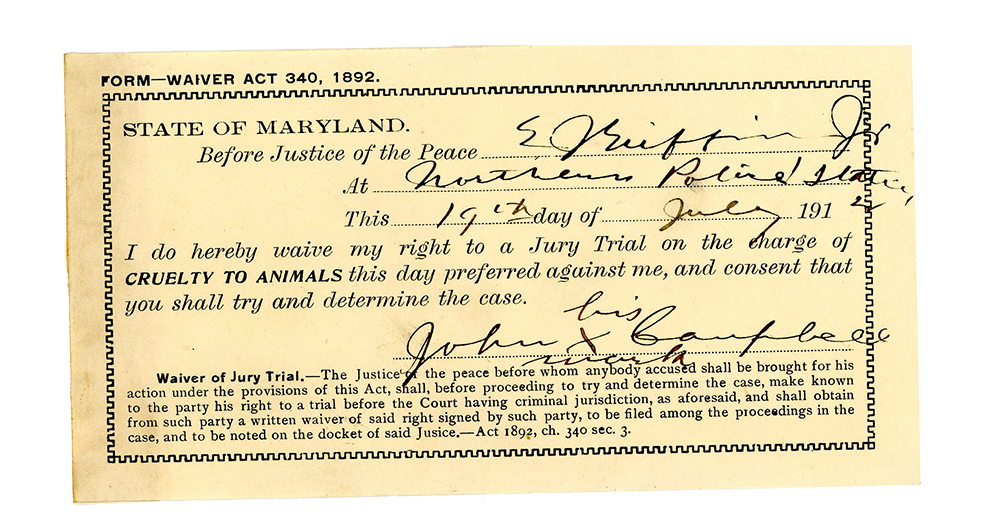
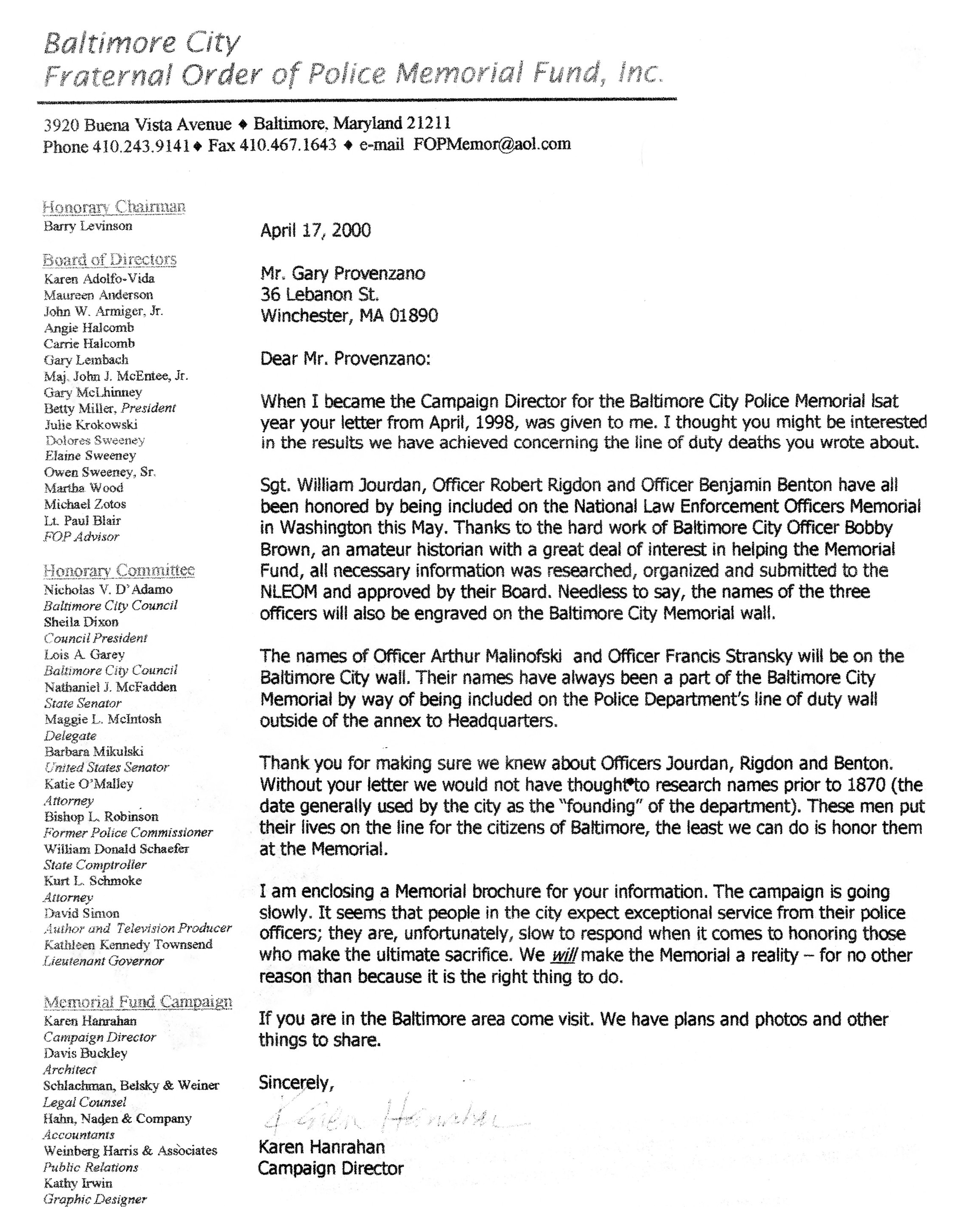
Shortly before graduating from college in 1974, Officer Provenzano applied to BNDD (Bureau of Narcotics and Dangerous Drugs) This was the predecessor of DEA. He knew a guy on the job that told him about the exam and how to apply. Gary took the exam and scored 86. Only 7% of the people that took the exam even got a passing score of 70. Gary and his friend were in. Gary kept waiting-and heard nothing. Finally he was  told by the bureau that they would only be hiring women and minorities in that group. They said the best thing to do was to try and get into a major city police dept. to add his resume. So, Gary wrote a "form letter" that said, "I'm moving to your city, what are the requirements to join the Police Dept." He then hand signed each letter and sent copies to virtually every major US city, NY, LA, Chicago, Baltimore, Atlanta, Dallas - everywhere.

Before long he had received a response from every one he had written. Some weren't hiring, some had residency requirements prior to hiring, etc. There were two choices Baltimore and LA. LA waved the entrance exam because he had a degree. When he called out there, the guy in personnel told him that an interview would pretty much be a formality, with his degree Gary knew he'd get the job. Baltimore told him to come down and that as an out of state applicant, they could process him in one day - written exam, psych exam, interview, the works. Gary would have to had been at Headquarters by 8 am and the process would take all day.

This was 1975. At that time round trip to LA was $300, Baltimore was only $75. Gary's girlfriend at the time (now his wife) decided to check out Baltimore first. The pair came to Baltimore for a week's vacation during that stay Gary had completed the hiring process in or day as promised.

Before he ever had a chance to go to LA, Gary was hired by Baltimore. Now is a good time to point out that Gary had no desire to be a uniform officer, it was merely a stepping stone. But like most, before he knew what hit him, he had fallen in love with the job and the City. We all know Baltimore ain't pretty. So when people used to ask him why, he used to say that Baltimore was sort of like a sexy, sleazy lady, he knew she wasn't good for him, but he just couldn't let her go. I think most city police have met this lady, fallen in love and couldn't leave her.
 

By the way, years later the DEA sent Gary a letter and offering him a job - He would have been an undercover agent in New York City. By then he had married that girlfriend that had traveled with him since the beginning, and stands by his side to this day. With a wife and son at the time he was forced to turn down The DEA's offer, and continue his job as a uniformed police officer.


1 black devider 800 8 72


Retired Officer Gary Provenzano

Gary p 1 72

Courtesy of Gary Provenzano 

Gary p 2 72

Courtesy of Gary Provenzano 

Gary p 4 72

Courtesy of Gary Provenzano 

Gary p 3 72
Courtesy of Gary Provenzano
 BPD IMG008 crop 2 72

Courtesy of Gary Provenzano 

BPD IMG009 crop 72

Courtesy of Gary Provenzano 

BPD IMG010 Crop 2 72

Courtesy of Gary Provenzano 

BPD IMG014 Crop 2 72

Courtesy of Gary Provenzano 
BPD IMG008 1 72Courtesy of Gary Provenzano 

BPD IMG014 Crop 2 72
Courtesy of Gary Provenzano
 BPD IMG016 Crop 72

Courtesy of Gary Provenzano 

BPD IMG018 72
Courtesy of Gary Provenzano
CLICK THE ABOVE PHOTO TO SEE FULL SIZE VERSION
P O Samueal Hindes

Courtesy of Gary Provenzano 
Officer Samuel Hindes

BPD IMG022 Crop 72

Courtesy of Gary Provenzano
BPD IMG023 Crop 1 72

Courtesy of Gary Provenzano


BPD IMG023 Crop 2 72

Courtesy of Gary Provenzano

BPD IMG024 Crop 1 72

Courtesy of Gary Provenzano
BPD IMG024 Crop 2 72

Courtesy of Gary Provenzano

BPD IMG025 Crop 1 72

Courtesy of Gary Provenzano

BPD IMG025 Crop 2 72

Courtesy of Gary Provenzano

BPD IMG026 croped levels 72

Courtesy of Gary Provenzano

BPD IMG027 Cropedout 72

Courtesy of Gary Provenzano
CLICK THE ABOVE PHOTO TO SEE FULL SIZE VERSION

BPD IMG028 Crop 72

Courtesy of Gary Provenzano

BPD IMG029 Crop 72

Courtesy of Gary Provenzano

BPD IMG030 Crop 72

Courtesy of Gary Provenzano

BPD IMG031 Crop 72

Courtesy of Gary Provenzano

BPD IMG032 Crop 72

Courtesy of Gary Provenzano

BPD IMG033 Crop 72

Courtesy of Gary Provenzano

BPD IMG035 Crop 72

Courtesy of Gary Provenzano

BPD IMG036 Crop 72

Courtesy of Gary Provenzano

BPD IMG037 Crop 72

Courtesy of Gary Provenzano

BPD IMG038 Crop 72

Courtesy of Gary Provenzano

BPD IMG039 Crop wd front 72

Courtesy of Gary Provenzano

BPD IMG040 Crop wd 72

Courtesy of Gary Provenzano

BPD IMG041 Crop 72

Courtesy of Gary Provenzano

BPD IMG042 Crop 72

Courtesy of Gary Provenzano

BPD IMG043 Crop 72

Courtesy of Gary Provenzano

BPD IMG044 Crop 72

Courtesy of Gary Provenzano

BPD IMG045 Crop 72

Courtesy of Gary Provenzano

BPD IMG046 Crop 72

Courtesy of Gary Provenzano

BPD IMG047 Crop 72

Courtesy of Gary Provenzano

BPD IMG048 Crop 72

Courtesy of Gary Provenzano

BPD IMG049 Crop 72

Courtesy of Gary Provenzano

BPD IMG050 Crop 72

Courtesy of Gary Provenzano
CLICK THE ABOVE PHOTO TO SEE FULL SIZE VERSION

BPD IMG051rop 72

Courtesy of Gary Provenzano

BPD IMG052 Crop 72

Courtesy of Gary Provenzano

BPD IMG053 crop 72

Courtesy of Gary Provenzano
CLICK THE ABOVE PHOTO TO SEE FULL SIZE VERSION

BPD IMG054 Crop 72

Courtesy of Gary Provenzano

BPD IMG055 Crop 72

Courtesy of Gary Provenzano

BPD IMG056 Crop 72

Courtesy of Gary Provenzano
BPD IMG057 Crop 72

Courtesy of Gary Provenzano

BPD IMG058 Crop 72

Courtesy of Gary Provenzano

BPD IMG060 Crop 72

Courtesy of Gary Provenzano

BPD IMG059 Crop 72

Courtesy of Gary Provenzano
BPD IMG061 Crop 72

Courtesy of Gary Provenzano

BPD IMG062 Crop spliced 72

Courtesy of Gary Provenzano
BPD IMG065 Crop 72

Courtesy of Gary Provenzano
BPD IMG066 Crop 72

Courtesy of Gary Provenzano
BPD IMG067 Crop 72
Courtesy of Gary Provenzano
CLICK THE ABOVE PHOTO TO SEE FULL SIZE VERSION

BPD IMG068 Crop 1 72

Courtesy of Gary Provenzano

BPD IMG068 Crop 2 72

Courtesy of Gary Provenzano

BPD IMG069 Crop 2 72

Courtesy of Gary Provenzano

BPD IMG069 Crop i1 72

Courtesy of Gary Provenzano

BPD IMG070 Crop 72

Courtesy of Gary Provenzano

BPD IMG071 Crop 72

Courtesy of Gary Provenzano

BPD IMG072 Crop 1 72

Courtesy of Gary Provenzano

BPD IMG073 Crop 72

Courtesy of Gary Provenzano

BPD IMG075 Crop 1 72

Courtesy of Gary Provenzano

BPD IMG076 Crop 1 72

Courtesy of Gary Provenzano

BPD IMG077 Crop 72
Courtesy of Gary Provenzano
CLICK THE ABOVE PHOTO TO SEE FULL SIZE VERSION

BPD IMG078 Crop 72

Courtesy of Gary Provenzano

BPD IMG079 Crop 72

Courtesy of Gary Provenzano

BPD IMG080 Crop 2 72

Courtesy of Gary Provenzano

BPD IMG081 Crop frey 2 72
Courtesy of Gary Provenzano
CLICK THE ABOVE PHOTO TO SEE FULL SIZE VERSION

BPD IMG082 Crop 1 72

Courtesy of Gary Provenzano

BPD IMG082 Crop 2 72

Courtesy of Gary Provenzano

BPD IMG083 Crop Schryver 72

Courtesy of Gary Provenzano

BPD IMG084 crop 72

Courtesy of Gary Provenzano

BPD IMG085 crop 72
Courtesy of Gary Provenzano
CLICK THE ABOVE PHOTO TO SEE FULL SIZE VERSION

BPD IMG086 crop 72

Courtesy of Gary Provenzano

BPD IMG087 crop 72

Courtesy of Gary Provenzano

BPD IMG088 crop 72

Courtesy of Gary Provenzano
BPD IMG110 crop 72
Courtesy of Gary Provenzano

BPD IMG089 crop 72

Courtesy of Gary Provenzano

BPD IMG090 crop 72

Courtesy of Gary Provenzano

BPD IMG091 crop 2 72

Courtesy of Gary Provenzano

BPD IMG091 crop 72

Courtesy of Gary Provenzano

BPD IMG093 crop 72
Courtesy of Gary Provenzano
CLICK THE ABOVE PHOTO TO SEE FULL SIZE VERSION

BPD IMG092 crop 72
Courtesy of Gary Provenzano
CLICK THE ABOVE PHOTO TO SEE FULL SIZE VERSION

BPD IMG094 crop 1 72

Courtesy of Gary Provenzano

BPD IMG095 crop 1908 72

Courtesy of Gary Provenzano

BPD IMG094 crop 1i 72

Courtesy of Gary Provenzano

BPD IMG095 crop 1894 72

Courtesy of Gary Provenzano
BPD IMG097 crop 654 front and back mug shot 72

Courtesy of Gary Provenzano

BPD IMG097 crop 826 frnt and back 72

Courtesy of Gary Provenzano

BPD IMG098 crop 1 72

Courtesy of Gary Provenzano

BPD IMG098 crop 2 72

Courtesy of Gary Provenzano

BPD IMG099 crop 1 72

Courtesy of Gary Provenzano

BPD IMG099 crop 2 72

Courtesy of Gary Provenzano

BPD IMG100 crop 72

Courtesy of Gary Provenzano

BPD IMG101 crop 1 72

Courtesy of Gary Provenzano

BPD IMG101 crop 2 72

Courtesy of Gary Provenzano

BPD IMG102 crop 1 72

Courtesy of Gary Provenzano

BPD IMG102 crop 2 72

Courtesy of Gary Provenzano

BPD IMG103 Crop 72

Courtesy of Gary Provenzano

BPD IMG104 crop 72

Courtesy of Gary Provenzano

BPD IMG105 crop 72

Courtesy of Gary Provenzano

BPD IMG106 crop 72

Courtesy of Gary Provenzano

BPD IMG107 crop 72

Courtesy of Gary Provenzano

BPD IMG108 crop 72

Courtesy of Gary Provenzano

BPD IMG111 crop 72

Courtesy of Gary Provenzano

BPD IMG112 crop 72

Courtesy of Gary Provenzano

BPD IMG113 crop 72

Courtesy of Gary Provenzano

BPD IMG114 crop 72

Courtesy of Gary Provenzano

BPD IMG115 crop 72

Courtesy of Gary Provenzano

BPD IMG116 crop 72

Courtesy of Gary Provenzano

BPD IMG117 crop 72

Courtesy of Gary Provenzano

BPD IMG118 crop 72

Courtesy of Gary Provenzano

BPD IMG119 crop 72

Courtesy of Gary Provenzano

BPD IMG120 crop 72

Courtesy of Gary Provenzano

BPD IMG121 crop 72

Courtesy of Gary Provenzano

BPD IMG122 crop 72

Courtesy of Gary Provenzano

BPD IMG123 crop 72

Courtesy of Gary Provenzano

BPD IMG124 crop 72

Courtesy of Gary Provenzano

BPD IMG125 crop 72

Courtesy of Gary Provenzano

BPD IMG127 crop with 26 72

Courtesy of Gary Provenzano

BPD IMG128 crop 72

Courtesy of Gary Provenzano

BPD IMG129 crop 72

Courtesy of Gary Provenzano

BPD IMG130 crop 72

Courtesy of Gary Provenzano

BPD IMG131 crop 72

Courtesy of Gary Provenzano

BPD IMG132 crop 72

Courtesy of Gary Provenzano

BPD IMG133 crop 1904 Cutome house 72

Courtesy of Gary Provenzano

BPD IMG134 sgtFlood crop 72

Courtesy of Gary Provenzano

BPD IMG135 crop 72

Courtesy of Gary Provenzano

BPD IMG136 crop 72

Courtesy of Gary Provenzano

BPD IMG137 crop with 38 72

Courtesy of Gary Provenzano

BPD IMG138 cropending 37 72

Courtesy of Gary Provenzano

BPD IMG139 crop goes with ending 40 72

Courtesy of Gary Provenzano

BPD IMG140 crop goes with ending 39 72

Courtesy of Gary Provenzano

BPD IMG142 crop. 72jpg

Courtesy of Gary Provenzano

BPD IMG141 crop 72

Courtesy of Gary Provenzano

BPD IMG143 crop 72

Courtesy of Gary Provenzano

BPD IMG144 crop 72

Courtesy of Gary Provenzano

BPD IMG145 crop 72

Courtesy of Gary Provenzano

BPD IMG146 crop 72

Courtesy of Gary Provenzano

BPD IMG147 crop 72 i

Courtesy of Gary Provenzano

BPD IMG148 crop 72

Courtesy of Gary Provenzano

BPD IMG149 crop 72

Courtesy of Gary Provenzano

BPD IMG150 crop 72

Courtesy of Gary Provenzano

BPD IMG151 crop 72

Courtesy of Gary Provenzano

BPD IMG152 crop 72

Courtesy of Gary Provenzano

BPD IMG153 crop 72

Courtesy of Gary Provenzano

BPD IMG154 crop 72

Courtesy of Gary Provenzano
BPD IMG155 crop 72

Courtesy of Gary Provenzano

BPD IMG156 crop 72

Courtesy of Gary Provenzano

BPD IMG157 crop 72

Courtesy of Gary Provenzano

BPD IMG158 crop 72

Courtesy of Gary Provenzano

BPD IMG159 crop 72

Courtesy of Gary Provenzano

BPD IMG160 crop 72

Courtesy of Gary Provenzano

BPD IMG161 crop 72

Courtesy of Gary Provenzano

BPD IMG162 crop 72

Courtesy of Gary Provenzano

BPD IMG163 crop 72

Courtesy of Gary Provenzano

BPD IMG164 crop 72

Courtesy of Gary Provenzano

BPD IMG165 crop 72

Courtesy of Gary Provenzano

BPD IMG166 crop 72

Courtesy of Gary Provenzano

BPD IMG167 Crop 72

Courtesy of Gary Provenzano

BPD IMG168 crop 72

Courtesy of Gary Provenzano

BPD IMG169 crop 72

Courtesy of Gary Provenzano

BPD IMG170 crop 1 front 72

Courtesy of Gary Provenzano

BPD IMG171 crop 2 72

Courtesy of Gary Provenzano

BPD IMG172 crop 72

Courtesy of Gary Provenzano

BPD IMG173 crop 72

Courtesy of Gary Provenzano

BPD IMG174 crop 1 72

Courtesy of Gary Provenzano

BPD IMG174 crop 2 72

Courtesy of Gary Provenzano

BPD IMG175 crop 2 72

Courtesy of Gary Provenzano

BPD IMG175 crop 3 72

Courtesy of Gary Provenzano

BPD IMG176 crop 4 72

Courtesy of Gary Provenzano

BPD IMG177 crop 1 72

Courtesy of Gary Provenzano

BPD IMG177 crop 2 72

Courtesy of Gary Provenzano

BPD IMG177 crop 3 72

Courtesy of Gary Provenzano

BPD IMG178 crop 72 72

Courtesy of Gary Provenzano

BPD IMG179 crop. 72jpg

Courtesy of Gary Provenzano

BPD IMG183 crop 1 72

Courtesy of Gary Provenzano

BPD IMG183 crop 1 72

Courtesy of Gary Provenzano

BPD IMG183 crop 2 72jpg

Courtesy of Gary Provenzano

BPD IMG183 crop 4 72

Courtesy of Gary Provenzano

BPD IMG183 crop 3 72jpg

Courtesy of Gary Provenzano

BPD IMG184 crop 72

Courtesy of Gary Provenzano

BPD IMG185 crop 72

Courtesy of Gary Provenzano

BPD IMG186 crop 72

Courtesy of Gary Provenzano 1 black devider 800 8 72Gary ProvenzanoLinks HERE

deviders ever on thr watch shadow


POLICE INFORMATION

If you have copies of: your Baltimore Police Department Class Photo, Pictures of our Officers, Vehicles, Equipment, Newspaper Articles relating to our department and or officers, Old Departmental Newsletters, Lookouts, Wanted Posters, and or Brochures. Information on Deceased Officers and anything that may help Preserve the History and Proud Traditions of this agency. Please contact Retired Detective Kenny Driscoll.

This email address is being protected from spambots. You need JavaScript enabled to view it.

Devider color with motto

NOTICE

How to Dispose of Old Police Items

Please contact Det. Ret. Kenny Driscoll if you have any pictures of you or your family members and wish them remembered here on this tribute site to Honor the fine men and women who have served with Honor and Distinction at the Baltimore Police Department. Anyone with information, photographs, memorabilia, or other "Baltimore City Police" items can contact Ret. Det. Kenny Driscoll at This email address is being protected from spambots. You need JavaScript enabled to view it. follow us on Twitter @BaltoPoliceHist or like us on Facebook or mail pics to 8138 Dundalk Ave. Baltimore Md. 21222


Copyright © 2002 Baltimore City Police History - Ret Det Kenny Driscoll 

James Cadden

James Cadden

BPD Capt Cadden 60572

Capt James Cadden

The Following is sent to us courtesy of Dick Ellwood
It comes to us as an excerpt from one of his books -*1

James J. Cadden, was a Baltimore City Police Department homicide commander when he retired. He was also a highly decorated World War II veteran. He was born and raised in the 10th Ward. He attended St. John the Evangelist school on Valley and Eager Street and then attended city public schools. He left school in the ninth grade to go in the Army and later earned his GED in the service.

He enlisted in the Army in 1943 and after being trained as a paratrooper, he served with the 506th Infantry Regiment of the 101st Airborne Division.

Jim Cadden landed at Normandy, France on June 6, 1944 and later fought in the ill-fated Operation Market Garden, the air invasion of Arnhem in the Netherlands where Allied forces encountered stiff German resistance.

In mid-December 1944 Cadden fought at Bastogne, Belgium, during the Battle of the Bulge. He was decorated with the Silver Star for valor after he and another soldier breached enemy lines in an attempt to rescue a seriously wounded soldier crying for help.

They raced back carrying the man, who screamed in pain as enemy fire fell around them.

Jim Cadden was discharged from the Army in 1946 with the rank of technical sergeant. He received two Purple Hearts and three Bronze Stars. He joined the Baltimore City Police Department in 1949. He worked in patrol for a short period of time. As his career progressed, he became the only Baltimore City police officer to have worked in the homicide unit as a detective, sergeant, lieutenant and captain. He was the commanding officer of the homicide unit until he retired in 1977. In 1978, he took a job with the Maryland State Lottery.

Now, after reading about what a real American hero that Jim Cadden was, let me tell you a little more about him. I’m very familiar with Jim Cadden on a personal and professional basis. As a kid growing up in the 10th Ward, I remember seeing him in the neighborhood after he came back from the war. He was a very imposing figure, not a rowdy guy by any means. He was a real gentleman and had the respect of everyone in the 10th Ward. He never talked much about the war and most people in the 10th Ward were not aware about all that he did in the service.

On a personal note, I worked for Captain Cadden when I was assigned to the Central District. I can tell you that he was the most honest man I ever knew in the police department. I can remember when I was working in the vice unit in the Central District and Cadden was given two tickets to the 1971 world series. The tickets were mailed to his office. The tickets came from a very prominent realtor who had an office in the district. The tickets were box seats for the world series between the Baltimore Orioles and the Pittsburgh Pirates. You can imagine that anyone would kill for those tickets.

Captain Cadden called me and my sergeant into his office. He handed us the tickets and told us to take them back to the realtor. He told us to tell the guy that he appreciated the thought, but he cannot accept the tickets. We took the tickets back to the guy and he was astonished that the captain would not accept them. We were hoping that he would say…you guys keep the tickets, but that didn’t happen.

On another occasion the captain was approached by an owner of a strip joint on the block. The owner came into the station and asked for the captain. When he went in the captain’s office, he apparently offered the captain a bribe of some kind. The block was a location with numerous strip clubs and a lot of gambling. The captain literally threw the guy out of his office and made sure he exited the building.

Captain Cadden was a very friendly guy, but when it came to solving homicides, he was all business. From being a detective, sergeant, lieutenant and a captain in the homicide unit, you would not dare to try and pull the wool over his eyes. He made everyone in the unit better, knowing that he was the most qualified man to be in charge of the unit.

On a personal note, I got in a little trouble while working in the unit. I’m not going to go into detail about what happened, it is all laid out in my first book…Cop Stories-The Few, The Proud, The Ugly. You can get the book and read about what happened. I will say that it was serious and could have cost me my job.

Captain Cadden called me into his office and shut the door. I sat in a chair in front of his desk. I can tell you that I was very nervous…maybe even scared of what was going to happen. He took off his coat and commenced to walk around my chair. If I didn’t know better, I actually thought the guy was going to punch me. He started off by telling me that my dad would not be proud of me at this time. After about twenty minutes of berating me and telling me I could have been fired, he told me to get out of his office and get back to work. When I left his office, I had to find a secluded place and pull myself together. I was upset that I had put myself in this position. At the same time, I was extremely happy that Captain Cadden saw fit to give me a reprieve.  I went back to work and nothing else was ever said about the incident.

I can tell you that other than my dad, Jim Cadden had the most influence on me as a police officer. I know that he touched many others with his keen sense of how to proceed with a criminal investigation. He did it the right way…there were no shortcuts that could affect the outcome of the prosecution.

Over the years of Captain Cadden’s service to the citizens of Baltimore City, he was recognized not only by his department, but by many others that he provided assistance on their murder investigations.

Anyone that served under Captain Cadden will tell you he demanded excellence in murder investigations. The years that he supervised the Homicide Unit, the unit had clearance rates that were in the high 80’s to 90’ percent.

Hanging on the wall in the Homicide Unit are some words that Captain Cadden put there;

No greater honor can be bestowed upon a human being than to investigate the death of another human being…

BPD Capt Cadden 56772BPD Capt Cadden 57472BPD Capt Cadden 57672

Capt Cadden Dec 31 1977 72BPD Capt Cadden 57772BPD Capt Cadden 57872BPD Capt Cadden 57972BPD Capt Cadden 58172BPD Capt Cadden 58272BPD Capt Cadden 58372BPD Capt Cadden 58472The Baltimore Sun Wed Dec 25 2013 72BPD Capt Cadden 58572BPD Capt Cadden 58672BPD Capt Cadden 58772The Evening Sun Mon Sep 10 1962 72BPD Capt Cadden 58872BPD Capt Cadden 58972BPD Capt Cadden 59072BPD Capt Cadden 59172BPD Capt Cadden 59272BPD Capt Cadden 59372BPD Capt Cadden 59472BPD Capt Cadden 59572BPD Capt Cadden 59672BPD Capt Cadden 59772BPD Capt Cadden 59872BPD Capt Cadden 59972BPD Capt Cadden 60072BPD Capt Cadden 60172

BPD Capt Cadden 568i

BPD Capt Cadden 60272BPD Capt Cadden 60672

BPD Capt Cadden 568iBPD Capt Cadden 60772Capt Cadden72

1 black devider 800 8 72

Baltimore's Coldest Case
The Baltimore Sun Sun Mar 5 1922 copy 72 Click HERE to see more about this case

1 black devider 800 8 72

 *1Dick Ellwood 443 632-6557 ©  This email address is being protected from spambots. You need JavaScript enabled to view it.  Books by Dick Ellwood: Cop Stories-The Few, The Proud, The Ugly (Non-fiction) Charm City’s Blue Justice (Crime Novel) The Dark Side Of Blue (Crime Novel) The Secret Zoo (Children’s Book) Cop Stories II – Policing Baltimore- A Real Conversation (Non-fiction) Available on Amazon, I Universe.com, Booksamillion.com & bookstores

Devider color with motto
Please contact Det. Ret. Kenny Driscoll if you have any pictures of you or your family members and wish them remembered here on this tribute site to Honor the fine men and women who have served with Honor and Distinction at the Baltimore Police Department.

Anyone with information, photographs, memorabilia, or other "Baltimore City Police" items can contact Ret. Det. Kenny Driscoll at  This email address is being protected from spambots. You need JavaScript enabled to view it.  follow us on Twitter @BaltoPoliceHist or like us on Facebook or mail pics to 8138 Dundalk Ave. Baltimore Md. 21222

 Copyright © 2002 Baltimore City Police History - Ret Det Kenny Driscoll
Norman Stamp

Norman Stamp

 Officer Mike DeHaven Norman Stamp Tom Richburg 1984

Officer Norman Stamp

Today in Baltimore Police History 25 April 2008 we lost our brother Police Officer Norman Stamp to an off-duty case of friendly-fire, based on the following:

Beer, a Fight, Fatal Gunfire

The Sun - Baltimore, Md.

Subjects: Murders & murder attempts; Law enforcement

Author: Linskey, Annie; Sentementes, Gus G

1 black devider 800 8 72

Apr 25, 2008

Start Page: A.1

By Annie Linskey and Gus G. Sentementes Baltimore Sun reporters

On the night of his 44th anniversary as a Baltimore police officer, Norman Stamp drank beer at a strip club on Haven Street with members of the motorcycle club he helped found — a tight fraternity called the Chosen Sons.

Shortly after midnight, a dispute with another group led to harsh words and then punches. A brawl spilled out into the parking lot and drew three uniformed police officers. Stamp, brass knuckles on his fist, rushed out a side door. He apparently didn't hear or notice the uniformed Officer John Torres or his orders to stop.

Torres, a five-year veteran, felled Stamp with an electric jolt from a Taser, and the off-duty officer pulled out his service weapon.

Torres fired his gun twice, hitting Stamp at least once in the chest. The 65-year-old struggled to his feet and said: "I didn't know you were a cop," according to a person familiar with the investigation.

Stamp died at Maryland Shock Trauma Center about 1:30 a.m., leaving police stunned at how one of their colleagues — a person with more than four decades of police experience — challenged a fellow officer and ended up fatally wounded on a grimy lot.

"The Norm Stamp that I know would not have pulled a gun on police," said Paul Blair, the police union president. "Maybe it was tunnel vision and he didn't realize they were officers. It is an unbelievable way to end a career. It is a hell of a way to end a career."

Blair defended the officer who shot Stamp, saying: "Officer Torres did everything by the book. That officer was devastated."

Bleary-eyed police commanders stood at a morning news conference and concurred, saying it appeared that Torres followed department policy when he fired.

"Torres was issuing commands," said Police Commissioner Frederick H. Bealefeld III. "He deployed his Taser. He followed his training; he did what he was taught to do in terms of dealing with these types of situations."

City police officers have shot 10 people this year, killing seven. Last year, they shot 33, killing 13.

About Stamp, the commissioner said: "He was a mentor to some and a friend to many."

Bealefeld said one man involved in the incident broke his leg while resisting police, and that person was arrested. Police had not released his name yesterday.

"This is an incredibly difficult time," Bealefeld said. "The men and women of your Police Department will remain focused, vigilant and undaunted."

Men from the Chosen Sons, the other brotherhood that defined Stamp's life, shed quiet tears. They put on a pot of coffee and sat around their clubhouse, smoking cigarettes and telling stories about the man who they said founded their organization with other police officers and firefighters in 1969.

"He's a survivor," said Paul "Nitro" Treash, the sergeant-of-arms of the club. "This [biker] lifestyle, it isn't for everybody. These guys will fight and die for each other."

As Treash talked about his friend, he was frequently interrupted by phone calls.

"Norm's dead," he told a caller. "I know, I know. They are going to try to cover this up," he said shaking his head.

Like the police, none of the bikers could believe Stamp would pull a weapon on an officer. "That is stuff that he has preached to us. When a cop gives an order you should comply. We're just beside ourselves right now."

They said that the night began with an initiation. Stamp, as a founding member of the club, played a key role. The members, as part of a hazing, told a new guy he had been rejected and ordered him to leave the clubhouse.

But Stamp, 65, ran out after him, saying: "Get back here and tell those guys to [expletive] off," then tossed him a wadded-up jacket with the club's colors — or patch — emblazoned on the back, said Michael Privett, who became the newest member of the club.

The men celebrated at the club for a while. Some went home. Others walked two blocks to Haven Place, a strip club that bills itself as "a gentleman's tavern" with "go-go girls."

That is where the fight broke out. Police, who interviewed many of the people in the bar, said the fracas started over women. Members of the motorcycle club interviewed byThe Sun did not mention the women.

Treash, who was not there but spoke to many of the club members yesterday, said Stamp had tried to stop the fight in the bar.

Outside, police Officers Raymond Buda, a 27-year veteran, and Jason J. Rivera, who has seven years on the force, tried to break up the fight. One person was brandishing a broken bottle, police said, and as the officers were trying to arrest people, Torres positioned himself by the bar's side door to keep others from joining the fight.

It was then that Stamp emerged from the club with brass knuckles, Bealefeld said.

Treash said he thought Stamp knew that police had been called and intended to mediate the situation. But he also noted that his friend always liked a good fight.

Torres commanded Stamp to stop and he did not, said the police commissioner. There was "no indication" that Stamp identified himself as an officer, Bealefeld said.

Charles Thrasher, owner of the Haven Place, said he has worked hard over the years to keep the club free of trouble.

He inherited the business from his father in 1980. Three years before, a 35-year-old Sparrows Point man was stabbed to death outside the bar with a broken bottle, in what police suspected was a robbery.

One of two suspects was a man on a motorcycle, according to an article inThe Evening Sun at the time. "I think I've settled it down quite a bit over the years," said Thrasher, who said he was a friend of Stamp's and knew him for 30 years.

Yesterday, a white rubber glove and an unused oxygen mask lay on the parking lot near pools of blood. A police field interview card also lay on the ground with a bloodstain.

The parking lot where Stamp was shot is isolated, surrounded by a BGE transmission station. Gang graffiti are sprayed on a back wall.

Several cars stopped by in the morning. People said they had heard about what happened and were curious to see the place where a city police officer killed his off-duty colleague.

A viewing will be held at Bruzdzinski Funeral Home, 1407 Old Eastern Ave., on Saturday and Sunday from 3 p.m. to 5 p.m. and 7 p.m. to 9 p.m. A memorial service will be held at the funeral home Monday at 11 a.m.

This email address is being protected from spambots. You need JavaScript enabled to view it.This email address is being protected from spambots. You need JavaScript enabled to view it.
1 black devider 800 8 72

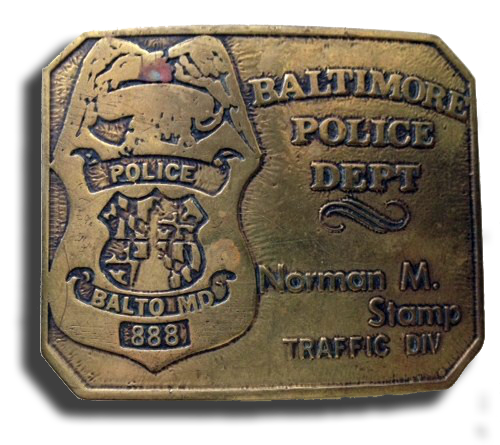
Normal Stamp belt buckleStamp Upheld Two Loyalties

Police Veteran was a Brother Officer, a Motorcycle Son

April 25, 2008

|By Gus G. Sentementes and Annie Linskey | Gus G. Sentementes and Annie Linskey,SUN REPORTERS

For decades, Norman M. Stamp belonged to two brotherhoods.

The 65-year-old was one of the city's longest-serving active-duty officers, who on Wednesday had celebrated his 44th year with the Baltimore Police Department .

He also belonged to the Chosen Sons - a gritty motorcycle club that Stamp helped found in the 1960s, with a tight-knit membership that didn't shy from a fight.

Stamp looked out for his fellow bikers, according to his friends in the club. To his colleagues on the force, Stamp was a loyal officer who would never knowingly harm a colleague.

He was killed early yesterday in a confrontation with fellow officers in Southeast Baltimore, one of whom fatally shot him as they tried to quell a brawl outside a strip club.

For decades, Stamp combined his passion for motorcycles with his job. He joined the department in 1964 and, five years later, was assigned to the motorcycle unit, where he served for 28 years, covering traffic duty and special events. In 1974, he broke his arm when he was struck by a patrol car while riding his departmental motorcycle.

"He did his job - he was no-nonsense," said Gary L. McLhinney, a former police union president. "If you were in a car and he was directing traffic, you went the way he told you to go. There's just a handful of guys like Norman left in this department."

In 1969, the year Stamp was detailed to the department's motorcycle unit, he helped form the Chosen Sons. It was a motorcycle club that started out consisting mostly of police and firefighters.

Paul "Nitro" Treash, the club's sergeant-at-arms, said Stamp liked to ride to Ocean City and smoke cigars with his biker friends. More than 40 years after its founding, the club and its traditions remained important to Stamp, Treash said.

"He was always the first to enter a fight and the last to leave," said Treash, who noted that he never saw Stamp draw his gun.

In 1997, Stamp was one of scores of officers caught up in a widespread staff shake-up in the Police Department. He eventually landed in the department's special operations section: cruising the harbor in a police boat for the marine unit.

Many who knew him said that Stamp initially resented being forced out onto the water after cruising the streets of Baltimore for decades on a motorcycle. But his friends said that he grew to like the assignment.

"To get a biker on a boat is like getting him to church," said the Haven Place strip club's owner, Charles Thrasher, who knew Stamp for 30 years. "I think he believed he wouldn't like it. He loved it."

Thrasher, who wasn't working when Stamp was shot, called his friend "one of those `unforgettable characters'" that one would encounter in Reader's Digest.

He said Stamp and the Chosen Sons would stop in his club every week after their meetings, have a few drinks and then leave - and Wednesday was no different.

"They've been coming here a while," said Thrasher. "They sort of think it's their bar."

Stamp, who was divorced and remarried, had a grown daughter and lived in Essex.

Daniel J. Fickus, a former police union president who works in the marine unit, said Stamp had "a couple of loves in his life, and this job is one of them. He will be sorely missed, that is a fact. His family has 3,000 members - we'll be there for him and his family. We will be."

This email address is being protected from spambots. You need JavaScript enabled to view it. This email address is being protected from spambots. You need JavaScript enabled to view it.

Officer Norman M. Stamp

Age: 65

Education: Graduated from Polytechnic Institute in 1961

Department history: Joined Baltimore Police Department April 23, 1964 - Worked as a patrol officer in the Central and Northeast districts, as a motorcycle officer in the traffic division for 28 years and most recently on a boat with the Harbor Patrol.

Citations: He was awarded a bronze star for arresting a man in an assault and robbery and a unit citation in 2000 for handling special events.

Family: He was married and had one child.
Source: Baltimore Police Department

1 black devider 800 8 72

Patron Shares Story of Fight

Bearing Bruises, Man Says Slain Officer Did Not Intervene

April 26, 2008

| By Sun reporter

For Nick Roros, Wednesday night started when he went to Haven Place, had a couple of drinks and watched the dancers. It ended in the wee hours of the morning at the city's homicide unit.

Roros said that he became involved in a bar brawl Wednesday evening that ultimately led to the fatal shooting of off-duty Baltimore City Police Officer Norman Stamp by another member of the force.

Roros, 43, gave his account during an interview yesterday morning at his Highlandtown home, where he showed the bruises and scrapes he said he got from fighting with members of the Chosen Sons, a close-knit motorcycle club that frequented the strip club. Stamp was a founding member of that club.

Roros said he told his story to dispute news accounts suggesting that the off-duty officer tried to defuse the fight.

"They act like they are all innocent like they were trying to break up the fight," Roros said. "They didn't try to break up [expletive]."

During the interview, Roros asked, over and over, why nobody called police. He wanted to know why Stamp, a 44-year veteran of the force, didn't intervene on his behalf.

Members of the Chosen Sons say that Stamp tried to defuse the fight. Paul Treash, a sergeant-at-arms of the group, said that some of the bikers were fighting but maintains that Stamp was a peacemaker - he tried to calm people down.

However, police say that when Stamp emerged from the bar, he was wearing brass knuckles.

A group of uniformed police officers was attempting to break up a fight involving some members of the gang in front of the bar when Stamp came out the side door. An officer who was watching that exit hit him with a Taser, and Stamp fell down. When he rose and drew his weapon, police say, the uniformed officer pulled his gun and shot Stamp at least once in the chest.

Police Commissioner Frederick H. Bealefeld III said at a news conference Thursday that the fight in the bar started over a woman. Police have said that it was someone outside the bar who called for help.

A Police Department source familiar with the investigation confirmed that Roros was at the bar, was beaten and was interviewed by homicide detectives. But the person could not confirm all of the details of Roros' account.

Roros said that he got to the strip club around 10:30 p.m. - his wife was working, so he decided to go out.

"The whole bar was full of bikers," he said. "They were dressed like bikers. They had the Chosen Sons patch and all that."

He struck up a conversation with a woman who came to the bar looking for a job. But, he said, one of the Chosen Sons wanted to talk to the same woman.

"I was talking to some girl ,and he was talking to the same girl," Roros said.

"He said, `That's my girl,'" Roros said.

In response, Roros said as a joke: "That is my wife."

Tensions rose.

Roros used his cell phone and called his brother-in-law asking him to come to the bar. Roros didn't say why he didn't just leave.

While he was on the phone, Roros said, one of the Chosen Sons punched him in the face.

"Once he hit me, I hit him," Roros said. "I got him on the ground." Roros said he had the upper hand, but then others joined in the fight.

Next thing he knew, he said, he was on the ground.

"I just felt everyone kicking me and just getting stomped," Roros said. He showed his one black eye yesterday. The other eye was filled with blood.

He said that he doesn't have health insurance but is worried about his chest, which he said hurts when he breathes in.

"I was getting kicked from everywhere once they had me on the ground," he said. "After that I curled up and they just kept kicking and kicking. They are acting like. ... "

He didn't finish his sentence.

"Why didn't he stop it?" Roros said.

Roros told The Sun yesterday that he was dragged down to the end of the bar and then thrown out the side door. Bikers, he said, kept beating him in the parking lot. But a police source said multiple fights eventually broke out and Roros was never outside the bar.

Either way, Roros said that after being beaten he went back into the bar and was inside, standing near the side door, when he heard the gunshots that killed Officer Stamp.

"By that time I was all dazed," Roros said. "I don't know when the cops came what happened."

This email address is being protected from spambots. You need JavaScript enabled to view it.

1 black devider 800 8 72

Loyalty Binds the Biker Club Behind Badge

Slain Officer's Chosen Sons Not Known to Run From Fight

April 28, 2008

|By Annie Linskey | Annie Linskey,Sun reporter

The one-story clubhouse in Southeast Baltimore has wood floors and framed photographs of members who have died. It feels like a chapter of an Elks Club, the American Legion or Veterans of Foreign Wars.

But the members are big beefy men who wear red crosses on their backs. Many are covered in tattoos, and some grow long pointed beards. They belong to the Chosen Sons - a motorcycle club started by city police officers in 1969 that bills itself as the largest in the state.

For decades, the Chosen Sons has been an insular group, wary of outsiders and little known except in the East Baltimore neighborhoods where they gather.

That changed early Thursday morning when one of its founding members, Norman Stamp, an off-duty police officer, burst out of a North Haven Street strip club, brass knuckles on his hand, heading toward a brawl that had spilled from the bar into the street. Before he got there, Stamp was stopped by a uniformed officer sent to quell the fight. In the confusion, Stamp drew his gun, and the other officer shot and killed him, according to police accounts. He had been on the force for 44 years.

The unusual fit between the public and private sides of Stamp's life will be on full display at his funeral today. Because his death is not considered to have come in the line of duty, he will not get full police services.

Even so, Mayor Sheila Dixon and Police Commissioner Frederick H. Bealefeld III plan to attend. They will sit in a 100-seat Essex funeral home alongside members of the Chosen Sons and other motorcycle clubs from around the state.

"You will see guys from clubs that feud with each other," said Paul "Nitro" Treash, the sergeant-at-arms of the Chosen Sons. "Norm [Stamp] was the most likable guy."

Little is known about how Stamp balanced his job on the force - for the past decade, he served in the maritime unit, and for years before that, he was a motorcycle officer - with his off-duty activities. Some of his acquaintances from the world of the Chosen Sons say Stamp was always eager for a fight, but current members aren't saying much, other than to offer a relatively wholesome, if tattooed and leather-clad, vision of the club's activities.

Treash said members of the Chosen Sons organized rides to places like Myrtle Beach in South Carolina. Stamp, he said, participated in the club's last "poker run" - an outing on which members of the crew ride together to other clubhouses in the city or state. At each clubhouse they pick up a playing card - the person with the best poker hand by the end of the night is the winner.

But there was an air of paranoia at the clubhouse Thursday morning when news of Stamp's death spread.

Members wondered out loud about a Verizon truck that had been sitting outside the building for a few hours. When a man drove up in a car and sat outside, a junior member of the club was dispatched to determine whether the person in the car was the same person who caused a fight with the club members the evening before.

Treash would not answer most questions about the club for this article and would not make any of the members available to comment. Current members declined to talk about the group.

Treash did say that the club is the largest in the state, but he declined to give a number of total membership. A photograph of some members on the wall inside the club showed about 100 men gathered for an event. Treash would not say how many members are police officers.

Initially, the club was open only to public service employees, said William Council, a retired police officer who knew Stamp and was in the club in the late 1970s.

At that point there were 15 to 20 members, he said, including one member who repaired motorcycles for the Baltimore city garage.

"We'd take group rides," Council said. "We'd pick a place where we wanted to go and go bar hopping. It wasn't a threatening group or anything like that."

Council said that the name came from being chosen for the club. "You had to have somebody represent you to get in," he said. "They bring you in, they ask you some questions. Now I don't know how they do it."

According to the Chosen Sons Motorcycle Club Web site, prospective members still need to be tapped: "The C.S.M.C. does not solicit for members or accept any unknowns. All prospects must be sponsored by a member in good standing."

A fictional version of the club was featured in a January 1995 episode of Homicide: Life on the Streets. In the show, the club was called the Deacons, and some members who appeared in it put a Deacons insignia over the red crosses on backs of their jackets. The insignia from one of those jackets is hanging, framed, on the Chosen Sons clubhouse wall.

The group was started in 1969 and grew in the 1970s and 1980s, a macho time when motorcycle clubs like the Hells Angels and the Pagans would fight for territory and respect.

Unlike those clubs, the Chosen Sons is not viewed as a criminal organization, according to a city police source who is not authorized to speak to the news media.

In fact, in the very early days, the club had to combat the perception that they would always run from a fight because its members - all public service employees - could lose their jobs if they got in trouble, said Richard C. Fahlteich, a retired major from the city's homicide unit who knew Stamp and talked to him recently about the club.

That was a perception the club would not abide by.

"If someone was going to attempt to start a big fight, they were not going to run away from it," Fahlteich said. "That is where the tough guy thing came from. They did not go out looking for trouble, but they were not going to bow to trouble either. They were going to stand up for themselves."

The penchant for standing up for themselves was viewed differently in the neighborhood. Steve Fugate, the president of the city's fire officers' union, grew up in the same Highlandtown area where the club members would ride.

"It was a bunch of bad asses," Fugate said.

"From an outside perspective, they were the local version of the Hells Angels. That was anecdotal neighborhood gossip that was going around."

Fugate, 54, said that he would never pick a fight with them. "Because I'd get my ass kicked," he said. "Been there, done that. It's not fun."

This email address is being protected from spambots. You need JavaScript enabled to view it.

1 black devider 800 8 72

Cops and Bikers

Baltimore Police Officer Killed Outside a Bar Gets an Unusual Sendoff from His Buddies

April 29, 2008

|By Annie Linskey | Annie Linskey,Sun Reporter

Two rows of men, police officers and bikers, faced each other yesterday morning - lining the edges of Old Eastern Avenue as bagpipes played and city police carried the casket of Norman Stamp to a waiting hearse.

The police wore their dress uniforms to honor the death of the man who spent the past 44 years working for the city's Police Department.

The motorcycle riders wore the red cross of the Chosen Sons on their backs to signal their association with the motorcycle club that Stamp helped to found 39 years ago.

It was an unusual sendoff for a man who was one of the city's longest-serving police officers. Bikers from various clubs around the state outnumbered the uniformed police officers. Photographs on display showed Stamp doing daredevil stunts on police motorcycles, posing with various police weapons and drinking beer with a woman clad in a leather bikini.

The police commissioner and mayor listened as the audience cheered for a speaker who disputed the official account of how Stamp came to be shot by a fellow officer early Thursday.

Stamp was shot in the chest after police were called to quell a bar brawl at an East Baltimore strip club. Police say Stamp burst out of the bar, with brass knuckles on his fist, and failed to comply with verbal orders to stop from a uniformed officer.

The officer used a stun gun on Stamp, who then drew his gun, police said. The uniformed officer, John Torres, drew his own weapon and shot Stamp twice, hitting him at least once in the chest.

But Rick Mueller, a member of a pleasure club called Fat Boys, stood in front of Stamp's open casket and said: "Hopefully, with the help of the witnesses who were there that night, the truth will come out." Applause from the audience lasted 15 seconds. When it died down, he continued: "Procedure wasn't followed, but it was not Norm that failed."

Stamp's widow, Suzanne, sobbed as those words were spoken. Over the weekend she enlisted the help of two attorneys and a private investigator, Michael Van Nostrand Sr., to conduct an independent probe of the shooting.

Van Nostrand, reached by phone, had questions about that account: "Did he have the brass knuckles on as they say? How do you reach for a gun if you have knuckles on?"

Police recovered brass knuckles from the parking lot where the fight occurred.

Dozens of bouquets of flowers lined the inside of the funeral home. One was shaped like a motorcycle, another like a police shield and another like a heart. Stamp's black leather biker boots and his wooden nightstick stood next to his coffin. Two cigars, his motorcycle colors and his police motorcycle helmet rested near his body.

At the service, Police Commissioner Frederick H. Bealefeld III praised Stamp's 44-year career with the city but appeared to choose his words carefully.

"All of us have a spiritual calling to service and responsibility to service," he said. "How that manifests itself, what that looks like ... takes on many dimensions. Norm's calling was police service.

"He dedicated himself to that for 44 years. In that time, I'm absolutely convinced, he helped many, many people," Bealefeld said.

Paul Blair, president of the city's police union, knew Stamp and called him a good officer. Though Blair usually wears business suits to police events to signal his role as the union chief, this time he put on his dress uniform. "I said, I had to wear my colors," Blair said, making a reference to the many bikers in the audience who use colors to refer to the patches they wear on their backs.

"We call it the thin blue line," Blair said, adding that Stamp's police family holds him just as dear as Stamp's biker family.

The audience laughed when Blair referred to Stamp's time at the city police marine unit as Stamp's "private navy."

The ceremony was led by Sgt. Don Helms, a police chaplain, and was organized loosely, with various speakers telling stories about Stamp's life.

Timothy J. Haefner, a police officer in the Southeastern District, had trouble getting though his speech without crying. "There were so many words that described Norm," he said. As his voice cracked, some of the women in the audience asked for tissues.

"Norm lived his life to the fullest," Haefner said. "My heart is truly broken."

The first biker to speak was Reds Sullivan, president of the Chosen Sons, who thanked Stamp for starting the club and called him a mediator. "Call Stamp and he'd fix it," Sullivan said. Then, becoming emotional, Sullivan said: "I'm going to get out of here before I begin to cry."

Mueller, who spoke last, recalled one of Stamp's favorite police stories. He said Stamp pulled over a man in East Baltimore and the man, not realizing to whom he was talking, tried to get out of the ticket by saying he was a close friend of Norm Stamp.

Because Stamp's death was not considered to have been in the line of duty, he did not receive the full police honors afforded many officers who are killed. Those funerals usually tie up city streets for hours as processions of police cars roll to Dulaney Memorial Gardens. Instead, mourners yesterday were invited to the Chosen Sons' headquarters - a clubhouse that is about two blocks north from the strip club where Stamp was shot.

This email address is being protected from spambots. You need JavaScript enabled to view it.

1 black devider 800 8 72

Civil Trial Begins in Wrongful Death Case of Officer Shot by Police

Stamp, a 44-year Veteran, was Shot Outside Strip Club in 2008

October 07, 2010

|By Justin Fenton, The Baltimore Sun

Police said that in April 2008, off-duty officer Norman Stamp burst out of a Southeast Baltimore strip club with brass knuckles on his hand, barreling toward a brawl involving members of his motorcycle club that had spilled into the street.

That's when, according to police, the 44-year-veteran got into a confrontation with a uniformed officer sent to quell the fight, pulled his service weapon and was fatally shot.

An attorney for Stamp's widow said Thursday — the first day of trial in a wrongful-death civil suit brought against Officer John Torres — that there's a different story that the Police Department wanted to suppress.

In opening statements, attorney Peter T. McDowell said Stamp was shot by Torres as he exited the Haven Place club to leave for the night, a hasty decision that McDowell said was made by an officer who had "wrongly prejudged" the situation.

He plans to call witnesses who were at the bar — tracked down by a private investigator hired by Stamp's wife of four years, Suzanne — and a forensic expert to counter the Police Department's findings.

"Police investigating [the shooting] just didn't want to uncover the truth," McDowell told jurors.

However, attorney Troy A. Priest said Torres was separating Stamp from another man when Stamp fell down some stairs. Stamp then came at Torres, shaking off a three-second Taser jolt and drawing his gun.

As Priest described the officer's account of the events, Torres put his head down and appeared emotional. Priest said Torres now suffers from post-traumatic stress disorder.

"He was in fear for his life, and took actions necessary not only to save his life but the others there," Priest said.

Stamp had not been involved in the initial fight inside the bar, which prompted the club operators to turn on the lights and cut off the music. Nick Roros, who had been injured in the brawl, called his brother-in-law, a Fells Point bar owner, who in turn called the personal cell phone of Officer Raymond Buda, who was patrolling the area with Torres and another officer.

McDowell said that Stamp, unaware of a situation brewing outside, said good night to a bartender, then exchanged brief words with a dancer near the back door. A moment later, the dancer heard two gunshots, McDowell said, adding that she never heard any commotion or commands to drop a weapon.

Torres' attorney said that Roros had charged Stamp, and they had to be separated by Torres. Stamp was shot after stumbling down the steps and pulling his weapon on Torres, who shot downward from the top of the stairs. He said brass knuckles were recovered from the scene.

"The decision [to shoot] was reasonable, and consistent with his training and experience," Priest said.

But McDowell said a man who was in the parking lot and heard the gunshots wheeled around to see Stamp falling down the steps, where he remained until medics arrived.

McDowell said the trajectory of the bullets that struck Stamp suggest that he was shot by someone who was below him.

The lawsuit initially alleged that Torres was hired as part of a Baltimore Police Department policy to "hire untrained Puerto Rican applicants to assist with the Spanish-speaking community within Baltimore City." It said the applicants were hired with "blatant disregard for the safety of the public" and kept in order to maintain a quota of Spanish-speaking officers.

The department and the city were removed as defendants in the case, and no such claims were made in McDowell's opening statements.

The two witnesses called to testify Thursday appeared to be an effort to counter the image of Stamp as a brawling biker and strip club patron.

Zeinab Rabold, a former Baltimore police colonel who oversaw internal affairs until she was forced to retire in 2004, said she knew Stamp for years and described him as a "mellow" officer who was deft at defusing tense situations. He worked mainly in the traffic and marine units, and took pride in being a police officer, she said.

His motorcycle club, called the Chosen Sons, was formed by a group of five law enforcement officers in the 1960s, said friend and former prosecutor Robert Donadio, who was a member of the group for about 10 years.

The group, in those early days at least, was open exclusively to those in law enforcement, and they did charity events for children. Donadio, 78, said Stamp would dress up as Santa Claus.

"Officer Stamp was a peacemaker," Donadio testified.

This email address is being protected from spambots. You need JavaScript enabled to view it.

1 black devider 800 8 72

Baltimore Jury Finds in Favor of Officer in Shooting Death

Longtime Police Officer Shot by Fellow Officer in 2008

October 21, 2010

|By Justin Fenton, The Baltimore Sun

A Baltimore jury found Thursday that a city officer acted reasonably when he killed an off-duty member of the force while responding to a fight at a Southeast Baltimore strip club.

The widow of Officer Norman Stamp, a 44-year veteran who was fatally shot in April 2008, sued Officer John Torres, alleging that he "wrongly prejudged" the situation and that the Police Department didn't aggressively investigate the circumstances of the shooting.

The trial lasted about two weeks, during which jurors visited the Haven Place club where the shooting occurred. Jurors took only a few hours to decide in favor of Torres, the Daily Record reported on its website Thursday afternoon.

Police have said that Stamp, 65, who was hanging out with members of his motorcycle club, rushed out of the bar with brass knuckles. Torres struck him with a Taser, then fired two shots when Stamp reached for his service weapon, police said. As he lay dying, Stamp identified himself as an officer.

In opening statements, Peter McDowell, an attorney for Stamp's widow, Suzanne Stamp, said that the police account did not mesh with descriptions from witnesses and forensic experts gathered by a private investigator.

For example, McDowell claimed that Stamp was shot while standing at the top of stairs leading out of the club, though Torres said he was at the top of the stairs and had shot downward at Stamp. McDowell said that Torres impulsively shot Stamp as he left the strip club for the night unaware of the police action outside.

But Torres' attorney, Troy A. Priest, dismissed those claims and said the officer was in fear for his life and followed his training.

McDowell said Thursday that Suzanne Stamp was "obviously disappointed in the jury's verdict," but said she was content that the other accounts of the night were "now part of the public record."

Priest did not return a message seeking comment.

The lawsuit initially alleged that Torres was hired as part of a Baltimore Police Department policy to "hire untrained Puerto Rican applicants to assist with the Spanish-speaking community within Baltimore City." It said the applicants were hired with "blatant disregard for the safety of the public" and kept to maintain a quota of Spanish-speaking officers.

The department and city were later removed as defendants.

Testimony included how the shooting had affected both sides; friends of Stamp said his wife was devastated and still talks about Stamp as if he is alive. Torres' attorney said his client suffers from post-traumatic stress disorder.

This email address is being protected from spambots. You need JavaScript enabled to view it.

twitter.com/justin_fenton

Links to Full Articles can be found below 

1 black devider 800 8 72http://www.baltimorepolicemuseum.org/images/Baltimore_Sun_Fri_25_Apr_2008_Norm-Stamp-1.jpg
http://www.baltimorepolicemuseum.org/images/Baltimore_Sun_Fri_25_Apr_2008_Norm-Stamp-2.jpg


1 black devider 800 8 72http://www.baltimorepolicemuseum.org/images/Baltimore_Sun_Tue_29_Apr_2008_Norman-Stamp-1.jpg
http://www.baltimorepolicemuseum.org/images/Baltimore_Sun_Tue_29_Apr_2008_Norman-Stamp-2.jpg


Devider color with motto

 NOTICE

How to Dispose of Old Police Items


If you come into possession of Police items from an Estate or Death of a Police Officer Family Member and do not know how to properly dispose of these items please contact: Retired Detective Ken Driscoll - Please dispose of POLICE Items: Badges, Guns, Uniforms, Documents, PROPERLY so they won’t be used IMPROPERLY. This email address is being protected from spambots. You need JavaScript enabled to view it. 
Please contact Det. Ret. Kenny Driscoll if you have any pictures of you or your family members and wish them remembered here on this tribute site to Honor the fine men and women who have served with Honor and Distinction at the Baltimore Police Department. 

Anyone with information, photographs, memorabilia, or other "Baltimore City Police" items can contact Ret. Det. Kenny Driscoll at This email address is being protected from spambots. You need JavaScript enabled to view it. follow us on Twitter @BaltoPoliceHist or like us on Facebook or mail pics to 8138 Dundalk Ave. Baltimore Md. 21222


Copyright © 2002 Baltimore City Police History - Ret Det Kenny Driscoll

QRT History

QRT History

We Were Cops Once . . . and Young
Brief History of the Baltimore Police Department Quick Response Teams
ACKNOWLEDGMENTS


The history of QRT is written large by many of its members then and now. Contributing to that
history and to the writing of this history were: (In alphabetical order) Doug Bryson, Steve
Coughlan, Paul Davis, David Datsko, Steve Kuhn, John Maguire, Mike Mulligan, Ed Schillo,
Sam Tress, and Curtis Willis. These men took time out from very busy schedules to provide
their recollection of milestones, salient events, dates, and photos of that history. Each
contributed mightily when they were in the teams and did so as well to this writing. Also, others
I couldn’t contact deserve recognition for their contribution to bringing the teams and their
equipment into the 21th century. Eventually, through the determined efforts of men like John
Christian, Jerry DeManss, Bob Edwards, Don Healy, Ray Jones, Bob Letmate, John
Lewandowski, Jan Richmond and unsung others, the Baltimore Police Department’s SWAT
teams were turned into an internationally recognized, professional unit worthy of any police
department in the world.
My own efforts in starting QRT were minimal in comparison to some, if not all, of these men. I
just happened to be in the right place and had, according to some supporters and opponents alike,
the bullish temperament and unyielding nature that was required at the beginning to keep the
sometimes square wheels from totally falling off the QRT machine long enough for the program
to endure. The aforementioned men took that humble start and turned it into what it has become
today. It was an honor to have worked with them and a privilege to write about what their efforts
have achieved.


PROLOGUE

With apologies to Lt. General Harold Moore for co-opting, in part, the title of his book about the
7th Calvary’s insertion into the la Drang Valley in Vietnam in 1965, the nearing of the 40th
anniversary of the beginning of the Baltimore Police Department’s Quick Response Teams has
caused me to reflect back on that time and the good men who went above and beyond the call of
duty to drag the department into a new and necessary element of policing in the 20th Century.
I’m certainly not comparing the sacrifices of the troops of the 7th Calvary on the battlefield to the
trials and tribulations of those first QRT officers. While those first officers did face dangerous
situations with inferior equipment and minimal training, their main battle was one of survival in
a department which was staffed by a command element, except for an important few, and rank
and file officers who became apoplectic at even the whispered thought of SWAT being amongst
them. Those men’s willingness to train in their off-duty time, spend their own money to buy
equipment, and suffer the constant derisive comments by brother officers laid a foundation for
the outstanding unit QRT/SWAT has become. The following quote from Theodore Roosevelt’s
"The Man In The Arena" speech at the Sorbonne in Paris, France on April 23, 1910 applies to
those men and to their critics as well:


It is not the critic who counts; not the man who points out how the
strong man stumbles, or where the doer of deeds could have done
them better. The credit belongs to the man who is actually in the
arena, whose face is marred by dust and sweat and blood; who strives
valiantly; who errs, who comes short again and again, because there
is no effort without error and shortcoming; but who does actually
strive to do the deeds; who knows great enthusiasms, the great
devotions; who spends himself in a worthy cause; who at the best
knows in the end the triumph of high achievement, and who at the
worst, if he fails, at least fails while daring greatly, so that his place
shall never be with those cold and timid souls who neither know
victory nor defeat.


One factor that caused a measure of resentment/jealousy by command and the rank and file was
the portrayal of SWAT cops in the 70's television program “SWAT.” Even the name connoted
violence; i.e., to crush a fly with a single swat. The program exaggerated the image of the
operators as being glory boys whose main job was to lift weights, run endless loops through
obstacle courses, jump off of buildings or out of perfectly good helicopters, suck down copious
amounts of CS gas without blinking, play with various guns, and generally look good for the
cameras when they leaped out of the back of a large, black, armored, very menacing looking,
truck with guns blazing. Admittedly, some of those activities–excluding jumping out of trucks
with guns blazing, etc.–were a necessary part of the job and attracted candidates who were drawn
to those types of endeavors. That image, however, served to heighten the intensity of the already
very intense interdepartmental power struggles, political patronage, and turf protecting in the
command ranks, which made launching the QRT program damn near impossible. Finally,
limited funds and the necessity of committing manpower to street crime reduction operations
determined the nature, quality, and quantity of equipment that could be purchased; the time and
manpower that could be committed to the training program; and the deployment operational
strategies of the teams on the street.
Although the “SWAT” television program is no longer on the air, the image it perpetrated still
survives to a limited extent and still affects the public’s image of SWAT. As proof of this,
consider that any nationally televised SWAT type incident will invariably result in outcries from
various and sundry community “leaders” regarding the militarization of police departments.
Interdepartmental power struggles, patronage assignments, and turf protecting, however, are very
much reduced, albeit not absent, in today’s department. This positive change is due in part to the
record of the QRT’s performance over the years; in part to the ascension to command ranks by
officers who came on and worked with officers who were assigned to the teams; and in part to
the increasingly violent situations occasioned by the prevalence of narcotics driven crimes, mass
murders by active shooters, and the very real specter of terrorism. Limited funds and the
requirement of committing manpower to street crime reduction operations will, by necessity,
always affect SWAT training, operations, and the purchase of equipment.


2


IN THE BEGINNING

By emphasizing the resistance of many of the command staff to the idea of having SWAT in the
department, the door is opened for the reader to wonder how I, a brand new sergeant, came to be
exposed to the inner workings of the top levels of the department. In the police totem pole, I was
down around the toe level. In the early summer of 1975, I was assigned by Colonel Bishop
Robinson, Chief of Patrol, to write the General Order authorizing SWAT and the regulations
pertaining to the resolution of sniper/barricade/hostage situations. That assignment morphed into
writing the justification for SWAT, its operational procedures, training program, and selection
protocols. I didn’t have any operational background that qualified me to undertake those tasks. I
spent countless hours studying foreign and domestic terrorist incidents, military manuals, other
agencies’ SOP’s, General Orders, and training programs to try to put it all together into a
cohesive program. Doing that research and finalizing the program meant that I was frequently
involved in strategy sessions in the Tac Commander’s office, Captain Joe Bolesta, a strong
advocate for the teams. He was a man who was not always completely circumspect in describing
the efforts to stymy the founding of the teams by a well entrenched opposition faction in the
department’s command staff. Those meetings, and having numerous training sessions cancelled,
sometimes after they had begun, because the Deputy Commissioner of Operations thought they
were a waste of money, gave me a unique perspective of the breadth of the opposition to starting
the program and the determination of its supporters to overcome that opposition.
At the very top of the totem pole of supporters was Commissioner Donald Pomerleau. Those
that worked under him or knew him by reputation would assume that if he wanted it done, it
would be done. When it came to implementing his policies, however, just below him was
Deputy Commissioner of Operations, Frank Battaglia, a man with the reputation of being a
tough, old line, street-smart cop. Battaglia was adamantly opposed to SWAT and, at the very
least, was not overly disposed to support requests for money for training, equipment, etc. DC
Battiglia was a very powerful political figure in the police department and the direct superior of
Colonel Robinson. Battiglia’s political ties stemmed from the Italian community and particularly
to the former Mayor of Baltimore, Tommy D’Alesandro, the father of current California
Congresswoman Nancy Pelosi. The “Sons of Italy” social club, of which Battiglia was the head,
contained many members who were command officers in the Baltimore Police Department and
many local politicians.
To illustrate the sometimes visceral nature of the opposition the majority of the “Sons” held for
the SWAT concept, one of those command officers, a district commander who was a large man
known for his pugilistic abilities and proclivities, called Captain Bolesta and told him that if Key
kept criticizing how his troops performed in an armed man barricade in which a cop was shot by
other cops, he was going to “punch his lights out.” While I took the threat seriously, I had no
choice but to continue talking about the incident and the cluster-foul up it was. The incident
involved a shooter armed with a Browning Automatic Rifle knock-off. It had occurred a couple
of months prior to the Lombard and Carey debacle and was a major part of the rationale I was
using to convince the upper echelon that a special unit was needed to handle those types of


3


situations. The major’s threat indicated to me that I was pushing the right buttons, so I continued
talking about the incident with renewed gusto. I also told Captain Bolesta that, in accordance
with the law, if confronted by someone who I reasonably believed posed a threat of serious injury
or death, I would use whatever weapons necessary to vigorously defend myself. Those weren’t
the exact words I used, but close enough.
Colonel Robinson, who was also a very powerful political figure within the department, was a
strong supporter of the SWAT concept and worked diligently to implement the program. The
two factions were sometimes engaged in a struggle for control of the department, and QRT was
frequently caught in the middle. QRT would never have gotten off the ground when it did
without the efforts of Captain Joe Bolesta and Colonel Bishop Robinson.
The Quick Response Team, now SWAT, began its storied journey in 1976. Prior to that,
dynamic entries and other SWAT type procedures were undertaken by members of the
Emergency Vehicle Unit, available officers assigned to the Tactical Section, and/or various
district personnel, none of whom had any meaningful training in carrying out those kinds of
functions. The primary method for going in and getting an armed bad guy was for whatever cops
that were on the scene to shoot the house full of holes and then the EVU guys would knock the
door down and drag said bad guy out. Sometimes they would be accompanied by members of
the command staff, particularly if the news media were present. The concept of QRT, modeled
after other cities’ SWAT, was conceived to institute control of those types of incidents with well
trained and disciplined officers.
The acronym QRT didn’t come about until shortly before Lombard and Carey, which occurred
April 16th, 1976. The name was chosen by Colonel Robinson after suggestions from TAC
personnel were solicited. The name was chosen partially because of the aggressive SWAT image
portrayed on the television program. The QRT opposition faction and some city government
officials thought the name SWAT conjured up all kinds of potentially evil and horrendous acts by
trigger happy warrior wannabes. On a more practical level, Colonel Robinson wanted to
distinguish the BPD from LAPD, NY, etc.; thus, QRT. In 2007 the team members voted, as was
their right, to finally be called SWAT.
There were no SWAT units, formal training by the Baltimore Police Department, or SWAT
operations until 1976. Once I had been given the job of writing the G.O., etc., in early summer
of 1975, my squad and I began physical fitness and some operational training on our own time.
Lieutenant Daryl Duggins put together a rappelling program, which he gave to various members
of his A Platoon, including my squad, A-3. That training was also conducted off-duty. Duggins
was, and still is, a much revered leader; a back to basics, no nonsense former Marine who did not
tolerate hijinks from the sometimes rowdy youths under his command. One of the first
rappelling training sessions he arranged was an approximately seventy foot drop from the Cedar
Avenue Bridge. Lieutenant Duggins had tried two methods of rappelling–the single rope favored
by the Marine Corp and the double rope favored by sane people. Several of us tried the single
rope first, including one or two former Marines. As we were blowing the fire out on our leather


4


gloves we reached the unanimous decision that the double rope was best. Of course, this was all
well before fast roping techniques were developed.
The first approved on-duty training occurred in July of 1975. Members of A and B platoons
were sent down to Fort Meade to be trained by Army Marksmanship Training Unit 1 for a two
week counter sniper course. It was the first training in which the M-16's were used. Although
some of the days were twelve hour days, the troops were delighted to have any training and
participated with gusto. The next scheduled on-duty training was in February of 1976. A-3
squad was sent to the one week FBI SWAT school. It was held at Gunpowder and had one day
of entry problems down at the Army’s Ordnance Road facility. It involved several other police
departments and was well presented by the local FBI SWAT team. The attached photo is A-3
squad during that training out at the Gunpowder Range. The two EVU men did not participate in
the training. From left to right (standing) are: EVU Officer Roland Andrews, EVU Sgt. Dave
Bryant, Officers Roger Rose, James Siebor, Gary Green, Mike Speedling, Kelly Allen, Lee
Baker, Norm Bleakly, Andy Gersey. From left to right (kneeling) are: Sgt. Joe Key, Steve
Grenfell, George Smith, Mike Hurm, Lenny Rummo, Ed Schillo, and Bob Letmate. Roger Rose
broke his arm badly doing a forward roll with his rifle trying to take a cover position during the
training and wasn’t able to continue in the teams.
I was scheduled to begin training an A Platoon squad in the first departmentally sanctioned
SWAT training on Monday, April 19, 1976. The date is etched in my memory because the worst
shootout in the Department’s history occurred on Good Friday, April 16, 1976. In that incident
one officer, James Halcomb, was killed and five others were seriously injured. It would be
repetitious to go into any detail about the incident in this writing. For further information click
on link: http://baltimorecitypolicehistory.com/citypolice/bpd-history/bcp-minutes-terror.html.
The most important result of the fiasco of the department’s response to the sniper, John Earl
Williams, was that it very much softened, at least for a period, the opposition to SWAT and the
necessity for having a SWAT unit. The incident also served to awaken in some members of
Tactical the realization that being an operator in a SWAT team required a great deal of work and
personal sacrifice. After the dust had somewhat settled, Commissioner Pomerleau made it very
clear, very clear, that he wanted the program to proceed.
Another outcome of the incident that was relevant to the history of the QRT was that it was the
first time any squad had ever functioned as a SWAT team. A-3 squad was working that night.
The training they had done on their own time and the FBI training permitted them to carry out
SWAT functions, although they had no standing as a Quick Response Team because the order
had not been signed and, as a result, they had not received QRT certification. The SWAT
functions carried out that night were: support and observers for the counter sniper, EVU Officer
Bob Powell; a gas delivery team headed by Lieutenant Duggins; an evacuation team to retrieve
Officer Halcomb (one squad member and a Western District officer, Frank Stallings, were able to
retrieve him, while the others provided cover fire); and, once Officer Halcomb was out of the line
of fire and Williams had been forced out of the house by a barrage of suppression/cover fire, the
evacuation team members entered and cleared the house. The only names of A-3 squad


5


personnel that were there that night that I’ve been able to determine to a certainty were: Gersey
and Green, CS support; Rummo, Schillo, Seibor, Hurm, evacuation and entry teams. Given the
team members minimal training and lack of SWAT operational experience, they performed well
in an extraordinarily difficult situation. Their performance demonstrated that SWAT training,
even if rudimentary by today’s standards, and SWAT teams were a necessary element in handling
this type of critical event.
The first Tactical officers to receive QRT certification did so in October 1977, the same time the
General Order was finally signed and published. The attached photo shows the members of that
group. The members shown in the photo are from left to right: Colonel Ron Mullen, Captain
John Schmitt (Colonel Mullen and Captain Schmidt did not undergo the training), Steve
Grenfell, Bob Letmate, Neal Hairston, Dave Hollingsworth, Burch Schwabline, Denis Dean, Jim
Giza, Bob Franklin, John Maguire, Bob Foltz, Doug Bryson, Matt Immler, Mike Mulligan, Al
Erhardt, Tony Garcia, Lt. Joe Key, Lt. John Wagner.
The selection process to become a functioning member of the teams included passing a minimal
physical fitness test, a forty hour training course, an interview with current team members, and a
psychological exam. The first operational members were picked from existing Tactical Section
personnel. None could be eliminated because of failing any part of the selection criteria,
including the psychological exam. This was not my decision, it came from on high against my
strenuous objection. In those first days, a number of the men assigned to Tactical were there
because some higher up put them there as a reward for extraordinary performance above and
beyond the call of duty in the fine art of ass kissing and/or being related to said higher-up. They
weren’t there to do the job, nor, in many cases, could they. Those men that were issued the first
QRT Certificates and Pins qualified in all of the categories and marked the beginning of what
could be considered, at the time, a reasonably trained and operational SWAT team. As the teams
progressed, men came to Tactical because they wanted to be members of SWAT and wanted it
badly enough to meet the standards. As the SWAT concept matured, the selection process
became more selective and the team members more capable.
The physical fitness test was loosely modeled after the Marine Corps Squad Leader training
program. The minimum number of pull-ups to qualify was five, which received twenty points.
Each additional pull-up resulted in three points up to a maximum of fifteen pull-ups, which was
awarded fifty points. The minimum number of push-ups and sit-ups (no time limit) was twenty
and the maximum was fifty. Twenty of either exercise garnered twenty points with each
additional repetition earning one point up to a total of fifty points for each exercise. The final
physical requirement was to run one mile in eight minutes or less. The maximum score of fifty
was given for running the mile in six minutes or less, with one point added for each four seconds
under the eight minute minimum. To qualify for the training program a candidate had to achieve
all of the minimums and have an overall score of one hundred points. As I said, in the beginning
no member of Tactical was excluded from operating on a team because of failing any of the
selection requirements. Some of the initial teams, prior to the certification in 1977, were staffed
by personnel who could only hang on the pull-up bar and barely eke out as few as ten push-ups or


6


sit-ups. They functioned but certainly not anywhere near the level of current operators nor the
level that should have been mandated for their safety and the requirements of the missions they
undertook.
My criticism is not of the courage and dedication of most of those officers. After all, they
undertook the same kind of dangerous situations that later teams would face and they did it with
woefully inadequate equipment and minimal training. Any criticism is directed solely toward
those members of command that were protecting or attempting to increase their personal
fiefdoms by insisting that everyone needed to have a “slice of the pie.” Lt. Duggins and I were
told that specifically by a Tac captain, who replaced Captain Bolesta as the Commanding Officer
of Tactical. Duggins’ response was classic Duggins: his jaw tightened, his eyes narrowed, his
voice became gravelly, and through clinched teeth, he said, “I will run my f...ing platoon the way
I see fit. The day I’m told to put some do-nothing, tub of s..t into an operation, somebody’s
going to get his badge shoved up his ass.” That account is accurate in all aspects. My response
to the comment and to the captain’s sputtering, whining reaction was to laugh, which did not
endear me to the good captain. The captain’s reason for his slice of the pie philosophy was that,
by letting everyone in Tactical function as an active QRT member regardless of competency, he
lessened the chance of offending some departmental or political VIP who was responsible for
assigning his/her protégée slug to QRT.
That captain was constantly in the business of advancing his fine self up the departmental ladder
by any means necessary. He imagined that his journey up that ladder somehow included taking
the programs or justifications I wrote and having his secretary retype them for his signature. I
never protested because my concern was that the program advance and, if having the captain’s
signature on those documents, assisted in that process, it was fine with me. In the end, none of
that helped him advance, he retired as a captain. As for Duggins, he didn’t care about advancing
his career. He was assigned to Tactical based only on his reputation and merit. Command
officers took him on at their peril: he was a brilliant writer and fearless. Commissioner
Pomerleau, himself a retired Marine Colonel with a well deserved reputation of being a hard
charger, admired and respected Duggins. This was, in part, because of Duggins’ stellar
reputation in the department and, in part, because of Duggins’ service in the Marines, including
surviving the Chosin Reservoir Campaign.
The slice of the pie the Tactical captain was talking about was a very risky, dangerous business in
both street operations and training. The slices were being handed out, in some cases, to men who
had no interest in being genuinely qualified and capable of undertaking the hard work necessary
to become even minimally proficient in the job of a SWAT operator. One such individual, who
personified the captain’s flawed slice of the pie theory, was the sergeant he picked to replace me
as the supervisor of A-3 squad, when I was transferred to the EVU section to train and run QRT
full time. He was selected to increase the arrest statistics of the squad. He later distinguished
himself by jack-potting not only himself but several members of the squad. He accomplished
this by implementing a contest wherein squad members who made the most arrests received time
off. The contest was found to have racial overtones, in addition to the obvious violations of


7


departmental regulations. The sergeant was eventually forced to resign because of allegations
that he was selling arrest record information to a local company in violation of federal law. From
the beginning, he had zero interest in becoming a member of SWAT and even less desire to pass
the minimum physical fitness test. As would be expected, he miserably failed all of the physical
fitness qualification tests.
One training incident that sergeant was involved in serves to make the point about the necessity
to select the best of the best as team operators. I had the pleasure of “rescuing” his fine, fat self
in a rappelling exercise out at the Gunpowder rappelling tower. To his credit, he forced himself
off the simulated helicopter pad even though he was scared of heights. He was prompted to take
the plunge by being told he had to do it or he would be sent back to Tac. I referred to him as
being fat because that fact was part of the reason he became hung up five feet under the pad and
forty-five feet from the ground. I was alerted to his situation by his squeals and hurled
obscenities decrying his unpleasant, to him, circumstance; said circumstance was mildly amusing
to the rest of us. He was, contrary to specific instructions, wearing a loose sweatshirt to cover his
very prominent mid-section. The sweatshirt got caught in the carabiner and twisted around the
line; thus, locking him on the line and leaving him dangling above the ground. I told him that it
was time for lunch and that I would think about how to get him down over lunch, but he loudly
and emotionally insisted that I get him down. His actions and volume while screaming
invectives at me and others, some of whom were displaying a lack of sensitivity by openly
laughing at his situation, convinced me he was, indeed, in mortal peril from the immediate
potential of suffering a stroke. I then dropped down next to him with knife in hand. I told him
that the only way I could figure to get him to the ground was to cut the line. Again, he very
loudly and emotionally told me that he just didn’t think that was the best option. As I recall, in
expressing his opinions about his predicament and my response to it, he actually used some
obscene language directed toward me, which included statements regarding the legitimacy of my
birth. Having a thick skin, I ignored his misdirected and undeserved insults and tied him off with
another carabiner and line. He was then lifted up enough by several team members, who pulled
mightily on the secondary line to achieve that result, to take the pressure off the original line.
When they had pulled him high enough, I was able to cut the sweatshirt away from the line. He
then completed his trip to the ground. Duggins and I used that sweatshirt in training future
classes to make the point that wearing non approved clothing had potentially dangerous
consequences.
On a serious note, while we had some fun at the chunky sergeant’s expense, it was just a training
exercise. In a real situation his failure to abide by basic safety rules and his lack of the physical
wherewithal to climb the rope back to the point he could have freed the jammed shirt would have
endangered himself, his team, and the operation. This incident demonstrates the folly of the
theory that everyone should have a slice of the pie, regardless of their inability to fulfill the
absolutely necessary requirements to become a member of a SWAT team. Further, it determines
to a certainty the potentially catastrophic consequences of that theory.
The first certified QRT member’s training course was based on a program that was a patchwork


8


of a combination of one week courses I taught combined with the course taught by the FBI. The
course included: team composition and functions; individual functions within a team; necessary
equipment; basic room entry techniques; scenario practical problems; and first aid. Rappelling
and weapons familiarization training and qualifications were taught separately in one and two
day programs. The day began at 0700 hours with calisthenics. Classes began at 0800 and
continued until 1600 with a half hour for lunch. At 1600 hours troops suited up and ran to the
gas chamber, where they had to put on their M-17 masks after two mini CS grenades were
ignited. They stayed in the chamber until it was certain that the masks had been put on correctly
and that they worked properly. Each member was then required to take off the mask and clearly
recite his name, entry on duty date, sequence number, and, depending on how anxious he was to
exit the chamber, his social security number, birthday, number and names of children, etc. After
the gas chamber, the squad would run the military’s obstacle course and then back to the
classroom. Usually, clock-out time was around 1800 hours.
On one occasion when we were running the obstacle course, the skies opened up and it started
pouring. Additionally, thunder and lightning settled right on top of us. As we started running
back to the classroom, Bob Letmate remarked that the good news was that it couldn’t get any
worse. He picked a terrible time to say it, because the words were no more out of his mouth than
what had been merely pouring became buckets and two lightning strikes hit trees within fifty
yards of us. They were so close that the hair on my arms and head stood up. The strikes had a
very positive effect on those members who were normally somewhat reticent about running. It
was a full out sprint back to the classroom and not accomplished in a military manner.
The interview process was not in place when the first Tactical officers were SWAT trained and
became operational. As new officers were assigned to Tactical, the process was implemented
and became more refined as time passed. The interview had the same questions asked of every
candidate. The questions ranged from why the person wanted to become a member to technical
questions involving knowledge of weapons, etc. The selection board was made up of certified
QRT members and a certified QRT team leader. Supervisors were not required to be certified at
that time; again, not my choice. To be selected to go to the training program, a candidate had to
be approved by the majority of the board. The board was still not fully operational by the time I
left Tac in October 1977.
The psychological evaluation was started shortly after Lombard and Carey in April 1976.
Psychology Consultants Associated was chosen to develop an evaluation for prospective
members of the teams. Dr. Gill Claperton, the head of the organization at the time, Dr. Ken
Sachs, the current head, and Dr. Dan Stern rode with me for a few nights to get a feel for what
cops did in the city. We didn’t encounter any QRT situations, but they did enhance their
understanding of the world of BPD cops by being introduced to the night denizens and life in the
areas of Pennsylvania Avenue in the Western, North Avenue and Harford Road then in the
Northern, and Reisterstown Road in the Northwestern District. A good time was had by all and I
escaped without being committed. The evaluation, in addition to the normal battery of tests to
determine potential mental problems, was designed to identify officers who could sit, stand, or lie


9


in a position for hours in weather varying from blistering hot to sub-freezing cold without losing
concentration and, at the same time, being prepared to jump into the middle of a catastrophe in a
split-second while exhibiting absolute control.
As far as equipping the teams, members from both A and B Platoons chipped in and bought the
rappelling lines and gloves with which we trained. Later, when the teams became operational,
they bought surplus canteens, a small pack, web gear, and the dark blue “bread truck driver”
overalls that became the first uniforms of SWAT. They had to sew on the BPD shoulder patches
and color them with permanent, black magic markers. The BPD did supply the team members
with baseball hats with the BPD emblem on it, but, again, they had to color it black.
Regarding other equipment, the only protective vests available were WWI era Spooner Flack
Jackets. They didn’t stop bullets, but, if someone heaved a low powered WWI type grenade that
hit far enough away, the vests offered some level of protection, ditto for a sniper throwing rocks
but hopefully not shooting them out of a slingshot. The firearms the teams were initially
equipped with were .30 caliber Plainfield carbines which, according to a study done by Paul
Davis, had a one in eight failure rate. My requests earlier and Davis’ request, accompanied by
his study, to replace the carbines were rejected by Commissioner Pomerleau who reportedly said
he had carried one in WWII and Korea and it had served him admirably. The Plainfields issued
to QRT were cheap imitations of the Winchester carbines the military carried. In addition to the
carbines, QRT cops carried their issued revolvers and at least one team member would have a
Remington 870, 12 gage shotgun. M-16's could be checked out from the EVU on approval of the
On Scene Commander and dependent on his/her assessment of the severity of the incident. The
first actual deployment of the M-16's occurred on July 4, 1975. Sergeant Frank Russo and I were
deployed as overwatch and security on the Domino Sugar towers across from Fort McHenry
where President Gerald Ford was addressing the fifth annual “Our Country” celebration. I have
no records as to when they began to be used in SWAT street situations. The 5.56mm Mini-14's
were introduced in 1981 and replaced the carbines.
As written earlier, the first actual SWAT type operation wherein small units were deployed for
specific missions occurred at Lombard and Carey and was carried out successfully by a team with
minimal training and no SWAT operational experience. After finishing with my debriefing by
Colonel Robinson and Captain Bolesta at approximately 2:00 a.m., I was ordered to be back in
Tac Headquarters by 7:00 the next morning to put together two cars which would begin
patrolling that day from 1800 to 0200 hours. The cars were designated as 1991A and 1991B.
They were outfitted with a WW1 footlocker type box that contained one .30 caliber carbine with
two loaded magazines and a carton of .30 caliber carbine ammunition, two Spooner Vests, a box
of 12 gage .00 buck and a box of 12 gage rifled slugs, six CS mini-grenades, a first aid kit, and
sundry other items that I can’t recall. There was also a box that contained a shotgun. The
officers were to be deployed only to sniper/barricade situations. The duty was performed by A-3
squad members exclusively for a month or so, until other members of A and B Platoons
completed training and were qualified, albeit not certified. The cars were phased out around
1986. A large van replaced them, but it had to be picked up at headquarters and brought to the


10


scene of an incident. According to current SWAT operator and trainer, Steve Coughlan, the cars
became operational again in 1995 after the North Hollywood, CA shootout at the bank. They
were phased out again in 1997, at which time the teams went back to the large van/truck concept.
The next and much more successful SWAT operation occurred two weeks to the day after
Lombard and Carey. A recently released inmate from an Illinois prison came home on Ann
Street and found his partner in the arms of another man. He went berserk and started shooting up
the neighborhood with a .22 rifle. Southeast District officers secured the outer perimeter and
called QRT. The 1991 cars responded along with other members of A Platoon. Captain Bolesta
was On Scene Commander and set up his command post at the corner of Fleet and Ann Streets.
He deployed a counter sniper with a spotter, gas teams, and an entry team. CS gas was deployed
from shotgun launchers and a 37mm gas launcher. The gas eventually drove the subject out of
the house. When he came out, he had the rifle. He pointed it toward the counter sniper position
and was shot by Mike Sullens with a .243 Remington model 700 rifle. Sullens, a member of A
Platoon, was assigned as the observer, but the EVU man had given the rifle to him, because he
had to take a personal relief. An evacuation team went down and carried the individual from the
scene. An entry team consisting of 1991 personnel then made entry and cleared the house.
This was a text book operation that deployed every Tactical asset in the way they were meant to
be used. The G.O. was still more than a year away from being implemented, but Lombard and
Carey had taught hard lessons to both command and district officers. Commissioner Pomerleau
was quoted in the Sun as saying that the shooting was the way the BPD would handle such
incidents, “. . . one shot, one kill.” The Fleet and Ann Street incident served to convince some of
the doubters and nay sayers in the department, command and officers alike, that the SWAT
concept could work and could save police officers’ lives. The journey forward would still be
extremely difficult and fraught with roadblocks erected by members of command who saw
SWAT as infringing on their territories and/or potentially reducing their time in the spotlight.
Regardless, SWAT was on its way and the two incidents in the spring of 1976 provided a solid
foundation as to why the concept was necessary and how well it could work when implemented
correctly.


QRT/SWAT GROWS UP


In doing research for this writing, I spoke to Dr. Ken Sachs, President, Psychology Consultants
Associated, who said that the evaluations PCA still does for potential SWAT candidates show
that they exhibit the traits of elite professionals, that they want to be part of the best of the best,
that they like the program’s tough, enhanced training, and are very physically fit. He went on to
say he is very impressed by their quality and that he admires them. As written earlier, the intent
of the evaluation, in addition to the normal battery of tests to determine potential mental
problems, was to identify officers who could withstand extreme conditions for long periods of
time without losing concentration and, at the same time, being prepared to jump into the middle
of a catastrophe in a split-second while exhibiting absolute control.


11


Those are not routine qualifications nor are they the traits of ordinary men. As an example of an
incident that showed the absolute necessity for those traits, the longest lasting barricade/shooting
incident in the history of the Baltimore Police Department occurred on May 11 and 12 of 1987.
Team members Bob Edwards, Ray Jones, Steve Kuhn, Bob Letmate, Lee Towers, and Sam Tress
confronted an armed, coke snorting, bad guy named Jarrod Clayton, who had taken several
hostages in an incident that came to be known simply as Chase Street. Clayton had been stopped
by an Eastern District officer at around 4:00 p.m. on the 11th for a field interview. He had drugs
and two guns on him. He ran from the officer, firing a shot as he escaped. He broke into 1703
Chase Street and took eleven people hostage. Sam Tress, who had been switched from running
QRT to supervising the Hostage Negotiation Team, began negotiations shortly after the
command post became operational. QRT entered the house at approximately 7:30 p.m. The
operation ended in a gunfight and fire, which destroyed the house a little after 7:00 the next
morning.
The high temperature on the 11th was 89o and the building was a three story row house with no air
conditioning. The team was fully suited up with heavy vests that contained front and back
ceramic plates, M-17 gas masks, CS mini-grenades, and extra ammunition. Tress, Towers, and
Edwards were armed with shotguns and Letmate had a Mini-14. Jones and Kuhn carried their
issued .38 caliber revolvers and recently purchased ballistic shields. The team spent the next
approximately twelve hours in the miserably hot house until the gunfight and a fire ended the
operation.
Regarding the bunker, Sam Tress, when he was the QRT supervisor and trainer, had ordered two
ballistic bunkers for the teams some months earlier. He received some push back from a City
Hall bean counter, who told him that he, the bean counter, had found some bunkers that were
cheaper. Sam asked him if they met the specifications he had submitted and, when the man said
no, Sam told him pointedly to buy the ones he had ordered. The bunkers had arrived a month or
so before Chase Street. One of the bunkers took two hits and another took one, saving team
members’ lives. It was the first recorded incident in the U.S. where a bunker had taken fire in an
actual operation.
The On Scene Commander, Major Barnes, gave the green-light for the sniper, Dave Gunter, to
take a shot when he could. Gunter, who knew the man was reportedly armed and had fired a shot
at a cop, had seen the man moving around in the house, but could not take the shot because he
did not have the green-light at that time. After he received the go ahead from Barnes, Deputy
Commissioner Ron Mullen, who called the command post from his home, restricted the order to
fire only if the man appeared in a window with a gun in his hand. Gunter never had a clear shot
after that. Had the green-light been issued earlier, Pomerleau’s previously stated “one shot, one
kill” policy could have ended the affray fairly quickly. The team was ordered in at 7:00 p.m.
Tress became part of the team in an attempt to conduct face to face negotiations after the team
was fired upon early in the evening. His negotiations resulted in the hostages being released
throughout the night and early morning until the last hostage was set free at approximately 4:00
a.m. The EVU began deploying gas after the last hostage was freed. A total of approximately


12


twenty-five to thirty rounds of both ferret and 37mm CS gas munitions were lobbed into the
house. The CS had no effect on Clayton, who had ingested approximately 80 caps of cocaine
during the night and morning. The team assaulted the third floor, where Clayton was barricaded
in the bathroom, at approximately 7:00 a.m. Clayton fired continuously through the walls at the
team. At one point he appeared, said he had been shot, and fired directly at them. The team
returned fire, hitting him several times. Kuhn threw one CS mini that hit the bathroom door
frame, where Clayton was holed up. It bounced down the hallway into a pile of trash and
clothing, which ignited the fire that eventually burned the house down. The fire forced the team
to exfiltrate the house. They had to run past the bathroom where Clayton was and used the
shields and suppression fire to execute their exfiltration safely. The gunfight lasted on and off
for approximately fifteen minutes. Clayton fired approximately forty rounds throughout the
event. Even though they had been fired upon earlier, the team had not returned fire until they
engaged Clayton directly during the last effort to take him into custody. Clayton was struck
numerous times, but, thanks to the ballistic shields, no operators were hit.
The burning of the house resulted in the department banning the use of incendiary chemical
munitions. Also, the department refused to reimburse team members for the speed loaders they
had used, because they were not departmentally issued. If Pomerleau’s “one shot, one kill”
policy had been in effect from the beginning, Chase Street would have been over before the team
was deployed. All of the team members were awarded Silver Stars for their courageous actions.
The memo from Tac Commander, Major Regis Raffensberger, recommending them for the
Medal of Honor is attached.
Another example of team operators working for a long period of time in extreme conditions,
which were the polar (pun intended) opposite of the those existing during Chase Street, occurred
on February 16, 1994. Counter snipers Mike Mulligan, a QRT plank holder from 75, Bob Foltz,
another plank holder from 77, and Jan Richmond lay prone in the snow in freezing temperatures
in a hostage situation taking turns off and on their rifles from approximately 10:30 p.m. to
approximately 3:30 a.m. At that time the bad guy held the baby he had been holding hostage in
front of the apartment window and was attempting to put a pistol in her mouth. Mulligan fired a
single shot from a position approximately seventy-five yards away and at a steep downward
angle from the suspect. The man was hit in the center of his face, but, because his face was
slightly turned, the bullet exited below his ear. After Mulligan fired the shot, the suspect got
back on the phone with negotiator Sam Tress and said, “you m.....f...ers shot me.” He made the
statement with half his jaw shot off. His voice reflected that, for him, unpleasant circumstance,
because his words were, in Tress’s description of the call, quite “jumbled.” John Wagner, On
Scene Commander, then ordered the QRT operators, previously deployed at the suspect’s door,
to make an entry. The team breached the door and one of the entry team officers, Curtis Willis,
fired two shots striking the subject twice. The subject had shot the baby, but she survived. Both
Chase Street and this incident served to validate PCA’s evaluation criteria and proved the point
that the requirements for being a member of the teams were not the routine qualifications nor
traits of ordinary men.


13


I have recounted violent SWAT situations to emphasize points regarding the difficulty of
overcoming departmental resistance to the SWAT concept, the consequences arising therefrom,
the validity of testing procedures, the evolution of the teams, and the acceptance of the necessity
for those teams. In reality the mandate for SWAT teams is that they exercise complete control
over a situation in order to handle it with minimal violence. If, however, violence becomes
necessary, the training of the operators and the quality of their equipment must be able to
instantly bring overwhelming force to resolve the threat. Today’s Baltimore Police Department
SWAT teams are more than capable of fulfilling that mandate and resolving any threat.
I spoke at length to Steve Coughlan, a member of QRT/SWAT since 1994 and a current trainer
for the teams. He took a great deal of time from his busy life, including caring for his wife and
brand new baby, to describe the current training, equipment, and operational strategies of today’s
BPD SWAT teams. Steve Kuhn, although retired from the BPD, also provided much
information. The teams are trained, equipped, and operate in a world about which us old-timers,
in our wildest fantasies back in 1976, couldn’t have even dreamed.
The physical fitness test’s minimal requirements and passing the interview process are now
strictly observed. No officer can attend the three week SWAT course without running a mile and
one-half in twelve and one-half minutes or less, doing a minimum of five pull-ups, and fifty
push-ups and sit-ups. The test is now being modified to include, in addition to the standard
physical fitness measures, job related functions.
Once selected, the SWAT trainers will host a three week class that consists of five days of
classroom work and ten days of various practicums, including scenario training with issued
weapons using Simunitions. The majority of attendees are from the BPD, but other agencies and
military personnel frequently attend. Once the attendees have passed the course, a few of the top
candidates are selected to fill vacancies in the teams. Those men are then sent for a five day
course to qualify them on the M-4 rifles that each team member is issued. Once they are serving
in the teams, an operator can request to be trained as a sniper/observer. If selected, that member
is then sent to a three week course hosted by either the Maryland State Police or Baltimore
County Police. Occasionally, the BPD SWAT trainers will host the class. All sniper/observers
are, therefore, also qualified as SWAT operators. To keep their skills honed to perfection, the
sniper/observers practice twice monthly.
The equipment the teams now have is the best of the best. Each operator is assigned a 5.56
caliber M-4, which is a short barreled rifle that is effective both as an entry weapon and at
moderately long distances. They also have their issued Glock .40 caliber pistols. They must
qualify with every weapon they use at or above the ninety percentile level on advanced firearms
qualifications courses specifically designed for special operations personnel. Sniper/observers
must shoot a one hundred percent score on every qualification course.
In addition to firearms, the teams now have other state of the art equipment, including bullet
resistant vests, which are considerably lighter than the old models, Kevlar helmets, and, recently,


14


green uniforms that are designed specifically for SWAT operators. Members who are assigned
on a rotating basis to respond to critical incidents from home are provided with take home
cruisers. There are two equipment vans, which are being replaced by top of the line Mercedes
Benz Sprinters. These are specifically designed for special operations use. These vans are kept
in a secure location and are picked up when a SWAT type incident occurs and/or when they are
conducting a raid. Finally, they have a Lenco Bearcat Armored Rescue Vehicle, which can be
deployed very quickly when needed.
Operationally, the teams, for the most part, work only on SWAT related activities. They
frequently conduct raids which involve the potential for extreme violence; i.e., raids where the
presence of a firearm(s) that is(are) likely to be used is an element, and/or raids involving gangs.
Of course, their duties also include response to all hostage, barricade, sniper, or active shooter
situations. The teams are particularly proud of the fact that they haven’t had to fire a shot since
2008. Considering the potential for violence and number of incidents they handle, that is truly a
record of which to be proud.
A quote that is attributed to George Orwell describes the mission and character of the SWAT
teams: “People sleep peaceably in their beds at night only because rough men stand ready to do
violence on their behalf.” Rough describes their dedication to the hard work necessary to achieve
the status of a SWAT operator and ready, although not anxious, to do violence describes the
grueling training they have undergone in becoming one. They are superbly trained and equipped,
and are the epitome of professional SWAT operators. They are more than any of us, who were
involved fifty years ago in trying to get the SWAT albatross off the ground, could have imagined.
The teams have grown up indeed.


EPILOGUE

The writing of this has been a labor of love. Although I have tried to give proper credit to all of
those I could remember that contributed to making the teams what they are today, I’m certain that
I have left some out. I apologize for that. That the Baltimore Police Department now has such
men in its SWAT teams to protect the citizens of Baltimore, is a credit to the administrations and
the SWAT members, told and untold, that made it so.
Today’s world presents challenges to police departments that were unheard of at the time of the
teams’ beginning. Active shooters killing dozens in malls or schools will require the best of the
best to stop them. On the horizon is the certainty that this country will suffer attacks from rabid,
religion driven, zealots. The attacks will be horrendous and, unless stopped immediately, result
in terrible losses. While the main effort of law enforcement has to be directed towards
preventing such attacks, the men who respond to those that are not prevented will have to be very
“rough” and “ready” indeed. The men they will face may have undergone rigorous military
training and will possess a furor to carry out their missions that is beyond the capability of
normal people to understand. SWAT trainers and supervisors will have to constantly confer with
intelligence assets, departmental and otherwise, to foresee when and where the attacks might


15


come. Those likely locations will have to be constantly monitored and plans developed to
respond effectively in case of a critical event. This adds an intelligence element to the SWAT
concept. It also follows the military model for creating contingency plans to respond to any
threat to the security of this country.
In the world of today, there are many critics of the perceived militarization of police departments.
It is unfortunate that some incidents have occurred where law enforcement special operations
units and their equipment have been used inappropriately. Regardless, given the state of affairs
as they exist today, police departments must have special operations units that train in conformity
with military models and use equipment that the military uses. The qualifications and training of
SWAT operators cannot be lessened and, in fact, may have to be intensified. The police
department is the first line of defense against those that would kill the citizens the department is
sworn to protect. There is no alternative to having SWAT teams that are capable to meet all
threats, even if they work in the manner and look like they are a military unit in doing so. There
is, also, no alternative but to have sufficient controls in place, which will clearly distinguish
between what SWAT teams can do as law enforcement officers and how that differs from the
role of the military. Finally, to ensure the citizens’ confidence, the department should reach out
and educate them as to the rationale and operational protocols of the SWAT concept. In the
tough times ahead, the department will need to have the complete support of the citizens to
address the critical incidents of tomorrow. Given the outstanding performance and professional
quality of the current SWAT teams, there is no doubt that the Baltimore Police Department will
be able to meet and overcome all of tomorrow’s challenges. I pray it will be so.


16


Chase St. Hostage Incident Commendation 1Chase St. Hostage Incident Commendation 2Chase St. Hostage Incident Commendation 3Chase St. Hostage Incident Commendation 4Chase St. Hostage Incident Commendation 5

Chase St. Hostage Incident Commendation 6Chase St. Hostage Incident Commendation 7Chase St. Hostage Incident Commendation 8Chase St. Hostage Incident Commendation 9


Devider

POLICE INFORMATION

Copies of: Your Baltimore Police Department Class Photo, Pictures of our Officers, Vehicles, Equipment, Newspaper Articles relating to our department and or officers, Old Departmental Newsletters, Lookouts, Wanted Posters, and or Brochures. Information on Deceased Officers and anything that may help Preserve the History and Proud Traditions of this agency. Please contact Retired Detective Kenny Driscoll. This email address is being protected from spambots. You need JavaScript enabled to view it.

Devider color with motto

NOTICE

How to Dispose of Old Police Items

If you come into possession of Police items from an Estate or Death of a Police Officer Family Member and do not know how to properly dispose of these items please contact: Retired Detective Ken Driscoll - Please dispose of POLICE Items: Badges, Guns, Uniforms, Documents, PROPERLY so they won’t be used IMPROPERLY. 

Please contact Det. Ret. Kenny Driscoll if you have any pictures of you or your family members and wish them remembered here on this tribute site to Honor the fine men and women who have served with Honor and Distinction at the Baltimore Police Department.

Anyone with information, photographs, memorabilia, or other "Baltimore City Police" items can contact Ret. Det. Kenny Driscoll at  This email address is being protected from spambots. You need JavaScript enabled to view it. follow us on Twitter @BaltoPoliceHist or like us on Facebook or mail pics to 8138 Dundalk Ave. Baltimore Md. 21222

Copyright © 2002 Baltimore City Police History - Ret Det Kenny Driscoll

How to Dispose of Old Police Items

logo

Please contact Det. Ret. Kenny Driscoll if you have any pictures of you or your family members and wish them remembered here on this tribute site to Honor the fine men and women who have served with Honor and Distinction at the Baltimore Police Department. Anyone with information, photographs, memorabilia, or other "Baltimore City Police" items can contact Ret. Det. Kenny Driscoll at   Kenny@BaltimoreCityPoliceHistory.com follow us on Twitter @BaltoPoliceHist or like us on Facebook or mail pics to 8138 Dundalk Ave. Baltimore Md. 21222.

NEWSLETTER

Subscribe now to get 100 exclusive photo & two newsletters per month