

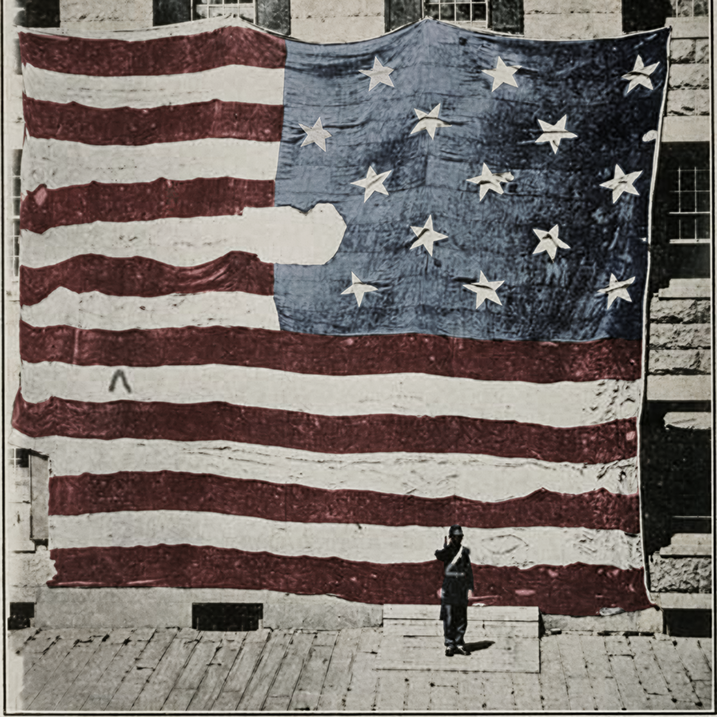
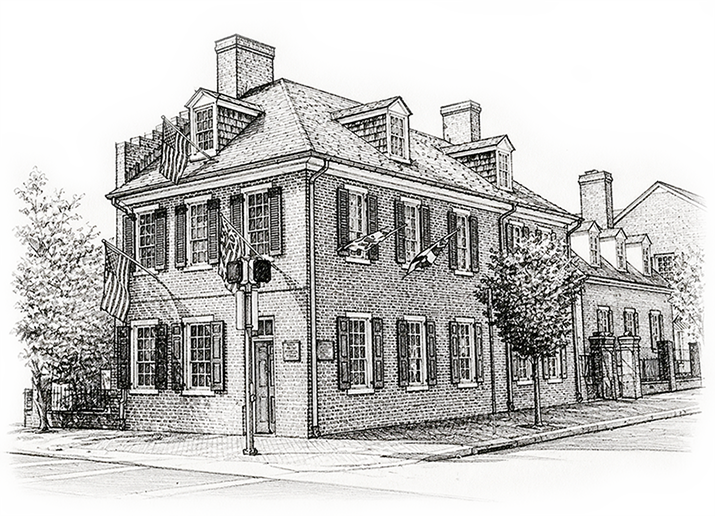
Baltimore's women crafted America's enduring symbol. In 1813, amid War of 1812 threats, Major George Armistead commissioned local flag maker Mary Young Pickersgill for two oversized flags to defend Fort McHenry—one a 17x25-foot storm flag, the other a massive 30x42-foot garrison flag visible miles out. Pickersgill's Pratt Street home (now the Flag House & Star-Spangled Banner Museum) became the workshop where her all-female crew stitched history.
The Flag Makers' Crew
Mary led a skilled team under tight deadlines:
-
Mary Young Pickersgill: Philadelphia-born (1776) flag businesswoman, daughter of Revolutionary flag maker Rebecca Young; widowed entrepreneur who sourced wool bunting and oversaw the project.
-
Caroline Pickersgill: Mary's daughter, assisting in sewing.
-
Eliza and Margaret Young: Mary's nieces, handling stitching details.
-
Rebecca Young: Mary's mother, veteran seamstress from the Revolution.
-
Grace Wisher: 13-year-old free Black girl indentured (not enslaved) by her mother for apprenticeship; managed chores and likely stitched, embodying Baltimore's diverse labor.
They worked in the attic and a nearby brewery, finishing in six weeks with 400 yards of fabric.
Baltimore's women crafted America's enduring symbol. In 1813, amid War of 1812 threats, Major George Armistead commissioned local flag maker Mary Young Pickersgill for two oversized flags to defend Fort McHenry—one a 17x25-foot storm flag, the other a massive 30x42-foot garrison flag visible miles out. Pickersgill's Pratt Street home (now the Flag House & Star-Spangled Banner Museum) became the workshop where her all-female crew stitched history.
The Star-Spangled Banner, flown over Fort McHenry 1814 (witnessed by Key), was donated to the Smithsonian by Armisteads in 1912.
Mary led a skilled team under tight deadlines:
-
Mary Young Pickersgill: Philadelphia-born (1776) flag businesswoman and daughter of Revolutionary flag maker Rebecca Young; widowed entrepreneur who sourced wool bunting and oversaw the project.
-
Caroline Pickersgill: Mary's daughter, assisting in sewing.
-
Eliza and Margaret Young: Mary's nieces, handling stitching details.
-
Rebecca Young: Mary's mother, veteran seamstress from the Revolution.
-
Grace Wisher: 13-year-old free Black girl indentured (not enslaved) by her mother for apprenticeship; managed chores and likely stitched, embodying Baltimore's diverse labor.
They worked in the attic and a nearby brewery, finishing in six weeks with 400 yards of fabric.
The Star-Spangled Banner itself, tattered but triumphant after 25 hours of British bombardment.
Fort McHenry's Stand
On September 13–14, 1814, British forces shelled the fort; the flag endured, whipping in the wind. Francis Scott Key, witnessing from a truce ship, penned "Defence of Fort M'Henry"—later "The Star-Spangled Banner," our national anthem since 1931. The flag signaled victory, preserving Baltimore.
The Smithsonian displays the flag today; visit the Flag House for the full story.

POLICE INFORMATION
We are always looking for copies of your Baltimore Police class photos; pictures of our officers, vehicles, and newspaper articles relating to our department and/or officers; old departmental newsletters, lookouts, wanted posters, and/or brochures; information on deceased officers; and anything that may help preserve the history and proud traditions of this agency. Please contact Retired Detective Kenny Driscoll.

NOTICE
How to Dispose of Old Police Items
Please contact Det. Ret. Kenny Driscoll if you have any pictures of you or your family members and wish them remembered here on this tribute site to honor the fine men and women who have served with honor and distinction at the Baltimore Police Department. Anyone with information, photographs, memorabilia, or other "Baltimore City Police" items can contact Ret. Det. Kenny Driscoll at
Copyright © 2002 Baltimore City Police History: Ret Det. Kenny Driscoll
