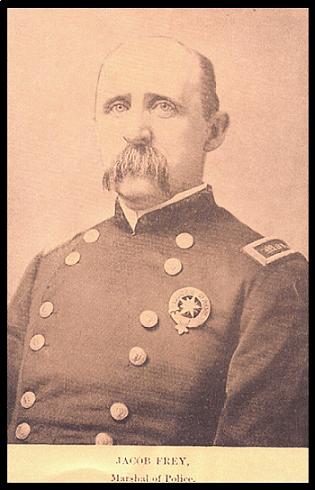
1729 - 8 August, 1729 - The preservation of the peace, protection of property and the arrest of offenders has been the goal of Baltimore residents since August 8, 1729, when the Legislature created Baltimore Town, 100 years before the "London Metropolitan Police Department" was founded by Sir Robert Peel (1829) Note: Sir Robert Peel "Bobby" Peel is widely believed to be where the nickname of the police helmet "Bobby Cap" came from, upon founding the London Metropolitan Police Department, officers were quickly called Bobby Cops, or Bobbies, likewise their hats, "Bobby Caps" 1775 - Would be the start of what would come to be 9 years of haphazard policing in "Baltimore Town" where mistakes were made, but those mistakes were learned from, and in 1784 "Baltimore Town", decided to form a paid "Watch", in which the Watchmen could be fired, or otherwise penalized, for neglect of duty. These first attempts to form the Nightwatch had male inhabitant capable of duty sign an agreement, in which they swore to conform to police regulations adopted by the citizens and sanctioned by the Board of Commissioners, to attend when summoned to serve as night watchmen. This committee had some of the functions of the 1888 Board of Police Commissioners. (The town was divided into Districts and in each of these was stationed a company commanded by a Captain of the Nightwatch.) 1775/76 - The first Captains of the watch, or police, in Baltimore, under this primitive arrangement, were Captain James Calhoun, of the First District; Captain George Woolsey, Second District; Captain Benjamin Griffith, Third District; Captain Barnard Eichelberger, Fourth District; Captain George Lindenberger, Fifth District; and Captain William Goodwin, of the Sixth District. At Fell's Point, Captain Isaac Yanbidder, with two assistants, or Lieutenants. Each Captain had under his command a squad of sixteen men, every inhabitant being enrolled, and taking his turn. The streets were patrolled by these watchmen from 10 pm. until daybreak. 1776- 20 December 1776 - As British troops closed in on Philadelphia at the end of 1776, the Continental Congress decided to abandon the city and flee south to the safe haven of Baltimore. Delegates convened on December 20, 1776, inside the spacious house and tavern of Henry Fite. ClickHERE 1784 - The First Attempt to Organize a Paid Force to Guard Baltimore occurred in 1784. Constables were appointed and given police powers to keep the peace. Baltimore's Police Department had been developing their police force since the formation of our "Night Watch" in 1784. In the beginning, they were "Necessary to prevent fires, burglaries, and other outrages and disorders." This from (Chapter 69, Acts of 1784). This was 45 years before Sir Robert Peel's London Metropolitan Police was founded in 1829. 1784 - Baltimore would obtain Street Lights by order of the Police Department - These lights were oil lamps and they were lit by order of the police, they were extinguished by the police, and they were maintained by order of the police. It was not so obvious to the public as it were to the panel of commissioners, and to the council of city hall, but the lighted streets in Baltimore were a deterrent that prevented, and decreased crime, in and around "Mob Town". While at first many of the ideas, and or theories of the Panel of Commissioners, and or Our Marshals were often shot down, or put off until they either died in committee or were funded privately. Still, many of these ideas went on to become the norm in law enforcement throughout the country, and around the world. Furthermore, these concepts would eventually be paid for, and widely approved of and authorized by state legislatures. 1787 - May 1787 - We lost our Brother Watchman Turner 1797 - 3 April 1797 - the City Council passed the first ordinance affecting the police. It directed that three persons were to be appointed Commissioners of the watch. They could employ for one year as many Captains and watchmen as had been employed in the night watch the year past for the same remuneration. The Commissioners prescribed regulations and hours of duty for the police. 1798 - 19 March 1798 - An officer known as “The City” or “High Constable”, was created by the ordinance on March 19, 1798. His duty was "to walk through the streets, lanes, and alleys of the city daily, with mace in hand, taking such rounds, that within a reasonable time he shall visit all parts of the city, and give information to the Mayor or other Magistrate, of all nuisances within the city, and all obstructions and impediments in the streets, lanes, and alleys, and of all offenses committed against the laws and ordinances." He was also required to report the names of the offenders against any ordinance and the names of the witnesses who could sustain the prosecutions against them and regard the mayor as his chief. The yearly salary of the city constable was fixed at $350, and he was required to give a bond for the performance of his duty. 1798 - Baltimore made the first of certain steps toward creating the chief of police, or marshal as he was later called. A high constable was appointed, and it was his duty to tour the city frequently, carried a mace, the badge of authority, and to report on lawbreakers. By the turn of the century, Baltimore had again become an unmanageable, riotous city. It was now a bustling community of 31,514 in population and one historian remarks naively, "The city was a rendezvous of a number of evil characters." 1799 - 26 February 1799 - Authorized the appointment of a city constable in each ward. This ward constable was thus a policeman, and the term of city constable was not properly his although his duties were defined by the ordinance to be the same as those of the city or high constable.
1800 - 1900
1800 - 30 April 1800 - At this meeting, a committee of three persons from each ward was appointed to plan a reorganization of the “Night-watch”. At a subsequent assembly on April 30, this committee advised that the patrol be increased. The recommendation was approved, and by the vigilance of the watchmen, disorder was suppressed for a time. 1807- 9 March 1807 - A general ordinance was passed defining the duties of the city commissioners. They were given large powers. Among other things, with the Mayor they were authorized to employ as many captains, officers, and watchmen as they might, from time to time, find necessary, but the expense should not exceed the annual appropriation for the service. The board was also required to make regulations and define the hours of duty of the watch; see that they attended to their duties with punctuality, receive their reports and cause them to be returned to the Mayor's office. 1808 - 15 March 1808 - We lost our Brother Night Watchman George Workner. 1816 - 7 February 1816, After just 34 years the Baltimore Police turned maintenance of the street lights over to Peale's Gas Light Company of Baltimore. The first gas street lamp in America was lit at the corner of N. Holiday St. and E. Baltimore St., where there still stands a replica of this light as a tribute to the rich history of our city, our police department, and the initiation of gas lighting in this country. As a side note the first home to have gas light was the residence of William Henry, a copper smith located in the 200 block of Lombard Street. 1826 - 9 March 1826 - the Mayor was given control of the police. The power given the Mayor was unlimited. The ordinance provided that the Mayor should appoint annually two Captains, two Lieutenants for the Eastern District; two Captains, four Lieutenants for the Middle District; two Captains, two Lieutenants for the Western District. He could also appoint any number of watchmen. 1826 - 9 March, 1826 - The Mayor was given control of the police of the city by an ordinance which provided that there should be appointed, annually, two captains and two lieutenants of the watch for the Eastern District; two captains and four lieutenants of the watch for the Middle District and two captains and two lieutenants of the watch for the Western District. They were expected to perform such duties as the Mayor might, from time to time, direct. The latter was also given the power to appoint as he chose any number of watchmen and to dismiss them at his pleasure. He was also to prescribe their duties. 1826 - Central/Middle District History - 9 March 1826 - Holiday and Saratoga Streets, established 03-09-1826, the building that housed it was built in 1802 and was in use until 1870. 202 N. Guilford Avenue, (North Street) built in 1870 used until 1908. Saratoga and St. Paul Streets, renovated school, March 4, 1908, until 1926. Fallsway and Fayette St. built in 1926 and used until 09-12-1977 when they moved to 500 E Baltimore St. from 12 Sept 1977 until present. 1826- Eastern District History - 9 March 1826 - 1621 Bank Street built around 1822, still stands. Used until 31 Aug 1959 at 12:01 am when they opened their new station house at the old Northeastern station at Ashland and Rutland Avenue until a new building was erected at Edison highway and federal streets, in Dec of 1960 and is the current site of the Eastern District. When it opened (in 1959) it was run by Capt. Millard B Horton. 1826 - Western District History - Green St between Baltimore St, and Belvidere St. Used from 1826 until 1876 when they moved to their new location, Pine Street, (still stands today and is used by the Maryland University Police) Baltimore Police used it from 1876 until 31 Aug 1959 at 12:01 am when they opened their new station house at Riggs Ave and Mount St. (1034 N Mount St), which is the current site of the Western District. When it opened it was run by Capt. Wade H. Poole. 1835 - 9 March, 1835 - A "Supplement” to this ordinance, which was passed on this day, provided for the appointment of twelve lieutenants of the watch, constituted policemen " to preserve the peace, maintain the laws and advance the good government of the city." These lieutenants were required to reside in certain districts by the Mayor and have conspicuous signs on their houses bearing their names and office. In addition to their police duties, they were required to act as city bailiffs about the markets, their compensation was fixed at $20 a month for their night work as lieutenants of the watch and they received an additional sum of $220 a year for the services mentioned in the ordinance. 1835 - The Middle District - April 1835 - Located at Saratoga and Holiday streets; the Western District in Green Street near Baltimore and in Belvidere street. The last named 'watch-house' had a belfry, and in April 1835, an appropriation was made for a similar addition to the Green street watch-house; and in this year Mayor Jesse Hunt took occasion to call the attention of the councils to the "Lamentably defective" police arrangements of the city. 1836 - March 1836 - The compensation of the watchmen was increased to $1 for each night they served. 1837 - 17 May 1837 - the first issue of the Baltimore Sun is printed - The first article in the Baltimore Sun that references our police is titled Rioting and as we would expect it is a negative report, that even when police explain the article was incorrect, the paper still runs the story. It was a response to the police briefly being mentioned, however so brief, it was important the initial report is updated (some believe it may have been a morning issue of the same date with the response coming in the evening edition. 1838 - 22 May, 1838 - The councils substantially re-enacted the ordinance of 1835, providing, however, that if any watchman while in the performance of his duty should be wounded or maimed he should receive half-pay during the continuance of his disability, or for a period not exceeding two months. They were also paid for attendance at court. This ordinance provided as well for the annual appointment of three justices of the peace to receive the reports of the night watch. One of these justices was required to reside in each district. The yearly salary of each was $100. 1843 - In 1843 two cells were put in the Western watch-house while in the Eastern house there was hut one. In the same year the Baltimore Sun declared that the custom of the watch calling the time notified thieves of the locality of the patrol and gave the former an opportunity of safely conducting their operations. This custom was consequently abandoned. 1844 - 19 June 1844 - We lost our Brother Night Watchman Alexander McIntosh 1845 - 18 February 1845 - The Southern District was established under an ordinance. Two captains and four lieutenants were appointed for it, and the boundaries of the other districts were rearranged. 1845 - Southern District History - The Southern District was first located at Montgomery and Sharp Streets, where it sat from 1845 until 1896 when they moved to Ostend Street. Ostend Street and Patapsco Street, where it remained in use from 1896 until 1985/86, when it moved to 10 Cherry Hill Road where it remains in use to present. When it opened on 31 Aug 1959 it was ran by Capt. Elmer I. Bowen. 1848 - The Baltimore police, as constituted in 1848, consisted in the daytime of one high constable, one regular policeman for each ward, who was also lieutenant of the night-watch in his district, and the night watchmen. Besides these there were two extra policemen for each ward, who were called into service as occasion required. This system of day police was changed from time to time to keep pace with the increase in the number of wards in the city, until the wards numbered twenty. There was, however, no material alteration in the system until 1857, when a complete reorganization took place under the authority of an act of the Legislature passed in 1853 1850/1861 - (Mayor member Ex-officio) Charles Howard, William H Gatchell, Charles d Hinks, and John W Davis 1850 - Charles Howard, was one of our Baltimore City Police Commissioner from 1850-1861 1851 - 20 October, 1851 - the first known metallic badge worn by Baltimore Police Officers also known as the 1st. Issue badge. 1853 - The State Legislature on March 16, 1853, passed a bill, "To provide for the better security for the citizens and property in the City of Baltimore." This statute provided that police officers should be armed and that a badge and commission be furnished each member. The former act of 1812 was repealed with the passage and enactment of this bill. No change occurred in the police organization until 1857 1856 - 13 November, 1856 - We lost our Brother Night Watchman John O'Mayer 1856- By this time the city’s chief executive again controlled the force. There were five Detectives in the first squad and they wore civilian clothes. As was mentioned above Patrolman were compelled to wear uniforms both on, and off duty. In winter the uniform was a black cap with the policeman’s number on it, a dark blue overcoat, trousers with a patent leather belt and the word police printed on it. These first five appointed Detectives were - Detective Thomas W. German, Detective Christian Barnes, Detective William Stevens, Detective Wm. L. Tayman, and Detective Jerome Airey 1856 - 11 December, 1856 - City Council votes on, and passes a bill to arm Baltimore Police Officers - 1857 was a date given by History Channel's "Tales of the Gun" - the "Police Guns" Episode, with an original air date, of 2 April, 2000, in which they reported, "Baltimore as having become the first Department in the nation to issue, and provide each police officer with a firearm." The documentary went on to state The Colt, 1849, Pocket Model, was the weapon of choice, and was 1st issued, and used by the BPD and it's Officers. Sometimes information contradicts information and as such, we located two Sun Paper articles; one dated,11 December, 1856, entitled "Proceeding of City Council", in which arming the individual City Police Officer was voted in to law, then on 25 December, 1856 an article titled "The New Police Bill" the bill was released. While all of the actual revolvers may not have been provided in 1856, they were approved into law on that 11 December, 1856. ALSO NOTE: We're only providing the aforementioned information about, "Baltimore being first to arm their police" out of respect for the Discovery Channel, and their source(s), but I suggest, at least for now, that we take it with a grain of salt. Still, I will leave this until we find further info, or others that read this line from a Sun Paper article, Dated 11 December, 1856, in which a member of City Council at the time trying to pass his bill to arm Baltimore Police said, "In New York and Philadelphia where there is a penalty for carrying concealed weapons, the police are armed by the city authorities." This is being taken by us to mean, we may have been at least 3rd in the issuance of firearms, but by these reports, we were not first. 1857 - 1 January, 1857 – Came the next important change under the provisions of this act; the ordinance, introduced an entirely new order of things, and placed Baltimore's Department of Police on practically the same footing as those of the other large cities of this country. It declared that after; 1 March 1857, The existing watch and police systems should be ABOLISHED,and all ordinances for the establishment and regulation of the same be repealed. The new force consisted of one marshal, one deputy marshal, eight captains, eight lieutenants, twenty-four sergeants, three hundred and fifty police officers, five detective police officers and eight turnkeys. The men were required to do duty day and night, and were given all the powers then vested by law in the city bailiffs, police officers, constables and watchmen. The city was divided into four police districts, whose stations were at the watch-houses. The Marshal, with the concurrence of the Mayor, was given authority to establish the limits of the stations, divide them into beats, making allowance for a proper force to retain at the station houses. He had power also to alter at will the limits of the districts and beats. At this time, the Detective Bureau was established. The City was divided into four police districts. Middle/Central, Eastern, Western and Southern. 1857 - Baltimore Police gets it first uniform police button. Before 1857 the police in Baltimore like most other American cities did not wear a standardized uniform or buttons. Thus, the buttons of the Baltimore police during this time were probably the civilian examples worn by the officers. The earliest Baltimore Police buttons were a German letter "P" inside a "Laurel Wreath" They presumably come in two sizes: 23 mm large coat size and 15 mm cuff or hat size although no examples of the hat size have been observed at this moment. Of these first-generation buttons several marks on the back (called back-marks by collectors were noted). HERE 1857 - 15 August, 1857 – 200 Revolvers are purchased for issuance to Baltimore's Police Officers. 1857 - 17 Sept, 1857 – City Council approves spending $3845.95 on 200 Revolvers 1857 - 11 Oct, 1857 – Possibly the First Police-Involved Shooting with issued firearms. The officers involved were, Deputy Marshall Manly, and Officers G.H.E., Bailey, Nicholson, Saville, Lee, George Bailey, Andrew, Presto, Chapman, and Englar. Shot was Deputy Marshall Manly, and Suspect Andrew Hesslinger was killed, and an African American named Ramsey. The shooting took place at a bar called Seager’s Lager Beer Brewery at 7 o’clock on that Sunday, the establishment situated upon the Frederick Road at its intersection with West Pratt Street. 1857 - 14 October 1857 - We lost our Brother Sergeant William Jourdan 1857 - In this year 1857 the department compelled Patrolmen to wear uniforms both on and off duty. They had several rules, 1) Winter uniforms were made up of a black cap bearing the policeman’s number, dark blue overcoat, and trousers with a patent leather belt, and the word "Police" prevalently stamped upon its buckle. 2) Summer uniforms were the same minus the overcoat. Policemen were required to wear standing collars. 3) The badge of their authority was a star 3 inches; it was worn on the left breast of their coat. The star was often sewn on to avoid all chances of an officer being without his badge. In the old days our brothers would occasionally leave their badges home; so having them sewn on alleviated that situation. Taking away an excuse used by thugs that would use a badgeless officer as an excuse to assault him and then claim he didn't know his victim was an officer. 4) The final piece to the officer’s uniform was his "Billy Club", known in Baltimore as an "Espantoon" it was recognizable as it was often carried in the officer's hand, spun on a leather strap, or tucked under the officer's arm. While in the station or when both hands were needed otherwise, the Espantoon might be seen hanging from a ring on their belts. They also carried pistols back then. 1857 - 1 March 1857 - First Detective Squad - The first squad of detectives was appointed by the mayor, under the New Police Bill in Dec of 1856 1858 - 16 March, 1858 - The Legislature of the State took memorable action in passing a bill to "provide for the better security of life and property in the City of Baltimore." This enactment empowered the Mayor and the City Councils to increase, and in every way strengthen the police, whether officers, bailiffs, night-watchmen, or in any way connected with the organization of the force. When any of these guardians of the peace were injured either in person or apparel, while in the discharge of his duties, the act required that he be fairly indemnified. This statute also provided that the police force should be armed, that a commission and badge be furnished each member, and that it should be no defense for anyone who resisted or assaulted an officer to claim that his commission or badge was not exhibited. This statute repealed the act of 1312. 1858 - 27 Jun 1858 - We lost our Brother Patrolman Henry Wilcox 1858 - 22 September, 1858 - We lost our Brother Police Officer Benjamin Benton 1858 -5 November, 1858 - We lost our Brother Police Officer Robert M. Rigdon 1859 - 27 June, 1859 - Police and fire-alarm telegraph adopted June, 1858; first put into operation 1860 - 2 Feb, 1860 - Baltimore Police force placed under State control 1860 - Other innovations of the time were the inception of the Marine Unit in 1860 - The Harbor Patrol would begin patrolling the harbor based on wording in the legislature that had a large portion of the waters Baltimore City, and therefore had to be protected by City Police. Budget at the time wouldn't allow for steam, or other motor based boats. Marshal Jacob Fray was called in to figure out what could be done about the problem. An 1886 sun article said if the times, "They hadn't the funds to buy a patrol boat. What then? Well Marshal Frey conceived of the idea of placing rowboats at advantaged positions, using points where the various districts touched the harbor waters. Four boats total, two for Eastern, one for Central and one for Southern." (NOTE: There was no "Southeast" at the time, Southeast didn't come until 1958) A second article from 1958 went on to say, "It would then be a simple matter of jumping in the boats at the required time, of pushing out from land and then of rowing over the regulated beats. It was all somewhat surprising, efficient and a novelty that worked for 31 years." ClickHERE 1860 - 1 May, 1860, we switched our badges to the 2nd issue badge. It was a new “Metropolitan Police" force under a Board of Police Commissioner’s (BOC), state-appointed civilians, signaled the retirement of the "Corporation Police force" and the new badge was authorized. 1860 - 7 May of 1860, The force reorganization as mentioned above which brought about more than just the changes already mentioned, Also changed were the first uniform buttons which were introduced just three years earlier [1857]. They were changed from the German "P" in the "Laurel Wreath". The new buttons were made in 3 pieces (a front and a back held together by a rim).. On the front the new buttons were the letters "BCP" for Baltimore City Police, like the German "P" the letters "BCP" were also placed inside a "Laurel Wreath". These 3 piece buttons were referred to as a staff button style, as the 3 piece style was first used for the United State Army Staff Officers buttons. They came in 23 mm coat and 15 mm hat/ cuff sizes. ClickHERE 1861 - 19 April, 1861 - was a fateful day for Baltimore police, who had to stop rioting citizens to protect Union Soldiers passing South through the city. 1861 - 27 June, 1861 to 29 March, 1862 - (Under control of the United States Military authorities) Police Commissioners Appointed by the Military authorities - Columbus O'Donnell, Archibald Sterling Jr., Thomas Kelso, John R Kelso, John W Randolph, Peter Sauerwein, John B Seidenstricker, Joseph Roberts, and Michael Warner. Our newly sworn police officers at the time were recognized by a simple, "Pink Ribbon" worn on their left lapel, and the, "Espantoon" carried by Baltimore police, other than those two identifiers, a uniform had not yet been selected, and so they dressed in civilian attire. 1861/62 - In March of 1862, the military authorities who had taken control of the Department on June 27, 1861, turned over the Police Department to the authority of the state. 1862 - In 1862 Baltimore's Police commissioner suggested they form a Park Police; the purpose of the Park Police was to police the new Druid Hill Park, which at that time was wholly beyond the city limits and thus beyond the authority or city Police, city's Park Commission was first granted the right to preserve peace in the parklands by the City Charter of 1862 (this department disbanded in 1959 with members joining the Baltimore Police). 1862 - 3 April 1862, A newly formed Baltimore Police Department appeared in an entirely new uniform with a new series of badges. Known as the 3rd Issue badge, the new badge had the same center section as the first badge, including the return of the "City Police" designation. Surrounded by twenty small points encircled by a narrow rim, the 20 points represented the 20 wards, i.e., the people that the police protected, and the thin band symbolized the policemen that held it all together. With this, we had an entirely new Police Department, with new men, and new leadership. Even control of the department was taken from city government and turned over to the state giving us new management. The commissioners from 1861 had all been arrested, the officers all replaced, with a vetting process that only the cleanest of the clean, and the best of the best were re-hired; those in question were all released. Everything was new, unlike other agencies in this country that had run from their start date until current times; the Baltimore Police Department had many starts and restarts. Still, the rebuild of 1861/1862 was unlike anything that has ever been done anywhere before, making it an entirely new department. In 1862 when the military authorities left Baltimore turning the agency back over to the newly hired leaders of the force, police control wasn't put back into the hands of city hall. Control of the department at the time was given to the State where it would remain for more than 100 years until 1978. In 1978 control of the department went from the state back to the city. We can't make judgment's, but some have asked if it should go back to the state? 1862 - 29 March, 1862 to 15 Nov 1866 - (Mayor member Ex-officio) Samuel Hindes, and Nicholas L Wood 1862 - Nicholas L.Wood, was one of our Baltimore City Police Commissioner from 1862-1864 1863 - 18 Feb 1863 - We lost our Brother Sergeant William Wright 1864 - Samuel Hindes, was one of our Baltimore City Police Commissioner from 1864-1866 1866 - 15 Nov, 1866 to March 1867 - (Mayor member Ex-officio) William T Valiant, and James Young, 1866 - James Young, was one of our Baltimore City Police Commissioner from 1866-1867 1867 - 23 April 1867 The first State agency to exercise police powers was the Baltimore City Police Force. Established in 1867 under a Board of Police Commissioners, the Force was elected by the General Assembly (Chapter 367, Acts of 1867). Baltimore's police force, from 1867, was governed by a State board although jurisdiction was limited to the City. 1867 - March 1867 Lefevre Jarrett, James E Carr, and William H B Fusselbaugh 1867 - LeFevre Jarrett, was one of our Baltimore City Police Commissioner from 1867-1870 1868 - 24 July, 1868 (Friday) - The Baltimore Flood overtook the city. In a crisis the bravery of Commissioner Carr in rescuing the victims of the catastrophe, became a matter of national fame. Harper's Weekly, at the time, in a long article on the floods, quoted the following editorial notice from the Baltimore Sunday Telegram, of July 26, 1868: "It is a true saying, that in times of great public calamities, some men rise to the position of a greatness, and such was the case with Police Commissioner James E. Carr. 1870- 14 March, 1870 - John W Davis, James E Carr, and William H B Fusselbaugh 1870 - 5 July, 1870 - We lost our Brother Police Officer James Murphy 1870 - 17 Aug 1870 - We lost our Brother Lieutenant Richard Chanowith 1870 - John W. Davis, was one of our Baltimore City Police Commissioner from 1870-1871 1871 - 12 January, 1871 - We lost our Brother Police Officer Charles J Walsh * 1871 - 22 May, 1871 - We lost our Brother Police Officer Joseph Clark 1871 - 14 September, 1871 - We lost our Brother Detective John H. Richards 1871 - 15 March, 1871 - William H B Fusselbaugh, James E Carr, and Thomas W Morse 1871 - William H.B. Fusselbaugh, was one of our Baltimore City Police Commissioner from 1871-1881 1872 - 18 August 1872 - We lost our Brother Police Officer John Christopher 1872 - 22 Nov 1872 - We lost our Brother Patrolman Francis Fullum * 1873 - 12 January 1873 - We lost our Brother Patrolman John H. Dames * 1873 - 12 January 1873 - We lost our Brother Patrolman James T. Harvey * 1873 - 6 October 1873 - We lost our Brother Patrolman Thomas Baldwin * 1873 - 11 November 1873 - We lost our Brother Patrolman William H Healy * 1874 - Northwestern District History - 1874 - The Northwestern District was first opened at Pennsylvania Ave and Lambert Street where it remained until 1958/9 when they moved to their present district on Reisterstown Rd. 1874 - Northeastern District History - 1874 - The Northeastern District was first opened at Ashland and Chew Streets (Durham) where it remained until 1958/9 when they moved to their present district at 1900 Argonne Drive. 1875 - 15 March, 1875 - William H B Fusselbaugh, Harry Gilmor, and John Milroy 1875 - 27 Nov 1875 - We lost our Brother Patrolman Robert Wright 1876 - January 1876 - Baltimore Police Headquarters was moved from the corner of Calvert and Lexington Streets to the newly furnished offices in the basement of City Hall. This was all by design of Mayor Latrobe to save as much as $2000 a year in rent. These City Hall offices were used by our police department until 1926 when the "old" Police Headquarters Building at Fallsway and Fayette Streets were opened, and where they remained until 1977 when Central moved to 500 E. Baltimore St. Headquarters had actually moved across the street to 601 E Fayette Street five years earlier in 1872, that "old" Headquarters Building was demolished in 1984. 1876 - Baltimore switched from the Colt "Model 1849" Pocket Model to the Smith & Wesson "Baby Russian", nickel plated. These remained in service until approx. 1910 when various models were purchased for field trials. Flip-flopping back and forth over the years from Colt to Smith and Wesson, Smith and Wesson to Colt and so on, up until 1990 when the Department began phasing in the Glock "Model 17" 9mm Semi-Automatic. 1877 - 15 March, 1877 - William H B Fusselbaugh, Harry Gilmor, and James R Herbert 1877- 4 Aug 1877 - We lost our Brother Patrolman Henry Schaper 1878 - 12 April, 1878 - William H B Fusselbaugh, James R Herbert, and John Milroy 1880 - 9 November, 1880 - The Motto for the department began in the Central District and was displayed on a plaque on the gymnasium wall, "Ever on the Watch" written in English, under the Latin words "Semper Paratus" and "Semper Fideles" - "Semper" can either mean, "Always" or "Ever" - so it could read either "Ever Ready / Ever Faithful / Ever on the Watch" or "Always Ready / Always Faithful / Ever on the Watch". Throughout history "Semper Paratus", and "Semper Fideles"have consistently been read as "Always". However in Baltimore using "Ever on the Watch" over "Always on the Watch" leads us to believe in this case "Semper" stood for "Ever" - Giving us "Semper Paratus - Semper Fideles - Semper Alapa Buris Pervigil" or "Ever Ready - Ever Faithful - Ever on the Watch" 1881 - 15 March, 1881 - George Colton, James R Herbert, and John Milroy 1881 - George Colton, was one of our Baltimore City Police Commissioner from 1881-1887 1883 - Mourning for fallen officers, and the passing of officers, was ordered upon the death of Capt. Franklin Kenney of the Eastern District. The mourning time was established, and set for a period of 10 days for fallen officers and 5 days for passing officers. 1883 - 15 March, 1883 - George Colton, James R Herbert, and John Milroy 1883 - 27 September 1883 - We lost our Brother Captain Benjamin Franklin Kenney 1884 - 5 Aug, 1884 - George Colton, John Milroy, and J D Ferguson 1884 - 6 January, 1884 - We lost our Brother Police Officer Charles W. Fisher 1884 - 12 Jan 1884 - We lost our Brother Patrolman George Pumphrey 1884 - Southwestern District History - 1884 - 17 July 1884 The Southwestern District was first opened at Calhoun and Pratt Streets (200 S Calhoun St) where it remained until 11 July 1958 when they moved to their present location at 424 Font Hill Ave. 1884 - "Central District" takes on this new title, from it's former "Middle District" as was reported in a 1905 sun paper report in which the author wrote of a library of police docket books "A single glance along the long row of frayed and weak back books is interesting, as it shows exactly when the old "Middle District" changed its name to the more dignified title of "Central District". The record for 1884 is the first book bearing the name "Central District" Maintenance 1885 - 20 March, 1885 - We lost our Brother Police Officer August Harting 1885 - 15 Oct 1885, Jacob Frey begins his term as Marshal from Oct 15 1885 - Jul 12 1897 1885 - 18 October, 1885 - On the same day the wagons were brought to Baltimore The Baltimore Police Department began using the Police Telegraph Boxes (Call boxes) the pilot program started in the Central District with 58 boxes in that district alone. The system of Call Boxes would quickly spread to be used in all of Baltimore's Police Districts, and on all posts/bailiwicks. The first Call Box tested was Box #63 located on the corner of Franklin and Charles Streets in the Central/Middle District. Our Boxes were described as having been approximately 4 ft from the ground, made in two sections, the phone section in the top compartment, with the lower compartment housing a "Dial" system in which an officer could put the pin of the dial on whatever he wanted, from back-up, to a wagon, to an ambo. These first boxes were painted red in color, which may have brought about issues when compared to the very similar looking Fire Alarm Box. 1885 - 25 October, 1885 - The first Patrol Wagon went into service on October 25, 1885 - and is believed to make Baltimore the second to use patrol wagons in the country, behind Chicago. The story goes; Once upon a time, Deputy-Marshal Jacob Frey was reading an illustrated police magazine, while in the gymnasium of Central's Police Station, as he was turning trough the pages he saw facts on Police Patrol Wagons being used in Chicago. He brought the idea before the board of police commissioners; they were mildly interested. Frey didn't give up on ideas he felt had merit, and some weeks later he would one again call the board’s attention to the matter again. They had forgotten about it, but promised again that they would look into it. Wagon's and Police Telegraph Box Systems, were the future of Baltimore policing in Frey's eyes, so after the (BOC) Board of Police Commissioners failed to act, Marshal Frey took matters into its own hands. He sent one of the members of the "BOC" and "Marshal Gray" to Chicago to see how the "New Fanged" patrol wagons worked. The pair "Were Charmed" an old records states. And while there, they saw Chicago’s new police telegraph box system. (These days we call them Call Boxes) The end result was both facilities (the Wagon and the call Boxes) were in Baltimore by the fall of 1885. According to Gamewell's records, Chicago was the first to use the Police Telegraph System, and Baltimore was the second in the country to use this system. 1885 - The Harbor Patrol was established in 1885. (Not to be confused with the Marine Unit which was initiated in 1891 when we obtained our first Police Boat, "The Lannan") 1886 - The Police Helmet, (Bobby Cap) worn in other cities, was made part of the uniform in Baltimore. (It was introduced by Commissioner Alford J. Carr. Taking the place of the derby or bell cap formerly worn by Baltimore police. Commissioner Carr specified that the black helmet was to be worn in the winter, and the pearl gray helmet worn during summer months. The helmet at that time was significant of rank, only patrolman and sergeants wore it. The Marshal and his Deputy Marshal as well as all Captains and Lieutenants wear the regular cap of the period.) 1886 - 25 Feb, 1886 - George Colton, John Q A Robson, and John Milroy 1886 - 25 Jun, 1886 - George Colton, John Q A Robson, and Alfred J Carr 1887 - 15 March, 1887 - Edson M Schryver, Alfred J Carr, and John Q A Robson 1887 - Edson M. Schryver, was one of our Baltimore City Police Commissioner from 1887-1897 1888 - 23 Jan, 1888 - Edson M Schryver, John Gill Jr, and John Q A Robson 1888 - A 17 square mile portion of Baltimore County was annexed by Baltimore City. The number of officers in the Baltimore County Police Department was cut from 33 to 10 as officers and station houses were absorbed into the Baltimore City Police Department. 1888 - 1 June 1888 - The Mounted Patrol was established, by Marshal Jacob Frey and Sgt James R. Moog. 1889 - 28 March, 1889, Ten incandescent electric lights which will illuminate the heretofore gloomy pathway in Druid Hill Park leading from the Clipper gate to the walk from the Mansion House to the main entrance on Madison Ave, were lighted last night (28 Mar 1889) for the first time. The lamps are placed upon cedar posts about the height of a street gas lamp, and are lighted simultaneously by the turning of a lever in the gate keeper’s house at the Druid Hill's Entrance to the park. Street lamps were initially began in this country at the suggestion of the Baltimore Police Department when they used oil lamps that would be lit, extinguished and maintained by Baltimore’s Police, the year was 1784. It was not so obvious to the public as it were to the panel of commissioners, and to the council of city hall, but the lighted streets in Baltimore were a deterrent that prevented, and decreased crime, in and around "Mob Town". While at first many of the ideas, and, or theories of the Panel of Commissioners, and or, our Marshals were often shot down, or put off until they either died in committee, or were funded privately. Many of these ideas would go on to become the norm in law enforcement throughout the country, and around the world. Furthermore these concepts would eventually become widely approved of, paid for, and authorized by our state legislatures. 1889 - 4 July, 1889 - We lost our Brother Police Officer John T. Lloyd 1890 - 27 May, 1890 - What came to be known as the 4th Issue badge was worn with a new uniform by all members of the force. This is a shield-shaped badge with the word "POLICE" across the top, Maryland seal in the center and a ribbon with the officers number across the bottom. Sergeant's and above had an eagle on top of their shield. Lieutenants and above wore a badge similar to the Sergeant but was gold in color. The eagle on the badges had a ribbon in its beak denoting the rank of the officer. These were worn from 1890 until 1976 1891 - 15 July, 1891 - We lost our Brother Police Officer Jacob Zapp 1891 - 10 August 1891 - The Formal Start of Baltimore's Marine Unit - The little steamer is the harbor police cruiser "Lannan” named in honor of former Deputy Marshal John Lannan, deceased, who had charge of her construction. The Lannan was built in 1891 by James Clark & Co., from plans kindly loaned the Department by the United States Government. The harbor patrol boat was completed on August 10, 1891, and after a very successful trial trip was accepted and immediately put into commission. ClickHERE 1894 - 20 June, 1894 - We lost our Brother Police Officer James T. Dunn 1894 - 20 June, 1894 - We lost our Brother Police Officer Michael Neary 1894 - 1 Dec, 1894 - Edson M Schryver, John Gill Jr, and John C Legg 1895 - 16 June, 1895 - We lost our Brother Sergeant Benjamin Graham 1895 - 3 July, 1895 - Hammerless Revolvers were first obtained in Baltimore - It has been reported that on this day in 1895 one dozen 38-caliber hammerless revolvers were received through the Police Commissioner's Office as the first part of a purchase of this variation of firearm for our agency. The older style pistols with a hammer above the handle/grip [as described in an 1895 newspaper report, were characterized as follows] The older style revolvers had to be cocked before they could be fired. The newer revolvers were fired through a combination of pressure on the trigger and a proper hold on the weapon's pistol/grip. The grip/handle contained a spring in the back/handle of the weapon, which when pressed/squeezed by a firm grasp of the officer's hand on the weapon. Each of the Department's Board of Commissioners will have one of these new pistols. Marshal Jacob Frey, Deputy Marshal Thomas "Tom" Farnan, and the Captains from each of the Department's Districts will also receive one of these new revolvers. 1895 - 17 October, 1895 - We lost our Brother Police Officer John J. Dailey 1896 - The Bertillon Bureau was established to take photographs and measurements of prisoners. Bertillon system n. A system formerly used for identifying persons by means of a detailed record of body measurements, physical description, and photographs. The Bertillon system was superseded by the more accurate procedure of fingerprinting. 1896 - 27 March, 1896 - Daniel C Heddinger, John Gill Jr, and Edson M Schryver 1897 - 15 March, 1897 - Daniel C Heddinger, William W Johnson, and Edson M Schryver 1897 - 13 July, 1897 - Thomas F Garnan, was Deputy Marshal / Acting Marshal from July 13 1897 - Oct 6 1897 1897 - 7 Oct, 1897 - Samuel T Hamilton was Marshal from Oct 7 1897 - Oct 7 1901 1897 - 12 July, 1897 - the active connection of Marshal Jacob Frey, with the Police Department ceased. On October 7, 1897, Capt. Samuel T. Hamilton was elected Marshal of Police to succeed Marshal Frey. Marshal Hamilton was a veteran officer of the Civil War and a man of indisputable courage and integrity. For many years following the great civil conflict he had served on the Western frontier and took part in the unremitting campaigns against the Sioux and other Indian tribes, who were constantly waging war upon the settlers and pioneers as they pushed their way toward the setting sun, building towns and railroads and trying to conquer the wilderness and its natural dwellers. In the Sioux campaign of 1876, when Gen. George A. Custer and his gallant command, outnumbered ten to one by the Indians in the valley of the Little Big Horn, were annihilated, Captain Hamilton and his troop rode day and night in a vain effort to re-enforce Custer and his sorely pressed men. It was on June 26, 1876, the Seventh United States Cavalry rode and fought to their deaths, and on June 27, the day following, the reinforcements arrived, exhausted from their terrific ride across the country. Captain Hamilton and his troop fought through the rest of the campaign, which resulted in Sitting Bull, the great Indian war chief, being driven across the Canadian frontier. 1897 - Daniel C. Heddinger, was one of our Baltimore City Police Commissioner from 1897-1900 1898 - 11 February 1898 - We lost our Brother Police Lieutenant Michael F Black 1898 - Fall of 1898 ground was broke on Northern District. What was being built on a piece of land purchased by the City, at Cedar and 2nd was called Northern's annex. (a new District) to be ran by Capt. Thomas W Morris 1899 - 3 July 1899 - We lost our Brother Police Detective John S. Pontier 1899 - 29 August, 1899 - We lost our Brother Police Officer Alonzo B. Bishop
1900 - 2000
1900 - 11 June 1900 - We lost our Brother Patrolman Michael W. Ryan 1900- The interesting thing about the Board of Police Commissioners and eventual single Commissioner is that the Commissioner(s) for the City of Baltimore were to be chosen and appointed by the Governor for the State of Maryland. 1900 - 1 Feb, 1900 - Northern District History - 1900 The Northern District was first opened at Cedar [Keswick] and 34th Street on 1 Feb 1900 at 8am ran by Capt. Gittings, Lieutenants Henry and Dempsey; Round Sergeants will be, Warden for Day Duty, and Moxley for Night Duty. At the time they began with 50 officers. It remained at the Cedar [Keswick] location until 2001 when it moved to its current location at 2201 W Coldspring Lane. 1900 - 7 May 1900 - George M Upsher, Edward H Fowler, and John T Morris 1900 - George M. Upsher, was one of our Baltimore City Police Commissioner from 1900-1904 1901 - 8 October 1901 - Thomas F Farnan Deputy Marshal was Acting Marshal from Oct 8, 1901 - Aug 7, 1902 1902 - 20 May 1902 - We lost our Brother Police Officer Charles J. Donohue 1902 - 21 August 1902 - "1000 members of Police Department to re-take Oath" - The entire department was forced to re-take their oath of office, as prior to this day, they had been improperly and illegally sworn in, and this was the case for 35 years. (See - BPD News under the Insight Drop-down Tab) 1902 - 8 October 1902 - Thomas F Farnan, Appointed Marshal from Oct 8, 1902 - Aug 8, 1914 1904 - 7 February 1904 - The Great Baltimore Fire raged in Baltimore, Maryland, United States, on Sun, Feb 7 and Mon, Feb 8, 1904. 1,231 firefighters were required to bring the blaze under control, both professional paid truck and engine companies from Baltimore City Fire Departments BCFD and volunteer fire companies from the surrounding counties, along with some out of state units that came in on local railways. The fire destroyed a major portion of central Baltimore City, to include over 1,500 buildings covering an area of some 140 acres. It spread from North Howard Street on the west, north to the retail shopping areas on Fayette Street and began moving eastward as it was pushed by prevailing winds. Baltimore Police not only helped to fight the fires, and evacuate buildings, but they also fault crime associated with this type chaos, in which looting almost always begins. 1904 - 23 March 1904 - George M Upsher, John T Morris, and Thomas J Shryock 1904 - 2 May 1904 - George R Willis, James H Preston, and Thomas J Shryock 1904 - James H. Preston, was one of our Baltimore City Police Commissioner from 1904-1908 (Gov. Warfield made him a member of the Board of Police Commissioners for Baltimore City, 1904-08) He went on to become Baltimore's Mayor in 1915 1904 - George R. Willis, was one of our Baltimore City Police Commissioner from 1904-1908 1904 - 26 November 1904 became the first time fingerprints were officially used (to catalog criminals) in the United States when John Randles was held over on a theft charge. He was printed by Sgt. John A. Casey who had recently returned from St. Louis where he had been trained in the technique, initially it was felt the system would work alongside the Bertillion system, but instead it was found to be more efficient and so it quickly replaced the Bertillon system except for two or three photos, initially they used a front on head-shot and two profile shots, now they only use two shots, the front on head-shot and a single profile. 1904 - 7 December 1904 - Fingerprint Identification Section - After becoming the first police department in the country to use the new Fingerprint System of identification when on 26 November 1904 Baltimore Police Department would go on to use 7 December 1904 as the inauguration date of our Finger Print Identification Section. 1905 - 27 July 1905, The "Beauty Squad" otherwise known as the "Traffic Squad" went on duty. Some wore a patch on their left sleeve of the Maryland Coat of Arms surmounted by an Eagle with outstretched wings. This was done to set them apart from other police in the area, an interesting note in the colors of the Calvert family Quarters, instead of Or and Sable (Gold and Black) they were given Orange and Black in error as the patch maker mistook Or for an abbreviation of Orange. Initially, our men didn't wear the patch, before long they all wore the patch and a distinct orange and Black cord on their helmets. To this day we still use Orange and Black for our ribbons and in other city logos and mottoes. 1905 - 16 January 1905, Might be the department's first recorded attempt at maintaining of our Department's History, when Patrolman William Burgess of the Central District began his new job in his new office as, "Librarian and Keeper of the Archives of the Central District," based on the following as we can see from the following Sun paper report: 1905 - 26 January 1905 - We lost our Brother Police Officer Mathew Boone * (1) 1905 - 25 December 1905 - We lost our Brother Police Officer Charles Spitznagle * 1907 - 1 August 1907 - The Department was to receive a Columbia Electric Automobile when complete the machine was put to use in the Central District as an Ambulance and Patrol (Paddy) Wagon. It was said to have been easy to run and easily made 16 miles an hour. Unlike the illustrated picture used to show Baltimore’s New Police vehicle, Baltimore’s Wagon would come with windows and curtains 1908 - 4 May 1908 Sherlock Swann, John B A Wheltle, and Peter E Tome 1908 - Col. Sherlock Swann, was one of our Baltimore City Police Commissioner from 1908-1910 1908 - 7 November 1908 - After 22 years, The Baltimore Police Department stop using the Police Helmet, (Bobby Cap), and goes to a more modern round, or oval top, police hat. From the Baltimore Sun - The Baltimore Police go from the Bobby Type Helmet to the more modern cap and Officers donned new uniforms, veteran Captains returned to old Districts, caps supplant helmets and Espantoons are in use once again. 1908 - 7 November 1908 - Also on this day and with the hat switch under the direction of Col. Sherlock Swann came a new hat device, it was on this day in 1908 that we dropped the Wreath style hat device moving to the hat device used today with the Coat of arms and badge number. 1908 - 28 December 1908 - Baltimore had laws passed to make consumer purchased fireworks illegal. The same year we saw immediate improvements in reduced injuries, while surrounding counties the same year with relaxed firework laws, there were deaths and dismemberment in 1904 with two young men each losing a hand in Baltimore County to fireworks. Marshal Farnan fought to introduce these laws and saved many lives and limbs as a result 1909 - 4 March 1909 - We lost our Brother Police Officer Thomas H. Worthington * (2) 1910 - 2 May 1910 - John B A Wheltle, Peter E Tome, and C Baker Clotworthy 1910 - 16 Sept1910 - We lost our Brother Police Officer John T. Tuohy 1910 - John B.A. Wheltle, was one of our Baltimore City Police Commissioner from 1910 -1912 1911 - 16 September 1911 - We lost our Brother Sergeant Joseph Smyth 1912 - 25 November 1912 - We lost our Brother Officer John McGrain * 1912 - 19 June 1912 - The first Women Officer was hired under the title of Policewomen was Mary S. Harvey, EOD of June 19, 1912 her hiring was followed by that of Margaret B. Eagleston July 22, 1912(interesting side note on March 28, 1925 the Baltimore Sun reports - Two female members of department given first lesson in pistol shooting. They were Miss Margaret B. Eagleston and Mrs. Mary J. Bruff - A few days later Mrs. Mary Harvey, Miss Eva Aldridge and Ms. Mildred Campbell were also trained. So basically the first two woman officers hired by the BPD weren't trained in firearms until they had been on the force for 13 years!) 1912 - 4 April 1912 John B A Wheltle, Peter E Tome, and Morris A Soper 1912 - 6 May 1912 Morris A Soper, Daniel C Ammidon, and Alfred S Niles 1912 - Morris A. Soper, was one of our Baltimore City Police Commissioner from 1912-1913 1912/13- The Baltimore police goes from Horse Draw "Patty" Wagons to motorized wagons. Oddly enough our first motorized wagons were manufactured by the same builder. 1913 - December 1913 - The Police Academy was established. - What later became known as our Police Academy, was first called “The Baltimore Police Department - School or Instruction” - It was housed in the Northern District - From a 1934 newspaper article referencing this "School of Instruction", it talks about the effect on its young police, initially they wrote, "It's not long, this eight-week course that they put the newcomers through, upon the fifth floor of the Police Building at Fallsway and Fayette, but it is both thorough, and exacting. And since its founding fourteen years ago by Commissioner Gaither; the school has served as something of a guide, and model for virtually every big city in the country," Departmental officials said. 1913 - 31 December 1913 James McEvoy, Daniel C Ammidon, and Alfred S Niles 1913 - James McEvoy, was one of our Baltimore City Police Commissioner from 1913-1914 1914 - 29 May 1914 - The Motor Unit was organized on May 29, 1914 - It began with just five members, Officers, Schleigh, Bateman, Pepersack, Vocke and Louis. 1914 - 17 October 1914 - The first female officer shot in the line of duty was Policewoman Elizabeth Faber. As she and her partner, Patrolman George W. Popp were attempting to arrest a pick-pocket on the Edmondson Avenue Bridge they were both shot. (An interesting side note, the first woman police hired by the Baltimore Police department were hired two years earlier in June and July of 1912, and none of the women hired received firearms training until 1925) 1914 - 28 December 1914 - Daniel C Ammidon, Clarendon I T Gould, and Alfred S Niles 1914 - 14 August 1914 - Robert D Carter Appointed Marshal August 14 1914 - until after 1917 1914 - Daniel C. Ammidon, was one of our Baltimore City Police Commissioner from 1914-1916 1914 - "Luxe" and "Morpheus" Baltimore’s first K9 - A little known fact, while not an official unit, Baltimore had two Police Dogs at their call when two Airedale Terriers from London came to enroll as members of the Police Force. Their owners learned two dogs were already here, privately owned, one belonging to Mr. Jere Wheelwright, and the other to Dr. Henry Barton Jacobs. “Luxe”, Mr Wheelwright's dog was a superb example of a highly trained equine aristocrat, big, powerful and intelligent to a degree that was truly remarkable. Morpheus Dr. Henry Barton Jacobs dog also a superb example of a highly trained K9. It would be 42 years before we would have an official K9 Unit, but off and on since 1914, we had, had Police Dogs used in both a private, and official capacity. But not until 1956 did we establish an official unit, with an official methodology that would go on to become world known as the best K9 unit. 1914 - November 1914 - Crosswalks were added to Baltimore's streets to enhance pedestrian safety and prevent "Jay-Walking." Due to a large number of injuries and deaths caused by people crossing streets in the center of the blocks, Baltimore followed suit with other large cities such as Cleveland and Detroit adding white lines at intersections for pedestrians to cross safely. Street intersections on Baltimore Street from Fallsway to Howard Street and Howard from Baltimore to Franklin Street have added these heavy white lines on all four sides of the intersecting streets. The lines extend from curb to curb, on the north and south sides of the street running East and West, and on the east and west sides of the streets running north and south. These lines extend from the sidewalk to the building line on all four intersecting corners. 1915 - 15 February 1915 - Baltimore begins its first ever Bike Squads, from four booths throughout the city, they worked two shifts, 4x12 12x8, they rode in 2 hour rotations, splitting time with officers in the booth. Dispatch phoned the booth, and calls were sent forward from there to the units on their bikes. The concept was to provide better police service to the rural homes in the city 1915 - 18 April 1915 - We lost our Brother Police Officer George C. Sauer 1915 -8 July 1915 We lost our Brother Police Sergeant William F. Higgins 1915 - 21 September 1915 - We lost our Brother Police Officer Herbert Bitzel * (3) 1915 - 25 December 1915 - We lost our Brother Sergeant Paul Meeks 1916 - 26 January 1916 - 25 Semaphores [traffic signals] was ordered by The Police Board for street crossing - Used to regulate street traffic by the police department with the device first stationed at Howard and Lexington Streets to guide vehicles. The system was first used and tested by Patrolman Thomas Oursler of Baltimore's Traffic Division and both witnessed then ordered by Marshal Carter. This the original Semaphore was composed of two large green signs with the words "GO" and two intersecting red signs that read "STOP" it was operating via a pole inside of a pole that was stopped by a small handle, allowing the officer a way of turning that handle to change the sign providing an indication for intersecting traffic to direct their movement as the green GO signs, or the red STOP signs were brought into their view. These were topped off with a four-way railway lantern using red and green lenses. Later the Semaphore and officer were encased by a white metal drum that the patrolman could stand inside making him more visible to traffic. In the 1920's Commissioner Gaither would disband these Semaphores and go back to the whistle and point control that is used to this day. 1916 - 22 March 1916 Lawrason Riggs, Daniel C Ammidon, and Alfred S Niles 1916 - 1 May 1916 Lawrason Riggs, Edward F Burke, and Daniel C Ammidon 1916 - Lawrason Riggs, was one of our Baltimore City Police Commissioner from 1916-1920 1917 - 22 January 1917 - We lost our Brother Patrolman Michael Burns * (4) 1917 - Circa 1917 (The title Chief was Marshal in Baltimore City) 1918 - 13 February 1918 - We lost our Brother Police Officer Joseph Daniel Benedict 1918 - 19 March 1918 - We lost our Sister Police Matron Teresa Foll * 1918 - 6 July 1918 - We lost our Brother Patrolman George Kessler 1918 - 8 July 1918 - We lost our Brother Lieutenant Charles H McClean 1918 - Another 40 square miles of Baltimore County was annexed by Baltimore City. Baltimore County lost 34 of its 43 officers to the Baltimore City Police Department. The Canton, Arlington, Mount Winans, and Gardenville stations also became part of the city. 1919 - 16 Feb 1919 - We lost our Brother Police Officer Albert L. Borrell 1919 - 3 July 1919 - We lost our Brother Police Officer John J. Lanahan 1919 - 5 January 1919 - 33 Former Members of Baltimore County Police Department were accepted by the Baltimore City Police Department as the Annexation Act allowed 60 men to patrol the 50 square miles of the Annex, Area's such as "Canton" and "Highlandtown" formerly Baltimore County are now Baltimore City. 1920 - 2 October 1920 - We lost our Brother Police Officer Michael J Egan * (5) 1920 - In 1920 the Board of Police Commissioners was abolished and General Charles D. Gaither was appointed as our first Police Commissioner. Charles D. Gaither was one of our Baltimore City Police Commissioner from 1920-1937 1921 - 1 January 1921 - Police Commissioner Charles D. Gaither began the three-platoon system for Baltimore's police force, in less than six months time the eight-hour tour of duty for Baltimore policemen will be in force. With everything, he needed from the necessary Equipment Including at Least 30 motorcycles with sidecars (one article said several of the sidecars were equipped as prisoner transport vehicle. 1921 - 1 May 1921 - We lost our Brother Patrolman Edgar Shellito * 1921 – 6 May 1921 - First Electric Traffic Signal installed in the city at the Mall Crossing in Druid Hill Park. It was installed in place of the old manually operated Go-Go signals, and was first operated by Baltimore Park Police Officer R. W. Wilson on 6 May 1921 1921 - 4 March 1921 - Marine Unit Radios Installed - Commissioner Gaither announces telephone-radio communication from his Marine Unit. He announced he would be using Navy surplus telephone-radios. The radios would be installed in Deputy Marshal George G. Henry’s office, as well as both police boats the Lannan and the Carter. These were set up as one-way radio’s in which the Marshal could pass information on the two police boats. The boats could then go to one of eight police call boxes strategically placed on shore. It would be nearly two years later in June of 1923 that they would have the system converted over to a Two-way radio system. In this instance, they used the most current military surplus radio equipment, set first in the Robert D. Carter, and most of the Fire Department’s Fire boats with more boats to follow. Note: On 4 March 1933 - Radio Communication was established for the first radio communications system between Patrol Vehicles and a Central Dispatcher went into service using the same surplus telephone-radios Commissioner Gaither picked up for the Marine unit nearly 10 years earlier all of this first suggested to the Board of Estimates in September of 1931. 1921 - Early in the year of 1921 we tested the first signal light (aka Recall Light) on a call box that was located on the southeast corner of Baltimore and Charles Street. The signal (Recall Light) was made up of an electric light bulb, a washbasin to shade the light bulb and a Marine lens. The mechanism for the operation of this light was located in the old Central Police Station House on Saratoga Street near Charles Street, it consisted of an alarm clock for the flashing apparatus. This method of notifying the officer that he was wanted proved very successful. Every uniformed man from the inspector to the patrolman was enthusiastic over the results, by the end of first week of this "Magic Blinker" there had been a demand for more from the other seven districts. 1922 - The Rank of Round Sergeant was Discontinued in 1922 1922 - 18 July 1922 - Baltimore City Traffic Police Officers will no longer have to wear their Coats while directing traffic. All other officers would have to continue wearing their coats year round. Gen. Gaither said, "Other officers can dip into the shade, but our traffic regulators [officers] do not have that luxury." It wouldn't be until 6 June 1925 before all police would have the choice. It should also be pointed out that in both cases, it was only day-work police 8 AM to 4 PM shift that could shed their coats, in the high heat days of summer. 1922 - 17 September 1922 – The 1921 Recall Light experiment was so successful that we would put them in every district and on nearly every call box in the city. This would be a first time anything like this had been done anywhere in the country, and just as the experiment caused excitement in getting this program expanded to the entire city, it wouldn’t be long before other jurisdictions also had this system installed everywhere. By 1945 Baltimore had 269 recall light throughout the city on a much better model recall light than that 1st experimental model from 1921. Note: the first light was the idea of Gen Gaither, and was made by in-house maintenance, from spare parts, in fact, they used an alarm clock for the flashing apparatus. 1923 - We lost our Brother Police Officer John Edward Swift * 1924 - 2 March 1924 - We lost our Brother Police Officer Frank L. Latham 1924 - 20 June 1924 - We lost our Brother Police Officer Charles S. Frank * 1925 - 2 January 1925 - We lost our Brother Police Officer George D. Hart * (6) 1925 - 18 May 1925 - We lost our Brother Police Officer Patrick J Coniffee * (7) 1925 -1 November 1925 - We lost our Brother Police Officer Leroy L. Mitchell 1925 -3 July 1925 - We lost our Brother Patrolman John E. Harris * (8) 1925 - 28 March 1925- Two female members of our department were given the first lesson in pistol shooting for our women officers. Baltimore policewomen received their first lesson in the use of firearms. Lieut. James O. Downes, expert marksman and instructor of the Baltimore Police Department's Pistol Team, explained the use of pistols to the two policewomen. Mrs. Mary J. Bruff and Miss Margaret B. Eagleston were the students who appeared at the Central police station yesterday. (Note:The first women hired in Baltimore to police, were hired in June and July of 1912. Two years later 17 October 1914, we had our first woman Officer shot in the line of duty, Patrol Woman Elizabeth Faber was shot on the Edmonston Ave Bridge, alongside her partner Patrolman Popp who was also shot, and still, it would take 11 years of women to be trained and armed) 1925 - 6 June 1925 - Commissioner Gaither issued an order, effective, 6 June 1925 that all members of the Police Department while working between the hours of 8 A.M. and 4 P.M. may remove their coats and go out in their "Shirt Sleeves" provided they wear White Oxford Shirts, and Black Ties. This privilege has been granted for Baltimore’s Traffic Officers since 18 July 1922. 1925 -2 Aug 1925 - We lost our Brother Patrolman Irvin E Martz 1926 - 09-12-1926 Baltimore Police Headquarters and Central opened at Fallsway and Fayette St. where they remained until 09-12-1977 when Central moved to 500 E. Baltimore St. The building was demolished in 1984 1926 - 9 February 1926 We lost our Brother Police Officer Milton Heckwolf 1926 -29 June 1926 - We lost our Brother Police Officer Webster E. Schumann 1926 - 12 July 1926 - We lost our Brother Police Clerk Thomas J. Dillon 1926 - 31 Oct 1926 - We lost our Brother Police Officer Charles W. Robb 1927 - 7 Dec 1927 - We lost our Brother Patrolman Harry Sullivan 1927 - 5 August 1927 - We lost our Brother Police Officer William F. Doehler 1928 - 12 February 1928 - We lost our Brother Sergeant George M. J. May 1928 - 22 February 22, 1928, The first vehicle actuated control was tried out in Baltimore. (To the best of our knowledge this was the first vehicle actuated signal insulation in the world.) - This was an automatic control were a brake attachment and two funnels placed on poles on the right-hand side of the cross street, ordinary telephone transmitters being installed inside the funnels. These transmitters being connected to the sound relay, which when disturbed by noise, for example, the tooting of horns, blowing of whistles, or the sound of voices would actuate the sound relay, releasing the break on the automatic control permitting the motor to run. This would change the signal which had been green on the main street to amber, then to read, permitting the side street traffic to move out on the green. It would automatically reset to red. This device was invented here in Baltimore. - This control would always restore itself back to the main street green, then the break would set and the signal would remain green on the main street until disturbed again by sound. Several of this type were installed, one being at Charles Street and Coldspring Lane, another at Charles and Belvedere Avenue 1928- 28 June 1928 We lost our Brother Sergeant William Nicholson 1928 - 19 November 1928 - We lost our Brother Sergeant Joseph F. Carroll 1929 - 26 July 1929 - We lost our Brother Patrolman James M. Moore 1930 - 7 May 1930 - We lost our Brother Patrolman Robert L. Osborne 1931 - 7 January 1931 - We lost our Brother Police Officer John P. Burns 1931 - 10 Nov, 1931 - We lost our Brother Captain Edward J Carey 1931 - 6 Dec, 1931 - We lost our Brother Police Officer Howard Pitts 1932 - 2 January 1932 - We lost our Brother Police Officer William A. Bell 1932 - 5 March 1932 - We lost our Brother Patrolman Charles R. Bozman 1932 - 4 October 1932 - We lost our Brother Police Officer Thomas F. Steinacker 1933 - 21 April 1933 - We lost our Brother Police Officer John R. J. Block 1933 - 7 March 1933 - We lost our Brother Police Lt. Cornelius J. Roche 1933 - 9 March 1933 - We lost our Brother Police Capt. Charles H. Burns 1933 - 4 March 1933 - The First Radio Communications system between Patrol Vehicles and Headquarters took place while testing between the Northern District located at Cedar Ave and 34th St [Later changed to Keswick & 34th Street] from Central Dispatch, Broadcasting from Police Headquarters. Everything went on the air for the first time at noon on 4 March 1933 - Station WPFH (Police Broadcasting Station - Spent the morning making the tests using the 19 vehicles that had been equipped with receivers. An Acronym was made for WPFH - Wonderful Protection For Homes- Note Commissioner Gaither first suggested this system to the Board of Estimates in September of 1931 1934 - 12 February 1934 - We lost our Brother Police Officer John Blank 1934 - 5 September 1934 - We lost our Brother Serge Michael McSweeny 1934 - 2 November 1934 - We lost our Brother Police Officer John A. Stapf 1934 - 20 December 1934 - We lost our Brother Police Officer Henry W. Sudmeier 1935 - 14 February 1935 - We lost our Brother Police Officer Max Hirsh 1935 - The Police Department's Traffic Section including the Mounted Unit were issued Pith Hats a kind of Safari Helmet which was not well liked by many as they seemed to blow off the officer's heads in even the slightest of winds, causing officers to chase more helmets than criminals while the head wear was in use. 1935 - 31 Oct 1935 - We lost our Brother Police Officer Arthur H. Malinofski 1935 - 22 Nov 1935 - We lost our Brother Patrolman James P. Lennon 1936 - 16 February 1936 - We lost our Brother Patrolman Arthur R. Cornthwaite 1936-19 June 1936 - Seven motorcycle policemen will have inaugurated the new all-night motor-cycle patrol of the city beginning in evening 19 June 1936 at 9 o'clock, it was announced a day earlier on 18 June 1936 by Capt. Hamilton Atkinson, commander of the traffic Division at the time. He said, they would have remained on duty until 5 AM. 1936 - 9 October 1936 - We lost our Brother Police Officer Leo Bacon 1936 - 29 October 1936 - We lost our Brother Police Officer Carroll Hanley 1936 - 28 December 1936 - We lost our Brother Police Officer John T. King, Jr. 1937 - 31 December 1937 - We lost our Brother Police Officer Thomas J. Barlow 1937 - 17 November 1937 - We lost our Brother Capt. Charles A. Kahler * 1937 - First African American Officer Violet Hill Whyte, became Baltimore Police Department's first African American officer she worked out of the Western District for her 30-year career with the department. 1937 - William Lawson, was one of our Baltimore City Police Commissioner from 1937-1938 1937 - 28 May 1937 - For the first time in the history of the Baltimore Police Department, women have been advanced to the rank of Sergeant - Mrs. Cronin and Misses Lillie, Lynch and Ryan Promoted, The women, four in number, joined the force during or immediately after the World War, when there was a shortage of men, and functioned for a time as telephone and signal operators. Under terms of a bill signed Friday (28 May 1937) by Governor Nice, they will hereafter enjoy the rank and the pay, which is $46.50 a week as against their previous $40-of sergeants. 1937 - 21 Aug 1937 - Shotguns were first put in radio patrol cars in 1937 the shotgun used at the time was the Winchester 1897. They only had 47 radio cars city wide at the time, training for the shotgun was done at Saunders Range in Glen Burnie. If officers couldn't qualify, they would be sent back to foot patrol and someone else would be given a chance. Training for officers to qualify with the shotguns began on 21 Aug 1937. 1937 - 15 Oct 1937 - The Baltimore Police Crash Unit begins 1938 - Robert F. Stanton, was one of our Baltimore City Police Commissioner from 1938-1943 1938 - 21 February 1938 - The Accident Investigation Unit was established on February 21, 1938. 1938 - 25 Mar 1938 - We lost our Brother Patrolman Henry E. Auld 1938 - 5 July 1938 - Baltimore Police initiate the “Vice Squad” a name for the unit was going to be, the “Clean-up Squad” set up under the concept of preventing or reducing STDs – The unit was began within hours of a report made to the Grand Jury. Newspapers of the times speculated that there was an underlying reason for this squad, and that it had more to do with combating organized crime, and that it resulted from two tavern bombings, on Druid Hill Ave and Whitelock St. The other on Woodyear St. 1938 - 28 July1938 - The first African American male officers hired were Walter T. Eubanks Jr., Harry S. Scott, Milton Gardner, and J. Hiram Butler Jr. were hired in all of whom were assigned to plainclothes 1938 - 1 Nov 1938 - We lost our Brother Chief Engineer Joseph Edward Keene 1939 - 5 May 1939 - We lost our Brother Patrolman Charles W. Frizzell 1939 - 12 July 1934 We lost our Brother Detective Sergeant Raymond Golderman 1940 - 13 June 1940 - We lost our Brother Police Officer William L. Ryan 1941 - 11 January 1941 - We lost our Brother Capt. Havey Von Harten 1940's - In the 1940's the Police school, the predecessor to the Police Academy started using the motto "SERVICE WITH HOPE OF HONOR AS REWARD" This was seen on a banner in several class pictures, and when speaking to the son of one of the class members from those days his father told him it was the police school motto, and one that had stuck with him his entire career. In learning of the motto, one can't help but think of how impactful, the motto is and just how strong it is. After all, what more could any of us want than honor. So we adapted it along with the departmental motto, "Every Ready - Ever Faithful - Ever on the Watch" as our motto's for the Baltimore Police Historical Society. But both got their start elsewhere in the department through our past. 1941 - Auxiliary Police Force Est. In December 1941, after Pearl Harbor our Police Commissioner (Robert F. Stanton) realized he would be losing a lot of his men to the war effort, so he quickly organized an "Auxiliary Police Force" a unit of Civilian Defense Organization, which now has a membership of approximately two thousand persons, whose services are on a strictly voluntary basis without remuneration of any character. These men are selected from owners of big business, and executives-men in all walks of life including laborers and the unemployed (if you meet the requirements it doesn't matter what you do for a living, your help is welcome). In 1941 they originally provided at their own expense, uniforms and patrol box keys etc. The department furnished badges, whistles and nightsticks. They receive ten hours training in first-aid, two hours instructions in handling of bombs, and at least six hours instruction in police work, during which period they are assigned to work with the regular uniformed patrolmen. They were required to report to various districts and to perform two hours actual police duty assigned them by our District Captains. The purpose which the Auxiliary Police was serving and the manner in which its members have discharged its duties are worthy of the highest commendation, for it has been a most effective instrument in aiding in the preservation of law and order. Cooperation between this unit and the regular uniform force are. Basis for the progress made in combating crime. After the war there was a bit of dissension among the Auxiliary Police Force and the regular force 1942 - Oct 1942 - Baltimore's Ballistic/Brass Button Ban - Needing all the "Brass" our country could get it's hands on for use in our ammunition during the War efforts the WPB [War Production Board]. Takes a certain kind of Twinkling from the coats of our handsome agencies young officers during their first few months on the streets as they will be using black buttons instead of the polished shiny look of a young officer as he first works Baltimore's st, the way one might think of a Navy Pea Coat. This says more about times in America than it does the Police Department, obviously, our police can enforce the laws regardless of what they wear, but it is nice to see them in full Class A, and other uniforms. 1943 - 13 June 1943 - We lost our Brother Police Officer William J. Woodcock 1943 - 9 July 1943 - Baltimore Police Department put a "Dog-Pole" in the trunks of patrol cars to help secure dangerous dogs while waiting for SPCA to take the animal off their hands 1943 - 12 Aug 1943 - Baltimore Police Department's Taxicab Bureau began late in the week of 12 Aug 1943, with the issuance of a new type of badge and identification card. William Monaghan, became the supervisor to this newly organized branch within Baltimore City's Police Department. This unit was the brainchild of Police Commissioner Hamilton Atkinson. Of the 1450 Cab drivers in Baltimore during the year 1943, only 990 had applied for a license, due to their past criminal records 45 of the 990 were denied the right to a Baltimore Police Taxicab License. The Identification Cards and Badges issued at the time were described as having been, "Hermetically" sealed between two transparent sheets of plastic to prevent their having being tampered with. 1943 - 7 November 1943 - We lost our Brother Police Officer William S. Knight 1943 - 16 November 1943 - We lost our Brother Detective Patrolman Charles H. Reid 1943 - African American officers were finally allowed to wear police uniforms, and by 1950, there were fifty African American officers in the department. 1943 - Hamilton R. Atkinson, was one of our Baltimore City Police Commissioner from 1943-1949 1944 - 29 January 1944 - We lost our Brother Police Officer Joseph Waldsachs * (9) 1944- 19 July 1944 - Radio cars are marked for the first time departmental history. The Commissioner at the time Hamilton Atkinson said the cars could not be missed as they will have 12" letters running down both sides of the cars that simply reads "POLICE" NOTE - Accident investigation vehicles were marked prior to the 1944 radio cars 1944 - 7 October 1944 - The Baltimore police switches from the round, or oval top police caps that were worn for a little more than 30 years after the "Bobby Cap" type helmet, to the current "Octagonal" or "Eight point" hat we wear today. 1945 - 2 June 1945 – Policewoman Ada F Bresnan of the Baltimore Police Department, became the first woman elevated to the rank of Sergeant. Sgt. Bresnan was appointed to the department in November of 1929. 1945 - 17 August 1945 - We lost our Brother Police Officer John J. Burns 1945 - 10 September 1945 - We lost our Brother Police Officer John B. Bealefeld 1946 - 1 March 1946, We lost our Brother Patrolman George H. Weichert * 1946 - 27 June 1946 - We lost our Brother Patrolman James M Shamer * 1946 - 20 November 1946 - We lost our Brother Police Officer Elmer A. Noon 1946 - 30 Dec 1946 - Mr Simon Fried became the 1st civilian to receive an Official Sworn Officer's Commendation. ClickHERE 1947 - 13 January 1947 - We lost our Brother Police Officer Fred R. Unger 1947 - 13 October 1947 - We lost our Brother Police Officer Charles Hart * 1947 - 25 January 1947, The Baltimore Police Department promotes one of the Department's First African American Officers to the Department's first African American Police Sergeant. Patrolman James H. Butler Jr. now Sergeant Butler was formerly a College Football Player until hired by Commissioner William P Lawson, on 28 July 1938, as he was among the first three African American males hired by the Department. 1948- 13 February 1948 - We lost our Brother Police Officer Joseph Daniel Benedict 1948- 1 October 1948 - We lost our Brother Police Officer Thomas J. Burns 1948 - 30 December 1948 - We lost our Brother Police Officer John W. Arnold 1948 - Crime Lab Est. The Baltimore Police Department’s 1st Crime Lab 1949 - 4 April 1949 - We lost our Brother Police Officer James L. Joyce 1949 - 16 October 1949 - We lost our Brother Police Officer Thomas J. O'Neill 1949 - Beverly Ober, was one of our Baltimore City Police Commissioner from 1949-1955 1950 - 4 August 1950 - We lost our Brother Police Officer Charles M. Hilbert 1951- 6 January 1951 - We lost our Brother Police Officer Roland W. Morgan 1951- 23 June 1951 - We lost our Brother Patrolman Arthur Weiss 1951- 7 April 1951 - Central Records was established and Central Records Bureau was created 1951- 19 April 1951 - Meritorious Service Board created 1951- 1 June 1951 - Medical [Section] Bureau Established 1951- 5 Sept 1951 - Marks the end of the Police Department’s 110-year-old system of using docket books to log prisoners at district station houses. The bound books, which have been used since before the Civil War to record the vital statistics of those arrested in Baltimore were being replaced with loose-leaf dockets. The change, ordered by Commissioner Beverly Ober, began on 5 September 1951 in the Central District. Under the new setup, as many as 24 additional clerks would be needed to type the information now entered in longhand on old style the docket books. 1952 - 29 April 1952 - Selective Enforcement Parking Unit - Officers using 3 wheel ServiCars that specialized in parking violations. They would be replaced 9 years later on 8 May 1961 by Meter Maids. 1952- June 1952 - Crossing Guards added, hired in June of 1952, trained and ready to take their posts in September at the start of the new school session. Guards made $25 a week to be paid bi-weekly during school sessions. 1952- Armory Est. in 1952 the Gun-shop (now called the Armory) was established 1952- 28 June 1952 - The department started using a Single Rocker type shoulder patch, it was black with yellow/orange trim, and lettering that read, "Baltimore City Police." This was to be worn on the left shoulder of the officers coat, or blouse (jacket). The original concept was to also have a second patch similar to this but for the shirt. The shirt version was being studied and would have had a Blue background with White lettering/outline. On the 28th of June 1952 these patches were issued to Officers in training, Officers on the street would get them not long after at a cost of 30 cents each. 1953- Mrs. Mary E. Hoy, Baltimore City Police Crossing Guard received the department's highest award “The Medal of Honor.” During that time School, Crossing Guards were employees of the Baltimore Police Department. 1953- 1 August 1953 - We lost our Brother Police Officer James L. Scholl 1954- 15 Jan 1954 - Fallen Officer Plaque First Issued/Presented - Police Commissioner Beverly R. Ober holding plaque which he will be presenting to Mrs. Margret A. Scholl, widow of the Eastern District Sergeant James L. Scholl, who died from a gunshot wound last Aug 1st [1953]. The plaque carries Sergeant Scholl's badge, Baltimore Police Sergeant's Badge Number 118, and an inscription reading; "Baltimore Police Department, Medal of Honor. Sergeant James L. Scholl. Appointed 1 June 1942, Died in the Discharge of His Duty 1 Aug 1953. His Service Honored the Department." The Commissioner said, this is the first such plaque to be made in Honor of a Fallen Officer in this agency, but that Similar Plaques will now be Awarded in all such cases. Sergeant Scholl's was the first award of its kind within the Baltimore Police Department. 1954-14 February 1954 - We lost our Brother Police Officer Alfred P. Bobelis 1954- 19 April 1954 - We lost our Brother Police Officer Aubrey L. Lowman 1954- 1 July 1954 - We lost our Brother Police Officer Walter D. Davis 1954- Mobile Crime Lab Est. May of 1954 The Mobile Crime Lab Unit was established. 1954- 1 July 1954 - Radar Unit Began it consisted of 2 cars 3 officers. Warnings were given for the first several weeks after that summons were issued. 1954- July. 1954 - The practice of paying salaried in cash was stopped and paying by check began 1955- 24 October 1955 - We lost our Brother Sergeant James J. Purcell 1955- 1 November 1955 - After nearly 20 years and four police commissioners arguing for and against Parking meters; Parking meters are finally signed into law and on 1 Nov 1955 the first parking meter was installed and went into use on North Ave in Baltimore City. These meters were enforced by Baltimore Police department's Traffic Enforcement Section. 1955- 28 November 1955 - Polygraph Unit Est. First in the State Commissioner Hepbron brings the machine to help build a polygraph unit within the Rackets Division of the department. (In 1966 this unit would be transferred to the Crime Lab unit - Before the move to Crime Lab this little machine will cause headaches for the commissioner that brings it to Baltimore) 1955- James M. Hepbron, was one of our Baltimore City Police Commissioners from 1955-1961 1956- 6 Feb 1956 - - We lost our Brother Patrolman John Neill 1956- 27 May 1956 - We lost our Brother Police Lieutenant William P. Thompson 1956- 29 June 1956 - Patrolmen were able to wear open-neck, short-sleeve oxford style shirts. The department was quick to stress that only a specific model oxford shirts had been approved, thereby eliminating the danger of patrolmen selecting the more brightly colored type shirts of their liking. 1956- 29 September 1956 - We lost our Brother Police Officer John R. Phelan 1956- 17 October 1956 - The word "POLICE" was added in reflected tape to the rear of 200 departmental police vehicles. The idea was to both mark the vehicles, and to make them less likely to be struck from behind. When Commissioner Hepbron noticed an unusual number of parked patrol cars being rear-ended, he asked for suggestion to stop or reduce theses numbers. Inspector Leo T. Kelly, came up with the idea of adding 5" reflective letters rubber cemented to the rear of our cars make them more visible. 1956- 10 to 17 October 1956 - The same week as the above POLICE letters were added, for the first time police vehicles were equipped with the same kind of flashing red roof lights as those that were in use by our Fire Department. 1956- Baltimore’s K9 Unit was initiated - On Tuesday, December 11, 1956, an article was published in one of our local newspapers which was one of a series of articles written by one Martin Millspaugh pertaining to Scotland Yard. This article the last of a series was devoted to the use of police dogs in London. As a result of the letters and inquiries received by Commissioner James M. Hepbron, an article appeared in the Morning Sun on December 17, 1956 which briefly stated that Commissioner Hepbron was interested and saw the possibilities of using dogs in the Baltimore City Police Department. On December 18, 1956, two dogs (Turk & Major Gruntz) that had had previous training were offered to the Baltimore City Police Department and, with two officers (Patrolman Thomas McGinn and Irvan Marders) also with previous dog experience, the program was put into effect on an “experimental basis”. By the middle of January 1957, fourteen dogs had been acquired as potential candidates and fourteen men were selected and assigned to the K~9 Corps. These men were chosen as a result of a questionnaire which was sent to all members of the department asking for volunteers. These men and dogs were trained daily until March 1, 1957. At that time, they were put on the street on Friday and Saturday nights, working the areas where crime was most prevalent. Shortly after this, actually on April 17, 1957~ Commissioner Hepbron, considering the experiment a success, went before the Mayor and City Council and appropriations were made through the Board of Estimates which resulted in the K-9 Corps becoming a permanent part of the Baltimore City Police. (NOTE - 1914 - Baltimore was using private dogs, one such dog, the first ever recorded was "Luxe" privately owned but protecting Baltimore's citizens through canine power) 1956- 30 December 1956 - K9 makes their first arrests, James Diggs, B/M 23. Major and Turk apprehend a suspect for breaking into a motor vehicle, and stealing contents. James Diggs, thought briefly about fleeing but quickly changed his mind while in the 400 Blk. of W. Franklin St. as he saw the sharp teeth, and fast legs of Turk, and Major Von-Gruntz (aka Major) Diggs changed his mind, giving the dogs their first arrest. The handlers at the time were Officers, Irvin Marders, William Kerbe, and Robert Johnson. Diggs was sentenced to 30 days, in Central Court for theft from a parked Motor Vehicle. 1957 - 27 Sept 1957 We lost our Brother Sergeant Charles E Gross 1957- 9 October 1957 - We lost our Brother Police Officer John F. Andrews 1958- 19 September 1958 - We lost our Brother Police Officer Robert K. Nelson 1959- 1 Aug 1959 - Southeastern District Opens - The Southeastern District is the youngest of all of our districts, it was built in 1958/59 at its present location 5710 Eastern Ave 1959 - 11 January 1959 - We lost our Brother Police Officer Richard H. Duvall, Jr. 1959- Baltimore's Park Police would disband, most members go to Baltimore Police Department where they retained their rank, their time, and their pension. Originally founded in 1862 to cover parks that fell outside Baltimore Police Jurisdiction. 1960- January 1960 - Baltimore Police along with Maryland State Police would introduce the Breathalyzer into Maryland's fight against Drunk Driving. It would be used up until 1993 when it was replaced with the a unit called "The Intoximeter". 1960- 16 November 1960 - We lost our Brother Police Officer Warren V. Eckert 1961- In January of 1961, the Baltimore Police Department merged with The Park Police, to make one big police force that covered the city. This will happen numerous times throughout the department's history. Housing Police and now talks of taking on Baltimore School Police. 1961- Bernard Schmidt, was one of our Baltimore City Police Commissioner from 1961-1966 1961- 8 May 1961 - Baltimore police starts it's Meter Maid unit, They will work out of the traffic division of the Baltimore Police Department with 10 Meter Maids, under the direction of one Sergeant and one Lieutenant. 1961 - 8 Oct 1961 - We lost our Brother Patrolman John R Falconer 1961/66- The police commissioner was in an elevator in the Headquarters building when an officer steps in, the officer turns his back on the Commissioner and faces the closing doors much the way anyone entering an elevator would. The Commissioner asked the officer if he knew who he was. The Officer apologized, saying he did not. The Commissioner introduced himself to the officer. Not long after this the tradition of a photo of the Police Commissioner hanging in the roll call room behind the Lieutenant's podium was begun. The Commissioner at the time was, Bernard Schmidt he served as Police Commissioner from 1961-1966 just before Donald Pomerleau - 1966-1981 1962- 7 April, 1962 - We lost our Brother Police Officer Henry Smith, Jr. 1962- 26 May 1962 - We lost our Brother Police Officer Richard D. Seebo 1962- 2 July 1962 - We lost our Brother Police Officer Edward J. Kowalewski 1963- June 1963 - Baltimore Police EVU (Emergency Vehicle Unit) was formed. EVU handled a ton of emergency situations, everything from providing equipment to light crime scenes, to handling deadly chemicals, and bombs, Aside from handling a bunch of dirty jobs, they were also our Bomb Squad. 1964- 10 January 1964 - We lost our Brother Police Officer Francis R. Stransky 1964- 6 February 1964 - We lost our Brother Police Officer Claude J. Profili 1964- Mach 1964 - 24 March 1964 the department announced the introduction of 18 Remington 12-gauge pump-action shotguns. Serge. Freeman, a firearms instructor for the department, said, "98 of the new guns have been purchased as replacements for 1897 - model Winchester Shotguns which were taken out of use in the late 1940s. Those old guns," Freeman said, "were basically hunting guns with their 20 inch barrels shortened." 1964 - 11 September 1964 - We lost our Brother Police Officer Walter Patrick Matthys 1964- 15 October 1964 - We lost our Brother Police Officer Teddy L. Bafford 1964- 25 December 1964 - We lost our Brother Sergeant Jack Lee Cooper 1965 - 20 January 1965 - We lost our Brother Police Officer Charles R. Ernest 1965 - 19 November 1965 - Internal Investigation Division gets it's initial start labeled as "The Police Complaint Evaluation Board" Issuing its General Order - Regulation on (19 Nov 1965) authorizing anyone with a complaint to call into any of the districts or to the State police for a “supplemental report” to initiate investigation of police misconduct charges after the city police department has completed its inquiry." 1965 - 17 June 1965 - Baltimore Police begins it Cadet Program, the first Cadet was Edmund Bossle. 1965 - 22 July 1965 - We lost our Brother Police Officer Robert Henry Kuhn 1966 - 29 April 1966 - The Nameplate was first worn by City Police Officers on 29 April 1966 at 9 am. - In a program called"Know Your Police," which was initiated by Interim Police Commissioner George M. Gelston in which he ordered all officers to begin wearing a nameplate for identification purposes. An idea the Maryland State Police started 7 years earlier on the same day (29 April, 1959). At the time Commissioner Gelston felt it would improve the image of the police department. As a side note, Patrolman Edward Campbell would be the first City Officer to wear such nameplateas he posed for the Baltimore Sun a day earlier on 28 April 1966. I should add Officer Tom Wade posed for a similar picture in which Commissioner Gelston was seen pinning his nameplate on him. 1966 - 24 August 1946 - We lost our Brother Honorary Police Officer Simon Fried * 1* 1966 - The department itself had not fully integrated until 1966. Prior to 1966, African American officers were limited to foot patrols as they were barred from the use of squad cars. These officers were quarantined in rank, barred from patrolling in white neighborhoods, and would often only be given specialty assignments in positions in the Narcotics division or as undercover plainclothes officers. 1966 - Police Commissioner Donald D Pomerleau was appointed to the first of three six-year terms as our Commissioner, that's 18 years of the same Police Commissioner 1966 - 4 May 1966 - Along with Commissioner Pomerleau came the idea of "Police, Policing... Police", Internal Affairs, Internal Investigations, IID... IAD... call it what you like, but DP said, "Things will change, you may have been on the take yesterday, but you will not be on the take tomorrow, and if you are, you will be arrested just like any other criminal in Baltimore!" Some officers were smart and yielded to his advice, others were not so smart and ended up someplace alright, "That place was; their place in a perp walk 1966 style." 4 May 1966 - Inspectional Services Division was initiated 1966 - The FOP Lodge #3 Baltimore City Police was founded by Sgt. Richard Simmons, Earl Kratch and several others. 1966 - 1 July 1966 - The title/rank "Inspector" ends and the new rank Deputy Commissioner takes it place. The first three Deputy Commissioners, all former Inspectors, are George H Deuch, Leo T Kelly and Ralph G. Murdy 1966 - Donald Pomerleau, was one of our Baltimore City Police Commissioner from 1966-1981 1966 - November 1966 - In November of 1966 under Commissioner Pomerleau, the Department increases the speed of recruit testing and hiring. Instead of once a week testing, one could test any day of the week, and one night a week. After being qualified, instead of waiting months, or weeks for a class to start, qualified applicants were hired right away, and giving assignments to non-hazardous duties within the agency. This was because in the past they had lost qualified applicants to other agencies, or other career choices. ClickHERE 1967 - The “Operations Unit” was formed, some called them “Flex Squads”. These special units one in each of the nine districts would go where the action is. “Operations Units” the special groups for each be commanded by Lieutenant, who will deploy the men as they are needed throughout the district. 1967 - 23 February 1967 – A bill to direct Donald D. Pomerleau, Baltimore Police Commissioner, to recognize the Fraternal Order of Police as the “Official Representative” of members of the force was introduced in General Assembly Today. Already pending is a rival measure designed to force recognition of a non-striking AFL-CIO union local of Baltimore police patrolman and sergeants. 1967 - February 1967 – The Baltimore Police Department instituted a tuition reimbursement program for personnel pursuing college degrees 1967 - 12 March 1967 – Under Commissioner Donald D Pomerleau, Patrol and Traffic Officers were permitted to take a half hour lunch break (workload permitted) Prior to this date, Patrol and Traffic Officers were not allowed a lunch break. 1967 -16 March 1967, Commissioner Donald D. Pomerleau, officially recognized the Fraternal Order of Police as the official organization to represent police officers within the department. - His announcement on his intent came while in Annapolis on 16 March 1967. A day when he, the Delegates, Senators, Organized Labor Officials, Fraternal Order of Police organizers, individual police officers, the Police Personnel Service Board and the United Baltimore City Police Wives; all claiming to speak in the best interest of the city, the department and its police. 1967 - 21 May 1967 at 8 am, Baltimore Police started a new emergency police number, it started in the Central District where those with an emergency were instructed to dial 222-3333 This number would remain in use until 1 March 1985 when the Baltimore Police officially began its use of the 911 emergency call system. Switching from SA 7-1200 to contact police in the event of an emergency to dialing 222-3333, this new number would last from this date in 1967 until 1 March 1985 when our 911 system was implemented 1967 - June 22, 1967, the Public Information Division was formed. The Division consisted of a Director, two full-time police officers and two civilian stenographers. The duties of the Director and his staff consisted of preparing and disseminating all news information and releases to the news media and the public. Preparation of the Annual Report as required by law and the bi-weekly Newsletter are part of the responsibilities of this Division 1967 - July 1967, one of the four Community Relations Store Front Operations was implemented. The purpose of these centers is to reach the community on an intimate basis. This was the first such project in the Northeastern region of the United States. 1967 - In August of 1967 the Fleet Safety Program was initiated 1967 - 25 January 1967 - We lost our Brother Police Officer William J. Baumer 1967 - 10 February 1967 - We lost our Brother Police Officer Frederick K. Kontner 1967-21 August 1967 - We lost our Brother Police Officer John C. Williams 1967 - Baltimore Police opens its first "Safety City" to teach kids how to safely cross streets 1968 - Due to the number of auto accidents involving patrol vehicles, Police Commissioner Donald Pomerleau decided to remove Sirens from two-thirds of the department’s fleet. This action was frowned upon by City Hall, and the MVA. The MVA pointed out that it was illegal still it would take years for the commissioner to reverse his decision. 1968 - 18 April 1968 - We lost our Brother Detective Richard F. Bosak 1968 - 12 November 1968 We lost our Brother Sergeant Frant Ankrom * 1967/68 - Was the last year for the Rocker style shoulder patch. (Baltimore wore a single shoulder patch on their left arm) Was the first year for the Blue Baltimore "City" Police style shoulder patch. (At this stage Baltimore was still wearing a single shoulder patch on their left arm.) 1968 - 20 Feb 1968 - Baltimore Police started in-service training for it's Detectives. After a report revealed officers had only a 22% clearance rate on property crimes, in comparison to persons crime which had clearance rates closer to 60% at the time. The disparity in the clearance rate between the two categories was explained by the fact that victims of violent crimes often know, or can identify their attackers. The 40 hour class was launched on 20th of Feb 1968 in the department's education and Training Division. It taught law, and investigative techniques. 1968- 4 March 1968 - Baltimore Police initiated a new P.O. Box information system. Anyone with information that they wanted to get to the police and keep their name out of it could simply write in a letter and send it the new P.O. Box number. To make things easier on the public, the new emergency number introduced almost a year earlier and the P.O. Box would share the same numbers; the phone number at the time was 222-3333 and the P.O. Box number was the same, P.O. Box 222-3333. Letters sent to that address would go directly to the Major in charge of the Inspectional Services Division. 1968 - September 1968 - The department of education and training center, itself relatively new, evolve into a modern version of the Baltimore police academy and became the first fully accredited academy of its type in the country. The American University in Washington recognized portions of the training program and offered up to 12 credits for completion of specified courses in a program that combined 14 weeks of classroom work, and 6 weeks of Field Training. Three of the credits could be earned at Morgan State University. The course for credit function was later transferred to the University of Baltimore, where it has remained. From time to time officers are sent to the FBI National Academy at Quantico Virginia for courses. 1968 - 17 May 1968, the department installed a National Crime Information Center (NCIC) terminal permitting direct access to the storehouse of information on wanted persons, stolen vehicles, stolen weapons, and identifiable stolen property at the Federal Bureau of Investigation headquarters in Washington, D. C. This system enables inquiries from officer• on patrol to be answered within seconds. 1968 - 12 Sep 1968 - Baltimore take the first flight in what would become our Aviation Unit, and Officers would soon look to the skies for Foxtrot's help in fighting crime. 1968 - 23 September 1968, The department officially took possession of its IBM System 360 computer 1968 - 4 November 1968, - As a Nations First – Baltimore Police Department begins In-service training - The education and training program expanded beyond the traditional entrance level training for recruits to a 37 hour annual In-Service Training course attended by all personnel from the rank of patrolman through captain - The thirty-seven hour In-Service training course, designed to indoctrinate our police officers in the latest developments and technique in professional law enforcement.. The concept of in-service training demonstrates the department’s goal in the development of an officer's capabilities to function amid the complexities of an ever-changing society. This coupled with roll-call training keeps our officers up to date, on the most current of police procedures. 1968 - November/December 1968 Gunpowder is open to the Baltimore Police Department for firearms training. 1969 - In May of 1969, we have our first father/daughter on police department. Officer James F. Stevens and Policewoman Patricia A. Loveless 1969 - June 1969 - Baltimore Police Call Boxes went from the old, Ticker Tape manual system to the Rotary Dial up system. They took out the antiquated Candle-Phone units and put in a simple black rotary phone. The Call Box Switchboard handled all hourly control calls for the Patrol Division. Call Box Operators also distributed calls through their manual switchboards to many extensions of the departmental telephone networks. That system was replace in June of 1969 with the Dial Type Call Box network. The Dial Direct system allowed officers to go to any Call Box and dial directly to any extension of the Intra-departmental telephone system. 1969 - 20 June 1969 - We lost our Brother William Wilder 1969 - 26 July 1969 - Baltimore Police announce their search for uniforms for their 48 sworn Baltimore Policewomen by the end of the year. 1969 - In October of 1969, we have our first female officer honored by the Criminal Justice Commission. Police Woman Mercedes Rankin 1969 - 10 October 1969 - Lt. Dennis P. Mello is promoted, making him Baltimore Police Department's first African American Captain, a new rank, and new position, which he took at Baltimore's Western Police District. 1969 - In October of 1969 the BPD started it's "Agent Program" reserved for officers that have earned a Bachelor's Degree from an accredited College. The rank was created to encourage those with college degrees to join the department and those already employed to seek a higher education. 1970 - 16 January 1970 - We lost our Brother Police Officer George F. Heim 1970 - 24 March 1970 - We lost our Brother Police Officer Henry M. Mickey 1970 - 24 April 1970 - We lost our Brother Police Officer Donald W. Sager 1970 - The Arson Unit was initiated in February of 1970. 1970 - The STOP Squad was initiated in mid February 1970. 1970 - Today 30 April 1970 at 3:30 am, Baltimore Transit Company BTC became Metropolitan Transit Authority or what's best known as MTA 1970 - Fox Trot Est. The Department Aviation Unit "Fox Trot" was officially formed and began flights. 1970 - 1970 - 1 July 1970 Baltimore Police went to an all Blue light emergency signaling system on their patrol cars and emergency vehicles. Twenty-four years later on 28 May 1994, with a new car design, the department did away with the solo blue lights and went back to the traditional red and blue lights. 1970 - Helen Mackall - becomes second Crossing Guard Medal of Honor recipient, first African American women to be awarded the medal, she lost her leg saving a child that was nearly run over. During that time School, Crossing Guards were employees of the Baltimore Police Department. 1970 - Aug 1970 - Police Cars are De-Flagged - If you have ever wondered why Baltimore Police cars lack the American Flag, it goes back to Aug 1970 when Police Commissioner Donald D. Pomerleau ordered the removal or all American flag insignias from Baltimore city police cars. The reason was said to be due to their wearing out quickly, becoming dull and looking torn and tattered. The Commissioner, however, did rule that city officers would be able to continue wearing American flag lapel pins on their uniforms. Note this light scheme would remain unchanged until the mid 90's) 1970 - 3 December 1970 - Police Commissioner Donald D. Pomerleau introduced the Department's first Police Flag... it has remained our flag since that time with no changes ever since... (BTW the flag cost $180 at the time, and now the same quality flag would cost more than $700 1971 - The Citation of Valor Baltimore Police Department's Purple Heart was started by Commissioner Donald Pomerleau in 1971 but awarded retroactively to 22 Sept 1966, to include those persons that could have received this award. Originally this was only awarded to those officers that have been shot in the line of duty, all other, line of duty injuries did not qualify; stabbings, razor blades, beat unconscious with a club, or run down by an automobile, was not enough. If the officer wasn't shot he was not eligible for the Citation of Valor. Also, this was the first award that in our agency that was distributed directly from the Police Commissioner without any discussion with the Meritorious Conduct Board. At some point, it was realized that the sacrifices of our seriously injured officers had to be recognized and so the criteria was expanded to include stabbings, cuttings, or any injuries that could result in death or permanent disability while acting in their official capacity are eligible for this award. 1971 - 12 June 1971 - We lost our Brother Police Officer Carl Peterson, Jr. 1971 - 1 August 1971 - We lost our Brother Lieutenant Martin Webb 1971 - 26 March 1971 - Two Hughes 300-C helicopters were formally accepted and registered for the department. The two new helicopters raised to three the number of such craft available for tactical deployment in the department's continuing efforts to combat crime. Purchased under a Federal grant of $100, 000, the Hughes 300-C models represent a maximum combination of utility and modernization within the department's crime-fighting efforts 1971- In June of 1971 - We had our first K9 Dog killed in the Line of Duty. "Shane" RIP 1971 - 27 July 1971 - the Community Relations and Youth Divisions were combined into a new division known as the Community Services Division. The creation of this division and the resulting centralization of Administrative functions provides an effective channel of communication between the Police Officer and the community he serves. The major thrust of our expanded Community Services function is aimed at our young people. It is the Division's job to keep clear the channel of communication between officers and the community. The accomplishment of this mission is aided by the division's two Summer Camp operations located at Camp Perkins and Camp Ritchie. Also, our Officer Friendly Program geared for its first full year of operation. 1971 - The department begins its Bomb Squad Unit under the supervision of Lt. Karner - Before starting our own Bomb Squad, bomb-dismantling missions were handled by Army experts. A member of this unit invented a device used to more safely detonate bombs. It was made from a shotgun shell, a design of his own design, made right here in Baltimore, and would eventually go on to be used worldwide (Another Baltimore First). 1971 - 30 September 1971 - The Cell Block and District Court closed after 12 years in operation. The courthouse and the 24 adjoining cell-blocks in the Northeast district building will be converted into a detention center for women and offenders under the age of 16. Replacement facility the new facility will replace the present women’s block and juvenile cells on Pine Street, which have been condemned. Note: The court closed without ceremony at the end of a typical day’s business, during which 18 Defendants faced 52 charges ranging from shoplifting to disorderly conduct, false pretense to indecent exposure and assault to violation of probation. The last case heard in the NE Court Room was against Donald F. Goetz, who was charged with burglarizing a house in the 1600 block of these Coldspring Lane. 1971 - 22 October 1971 - The Charles D. Gaither (boat) is retired from the Police Department and starts a new career as a fire boat 1972 - 11 January 1972 - The Cadet shoulder patch was changed from the grey rocker patch with blue letters to the more modern patch however it had the word CITY on it. They also removed a grey stripe that was on the cadets pant legs 1972 - 1 March 1972 - The department initiated the experimental and innovative program of bicycle patrol. It was learned that the bicycle patrol possesses all of the advantages of foot patrol with an added advantage of mobility. Also, the use of the bicycle provided great potential for more citizen-police contact, a new dimension in establishing good community relations. 1972 - 1 April 1972 - This may sound like a joke but it’s real, and it works – On April Fool’s day 1972 came, Operation Identification was formally initiated by the department. The Operation, encourages citizens to mark their property with an electro-engraver and record the make and serial numbers on a property sheet supplied by the department. 1972 - 26 July 1972 - We lost our Brother Police Officer Lorenzo Arnest Gray 1972 - 11 August 1972 - “Flex Squads”, the department began hiring sworn personnel to create 9 highly flexible Crime Control Teams. These federally funded five-man teams operated within the "total police officer" concept, performing all the activities and functions found within a law enforcement agency. The project's goal was to establish stability within the community based upon freedom from criminal activity and closer rapport between police and the citizen. 1972 - 30 August 1972 - To convert the department's mobile communications system to more versatile portable transceivers and to incorporate 450 MHZ channels. The portable transceivers greatly increase police service to the citizenry by reducing response time for emergency calls, by providing a uniform communications system for command personnel to direct personnel in emergency situations, and by promoting a more efficient and safer foot patrol coverage. The incorporation of 450MHZ channels created an even more efficient communications ay1tem by allowing more practical frequency allocations. 1972 - 18 Sept 1972 - The present Police Headquarters Building [601 E Fayette St] was opened. While the move took more than a few weeks to complete, it was on this day, 18 Sep 1972 that both the Commissioner and Deputy Commissioner's desks were set into place and the two, Commissioner Donald D. Pomerleau, and Deputy Commissioner Frank J. Battaglia began using their new offices. 1972 - Baltimore Police Department's Honor Guard is formed 1972 - 8 March 1972 - The Baltimore Police Bike Patrol is started for a second time 1972 - In November of 1972 - The Baltimore Police Museum is opened in the lobby of Headquarters 1973 - 1 December 1973 - We lost our Brother Detective Wiley M. Owens 1973 - 29 March 1973 - We lost our Brother Police Officer Robert M. Hurley 1973 - 6 April 1973 - We lost our Brother Police Officer Norman Frederick Buchman 1973- 22 September 1973 - We lost our Brother Police Officer Calvin M. Rodwell 1973 - 8 June 1973 - Gladys Aye became the first woman officer to enter the academy after the designation Policewoman was dropped and both men and women officers went by the single title of "Police Officer" this also gave female officers the opportunity to be promoted above the rank of Lieutenant. The change from Policeman and Policewoman was in the works for nearly two weeks before it was officially announced on 11 June 1973 1973 - 12 June 1973 - The Civil Service Commission authorized the single classification of "Police Officer" to replace the dual designation "Policeman/Patrolman" and "Policewoman/Patrolwoman". This reclassification was a continuation of the department's efforts in the area of equal employment opportunity. (Female "Police Officers" now had the same prerogatives and responsibilities as their male counterparts. Now only one competitive test for promotions is necessary. Thus, a single career ladder was established for all sworn members.) 1973 - 12 July 1973 - Unlimited Medical - It provided that all employees, both civilian and sworn, who entered on duty prior to 16 July 1973, were entitled to sick leave benefits in keeping with the existing Baltimore Police Department’s policy of unlimited sick leave. All civilian employees hired after this· date were entitled to one day of sick leave for each month of completed 1ervice. A maximum of 150 days could be accumulated. If the employee so desired, one of each four unused sick leave days (maximum 3 day1) accumulated during each year could be converted to cash. 1973 - 23 October 1973 - The Evidence Control Unit became the central evidence repository within the department. This unit has the sole responsibility for safeguarding, accounting for, and disposing of non-departmental property which has come into the department's custody. 1974 - 5 May 1974 - We lost our Brother Police Officer Frank Warren Whitby, Jr. 1974 - 1 August 1974 - We lost our Brother Det Sgt Frank William Grunder, Jr. 1974 - 15 August 1974 - We lost our Brother Police Officer Milton I. Spell 1974 - 10 December 1974 - We lost our Brother Police Officer Martin Joseph Greiner 1974 - 23 August 1974 - Baltimore's first Gun Buyback program (then called a Gun Bounty) was held 23 August 1974. The idea came to Police Commissioner Pomerleau as he stood graveside to Officer Milton Spell who was shot and killed in the line of duty on 15 August 1974. PC Pomerleau offered $50 for surrendered guns. The surprisingly huge response, more like a metallic flood, to the Commissioner's offer for guns was an indication of how many weapons were and still are at large in the community, each with its crime and possible death potential. Budget considerations rather quickly have required the Police Department to eliminate rifles and shotguns from its bounty program and to limit its offer to city residents. The program would last nearly a month - The city Gun Bounty program (as it was known) was being declared a success by police spokesmen, but criminologists challenge that appraisal because the program has not been in effect long enough to produce solid evidence, and they insisted that only strong federal gun control measures can significantly limit the availability of firearms. There have been a number of gun bounty, buyback programs since, some sponsored by the Baltimore Housing Authority, The Police Department, Area Churches, and the Occasionally Private Individual/Politician. A buyback in West Baltimore once recovered 750 guns in one day, and another in June of 2005 recovered hundreds more along with several high-powered assault weapons." If only the city would have been more proactive instead of reactive, we might not have had as many police funerals to attend. 1974 - 23 March 1974 - House panel passes, "Law Enforcement Officer Bill of Rights" In 1974, Maryland became the first state in the nation to enact a “law enforcement officers' bill of rights.” 1974 - Baltimore's Police Strike 11 July 1974 began a formal strike, after a 7 July campaign of intentional misbehavior and silliness, the strike would last four days ending on 15 July when union officials negotiated an end to the strike when the city promised (and delivered) police officers a wage increase in 1975, but refused amnesty for the strikers. 1974 - May 1974 – Field Training was initiated, considered an innovative change in the training format by the department. After 11 weeks of recruit training probationary officers were assigned to a Field Training Officer. The FTO's, specially selected experienced patrol officers, trained and evaluated the recruit officer. This new training format effectively blended field training with classroom instruction 1974 - In the latter part of 1974, a study of the various types of bullet-resistant body armor began. The culmination of an exhaustive testing program and the Federal Grant process was the issuance in January, 1976 to all sworn personnel, of a vest made from Kevlar 29, a synthetic cloth-like fiber stronger and lighter than ballistic nylon and steel mesh. The vest will stop the penetration of the most common types of weapons and ammunition found on the street today. 1974 - 14 Nov 1974 - The C.H.A.S.E. terminals were installed in the district detection areas in 1974 Southeastern Desk had theirs first installed on 14 November 1974. The District Commander at the time was Capt. Simon Avera, the desk sergeants were, Sgt. Edward Rock, Sgt. Bernard Wehage, Officer john Hill, William Rostek, and Edward Ruby 1974/75 - The Departmental Vehicle phased out the old Blue and White with the old Gold Badge on the door to an all-white car with a Blue Shoulder Patch on the door and Red under Blue Stripes. 1974/75 - Under Commissioner Donald D. Pomerleau the Word "City" was dropped from our large blue shoulder patch. (There are several interesting versions as to why the word "CITY" was drop. All were based on the same 1974/75 - Ammo change, after one of our brother Officers (Lorenzo Gray) was killed in the line of duty (1972) the department was forced to changed our ammo from the round nose to the semi-wadcutter. (This change came about because Officer Gray's shot merely spun the suspect around allowing him to discharge a round from his shotgun at Officer Gray. Officers wanted something they knew would save them if they needed it, and requested the hollow point, the department rejected that idea, stating they felt it was, dare I say "Overkill") the wadcutter wasn't issued until late 1974, early 75.) We were recently told this change was a big part of negotiations that lead to the 1974 Police Strike. (BTW while the city and the Department were not happy with the strike, my family and present law enforcement is thankful. The changes made as a result of those strikes made things better for all of us today, our department fired some great men and women; men and women that made a sacrifice for us. 1975 - January of 1975, our Quick Response Teams were formed. Quick Response Team members are specially trained to handle the most vexing and complex situations confronting law enforcement officers. Their primary objective was to complete a situation without injury to anyone. 1975 - 1 August 1975, the department began the implementation of its online booking system. Display units, located in the various districts, were linked to the department's computerized criminal history files and provided the booking districts prior criminal histories of recidivist arrestees. 1975 - 19 September 1975, the department in cooperation with the State's Attorney's Office and various taxicab companies became part of the "Civilian Radio Taxi Patrol" in an effort to increase police service to the citizens of Baltimore. If, while on duty, a cab driver, whose vehicle is identified by a "Civilian Radio Taxi Patrol" shield on the right and left rear-quarter panels, obaerve1 anything demanding immediate police attention, he notifies his dispatcher, who in turn calls the Communication Division via a special Hotline. This program is another example of the department's efforts to involve the citizens of Baltimore in a united fight against crime. 1975 - 4 June 1975 - In May of 1954 city Council proposed bulletproof vests for all of its police… Finally in 1975 city Police would get that protection as on 4 June, 1975 City government authorized a $288,379 expenditure for more than 3,000 Bullet-proof vests for Baltimore's police officers. Baltimore was 2nd in the nation to receive vests for all of its officers, behind San Francisco - Vests would actually be issued 1 January 1976 three stories, all convincing, well for the most part convincing, see the Patch page under BPD History) 1975 - 13 September 1975 - We lost our Brother Police Officer Edward S. Sherman 1975 - 27 October 1975 - We lost our Brother Police Officer Timothy B. Ridenour 1975 - 25 June 1975 - Police Agent Lynn A. Allison becomes the department's first female Police Agent 1975 - September of 1975 The Gunpowder Range is re-opened to the Baltimore Police Department for training purposes. It initially opened in Nov/Dec 1968 1976 - 4 April 1976 - the 5th. Issue badge came along and is the Badge currently worn by Baltimore Police Officers to this day. (Note: This badge was acquired a little more than a month earlier on 1 March 1976) With exception to the 2nd Issue badge, the word Baltimore did not appear on any other official Police badge. The 5th Issue badge is similar to the 4th Issue "Supervisor's" badge with a new center seal that is the same as worn on the large shoulder patch. 1976 - 16 April 1976 - We lost our Brother Police Officer Jimmy Dale Halcomb 1976 - In April of 1976 the Youth Division of Baltimore Police was implemented 1976 - August 1976 Mounted Section was given a mascot named Preakness by the President of the Maryland Jockeys Club Mr. Herman Cole Rookie was the mascot for the prior 10 years 1976 - 15 July 1976 - Baltimore has some of its first recorded academy class layoffs - effected were classes 76-2 and 76-3 both of which were eventually rehired by the department on 14 January, 1977 and 31 January, 1977. Class 76-2 had 29 of the 34 come back and 76-3 had 27 of the original 31 trainees come back 1976 - In 1976 QRT (Quick Response Team) began training; it was formed out of members of Tactical Section including several of the EVU members as they had been trained in use of high power rifles and already departmental Marksmen. In the beginning, The "New" Tactical Section, circa 1975/76, formed a "Special Weapons and Tactics" team in the BPD. The department however wouldn't let it be called SWAT. They felt SWAT was a negative of term. So they (the team came up with the name QRT (Quick Response Team) Lt. Joe Key has been given credit for naming QRT, it is the exact same team, but with a kinder gentler name. When they finally obtained the body bunkers, and Kevlar helmets, they also purchased black ballistic face shields. However, the department didn't want members of the team wearing the masks because "it made them look evil". So the masks stayed in the box. By 1999, the department finally gave in and let the team be called SWAT. Up until this point EVU were the primary snipers for the city. The original members of that first QRT team each had to buy their own equipment; many shopped Sunny's Surplus, and or H&H Outdoor Supply. So when they see the teams of today, and how well they're equipped; being as it should have been all along, I'm sure all they can do is shake their heads? But at the same time, I know how proud each of these men are to have paved the way. Not to mention the number of lives they saved, while putting their own lives on the line. The G.O. authorizing QRT wasn’t signed until after Lt Joe Key left QRT in Oct. of 1977 1977 - 9 March 1977 - the Auxiliary Police Unit was formed within the Community Services Division. After training and certification, members were assigned, without compensation, to support the force. . They are assigned to various events as an addition to the normal manpower deployment. 1977 - 9 to 12 September 1977 - The new Central District/Youth Section/Women's Detention Center Complex was completed located at 500 E Baltimore St opens. Moving from the Fallsway and Fayette St. building, built in 1926, to the 500 E. Fayette St. location where it currently stands. 1977 - 20 December 1977 - The Colonel, as Chief of Patrol, was already highest-ranking black officer in the history of the Baltimore Police Department. His new title will be Deputy Commissioner of the Services Division, one of three Deputy Commissioners. The Deputy Commissioner rank immediately under the Commissioner, the next step for this man is Commissioner and that would happen in 1984 making him not only the first Black Deputy Commissioner but also the first Black Commissioner of the Baltimore Police Department. 1978 - 15 February 1978 - We lost our Brother Police Officer Edgar J. Rumpf 1978 - 23 April 1978 - We lost our Brother Sergeant Robert John Barlow 1978 - 17 June 1978 - Police department renders the "Iron Claw" obsolete. In 1972 the State disallowed the use of the Iron Claw in the prison system. At the same time, our agency refused to remove it from our officer's tools to bring unruly suspects under control. 1978 - 23 June 1978, The Shot Tower Park and Police Memorial were dedicated. In addition to the Memorial Trees surrounding the area, an appropriate plaque is prominently displayed on a granite stone with the inscription: "This living memorial is dedicated by the Department to all members, past and present, who have served with honor, dedication, and loyalty, many of whom have made the supreme sacrifice." 1978 - 24 October 1978 - Baltimore Police promoted the First Woman Police Major, Lt. Patricia Mullen, elevated two grades as she became Major Patricia Mullen. Promoted from Lieutenant of the Homicide Unit, Major Mullen was put in charge of Youth Section. 1978 - 27 October 1978 - We lost our Brother Police Officer Nelson F. Bell, Jr. 1978 - The Baltimore City Police Department remained under State governance until 1978, when the Mayor began to appoint the Police Commissioner, subject to confirmation by the City Council (Chapter 920, Acts of 1976). - From the MSP website Baltimore City Police Force. The first State agency to exercise police powers was the Baltimore City Police Force. Established in 1867 under a Board of Police Commissioners, the Force was elected by the General Assembly (Chapter 367, Acts of 1867). Baltimore had been developing a police force since the formation in 1784 of a night watch "very necessary to prevent fires, burglaries, and other outrages and disorders" (Chapter 69, Acts of 1784). Its police force, from 1867, was governed by a State board although jurisdiction was limited to the City. From 1900 to 1920, the Board of Police Commissioners was appointed by the Governor. After 1920, a single Police Commissioner of Baltimore City was chosen and also served on the Governor's Advisory Council. The Baltimore City Police Department remained under State governance until 1978, when the Mayor began to appoint the Police Commissioner, subject to confirmation by the City Council (Chapter 920, Acts of 1976). In 1909, the Board of Police Commissioners of Baltimore City urged the creation of a State detective force since the Governor, the Fire Marshal, and State's Attorneys in the counties frequently sought help from Baltimore City's expert investigators. The first tentative step towards a state-wide police force, however, was taken in 1914 as a corps of motorcycle officers under the Commissioner of Motor Vehicles began to enforce motor vehicle laws throughout Maryland (Chapter 564, Acts of 1914). 1978 - 2 October 1978 - A longtime goal of the Department's Education and Training Division was realized with the opening of a library specializing in law enforcement material. The facility provides entrance level sworn personnel in the E&T Center with a location to study, apply required research work and exposure to supplemental text material, and offers other personnel many unique features to meet a number of scholarship needs. 1979 - The Video Production Unit of the Education and Training Division began producing and distributing Video Taped Roll Call Training productions designed to carry specific training messages to the Department's Officers. 1979 - 2 March 1979 - We lost our Brother Police Officer John H. Spencer 1979 - 7 April 1979 - Police Officer Michael P. Dunn was the first City officer to be saved by his Kevlar vest after being shot in the chest. 1979 - 19 August 1979 - We lost our Brother Police Officer William D. Albers 1981 - 20 July 1981 - We lost our Brother Police Officer Ronald L. Tracey 1981 - 5 August 1981 - The original five digit sequence numbers were assigned alphabetically. The lower the number, the lower in the alphabet your last name. The numbers were often re-issued after an officer left the department. The "new" Short Number, sequence number system began late in 1981. The change came about from a district court requirement for a unique number to identify officers. 1981 - Frank Battaglia, was one of our Baltimore City Police Commissioner from 1981-1984 Known as batman, Battaglia joined the department in 1940 1981 - 14 September 1981 - The Narcotics Task Force was created - Officers from the Criminal Investigation Division, the nine Police Districts, and the Tactical Section, came together in a coordinated effort to impact upon illicit drug trafficking in Baltimore. 1982 - 11 January 1982 - The department began it's Telephone Reporting system telephone reporting unit, police will not argue with citizens who specifically request police service. According to Dennis Hill, the Police Emergency Number, 222·3333, will remain the same. If a person calls this number and requests a patrol car, one will be sent within an average of six minutes. 1982 - 20 January 1982 - T.O.P. [Taxis On Patrol] was started in Baltimore by The Baltimore Police Department working side-by-side and hand-in-hand with the Checker Cab Company, on the T.O.P. project to form the Taxi On Patrol program. What began here in Baltimore went on to become a national program, to report and solve crimes all over the country 1982- 30 July 1982 - The first female K9 officer is assigned. Officer Charlene M. Jenkins was handler to Max 1982- 6 August 1982 - First Unit Citation Issued -The Narcotics Task Force of the Criminal Investigation Division's Vice Section became the first unit to receive the department's new "Unit Citation" The Unit Citation was intended to commend extraordinary law enforcement performance, attention to duty, or contributions to this agency or to the general welfare of the citizens of Baltimore. Any bureau, division, district, section, subdivision, unit, or squad of members of the Department is eligible for the Unit Citation. The criteria for this award is the same as the "Regular Commendation" when a group effort is recognized. 1982 - 1982, Kathy Adams became the first female member of QRT (Baltimore's SWAT Team) 1983 - 15 January 1983 - The First Woman Promoted to District Commander - Major Bessie R Norris, was promoted to Major and assumed her duties as Commander of the Southwestern District 1983 - June of 1983 the department initiates it's Hostage Negotiation Team (HNT) 1984 - 28 June 1984 - We lost our Brother Police Officer Johnny LaGrone 1984 - 3 December 1984 - We lost our Brother Detective Marcellus Ward 1984 - The Latent Print Unit began the use of Printrak. Printrak enabled the department to use computerized fingerprint searches to assist examiners with respondents for potential latent print identification. 1984 - Bishop Robinson, was one of our Baltimore City Police Commissioner from 1984-1987 1984 - 23 March 1984 - Psychological Counseling under commissioner Frank J. Battaglia a confidential voluntary program was put into place under memorandum 21-84 offering free Counseling to officers and their families. The program was new and unique to Baltimore City Police department 1985 - 1 March 1985 - Baltimore City Police officially begins it's 911 emergency call number, a program that was in the works since the first call came in at 11:36 am from someone that had locked their keys their car. Prior to 911 emergency calls went into 222-3333 and non-emergency calls went into 396-1111 1985 - 6 March 1985 a senior at Johns Hopkins University, by the name of Michael Patrick Sullivan, 22 years of age at the time, a resident in the 300 Blk. of East University Parkway, was arrested for making a false report to Baltimore Police Department’s newly formed 911 Emergency Call Center. This made him the first person arrested on the charge since the inception of said, Emergency Call Number. Baltimore’s 911 system went into effect just 6 days earlier, after the inception of the system on 1 March 1985. 1985 - 8 October 1985 - We lost our Brother Police Officer Richard J. Lear 1985 - 18 November 1985 - We lost our Brother Police Officer Vincent J. Adolfo 1985 - Adopted a computerized booking procedures for prisoners, and 911 emergency systems 1986 - 21 July 1986 - We lost our Brother Police Officer Richard Thomas Miller 1986 - 20 September 1986 - We lost our Brother Police Officer Robert Alexander 1987 - Edward J. Tilghman, was one of our Baltimore City Police Commissioner from 1987-1989 1987 - June 1987 - The Baltimore Police Child Abuse Unit was initiated 1987 - 24 October 1987 - Baltimore Public Housing Projects were patrolled by "Baltimore Housing Authority Police" a police agency that was State funded and took over private security in the projects of Baltimore city, it initially was patrolled by 15 officers and 6 supervisors. Part of REACT (Responsible Enforcement and Aggressive Community Training) officers, which was designed to eliminate drug trafficking at the 53 public housing projects. These officers trained with City Police, under Maryland training Commission guidelines. 1989 - 8 Oct 1989 - We lost our Brother Retired Police Officer Calvin McCleese 1989 - 10 October 1989 - We lost our Brother Police Officer William J. Martin 1989 - Edward V. Woods, was one of our Baltimore City Police Commissioner from 1989-1993 1990 - 7 Feb 1990 - Random Drug tests are began, the first 59 members of the department tested were Commissioner Edward V woods, and his 58 member command staff. A week later Officers were randomly called into the medical section for urine tests. - Woods ordered a study of the idea after he took over the top job at the Police Department last July. "We've had drug testing for cause and tested applicants in the past," said police spokesman Dennis Hill. "This represents the first [time] everybody will be randomly tested." Seven officers were charged criminally, suspended from duty or stripped of their police powers in the year prior to these tests because of allegations of drug involvement. 1990 - In 1990 the range switched from the NRA-B27 target to the FBI-Q target. The reason stated at the time was that the NRA-B27 was a silhouette target, a black figure of a man with a white background, while the FBI-Q was a grey, and white target; some describe as a bottle, or bowling pin. There were two justifications for the switch, one was that some felt we were training to shoot black men, and that the FBI-Q target being grey, and white eliminated any misrepresentation of race. The other reason for the switch was the size of the targets, and that had a twofold justification. One the Q target was smaller which would improve our accuracy in shooting; the other was that the smaller targets cost half as much, which significantly reduced budget, and operating cost at the range. In any case it was a move that had to be made. There will be photos of the two targets elsewhere on this site. 1990 - 1 Aug 1990 - One of our horses in the line of duty - "Sox" was a 14-year-old gelding bent down to nibble some grass on Federal Hill and got his right foot caught in the reins. This caused the horse to become excited and trip, falling down the hill to the street below, breaking the horses back in the fall. 1990 - The Department begins phasing in the Glock model 17 - 9mm semi-auto handgun, to replace the S&W model 10 / model 64 - .38 cal. pistol. This transition took roughly 3 years to complete. (The first academy class to use the Glocks were 90-2 and 90-3) 1991 - Gunshot Residue Analysis (GSR) using Scanning Electron Microscopy began in 1991. 1992 - The Baltimore Police Department re-initiated their Bicycle unit, a unit that was brought back after nearly 20 years as it was formerly used in 1972 and even as many as 70 or more years earlier. 1992 - 14 May 1992 - BPD took on a new look introducing ninety light blue Ford Taurus patrol cars, Commissioner Woods said, "The light blue color does not mean Baltimore Police will become soft on crime" adding "We will continue to aggressively enforce the laws of this great city." Before this we used the full size Chevy Capri since 1984 1992 - 21 September 1992 - We lost our Brother Police Officer Ira Neil Weiner 1993 - 26 May 1993 - We lost our Brother Police Officer Herman A. Jones, Sr. 1993 - The Breathalyzer was replaced with a computerized version, a unit called "The Intoximeter." 1993- 7 April 1993 - In 1992 SCAN (Scientific Content ANalysis ) a Linguistic Polygraph Technique was brought to Central District. Though first introduced to the district in late 1992 it wouldn't be until April of 1993 when Officer Driscoll returned to full duty that it was officially recognized and put to use. Note - The first official case involved a suspect arrested for a carjacking, that was cleared of the crime. Central District's Major at the time was Leonard Hamm he was so impressed with the technique that within three days of clearing the case Officer Driscoll was transferred to Major Crimes where he would remain for 10 years before a LODI ended his career. ClickHERE 1994 - Construction was due to begin construction on the Police Annex Building in October and complete by late 1996. In 2007 it would be renamed after former Police Commissioner Bishop L. Robinson. 1994 - 28 May 1994, While awaiting their identifying marks Baltimore Police cruisers hit the street with no decals, and unlike the previous 24 years of Baltimore Police cars, these would feature both red and blue lights, as in July of 1970 Police vehicles started using only blue emergency lights. In 1994 however as they got rid of the Ford Taurus' and brought in 162 new Chevy Caprice Police cars all white, with light bars, but no decals we also started a new era in BPD Light-bars, now with both Red and Blue lights. 1994 - 4 Aug 1994 - Police Horse dies in the line of duty. The 14·year-old American quarter horse named "Bozman" died in the line of duty as his rider was thrown during a chase and Bozman ran into a parked car causing injury that had him die on the scene. 1994 - 16 November 1994 - The department ended the authorized use of the Slapjack 1994 - The Polygraph Unit began using a computerized polygraph instrument for conducting polygraph examinations. 1994 - Thomas C. Frazier, was one of our Baltimore City Police Commissioner from 1994-1999 1994 - June 8, 1994 - Juan Rodriguez and Linda Rodriguez became the first husband and wife to be promoted to the rank of Sergeant on the same day in the history of the Baltimore City Police Department. 1994 - 24 June 1994 - We lost our Brother Police Officer Gerald M. Arminger 1994 - 14 October 1994 - We lost our Brother Sergeant Richard Harris 1995- 2 January 1995 - The Regional Auto Theft Task-force was initiated as a test by April it was an official unit. 1995 - April 1995 - Regional Auto Theft Task-force becomes official - Having your car stolen off the streets of Baltimore in the 1990s was far from unusual. Baltimore City, Baltimore County and Maryland State Police knew something had to change, they joined forces and formed RATT (Regional Auto Theft Task-force) by 2005 they cut auto-thefts in Baltimore by 50%. 1995 - 28 November 1995 CBIF Central Booking Intake Facility opens closing down cell-blocks all over the city. Moving court from the districts to East side court was the first step in taking prisoners out of the districts. 1995 - Under Police Commissioner Thomas Frasier comes another of Baltimore's many shoulder patch changes, Up until 1995 our Officers either wore no patch, a single rocker patch, or one of the two "City" "No City" Patches on their left shoulder. Commissioner Frasier changed that when he ordered patches be worn on both shoulders. The story behind the change is almost as bizarre as the stories for the dropping of the word "City" from the patch in 1977. You can find the story) 1995- There was another change to the uniform, Officers started wearing dark blue shirts to match their dark blue pants. This was a welcome addition to the midnight officers as it helped them sneaking around the streets and alleys. (It helped distinguish rank and didn't get as dirty as fast, your average municipal police officer will have someone resist arrest two to three times a week, this makes for a dirty uniform shirt- Another note about the Baltimore Police Officer Uniform, it was designed to look like a businessman, a nice blouse, white shirt tie and pants, they even issued a briefcase so we looked professional.) 1996 - The Mobile Unit began using CAD aided design programs to do computerized crime scene sketches. 1996 - The Identikit sketches were replaced with a computerized version called E-Fit. E-Fit was adopted by the department because it could be used on any computer by the investigating Detective, to more quickly obtain a sketch of the suspect. 1996 - Baltimore Police Officers lose their Espantoon when it was replaced with the Koga Baton in Mid-August of 1996. According to an 11 August 1996 Sun report, Peter Herman reports this change explaining in detail, Police Commissioner Thomas C. Frazier thoughts, and reasoning for the change. That report can be found in an article entitled, "Police Get Rid of an Old Weapon - Baton Training Aims to Supplant use of Traditional Nightstick" on the Espantoon page of this website. 1996 - August 1996 - The Baltimore Police Department became the first ever with a non-emergency 311 system. - If the pilot program worked, the number would be used in other cities to offer residents an alternative way of getting assistance from their local police without tying up lines designed to quickly handle life-threatening emergency situations. The initial news reports began in July of 1996 and the program went into testing by August of the same year. 1996 - 2 October 1996 - After a successful pilot program was fully tested Baltimore became the first Police Department in the country to use the Non-Emergency 311 system. We had only started using the 911 emergency number 11 years earlier on 1 March 1985, prior to 911 we had 222-3333 as our emergency number, that system started on 21 May 1967 replaced calling directly to the Districts with emergency calls, or dialing 0 and having an operator connect callers to the district closest to them. 1997 - The Less Lethal Bean Bag rounds were issued. The Remington 870 Green handle shotguns were being used with a less lethal bean bag round so officers wouldn't mix lethal, with non-lethal rounds. 1997 - 7 May 1997 - We lost our Brother Lieutenant Owen Eugene Sweeney, Jr. 1998 - 30 October 1998 - We lost our Brother Police Officer Harold Jerome Carey 1998 - 4 November 1998 - We lost our Brother Flight Officer Barry Winston Wood 1997/98 - Headquarters had major improvements and modifications with the addition of the Annex Building.
2000 +
2000 - 8 March, 2000 - We lost our Brother Police Officer Jamie Allen Roussey 2000-21 April, 2000 - We lost our Brother Police Officer Kevon Malik Gavin 2000-14 October, 2000 - We lost our Brother Sergeant John David Platt 2000-14 October, 2000 - We lost our Brother Police Officer Kevin Joseph McCarthy 2000 - It was mentioned earlier that in 1996 Police Commissioner Thomas Frasier Banned the Espantoon, in 2000 Police Commissioner Edward Norris learned of our tradition and brought the Espantoon back. There were a lot of thankful police, to have had been given back one of our favorite tools. Many don't understand, the Espantoon wasn't so much for hitting suspects and it was not to have to hit them, it was also used in many arm-bar type holds, and the spinning/twirling of the Nightstick mentioned earlier, that spinning, kept distance between an officer and those that might try to get into their personal space. 2000 - Ronald L. Daniel, was one of our Baltimore City Police Commissioner from 2000 - 2000 2000 - Edward Norris, was one of our Baltimore City Police Commissioner from 2000-2002 2001 - 12 March, 2001 - We lost our Brother Agent Michael Joseph Cowdery, Jr. 2001 - 3 July 2001 - Baltimore's Aviation Unit aka Fox lifts off from Martin State Airport at 4 PM for the first time since 4 Nov 1998 when we lost Officer Barry Wood in a tragic accident outside B&O railroad museum when Fox came down. 2002 - 22 August, 2002 - We lost our Sister Police Officer Crystal Deneen Sheffield 2002 - 23 November, 2002 - We lost our Brother Detective Thomas G. Newman 2002 - The Firearms Unit obtained a NIBIN system, which performs both fired cartridge cases and bullet comparisons as a part of a nationwide network. This is like NCIC and will let us know if a gun used in Baltimore to kill someone also matches a gun used in DC, LA or anywhere else in the US 2003 - The Annex building was re-named in dedication to Commissioner Bishop Robinson in 2003 2003 - Kevin Clark, was one of our Baltimore City Police Commissioner from 2003-2004 2003 - 17 April 2003 - We lost our Brother Police Lt. Walter A Taylor Jr 2004 - 3 July 2004 - We lost our Brother Police Officer Brian Donte Winder 2004 - Leonard Hamm, was one of our Baltimore City Police Commissioner from 2004-2007 2005 - In 2005, the Housing Authority Police of Baltimore were disbanded and operations taken over by the Baltimore Police Department. Housing Authority officers, had to apply for jobs if they desired them with the city police. They were formerly working for the state so losing their time and seniority was assured from their previous employment with the Housing Authority Police of Baltimore City. 2006 - 19 May, 2006 - We lost our Brother Police Officer Anthony A. Byrd 2006 - 20 May 2006 - The Underwater Recovery Unit is official; it's fully equipped. On 7 December 2005 Sgt Kurt Roepcke of the Marine unit was able to start to process of getting it back up and running with help from Col. Scott Williams, and Sgt. George McClaskey; on this day 20 May 2006 the team was fully equipped and operational. 2006 - QRT (Quick Response Team) is renamed SWAT (Special Weapons and Tactics) after 32 years the department finally changes the name of this highly trained, elite team. (Initially in 1974 while forming the team the department was against using the name SWAT because they felt the name was too harsh for the department image. Political correctness circa 1974.) During this time the Baltimore Police Department has had 38 Commissioners, starting in 1850 with Charles Howard, until 2012 with Anthony W. Batts. More info on our Commissioners can be found by - The above was altered from reports written by BPD's Public Affairs Office - Monday, March 17, 2008; 7:00 pm 2006 - In 2006, President George W. Bush signed the Law Enforcement Officers Safety Act (LEOSA) bill. This new law allowed retired police officers to carry a firearm anywhere in the United States. As a result, a number of police departments around the country set up training programs for retired officers to be able to carry firearms. 2006 - Aug 2006 - For the first time in the history of the Baltimore Police Department, a woman is in charge of the Patrol Division. That Chief of Patrol was Debbie Owens 2007 - 9 January 2007 - We lost our Brother Detective Troy Lamont Chesley, Sr. 2007 - Frederick Bealefeld III, was one of our Baltimore City Police Commissioner from 2007-2012 2009 - 19 Nov 2009 - We lost our Brother Special Agent Samuel Hicks 2009- 14 Dec 2009 - We lost our Brother Officer Robert W. Peregoy 2010 - 27 September 2010 - We lost our Brother Police Officer James Earl Fowler, III 2010 - 16 October 2010 - We lost our Brother Detective Brian Stevenson 2010 - 20 October 2010 - We lost our Brother Police Officer Thomas Russell Portz, Jr. 2011 - 9 January 2011 - We lost our Brother Police Officer William Henry Torbit, Jr. 2011/2012 - X26 Taser - Baltimore Police are armed with Tasers - They issued the X26 Taser to some officers in 2011 and then all officers by 2012 2012 - 29 August 2012 - We lost our Brother Police Officer Forrest "Dino" Taylor 2012 - Anthony W. Batts was Police Commissioner from 2012-2015 2013 - 5 April 2013 - Retroactive "Citation of Valor" program is started and approved; Commissioner Batts listened to the concept submitted by Mrs. Patricia Driscoll, MD Adopt-a-Cop to allow disabled retired officers that were permanently disabled in the line of duty, to apply retroactively for the "Citation of Valor". This is done through Mrs. Driscoll’s Adopt a Cop program and can be submitted to her either by the retired officer, another officer with information on the case, or the officer’s family. Mrs. Driscoll began working on this program back in 2004. After many attempts and a lot of hard work; she finally got her program through. To date, ten officers’ names have been submitted. Mrs. Driscoll is thankful to Commissioner Batts, Sgt Stephanie Lansey, and Officer Robert Brown. Anyone wishing to nominate an officer for this award can write Mrs. Driscoll here at the site. 2013 - 10 July 2013 - We lost our Brother Police Officer Shane Volk 2013 - The Baltimore Police Department, goes from a six-pack photo spread, in which the victim or witness of a crime is shown a photo spread containing six photos, one is the suspect, and five fill-in's, of similar looking males or females. The new concept would be to show six pictures as they did in the past, five fill-ins and the actual suspect in random order, but now one at a time. Prior to the 1980's when the six-pack photo spread was used, we used physical line-ups, in which we normally used the suspect and five fill in plain clothes officers, or civilians; so that the victim/witness' could make their pick. In the end does it really matter, if evidence points to the suspect, the victim/witness picks the suspect, be it through a physical line up, six-pack of photo’s, or individual photo’s, one guy in the line could be the guy. We never charge the guy they pick if the guy they pick is a fill-in and not our suspect. Still if it helps in anyway, to catch a crook and close a case. Then more power to them. 2013 - Baltimore Police begins its LEOSA program based on the following - Baltimore City FOP Lodge 3, Trustee Ed Wagner took it upon himself to convince the Baltimore Police Department to change course. He worked on implementing the program with Sam Walters, a member of the Baltimore Retired Police Benevolent Association (BRPBA) Board of Directors at the time, for 7 years, through several Police Commissioners. Baltimore City FOP Lodge 3 also committed to funding the start-up and equipment necessary to implement the LEOSA program. This is part of Baltimore Police History, great Job by members of both our FOP and our BRPBA 2014 - The Baltimore Police Department says it will begin to post a log of its investigations into serious use of force by officers online, and for the first time will ask the city's civilian review board to look at shootings involving its officers, and deaths of people in custody. 2014/2015 - The Baltimore Police Department is beginning there steps toward changing the logo on its marked patrol vehicles, the new design matches that of the new Fox Trot Helicopter unit, and several other departments within the department, such as the command unit, and really rough S.W.A.T. truck. They are using both a White base, and a Black base. 2015 - 2 January 2015 - Taking a page from the Baltimore City Police History Site, The Baltimore Police Department begins Tweeting memorials to our fallen brothers when they tweeted their first memorial Tweet "We will always remember Police Officers George D. Hart #EOW 01/02/25 & William A. Bell #EOW 01/02/32 #BPDNeverForget" We hope this becomes a long-lived tradition. 2015 -9 January, 2015 - We lost our Brother Police Officer Craig Chandler 2015 - 11 January, 2015 - Baltimore City police are changing tactics in how they schedule officers work schedule. In an effort to make officers' jobs more efficient and city streets safer, offices, will work 4 days per week, 10 hour days. 2015 - January, 2015 - Officer will now wear, "Service Hashes" on their sleeve to indicate their years of service. 2015 - April 18, 2015 – May 3, 2015 - 17 days of rioting and protesting came from the in-custody death of Freddie Grey. This civil unrest, led to the arrest of six officers as a States Attorney, and the Mayor circumvent the law in efforts to appease riotous protesters. This leads to a Mayor giving protesters "room to destroy," ordering police to stand-down (or similar words that forced police to standby, but not to take action as bottles, bricks, and rocks were thrown at them, protesters also shouted obscenities according to the media, which when said after saying rocks bottles etc were thrown at them seems to be said to minimize or mask the assaults. Let's face it being called bad words has little meaning to police, compared to ducking bottle, rocks, and bricks. Note, she walked back her "giving protesters room to destroy" quote, at first denying having ever said it, then saying she meant they inadvertently gave protesters room to destroy 2015 - 30 May 2015 - There was a Facebook page started to show support for police, and a Rally held on the 30th of May that had a turn out of about 200 to 250 people showing their support of police and maybe 15 to 20 police haters, chanting their hate for police and all things American - to see pics visit the Support Our Baltimore Police 2015 - 5 June 2015 - Baltimore police Commissioner Anthony W. Batts announced Friday (5 June 2015) the creation of a new unit to oversee internal affairs, audits and the writing of police procedures, a move he hopes will strengthen public confidence in his agency. The unit us to be called the "Bureau of Professional Standards" and will be headed up by Deputy Commissioner Jeronimo "Jerry" Rodriguez 2015 - 26 Oct 2015 - Baltimore police launch their body camera program. Officer began wearing cameras to record interaction with the public. This has helped clear officers of false reports, shown us what they saw during police-involved shootings, and caught a few officers that were less than honest helping rid us of officers not up to wearing the badge of a Baltimore Police Officer. 2016 -1 June 2026 – New Prisoner Transport Vehicles (PTV) were introduced. These new vehicles not only have the new color scheme of Black with a thick blue stripe, but they also come equipped with four cameras to film and record the actions of those being transported. A second new feature in these vans is a second side entrance to keep prisoners separate of one another, most commonly to separate the sexes, male and female, but also juvenile, or perhaps two people that were fighting and both are being arrested, in the old days we would have had to shut down two paddy wagons, now we can use one wagon to transport the two without fear of having to break up another fight on the way to CBIF or a medical facility 2016 - 3 October 2016 - Police Officer's discipline hearing was held in public for the first time since the Maryland General Assembly passed a law requiring that such proceedings be open. So on that Monday [3 Oct 2016] Officer Alice Carson-Johnson's trial board was held with open doors. 2016 - 30 November 2016 - The media (WMAR and FOX Baltimore) air the first body cam footage of a Baltimore Police-Involved Shooting 2017 - 26 June 2017 - The Baltimore Police Museum is reopened after more than 20 years through the efforts of The Baltimore Police Historical Society, Det Robert Brown, and Ret Det Kenny Driscoll in cooperation with Commissioner Kevin Davis. It took 18 months from start to finish but it opened on the 26th of June 2017, complete with a 200 plus year history using photos, documents, uniforms, badges, guns, an original 1953 polygraph machine, district cell block, and other memorabilia. Guests can walk into the old cell block, stand in front of a physical lineup, and use their smartphones to hear, read and see more information by scanning our interactive QR codes which we have set up throughout the museum. We think the 360 QR codes will be a real treat as they allow visitors to use their phones to virtually pick up various items and turn them around to view them from 360 degrees. The museum is on the ground floor in the "Gallery" of the Bishop L. Robinson Sr. Police Administration Building 601 E Fayette St. 2017 - 16 November 2017 - We lost our Brother Police Detective Sean M. Suiter 2018 - 29 May 2018 - Shot-Spotter Testing - On the evening of May 29, 2018, between the hours of 6:30 p.m. and 9:30 p.m., the Baltimore Police Department along with associates from Shot-Spotter will conduct live fire testing in the western portion of Baltimore City in advance of the system’s launch. These hours were selected specifically because the acoustics are different at night and that’s when the majority of shootings and shots fired occur. 2020 - 5 July 2020 - The Marine unit was dismantled and shut down with most of it's members being sent back to patrol. The Underwater Recovery Team has remained active. 2020 - 5 July 2020 - The Motors unit was disbanded and shut down. Most of it's members being sent to patrol. The unit was initiated in 1914 2020- 5 July 2020 - The Mounted unit established in 1888 was threatened to be defunded, it was decreased in size, but still remains active. 2020- A year of riots and shouting in the streets for a call to Defund the Police with many members of City Hall and a police commissioner brought in from out of state agreeing to turn their back on the good hard working citizens of Baltimore as the so called leaders join in on the chanting to defund police. Meanwhile, the crime rate continues to rise, murder rates have gone over and above any numbers in the history of Baltimore, and the elected officials have gone against the norm to protect the public by joining in on a "Hate Cop" climate. Not since the days of Mayor Brown, and Marshal Kane (1861) have we seen elected officials, and a leadership within the heads of the police department turn their backs on the good honest hard working citizen's of Baltimore city in favor of the criminal element that is looting, burning and destroying a city, that deserves so much better. 2020 - 3 December 2020 - For the first time in Baltimore Police history, the department uses civilians on a trial board. The board was made up of 2 civilian and 3 sworn members. 2021 - 31 March 2021 - Col. Sheree Briscoe, was named to be first African American woman to be deputy commissioner, and the first to oversee the department’s day-to-day operations. 2021 - 23 Dec 2021 - We lost our Sister Police Officer Keona Holley 2022 - 1 July 2022 - Maryland State Police officially began patrolling I-83 from the Baltimore County line to Fayette Street. 2023 - 13 Dec 2021 - We lost our Brother Motors Officer Daoud Mingo
These officers are legends with names that everyone should be familiar with; they either put forward something that resulted in long-lasting improvements or stood out for a specific act or actions during their careers with the Baltimore Police Department. Members of our department nominated all of them. If you have someone to nominate, send us their name, years of active service, assignment(s), and why you believe they should be added to this list.
To see a copy of the Order Form click the above picture or click HERE. You can also write Skip Panowitz direct at the following email - Autocollectibles@verizon.net A portion of your purchase will go toward funding this site, research for the museum, and toward the preservation of Baltimore Police Department's history. CODE
American Patch & Pin
Commemorate your occasions, design your own custom patches, pins & coins. When we at Baltimore Police History have our patches made, we only use American Patch & Pin Company.
Click HERE or the logo above to visit their site. HERE
Good Cop - Bad Cop - We all know as in any profession we have some great police, some really really good police, some good police, some average police, some hump cops, bad cops and dirty dirty no good cops. What most might not understand is no one hates a dirty cop worse than Americas good police, When your life depends on your back-up, do you think police want unreliable dirty cops behind them?
Baltimore Police News
Articles Compiled by; The Court Jester
Baltimore Police News
"We have had these types of conversations before. I have made it very clear that I work with the police and instructed them to do everything they could to make sure the protesters were able to exercise their right to free speech. It is a very delicate balancing act because while we tried to make sure they were protected from the cars and the other things that were going on, we also gave those who wished to destroy the space to do that as well. And we worked very hard to keep that balance and to put ourselves in the best position to de-escalate, and that's what you saw."
Mayor Stephanie-Rawlings Blake 26 April 2015 The next day Baltimore's 2015 Riots broke out
I think she should have been more careful with her words, but I think she meant "we inadvertently gave those who wished to destroy the space to do that as well."
Tarnished Badge
In Baltimore, when someone says an officer is “good police,” it means something deeper than just doing the job well. It speaks to integrity, restraint, and the kind of character that truly defines what the badge stands for.
From the beginning, an old-timer would tell a rookie, “You’ve joined an elite group. We are expected to be clean—to be good police. We don’t steal, we don’t lie, we don’t take drugs, and we don’t hurt people. In this work, there are three things that will destroy an officer instantly: stealing, lying, or using drugs. When that line is crossed, all credibility and respect are lost.”
That’s what it means to tarnish the badge.
But the phrase itself is misleading. When an officer betrays their oath, it isn’t “the badge” that is tarnished—it’s their badge. The actions of a dirty cop don’t stain everyone else’s honor. Their corruption doesn’t spread like rust through the department; it only highlights the difference between them and those of us who kept our integrity and honor clean and intact.
The power, the temptation, the access that come with the job—they’re the same for all police. What separates good police from dirty cops is the discipline and honor to resist. Every honest act, every moment of restraint, is how we keep our badges shining—not just with polish, but with honor and integrity.
It’s difficult to accept that someone who once shouldered our patch and took our oath could later betray everything their badge stood for. That person’s badge becomes worthless, a symbol of what they gave up. But ours—the badges worn by Baltimore’s good police—remain untarnished.
We all faced the same temptations, the same occasions, the same opportunities to commit wrongs, and we kept true to our word, honoring the oath we took. We don't let dirty cops define us; in fact, their downfall reminds us of why we value our honor and why we protect it. That honor is both individual and shared—shared in a way that only we as individuals can tarnish our own badges. An act by one officer doesn’t spoil the integrity of all officers.
A dirty cop tarnishes only their badge, their reputation and their good name not ours. Their downfall doesn’t define the profession; it reveals those among us who truly honor it. That’s why we shouldn’t flinch if our name is mentioned in the same breath as theirs. Their dirt doesn’t rub off on us—it only makes our integrity stand out clearer and shine brighter.
Good police don’t fear comparison with the corrupt. In that reflection, the truth of who we are stands clear—and shines brighter.
The Latchkey Paradox How Baltimore's Child Supervision Law Backfired in the 1980s
By Kenny Driscoll with assistance on research by Grok | Published October 22, 2025
In the bustling streets of 1980s Baltimore, a well-intentioned state law aimed at protecting young children from neglect instead pushed them into the shadows of urban danger. Maryland's Family Law § 5-801, enacted to safeguard kids under 8 from being left home alone, created an unintended epidemic of "latchkey kids" who roamed the streets unsupervised—often until age 12. What started as a shield against isolation became a gateway to trouble, exposing impressionable children to gangs, drugs, and crime. This is the story of how one law fueled a generation's risks.
The Law on Paper: Protecting the Youngest
Maryland's child supervision statute was clear and strict: No child under 8 could be left unattended in a home, building, or vehicle without a reliable supervisor at least 13 years old. Violations were misdemeanors, punishable by fines up to $500 and up to 30 days in jail. In Baltimore, where dual-income families were increasingly common amid economic pressures, this law hit working parents hard.
But the law's wording sowed chaos: While kids 8+ could legally be alone, the "supervisor at least 13" clause tricked everyone into thinking you needed to hit 13 first. An 8-year-old solo? Fine on paper. With an 11-year-old sibling? Suddenly neglect! CPS hammered families for "unreliable" preteen supervision, spiking investigations 35% for sibling pairs. As one East Baltimore mom told The Sun in 1987: "My 9-year-old can watch herself, but with her 6-year-old brother? We're breaking the law!"
The Maryland Department of Human Services provided guidelines allowing kids 8 and older to stay home alone for limited periods—up to 1.5 hours in daylight, with extensions based on maturity. But for 6- and 7-year-olds getting home from school before Mom's shift ended? The house was off-limits. Entering alone risked a Child Protective Services (CPS) investigation, potential charges, and family separation. Parents faced a stark choice: break the law indoors or let kids fend for themselves outside.
Latchkey Kids: Keys on Strings, Freedom on Streets
Enter the latchkey phenomenon. Named for the house keys tied on strings around children's necks, these kids—often 6 to 12 years old—couldn't legally enter home until a parent arrived. Instead, they wandered Baltimore's neighborhoods: Inner Harbor blocks, rowhouse-lined streets in East Baltimore, or the gritty corners of West Baltimore.
Daily Routine: School let out at 2:30 p.m.; Mom clocked out at 5 p.m. Kids waited at parks, corner stores, or stoops—anywhere but inside.
Up to Age 12: Even preteens fell under strict scrutiny. CPS guidelines flagged any unsupervised time for under-12s as potential neglect, amplifying the street time.
Parental Fear: One wrong report from a neighbor, teacher, or passerby, and CPS knocked. In 1980s Baltimore, caseloads swelled; families dreaded intervention.
Historical accounts from the era, including oral histories from the Maryland Historical Society and reports in The Baltimore Sun, paint a vivid picture. A 1985 Sun article quoted a Fells Point mother: "I can't let my 7-year-old in the house—I'll lose him to the state. So he hangs with the big kids till I get home."
The Backfire: From Safety Net to Street Trap
What the law gave with one hand—protection from home hazards—it took away with the other: supervision. Young kids, barred from safe spaces, gravitated to older peers. In Baltimore's high-crime 1980s (homicide rates peaked at 58 per 100,000 in 1988), this meant exposure to:
A Surge in Juvenile Involvement
Gang Recruitment: Kids 6-10 joined older teens in drug crews for protection and pocket money. A 1987 Johns Hopkins study found 25% of Baltimore's arrested juveniles under 12 cited "waiting for mom" as their street routine.
Petty Crime: Shoplifting, vandalism, and joyriding spiked among latchkey groups. FBI data shows juvenile arrests in Baltimore rose 40% from 1980-1989, correlating with after-school street time.
Victimization Risks
Assaults and Exploitation: Unsupervised kids were easy targets. Baltimore Police reports from 1984-1989 logged over 1,200 child assaults tied to street loitering, many involving 7-11-year-olds with older perpetrators.
Sexual Predators: A 1986 CPS audit revealed 15% of child sexual abuse cases involved latchkey kids approached during after-school hours.
The risks varied starkly by age. Children under 8, legally barred from being home alone, spent the most time on the streets or in parks until a parent arrived—and 45% of them became involved in incidents of crime or victimization. Kids aged 8 to 12 could stay home for limited periods of up to 1.5 hours, but if parents were late, they too ended up on the streets; this group accounted for 30% of juvenile arrests and 20% of assaults. By contrast, those 13 and older faced baseline risks, with just 15% involved in incidents, as they could legally supervise themselves at home or elsewhere.
Source: Compiled from Baltimore Police Dept. reports, MD Dept. of Human Services audits, and The Baltimore Sun archives.
Voices from the Era: Stories of Survival and Scars
Tanya Williams, 7 in 1985: "I'd wait at the rec center with boys twice my age. They taught me to steal candy. By 10, I was running errands for dealers." (Interview, Baltimore Afro-American, 1992)
Officer Maria Lopez, Baltimore PD: "We'd round up packs of kids—6-year-olds with 14-year-olds smoking weed. The law kept them out of houses, right into our laps." (1988 testimony)
Policy Critique: A 1989 University of Maryland report warned: "The under-8 rule inadvertently criminalized parenting while decriminalizing streets for the vulnerable."
Lasting Legacy: Lessons from the Latchkey Backlash
By the early 1990s, backlash led to tweaks: Extended guidelines for 8-12-year-olds and after-school programs like Baltimore's "Safe Haven" initiative. But the damage lingered—higher dropout rates (15% for 1980s latchkey cohorts) and lifelong trauma.
Today, as remote work reshapes families, Baltimore's story endures. The law's intent was noble, but its rigidity ignored urban realities. As one former latchkey kid reflected in a 2020 Sun op-ed: "They saved me from an empty house, but lost me to the streets."
This paradox reminds us: Child welfare laws must balance protection with practicality, or risk protecting no one.
Sources: Maryland Family Law § 5-801; MD Dept. of Human Services Guidelines (1980-1990); Baltimore Police Annual Reports; The Baltimore Sun archives; Johns Hopkins Urban Studies (1987); University of Maryland Policy Review (1989). All data verified via historical records.
High-Rise Public Housing and Crime in Baltimore Lessons from Demolition and Design
By Baltimore Police History ProjectOctober 2025
In the shadow of Baltimore's skyline, the city's high-rise public housing projects once stood as towering symbols of post-World War II urban ambition—and, tragically, of concentrated poverty and violence. From the 1950s through the 1990s, these structures housed thousands of families but became notorious for drug trafficking, gang warfare, and homicide rates that rivaled war zones. Influenced by national research like Oscar Newman's groundbreaking 1972 Defensible Space study, Baltimore's Housing Authority demolished its most distressed high-rises under the federal HOPE VI program, replacing them with low-rise, mixed-income developments. This article examines the evidence linking high-rise design to elevated crime, with a focus on Baltimore's experiences. It draws on historical data, federal studies, and police records to illustrate how architectural flaws fostered a "fight or die" environment, while also highlighting the challenges faced by officers enforcing the law amid chaos.
The National Foundation: Oscar Newman's 1972 Defensible Space Study
Before delving into Baltimore, it's essential to understand the theoretical framework that shaped the city's response. In 1972, architect Oscar Newman published Defensible Space: Crime Prevention Through Environmental Design, based on an analysis of 1969 crime data from 100 New York City Housing Authority projects. Funded by federal and city agencies, the study compared crime rates (serious offenses like robbery, assault, and burglary per 1,000 families) across low-rise walk-ups (3 floors), mid-rises (6-7 floors), and high-rises (13-30 floors). Researchers paired similar projects differing primarily in height, controlling for density, population, income, and demographics.
Key findings revealed a stark correlation:
Crime Escalation by Height: Walk-ups averaged 30 serious crimes per 1,000 families; mid-rises, 41; high-rises, 68—more than double the walk-up rate.
Interior Vulnerabilities: Crimes in public spaces (lobbies, elevators, stairs) were seven times higher in high-rises than low-rises. Exterior and apartment crimes were comparable across types.
Case Example: In Brooklyn, the 14-story high-rise Van Dyke Houses reported 432 offenses in 1969, compared to 264 in the adjacent low/mid-rise Brownsville Houses.
Newman attributed this to high-rises creating "no man's land" zones—anonymous shared spaces like long corridors, single entrances, and elevators that hindered resident surveillance and control. Overcrowded families piled into isolated towers amplified social breakdown, evoking a Lord of the Flies-like survival dynamic: hot summers and cold winters exacerbated tensions, while delayed emergency access (e.g., elevator waits) left assaults unchecked. The infamous Pruitt-Igoe high-rises in St. Louis, demolished in 1972 amid rampant decay, exemplified the failures. Newman's solution? "Defensible space" through low-rise designs with direct street access, better lighting, and resident empowerment—ideas that directly influenced Baltimore's reforms.
While critiqued for underemphasizing socioeconomic factors like poverty and racism, Newman's work remains a cornerstone of environmental criminology, validated in later studies and urban planning policies.
Baltimore's High-Rise Crisis: Projects as Crime Epicenters
Baltimore embraced high-rise public housing in the 1950s, constructing over a dozen complexes amid rapid urbanization and segregation. By the 1980s, with the crack epidemic raging, these towers—often mixing high- and low-rises—reported homicide rates far exceeding city averages. Police logs from the era document constant calls: shootings in stairwells, drug ambushes in elevators, and bodies dumped in shared lobbies. Development scale (500+ units) and height amplified issues, as Newman's theory predicted: single entrances funneled strangers into resident spaces, elevators trapped victims, and poor maintenance bred despair.
From 1995 to 2001, Baltimore demolished four major complexes under HOPE VI, relocating 7,000+ residents and replacing high-rises with low-density alternatives. Below is a table summarizing key projects, their peak crime issues, and post-demolition outcomes, drawn from Housing Authority records, HUD reports, and Baltimore Police Department (BPD) archives.
Project Name
Location
Structure (Pre-Demolition)
Peak Crime Highlights (1980s-1990s)
Demolition Year
Replacement & Crime Impact
Murphy Homes
West Baltimore
4 × 14-story high-rises + low-rises
"Murder Homes": 100+ homicides; drug cartels; 1991 stairwell execution
1999
Heritage Crossing (low-rise mixed-income); 40% violent crime drop in sector
Lexington Terrace
West Baltimore
5 high-rises + 22 low-rises
Gang wars (Lexington Terrace Boys); Jamaican mafia bases; inspired The Wire
1996
Townes at the Terraces; reduced drug calls by 60%
Lafayette Courts
East Baltimore
6 high-rises + 17 low-rises
Rival dealer battles; Nation of Islam patrols; 50+ annual shootings
1995
Pleasant View Gardens; neighborhood homicide rate halved
Flag House Courts
East Baltimore
3 × 12-story high-rises + low-rises
1992 officer ambush; elevator failures during assaults
These sites accounted for 20-30% of citywide public housing violence, per 1990s BPD data. High-rises' shared infrastructure delayed responses—elevator rides could take 5-10 minutes during peak hours—allowing assaults to escalate. A 1985 HUD resident survey found 44% of Murphy Homes tenants felt unsafe indoors, vs. 22% in low-rise sections.
HOPE VI Outcomes: Crime Reductions and Lasting Challenges
HUD Spillover Analysis (2000): Baltimore HOPE VI sites saw violent crime fall 25-50% relative to city trends (1990-2000), with property values rising 15%. Low-rise designs improved "eyes on the street" surveillance.
Moving to Opportunity (MTO) Experiment: Baltimore participants (many from high-rises) relocating to low-poverty areas had 30-50% lower violent crime arrests for youth.
Urban Institute Review (2003): No significant crime displacement; mixed-income low-rises fostered stability, though poverty persisted in remaining projects.
Yet challenges remain: A 2005 federal lawsuit (Thompson v. HUD) ruled Baltimore's housing perpetuated segregation, with relocated families often funneled into other distressed areas. Homicide rates in East/West Baltimore still exceed national averages, though far below 1990s peaks (400+ annually).
Policing the High-Rises: Enforcing Law in a No-Win Zone
BPD officers patrolling these sectors faced a crucible. Calls flooded in—911 pleas from terrified residents demanding protection—yet enforcement drew accusations of brutality. Officers operated under strict rules: match force with force, escalate per a weapons hierarchy (fists → mace/esparoon → firearm), and articulate justification. Resistance fell into two types:
Escape Attempts: Pulling away or pushing; officers trained to "rope-a-dope"—hold on until exhaustion.
Harmful Assaults: Punches, weapon grabs; quick elevation justified to survive.
Midnight shifts in sectors adjacent to Murphy Homes or Lafayette Courts meant rapid response to stairwell fights or elevator ambushes. Ignore the law? Residents complained, risking discipline. Enforce it? Resistance turned deadly, labeling survivors "bullies" or losers "cowards." Most officers built rapport with locals—friendly until resistance erupted—but the toll was immense: over 100 BPD line-of-duty deaths since 1857, many in housing project calls.
HOPE VI eased the burden, reducing high-rise responses by 70% in affected sectors. Yet it underscored a truth: Police were responders, not creators, of the chaos—trapped between resident pleas, legal mandates, and survival instincts.
Conclusion: From Towers to Transformation
Baltimore's high-rise demolitions, guided by Newman's insights, proved that design matters: Low-rises deconcentrate poverty, enhance surveillance, and cut crime. Today, former sites like Heritage Crossing thrive as stable communities. For BPD history, these eras highlight resilience—officers navigating impossible odds to protect callers while upholding the law. Future reports will explore this "middle ground" further, honoring those who answered the call.
References: Newman (1972); HUD HOPE VI Reports (1995-2003); BPD Archives; Urban Institute Studies. Full citations available at baltimorepolicehistory.org.
This article is part of the Baltimore Police History Project's series on urban challenges and departmental legacy. Submissions and archives welcome.
Following Violent Weekend, Mayor Scott And Commissioner Harrison Pledge To Hold Perpetrators Accountable
By CBS Baltimore Staff
BALTIMORE (WJZ) — Following a weekend of “brazen, despicable acts” of violence, Mayor Brandon Scott and Baltimore Police Commissioner Michael Harrison pledged to hold the perpetrators accountable and asked Baltimoreans for their full support to curb violent crime.
Between Friday and Sunday, there were six homicides, seven non-fatal shootings and 25 robberies, officials said in a joint release.
During that same period, there were 84 arrests, including 10 for handguns, four for robberies and three for carjackings. Sixty-four warrants were also issued, officials said.
“Baltimore, we must be better,” said Scott. “The level of senseless violence occurring across our city is sickening. I met with police leadership Monday evening to ensure that we continue to focus and further our coordinated efforts on those who continue to carry out acts of violence in our city to reduce violent crime.”
The mayor said the city will continue to work with local, state and federal law enforcement agencies to fight crime. But both he and the commissioner called on Baltimoreans to work toward curbing the violence.
“It will take all of us, every single resident in Baltimore, rolling up their sleeves and getting in this fight to curb the current cycle of violence and bring about sustained reductions in violence across our city,” said Scott.
“The violence must stop and we need everyone’s support to achieve sustainable reductions of violence in our city,” said Harrison.
Shantay Jackson, Director of the Mayor’s Office of Neighborhood Safety and Engagement, said the city will continue to implement’s Scott’s violence reduction strategy “with a focus on accountability and addressing the web of trauma every shooting and killing leaves behind.”
Anyone with information on the incidents from this weekend is asked to call Baltimore Police Department Homicide detectives at 410-396-2100.
Callers wishing to remain anonymous can call the Metro Crime Stoppers tip line at 1-866-7LOCKUP.
GTTF Commission report faults Baltimore police department leadership, makes reform recommendations
By JUSTIN FENTON
BALTIMORE SUN |
DEC 02, 2020 AT 2:52 PM
A state commission created to investigate the roots of the Gun Trace Task Force scandal concluded there were leadership failures at the highest levels of the Baltimore Police Department and also recommended changes to Maryland’s Law Enforcement Officers Bill of Rights.
The Commission to Restore Trust in Policing’s 184-page report found that while top Baltimore Police officials said integrity was paramount, the panel’s investigation saw “little evidence” it was a true priority. And they faulted the department for not taking serious steps to investigate the scandal once it burst into public view.
“The Commission finds that prior to the GTTF indictments, and continuing through today, the BPD has under-emphasized integrity and accountability,” the report says.
The report recommends that the police department resume random “integrity stings” on officers and institute ongoing drug tests and polygraphs. It also calls for increased staffing in internal affairs by March and requiring aspiring top-level supervisors to spend at least six months in that unit. “Internal Affairs must become a valued and integral part of the agency, not a pariah,” the report says.
It proposes a number of changes to the controversial Law Enforcement Officers Bill of Rights, a Maryland law that governs the police disciplinary process statewide. Among them: giving police commissioners more power to fire or suspend officers — a change sought by Baltimore Police Commissioner Michael Harrison — as well as more involvement for residents and the public defenders office.
Some of the recommendations have been pushed before in the General Assembly, but the commission’s report could carry additional weight as its members were appointed by Republican Gov. Larry Hogan and the Democratic leaders of the state Senate and House of Delegates.
“These are solutions that no one really disagrees with, but which haven’t been implemented,” Sean Malone, an attorney who is a member of the commission, said in an interview.
Senate President Bill Ferguson, a Baltimore Democrat who introduced legislation to create the commission, said the panel’s work will help inform reform efforts in the General Assembly session that begins next month.
“The story of the Gun Trace Task Force is a prime example of problematic policing that can erode confidence and faith in policing, and make communities less safe as a result,” Ferguson said in a statement. “The legislation we will pass this session will ensure we restore trust and accountability in our law enforcement, not just in Baltimore, but throughout the state.”
Though given subpoena power to access disciplinary and other records unavailable to the public and to interview witnesses, the panel’s report contains few revelations. All of the commission’s interviews with 25 key police supervisors and other officers were conducted behind closed doors instead of at its public hearings, and the officers are not identified.
The commission was told that Sgt. Wayne Jenkins, who led the corrupt gun squad, was viewed as a top officer who few suspected of being involved in criminal activity. He was given autonomy and had a direct line to top supervisors, the panel found. Officers who testified at the federal racketeering trial had similar comments, saying Jenkins was a “golden boy.”
Ashiah Parker, a commission member and a West Baltimore community leader, said she did not believe department were forthcoming in their comment before the panel, instead giving “safe” testimony.
The commission was able to review internal affairs records, which are not available to the public, which showed the BPD had logged more than 100 internal affairs complaints naming one or more of the eight now-convicted members of the GTTF from 1997 to 2016. In addition, those eight officers collectively were involved in more than 60 use of force incidents during the same time period, the panel said.
Four of the eight officers had fewer than five serious internal affairs complaints on their record. But two of the officers had 20 or more, the commission’s report says.
There was only one sustained complaint in Jenkins’s disciplinary history — a previously reported 2014 incident in which he was accused of planting drugs on a man. Jenkins was recommended for a demotion and suspension, but the punishment was reduced.
The commission concluded that some of the city’s police commissioners seemed to be aware of the department’s struggles yet failed to take key steps. They cited Anthony Batts and Kevin Davis, two commissioners who came from outside the Baltimore department, and said they were stymied by institutional inertia and resistance.
“Despite recognizing effective tactics to ensure integrity throughout the agency, the failure of past BPD Commissioners to utilize and implement detection and deterrence protocols aided and enabled the GTTF criminal enterprises,” the report says. “Their failure to act and prioritize integrity in the agency plays an undeniable role in the GTTF wrongdoing.”
The commission was created through legislation in 2018, with members appointed by Hogan, then-Senate President Mike Miller and then-House Speaker Michael Busch. It began its work that fall and held a series of public hearings, taking testimony from officials including Harrison and Baltimore State’s Attorney Marilyn J. Mosby, and others such as defense attorney Ivan J. Bates, who represented a long list of people arrested by GTTF officers and who alleged misconduct.
“The corruption in the criminal justice system in Baltimore City is systemic. There’s a lot of blame to go around,” Bates told the panel last year.
Officers on the Gun Trace Task Force had been robbing people for years, but it was a suburban drug investigation in 2015 that finally put the unit in the crosshairs of federal authorities. An ensuing FBI wiretap investigation revealed the officers were not only taking money, but falsifying evidence and in some cases taking and reselling drugs.
Fifteen current and former officers have been charged in the fallout, with investigators uncovering crimes dating to 2009. All but one of the officers have been convicted; that officer’s case is pending.
Jenkins, the former leader of the unit, is serving the longest sentence — 25 years. He was recently moved to a federal prison in Atlanta.
In recent weeks the city has approved more than $13 million in lawsuit settlements stemming from the misconduct, including $8 million to two men who were wrongly convicted after officers planted drugs on them following a fatal crash in 2010. City prosecutors have dropped hundreds of cases, saying the integrity of the convicted officers and others were too compromised to allow convictions to stand.
The Baltimore Police Department, however, did not initiate any broad review of how the officers’ actions went undetected — or ignored — for so long. At a 2019 meeting of the Commission to Restore Trust in Policing Harrison said city officials were concerned about exposure to liability. Following that meeting, the department hired former Justice Department Inspector General Michael Bromwich to conduct an investigation for the city. That review is continuing.
“I think the entire commission was stunned” when officials said they hadn’t done a thorough review, said Gary McLhinney, a commission member who has served as both a city police union president and a police chief, for the Maryland Transportation Authority.
The commission attempted to speak with the convicted officers. Two — Marcus Taylor and Daniel Hersl — maintained their innocence, while the commission said Jenkins told them he had an “agent” helping him on a film production and would speak in exchange for a reduced sentence. No interview took place.
The commission spoke with one convicted officer, whose identity was withheld and who “described his misconduct in detail, and appropriately expressed regret and remorse for his actions.”
Among the commission’s other recommendations are creating “Police Accountability Boards,” not just in Baltimore but in each county in the state. The boards would be authorized to file misconduct complaints on behalf of citizens, and select residents who would be trained and serve on disciplinary hearing boards.
It also recommends creating charging committees that would include a civilian and members of the public defender’s and state’s attorney’s offices, among others, to review internal affairs investigations.
The panel also calls for reconstituting the Baltimore Criminal Justice Coordinating Council, which was a monthly meeting of criminal justice leaders for 17 years until Hogan disbanded it in 2017 by stripping funding, citing a “lack of urgency” by the group on crime-fighting.
“Because Baltimore’s police have a long history of corruption, it is hard to restore trust with one report, so our committee worked to set forth recommendations that would be the first step to ensure that reform takes place in this next chapter of Baltimore’s history,” Parker said.
Sometimes the police used trickery over brute. this was my favorite way to police. I once yelled into a apartment that was being burglarized telling those inside that I was Baltimore Police K9 Unit and wanted them to come out, or I would send my dog in, I turned my head away from the window gave a couple of deep barks, with that the two teenagers inside came running to the window ready to turn themselves in.
What follows is a similar story, but instead of being in the late 1980's early 1990's this story took place in February of 1918, and this Patrolman pulled off a masterful con.
Click the Above Article, or HERE to see the Full Size Article
Click the Above Article, or HERE to see the Full Size Article
Why Cops Hate You
(if you have to ask, get out of the way)
by Chuck Milland
Have you ever been stopped by a traffic cop, and while he was writing a ticket or giving you a warning, you got the feeling that he would just love to yank you out of the car, right through the window, and smash your face into the front fender? Have you ever had a noisy little spat with someone, and a cop cruising by calls, "Everything all right over there?" Did you maybe sense that he really hoped everything was not all right, that he wanted one of you to answer, "No officer, this idiot's bothering me"? That all he was looking for was an excuse to launch himself from the cruiser and play a drum solo on your skull with his nightstick?
Did you ever call the cops to report a crime - maybe someone stole something from your car or broke into your home - and the cops act as if it were your fault? That they were sorry the crook didn't rip you off for more? That instead of looking for the culprit, they'd rather give you a shot in the chops for bothering them in the first place?
If you've picked up on this attitude from your local sworn protectors, it's not just paranoia. They actually don't like you. In fact, the cops don't just dislike you, they hate your F-inging guts! Incidentally, for a number of very good reasons.
First of all, civilians are so goddamn stupid. They leave things laying around, just begging thieves to steal them. They park cars in high crime areas and leave portable TVs, cameras, wallets, purses, coats, luggage, grocery bags and briefcases in plain view on the seat. Oh sure, maybe they'll remember to close all the windows and lock all the doors, but do you know how easy it is to bust a car window? How fast it can be done? A ten year old can do it in less than six seconds! And a poor cop has another larceny from auto on his hands. Another crime to right a report on, waste another half hour on. Another crime to make him look bad.
Meanwhile, the asshole who left the family heirlooms on the back seat in the first place is raising hell about where were the cops when the car was being looted. He's planning to write letters to the mayor and police commissioner about what a lousy police force you have here; they can't even keep my car from getting ripped off! What, were they drinking coffee somewhere?
And the cops are saying to themselves, Lemme tell ya, F-head, we were seven blocks away, taking another stupid report from another jerkoff civilian about his F-inging car being broken into because he left his shit on the back seat too.
These civilians can't figure out that maybe they shouldn't leave stuff laying around unattended where anybody can just pick it up and boggie. Maybe they should put the shit in the trunk, where no one but Superman is gonna see it. Maybe they should do that before they get to where they're going, just in case some riffraff is hanging around watching them while the car is being secured.
Another thing that drives cops wild is the "surely this doesn't apply to me" syndrome, which never fails to reveal itself at scenes of sniper or barricade incidents. There's always some asshole walking down the street (or jogging or driving) who thinks the police cars blocking off the area, the ropes marked POLICE LINE: DO NOT CROSS, the cops crouched behind cars pointing revolvers, carbines, shotguns, and bazookas at some building, all of this has nothing whatsoever to do with him - so he weasels around the barricades or slithers under the restraining ropes and blithely continues on his way, right into the line of fire.
The result is that some cop risks his ass (or hers - don't forget, the cops include women now) to go after the cretin, and drag him, usually under protest, back to safety. All of these cops, including the one risking his ass, devoutly hope that the sniper will get off one miraculous shot and drill the idiot right between the horns, which would have two immediate effects: The quiche for brains civilian would be dispatched to the next world, and every cop on the scene would instantaneously be licensed to kill the scumbag doing the sniping. Whereupon the cops would destroy the whole F-ing building, sniper and all, in about 30 seconds, which is what they wanted to do in the first place, except the brass wouldn't let them because the mother F-er hadn't killed anybody yet.
An allied phenomenon is the "my isn't this amusing" behavior exhibited, usually by Yuppies or other members of high society, at some emergency scenes. For example, a group of trendy types will be strolling down the street when a squad car with lights flashing and siren on screeches up to a building. They'll watch the cops yank out their guns and run up to the door, flatten themselves against the wall and peep into the place cautiously. Now if you think about it, something serious could be happening here. Cops usually don't pull their revolvers to go get a cup of coffee. They usually don't hug the sides of buildings just before dropping in to say hello. Any five year old ghetto kid can tell you these cops are definitely ready to cap somebody. But do our society friends perceive this? Do they stay out of the cops' way? Of course not! They think it's vastly amusing. And of course, since they're not involved in the funny little game the cops are playing, they think nothing can happen to them.
While the ghetto kid is hiding behind a car waiting for the shooting to start, Muffy, Chip, and Biffy are continuing their stroll, right up to the officers, tittering among themselves about how silly the cops look, all scrunched up against the wall, trying to look in through the door without stopping bullets with their foreheads.
What the cops are hoping, at this point, is for a homicidal holdup man to come busting out the door with a sawed-off shotgun. They're hoping he has it loaded with elephant shot, and that he immediately identifies our socialites as serious threats to his personal well-being. They're hoping he has just enough ammunition to blast the shit out of the gigglers, but not enough to return fire when the cops open up on him.
Of course if that actually happens, the poor cops will be in a world of trouble for not protecting the "innocent bystanders". The brass wouldn't even want to hear that the shitheads probably didn't have enough sense to come in out of an acid rain. Somebody ought to tell the quiche eaters out there to stand back when they encounter someone with a gun in his hand, whether he happens to be wearing a badge or a ski mask.
Civilians also aggravate cops in a number of other ways. One of their favorite games is, "Officer can you tell me...?" A cop knows he's been selected to play this game whenever someone approaches and utters those magic words. Now it's okay if they continue with, "...how to get to so and so street?" or "...where such and such a place is located?" After all, cops should be familiar with the area in which they work. But it eats the lining of their stomachs when some jerkoff asks, "Where can I catch the fifty-four bus?" Or, "Where can I find a telephone?"
Cops look forward to their last day before retirement, when they can safely give these douche-bags the answer they've been choking back for 20 years: "No maggot, I can't tell ya where the fifty-four bus runs! What does this look like, an MTA uniform? Go ask an F-ing bus driver! And no, dog breath, I don't know where ya can find a phone, except wherever your fucking eyes see one! Take your head out of your ass and look for one!"
Click HERE for a sad article on an event from Lt. Milland's life. Despite the negative portrayal in this article, it is important to remember that Lt. Charles Milland had numerous positive qualities and accomplishments throughout his life and carreer within the Baltimore Police Department. His dedication, bravery, and selflessness were evident in his service to his country and the impact he made on those around him. It is crucial to consider a more balanced perspective when reflecting on his life, as he undoubtedly had a profound impact on many people's lives before and after these aweful times.
4 June 2018
Baltimore Police commander under investigation for theft from police-community relations nonprofit
Kevin Rector Contact ReporterThe Baltimore Sun
A high-ranking Baltimore police commander who founded a nonprofit to improve police-community relations after the city’s 2015 unrest is under investigation for using the charity’s funds to pay for a personal European vacation.
Maj. Kimberly Burrus admitted she was being investigated for theft by the department’s internal affairs section during a December custody hearing for her son. Burrus oversaw robbery and non-fatal shooting investigations for the Baltimore Police Department before being selected for a national fellowship known for grooming the nation’s next police chiefs.
T.J. Smith, a police spokesman, confirmed the department is “looking into this matter internally,” but said he was “not at liberty to discuss” the “personnel matter.”
Melba Saunders, a spokeswoman for Baltimore State’s Attorney Marilyn J. Mosby, said her office could not comment either because it was an “open and pending matter.”
Neither Burrus nor her attorney responded to requests for comment.
However, Burrus and her now ex-husband, Capt. Torran Burrus — also a Baltimore police commander — revealed the allegations being investigated in testimony at the custody hearing, which was reviewed by The Baltimore Sun.
Kimberly Burrus founded the group Blue Love Across America in 2015 with her then-husband and several other active and retired Baltimore police officers to raise money for barbecues, ice cream socials and other events where police and citizens could “address the complexity of reducing crime and maintaining a positive view of one another,” according to the group’s website.
The launch of the nonprofit came in the wake of the rioting that caused millions of dollars of damage and protests against police brutality following 25-year-old Freddie Gray’s death from injuries suffered in police custody. Mosby charged six officers in Gray’s death — none of whom were convicted — and the U.S. Justice Department launched an investigation that ultimately determined city police routinely discriminated against residents in poor, predominantly black neighborhoods and violated their constitutional rights.
“During these sensitive times many people have their views about the relationship between law enforcement and community,” Kimberly Burrus wrote in a blog post on the nonprofit’s website in July 2015. “It is one thing to be upset, discouraged and disappointed but we have to be an active participant in change. What have you done to change the current status?”
By 2016, however, the organization was no longer active, and Kimberly and Torran Burrus were in the midst of a divorce. At some point, Torran Burrus — who served on the nonprofit’s board of directors — notified the police department’s internal affairs office that he had found evidence that his wife had misused funds that had been donated to the charity, he said during the Dec. 1 custody hearing.
The evidence was a bank statement that he said he spotted in a recycling bin on his wife’s porch.
“I saw that there was money from the account, this nonprofit that was designed to better the relationships, the trust, repair the trust, between communities and the police department,” Torran Burrus said in court. “Over $2,000 was taken and used to purchase tickets for Kim’s vacation.”
He said he turned the information over to internal affairs because his “name is attached to the nonprofit, and I didn’t want it to appear that, if there was something unscrupulous happening, that I was a part of this.”
Torran Burrus declined through an attorney to comment for this article.
Kimberly Burrus admitted during the hearing to using the nonprofit’s funds to buy plane tickets for her and her two sons. She said she had tried to use her personal credit cards to purchase the flights, but when they didn’t work, she used the nonprofit’s card — and later decided not to pay the money back.
“It was my intention initially to put the money back, but what happened was the taxes were never done on the nonprofit,” she testified. “I was starting to get letters from the state saying that if I didn’t turn in X, Y, Z, then the nonprofit would be closed out. I got a letter from the bank saying that if I didn’t provide certain documentation, that the bank account would be closed out. So I didn’t return the funds.”
Kimberly Burrus did not explain why taxes were not filed for the organization or why the organization’s bank account was going to be closed, but said the funds she’d used for the flights were owed to her as compensation for expenditures she had previously made to cover costs for the nonprofit.
Martin Cadogan, her attorney in the custody and internal affairs cases, asked her if she had spent more on the nonprofit than she had taken out for the flights, and she said she had — including on the group’s website and filing fees for starting the nonprofit.
State business records show Kimberly Burrus filed articles of incorporation for Blue Love Across America in June 2015, but that the business was subsequently forfeited. It is currently listed as “not in good standing” — meaning it has fallen out of compliance with Maryland law.
Akil Hamm, chief of Baltimore City Public Schools Police, served on the nonprofit’s board. He said he was “shocked” by the allegations against Kimberly Burrus when advised of them by The Sun.
“I didn’t touch any of the money. I did attend maybe two or three board meetings that we had, where they did discuss where the finances were, in terms of expenditures, but I didn’t have access to any funds or credit cards or anything like that,” he said. “We met three times well over a year ago and we had one event, and other than that, I haven't been a part of it.”
Ericka Cooper, a retired internal affairs detective who served as vice president of the board, and Capt. Natalie Preston, an active commander and the nonprofit’s treasurer, could not be reached for comment. Preston testified at the hearing that she was questioned by internal affairs and defended Kimberly Burrus.
Torran Burrus said everyone involved in the organization made personal contributions to it, and estimated he had contributed about $500. When Cadogan asked him if Kimberly Burrus had “put out thousands of dollars,” he responded, “Absolutely not.”
Kimberly Burrus was sent to her current fellowship with the International Association of Chiefs of Police by then-Commissioner Darryl De Sousa, who had completed his own IACP fellowship before being appointed police commissioner in January by Mayor Catherine E. Pugh. De Sousa has since resigned after being charged federally with willfully failing to file federal income tax returns for three straight years in 2013, 2014 and 2015. De Sousa has admitted to not filing his tax returns.
The IACP did not respond to requests for comment on the investigation into Kimberly Burrus.
In addition to the allegations against Kimberly Burrus, Torran Burrus testified during the court hearing that he also had filed a 14-page internal affairs complaint against his supervisor, Col. Osborne Robinson, alleging Robinson had harassed him about an affair Robinson was having with Kimberly Burrus by making lewd comments and gestures at work. Torran Burrus said he was on paid leave for more than a year because of stress from the situation, which he claimed the department was ignoring.
Robinson, who previously oversaw patrol and is now in charge of a police integrity unit, denied the allegations.
“I did not harass him at any point, and nor was I ever his direct supervisor,” Robinson said. “There’s always been several layers between us, so it would have been very difficult for me to harass him on a daily basis when he very rarely had to deal with me.”
The police department did not respond to questions about the harassment allegations and whether they are being investigated.
This email address is being protected from spambots. You need JavaScript enabled to view it.
The following was written by Retired Lieutenant Leo T. Kelly in the late 1920's early 1930's. It was found in his writing by his son Leo T Kelly Jr retired Deputy Commissioner and transcribed by his granddaughter Patricia (Kelly) Wilhelm. Mrs. Wilhelm was also a member of the Baltimore Police Department as she worked in our Central Records Divison as did her great-grandfather also a member of the department.
A Plea for Policemen
Kind reader, remember the policeman’s life is an extra hard one, that his trials and troubles are many. Alone in the dark and stormy night, every law-breaker is his enemy, his friends are few (as he really has no time to make friends ) and his position being such that he has at times o do things which he does not like; in fact which he hates to do. During these times it seems every man rallies against him. The fireman and the soldier, unquestionably brave men, still there is attached to their positions something of a “Stirring Drama,” something if the hero. There are crowds around to cheer on the former, while the latter fights in numbers, cheering and urging one another on with bands of music playing such martial airs as the “Star Spangled Banner,” the Marry Own, o the Marseilles which make a man fight ten times his number. But how about the poor policeman? No crowds to cheer him on, no stirring tunes at the dead of night. Not all was still, save the tread of his own feet. An assassin jumps out from a dark hallway and without a seconds warning sticks a knife in the policeman’s heart, and he does without even a chance t fight back. Let a dozen thugs are beating a policeman nobody helps him. Why in the world does not the honest citizen side in with him? Why do you allow your faithful servant, the protector of yourself, your wife and little children to be beaten to death by thugs, by the enemies of every honest man? To me, It is a mystery which I have tried to solve but failed. Do not condemn us all for the few. Take any three thousand men, and you shall find a few “Black Sheep” among them. Bear in mind, whenever you feel like criticizing policemen, that he must decide in ten seconds what it takes the courts years to render a decision on. Suppose the hears people fighting in a house if he hesitates a second there might be a murder, a soul gone to meet its God. If he breaks the door in, he is “rash,” a “bull-head,” taken before the trial board and discharged. Yes, and maybe; and in the penitentiary on perjured testimony: which is easy to get against a policeman, he is the poorest paid man in the united states for the work he does and the danger he is in, the long hours on duty night time, reserve all day, or vice versa. He is asked thousands of questions a day, such as; What is the best cure for teething babies? How to grow hair on a dog? Where “John-son” lives (and ten thousand Johnsons I Baltimore)? How to cook Turnips? How many blacks in the Masonic Temple? Where are gold bricks for sale? What train did I come in on? Did you see my son Jim, he came into the yards with the cattle? And hundreds of other questions, all of which he is expected to answer, And though most of our policemen are walking encyclopedias they cannot very well answer the above, and the questioner walks away offended. Citizens think twice, investigate before you condemn the policeman, forgive his little faults. Had he the patience of Jobe and the wisdom of Solomon he would yet make mistakes; because he is human. Yours truly Sergt.
Remember the Honor System... All Told meant the Sergeant varified his men were there, and you can bet they were as he said "All Present and or Accounted for!"
Baltimore PD to Use Fingerprint Scanning to Track Officers' Time at Work
The PD plans to require officers to scan their fingerprints at the start and end of shifts to prove they’ve worked the hours claimed on their pay slips
Feb 1, 2018
BALTIMORE — The Baltimore Police Department plans to require officers to scan their fingerprints at the start and end of shifts in order to prove they’ve worked the hours claimed on their pay slips, officials have confirmed to The Baltimore Sun.
The move comes as the department struggles to control ongoing overtime spending of nearly a million dollars a week and amid the ongoing federal trial of two Gun Trace Task Force officers whose corrupt colleagues have admitted to rampant overtime fraud by the unit.
“Let’s not sugarcoat this: Criminals found a gap in the system and took full advantage of it,” T.J. Smith, a department spokesman, said Wednesday. “That’s not fair to the city, and it’s not fair to the men and women in this agency who do their job honorably every day.”
Smith said the department is in the early phases of implementing the new biometric technology. Officials have purchased some hardware, but do not have an estimate for when officers will begin using it or how much the system will cost.
He said adoption of the biometric system is not about a lack of trust in officers and supervisors, to tell the truth on their time sheets, but “instilling a layer of trust in the community that we are doing something” about the vulnerability of the current paper-based overtime and payroll system to fraud.
“We’re not just going to say, ‘Oh well,’ and everybody crosses their fingers and hopes we do better in the future,” Smith said. “We’re taking steps to make sure we do better.”
According to multiple current and former commanders in the department, the underlying hope is that the technology will not only halt outright corruption but curtail a longstanding culture within the department in which frontline supervisors — lieutenants and sergeants — use unearned overtime and other unapproved paid time off as an “internal currency” for motivating and rewarding proactive policing.
In the Gun Trace Task Force case, officers are accused of, and some have admitted to, outright overtime fraud. Some officers claimed overtime pay while on vacation or while gambling at a local casino.
But prosecutors, defense attorneys, and witnesses called in the case also have discussed officers being given informal days off, called “slash days,” as a reward for good work. Former Detective Maurice Ward, one of six officers who have pleaded guilty in the case, testified that unearned overtime pay was used in the department to motivate officers.
Several commanders who requested anonymity to speak candidly about the department said the actions of the gun unit were criminal and in no way reflected common practices, but the practice of frontline supervisors using “slash days” — or “g days,” when a gun seizure is being rewarded — is more “widespread,” despite not being sanctioned by top leadership.
Supervisors, they said, are desperate for ways to keep officers motivated in a city where morale-crushing crime is rampant. They said the practice goes back years.
“You would hear squads say, ‘Yeah, we got five guns last week, so we got five g days,” one former commander said. “Some districts were well known for it. Some supervisors were well known for it.”
“It’s a well-known, not-talked-about secret,” said another former commander. He said he saw slash days used to motivate officers, to reward them, and to get them to work undesirable details. “I don’t think that the overwhelming majority of supervisors who are doing it think that they are doing anything wrong. They think that they are looking out for guys who are working hard.”
Another commander, who said he supports the introduction of biometric systems, said the culture of the department has allowed some supervisors and officers to begin thinking that they are owed something extra simply for doing their jobs.
“Unless you have a way to track where people are when they say they’re working, particularly overtime, then there is always going to be abuse,” he said.
For years, the police department has far exceeded its overtime budget. Last year, it budgeted $16 million for overtime and spent $44.9 million.
Much of that spending is to cover patrol shortages, the department says. Officials have said the department is hundreds of officers short, and that a scheduling structure in the officers’ contract — four days on, three days off — is forcing it to draft officers to work additional overtime shifts during the week to maintain necessary staffing levels.
Current and former commanders say overtime is a necessary component of every police department’s budget, as police must respond to unforeseen emergencies.
But the fraud revealed in the Gun Trace Task Force case, record levels of violent crime and ballooning overtime expenditures despite a half-a-billion-dollar police budget have forced a new reckoning with the problem within City Hall.
After the Gun Trace Task Force officers were indicted in March, Mayor Catherine Pugh ordered an audit of police overtime, which she said she wanted completed “as soon as possible.”
“We allow police overtime to run up when a lot of other areas of the city, like schools, housing and parks and recreation, could benefit from that money,” she said at the time.
The audit has not been completed.
City Solicitor Andre Davis said Wednesday he could not discuss the status of the audit because it is “an integral part of ongoing litigation” around a police union lawsuit against the city claiming unpaid overtime.
Lt. Gene Ryan, president of the Fraternal Order of Police Lodge 3, could not be reached for comment.
The current and former commanders who spoke with The Sun said the audit would not be easy, in part because the payroll systems in place to track overtime have been inadequate for so long.
Officers put in for overtime by using paper forms that must be filled out by hand and then entered manually by clerks. The computer system in which overtime is logged lacks clear categories that distinguish the reasons for the work, making it more difficult to track and justify.
Smith said the logistics for the new biometric program have not all been worked out, but the department is not the first “large organization with a lot of moving parts” to introduce such a system and is confident it will improve its payroll process.
“This is not any type of groundbreaking thing that we’re coming up with,” he said. “This is technology that exists.”
CHANGED FOREVER / Freddie Gray's impact on the BPD
BALTIMORE (WBFF) - City officers have stood trial; the murder rate has soared, with more than 1,000 people killed; and there's the consent decree. All have impacted the way this city is policed. April 12, 2015: the day that forever changed policing in Baltimore. The events surrounding Freddie Gray's death led to major reform within the Baltimore Police Department. New police vans were rolled out, body-worn cameras implemented and leadership changes made. Amid the turmoil, then-mayor Stephanie Rawlings-Blake requested the Department of Justice to investigate the BPD. By the time it was over, the justice department discovered a pattern of illegal policing, and within months, a federally-supervised reform plan went into place. The consent decree's aim was to change how police patrol the streets of Baltimore. On Friday, the federal monitor will present its first public update to the judge overseeing the consent decree. The monitor will provide details on where reform efforts stand at this point regarding the BPD. 4 April 2018- Baltimore Police Commissioner Darryl De Sousa said Wednesday he is close to signing an agreement with a six-member panel — including two former Baltimore police detectives — to investigate the unsolved death last year of Det. Sean Suiter. De Sousa said he has a memorandum of understanding with the former detectives “sitting on my desk right now” to investigate the fatal shooting of Suiter — one of the few unsolved killings of a police officer in the Baltimore department’s history. “What I can say is it’s going to be two former Baltimore City police detectives,” De Sousa told reporters at City Hall on Wednesday. He said the detectives were “well respected” in the field. “When I share the names you’ll understand what I’m saying.” The police chief said the two former detectives will be joined by “a few other outside police leaders.”
“I added up the years of the six members on the panel,” he said. “It was 220 years of law enforcement experience.”
De Sousa said he hoped to finalize the agreement with the investigators “in the next couple of days” and bring in the outside panel next week.
He said he would not provide more information until the agreement was finalized. He did not say who would be named to the panel, how long they would work or how much they would be paid.
“The mandate is for them to take a look at the case, come up with findings and come up with recommendations,” De Sousa said.
Suiter was shot at about 4:30 p.m. Nov. 15 in a vacant lot in the 900 block of Bennett Place in Harlem Park. It was the day before he was to give testimony before a federal grand jury investigating Baltimore’s corrupt Gun Trace Task Force. Police have said Suiter was not a target of that investigation.
His death has been the subject of much debate within the police department. Some believe the detective killed himself. Others say he was killed.
The state medical examiner ruled the death a homicide, not a suicide.
De Sousa and Mayor Catherine E. Pugh outlined their policing strategies during the media briefing Wednesday at City Hall.
After three straight years of more than 300 homicides, the city is beginning to see crime decline.
Homicides have fallen 27 percent to begin 2018. Violent crime has dropped by 20 percent.
Pugh’s budget for the next fiscal year includes funding for 100 new officer positions and more money for the anti-violence Safe Streets program. She also included money to help fund an intervention program for boys and young men called Roca and extra services in seven Violence Reduction Initiative Zones throughout the city.
De Sousa said he’s deploying a mobile command vehicle to parts of the city where violence is most intense.
“We’re definitely trending in the direction we want,” De Sousa said of crime. “We have a lot of work to do.”
The commissioner also described more technologies his officers will soon be using.
Starting in June, De Sousa said, the Baltimore Police Department will begin employing crime analysts in East and West Baltimore, who will use “crime forecasting software” to predict where criminal activity will occur and position patrol officers there. He said a computer algorithm will tell officers how long to monitor a location.
“The crime analysts will direct the officers per shift, telling them where to go,” he said. “The whole concept behind the crime forecasting software is to tell us where to go before the crime occurs.”
The predictive policing strategy was created by Sean Malinowski, a deputy chief in Los Angeles, who has built a national reputation as a math-saavy police commander. Part statistician, part crime fighter, he has spent the past year helping Chicago police open high-tech “nerve centers” in violent neighborhoods.
Computers in those centers predict retaliatory shootings and transmit reports of gunfire to patrol officers. Those reports hit officers’ cellphones an average of three minutes before the first 911 call, Chicago police say.
Predictive policing has won over police chiefs around the country but also stirred debate among civil libertarians.
De Sousa said he hopes to allay any community concerns over predictive policing by sharing the algorithms the analysts will be using with the community.
“We’re going to be completely transparent about what those algorithms are,” he said.
Pugh said she heard about predictive policing while researching which police departments in other cities were being successful.
“The reduction in violence in Chicago has been attributed to these types of centers,” she said.
This email address is being protected from spambots. You need JavaScript enabled to view it.
ANNAPOLIS, Md. —
A Maryland House committee heard testimony Friday on a bill that would allow civilians to become voting members on police trial boards.
The city Fraternal Order of Police didn't object to having one civilian voting member, 11 News has learned. The offer came during contract talks, but was rejected by the City Hall negotiating team under then-Mayor Stephanie Rawlings-Blake.
Officers who face a discipline hearing are currently judged by fellow officers. Legislation allowing two members of the public to help decide the outcome of the proceedings is once again on life support.
"It's late, to be honest with you. The bill got held up in that committee. They didn't have an early hearing. It was introduced late, so the chances are less than perfect to get the bill through," said the bill's sponsor, Delegate Curt Anderson, D-Baltimore City.
According to the proposal, police receiving probation before judgment verdicts are not entitled to a hearing board. The legislation does not supersede bargaining agreements. The board must consist of an odd number of voting members. Two civilians will be allowed to vote, but they must be trained by the Maryland Training and Standards Commission and on procedures of the Law Enforcement Officers' Bill of Rights. Board members cannot be part in the investigation or interrogation of the law enforcement officer.
"We are willing to make concessions, but it should be done at the table. It shouldn't be done down here in Annapolis," FOP Lodge 3 President Gene Ryan said.
The city police union also opposes giving the police commissioner the final authority to decide the outcome of the trial board.
"That may not stay in the bill. Certainly, our commissioner would want that," Anderson said.
It's unlikely the bill will get out of committee. The House chairman opposes changing the Law Enforcement Officers' Bill of Rights. His counterpart in the Senate is against using legislation to circumvent union negotiations.
After being shot, Baltimore police officer spends four years recovering in hope of returning to duty
In a large room filled with workout equipment at MedStar Union Memorial Hospital’s Curtis Hand Center, Keith Mcneill gripped a small clip between his thumb and index finger and placed it on a metal bar. It was a simple task — and just over four years in the making.
Mcneill was sitting in his Toyota Tundra outside a friend’s auto body shop in East Baltimore on March 14, 2014, when a masked man approached and began banging on a door.
Mcneill identified himself as a Baltimore police officer. The man pulled out a .45-caliber handgun and opened fire. Bullets punched holes in Mcneill’s left arm, his chest, his abdomen.
He remembers a bumpy ambulance ride. He doesn’t remember the pain. But he avoided looking at his left arm, for fear he’d go into shock.
Hundreds of people are shot to death in Baltimore each year. Hundreds more are wounded but survive. Few remain in rehabilitation as long as Mcneill.
The lifelong Baltimorean had served 19 years on the force when he was shot. He had risen to sergeant, supervising seven officers in the city’s Eastern District. Now he’s on medical leave, earning a salary but focusing on his recovery.
On each of the more than 1,400 days since the shooting, through multiple operations and endless physical therapy, a precipitous weight loss and months in a wheelchair, Mcneill has drawn motivation from a single goal: To return to duty.
Police work, his wife says, is a calling.
Mastering the hand exercises at Union Memorial is the last step of his medical odyssey — and perhaps the most important since trauma surgeons saved his life.
Four or five of the eight bullets fired at Mcneill tore through his left arm, wrecking the system of bone, tendon, muscle, blood vessels and nerves that make his hand work. Restoring its function is critical for his return to work.
“Sometimes it hurts a little and I’m sore after workouts,” Mcneill, 43, said during a recent rehab session. “I have faith I will regain full use of my hand. I’m very patient.”
At the University of Maryland Shock Trauma Center, a top-tier facility that sees the most grievous wounds Baltimoreans can inflict on each other, Mcneill recognized the elevator and hallways. He had escorted other victims there.
Now he was the patient. All injured police officers are taken to Shock Trauma.
His heart raced. Then it stopped.
More than 65 police officers have been killed in Baltimore in the last two centuries, almost two thirds by gunfire. Doctors say Mcneill lost so much blood he nearly joined them.
Another officer collected Mcneill’s wife, Danielle, and their son, then a junior in high school, and took them to the hospital. She didn’t reveal the severity of Mcneill’s injuries.
Separate surgical teams attended to Mcneill’s abdomen, chest and arm.
“Damage control,” said Dr. Thomas Scalea, the center’s physician-in-chief.
The doctors performed a procedure new at the time: inserting balloons through the femoral artery in the leg to the aorta to stop bleeding so they could make surgical fixes. It likely saved his life.
Mcneill was in surgery when Danielle arrived so she set up in the fifth-floor waiting room.
Scalea emerged after hours of surgery. Mcneill was unconscious.
“I did all I can,” he told Danielle. “Now it’s up to God and Keith.”
There would be more procedures to come — Scalea can’t say how many. For the first several days, he didn’t bother closing the wound in Mcneill’s belly because he would just have to open it again to clear debris, make more repairs and tackle infection.
Mcneill remained unconscious. Danielle, who had been his high school sweetheart, lefther job as a secretary at a Catholic school — and most food and sleep — for life on the fifth floor. As Mcneill was returned to the operating room each morning, she would say a prayer.
Mcneill woke after three weeks. He and his wife cried with relief. He would spend the next year in and out of the hospital, for patches, repairs and complications, and two more returning for other treatments.
“When we do this, a year and a half isn’t a long time,” Scalea said. “Three years is a long time.”
I did all I can. Now it's up to God and Keith.— Dr. Thomas Scalea, physician-in-chief at University of Maryland Shock Trauma Center
The family imagined each treatment or operation as a step forward.Mcneill, a reserved man speaking publicly for the first time, acknowledged frustration and fear only rarely — such as the moment when doctors couldn’t find a pulse in his arm, calling the limb’s viability into question.
Every nerve in his arm had been injured or severed, says Dr. Ray Pensy, an orthopedic surgeon at Shock Trauma and the University of Maryland Center for Hand and Upper Extremity Care. He performed his first operation on Mcneil the day after the shooting, and continues to assess whether additional tweaks might offer incremental improvements.
Pensy knew a working hand was vital. When Mcneill woke, he immediately wanted to see his arm. Nurses, fearing the sight would cause his volatile blood pressure to spike, had hoisted the limb up and behind his head to hide the scaffolding holding it together.
During eight or so surgeries, Pensy installed metal rods from Mcneill’s shoulder to his wrist and moved tendons and nerves from healthy fingers to damaged ones.
In between procedures, Mcneill was relearning how to walk and talk. Though he watched hours of the Food Network to pass time, he relied on a feeding tube for nutrition. He dropped from 235 pounds to 170 pounds.
His wife, initially queasy about bodily fluids, learned to change bandages, colostomy bags and the feeding apparatus.
Mcneill used a wheelchair during his stay the University of Maryland Rehabilitation & Orthopaedic Institute and later at the hand center.
He also wheeled himself to court, to testify against his shooter. Police said Gregg Thomas had a grievance when he showed up at the auto body shop, but was targeting the wrong place. After three mistrials, he was convicted in 2017 of attempted murder and gun charges, and was sentenced to life in prison plus 35 years.
The rehab continues. For two years, Mcneill has been visiting the hand center to grasp fat wooden dowels, lift weights, pinch clips. Danielle helps ferry equipment.
“It’s a miracle to see him here doing anything,” she said. “I couldn’t even recognize him after it first happened. His face was bloated and he was hooked up to machines.”
Mcneill has found joy in tending to his beloved yard again and using power tools to build a wood trash bin receptacle. A steak lover who settled for mashed potatoes as his first meal after the shooting, he revels now in eating meat.
The strides he has made have left an impression on medical staff. Lauren Davis, his hand therapist, said she rarely sees a patient for so long — and so willing to keep pinching clips.
That wasn’t even possible when Mcneill first started hand therapy. He had little range of motion or strength.
She began by using her hands to stretch his fingers. She made custom braces for support and later she added bands to stretch the digits. She used paraffin wax to warm his joints and soften scar tissue.
Mcneill has moved onto arm bikes and other gym equipment to build strength.
His progress is evident. When he started at the hand center, he worked on picking up small pieces of cut up sponge. Now he can affix the most resistant clip to the thickest bar.
Doctors are considering transferring another tendon from a healthier finger to a scar-covered one to improve mobility this summer. Moving one of the two tendons that bend the middle finger of his injured hand to the index finger won’t harm the former, Davis said, but could require retraining the latter.
Pensy said the recovery after reattaching an amputated hand is less complicated. But Mcneill continues to press for the next thing.
“If you give a mouse a cookie, he’ll want milk, and then a napkin,” Pensy said. “When you’re doing well, you want to keep going. Keith is highly motivated to keep going, and if we can provide more function to achieve his goals then we will proceed.”
Mcneill’s goal remains returning to duty.
The department he would rejoin is much changed.
Freddie Gray died in police custody, the city erupted in riots and violence surged — a three-year spike in killing that has begun to abate only this year.
Investigators with the U.S. Justice Department found the department routinely violated the constitutional rights of citizens, particularly the poor and minorities, and the city entered a court-enforced consent decree that requires reforms.
Eight members of the elite Gun Trace Task Force were convicted of federal racketeering charges for shaking down citizens, stealing cash and drugs and claiming unearned overtime.
Anthony Batts, the police commissioner when Mcneill was shot, was fired, as was his successor, Kevin Davis.
Mcneill says police still have a positive impact on his community. Darryl De DeSousa, the new police commissioner, said Mcneill is what the city needs.
“Sergeant Mcneill is a courageous officer who possesses the character and attitude that the community wants in a police officer,” De Sousa said. “He puts the community first. After going through the unthinkable, all he wants to do is return to doing the job he loves. Just like on that fateful night he was shot, Sgt. Mcneill continues to fight. We will continue to support him and we hope that he can soon return as a full-duty Baltimore police officer.”
Back at the hand center, Lauren Davis massaged warm wax on Mcneill’s tired hand.
“It will happen,” Mcneill said.
2 Feb 2018
Baltimore Police Recruits Set to Graduate w/Poor Understanding of Law, Says Academy’s Legal Instructor
A third of Baltimore Police academy recruits set to graduate and become cops lack a basic understanding of the laws governing constitutional policing and are being pushed through by the department nonetheless, according to the academy’s head of legal instruction.
“We’re giving them a badge and a gun tomorrow, the right to take someone’s liberty, ultimately the right to take someone’s life if it calls for it, and they have not demonstrated they can meet [basic] constitutional and legal standards,” said Sgt. Josh Rosenblatt Friday.
After a gun and badge ceremony at the academy Saturday, the recruits will receive eight weeks of training on the street before formally becoming Baltimore police officers, department officials noted.
But Rosenblatt, an attorney by training, said in an interview with The Baltimore Sun that 17 of those 50 recruits failed to pass scenario-based practical tests on legal standards related to basic police work, such as the need for probable cause before making arrests.
He said all did pass eventually, but only after he and other legal instructors were removed from administering the tests.
Some of the recruits, he said, have not been able to master the basic material. Four have been in the academy for 18 months, having been recycled back from previous classes to continue their training, and still haven’t grasped the legal concepts, he said.
“With 18 months of training, they’re still failing to meet very basic legal standards,” he said. “Don’t illegally arrest people. Don’t illegally search people. These are not high standards.”
Acting Police Commissioner Darryl De Sousa said Friday night that he is looking into Rosenblatt’s concerns and reviewing the curriculum at the academy.
“Under my watch, there isn’t going to be a single police officer who does not satisfactorily pass any Maryland police training requirements,” De Sousa pledged. “They won’t be allowed to go on the streets. It’s plain and simple.”
A spokesman for Mayor Catherine Pugh said she is confident De Sousa is addressing the concerns. The Baltimore State’s Attorney’s office referred all questions to police.
Rosenblatt said he decided to speak to The Sun because academy leaders have ignored concerns raised by him and others.
After some recruits repeatedly failed legal tests, Rosenblatt said, academy officials returned to an old, less rigorous multiple-choice test.
Academy leaders also decided the tests would be administered by other police officers at the academy, rather than by Rosenblatt and other legally-trained instructors, Rosenblatt said.
“When I said that police officers are not more qualified to test the law than lawyers are, I was forcefully told that I was wrong,” Rosenblatt said.
When the multiple choice test was administered, every recruit passed, he said.
De Sousa defended the testing, saying it met state standards. But he said he would be reviewing how the current recruit class was tested and would make “any modifications” that are needed.
“I’ll take a look at that, and we’re doing it really rapidly,” he said.
Rosenblatt said his more rigorous testing model was not new — he introduced it after becoming an academy instructor two or three years ago — and has not been a problem before.
Pugh and police officials have said that the department is hundreds of officers short, and is doing everything it can to fill those positions.
Pugh has said the department should have 3,000 officers and called the fact that it has fewer than 2,000 on active duty working on the streets “really devastating.”
She has also said that her administration has made huge strides in recruitment — including by shortening the amount of time it takes to get new police officers on the job.
In September, then-Commissioner Kevin Davis — who Pugh fired last month — said that recruitment was outpacing attrition for the first time in years.
“There’s rumors out there and urban legends out there about no one wants to come to Baltimore, no one wants to be a Baltimore cop,” Davis said. “That’s all really a bunch of B.S.”
At a Neighborhoods Symposium Dec. 5, Pugh said she had used her Bloomberg Innovation Team, funded by Bloomberg Philanthropies, to brainstorm and come up with solutions to the shortage after two years of frozen police hiring and attrition rates of 20 to 25 officers a month had left the force depleted.
“I was in a position that I had to step up hiring police officers for our city,” she said. And she claimed her administration had been able to cut the time it takes to “become a police officer” dramatically.
The department has promised to improve training on constitutional policing as part of its consent decree with the U.S. Department of Justice.
The decree, which mandates sweeping reforms to the police department, was the result of a U.S. Department of Justice investigation that concluded the police department had engaged in widespread unconstitutional and discriminatory policing for years, particularly in poor, predominantly black neighborhoods.
The federal agency said illegitimate police stops, searches and seizures were a major problem for the department, as was a lack of adequate training for officers.
Baltimore Police Officers found Guilty in Gun Trace Task Force Corruption Case
Justin Fenton The Baltimore Sun
A federal jury has convicted two Baltimore Police detectives for their roles in one of the biggest police corruption scandals in recent memory.
Detectives Daniel T. Hersl, 48, and Marcus R. Taylor, 31, were found guilty of racketeering conspiracy and racketeering. Federal prosecutors said they and other members of the Gun Trace Task Force had acted as “both cops and robbers,” using the power of their badges to steal large sums of money from residents under the guise of police work.
The convicted officers join six of their former colleagues who previously pleaded guilty in the case, four of whom took the stand at the trial and testified for the government.
Three other men, including a bail bondsman who was supplied drugs by the unit’s supervisor Sgt. Wayne Jenkins, have also pleaded guilty.
1/3 Baltimore Recruits Fail Final Academy Tests, So They Get Rid Of It
The Baltimore Police Training Academy's head of legal instruction said many recruits haven't met basic standards.
Baltimore, MD – The Baltimore Police Training Academy’s head of legal instruction said that a third of the recruits who will graduate from the academy on Saturday have not demonstrated sufficient understanding of practical legal standards.
“We’re giving them a badge and a gun tomorrow, the right to take someone’s liberty, ultimately the right to take someone’s life if it calls for it, and they have not demonstrated they can meet [basic] constitutional and legal standards,” Sergeant Josh Rosenblatt told The Baltimore Sunon Friday. “Don’t illegally arrest people. Don’t illegally search people. These are not high standards.”
Sgt. Rosenblatt, who is also an attorney, said that he turned to the media after academy leaders refused to address the concerns raised by him and others.
He explained that 17 of the 50 recruits who are being pushed through to graduation by the department were unable to pass basic scenario-based practical tests on legal standards, such as the need to establish probable cause before affecting an arrest.
Four of the recruits were attending the academy for the second time, but were still unable to understand and apply many basic legal concepts after spending 18 months in training, he said.
The testing model wasn’t the problem, Sgt. Rosenblatt explained. He said that he personally implemented the measure two or three years ago, and that there were no problems with prior classes.
But after some recruits failed the legal tests repeatedly, academy administrators reverted to an old, less difficult multiple-choice test, and decided to have the tests administrated by police officers, instead of trainers like Sgt. Rosenblatt.
Every recruit passed the antiquated, less-rigorous test, he said.
“When I said that police officers are not more qualified to test on the law than lawyers are, I was forcefully told that I was wrong,” Sgt. Rosenblatt said.
Acting Police Commissioner Darryl De Sousa told The Baltimore Sun that he will be examining the academy’s curriculum, as well as the concerns raised by Sgt. Rosenblatt.
“Under my watch, there isn’t going to be a single police officer who does not satisfactorily pass any Maryland police training requirements,” Commissioner De Sousa vowed. “They won’t be allowed to go on the streets. It’s plain and simple.”
He also defended the use of the multiple-choice test, and said that it met state standards. Commissioner De Sousa did say that he planned to review how testing was conducted on the current class of recruits, however.
“I’ll take a look and that, and we’re doing it really rapidly,” he told The Baltimore Sun.
In the recent past, Baltimore Mayor Catherine Pugh acknowledged that the city was struggling to fill hundreds of police positions. She said that under her administration, officers were being trained and put to work more quickly.
“I was in a position that I had to step up hiring police officers for our city,” Pugh said, adding that her administration had been able dramatically reduce the time needed to “become a police officer.”
The academy’s training concerns came at a particularly instrumental time for the department, which had promised to improve constitutional policing as part of a consent decree following a U.S. Department of Justice investigation.
That investigation determined that officers had made illegitimate stops, searches and seizures, and that a lack of adequate police training was a major concern.
Following Saturday’s graduation, the new recruits will complete eight weeks of training in the field before they officially become Baltimore Police Department officers, the department said.
Often the media will release a story without enough facts to tell a complete story, and insinuations of foul play are started. Had they released their tapes with all the facts might t have changed the opinions of those that now might not be willing to admit they may have jumped the gun. personally I like to come up with conclusion based on all the facts, not be force fed someone else opinion using only partial facts. In this case for instance - Internal doc details meeting w/ Asst State's Atty in April says ASA "...satisfied with how the events took place." The time stamped administrative report shows why the laps in time was there, the time stamp show it wasn't something they came up with at a later date. Please take a minute to read what was written and make your mind up while you have more facts. I should also point out, we don't work on a quota system, police don't make more if they arrest more. In this case, it would appear as if the initial stop team couldn't find it, which is not unusual, we often have guys do multiple searches, even on a grid search in a wide open field, we might go over it two or tree times with "fresh eyes" to have a better chance of finding what we are looking for, in a dark car, at night with plenty of small places to hid tiny packages, it don't take long to lose something. But I won't take sides, all I can do is present the information I have been given Son of officer slain in 2007 fatally shot Friday night
The son of a Baltimore police officer killed in 2007 was fatally shot in the head Friday night behind a Northwest Baltimore apartment complex, the third killing in the area in a day. The shooting was reported just before 11 p.m. in an alley behind the 3900 block of Wabash Ave.
Officers found Trayvon Chesley, 22, of the 3200 block of Dorithan Road, at the scene. Chesley is the son of detective Troy Lamont Chesley Sr., a Baltimore police officer killed off duty in a shooting in 2007, said Maj. Steven Ward. Police said Trayvon Chesley suffered from gunshot wounds to the head and body. He was pronounced dead on the scene by paramedics. The scene is about two blocks from the home of Baltimore Mayor Catherine Pugh.
At the scene, paramedics could be seen standing over the victim's body, then placing a white sheet on top. A woman standing outside the crime scene tape surrounded by family yelled, "Don't put that on my grandson!" between sobs. A young woman approached the scene, asked if the victim was someone she knew, then ran away screaming. From around a nearby corner she could be heard wailing as detectives inspected the scene. Earlier Friday, a 50-year-old man was fatally shot while riding a bicycle about 1.5 miles away at the intersection of Wolcott and Norfolk avenues. That fatal shooting came after a 16-year-old boy was shot and killed just around the corner Thursday night. Anyone with information was asked to call detectives at 410-396-2100.
This email address is being protected from spambots. You need JavaScript enabled to view it.
The bill to place the Baltimore City Police Department under the control of the city, versus the state, will not move forward.
Councilman Brandon Scott, chair of the city council's public safety committee, said he's very disappointed in the decision.
"I'm extremely disappointed that HB-1504 will not be moving forward," he said in a statement. "Today's event represents a lost opportunity for all Baltimoreans. Baltimore's citizens deserve the same level of local control afforded to residents of all other Maryland jurisdiction."
Monday, members of the Baltimore City Council passed a resolution in support for House Bill 1504, which would make Baltimore police a city agency.
Del. Curt Anderson, chai rof the Baltimore City delegation, introduced the bill in Annapolis.
As written, it would give the mayor and city council "full power and authority" over city police.
An opinion written by the Office of the Maryland Attorney General and requested by Anderson throws that into jeopardy.
The office's counsel to the general assembly, Sandra Brantley, writes, if passed, the bill could leave the city "exposed to significantly higher" lawsuit damages, a concern as millions have already been paid from city coffers to people alleging police brutality.
Those settlements have come even as the department benefits from "sovereign immunity" given to state agencies.
"Basically what they're saying is that the city police department gets sued so frequently that the city can't afford to be a local agency and its going to increase liability. That tells you the structure is broken," said Scott in an interview Friday.
Friday's decision not to move forward with the bill comes just two days after seven Baltimore police officers were indicted in a racketeering conspiracy.
The Baltimore Police Department has been controlled by the state since the Civil War.
Anderson was unable to be reached Friday evening.
A spokesperson for Mayor Catherine Pugh said she had no comment on the developments.
Watch Returns -- March 6th. - 8 March, 1838
The Sun (1837-1987); Mar 8, 1838;
pg. 2
Watch Return - March 6th.
For the past week or two, the rowdies, loafers, and thieves, have kept themselves quiet, and the watch-houses have been graced with the attendance of but few prisoners besides the usual compliment of vagrants who nightly take up their lodgings on the soft side of a plank floor. The following are the amount of cases for the last four days.
The Middle District is certainly preferred by the women as the scene of their orgies, for they have the exclusive honor of being the only inmates of the lock-up room there for four nights past. Elizabeth Mosier was accused of transferring $2 from the pockets of one Sergeant Hill, to her own, but the Sergeant gallantly refused to appear against her, and she was accordingly discharged. Mary Price was found drunk in the street, and locked up until she became sober. Nancy Thomas amused the guardians of the night with a specimen of her talent in *scolding, for which she was locked up, and in the morning committed.
In the Eastern District a card party of blacks was broken up, and the sable gamesters committed to prison, Ann Stansbury, a black woman, was also committed to answer the charge of stealing a quantity of clothing.
In the Western District George W. Stuard and James Disney were arrested, the former for abusing wife, and the latter for assisting him in his brutality. They were both committed. William Hannah was also found amusing himself in the same way, and was bound over to answer for it at the court. * Scolding - an angry rebuke or reprimand. -Origin1150-1200;(noun)MiddleEnglish,variantofscald< OldNorseskaldpoet(asauthorofinsultingpoems); also see skald; (v.)MiddleEnglishscolden,derivativeofthenoun
Uniform - Hats
Baltimore Police Don New Chapeau The Sun (1837-1990) - Baltimore, Md. 8 Oct 1944 Pg 10 Pages 1
Baltimore Police Don New Chapeau
It may not have been designed by Schiaparelli, but Patrolman Paul E. Harman of the Central District Police Station, likes his new chapeau (hat).
The dark blue octagonal cap which Patrolman Harman and all district men on the Baltimore police force donned at 4 P. M. yesterday (Saturday 7 Oct 1944) replaces the oval-topped cap which has been the style here for more than 30 years.
“All the men like'em.” Patrolman Harman, a native Baltimorean who lives at 3212 Matson St, said. They’re neater, lighter and they won’t blow off as easily as the old ones.” "Besides, my wife likes mine. She says it’s more becoming, and, brother, that’s good enough for me. That woman ought to know about hats. She buys enough. “
Defense says prosecutor steered police away from evidence Freddie Gray had history of 'crash for cash' schemes
By Kevin RectorThe Baltimore SunThis email address is being protected from spambots. You need JavaScript enabled to view it.
Officers' attorneys say Freddie Gray had history of 'crash for cash' schemes.
The police detectives who investigated the death of Freddie Gray were told that he had a history of participating in "crash-for-cash" schemes — injuring himself in law enforcement settings to collect settlements — but were advised by a state prosecutor not to pursue the information, according to defense attorneys for the six officers charged in Gray's arrest and death.
The defense attorneys said in a court motion Thursday that Assistant State's Attorney Janice Bledsoe told police investigators working the case in its early stages not to "do the defense attorneys' jobs for them" by pursuing information they had about such schemes and evidence that Gray "intentionally injured himself at the Baltimore City Detention Center."
Bledsoe, the lead prosecutor in the case against the officers, represented Gray in a 2012 case in which he pleaded guilty to possession of cocaine.
The defense attorneys argued that her alleged statement "would seem to indicate some level of knowledge that exculpatory evidence exists which could benefit the officers charged in Mr. Gray's death and that the prosecutor did not want this information uncovered by investigators."
The defense attorneys said they obtained the information from interviews with prosecution witnesses.
They have argued in previous motions that Baltimore State's Attorney Marilyn J. Mosby has failed to provide large amounts of evidence through the normal discovery process, and that they have spent hundreds of hours collecting evidence on their own.
Defense attorneys have sought to have Mosby and others removed from the case.
Mosby's office did not respond to a request for comment. Prosecutors say they have disclosed all the evidence to which the defense is entitled.
Defense attorneys for the six officers declined to comment Thursday or could not be reached.
Police did not respond to a request for comment on the allegations about conversations between its investigators and prosecutors. A corrections department spokesman said he couldn't confirm whether Gray had been injured at the jail without more information, such as the date of the alleged incident, which defense attorneys did not provide in their motion.
Gray, 25, died after sustaining a severe spinal cord injury in the back of a police transport van. His death in April sparked widespread protests against police brutality. On the day of his funeral, rioters clashed with police, looted businesses and burned buildings.
Questions about his injury remain. Some say he could have injured himself. Others say police might have subjected him to a "rough ride" in the back of the van. Neither theory has been proved.
Officer Caesar R. Goodson Jr., the driver of the van, is charged with second-degree depraved-heart murder. Sgt. Alicia D. White, Lt. Brian W. Rice and Officer William G. Porter are charged with manslaughter. Officers Edward M. Nero and Garrett E. Miller, who were involved in Gray's initial arrest, face lesser charges, including second-degree assault.
All have pleaded not guilty. A trial is scheduled to begin in October.
The defense motion Thursday included more allegations to support the defense argument that prosecutors had improper communications with the medical examiner before her determination that Gray's death was the result of a homicide.
The defense said Dr. Carole Allen told the defense that she was given statements by the police officers, but not by anyone else, such as Donta Allen, who was arrested the same day as Gray and was in the back of the van, in a separate compartment, at the alleged time of Gray's injury.
Defense attorneys said the medical examiner was given "an oral summary of [Donta Allen's] statement by [prosecutors] and their opinion as to Mr. Allen's motives in providing a statement."
"As part of the autopsy findings, the [Office of the Chief Medical Examiner] gave no weight to the statement of Donta Allen that Freddie Gray had been 'banging himself, like he was banging his head against the metal … like he was trying to knock himself out or something.'"
After Mosby announced charges against the officers, Allen rejected media reports that suggested he had heard Gray trying to injury himself.
Allen said he heard "very little banging for like four seconds," and nothing else.
"I know that man for a fact did not hurt himself," Allen said at the time.
A spokesman for the medical examiner's office could not be reached for comment.
Defense attorneys repeated their argument that members of Mosby's office have made themselves witnesses in the case by acting outside their prosecutorial role as investigators.
Mosby's office has said there is little precedent for removing prosecutors on the grounds raised by the defense.
The defense said that's true — but "not surprising since the actions of the [state's attorney's office] and its attorneys in the Freddie Gray case are unprecedented."
"Rarely," they wrote, "do prosecutors inject themselves so deeply into the fabric of an investigation — as State's Attorney Mosby and her prosecutors have done — to make themselves material witnesses in a case in which they are supposed to act as lawyers."
This email address is being protected from spambots. You need JavaScript enabled to view it.
Dog Triggers Officer's injury The Sun (1837-1989); Feb 10, 1974; pg. A18
Dog Triggers Officer’s in injury
A Southern District Police Officer, Austin L. Harres, was accidentally shot in the right foot with a householder’s high powered pistol last night while checking a report on a suspected break-in in Cherry Hill.
According to police, a dog caused the blast from a .357 magnum pistol that pierced Officer Harres's foot; near the toes. He was in satisfactory condition in Mercy Hospital last night.
The officer and Russell Brown, of the 600 block Cherrycrest road, were combing the vicinity at about 9.30 P.M. Mr. Brown, the complainant, was carrying the pistol when his dog jumped on him, triggering the gun, police said.
A Letter to Baltimore's interim Police Commissioner from Bealefeld and Bernstein
Dear Commissioner Davis:
Beginning in 2008, the number of homicides and shootings in Baltimore began to steadily decline, culminating with a homicide rate below 200 in 2011, which had not occurred since 1977 (nor been repeated since). The strategies we employed to achieve these remarkable results have been adopted in cities across the country. They are not complicated or novel; indeed, it is public safety 101. A few are discussed below, which you might consider as you take on the important and difficult role of police commissioner:
Target the most violent offenders. In the last few years, this has become just a catch-phrase, while the nuts and bolts to effectively target and prosecute those individuals who are committing most of the violent crime in the city have been abandoned. "Bad Guys with Guns" was a multi-layered approach to first stem the wave of violence and then hold the perpetrators accountable. We accomplished this by getting the right people in the room (patrol officers, detectives, energetic and smart prosecutors, parole and probation officers, federal agents) to identify who the trouble-makers were in communities long plagued by violence and then go after them relentlessly. We showed how making fewer arrests could actually lower violent crime rates if you focused on the few who were the drivers of the violence.
We did not do it alone. Federal prosecutors stepped forward and became a critical component in the crime fight. State prosecutors began using more comprehensive prosecution strategies to build cases against networks of violent offenders, resulting in more convictions and substantially increased sentences. Parole and Probation and the Department of Juvenile Services were crucial in helping to locate potential shooters and their intended victims to get them out of harm's way. We required convicted gun offenders to register, and then dedicated and committed police officers visited them at home to monitor their activities and prevent violence before it happened. And Comstat, Gunstat and Policestat provided the data to tell us what was — and was not — working, holding us accountable.
Engage the Community. In order to interact with the community, cops need to get out of their cars, which is a challenge with a 21st century work force that is wedded to technology but often lacks the personal skills and confidence necessary in police service work. Work stations in patrol cars are great tools, but smart phones clipped to their duty belts facilitate officers' leaving their cars and working face to face with the people they serve. And you will need to invest in training to give your officers the confidence they need to get out of their comfort zones and engage with the people in the community. Many of your officers are more fearful than you might imagine, and that fear manifests itself in aggression and inaction. Remember that policing isn't something the community wants done to them, or for them, rather they want policing done with them.
You will have to make a significant personal investment in time and energy in getting to know the people of Baltimore. Accept the fact that you are not from here and get busy learning the history of neighborhoods and the people who live there. They will be eager to embrace you but will quickly perceive if you aren't authentic.
Give people the opportunity to share their ideas and criticisms, but manage expectations. Monthly police district/community council meetings are a treasure and a great opportunity for you to get your message out to the people on the front lines. But you must be consistent in your message and admit when you or the department has made a mistake and how you are going to fix it. Simply telling people the place is broken won't win you any points. Baltimoreans want to see results, and like their cops, they don't appreciate being told that they are second rate.
Build strong partnerships. Internally, you must shore up the support of the command staff and the rank and file. You are an outsider, and more than a few of your commanders want the top job. This will cause considerable distraction when you can least afford it. Tell everyone what your goals are to ensure that all of them are contributing to getting it done.
You also need to meet quickly with all your outside partners in law enforcement. They have a wealth of experience and ideas. Be specific about what you need and what they can provide.
There are a host of influential organizations representing the business and philanthropic communities whose support you should enlist as soon as possible. You will need money to fund the improvements you need. While your budget is substantial, more than 80 percent covers salaries and benefits, which does not leave you much flexibility.
Other city and state agencies must partner with you if you are to have any chance at all. You will need to get alleys cleaned, vacant buildings boarded and public pools made accessible as places of refuge for the children on the hot summer days ahead, among other initiatives.
Parole and probation, the state's attorney's office and the feds can all be major allies if you work with them collaboratively. This is not about simply standing together in front of the TV cameras. It is about getting in a room with everyone and rolling up your sleeves in order to implement these and other strategies. And no finger-pointing. We screwed up plenty, but we didn't blame others when things did not go well.
Many are anxious for you to succeed. Many will offer their help, and you will need to know how much or how little to take. You will need dedicated partners who are true allies willing to forgo agendas, ego, and most importantly, politics. The good news is that many of these people are still around, ready and willing to reengage a strategy that was proven and, frankly, just getting started. What all of us knew was that while 2011 was historic, it was just the beginning of what could have been a major movement toward restoring confidence and cooperation between the community and the people sworn to serve it.
Of course, the police department's role in fighting crime is just one piece in a very large puzzle to make Baltimore a great city. The problems we face are much deeper than just locking up bad guys. Simply focusing on yesterday's shooting, while necessary, is short-sighted. True leadership requires an understanding that only a collaborative, thoughtful approach that works to create an educational system for our children to prepare them for life; establishes services and programs that provide assistance to families so they can live healthy, nutritional lives in affordable housing in sustainable neighborhoods; and provides an economic plan that creates jobs not only for the highly educated and entitled, is the only way to root out violent crime. Creating a safe environment for all these things to occur is the first important step.
Frederick H. Bealefeld III was commissioner of the Baltimore Police Department from 2007 until his retirement in 2012; his email is This email address is being protected from spambots. You need JavaScript enabled to view it.. Gregg Bernstein was Baltimore's state's attorney from 2010 to 2014 and is a partner at Zuckerman Spaeder LLP; his email is This email address is being protected from spambots. You need JavaScript enabled to view it..
Baltimore Police Officer Stabbed while Responding to Domestic Incident
By Jessica AndersonThe Baltimore SunThis email address is being protected from spambots. You need JavaScript enabled to view it.
A Baltimore police officer was stabbed multiple times as he was responding to a domestic incident at home in the Mid-Town Belvedere neighborhood early Saturday morning, the department said.
The uniformed patrol officer from the Central District was dispatched at 2:16 a.m. a to a home in the unit block of W. Biddle Street for a domestic incident. While investigating the incident, police said the officer was stabbed several times by a man.
Police said the officer was taken to an area hospital and his condition is "serious and stable."
The suspect was taken into custody at the scene. Police did not identify the suspect Saturday morning.
Baltimore Police Top Spokesman to Depart
By Justin FentonThe Baltimore Sun contact the reporter
Baltimore Police spokesman to depart agency after 13 years, including past two shaping message
The Baltimore Police Department's top spokesman was a trailblazer for LGBT issues in the agency. The Baltimore Police Department's chief spokesman for the past two years said he is leaving the agency after this week to form a communications consulting company.Capt. Eric Kowalczyk, who has spent 13 years with the Police Department in various capacities, said his new company, The INVIA Group, will work with police departments across the country to improve their messaging and transparency efforts.
Kowalczyk, 37, was a sworn officer in a position typically held by civilian communications professionals. He said he worked to improve the agency's outreach efforts across media platforms, particularly to highlight the existing community work officers were doing.
"The work we've been doing over the past two years was to try to find ways to humanize our officers," he said. "It was to find stories that connected with the outreach efforts we were doing." The agency now counts 130,000 Twitter followers, one of the most of any police department in the country, but was also criticized in some corners for a public relations approach that could be too heavy-handed.
He also marshaled the agency's outreach efforts as frustration with the department boiled over into unrest and rioting following the death of Freddie Gray in police custody. Kowalczyk said that frustration had accumulated over the years.
"One of the things we've said routinely is that the solution won't come overnight," he said. "It will take a lot of energy put into really engaging and showing the community that there's a sincere desire to be equal partners."
In its review of the riot response, the police union singled out the media relations office for disseminating a "gang threat" against police officers that was later deemed not credible. Kowalczyk said that the agency spread the warning under exigent circumstances and would do so again out of caution, which the union said lacked introspection over the way it undermined public trust.
Kowalczyk was a trailblazer of sorts as one of the agency's most prominent openly gay members. Earlier in his career, he served as an LGBT liaison for the agency to the public, and helped put together an LGBT advisory council for then-Police Commissioner Anthony W. Batts.
Recently, the department started putting together materials for Pride Week and sought gay officers who would be willing to tell their story. A few years ago, few were willing to be part of such efforts, he said.
"One by one, we started to see officers and sergeants popping up – more than I had an idea were even in the department," Kowalczyk said. He paused, holding back emotions: "It was very moving to see how far we've come."
This email address is being protected from spambots. You need JavaScript enabled to view it.
Michael Winter, USA TODAY 8:38 p.m. EDT July 8, 2015
The Baltimore mayor fired the troubled city's police commissioner Anthony Batts, saying that a recent spike in homicides weeks after an unarmed black man died of injuries in police custody required a change in leadership. Wochit
(Photo: Andrew Burton, Getty Images)
Baltimore Mayor Stephanie Rawlings-Blake announced Wednesday that she has replaced Police Commissioner Anthony W. Batts.
Deputy Police Commissioner Kevin Davis, a veteran Maryland law enforcement official, was named the interim commissioner.
A Los Angeles native, Batts headed the department since the fall of 2012 after serving as chief in Long Beach and Oakland.
In a brief statement Tuesday evening, Batts said, "I've been honored to serve the citizens and residents of Baltimore. I've been proud to be a police officer for this city," the Baltimore Sun reported.
Rawlings-Blake said her motivation for replacing Batts was a spike in murders during the past month and not a police union report criticizing her and Batts for the April riots after Freddie Gray was fatally injured while in police custody. Six officers have been indicted, including one for murder.
"We cannot grow Baltimore without making our city a safer place to live," the mayor said at a news conference. "We need a change. This was not an easy decision, but it is one that is in the best interest of the people of Baltimore. The people of Baltimore deserve better."
So far this year, there have been 155 homicides in Baltimore, compared with 105 in 2014, WBAL-TV reported. Shootings have also spiked, with 303 shootings this year, nearly double a year ago.
May was the most violent month in four decades, with 43 slayings.
USA TODAY
Baltimore homicides in May worst in nearly 40 years
Tuesday night, three people were shot dead and one was wounded near the Baltimore campus of the University of Maryland.
Batts' dismissal came hours after the Baltimore police union released its review of the department's response to riots and unrest after Gray's death. The report found the response "lacking in many areas" and questioned Batts' leadership abilities.
"The question begs now, is the Baltimore Police Department prepared for the next potential unrest? Does Commissioner Batts have the leadership skills necessary to get the job done?" the review concludes.
"Before and during the riots, Police Commissioner Batts and his top commanders adopted a passive stance that put the image of themselves and City Hall ahead of the safety of its citizens and public servants," the review states. "This tentative posture allowed the destruction of personal property and needless injury to first responders."
USA TODAY
Report: Freddie Gray died of 'high-energy injury' in Baltimore
The mayor's office slammed the report by the Fraternal Order of Police.
"It is disappointing that the FOP continues to issue baseless and false information instead of working with us to find solutions that will protect our officers," spokesman Kevin Harris said in a statement. "The FOP is using the same sad playbook they relied on when they opposed our efforts to reform state laws and hold officers who act out of line accountable for their actions."
USA TODAY
6 Baltimore officers indicted in Freddie Gray's death
The statement said the city had "already identified and corrected some weaknesses, including the need to update how we assess the effectiveness of our riot gear and an order to begin the process of placing cameras in the backs of all police transport vans."
"Now is a time for healing; a time for progress," the statement continued. "This report offers neither."
Rawlings-Blake promised a review that would be "extensive, independent and consist of all of the facts."
"Our reviews will offer the citizens and officers more than a rehash of tired political rhetoric," her statement said.
Baltimore Mayor Fires Police Commissioner Anthony Batts
Deputy Police Commissioner Kevin Davis named interim commissioner - 8 July 2015
Effective immediately, Deputy Police Commissioner Kevin Davis becomes interim commissioner. Davis is a veteran law enforcement official who joined the city department in January after serving as Anne Arundel County police chief, a position he resigned from in Nov. 2014.
"The mayor made a decision. Now we have to move on and move forward," Baltimore City Councilman Brandon Scott said.
Davis was also previously a high-ranking official in the Prince George's County Police Department, which he joined in 1992 and where he eventually became deputy chief before taking over the top spot in Anne Arundel County in July 2013.
The move comes on the same day that the Baltimore police union came out with its review of the department’s handling of the riots and unrest following the death of Freddie Gray.
Batts has come under fire in the months since the riots and as violent crime has spiked.
"It's Baltimore. We know people are dying. It's time for the next man up in this business. We have to move on. We thank Commissioner Batts for service, especially for the great things that he did, but also you have to hold him accountable for the not-so-great things that happened during his tenure in the Police Department so we know that in this business we have to move forward," Scott said.
Through July 8 there have been 155 murders so far in 2015, compared to 105 at this point in 2014. In addition, there have been 303 shootings in the city this year, compared to 163 in 2014.
The recent spike in violence includes a quadruple shooting Tuesday night near the University of Maryland at Baltimore, during which three people died.
Batts served as police chief of Long Beach, California from 2002 to 2007 before becoming the chief in Oakland, California. In 2012, Batts replaced Fred Bealefeld, who announced his retirement after a five-year run as chief that included a drop in the number of homicides in Baltimore.
Rawlings-Blake, Davis hold news conference
During a news conference Wednesday afternoon, Rawlings-Blake said the scathing FOP report had nothing to do with her decision to remove Batts. She said the focus on police leadership recently has been a distraction from crime-fighting efforts.
"Together, we helped Baltimore city realize the second-lowest number of homicides in a generation, but as we have seen in recent weeks, too many continue to die on our streets," Rawlings-Blake said. "Families are tired of feeling this pain and so am I."
"We know that people are dying at record levels that have not seen since the '90s right now in our city and accountability starts at the top. Over the past few months, we have seen the relationship with the police and community deteriorate. We've seen the relationship with the police and police deteriorate and a lot of that people hold the police commissioner accountable for," Scott said.
The mayor said it "has not been an easy decision," but "the people of Baltimore deserve better."
Rawlings-Blake named Davis as the interim commissioner, citing his extensive law enforcement experience.
"Under (Davis') leadership, we will continue to take guns off the streets," Rawlings-Blake said.
Davis briefly spoke at the news conference. He stressed a service relationship with the community and building a relationship with the rank and file.
"I won't speak for the rank and file," Davis said. "I will walk with them. I will serve with them."
Meanwhile, Davis praised Batts for his service and friendship. He said he learned a lot from his predecessor.
"There aren't many police chiefs who've done what he's done (with police work)," Davis said.
To stem violence, Davis said, "We have to sharpen our focus."
Rawlings-Blake said the attention has been taken away from the essential work on making the city safer. She and Davis said they hope to return the focus on community policing and reducing crime in the city.
Officials release statements on Baltimore Police Department leadership change
Baltimore Fraternal Order of Police Lodge No. 3 President Gene Ryan released the following response.
"Our After Action Review, released this morning, detailed officers' concerns that the Baltimore Police Department's response to the riots was lacking in many areas. We look forward to working with Interim Commissioner Kevin Davis to unite the Baltimore Police Department and move both our Department and City forward."
Meanwhile, U.S. Attorney Rod J. Rosenstein released a statement on the change of leadership.
"Kevin Davis worked his way up through the ranks and helped to reform the Prince George’s County Police Department, raising morale and professionalism while dramatically reducing crime," Rosenstein said. "The Baltimore Police Department is filled with many outstanding officers who deserve our trust, respect and appreciation."
Rosenstein extended a statement to Batts.
"I extend my best wishes to Tony Batts. Commissioner Batts faced challenging circumstances and did what he believed was best for the citizens of Baltimore," Rosenstein said.
Baltimore City State's Attorney Marilyn J. Mosby released the following statement about the change.
"We've already met with Interim Police Commissioner Kevin Davis and look forward to working with him and the dedicated men and women of the Baltimore Police Department. Mr. Davis brings an extensive amount of experience to Baltimore City and I believe together we will continue to move our city forward. We thank and appreciate Commissioner Anthony Batts for his service to the city of Baltimore."
Sen. Barbara A. Mikulski also weighed in on the decision.
"I strongly support Mayor Rawlings-Blake's decision to bring in new leadership at the Baltimore City Police Department. It's necessary to get the crime surge under control and restore faith in the police department. Baltimore City residents need to be both safe and treated justly. During this transition, I offer my thanks and support to the men and women in blue serving our communities every day."
Baltimore City Council President Bernard "Jack" Young released a statement that read in part:
"I worked closely with Commissioner Batts and always found him open to my ideas for reforming the department. He was engaging, experienced, and served our city to the best of his ability.
"But as I've recently crisscrossed the city, connecting one-on-one with citizens and members of our police force, it became increasingly clear that a growing lack of confidence in the direction of our city’s crime-fighting strategy had the potential to severely damage the long-term health of our city.
"As we continue to engage in the difficult and transformative work of reforming the practices and procedures of our police department, and institute a concrete community policing strategy, we must do everything in our power to quickly restore the trust of our uniformed officers, and the members of the public they are sworn to protect and serve.
"I look forward to working alongside Interim Commissioner Davis as we build a stronger Baltimore."
Refresh wbaltv.com and our app, and watch 11 News for late-breaking updates.
text size The latest on the Mayor's decision to terminate Commissioner Batts Updated: Mayor Stephanie Rawlings-Blake held a press conference on Wednesday afternoon to speak about her decision to terminate Baltimore City Police Commissioner Anthony Batts, effective immediately. “This was not an easy decision but it is one that is in the best interest of the people of Baltimore,” the Mayor says. “The people of Baltimore deserve better.” “We will continue to look for ways to hold those who act out of line accountable for their actions,” she continued. The decision according to the Mayor was motivated primarily by a recent spike in crime and by the distraction surrounding scrutiny of leadership in Baltimore after the Freddie Gray riots. However, the decision also coincides with a report by the FOP Lodge #3 that was released earlier Wednesday. Furthermore, police announced this week that an outside, independent review of the department’s responses during the riots would begin with a roundtable discussion Wednesday. It will be conducted by the Police Executive Research Forum. Rawlings-Blake says her administration’s “primary focus is on making Baltimore a safer place” and says community members “cannot continue to debate the leadership of the department…. Obviously the commissioner understands that.” “It is clear that the focus has been too much on the leadership… and not enough on the crime fight. It is with the utmost urgency that we get the crime surge under control and when the focus is repeatedly on the leadership,” she says, “that’s attention that takes away” from crime fighting “with unified resolve.” She says that “we cannot keep having the level of violence in our city,” and referenced a quadruple shooting that left three dead late Tuesday night near UMB’s campus. She says, “Families are tired of feeling this pain, so am I.” “Let’s get to work – because we all love our city and it’s up to all of us to make it a safer place,” the Mayor says. Senator Barbara Mikulski says that she "strongly" support's the Mayor's decision "to bring in new leadership." "It's necessary to get the crime surge under control and restore faith in the police department," Mikulski says. "Baltimore City residents need to be both safe and treated justly. During this transition, I offer my thanks and support to the men and women in blue serving our communities every day." Effective immediately, Deputy Police Commissioner Kevin Davis will become Interim Commissioner and he says his friendship with Batts and lessons learned from him will help him in this new role. Davis has been with the department since January. Previously, he served as the chief of Anne Arundel County Police and was a former commander in Prince George’s County. Davis says, “My focus for the future is really pretty simple. It's all about the crime fight and it's all about our relationship with the community… My message to the rank and file: I will walk with them. I will serve with them,” he says. The Mayor did point out accomplishments brought on by Batts and says he “helped modernize our police force… brought more transparency and accountability.” She adds that reforms occurred because of “the hundreds of dedicated, hardworking men and women who put their lives at risk.” In response, FOP President Gene Ryan released the following statement: “Our After Action Review, released this morning, detailed officers’ concerns that the Baltimore Police Department’s response to the riots was lacking in many areas. We look forward to working with Interim Commissioner Kevin Davis to unite the Baltimore Police Department and move both our Department and City forward." U.S. Attorney Rod Rosenstein issued the following statement regarding Davis' appointment: “Kevin Davis worked his way up through the ranks and helped to reform the Prince George’s County Police Department, raising morale and professionalism while dramatically reducing crime,” said U.S. Attorney Rod J. Rosenstein. “The Baltimore Police Department is filled with many outstanding officers who deserve our trust, respect and appreciation.” Rosenstein also says, “I extend my best wishes to Tony Batts. Commissioner Batts faced challenging circumstances and did what he believed was best for the citizens of Baltimore.”
text size The latest on the Mayor's decision to terminate Commissioner Batts Updated: Mayor Stephanie Rawlings-Blake held a press conference on Wednesday afternoon to speak about her decision to terminate Baltimore City Police Commissioner Anthony Batts, effective immediately. “This was not an easy decision but it is one that is in the best interest of the people of Baltimore,” the Mayor says. “The people of Baltimore deserve better.” “We will continue to look for ways to hold those who act out of line accountable for their actions,” she continued. The decision according to the Mayor was motivated primarily by a recent spike in crime and by the distraction surrounding scrutiny of leadership in Baltimore after the Freddie Gray riots. However, the decision also coincides with a report by the FOP Lodge #3 that was released earlier Wednesday. Furthermore, police announced this week that an outside, independent review of the department’s responses during the riots would begin with a roundtable discussion Wednesday. It will be conducted by the Police Executive Research Forum. Rawlings-Blake says her administration’s “primary focus is on making Baltimore a safer place” and says community members “cannot continue to debate the leadership of the department…. Obviously the commissioner understands that.” “It is clear that the focus has been too much on the leadership… and not enough on the crime fight. It is with the utmost urgency that we get the crime surge under control and when the focus is repeatedly on the leadership,” she says, “that’s attention that takes away” from crime fighting “with unified resolve.” She says that “we cannot keep having the level of violence in our city,” and referenced a quadruple shooting that left three dead late Tuesday night near UMB’s campus. She says, “Families are tired of feeling this pain, so am I.” “Let’s get to work – because we all love our city and it’s up to all of us to make it a safer place,” the Mayor says. Senator Barbara Mikulski says that she "strongly" support's the Mayor's decision "to bring in new leadership." "It's necessary to get the crime surge under control and restore faith in the police department," Mikulski says. "Baltimore City residents need to be both safe and treated justly. During this transition, I offer my thanks and support to the men and women in blue serving our communities every day." Effective immediately, Deputy Police Commissioner Kevin Davis will become Interim Commissioner and he says his friendship with Batts and lessons learned from him will help him in this new role. Davis has been with the department since January. Previously, he served as the chief of Anne Arundel County Police and was a former commander in Prince George’s County. Davis says, “My focus for the future is really pretty simple. It's all about the crime fight and it's all about our relationship with the community… My message to the rank and file: I will walk with them. I will serve with them,” he says. The Mayor did point out accomplishments brought on by Batts and says he “helped modernize our police force… brought more transparency and accountability.” She adds that reforms occurred because of “the hundreds of dedicated, hardworking men and women who put their lives at risk.” In response, FOP President Gene Ryan released the following statement: “Our After Action Review, released this morning, detailed officers’ concerns that the Baltimore Police Department’s response to the riots was lacking in many areas. We look forward to working with Interim Commissioner Kevin Davis to unite the Baltimore Police Department and move both our Department and City forward." U.S. Attorney Rod Rosenstein issued the following statement regarding Davis' appointment: “Kevin Davis worked his way up through the ranks and helped to reform the Prince George’s County Police Department, raising morale and professionalism while dramatically reducing crime,” said U.S. Attorney Rod J. Rosenstein. “The Baltimore Police Department is filled with many outstanding officers who deserve our trust, respect and appreciation.” Rosenstein also says, “I extend my best wishes to Tony Batts. Commissioner Batts faced challenging circumstances and did what he believed was best for the citizens of Baltimore.”
'Hold the line' commands protected lives during riot, police say
Caption Monday unrest
Algerina Perna / Baltimore Sun
At North and Pennsylvania Avenues, Rashad Riddick, 36, wipes smoke from his eyes as he takes pictures of the police line where the CVS was set on fire and looted. Crowds filled the street here and in other areas on this day of Freddie Gray's funeral. Gray died in police custody on April 19th.
Caption Monday unrest
Christopher T. Assaf / Baltimore Sun
Police officers in riot gear block Howard Street near Lexington Market to prevent looting.
By Justin George The Baltimore Sun contact the reporter
Police respond to officers' claim they were ordered to do nothing during riots.
Police commanders said life was first priority to protect during April riots.
Police fire back at allegations they allowed rioters to destroy city.
Baltimore police commanders acknowledge that they ordered officers not to engage rioters multiple times on the day of Freddie Gray's funeral but said they did so to protect officers and citizens as they prioritized life over property.
In an interview with The Baltimore Sun, police Commissioner Anthony W. Batts and six top commanders who directed deployments on April 27 denied that they gave blanket orders to do nothing as rioters looted, raided businesses and even attacked officers with impunity.
More than two months after riots broke out across Baltimore, top brass and rank-and-file officers continue to spar over how platoons of officers were deployed that day. About 160 officers were injured in the riots and businesses suffered millions of dollars in damage.
In a June 8 meeting with The Sun's editorial board, Baltimore police union president, Lt. Gene Ryan, is asked if and from whom a stand-down order came from the night of the April 27th riots. (Baltimore Sun)
Batts has repeatedly denied issuing a "stand down" order — akin to ordering a withdrawal — while officers say they were in effect given such an order, either over the radio or in person, when they were told "do not engage" or "hold the line."
Commanders told The Sun that they asked officers to "hold the line" as part of an overall deployment strategy to create a barrier between rioters and police operations and potentially vulnerable people. If officers broke lines during a face-off with rock-throwing protesters, for instance, they could be isolated and surrounded by mobs. And if officers broke the line to make arrests, they might have been forced to guard them amid all the chaos when transport vans weren't available.
"There's an amount of discipline necessary to navigate your way through a civil disturbance," Deputy Commissioner Kevin Davis said.
But some officers say they should have been able to break their shoulder-to-shoulder lines and charge rioters, make arrests and quell the disturbance. The police union supports their claims, and the organization is expected to release an "after action report" in the coming weeks that should include many first-hand accounts from officers.
The union has requested texts, emails and radio transmissions between police commanders and City Hall for review. As of Tuesday, the union had received only one tape from the voluminous riot transmission record.
The police union's president, Lt. Gene Ryan, said the Police Department could clear up any misconceptions or rumors by releasing the requested communications.
"If they have nothing to hide — and they always talk about being transparent — how come they haven't given me the tapes of the radio transmissions?" Ryan said. "If they have nothing to hide, why not give me what we asked them for?"
Police have said they will share information, and both the agency and Mayor Stephanie Rawlings-Blake say they have called for their own probes into how deployments were handled.
Some officers have said they believe the mayor was behind the alleged "stand down" order so Baltimore police would not look as aggressive as body-armor-wearing officers responding to unrest last year in Ferguson, Mo.
Rawlings-Blake has denied that and said she would never allow people to loot, destroy or burn businesses.
"The mayor never gave an order to police to stand down, and there have been multiple officers who have come forward and have said there was no such order given either by the mayor or by the command staff," spokesman Kevin Harris said. "I can say unequivocally that the mayor never gave such an order or told the command staff to give such an order."
Batts and his top commanders said officers are confusing "stand down" with "hold the line" — a command they acknowledge was given repeatedly.
Their objective was simple, according to Deputy Commissioner Dean Palmere: "Protect assets, protect life."
An attorney for several officers who were injured during the riots and have filed workers' compensation claims said many of his clients contend that when commanders ordered officers not to engage rioters, they were putting all officers in danger.
"At Mondawmin, they were getting pummeled there, and there were commanders behind them saying 'Don't engage,'" Baltimore attorney Warren S. Alperstein said.
Gray was arrested on April 12 in West Baltimore after officers on bicycles said he ran from them after making eye contact. Police found what they say was an illegal pocket knife and cuffed his hands and legs and put him in the back of a police transport van.
Police and prosecutors say officers denied Gray medical help, and he was found unresponsive by the time the van arrived at the Western District police station. He had suffered a spinal injury and died a week later.
Freddie Gray coverage
The Baltimore state's attorney's office charged six officers involved in the arrest or transport of Gray with a range of criminal charges including second-degree murder and reckless endangerment. The officers have pleaded not guilty.
Gray's death launched Baltimore into weeks of protests that culminated with a day of rioting across the city, including arson, looting and violent clashes between police and rock throwers.
More than 380 businesses reported damage, and 61 buildings were burned, according to city officials.
Officers sustained injuries ranging "from concussions to fractures to really bad head wounds, facial wounds, stitches, staples," Alperstein said.
Alperstein said his clients understand the directive to not engage was a planned strategy. "Everybody that I've talked to said it was very clear we weren't to engage," Alperstein said.
But Alperstein said police should have been better prepared for violence on Monday, April 27. Protesters had thrown bottles at officers outside the Western District police station on the day Gray died. And violence escalated on Saturday, April 25, when rioters broke windows, destroyed police cars and hurled large objects at officers outside Oriole Park at Camden Yards.
Some officers say police commanders set the tone for Monday by also taking a hands-off approach on Saturday.
Commanders counter that police did make about 13 arrests on that day, even while they were outnumbered and outflanked.
Other area law enforcement agencies assisted city police during the riots on Monday.
Baltimore County police spokesman Cpl. John Wachter said he has seen television news reports and heard rumors about city officers being told to "stand down." But he said he doesn't have information that county officers were told to stand down.
Wicomico County Sheriff Michael A. Lewis said his officers heard orders for police to avoid engaging rioters. Lewis said he never heard a direct "stand down" order, but the message was clear.
"I never heard the order 'stand down,'" he said. "What I heard was 'hold the line, hold the line, retreat, retreat,' as guys were shouting, 'They're hitting us with bottles; they're hitting us with bricks.'"
Lewis and his team got to Baltimore around 2:10 a.m. on April 28 and were assigned to guard Baltimore police headquarters. Throughout the night until about 4:30 a.m., Lewis said he heard calls for help from officers over police communications.
Police, Mayor butt heads with union over reform
"Police officers screaming on the radio," Lewis recalls. "Everybody could hear what was going on. Those guys getting their asses kicked. I repeatedly heard, 'Hold the line, hold the line. Do not go after them.'"
Baltimore police acknowledge that officers didn't have adequate riot gear other than helmets. Some officers were still getting shields days later, and police did not have enough "turtle gear," or body armor to equip all officers.
Asked why, Palmere said, Baltimore police are not alone.
"Every major police organization is upgrading their gear," the deputy commissioner said.
was among several officers involved in deployments who unequivocally said they never told officers to stand down, withdraw or relax. They included Deputy Commissioner Kevin Davis, Lt. Col. Melissa Hyatt, Lt. Col. Sean Miller, Acting Lt. Col. William Marcus and Maj. Marc Partee.
Over nearly three hours, the commanders discussed how they had prepared for violence on April 27 before unexpected flashpoints began popping up all over the city, spreading officers too thin.
Before the riots began, Hyatt, the police incident commander that day, had prioritized how officers would respond to violence. Most officers were assigned to form "skirmish lines" or a unified front that aimed to stop protesters and, later, rioters from breaking through and outflanking police.
Tactical "arrest teams" were put on standby to make arrests as soon as property was destroyed or front-line officers were threatened.
Batts: More officers likely to be arrested, forced out as result of reforms
Behind the lines, police wanted to keep access open for arrest teams, police transport wagons, paramedics, firefighters and reinforcements. The lines were also created to protect injured officers, as well as the more than a dozen people police did arrest.
Many times, Hyatt said, incident command was deciding how to redeploy officers to areas where civilian and police lives were being threatened. Officers were sometimes told to stand by. Street-level commanders kept asking to be allowed to make arrests, Hyatt said, but incident command was evaluating if officers were needed elsewhere or if transport vans could get there.
skirmish lines would open up holes for attack, leaving important access points inaccessible and putting injured officers behind the lines at risk, commanders said.
"If five or 10 jump out to arrest someone," Miller said, rioters now have a hole to run through and attack "the backs" of officers.
Batts acknowledged that police were consistently outnumbered and outflanked — something he said he foresaw when he asked area law enforcement agencies to send Baltimore at least 1,000 officers days before any violence occurred.
Baltimore police received 200 extra officers in the days leading up to violence. At Mondawmin Mall, about 150 to 200 officers responded on the afternoon riots began. As violence spread, many officers were redeployed — but police couldn't abandon areas they had under control. Lines became thinner and thinner, Batts said.
While commanders said they understand officers' frustration watching looters smash open stores but insist that holding the line was often the best way to keep officers safe.
"It's a protective feature," Hyatt said.
Baltimore Sun reporters Luke Broadwater and Alison Knezevich contributed to this article.
This email address is being protected from spambots. You need JavaScript enabled to view it.
Live at 1:30: Baltimore FOP investigating city's handling of riots
Jun 3, 2015
Copyright 2015 Scripps Media, Inc. All rights reserved. This material may not be published, broadcast, rewritten, or redistributed.
BALTIMORE - The leadership of Baltimore’s police union is seeking all communications between the department’s command staff and City Hall executives as they investigate the handling of the recent riots and unrest.
Lt. Gene Ryan, president of FOP Lodge #3, said the union filed a Freedom of Information Act for all departmental communication tapes, command staff text messages and emails from April 27 to May 4.
Ryan added that these moves are part of the union conducting an “After Action Review” of the riots, which he said has the full cooperation of many of his members who were deployed to the front lines during the crisis.
Live at 1:30 p.m.: FOP Lodge #3 holds a news conference regarding their concerns
In all, Ryan said, more than 160 police officers and scores of firefighters were injured in the recent riots in Baltimore City.
“We urge that City Hall immediately release this information to the public; however, once our review is completed we will release the findings to the Baltimore Police Department, City Hall, and the public with the hope that there will be many lessons learned, misconceptions resolved, and future planning improved,” said Ryan in a statement.
RELATED: Complete Baltimore unrest coverage
Copyright 2015 Scripps Media, Inc. All rights reserved. This material may not be published, broadcast, rewritten, or redistributed.
Baltimore City Fraternal Order Of Police
Lodge #3
June 3, 2015
Statement from President Gene Ryan:
Released 6-3-15
Over 160 Police Officers and scores of Fire Fighters were injured in the recent riots in Baltimore City. FOP Lodge #3 is conducting an After Action Review with the full cooperation of many of our members who were deployed to the front lines during the crisis.
In order to do so, and in the spirit of full transparency and cooperation, we have requested, through the Freedom of Information Act, that we be given access to all departmental communication tapes, Command Staff text messages and emails between that same Command Staff and City Hall Executives and Staffers, from the period April 27, 2015 through, and including, May 4, 2015.
We urge that City Hall immediately release this information to the public; however, once our review is completed we will release the findings to the Baltimore Police Department, City Hall, and the public with the hope that there will be many lessons learned, misconceptions resolved, and future planning improved.
Lt. Gene Ryan, President FOP Lodge 3
Supporters of Police Rally in Front of Baltimore City Hall
People organized as "Stand Up for Baltimore City Police" rallied Saturday at noon and marched from city hall to Police Headquarters to show their support for police. Top Baltimore cop on pro-police demonstration at City Hall: “It's a breath of fresh air for us.” Screaming, accusations — and the odd moment of understanding — at “blue lives matter” Some 150 supporters of the Baltimore Police Department marched in the sweltering midday heat Saturday and chanted "Blue lives matter" in front of City Hall, at a time when officers say they are facing unfair scrutiny as they try to do their jobs. Terry Bowman, 59, said she had seen her husband, a member of the Harford County sheriff's office, get hurt during the unrest that swept Baltimore in April after the death of Freddie Gray.
City sees 40 homicides, more than 100 shootings this month "I'm here to show respect," she said. "I'm here to show that I feel strongly." Police morale sank after six officers were charged in connection with the death of the 25-year-old Gray, who suffered fatal injuries after being arrested in April and transported to the Western District station. On Thursday the police union said in a statement that its members fear being held criminally responsible even if they take steps to enforce the law in good faith.
Amid lingering tension and plummeting arrest rates, violence has spiked across the city, and in May 40 people have been killed in Baltimore, the deadliest month since 1990. Many of the demonstrators questioned why those deaths have not attracted the same level of outrage as Gray's. Bob Frisch, 60, a retired city police sergeant who wore his badge on a neck chain, said the only way to overcome crime is for police to work closely with the community and if officers feel empowered to take guns out of the hands of criminals. "There's a real concern among the active duty that any action they take might be second-guessed," Frisch said.
For the most part, the demonstrators spoke in general terms about wanting to support the difficult job police are asked to do. But some held signs showing support for the officers charged in Gray's death — they face a range of charges, including second-degree murder and manslaughter — and one poster read "#saveoursix." Col. Darryl D. DeSousa, the department's chief of patrol, greeted the demonstrators at the end of the rally and was cheered on when he posed for photographs with them. He said that police morale is starting to recover and that events like Saturday's demonstration will help. "It's a breath of fresh air for us," he said, as demonstrators posed for a group photo behind him. Officers "see stuff like this, it motivates them." A smaller group of about a dozen people held a counter-demonstration at the edge of the City Hall plaza. When they first arrived, the two groups clashed, yelling in one another's faces until police intervened. The two groups screamed at one another for the next two hours but remained peaceful — a detachment of body-armored police remained with their van and mostly out of sight.
The demonstrators in support of police, many of whom said they had relatives who are officers, marched around the square but would linger in front of the counter-protest on its south side. Brian Forster, 35, stopped to blare a chant of "Blue lives matter" through a megaphone and from the street another man let his motorbike engine roar, drowning out all other sound.
Julie Gomez, 50, one of the organizers of the rally and the wife of a Western District officer, approached some of the opposing protesters and was able to find some common ground, agreeing that more should be done to improve the lives of people in the city's poorest neighborhoods.
"I have the utmost respect for them," Gomez said. "We have to get services to them."
But Gary Johnson, 28, one of the people Gomez had been talking to, said in an interview that it was disrespectful for supporters of the police to appropriate the popular "Black lives matter" protest slogan.
"Officers haven't been killed in Baltimore," he said. "Their fraternity is a profession, it's not a culture or a race of people."
City police add new bureau, hope to strengthen public trust
Los Angeles police veteran Jerry Rodriguez named deputy commissioner
January 25, 2013
|By Justin George, The Baltimore Sun
Baltimore police Commissioner Anthony W. Batts announced Friday the creation of a new unit to oversee internal affairs, audits and the writing of police procedures, a move he hopes will strengthen public confidence in his agency.
Jeronimo "Jerry" Rodriguez, a 26-year Los Angeles Police Department veteran, was named deputy commissioner in charge of the new Bureau of Professional Standards. Rodriguez will report directly to Batts and joins Deputy Commissioner John Skinner at the top level of Batts' staff.
While Skinner will continue to run day-to-day crime-fighting operations, Rodriguez will focus his attention internally, handling matters that affect department employees, including about 3,000 sworn officers.
"This new Bureau will focus on employee conduct from the basics of written directives and standard operating procedures, to a new general accountability office, which will continue to weed out non-compliant practices within the department," Batts said in a statement.
Rodriguez was chosen from a short list culled from the recommendations of other nationwide police leaders, Baltimore police spokesman Anthony Guglielmi said. Rodriguez, who is in the process of moving to Maryland, was not available for comment.
His unit will begin with some high-profile cases on its plate.
This week, a federal grand jury indicted a Baltimore officer accused of being part of an armed conspiracy to distribute drugs. On Thursday, the state's attorney's office declined to prosecute three detectives involved in a drug arrest that resulted in the death of Anthony Anderson; they now face an internal affairs investigation.
Several other officers remain suspended because of a kickback scandal involving a Rosedale towing company and auto body shop.
In the Los Angeles Police Department, Rodriguez served in the Force Investigation Division, Internal Affairs Group and Office of Inspector General.
Born in Havana, Cuba, Rodriguez immigrated with his family to the United States in December 1969 at the age of 6, according to the Los Angeles Police Department. He grew up in Los Angeles County. As Baltimore deputy commissioner, he will make $130,000 a year, Guglielmi said.
The Bureau of Professional Standards will include a new Office of the Inspector General, which does not yet have a defined role, Guglielmi said. The General Orders and Written Directives Unit, which writes police policy, will also fall under the bureau, as will the Police Inspections Unit.
Chief Grayling Williams, who joined the department a year ago from the Drug Enforcement Administration, will continue to head up Internal Affairs. He will report to Rodriguez, who will monitor the investigations of several police brutality or misconduct allegations that remain unresolved.
This email address is being protected from spambots. You need JavaScript enabled to view it.
twitter.com/justingeorge
Advocacy group criticizes Baltimore police commissioner
Vanguard Justice Society: No confidence votes there
Jun 05, 2015
BALTIMORE —Leaders of the advocacy group that represent minority police officers in the city have some harsh words for Baltimore Police Commissioner Anthony Batts.
According to the Vanguard Justice Society, the votes are there for a no-confidence vote on Batts, even though the mayor continues to support him.
"The Vanguard has met with (Batts) on several occasions. We've voiced things that we weren't happy with, and it has seemed to have fallen on deaf ears," said Lt. Kenneth Butler, president of the Vanguard Justice Society.
Butler spoke on the C-4 Radio Show Friday, echoing frustrations of what he calls many police officers unhappy with the way things are running in the Baltimore Police Department lately.
WBAL-TV 11 News caught up with him after the interview, and he made it clear, if there was a vote Friday from the union, he feels it would vote no confidence in Batts.
"I'm pretty sure the members of the agency would vote no-confidence, because like I said, these officers feel betrayed," Butler said.
Batts has commented publicly a number of times recently, given the high murder rate and low arrest rate, saying there has been some doubt from officers, calling it a time of uncertainty.
"What comes out of that uncertainty is an opportunity for us to grow, an opportunity for change," Batts said.
"They're saying their piece, having tough conversations that I believe need to be had, and they're getting to work," Mayor Stephanie Rawlings-Blake said.
At an event Friday, Rawlings-Blake acknowledged the officers' frustrations, but also said she has complete confidence that Batts will be able to repair the damage that has been done.
"The commissioner knows there are some officers who have concerns and complaints. (He) wants to hear them and work things through, and I believe he's doing that," Rawlings-Blake said.
As far as a possible vote by the union, according to the Vanguard Justice Society, FOP President Gene Ryan has made it clear he wants a full investigation to show what was and wasn't done and based on that, then take a vote.
Fact-checking the Terminations by Baltimore Police Department
By Mark Puente The Baltimore Sun contact the reporter
Fact check: Baltimore police chief's comment on terminations doesn't match records.
As the nation watched the Baltimore unrest that followed Freddie Gray’s death in police custody, police Commissioner Anthony Batts told reporters that he had worked for years to address brutality and other misconduct on the force.
"I have been a reform commissioner. I have taken over an organization that has many challenges and faced it head-on," Batts, who became commissioner in 2012, said during a nationally televised news conference on April 24.
"Whether it's from terminating 50 employees over the last two years for misconduct within this organization; whether it's from dropping officer-involved shootings 50 to 40 percent over the previous years. … Whether it's standing here taking tough questions during tough times. We're gonna continue to serve the city in a strong way."
But Batts overstated the number of terminations, according to statistics from the Police Department and the city. Here's a comparison:
The 50 terminations that Batts mentioned did not match records the department provided to The Baltimore Sun in September, shortly before it published a six-month investigation into brutality allegations.
From October 2012 through September 2014, 20 employees had been terminated under Batts, according to the records. Of those, 12 were either "police probationary officers or police officer trainees." Probationary employees can be terminated at any time unless they are accused of having used excessive force. For an excessive force accusation, the state Law Enforcement Officers' Bill of Rights offers them limited protections.
In March, officials responded to The Sun's request for the number of firings and terminations since Batts became the city's top cop. Spokespersons for Batts and Mayor Stephanie-Rawlings Blake answered: 25.
When Batts pegged the number at 50 last month, The Sun asked the Police Department and mayor's office to explain the difference in the numbers. Neither responded.
But in an online memo posted last week about reforms under Batts, the department said, "In the last 21/2 years, more than 25 employees have been terminated for misconduct. Nearly 50 employees in total have been separated from the agency" since Batts took over.
This isn't the first time that Batts' public statements did not match records.
In December, the commissioner announced that he had been named to President Barack Obama's Task Force on 21st Century Policing. His words quickly landed on websites and made news in the city.
"I'm excited and honored to have been selected to be a member of this Task Force," Batts said in a statement at the time. "The work we are doing in Baltimore to rebuild public trust will be a tremendous benefit to me as we look to improve community relations nationwide."
The announcement surprised officials at the U.S. Department of Justice and the White House; they said Obama had not included Batts on the task force. A spokeswoman for Batts attributed the gaffe to "confusion" after the commissioner attended a White House meeting.
This email address is being protected from spambots. You need JavaScript enabled to view it.
baltimore_riots_10_
After a two-month delay, Mayor Stephanie-Rawlings Blake has honored a pledge to post online the outcomes of all civil lawsuits alleging police brutality and other misconduct.
To a searchable database is now listed on the city Law Department's website. So far, residents can review outcomes from 11 lawsuits concluded since Nov. 21. The city paid a total of $147,000 in eight settlements, but did not acknowledge wrongdoing in those cases. Judges ruled in favor of officers in three other cases.
Still, the database doesn't contain as much information as the mayor's staff promised in November. At that time, officials said the database would mirror records the administration sends to the Board of Estimates, which must approve payouts higher than $25,000. Those summaries typically contain two or three pages of information detailing an officer's version of the arrest.
That will change, said Kevin Harris, Rawlings-Blake's spokesman. He described the database as "a work in progress" and said officials are exploring ways to add more information.
Move forward, it will become more robust," he said. "This is a step in the right direction. We've made a commitment to be as transparent as possible."
The move is part of a series of changes made in response to a six-month Baltimore Sun investigation of police misconduct. The investigation found the city has paid about $5.7 million since 2011 in lawsuits alleging police brutality and other misconduct — and sparked a U.S. Department of Justice review of the Police Department.
After the investigation was published, some members of the City Council said they weren't aware the problem was so widespread.
President Signs National Blue Alert Act
Bill is named for two NYPD officers killed in an ambush Tue, May 19, 2015
WASHINGTON (AP) — President Barack Obama on Tuesday signed into law a measure to create a nationwide alert system to help catch anyone who hurts, kills or makes credible threats against police officers. The new system would be similar to the Amber Alerts used to find abducted children. The bill is named for New York City police officers Rafael Ramos and Wenjian Liu, who were shot in Brooklyn days before Christmas by a man who later killed himself. Families of the slain officers were on hand to see Obama sign the bill in the Oval Office. Obama says it's important for communities to do everything possible to ensure the safety of police officers. He says the alerts could help warn officers when there is an active threat against them. Copyright 2015 The Associated Press. All rights reserved. This material may not be published, broadcast, rewritten or redistributed.
Boy, 13, shot during killing of father takes witness stand
By Justin FentonThe Baltimore Suncontact the reporter
A boy testified in court about being shot and jumping from a second-floor window after his father was killed.
The 2013 murder of BGF leader's half-brother was a simple botched burglary, jurors told.
“I couldn't protect someone who would do that,” man says of accomplice who shot 11-year-old boy
A 13-year-old West Baltimore boy took the witness stand in the murder trial of his father's accused killer, recounting how he was watching "Family Guy" in his bedroom when he heard a commotion and came face to face with a gunman.
The shooter turned the gun on the boy, who was 11 at the time, firing shots that struck him once in the leg as he raced upstairs. He locked the door behind him and jumped from his second-story bedroom window to flag down police. Acting on his information, officers quickly converged on the home and found two men hiding in the basement, prosecutors say.
One of those men was Joseph Oglesby, a 39-year-old who is fighting murder charges at trial. Oglesby knew the boy's father, Ralph Timmons, and is accused of targeting his home with another man for a burglary on April 1, 2013, that went awry.
"They thought the home was unoccupied," Assistant State's Attorney Tonya LaPolla told jurors Friday. "They were wrong."
Months after his death, Timmons would be posthumously indicted as part of the Black Guerrilla Family jail conspiracy case. Timmons was the half brother of gang leader Tavon White, who pleaded guilty for his role at the top of the racketeering conspiracy that smuggled drugs and cellphones into the City Detention Center. Authorities have said Timmons helped run the gang's operations from the outside.
Oglesby's defense attorneys invoked the high-profile case — which netted more than 40 federal convictions of inmates, corrections officers and others — to raise questions about who else might have been after Timmons. They also questioned the testimony of his alleged accomplice, John Knox, that Oglesby was the gunman.
LaPolla painted a picture of a simple botched burglary that went bad when a father who was out getting pizza for his son returned home. Police found Oglesby and Knox hiding in the basement, with Oglesby wedged inside a fold-up couch.
Knox has pleaded guilty to all charges, including murder and attempted murder, and took the stand Monday to testify against Oglesby. Knox, who has no deal with prosecutors, said he wasn't bothered that Timmons lost his life. But learning of the shooting of Timmons' son "changed everything," he testified.
"I'm not a monster," Knox told jurors. "I couldn't protect someone who would do that."
Oglesby's attorneys said he didn't shoot Timmons or his son but had been at the pizza place with Timmons and returned to the home with him. Oglesby gave that account to detectives the night of his capture, saying that he had fled to the basement for safety.
LaPolla told jurors that Oglesby's account strained common sense. For instance, she asked why he didn't run outside when he heard shots fired.
Knox was 21 and just weeks away from moving to Florida to attend college at the time of the killing, but a crippling addiction was at the forefront his mind, he testified. Knox had lost his mother months before the burglary and said he became addicted to drugs.
"At the time I was thinking about getting high," Knox testified. "As an addict, you have to constantly have something in you so you can function."
Knox testified that he met Oglesby at a downtown mosque, and Oglesby — who has since changed his name to Yusef Mu'Meen — approached him with the plan.
Knox said he did not know Timmons, while Timmons and Oglesby had known each other since childhood. At the time of the shooting, Timmons was dating Oglesby's wife — an arrangement that prosecutors and his defense attorney agree that Oglesby didn't mind.
Knox testified that on the night of the break-in, he and Oglesby cased the home and waited for a car out front to leave. All the lights were off except for a kitchen stove light, and Knox said he broke in and opened the door for Oglesby.
Unbeknownst to them, Timmons' son was upstairs in his bedroom.
Knox said he and Oglesby were rifling through items when Timmons returned. Timmons saw Knox closing a kitchen closet door and confronted him, a knife in one hand and a phone in the other. "You [messed] up," Knox recalled Timmons saying to him.
The boy — who The Baltimore Sun is not identifying because he is a juvenile crime victim — testified that he heard a commotion and came downstairs. His father was standing over someone and motioned to him to take the cellphone out of his hand and call police. Suddenly, a man dressed in black and a mask emerged from the basement and opened fire, the boy said.
"What did you see happening to your father?" LaPolla asked the boy, who is now in seventh grade.
"It was like flashing, just gunshots," he testified.
"What if anything did [Timmons] do?"
"Fell," the boy said.
Knox testified that Timmons' last words were: "No, that's my son!" Knox said he was unaware that Oglesby was carrying a gun.
The boy said he froze, then the shooter turned the gun on him and began firing. He was struck once in the upper leg as he climbed the steps to safety. He was hospitalized for a week and was not told for several days that his father had been killed.
When he was interviewed by police, the boy said the shooter's face had been covered but that he looked like one of his uncles. On the stand, he clarified that he meant the shooter had his uncle's build, but defense attorneys have used the statement to raise questions about the shooter's identity.
They also highlighted how Knox changed his story over the course of interviews with police. In one interview, Knox said he took Timmons' car keys from his belt and also picked up his knife, though he testified Monday that it was Oglesby.
"Growing up in a city like this, it's not best to tell on people," Knox said of his changing story. "I tried my best to keep my integrity, stick to the code. … Sitting in prison made me change my mind."
This email address is being protected from spambots. You need JavaScript enabled to view it.
Baltimore prosecutor asked police to target area where Freddie Gray was arrested
Defense lawyers for police officers charged in the death of Freddie Gray while in police custody have called for Marilyn Mosby to step down as prosecutor, citing an email calling for increased police activity.
By Kevin Rector The Baltimore Sun contact the reporter
Marilyn Mosby asked police to target corner where Freddie Gray ran.
About three weeks before Freddie Gray was chased from a West Baltimore corner by three Baltimore police officers — the start of a fatal encounter — the office of prosecutor Marilyn Mosby asked police to target the intersection with "enhanced" drug enforcement efforts, court documents show.
"State's Attorney Mosby asked me to look into community concerns regarding drug dealing in the area of North Ave and Mount St," Joshua Rosenblatt, division chief of Mosby's Crime Strategies Unit, wrote in a March 17 email to a Western District police commander.
The email was disclosed for the first time Tuesday in a motion filed in Baltimore Circuit Court by defense attorneys for the six officers being prosecuted in Gray's arrest and death. The attorneys said Mosby's involvement in the police initiative mean that she should be removed from the case.
Defense lawyers for police officers charged in the death of Freddie Gray while in police custody have called for Marilyn Mosby to step down as prosecutor, citing an email calling for increased police activity.
"Mrs. Mosby herself is now an integral part of the story and as such is a central witness," the defense attorneys argued. "This is a case where the witness and the prosecutor are one and the same."
Mosby, through spokeswoman Rochelle Ritchie, said, "Consistent with our prosecutorial obligations, we will litigate this case in the courtroom and not in the media."Mosby's office received the motion Tuesday afternoon, Ritchie said.
Mosby's office has dismissed previous defense calls for her recusal, including those based on conflict-of-interest allegations stemming from her husband's post as city councilman in the district where Gray was arrested.
In their motion Tuesday, defense attorneys said the email exchange shows that Mosby knew the area where Gray was chased was a high-crime location. They said that bolsters their argument that officers were within their rights to detain and handcuff Gray — even before finding a knife and officially arresting him.
"It must be understood that Mrs. Mosby was directing these officers to one of the highest crime intersections in Baltimore City and asking them to make arrests, conduct surveillance, and stop crime," the defense attorneys wrote. "Now, the State is apparently making the unimaginable argument that the police officers are not allowed to use handcuffs to protect their safety and prevent flight in an investigatory detention where the suspect fled in a high crime area and actually had a weapon on him."
In the March 17 email to Maj. Osborne Robinson, Rosenblatt wrote that Mosby's office wanted to build on the success in reducing crime in the West Baltimore neighborhood through the Operation Ceasefire program by "targeting that intersection for enhanced prosecutorial (and hopefully police) attention." In that program, prosecutors, police and community groups work together to persuade criminals to reform.
On March 20, Robinson forwarded Rosenblatt's email to several Western District officers, including Lt. Brian W. Rice. He was one of the three officers who arrested Gray and one of the six later charged in Gray's arrest and death.
Robinson told Rice and the other officers to begin a "daily narcotics initiative" focused on North Avenue and Mount Street, according to the email, and said he would be collecting "daily measurable" from them on their progress.
"This is effective immediately," Robinson wrote, noting that the officers should use cameras, informants and other covert policing tactics to get the job done.
Lt. Kenneth Butler, president of the Vanguard Justice Society, a group for minority and female Baltimore police officers, said that when orders such as Robinson's come down to target a specific corner, the response is consistent. "They want increased productivity, whether it be car stops, field interviews, arrests — that's what they mean by measurable," he said.
Butler, who said he has been a shift commander on and off for the past 15 years, added, "You have to use whatever tools you have — whether it be bike officers, cameras, foot officers, whatever you have — to abate that problem. So you're going to have to be aggressive."
Butler said that he has never seen such orders come from the state's attorney's office but that they come at the request of politicians and community leaders all the time.
"Once you're given an order, you have to carry it out. It's just that simple," he said.
Kinji Scott, a longtime community activist, defended Mosby's crime-fighting efforts. He said she did not order police to "put Freddie Gray in a situation where he had his spine severed. ... We cannot fault her for doing her job and being involved in the community."
Gray, 25, was arrested April 12 a couple of blocks south of North Avenue and Mount Street after making eye contact with police and running away, according to police. Mosby's office said Gray sustained a severe spinal cord injury while being transported in a police van.
His death a week later, April 19, touched off days of protests that culminated in looting, arson and rioting in a number of neighborhoods, forcing city officials to call in the National Guard and implement a curfew.
Officer Caesar R. Goodson Jr., the driver of the police van, was charged with second-degree depraved heart murder; Rice, Sgt. Alicia D. White and Officer William G. Porter have been charged with manslaughter.
Officers Edward M. Nero and Garrett E. Miller, the two others involved in Gray's arrest, face lesser charges, including second-degree assault.
Under Operation Ceasefire, which tries to break the cycle of recidivism by offering repeat offenders social services to leave crime behind, police and prosecutors sometimes share ideas and coordinate to keep the worst offenders off city streets.
According to Rosenblatt's email, Mosby had been contacted for help in addressing drug dealing at North and Mount by a "mentoring group" that described a "drug shop located directly outside of their facilities." Rosenblatt, a former city detective, said Mosby had received photographs from a resident of drug dealing at the corner.
"I realize that resources are thin for a long-term investigation, but hopefully we can combine community involvement with [the state's attorney's office and Police Department] cooperation to make something happen," Rosenblatt wrote.
Rosenblatt's Crime Strategies Unit, according to the state's attorney's website, uses "technology, data analysis, and intelligence-gathering to identify trends in crime, focus in on the offenders driving that crime, and target those offenders for enforcement."
Rosenblatt could not be reached for comment.
Defense attorneys for the six officers have argued previously that Mosby should not handle the case because of alleged conflicts of interest, including "the seizing of political and personal gain by" Mosby and her husband, City Councilman Nick Mosby, and close ties between her and attorney William H. "Billy" Murphy Jr., who represents Gray's family.
Nick Mosby represents the district where the worst of the rioting occurred after Gray's death. Murphy supported Marilyn Mosby's election campaign, served on her transition committee and represented her in a matter before the Attorney Grievance Commission.
Murphy declined to comment Tuesday; Nick Mosby did not respond to a request for comment.
Mosby and her office have dismissed the alleged conflicts as baseless.
In a state filing, Chief Deputy State's Attorney Michael Schatzow called the suggestion that Nick Mosby's position was a conflict that should prevent her from trying casesin an entire city district "truly a breathtaking non-sequitur."
Schatzow also wrote that the "notion that Mrs. Mosby would bring baseless criminal charges with the entire nation watching just so that Mr. Murphy might have some advantage in the civil case is ludicrous."
In the same filing, Schatzow said Gray's arrest was illegal.
"Mr. Gray was arrested well before the arresting officers knew he possessed a knife," Schatzow wrote. "Mr. Gray was handcuffed at his surrendering location, moved a few feet away, and placed in a prone position with his arms handcuffed behind his back, all before the arresting officers found the knife."
Defense attorneys said in their filing Tuesday that Mosby's office had come up with this "new theory" to support otherwise unfounded charges against the arresting officers. They wrote that the involuntary detention of a suspect using handcuffs prior to an arrest — known commonly as a "stop and frisk" — is legal according to decisions by the Supreme Court and Maryland appeals courts, as well as the Baltimore Police Department's general orders.
Stop-and-frisk policies have long been controversial in Baltimore, where a decade of "zero-tolerance" policing, including under then-Mayor Martin O'Malley, sparked resentment from residents, especially in predominantly African-American neighborhoods where residents say young men are harassed by police.
In 2013, Baltimore police stopped using the term "stop-and-frisk" to describe their tactics, but continued stopping and searching individuals suspected of criminal activity.
Under a 2006 general order that was valid until April of this year, officers were told they could use handcuffs during "involuntary detentions" based on "reasonable suspicion" — a standard that "is more than mere suspicion, but less than probable cause."
a revised policy was issued, but it did not change the department's basic stance on the use of handcuffs during such stops. According to the policy, "investigative stops" can involve the "delay or hindrance of an individual's freedom of movement" when an officer has a "reasonable, articulable suspicion" to justify it.
Such a suspicion can be based on a variety of actions, the policy says, including "furtive behavior," "evasive conduct or unprovoked flight" and "presence in a high crime area."
Byron Warnken, a law professor at the University of Baltimore, said there is "an amorphous sliding scale between a stop and an arrest." It is based on overall circumstances, including how long a person is detained, use of force and the factors that led the officers to become suspicious.
Warnken's firm was hired by Mosby's office before Gray's arrest to train Baltimore officers on Fourth Amendment issues. He said he will be teaching nuances of the law to officers enrolled in his training courses in the coming weeks.
The defense attorneys said Gray was only detained long enough for officers to protect their safety with a weapons check and confirm their suspicions of criminal activity through the discovery of the knife.
This email address is being protected from spambots. You need JavaScript enabled to view it.
Fact-checking the terminations by Baltimore Police Department
By Mark PuenteThe Baltimore Suncontact the reporter
Fact check: Baltimore police chief's comment on terminations doesn't match records.
As the nation watched the Baltimore unrest that followed Freddie Gray's death in police custody, police Commissioner Anthony Batts told reporters that he had worked for years to address brutality and other misconduct on the force.
"I have been a reform commissioner. I have taken over an organization that has many challenges and faced it head-on," Batts, who became commissioner in 2012, said during a nationally televised news conference on April 24.
"Whether it's from terminating 50 employees over the last two years for misconduct within this organization; whether it's from dropping officer-involved shootings 50 to 40 percent over the previous years. … Whether it's standing here taking tough questions during tough times. We're gonna continue to serve the city in a strong way."
But Batts overstated the number of terminations, according to statistics from the Police Department and the city. Here's a comparison:
The 50 terminations that Batts mentioned did not match records the department provided to The Baltimore Sun in September, shortly before it published a six-month investigation into brutality allegations.
From October 2012 through September 2014, 20 employees had been terminated under Batts, according to the records. Of those, 12 were either "police probationary officers or police officer trainees." Probationary employees can be terminated at any time unless they are accused of having used excessive force. For an excessive force accusation, the state Law Enforcement Officers' Bill of Rights offers them limited protections.
In March, officials responded to The Sun's request for the number of firings and terminations since Batts became the city's top cop. Spokespersons for Batts and Mayor Stephanie-Rawlings Blake answered: 25.
When Batts pegged the number at 50 last month, The Sun asked the Police Department and mayor's office to explain the difference in the numbers. Neither responded.
But in an online memo posted last week about reforms under Batts, the department said, "In the last 21/2 years, more than 25 employees have been terminated for misconduct. Nearly 50 employees in total have been separated from the agency" since Batts took over.
This isn't the first time that Batts' public statements did not match records.
In December, the commissioner announced that he had been named to President Barack Obama's Task Force on 21st Century Policing. His words quickly landed on websites and made news in the city.
"I'm excited and honored to have been selected to be a member of this Task Force," Batts said in a statement at the time. "The work we are doing in Baltimore to rebuild public trust will be a tremendous benefit to me as we look to improve community relations nationwide."
The announcement surprised officials at the U.S. Department of Justice and the White House; they said Obama had not included Batts on the task force. A spokeswoman for Batts attributed the gaffe to "confusion" after the commissioner attended a White House meeting.
This email address is being protected from spambots. You need JavaScript enabled to view it.
Baltimore police horse bit hand of child in wheelchair, lawsuit says
The investigation revealed that police leaders, city attorneys and other top officials were not keeping track of officers who repeatedly faced such allegations. The Sun's investigation also showed that city policies helped shield the scope and impact of alleged police brutality from the public. For example, settlement agreements include a clause that prohibits injured residents from making any public statement — or talking to the news media — about the incidents.
The city is exploring whether to abolish the clause requiring residents to remain silent after accepting a settlement.
RATT squad celebrates 20 years of success
Police squad cuts car thefts by half in 2005
Published 6:08 PM EDT
Apr 01, 2015
BALTIMORE —The police squad responsible for cutting car thefts by half by 2005 is celebrating 20 years of success.
Having your car stolen off the streets of Baltimore in the 1990s was far from unusual. Baltimore City, Baltimore County and state police knew something had to change.
Versatile gear scanning for stolen cars has transformed the Regional Auto Theft Taskforce. A computerized-voice gets Detective Brian Ralph's attention as the computer and camera spots a wanted man's license plate. In seconds, Ralph is on it and an arrest comes minutes later.
"Unique to every car is its license plate, and years ago, cops could really only rely on their eyesight spotting that needle in the haystack, but now they have technology that can zoom in to any passing car," Ralph said.
Ralph said auto thefts in the city and county reached 20,000 vehicles in the mid-1990s.
"You were always going from stop to stop to stop. Someone else would have another stolen car before you had the other one stopped," Ralph said.
The RATT squad cut thefts in half by 2005 with more manpower, intel and computers.
"Nowadays, the tag reader does a lot for us and almost instantaneously tells us if we pass a car that's stolen or not," Ralph said.
Technology doesn't get all the credit, though. The regional officers making-up RATT are known for their intense training and investigative skills, pinpointing the joyriders who you unknowingly may have been helping.
"Believe it or not, over 75 percent of the cars that RATT recovers have the keys left in them or were stolen with the keys," Ralph said.
In the end, Ralph said it's about helping those who lost one of their most valuable possessions.
"That's their livelihood. That's how they get back and forth to work, and by doing that, you feel good about what you do every day," Ralph said.The police squad responsible for cutting car thefts by half by 2005 is celebrating 20 years of success.
Having your car stolen off the streets of Baltimore in the 1990s was far from unusual. Baltimore City, Baltimore County and state police knew something had to change.
Versatile gear scanning for stolen cars has transformed the Regional Auto Theft Taskforce. A computerized-voice gets Detective Brian Ralph's attention as the computer and camera spots a wanted man's license plate. In seconds, Ralph is on it and an arrest comes minutes later.
"Unique to every car is its license plate, and years ago, cops could really only rely on their eyesight spotting that needle in the haystack, but now they have technology that can zoom in to any passing car," Ralph said.
Ralph said auto thefts in the city and county reached 20,000 vehicles in the mid-1990s.
"You were always going from stop to stop to stop. Someone else would have another stolen car before you had the other one stopped," Ralph said.
The RATT squad cut thefts in half by 2005 with more manpower, intel and computers.
"Nowadays, the tag reader does a lot for us and almost instantaneously tells us if we pass a car that's stolen or not," Ralph said.
Technology doesn't get all the credit, though. The regional officers making-up RATT are known for their intense training and investigative skills, pinpointing the joyriders who you unknowingly may have been helping.
"Believe it or not, over 75 percent of the cars that RATT recovers have the keys left in them or were stolen with the keys," Ralph said.
In the end, Ralph said it's about helping those who lost one of their most valuable possessions.
"That's their livelihood. That's how they get back and forth to work, and by doing that, you feel good about what you do every day," Ralph said.
Man dies in officer-involved shooting in west Baltimore Man with knife wouldn't obey commands, police say UPDATED 11:11 PM EST Jan 24, 2015 BALTIMORE —Police are investigating a fatal officer-involved shooting Saturday night in the 1900 block of McHenry Street in west Baltimore. Related Some areas under winter storm watch Thousands dip into Bay for Polar Bear... City officer shoots man after chase,... Possible measles case in a 12... Threatening note discovered at Rising... Authorities say the deadly encounter happened while the officer was on routine patrol. Someone flagged down the officer, saying a man in his 20s was threatening to stab people. According to police, when the officer located the man, the subject refused to drop the knife and obey commands. The officer shot him once in the chest. Authorities said the officer, who has been on the force for about two years, made the appropriate notifications and then tried to help. "This is indicative of a couple of things, one is, the officer being at the right place, the officer courageously confronting an individual who was armed and unfortunately, individiuals who, in spite of an officer being in full uniform and giving very clear and precise directions, their refusing to follow those directions in what could be a a very deadly situation," Deputy Commissioner Jerry Rodriguez said. Police say the man received immediate medical treatment but later died at the hospital. The officer has been placed on administrative duty.
Police Commissioner Batts says police need to tackle racism to build trust
Baltimore Police Commissioner Anthony W. Batts told a national task force on policing Friday that law enforcement leaders need to "tackle racism" in the community and broaden their roles to focus on issues such as literacy, mentoring and mental illness.
"We need to learn to address crime through social justice as a whole," Batts said at the meeting in Phoenix, Ariz. "Leadership should be focused not just on crime-fighting, but tackling racism."
Batts told the task force, formed by President Barack Obama in December in response to unrest in Ferguson, Mo., that while his department has improved "every metric" of how it is judged, few recognize it because there is little trust. He pointed to a "visceral hatred of the Police Department."
He said racial issues hold the city back.
"When I go to Baltimore, on the East Coast, I'm dealing with 1950s-level black-and-white racism," he said. "It's taken a step back. Everything's either black or everything's white, and we're dealing with that as a community."
Through a spokesman, Batts declined to elaborate on the comment.
Batts said that on the West Coast, where he is from and spent 30 years as a police officer, there was a greater focus on diversity.
Obama created the national panel after the fatal shooting of an unarmed black teenager in Missouri by a white police officer, who was cleared of wrongdoing. The panel is exploring ways to build public trust and promote reductions in crime; the meeting was streamed online.
Reading from prepared remarks, Batts described efforts to reform Baltimore's Police Department, highlighting the importance of foot patrols in building relationships and saying that he has "eradicated" stop-and-frisk policies.
His remarks echoed those he has made in recent weeks, when he called his agency too "one-dimensional" as an enforcement agency when it also needs to address the economic and social issues behind crime.
"People kept telling me as I toured the city that kids have nothing to do in the summertime," he said recently. "They don't even have food. They don't even have anything to eat. How can you address that?"
Batts has noted that police created a Police Explorer athletic camp for kids last year staffed by commanders and officers who refereed games and worked with the youths on character building. About 150 underprivileged youths attended and were fed two meals a day during the camp, he said. Batts said he plans to double attendance this year.
He also said he has urged officers to join a city literacy and mentoring program, in which they read to first- through third-graders. His goal is to have more employees participate than any city department or agency.
Speaking to the panel, Batts said that as a police chief, he has a "bully pulpit" to start conversations about "racism, sexism, literacy, mentoring, mental illness, character building."
Task force members asked Batts about maintaining officers' positive attitudes in the face of mounting criticism and a skeptical public.
Batts, making reference to the country "going to war over misinformation" and "priests who've been pedophiles," said people have become more cynical and police will be increasingly questioned.
"It's not going to get better — it's going to get worse," he said. "So we have to build employees who understand what that customer base is going to become."
Batts brought up the recent shooting of a city police officer, Andrew Groman, and Batts' remarks outside of the hospital that night in which he questioned whether people would march to support officers like they were marching against them in protest.
"That caused an atom bomb in my community, making that statement," Batts said. "However, I got notes from around the country, from around the world — moms, dads, wives, sons who have lost their loved ones."
"At some point in time, we have to move away from just 'Black Lives Matter' ... but 'All Lives Matter.' There needs to be a reverence for all life, across the board. If you can't make that statement on both sides, we have a bigger issue."
But Richmond, Calif., Police Chief Chris Magnus, a member of Batts' panel, disagreed with that framing of the issue, saying police leaders shouldn't diminish the sentiment voiced about deaths of black people in confrontations with police.
"We have to get away from the idea that it's a 'pick one or the other' kind of contest, which I think leads us nowhere," Magnus said.
Batts also was asked about the use of community "intermediaries" to build trust. Batts said he reaches out to pastors in neighborhoods to "give us credibility."
Previous Baltimore police commissioners have discussed the need for police to play a larger social role. Thomas C. Frazier, also a West Coast transplant who was commissioner from 1994 to 1999, famously billed himself as a "social worker with a gun."
But when Edward T. Norris took over, he said "there are social workers in the city. There are other agencies that provide jobs and other services. We're the police."
Frederick H. Bealefeld III, who was commissioner from 2007 to 2012, cut arrests significantly and promoted community outreach, but also cautioned about the need for police to "stay in our lanes."
Cincinnati Police Chief Jeff Blackwell said that as police become "more guardian-like and less warrior-like," they can fix poor relationships with their communities and be their own messengers.
"In some communities where it's really bad, you need leverage — you need 'lever-pullers,' " he said. "I don't want that in my city. I want to be the person that is connected enough to the community where I don't have to leverage a relationship with someone else so I can come somewhere and talk to people and have my message be received.
"I don't think for a minute anyone in the room thinks people in urban cores don't really want our help," Blackwell said. "The problem has become over the years the disenfranchisement that they've experienced due to police misconduct or perceived police misconduct."
The situation has "created barriers where people will live with the crime rather than call the police and not know what kind of service they're going to receive," he said.
Batts said police are making up for decades of well-meaning but misguided strategies, including "mass arrests."
"We thought we were doing God's work. We thought we were making a difference," Batts said. "We obliterated communities. … We have to find a new way to be a part of the solution."
Baltimore Sun reporter Justin George contributed to this article.
This email address is being protected from spambots. You need JavaScript enabled to view it.
A new era for city police Recruits: More women and minorities are joining Baltimore's police force than before, some on a personal mission to clean up crime on city streets.
August 21, 2000|By Laura Cadiz | Laura Cadiz,SUN STAFF
Olivia A. Jackson doesn't fit the profile of the typical recruit at the Baltimore Police Academy.
At 47, she is the oldest member and one of the few women in her class. Her drive to become a police officer, she said, is fueled by the desire to improve the city, especially for her three grandchildren, ages 1, 5 and 11.
"I have a stake in this city, I have family in this city," Jackson said. "I don't want to see the city go down."
She is one of 33 police officer trainees, in their fifth week at the academy, who reflect the diversity of new hires.
They've made the first cut - only one in 25 applicants qualifies to be a recruit - but they still face a tough six-month regimen before graduating as police officers in March. Usually, only about 2 percent of the trainees drop out, but none has left this class, said Lt. Susan Young, the academy commander. Five classes have been formed so far this year.
Before it's over, the recruits will learn law enforcement skills, including firearm safety, self-protection and how to write reports, drive police cruisers in emergency situations and hand out parking tickets. They wear blue police shirts, but their khaki pants set them apart from police officers.
They learn Maryland criminal law in the classroom at the department's education and training section downtown near City Hall, run miles through city streets and practice shooting at the police firing range in Gunpowder Falls State Park in Baltimore County. But they won't be issued Glock 9 mm handguns until two days before graduation.
Specific numbers comparing the number of women and minorities are hard to come by, but the general trend is moving upward. Women represent 22 percent of new hires, compared to 16 percent last year, and minority hires have increased 61 percent for the first half of this year compared to all of last year, police said.
Ten women are in the current police academy class, and that 30 percent is higher than past classes, Young said.
She said society recognizes that women are more than capable of working in law enforcement.
"It's reflective of an increase in females in what are the `nontraditional' roles," she said. "It serves to reinforce to younger girls that whatever they want to do, they're perfectly capable of doing that."
Young, who has headed the academy for two years, said the police department attracts older recruits because law enforcement offers a stable job in public service.
"It's something that they wanted to do all their lives and never had an opportunity to do," she said.
Jackson said she would have attended law school when she was younger if she had had the money and opportunity. Instead, she joined the city police department in 1991, working first as an office assistant and then as a community-service officer - uniformed administrative positions that have no police powers.
After nine years, Jackson decided to see if she had what it takes to be a police officer.
She passed a rigorous selection process, including a written exam, background check and physical agility test, to be accepted into the police academy.
After two weeks of training, Jackson was named one of the class' six squad leaders and oversees five classmates.
Officer Jeffrey Redd, the class instructor, said he selected Jackson as a leader because he had a "good feeling" about her, and she had strong leadership skills and a long history with the department.
"Her ability to give that motherly instinct, her maturity, had a lot to do with it," he said.
The new leadership of Mayor Martin O'Malley and Police Commissioner Edward T. Norris is an added benefit to Jackson's career move. The police academy recruits receive a salary of $31,000 with full benefits, thanks to a recent injection of funds from O'Malley. Jackson said she was pleased that city officials have committed to increasing the number of officers and raising officers' starting salaries 26 percent from $28,404 to $35,784 over three years, making it competitive with suburban county departments. The Board of Estimates needs to approve the pact before it's final.
"I think it's a good move on behalf of the mayor to pass that through," she said.
Jackson has firsthand experience with city crime: She lives in an area where gunfire peppers the night, she said. She grew up at Whitelock Street and Druid Hill Avenue in the 1950s, when neighbors looked out for the community, children respected property and drug sales didn't take place openly on the street.
"It hurts to see the level that Baltimore is at now," she said. "I know the community it can be."
So does fellow trainee Cornell J. Williams, 24, of Baltimore. He said he is dedicated to serving the city where he grew up. "It took a neighborhood to raise me, so I want to give back to it," he said.
Both Williams and Jackson said they are optimistic, given the mayor's and commissioner's dedication to curbing city crime.
However, Jackson feels the public should do more to improve neighborhoods.
"The people have to get involved in cleaning up their neighborhood," she said. "I want to be part of the solution."
Dan Aykroyd to Make Donation to Trust Fund for Slain Officer Robert Wilson's Kids
By Vince Lattanzio Actor Dan Aykroyd at the Philadelphia Flower Show on Friday. Updated at 10:18 PM EST on Friday, Mar 6, 2015
Actor and comedian Dan Aykroyd says he'll make a donation to a fund set up for the children of slain Philadelphia Police Officer Robert Wilson III. The "Saturday Night Live" and "Ghostbusters" star made the announcement during an appearance at the Philadelphia Flower Show on Friday. He was at the show promoting his vodka, Crystal Head.
Trust Fund for Family of Officer Robert Wilson III - Wilson died Thursday after being gunned down during an attempted robbery at a North Philadelphia GameStop store. The 8-year veteran assigned to the 22nd District was in the store doing a security check and was in the process of buying a game for his 8-year-old son when the gunmen entered.Police called Wilson a hero who drew away fire from store employees and continued to shoot at both suspects, even after being hit. Two brothers, 30-year-old Carlton Hipps and 26-year-old Ramone Williams, have been charged with the officer's murder.
Hero Officer Died Protecting Innocent Bystanders A trust fund was set up Friday for the 30-year-old officer's two sons, the 8-year-old and a 1-year-old. The fund is being managed by the Police and Fire Federal Credit Union. Donations can be made in person at the following branches: 901 Arch Street 7604 City Avenue 8500 Henry Avenue Leo Mall, Byberry and Bustleton Avenue 7500 Castor Avenue 3300 Grant Avenue
Checks can be mailed and made payable to:
The Robert Wilson III Family Memorial Trust Fund Police and Fire Federal Credit Union 901 Arch Street Philadelphia PA, 19107
Published at 7:35 PM EST on Mar 6, 2015
Officer Shot Man After Police Say "She Feared for Life in Struggle"
By Justin George and Justin Fenton The Baltimore Sun This email address is being protected from spambots. You need JavaScript enabled to view it.
Baltimore police say an officer had no choice but to shoot a man during a struggle
Police shoot unarmed man they say fought officer during struggle
Man shot Thursday by police remains in stable condition while investigation starts
A Baltimore police officer feared for her life when she shot a suspect during a struggle in Northwest Baltimore, police said Friday.
Police commanders said they believe the officer's actions Thursday were justified. The suspect was shot in the abdomen and was recovering Friday after surgery, police said.
"When we pull the trigger, that is the last option," said Deputy Commissioner Jerry Rodriguez.
It was the second time in a month that a Baltimore officer shot a suspect. The other incident occurred Dec. 28 in East Baltimore.
Police shoot suspect in Northwest Baltimore
Police said officers encountered the suspect about 9:05 p.m. Thursday after they saw a van with its headlights off in the 4400 block of Reisterstown Road. Police tried to pull the van over, but it fled and then crashed near a senior center in the 4300 block of Pimlico Road.
Police said the driver and two occupants jumped out of the vehicle and ran. A group of officers gave chase, and a juvenile was arrested without a struggle.
Another officer caught up to a suspect, who began to resist arrest, Rodriguez said.
"We have reason to believe the man turned on the officer," he said.
The officer felt overpowered and had no choice but to shoot the man, Rodriguez said. The suspect was described as 6 feet, 2 inches tall, weighing 235 pounds.
The man, who was shot once in the abdomen, escaped before police found him wounded on the porch of a vacant home on Loyola Northway.
Rodriguez said the man was a "documented dangerous individual" with a "violent past."
"An officer is allowed as a last resort to defend themselves, their partner or the community," he said.
The van's third occupant was arrested after a "minor" struggle, Rodriguez said. Police say he was struck with a Taser. No officers were injured.
Man who robbed bank dressed as woman gets 17 years
The names of the three suspects were not released because they haven't been charged, police said Friday. The name of the officer won't be released for 48 hours, as is Baltimore police policy. She was placed on paid leave while the department's Force Investigation Team reviews the shooting.
Part of the incident was captured on a CitiWatch surveillance camera, police said.
Baltimore police last shot a suspect Dec. 28 in East Baltimore. Officers responded to the 3000 block of Monument St., where they said Michael John Johansen, 45, was burglarizing a corner store. Johansen came out of the store holding something "shiny," police said. When he did not obey police commands, an officer shot him once in the upper torso.
Police did not say at the time whether Johansen had a weapon and said this month they could not comment further on the case because it was being reviewed by prosecutors.
Johansen survived after surgery. Court records show he faces multiple charges of burglary and failure to obey a law enforcement officer. No weapons charges were listed in the court records.
The Police Department also recently posted documents online detailing another officer-involved shooting on Jan. 13, 2014, in which an officer shot a suspect who had already shot himself in the head.
The report obscures the names of the officers and civilians involved, but the agency previously identified the officer who fired the shot as Detective Warren Benn and the victim as Perry Webb, 24.
Police aim for shot of reality Training video offers different scenarios, tracks hits and misses
August 03, 1998|By Peter Hermann | Peter Hermann, SUN STAFF
Officer Christopher Smith confronted a man breaking into a car in a downtown parking lot. The suspect bent down as if he had dropped a gun when a second man popped up from behind the car and opened fire.
Smith quickly shot back and killed both men with four shots.
But he missed -- six times.
"Just remember, we are accountable for every bullet we fire," said Officer Bush Hopkins, a firearms training instructor. "It could have been a perfectly good shooting, like this was, but if one bullet hits a bystander, you are up a creek."
Smith was in a dark room last week at the Baltimore Police Department's firing range at Gunpowder Falls State Park in Baltimore County. The gunmen he shot were on a video projection screen, a high-tech interactive training device to test how officers react in split-second life and death situations.
Each short video presents a scenario taken from the blotters of the Los Angeles Police Department. Officers react to the images on the screen, which then react differently depending upon what the officer does.
A mock 9mm Glock that the officer carries into potential combat is wired to a computer that monitors the officer's performance. The Glock is a replica of the weapon police are issued.
When the officer shoots at the screen, the computer records where the bullets go -- hit or miss.
But this is more than just target practice. Instructors such as Hopkins want the officers to shout out commands -- such as freeze -- and take cover behind a mock brick wall, just as they would in real life. Instructors can make the officer's gun jam, forcing him to reload. And many times, the scenario does not justify the officer pulling the trigger.
"It's one thing to shoot at paper targets all day," said Lt. Edward Frost. "But with moving targets and stress, their marksmanship goes down significantly. This is as close as you can get to a real gunfight."
$60,000 system
Friday morning, nine officers took turns at four scenarios, part of their in-service training that is required each year. The department bought the $60,000 Firearms Training System in January, and the officers who were tested Friday had never seen it before.
Most of the officers performed above average, hitting the bad guys. But all but one had too many stray bullets.
Instructors cautioned that even officers who are top scorers during target practice do poorly when confronted in the computer simulation. "It's a humbling experience," Frost said.
Baltimore police shot 16 people in 1997, four of them fatally. Also, a police lieutenant was shot and killed. Thus far this year, police have wounded seven and killed four. Most of the shootings have been ruled justified, though several have sparked considerable controversy, including last year's shooting of a knife-wielding man at crowded Lexington Market.
In 1995, three officers engaged in a gun battle with an escaped murderer in Southwest Baltimore. A bullet ricocheted off a brick wall and hit a bystander in the head from a half-block away. The bystander, and the murderer, died.
The interactive video demonstrated how quickly a routine call can turn into a disaster.
A young graffiti vandal dropped a can of spray paint in one video clip, but in a flash he put his hands to his waistband, drew a gun and opened fire before it was evident he was holding a weapon.
Instructors have nearly 100 scenarios to choose from, and most can be altered. A man who plunges a knife into an officer's chest in one case simply walks away in another. An innocent person in one is an armed criminal in another.
Man in shadows
Drive-by shootings, muggings and domestic calls are among the scenarios. Suspects are encountered in crowded shopping malls and darkened warehouses, where officers have to quickly decide if an armed man hiding in a shadow is a criminal, a fellow undercover detective or a regular citizen.
Officer Christopher Bielicki, opening fire on three gunmen hiding behind concrete pillars, managed to hit and kill two. But he missed 10 times. "You were just pulling the trigger," Hopkins told him after viewing the location of each errant shot.
But Hopkins was pleased that Bielicki kept his gun trained on one of the suspects even after he was down. The wounded man struggled to his knees and raised his gun before being shot twice more.
"I've been in that situation," said Bielicki, who shot and wounded a 32-year-old man in December. "The guy kept coming even after I shot him."
But one officer, who asked not to be identified, didn't fare so well at first. The officer's first test was a video of a mentally disturbed woman sitting on the the ground, warning people to stay away. "My husband is buried here," the woman said in the scenario.
As the camera closed in, the woman reached into her black purse, pulled out a gun and aimed it at the officer. Two shots rang out before the officer pulled her gun from her holster; she finally fired a shot after the shooter had walked off the screen, and the bullet sailed into a nearby house.
"That was kind of a delayed reaction," Hopkins said. "What were you shooting at?"
"I don't know," the police officer answered. "I thought the computer was waiting for me to shoot."
She did better on the next scenario, however, confronting a man with a gun at a bank machine. "You had two lethal hits, one non-lethal hit and no misses," Hopkins told her. "Good."
Pub Date: 8/03/98
Man shot in the leg Thursday night, Baltimore police say
The incident unfolded in the 1800 block of E. Lanvale St. as two officers from the Special Enforcement Section pulled over a vehicle after watching someone climb into the car who appeared to be concealing an object, police said.
After Benn placed one of the passengers in handcuffs, another officer said he saw Webb in the car holding a gun. According to the investigative report, the officer yelled "gun," took out his service weapon and took cover.
Police say Webb discharged the gun once, and Benn fired at Webb, striking him in his side.
When other officers arrived, they said Webb had gunshot wounds to his side and head, and was still holding the gun in his hand. An autopsy determined he died of a self-inflicted gunshot wound, police said.
The second man in the vehicle, identified in court records as 26-year-old Adam Williams, told detectives that he believed Webb had a weapon because he was "seeking revenge for the death of his cousin," according to the report. A backpack found in the car had an additional handgun inside, police said.
Williams was convicted of a handgun violation and sentenced to one year in jail.
The report posted on the Baltimore Police Department's website says a "Use of Force review board" found the shooting adhered to policy because of an imminent threat. They also found that the traffic stop was conducted properly. After the shooting, Benn completed a training program and "was able to display his ability to perform within the scope of departmental use of force policies," the report says.
This email address is being protected from spambots. You need JavaScript enabled to view it.
Baltimore police change work schedule
Officers to work 4 days per week, 10 hours per day
BALTIMORE —Baltimore City police are changing tactics in how they schedule officers in an effort to make officers' jobs more efficient and city streets safer.
Police said the new plan will give the department flexibility to rapidly move officers to areas where crime is occurring.
Baltimore Mayor Stephanie Rawlings-Blake said the strategy behind the Baltimore City Police Department's new public safety deployment plan is to get more officers on the streets where and when they are needed.
"Under this new schedule, Commissioner (Anthony) Batts will have the power to quickly and more efficiently flood neighborhoods experiencing increased violence. He will be able to more effectively implement strategies that allow our police officers to spend more time getting to know our residents," Rawlings-Blake said.
The Police Department's schedule is expanding from three to four shifts with officers, mostly on patrol, working four days a week, 10 hours a day.
The police commissioner said it's a more efficient way to fight crime, saying it's driven by calls for service. Batts said the plan is designed to have overlap, with officers always on the streets. The plan will also reduce overtime and create more community policing.
"That means officers have the ability now to get out of their car, to go to community meetings, engage with the community, and the community has made it very clear time and again, 'We want walking beats,'" Batts said.
Batts said he thinks the plan will give officers more time with their families and that will improve morale. But whenever police make a schedule change, the commissioner said he knows criminals take notice.
"Our strategy is based on throwing them off constantly, so we're changing our strategies on a regular basis. We're not going to dramatically change the schedule, but what it does allow us to do is move smaller pieces around. We'll have more resources independently to do more things with, so I think that will be a positive for us," Batts said.
Baltimore City Fraternal Order of Police President Gene Ryan and members of the Community Relations Council said they are also supportive of the plan, saying more officers will be on the streets during heavy-crime periods.
For the first time in the Police Department's history, officers were given an opportunity to choose their daily work schedule through a bidding process. Each officer's work schedule was awarded based on seniority, according to the mayor's office.
"The new schedule is a direct result of our new union contract," Ryan said. "The negotiations required to bring this new contract to fruition were often very difficult; however, each struggle strengthened the resolve to bring us to this point."
The new plan takes effect Sunday.
WHAT FERGUSON MEANS FOR AMERICA'S POLICE
Every police officer in America knows one thing – it could have been him, or her. It could have been him or her, instead of Darren Wilson, who pulled that trigger on Michael Brown, or some such similar young man. Every cop in America knows that, in return for choosing a career in law enforcement, the rules of the road are now that, at any minute, it could all be over and you could become hated and condemned all across the country. No one would have your back, even the president could denounce you. Because you defended yourself. In a twist on biting the hand that feeds you, we are instead tying the hands that defends us. We are sending them out, and waiting for the first chance to gut them. It is an incomprehensible act of ingratitude. All across American law enforcement, officers know that the new reality facing them when they pull their gun is: By defending myself, I could be condemning myself. Take Darren Wilson, a good police officer on routine patrol. He’s coming back from a call and has brief contact with two individuals. Nothing comes of it until he moves a ways down the block and gets a radio description of a wanted individual matching one of the young men he’s just seen. Rolling back up on the two individuals, the larger of them (Michael Brown) lunges into the driver’s window of the squad car and begins assaulting Officer Wilson. Michael Brown then tries to take the officer’s gun. The officer gets a round off, Michael Brown attempts to flee, and then charges at the officer, twice, before being shot to death. In the mind of witnesses and Darren Wilson! Michael Brown was set to attack and was an immediate threat to the life of Officer Wilson. So Officer Wilson did what his training taught him to do. He did what instinct, morality and the laws of men command him to do, he defended himself, and his life has been ruined for it. His career is over, his family is threatened, his name is destroyed, he has been vilified across the country, and by the nation’s most prominent voices. People have rioted demanding imprisonment for him, and there have been countless threats on his life. His life, as he knew it, is over. Because he was a cop and he defended himself! An entire society has forgotten that Darren Wilson is not the perpetrator of a crime, he is the victim of a crime. Likewise, it has been forgotten that Darren Wilson was an officer of the law with a duty to act, and that he was on patrol that day in the name and service of the people. It is dispiriting to see how instantly the people have turned on him and his profession. You get up in the morning and put on a uniform that carries with it the obligation to potentially die in the service of your community, to put yourself between the good people and whatever species of hell pops up, and then, when you are literally fighting for your life and the community’s protection, nobody has your back. Everybody curses your name. Millions hate you. Much of the nation turns against you. In the matter of some 20 seconds.
Damned if you do, Dead if you don't Every Officer in America wakes up every day knowing that that could be his fate. By the happenstance of random probability, the unpredictability of criminality, some wild hare seizing upon who knows what thug, and that could be you. It wouldn’t matter who you were, or what good you have done, how many years you had served, or what you had made of your life and to what good cause you had dedicated it. Al Sharpton would be yelling your name, mobs would be burning your effigy, and the president of the United States would be doing what he has been doing since he took officer (siding with criminal, acting as if you and your brothers and sisters are acting stupidly) while undercutting your profession. And who wants that? What kind of person, having seen on the nation’s newscasts the destruction of Darren Wilson, wants to risk that? How many law enforcement officers will think of the danger associated with their thankless job, see the risk facing themselves and their family, recognize that it is completely unfair and wrong, and quit, or not perform their job, in a way that will truly protect us from the criminal element? How many will lay down their badge, and their career, and just walk away? Probably none. Because that’s the kind of people most of them are. They press on. They do their duty. They don’t quit. That’s who they are. More at issue is: Who are we? Are we the kind of society that looks on and does nothing, or are we the kind of society that values law enforcement, what it does, and vowl to have their backs? Or are we the kind of society that can look at the matter in Ferguson and push back the anti-cop prejudices, and honestly consider the situation of Darren Wilson? Can we recognize the injustice of his situation? Not that he wasn’t prosecuted, but that he was ever suspected. That an officer of the law, the victim of a violent and felonious attack, can be forced into a fight for his life, and then be condemned for winning. Would society have preferred he die? We all know that if the cop had died, instead of the guy who attacked him, that none of us would have ever heard of this. The president wouldn’t have commented, the nation wouldn’t have noticed, no one would have given a damn. Dead cop, no problem. - Dead thug, Raise Holy Hell! Every cop knows that, and carries that sad realization 24 hours a day. The president said we need to train our police better. Maybe we need to train our society better. Maybe we should train the Michael Browns of the world to respect the law; maybe we should train the rest of us to respect our law enforcers, and have their backs. At least we could work to better understand the horrible risk and reality Ferguson creates for them. Because every cop knows today could be his day. How would work, what risks would you take, what precautions would you except.
The autopsy pic clearly shows his hands could not have been up, nor was he shot in the back. When police are wrong, we want to see them arrested, we don't want dirty cops backing up good police. When people say they know of a dirty cop, other than pointing the finger at all police, what are they doing about the so called dirty cop they know.. IID/IAD should be called 396-2300. But to point the finger at all police, with a blanket statement, which amounts to profiling, "You wear a badge, you must be dirty!" This gets nothing done to rid us of the dirty corrupt cops, all you are doing is helping the dirty cops hide within the good police. If you really have information on a dirty cop, we want to know... call 396-2300 Give them the officers name, description, and what he or she did... and when he or she did it... of you have pics, send them too, if you witnessed it, testify, if you don't want to testify, you should still give the info, IID/IAD can set a trap, or watch the officer to see if they do it again. Stop being counterproductive, stop pointing the finger at all police, and start pointing the finger at the right police.
The Ferguson Fraud By RICH LOWRY 25 November 2014
The bitter irony of the Michael Brown case is that if he had actually put his hands up and said don't shoot, he would almost certainly be alive today. His family would have been spared an unspeakable loss, and Ferguson, Missouri wouldn't have experienced multiple bouts of rioting, including the torching of at least a dozen businesses the night it was announced that Officer Darren Wilson wouldn't be charged with a crime.
Instead, the credible evidence (i.e., the testimony that doesn't contradict itself or the physical evidence) suggests that Michael Brown had no interest in surrendering. After committing an act of petty robbery at a local business, he attacked Officer Wilson when he stopped him on the street. Brown punched Wilson when the officer was still in his patrol car and attempted to take his gun from him.
The first shots were fired within the car in the struggle over the gun. Then, Michael Brown ran. Even if he hadn't put his hands up, but merely kept running away, he would also almost certainly be alive today. Again, according to the credible evidence, he turned back and rushed Wilson. The officer shot several times, but Brown kept on coming until Wilson killed him.
This is a terrible tragedy. It isn't a metaphor for police brutality or race repression or anything else, and never was. Aided and abetted by a compliant national media, the Ferguson protestors spun a dishonest or misinformed version of what happened—Michael Brown murdered in cold blood while trying to give up—into a chant ("hands up, don't shoot") and then a mini-movement.
When the facts didn't back their narrative, they dismissed the facts and retreated into paranoid suspicion of the legal system. It apparently required more intellectual effort than almost any liberal could muster even to say, "You know, I believe policing in America is deeply unjust, but in this case the evidence is murky and not enough to indict, let alone convict anyone of a crime."
They preferred to charge that the grand jury process was rigged, because St. Louis County prosecutor Robert McCulloch didn't seek an indictment of Wilson and allowed the grand jury to hear all the evidence and make its own decision. This, Chris Hayes of MSNBC deemed so removed from normal procedure that it’s unrecognizable.
It's unusual, yes, but not unheard of for prosecutors to present a case to a grand jury without a recommendation to indict. Regardless, who could really object to a grand jury hearing everything in such a sensitive case? If any of the evidence were excluded that, surely, would have been the basis of other howls of an intolerably stacked deck.
It’s a further travesty, according to the Left, that Officer Wilson was allowed to testify to the grand jury. Never mind that it is standard operating procedure. As former prosecutor Andrew McCarthy points out, guilty parties usually don't testify because they have to do it without their lawyer present and anything they say can be used against them.
It is also alleged that the prosecutor McCulloch is biased because his father was a cop who was killed by a criminal. Follow this argument though to its logical conclusion and McCulloch would be unable to handle almost all cases, because of his engrained bias against criminality.
Finally, there is the argument that Wilson should have been indicted so there could be a trial "to determine the facts." Realistically, if a jury of Wilson's peers didn't believe there was enough evidence to establish probable cause to indict him, there was no way a jury of his peers was going to convict him of a crime, which requires the more stringent standard of beyond a reasonable doubt.
Besides, we don't try people for crimes they almost certainly didn't commit just to satisfy a mob that will throw things at the police and burn down local businesses if it doesn't get its way. If the grand jury had given into the pressure from the streets and indicted as an act of appeasement, the mayhem most likely would have only been delayed until the inevitable acquittal in a trial.
The agitators of Ferguson have proven themselves proficient at destroying other people's property, no matter what the rationale. This summer, they rioted when the police response was "militarized" and rioted when the police response was un-militarized. Local businesses like the beauty-supply shops Beauty Town (hit repeatedly) and Beauty World (burned on Monday night) have been targeted for the offense of existing, not to mention employing people and serving customers.
Liberal commentators come back again and again to the fact that Michael Brown was unarmed and that, in the struggle between the two, Officer Wilson only sustained bruises to his face, or what Josh Marshall of Talking Points Memo calls an "irritated cheek." The subtext is that if only Wilson had allowed Brown to beat him up and perhaps take his gun, things wouldn't have had to escalate.
There is good reason for a police officer to be in mortal fear in the situation Officer Wilson faced, though. In upstate New York last March, a police officer responded to a disturbance call at an office, when suddenly a disturbed man pummeled the officer as he was attempting to exit his vehicle and then grabbed his gun and shot him dead. The case didn't become a national metaphor for anything.
Ferguson, on the other hand, has never lacked for media coverage, although the narrative of a police execution always seemed dubious and now has been exposed as essentially a fraud. "Hands up, don't shoot" is a good slogan. If only it was what Michael Brown had done last August.
National Review
Judge Threatens Detective with Contempt for Declining to Reveal Cellphone Tracking Methods Baltimore prosecutors withdrew key evidence in a robbery case Monday rather than reveal details of the cellphone tracking technology police used to gather it.
The surprise turn in Baltimore Circuit Court came after a defense attorney pressed a city police detective to reveal how officers had tracked his client.
City police Det. John L. Haley, a member of a specialized phone tracking unit, said officers did not use the controversial device known as a stingray. But when pressed on how phones are tracked, he cited what he called a "nondisclosure agreement" with the FBI.
"You don't have a nondisclosure agreement with the court," Baltimore Circuit Judge Barry G. Williams replied. Williams threatened to hold Haley in contempt if he did not respond. Prosecutors decided to withdraw the evidence instead.
The tense exchange during a motion to suppress evidence in the robbery trial of 16-year-old Shemar Taylorwas the latest confrontation in a growing campaign by defense attorneys and advocates for civil liberties nationwide to get law enforcement to provide details of their phone tracking technology, and how and when they use it.
Law enforcement officials in Maryland and across the country say they are prohibited from discussing the technology at the direction of the federal government, which has argued that knowledge of the devices would jeopardize investigations.
"Courts are slowly starting to grapple with these issues," said Nathan Freed Wessler, an attorney with the American Civil Liberties Union who is tracking stingray cases. "What we're talking about is basic information about a very commonly used police tool, but because of the extreme secrecy that police have tried to invoke, there are not many court decisions about stingrays."
Defense attorney Joshua Insley still believes that police used a stingray to find Taylor. He cited a letter in which prosecutors said they were prohibited by the Department of Justice from disclosing information about methods used in their investigation.
The portable device was developed for the military to help zero in on cellphones. It mimics a cellphone tower to force nearby phones to connect to it.
Records shows that the Baltimore Police Department purchased a stingray for $133,000 in 2009.
Some critics say the use of such technology might be appropriate, with court approval, to help law enforcement locate a suspect. But in the secrecy surrounding its use, they say, it's not always clear that law enforcement officials have secured the necessary approval, or stayed within their bounds.
They also express concern for the privacy of other cellphones users whose data are caught up in a search.
In the case before the court Monday, two teens are accused of robbing a Papa John's pizza delivery driver at gunpoint in April.
Police say phone records show that the phone that was used to call in the delivery was also used to make and receive hundreds of calls to and from Taylor's phone. Police believe the first phone belonged to Taylor's co-defendant. They say Taylor confessed after he was arrested.
Taylor is being tried as an adult. The other suspectis being tried as a juvenile.
In court Monday, the robbery detective who prepared the warrant to search Taylor's home testified thatmembers of the department's Advanced Technical Team did a "ride-by" — described in court papers as "sophisticated technical equipment" — to determine one of the phones was inside the home. Detective Alan Savagesaid he did not know what technology or techniques the unit employs.
The defense then called Haley to the stand. He said police can use data from the cellphone companies to locate phones in real time.
Insley asked Haley whether police can ascertain a phone's location "independently," without the help of a phone company. Haley said yes.
When asked how, he balked.
"I wouldn't be able to get into that," Haley said.
Insley tried again later. Haley responded that police can get GPS location data from phone companies.
"Then there's equipment we would use that I'm not going to discuss that would aid us in that investigation," Haley said.
Williams, the judge, instructed Haley to answer the question. Haley invoked the nondisclosure agreement.
"I can't. I'm sorry. I can't," Haley said.
Williams called Insley's question "appropriate," and threatened to hold Haley in contempt if he did not answer.
Haley demurred again, and Assistant State's Attorney Patrick R. Seidel conferred with other prosecutors in court to observe the hearing.
Finally, Seidel said prosecutors would drop all evidence found during the search of the home — including, authorities have said, a .45-caliber handgun and the cellphone. The prosecutor said the state would continue to pursue the charges.
Wessler, of the ACLU, said Williams was right to ignore the nondisclosure agreement with the FBI.
"You can't contract out of constitutional disclosure obligations," Wessler said. "A secret written agreement does not invalidate the Maryland public records law [and] does not invalidate due process requirements of giving information to a criminal defendant."
Attorneys say they have suspected for years that police were employing secret methods to track cellphones. But only recently have they begun to find what they believe are clear examples.
Police and prosecutors in another case ran into a similar problem in September, when they were asked to reveal how a cellphone was tracked.
Sgt. Scott Danielczyk, another member of the Advanced Technical Team, testified in that home invasion case — also before Judge Williams — that police used data from a court order to track a cellphone to the general area of the 1400 block of E. Fayette St.
Danielczyk and three other members of the unit were tasked to "facilitate finding it," he testified, and determined the phone was in the possession of someone on a bus.
Williams asked how Danielczyk concluded the phone was being carried by the suspect.
"Um, we had information that he had the property on him," the officer said.
Williams pressed.
"This kind of goes into Homeland Security issues, your honor," Danielczyk said.
"If it goes into Homeland Security issues, then the phone doesn't come in," Williams said. "I mean, this is simple. You can't just stop someone and not give me a reason."
In that case, too, the phone evidence is no longer in play. Prosecutors are proceeding without it.
This email address is being protected from spambots. You need JavaScript enabled to view it."
Frank William Grunder, 96, City Police Lieutenant June 09, 2005
Frank William Grunder, a retired Baltimore police lieutenant who ran the department's polygraph lab, died of kidney failure Saturday at Anne Arundel Medical Center. The Linthicum resident was 96, and the father of a slain city police sergeant.
Born in Baltimore and raised on Fort Avenue, he graduated in 1926 from Calvert Hall College High School, where he played tennis and football. As a young man, Lieutenant Grunder rowed for the old Arundel Rowing Club in the Patapsco River and was an alternate for the 1932 Olympic games held in Los Angeles.
He joined the Police Department in 1938 and was assigned to the criminal investigation division. He earned a law degree in 1943 from the Eastern School of Law, and was a 1952 graduate of the FBI National Academy.
He later worked in homicide and the crime lab and, from its inception in 1955 until his 1971 retirement, ran the polygraph unit.
"During the first month of operation in 1955, I administered two tests," he told a reporter for The Evening Sun in 1968. "Last month alone, we administered close to 100."
Lieutenant Grunder was a past president of the Arundel Optimist Club and lieutenant governor of the Maryland Chapter of the Optimist.
A son, Sgt. Frank W. Grunder Jr., head of the department's escapee and apprehension unit, was off duty and out with his wife and three young children Aug. 1, 1974, when he spotted a bank robbery suspect and was killed in a shoot-out.
A Mass of Christian burial will be offered at 9 a.m. today at St. Philip Neri Roman Catholic Church, 6405 S. Orchard Road, Linthicum.
Survivors include his wife of 68 years, the former Gertrude Nelligan; a son, Joseph Alan Grunder of Pasadena; a daughter, Lynda Marie Koch of Linthicum; 10 grandchildren; and 13 great-grandchildren.
Sergeant James A. Kulbicki at district court in Towson
Sun Paper pic with a partial caption, I don't think he deserves the title "Sergeant" anymore, and don't get how he can be given the title by this paper, when I have seen other articles in which an officer was injured, or lost their life and the title was either reduced to "Mr." or had "Former" in front of the rank, or is called a “COP”. I could be wrong but I think any officer that retires honorably deserves to hold and use their title, (If they so choose) but anyone that is dishonorably retired, or fired lost their title. Why the media would allow them to maintain that title has an agenda. Read more: http://www.baltimoresun.com/news/maryland/crime/blog/bal-exbaltimore-police-sergeant-granted-new-trial-in-murder-of-mistress-20140827,0,1273607.story#ixzz3Be1lJ2u9 Court of Appeals Opinion http://www.mdcourts.gov/opinions/coa/2014/13a13.pdf
Ex-Baltimore Police Sergeant Granted New Trial in Murder of Mistress
Court of Appeals said his lawyers should have challenged evidence harder Sgt. James A. Kulbicki at district court in Towson. Photo by Wm. G. Hotz Sr./file photo (Wm. G. Hotz Sr., Baltimore Sun file photo / January 13, 1993) By Ian Duncan, The Baltimore Sun 12:31 p.m. EDT, August 27, 2014
A sharply divided appeals court granted a new trial to a former Baltimore Police Sergeant convicted in 1995 of murdering his young mistress, finding that his attorneys should have done more to attack questionable forensic evidence. James Kulbicki was convicted of killing 22-year-old Gina Nueslein, a convenience store clerk with whom he had fathered a child. Nueslein’s body was discovered in Gunpowder Falls State Park just a few days before a child support hearing was scheduled for the pair. At his trial, Baltimore County prosecutors marshaled an array of forensic evidence against him. That included testimony from an FBI expert who compared bullet fragments found in the woman’s skull and Kulbicki’s truck and gun and found their chemical composition matched. But in the years since, the Court of Appeals has ruled that the conclusions reached based on that science are badly flawed and that bullet analysis should not be used as evidence in criminal cases. In Kulbicki’s case, the court found that questions about bullet comparison had already been raised at the time of his trial and should have been raised by his attorneys. “Kulbicki’s attorneys’ failure to appropriately investigate … and to challenge the State’s scientific evidence on cross-examination at trial, thus, fell short of prevailing professional norms,” Judge Lynne A. Battaglia wrote for the court. It’s the second time Kulbicki has secured a new trial. He was originally convicted in 1993, but the case was overturned and he was convicted again in 1995 and sentenced to life in prison without the chance of parole.
Batts to Remain Baltimore Police Commissioner for Six More Years
WMAR Staff
3:36 PM, Aug 27, 2014
BALTIMORE - Baltimore City Police Commissioner Anthony Batts will remain on the job for at least another six years.
Batts’ status with the department became official Wednesday during a confirmation hearing. Batts, who came from Oakland, Calif., has been on the job two years and replaced the retired Fred Bealefeld.
Batts has worked to help reduce the rate of violence in the city. Baltimore’s homicide rate remains behind last year’s pace, but the city has been rocked by a series of recent unsolved murders, including the drive-by shooting death of 3-year-oldMcKenzie Elliott and the shooting death of 20-year-old CCBC lacrosse player Devin Cook.
City police to upgrade handguns .40-caliber weapon to replace 9 mm for 3,200 in department More `stopping power' Officials say officers are `outgunned' by criminals on street
August 25, 2001|By Del Quentin Wilber | Del Quentin Wilber,SUN STAFF
Worried about being outgunned on city streets, Baltimore police are upgrading their weapons and expect to begin outfitting the department's 3,200 officers within the next few months.
Police are buying .40-caliber Glock handguns because they have larger shells than the department's 9 mm Glock pistols and more "stopping power," police officials said.
The new guns will also protect city residents, police said, because the .40-caliber bullets are less likely to travel through bodies and hit bystanders.
The bullets flatten out more than the 9 mm bullets, travel more slowly and have more force upon impact because they're slightly larger, said Lt. Col. Stanford Franklin, who heads the department's training division.
The added force will allow police to fire fewer rounds when they try to stop someone, decreasing the chance of errant shots, Franklin said.
"It's going to incapacitate a suspect" better than the 9 mm, Franklin said. "The less we have to fire, the better it is for everyone."
The .40-caliber and 9 mm handguns look alike and require the same trigger pressure to fire, Franklin said. The .40-caliber carries 15 rounds - two fewer than the 9 mm.
Franklin also said that police officials wanted to buy new weapons because the 9 mms were getting old. Most of those handguns were bought in the early 1990s, he said.
The purchase of the guns was approved Wednesday by the city's Board of Estimates. Baltimore police will pay Glock Inc. nearly $1.4 million for 3,350 .40-caliber handguns and 700 additional magazines.
It will take about a year to outfit the department, officials said.
Resale plan abandoned
Police officials had planned on trading their 9 mm weapons to Glock in exchange for the upgrade, a plan that would have substantially reduced the price - from $414 per pistol to about $150 each, said Bert F. Shirey, deputy police commissioner.
But police shied away from that plan because Glock would have sold the department's weapons overseas. Police officials feared the handguns might be used in a crime in another country or find their way back to Maryland.
Shirey said that the department's legal experts examined a state law that probably would have prevented the trade anyway.
The law passed last year says law enforcement agencies may only destroy their guns, sell them to another police force, sell them to retired state troopers or sell them to the officers who used the guns.
Baltimore police will be offered the chance to buy their Glocks, Shirey said. Those that aren't bought will be destroyed.
"If these ended up on the streets of Baltimore, it would be on our plate," he said.
Trend of gun upgrades
Baltimore police are on the tail end of a nationwide trend to upgrade police weapons. In 1998, Maryland State Police switched to .40-caliber handguns. Howard County switched to .40-calibers in March last year and Baltimore County police received their first shipments of .40-calibers late last year. All those departments had been using 9 mm weapons.
"The .40-caliber seems to be the caliber of choice for law enforcement," said Paul Jannuzzo, a vice president at Glock.
Baltimore police had been mulling a switch to more powerful handguns for about a year. Police Commissioner Edward T. Norris said in June that he hoped to quickly upgrade to the .40-calibers because he was concerned about police being "outgunned" on city streets.
Increasing firepower
Last year, city police seized 644 handguns that were more powerful than their 9 mms, according to city police statistics.
Gary McLhinney, president of the local police union, said the upgrade was needed to protect officers.
"The fire power of the criminals on the street is increasing," McLhinney said. "We're facing greater and greater danger."
AS 600-PAGE SURVEY RAPS CITY POLICE
RICHARD H LEVINE
The Sun (1837-1987); Jan 10, 1966;
pg. A1
Organized crime, place our terms of widespread
Police recruit standards down low…… page A9
By Richard Levine
The Baltimore Police Department has been closely examined and found to be seriously inadequate by the nation’s leading consulting firm specializing in police administration.
The 600 page report issued last night focuses severe criticism at the quality of leadership and management in the police department.
It points up many areas of critical deficiencies and levels both broad and detailed attacks on almost all aspects of police service, all phases of police administration and all divisions, bureaus, squads and specialized functions.
Reorganization Asked
It recommends an immediate, total reorganization of the department and immediate attention to some essential policing responsibilities that are most severely crippled by bad management practices.
It asserts that despite contrary opinion of the public, Baltimore is saddled with place and organization crimes of major proportions.
The report is the result of a $52,000 March to October study conducted by the field service division of the international Association of Chiefs of police.
Besides the dissection of the department problems, the report contains detailed recommendations for improvements.
Two Principal Concerns
The report bears down particularly hard on the top principal concerns of the Police Department – crime control and traffic control.
It engages in widespread faultfinding in both areas. The consultants recommend that the police department remain a state agency and that the governor retain its statutory power to appoint the Commissioner and his power to remove him from office misconduct for incompetency. Other major recommendations are these:
1. The organization of the department according to functions with clear lines of authority and responsibility. Include is the elimination of the rank of inspector and chief inspector.
2. The inauguration of an accurate, complete crime records system
Revision of Beat Patterns
3. A total revision of the beat pattern to equal the workloads of men in patrol.
. The proper development of the planning and research division with a crime analyst unit and expanded use of data processing.
5. The creation of a criminal investigation division for expert handling of all felonies and major vice cases from evidence gathering to preparation for trial.
6. The implementation of the internal investigation unit – now only on paper – as the commissioners watchdog on the department, responsible for intelligent information on misconduct, corruption, abuse of authority and the activities of organized crime figures.
Urges Formal Procedures
7. The establishment of formal disciplinary procedures and a disciplinary board for the prompt proper handling of charges brought against officers from within the department or civilians.
8. A formal system for airing grievances of uniformed and civilian employees of the department with the right to make formal grievances guaranteed by state law.
9. Higher education, physical mental and medical standards for applicants to the force.
10. A revision of the standard for rating candidates for promotion.
11. The restriction of promotion to the top five candidates on a merit rating list.
12. A serious police community effort to reduce the high automobile accident injury and fatality rate in the city with a special pedestrian safety program.
13. Elimination of the present law which restricts candidates for the position of Commissioner to residents or businessmen in the city.
14. A general increase in salaries and benefits including any bays, holidays, overtime pay, insurance benefits and uniform supplies.
15. The construction of a new department headquarters building: the immediate elimination of Northern district with its patrolling divided between Northwest and Northeastern: the abandonment of the Northern district headquarters building as soon as the police Academy can be moved to a newly constructed department headquarters building: the eventual abolishment of the southern district and a abandonment of its headquarters building.
It also calls for a realistic attitude toward problem of vice and crime and a harder attack on these conditions and on the block as a source of “moral blight.”
Two subjects that have drawn much public interest recently are handled by recommendations that the Police Department relieve itself of responsibility for them.
The consultants believe that all towing matters, removal of illegally parked vehicles as well as vehicles and accidents, should be turned over to private contractors.
Sanitary Inspection
And it recommends that the city assume the task of sanitary inspections.
The consultants call for the abolishment of the auto theft squad, the pickpocket, hotel and V.I.P. Squad, the riot squad, the mounted sections horses, and the transfer of their functions elsewhere.
There are thousands of specific suggestions directed toward every subject from the meter maid’s manner to the length of the Espantoon.
Even as it urges an immediate program of reform, the report points out that the consultants while engaged in the study, were met with the kind of obstinate resistance that prevented improvements and progress in the department in the past.
“These recommendations will be of little value unless the administrative climate of the Police Department is changed,” the reporter says.
“Superior officers must accept the fact that the department needs improvement and must recognize their responsibilities and lifting the department from its content with the status quo and traditional concepts, to those of the modern, progressive and efficient department the community deserves.”
First Study in 25 Years
The report points out that this is the first comprehensive survey of the department in 25 years, that the reorganization plan suggest that in the previous report was never adopted and that they did department’s structure is virtually unchanged from that which existed in 1940. The report warns:
“It is to be hoped to that history does not repeat itself: restructuring the Baltimore Police Department is sound in importance only to improving the competence of its management.”
The consultants ordered the following guide to their own approach to the survey: “of this report is critical in nature, because in an effort of this type, the most intensive examinations are naturally made into existing weaknesses.
“Intentions of this criticism is that it be constructive: that it assists in improving the organization, personnel and practices of the Baltimore Police Department so that the people will receive effective police services consistent with democratic ideas.
“It should be remembered that the survey is directed toward all police activity and is not just a narrow search for faults. Thus it is consistent with the standards of objectivity.”
The criticism is of two types: that directed toward practices and policies that are not as effective as they should be, and exposure of major flaws that are so basic as to cripple the department. As late as this fall, the department walked on the implementation of two aspects of report that were considered to be important enough for immediate action.
The police Association consultant said that the recommendations on record management were presented in preliminary form to Commissioner Bernard J Schmidt and his inspector on September 21, 1965.
Final Report Presented
Several meetings were held to discuss the recommendations, the consultant said, and a final report was presented to the department on 20 October to enable the department to inaugurate new reporting procedures by the start of the calendar year.
“Despite this, to date the department has taken no action whatsoever in preparation for a change in the present reporting procedures.”
“A second matter indicated similar dilatory handling.” Says the report.
On September 29, the report says, the police Commissioner was given to plans prepared by the I.A.C.P. For the establishment of an internal complaint investigation procedure.
These plans were made after conference had taken place with major McKeldin and Gov. Tawes. There were later conferences.
A Capt. was promoted to inspector, the report says, “reportedly to command the proposed new unit. The plans, however, has still not been implemented.”
What is required in Baltimore the report states, is “inspired, imaginative and indefatigable leadership in the police department and cooperation and support from the community and the state.
However, the consultant was described present leadership in a department in the following statements:
“Management competency is questionable.”
“Management sidesteps responsibilities.”
“Management fails to take strong stands, fails to plan for the future needs and fails to recognize the reality of poor procedures.”
“Supervision Misdirected”
“There is misdirection of the first line supervision – the practices of advancing or promoting personnel are antiquated and restrictive.”
“The system of evaluating personnel performance has been perverted.
“But management, even though cognizant of and dissatisfied with the use of the system, has failed to take meaningful corrective action.”
The report makes clear that under the present organizational structure the department’s chief inspector, George J. Murphy, is a “strong assistant Commissioner” who assumes and in ordinate share of the actual command and, therefore of the responsibility of the department.
Source of Difficulties
The report, where ever its intention turns, looks back at “management” and “the supervisors” to find the source of the difficulties. For instance: “demands for a civilian review board to oversee the conduct of force are not usually heard in those communities where the police agency operates an effective disciplinary program of its own.”
This statement is in a discussion of the internal investigation division IID. The unit that Commissioner Schmidt found an inspector for but, according to the report, has failed to organize.
The I.A.C.P. went against its own previous position and recommending that the police department remain under state control.
Transfer Idea Discussed
In lengthy discussion of this topic of the consultants conclude that “competent police management can do an outstanding job under the present set-up.”
Primary reason for making a change, the report says, would be to avoid political control and interference, to satisfy desire for home rule or to escape financial burden imposed by the state.
The consultants found none of these factors present in Baltimore.
There is no popular moved to transfer control, they said, and in referendum the citizens of Baltimore have previously rejected taking control.
Legislation last year gave the city control of the police budget. Purchasing and disbursements. Moves that gave the city virtual financial control of the department, they continued.
As for Political Interference:
“External control of the department does not appear to be a major problem… Indeed, the present political climate in the city might prove such a move (transfer to city control) to be harmful.”
Further on:
“We have seen little evidence of machine politics in the operation of the Baltimore Police Department, although there are rather well – circulated rumors concerning the influence of certain promotions. Many of the derogatory facts of unwholesome political control are conspicuously absent in the city of Baltimore.
The I.A.C.P. Experts, probably too many people surprise, did not recommend any increase in the number of patrolman needed for crime patrol.
Repeatedly, however, the consultants complained that that the departments in accurate crime stats hamper attempts to determine such things as actual workloads, the level of crime or whether crime is increasing or decreasing.
However, by utilizing a short time, temporary, control system enough information was gathered to allow a new mapping of the beats to equalize the workload for patrolman.
The suggested shifts actually resulted in a surplus of 136 positions over actual minimum needs. At the same time, the report said, the police coverage and quality of protection would be improved.
Other Cities Compared
In terms of money and men, the report says the Baltimore compares favorably with other major cities in the nation.
The Police Department gets $27 million annually which represents 14% of the receipts from general property taxation – a per capita cost of $24.30.
Comparative cost figure for other cities are: Chicago $25.69: Washington $32.49: Los Angeles $22.41: Detroit $21.82: St. Louis $21.81: Philadelphia $21.25: Milwaukee $19.59: Cleveland $18.62 and Houston $11.74.
In terms of police and please per inhabitant, Baltimore ranks higher than any city in that group with an exception of Washington in terms of police employees per square mile Baltimore ranks fourth.
The consultant said that a further significant comparison was with the city’s Los Angeles and Milwaukee “regarded by some as among the best police departments in the country.”
The I.A.C.P. Found the Baltimore spends more and has a higher proportion of police employees than either of those cities.
The picture of what the city gives the department is far brighter, however, then what is returned.
Because of the garbled records the department’s performance in criminal convictions could not be computed. The report said, it did conclude, however, that only a relatively small percentage of persons who committed major crimes in the city are ever found guilty of the original charge.
On Traffic Control
As for traffic control, this second major area of responsibility “provides some insight on the departments of efficiency.”
The report contains this summary statement” “the traffic performance record of Baltimore Police Department is below recommended national standards in the categories of training, hit and run convictions, overall enforcement, selective enforcement, enforcement by nine full-time traffic officers, pedestrian enforcement and enforcement of drinking driving laws. The overall 1964 traffic performance of the department was evaluated at 32% of the recommended performance 100% level”
The I.A.C.P. Recommend restructuring the department into three functional bureaus – administrative, operations and services – each headed by a deputy Commissioner.
Under them would be other functionally organize units headed by men with new ranks – three chiefs, 12 directors and three deputy chiefs – all above the rank of Capt.
That use would head the division’s largest in personnel and authority – patrol, traffic and the new criminal investigation division.
All the way down to the organizational chart, services would be combined with like services.
Because of the intense difficulties in traffic control the I.A.C.P. Recommends the formation of a special community committee to strike at this problem with the new traffic division.
Equally disturbed to the consultants was the departments approach to criminal investigations.
The report speaks of lack of understanding of the investigation process in modern policing and the confusion among units as to the responsibility for investigations.
Furthermore, follow-up investigations, the consultants found were draining a great amount of time from preventative crime patrolling and taking sergeants away from their primary responsibilities of supervision.
The separate investigation unit would take over follow-up work in felonies and vice, thus adding professionalism to the task of freeing the patrol for its specialty.
“Not satisfactory”
As for the present patrol assignments, the report turned them “Not satisfactory.”
It points, for example to the workload of the radio car 504 which was found to be the only 38% of that of a radio car 102.
The department was found to be guilty of other had patrol practices. Men are divided nearly equally among the three shifts each 24 hours even though the work load and crying frequently is not equally distributed.
A study showed that the greatest amount of work occurred during the 4 PM to midnight shift but that the largest proportion of patrolman were assigned to day shift.
In figures the 4 PM to midnight shift had 40% more work than a day shift and 17% fewer men.
Different Workloads
Similar inadequacies were found from district to district.
The one man patrol cars, the two men radio cars and foot patrolmen were found to be carrying workloads which were disproportionate to their total manpower strength.
Foot beats were found to be unrealistically large in many cases. Despite these illogical assignments the drain effectiveness the consultants found further that “a high proportion” of available manpower was assigned to a host of miscellaneous duties, and this “in the face of claimed that shortages of manpower to fill foot post.”
The discontinuance of the northern and southern police district, the consultant said, would further increase patrol efficiencies and free extra men for the streets by eliminating duplication of non-patrol assignments.
“The presence of the district station is in itself no deterrent to crime” a very small percentage of all police services originate with a complaints appearance at a station,” the report says.
Not only did the consultants find men enough to patrol Baltimore’s streets, they also found there were enough patrol sergeants to do adequate supervision. Outside of the patrol, supervisory ratios provided another kind of problem.
For instance it was found that there were twice as many detective Sgt. is needed the supervision of the 154 detective patrolman. The report recommends cutting the complement of 49 sergeants in half.
Beside the detectives, the homicide Bureau, Hotel squad, narcotics squad and states attorney unit was found to be “top-heavy with supervisors.”
And yet with all these supervisors, lack of supervision was an important complaint of the report.
The problem, “questionable selection process; failure to use a supervisory probationary period; failure to provide adequate supervisory training: excessive familiarity with subordinates and lack of bearing” and several other reasons.
Along with the lack of supervision, the consultants found a lack of effective control from the Commissioner which they particularly blame on the organizational structure and partially one lack of staff supervision.
The consultant said the apparent intent of the organization scheme is to give the Commissioner administrative functions and the chief inspection operational functions.
The report says this system makes the chief inspector “a strong assistant Commissioner” and quotes a textbook on this situation: “at best a single assistant chief accomplices tasks that are properly the duties of an executive officer or adjutant: the worst he isolates the chief of the department and takes over policy decisions without which the department head cannot be chief in fact and becomes sort of a “grandvizer” to which all ranks must bow in order to have their request granted.”
Responsibilities Shared
The survey team labeled the Baltimore system as “defective” because responsibilities from management are not clearly fixed but are shared.
“The final result is that the Commissioner is held responsible in practice by the governor and by the public for all the activities of the department, but is insulated and prevented from being an executive in fact.”
Because of the lack of staff inspections, the report said, Commissioner Schmidt must accept reports on performance of duty from those who are personally charged with the responsibility for the duty.
There is no way for the Commissioner to ensure that the line commanders are properly performing their duties.
The report says that the most singular recent example of what this lack of real information can lead to was the commissioner’s lack of knowledge of the faulty crime reporting procedures until outside sources disclose them publicly with the resultant wave of unfavorable publicity.
“Even an outsider unschooled in police work could detect something was wrong with the crime reporting and were courting as practiced by the Baltimore Police Department.”
The imperfect recording of crime incidents, the report says, was not the fault of the investigating officers and sergeants, lieutenants, captains and top administrators were aware of the practices and permitted them.
On December, 1964 after the police crime records were publicly questioned, a thick report was transmitted to governor Tawes by the Police Department in which nearly every officer above the rank of Lieut. claim that there was no evidence to indicate that they complete recording was not being practiced.
Very Little Praise
In a mass of criticism, very little praise comes forth.
The consultants do command the public relations efforts of Capt. Norman J. Schleigh, head of the police training academy, any attempts made by Thomas J. Miller, former personnel director, in areas of improving the process of selecting officer candidates and in trying to activate formal grievance procedures.
Among the miscellaneous services that receive strong criticism is the medical division and the police positions.
The consultants claim that physicians exercise more control over a high sickness rate in the department, an average of more than 12 days a man every year for the past two decades.
The consultant said that a combined sickness and injury rate of eight days or more a year as an average for the department should prompt the administration of the department to either improve control over misuse of sick leave or else and prove a genuinely poor health record.
In Baltimore’s case both approaches must be used, said the report.
Reducing the sick leave to a tolerable average of eight days a year would be the equivalent of a gain of 90 men on the force, the consultants figured.
Would Replace Doctors
“If physicians on the staff are not sympathetic to more stringent control procedures, they should be replaced with doctors who are willing to assert their responsibility and authority, “said the report. The positions were also said to have no well-developed medical standards for recruits and for accepting candidates of questionable physical fitness.
There are a number of miscellaneous criticisms of major importance in many areas.
The consultant thought the K-9 Corps was poorly assigned and wasting time patrolling hospitals.
A spot check revealed that citizens call for help were more probably answered on the regular administration telephone lines than through the emergency numbers.
With few exceptions this was followed almost to the letter bringing the department into modern times, and making the incoming commissioner at the time (Donald Pomerleau) look like a genius. Don't get me wrong he was very good at what he did and made some outstanding improvements to the department, but with a cheat sheet or umm.. "Suggestion sheet" like this, he had a nice head start. That said the rest was all up to him and he did and amazing job.
Baltimore Police to post "Use of force"' cases online
The Baltimore Police Department says it will begin to post a log of its investigations into serious use of force by officers online, and for the first time will ask the city's civilian review board to look at shootings involving its officers and deaths of people in custody.
Police Commissioner Anthony W. Batts said the move was the latest in a series intended to improve transparency and accountability.
"We have a responsibility to be as forthright and transparent as the law allows us to be, especially when it comes to our use of force," Batts told reporters Tuesday. He said the city force would be the first in the state to display such information online.
The agency began posting a list of incidents being investigated by a newly created "Force Investigation Team" online this week. The 15 cases on the department website Tuesday included fatal shootings that involved officers, an incident in which a shot was fired into a vehicle, Taser discharges, and allegations of police vehicle pursuits. Some had not been previously disclosed.
When the Force Investigation Team completes a review, a summary, including any policy recommendations, will be posted on the site, Deputy Commissioner Jerry Rodriguez said. Reviews typically take several months to complete.
Officials say state personnel laws prevent them from disclosing information on officer discipline.
Activist C.D. "Cortly" Witherspoon said the inability to tell the public when and how officers are disciplined "feeds this suspiciousness that the citizenry has for this entire process." Still, he called the online list "a positive move in the right direction."
Robert F. Cherry, president of the Fraternal Order of Police in Baltimore, said the union had not been advised of the details of the plan and intends to sit down with top officials. His chief concern was that release of too much information could compromise the investigations.
"We need to protect the rights of the officers who, at the end of the day, are the ones getting the job done," Cherry said.
Under Batts, the Police Department has been overhauling nearly every aspect of how it does business. Tuesday's announcement was laid out in a wide-ranging strategic plan that was released in November 2013.
Uses of deadly force by Baltimore officers have for years been investigated by the agency's own homicide detectives, while training reviews of such cases were not being conducted, according to a commission appointed in 2011 to review the friendly fire death of Officer William H. Torbit Jr.
The Force Investigation Team is modeled on a unit in Las Vegas developed by the U.S. Department of Justice. The Baltimore team is composed of specially trained officers who report to the department's accountability bureau.
"We will investigate the tactics, policies, and [the] actions of the officers leading up to, during, and immediately after" the use of force, Rodriguez said. "We continue to strive to bring the national best practices to the Baltimore Police Department."
A new "use of force" board of top commanders will then produce a report with recommendations to the police commissioner, he said.
The report is to be posted online once it is approved, he said. It's unclear how detailed such reports will be.
Once the commissioner has signed off on the report, Rodriguez said, the "entire investigation" will be handed over to the civilian review board.
The Baltimore Sun reported last year that four of the nine positions on the board had long been vacant, the police and union had stopped attending meetings, and some board members were asking whether they were fulfilling their mission. The city has been working since then to reconstitute the board.
The board's recommendations on cases of excessive force and abusive language have rarely if ever been followed, The Sun found, and its investigations and findings are not made public. In other cities, civilian review boards have had a more assertive role.
Rodriguez said asking the civilian review board to look at more serious use-of-force cases was "something that has not been done in the city, and we're very proud to bring that here with the ultimate goal of being as transparent as legally possible."
Alvin Gillard, a city official who oversees the civilian review board, said he had not been informed of the new plans. He said police have been working to increase cooperation with the board, including attending the board's meetings.
Still, he said, "When you have the law enforcement officer's bill of rights hovering over everything, it does limit what you're able to do."
Batts noted that the department has appointed outside panels to review the deaths of Anthony Anderson and Tyrone West while in police custody. The West review is expected to be completed soon.
Batts said more changes to use-of-force policies are coming.
J. Wyndal Gordon, an attorney representing Anderson's family in a $2 million lawsuit, said the department's efforts at transparency have fallen short. The family says officers used unnecessary force when the 46-year-old was thrown to the ground during a drug arrest, causing his spleen to rupture.
The officers involved were cleared of criminal wrongdoing, and the outside panel said the officers acted appropriately.
"Although they're trying to give the appearance that they're doing more, it's really more of the same," Gordon said.
This email address is being protected from spambots. You need JavaScript enabled to view it."
ARE NOW CITY POLICE
The Sun (1837-1987); Jan 6, 1919; pg. 6
ARE NOW CITY POLICE
33 Former Members of County Department Accepted By City
WERE ASSIGNED YESTERDAY (5 January 1919)
Many of Them Will Patrol Their Old Post in the Newly Annexed Territory
Marshal Carter announced last night That 33 former Baltimore county policemen had been accepted during the past week as members of the city department; had received their uniforms and equipment, and, were attached yesterday to six of the outlying districts and assigned to posts mapped out by the Police Board. As the Annexation act allowed but 60 men patrolling the 50 square miles of the Annex, Marshall Carter intends to build up the outline force as soon as he can obtain 27 new men for the territory.
Only two sergeants were made for the populous sections of Highlandtown and Canton. They were William C Feehly and Christian Hesse. Sgt. Feehly and Sgt. Hesse will alternate on the schedule of six weeks day and six weeks night duty. The policeman attached to the six districts are as follows;
Eastern District – Hesse, Patrolman Andrew Hartman, Timothy Feehly, Henry Wachter, Joseph F Hess, Nicholas Wolf, and Michael Noppinger.
Northeastern District – Patrolman John Pilsch, Dennis F. Starr, Henry B. Nuth, G Ritter G. Ritter, and Robert Grace.
Northern District – Louis Mehring, Perry A. Knight, Louis F. Bortner, John Rutledge and John F Hufstettler.
Northwestern District – Daniel M. Hoffman, James E. Kleeman, James McConkey and Earl L. Jackson.
Southern District – Sgt. John P. Helmer, patrolman John Dotterweich. Frank P. Hasse, Henry E. Rapp, Philip Mewshaw and Howard J. Swope.
Southwestern District – Patrolman Thomas G. Stein, Henry Schwink, Joseph A. Arnold, Barney R. Bealefild and George A. Moeller.
Some Are Dissatisfied
A number of the patrolman who live in Highlandtown, and to formerly assigned to post near their homes, have been assigned to post, and in the extreme outlying sections of the new territory in the southwestern and northern districts. Some of the men require nearly 2 hours to reach their post, and they are kicking. Marshall Carter is cognizant of the condition, and he proposes to remedy it as soon as he obtains men for the faraway posts.
Many of the patrolman, however, are patrolling their formal posts in an annexed area, and they have no complaint to make. All agree, however, that they expected shorter hours: a tour of duty which would conform with three shift system of the city. For several weeks, however, the patrolman of the Annex will be obliged to work on a 12 hour basis.
Marshall Addresses Men
What Marshall Carter said to the former County policeman when he had them appear in his office at police headquarters is quite interesting.
“Men, you are now members of the Baltimore Police Department.” He said, “and I want you to distinctly understand that you owe your allegiance to no politician, no gambler, or no one else who by act disposition, is opposed to law and order. There are no strings tied to your job. You are responsible for the preservation of law on the post assigned to you, and there is no one who can, in any degree, interfere with you in the performance of your duty. I earnestly believe that you are men who will perform your duty, and to that and you will have the unqualified support of your superiors and the board of police commissioners.” He continued with, “There are three things which this department will not tolerate: disorderly houses, elicit from selling and gambling. Should you have occasion to proceed against such violators, I want you to do it with vigor, and I will back you up. You need have no fear when you enforce the law, because you are protected by law and by the integrity of this department.”
A number of the new members of the force were greatly pleased at what Marshall said. They were men who knew what the old system of policing in the county had been, and who had actually had a difficult time keeping their jobs when politicians of the old 12th district got after them.
It won’t be long, probably a week, before motorcycle patrolman will be detailed to the outlying sections to aid police work, and if Marshall Carter and the police board are successful in carrying out their plans it is probable that the Canton police station will be reopened ere many weeks.
Definition of “Ere” 1. Ere (adverb) before; sooner than 2. Ere (adverb) rather than 3. Ere (verb) to plow. [Obs.] See Ear, v. t
The Baltimore region has some cases that were all high-profile and caused tension in communities, but the rules for police are different.
"They shot a 14-year-old in the back," said a family member of Simmont Thomas in 1993 after the teenager fled from police officers pursuing a stolen car. City police Officer Edward Gorwell shot Thomas in the back and the teenager died at the scene. He was unarmed.
A grand jury investigated and indicted Gorwell on charges of manslaughter, but the first trial ended in a mistrial. New evidence surfaced to back up Gorwell's claim he thought he had heard a gunshot. He wasn't tried again.
In 1997, city Officer Charles Smothers shot and killed a man wielding a knife in plain view at Lexington Market. The Police Department claimed the man lunged at Smothers but video refuted it. Then-Baltimore City State's Attorney Patricia Jessamy chose not to prosecute, saying she wouldn't create a climate where officers hesitated to act.
"After a thorough review, I am unable to find Officer Smothers acted unlawfully; therefore, I am not presenting this matter to a grand jury," Jessamy said in August 1997.
More recently, outgoing Baltimore City State's Attorney Gregg Bernstein spared city officers from prosecution in two cases in which two men -- Tyrone West and Anthony Anderson -- died in scuffles with police officers. Bernstein chose not to go to a grand jury with either case, concluding the use of force was within the law.
A Supreme Court case from 1989 sets the standard by which police are judged. The court wrote: "The reasonableness of a particular use of force must be judged from the perspective of a reasonable officer on the scene, and must embody an allowance for the fact that police officers are often forced to make split-second decisions about the amount of force necessary in a particular situation."
The ruling poses three questions: What was the severity of the crime? Did the suspect pose an immediate threat? And, was the suspect resisting arrest or evading capture?
The ruling means the law treats police officers differently and gives them leeway. As one expert said, a citizen's duty is to retreat, just the opposite of the duty of a police officer.
Ruffians Unmasked by The Marshal of Police Organized Gangs of Malefactors How They are Banded Together and How They Defy the Police.
At the request of the grand jury police Marshal John T. Gray addressed a communication to Mr. Robert Banks, foreman of the grand jury, given from the police records a history of lawlessness; naming nearly 250 ruffians and disorderly characters, some of them thieves, belonging to berries gangs in the different sections of the city, but more especially making their rendezvous’s in the middle district. The names of these parties are withheld at the request of the police board. Some of them are individuals who have figured conspicuously in the newspapers as violators of the law and disturbers of the peace: others have not achieved notoriety outside of station – house records. But they all are men of the police have found it necessary to mark and to guard themselves and the public against. The Marshal furnishes not only the names of some of the more prominent actors in cases of violence and disorder which have lately occurred in the city, but the locality, also, of the usual assemblage of these parties, with briefs of the more important cases in which they have figured.
Eastern District Ruffians
Beginning with the records of the Eastern district he says: I find in this district 68 cases of assault on police since January 1, 1877. Some of these cases were disposed of by the police magistrate requiring the parties to give bail to keep the peace or by committing those in default of such bail, and the others were sent on the court. The parties charged with these offenses are not confined to the membership of clubs or similar organizations, but quite a number of these offenses have been committed by persons is somewhat notorious as ruffians, having in all cases a considerable following, prominent among those who have been frequently arrested for assaulting and beating citizens and policeman, the Marshal enumerates 10 individuals, most of whom rendezvous’s at the corner of spring and Pratt streets, where in connection with some 12 others, they behave at times in a very disorderly manner. Whenever an arrest of any one of them is attempted, resistance follows. With not un-frequently and assault on the police officer. Others of those enumerated with their followers, congregate about the corners of Chester Street and Eastern Avenue. Others again are conspicuous as leaders of a crowd which congregates about the corner of bond and same Street. The Marshal also gives the names of 10 other rowdies who give trouble at lower Canton, some of them living over the city border.
Specific cases of violence by these people are furnished as follows: 7 November 1875: attack on policeman William V. Norris broken leg and left insensible on the Philadelphia, Wilmington and Baltimore railroad track, with the supposed intention of having him run over by a train and killed.
17 August 1877: attack on policeman Schlosser, in which he was beaten with his own Espantoon and afterwards, with a borrowed pistol, shot and arrested Courtney Tully, wounding him in the arm. Tully was sentenced to jail for four months and served only that many weeks, when he was released, the Marshal does not know by whom.
14 may 1878: another severe assault on policeman Schlosser by two of the bond and same Street gang, in which the evidence of comrades had the effect to procure a light sentences.
Rowdyism in the Northeast
Only one gang in the Northeast police district gives much trouble. This gang comprises six or eight men who usually frequent the beer saloons in the vicinity of Madison Square, they are notoriously disorderly characters, and the Marshal gives their names, which are frequently found on the station house records for drunken this and disorderly conduct, fighting and beating citizens and policeman. There is, however, less ruffianism than in other districts. Specific case: 23 September 1876, attack on policeman Granruth who was badly beaten by two of the gang for attempting to arrest one of their comrades.
Middle District Rowdyism
A number of localities in this district are infested by gangs of lawless men, who have been for a long time a terror to all order loving and peaceable citizens residing in the vicinity of their various rendezvous’. Notwithstanding the efforts of the police to disperse these gangs, they have been able to continue, to some extent, there lawless acts. As a rule attempts to arrest one brings the violent resistance of the whole gang. In self-defense the police officer is compelled to use his weapons, and in almost all such cases a host of witnesses, composed of active adherents, testify to an unprovoked assault made by the policeman on the prisoner. In many cases this sort of evidence has had the effect of two cause the discharge of the prisoner, and in some instances to bring punishment on the police officer.
Infested localities and gangs, the individuals of which are named: Monument and Constitution streets, 24 men: Chestnut and Douglas Streets six men names it with others, the whole crowd consisting chiefly of thieves who have been often arrested: center market space and fish market, 12 man named: little front and Plowman streets notorious for the crowd of “roughs,” police fighters and some of them thieves, 80 men the names of some having familiar to all newspaper readers: pleasant and Holliday streets, a lawless gang, 15 of them named. Many of them intermediate on this blacklist of the Police Department have been arrested for offenses ranging from disorderly conduct to robbery and attempt to kill. Many of them are noted for violence in the locality known as the “meadow.”
Specific acts of violence are enumerated as follows: 21 June 1876, assault on policeman Jas. P. Donohue, in bath Street, while protecting a woman. Thomas freeze, who afterwards killed Andrew Wieder in front of City Hall, was the object of arrest. The policeman was very badly hurt, and after assistance had been sent him to make the arrest, the testimony of some witnesses secured the conviction and a fine on the policeman.
Six October, 1877, assault of policeman McCrory at North and pleasant streets: case dismissed by the grand jury. 26 December, 1877, Monument Square, resistance to policeman McCabe: policeman Thomas Brown kicked in the face, assault on Capt. Barhart, of the Northwestern district, in all of which the grand jury failed to indict the rowdy assailants.
To July 1877, assault on policeman McCrory while protecting the life of a woman from the brutal assault of her son in law a member of the Constitution Street gang. The prisoner was committed for court, but the case has never been called for trial.
14 April, 1878, policeman mills and Mr. Russell, a citizen, struck in the face with stones the latter having his teeth knocked down his throat. Of the parties arrested the annual the clogging was sent to jail one week and John the clogging had his Cased stetted.
14 September 1878 assault on policeman Jas. O’Neill and the assailant acquitted by jury trial. 10 December, 1878, in a free fight on Gay Street, near Fayette Street – between a gang of roughs, policeman Dietz was knocked down. When he arose a pistol was placed against his breast by a man who screened himself behind another: the trigger was pulled, but it did not go off because the hammer fell on an empty chamber, all the other chambers being loaded. For this Patrick Kernan was tried before the criminal court and find $20 and costs.
8 September 1878, assault on Lewis Klaygon: true bill by grand jury against Nicholas Cripps, but nothing further heard of the matter.
12 August 1876, disturbance by a rowdy trying to pass the ropes at a fire: assault on police Cheney by center market gang. Knocked down and deprived of his Espantoon. Several shots fired by the mob. Policeman Hinds, who came up, was shot in the foot. Michael Farrell was shot in the leg. Policeman Cheney was arrested for the latter shooting. A large number of the mob appeared as witnesses against him, and the Police Department, being fully satisfied that whatever evidence might be necessary to acquit Farrell and convict the police officer would be forthcoming, concluded to compromise the case, and it was so disposed of on 12 September 1878. The same can assaulted policeman L. Ward, Lombard and Concorde streets, who was knocked down and beaten with his own Espantoon so badly that it was several days before he could appear, and if assistance had not arrived he would have very likely been killed. William Harrington was in this case sentenced to jail for two months afterwards charge the 14 days.
A number of other similar cases the records of the middle district. It is considered unnecessary to give, as being simply communicative. They are, however, open to the members of the grand jury whenever they may wish to see them.
Western District Lawlessness
Lawless characters are by no means so numerous in the Western district as in the middle district, and there are but few localities noted as meeting places. Yet the majority of these characters are widely known, their names often appearing on the records at the station and in newspapers, and it would seem surprising that a few lawless men should be able to play the role of ruffian for the length of time these men have. Nevertheless it is a fax, as the records of the district abundantly show. The evil doers resort to the same means to escape the consequences of their acts as like characters and other sections of the city and show equal contempt for the law. 13 August 1875 a number of the associates of a disturber of the peace rescued their comrade from the custody of policeman Jesse Carter, finally assaulting the officer, who was prosecuted in the criminal court, and so many of the gang testified that the policeman was sentenced to jail for 60 days. The ruffians about whom this affair occurred was afterwards convicted of burglary on the evidence of a citizen, and several of his comrades have been since arrested for theft and other unlawful acts. This gang infests the vicinity of Poppleton and Columbia streets, and 12 of their names are given. Attention is called to another gang of lawless men, who while they seem to have no particular rendezvous, yet commit offenses in various parts of the district. The Marshal mentions the names of 13 men, which appears several times for each on the record since 1870 for fighting, writing, beating policeman and other civilians, and several of them have been arrested as many as 12 times on various charges – the assault of Sunday afternoon, 18 August 1878 on policeman looks, is subscribed to members of this gang, two of whom were find $25 and $10 respectively, and one was acquitted. In another Western district gang, of which a certain man is said to be the leader, the Marshal says that while this Chiefs station – house record shows that since 1870 he has been arrested between 20 and 30 times, he has never been punished by the court more than twice, the punishments then being not more than trifling fines. Marshal gray further adds: “indeed, on one occasion, being unexpectedly in the criminal court room. I saw this man, to my utter astonishment in the jury box, sitting in judgment on offenses committed by persons of a like character to his own. I may say, to, that this is not the only instance in which I have found men of this character occupying the position of juror. Others of whose names are given in this record as lawless persons; and who but a short time previous had occupied the prisoners box, have been seen filling positions of jurymen.” The Marshal mentions the names of 16 adherents of the men. The tactics are to bring counter charges against police officers. The Marshal enumerates a number of cases transcribed from police records containing charges against the man from 1871 to December 1878 in the last of which, when brought before the grand jury, the Marshal says he “placed a patch of plaster on the side of his head, exhibiting it as proof of the beating inflicted upon him by the officer who had arrested him and against him counter charges had been made.”
Southern District
“is southern district,” Marshal gray says: “I am glad to be able to say there has been, during the past two years, a marked decrease in acts of lawlessness, and I may say, to the credit of those who have hereto for been known as law, breakers, it was seldom that they offered any violent resistance to the police on occasions of arrests. I do not know the existence of any of the organized bands of men in the district at present. Who are combined together for the purpose of committing unlawful acts in resisting executors of the law.”
Northwestern District
in the Northwestern district there seem to be a pre-consorted determination on the part of several law – breaking gangs to commit violence, regardless of consequences, and to resist and assault officers whenever an arrest is attempted. This appears to have been the case from the time of organization of this section of the city into a separate police district. Such attempts are currently on the increase. Both in frequency and violence. Since 1874, when the district which formed. I find 60 cases of assault on policeman recorded. Quite a number of which were violent and brutal, and I regret to say that in cases where convictions were reached, we think the penalty handed out was certainly very mild in comparison to the crime for which they were charged, when the character of the offender and the gravity of the offense are taken into consideration. It may be truthfully said, however, that these results are owing in great measure to the ever – ready and willing testimony put in for the defense by the “fellow – roughs” and sympathizers.
A party of men assembling in the vicinity of Pennsylvania Ave., Union Street and extending along the Avenue to Lafayette market is known to the police as “the Pennsylvania Avenue crowd.” Its members seem to be numerous, for when an arrest of any of them is made their associates are generally on hand, sometimes to resist and often to assault the police officer, generally making counter charges against him, with abundant evidence of a peculiar kind to sustain them. Among the more prominent men of this gang the Marshal gives the name of 24 men, some of them he says, being notorious thieves and burglars as well as ruffians. Another crowd, equally notorious, he says, infests the Richmond market and falls road, among these the Marshal mentions the names of 30 men. Still another gang, known as “spring toads” congregates about Perkins spring. Of this gang the Marshal names 20 men.
A long record of misdeeds and light or no penalty is furnished the grand jury from this district, beginning 13 June, 1874, in which policeman work was beaten, and an attempt was made to have him indicted for using his weapon in self-defense, while the “rough” at the bottom of the trouble was acquitted. Specimens cases of furnished for each of the gangs mentioned, some of the offenders being class by the Marshal as notorious thieves burglars and ruffians, one of whom it was necessary to tie and all on a Dray to the station house in March 1876, for assaulting a policeman, and in whose case the police officer and other prosecuting witnesses attend the court 13 times on summonses, and when the trial was finally had the jury found the prisoner not guilty, his comrades swearing him entirely out of the case. Some of the members of these gangs have their pictures in the rogues’ gallery. Several of the cases cited show that the ruffians, by means unknown to the Marshal, succeed in getting clear of the law, and, in turn, appearing as the bold and on bruising prosecutors of the conservators of the peace, and sometimes was encouraging success.
The Marshal concedes his enumeration of specimens cases with the history of the “Modoc’s,” who infest the neighborhood of Fremont Street and Patterson Avenue. This gang has been in existence under the name of the Modoc’s but a short time, yet they have an established reputation for lawlessness inferior to know other gang in the city. Among their number Marshal gray mentions 25 by name. The deeds of the Modoc’s have been illustrated in the recent deadly assault of Sgt. Gaither and policeman Concannon, which is fresh in the minds of all. Marshal gray further says: “members of the various Northwestern gangs are found frequently consorting together. No single one of the crowds has any fixed place or room in which to meet, so far as I’m aware, but all of them make beer saloons, cigar shops and street corners their places of meeting. Many complaints have been made of their conduct, but, inasmuch as the complainants refuse and veritably to give their own names, for fear, as they allege, of bodily harm, no arrests have been made in these cases, except where the offenses committed within this site or nearing of a policeman. In most cases of arrest a violent resistance, usually followed by assault on the officer, is the result. Quite a number of Modoc’s have been arrested several times for beating policeman. Some of them are also thieves as well as ruffians, and I think of the very worst description of ruffians. Of this, however, I will leave yourself to be the judge, as your honorable body has had before it the evidence of a number of persons in reference to the brutal assault made by this gang on Sgt. Gaither and police officer Concannon of the 8 November 1879 last; I regret that the information asked for by the grand jury should have been so long delayed in its presentation. The necessity of examining the records of the several police stations has consumed considerable time and I have endeavored to present it to you as it is here recorded, together with some observations of my own in order to secure completeness of detail. While these details do not furnish very agreeable reading, yet I do not wish to be understood as asserting that there is more lawlessness in Baltimore then can be usually found in large cities. On the contrary, I am proud to be able to say that there is much less of it here than in any of our sister cities of equal and or less population. Still is on deniable that there is a growing disposition on the part of these disorderly bandits of men to resist the laws and maltreat the police officers whose duty it is to see that the laws are enforced, and I am sure that it cannot be other than a matter of great surprise to the grand jury, as it is to me, and must be every citizen who takes interest enough in the good government of our city to inform himself of the facts, that so small a number of lawless characters should be allowed to continue for so long to more the good name of our city. This state of things, I humbly submit, will not be found to be due either to the inefficiency of the police force or to any one of repressive efforts on the part of the Police Department J. T. Gray Marshal of the police.”
Sun paper article Dated 21 August, 1902 titled, "1000 to take Oath" 1000 to take Oath
Entire Police Force, Including Matrons, Must Be Re-Sworn
Old Form Declared Illegal
Mr. Alonso Miles, Counsel For The Board, Makes The Discovery And Change Is Ordered.
Is possible that for 30 years, or ever since the recognition of the Police Department in 1867, the members of the department have been sworn in illegally?
Is it possible that each and every member of the department, from the Veteran Marshall to the most Verdant Probationary Patrolman, carrying his Espantoon like a stick of dynamite, must file up to the courthouse, pay $.10 and be properly sworn in by the clerk of the Superior Court?
These questions are not vaguely speculative, but have assumed distinct form, and already preparations have been made for the swearing in once more of the entire department. The walls of the police board sanctum will echo more oaths within the next few days then Dorn any other. Since the board was created.
News of this remarkable prospect only leaked out yesterday (Wednesday, 20 Aug, 1902), and behind it is an interesting story. Hitherto it has always been the custom for the secretary of the board of police commissioners to swear in the newly appointed or promoted policeman. The system has been in vogue since the recognition of the department and its legal status has never heretofore been questioned. It is probably a relic of the old regime, when the department was a municipal organization. The discovery that the old way of administering the oath is illegal was due to the desire of the present board to conform with the letter of the law in all matters.
Mr. Upshur Investigates
When Marshal Farnan was appointed to his present rank on August 8 it happened that Mr. Joshua H Kinsley, the secretary of the board, was spending his vacation at the seashore. After the appointment had been made the question arose who should administer the oath of his new office to Marshall Farnan. Present ups are for the time being by concluding that as the secretary had administered the oath in the past, the president of the board had an equal right to do so, especially as the president is empowered to administer the oath to witnesses at trials. He accordingly swore in Marshal Farnan.
Afterward, in thinking over the matter, it occurred to Mr. ups are that, while he had as much right to swear in an officer as a secretary, the authority of the latter official to do so was not entirely clear.
Mr. of sire being a lawyer, the subject naturally interested him and he made a diligent search of the state and police loss, but failed to find any statue which would enlighten him. Realizing then that the matter was an important one and required immediate attention, he determined to call the attention to Mr. Alonso W. Miles, the Council to the board, to the subject. This was accordingly done.
Counsel Miles Opinion
Mr. Miles devoted much time to the subject and, after a painstaking investigation, came to the conclusion that since its organization in 1867 no member of the Police Department have been sworn in legally. This option he based upon a section of the Maryland Constitution and a statue of the public general laws of Marilyn. Section 6 of article 1 of the Constitution is as follows:
every person elected or appointed to any office of profit or trust, under this Constitution, or under the laws made pursuant thereto, shall, before he enters upon the duties of such office, take “and subscribe to the following oath or affirmation:
“I, _______, do swear (or affirm, as the case may be) that I will support the Constitution of United States; and that I will be faithful and bear true allegiance to the state of Maryland, and support the Constitution and laws thereof; and that I will, to the best of my skill and judgment, diligently and faithfully, without partiality or prejudice, execute the office of ________ according to the Constitution and laws of the state, and (if the governor, senator, member of the house of delegates or judge) that I will not directly, or indirectly receive the profits of, or any part of the profits, or any other office during the term of my acting as _______.”
Article 7 of the public general laws deals with official oaths, by whom, when and where they must be taken. After describing the oath for the governor, secretary of state, judges, comptroller incorporation officers, the article section 6 says:
all other officers elected or appointed to any office of trust or profit under the Constitution or laws of the state, including the mayor or other chief magistrates of municipal corporations, shall take and subscribe the said oaths, in the city of Baltimore before the clerk of the Superior Court, and in several counties before the clerk of the circuit court or before one of the sworn deputies of such clerk’s.
Section 7 - says,
The said clerk shall each procure and keep in his office a well bound book, to be called a test book, in which shall be printed or conspicuously written the oaths aforesaid, and every person taking or subscribing the same shell Annex to his signature the title of the office to which he shall have been elected or appointed, and the date of his signature.
Section 2 of the same article 6 is the fee of the clerk for ministering the oaths at $.10 each.
1000 Will Swear Anew
At yesterday’s meeting of the board Mr. Miles submitted to the board the result of his investigation. Immediate action was then taken. Deputy clerk Peter Stevens, of the Superior Court, was summoned to the board room and consulted about the best possible means of administering that oath to the 1009 members of the Police Department. He was also ordered to procure a book to be used as a “test book” in which will be preserved to signatures of each officer. This announcement will probably cause an immense expenditure of ink on the part of those who signatures resembled Chinese laundry tickets and who will naturally desire to improve their penmanship.
The work of Reese wearing in the membership of the department will begin at once, and will be carried on as rapidly as is consistent with the workings of the department. Exactly how it will be done has as yet not been definitely settled. There are 1000 members of the Police Department, including matrons and employees, and it $.10 each these Wilmette the clerk of the Superior Court about $100.
A Great Surprise to the Board
President Upshur was seen last night at the Maryland club. In answer to questions about the change in the manner of swearing in the members of the department he said:
“Yes, it has been found necessary to re-administer the oath of office to every member of the department. Mr. Miles announced to the board today that this was necessary, and the work of Reese wearing in the officers will begin at once. Mr. Stevens has been ordered to procure a test book, and the swearing in of the men will probably take place in the board room.
“The discovery that the oaths as administered to the officers by the secretary of the board is illegal was a great surprise to the board. Ever since the recognition of the department in 1867 it has been the custom of the secretary to swear in the officers, and his right to do so has never, I believe, been questioned. As soon as Mr. Miles gave his opinion on the subject the board ordered that all of the men must take another oaths, as prescribed by the law.”
Doesn’t Affect Departmental Acts
Mr. Alonso W Miles counsel to the board, at first declined to discuss the matters, but when pressed to talk, said:
“There is no doubt that the manner in which the oath of office has been administered in the past is illegal. The law is very plain and definite as to the manner in which the oath must be administered, and the wonder is that the fact should not have been discovered years ago. The question involved, however, is one of a minor detail and does not affect anything that the department has done or any arrest that have been made. The law says that a fee of $.10 is required for each oath and the men themselves will probably have to pay this fee.”
Mr. Peter Stevens, deputy Kirk of Superior Court, was seen, but declined to say anything about the matter. He admitted, however that he had been called to the board on business.
Baltimore police identify officer charged with killing dog
Jeffrey Bolger is a 24-year veteran of the Baltimore Police Department. He was charged Wednesday with animal cruelty, suspected of killing a dog in Canton.
WMAR Staff - 10:09 PM, Jun 18, 2014
Copyright 2014 Scripps Media, Inc. All rights reserved. This material may not be published, broadcast, rewritten, or redistributed.
BALTIMORE - Baltimore police identified Jeffrey Bolger as the officer charged with animal cruelty after reportedly killing a dog in Canton, according to charging documents released by the department.
Bolger, 49, has been on the force since 1992.
Bolger, of the unit block of Saddle Drive in Eldersburg, was one of the officers to respond to the 900 block of South Grundy Street where fellow officers had contained a 7-year-old Shar-Pei in a parking lot on Saturday June 14, according to charging documents.
Officers called for back up to assist with the use of a dog pole, a device used to restrained the dog named Nala. Earlier in the day, Nala had bitten a Baltimore woman in the 700 block of South Grundy Street.
Upon Bolger's arrival, an eye-witness overheard the veteran officer say "I'm going to f------ gut this thing," according to charging documents.
Nala was foaming at the mouth and appeared malnourished when she was placed under control by police. Once the dog was on the ground, Bolger cut the dog's throat, according to the statement of probable cause.
The dog was already dead by the time animal control had arrived.
This is a breaking news story. Refresh for updates.
City Police Local or State Control?
2 March 1975
March 2, 1975, the current session of the state legislator might be an opportune one in which to reverse 115 years of Marilyn history and return control of the Baltimore Police Department to city government, from which it was wrested in the long-ago days of Baltimore’s antebellum political disorders. The present police Commissioner Donald D. Pomerleau, has managed to rub many people the wrong way. His aloofness to local opinions as an official answerable only to the Gov. as arouse community and city Council ire. His cavalier attitude toward black complaints, coupled with alleged police spying on black political activities, has cost him black support, and organize labor cannot overlook his vindictive post-strike reprisals against the police union.
After fitful years of in different support, a bill to put the police commissioner back under the mayor’s us could arouse a winning margin this year. But the fact the impetus derives from a convergence of dissatisfactions with the present police Commissioner good in itself be a cause for caution. And legislators currently are investigating charges of illegal intelligence operations under Mr. Pomerleau’s command, and if they find sufficient evidence to discredit him, they should have no difficulty persuading Gov. Mandel to remove him from office. But how well or poorly an individual police Commissioner has performed should not be the deciding factor in the larger issue of where the ultimate control should lie. Governors have made wrong choices for police commissioners, and there is no reason why mayors would do any worse. They may even do better. The argument for placing the city Police Department under City Hall control are that it would a race in ancient defamation of Baltimore’s capacity for self-government and perhaps make the Department more responsive to local policing priorities. Nothing of which we know can justify an assertion that the city is not fully able to handle its own police matters. On the other side, the argument for preserving the anomaly of having the police commissioner under the Gov. is up by and large it has insulated the Commissioner from some of the intrusions of local politics and has encouraged official recognition of the state’s role in providing substantial financial support for police functions in Baltimore.
We see no reason to rush to the decision, particularly in atmosphere created by those anxious to get Mr. Pomerleau one way or another. Baltimore should be on guard against having the appointment of a police Commissioner become a labor issue or a racial issue or city election-year issue. We also see no reason for a public referendum, is one of the Annapolis bills would require. The book need to be passed to the public when Maryland legislators are fully capable of reconsidering an action of their predecessors many years ago. What is required is a careful, unemotional weighing of what is to be gained from city control of the Police Department against what might be lost in future state support of Marilyn Governors were relieved of any direct responsibility for policing in Baltimore.
By way of guidance, legislators might well benefit from having available the report of the Marilyn commission on the function of government, which is not until June. Since the commission has been studying the city police questioned as part of his examination of intergovernmental relations, the report could offer valuable perspective, whether legislation agrees or disagrees with the findings. Legislators may also want to pay closer attention this spring to how well the city Council exercises control over the police budget said that large outlays were, say, intelligence activities are subject to certain questions. In addition, prudence dictates some thought as to how the Police Department would function within city government for instance directly under the mayor or under a police of equivalent of the fire board?
The issue does not have to be settled at this legislative session, even if the votes can be mustered to affect a change. After 115 years there is time to send the question of appointment and control to the legislative Council for a thorough airing of all pertinent considerations this summer. Then the general assembly a year from now would be prepared to take a position not just for the moment but one that would stand up for the next 100 odd years, irrespective of who the police Commissioner may be.
Crime Scenes: Deaths of officers come in rapid succession
It's not unusual for police department to lose two or more officers in a month's time
October 21, 2010|By Peter Hermann, The Baltimore Sun
The deaths of the city police officers came in such quick succession that the funeral for one had barely been planned before the next one died.
Off-duty Detective Brian Stevenson was killed Saturday night in Canton after being struck in the head with a chunk of concrete, apparently in a dispute over a parking space. Officer Thomas Portz Jr. was killed Wednesday morning when his cruiser ran into the back of a fire engine.
Two deaths. Four days.
Last month, Officer James Fowler was killed after losing control of his vehicle while driving to a training program in Pennsylvania.
Three deaths. Twenty-five days.
Baltimore police have lost more than 125 officers in the line of duty since an inmate fatally stabbed night watchman George Workner during a jailbreak in March 1808. Four suspects were hanged in the jail's courtyard a month later.
Since then, the department has lost two or more officers in a single month at least a dozen times, the first in 1894 when two patrolmen were struck and killed by a locomotive at Chase and Eager streets.
Tragedy has often come in pairs for the Baltimore Police Department.
Three times, two officers died in the same incident — John D. Platt and Kevin McCarthy when a drunken driver plowed into their cruiser in 2000; Webster E. Schuman and Thomas J. Dillon when they were shot by a mental patient in 1926; and Michael Neary and James T. Dunn, the two patrolmen hit by the train.
Each death forces the 3,000-member Police Department to pause. Elaborate funerals need to be planned — this time, two at about the same time — full of pageantry that includes motorcades, bagpipes, eulogies, politicians and rifle salutes befitting a fraternal order that closes ranks when a member's life ends violently. Black bunting will be hung from station houses; black mourning bands will be stretched across badges.
"It's tough to handle," said Robert F. Cherry, a former homicide detective and president of the police union. "When you have multiple deaths like this in a short period of time, it begins to affect so many officers in different parts of the city."
It's a large department, but cops tend to know other cops, and three killed in a matter of weeks means grief is spread out. Portz played on the same police hockey team with Commissioner Frederick H. Bealefeld III, and the two had recently golfed together at a charity tournament.
Bealefeld stayed away from the television cameras and did not make an official announcement of Portz's death. He spent Wednesday night with the officer's family in Pennsylvania. The commissioner, Cherry said, "finds himself in the same position as his officers on the street — he's not burying a colleague, he's burying a friend."
These tragic few weeks have police thinking back to 1998.
On Oct. 30 of that year, Officer Harold J. Carey was killed when his prisoner van collided with a police cruiser on a city street. Five days later, Barry W. Wood died when his police helicopter crashed near the B&O Railroad Museum. Police commanders dressed for one burial spun out of Carey's funeral procession on the Beltway and raced to the wreckage on West Pratt Street.
Cherry had skipped the funeral to help patrol the streets of the Central District, to allow Carey's colleagues time off to attend the funeral. He ran into then-Commissioner Thomas C. Frazier at a call on Mount Royal Avenue, shortly after Wood had died.
"You could see the emptiness in his face," Cherry recalled.
It wasn't the first time. Here are some other cases of officers killed within a month of each other (the information comes from the Baltimore City Fraternal Order of Police Memorial Fund):
Vincent J. Adolfo was fatally shot Nov. 18, 1985, a month after Richard J. Lear was hit by a car and killed. In September 1975, Edward Sherman succumbed to carbon monoxide poisoning while sitting in his parked cruiser, and the next month Timothy B. Ridnour was shot and killed with his own weapon while making an arrest.
A year earlier, in 1974, Frank W. Glunder Jr. was shot and killed while serving a warrant, and two weeks later Milton I. Spell was shot by a drunken driver he had pulled over. In March 1973, Richard M. Hurley died of a heart attack while arresting a murder suspect, and seven days later Norman F. Buchman was shot and killed during a traffic stop.
On Christmas Day 1964, Jack L. Cooper was fatally shot in the back by a man suspected of shooting another cop, and three weeks later, Charles R. Ernets was crushed to death between two cars while directing traffic. In November 1934, John A. Stapf was struck and killed by a trolley, and a month later, Henry Sudmeier was fatally shot by another officer who mistook him for a burglar inside a church.
This email address is being protected from spambots. You need JavaScript enabled to view it.">This email address is being protected from spambots. You need JavaScript enabled to view it.
Funeral information
Viewings for Detective Brian Stevenson are scheduled 5 p.m. to 8 p.m., and Saturday and 2 p.m. to 8 p.m. Sunday at Vaughn Greene Funeral Home, 8728 Liberty Road, Randallstown. The funeral is scheduled for 11 a.m. Monday at New Antioch Baptist Church, 5609 Old Court Road in Randallstown.
Plans for services for Officer Thomas Portz Jr. have not been completed.
Know Nothing
The Know Nothing movement was an American political movement that operated on a national basis during the mid-1850s. It promised to purify American politics by limiting or ending the influence of Irish Catholics and other immigrants, thus reflecting nativism and anti-Catholic sentiment. It was empowered by popular fears that the country was being overwhelmed by German and Irish Catholic immigrants, whom they saw as hostile to republican values and controlled by the Pope in Rome. Mainly active from 1854 to 1856, it strove to curb immigration and naturalization, but met with little success. Membership was limited to Protestant males. There were few prominent leaders, and the largely middle-class membership fragmented over the issue of slavery.
The most prominent leaders were ex-President Millard Fillmore (the party's presidential nominee in 1856), Massachusetts Congressman Nathaniel P. Banks, and former congressman Lewis C. Levin.
History
Nativists were active in New York politics as early as 1843, under the banner of the American Republican Party. The movement quickly spread to other states, using that name or the Native American Party or some variant. They succeeded in a number of local and Congressional elections, notably in 1844 Philadelphia where the anti-Catholic orator Lewis Charles Levin was elected Member of Congress representing Pennsylvania's 1st District. "Native Americans" ostensibly championed native-born Protestants but were basically opposed to Catholics, native-born or otherwise. Levin was a first-generation American Jew who had lived in four other states before arriving in Philadelphia. He served three terms in Congress, at the end of which he served as a leader and speechwriter for the Know-Nothings.
Some historians have attempted to argue that the "Native American" party had no continuity with the Know-Nothings because in the 1850s those party names were briefly used for rival tickets in elections. However for contemporary politicians the two factions were practically the same movement. When appearing as speaker at Know-Nothing conventions and rallies in 1855–56, Lewis Levin was usually hailed as one of the movement's "founders" and one of the "old guard of '44." In the early 1850s, numerous secret orders grew up, of which the "Order of United Americans" and the Order of the Star Spangled Banner came to be the most important. They merged in New York in the early 1850s as a secret order that quickly spread across the North, reaching non-Catholics, particularly those who were lower middle class or skilled workmen. Outsiders called them "Know-Nothings", and the name stuck. In 1855, the Know-Nothings first entered politics under the American Party label.
Name
The origin of the "Know Nothing" term was in the semi-secret organization of the party. When a member was asked about its activities, he was supposed to reply, "I know nothing." Later in history, the party is also referred to as the "American Party".
Underlying issues
The immigration of large numbers of Irish and German Catholics to the United States in the period between 1830 and 1860 made religious differences between Catholics and Protestants a political issue. Violence occasionally erupted at the polls. Protestants alleged that Pope Pius IX had put down the failed liberal Revolutions of 1848 and that he was an opponent of liberty, democracy and Republicanism. One Boston minister described Catholicism as "the ally of tyranny, the opponent of material prosperity, the foe of thrift, the enemy of the railroad, the caucus, and the school." These fears encouraged conspiracy theories regarding papal intentions of subjugating the United States through a continuing influx of Catholics controlled by Irish bishops obedient to and personally selected by the Pope.
In 1849, an oath-bound secret society, the Order of the Star Spangled Banner, was created by one Charles B. Allen in New York City. Fear of Catholic immigration led to a dissatisfaction with the Democratic Party, whose leadership in many cities included Catholics of Irish descent. Activists formed secret groups, coordinating their votes and throwing their weight behind candidates sympathetic to their cause. When asked about these secret organizations, members were to reply "I know nothing," which led to their popularly being called Know Nothings.
Immigration during the first five years of the 1850s reached a level five times greater than a decade earlier. Most of the new arrivals were poor Catholic peasants or laborers from Ireland and Germany who crowded into the tenements of large cities. Crime and welfare costs soared. Cincinnati's crime rate, for example, tripled between 1846 and 1853 and its murder rate increased sevenfold. Boston's expenditures for poor relief rose threefold during the same period.
—James M. McPherson, Battle Cry of Freedom, p. 131.
Rise
In spring 1854, the Know Nothings carried Boston, Salem, and other New England cities. They swept the state of Massachusetts in the fall 1854 elections, their biggest victory. The Whig candidate for mayor of Philadelphia was editor Robert T. Conrad, soon revealed as a Know Nothing; he promised to crack down on crime, close saloons on Sundays, and to appoint only native-born Americans to office. He won by a landslide. In Washington, D.C., Know-Nothing candidate John T. Towers defeated incumbent Mayor John Walker Maury, causing opposition of such proportion that the Democrats, Whigs, and Freesoilers in the capital united as the "Anti-Know-Nothing Party". In New York, in a four-way race, the Know-Nothing candidate ran third with 26%. After the 1854 elections, they claimed to have exerted decisive influence in Maine, Indiana, Pennsylvania, and California, but historians are unsure due to the secrecy, as all parties were in turmoil and the anti-slavery and prohibition issues overlapped with nativism in complex and confusing ways. They helped elect Stephen Palfrey Webb as Mayor of San Francisco, and J. Neely Johnson as Governor of California. They were still an unofficial movement with no centralized organization. The results of the 1854 elections were so favorable to the Know Nothings that they formed officially as a political party called the American Party, and attracted many members of the now nearly-defunct Whig party, as well as a significant number of Democrats and prohibitionists. Membership in the American Party increased dramatically, from 50,000 to an estimated one million plus in a matter of months during that year.
A Historian of the Know Nothing party concluded:
The key to Know Nothing success in 1854 was the collapse of the second party system, brought about primarily by the demise of the Whig party. The Whig party, weakened for years by internal dissent and chronic factionalism, was nearly destroyed by the Kansas-Nebraska Act. Growing anti-party sentiment, fueled by anti-slavery as well as temperance and nativism, also contributed to the disintegration of the party system. The collapsing second party system gave the Know Nothings a much larger pool of potential converts than was available to previous nativist organizations, allowing the Order to succeed where older nativist groups had failed.
In California in 1854, a man named Sam Roberts founded a Know-Nothing chapter in San Francisco, California. The group was formed in opposition to Chinese immigrants, and a judge of the state supreme court who was a member ruled that no Chinese person could testify as a witness against a white man in court.
Fillmore/Donelson campaign poster
In the spring of 1855, Levi Boone was elected Mayor of Chicago for the Know Nothings. He barred all immigrants from city jobs. Statewide, however, Republican Abraham Lincoln blocked the party from any successes.[clarification needed] Ohio was the only state where the party gained strength in 1855. Their Ohio success seems to have come from winning over immigrants, especially German American Lutherans and Scottish-Irish Presbyterians, both reputed to be hostile to Roman Catholicism. In Alabama, Know Nothings were a mix of former Whigs, malcontented Democrats, and other political outsiders who favored state aid to build more railroads. In the tempestuous 1855 campaign, the Democrats won by convincing state voters that Alabama Know Nothings would not protect slavery from Northern abolitionists.
Know-Nothings scored startling victories in northern state elections in 1854, winning control of the legislature in Massachusetts and polling 40% of the vote in Pennsylvania. Although most of the new immigrants lived in the North, resentment and anger against them was national, and the American Party initially polled well in the South, attracting the votes of many former southern Whigs. Their incomes, occupation and social status were about average, but few Know-Nothings were wealthy, according to detailed historical studies of once-secret membership rosters. Fewer than 10% were unskilled workers who might come in direct competition with Irish laborers. They enlisted few farmers, but on the other hand, they included many merchants and factory owners. The party's voters were by no means all native born Americans, for it won more than a fourth of the German and British Protestants in numerous state elections. It especially appealed to Protestants such as the Lutherans, Dutch Reformed, and Presbyterians.
The party name gained wide but brief popularity. Nativism became a new American rage: Know-Nothing candy, Know-nothing tea, and Know-Nothing toothpicks appeared. Stagecoaches were dubbed "The Know-Nothing". In Trescott, Maine, a ship owner dubbed his new 700-ton freighter, Know-Nothing. The party was occasionally referred to contemporaneously in the slightly pejorative shortening, "Knism".
Violence
Fearful that Catholics were flooding the polls with non-citizens, local activists threatened to stop them. Tensions came to a head on 6 August 1855, in Louisville, Kentucky, where in a hotly contested race for the office of governor, 22 were killed and many injured. The Louisville riot was only the most spectacular of violent riots between Know Nothing activists and Catholics in 1855. In Baltimore the mayoral elections of 1856, 1857 and 1858 were all marred by violence and well-founded accusations of ballot-rigging. In Maine, Know-Nothings were associated with the tarring and feathering of a Catholic priest, Father John Bapst, in the coastal town of Ellsworth in 1851 and the burning of a Catholic church in Bath in 1854.
South
In the South, the American Party was composed chiefly of ex-Whigs looking for a vehicle to fight the dominant Democratic Party and worried about both the pro-slavery extremism of the Democrats and the emergence of the anti-slavery Republican party in the North. In the South as a whole the American Party was strongest among former Unionist Whigs. States-rightist Whigs shunned it, enabling the Democrats to win most of the South. Whigs supported the American Party because of their desire to defeat the Democrats, their unionist sentiment, their anti-immigrant attitudes, and the Know-Nothing neutrality on the slavery issue. In 1855 the American Party challenged the Democrats' dominance. In Alabama, the Know-Nothings were a mix of former Whigs, malcontented Democrats, and other political misfits; they favored state aid to build more railroads. In the fierce campaign, the Democrats argued that Know-Nothings could not protect slavery from Northern abolitionists. The Know-Nothing American Party disintegrated soon after losing in 1855.
In Louisiana and Maryland, the Know-Nothings enlisted native-born Catholics. Historian Michael F. Holt argues that "Know Nothingism originally grew in the South for the same reasons it spread in the North—nativism, anti-Catholicism, and animosity toward unresponsive politicos—not because of conservative Unionism." Holt cites William B. Campbell, former governor of Tennessee, who wrote in January 1855, "I have been astonished at the widespread feeling in favor of their principles—to wit, Native Americanism and anti-Catholicism—it takes everywhere."
Decline
Results by county explicitly indicating the percentage for Fillmore in each county.
The party declined rapidly in the North after 1855. In the presidential election of 1856, it was bitterly divided over slavery. The main faction supported the ticket of presidential nominee Millard Fillmore and vice-presidential nominee Andrew Jackson Donelson. Fillmore, a former President, had been a Whig, and Donelson was the nephew of Democratic President Andrew Jackson, so the ticket was designed to appeal to loyalists from both major parties, winning 23% of the popular vote and carrying one state, Maryland, with eight electoral votes. Fillmore did not win enough votes to block Democrat James Buchanan from the White House.
After the Supreme Court's controversial Dred Scott v. Sandford ruling in 1857, most of the anti-slavery members of the American Party joined the Republican Party. The pro-slavery wing of the American Party remained strong on the local and state levels in a few southern states, but by the 1860 election, they were no longer a serious national political movement. Most of their remaining members supported the Constitutional Union Party in 1860.
Plug Uglies
The Plug Uglies were a street gang, sometimes referred to as a political club, that operated in the west side of Baltimore, Maryland from 1854 to 1860.
The Plug Uglies coalesced shortly after the creation of the Mount Vernon Hook-and-Ladder Company, a volunteer fire company whose truck house was on Biddle Street, between Pennsylvania Avenue and Ross Street (later Druid Hill). They were originally runners and rowdies affiliated with the Mount Vernon. Plug Ugly captains included John English and James Morgan. Other prominent members were Louis A. Carl, George Coulson, George "Howard" Davis, Henry Clay Gambrill, Alexander Levy, Erasmus "Ras" Levy, James Wardell, and Wesley Woodward. The gang associated with the emerging American Party (the Know Nothings) in Baltimore.
Like similar associations in Baltimore and other United States cities during this period, the Plug Uglies' street influence made them useful to party politicians anxious to control the polls on Election Days. The Plug Uglies were the central figures in the first election riot in Baltimore in October 1855. Together with the Rip Raps, they were also actively involved in deadly rioting at the October 1856 municipal election in Baltimore and in similar violence at the Know-Nothing Riot in Washington in June 1857. At the Washington riot, the National Guard called out to quell the fighting, shot and killed ten citizens. Accounts of the Washington riot appeared in newspapers nationally and gained widespread notoriety for the Plug Uglies.
Besides election-day fighting, the gang was involved in several assassinations and shootings in Baltimore. Most notably, Plug Ugly Henry Gambrill was implicated in the murder of a Baltimore police officer in September 1858. Gambrill's trial (presided over by judge Henry Stump) and the subsequent deadly violence relating to it, made the crime one of the most sensational of the era.
The violence of the Plug Uglies and other political clubs had an important impact on Baltimore. It was largely responsible for the creation of modern policing and a paid, professional fire department, as well as court and electoral reforms. These reforms, together with the election of a Reform municipal administration in October 1860 and then the Civil War, led to the breaking up of the Plug Uglies.
The gang was featured in Herbert Asbury's book Gangs of New York, and Luc Sante's chronicle of old New York, Low Life.
On July 16, 1863, during the New York City draft riots, The New York Times reported that Plug-Uglies and Blood Tubs gang members from Baltimore, as well as "Scuykill Rangers and other rowdies of Philadelphia," had come to New York to participate in the riots alongside the Dead Rabbits and other New York gangs. The Times said that "the scoundrels cannot afford to miss this golden opportunity of indulging their brutal natures, and at the same time serving their colleagues the Copperheads and secesh [secessionist] sympathizers."
Aerial Police Plan Useless, Tipton Thinks
6 December 1924 M. N. G. Air Service Chief Points To Difficulties of Enforcing Ordinance.Commander Favors Congressional Act Approved Law Prohibiting Flying Over Baltimore Stadium.
Creation of an aerial police force for Baltimore, as suggested by Charles D Gaither, Commissioner of police, provided the proposed ordinance regulating airplanes is enacted by the city Council, would not aid effectively in the enforcement of the ordinance, Maj. William D Tipton, commanding officer of the 29th division Air service, Maryland National Guard, said last night.
“Aerial police would have to be in the air continuously” Mayor Tipton declared. “How would they be able to catch a possible offender flying over Baltimore unless they were? It is impossible to take off from the ground in a few seconds. The motor has to be warmed, and usually it takes from 5 to 10 minutes to get into action. By that time offender could be miles away.
Favors Congressional action.
“It is the opinion of many who have given the matter serious consideration that it is far better to wait Congressional action on air regulations for the whole country.”
“If every city passes laws regulating air traffic the result would be a patchwork. I understand many of the cities are delaying passage of such ordinances until Congress acts.”
England, Germany and France, he asserts, prohibit low-flying over cities and they accomplish their aid without the aid of aerial police.
A bill for the regulation of airplanes now is before Congress, he explained. It provides for inspection of planes, licensing of pilots, marking of the Windows of planes so as to identify them regularly and regulates flying over congested areas.
Cities Army regulations.
Asked how the proposed city ordinance would affect plans of air services of the Maryland National Guard, Major Tipton said it would have no effect.
“Our standing orders are that none of our planes shall leave a certain designated area bounded on the north by East and Avenue and on the west by Sparrows Point Bay Shore Carline.”
Is it any time the National Guard planes have to fly outside that area on business connected with the Army, he explained, they will be governed by Army regulations, in this connection, he added, Army regulations provide that new airplane shall fly and altitude lower than that which will allow a safe glide outside the congested area with a dead engine.
Major Tipton said he thought it proper to act in ordinance prohibiting flying over the Baltimore stadium.
Baltimore Police Honor Officers in Awards Ceremony
The Baltimore Police Department's top brass recognized officers for bravery and excellence on Friday, the first time the awards ceremony has been held in more than two years.
Police Commissioner Anthony W. Batts and Mayor Stephanie Rawlings-Blake handed out the awards to 30 officers from across the agency. Recipients were shot at and run over. They interrupted assaults, sprang into action while off-duty, or solved complex cases.
"We cannot thank you enough for the hard work and courage you have given in your daily jobs," Batts told the officers. "It's going to be people like you that are going to make a difference in the city of Baltimore."
Top honors — inclusion in the agency's "Legion of Merit" — went to detectives Robert Himes and Joshua Ellsworth for their investigation into the case of a Bloods gang member who was kidnapped and killed.
Himes and Ellsworth arrested Dajuan Marshall in June 2008 for fatally shooting rival gang member Kenneth Jones near The Block adult entertainment district in downtown.
The case, prosecuted by Assistant State's Attorney Traci Robinson, led to a conviction in 2011 on a murder conspiracy charge, as well as the first conviction for charges filed under the state's gang statute. Robinson was also honored.
Another award dates to a 2009 incident, when Capt. Byron Conaway, who at the time was an officer, was slipped a note by a woman who said she was in danger. When Conaway saw the man who had been in a car with her reach for a handgun, Conaway shot him.
The man, Marcus Hill, survived and was sentenced in August 2010 to 15 years in federal prison for being a felon in possession of a handgun. Conaway received the departmental Bronze Star.
Three officers who fatally shot suspects were given the Silver Star: Officer Charles Smith III, who in 2011 saw a man shooting at his wife and fatally shot him; Detective Olufemi Akinwande, who police said in January 2013 shot a man who fired a weapon at him; and Officer Timothy Copeland, who last May shot Van Keith Johnson, who police say had shot someone moments earlier in Pigtown.
Of the 30 officers honored, 12 had been involved in an incident in which a suspect was shot. A police spokesman said all of the officers had been cleared in internal reviews and the awards were decided in consultation with internal affairs and city prosecutors.
Officers Keith Savadel and Sgt. James Cardarella were recognized for pursuing an armed man whose gun malfunctioned when he turned and tried to fire at them. Police said the officers charged at the man and after a fight brought him under control.
Officer Michael Clanton II, who the agency said responded to an assault-in-progress call and ordered the attacker to drop a weapon, received a Bronze Star. Sgt. Keith Gladstone and Officers Carl Randolph and Lisa Coleman-Smith also received a Bronze Star for tackling a suspect who had fired a shot while holding up a business in Northwest Baltimore.
Members of the check and fraud unit — Lt. Regis Flynn, Sgt. Sarah Connolly, Sgt. Dennis Raftery, and detectives Dale Wood, Samuel Bowden, Shirley Disney, and Christopher Boyd — also were recognized for an investigation that led to the arrest of five people accused of scamming and robbing the elderly.
This email address is being protected from spambots. You need JavaScript enabled to view it.
Baltimore Police Commissioner Not in Favor of Marijuana Legalization By Justin Fenton, The Baltimore Sun
7:19 PM EST, January 30, 2014 Baltimore Police Commissioner Anthony W. Batts in a radio interview on Thursday evening expressed doubt that marijuana should be legalized.
Batts, responding to a question from host Anthony McCarthy on WEAA, discussed his own upbringing in describing his view on marijuana, which recently became legal in two states. Batts said he grew up in a poor neighborhood in South Central Los Angeles, but attend a "very rich" high school 90 minutes away.
He said the students there were children of movie directors, lawyers and bankers.
"Those kids experimented with drugs, but when they went to a certain age, they dropped those habits and went into corporate America," Batts said. "The norm of society was, 'You can play with this, then you have to move away.'"
But in his neighborhood, he said, use of the drug created problems. "They were never able to get off those drugs, and move on to harder drugs," Batts said.
He said he worried about what effect legalization would have in Baltimore. "We already have a city with a high addiction - what would that do to the city of Baltimore?" Batts said.
Batts also referenced marijuana when discussing a jump in homicides this year.
"Homicide is an immediate impact, the most egregious," he said. "But what we're dealing with right now ... is that some people are putting themselves in a position to have these incidents taking place. I'm not saying the loss of life is anyone's fault, but when you're calling your weed dealer or drug dealer, and you show up with money and you get robbed and it turn's into a shooting, that's what we're seeing."
He continued, "if you call a guy who has weed, and you meet him in a dark alley, which we've had happen, those are ending up in very problematic ... situations."
In a Twitter town hall chat earlier in the day, Batts was asked about the high number of shootings tied in some way to vehicles. "We are starting to see a pattern of weed deliveries where drug victims are meeting dealers in cars." After being asked later why police pursue drug busts, he said "were [sic] seeing a lot of violence surrounding marijuana home invasions [sic] we will follow the violence whereever it leads to."
His comments echoed those of Gov. Martin O'Malley, who said earlier this month in a radio interview that he was "not much in favor of it. We've seen what drug addiction has done to the people of our state, to the people of our city." And Mayor Stephanie Rawlings-Blake said she supported diversionary programs for drug users who are arrested but said she would not be "waving the Schmoke flag of legalization."
A group of state lawmakers have launched an effort to pass a bill in this year's legislative session that would regulate and tax marijuana like alcohol in Maryland.
Anthony E. Barksdale, who ran the operations of the Baltimore Police Department for five years during some of the city's most significant declines in crime, has retired.
A city native, Barksdale became the youngest deputy commissioner in the agency's history in 2007 at age 35 when Commissioner Frederick H. Bealefeld III named him to the post.
With Barksdale running operations, the Bealefeld regime was able to curb a march toward 300 homicides that year, and in 2008 the city saw one of the largest year-over-year drops ever, from 282 killings to 234, as part of a focused strategy that involved fewer arrests.
Three years later, the city recorded fewer than 200 killings for its lowest homicide rate since 1988.
City Council President Bernard C. "Jack" Young called Barksdale the "architect" of the crime strategy that led to the declines. "He was really the driving force," Young said. "I can't see how we let him get away."
When Bealefeld retired in 2012, Barksdale became acting commissioner and was considered by some to be a front-runner for the post.
Mayor Stephanie Rawlings-Blake instead chose California law enforcement veteran Anthony W. Batts, and Barksdale, who has suffered from heart problems, went on medical leave days before Batts arrived. Barksdale remained on medical leave until his retirement, ending a 20-year career with the force.
Barksdale, now 42, declined to comment.
"Deputy Barksdale was the quiet leader behind the scenes, away from the cameras and receiving little credit, who helped shape the violent crime units that over the years were instrumental in reducing crime in Baltimore," said Robert F. Cherry, president of the city's Fraternal Order of Police lodge.
"He wasn't afraid to go to bat for a cop who had proved to be a worker on the street. And part of that is because Tony himself was a worker — just ask anyone who broke the law in the Southern District where he worked as a rookie police officer and earned the nickname 'Hurricane.'"
Throughout his tenure, Barksdale rarely spoke publicly. In an interview in 2008 along with other commanders, he said his philosophy was to have his officers from the Violent Crimes Impact Section — since renamed and reduced in size — focus on historically violent areas.
"It's a basic principle: cops at the right areas, at the right times," he said. Previous efforts had been "fractured," he said, with units sometimes working within blocks of each other but unaware of each other.
During that time, the department publicly distanced itself from zero-tolerance policies and focused on guns rather than drugs, which coincided with steep drops in gun violence.
Batts now has two people doing Barksdale's job after creating a third deputy commissioner position. In addition to a deputy commissioner for "professional standards," he has a deputy overseeing neighborhood patrol and another overseeing investigations and intelligence.
"We thank Deputy Commissioner Barksdale for his dedicated service to the department and wish him the very best in his future endeavors," said Lt. J. Eric Kowalczyk, a police spokesman.
Baltimore's First African-American Police Commissioner Bishop Robinson dead at 86
" Bishop L. Robinson (left), was the first African American police commissioner of Baltimore, Maryland who was Commissioner of the Department between 1984 and 1987. (Kenny Driscoll Det. Ret.) Copyright 2014 Scripps Media, Inc. All rights reserved. This material may not be published, broadcast, rewritten, or redistributed.
BALTIMORE - UPDATE (4:30 p.m.) -- The first African-American Police Commissioner in the history of the Baltimore Police Department died Monday, a department spokesman said.
"I’m so sorry that he died," Baltimore City Councilwoman Mary Pat Clarke said in a statement. "He broke the racial barriers in the police department and he did it with strength and great dignity. He was a very strong leader in that department and very highly respected. He went on to be involved in many other areas of civic life as well. He will be truly missed."
Bishop L. Robinson died at the age of 86. He served as commissioner from 1984 to 1987 and later served Secretary of the Maryland Department of Public Safety and Correctional Services from 1987 to 1997.
“When Commissioner Robinson joined the police department in 1952 the role and scope of African American officers was severely restricted,” Baltimore police spokesman Lt. Eric Kowalczyck wrote in a release. “African American officers were not allowed to patrol white neighborhoods or use patrol cars. During his career the United States saw the advancement of the Civil Rights movement, opening the door for Commissioner Robinson to advance in rank.
“His ascendancy to command the Baltimore Police Department is a testament to his perseverance, character, and dedication to duty,” the release continued. “Fighting through a culture that was in the midst of changing, Commissioner Robinson gained the respect and admiration of his peers and subordinates.”
Robinson was one of the founding members of the National Organization of Black Law Enforcement Executives. The Annex Headquarters Building at Fayette and Presidents streets is named in his honor.
"We are saddened by the loss of Commissioner Bishop Robinson, he was our Jackie Robinson." said retired Baltimore police Det. Kenny Driscoll.
Driscoll runs the website BaltimoreCityPoliceHistory.com.
"He broke color barriers in one of America's toughest careers, for one of America's best police forces, the Baltimore Police Department, we were all proud to have served for him, and sorry to see him go," Driscoll said.
Baltimore officials expressed their condolences to the Robinson family, toasting his service to city.
“Commissioner Robinson was a pioneer in the field of public safety and Baltimoreans benefited from his tireless efforts to improve our city," City Council President Bernard "Jack" Young said in a statement. "His successes inspired countless men and women to dedicate their lives to public service.
"I enjoyed the privilege of working alongside Mr. Robinson and I was extremely proud of his career of service, which was showcased last February during a dedication ceremony for a public justice institute at Coppin State University that bears his name," the statement continued. "The institute stands as a tribute to his enduring legacy.”
Councilman Carl Stokes added, "Although he led a lengthy career representing Baltimore’s finest, the fact that he was an African American leader meant he faced many barriers, adapted and overcame.
"We have lost an able statesman whose wisdom, experience and proactive leadership will be dearly missed at a time when cities like ours could benefit from his wisdom and expertise," Stokes said in a statement to the media.
Funeral arrangements are pending.
Stay with ABC2 News as we continue to update this story.
Copyright 2014 Scripps Media, Inc. All rights reserved. This material may not be published, broadcast, rewritten, or redistributed.
A Dismal Snapshot of Law Enforcement in Baltimore ANALYSIS: The real value of the report by consultants is not its "camera-ready" recommendations, but the disturbing findings of departmental dysfunction
Forget the reassuring words by the mayor and police commissioner this afternoon about their strategy to fight crime in Baltimore.
Their joint press conference, timed to the release of a report on improving public safety, was full of affirmations about their commitment to “meet the current challenges we face,” in the mayor’s words, and included community leaders displayed at City Hall as helpful props for the TV news cameras.
In short, standard stuff from the handbook of crisis management as the city heads into the second straight year of rising homicides.
But there was real value in the report, ordered by Police Chief Anthony Batts, following a $285,000 review of the department by Boston-based Strategic Police Partnership in conjunction with former LAPD Police Chief William J. Bratton.
In a Reactive Mode
The value is found in the back pages of the document where the state of police operations are described in detail. Even taking into account that the consultants had an incentive to find fault (if only to justify their sizeable paycheck), the report paints a disturbing portrait of a dysfunctional department.
Among the findings:
• Up to 40% of the posts on each shift are staffed on overtime, “so sergeants are often supervising personnel from other shifts or even other districts.”
• The practice of staffing all posts at all times – “regardless of the call-for-service load and crime conditions” – is not only costing the city plenty in overtime, but “undermining morale and helping to drive attrition.”
• The city’s nine police districts have not be adjusted “since the 1980s” when the city’s population was 130,000 greater and concentrated in different neighborhoods than today.
• The eight-hour work schedule is obsolete and requires alternatives for more effective crime fighting.
• The patrol force “has become disengaged from the problems on the street, and particularly from crime.”
• And perhaps most damning: “the districts are largely functioning in a reactive mode, responding to calls, but doing little else to assert police control in the neighborhoods.”
Losing Focus on Repeat Offenders
Over the last few years, Mayor Stephanie Rawlings-Blake has placed emphasis on finding and jailing the city’s most violent repeat offenders.
That strategy was endorsed by former Police Chief Frederick H. Bealefeld III – targeting “bad guys with guns” was how he liked to put it – and “tough justice” was the mantra of Gregg Bernstein’s successful campaign for state’s attorney in 2010.
But the violent repeat offender (VRO) program administered by the police and state’s attorney’s office has “lost its impetus and focus in recent years,” according to the report. The program’s centerpiece, the VRO lists, have become “too long and insufficiently selective” in part because some police commanders in charge of identifying VROs in their districts have fallen down on the job.
Compounding the problem is the lack of effective communication between police and prosecutors. “Some in the [police] department believe that the State’s Attorney’s Office controls the VRO list,” the report says, “but the State’s Attorney’s Office representatives maintain that they are reliant on the department for most of the identifications.
“There have also been some differences about when a VRO can be removed from the list, with the State’s Attorney’s Office favoring retaining VRO names until subjects have been successfully prosecuted and sentenced to at least two years in prison, and some BPD officers urging a quicker turnover.”
Detectives Serving as Clerks
In the growing area of homicides – up to 211 so far this year – there are multiple administrative problems. The consultants praise the concept of the District Detective Units (DDUs), saying decentralization helps police nurture informants and pick up knowledge about “the worst actors in the local criminal population.”
But while the structural configuration is good, the nine DDUs “have been understaffed and subject to a wide range in the quality of their management.” Suffering worst from the understaffing – as few as seven detectives per district – are investigations of non-violent crimes such as burglaries.
“There is often a lone burglary detective in a given district contending with hundreds of burglaries per year and basically performing what some managers call a ‘data-entry function’ rather than a true investigative role.”
(The consultants could have added many stories from residents about the absence of police work in solving break-ins and other property crimes that hit home for so many citizens and deeply impact the city’s quality of life.)
Beating the System
The report goes on to cite other deficiencies that lead to “bad guys with guns” beating the system.
Anthony Batts speaking at City Hall last June during a spike in gang-related homicides. (Photo by Mark Reutter)
Up to 25% of cases dismissed in court are the result of a police officer’s failure to appear at the scheduled court proceeding, the consultants report.
The overall quality of report writing by officers is “poor” and their courtroom testimony “weak” – two prime reasons why convictions are so hard to get from Baltimore City juries.
Sugarcoating the Findings
Today, Mayor Stephanie Rawlings-Blake and Chief Batts emphasized the future, saying the department would undertake steps between now and 2018 (a Five-Year Plan!) to reduce crime, improve services, increase efficiency and redouble community engagement.
“We know that there are things as an organization that we are incredibly good at,” Batts said without citing any specifics. Speaking in generalities to the media, he sugarcoated the systematic problems revealed by consultant Bratton and his team.
Hopefully in private, the commissioner will read the report carefully and start wringing out results more effectively than his officers are doing on the street.
Baltimore's top elected officials set to receive automatic raise Mayor Rawlings-Blake hasn't decided whether she'll donate her raise to charity
Baltimore's top politicians are set to receive automatic 2.5 percent pay raises, following a years-old decision by an independent body.
The salary hikes — which would increase the mayor's $159,380 salary to $163,365 — are tied to raises that city union workers receive each year, according to a 2010 decision by the Compensation Commission for Elected Officials.
All together, this year's raises for the mayor, comptroller and city council members would cost nearly $31,000. The cost-of-living increases would take effect in January following a legal vetting by the Board of Estimates on Wednesday.
Mayor Stephanie Rawlings-Blake has not yet decided what she'll do with the money, Caron A. Brace, a mayoral spokeswoman, said.
"In previous years, the mayor has donated these increases to charity, particularly during the height of the recession," Brace said.
The Compensation Commission for Elected Officials, designed to add a buffer to the politically sensitive issue of raises for elected officials, is an independent board that was created in 2006 by a citywide ballot referendum.
The commission approved the 2.5 percent increases for each year from 2010 to 2014 as long as at least one city union group also receives a raise. The Board of Estimates must approve all major city expenditures, although the panel is asked only to "note" that the salary adjustments are in compliance with the law.
The Board of Estimates is asked to authorize two percent pay raises for crossing guards and health department workers, including nurses, that are part of the city's temporary staff. Increases to the rates paid to city auditors and firefighters, per the most recent union contract, also are up for approval.
Salaries for Council President Bernard C. "Jack" Young and Comptroller Joan M. Pratt will grow to $108,173 from $105,535.
Council members are to receive $1,535 more a year for an annual salary of $62,918. The council vice president, Edward Reisinger, would be paid $69,540, up from $67,844.
Young will donate his raise to a charity, his spokesman Lester Davis said Monday. The state constitution mandates that elected officials cannot "diminish" their salary, but they can donate it. Davis said Young would designate his charitable gifts rather than see a donation revert to the general fund.
"He'll use the increase to help others," Davis said.
The pending raises didn't draw immediate concern.
Councilman Carl Stokes said the cost-of-living adjustment is in line with increases received by city workers and individuals who receive Social Security benefits.
"I'm OK with it," said Stokes, who is chairman of the City Council's Taxation, Finance and Economic Development Committee.
"I didn't demand it. I didn't vote on it, but I think it's OK."
Several union officials, including Robert F. Cherry, president of the city's Fraternal Order of Police, and Michael B. Campbell, president of the fire officers union, declined to comment.
Rawlings-Blake enacted earlier this year an overhaul of the city's finances to address a projected $750 million structural deficit. The mayor's plans call for changes to the health care and pension systems and property tax decreases coupled with fee increases, such as new charges for stormwater management and taxi riders.
Council members are scheduled to receive a budget briefing in a public hearing at 5 p.m. Tuesday at City Hall. This year's budget is $2.4 billion.
The mayor's salary has grown significantly in recent years. The rate increased from $95,000 to $108,000 in 1999. Before 1995, the salary for the city's chief executive was $60,000.
This email address is being protected from spambots. You need JavaScript enabled to view it.
Richard A. "Dick" Simmons, a retired Baltimore police officer who was a founder and first president of the Baltimore City Fraternal Order of Police Lodge 3, died Tuesday of complications from an aneurysm at the University of Maryland Medical Center. He was 84. Mr. Simmons was born and raised in Chicago, where he graduated from high school. "Because of the Depression, his parents couldn't afford to keep him, and when he was 4 years old they placed him in Lawrence Hall, a home for boys that was run by an Episcopal priest," said his daughter, Janet Embleton of Franklin, W.Va. "When he was 15, he ran away and lied about his age and then joined the merchant marine and then the Navy. He left the Navy in the 1950s, when his ship docked in Baltimore and he stayed," she said. Mr. Simmons joined the Baltimore Police Department in 1955. At his retirement in 1979, he was working at police headquarters as a detective assigned to the robbery squad. After leaving the department, he worked for a decade as an investigator for the Maryland attorney general's office until retiring for a second time in 1995. He was a founder in 1966 of the Baltimore City Fraternal Order of Police Lodge 3 and served as the organization's first president until 1973. He was also its first national trustee to the Fraternal Order of Police Grand Lodge. The Westminster resident enjoyed stamp collecting, gardening and fishing. He was a world traveler. He was a member of Ascension Episcopal Church in Westminster. His wife of 29 years, the former Anne Ningurd, died in 1982. His second wife of 19 years, the former Naomi Teeter, died in 2004. A memorial service will be held at 8 p.m. Sunday at the Fletcher Funeral Home, 254 E. Main St., Westminster. In addition to his daughter, Mr. Simmons is survived by two grandchildren and his companion, Eve McGrory of Hagerstown. His son, Michael Simmons, drowned in 1981. God Bless him as he now Rest In Peace...
Batts' Crime-Fighting Plan Focuses On Gangs, Guns, Violent Offenders
It would bring change to nearly every part of city department
By Justin George, Justin Fenton and Luke Broadwater, The Baltimore Sun
9:12 PM EST, November 21, 2013
Baltimore Police Commissioner Anthony W. Batts wants to stop sending officers out on low-priority 911 calls, expand foot patrols and create a unit focused on investigating incidents in which police use force.
He proposes assigning homicide detectives to city neighborhoods, beefing up investigative units and sending elite plainclothes officers to more police districts. He wants to install tiny cameras on officers' uniforms and put computer tablets in their hands.
A year on the job, Batts on Thursday unveiled an overarching crime-fighting plan he said would bring "much-needed" and "long-sought-after reform" in a department he said has relied too heavily on outdated procedures and technology.
In a nearly 200-page report, compiled with outside consultants at a cost of $285,000, Batts callsfor changes in nearly every area of the city department.
"This is our corporate business plan," he said. "Reform and change comes slowly, but it will come."
More than 70 local leaders — city officials,police commanders, academics and neighborhood activists — joined Batts and Mayor Stephanie Rawlings-Blake at City Hall as they announced the new strategy.
"We understand that crime is not static — what worked in previous years may not work now or in the future," Rawlings-Blake said. "The report speaks some honest and hard truths about where we have to make improvements while acknowledging that many of our current efforts are taking us in the right direction."
The report mentions, but doesn't offer proposals to address,long-standing issues such as the department's districtboundaries, which have remained the same for more than three decades while the city's population shifted dramatically.
And while a police survey reportsthat just 9 percent of officers describe morale as "good," the plan says little about how to improve the department's working conditions.
Noticeably absent from the unveiling was Robert F. Cherry, president of the city's Fraternal Order of Police. The union last yearput out its own blueprint for the department, with proposals to improve recruiting and retention, redraw police boundaries and bolster community policing.
Reached after the City Hall event, Cherry was terse.
"We're going to read the entire report," he said. "In those instances where we agree or disagree, we'll bring it to the attention of the police commissioner and mayor."
Some questioned whethersuch sweeping changes were realistic for a department struggling with budget and attrition problems, and which was criticized this week by the American Civil Liberties Union for failing to keep adequate records or maintain oversight of police stops and individual searches.
Batts is calling for 46 new general orders — the regulations by which officers operate— and 21 new forms, even as the department struggles to adhere to guidelines already in place. For years, a review found, police stopped conducting training reviews of police-involved shootings.
Most of the recommendations were classified as "budget neutral," but many could increase costs. Batts proposes hiring more consultants, buying new technology, increasing staff in key areas and transforming the city's Watch Center for surveillance operations into a "bona fide, departmental intelligence fusion center."
"I don't think we're biting off more than we can chew," Batts said. "We're going to win the confidence back from all angles of this community."
City Councilman Brandon Scott, the vice chair of the public safety committee, said the report largely summarized many of the agency's continuing efforts.
"Even though I don't think we needed to spend $250,000 for this document, it's evident that all of us agree that these are the things we need to be doing," Scott said. "The devil is in the details of how we come together to make it happen."
City Councilman Robert Curran has been pushing for years to have districtboundaries redrawn to gain more resources in the Northeastern District he represents.
The plan refers to the possibility of dividing the 17-square-mile district in half and running a pilot program in which officers wouldn't be tethered to specific police posts. But Curran didn't see changes outlined that will add officers.
"I'm hoping it means in the next six to eight months that they will come up with a plan to get more officers here," he said.
Batts said it could take another year.
Doug Ward, the director of the Division of Public Safety Leadership at the Johns Hopkins School of Education, said plans as broad as Batts'can be difficult to implement but are necessary.
"The changing of an organization and its culture takes years. But you have to start somewhere," he said. "If you do it right, it has more of a chance of working than doing nothing or just putting out fires."
Ward said Batts is a "guy who gets it."
"If anybody can pull it off, he can," hesaid.
William Bratton, who has headed the police departmentsof New York, Los Angeles and Boston,was one of the architects of the plan. He said Batts directed the consultants to come up with"measurable goals that he, himself, could be held accountable for."
Bratton said he believed the plan would help drive down homicides and crime in Baltimore.
"Crime — the good news about it is — it's suppressible," he said. "Even if you press it down low, there's always the opportunity for it to spike up. That's why you design the systems that can quickly identify that spike and have the solutions to that spike. Commissioner Batts now has the game plan … to address those spikes."
Since taking overin late September 2012, Batts has revamped the way detectives present photo lineups to witnesses in conjunction with the Innocence Project, a group that works to free defendants who have been wrongly convicted. The report signals more well-known figures in crime-fighting will be coming to help.
Batts says the department plansto adopt the Operation Ceasefire program, in which a city's most violent offenders are ordered to attend meetings at whichthey're told law enforcement will bring pressure until shootings stop.
That would be a reunionof city police with Ceasefire founder David Kennedy, who said his previous efforts in the 1990s here failed because of transitions in political and police leadership.
This time around, he said, he has unwavering support from Batts and city officials.
"There's clearly a very, very strong and committed desire on part of the city to make this work," Kennedy said.
George Kelling, one of the authors of the "Broken Windows" theory — often cited as driving down crime in New York City in the 1990s — is also on tap to help Batts with a campaign to "take back public spaces."
The approach involves focusing on minor offenses such as littering that Batts said would help the city drive down crime around areas like the Pimlico Race Course and Lexington Market.
Batts said some of the changes could take months or years to implement. Othershave already been adopted. Still morecould require changes to the Law Enforcement Officers' Bill of Rights, a state law for police that is one of the most favorable to officersin the country.
A new unit that uses "light duty" officers, including those rehabilitating from injuries, has already begun responding to emergency callers who aren't facing immediate danger by taking police reports over the phone. The setup is intended to keep more patrol officers on the street.
Resources could be a challenge. The report recommended pulling theauthority to investigate police-involved shootings from homicide detectives and placing it with a team specifically tasked with probing police use of force. It calls for boosting foot patrols and creating "Emergency Action Teams," bolstering training efforts and increasing the number of officers focused on gangs.
Other recommendations include adding detectives to the Special Enforcement Section. Known previously as the Violent Crimes Impact Section, the plainclothesunit developed a reputation for aggressive policing and corruption and was stripped down.
The report calls for increasing — or perhaps replenishing — its ranks, and expanding it from parts four police districts to coverthe entirecity.
Police also plan to assign homicide detectives to geographic regions so they can share in gathering and sharingintelligence on suspects with other detectives and units.
Deputy Police Commissioner John Skinner said the proposal, which has been tried before, will be treated as a pilot program before any permanent changes affect the Homicide Unit. Homicide detectiveshistorically have conducted theirinvestigations autonomously.
Sergeants could soon take over internal investigations from rank-and-file detectives to reduce conflicts of interests between officers investigating their own colleagues — a proposal Deputy Commissioner Jerry Rodriguez said will also help increase morale within the department.
Batts said he hoped to improve morale with pay increases and what he said would be a fairer system of promotions, based on performance and not political "cliques."
This email address is being protected from spambots. You need JavaScript enabled to view it.
This email address is being protected from spambots. You need JavaScript enabled to view it.
Homicide ruling brings back memories of 1981 police shooting Two retired Baltimore police officers relive the only time they fired their service weapons
By Justin George, The Baltimore Sun
9:39 PM EDT, June 17, 2013
The two police retirees remember the shooting as if it was yesterday. The chill in the air. The call that came in as a hostage situation. The nickel plating on the gun they wished the man had never drawn.
The suspect missed, but the officers didn't. Three decades passed and Lawrence "Larry" Knott and Robert Menas often thought back to the only moment they ever fired their service weapons as Baltimore police officers.
"The whole thing was like three seconds," Menas recalled. "Boom. Boom, boom, boom."
The intensity of those seconds gripped the officers again this spring when they learned that Carl D. Robinson had died of his injuries after 32 years. The coroner recently labeled Robinson's death a homicide, and police and prosecutors consider it justified.
When the former partners look back on that day in 1981, they feel sorry for Robinson but have no regrets. Had they not pulled the trigger, they said, they believe they could have been the ones buried.
"I never felt so close to being killed," Menas said.
Over 32 years, Knott and Menas both experienced the deaths of wives and the births of grandchildren. Knott, 62, spends his time tending to his hunting dogs and his cats, while Menas, 68, does as many household chores as his aching hip, knee and surgically repaired back will allow.
They complain about their fading physical capabilities, but their memories from the morning of Jan. 17, 1981, remain clear.
Knott, then 29, was a sergeant and shift commander in the Northwestern District. He had been an officer for almost nine years. Menas, then 35, had been on the force for 13 years.
They were both at the Northwest Baltimore police station when dispatchers sent them to the 5000 block of Norwood Ave., where a man was reported holding his mother hostage.
At the house, a teen told officers that Robinson, his 21-year-old brother, had accused him of stealing a pencil, police spokesman Anthony Guglielmi said, reading an old police report.
Speaking to the family, Menas said, he remembers learning that the argument had grown into a fight. The brothers ended up on the ground. Their mother broke it up and slapped Robinson. He felt disrespected.
He went upstairs, pulled out a .357-caliber Colt Python revolver and pointed it at his mother, Menas said. He threatened to shoot her. He said he was tired of being blamed for everything. He said he didn't get any credit for anything. He threatened to hurt himself, police said, then he left.
Knott ordered a few officers to guard the house in case he returned.
Believing that the situation had calmed, the sergeant returned to his patrol car with Menas and headed back toward the station. It was an icy morning — the temperature hovered around 26 degrees — and Knott felt a detour was in order.
"Menas," he said. "Let's go get a hot chocolate."
On their way, the officers saw a man walking up the street with an arm around a girl's shoulder. They recognized Robinson from the description his family had provided. Menas could make out the outline of a gun in Robinson's right jacket pocket. It was pointed toward the girl.
Knott pulled the car over.
"Hey Carl," Knott said. "Do me a favor and take your hand out of your pocket. I want to talk to you for a minute."
Robinson had never been arrested, and Menas said he knew from his family that he had once applied to the Police Department. He didn't seem like a dangerous suspect, so Menas hadn't drawn his gun.
Menas had disarmed "hundreds" of people without violence, he said: the man who charged down a flight of stairs with a knife, an armed thief he pinned to a restaurant wall and the man who stabbed himself repeatedly in a bathroom to get out of going to Vietnam.
"Come on, Carl," Menas said. "Let's talk about it."
Robinson didn't say a word. He pushed his girlfriend away. Knott saw his knuckle pull out of his pocket.
"He's got a gun," Knott said.
In an instant, Menas saw the gun pointed at his head, then a puff of smoke.
Menas owned a clamshell holster for his Smith & Wesson .38 special. The holster purposefully unclasped frontward instead of from behind, allowing for a quicker draw. As Menas grabbed for his revolver, he took a simultaneous crouching step left as the police academy had instructed.
Robinson's bullet whizzed by. The recoil of the powerful gun kicked Robinson's hand above his head — just enough time for Menas to fire three times.
A bullet pierced Robinson's abdomen and sliced into his spleen. Another hit his neck and carotid artery. Knott shot Robinson in the arm, dislodging the gun.
"By the time I fired the third shot, I had the gun up to my eye," Menas said, "but I could see him going down."
Menas ran over to Robinson and stood between him and the gun he had dropped. He took off his police hat. "How'd he miss me," he thought.
He couldn't comprehend why Robinson had fired the gun, and he felt pity as the man gurgled blood on the ground.
"Why'd you do a stupid fool thing like that," Menas muttered.
Knott called in the shooting, and a crowd of officers and paramedics arrived.
People on porches had witnessed the gun battle, and Menas asked to borrow a phone. He called his wife in case she heard about the shooting. He told her he wasn't hurt.
Knott and Menas were both sent to speak to internal investigators. Menas, who had remained calm the whole time, remembers jumping when a firearms investigator took his gun and fired two rounds into a water barrel to compare the bullets to the ones at the shooting scene.
It didn't take long for police and the state's attorney's office to deem the shooting justifiable, a ruling a police spokesman confirmed last week. The department even awarded Menas a Bronze Star for acting under fire.
"Whatever happened to Carl, I never found out," Knott said.
All Menas knew was that Robinson was mostly unresponsive after the shooting and that prosecutors declined to press charges against him because his condition didn't improve over several weeks.
"That's what I was told," Menas said. "Poor guy."
It's unclear how the rest of Robinson's life played out. A family member found through public records directed questions to his sister, who declined to provide her full name. A teen when Robinson was shot, she said her brother was a talented artist and that his death was a "travesty." She declined to say much more.
Robinson, 53, died Feb. 24, but it wasn't until May 28 that the chief medical examiner's office in Baltimore reviewed medical records and determined that though 32 years had passed, three bullets Knott and Menas fired in 1981 were to blame for Robinson's death.
The coroner said Robinson suffered cardiopulmonary arrest — his heart stopping, along with acute renal failure, dysphagia or difficulty swallowing, and cerebral vascular accident, commonly known as a stroke.
"These are all consequences of being shot," said Bruce Goldfarb, the medical examiner's spokesman.
Baltimore police say homicides or deaths from trauma inflicted years before surface a handful of times annually. A few weeks ago, police classified a man's December death as a homicide that stemmed from being shot in the back by an unknown person in 1997.
The cause of a paralyzed 62-year-old man's death in 2010 was linked to police shooting him in 1975 after police said he charged a Baltimore officer with an ax. That shooting was ruled justifiable, like Robinson's.
"All he had to do was take his hand out of his pocket," Menas said. "I'm sorry that he's gone, and I'm sorry he suffered all these years."
For 18 more years, Menas worked as a police officer but never fired his gun at anyone again.
Knott never drew his gun again, either. He left the department three years after the shooting for more pay selling cars. But he always looked back at his time as a police officer with pride, and he doesn't hesitate to talk about the shooting.
"I had to pull my gun once," he said. "I'm not ashamed of it nor am I proud of it, but I had to shoot a man."
The gravity of the situation was something he said he carried all his life. Several years ago, he ran into Menas and his family at a crabhouse. He told Menas' daughter, "Your daddy saved my life." Then he secretly paid for Menas' bill before he left.
Knott said the shooting made him more grateful. It even changed his tastes.
"I never drank hot chocolate again," he said. "I began drinking coffee after that."
Over the next few weeks, Knott said, he plans to move from his home in Allegany County and follow his children somewhere "down South."
It's warmer on his bones, he said, and hot chocolate is rarely served or offered.
Anyone that has been in a shootout will remember it like it was yesterday, we remember why we shot, why those with us either did or didn't shoot tool As police we are all trained, spend many hours on the range sending rounds down range. We go through tons of targets, shooting in all types of weather. In 1987 when I came on we shot our Gunpowder range, we shot in snow, rain, cold and or hot weather, we were told we would have to shoot in all types of weather while on the street, so we had to be trained for it. We even went out to night classes for night firing. So when we have to do it, and we survive, either by running away, taking cover or by getting our rounds off, we know what we are capable of, we know if someone pulls a gun on us or a citizen we can pull the trigger. In my case I once had a guy grab for my gun, we struggled for it and it went off, striking him in the leg, a through and through injury that took the fight out of him... Then a few years later while looking for an armed person near Odell’s my partner and I located him, he was with who we later learned was his mother and his brother, upon commands to freeze, his mother ran out away from her son and down the street, the suspect grabbed his brother as he turned away, reaching into his dip he pulled a 9, semi auto handgun continued his turning action while pulling his brother between himself and police, all the while raising his gun on my partner, fearing he was going to shoot my partner, I took aim, I was 30 feet off to the side and had a small window between he and his brother (a human shield) I squeezed off a single round that passed his brother and struck him in the side. This was all it took to end the threat on my partner. Shooting someone is something you could forget, in fact it might be something you may try to erase from your memory, but saving your partner(s) by shooting someone is something you can never forget, saving a life, is always good, saving the life of your brother or sister is something anyone can be proud of. Most people don't understand when an officer is given a Bronze Star or Silver Star for being involved in a shooting, the award is not for shooting someone, or taking a life, it is for saving a life, either the life of a police officer, or the life of a civilian. God bless these officers for what they did on that day, they prevented the suspect from taking either of their lives. It is odd how Menas asked the suspect why he did that, and how he felt it was stupid, I did the same thing, I asked, "What did you do that for?" I didn't get an answer, but I have heard others have asked the same question of their attacker.
Baltimore Police Struggle with Vacancies, Increased Spending Agency Again Exceeds Overtime Budget as Officers Fill Shifts
The Baltimore Police Department is short almost one-sixth of the officers it should have as it girds for warmer weather and increased violence — prompting top brass to once again exceed their overtime budget to fill patrol cars.
"At the most problematic time for crime, we have a high vacancy rate," Police Commissioner Anthony W. Batts told the City Council at a budget hearing earlier this month about the city's fiscal plan for the year that begins in July.
Batts blamed the staffing shortage on challenges retaining officers as he asked the City Council to approve his budget proposal, which includes $20 million for overtime — an amount the department has exceeded in the past two fiscal years. Without better pay to retain and lure officer candidates, the department spends millions to keep officers on the beat for extra hours.
More than one officer left the agency every day last month, and while police say they're able to maintain patrol coverage through overtime spending, some worry about officers being stretched to a breaking point.
"It's not only the overtime spending you have to worry about, but the officers are going to get tired," said City Councilman Brandon Scott. "They're tired now. We're running them into the ground."
Batts has increased foot patrols in high-crime areas, often pulling officers from other assignments and requiring leave time be canceled.
Each day last week, messages went out across the department saying that the Western District was short as many as eight officers a night, according to Robert F. Cherry, the police union president. That often requires supervisors to "draft" officers from the previous shift to work the next, meaning 16-hour shifts.
"It's happening every day, across the city," Cherry said. "Crime may be down, but it's not down so significantly, like Chicago, that you can say the plan is working," he said, referring to a surge in overtime there that has been credited with a decline in homicides of more than 30 percent this year.
Baltimore's vacancies and overtime spending go hand in hand, officials say. Lt. Col. Paul Abell, the head of the management services division, said that 65 percent of overtime spending is connected to staff shortages.
The Eastern District is short about one-tenth of its allotted officers. On Monday night, two people were shot in the 2600 block of Grogan Ave. about 6 p.m. After police had processed the scene for evidence, another shooting rang out in the same block, killing 36-year-old Kwane Davis.
Police maintain that despite the district's vacancies on paper, all patrol slots were properly staffed and an officer was around the corner at the time of the shooting.
"The reality is, these officers are out there busting their tails for the community in that district, and other districts as well," said Col. Dean Palmere, the head of the investigations and intelligence division. "Whether we have to detail officers or pay them overtime, we're going to fill those shifts one way or the other, and these officers are willing to step up."
Police officials said they are able to make up for overtime payments by using money seized in criminal investigations, a rare use of those funds that are typically spent on training or equipment.
Overtime spending has been increasing in recent years. Under Mayor Martin O'Malley, the department regularly exceeded budgeted projections as commanders worked to control crime and make up for attrition.
Mayor Sheila Dixon pressured the department to rein in spending, resulting in sharp declines — from about $31 million in fiscal year 2007 to $16.7 million in 2010 — that still exceeded budgeted amounts.
Under Mayor Stephanie Rawlings-Blake, officials say, the overtime budget has increased to more accurately reflect the department's spending expectations, though it continued to overspend. In fiscal 2012, Police Department overtime was budgeted at $17 million and the department spent $22.8 million.
For the fiscal year ending this month, police project that they will spend $23.5 million after budgeting for $20 million. The agency has the same $20 million overtime budget for the coming fiscal year.
In comparison, Chicago, a city with a police force four times the size of Baltimore's, has a police overtime budget of $38 million and had not exceeded that amount through April despite a major push to flood hot-spot crime areas that helped drive down crime to levels not seen since the 1960s.
Baltimore's homicide count is about the same as it was last year.
"It continues to be a challenge, but it's directly related to the attrition issue," said Ryan O'Doherty, a spokesman for Rawlings-Blake, said of overtime spending. "I don't think the mayor would hesitate in any way to spend overtime in order to make sure the police districts are adequately staffed at the levels the commissioner feels are appropriate."
At the Police Department's budget hearing, commanders said there were about 200 sworn vacancies and another 260 sworn staff positions empty due to suspensions, military or medical leave. Batts blamed the high vacancy rate on the department's inability to offer salaries competitive with those of surrounding jurisdictions.
The department's starting salary is on par with other jurisdictions, according to a survey by the Maryland Association of Counties — about $59,000 per year, compared with $60,000 in Baltimore County, $55,000 in Anne Arundel County, and $65,000 in Howard County.
But once promoted to sergeant, a Baltimore County officer makes $101,000. A city sergeant makes $76,000, the survey shows.
That issue is not new, though top officials say other agencies have stepped up their efforts to recruit the city's officers, particularly younger ones whom Baltimore police paid to train.
"You're leading a group of people looking for somewhere else to go, and there's plenty of places," Councilwoman Mary Pat Clarke told Batts.
Baltimore's police department is one of the largest per capita in the country, with about 3,100 sworn officer positions, though Batts, who took over the agency last year after a career spent on the West Coast, said it has an unusually high number of officers on the sideline due to injuries, suspensions or military leave.
The city hired a team of outside consultants, which is in Baltimore this week to evaluate the department and determine whether it is understaffed or whether it could actually reduce the force through efficiencies.
Batts and his new deputy commissioner, Jerry Rodriguez, also a California transplant, are also trying to find ways to streamline the disciplinary process so officers are not suspended for years at a time.
Meanwhile, police have been looking for ways to handle the heavy load of 911 calls without using officers. Earlier this year, Baltimore introduced an online reporting system for minor crimes — a service they say has gotten modest use — and the department plans to create a unit to take reports over the phone for issues that don't require an officer to respond.
At the Police Department's budget hearing at City Hall, council members spent considerable time discussing the department's lack of competitive pay. But the cash-strapped city has yet to put aside resources to significantly raise officer salaries.
The Fraternal Order of Police contends that the city could operate with fewer officers and better pay, in part because fewer officers would leave and a higher-quality force would face fewer disciplinary issues.
Batts, for his part, signaled that compensation is something he is studying.
"We have been and are a training ground for other departments," Batts said. "It's critically important for us to keep and retain, to get the best and the brightest. We have to look at pay. … In order for us to become one of the best, we have to invest in that."
Baltimore police staffing
Sworn officers: 3,100
Vacancies on the force: 200
Positions empty because of suspensions or leave: 260
Overtime budget for fiscal 2013: $20 million
Estimated total overtime spending for the year: $23.5 million
Source: Baltimore Police
Numbers are approximate.
In 2010 when the Mayor came up with her 25 and out plan taking 5 years onto officers careers that had less the 15 years on, I told several Council members it will convert Baltimore into a Farm Team for Police, on top of them only stopping off in Baltimore for training, they will also do little, so as not to gain IID numbers or injuries that might prevent them from having a future in the surrounding counties, at the time one said, perhaps that could be a good thing, as it would lighten up the choke hold on the pension. I don't think things were thought through. The department for eyes has been paid well under the counties around us, and most only stayed for one of two reasons, the first being 20 and out, the second being excitement. But when you are overworked and underpaid, then have contracts broken, you lose good men and women to the counties that are keeping their word with their police, counties that seem to respect their police, this mayor seems as if she has a grudge or hatred toward police. It is a shame, because when the public sees that kind of disrespect for their police they too become disrespectful. There needs to be changes, the police need to have the respect they once had in order for them to act as respectful as they once did. We have a ton of great police on our force, guys and gals that will lay down their lives to keep an oath they made to protect the community, and more important to provide a back-up to their brother officer(s)
Baltimore Dirt Bikes Seized in Police Raid of Repair Shop 16 bikes seized; riders say crackdown is unfair
Detective Hassan Rasheed had been watching the Northwest Baltimore repair shop for weeks as men brought dirt bikes in and out for repairs. Now police, intent on cracking down on illegal bikes, were prepared to move in.
Armed with a search-and-seizure warrant, Rasheed and a team of officers gathered up 16 bikes. Some had been reported stolen.
As the officers combed the West Belvedere Avenue repair shop, a crowd gathered outside the barbed-wire-topped fence.
"I'm sure everyone's [angry]," Rasheed said of the onlookers. "But these are the nuisance complaints that we get."
Police announced a new campaign this week to go after illegal dirt bikes, including offering an email address for anonymous tips about people riding or storing the vehicles.
Maj. Johnny Delgado, the commander of the Northwestern District, called the bikes and their riders a menace.
But authorities aren't relying solely on tips. Rasheed pursued his investigation for weeks. Last weekend, police narrowed Reisterstown Road near Druid Hill Park from three lanes down to one and kept tow trucks standing by to intimidate bikers from their Sunday ritual of riding in the park.
With dirt bike riding emerging as a full-fledged subculture — enthusiasts post slick videos of riding tricks on YouTube, and a documentary film about Baltimore bikers premiered at the South-by-Southwest festival in Texas — the enforcement effort has drawn mixed reactions.
At neighborhood meetings, dirt bikes are a top complaint from citizens, who call them noisy, dangerous and threatening.
Among the critics is Reuben "Peas" Maxwell, 48, who owns the property leased by the repair shop and operates his own shop next door.
He said the bikers tear up the property.
"The police don't do nothing about it," he said.
But ask the bikers and their supporters, and they say riding is a harmless outlet for young people.
Police assert that there is a relationship between dirt bike riding and more serious crimes, from drug dealing to shootings.
Riders say that's unfair.
Take Saeed Jacob. He says he's a 23-year-old who works in real estate investments in Brooklyn, N.Y. When he got word that police were seizing bikes, he rushed to the garage. He told the officers that he had all the necessary paperwork for his bike and offered to have it faxed over.
Jacob said he comes down to the city on the weekends to ride, which gives him an adrenaline rush.
"There's so many other things going on," he said. "This is trivial in comparison to what's really happening."
Standing with him was Jelani Aleong, 22, who also told the officers he had a title and registration for his $2,500 bike, but to no avail — he was told it was missing a vehicle identification number on the engine and would be taken.
"I'm a trail rider," Aleong said. "They've never caught me on no street riding."
The repair shop is around the corner from the Northwestern District station, in an area surrounded by other similar businesses. As the officers approached the building, men pushing shopping carts full of hubcaps slowed to view the commotion.
"They're taking the bikes?" one of them asked. "He just fixes them."
Rasheed, accompanied by patrol officers and members of the Regional Auto Theft Task Force, tried to gain access to the garage using bolt cutters.
Then more officers were called in with a gas-powered saw, which also didn't work. They finally got in — after the owner of the repair shop arrived and opened the locks.
The owner declined to be interviewed.
Inside, police found not just the bikes but several pit bulls.
"Don't be afraid of the dog," Detective Chris Grant, a member of the task force who had been to the shop previously, had told the officers before entering. "The dog's nice."
Animal control took the dogs and said they'll be put up for adoption after 72 hours.
On his Twitter page, Jacob posted a picture of police loading his bike onto a tow truck.
"Police think this gon stop us from riding," he wrote. "We just gon flood the streets."
This email address is being protected from spambots. You need JavaScript enabled to view it.
Baltimore Police spot error in counting city rape statistics Oversight panel worked with police to correct undercounting, officials say
Baltimore police have been underreporting the number of rapes across the city this year, but officials described the problem as a data error and stressed that it did not affect the number of cases being investigated by sex offense detectives.
The mistake resulted in 16 rape cases being mis-categorized in the agency's records management system, which reduced the number reported through the Comstat program. The program produces publicly available data that commanders use to track crime trends. Police said they had flagged the problem and were working to correct it.
"I'm extremely confident in the process we have to serve victims of sexual assault and rape," said Capt. Martin Bartness, the commander overseeing the sex offense unit. "We are doing right by our victims."
The incorrect data showed 45 rapes reported this year through April 13, compared with 81 at the same time last year — a decline of 44 percent, the largest drop of any category of crime.
Heather Brantner, the coordinator of the city's Sexual Assault Response Team, said the problem appeared largely superficial. Her group includes victim advocates and was formed in 2010 after The Baltimore Sun reported that police were discarding rape reports at the highest rate in the nation.
Members of the team began to notice the drop in recent weeks and had been discussing possible reasons for the decline.
Brantner said police took a closer look at the data, and determined that the unit's database of rape investigations showed a higher number. The number of rapes being investigated by the unit instead showed a decline of 25 percent over the same time last year, police said.
That's still a notable decline, and Bartness said members of the sexual assault response team are tracking the issue. The sex offense unit's statistics are scrutinized regularly, and Brantner has access to the internal police databases to look over the shoulder of detectives.
She said the group also discusses the data with advocacy groups, medical providers and counseling centers to make sure they match the experience on the ground.
"We're really dialed in," Bartness said. "At the end of the day, I'm extremely confident in the process we have to serve victims of sexual assault and rape."
Deputy Commissioner John P. Skinner said the agency reviewed other categories of crime and have not seen the same problem. He stressed that the records management data are constantly reviewed and not official until they are reported to the FBI, which collects the data nationally.
When an officer in the field writes a police report, it is hand-delivered to the agency's records management section. Skinner said the reports are reviewed by a specialist to make sure the category of crime matches what's described in the report. The report is then scanned in and entered into a computer system, he said.
Detectives separately enter cases into a database that allows them to enter summaries and progress notes. That database is where the sex offense unit said it keeps its official accounting of cases.
Police Commissioner Anthony W. Batts has said he wants to upgrade both systems.
Skinner said the undercounting in the records management system appeared to be the result of clerical errors — for example, he said, a crime that was supposed to be classified as a "3J" being entered as a "3G" — and was not "downgrading" of the incidents, because sex offense detectives were still investigating them as serious crimes.
Skinner said the sex offense unit will submit its statistics directly to the Comstat program until the problem is resolved. He said police take the same approach with "shootings," a category that appears on Comstat reports but is not one that the agency has to report to the FBI. Shootings are broadly counted among aggravated assaults, but police count them separately on internal records so they know where they stand.
In 2010, The Sun reported that sex offense detectives were consistently discarding a high percentage of reports as "unfounded," meaning no crime occurred. Officials acknowledged a widespread problem, and made a number of reforms, including the formation of the sexual assault response team and launching a public awareness campaign.
While 31 percent of cases were deemed "unfounded" in 2009, just 1.7 percent were classified that way last year, Brantner said.
This email address is being protected from spambots. You need JavaScript enabled to view it.
Police Kill Man in Running Gun Battle in Canton Two women also shot in incident, possibly by man who died
A running gun battle that broke out late Thursday night between Baltimore police and a suspect after a domestic incident in Canton left one man dead, two women shot and a quiet Southwest Baltimore street rattled.
Police worked Friday to unravel the circumstances surrounding the overnight incident. It was the year's eighth officer-involved shooting and the second in which a suspect died.
Officers responded to call about a disturbance at a house in the 3400 block of Foster Ave. just before midnight. Moments later, other officers heard gunfire in the area and began to chase the man they believed responsible.
A 42-year-old Baltimore resident, who was not immediately identified, was killed in the exchange of gunfire, said Anthony Guglielmi, a police spokesman. Two women who had been engaged in the dispute with the man also were shot: a 28-year-old in the ear and a 22-year-old in the arm, Guglielmi said.
While police are "operating under the belief" that the women were shot by the man before his encounter with officers, detectives are "combing through ballistics" and reconstructing the scene to make sure they weren't hit by officers' bullets, Guglielmi said.
No police officers or other civilians were injured, he said.
Neighbors said they were terrified as the incident unfolded.
"It was really scary," said Elizabeth Lina, who lives a few doors down from where the shooting occurred. "We don't unusually have that kind of problem here."
She recalled hearing a shot, "a lady hollering," and then many more shots. Fearing stray bullets, she ran into the middle room of the home she's lived in for 50 years.
Uniformed police officers initially responded to the Canton home about 11:45 p.m. Thursday for a call about a disorderly man, Guglielmi said. They handled the disturbance between the man and two women, one of them his wife.
Minutes later, officers heard gunshots in the same area. Outside the home, the man confronted the officers with a gun, Guglielmi said.
"They [got] into a running gun battle in the neighborhood, multiple shots were fired and officers struck the suspect," Guglielmi said. The gunfight took place in an area outside a few houses on the block, he said.
Three officers fired their weapons, Guglielmi said. He said it was unclear how many shots they fired.
Police believe the women were shot by the man before his exchange of fire with the officers but "are also exploring whether they were shot in relation to the suspect's confrontation with police," Guglielmi said
Lina said she does not know the neighbors at the house where the incident occurred, but she hadn't noticed any disturbances there until Thursday night.
Norma Hrica, who lives on Highland Avenue, was sipping coffee and doing a crossword puzzle in her kitchen when she heard arguing though her open back door. She said she head a man say, "How could you do that to me?'"
"Not long after that I heard what I thought was fireworks. I looked up the street and saw a guy holding a gun," Hrica said.
She ran from her front door and hid at the top of her basement stairs. After waiting a bit and not hearing more gunfire, she came out and saw a man lying on the sidewalk.
"When I opened the door, he was already down," Hrica said. She pointed to a bloodstain on the sidewalk where she said his head had been.
Lina said she went outside after the gunfire and saw numerous police cars on her block. She and other neighbors said they saw men in handcuffs. Guglielmi said he could not provide information about whether there had been arrests.
The incident started in a rowhouse across from Archbishop Borders School on Foster Avenue. A few drops of blood remained on the sidewalk alongside a few pieces of gauze Friday morning. Around the corner on Highland Avenue, a remnant of yellow police tape was left behind, but few other signs of the shooting were visible.
The officers involved in the incident have not been identified. They have been placed on routine administrative duty pending the results of an internal investigation.
The eight police-involved shootings this year have wounded nine people, two of whom died. Last year there were 15 police-involved shootings the wounded 15, nine of whom died.
Thursday's incident occurred during a violent night in Baltimore in which at least two other men were killed and several people were wounded by gunfire.
In the second overnight killing, police responded to the 2700 block of Jefferson St. in McElderry Park and found an unidentified man with gunshot wounds facedown in the street, Guglielmi said. He was pronounced dead at Johns Hopkins Hospital about 1:25 a.m. Friday.
Three hours later, officers found Jerrel Key, 29, lying on the sidewalk at McCulloh and Presstman streets in the Druid Heights neighborhood. Key, who had suffered several gunshot wounds, was pronounced dead at Maryland Shock Trauma Center.
Police were investigating two other shootings Thursday night — a man in the 400 block of N. Robinson St. in the Ellwood Park/Monument neighborhood and a woman at West Patapsco and Janice avenues in the Lakeland neighborhood. Both were expected to survive.
Baltimore Sun reporter Justin Fenton contributed to this article.
This email address is being protected from spambots. You need JavaScript enabled to view it.
This email address is being protected from spambots. You need JavaScript enabled to view it.
Baltimore officer indicted in police academy training shooting - William Scott Kern faces second-degree assault, reckless endangerment charges
The Baltimore police training supervisor who shot a recruit during an unauthorized training exercise last month will face criminal charges after being indicted Wednesday by a Baltimore County grand jury. William Scott Kern, 46, faces counts of second-degree assault and reckless endangerment, both misdemeanors. The indictment comes six weeks after the shooting during an exercise at the shuttered Rosewood Center in Owings Mills. Kern, a Carroll County resident who had worked at the city training academy for more than a decade, turned himself in at the state police Golden Ring barracks. He was released on his own recognizance. Kern's attorney, Shaun Owens, said the shooting was a "tragedy," and his client never meant to hurt anyone. The victim, Raymond Gray, is a University of Maryland police recruit who was training with city officers. "This does not require pointing the finger at someone," Owens said. "It does not require blame. We will look forward to our day in court." Wednesday's indictment offered no details of the investigation, which was conducted by the state police. Baltimore County State's Attorney Scott Shellenberger declined to comment. Sources have said that Gray had peered through a window and Kern, an 18-year veteran, fired at him with what he thought was a gun that expelled paintball-like pellets. Instead, he had grabbed his service weapon. Gray may not have been participating in a drill at the time, the sources said, and was critically wounded after taking a bullet to the front of the head. Gray's attorney, A. Dwight Pettit, said the recruit and his family were pleased that charges had been filed. Discharged from University of Maryland Shock Trauma Center last month, Gray remained hospitalized and unable to communicate. But Pettit said he has made tremendous progress since then: Gray can not only talk but is walking, and Pettit expects he will be able to eat without the aid of a feeding tube soon. He is also expected to undergo eye surgery. Pettit said Gray cannot remember anything about the shooting. "The positive thing [about the indictment] is this will allow us to get some information now about as to what actually took place to cause this tragic event," Pettit said. Kern is charged with second-degree assault, which carries a prison term of up to 10 years. The maximum sentence for reckless endangerment is five years. Owens, Kern's attorney, said prosecutors would have to prove intent to prosecute the assault charge. He said there was no intent because the shooting was an accident. Kern's "main concern is for the health and well-being of Raymond Gray," Owens added. Officers' service weapons and live ammunition are prohibited in a training environment, according to city police, and it remains unclear how and why the officer had the real gun. Police use "simunition" weapons in training exercises, which have a similar feel to a service weapon but fire ammunition that is similar to a paintball. Firing a shot in someone's direction outside of an exercise, even from a "simunition" weapon, is prohibited by the policies governing training. In the fallout from the shooting, state officials disclosed that Baltimore police were not authorized to use the Rosewood Center for training. City police said that top commanders weren't aware of the exercise. A part-time member of Police Commissioner Anthony W. Batts' security detail was among the officers present at the Rosewood site at the time of the shooting. The department replaced the training academy commander, only to have his successor decide to retire days later. Judy Pal, Batts' chief of staff, said Wednesday that the former commander, Maj. Eric Russell, and other officers remain suspended but have not been charged internally. Some firearms training has resumed, and police said they are continuing to review the shooting and the training academy's standards. In a statement, Batts said the indictment "moves us one step forward in this painful but necessary process" as the department reckons with the incident. "When we fall short, we will not only hold ourselves accountable; but will take the necessary time, care and caution required to restore the public's confidence in our department," Batts said.
Mistrial in case of city officer accused of recording judge - Some observers point to larger problems with judges signing warrants after hours
By Carrie Wells, The Baltimore Sun 7:51 PM EDT, March 26, 2013
A jury declared Tuesday that it was hopelessly deadlocked over the case of a Baltimore police officer accused of secretly tape-recording a judge. The impasse triggered a mistrial that leaves the sergeant's fate uncertain. Sgt. Carlos M. Vila, an 18-year-veteran police officer, was charged with recording a telephone argument with a judge designated to sign search warrants after normal business hours. Prosecutors said the recording violated the state's wiretap laws. Vila wanted District Judge Joan B. Gordon to sign a warrant on a Saturday night to search a car in which a shooting victim had been found. Gordon thought the matter was not urgent and could wait until business hours on Monday, according to the recording, which was played in court this week. Catherine Flynn, Vila's attorney, said the sergeant has been suspended without pay from his job since he was charged last year. "The jurors definitely were methodical in reviewing the evidence, we appreciate that," she said. "But certainly, given his status of being suspended without pay, we were hoping for a resolution." Mark Cheshire, a spokesman for the state's attorney's office, said prosecutors would meet on Wednesday to determine their next step. Vila's defense was that he attempted to only record his side of the conversation to protect himself later, and recorded the judge by mistake. He also is accused of replaying the recording to colleagues a month later, but Vila maintains that was accidental and that he did not believe he did anything wrong. Judges are required to be on call after normal business hours to sign off on search warrants about one week out of the year, a job for which they take turns. In this case, the judge wanted to speak with Vila's supervisor before signing off on the warrant. Vila told her that his lieutenant was off that day and not on call.
'I've lost everything,' city officer testifies in wiretap case - Sgt. Carlos M. Vila is accused of illegally taping a city judge and playing recording to colleagues
By Ian Duncan, The Baltimore Sun
8:43 PM EDT, March 22, 2013
Accused of taping a judge without her consent, a Baltimore police officer broke down on the witness stand Friday as he testified that one phone call left his 18-year career hanging in the balance. "I've lost everything because of this," said Sgt. Carlos M. Vila. Prosecutors allege that Vila's recording of a phone conversation during which he argued with the judge was a violation of Maryland's wiretap laws. Vila is also charged with playing the recording — which he says was accidental — for colleagues on two occasions. The case arose from a dispute on a Saturday night between Vila and District Judge Joan B. Gordon over the urgency of a shooting investigation. Police wanted to search a car where the victim had been found, but the judge thought it could wait until Monday. Police and judges commonly discuss warrants outside of regular working hours. In court Friday, Gordon testified that she is required to be on call one week every year so she can review warrant applications when courthouses are closed. But that Saturday, the judge and investigators could not agree on the urgency of the shooting investigation. According to testimony Friday, they soon got into an argument over the phone. "The tenor was a very hostile one," Gordon said in court. Worried that the incident could lead to a complaint against him, Vila said he only intended to record his side of the conversation. The sergeant testified that he only made the recording of the judge's voice because he accidentally turned on the speaker of his cellphone. His lawyer, Catherine Flynn, argued that because it was an accident, he did not do anything illegal. "It was my intention to capture myself, and only myself," Vila said in court. But Assistant State's Attorney Paul Pineau asked Vila whether he had ever used a speakerphone before and whether he noticed the volume of the phone changing. Vila said he replayed the conversation once for Detective James Clark immediately after he recorded it, and again for another colleague who was facing a complaint about discourtesy. He said he did not think he had done anything wrong by making the recording and thought it would be OK to play it. Vila and Clark had worked through Friday night and into Saturday evening investigating the shooting, and Clark prepared a search warrant. Clark was the first to get in touch with Gordon, asking her to sign off on the search. Gordon raised questions about the application that night and asked to speak to Vila, Clark's supervisor. In the recording, which was played in court, Vila can be heard reminding the judge of her responsibilities. "It's your duty, your honor. You're on call," he said. Gordon can then be heard saying she wanted to talk to Vila's supervisor and gather more information. "I explained to you why it was necessary for us to be inside this vehicle," Vila said. He added that he did not want to bother his lieutenant, who was not at work: "You're on call. He's not on call." It is not clear what concerns Gordon had about the warrant application. Judge Lawrence Daniels, who is presiding over Vila's case, has barred any discussion of the underlying investigation. In arguments that took place while jurors were out of court, Daniels said he feared they might go easy on Vila if they knew the case concerned a shooting. Gordon testified that she was trying to determine whether the warrant was an emergency that would justify a detective coming to her house on a Saturday evening. Flynn, Vila's lawyer, questioned her in response: "You're aware that crime occurs 24 hours a day. Is that correct?" Gordon said she was. She said she signed another warrant for Clark in the early hours of that Sunday morning.
Cases Handled by Officer Convicted of Drug Charges in Jeopardy Kendell Richburg pleaded Guilty to Falsifying Reports, Skimming Money
By Justin George, The Baltimore Sun
8:41 PM EDT, March 24, 2013
When Brenda Brown stood before a judge, she figured she had only one real option: plead guilty. She had been caught with three bags of marijuana in her pocket in Northwest Baltimore. She didn't know that Kendell Richburg, the arresting officer, had lied about having seen her buy the drugs, potentially violating her constitutional right against unreasonable search and seizure. Now, her case is among hundreds under review by prosecutors in light of Richburg's conduct. Brown, 52, is serving a sentence that includes a year of probation, court costs, counseling, drug testing and another possession count on a lengthy rap sheet. But she wonders whether the new revelations mean her conviction might be scrapped. "You mean I'm off probation?" she asked after hearing of Richburg's guilty plea this month to armed drug trafficking charges. Federal prosecutors said the Baltimore police officer set up innocent people, falsified reports, skimmed police money, and protected a drug dealer working for him as an informant. Brown's case — and others like it — are part of a complicated puzzle prosecutors will have to solve in coming weeks. "This could be a very big undertaking the state's attorney's office will have to embark on," said Glenn F. Ivey, a private attorney who served as Prince George's County state's attorney for eight years. He said one police officer's misconduct can ruin many cases. The Richburg affair has endangered cases against people caught engaging in criminal activity. And it illustrates how seemingly incidental, but fabricated, information can slip through the court system, limiting suspects' due process. "Whether the person is guilty or not, the police have to put truthful information in the report about him or her," U.S. Attorney Rod J. Rosenstein said. "You don't make cases by lying." Brown was arrested Sept. 18. That night, she said in an interview, a young man on a bike rode up to her at a bus stop in the 5100 block of Park Heights Ave. "Hey mama, I got some weed but you got to look out," Brown said he told her. "Some knockers down there." He pointed toward an area being monitored by plainclothes officers from Baltimore's Violent Crime Impact Section. Brown discreetly handed the man $15 for three "nickel" bags — enough to roll a joint, she said — and boarded a bus. Several minutes later, she said, a police car pulled in front of the bus. Richburg stepped onboard and pulled Brown off. "What you got?" she said he asked. "I know you have something." He reached into her pocket, pulled out the baggies. She never questioned how he knew she was holding marijuana. In the statement of probable cause for the arrest, Richburg wrote that he witnessed the buy. He said an "unidentified black male" in a white T-shirt and blue jeans approach Brown at the bus stop. Money changed hands, he said. "This detective believed that he had just witnessed a narcotic transaction," he wrote. He and his partner walked up and made the arrest. There was no mention in the report of Richburg stopping the bus. That wasn't the only omission. According to federal prosecutors, the entire arrest was set up. Earlier in the day, federal investigators, who by this time were monitoring Richburg, had been wiretapping his conversations with a confidential informant. According to Richburg's lawyer, Warren A. Brown, the officer had been under immense pressure to make cases, which led him to arrange busts with the informant. That day, the two discussed the potential drug arrest. "I'll write it up like I saw hand to hand," bits of the conversation made public by federal prosecutors show. It was unclear whether the man on the bikewas the informant. But after the drug deal was brokered, the informant gave Brenda Brown's description and location to Richburg, who texted back several minutes later: "I got her." Richburg's attorney said the officer felt he had to resort to such tactics to keep his job. "This unit, which was ostensibly meant to combat violent crime, was under extreme pressure to make arrests," Warren Brown said. "It was a numbers game and the higher ups didn't care what kind of arrests they were — they just wanted numbers." Baltimore police spokesman Anthony Guglielmi called any claim of top-down pressure to make arrests "absurd" and denigrating to honest police officers. "It was clear he was operating alone." Richburg was involved in hundreds of cases since April 2009, when he forged the relationship with the informant that would play a key role in his downfall. The street-level dealer, who has not been identified, was facing arrest when he agreed to help police. He worked the streets for tips in the same area he had been caught dealing drugs and was assigned to Richburg, who was part of Baltimore police's Northwestern District's special enforcement section. The relationship developed into a quid pro quo, authorities say: Richburg tipped off the informant about areas police were monitoring so he could avoid them when he sold cocaine, crack, heroin and marijuana. The informant told the officer who his customers were so Richburg could arrest them. Richburg never revealed that the informant was the dealer in many of his arrests. He even fueled the informant's illegal enterprises, prosecutors said, paying him for tips with police money — which Richburg skimmed — and resupplying him with drugs police had confiscated. The state's attorney's Police Integrity Unit began reviewing Richburg's cases weeks ago after they learned of the allegations against him. Officials have been consulting with every prosecutor who worked on a Richburg case to determine whether convictions or plea agreements need to be thrown out, spokesman Mark Cheshire said. Prosecutors are obligated to notify people who could be potentially freed or exonerated if they uncover evidence that might be favorable to them. The office of the public defender is conducting its own review. "We're looking into all of these cases, and we'll be pursuing it quite aggressively," District Public Defender Elizabeth L. Julian said. In the case of Brenda Brown, Byron L. Warnken, a University of Baltimore law professor and attorney who specializes in appellate cases, said that if it turns out Richburg had no probable cause to search her, it won't matter whether she had marijuana. "If the only thing that establishes that she did the crime was his statement and he lied, sounds like she didn't do the crime," he said. Brown, whois unemployed and on disability, said she grew up in West Baltimore and got caught up in doing and dealing hard drugs at a young age. Since 1984, she has been arrested 16 times, according to records read at her Sept. 27 court hearing. Court records show several convictions over the years, including multiple charges of possession of a controlled substance and theft. She said she has been "clean from the coke and the dope" for 13 years, since serving a seven-year sentence that ended in 2004. But she acknowledged continuing to smoke marijuana to help combat pain from surgeries and arthritis, and fatigue from HIV, which she has been fighting for 15 years. "I do it for me to get an appetite." For months, Brown thought it was just bad luck she had been prosecuted for buying marijuana last September. Usually, officers in special enforcement units focus on drug dealers, not users, she said. "Most of the knockers, when they find [drugs] they just smash it and tell you to go on your way," she said. Before she bought the marijuana, she had been out buying a pair of glasses. She joked that the glasses "must not have been that good" since she didn't notice police around witnessing her buy drugs. Now, she said, she knows they never saw anything at all.
City pension system facing $681 million shortfall System for elected officials' retirements is fully funded
By Luke Broadwater, The Baltimore Sun
The pension system for most city workers has nearly $700 million in unfunded liabilities, according to an audit released Wednesday. In contrast, the smaller system for elected officials — who contribute to their pensions — is in strong financial shape, another audit shows. City auditor Robert L. McCarty presented the documents to the city's spending panel, the Board of Estimates, along with annual financial reports that provided details about the fiscal health of the two systems. The police and fire pension system is separate and was not covered by the reports. The pension system for municipal employees, who do not currently contribute to their retirements, faces $681 million in unfunded liabilities, the audit says. It underscores the change in the system's funding over the last decade. Fully funded in 2003, the system has weakened each year and is now only 67 percent funded. An actuary, Cheiron Inc., recommended the city increase its contribution by 7.5 percent to shore up the system — from $88 million for fiscal year 2013 to $95 million next fiscal year. By contrast, the pension system for elected officials — who contribute 5 percent of their salaries — is funded to cover 109 percent of liabilities and has an excess of $1.5 million in assets, the reports show. City Council President Bernard C. "Jack" Young, who chairs the Board of Estimates, said officials are aware of the need to take action. At the same time, he said, he's concerned about promises made to city workers. "People come to work. They're promised a pension. They're promised certain things," Young said. "We're going to look at it and see what tweaks we can make." Mayor Stephanie Rawlings-Blake has consistently pointed to pension payments as a major driver of the city's long-term financial woes. She has proposed requiring more city employees to contribute some of their salaries to their pensions, while moving to a 401(k)-style retirement plan for new civilian hires. Under the administration's proposal, the city would start requiring civilian employees to contribute 5 percent of their salaries to their pensions. The city would phase in the contribution increases, starting at 1 percent in the coming fiscal year. New employees would be given 401(k)-style plans instead of traditional pensions. The changes to city pensions would save $5 million in the coming fiscal year, city officials said. According to the city's budget, taxpayers will contribute $192 million to public employees' pensions next fiscal year. Andrew Kleine, the city's budget director, has called the growth of pension costs "relentless." Young said it makes sense for employees to contribute to their pensions, but he's worried about low-level employees with meager wages. "Police and fire make a contribution. We make a contribution," he said, referring to elected officials. "As you know, most of the city workers are on the lower end of the payroll scale. People are hurting." The pensions for municipal employees are in similar straits as those for police and fire department employees, who will contribute 10 percent of their salaries to their retirements this year. In 2003, 96 percent of the public safety pensions were funded, with $81 million in unfunded liabilities on the books. Now, however, the public safety pension system has $712 million in unfunded liabilities, and the percentage of fully funded pensions has dropped to 77 percent. In 2010, Rawlings-Blake moved to overhaul the pension system for police and fire employees, delaying retirement for many and increasing their contributions to the pension system. A federal judge struck down one aspect of that overhaul last year but said the rest of the law could stand. The mayor has also proposed a new "hybrid" retirement system for new employees of the police and fire departments. Meanwhile, City Councilman William H. Cole IV has suggested switching the pension system for elected officials to a 401(k)-style system.
City pension systems
Municipal employees: 67 percent funded, $681 million in unfunded liabilities.
Public safety employees: 77 percent funded, $712 million in unfunded liabilities.
Elected officials: 109 percent funded, $1.5 million in excess assets.
Over 25 years ago the Baltimore Sun did a Fathers Day article featuring Father and Son; Col. Leon Tomlin and Det. Mark Tomlin. A retired officer named Mark Frank bought the picture from the Sun Paper's archives and gave it to Mark. A very... very special thing that someone from the BPD Brotherhood would think of a brother, and spend his hard earned cash to buy him a 25 year old Sun Paper photo. Thanks to both P/O Mark Frank and Det. Mark Tomlin for making this photo part of the Baltimore City Police History website.
University of Maryland Campus Police Officer Shot in Training Exercise By Justin Fenton and Jessica Anderson | Baltimore Sun Wednesday, February 13, 11:35 AM
BALTIMORE — A University of Maryland campus police officer was critically wounded Tuesday after being shot in the head by an instructor during a training exercise with Baltimore police, an incident that prompted the city’s police commissioner to suspend all training pending a safety evaluation. The officer was hit about 2:30 p.m. at the Rosewood Center, a closed state psychiatric hospital in Owings Mills, in Baltimore County. State police said it was reported as an accident, but officials released few details — including why live rounds were being used in a training environment — citing an ongoing investigation. Baltimore Police Commissioner Anthony W. Batts spent hours at the Maryland Shock Trauma Center with the officer and told reporters at a news conference after 9 p.m. that “I probably have more questions than you have.” “It’s going to take time to get answers to those questions because, for me, it’s unacceptable,” Batts said. “We’re going to take the time to dig to make this better so we don’t have this happen again.” Batts said he had suspended all police academy operations and training programs pending a safety review. He said he would have his agency’s internal affairs unit as well as the Maryland Police and Correctional Training Commission conduct reviews in addition to the state police probe. The officer was not identified at the request of his family, but Chief Antonio Williams of the University of Maryland, Baltimore police force said he was in his 40s and had been hired in July. It was his first police job, Williams said. Officers from smaller agencies commonly take part in training with larger police forces to conserve resources. Thomas Scalea, the physician in chief at Shock Trauma, said the officer was in stable condition at 9 p.m. “But any thoughts or predictions about . . . neurological outcomes are way, way premature,” he said. A second officer, a member of the city force, suffered minor injuries from broken glass related to the shooting, said Baltimore police spokesman Anthony Guglielmi. City Council member Brandon M. Scott (D), vice chairman of the public safety committee, said he would call on police officials to explain the incident. Scott said he was dismayed to see another officer wounded in the wake of the deadly friendly-fire shooting of Officer William H. Torbit Jr. outside the Select Lounge nightclub in 2011. “It’s an unspeakable tragedy, but there are a lot of questions that need to answered,” he said of Tuesday’s shooting. “I will do everything in my power that we find out what happened and that something like this never happens again.” State police are leading the investigation because it took place in a state facility, owned by the Maryland Department of Health and Mental Hygiene. Robert F. Cherry, the police union president, was at the hospital but referred questions to a union attorney, Michael Davey, who said the shooting was a “tragedy for the department and everyone involved. The police department will do a very thorough investigation.” They declined to identify the training instructor, who police said is suspended pending the review of the incident. Retired Lt. Col. Michael Andrew, who oversaw the city’s SWAT teams, said live ammunition is rarely used in any training scenario. Most guns used in training are distinguished by red handles and have no magazines or firing pins. In classroom settings, he said, “They won’t even let you in the building with a loaded weapon.” Andrew said his SWAT teams trained weekly in a former city maintenance shop. “They weren’t using live ammunition,” he said. “They would painstakingly make sure everything was unloaded and simulate live ammunition.” Police would not offer any details about Tuesday’s training exercise, saying that information was part of their investigation. In recent years, police have described using “active shooter” training exercises in which officers use so-called “simunition” bullets similar to paintballs. Simunitions are fired from a standard handgun and explode on impact. They allow officers to practice in realistic situations, often in abandoned buildings. The former Rosewood Center dates to 1888 and once housed as many as 3,000 patients with developmental disabilities. Its population dwindled to 166 residents by 2010, when Gov. Martin O’Malley ordered its closure. Most of the remaining residents were relocated to group homes. State troopers, Baltimore County police and Baltimore police milled in a parking lot in front of a low brick building on the campus Tuesday afternoon. Sonya Boyce, a private security guard who watches over the abandoned buildings, said police told her only that there had been an accident. Boyce said that a number of agencies train at the facility but that she had never seen city officers there until recently. In the early afternoon, Baltimore County police cruisers blocked the cracked concrete roads that link the eerie abandoned buildings that once housed patients. Later, the county police left and were replaced by state troopers. Shortly before dusk, a Baltimore police minibus left with trainees wearing uniforms of a tan shirt and dark pants. The property, which includes 178 acres and more than 30 buildings constructed in the late-19th century through the 1960s, has been up for sale. Stevenson University had expressed interest in purchasing the land. However, concerns have been raised over costs to remove hazardous materials, including lead, asbestos and PCBs, toxic chemicals from coal ash dumping and leaking oil tanks. Although no local agencies have reported police trainees being injured during training exercises in recent years, a Baltimore fire recruit died during a live burn exercise in 2007 at an abandoned rowhouse. Racheal M. Wilson’s death halted live-burn exercises in the city, and Howard and Montgomery counties temporarily banned the training exercises. Wilson’s death also resulted in a top fire official losing his job. Investigations into the training found the house was unsafe and that more than 30 national safety standards were not followed during the planned blaze.
Why are the police called cops, pigs, or the fuzz?
May 31, 2005
Dear Straight Dope: Could you tell me more about the words fuzz, pigs, and cops and how they pertain to police? — Mike Paproski
Etymology is rarely an exact science. Words or phrases spring up, become popular, and eventually may find their way into print. The process takes time, and it's usually difficult or impossible to track backwards to discover where a particular word or phrase arose.
Let's start with cop. Cop the noun is almost certainly a shortening of copper, which in turn derives from cop the verb. The London police were called bobbies, after Sir Robert Peel who advocated the creation of the Metropolitan Police Force in 1828. Copper as slang for policeman is first found in print in 1846, according to the Oxford English Dictionary. The most likely explanation is that it comes from the verb "to cop" meaning to seize, capture, or snatch, dating from just over a century earlier (1704).
The derivation of the verb is unclear. Most authorities trace it to the French caper and before that to the Latin capere, to seize, take. Other English words derived from capere include capture. Thus, a copper is one who seizes. An alternative theory is that to cop comes from the Dutch kapen, meaning to take or to steal.
The word "cop" has other meanings as well, all connected to "catch" or "snatch":
To "cop out" meaning to withdraw or escape, or to evade responsibility
To "cop it" meaning to be punished or get caught
To "cop a plea" is to try to catch a lesser punishment by admitting to a lesser crime
"A fair cop" means to be caught in the act.
As with many words, there are several stories floating around positing various origins, almost certainly false. The notion that cop is an acronym for "Constable On Patrol" is nonsense. Similarly, the word did not arise because police uniforms in New York (or London or wherever) had copper buttons, copper badges, or anything of the sort.
The term cop has had derogatory implications. J. Edgar Hoover, the longtime head of the FBI, disliked being called "top cop."
The origin of "fuzz" is uncertain. The expression arose in America in the late 1920s and early 1930s, probably in the criminal underworld. It never quite replaced cop.
Evan Morris, The Word Detective, says:
Where in the world are you hearing people refer to the police as "fuzz"? . . . I have never heard a real person use it, unless you want to count Jack Webb on the old "Dragnet." When I was growing up in the 1960s, we called police officers many things, but mostly we just called them "cops" and we never, ever, called them "the fuzz." As a matter of fact, anybody calling the cops "the fuzz" would have been instantly suspected of being a cop. It would have been a faux pas right up there with ironing your blue jeans.
There are several theories about the origin of "fuzz":
American Tramp and Underworld Slang, published in 1931, suggests that "fuzz" was derived from "fuss," meaning that the cops were "fussy" over trifles.
A mispronunciation or mishearing of the warning "Feds!" (Federal agents). This seems unlikely.
Etymologist Eric Partridge wonders if "fuzz" might have come from the beards of early police officers. This also seems improbable.
The term is not related to Fuzzy Wuzzy who wuz a bear. (You didn't ask, but the term "bear" for police refers to the Smokey the Bear hat commonly worn by state troopers.)
Evan Morris suggests the word "arose as a term of contempt for police based on the use of 'fuzz' or 'fuzzy' in other items of derogatory criminal slang of the period. To be 'fuzzy' was to be unmanly, incompetent and soft. How better to insult the police, after all, than to mock them as ineffectual?" That explanation seems as good as any, and better than most.
If you thought the term pig arose in the 1960s, you're in for a surprise. The OED cites an 1811 reference to a "pig" as a Bow Street Runner--the early police force, named after the location of their headquarters, before Sir Robert Peel and the Metropolitan Police Force (see above.) Before that, the term "pig" had been used as early as the mid-1500s to refer to a person who is heartily disliked.
The usage was probably confined to the criminal classes until the 1960s, when it was taken up by protestors. False explanations for the term involve the gas masks worn by the riot police in that era, or the pigs in charge of George Orwell's Animal Farm.
While police officers usually don't mind being called "cops," they aren't usually fond of the term "pig." A policeman's lot is not an 'appy one.
By the way, the French call their police gendarmes, which came from gens d'arme (people with weaponry) which ranked just below knight in medieval armies--the English equivalent would be "esquire," perhaps. No, somehow I don't think calling the police "squires" will catch on here.
Baltimore officer cleared of charges in shooting of man from inside police vehicle
By Justin Fenton, The Baltimore Sun
12:16 PM EST, February 7, 2013
A Baltimore police officer who last year shot a knife-wielding man through the windshield of his car while seated inside the vehicle has been cleared of criminal wrongdoing by the city state’s attorney’s office. The April 10, 2012 shooting had drawn protests, with critics contending that the officer mishandled a call involving a mentally and physically disabled person. It was one of several police-involved shootings last year that involved calls for individuals with mental illness who were shot. But prosecutors said the shooting did not cross the line into a violation of the law. Officer Fred Murray, a 6-year veteran, was dispatched to a report of a man with a mental illness carrying a butcher knife, and encountered David Yim in the 1200 block of Oakhurst Pl. Mark Cheshire, a spokesman for State’s Attorney Gregg Bernstein, said Murray “tried to engage Mr. Yim with his windows down.” “At first, Mr. Yim failed to acknowledge the officer, then unexpectedly turned around and charged at Officer Murray, who was seated in his patrol car,” Cheshire said. “When Mr. Yim turned to charge, he had a large butcher knife in his hand.” Cheshire said Murray fired five shots through the windshield of the car, and police have previously said that Yim was on the passenger side of the vehicle. Yim was struck once in the side, and survived his injuries. A second knife was found in his waistband as he was taken into custody, authorities said. “Given that he was in fear for his life when Yim charged toward him, [Murray’s] use of deadly force was justified as an act of self-defense,” Cheshire said. “The officer was authorized under the Baltimore Police Department training guidelines to repel that deadly attack.” Murray’s attorney, Michael Davey, declined to discuss the shooting, saying Murray could still face internal police department discipline. “We’re just happy that the state’s attorney reviewed the case and came to the conclusion that we did, that Officer Murray clearly did not commit any violation of the law,” Davey said. “I’m sure the BPD will conduct an internal matter to determine if there are any training issues involved.” Yim’s mother has spoken out about the shooting, and activists such as the Rev. C.D. “Cortly” Witherspoon have cited the case in police protests. Janice Thompthin said her son suffers from mental illness, and was stabbed 11 years ago and is paralyzed on one side of his body. “He wasn’t a threat. They should have known that he was disabled from the way he moves,” Thompthin said at one rally. Witherspoon, who sharply criticized Bernstein’s recent decision not to charge officers in the death of Anthony Anderson in East Baltimore, said “there’s a different standard of justice applied to Baltimore City police officers in this city.” “Certainly, it sends the message to citizens that they should be fearful of the police, and exascerbates the community and police relations. It creates heightened tensions in the community,” Witherspoon said. “When Bernstein came into office, he said he wanted to re-establish ties with the police department. But this is going too far.”
This email address is being protected from spambots. You need JavaScript enabled to view it.
Hero Medal of Honor Recipient Officer Gary Dresser Needs Assistance - Fundraiser 1-29-2013 Police Officer Gary Dresser, who served in the Western District and Northern District’s, and was awarded the Medal of Honor after rescuing a fellow officer under fire.. is suffering from lung and liver cancer. In 1975 Gary was a recipient of the Baltimore Police Department Metal of Honor for saving the life of an Officer that had been shot. Under gun fire Gary, with no regard for his own life placed himself in the line of fire and pulled the Officer to safety. Gary is also a former United States Marine. Now Gary is in the fight for his own life and his medical bills are mounting and he now needs our help. On May 11, 2013, his family is having a fund raiser in New York at the American Legion to help with the medical bills. Please see below information and phone contact number. If anyone is interested in making the trip to the benefit or to see Gary please contact me at 443-250-7595. Send donations to --- Tioga State Bank 183 Main Street Newfield, NY 14867 Checks/money order made out to Gary Dresser and in the memo line state "for cancer benefit". Please have any questions addressed to me, Kim Bailey, Gary's daughter my cell number-443-857-7727.
The account will be set up this week or next. Physical donations such as a gift basket or a raffle item can be sent to Gay’s daughter Kim Bailey at:
Gary Dresser benefit donation Kim Bailey 5139 Jacksonville Road Trumansburg, NY 14886
City officer involved in deadly shooting Posted: 8:43 PM 1/26/2013 By: Michael Quander, @MikeQReports BALTIMORE (WMAR) - A Baltimore City Police Officer was involved in a shooting that left a man dead Friday evening. The shooting happened in the 500 block of North Madeira Street in East Baltimore around 8:00 p.m. Police say their officers were working when they noticed a man who broke away from a group of guys. Officers report attempting to question the man when a physical battle started. The man then reportedly ran away. It would be when the officer chased the man that he shoots a handgun at the policeman, officials say. Police add that the officer was not hit by the fired shots, but the man was killed when the officer fired back. The officer remains in a local hospital with minor injuries from the physical confrontation, police say.
Police headquarters addition could mean new face
URBAN LANDSCAPE
March 10, 1994|By Edward Gunts | Edward Gunts,Sun Staff Writer
The 11-story police department headquarters that Baltimore built downtown in the early 1970s has been notorious for its mechanical defects, but that is not the only area where it failed.
As seen from the skyline on the edge of the municipal district, the building at 601 E. Fayette St. looks more like a commercial office tower than the command center for the department whose officers are sworn to protect the citizens of Baltimore.
With its reflective glass windows and polished granite surface, it is also an austere fortress that appears cut off from the city. In short, it sends all the wrong messages about the police department.
Now Baltimore has a chance to counter some of that building's negatives -- at a time when the Schmoke administration is looking for ways to convey a more positive image about the police force.
As part of a long-awaited effort to correct the mechanical defects in the 1973 building, the city plans to construct a five-story, 100,000-square-foot addition. The site is an irregularly shaped parcel bounded by Fayette, President and Baltimore streets and the eastern edge of the existing police headquarters -- a strategic location where the central business district meets the neighborhoods.
Seen by thousands of people a day who drive along the Jones Falls Expressway, the addition could be a new face for the police department -- literally reaching out to the community and showing that the police force is expanding its presence. Its appearance could reinforce the city's emphasis on community policing.
Whether any of those goals are realized depends in large part on the work of the architects, a team headed by Hellmuth Obata & Kassabaum (HOK) of Washington and RCG Inc. of Baltimore. They are still grappling with decisions about what the building will look like -- and what messages it will send.
HOK principal James Kessler said the design team wants to create "an important civic building" that provides a gateway to downtown while conveying its function as as "an arm of justice.
"The symbolic role of the police department in the city is something that is very serious and should not have a frivolous expression," he said. "We're trying to strike the right balance. . . . We also have some direction from the city to be modest in our approach."
Construction is due to begin in October and be complete by late 1996. Mr. Kessler said the addition will be separated from the older building by a glass and metal bridge and will be deliberately different in appearance. Besides constructing the $10 million addition, the city will spend about $22 million to renovate the existing 280,000-square-foot headquarters by mid-1997.
To show where they are headed, Mr. Kessler and his associates last week presented some concept sketches to Baltimore's Architectural Review Board. They also released computer-generated drawings that show the proposed configuration, but not the actual exterior design.
In their presentation, the designers said the addition will become the new public entrance to the police complex and will house the departments that interact most closely with the public. The older building's Fayette Street entrance, with its large murals in the lobby, will be for employees only, they explained.
The addition's north and south walls would most likely follow the city street grid and line up with other buildings on Fayette and Baltimore streets. But there will probably be a curved wall along the east side that follows President Street and helps soften the building, the architects said.
The designers suggested that the building have a colonnade and clear glass windows (not reflective) at street level to indicate that it is accessible and welcoming. They also talked about creating a plaza on the Fayette Street side, possibly with a monument to officers who have died in the line of duty.
These are promising ideas that show the architects don't want to repeat the mistakes made in the 1970s. Now they should be encouraged to do even more to give the addition a reassuring and distinctive presence above the first floor.
Public safety is the one subject on just about everyone's mind these days. The city's police headquarters should not look like a speculative office tower, or another banal government complex.
Police activity shuts down Loch Raven Blvd Police: suspect has makeshift flamethrower Posted: 9:23 PM 1/11/2013 By: Michael Quander, @MikeQReports BALTIMORE (WMAR) - Baltimore City Police have blocked off Loch Raven Blvd between Northern Parkway and
Regester Avenue. ABC2 News crews on the scene report that the majority of police activity is in the 6400 block of Loch Raven Blvd at the Kirkwood House senior living facility. Some of the people who live there are being evacuated from their homes for safety. According to Anthony Guglielmi, spokesperson for the Baltimore City Police Department, officers responded to the high-rise apartment building around 8:30 p.m. Guglielmi confirms that the suspect blasted a makeshift flamethrower. Police fired shots back, but the bullets missed the suspect. According to Chief Kevin Cartwright, spokesperson for the Baltimore City Fire Department, crews originally responded to the scene for a report of a shooting. Upon arrival, they realized that there had not been a shooting, Cartwright said. Crews were able to quickly extinguish the fire, and two units remain on the scene for safety precautions. The suspect is barricaded in their apartment, and the police tactical team is now handling the incident, Guglielmi says. There is no word on if anyone was injured, but medical crews are on standby. Police Pursue Person Suspected of Striking Officers with Vehicle BALTIMORE - Officers with the Baltimore County Police Department are currently involved in a situation that crossed into county jurisdiction from the city Wednesday morning. Details are scarce at this point, but a pursuit involving at least a dozen law enforcement vehicles could be seen from the windows of ABC2 News on York Road. The chase ended at the intersection of Joppa and Walther in the Parkville/Carney area. Posts on Twitter from the Baltimore Police Department suggests the incident may have been an attempt to apprehend a suspect believed to have struck two city officers with a vehicle. It's also indicated that BPD officers interrupted a possible drug transaction when they were struck by the vehicle on Belair Road.
Injuries to the officers hit by the vehicle are not believed to be life-threatening. The were transported by medics to the infirmary. One officer has an arm injury, the other has a leg injury. The vehicle involved has Fraternal Order of Police (FOP) tags. Investigators say they have yet to resolve if the vehicle was stolen or not.
Witnesses at the scene say a female was taken into custody.
Retired Marshal Jacob Frey Buried
Notable men attend funeral of Former Police Chief The Sun Jan 5 1911
With his bier surrounded by veteran policemen who admired him in life for his ability and courage, the funeral of ex-marshal Jacob Frey, who Died Sunday night, took place at 2 o'clock yesterday afternoon from his home 510 N Carey St.
The service conducted by Rev Harry D Mitchell, Pastor Harlem Methodist Episcopal Church, brought tears not only to the eyes of the veteran Police, and family, but also to the several members of the old Lobby Club, which met several years ago at Fords opera house.
The pallbearers were Messrs Emerson Loudenslager, Frank Reynolds, Rodger Reynolds, Jacob Frey, George Frey, and Roger Frey, grandsons and nephews of Marshal Frey. Burial was in Greenmount Cemetery.
The parlor were beautiful floral tributes sent by friends and by policemen from all 9 districts.
three bank president - Mr. Donald H Thomas, Mr. Thornton Rollins, and Mr. Jacob Hook - all of whom were closely associated with Mr. Frey in life and who were members of the lobby club, were present
Marshal Farnan, with all district captains in uniform, also attended and when the body was carried to the hearse from the house, they formed a guard on the pavement.
At grave Mr. Mitchell paid a glowing eulogy to Mr. Frey. Besides Marshal Farnan and Messrs. Thomas, Rollins and Hook the following were present:
Deputy Marshal Manning, Johns Swikert, secretary to Marshal Farnan, Josiah A. Kinsey, secretary to the police board, Captains League, McGee, Santry, Cole, Morheiser, Henry, Moxley, and Gottings, Serge, Edward Shultz,
Retired Capts. Cadwalder and Gilbert and Retired officers P H Stewart, Augustus Reinhardt, W J Fairbanks, William Wallace, William Pearson, and Andrew J Saucer.
Messrs, Robert Fusselbough and William J Murray
Police inspector Andrew Houghton of Boston also attended
Baltimore City Foxtrot helicopter makes emergency landing No injuries in incident and helicopter able to fly back to base, police say
By Ian Duncan, The Baltimore Sun
10:28 AM EST, January 5, 2013
A Baltimore Police Department's helicopter made an emergency landing in Reedbird Park Friday night after facing technical difficulties, police said.
No one was injured in the landing, which was made as a precautionary measure, according to police spokesman Det. Vernon Davis. No details were immediately available about what caused the incident.
The helicopter was able to fly back to its helipad shortly after making the landing, Davis said.
Baltimore police place focus on building faith-based ties Activities such as "prayer walks" and "outreach events" expected to help department better reach the community
By Justin George, The Baltimore Sun
8:07 PM EST, January 4, 2013
When drug dealers and prostitutes camped outside Eastern United Methodist Church last fall, the Rev. Lena Marie Dennis met with Baltimore police Maj. Melvin Russell and other faith leaders and came up with a unique plan.
The congregation would march around the church seven times, carrying banners, praying and proclaiming that they were taking back the block. It worked, Dennis said. Soon the dealers and hookers moved on.
On Friday, Police Commissioner Anthony W. Batts and Russell announced an effort to build faith-based partnerships across the city, which organizers hope will embolden worshipers to reach out beyond their walls. Police believe the initiative will also help improve relationships in communities that sometimes see them as a foreign and threatening presence.
"Most of our churches have a tremendous amount of credibility," Batts said.
The commissioner recently promoted Russell to lieutenant colonel, in large part on the reputation he built by working with ministers, rabbis and priests as the leader of the Eastern District. He's heading a newly created unit responsible for working with spiritual organizations, businesses and former inmates re-entering society.
In East Baltimore, Russell said he learned years ago that police can also help churches build community rapport.
An assistant pastor himself, Russell said he was taken aback by a drug dealer he spoke with who told him that many saw churches as no better than crack or heroin peddlers. The perception was that churches sucked up the community's money through tithes and offerings but gave nothing back.
As relations between residents, religious leaders and police improved, Russell said, the difference was clear.
Home to 47 homicides in 2007, the Eastern District has historically been recognized as one of the city's most violent. Russell took command of the district in 2008, and the homicide count dropped to 38. In 2011, it was down to 28.
Last year, Russell said, the total number of shootings declined for the third consecutive year, but the district saw 37 killings. That was the most in any city police district, a reminder of the difficulties that the new unit will face, even with successful community cooperation.
Jim Nolan, an associate professor at West Virginia University who focuses on crime and social control, said partnerships with places of worship are an effective long-term strategy, especially in cities. Pastors often provide police with the emotional pulse of communities, which can help officers decide the best methods to reach often distrustful residents.
"When police act as if neighbors need to be dependent on them to protect them, they come up with their own strategies, which involve a lot of arrests and sweeping the corners," said Nolan, a former Wilmington, Del., police officer. "But many neighborhoods don't like the police and don't want them to come."
As part of the initiative in Baltimore, police are hoping to strengthen information-gathering on the streets, something Batts said could have helped control gang skirmishes that flared up last fall and resulted in a string of shootings and killings.
About 25 faith leaders attended Friday's initial meeting at the Humanim nonprofit center in the American Brewery building. After an opening prayer, attendees tackled an agenda that included relationship-building, ways to support released or paroled prisoners and "increasing prayer and serving beyond the church walls."
Police hope the meetings continue monthly and even more frequently on smaller scales between neighborhood religious leaders and the police commanders who oversee the same blocks.
The move toward strengthening the bonds between police and faith leaders was just one facet of a new "community policing division" that Batts created last month as part of a broad reshuffling of the agency's command staff. Batts, who took over the department in the fall, tapped new leadership for four patrol districts and the homicide unit and created units focused on community relations and gangs.
The community unit, which will be paid for and staffed using existing department resources, has "reached out to every single denomination," Baltimore police spokesman Anthony Guglielmi said. "Jewish, Catholic, Muslim, every one of them."
While partnerships with Baltimore police and churches aren't new, Batts found Russell's work with congregations in the Eastern District exemplary and wanted to replicate it citywide. The commissioner said he knows the value of churches for police from his time as a police chief in California.
"It has worked for him in his area," Batts said, "and it has worked for me in Oakland and it worked for me in Long Beach."
Early on in East Baltimore, Russell asked some of the 120 places of worship in his district to "come outside of those [church] walls," reaching out to drug houses or homes marked by repeated domestic violence.
Pastors bought in and began "prayer walks" that broke down communication barriers between residents, police and churches. Residents began sharing prayer requests and their needs with church members, who passed on those requests to police walking beside them. Police could then call on various nonprofit and governmental services for help.
"What you began to see was transformation in the community," Russell said.
The Rev. Rodney Hudson, pastor of Ames Memorial United Methodist Church in the Sandtown-Winchester neighborhood, is hoping for positive results citywide. He already works closely with Western District officers, sharing information and holding joint community meetings.
"As a faith leader, I view police as having special God-ordered authority to keep peace and order," he said.
That's crucial in a neighborhood such as Sandtown, he said, where he's seen the effects of violent family disputes spill into his church. On one occasion, he ministered to the families of a murder suspect and victim in the same crime — a tough situation.
Just as police can help him, he said, he can help officers and detectives understand neighborhood and family dynamics.
This email address is being protected from spambots. You need JavaScript enabled to view it.
O'Malley's Thuggish Side
Governor wants the World to see a Kind and inclusive Maryland But Don't you Dare Disagree with Him
Marta H. Mossburg
10:14 AM EST, January 3, 2013
Attention national media: You know Martin O'Malley, defender of the underdog. It's time to get to know Martin O'Malley, thug.
The Maryland governor, widely rumored to harbor presidential aspirations, canonized himself in the progressive movement for championing gay marriage and in-state tuition for some illegal immigrants in the last election. He also deftly weaved a portrait of Maryland as a green energy, public-education utopia during his many appearances on national cable TV news during election season as President Barack Obama's surrogate.
But the man who says that we should celebrate diversity cannot tolerate those who oppose his political viewpoints.
Here are three examples from the past year:
•The champagne had not stopped flowing from celebrating big wins for gay marriage and the Dream Act (the in-state tuition bill) before Governor O'Malley told WBAL that it is "a little too easy" to petition a law to referendum. (Both laws had been passed in the General Assembly and were pushed to the ballot via the referendum process by opponents.) "We've been best served in our state over the 200 or more years of our history by a representative democracy, rather than plebiscites," he said.
How clever of him to use the language of democracy to undermine it. It is not simple to move a law to the ballot. Thousands of signatures must be collected and then verified by the state, part of the reason no statewide referendum had made it to the ballot in the previous 20 years. And there is no mechanism to put new laws on the ballot; only one to refer laws previously approved by the state legislature.
In addition, the pro-Dream Act advocacy group Casa de Maryland sued to remove that question from the ballot. The Democratic Party sued the state to remove another referred law, which placed the new, outlandishly drawn congressional map to a vote of the people. And MD Petitions, the force behind putting the congressional map, the Dream Act and gay marriage on the ballot, sued the state — and lost — in an attempt to get accurate ballot language for the congressional map question. MD Petitions, which largely automated the petition process online, received pro bono legal help from Judicial Watch because it did not have the means to defend itself — unlike Casa de Maryland, which receives millions from the state and local governments, or the Democratic Party, which dominates politics in this state.
So for Governor O'Malley, the democratic process works best when he can push his agenda unopposed and when the Internet can be used only to help Democrats.
•In the run up to the election Governor O'Malley strongly supported a ballot measure to expand gambling to Prince George's County. Perhaps frustrated by polls showing the question up for grabs (it eventually won 52-48), he unleashed a tirade against Peter Carlino, CEO of Penn National Gaming. The company opposed expanding gambling in the state and funded ads that debunked supporters' claims that public education would receive more money as a result of the ballot measure's passage.
"I would have expected more from Mr. Carlino, but I guess there's enough money at stake that he has to run these falsehoods," said Mr. O'Malley at a news conference in October. "I mean, what's the guarantee that a house won't fall on Mr. Carlino tomorrow?"
Enough said.
•The O'Malley administration supports State Center, a $1.5 billion taxpayer-financed project in Baltimore City whose developers happen to have hired some allies of the governor. A group of plaintiffs sued to stop the project, claiming the process for selecting the developers violated competitive bidding laws. The O'Malley administration tried to dismiss the case, failed, then countersued plaintiffs for $100 million and lost. Plaintiffs are still waiting for the state to turn over documents in the case as ordered by court. In the meantime, the O'Malley administration tried to push through legislation in the General Assembly that would have rewritten the law for the project retroactively and circumvented existing rulings.
Lesson: if you are not a multi-millionaire like Orioles' owner Peter Angelos, who is bankrolling the plaintiffs, don't try to oppose the governor.
How many more examples are necessary to show that Mr. O'Malley's inclusive, tolerant veneer chips easily and reveals a man who, whether through temperament or proximity to power, sees the law as something to use or disregard for his own good?
Marta H. Mossburg is a senior fellow at the Maryland Public Policy Institute and a fellow at the Franklin Center for Government and Public Integrity. Her column appears regularly in The Baltimore Sun. Her email is This email address is being protected from spambots. You need JavaScript enabled to view it..
Batts pledges 'dramatic' reform of speed camera process Police chief says extra training, supervision and auditing will cut down on erroneous tickets
By Luke Broadwater, The Baltimore Sun
8:13 PM EST, January 4, 2013 Baltimore Police Commissioner Anthony W. Batts said Friday that his officers' rushed review of speed camera tickets has produced "unacceptable" mistakes and pledged "dramatic" reform of the system, including increased staffing. "To be perfectly honest, we've made some mistakes that we shouldn't have been making in reviewing citations," Batts said in his first public comments since The Baltimore Sun found Baltimore's speed cameras have been issuing erroneous citations. "I've sat down and gone through the process, and we're making some dramatic changes. We're going to slow down. We're going to audit the process." The Police Department has said a single officer typically reviews 1,000 to 1,200 of the machine-generated citations per shift — sometimes as many as five or six per minute. By law, the city must issue a $40 ticket within two weeks of one of its 83 speed cameras snapping a photo of an alleged speeder. With thousands of tickets to process, that means officers are frequently spending only a few seconds reviewing each ticket, leaving little time to properly determine whether the camera correctly nabbed a speeder or an innocent motorist. During an investigation of area speed camera systems, The Sun discovered a series of erroneous tickets, including violation notices sent to drivers traveling less than 20 miles per hour and one sitting motionless at a red light. "We're putting systems in place so that we have an error-free system," Batts said, adding that the reforms would include "extra training," "extra supervision" and "extra auditing." He said the reforms were already being implemented. "We've already started them," he said. "I had a meeting earlier this month. ... I sat down with those responsible for doing the auditing and checking the tickets, and we've already started putting those systems in place." In an email, police spokesman Anthony Guglielmi said the department will increase staffing to review speed camera citations by Jan. 25. "Our staffing will increase and be broken into quality compliance, speed camera, and red light cameras," he said, adding that the number of additional staff has not been determined. "This will be phased in as cameras come on line and is a direct response to the number of tickets we will be reviewing." The police officials did not say which units in the department would provide the additional staff. A city councilman who has called for an investigation of the city's camera system praised the promised changes. "I'm very much in support of increasing the staffing and training to make sure the only people getting tickets are the ones who deserve them," said Councilman Brandon Scott of Northeast Baltimore. Ragina Averella, manager of government affairs for AAA Mid-Atlantic, said the motorist advocacy group was encouraged by Batts' comments. The changes "will hopefully improve the review process and minimize the issuance of erroneous citations," said Averella, who serves on a city task force studying the camera system. Critics of the automated cameras have argued that the city relies too much on technology, which is known to sometimes produce false readings, and skimps on doing a substantive review of the tickets. For instance, city officials have acknowledged that in 2011, their red light camera system issued about 2,000 tickets to motorists with a signature bearing the name of a dead police officer. Khalil A. Zaied, the city's transportation director, has said he's concerned that police officers are not doing a careful review of citations. "It obviously doesn't make any sense for a police officer to be reviewing three to four to five tickets per minute," Zaied said recently. "That is going to make it very difficult." Batts' comments came after a Friday morning news conference with faith leaders in East Baltimore. There, he empathized with innocent motorists who receive erroneous tickets, such as Lauraville lawyer Daniel Doty, whom city officials accused of speeding at 38 mph when he was actually sitting motionless at a red light. "No one, including myself, wants to get a ticket for something that you did not do," Batts said. "The impact of taking time off from your job, the impact of having to pay something like that is unacceptable." Later, Batts called The Sun to emphasize that Mayor Stephanie Rawlings-Blake has created a task force to analyze the cameras, and that too many people are speeding on city roads. "The purpose of the cameras is to protect kids," he said. "We have a lot of people speeding near schools." The city's former speed camera vendor, Xerox State & Local Solutions, acknowledged last month that several of Baltimore's cameras have an error rate of greater than 5 percent. And the city's deputy transportation director said he no longer has full confidence in the accuracy of the city speed cameras' radar systems, prompting officials to start a new "reasonableness" test on two cameras known to have issued erroneous tickets. As of Jan. 1, a new vendor, Brekford Corp. of Hanover, has taken over operation of the city's speed cameras. The Sun has also found that tickets issued by Baltimore County, Howard County and the State Highway Administration don't include enough information for drivers receiving tickets to verify their alleged speeds. Several jurisdictions have entered into contracts that pay their vendors by the ticket, an arrangement Gov. Martin O'Malley has said is illegal. This email address is being protected from spambots. You need JavaScript enabled to view it.
Baltimore replacing entire speed camera system
All 83 speed cameras will be scrapped at $450,000 cost after Sun investigation uncovered numerous errors
By Luke Broadwater and Scott Calvert, The Baltimore Sun
9:36 PM EST, January 7, 2013
Baltimore officials said Monday they are scrapping all 83 of the city's automated speed cameras and "methodically" replacing them with newer models, after a Baltimore Sun investigation found errors with the system.
The overhaul, estimated to cost about $450,000, comes after the city's new speed camera contractor, Brekford Corp., analyzed Baltimore's system and concluded the only way to cut down on the errors was to replace all the cameras with newer models, the company said.
Maurice R. Nelson, managing director of Brekford, said hiring enough employees and police officers to catch all the errors the old cameras were generating would be too expensive.
"The old radar cameras have not progressed with technology," Nelson said, adding that new cameras with "tracking" technology can focus on and follow a specific car and cut down on machine-created errors. "We want to rely on the systems and less on humans, who make errors. If you're using the old radar cameras and it's picking up something that's not the car in the photograph, you leave yourself open to errors."
City Transportation Department spokeswoman Adrienne Barnes called the new cameras "state of the art" and said some camera locations would need to be taken offline during the upgrade. The current cameras, some of which were originally red-light cameras upgraded to catch speeders, range in age, with some purchased recently and others in use for a decade or more.
Del. Curt S. Anderson, the chairman of Baltimore's state legislative delegation, applauded the city's announcement.
"If there is not a great degree of confidence in the cameras, then yes, make the change," he said.
But he wants the city's contractor and not taxpayers to foot the bill.
"I know how government works," Anderson said. "Nobody wants to say the taxpayers are paying for it. They'll say the money is coming out of future revenues from the program."
City officials did not respond to a question about financing the upgrade. Nelson said he planned to charge the city about $5,500 for each new camera purchased.
The Sun reported on scores of erroneous tickets during its investigation, including one violation issued to a minivan that was sitting motionless at a red light.
The city's former speed camera vendor, Xerox State & Local Solutions, acknowledged last month that several of Baltimore's cameras have an error rate of greater than 5 percent. And the city's deputy transportation director said he no longer has full confidence in the accuracy of the radar in the city speed camera system, which has issued more than 1.6 million tickets since the first camera went online in late 2009.
Ian Brennan, a spokesman for Mayor Stephanie Rawlings-Blake, stressed the importance of getting the camera program right.
"The administration has always taken camera accuracy seriously, and that is why Mayor Rawlings-Blake appointed a task force of transportation and safety experts to review the entire program," he said in an email. "At the same time, hundreds of thousands of motorists are illegally speeding in school zones; it's dangerous and the camera program has helped reduced speeding."
Transportation advocates applauded the purchase of new cameras.
"We are pleased that the city is making a good-faith effort by addressing the operational and technical issues that have really placed the automated speed camera program under scrutiny," said Ragina Averella, government and public affairs manager for AAA Mid-Atlantic and a member of the mayor's task force. "This is certainly a step in the right direction."
But Ron Ely, editor of an anti-speed-camera blog called Stop Big Brother Maryland, remained skeptical of the system, even if it is upgraded with new technology.
"That sounds very fancy," he said. "We'll see how it works out."
The volume of tickets generated under the old system also led to some problems, city officials have said.Last year, the city collected more than $19 million, and it is on track to make even more this fiscal year. But the frenetic pace of processing tickets meant that police officers were sometimes asked to analyze up to 1,200 per shift.
Baltimore Police Commissioner Anthony W. Batts said Friday that his officers' rushed review of speed camera tickets has produced "unacceptable" mistakes and pledged "dramatic" reform of the system, including increased staffing.
Nelson said the new cameras might result in less revenue for the city because they will be more conservative in determining when a driver has exceeded the speed limit by 12 mph or more, the threshold in state law.
"The downside is our system will kick out more than not," Nelson said. "You have a system that will err on the side of the driver."
Baltimore City Councilman Robert W. Curran said it didn't bother him that the new cameras would likely generate less revenue.
"Obviously, we need to be accurate," he said. "It's not about the revenue. The public needs to be confident in the system."
City officials did not say when the replacement process will begin or how long it will take, and Barnes said the government will not publicize when cameras are offline "in the interest of public safety."
Even as the city pledged to buy new cameras, there appeared to be confusion about who is currently operating the city's speed cameras — or whether the cameras are operating at all.
The city's speed camera system has been in transition since Jan. 1, when Baltimore terminated its contract with Xerox, which served as the city's speed camera contractor since 2009. Hanover-based Brekford won a bidding competition to take over but has yet to sign a contract, according to Brekford.
Xerox spokesman Chris Gilligan said that on New Year's Eve, "our contract expired and the city began its transition to a new vendor." On Wednesday, Barbara Zektick, chairwoman of a city task force studying the cameras, said Brekford has "actively stepped in."
But Nelson said Monday that the company had not yet begun managing the city's cameras because it had not signed a contract.
"I have no idea," he said, when asked who is currently running the speed cameras. "As soon as the ink gets placed on the contract, I am prepared to do what we have to do."
Nelson said he believes the city's current crop of cameras suffer from several well-known radar errors, including beams measuring the biggest object on the road — but ticketing smaller ones — and bouncing off several objects, producing erroneous readings.
The new radar systems, he said, "won't make those same mistakes."
Ely said it's hard to say how much difference the new cameras might make because the city hasn't provided technical specifications of the existing cameras. Regardless of technology, he said the city will need to ensure a strong review process and employ a secondary verification method, such as painting white lines on the road to show how far a car travels in the split-second between the two photographs the cameras are required to produce under state law.
"Doing that type of verification is what will prevent errors in the future," Ely said. City officials "have to assume the devices are capable of being wrong. If they do otherwise, they'll wind up in the same situation later."
This email address is being protected from spambots. You need JavaScript enabled to view it.
Attached are a cover letter, the final Judgment Order and the Order Staying Judgment Pending Appeal issued by Judge Garbis on December 28, 2012. The City has appealed the decision. The F&P will continue the provisions of Ordinance 10-306 until resolution of the appeals process. Remember the First Active Member to be impacted by the change from 20 to 25 years will not occur until 1 July 2015. By that time all legal appeals should have taken their course. This may not be understood but even if Members are forced to work for 25 years in order to secure a Pension, the rate of accrual will not change, if you work until 25 years you will accrue a 60% Pension as opposed to 50% at 20 years. Questions may be emailed to Vic Gearhart or asked in person at any FOP Meeting.
IN THE UNITED STATES DISTRICT COURT
FOR THE DISTRICT OF MARYLAND
ROBERT F. CHERRY, JR., et al. *
Plaintiffs *
vs. * CIVIL ACTION NO. MJG-10-1447
MAYOR AND CITY COUNCIL OF *
BALTIMORE CITY, et al. *
Defendants
* * * * * * * * *
JUDGMENT ORDER
By separate Orders the Court has resolved all claims presented in the instant case.
Accordingly:
1. Judgment shall be, and hereby is, entered on Plaintiffs' claims presented in the First Amended and Restated Class Action Complaint as follows:
a. Count I - The amendments made to the Fire and Police Employees' Retirement System of the City of Baltimore by Sections 36A(b), 36A(h), 36A(i), 36A(j), 34(s-1), and 30(9)(ii) of Ordinance 10-306 are declared invalid and not enforceable. The other provisions of Ordinance 10-306 are severable and not declared invalid and unenforceable.
b. Count II – All claims are dismissed with prejudice.
c. Count III – All claims are dismissed without prejudice.
d. Count IV - All claims are dismissed without prejudice.
e. Count V - All claims are dismissed without prejudice. 2
f. Count VI - All claims are dismissed without prejudice.
g. Count VII – All claims are dismissed with prejudice.
h. Count VIII - All claims are dismissed without prejudice.
i. Count IX - All claims are dismissed without prejudice.
2. Any and all prior rulings disposing of any claims against any parties are incorporated by reference herein.
3. This Order shall be deemed to be a final judgment within the meaning of Rule 58 of the Federal Rules of Civil Procedure.
4. Plaintiffs shall recover their assessable costs from Defendant Mayor and City Council of Baltimore City.
SO ORDERED, this Friday, December 28, 2012.
/s/__________ Marvin J. Garbis
United States District Judge
IN THE UNITED STATES DISTRICT COURT
FOR THE DISTRICT OF MARYLAND
ROBERT F. CHERRY, JR., et al. *
Plaintiffs *
vs. * CIVIL ACTION NO. MJG-10-1447
MAYOR AND CITY COUNCIL OF *
BALTIMORE CITY, et al. *
Defendants
* * * * * * * * *
ORDER STAYING JUDGMENT PENDING APPEAL
The Court has, this date, issued a Judgment Order pursuant to Rule 58. Both sides intend to seek appellate review and a resolution that would differ from that provided in the Judgment. Moreover, it is in the public interest to defer the effect of the Judgment until the conclusion of appellate proceedings relating thereto.
Accordingly, the Judgment Order and any enforcement thereof is hereby stayed pending final resolution of appellate proceedings relating thereto.
SO ORDERED, on Friday, December 28, 2012.
/s/________ Marvin J. Garbis
United States District Judge
City killings up to 217 as gun violence falls Gangs were shooting each other in the head'; overall crime down about 5 percent
By Justin Fenton, The Baltimore Sun 8:29 PM EST, January 1, 2013 Baltimore was unable in 2012 to sustain a significant milestone — the first drop below 200 homicides in a generation — but officials see reasons to remain optimistic that declines will resume. As the Police Department's leadership changed, the city recorded 217 killings, about 10 percent more than the 197 in 2011, but still the second-lowest homicide rate since the late 1980s. Police statistics released Tuesday show that total crime and most categories of gun violence continued to decline. "While we continue to make progress, I'm not satisfied that we've had an uptick in homicides," said Mayor Stephanie Rawlings-Blake. "I'm confident we will be able to continue the work of dramatically reducing crime to make Baltimore a safer city in the new year. But I do wish we had done better this year." Two days in August helped illustrate the obstacles police face in reducing violence. On Aug. 16, gunmen shot brothers Troy and Euclides Manley and ransacked their Southwest Baltimore home. As detectives worked to identify and apprehend the killers, the cycle of retribution was already in motion: The next night, the mother and brother of a suspect were killed outside their home. For the year, more than 60 percent of those who died in shootings were shot in the head, which experts say points to a high number of execution-style killings. That's the highest percentage in 10 years' worth of Police Department data. Police Commissioner Anthony W. Batts said the number of homicides was up largely because the city was the stage for two violent gang wars that were fueled by targeted attacks meant to kill, as opposed to unplanned bursts of gunfire that might have left victims wounded but alive. "Those gangs were shooting each other in the head. They were assassinating each other," Batts said. Batts, who spent his law enforcement career in California before taking the reins of the Baltimore force this fall, said the agency must respond by improving its intelligence-gathering in 2013. "We have to rebuild and construct our intelligence piece, so we can focus on these micro-rivalries taking place that are leaving a lot of death and destruction behind," he said. But the agency needs the public's help, he said. Referring last week to the percentage of homicides that have been closed by arrests, Batts said: "Right now, our clearance rate is at 48 percent. I don't think we can go higher until we build trust with the community and have the community participating as full-fledged partners." The clearance rate includes cases from prior years that were closed in 2012. At a recent vigil in Cherry Hill, Delaino Johnson, who works with the Safe Streets anti-violence program there, said residents must take responsibility. "We need to police our own communities," Johnson said through a bullhorn, with the tearful father of 26-year-old homicide victim Michael Robinson Jr. standing nearby. "We are the strongest when we're together." In recent years, nationwide trends have defied predictions that the weak economy would lead to spikes in crime. In Baltimore, overall crime in 2012 was down about 5 percent from the previous year — amid a continued trend of fewer arrests, according to unofficial data. Arrests in the city have been on a steady decline since 2005, and the number of people detained and released without charges — an indicator of the quality of the arrests — has plummeted. Gun crime, meanwhile, fell 6 percent from the previous year, according to police data. The number of juvenile victims continues on a steep decline, with deaths of infants for the first time outpacing killings of juveniles related to street crime. But the city's homicide rate remains a distressing focal point. Baltimore saw a double-digit year-over-year increase along with cities such as Chicago, Oakland and Detroit, while totals were largely unchanged in New Orleans, St. Louis and Philadelphia. Killings fell to a modern-day low in New York City in 2012. Washington, which once had more than 500 killings a year, recorded fewer than 90 last year. Perhaps not coincidentally, the District of Columbia's population is growing and is expected to surpass that of Baltimore for the first time. Gov. Martin O'Malley said he is not among those who chalk up Washington's crime declines to gentrification. "I don't think there'd be gentrification if they were still at 500 homicides," O'Malley said. He believes Baltimore is "three, four, maybe five years behind D.C." in crime declines. The increase in homicides in Baltimore last year came largely in the Eastern and Northwestern police districts, where there had been notable decreases in 2011, as well as from an uptick in the Northern District. Ten people were killed in the Harwood-Better Waverly-Barclay area alone, between the Northern and Eastern districts near Greenmount Avenue. Batts attributed the increase in violence to warring gangs, saying that the prison-based Black Guerrilla Family was extorting other gangs, leading to a turf war between the BGF and the Bloods. But it was unclear how many shootings were gang-related — police often say publicly that they know of no motive for the attacks — and most remain unsolved. The Police Department made arrests in several high-profile cases in 2012. Those included the disappearance of Phylicia Barnes, whose sister's ex-boyfriend was charged with murder in the North Carolina teen's death; the killing of 12-year-old Sean Johnson in 2011; and charges in a series of retaliatory shootings in East Baltimore, an investigation coordinated by a new major crimes unit in the state's attorney's office. But city homicide investigators continue to struggle to close cases. And in some instances, police and prosecutors continue to clash behind the scenes, with prosecutors exerting greater oversight over when charges can be brought. Among the year's unsolved cases is the stabbing death of 84-year-old Mary Hines, whose East Baltimore home was set on fire with her body inside. Col. Garnell Green, who has led the homicide unit for the past year and will be moving to oversee the patrol division, said Hines' death was "deeply troubling to us all." "Detectives have solved many of [2012's] murders and continue to make good progress," Green said. "However, in the case of Mary Hines, we are continuing to ask for the public's help. Someone out there knows what happened. ... We have some good leads, but we still need the public's help." Other unsolved cases include those of Alonzo Gladden, 24, a sailor visiting family in South Baltimore while on leave from the Navy; Peter Marvit, a researcher for the National Institutes of Health shot in front of his Northeast Baltimore home; and 22-year-old Larelle Amos, who was killed outside a Northeast Baltimore party by a stray bullet. Police ask anyone with information on these or other killings to call 410-396-2100. Batts announced last week a major reshuffling of igence-gathering. He has emphasized foot patrols, and the agency has started a partnership with state troopers in high-crime areas on weekends. O'Malley said federal, state, and local law enforcement agencies are working together more and have never been better aligned. "It would be nice if there were steady and mathematically predictable progress all the time, but sometimes that's not the way the real world works," O'Malley said of Baltimore year's in crime. "I'm hopeful that the new commissioner, after this long period of transition, will be able to restore the focus to violent crime reduction." Baltimore Sun reporter Luke Broadwater contributed to this article
Place Your Bets on... O'Malley's political fortunes: Is he primed for a presidential run in 2016? Originally Published in the Baltimore Business Journal Government Transparency by Sarah Gantz MPPI IN THE NEWS
December 30, 2012 Gov. Martin O'Malley has danced on the national political stage before. As chairman of the Democratic Governors Association, he's made stops in political hot spots like New Hampshire. The Democratic National Committee gave him a coveted prime time spot for his address at this year's Democratic National Convention. He's nearly a regular on the Sunday morning talk shows. Political analysts seem to agree that a gig in national politics is of interest to O'Malley. But the move from state politics to national politics is a significant leap -- one that will take careful planning to keep his political career blemish-free until race time, a plan for appealing to a more diverse group of people and money. Lots of money. "It's a reach of almost galactic portion to go from a medium-size state to the national scene," said Herbert C. Smith, a professor at McDaniel College and coauthor of the book "Maryland Politics and Government: Democratic Dominance. It's a tremendous jump." O'Malley brings with him a solid track record of getting things done and has already made progress in introducing himself to voters in other states, both key to creating a positive image for a national office run, said Don Kettl, dean of the School of Public Policy at the University of Maryland, College Park. O'Malley's administration bet big on health reform, pushing Maryland as a trailblazer in implementing the federal Affordable Care Act while other states waited to see whether the Supreme Court would deem the law unconstitutional or whether a new Republican administration would de-fang the legislation. The approval this November of three controversial ballot initiatives -- tuition for immigrant children, same-sex marriage and expanded gambling -- was also seen as a major win for O'Malley, who had pushed hard for all three. "It's very clear the American public hungers for someone who can step in and solve the big problems," Kettl said. "Governors actually get to do things -- not just cut ribbons, but implement programs that affect a lot of people." The fact that O'Malley has succeeded in getting his ideas passed in Maryland may have gained him some recognition. But how and why he has succeeded may not appeal to more moderate voters, said Christopher Summers, president of the Maryland Public Policy Institute. "Maryland is very progressive -- the rest of the country is just not like that," Summers said. Summers said the fact that Maryland is so liberal means O'Malley's compromising and negotiation skills may not be up to snuff for national office. Another big change, should O'Malley shoot for a national office, is the amount of money it takes to fuel a successful campaign. O'Malley raised more than $12 million for his 2010 race against Robert L. Ehrlich Jr. But that's a drop in the bucket compared to presidential races. The campaigns and parties of Mitt Romney and President Obama spent about $1 billion each.
Man wounded, dog killed in separate police-involved shootings Shooting of dog Tuesday angers owner; man wounded Wednesday expected to survive By Justin George, The Baltimore Sun
7:16 PM EST, January 2, 2013 A Baltimore police officer shot a man during a foot chase Wednesday, marking the second time in two days that a Northeast district officer fired a gun while in pursuit of a suspect. Just one person was injured in the separate shootings — the man shot Wednesday was struck in the hand. He was being treated at Johns Hopkins Hospital. A foot chase Tuesday in the Frankford and Cedonia neighborhoods ended with an officer shooting and killing a dog. In Wednesday's shooting, police said a man flashed a gun while being chased. Officers found no weapon after several officers and a police dog scoured the shooting scene. The incident began with a routine traffic stop at about 2 p.m. in the Belair-Edison neighborhood, police spokesman Anthony Guglielmi said. Uniformed officers had stopped a car on the 3200 block of Cliftmont Ave. when a man jumped out and began running. Two officers followed the man, who crossed Edison Highway and ducked into an alley behind Cliftmont Avenue. The man turned toward the officers and "engaged" them, Guglielmi said. One officer reported seeing a gun and his partner fired at least one round, striking the suspect in the hand, Guglielmi said. Police did not know whether the officer who fired his gun saw a weapon or whether he fired on the word of his partner, whom he told investigators he was protecting. Homicide detectives, who customarily investigate all police-involved shootings, were looking into the incident. "How he turned, what [officers] saw, those are the questions being investigated," Guglielmi said. Police would not release the name of the officers involved Wednesday, saying the names would be released after 48 hours, as is department policy. They didn't release the name of the man shot. Guglielmi didn't know the grounds for the traffic stop. In the Frankford chase a day earlier, police went around 11 a.m. to a home in the 5800 block of Arizona Ave. for a report of a domestic dispute. Tavon Green, 31, who lives on the 1700 block of Latrobe Ave., told police that his former girlfriend was "disrespecting him" and had told him to leave the home, according to a police report. After verbal spats with police, a detective told Green he was under arrest, prompting him to jump a backyard chain-link fence of a home in the 5500 block of Bucknell Road. Police followed and found him hiding on a home's rear basement steps. An officer drew his gun. At that time, a dog came out of the home and charged at the police officer, the report said. Police shot and killed the dog, then took Green into custody after a brief struggle. Police said the shooting was justified. "If the dog was aggressive towards the officers or threatened the officers or anyone else," Guglielmi said, "we have the legal right to protect the officer or anyone else and make the situation as safe as possible." But the dog's owner, Stacy Fields, disputed the police account and said the officer used unneeded force. She said the dog only barked at the officer and didn't charge. Fields' stepfather, who followed the dog out of the home, was about to grab the dog's harness when she said the officer fired six shots, hitting the dog three times — twice in the head and once in the body. "He very well could have shot my stepfather," she said. The dog had just turned three, Fields said. Named Kincaid, he was a white pitbull mix with brown around his eyes and ears and white stripe running up his snout and forehead. Fields has called on police to apologize but said she hasn't received any response to her inquiries. As of Wednesday evening, a Facebook page called "Kincaid. Killed by Baltimore City Police" that featured a bloody profile picture of the slain dog had received 3,437 likes. "It wasn't a stray dog down the street," she said. "It was our yard."
Teen who alleged police kidnapping in trouble with law By Justin Fenton, The Baltimore Sun
The Baltimore Sun A year of challenges for city residents Mayor says city is making progress on resolving problems
12:58 p.m. EST, December 29, 2012 A year ago, Mayor Stephanie Rawlings-Blake gave an inaugural address that was both lofty in vision and grounded in reality — the poetry of growing Baltimore by 10,000 residents in the next decade tempered by the prose of how to get there. "We must focus on the fundamentals and do them well," the newly elected mayor said, "or face the prospect of trying to do everything — most of it poorly." But as Rawlings-Blake concludes her first year as elected mayor, having previously served the final two years of her predecessor's term, her administration has faltered on some of the most basic fundamentals. Water bills arrived in some mailboxes with erroneously exorbitant sums. Property tax bills similarly were miscalculated — state errors the city never caught — with Homestead and other credits going to owners who didn't qualify for them. And most recently, a Baltimore Sun investigation found that drivers received tickets from speed cameras while traveling below the posted limit or even stopped at a light. Along with a series of massive, traffic-snarling water main breaks, and an expensive dispute over upgrading the municipal phone system, the year 2012 was plagued by what political observer Matthew Crenson called "internal goof-ups." "When you don't correct things immediately, it changes people's perspective on government," said Crenson, emeritus professor of political science at the Johns Hopkins University. "They become less satisfied with the service they're getting. In some senses, city government becomes less legitimate. It's important not just to respond, but to respond fast." In an interview, Rawlings-Blake acknowledged that the missteps have taken a toll on the public's confidence in City Hall. She said fixes are under way, but it will take time to resolve problems that in some cases were years in the making. "It frustrates me when we get it wrong," the mayor said. "So whether it's a water bill or it's speed cameras or anything, when we fall short it motivates me to make sure that we get it right. And the frustrating part for me as well is sometimes it takes a long time or longer than I'd like to untangle problems that have lingered." She called the focus of her administration "reform," and cited examples of efforts to rein in spending and address existing problems in a city that has lost a third of its population since World War II. "The things we've identified as broken that need to be fixed, we're checking them off," Rawlings-Blake said. "Whether it's working with the school system to right-size the school system and create a funding stream for new construction or whether it's dealing with the fire and police pension — an issue that's been kicked down the road for years — or a plan to reinvigorate rec centers. ... All the things we know need to be fixed, we continued to make progress on those things." But as the cost of living in the city seems ever on the rise, some residents have grown impatient, if not outright angry. When the water rate goes up by 9 percent every year, for example, shouldn't the charges at least be accurate, they say. "They were crying poverty, shutting down rec centers and starting the bottle tax," said Patterson Park resident Matt Gonter, a self-described gadfly who has tracked property tax credits that were granted erroneously. "Why don't you start collecting the money owed in the first place?" Some join the mayor in counseling patience. "Admittedly, much went wrong this year from the perspective of people who live or work in the city," said Anirban Basu an economist who runs the Baltimore-based consulting firm, Sage Policy Group. "They were charged excessively for water. They received erroneous tickets, and city infrastructure crumbled. "However, many of these problems were inherited or, at a minimum, were things that the city could do little about," Basu said. "Many of these issues were not generated this year." Error-ridden water bills For years, residents have complained about erratic water bills. But the issue grabbed widespread attention in 2012 when the city's auditor found the Department of Public Works overcharged thousands of customers by at least $9 million. A Sun investigation also uncovered numerous problems, including a $100,000 overbilling of Cockeysville Middle School and a Randallstown woman who'd been receiving her neighbor's bills for seven years. The errors compounded, tripling sewage bills for customers of the city system who live in Baltimore County, and the city admitted that some workers fictionalized bills. At the same time, The Sun reported, a dozen area businesses, nonprofits and federal government organizations owed the city more than $10.5 million for water bills that were past due by at least six months. The administration pledged a series of reforms, including increasing the number of meter readers, inspectors and customer service representatives. Public works officials say the average waiting time to speak to a customer service representative has been reduced to two minutes from a peak of 24 minutes in February. The city also placed meter readers on permanent routes to ensure consistency in reading, began locating thousands of "hard to find" meters to reduce reliance on estimated bills, and started replacing about 14,000 meters inside buildings with curbside meters that can transmit readings with a wireless system. Meter readers now estimate about 225 readings per day, down from 1,100 two years ago, officials said. We didn't get into this situation overnight, and I don't think any reasonable person would think that we could fix it overnight," Rawlings-Blake said. "But that doesn't stop the frustration from me and push from me to make sure we're getting it right." City Auditor Robert L. McCarty says he's continuing to monitor the city's progress in issuing accurate water bills. Activist Linda Stewart, known around Baltimore as "Water Bill Woman," said there's still much work to be done to improve the system. "I still see the same thing happening," she said. "People are still paying water bills for empty lots. They're still not getting their credits. I still have people writing to me about their bills. I feel helpless. What can I tell them but keep pestering the city?" Water, water everywhere Exorbitant bills were especially infuriating in a year when decades-old water lines cracked underground with alarming regularity, sending gallons of water streaming down streets while disrupting traffic and sometimes gas and electric services. In July, a main broke in the heart of downtown, under Light Street near Lombard, closing off the area for weeks as the city repaired it and replaced nearby lines and valves. In November, a 60-inch main under Charles and 20th streets burst, creating a rushing river down the thoroughfare. In December, two blocks of East Monument Street finally reopened, five months after a 120-year-old storm drain broke and caused the street to collapse. The damage extended beyond the pavement, with businesses in the area losing customers and laying off staff. There were other breaks as well, smaller perhaps but creating havoc of their own, prompting Rawlings-Blake to accelerate the pace at which aging mains are replaced. The city had been replacing about five miles of pipes a year and hopes to increase that to 40 miles a year. To help pay for the work, the city again increased water rates by 9 percent. In February, the mayor testified before a U.S. Senate subcommittee, arguing that cities need federal dollars to update aging water systems and relieve ratepayers of some of the burden. In an interview, Rawlings-Blake said the crumbling infrastructure ultimately adds to the cost of providing water to the some 1.8 million customers in the region. "Even if we get the water bills right we are, through an aging infrastructure ... wasting our resources," she said. "Because even if the bills are 100 percent accurate 100 percent of the time, at the end of the day, all of the customers are paying for the fact that we have an aging infrastructure." Property tax fiasco Already paying the highest property tax rate in the state, many city residents were more than a little outraged by a Sun investigation that found fraud and errors in how real estate is assessed and taxed. Million-dollar-plus condos had property tax bills of barely a thousand dollars. Owners of boarded-up houses were getting Homestead tax credits that are supposed to go only to properties they actually live in. And some owners managed to double-dip, getting Homestead credits on their residences plus other properties. Since then, Rawlings-Blake tripled the staff and funding for a program to root out such disparities, and it's already showing results, according to William Voorhees, the Finance Department's director of revenue and tax analysis. "The tax system is becoming fairer," Voorhees said. "We are catching people." Voorhees said the billing integrity program has found cases of mistakenly authorized property tax credits totaling about $4 million for fiscal 2012. It forwarded that information to the state, which will try to recover the money from owners who should not have received homestead and other credits. That figure may grow, he said, if some of those homeowners erroneously received the credits for previous years as well. The finance department also is working on a way to track major property improvements, to prevent cases in which owners were still being assessed on their homes' original values, Voorhees said. "We still have a ways to go," said Gonter, the Patterson Park resident who has been looking at improperly granted homestead credits for several years. But while he still finds mistakes in the system, Gonter said he is pleased at advances such as a new state law that adds a fine of 25 percent for a fraudulently received credit. Voorhees said the city hopes to start developing mechanisms to determine whether there are problems in the collection of other taxes, such as those on hotels, parking and beverage containers. In the end, he said, it comes down to a question of fairness. "We don't want people paying more taxes than they should legally be paying," he said. "But we don't want them to be paying less." Feud over phones Competing efforts by two city offices to overhaul the city's aging telephone system sparked a controversy that grabbed headlines throughout the year and continues today as a court battle. Comptroller Joan M. Pratt filed a lawsuit seeking to stop the administration from installing a new phone system using a vendor that Pratt says should have been subjected to a new bidding process. Pratt's office had supervised a request for bids that led to a proposed contract with IBM. Baltimore's Board of Estimates, which is controlled by Rawlings-Blake, rejected that contract in July. The city's inspector general investigated the administration's purchase of nearly $675,000 in phone and computer equipment — which Rawlings-Blake's top aides had categorized as a small pilot program — and found possible conflicts of interest and missed opportunities for "significant cost savings." Inspector General David N. McClintock also found that former members of the mayor's administration withheld information from other city officials about the project and even lied to the City Council president. The administration later proposed a memorandum of understanding between the two feuding offices that would create a new commission — controlled by the mayor's staff — to oversee the phone system. Pratt has said she believes the deal is one-sided. The matter remains unresolved, with Pratt accusing the administration of wasting $400,000 a month while refusing for political reasons to replace the phone system. Rawlings-Blake's technology officer has said he wants to see a reduction of about 15 to 20 percent of the cost of the IBM contract, which called for an estimated $320,000 in travel and relocation costs for IBM workers and tax breaks for out-of-state workers whose home states have lower tax rates. Rawlings-Blake said recently she believes the parties will be able to put aside their differences and upgrade the system. "I'm certain we'll be able to move forward in partnership with the comptroller's office," the mayor said. Speed ticket mistakes As the year came to a close, The Sun published the results of another investigation, this time into the city's speed camera system. The newspaper found inaccuracies with seven of the city's 83 automated speed cameras, issuing tickets to vehicles traveling less than 20 miles per hour and to one stopped at a red light. And speed camera contractors in the city, Baltimore County and elsewhere were being paid based on the number of citations issued or paid — a so-called "bounty system" approach that Gov. Martin O'Malley said was illegal. Rawlings-Blake has appointed a task force to study the issue and recommend steps to prevent errors. At the panel's latest meeting, Baltimore's speed camera contractor disclosed that several of the city's automated cameras have an error rate of more than 5 percent. The panel is expected to conclude its meetings in February and issue a report soon after. Ron Ely, the editor of Stop Big Brother Maryland, an anti-speed camera blog, said city officials are "starting to grasp the depth of their problem and are now making a genuine effort to come clean" by investigating the speed cameras. But, he added, he still has concerns about the city's system, including what he said was an obvious lack of oversight. The mayor points to the progress. "Even some of the harshest critics of the camera system in general have said we're moving in the right direction," Rawlings-Blake said. As with other matters, she said, "the concern I expressed with my departments is that we get it right."
Baltimore Police announce major reshuffling of command staff
7:24 PM EST, December 27, 2012
Baltimore Police Commissioner Anthony W. Batts announced Thursday a broad reshuffling of the agency's command staff, with new leadership for four patrol districts and the homicide unit, as well as the creation of units focused on community relations and gangs. The moves are the most significant yet under Batts, who took over in the fall and asked all commanders to reapply for their jobs. The changes will make the agency “effective, bold, and fast-moving,” while focusing on greater community involvement and intelligence-gathering, which can go hand-in-hand, he said in an interview. “We are putting the people and systems in place to help improve our crime fight and that includes better management of our resources, community engagement, and a continued and targeted focus on guns and gangs — that small group of criminals who wreak havoc on our communities,” Batts said in a statement that accompanied the announcement. The changes include the promotion of Maj. Melvin Russell, commander of the Eastern District, to lieutenant colonel to oversee a new “community policing division” in which he will work with churches, businesses and former inmates re-entering society. “Leadership is only effective through partnership,” Russell said. City Councilman Brandon Scott, vice chair of the council’s public safety committee, applauded Batts’ moves. “Overall, I think it’s great that we’re seeing people move up through the ranks,” he said. Robert F. Cherry, president of the Fraternal Order of Police, the city police union, said the agency was “due” for personnel changes, but said additional operational adjustments are needed for the city to make progress. “Although the promotions are garnering the attention now, the key to policing our city is [that] the overall strategy … needs tweaking from [former Commissioner Frederick] Bealefeld’s strategy,” Cherry said in an email. “The FOP is pushing for greater emphasis and resources in patrol and in all neighborhoods of the city, not just the violent neighborhoods.” Taking Russell’s place in the Eastern, the city district with the most homicides and shootings, is Keith Matthews, a 30-year veteran who has worked in the Equal Employment Opportunity Commission office and internal affairs. Batts said Matthews has a “rich history” with the agency and called him a “stabilizing force.” Taking over the Central District — one of the most challenging districts because it includes the downtown and Inner Harbor area but also high-crime areas such as Pennsylvania Avenue — is Maj. Melissa Hyatt, who was previously second-in-command in the Southeastern District and is considered a rising star in the agency. Hyatt, a 15-year veteran of the department, is the first female commander of the district, officials said. The homicide division will get new leadership with Capt. Stanley Brandford, a 22-year veteran of the agency. Col. Garnell Green, who has overseen the unit for the past year, will move to lead the patrol division, with Col. Dean Palmere taking control of criminal investigations. Some of the leadership changes were necessitated by the recent retirement of two high-ranking commanders. Missing from the department's new organizational chart is the Violent Crimes Impact Section, which the previous administration promoted as the force behind the city's recent declines in gun violence. The group has come under criticism from City Council members, who say the plainclothes officers — who work areas that historically have the highest crime rates — are the source of the most citizen complaints. The unit appears to have been largely rebranded — the latest of several different incarnations over the years — and will now be known as the “Special Enforcement” section. It will fall under the patrol division. VCIS units are now deployed in hot spots in East, West, Northwest and Northeast Baltimore. Batts said the zones will be “tightened up” but that the charge of the unit would not change. “The process works well,” he said. “We’re not going to mess with it except have it work closer with patrol majors.” Cherry said the VCIS unit needs more than a rebranding. He noted that police in Washington . recently shut down some of their specialized units and transferred those members back to patrol as crime patterns changed there. “We need to do the same here,” Cherry said. Batts stressed that the agency’s focus will be on building ties with the community. In his new role, Russell hopes to replicate community-building programs that he said helped drive down crime in the Eastern District. Russell, who is also an assistant pastor, began urging business owners who complained about robberies and burglaries to sponsor youth baseball and football teams. Soon, he said, drug dealers whose little brothers were on a team would urge their peers not to harm those businesses — because even they saw the community benefit the businesses were providing. As for churches, Russell started asking some of the 120 congregations in his district to reach out to the “drug house” or the home marked by repeated violence on their blocks. Pastors began to buy in and started “prayer walks” through the neighborhoods. Slowly, perceptions about churches changed, and Russell began deploying prayer walks in some of the city’s most crime-ridden areas. “What you began to see was a transformation in the community,” he said. Russell said Batts wants him to start the same initiatives citywide, as well as focus on working with released or paroled prisoners returning to the community. Russell said Batts wants police to “serve” the community. Four of the nine patrol districts will have new leadership. District commanders are the community's go-to source for everything going on in neighborhoods. The Northeast District will be commanded by Maj. Richard Worley, with Darryl DeSousa becoming an area commander for the east side of the city. In a previously announced move, the Western District will be led by Maj. Robert Smith — who in 2008 received a six-figure settlement and public apology from the department after being wrongly charged administratively with a sex offense. Scott, the City Council member, said he was happy to see DeSousa and Russell move up. “In particular, Lt. Col. DeSousa and Lt. Col. Russell are two great moves — commanders that are not only well-respected in law enforcement but in the community.” He also called Hyatt’s promotion a “perfect fit.” In other moves, the former Central District commander, Dennis Smith, is being moved to the Criminal Investigations Division, where he will be in charge of district detectives, who investigate nonfatal shootings, stabbings and other serious crimes. Maj. Dan Lioi will assume control of the intelligence unit. Baltimore Sun reporter Justin George contributed to this article.
Troubling Rise in Homicides Our view: With Killings in Baltimore increasing for the first time in years, Officials must make restoring progress a priority
4:26 PM EST, December 27, 2012 After five years of progress in reducing or holding virtually stable the number of homicides committed in Baltimore City, 2012 saw a disturbing rise in killings over the previous year. City officials need to ask themselves whether this is merely a statistical blip in an otherwise generally positive trend, or whether it indicates more serious problems ahead. As of today, 215 people have been killed in the city, a 10 percent increase over this time last year. In 2011, the first year since the 1970s with fewer than 200 homicides, officials pointed to the drop as a major victory against crime and a sign that Baltimore was finally on a path to shed its image as one of America's most dangerous cities. Now that homicides appear to be rising again, the city should be looking hard at ways to preserve the gains it has made in recent years. No one knows for certain why homicides rise in some years and fall in others. Baltimore's jump in homicides occurred during a year when statistics show that overall violent crime rates (including aggravated assaults and armed robberies) and property crimes were both on the wane. Why killings should increase when other types of crime are falling remains something of a mystery, though there is a school of thought that suggests crime rates, like markets, rise and fall periodically in response to social forces that are difficult to quantify and often impossible to predict. Some social scientists think the state of the economy affects the crime rate, with poverty and lack of education being among the leading causes. That view is far from universal, however, and history provides little evidence of a direct relationship between rates of poverty and crime. Other researchers point to demographics. Since most crimes are committed by young men, they argue, when the proportion of such individuals in a population goes up, crime rates will follow. Still other experts believe the propensity to commit crimes springs from complex patterns of social and familial interactions experienced early in life that exert a lasting influence. Such people will offend throughout their careers regardless of economic conditions or opportunities to engage in legitimate alternatives. Police and prosecutors have little influence or control over such factors. What they can do is aggressively go after those suspected of the most violent offenses in order to protect future victims. Police Commissioner Anthony Batts says that many of the killings this year were driven by disputes over turf between rival drug gangs, and that in such cases it is difficult to find witnesses willing to testify in court. But others have suggested that changes in the procedures prosecutors and police use to charge suspects may have allowed many of them to avoid arrest and imprisonment, leaving them free to remain on the streets and commit more crimes. Earlier this month, The Sun's Justin Fenton reported that Baltimore State's Attorney Gregg Bernstein, who campaigned on a pledge to aggressively prosecute violent crime, has charged far fewer homicide cases than his predecessor, Patricia Jessamy, and that police detectives are increasingly frustrated by their inability lock up people they suspect have committed serious offenses. Mr. Fenton detailed one case in which prosecutors originally declined to bring charges against a man accused of a 2011 fatal shooting in Bolton Hill because they felt there wasn't enough evidence to win a conviction. Prosecutors only changed their minds after he was linked to a second shooting this November that left two men dead and a woman critically injured. Had the suspect been charged earlier, sources told Mr. Fenton, witnesses might have come forward once he was behind bars to strengthen the state's case without fear of retribution. Taking such suspects off the streets keeps them from intimidating and threatening people in the community and also denies them opportunities to commit additional crimes. Certainly prosecutors should proceed cautiously until they are confident any case they bring is strong enough to win in court, and they must also protect the right of people who may have been falsely accused not to spend weeks or months in jail while their cases work their way through the system. But investigators often can't begin to turn up all the evidence needed to support a murder charge until after the suspect has been arrested. Police and prosecutors say cooperation between their agencies has never been better, and it is encouraging that Mr. Bernstein recently agreed to charge five cases brought to him by Mr. Batts that detectives considered especially urgent. Keeping the most dangerous offenders off the streets should be the top priority for maintaining Baltimore's progress against homicides because lives are saved when suspected murderers are arrested and jailed before they kill again. But that can't happen unless they are charged.
City speed camera 'nightmare' among the year's lows, AAA says Driver group says problems call program's integrity into question
4:59 PM EST, December 27, 2012 AAA Mid-Atlantic says Baltimore's speed camera "nightmare" was one of the transportation lows of 2012, though the driver advocacy group credited a similar program run by the State Highway Administration with helping to improve safety in construction zones. "The troubles with Baltimore's speed camera system have raised the eyebrows of motorists, legislators and traffic safety advocates and have truly called the integrity of the City's entire program into question," AAA spokeswoman Ragina Averella said in a news release Thursday. The city has stopped issuing tickets at 10 of its 83 cameras, because of either erroneous radar readings or questions about the appropriateness of their locations. At the same time, AAA said a highlight of 2012 was a continuing decline in crashes, injuries and deaths in Maryland highway work zones, which have had speed cameras for three years. The state reports a big drop in speeding violations and is on track to issue fewer automated tickets than in 2011. Asked about AAA's critique, city Department of Transportation spokeswoman Adrienne Barnes said the city takes camera accuracy seriously and will refund 350 tickets that a recent review found were wrong. She pointed out that AAA has a seat on a task force formed by Mayor Stephanie Rawlings-Blake to review the city's red light and speed camera programs. Averella is on the task force. "The truth is that hundreds of thousands of motorists are speeding in school zones throughout the city, it's dangerous, and the camera program has [been] shown to reduce speeding," Barnes said. Baltimore's lucrative network of radar-equipped cameras was the subject of a Baltimore Sun investigation that found some tickets are incorrect and that District Court judges routinely throw out the $40 citations for a variety of deficiencies. Several state lawmakers plan to introduce reform legislation in the coming General Assembly session. AAA predicted legislators would be busy addressing "the failures and lack of accountability for a program that was supposedly intended as a traffic safety tool, which is now perceived as nothing more than a money grab by many motorists." The Sun has documented that seven of the city's speed cameras have clocked vehicles going faster than they were actually traveling, even ticketing one car while it was stopped at a red light. Officials with the city's speed camera contractor, Xerox State and Local Solutions, recently told the task force that five cameras had been idled after a review found that 5 percent of the tickets they issued had radar-related errors that Xerox staff didn't catch before the citations were issued. Those five cameras have generated at least 15,000 tickets, city records show, translating to $600,000 in potential fines for motorists. City transportation officials say a fraction of the total, 350 tickets, will be refunded based on the company's internal audit. The city previously acknowledged issuing nearly 6,000 citations that were later deemed erroneous because cameras were programmed with the incorrect speed limit or location address, or because the equipment malfunctioned, resulting in several hundred thousand dollars in refunds and forgiven fines. In August, the city shut down five other speed cameras after AAA questioned whether their placement near colleges, hospitals and preschools met state guidelines specifying that they be located only near schools serving kindergarten through 12th grade. Xerox and the city maintain that the vast majority of citations are accurate. Xerox, which is also the state's contractor, says it has bolstered internal reviews to keep the city from mailing out bad citations. Under state law, tickets can be issued to vehicles recorded going at least 12 mph over the speed limit. Next month the city will switch contractors, with Brekford Corp. taking the place of Xerox. Since the speed camera program began in late 2009, the city has issued more than 1.6 million tickets and collected more than $48 million in fines from motorists. Joining the city's speed camera problems on AAA's list of 2012 transportation lows were an increase in highway deaths nationwide, high gas prices and a greater reliance on tolls to pay for road work. Along with improved highway work zone safety, AAA said the year's highlights include a road construction boom in the region and a change in state law requiring children younger than 8 to ride in booster seats until they reach a height of 4 feet 9 inches, regardless of their weight.
State Troopers helping City Police patrol high-crime areas Move represents new cooperation for agencies that have previously disagreed about presence in city
December 27, 2012 Baltimore police have enlisted state troopers to help with patrols as the city confronts a spike in crime, a move that puts to an end years of disagreement between the two agencies over the state force's role in local law enforcement. With the Maryland State Police now led by a former Baltimore police commander, the agencies began talking about the new arrangement over the summer, and new Baltimore Police Commissioner Anthony W. Batts has pushed it forward as part of his plans to get more officers on foot deployments. The program, which began in September, pairs troopers with city officers on Friday and Saturday nights. Though troopers have had a presence in Baltimore for decades as part of various task forces, under state law they can only police the city when invited by the Baltimore police. In Baltimore, political leaders have expressed concern in the past about bringing in an unfamiliar force with its own agenda. The current initiative, both agencies stress, is entirely directed by the city. While political tangles have hampered past efforts at more cooperation, the current effort faces critics who worry about resources being pulled away from rural areas. Many Maryland counties depend on state police, who are the primary law enforcement agency in some jurisdictions, and they work alongside local officers in others. Troopers patrol highways throughout the state. State Sen. David R. Brinkley, a Carroll County Republican, questioned whether the state should be reimbursed for the Baltimore patrols. His county uses a resident trooper program that pays state police to patrol the county, and which state police say they plan to scale back. "The state police have been struggling with a lack of resources, and in many rural communities, they are the primary force," Brinkley said. "We all have an interest in Baltimore being safe, but in areas where resources are being taken away, where they don't have a city force, that could be problematic." House Republican leader Anthony J. O'Donnell, who represents Calvert and St. Mary's counties, applauded the move. He said he has long thought the state should use "every asset possible" to fight crime in Baltimore. Technically, state police are working in Baltimore as part of an initiative to utilize the state force's license-plate reader technology. But they end up getting involved in many kinds of patrol work and have even been walking foot beats. "We pick a geographic area and we try to target it to areas experiencing some violence, and look for ways that we can use their tag-reader technology," said Baltimore's deputy police commissioner, John Skinner. "They've been in Northeast Baltimore, on Greenmount Avenue, in the Southeast District for robberies. We'll be using them downtown also." State police Lt. Col. J.A. McAndrew, who began his career as a city officer, pointed to state police deployments for major events or work on a regional task force that serves warrants as examples of earlier cooperation. But he acknowledged that troopers from barracks around the state walking foot beats in Baltimore neighborhoods is a first. "The state police aren't just wandering around Baltimore," McAndrew said. "We're teamed up, riding with Baltimore City police officers on an organized detail plan, to work on specific days on specific times." He said the agency sends the officers to Baltimore as part of their normal work duties and the state does not seek reimbursement from the city. Officials say the initiative is evidence of broader improved cooperation between state and local authorities. "From the first days of this administration, we have understood that reducing violent crime in our state, including Baltimore City, is a fundamental mission of state government," Gov. Martin O'Malley, the former mayor, said in an interview. "Only the Baltimore Police Department can enforce the law in Baltimore City, but we can play and are playing an important supporting role." Edward T. Norris, who led both the city and state police, said he faced resistance when trying to get troopers involved in meaningful ways. They balked at his invitation when he was city commissioner, Norris said, and the city rebuffed his interest as state superintendent to expand the agency's authority into Baltimore. "It was all political," he said. Some trace the resistance to a high-profile 1994 raid by state troopers on The Block, in which charges against some defendants were dropped because of questionable police practices. An audit of the operation in Baltimore's strip club district showed that officers spent $98,000 on liquor and "amusements." That raid was carried out only after state police received permission to investigate The Block from the city's acting commissioner. O'Malley cited that raid — "that was not a positive experience in the cause of greater cooperation," he said — as one of the reasons why troopers weren't more involved in the city during his tenure. In 2003, Norris wrote to city police offering "immediate help" from state police but asking that troopers be granted full police authority in Baltimore. "The police presence in the city would immediately increase by 5 percent, due to the number of troopers who live there," he wrote. Baltimore police didn't want troopers there without supervision, and troopers didn't want to come in with limited power, according to a report in the Baltimore Examiner during the 2006 gubernatorial campaign. The issue became a subject of debate during the campaign, in which O'Malley was challenging incumbent Republican Gov. Robert L. Ehrlich Jr. "We would have welcomed the help, provided it was given in a supportive role that is being given today — under the guidance of local law enforcement," O'Malley said. On a recent Friday night, McAndrew said he rode around the city with Maj. Dennis Smith, the commander of the Baltimore Police Department's Central District. They responded to a shooting scene in the 1900 block of Park Ave., and made a drug arrest later in the evening, he said. The following night, there was a major police presence around Pennsylvania Avenue, where there has been recent violence. A state police car, with a city officer seated in the passenger seat, idled in the parking lot next to the Avenue Market. Not far away, a Maryland Transportation Authority car sat near a subway station and city officers had cars pulled over up and down Pennsylvania Avenue. The state police complement is not large, only about eight to 10 officers. They've assisted city police with 90 calls for service and 20 arrests, made 74 traffic stops and conducted 23 field interviews on two recent weekends, records show. They have also recovered three stolen vehicles. Norris said troopers "get a great education working in Baltimore. What they learn in a year takes 20 years to get somewhere else." McAndrew said the partnership is a natural fit. "One of the main duties of the state police is to cooperate and coordinate with other law enforcement agencies. We go where the crime fight is needed most," he said. Del. Keiffer Mitchell, a Baltimore Democrat, said he supports the partnership. "Anything we can do to reduce crime," Mitchell said. "As long as the city is calling the shots." In 2002, a bill permitting state troopers to work in the city without an agreement with local police passed the House of Delegates but died in the Senate. An analysis of that bill noted a similar measure had failed in committee in 1996. More recently, in 2007, with the murder rate rising, then-Mayor Sheila Dixon and Commissioner Leonard Hamm announced that Maryland Transportation Authority police would help with traffic patrols in the city, such as the portion of Interstate 295 that is in Baltimore. But state police weren't a part of that initiative. "If it's really serious, then their people should jump into cars with our people, then we could always have two-officer police cars," Paul Blair, then the city police union president, said at the time. That's what's taking place now, and McAndrew says there are no plans to end the deployment. "As long as Commissioner Batts wants us down there, we're going to be helping," he said. "I can tell you that in the particular zones where we've been working, there's been no violent crime."
Activists call for charges in man's police custody death Anthony Anderson died more than two months ago during a drug arrest
6:34 PM EST, December 17, 2012 Activists gathered in front of a downtown Baltimore courthouse Monday, calling for State's Attorney Gregg L. Bernstein to bring charges against officers being investigated in the death of an East Baltimore man during an arrest. It has been more than a month since prosecutors were handed the police investigation into the death of 46-year-old Anthony Anderson, who was thrown to the ground during a drug arrest on Sept. 21. Police initially said it was believed Anderson died after ingesting or choking on drugs, but an autopsy ruled that the death was a homicide caused by blunt force trauma. His family said they saw him thrown to the ground. Prosecutors must determine whether to bring criminal charges against the officers, Todd A. Strohman, Gregg Boyd and Michael Vodarick. Lawyers for the men have said they did nothing improper. Those who spoke focused much of their frustration on what they called a "double standard" when police are investigated for crimes. "If it were me, it'd be open and shut," said the Rev. C.D. "Cortly" Witherspoon, who has been speaking out alongside Anderson's family. "They'd charge first and ask questions later." Anderson's mother and son appeared at the rally, where protesters held signs that said "Indict Killer Police." "This is not fair to us, at all," said Edith Fletcher, speaking into a bullhorn with sheriff's deputies wearing bulletproof vests lined up in front of the courthouse. "I watched them kill my son. I saw the whole thing. … Something should be done now." A spokesman for the state's attorney's office said the case remains under investigation. "Our office has been moving forward diligently with these investigations in an effort to be as complete and thorough as possible," said spokesman Mark Cheshire. "Because every investigation is different, every investigation varies in the amount of time needed to reach a determination." Decisions in such cases often take months. Bernstein's office took eight months to decide not to bring charges in the Select Lounge police-involved shooting, while his predecessor took almost a year to the day to bring charges against officers who were accused of kidnapping a teenage boy and leaving him in a state park in Howard County. Two officers were convicted of misconduct in that case, and another was acquitted. But every day that passes without a decision in the Anderson case raises questions, activists said Monday. They also complained about other police-involved shootings in which prosecutors have not decided whether to bring charges. "People are angry in this neighborhood," she said, referring to Anderson's, where activists have been canvassing for petition signatures. She said organizers may plan an "occupation" of the state's attorney's office if charges aren't filed.
Defense claims man saw Phylicia Barnes alive in Cecil Co. In motion, attorneys also attack lead detective in the case
11:02 AM EST, December 19, 2012 Defense attorneys for the man accused of murdering Phylicia Barnes have filed motions claiming to have a witness who saw the teen alive in Cecil County and attacking the credibility of the lead police detective who investigated the case. In a motion filed in Baltimore Circuit Court, defense attorneys for Michael Maurice Johnson say they intend to call an "alibi witness" named Robert Hickman Fields when the case comes to trial in January. Johnson was charged with murder April 25 in the high-profile disappearance of the North Carolina teen. Asked to clarify the filing, defense attorneys Ivan Bates and Russell Neverdon said that Fields saw the 16-year-old Barnes — and not Johnson — in Cecil County in the days after she was reported missing. Fields could not be reached for comment. The attorneys are also asking the court to compel the Baltimore Police Department to turn over internal affairs records related to Daniel T. Nicholson IV, the lead detective in the case. The day before Johnson was charged with murder, Nicholson was suspended by the agency. At the time, law enforcement sources said Nicholson had led a rogue hunt for his own missing teenage daughter. On Tuesday, city prosecutors said the case remained under investigation. The records may "clarify the possible connection between the detective's suspension and Mr. Johnson's hasty indictment," a court filing says, adding that the search for his daughter and the tactics used to investigate Barnes' disappearance could "show the pattern of misconduct Detective Nicholson uses in cases such as these." Through an attorney, Nicholson has denied wrongdoing, and the city police union has supported him, saying he did what any concerned father would have done. His attorney, Matthew Fraling, said Nicholson did nothing inappropriate and called the accusations contained in the defense motion "absolutely ludicrous." In the Barnes case, prosecutors allege that Johnson asphyxiated Barnes, then moved her body by placing it inside a 35-gallon plastic tub. A neighbor, they said in court this summer, saw Johnson sweating and struggling to move a tub out of the apartment of Barnes' older half-sister. In court papers, his attorneys say Johnson — the last person known to have seen Barnes alive — was interviewed by detectives on Jan. 3, 2011, after being taken in involuntarily. Johnson, his brother Glenton and cousin Kevin Johnson were put in "flex cuffs" and taken by van to the police station, where they were put in separate rooms for interviews and not read their Miranda rights or allowed to call a lawyer, the filings say. Johnson was held for 17 hours, from 6 p.m. Jan. 3 until 11 a.m. the next day, his attorneys say. "Mr. Johnson was kept in handcuffs and chained to the bench he was sitting on," according to court documents. "The detectives grilled him about the victim and accused him of 'having a thing for her.' … There is no recording or transcript of the interview as well as no officer's notes that were provided in discovery by the state." In a letter to Johnson's attorneys, prosecutors confirmed that he was at the homicide offices on Jan. 3. Officials did not respond to a request for comment on the case. The attorneys also claim that Nicholson at one point took Johnson's vehicle without permission and without a warrant, and eventually returned it to him. "This interaction was only the beginning of Detective Nicholson's constant and consistent menacing and intimidating behavior towards the [sic] Mr. Johnson." They say that Nicholson "made numerous phone calls to Mr. Johnson's work, showed up [at] his job and repeatedly attempted to contact him." On April 20, 2011, Barnes' body was found floating in the Susquehanna River. On Sept. 22, 2011, Nicholson was charged in Baltimore County on allegations that he struck his daughter with a coaxial cable, a case that was dropped on condition that the family attend counseling. Attorneys claim that in October and November, prosecutors in Harford County — where Barnes' body was found — took the case before a grand jury but did not file charges. On April 20, 2012, Nicholson's daughter ran away from home, and police were investigating whether he improperly used department resources to search for her. Occupants of a Northeast Baltimore home reported to police that several men entered their apartment, and Nicholson was picked out of photo lineups. Police said they took a 911 call for assault at the home. The day after Nicholson was suspended, charges were filed against Johnson. Internal affairs records, the defense attorneys say, "will assist the jury in determining the credibility" of Nicholson and other officers involved in the case. Several motions have been filed since Johnson was charged, including at least two by prosecutors seeking GPS data from two cell phones between Jan. 1, 2010, and July 29, 2010.
Two top Baltimore Police commanders signal intent to retire
3:49 PM EST, December 13, 2012 Two of the Baltimore Police Department's top commanders have notified the department that they intend to retire, moves that come as Police Commissioner Anthony W. Batts prepares to reshape the agency in coming weeks. The commanders are Col. Jesse Oden, the chief of criminal investigations, and Maj. John Hess, who lead the Violent Crimes Impact Section. One of the commanders is Col. Jesse Oden, the chief of criminal investigations, who filed retirement paperwork around the time Batts took over, then was talked into staying. He told superiors this week that he will retire after all, ending a 33-year career. The other is Maj. John Hess, who leads the Violent Crimes Impact Section, which came under criticism from city council members during Batts' confirmation hearing. Batts stripped away and redeployed some of its resources last month. But the unit was a signiture part of the previous administration's crime-fighting strategy and officials have pointed to big crime declines in areas where they were deployed. For example, crime was spiking last year in the Coldstream-Homestead-Montebello neighborhood last year, but has declined sharply since a VCIS zone was created there. Batts has alluded to coming changes in his command staff, though sources said the departures of Oden and Hess were voluntary. Earlier this year, Deputy Commissioner Anthony Barksdale, who was vying for the top job, left on medical leave.
Signs that U.S. gun violence on rise don't bear out in Baltimore
11:07 AM EST, December 12, 2012
The Wall Street Journal over the weekend used Baltimore and the world-renowned Maryland Shock Trauma Center as the setting for a story saying hospital statistics show gun violence nationwide was “soaring,” and that a continuing national decline in homicides in spite of this trend was improved trauma care. The article doesn't go into city-specific data. But at least in Baltimore, those findings go against most every measure of crime available, and indeed Shock Trauma’s own statistics. Citing medical data and other surveys in the U.S., the article said that gun violence is climbing and points to a rising number of serious injuries from assaults with guns and knives. For example, the estimated number of people wounded seriously enough by gunshots to require a hospital stay, rather than treatment and release, rose 47 percent from 20,844 in 2001 to 30,759 in 2011, according to data from the Centers for Disease Control and Prevention. “More people in the U.S. are getting shot, but doctors have gotten better at patching them up,” the newspaper reported. Shootings are not counted by police on a national level, largely because they are not required to by the FBI's Uniform Crime Reporting program, and are instead counted among overall aggravated assaults. But because of its historically staggering gun violence problem, Baltimore police began breaking out shootings as an internal data subset. In 2000, police say there were 725 non-fatal shooting victims, a number that fell to 381 in 2011. That's a decline of 47 percent, or a 94 percent difference compared to what the CDC estimates show is taking place at trauma centers across the country. Dr. Thomas Scalea, the physician-in-chief at Shock Trauma, allowed the Journal access to the unit, where 24 people were admitted before the sun rose, including five people shot or stabbed. “Violence down?” Scalea told a reporter. “I don't think so.” This is not the first time Scalea has been on record questioning whether violence is down. “The violence is getting worse, in my opinion; it's not getting substantially better,” Scalea said during an appearance on the television show “Square Off.” “The guns on the street are more deadly, and it's every day for us.” In a short e-mail to a Sun reporter, Scalea said “our numbers … are unchanged." He was not immediately available for additional comment. But Shock Trauma’s own data don’t appear to support that statement. In fiscal year 2009, which is how the trauma center collects data, there were 414 people from the region treated there for gunshot wounds that were the result of assaults, according to internal demographics reports. That declined to 347 in 2009-2010, and 306 in 2011-2012. That’s a drop of 26 percent. In comparison, during the 2008 to 2011 calendar years, police statistics show total shootings declined 29 percent — within the margin of error of Shock Trauma’s data. The Wall Street Journal also said that the national percentage of people who died after being shot has declined two percentage points since 2007 to 2010, to 13.96 percent. Scalea told the Journal that the mortality rate for gunshot wounds at Shock Trauma is about 4 percent, including the patients who are dead on arrival. In Baltimore, where trauma victims are likely to be taken to Shock Trauma or Johns Hopkins Hospital, police statistics show that of the total number of people shot in 2000, 203 died — about 21 percent. In 2011, 149 homicide victims had been shot, representing 28 percent of all shooting victims. It is important to note that not all shooting victims are taken to the hospital, but the data nevertheless shows an increase. The article's conclusions that gun violence is up, not down, would especially resonate in Baltimore where residents are deeply distrustful of the sentiment that gun violence is on the decline, often looking to other reasons to explain a decline in homicides, including improvements in trauma care. It was a great frustration of former Police Commissioner Frederick H. Bealefeld III, who would jokingly say that critics would attribute crime declines to lunar tables and the tides before crediting police. Dr. Adil H. Haider, co-director of the Howard University-Johns Hopkins University Surgical Outcomes Research Center that performed research for the Journal, said he did not have state-by-state data to analyze trends in Maryland or Baltimore trauma care in comparison to the national data. But as a surgeon at Johns Hopkins Hospital's trauma unit, Haider agreed that trauma center activity is “certainly down” over the past six years in Baltimore. “The story is based on a national data set. I wonder if it's possible that Baltimore may be experiencing a different phenomenon, where gunshots are down but lethal gunshots continue to be right up there,” he said. What explains Scalea’s observations about rising crime? It could be that overall, trauma trends at Shock Trauma appear to show a slight increase in violence-related treatment. Overall referrals for critical injury and illness are up 24 percent, from about 6,900 to 8,600 referrals. While shooting assaults are down, stabbings are up – from 318 in fiscal 2009 to 377 in fiscal 2012. A possible theory that explains why the percentage of people who are shot that die is rising could be a increase in the number of execution-style shootings in Baltimore. The Sun reported in 2010 that though shootings were down, the percentage of people shot in the head had increased significantly, giving rise to a larger proportion of victims with more serious injuries and who are harder to save through medical intervention. Statistics showed that while 35 percent of homicide victims in 2004 had suffered gunshots to the head, that number had increased to 37 percent in 2007, to 53 percent in 2008, and to 59 percent in 2009. However, the trend didn't continue or hold. In 2010, the number of homicide victims shot in the head fell to 50 percent, and to 47 percent in 2011. But removing Baltimore from the equation, the notion that shootings are “soaring” across the country is difficult to understand. Police statistics show aggravated assaults per capita were down nationwide 16 percent from 2007 to 2011, according to the FBI's UCR, and down 24 percent from 2001 to 2011. “Did assaults with guns really soar while aggravated assaults overall were dropping?” wrote Kent Scheidegger, the legal director of the Sacramento-based Criminal Justice Legal Foundation. “I'll join [critics] in the leery section.” The Bureau of Justice Statistics, which uses a survey of victims to try to account for disparities in police reporting, also shows that aggravated assaults are down 21 percent from 2002 to 2011, with serious violent crime involving weapons down 26 percent during that time frame and serious violent crime involving injury down 10 percent.
Baltimore Police shuffle deck, move more officers into patrol
Each district to eventually have a K-9 unit 3:58 PM EST, November 14, 2012 Seeking to bolster its response to 911 calls, the Baltimore Police Department on Wednesday announced that it is moving more than 40 officers out of specialized units and into patrol districts. Changes had been hinted at since the arrival of Police Commissioner Anthony W. Batts, who said he wanted to shift more resources to the patrol division, whose officers respond to most citizen complaints. "Commissioner Batts met with community groups, and visited [district] rolls calls where officers literally asked for more boots on the ground," said police spokesman Anthony Guglielmi. "Every meeting, people said they wanted more cops in their districts." Patrol's gain is the loss of the Violent Crimes Impact Section, a unit of plainclothes officers focused on guns and drugs, and the Criminal Investigation Division, including some officers assigned to the homicide unit. Guglielmi said K-9 officers will be de-centralized from the special operations section and start working out of districts and be available for most shifts. The unit currently has 17 dogs, Guglielmi said, and the department wants to get more. Robert F. Cherry, the police union president, said the union generally supports the moves and has called for similar changes in a report it produced over the summer. "For the most, those who will disagree are the people being moved," Cherry said. "We've heard for a long time that officers were going out short, and we've talked about getting back to basics." Some officers could elect to challenge the transfers, he said, citing language in the union contract that enables officers to request a hearing if they are being transferred. But Cherry said the number of officers being moved is actually small, and that a larger realignment could be on the horizon if police truly want to shake things up. "It is a change, but it's not yet the major fundamental change," Cherry said. "Shootings and homicides have been picking up just a little bit, and I don't think they're ready to make the wholesale moves."
Gorwell acted properly, police trainer tells jury BALTIMORE CITY
August 03, 1993|By Jay Apperson | Jay Apperson,Staff Writer
A state police training officer testified yesterday that Baltimore Police Officer Edward T. Gorwell II acted appropriately when he fatally shot a 14-year-old suspected car thief in the back.
"What Officer Gorwell did that evening was outstanding," said Sgt. Timothy P. Vittetoe, testifying in Officer Gorwell's manslaughter trial in Baltimore Circuit Court. "He did the only two reasonable things he could have done. He returned fire . . . and he ran to an area of cover and concealment."
Sergeant Vittetoe said the Police Department had trained Officer Gorwell well. "Hats off to the Baltimore City police," he said.
Officer Gorwell, 24, faces a maximum sentence of 10 years in prison if convicted of manslaughter in the April 17 death of Simmont "Sam" Thomas, who was shot once after he and four other teen-agers bailed out of a stolen car near a densely wooded area at the edge of Gwynns Falls Park in West Baltimore.
During yesterday's testimony the focus remained, as it has throughout the weeklong trial, on Officer Gorwell's contention that he believed he was returning fire when he shot and killed the Thomas youth. Prosecution witnesses, including the four other teen-agers and three area residents who at the time of the chase were in their houses watching television, said they heard only one shot.
No weapon was found on the slain youth.
Earlier, jurors had been told the officer may have been reacting to the sound of a loose manhole cover on a nearby bridge or gunfire from an unrelated shooting nearby. Also, defense lawyer Henry L. Belsky has suggested that police should have conducted tests to see if any of the other four suspects had fired a gun.
Yesterday, the defense suggested the sound may have been a car backfiring or a tree branch snapping; or the sound made by the metal slide of a "dent puller," a tool some
times used to steal cars.
Jurors watched a videotape of lawyers questioning a witness identified as Jeffrey Walker, who said he was driving on a road near the park around the time of the shooting when he heard two sounds that were "like a car backfiring."
James Ozazewski, a former city homicide detective now working as a private investigator, then told the jury that he traced the path the fleeing teen-agers followed through the woods and discovered that the crack of branches "sounded like it could be a gunshot."
That statement drew groans from the Thomas youth's friends and relatives watching the trial.
Sergeant Vittetoe then took the stand to say that Officer Gorwell was justified in meeting a threat to his life with deadly force.
"He didn't hear a door or a garbage can. He heard a gunshot," Sergeant Vittetoe said. "To him that is reality. . . . He doesn't have time to stand and evaluate it because the next noise could be his life."
When cross-examining Sergeant Vittetoe, prosecutor Timothy J. Doory asked, "Is it fair to say that every police officer in the state is taught before he is allowed out on the street that you can't shoot down a suspected car thief for no other reason than they are fleeing?"
"If that's the only thing they had done, it would be unreasonable to shoot them," Sergeant Vittetoe answered.
Emmanuel Kapelsohn, a police training consultant and firearms expert, testified that he conducted tests at his rural Pennsylvania home that showed a 9 mm handgun -- the type fired by Officer Gorwell -- could be heard over the sound of a television when fired outside but that smaller caliber weapons could not.
Also, apparently attempting to counter the testimony of five city police officers who said Officer Gorwell never mentioned that he had been fired on when they arrived as back-ups, Mr. Kapelsohn said the stress of being shot at can leave an officer "almost comatose."
‘We Want Justice’ Says Family of Youth Killed by Cop
By JULIA STEINBERG
BALTIMORE-In April 1993, a Black teenager was shot in the back by a Baltimore city policeman. Six years later, his family is still fighting for justice.
Baltimore cop Edward Gorwell admitted shooting 14-year old Simmont “Sam” Thomas. He claimed to have heard a gunshot and assumed that he was being shot at by the teenager.
Thomas was shot while running away after he and several friends had been stopped for allegedly riding in a stolen car. No gun or bullets were ever found at the scene. Tests at the time showed no gunshot residue on Thomas’s hands.
Following extensive community protests, Gorwell was charged with manslaughter. His first trial ended in a mistrial when a juror did not return on the second day of deliberations.
Gorwell’s second trial was scheduled for Feb. 11, 1999. On that day, the prosecution announced that the charges would be dropped due to new evidence.
A police technician who would have been called to testify said that, on his own initiative, he had retested for gunshot residue on Thomas’s hand using the swab that had been taken in 1993 and a more sophisticated electron microscope unavailable in 1993.
The new test allegedly showed gunshot residue on Thomas’s hand.
Upon hearing this, the prosecutor immediately dropped the charges against Gorwell, rather than moving forward with the case and challenging the “evidence” of the new test. It is clear that the city of Baltimore was looking for any excuse to avoid condemning Gorwell.
An article in the Baltimore Sun, several days after the case was dropped, explained the inconclusive nature of the test. The Sun interviewed Lester Roane, a chief engineer at a local commercial ballistic test laboratory.
Roane explained that the microscope was so powerful it would be able to detect particles transferred during casual contact. He described an informal test in which he fired a gun and the next morning handled a file folder. A secretary who then handled the folder tested positive for gunshot residue.
The fact that the residue particles can be transferred by casual handling opens up the possibility that the residue on Thomas’s hand came from police officers handling the body.
A Baltimore Sun reporter also interviewed the young men who were with Simmont Thomas on the night of the shooting and who insist that there was no gun shot before Gorwell fired on them and no other gun involved.
The Sun article reported that one of them was given a polygraph test by the prosecution in preparation for the trial and passed four times.
A noon rally at police headquarters protested the dropping of charges. Among the speakers was Thomas’s father, Dennis Greene, who declared, “I want justice and I will fight. I’m not afraid of the system. I will not go away.”
Gorwell is still employed by the Baltimore City Police Department.
The cozy relationships and shadowy disclosures behind Baltimore’s $8,000,000.00 police consent decree
Six years after the Baltimore Police Department entered a federal consent decree, courtroom relationships have gotten closer, while community input remains sparse
Donations help with web hosting, stamps and materials and the cost of keeping the website online. Thank you so much for helping BCPH.
POLICE INFORMATION
Copies of: Your Baltimore Police Department Class Photo, Pictures of our Officers, Vehicles, Equipment, Newspaper Articles relating to our department and or officers, Old Departmental Newsletters, Lookouts, Wanted Posters, and or Brochures. Information on Deceased Officers and anything that may help Preserve the History and Proud Traditions of this agency. Please contact Retired Detective Kenny Driscoll.
This email address is being protected from spambots. You need JavaScript enabled to view it.
NOTICE
How to Dispose of Old Police Items
Please contact Det. Ret. Kenny Driscoll if you have any pictures of you or your family members and wish them remembered here on this tribute site to Honor the fine men and women who have served with Honor and Distinction at the Baltimore Police Department. Anyone with information, photographs, memorabilia, or other "Baltimore City Police" items can contact Ret. Det. Kenny Driscoll at This email address is being protected from spambots. You need JavaScript enabled to view it. follow us on Twitter @BaltoPoliceHist or like us on Facebook or mail pics to 8138 Dundalk Ave. Baltimore Md. 21222
Please contact Det. Ret. Kenny Driscoll if you have any pictures of you or your family members and wish them remembered here on this tribute site to Honor the fine men and women who have served with Honor and Distinction at the Baltimore Police Department. Anyone with information, photographs, memorabilia, or other "Baltimore City Police" items can contact Ret. Det. Kenny Driscoll at Kenny@BaltimoreCityPoliceHistory.com follow us on Twitter @BaltoPoliceHist or like us on Facebook or mail pics to 8138 Dundalk Ave. Baltimore Md. 21222.




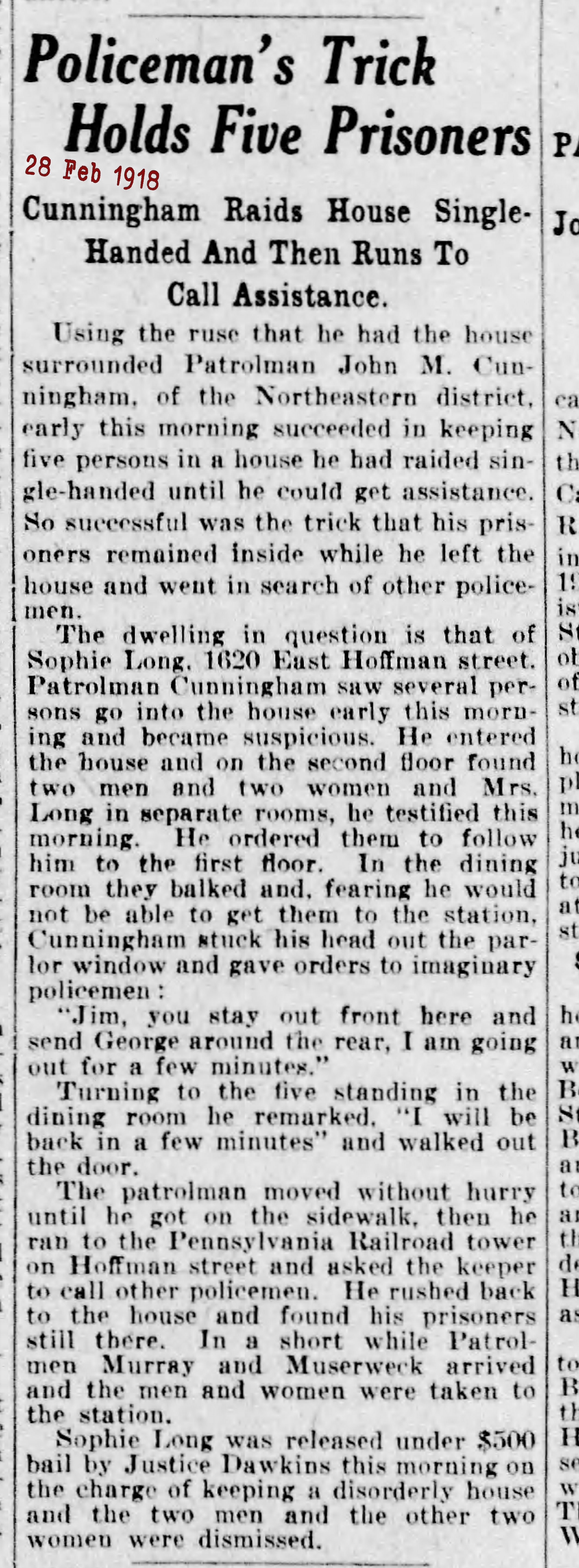
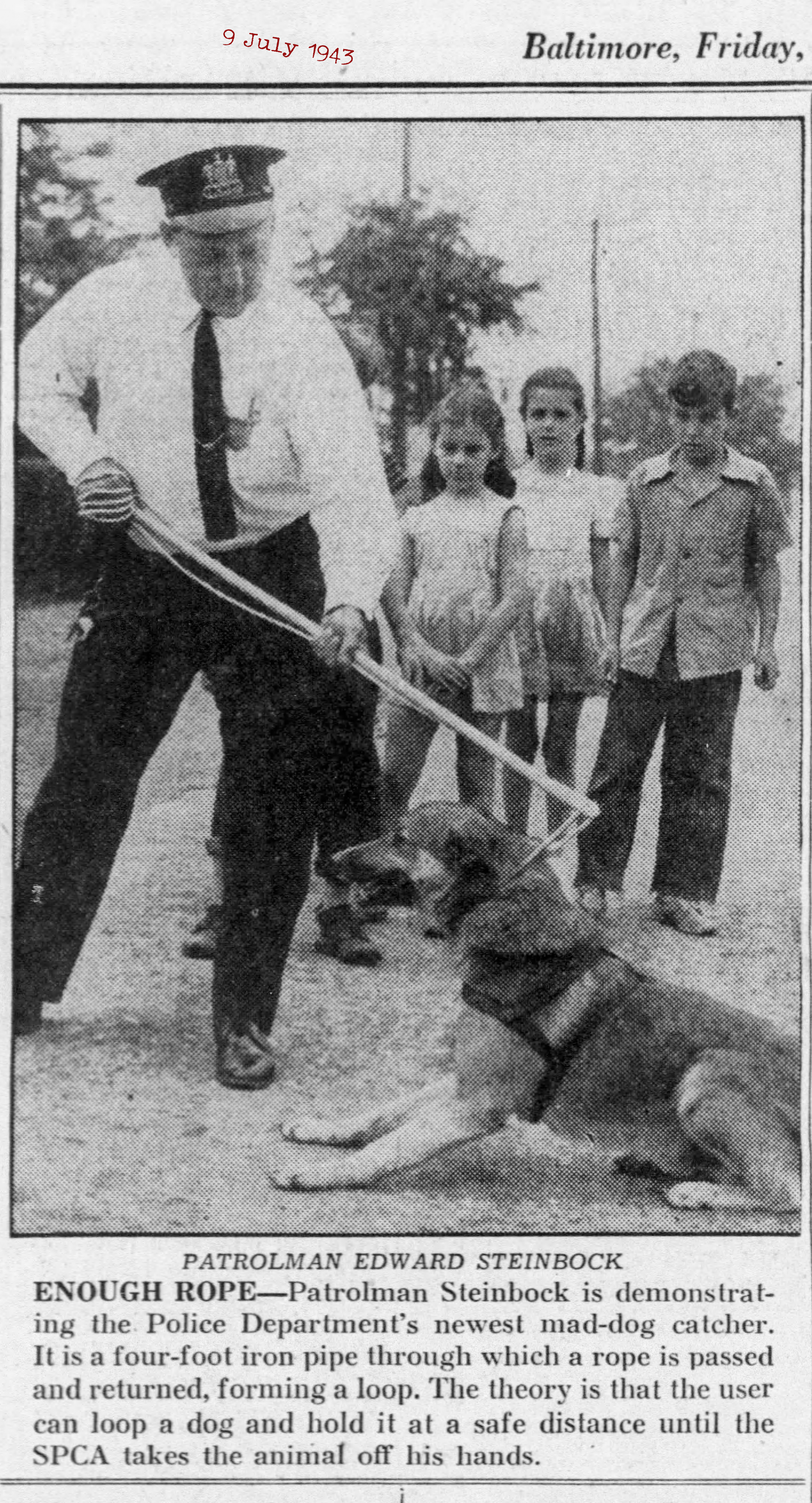

 Click here or the picture above


 Regester Avenue. ABC2 News crews on the scene report that the majority of police activity is in the 6400 block of Loch Raven Blvd at the Kirkwood House senior living facility. Some of the people who live there are being evacuated from their homes for safety. According to Anthony Guglielmi, spokesperson for the Baltimore City Police Department, officers responded to the high-rise apartment building around 8:30 p.m. Guglielmi confirms that the suspect blasted a makeshift flamethrower. Police fired shots back, but the bullets missed the suspect. According to Chief Kevin Cartwright, spokesperson for the Baltimore City Fire Department, crews originally responded to the scene for a report of a shooting. Upon arrival, they realized that there had not been a shooting, Cartwright said. Crews were able to quickly extinguish the fire, and two units remain on the scene for safety precautions. The suspect is barricaded in their apartment, and the police tactical team is now handling the incident, Guglielmi says. There is no word on if anyone was injured, but medical crews are on standby. Police Pursue Person Suspected of Striking Officers with Vehicle BALTIMORE - Officers with the Baltimore County Police Department are currently involved in a situation that crossed into county jurisdiction from the city Wednesday morning. Details are scarce at this point, but a pursuit involving at least a dozen law enforcement vehicles could be seen from the windows of ABC2 News on York Road. The chase ended at the intersection of Joppa and Walther in the Parkville/Carney area. Posts on Twitter from the Baltimore Police Department suggests the incident may have been an attempt to apprehend a suspect believed to have struck two city officers with a vehicle. It's also indicated that BPD officers interrupted a possible drug transaction when they were struck by the vehicle on Belair Road.